Subscribe
Share
Share
Embed
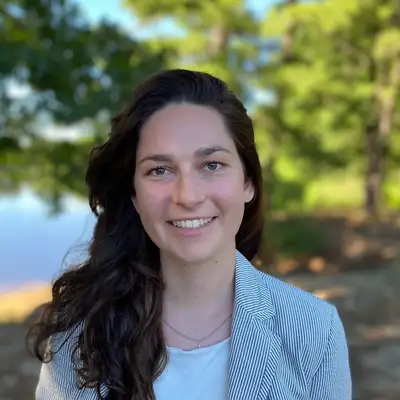
Time and Tide is a New Hampshire Sea Grant podcast for anyone who is connected to the Granite State’s waterways and wants to learn more about the latest science impacting both yourself, and the animals that live here. Hosts Erik Chapman and Brian Yurasits break down complex topics from seafood to coastal resilience by bringing on guests from both the research world, and local industries to share their expertise and perspectives.
Erik Chapman: [00:00:00] I guess I might just start by just thinking about encouraging as much as possible to embrace not knowing. Not knowing what you're gonna do exactly. The more we can kind of release ourselves from the pressure to be thinking specifically about what we're gonna end up doing, and staying open to things that you didn't really even know existed. Or maybe had never thought about before. But just be curious to learn more and just really lean into curiosity.
Brian Yurasits: One of my favorite quotes, and I use this all the time, is by the famous boxer, Mike Tyson. Everyone has a plan until they get punched in the face. Your plan might change pretty quickly, and it's really good to be able to adapt and change course.
Lindsey Williams: I was also thinking a little bit about grad school in my family, that was a little bit foreign.
Grad school is really different than undergrad. Whether you're a parent or a student thinking about it, you apply to graduate school differently. You pay for graduate school differently. The work that you're doing is different.[00:01:00]
Brian Yurasits: The sea once it casts its spell, holds us in its net of wonder forever. This famous quote, by Jacques Cousteau, rings true to many of us whose lives are connected to water in one way or another. Whether it's utilizing the ocean's natural resources to make our living, or recreating along the coast to find joy in our lives, once your life has been captured in the currents, there's no point in fighting it. For those of us who can't imagine a day without feeling that salty breeze, or hearing waves below and gulls overhead, we're naturally drawn to a career on the coast. But as it turns out, there's a great diversity of coastal jobs out there, and it can be tough to figure out where exactly you might fit best.
For some of our listeners, a career in a coastal field might be passed down from your family, but for many, like myself, telling your family that you're pursuing a career in marine science might draw some blank stares at the dinner [00:02:00] table. Today we'll be exploring different career opportunities in marine policy, science and education, specifically. We'll try to provide our best counsel for those who hear the call of the ocean and are inclined to answer. These conversations will focus on the Granite State specifically, including what jobs are available along our small but mighty stretch of coastline, but also what education and training is available within the state that can be brought elsewhere.
I'm your host. Brian Yurasits, and welcome to Time and Tide, a New Hampshire Sea Grant podcast where we explore the science, stories and people behind our changing coastlines. Throughout this episode, my co-host Erik Chapman, and I will focus on jobs in academia, nonprofits and government. Up first, we speak with Lindsey Williams, our very own workforce development expert, who helps us give career advice to four imaginary students facing very real decisions. We then join Anna Silverio and Lizzy Martin in Washington DC. Two early career professionals who have traded in their waders and gloves for a year working in marine [00:03:00] policy. In a field that can be tough to navigate, we'll do our best to paint a picture of what you can expect from these career choices, and we'll sprinkle in some nuggets of advice that we wish we heard when we were students.
Thanks for joining us on Time and Tide. Take a walk down the career path with us.
Lindsey Williams: Hi, I am Lindsay Williams. I work here at New Hampshire Sea Grant and I'm one of our Associate Directors. Where I spend a lot of my time is focused on what we call workforce development.
Erik Chapman: What motivated you to become involved with workforce development in your role in Sea Grant? It wasn't just that I asked you. I don't think.
Lindsey Williams: That was part of it. Um, but no, actually I really appreciate this question. One of the things as my career has evolved that I've thought a lot about is that I have had a lot of really great mentors and role models along the way, both in my education and my professional career, but I've also had a lot of people make assumptions about what I could and couldn't do. Um, as well as what I should or shouldn't be interested in or want to do.
And so one of the things that I really [00:04:00] have appreciated about this role, is really giving space for folks to think about what is it that they're interested in doing? What do they, what do they wanna explore in terms of trying something? And then the second thing that popped to mind was when I was an undergraduate student, and still sometimes further on in my career, sort of that feeling like I was getting in somebody's way when I was asking questions.
It is my job to talk to you, so call me, email me, ask me questions. No question is out of left field. And maybe I don't have the answer, but maybe I can give you an idea about somebody else to talk to.
Brian Yurasits: When I was in high school and an undergraduate student, I don't have a single family member, or I didn't have one in my life that was a scientist or a researcher.
My grandparents and my parents are an Italian American family, and they only really knew doctor, lawyer, these predetermined career paths that they knew of. It was intimidating to dive off the deep end and pursue my own passions. And the first thing that I did was find a mentor like Lindsey.
Erik Chapman: You know, I mean, I think that's something, I have two kids who are in college right now in the place of where they're thinking about what [00:05:00] they want to do, what do they like, what do they not like? I think they're feeling a little overwhelmed. I'm wondering what suggestions you might have or recommendations you would have for people who are waiting to kind of get out of the starting blocks.
Lindsey Williams: One is just doing and trying things, which can again, feel overwhelming while you're in the midst of courses and all of that. I mean, that might be going to a community public meeting and just seeing, what does local policy look like? Is that something you see yourself doing, asking whether it's professors or other folks asking them to get coffee?
People love, I mean, we're all here talking about ourselves. People love talking about themselves and it's okay to ask people for that. The other thing that I encourage folks to think about is, it's okay to change your mind. And it's okay to think that what you decide that you want to do at 19, at 22, at 30, at 40, it's okay to have some flexibility and say, whether it's you're in the same job and you shift pathways a little bit, or maybe you try something for five years and you realize it just isn't the right fit. More and more, I've talked to people that, the ones that are getting the most out of their careers are the ones that have recognized that it might change over time.
Brian Yurasits: Everything happens for a reason. [00:06:00] I never thought I was going to be sitting here working with you all as a Communication Specialist, that was never on my bingo card of a career path. Do you find that? Folks pursuing a career in science, policy education, that your early career experiences are kind of more field-based.
It's almost like you're getting these firsthand experiences and saying yes to what comes across your plate, and then down the road you narrow down your path.
Lindsey Williams: It's a great question and I can share from my own experience, is not necessarily, depends on what you do say yes to. And I know for me, I didn't end up in a field position.
I had applied for a bunch. I was trying to be a dockside monitor in Florida, I didn't get that job. We could have a whole episode on the role of failure in, in shaping your career and pathway. All the things that I didn't get. But at the end of the day, I had a place to live with friends in Washington, DC. And so I ended up in Washington, DC. So for my first job was actually as a contractor for the federal government.
My answer to you is I think it really does depend. Um, and depending on where you are interested at heading, like you might end up in more of a short [00:07:00] term seasonal job or doing data collection, but you also might randomly have a place to live and so you take a job there and then that really shapes how your career unfolds as well.
There is no perfect thing. It's you do the next right thing. You don't have to know exactly where your life is gonna be in 10, 15, 20 years. You don't know what else is going to shift.
Brian Yurasits: Through all of these early career experiences, do you find that folks find their passion there? I'll tell you why I'm asking This is because the folks that are still in this field that I know, they're all extremely passionate about some aspect of this field of work.
Whether it's teaching the next generations of students or addressing a very specific issue facing our coasts and ocean, is it passion that keeps people in this field?
Lindsey Williams: Sometimes I struggle with the word passion. Because I think when we hit those moments of uncertainty, it can feel like we've lost that thing, that passion, that thing that keeps us going.
And so certainly I think passion sort of keeps me in the game, keeps me going. But I also think sometimes it's the sort of, what's your why? And for me, a lot of times it is making sure that students have opportunities that I [00:08:00] didn't have. I think for me, the earlier parts of my career, um, both exposed what was possible, and also what I found frustrating about how things did work. And so that keeps me going in terms of like, okay, maybe it doesn't have to work that way.
Brian Yurasits: So now I have a game for us. We're gonna try something new on the show. I have a few pieces of paper here with made up profiles of students and early career professionals.
I want you to pick one and we're gonna run through together what career advice we would have for each of them.
Lindsey Williams: You're gonna really make me pull it?
Brian Yurasits: Yeah, yeah. No, I'm gonna make you pull it.
Lindsey Williams: Okay, this is Nora Nectarine.
Brian Yurasits: Nora is a junior in college pursuing a major in conservation biology with a minor in statistics.
She excels in science and math and has been captivated by the ocean ever since she was a child and was able to go fishing with her parents. Nora wants to study how fish populations are changing in the Gulf of Maine so that she can ensure future generations get to have the same experiences that led her to the love of the ocean.
Nora struggles with the decision of whether or not to pursue [00:09:00] a PhD as she approaches her senior year and the real world looms ahead. What advice do you both
have for Nora?
Erik Chapman: I started my Ph.D. after taking some time away from my undergrad, and even I finished my Master's, and people always told me it's like, go back for a Ph.D. when you're, you're hooked into a topic that you feel like you have to study.
Lindsey Williams: The opportunity to do a Ph.D. is gonna be there later as well. And if you're questioning it, try some things out. See what fits, see if that is what you want to do. Or if during your Junior year you have a connection or you try, a project, you serve as an intern on something and you're just like, light bulbs go off and you're like, this is what I wanna do. I said, go for it.
Brian Yurasits: Nora was a little bit based off of myself in some ways, and I didn't end up going for a Ph.D. I ended up taking some time and working as a fisheries observer and a piping plover monitor and getting the field experience first.
Okay. Are you ready for the next one?
Erik Chapman: James Peach is the name.
Brian Yurasits: James grew up inland in the mountains, but during a field trip in high school, he [00:10:00] was able to go snorkeling with a science museum, and his world changed forever. This unlocked James' passion to look below the thin blue line of the ocean surface, and it has since become his mission to share the wonder of the ocean with students like himself.
James is a recent graduate with a marine biology degree, but wants to pursue a career in outdoor education. What advice do we have for James?
Lindsey Williams: People think about education as this like narrow band, but there are still a lot of options within that. So does James like working with little kids with high schoolers, with middle schoolers? But thinking about the different settings. I have a friend who's a high school science teacher with a marine science background, and I just give her so much credit. You could not put me in front of a middle school science class, but that's the perfect spot for her. And she's able to inspire all of these students with this passion for the ocean, takes them out to Odiorne and takes them out to all these different activities. Gets them involved in citizen science projects in a way that I think is just having such a fundamental impact on these students.
Brian Yurasits: And where could James pursue a career? Maybe pursuing a formal [00:11:00] career at a high school or a middle school or elementary school as a teacher? What other settings in our world or what other organizations could you work for as an educator?
Lindsey Williams: I mean, so many, even just thinking here in the New Hampshire seacoast, so partners like the Great Bay National Estuarine Research Reserve, so amazing educators there.
Seacoast Science Center, other nonprofit settings where people are bringing groups out. Do you want to be a teacher and you're dealing with the same kids all year long, or do you wanna take people on experiential education? There's such a wide variety of settings that somebody with those interests could work in that I'd really encourage to go for it.
Erik Chapman: Coastal and marine tourism is one of the largest sectors for marine jobs generally. People wanna learn about the ocean and they want to visit the ocean, and there are all kinds of opportunities to work in that space.
Brian Yurasits: I do find that it's almost like working in the service industry. I think everyone in their life should work in the service industry.
I also think. Anyone in our field of marine science and conservation should probably have some kind of a role as an [00:12:00] educator. It really makes you such a better public speaker in many ways. Like, if you can get an idea across to school children, you can get it across to just about anyone.
Lindsey Williams: I think you're right in a lot of ways too, because I had an internship experience with an organization to the south of us.
Um, loved the experience. Mic'd up, giving daily talks. Doing interpretation at different exhibits. Really, really great summer. And what I joke I learned from that, that was not the setting for me, but I still lean on those skills and that ability to stand in front of a group, even if I'm feeling uncomfortable and being like, I got this.
I can do this. I did it in front of 50 people with a headset on.
Brian Yurasits: All right. Are we ready to move on to our third student here? So I'm gonna pick, and it is Lori Law. Lori is very detail oriented and thinks about the big picture. She has always enjoyed visiting the beach with her friends and has a passion for marine mammals from a whale watching trip that she went on in school.
Lori has recently attained her master's degree in marine policy, seeking a role in policy or law where she can be a part of [00:13:00] real policy decisions.
Erik Chapman: And her name is Lori Law too, that's gonna look good.
Brian Yurasits: It'll look good on a resume for sure.
Lindsey Williams: And I think there's a lot that you just shared in Lori's background that leans towards somebody that might like things at the national policy setting. But I would encourage, um, Lori to think about the different settings that might be of most interest as well as thinking about things like working a mile wide on a lot of different topics or really, um, sort of digging in, is there one topic, like marine mammals, that Lori's really passionate about. Thinking about that national, local, or even international reach. It's not that you can't work at different scales or you can't work at different topics depending on what choices you make, but sort of working as a policy staffer for a member of Congress, maybe working on the Marine Mammal Protection Act or working as an analyst at a federal agency, thinking about what regulations are related to marine mammal protection or working for ocean renewable energy companies managing the legalities of some of their operations. Those all require law and policy expertise. It's really helpful if you have [00:14:00] some science expertise as well, but there are many, many different settings where you could apply that.
And one other plug that I often give folks, 'cause I think sometimes. The role of sort of local and municipal decisions gets left out. But I think there's so much when we think about coastal management, when we think about fisheries management, when we think about pollution, when we think about water just in general, there's so much that does happen at the local and state level.
So I'd really encourage folks that have a policy interest to think about all scales of government when they're thinking about where they might wanna go with their careers.
Brian Yurasits: This is going to be a career path that is a bit more tedious. Like what are some skills that are really important to have if you're going to pursue law?
Lindsey Williams: I take issue with policy being tedious.
Erik Chapman: Tedious. That's a, I was gonna
say, this is gonna be a fight.
Lindsey Williams: Yeah. Sometimes it does get down into the minutiae. The words matter, like should versus shall. You can have a whole debate over the difference between the words should and shall in the legal setting. I think folks that are thinking about policy pathways, it can be a great way to have an impact.
You never know when it's gonna be a slow, long to build change or [00:15:00] when change might feel like it happens overnight. Being willing to play the long game when you need to, but be ready for the short game is what I encourage folks that are thinking about the policy landscape, um, to think about.
Brian Yurasits: Are there certain areas of study in the marine sciences that lend themselves to someone who's interested in policy and law?
Lindsey Williams: My shorter answer is like, no, all of it. So I teach a policy class and I tell students coming in, I don't expect you to walk into this class uninterested in policy and walk out thinking that you're gonna be, policy is your path ahead. I just encourage folks to come in and think about how it does connect to their world, and I tell them to bring news articles in, and my joke is, I can make anything about coastal and ocean policy because it is so connected to our day-to-day lives, whether that's the clothes that we're wearing and then they came over through marine transportation. Whether it's the water that we're drinking, the fish that we're eating, all of these things are so connected to the policy landscape. So I would tell anybody, there's a way the science is important and there's a way that the policy is important.
Brian Yurasits: All right. Are we ready for our final individual here? Now we have Johnny [00:16:00] Applesauce.
Johnny is a high school student and is an avid surfer. He volunteers with a nonprofit that focuses on keeping our beaches clean and wants to devote his career to addressing the problem of plastic pollution on our coasts. Math and business aren't his strong points, but Johnny is excellent at crafting a good argument, and he's very personable.
What career would you recommend for Johnny Applesauce?
Lindsey Williams: What feels interesting? Is it wanting to work in the local community? Is it wanting to be at a larger scale? What I would also encourage Johnny and his parents is to remember that with time and effort, things that feel like a struggle can be an area of strength in the long run.
And so feeling like something that, that maybe in high school isn't your strongest suit, can still be something that's an important part of a future career. So not feeling locked into some of that.
Brian Yurasits: I will definitely say they sound like someone who would be a good fit for communications or marketing.
Even pursue a minor in one of those fields, you know, take a course or two in it and see if that's where you thrive early on. Undergrad is a great time to [00:17:00] explore some different courses. But I'm curious what you think, uh, about leaning into what you're best at versus where you want to be, if that makes any sense.
Lindsey Williams: I'll come back to that one. I did wanna build on what you just said about taking classes or trying a minor. Um, and that is something that I really encourage folks to think about. If you have a passion for a course that you really want to take, take it. Super dorky, but in college I desperately wanted to take an accounting class.
Don't ask me why. It was just something I really wanted to take, and my advisor kept telling me not to. 'cause he's like, you don't need it. It's not related to your biology degree. And I still to this day, regret not taking that accounting class because I'm still, to this day, very curious about how budgets work.
Random story to say, take those classes, try those things.
Erik Chapman: Johnny, you know, one of his strengths, he's very personable. So maybe at this stage, lean into that strength to explore the space. Use that to go talk to a lot of people and connect with them and he's got an advantage in that sort of learning phase.
Brian Yurasits: Grab a coffee with a mentor on campus. Find that mentor, ties all of this back to what we were [00:18:00] talking about earlier.
Lindsey Williams: Something that I open up conversations with students, um, either at the beginning or the end, and maybe now that we've given some advice to these four uh, individuals, is to also take every piece of advice with a grain of salt. Including ours.
When I was younger, especially people I really looked up to, I sometimes gave too much weight to what people in my life were saying was the thing to do. And so take that advice, think about it. But at the end of the day, it's your education and your career path.
Erik Chapman: Make sure your own voices at the table. Empower your own kind of decision making.
'cause ultimately, that's. Yeah, that's the person in charge.
Brian Yurasits: And we live in an entirely different world than when any of us were in undergrad or high school.
Erik Chapman: Well, yeah. Let me tell you what worked for me in 1992.
Brian Yurasits: Yeah, we have AI now, Erik.
Lindsey Williams: Maybe one other thing to throw in one of the overarching ways I oftentimes think about work as just this larger bin of water related jobs or water jobs. And that could be things like thinking about habitat and restoration, so coastal habitats or fisheries management, but also some things that go [00:19:00] unnoticed, like thinking about wastewater treatment plant operators or stormwater management engineers, um, or even drinking water monitoring technicians.
And these are all actually in really high demand here in New Hampshire and New England more broadly. And those are really interesting pathways that some of 'em, yeah, you might need a master's for, but some of you get started in a career tech program or you can explore in high school.
Brian Yurasits: How does the word conservation fit into each of these career fields?
Erik Chapman: Conservation has so much to do with protecting, but also, you know, wise and sustainable use, and not use. Education has a lot to do with that. Policy has so much to do with that. It's all baked into passions and interests that each of these bring to the table.
Lindsey Williams: It's underpinning a lot of these careers and multiple different ways.
How do we think about what's available to all of the people on the planet right now, but also what will be available in the future? I'm talking about this idea of conservation, of options, access, and quality. And so that just really resonated with me in thinking about all the decision that we're making, whether it's about the resources [00:20:00] that we help manage, the science that we're doing, um, or even just like how we're conducting business.
Brian Yurasits: Do you have any final notes or pieces of advice for one of our students or parents, uh, that are out there listening in regards to pursuing a career in this path. And I'm thinking like, quote unquote real advice.
Lindsey Williams: And I think the last piece of advice that I would have that maybe seems counterintuitive is that your job doesn't have to be everything.
And so maybe you end up in a job that's really, really different, but you volunteer for an organization and you do beach cleanups, or you serve on your local conservation commission and you're this major voice for making sure that water is discussed in your community. There's so many ways to contribute back to your community, and again, maybe you do find the path and the marine or coastal job is there for you.
But it can also be a side piece to how you set up what your life looks like in the future.
Brian Yurasits: I want to give two quick pieces of practical advice. It's better to be an hour early than a minute late. Maybe not an hour early, but personally, I think it's really important to be on time. And I also encourage people to put [00:21:00] service industry jobs on their resume as experience, especially when you're in undergrad and maybe grad school.
But I think that you build skills in those kind of roles that are relevant in so many positions that we've talked about today.
Erik Chapman: I think that's a good example of the kind of thing that you might not think about listing, that you should list. I mean, that's one example. But there are many examples of the things that you have done where you've taken responsibility and you've dealt with complex situations and you've made some decisions and you're like, oh, that was just this.
But in fact, it demonstrates, you know, a certain level of competency and being able to deal with a lot of challenges. So don't underestimate your experiences, and that's a great point that you bring up and you don't undersell yourself. And there are probably many things that you've done or have had the opportunity to do that really say important things about you.
Lindsey Williams: Figuring out what that story is. Don't just list it on your resume, but figure out how it relates to the job at hand. My first job out of undergrad, I can tell you that I used a story about a challenging situation on a ropes course, and it got me a job working on coral reef [00:22:00] conservation.
So, you wouldn't think that those two were connected. But I had that story. I had practiced that story. I had thought it through. I was hoping that they would ask about it, they happened to.
Brian Yurasits: I'll throw in one final piece. I would say, have your friends and family read your resume and cover letter, or whoever's around that you trust and that you respect their opinion. To proofread before you send something in.
Lindsey Williams: I would just always encourage folks, whether you're in high school, you're college, graduate school, thinking about changing careers, reach out to the Sea Grant program where you grew up, where you're living or studying, or where you hope to live in the future. I like to think of Sea Grant as really great connectors and facilitators.
And they can help you not reinvent the wheel and they can even just help you brainstorm how to get connected into the pathways that you're interested in.
Brian Yurasits: Well, Lindsey, thank you for walking down this career path with us and my four made up students.
Erik Chapman: I really hope they, I think they're gonna do great.
Lindsey Williams: They need to report back to us.
Brian Yurasits: We'll make sure our listeners out there know how to reach out and get engaged if they have any questions for you about these [00:23:00] careers that we've just discussed today.
Lindsey Williams: Thank you both.
Brian Yurasits: In part two of today's episode, we're heading to Washington DC for a conversation with Ana Silverio and Lizzy Martin. Two Sea Grant Knauss Marine Policy Fellows. Ana and Lizzy share their early career experiences, navigate the transition from field work to grant making and policy roles, and discuss what it takes to work across the aisle.
At the heart of these conversations is the Sea Grant Knauss Marine Policy Fellowship. A one year fully funded placement in Washington, DC named for John a Knauss, a visionary oceanographer, and former NOAA administrator. Since 1979, the fellowship has connected graduate students from across the country to host offices in both the legislative and executive branches of the US government, giving them real influence over coastal and ocean policy.
First off, we walk alongside Anna on her career path. Ana is working directly at NOAA's National Sea Grant Office with their marine debris [00:24:00] portfolio, helping to translate scientific findings and community concerns into action backed by legislation. We unpack how plastic, derelict fishing gear, and other forms of marine debris in our ocean can bring people of all political beliefs together to address a common problem.
Nobody wants to see trash at their local beach.
So I figured what better way to start this conversation than chat about what form of marine debris keeps each of us up at night. This is a topic that hits everyone out there. Probably all of our listeners have experienced or encountered marine debris maybe at the beach this morning, or at some point in their daily life walking down the street even.
What type of marine debris specifically grinds your gears?
Ana Silverio: I think definitely microplastics just because they just get smaller and smaller. Like the whole point is that plastic doesn't naturally [00:25:00] degrade and so that's how we end up with microplastic.
Erik Chapman: Bags, garbage. If I, you know, if I went to the ocean and I started to see that stuff, I worry about what that would do to my mental health.
Brian Yurasits: It's like anytime anyone goes to the beach, they're trying to escape reminders of our daily lives at home, and it's almost like it hits you right in the face if you see it while you're out there. My personal piece of marine debris that keeps me up at night is plastic balloons. It is something that is very visible, it floats right at the surface. But Ana, I wanna really get into your work as a Knauss Fellow. What office are you based out of?
Ana Silverio: So I am sitting in the National Sea Grant Office. You know, sits at NOAA and specifically working on the marine debris portfolio. So I'm helping manage a good number of grants with them. So it's been exciting.
Brian Yurasits: And have you in your past, ever worked with marine debris as an issue?
Ana Silverio: Yeah, I actually have a coastal fisheries background. I mostly have focused on like how are population's doing of fish. So it's been really exciting to kind of jump around the different ways people think about marine [00:26:00] debris, not just the ways maybe I had learned it on textbook or in a nature documentary.
Brian Yurasits: The Knauss Fellowship is a marine policy focused fellowship. Mm-hmm. How would you say that marine debris, as an issue, is bipartisan in its nature?
Ana Silverio: Well, no one likes to see trash in their backyard and no one likes to see trash where they go do recreational activities in. I think people kind of see that connection very adamantly between plastic and their health and then their happiness. Fishermen know that they depend on the fish they fish, and so it's important for those ecosystems to be happy and healthy. It's been a cool experience kind of seeing how many people come together, especially some of the partnerships that I see in these grants.
Erik Chapman: Yeah. I'm curious what you've learned about in terms of like the projects that the National Sea Grant Office is involved in around marine debris.
What are you seeing happening and what have you learned about?
Ana Silverio: We have two different types of grants. We have grants that focus on your R & D, your research and development. So these grants think about developing new technologies or new innovative ways to either remove [00:27:00] marine debris from our environment or prevent them from ever happening.
So there's a lot of really cool ideas like making plastic into wood. We also have some really cool technologies around these robots that they're trying to deploy into streams or rivers, and they'll be able to detect these marine debris items and be able to remove them from the environment. Then we have another set of grants that think about the people, just getting people together about the topic of marine debris and either teaching them through new curricula or workshops to talk about this issue, figure out what priority needs are in communities, or is helping local businesses make switches to help prevent marine debris. Kind of a wide spectrum. And also they're, you know, all over the country. So we have projects on the east coast and the Gulf, in Alaska and Hawaii, on the west coast and in and around the Great Lakes. So you get to see different regions of our country deal with the same issue and sometimes in similar ways.
Erik Chapman: I'd imagine you see a lot of, you know, different innovation, kind of taking shape as people put their minds together. And then the opportunity from the National Office to make connections from region to region. So they might be [00:28:00] doing something incredibly innovative on the west coast that we can work on in, uh, the Northeast.
Ana Silverio: My favorite thing I see in a day sometimes is when I see two grantees exchange information.
Brian Yurasits: Your role as a Knauss Fellow has really been working in the National Sea Grant Office. On their grant making process. So what does your day to day look like? Dishing out this funding to these different projects.
Ana Silverio: On a typical day, I help out on these quarterly meetings. So we meet with our grantees quarterly just to kind of check in, write down some accomplishments from the last quarter, which is a really cool way to start a day hearing about the awesome things they've been doing the last few months. Also organize a couple collaborative meetings so that they can collaborate at least once a month. Learn about projects that are happening that are maybe similar to them or even something they're trying to strive for, but they just haven't come across that in their network yet.
They get to chat and exchange information, brainstorm together sometimes in the moment. And other times, I'm helping out with, like you mentioned, the grant making process.
Erik Chapman: So I like that idea of different communities solving problems in different [00:29:00] ways. I'm wondering from your vantage point, have you seen some examples of that, that have struck you as particularly kind of impactful or interesting?
Ana Silverio: There's a couple projects that are really focused on AI mapping. So I think one of the main problems that I've seen personally is like, how can you find these microplastics and differentiate them from other microorganisms in the water and be able to remove the microplastic but not the microorganism.
And so some of these projects are actually trying to solve that problem and be able to have some automated algorithm to run across a body of water and be able to detect exactly which ones are the microplastics and be able to remove them. And we actually have a good number of projects thinking about microplastics and marine debris in our laundry machines, and those are in different parts of the country.
So it's interesting seeing those couple projects get to know each other and compare partnerships because some people are collaborating with local hotels and others are collaborating with local universities.
Brian Yurasits: We are sitting here today talking to all of you listeners out there, [00:30:00] ultimately, because I participated in a beach cleanup while I was growing up as a kid. This is a similar story to a lot of people who end up working in the field of environmental science or marine science or just wanna make a difference in their daily lives.
You have that spark, that experience that showed you the brevity of this problem in your own backyard, at your own beach, at your own park. And it seems like that focus on community building and extension has equal weight here to the technical support from these grants. Were there any innovative ways that folks across the US are trying to engage new audiences?
Ana Silverio: There's a team out in the Midwest that is actually using fashion shows as a way to talk about marine debris, connecting what we wear to the marine debris that can end up in our oceans and in our environment. So I think that's a really interesting way to connect a whole new audience. And at a fashion school, students who aren't necessarily environmental are also learning about marine debris and how their products may be contributing, and so then now they're thinking about how can I [00:31:00] make my clothing more sustainable?
Erik Chapman: Just thinking about you and your colleagues this particular year where you guys all showed up as a group in DC at the beginning of a new administration. I'm wondering if you could talk a little bit about what that was like for you. You know, some of the things that you learned from that experience.
Ana Silverio: I got to see things that normally either whizzed by someone in my position because you just aren't high enough to see it, because it was a transition year. It made an opportunity to kind of understand government in a more holistic view, because I got to see kind of that chain of command more clearly. So I initially thought that translating science had to do with making sure I didn't use jargon. But then I learned that translating science really just means translating priorities over. Getting the same result, but just making sure I can attach different priorities to that same result. This is why it matters to you. Be able to say that to two different people.
Erik Chapman: I guess it really elevates the importance of communication, just really being very clear and specific.
We need to be communicating to so many audiences. They want to hear and they want to engage, but we can't do that in a [00:32:00] way that alienates anybody, so we need everybody.
Brian Yurasits: Which priorities do you find resonate with as broad of an audience as possible? When it comes to marine debris.
Ana Silverio: They are like moving the needle forward in American innovation.
The grantees are working with really awesome partnerships to kind of make new technologies just a little bit more effective and efficient. And I think that really strengthens our ability to be a little bit self-efficient and be able to tackle our own problems, which I think really resonates with a lot of people.
There's a couple of grants really focused on switching over materials to be more long lasting, more sustainable, and at the end of the day, like who wouldn't want something that lasts 30 years versus 10 years? So I think it has a lot to do with these really cool ways to build communities up, and also move us forward in some of these technology spaces.
Brian Yurasits: Speaking to any of our undergraduate listeners out there, describe what your own personal path was like to become a Knauss Fellow.
Ana Silverio: I mostly have a coastal fisheries background going through grad school on a thesis route, publishing [00:33:00] papers, stuff like that. But I always itched for impacting people with this science. The Knauss Fellowship has allowed me to be on that other side of the grant process. So I kind of now get the full sense of how science can impact policy, how science can impact people, being in the grant making process. I think the word grant as a grad student scared me. It's a very rigorous process, and I have actually now been in my Knauss Fellowship, been able to be a part of that review process.
It is an intense process. It really opened my eyes to, so what are we looking for? What's making the difference here? Where can we make those dollars count the most?
Erik Chapman: I mean, what you're describing is just an opportunity to look behind the curtain and see what goes into providing funding to a project. And it's kind of reassuring to see that there's a lot that goes into ensuring that the money is going to a place that really deserves it and is really prepared to kind of make a difference.
Brian Yurasits: So, Ana, I want to just chat real quick about your professional evolution. You get engaged [00:34:00] with the field of marine science and conservation through a beach cleanup, and maybe you spend your early career trying to physically get out there in the field, get field experience. Then you spend enough time doing that and you realize how important funding is to the longevity of some of this work.
And so you transition into a role like you have right now. What comes next?
Ana Silverio: If I wanna put a name to it, I've gotten to really know the extension role really well. 'cause a lot of these projects have extension people as either PIs, or principal investigators, so the lead person on the grant. And so I see what their role is in their project and it's a lot of using the knowledge they have and be able to help people understand some of the work they're doing in the community. I really have loved government and public service. I think that has been something I very much have enjoyed through the fellowship that I'm really grateful for. 'cause I hadn't had an experience in it yet, so I just didn't know if I liked it or not.
I think it's something really important in my career is figuring out what I don't like and what I do like. I figured out throughout the course of my career that I don't really [00:35:00] like to just only focus in on one topic, the world's my oyster. Well, in the next few months as I apply for jobs.
Brian Yurasits: Next up, we'll hear from Lizzy Martin in her career journey.
Lizzy is currently working with the NOAA Office of the Under Secretary to implement executive orders across the agency. In short, Lizzy is at the center of very important conversations happening in DC related to our oceans. As an undergraduate student, Lizzy worked as a Doyle Fellow with New Hampshire Sea Grant, receiving hands-on training and mentorship in coastal science.
Today Lizzy shares advice including why you should schedule a coffee chat with your colleagues.
You don't seem to have like a strong Maine accent right now, do you catch yourself at all ever saying anything very Maine?
Lizzy Martin: Well, that's a wicked good question. Yeah. I don't think I have the strongest Maine accent.
Brian Yurasits: What prompted you to make that transition from working in the field, this hands-on science [00:36:00] and research environment, to pursuing marine policy in a place like Washington, DC?
Lizzy Martin: I was fortunate enough to get the Doyle Fellowship, which was my introduction to aquaculture, as it was studying disease in oysters, and oysters are a big part of the aquaculture industry in New Hampshire.
That project was really cool because we got to connect with the aquaculture industry. I also got to interact with people outside of science and, um, do research that felt like it was really meaningful. I kind of carried that perspective with me and so I thought, why don't I just try policy?
Brian Yurasits: A lot of folks who pursue a career in this field, they do it because they want to spend as much time as possible outside. Can you speak a little bit to what it's like being in a policy role where your office isn't always going to be the ocean or out on a boat?
Lizzy Martin: Yeah, it is ironic. When I moved to DC I was like, wow, I'm moving away from outdoor activities that I love [00:37:00] to do, to protect them. Growing up, like I was always told to do what you love, but I also think that if you blur the lines between what you love and work too much, then you do run the risk of what you love becoming work. Policy has been this really cool transition where I still get to work on issues that I'm really passionate about, but my free time is spent outside doing those activities that I love to do. When I was doing that for work, I was worried that long term, I wouldn't necessarily want to go out on the water on my day off if I had spent the entire week out on the water, because it might feel like I was doing work.
So I think there is value in setting that work life balance, but I think it's really cool that I still get to focus on protecting marine resources.
Brian Yurasits: You get to enjoy the fruits of your labor on your time off.
Working in marine policy allows you to [00:38:00] think more broadly about these topics and work in a place that you're having a real impact on a marine science or conservation issue that you care about.
So I'm curious if you could chat about how you view your impact.
Lizzy Martin: Any path you decide to go down, like the impact you have, it's not gonna be more or less. It might be different. But it boils more down to how much you enjoy what you're doing. And so I think if you enjoy what you're doing more, then I think you're just gonna inherently have more impact because you enjoy it more. In the policy world, you're not like making groundbreaking discoveries, but at the same time you get to work on more projects, even though each project you work on isn't as in depth as it would be if you were a scientist. And then it's also interesting to learn what influenced that decision to ask for those proposals for that funding opportunity. Like is there an executive order that the White House wrote? Is it from legislation that was [00:39:00] passed on the Hill, or is it constituents that lobbied or spoke with their senators or house representatives that then influenced them to write a bill to create these research opportunities
Brian Yurasits: Being on this side of things, if you were to go back into science and research, you'd have this renewed perspective on where the funding is coming from and why it ultimately is important to people. What does a day in your life as a Knauss Fellow in the executive branch of government look like?
Lizzy Martin: I'm gonna throw out some terms, so I'll just describe them now.
Brian Yurasits: Perfect.
Lizzy Martin: So I work with two different kinds of people in the executive branch. One kind are politicals. So the politicals are people who are appointed by the President and they lead the agency from the front office, which is where my fellowship placement is. And so this is the front office of NOAA. Then most of the agency is made up of career employees, and the 'career [00:40:00] employees' just means that they work at the agency regardless of who is in the White House or who the administration is. So the career employees are really where that institutional knowledge comes from. Additionally, NOAA has six different line offices.
Just kind of getting into the structure of the agency. The office I'm in sits on top of all of the line offices, it's where they all come together. So for example, like the Weather Service is a line office and the Fisheries Service is a line office, and the Ocean Service is another one. Oh, and then I can't forget to mention OAR, which is where Sea Grant is located, the research line office.
I do have some different projects that I've been working on, one of which is tracking executive orders across the agency. This has been really important, especially in this administration. There have been a lot of executive orders. My team will identify if NOAA has equities, meaning like if there's anything in there that [00:41:00] NOAA should respond to or track. And if NOAA does have equities, then kind of what line office should be responsible for tracking or responding to this executive order.
That's the executive branch, but then, so you have the legislative branch and they're important as well. One of my projects has actually been looking at bills that have been introduced by the House Natural Resources Committee and the House Science, Space and Technology Committee that are Republican led, because the Republicans are in the majority. A lot of that legislation is written up because of the influence that constituents have on their representatives. Maybe like there's some fishermen who work with NOAA and they're upset because of this certain regulation that NOAA made and they can go to their house representative and they can tell them that they want this changed. And if enough people say the same thing, then maybe that representative will write a bill and maybe that bill will get passed and then NOAA [00:42:00] will have to change that thing.
Brian Yurasits: No, that was a good example. You're bringing me back to like my school days of "I'm just a bill", right?
Lizzy Martin: Yeah.
Brian Yurasits: Um, how has being in the field of marine policy changed how you think about the power of relationship building in advancing the conservation and science around our marine environment?
Lizzy Martin: There's definitely a big divide in the country right now, politically, and I think it's really easy to kind of stay in your comfort zone and speak to the people who, you know, share the same ideas that you do.
But I think there's a lot of power in reaching across the aisle and connecting with people who have different values than your own. There's this concept, it's very well known in the Knauss network, but you can ask someone to have a coffee chat or like an informational interview. You can just like ask them anything you want about their work, who they are, how they've gotten there. That was super helpful to connect with individuals In my office. [00:43:00]
Brian Yurasits: What I took away is that everyone is human in any of these professional roles and building those relationships, it gives you the opportunity to connect with someone and find that common ground. Let them know who you are and what your values are and what your expertise are. I love that idea of coffee chats. What advice would you have for a Lizzy that was back in her undergraduate years.
Lizzy Martin: Some advice that I was told recently and like it's just general good advice, is to not write something off just because you think you might not like it. You also have the ability to make an opportunity that might not have been the perfect one into what you want it to be.
Going back to the coffee chat thing, like it's been a really great way to just learn about different careers. I really struggle with just going online and like trying to Google different opportunities. You can't actually figure out how excited people are about their work or like what the vibe of this company is.
Being able to sit down with someone who works there can be really valuable. [00:44:00] And then if you're looking for jobs down the road, like that can also be a really good way to build connections and build your network.
Brian Yurasits: I want to pick your brain on this because I experienced it. Have you ever felt imposter syndrome in your career?
Lizzy Martin: I feel like everyone experiences imposter syndrome at some point, and if you don't, then like maybe you're not challenging yourself enough. What I've realized in this fellowship, because I definitely had imposter syndrome at the beginning of this fellowship, I'm working with people who are leading the agency and it's my first time in government and policy. Focusing on your background and your own experiences and how that can bring different perspectives and expertise to the table is really important. Trying to focus on that and not on all of these different qualifications that other people might have who are in the room with you.
Brian Yurasits: Believe in yourself, trust yourself. You're there for a reason, but also be a sponge and like accept feedback and have a [00:45:00] willingness to learn.
Lizzy Martin: The sponge thing is also key. I'll take notes on the content. Content is important, but also just how people talk. Like what are, what are the words that they're using, what's the language they're using, how are they composing themselves? How are they delivering the information? Like what format do they use? Paying attention to those small details is also really important because every workplace has a different kind of culture. If you can absorb that, you're already halfway there because you're speaking their language.
Brian Yurasits: What does the future look like for Lizzy?
Lizzy Martin: I think there's a lot of different avenues for policy. I've been looking at nonprofits. Yeah, mostly, mostly nonprofits, to be honest. Yeah. I've also been considering more local, the agencies. From where I sit, there are a lot of people who do policy advising.
Brian Yurasits: Like you said, what opportunities are going to present themselves to you, and it sounds like you're, you're pretty well prepared to make a decision.
Thank you for sharing your journey with us, Lizzy.
Lizzy Martin: Yeah, [00:46:00] thanks so much for having me, Brian.
Brian Yurasits: Thanks for exploring careers in Marine science, policy and education with us on this episode of Time and Tide. As Lindsey mentioned earlier, don't hesitate to reach out to our team here at New Hampshire Sea Grant if you're a student, parent, early career professional, or simply someone who wants to learn more about a career on and around the water. In a future episode, we'll be focusing on industry specific jobs in New Hampshire's marine economy. As we mentioned earlier, there's such a great diversity of marine related careers that it would be impossible to cover them all in one episode, so stay tuned for more career advice in the future.
Time and Tide is produced by New Hampshire Sea Grant. Explore more episodes featuring the latest coastal science happening in the Granite State wherever you get your podcasts. And if you like what you've heard, please consider leaving us a review.
We'll see you next month on Time and [00:47:00] Tide.