Subscribe
Share
Share
Embed
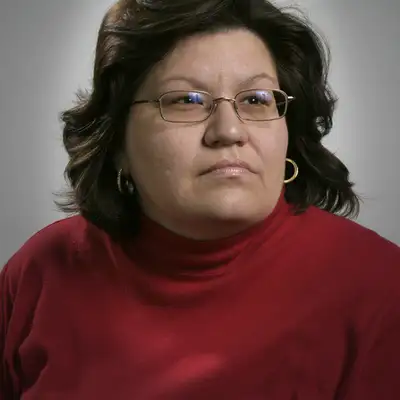
The Road To Your Name Podcast series grew out of a program started by Aboriginal Legal Services (ALS) in 2016 that helped people going through the justice system and their families to strengthen and deepen their cultural connections. Host, Lisa VanEvery, examines many aspects of Haudenosaunee culture and teachings with a wide range of guests.
Road To Your Name Podcast
Season 8, Episode 1
Guest: Dr. David Milward (joining our podcast by telephone)
Episode recorded in October 2025
===
Intro: [00:00:00] Greetings everyone. Welcome to our Yoha:te ne kahsen:na, The Road to Your Name podcast, focusing on Haudenosaunee cultural topics recorded on Haudenosaunee territory.
These podcasts are produced by Aboriginal Legal Services with the technical assistance of True Seed Media. My name is Lisa VanEvery from the Mohawk Nation and the Wolf Clan. I'm the coordinator of the Yoha:te ne kahsen:na, The Road to Your Name Program and the host of the podcast.
This is the Yoha:te ne kahsen:na: The Road to Your Name podcast series[00:01:00]
Lisa: Welcome to this episode of Yoha:te ne kahsen:na: The Road to Your Name podcast. On this episode, our guest is Dr. David Milward. He's an associate professor of law with the University of Victoria and a member of the Beardy's and Okemasis First Nation of Duck Lake. Did I say that right, Okemasis?
David: Okemasis.
Lisa: Okemasis, okay. I like to get it right. Okemasis First Nation of Duck Lake, Saskatchewan. Dr. Milward is the author of numerous articles on Indigenous justice in leading national and international law journals. Now, one of the books that I have read, just recently read that he has [00:02:00] written, is called Reconciliation and Indigenous Justice: A Search for Ways Forward.
Lisa: And I have to say that after reading this book cover to cover, it is really a comprehensive look and snapshot, I guess you would say, of what, Indigenous justice is like in this country and has been like. And it's, a wealth of information. It's got a lot of different perspectives from different, academics and other people in the book and a lot of statistics.
Lisa: And, I would say it's a really great, reference if you want to learn more about what has brought Indigenous people, to the point of filling up the, the correctional institutions in this country. So I'm really excited to have this conversation with Dr. David Milward today on this [00:03:00] episode. So welcome, welcome, David.
David: Oh, glad to be here.
Lisa: Yeah. I'm sure you've done a lot of interviews with all the, books and, articles you've written over the years, but this is just gonna be a, really informal conversation about what's going on in justice. So you made this your life's work, and you really co-authored and helped author the final report of the Truth and Reconci- Re- Reconciliation report on, the justice issues. What was, like what was that like working on that final report?
David: Yes. it was, It was initially pretty awkward. I don't know how much to say 'cause at some point, there was that troubled phase where the original Truth and Reconciliation Commission fell a-apart, and then they had to bring in Murray Sinclair and Willie Littlechild and so on to bring it together. And [00:04:00] so a lot of it was just to...
A, a lot of that early time when I was first in Winnipeg to start my career, a lot of it was the Truth and Reconciliation Commission, just figuring out how to tell people we're back and we've got something to do and everything else. And there was some initial reaching out to, academics and so on about, what work they were going to do and so on and so forth.
And initially that, there was some initial, awkwardness I was describing was, for example, that there was someone who indicated to me that maybe I, was going to have my shoulder tapped to do child, welfare. And I was like, "Okay, I'm willing to do that if I can." But, there's a name in the room we all know who's infinitely more qualified than myself to speak on child welfare.
It's Cindy Blackstock. and my, Not that I'm completely ignorant of child welfare as it, they interlinks with criminal justice matters a lot. But I was like, "Oh, [00:05:00] "Maybe I'm not gonna get to work on this justice." But, there's... Sometimes you just kinda have to sit and wait.
A lot of things go back and forth. And at some point, they hired a law professor named, Ken Roach, who I'm personal friends with, who actually, he's a law professor at the University of Toronto, and he was given the lead to head the academic research that would contribute to the final volumes. And then that's when I finally got back on track with the putting together material for the justice volume of the Truth and Reconciliation Commission final reports.
And then, once that, ship launched, then things started to go a lot smoother. And then, I wrote a draft, and then, Ken came back, Ken Roach came back, provided feedback, and then he added some things t- a lot of things to it. And so finally got, the po- polished product out, and that...
It was that material. A lot of material that I wrote didn't make its way into the final reports. Okay, you have to make [00:06:00] decisions about what's, what you can include and how to keep your reader manageable and everything else. But then, at some point, the Truth and Reconciliation reports became public domain.
so there wasn't necessarily a outstanding copyright on that. And so that, that's when I thought, the stuff that I wrote, not... Some of it made its way into the TRC reports. Some of it didn't. now I'm looking at a book." but that in itself was a whole other process.
Lisa: Yeah, and you have written several books. let's take a, let's ta-take a few steps back, and I wanted to ask you what got you interested in this, area of indigenous justice?
David: So when I was a teenager And I'm, and I'm, divulging some pretty personal sensitive in- info here on my own account. I was a teenager who spent my early years in Indigenous urban communities in both Edmonton [00:07:00] and Calgary.
And a lot of the things that I talk about, a lot of my friends were going through. you'll never meet an Indigenous person who hasn't experienced racism in one form or another at least once in his or her life. And, and we had to look out for each other, against students who didn't like being near Indigenous students.
all that s- all that stuff. And, as time goes by, and I was fortunate, I had strict parents, who... And my mother was a residential school survivor and managed to, break the cycle, as it were. And so eventually I start, just looking forward to law school and all the rest of it, but I never forgot, things I left behind.
But since then I've learned how a lot of my high school friends have fared. So some have unfortunately, passed away because of health issues. And again, that can b- that can be attributed to [00:08:00] social disadvantages experienced by Indigenous persons. I suspect, I don't know for sure, but I profoundly suspect there have been a couple of instances where maybe something like diabetes, but they can't, because there's outstanding search warrants, you can't even take that initial step of going to a doctor and applying for a medication, because then you end up on the, back on the radar, and you could get arrested and everything else.
I have had friends, commit suicide. and, people I was close friends with. and some people who have fallen into substance abuse and are themselves now in incarceration. and, one, in fact, is, and I'm not gonna name who he is, he's actually now, designated as a dangerous offender. So a lot of the stuff that I talked about, I had a front-seat view to all that.
so when I write about this, it's not me coming from the ivory tower. I used to live it. And, it's just sometimes it's by the smallest of [00:09:00] differences where sometimes be- when you just have the right people to help you out, the right people to look out for you, the right people that can make the smallest yet biggest differences in your life, it can make all the difference between, being where I am now, I'm grateful to be a law professor at University of Victoria.
This is my dream job. Or the, to the difference between that or you end up like the ve- your very friends that you're writing in reference to.
Lisa: So going through your, going back to when you were going through law school, what was the, w- what was one of the biggest barriers you faced, trying to get that law degree?
They teach a lot of foreign things, I guess you would say in law school if you're an indigenous person. It seems really foreign to us, right?
David: Oh, yeah.
Lisa: That way of thinking.
David: Yeah. I in some respects I, [00:10:00] I was foreign, but I was also fascinated with it at the same time.
sometimes you go to a course... And initially when I first went into law school, I said I was gonna be like a constitutional rights lawyer, litigation, all the rest of it. But I found myself more and more interested in, criminal law. just, some things just catch your interest more than others.
And then add to that a lot of the personal dis- experience I described, I changed my career resolve to initially to becoming a defense lawyer who, to represent indigenous persons in the criminal justice system. But in terms of like earlier, early barriers and whatnot, yeah, sometimes I had to put up with something.
I think a large part of it, a difficulty that I had to come through was, being surrounded by... there were some other indigenous students there, but all of a sudden you're at a place that's at a distance from your f- n- network of friends and family, and that's a l- an [00:11:00] issue that a lot of indigenous students face.
And sometimes it actually leads to some students like wondering if they w- they can keep at it and so on. another difficulty that I ran into, was, there was this stigma that Indigenous students are second-tier students. They're, not really good enough to be lawyers. They only get in because of a DEI, criterion.
They're not otherwise, And I had to deal with that a lot. Not just myself, but other Indigenous- students as well. in fact, at, the University of Alberta where I did my law degree, there was a, Lacey Ferris student. how admissions decisions for students should be based only on merit, and we all know what the subtext underneath the word merit actually means.
It's, it turns into exclusion. And, sometimes I had to deal with that. For example, and back then, while the Native Law Centre in Saskatoon was still in operation, it provided a opportunity to show you could actually go make your way [00:12:00] through law school, of course, and maybe gain admission. But on the other hand, I was one of those Indigenous students who actually did well enough in his undergrad that I wasn't required to do the Saskatoon program.
But, constantly running into non-Indigenous students who assume that, what was it like at the Saskatoon Native Center?" I didn't have to." And they, then they'd look at me kind of befuddled or amazed, like how could an Indigenous law student actually, meet the criteria?
That's just not possible. And at some point it, it gets to the point, I'm not having this conversation with you. there was an instance- where, and, a law student bec- because sometimes I still do, but that's pretty often I wear my hair in a single braid down the back. And at some point, it's not hard to figure out why I wear my hair that way.
There was one student in particular who would just not let it go. "Oh, you'll never be a lawyer if you don't cut your hair." Or, "If I had my way, you wouldn't be allowed into the... if you don't cut your hair." As, and eventually it [00:13:00] gradually escalated in degrees, and at some point he actually got violent towards me over it.
I had to be violent in return because, you know the lessons we learned in high school, if you don't, it's, it won't stop. at some point, you know- future lawyer acting this way, right? at some point I had to let him discreetly know in my own way, I'm, not gonna put up with this anymore.
actually more specifically, I wore a Sitting Bull T-shirt, when I knew that he was going to be there. It's my, my hair, it's not negotiable anymore. It's important to me as part of my identity. It's not happening. So he finally did get the message. not, in the best way, but he finally kinda took the hint, I wasn't putting up with that anymore.
But, so it's not... I'm sure other Indigenous law students can describe not exactly the same as what I'm talking about can, but can describe a lot similar negative experiences [00:14:00] as well.
Lisa: Do you think over the years that things have changed in that respect?
David: The way that I've heard it- sometimes when there's isn't overt racism, sometimes it gets pushed a little underground where it takes the form of microaggressions and that sort of thing.
And I, do, believe that some Indigenous students still experience that, both the overt and the what can come across or be perceived as microaggressions. at the same time, anybody believes that racism is a thing of the past is taking that position from a position of privilege.
the Young Republicans' chat room where they're using the N-word and anti-Semitic language and everything else, yeah, we all know certain things are still alive and well.
Lisa: And we certainly know it's still there and prominent in sports, in Native sports, and, the [00:15:00] healthcare system, and, the educational system, the child welfare system.
Lisa: And, and you... And it has prompted you and led you to write books about this , And so- Yeah ... the latest one is, Indigenous Law and, Canadian Criminal Justice. can you tell us what that book's about? It was just released this year.
David: Yes. so I co-authored it with, Jonathan Rudin, great lawyer, great guy who used to be the head of your organization, and numerous other people contributed to it as well.
so the audience, hopefully, it's not just only this audience, but a key audience that we wanted to reach is undergrad students, Indigenous and non-Indigenous who might be in, in s- when you get down to it, your undergrad program, your first degree program during a university, it amounts to developing formative [00:16:00] years in your post-secondary education.
So that's one of the great opportunities to start to shape hearts and minds. And, and the idea is if you were previously unaware of Indigenous justice issues or Indigenous concerns in Canada, we wanted to reach that balance between providing specific, correct information on what Indigenous justice is about, but do it in a way that it could really reach the level of those first, second, third university students.
But at the same time, we, we certainly hope that on some level that we can also start to reach the general public and other experts at the same time, But, partic- we want to reach as broad an audience as possible, but that first-year or second new university students, that was one of our key audiences we really wanted to reach.
Lisa: And for those, students just entering, universities and s- and, selecting those courses such as Indigenous [00:17:00] law, those kind of courses, what would you want them to know about over-incarceration? Because those rates continue to grow higher And they don't seem to be stopping. So there's th- over the years, there's been such a, rise of over-incarceration for both men and women in both the provincial and federal system.
David: Yeah.
Now, I g- guess I would on some level, I would say I know that there's been a lot of backlash from the political right, a pushback against soft on crime policies and that they put society in danger. And I know for example, we've heard a lot from, for example, individuals like Ben Shapiro and Matt Walsh specifically with regard to, the death of Irina Zhuravska by, Decarlos Brown.
And oh, this is an example why soft on crime doesn't work and it puts... [00:18:00] It's, bleeding heart and it puts society at risk and all the rest of it. Not even engaging with the fact that Decarlos Brown might have been suffering from mental health issues and he... There's questions of did he have the health services that he needed to avoid getting in that.
So those questions that the right doesn't even engage with. But if you just listen to the right and, s- even in Canada we're seeing some reflection, some people in the right saying, Harper when he introduced the mandatory minimums, that was when Canadian society was the safest and that was the golden age for, tough Canadian justice that we needed."
so it's easy to buy that, hoopla if you, look at it with an uncritical mind. and then there's also this idea that, this woke ideology, it allows people to just not take responsibility for anything and it makes... And it advances sob stories. But the fact of the matter is that if you actually look in detail about the social phenomena that [00:19:00] affected these peoples going back to the residential schools and how they continue to have ongoing effects and how they continue to lead to intergenerational trauma and all the rest of it, yeah, there, there are some people who are at a distinct disadvantage, very much a very profound disadvantage compared to other people.
And the costs for that do go back to his- historical injustices. So s- it's not, just a sob story. there's... These are things like for the sake of being compassionate towards our fellow human beings, sometimes you do have to take those things into account and realize that, yeah, sometimes it does explain how this person got there and tr- do we try to deal with things other than through incarceration.
but the other point is that it-- there's also this assumption very often on the political right, and by the way, whenha- whenever something happens like Iryna Zarutska, Zarutska getting stabbed to death, it's not like restorative justice advocates are, people who believe in restorative [00:20:00] justi- justice would be dismissive of something like that happened.
We do recognize that a young innocent woman who totally absolutely did not deserve that died and she will have loved ones who have been really hurt by what happened. And we don't at all mean to minimize Or dismiss that, but a, very large part, we are also asking questions about efficacy. you continue to just warehouse people en masse in jail, spend massive amounts of money, and they're g- and they're leaving jail worse than when they came out.
there's some hard critical questions that people really need to ask themselves when it comes to criminal justice policy.
Yeah, for sure. and as far as, the restorative justice and I think that, we've seen that it does work. Restorative justice measures do work, but they don't get the, the financial [00:21:00] support in communities that we need.
Lisa: So even though we have things like the sentencing principle of Gladue, we don't have the resources to actually make this work well, right? And when... To think up these creative, sentencing outcomes, but there's really nothing to do unless you have a, healing center in your community that's dedicated to people that are in the justice system.
And how many communities have that?
David: Yeah. exactly. And the fact of the matter is, and there's also a, doubt, there's also a lot of
Black critical race scholars who explore this idea of prison abolition. and the idea is it's, it, costs at least $120,000 a year to incarcerate one Indigenous woman in a federal penitentiary, but for her to do a probation or conditional sentence is $30,000 a [00:22:00] year. and it's like You know it's not gonna work or it doesn't lead to long-term solutions, but you're still allowed to put your money in a pile and, put a, put, pour gasoline on it and throw a light on it than spend far less on something that you actually know is going to, will, probably work better.
But it's, a lot of it is politics because politicians want to get elected and want to get reelected, and they know they're going to lose political support if they, at least on the surface level, try to explore those alternatives. Because then the public will say, "Oh, you're another bleeding heart who's not taking crime and our safety seriously.
And we're not gonna vote for you." And that's a real stumbling block to getting the r- resources there.
Lisa: what we need, is to, have your, books be mandatory reading by all Canadian voters.
David: Yeah. s- [00:23:00] there's also that cliche, don't confuse me with facts. but one way to look at it, and I've said this, point multiple times before, you look at the Nordic countries.
Now, not that the Nordic countries are, paradise utopias, but they use jail for very few things And but at the same time, it's not like you're seeing the streets of Stockholm and Oslo burning down the, to the ground in chaos and anarchy and crime and everything else. then people say, "Oh, but there's American beliefs about the rightness of..."
why can't you actually change your minds about things? Because there's a criminology professor, he's now retired, but he was at the University of Toronto, Anthony Doob, where he puts out a survey, and he just asked that simple question, why do, do you think the justice system is too harsh? And you just ask that very simple question, pretty much everybody's gonna say yes.
But then you start to ask more nuanced questions. if you knew the rate of reoffending for a conditional sentence was this, and you knew it was this for jail, and [00:24:00] then people start, maybe." Or you ask, if you knew a conditional sentence cost this much or probation cost this much, and you knew a year in jail cost this much, if anything can actually alter the public sensibilities about criminal justice and appeal to their tax dollar wallets.
and sometimes, the United States, several of the American state jurisdictions have done exactly that. Kansas or Texas, where they put out plebiscites, we're looking at getting bankrupt by spending so much money on prison, and they put out public surveys and then, pro- providing that kind of information, and then they got the results back, and they understand as a mandate, go ahead, start emphasizing probation and/or community sentences instead in, favor of less jail.
So it, it is possible to alter public opinion and get the mandate to put the resources where they actually will make the biggest difference and actually deliver the most for the dollar. [00:25:00] But, whether the, there's the will to actually do that, I'm certainly not seeing it in Canada. even we have Mark Carney who's promising to make, bail reforms tougher.
Lisa: Yeah. it seems like the answer is not just o- a one-prong approach. I think we have to go through, the lawmakers, the judges, the crowns, like every... We have to touch every aspect of the justice system in order to get to the solution. how long is that gonna take?
David: Yeah. who knows? people ask me how I keep going after so many years. It's I don't... Yeah, does it get frustrating and tiring? Yeah, of course, it does, but that's not an excuse to give up. So I'll, keep saying the message as long as, [00:26:00] as long as I still can. the other thing to also take note of, it's not just the justice system personnel.
There's so many fronts where we, need more, put more reserves, more attention into it. But because I have tons of respect for indigenous frontline workers who work in fields like teachers and education, people who work in harm reduction services to treat substance abuse, or people who work as therapists and counselors and so on.
Because, y- that multi-prong approach is a lot of it is, trying to build better communities where crime is less likely to build healthier communities with more better education, better health, better addressing of intergener- generational trauma even before the person gets around to m- misbehaving and getting charged in the criminal justice system.
There's so many points where these problems need to be addressed.
Lisa: And I think, when we, talk about Gladue, we [00:27:00] have the Gladue, reports, we have the Gladue letters. do you think that, with, educating lawyers, it could maybe start there in law schools where we could teach more creativity thinking, more creative thinking.
Lawyers seem to be all trained the same over many, years, right? They're trained the same, they're, it doesn't really change. do you think that training them differently is a key?
David: I would like to hope so, 'cause I'm part of the JID/JD program here at University of Victoria, so where we teach indigenous legal orders alongside Canadian law courses.
so for example, myself, I teach a course that teaches both Canadian criminal law alongside Cree law, or in past iterations, Val Napoleon has taught a course that teaches Gitxsan law alongside Canadian property [00:28:00] law, and first few years of the program, John Borrows taught a course on Anishinaabe law alongside Canadian constitutional law.
And a lot of our graduates are doing a lot of great work, especially when the, some of them have returned to their own communities and helped their own communities develop their own legal systems and so on. So the, a lot of good work is being done. Yeah, I do think there's a lot of potential. On the other hand, on the other hand, it's still sometimes an uphill battle at times, because I've heard from other grads, they do try to make submissions in front of judges based on, the knowledge of indigenous legal orders that they've acquired through our program and through other ways, and then sometimes they get shot down.
that's not really relevant," because, the judge or the other lawyer is still focused rarely on Canadian law. So yeah, I think there's a lot of potential for that, but, it's not an overnight thing, and sometimes it is still an uphill battle.
Lisa: I guess it just be- it depends on, the worldview and the life experiences of the judges in front of [00:29:00] you.
David: Yeah.
Lisa: Or that you're in front of.
Davie: Yeah.
Lisa: Yeah
David: Oh, yeah, for sure. And, there are some... There are- I do hear that there's still the odd judge who just doesn't get...., who doesn't understand, and still wrapped in this, punish- only understands punishment kind of thing. And there are some judges where even if they're trying to engage and they're trying to understand, they are still- their training and, their thinking is still wrapped up into this, this offense, I'd like to, but this offense is still too serious, and I have to send this person to jail."
Lisa: Yeah.
Okay. Now, David, is there anything that we didn't talk about that you would like to mention?
David: Yeah, something I would suggest is, as we're seeing some, resurgence on the part of the political right, trying to, as we're, bring back a kind of punitive winter. and, there's a lot of playing on, oh, it makes society unsafe [00:30:00] and whatnot.
I think it's easy to buy that. I would just, caution our amongst people that if, even if people... You hear someone who's advocating for restorative justice or indigenous justice or, d- even in the United States, alternatives, for Blacks besides incarceration and so on. The people who advocate that, they're not necess- not necessarily...
It's not their objective to make society less safe or to give people a pass, for, or no responsibility, nor accountability for doing something. we ourselves are heavily invested in community safety, but we're trying to do it in ways that, sometimes the, in my view, so- some people on the right are not always honest about or pretend isn't even there- if you know what I mean.
Lisa: Yeah, I guess, maybe it's because, people don't really understand what restorative justice is, right? [00:31:00] they don't understand that- okay, would you, really want a person that spent five or six years in prison not knowing what their, experiences are going to be in prison, but they're mostly gonna be negative, right?
And would you rather have that person come out and live i- next door to you, or would you rather have a person that has, been creatively sentenced to, say, given the opportunity to, learn their spirituality that they never had a chance to learn by residential school or something like that, learn from elders that their, education of their traditions was majorly interrupted at one point?
And then they, do learn that. They connect to who they're supposed to be, and they're [00:32:00] more, balanced within themselves. Yeah. So I think maybe- we don't see enough results of re- of what restorative justice can do, and we don't hear enough about it.
David: Yeah. And add to that, you do have the odd instance where, for example, someone was released on parole, and then he goes out and do- does something, and that's just a total media blitz just blowing it up right up.
Oh, this is an, a stunning indictment of the parole system and so on. Or, there was an incident where an indigenous person was on bail release, and then he killed a cop. Oh, this is what happens when you let indigenous persons off without bail, and so on and so forth. Very little does that, ac- does any kind of acknowledgement come in where an indigenous person went through that process, was just a complete mess of violent substance [00:33:00] abuse and then got turned around because he actually was given a chance. And, sometimes there are slip-ups along the way. Sometimes, a person, drinks a little and acts up, and then you have to have this guidance with him.
You have to have another meeting with the elders. I've seen a lot of that in the Duncan. I've, sometimes attended the Duncan First Nations court as an observer. I've seen a lot of that where the elders "Okay, you slipped. Here, we're still here for you. But, going forward, let's try to do better."
of course there's gonna be slip-ups along the way. human progress towards a better place very often is a, very rarely is a straight line. And but, when those people actually do get their lives turned around, those aren't the stories that make their way into front page news.
It's the perceived screw-ups- or the perceived mess-ups that are supposed to be an indictment against restorative justice or alternatives to prison.
Lisa: Yeah, for sure. So how do you think, the corrections system in this [00:34:00] country can do better, can do their part and do better?
David: A large part of it, I think we need to We really need to rethink our whole social security classification.
It is possible to cascade down from maximum security prison to medium security prison to minimum, and then you actually can start to come into a place like Stan Daniels in Edmonton or William Head here in Victoria. But it's also like a sink. It's once you've, circled down that drain, it's really hard to make your way back out.
but the fact of the matter is that those security classifications, which almost very strongly still emphasize what you did in the past, which is supposed to be the best indicator of what you're gonna do in the future. a lot of literature has, debunks that. and there, there's a lot of literature that dynamics your actual present progress.[00:35:00]
You're, going to, speaking with elders, your behavior improving after you've had, some visits with some elders, those are actually the best indicators. And, but because of that security classification, what you did in the past, you're in max, you're staying in max, and it prevents so many people from getting to the healing lodges or the halfway houses that could provide them with service that they would do them a lot of good and would actually get them to a better place.
Patricia Barkaskas and myself, we attended a conference in Vancouver with a lot of forensic psychiatrists involved, and they're just talking of static factor this, it predicts risk and all the rest. And then both Patricia and myself at some point, hold on, how about this literature, which I know you all know of, that says, certainly with Indigenous persons, dynamic factors are actually the better predictor.
[00:36:00] here's me aloft and sticking my neck out, amongst, professional psychiatrists in their own backyard. That's a gutsy thing to do, but sometimes you need to make that challenge, right? I think another one is, again, there's just not enough, halfway houses, those healing lodges to service, the needs of those who need them.
I know there's very few, if any. last time I checked, I don't know if it's improved or not. Last time I checked, there's still only just two, healing lodges specifically for Indigenous women. And, there's there's a need for so much more
Lisa: And even if a, institution doesn't have a healing lodge, they could bring in elders, right?
Yeah. We need more elders going- For sure ... into prisons, Yeah. And more programming available in there.
David: Yeah, absolutely.
Lisa: I don't think you and I can fix it tomorrow, David. No. [00:37:00] But, but we do have a lot of people, a lot of indigenous people in the field of justice, more than ever I think, who are doing this hard work, and have been- Yeah
over the years. So we're in pretty good shape, but we need more, indigenous lawyers, don't you think?
David: Yep. More indigenous lawyers, more report writers because, to write a Gladue report is now a skill set, pretty much a profession-
unto itself. and, there's, a world of difference between a probation officer tacking a Gladue section onto a presentence report and actually being a, an actual real Gladue report writer.
It's a different animal from a standard presentence report, and it's a skill set unto itself. We need more of those. But we also need, more indigenous peoples to do a lot of the other frontline w- work, like the harm reduction services for substance abuse, and the counselors and the therapists. [00:38:00] more of everything when you really think about it.
Lisa: Yeah, for sure. Any final thoughts for us?
David: Yeah. for anyone who's listening to this, indigenous or not, especially if you're young and you have, maybe have some ideals about helping your community and whatnot, anybody who's been around the block a few times, like Jonathan, Rud and myself, and other people, and Patricia, and anyone else, you're gonna run into frustrations.
You're gonna run into experiences that question your willingness to stay in and all of this. it's inevitable. It's, the fact of the matter is that, there's people that are suffering a lot of harm going back to land theft and colonialism and residential schools. it's, hard. It's hard work and it's, but you are gonna run into frustrations and obstacles.
I would just say, stick with it. And, the knowing that you did good work is very often a sufficient reward unto [00:39:00] itself. and the, other thing is sometimes, and I've told... For example, when I visit my niece in Toronto, she works at the Anishnawbe Health Centre in Toronto- and she's Australian.
And I told her, "Look, you are going to interact with indigenous persons a lot, and sometimes they'll behave towards you in a sort of angry or less than friendly fashion." I told her, "Be patient with them, because they've had a lot going on in their lives and everything else, and sometimes they'll act out or lash out and some.
You just happen to be the person who's in front of them for them to take it out on. and that, that's the nature of this business that you've just entered." and, it's the same thing for a lot of indigenous frontline workers in other fields. Yeah, you are gonna run into those experiences, and you do have to realize that sometimes the people you're working with, sometimes might behave to you in a fashion that seems ungrateful or, even, even f- outright mean.
But, given the nature of the issues [00:40:00] that you're dealing with, it shouldn't be surprising. You sometimes you do need a lot of patience and understanding to-
Yeah ... do
the work.
Lisa: We gotta keep doing the work. I wanna thank our guest on this episode of the Road to Your Name podcast. We've been talking with Dr. David Milward, who's an associate professor of law at the University of Victoria. And if you get a chance, read one of his books or all of them. I wanna say nya:weh. Thank you, David, for joining us on this episode of our podcast. I really learned a lot from you, and it was a great conversation. Nya:weh.
David: Well, miigwech.
Lisa: Okay. Onakiiwa:hi. Okay
Nya:weh. Thank you for listening to this episode of the Yoha:te ne kahsen:na, The Road to Your Name Podcast, which has been produced by Aboriginal Legal Services and hosted by me, Lisa VanEvery. There are 10 podcast episodes in each [00:41:00] season. Let's meet again on the next episode. If you would like to learn more about our organization, Aboriginal Legal Services, and the programs and services we provide, please visit us at our website, www.aboriginallegal.ca
And if you feel inclined and would like to make a donation, you can click on the word Donate located at the top of the homepage of our website. You can also visit us on Facebook at Road to Your Name. This has been the Yoha:te ne kahsen:na: The Road to Your Name podcast.