Subscribe
Share
Share
Embed
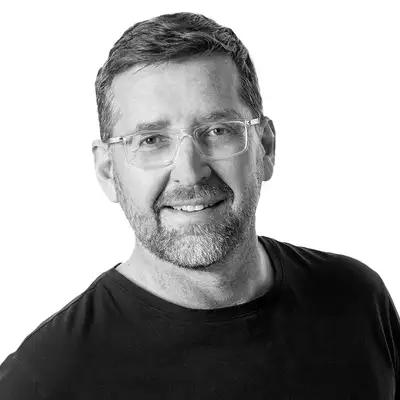

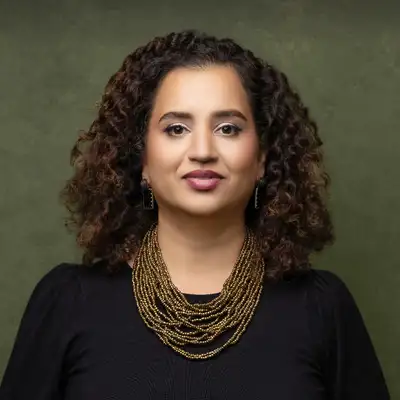
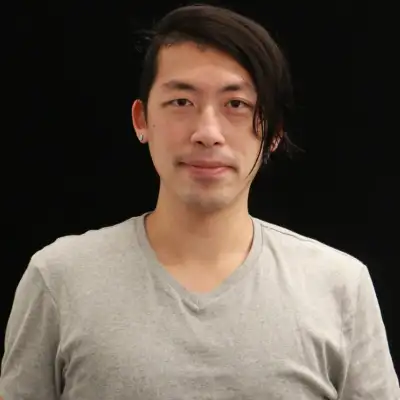
Hosted by Heath Fletcher, The Healthy Enterprise explores how innovation, technology, and leadership are reshaping the life sciences industry—from discovery and development to commercialization and care delivery. Each episode features candid, heart-centered conversations with founders, scientists, executives, and investors, sharing real-world experiences and insights for building resilient, future-ready organizations.
Created and Produced by Bullzeye Global Growth Partners — Let’s build it together!
Heath Fletcher (00:13)
Hello everybody, welcome to the Healthy Enterprise podcast. I hope you're having a great day and thank you for joining me. If you're returning for another listen, thanks for ⁓ coming back. And if it's your first time, well, welcome. You've chosen a good episode to join us. My guest for this episode is Martin Tsui. He is the founder and CEO of ncrspt a biotech deep tech startup, pushing the boundaries of CRISPR tech by exploring DNA. ⁓
as a medium for data storage. With over 15 years of experience in molecular biology and biochemistry, Martin is credited with discovering the world's first thermal stable CRISPR-Cas9. He's a scientist turned entrepreneur. He's passionate about reimagining how biology, tech, and engineering can be repurposed. So put on your science fiction glasses and let's hear what Martin has to say.
Martin, thank you so much for joining me for this episode today. I'm looking forward to hearing about your company and Crisp. And ⁓ so, you know, why don't you start with introducing yourself to our listeners and who you are, where you are, and ⁓ start telling us about your company.
Martin Tsui (01:27)
That's good. Thank you. My name is Martin. I'm currently based in San Francisco. ⁓ I'm a scientist by training. So my startup is in the space of genome engineering and deep tech or biotech and deep tech. ⁓ All has to do with my experience in the space of science. ⁓ Quick introduction. So I have a PhD in molecular biophysics from the Florida State University. During my PhD, I
did a lot of research specifically on CRISPR proteins. So when I, in my first year PhD student, that is where kind of Cas9 just discovered, a major discovery in 2012, which basically demonstrate how this protein from bacteria can essentially cut any DNA. And that just kind of opens up the doors of many different applications, right? So after my five years of PhD, I moved to San Francisco to do my postdoctoral research at UC San Francisco, University of California San Francisco.
With the emphasis of learning structural biology techniques a technique called yet wrong cryo microscopy So even though during that time and I spent three years there So during that time even though I wasn't necessarily working with anything genome engineering or CRISPR ⁓ I still very much in touch with the space While I'm trying to learn the structural biology techniques to study human diseases where there be cancers or virus so some of the examples I think most most of the audience may familiar with would be
SARS-CoV-2, right? That causes the pandemic, right? So I was part of the consortium where everyone took their time, sorry, contributed their time and worked 24-7 in a staggering shift just so that we can push our effort to try to find a solution to tackle this virus. And we were able to publish some of the really cool results that end up on, example, in science, right? So fun fact, that paper published, I think, in 2020, that paper has
a hundred something, almost 200 authors, is the space of biology or biomedical research. So I'm glad to be part of the consortium. ⁓
Heath Fletcher (03:26)
rare. Wow.
That's interesting. Yeah. 100, 100 some odd authors. Wow.
Martin Tsui (03:38)
Yeah, that's more common in physics, right? It's very rare in biology. So, and you know, just like urgent times have that kind of approach, right? Yeah. So eventually I moved to Michigan and finished another half of year postdoc, and then I leave academia and go into industry. So then when I go into the biotechnology sector, my first job is in Amazon. So we, I was in an organization that tried to build over-the-counter diagnostic products. So think of it.
as your COVID test kit, right? Or any other infectious disease or STI test. We try to make a product where people can go to the pharmacy without a prescription, get the test kit, bring it home, do their test, get their results. But, you know, like I think there's some misalignment between the goals, the timeline, as well as the reality. And so when the 2022 October-ish, when there's a...
huge massive layoff in the tech industry, we were also impacted. So it's around that time when ⁓ we were informed, you know, how much time we have left at Amazon, we can start looking for jobs and all of that. And two of my colleagues came across this Twitter post where a VC solicit ⁓ proposals or ideas from people who are getting laid off from these large tech companies, right? And so
This is basically how ncrspt started it started with a Google form a survey ⁓ And on the evening when I have a date planned and I spent 15 minutes Yes, it means 15 minutes to fill out the form Just pitch them preaching some ideas and I submit advance contrary to my colleagues are really cranking their brain try to think of something cool The first round yeah, I was first round so so that I talked to the GP and ⁓ I tell I tell her my three ideas, which is
Basically, I'm just verbalizing what I wrote on the Google form, right? And I was able to move to the last round, but this time before the last round, I was given two advice. I was narrowed down to just one idea, because I have three. And because I'm in the space of biotech, investors do not believe that a single founder, first time solo founder, is ever able to deliver anything. So she recommended me to find a co-founder.
So at that time, I chose a close colleague of mine to be my co-founder. And we go into the last round of the interview with Pitch. And we were fortunate that we were able to be part of the selected groups to found the company to build on this. And that's how Encrypt started at the end of 2022.
Heath Fletcher (06:20)
Wow, that's a cool story. That's a great way to get lift off. Thank you. you. And so that put you into sort of what was the first step in that after that after receiving that and that provides some funding for it. Was that what it was? Great.
Martin Tsui (06:36)
Yep. Yeah, exactly. yeah, so the first, first item of action, contrary to perhaps other startups is we go out and fundraising, ⁓ because the startup funding that we receive, it might be sufficient for, tech startups, but biotech startups have just require a lot of resources, right? Yeah. Space and all that. And because we are not, we were not spinning out from an academic lab. We are really more like the garage lab start out from garage, right?
So it costs a lot more for every single operation. So we try to start fundraising in 2023 in the first six months, but because of what we try to do, which I know that I don't, haven't exactly reviewed what I'm doing yet. But because of what we try to do is so sci-fi-y to a lot of people. So people think that it's very high risk and therefore they're not particularly interested. And so now we have to do something, which basically means that we kind of pause our fundraising campaign and start trying to build our prototype.
That was 2023 summer or July and ⁓ yeah, that's where we were at the time.
Heath Fletcher (07:41)
interesting. And before we get a little bit further, we've been, we've, you've said the few, words, the word crisper or crisp a few times. So, ⁓ you and I were talking about this before, so maybe for interviewer's sake, maybe explain where that comes from. So they're not, they know we're not talking about lettuce or something completely unrelated. Yeah.
Martin Tsui (08:02)
Yeah, so for those who are not familiar CRISPR stands for Clustered Regularly Interspace ⁓ Palindromic Repeats, CRISPR. Oof, almost forgot about
Heath Fletcher (08:13)
very good. You're actually the only person I've asked that actually knew what the acronym stands
Martin Tsui (08:19)
Yeah,
yeah, yeah. So yeah, I mean, it's my PhD, you know, I gotta I gotta know my stuff a little bit, even though I'm kind of forgetful now. But yeah, so so it is. It was originally some DNA sequence, a pattern, in fact, that was recognized by microbiologists and by mathematician when they sequence some microbes. And they see that, this stretch of DNA have some repeating sequence kind of bit like a if you think of you think of on a road on a freeway.
And between two lanes, you have these dotted lines, white dotted lines that tells you is a barrier between two lanes, right? If you have no idea what it means, you will just notice that, hmm, I wonder why is it repeating the similar length, they're always repeating. Of course, for those who have driver, they know why, of course. But coming back to biology, when you see something kind of repeating itself, and we don't really have an idea at the time, we naturally question why does it exist? And then ask, what is the purpose of this?
for the then, for the, and I think initially it was discovered maybe around 2001, 2002. And in the following years, people gradually discovered that, it is actually an adaptive immune response system in 90 % of IKEA, about 50 % of bacteria. Basically, the long story short of this is if a microbe such as bacteria, if they were infected by its virus, right? Of course, there are basically, you only have two,
two potential outcome. One is they're gonna be dead after the virus do its thing, or they're gonna survive. But for those system that can survive, when this CRISPR system exists, they're gonna survive with their primary immune response, but also the CRISPR system will able to capture some of these genetic ⁓ features, think of it as like a fingerprint of the infectious material into the host. So essentially you've got the fingerprints of
the previous offender now put it into a database. And the next time and the same offender comes back to infect the host that survived the first round. Now you have this system that constantly have a surveillance complex looking for species that has these kind of fingerprints, if you will, or the description of the suspect. And once they find this suspect, they're going to arrest it. The virus can no longer persist in the cell. They're just going to essentially quote unquote, kill the virus in the cell. So that's how the
adaptive immune response system works. That's generally how CRISPR works. And well done. And all we do as a scientist, all we do is we really just leveraging one or two of these proteins, and then repurpose it for genome engineering. Even though the entire CRISPR space, you have so many different proteins, but we are really just focusing on the ones that are most, perhaps the simplest design, the simplest organization that can be used for other applications. that's what CRISPR is. And that's what
people typically talked about when I talk about CRISPR.
Heath Fletcher (11:18)
Yeah. And they talked about it in relation to sort of gene editing and that, and then all the technology related to that. Right. Okay. Cool. All right. And so now you're, ⁓ where, what stage are you in now in the company? Where are you at today?
Martin Tsui (11:22)
Exactly.
We are, fun fact, we are just stretching our initial funding and try to complete our pattern application as well as try to fundraising, ⁓ partly because we as a ⁓ startup in a space that has no AI involved, I think the past two years has been very challenging, let alone the thing that we try to build is so far out that people don't even know it exists. So.
All that being said, I think the timing is not great for us. And so where we are now is we're trying to identify investors that believe in our visionary, believe in some of the technology that may exist in the future, but it's actually now. And then so that, we can build our startup that way. So we are basically using something that a lot of people perhaps overlooked and take the time that we have and then try to our story, our company.
Heath Fletcher (12:33)
Okay, well, you've done a great job explaining the science in a way that, you know, the rest of the world can more or less understand because I love and you love to have some great analogy in there. Now you've got some very interesting ⁓ ways that you deliver this technology through your company. Then the three categories that are data encoding, genome integration and living archive. Yeah, correct. Okay, so why don't you kind of
Martin Tsui (12:57)
That's basically it.
Heath Fletcher (13:01)
go through those areas and kind of explain how you've adopted this technology and put it into those sort of categories because you provide a service to a variety of industries as well, right? And so they're very interesting and you're right, it is very Battlestar Galactica. It's the future, but it isn't the future because I mean, there's a lot of things happening right now that we thought were in the future.
but they're here today. So yeah, let's hear more about how you're delivering this.
Martin Tsui (13:36)
Okay, so let's start with some objective truth. For example, we are, I think most people are relying on ⁓ cloud storage to store their digital data, right? And the reality is that we have limited storage capacity. from, this is objectively what it is. That's the reason why ⁓ now that with the AI boom,
a lot of large tech companies that are building data centers because we simply need more physical space that allow to even more of the storage in the cloud provider to customers. So that's just an objective truth. Now, if you think from the perspective of economics, then you'll have infinite because those are the individuals or the businesses who can pay for a premium price. They will always be able to access the data storage surface. But then for those who don't, they don't, right?
So we try to think of what are the other ways that can try to mitigate that outcome. In the ideal scenario is everyone can access the data storage. ⁓ We know that the price will increase because that's just, know, economy works, right? Capitalism works, right? But how can we find a solution that able to mediate this current scenario until we have quote unquote infinite supply of data storage?
And then on the other hand, ⁓ that's a completely different thing, but it's actually the main thing, which is the fact that the way we store data has been changing for the past 20, 30 years. And when it changes as an individual, we do not have a say in this, right? Like I grew up at a time when we used floppy disk back in the nineties. And if you, if you.
Exactly, right? So if you are to try to assess your data in the floppy disk now in 2025, it's going to be very challenging, right? Yeah.
Heath Fletcher (15:33)
Yeah.
I find some trying to find something to stick it into. Yeah. Exactly. There's nothing. There's nothing around.
Martin Tsui (15:41)
The backward compatibility is not, I'll say, as individual consumers. It's up to the hardware engineers. And of course, there are reasons why we progress from floppy disk to compact disk to your thumb drive or solid state drive. Because technology improved, we can store more. It's true. But the data that were once in the older physical form, they are still data. And for some people, those data could be invaluable.
The premise of what Encrypt is trying to think of is, there ways that we can store data and keep it for as long as we can? Can we keep it for decades, if not centuries at a time? It's very simple question here. And so let me think from this perspective. ⁓ It's very clear that if you believe in biology, you believe in your DNA, that is coming from your ancestors, ⁓
you know, if you also believe in evolution, then you have to believe that your DNA lasts for many, many years, I'm talking about millions of years. So if you believe in all of that, then it's not too hard to grasp that our DNA is some form of data that code us individually, and it has lasts for millions of years. And of course in between, know, you know, like a reproduction between parents and all that, of course that changes, but nonetheless, it is still data. The data does last through that many years. So
we think that you can use biology to store data. And we are not obviously the first one to do this, right? Eight years ago or nine years ago, Microsoft and University of Washington demonstrated how to store data in DNA. But in this case, the DNA is outside of cells. So they demonstrate a feasibility and all of that, and that's great. And in fact, like the density of storing digital data in DNA is so high. To put into perspective,
In 2021, and I choose this number because that's what I know in terms of some other folks who did their research, they come up with the numbers. So I'm just kind of referencing that. In 2021, the world population was generating almost 60 zettabyte of data. And if I remember correctly, 60 zettabyte is basically 60 billion terabyte. Yes. Okay. So we generate a lot of data in that year, right? That's a lot.
Heath Fletcher (17:57)
Wow.
Yeah.
Martin Tsui (18:04)
And so the data that we have been using, whether it be short term, meaning that you're going to store your data on computer and then you open it a few seconds or minutes later, or whether it be long term, meaning that you're not going to access it until years later, or you even archive it, which is the code data, doesn't really matter. 60 set up by 2021. These data, obviously many of them were stored around the world in the data centers. There are about 8,000 of those. Each of the data center has a size of a football field.
I'm talking about professional football, like NFL size field, right? Okay. And then they won 24 seven. And then it was predicted that if you were to come to 2025, you're going to have a triple the amount. So it will be 180 zettabytes. So without the AI boom. So for sure we running out of capacity. Sure. But coming back to the DNA and density, right? If you were to convert 60 zettabytes of data into DNA and then you store it in DNA.
how much DNA we will need. It turns out that you will need about a glass of water full of volume, but not water, just DNA, just the powder of DNA. And then they are non-redundant, just a single copy. That's all you need. So if you think from this perspective, DNA has a really, really high density of storing digital data.
Heath Fletcher (19:25)
Yeah. Okay, but it's, I'm trying to wrap my head around. Yeah. How you get it in there?
Martin Tsui (19:32)
Great question. now I believe I introduce how DNA-based data storage, how it works, Yeah, so now the part that what makes encrypts encrypts is the fact that can we go one step beyond, is put that DNA in cell. So that has a lot to do with my academic training in the space of CRISPR tool development. ⁓ And obviously a lot of different people contribute to this. It's just that we think, ⁓
we have a technology now perhaps we can try to put the data in the comments of DNA in cell. So what we are trying to do then is we do the first part where we convert data into DNA. And of course, later on, you have to reverse the process with the data loss, which we're able to do that. And then now insert this DNA in cells. The question was, how do you do that? So in the beginning of CRISPR technology or science in general,
it has been demonstrated that how you can insert a small DNA by small meaning perhaps between I guess insertions, I guess you're focusing on perhaps 20 to maybe like a hundreds base pair long of DNA. ⁓ For those who are less familiar with like what is a base pair ⁓ length. So first of all, base pair means that, you know, the DNA coded with A, T, G, and C, and they form a pair to form this double helix, right?
A double helix is two strands of DNA, each strand is AT, GNC, but then they do form a pair, like A pairs with T, G pairs with C. So when we say a pair, it means that on a double strand DNA, we look at the one smallest unit available to the DNA. So for DNA insertion, there is a length limit, depending on the ways of doing this. The cells like the most is to repair when the DNA breaks, so sometimes it introduces random base pairs, a few.
Heath Fletcher (21:11)
Okay.
Martin Tsui (21:25)
sometimes it would delete. This is great if you just want to disrupt it, but if you want to intentionally insert a DNA, which means that you're asking cells to do something that they're not naturally do, like you just leverage some of the repair process, then that can be a limit. So I believe that in the past, up to 2022, people have demonstrated that maybe perhaps insertion around hundreds of base pair is definitely feasible in mammalian cells or in human cancer cell lines.
⁓ In the case where you do a longer DNA, you will have to confront the fact that when the DNA, the cutting point on the genome of the cells, when they are too far apart, your cells may have the ability to repair without introducing your insertion. So now you're thinking of the equilibrium between what you try to insert and how the cell just naturally try to respond to the repair. So having said all of that, the short answer to this is perhaps a few hundreds is
really demonstrate the feasibility, right? But into 2022 or so, now there's like an advancement in the space where by coupling CRISPR proteins and different proteins called integrase, let's just call it integrase for now, then you can insert up to, well, on the paper, up to 30 kilobase per DNA. So you're thinking of at least one order of magnitude, if not two orders of magnitude long of the DNA.
When you can insert ⁓ a tens of 10,000 kilobase pair, sorry, 10,000 base pair or 10 kilobase pair and up, now you're looking at the length of a gene or multiple genes. This is really cool or important because sometimes you have genes that are, if you have a genetic disease and you have multiple mutations on it, it's going to be very difficult to correct one mutation at a time if you have so many of it, right?
So the current advancement in CRISPR-based therapeutics, they are mostly focusing on a single base correction. Like if that's a sickle cell leukemia, it's a single base notation that causes leukemia. And therefore, if you just change or you just correct that one base pair, you will fix the cells. Basically, that's how it works. But if you have a disease or scenario where you have so many of those, let's say hundreds of those, it might be more efficient to just cut out the entire problematic gene and then replace it with the corrected one.
But if you have to do this, you need a technology that demonstrate you can have such a large DNA replacement. And in 2022, or maybe even 2021, that has been demonstrated that conceptually it works, at least the size-wise it works. So at that time, again, I've been always been focusing also in touch with the space of CRISPR. When I see this, the first thing for most scientists is
How can you make it as a therapeutic tool? And of course, the inventors of that particular tool, formed biotherapeutic companies right away and they raised a lot of money. But for us, I have this in my mind, right? We know for a fact that I was at Amazon. If we're gonna start something now, it's gonna be really behind. So there's no way we can stay in the space of therapeutics. So we just kind of keep this technology in the back pocket until...
something such as a layoff happen, then we think that, okay, maybe we can do something with this. And so coming back to why encrypts ⁓ happen is because we know how we can store data in DNA with high density. And then now we have a technology that allows you to do a large DNA insertion or introduction to the cells. Then can we combine these two to enable this whole process, right? So that's why, and that's kind of how it all comes down together.
And I can also share very quickly that why storing data. It was actually before we got laid off in Amazon, we have an idea in the kitchen and saying that, you know, if you have some cool ideas, what would you do? Right. And this is one of those possibilities. And when we get laid off, then the idea is how can you, what kind of business idea you can have such that you can potentially make Amazon to be your customer since they lay you off as an employer, right?
So then we think that data storage is one of the options. So just kind of like how this ball was not continuously rolling, but it rolled at different stage and then kind of come to where we are now. So I hope that it kind of give you a summary of the DNA-based data storage and the background of using CRISPR technology and then how we try to combine the two to form a startup or a business.
Heath Fletcher (26:09)
Now, how do you, so, okay, this, I mean, we're like, this is super science. I mean, it's, it's pretty cool. I mean, I love listening to it. I'm sure it went over a few people's heads. I mean, some of it went over my head too, I'm going to be honest. But, but, ⁓ I get the gist of it. I'm, I'm, I'm, I'm picturing it, but that must be difficult. I mean, to, for you to have these ideas, these concepts,
you can see where it's going to go. But you've got to take this now and sell it. Yeah, to somebody, you got to get someone to invest in this idea, right, which must be a difficult process for you. Like, rather than being just sticking into your lane and working on the science, now you got to go out and try and, you know, shake hands and network. And so is that a tough is that tough for you? Yeah.
Martin Tsui (27:04)
Very tough, Like, I understand this, right? Investors, want to tent, they want their returns 10 times, 100 times. So naturally in the space of biotechnology, that is kind of hard because you may never get that. If in the space of biotech, mostly therapeutics, you may never get that 10, 100 times return, let alone the horizon time, right? Like if you, if that is a software or a tech, you may start to see profit or revenue in a couple of years or even less.
But for biotech with regulatory process, ⁓ it could be five, 10 years down the road. So for us, even though we have no regulatory process because we are not a therapeutics, it's not going to go into humans or anything like that. ⁓ Because the market is so new that you don't know if the customer exists or not. And also the application is quite niche that everyone may have a different reason or not to use it. So yeah, it makes it makes investors.
very discouraged from trying to go into a new space and invest it in us. And that's just the reality, let alone there's no AI, right? If there's no AI that I cannot imagine. Yeah, right now nobody wants to hear it. That's true. So that's just a harsh reality, unfortunately. So yeah, I, tried to network and I've been getting so many advice by various people that don't go to the generalist. They're not going to listen to you because they want the money fast, right?
Heath Fletcher (28:16)
No one wants to hear it.
Martin Tsui (28:33)
Yeah. Yeah, it's been tough.
Heath Fletcher (28:35)
Interesting. So when you look at the applications of, like I'm looking at your website and you you have potential applications for healthcare, banking and finance, government and defense, data centers, large corps, libraries and archives. Which one of those conceptually is the easiest one to sort of deliver at this stage?
Martin Tsui (28:58)
I think, so this is a good question because in my perspective as a scientist, I feel that we don't need to know what data it is. ⁓ We just basically put the DNA in cells and store the cells and keep the cells happy, right? So essentially the easy and hard question, it comes down to the length of the DNA. So if you were to store something really small, but somehow you have a reason to do that.
that will be the easiest for us. in other words, if you have a really large, let's say, let's say you're a filmmaker and you have a giant non-compressed versions of your movie, uncut movie, five hours, whatever, it digitize it. It's crazy high resolution. That's great. If you want to archive this because the file is so large, that means that after the file cover DNA, that DNA would equally be really, really long. And
with the technology limitation, that also means that we'll have to cut up the DNA into smaller pieces before we put that into the cell. And the more pieces you have, the more cells you also have to work with, right? So even though you can do this in parallel, you still end up with many different cells. So this will require more time. Obviously it kind of costs more. ⁓ And, probably it would take a round or two just to make sure that everything gets right, because ⁓ we have to...
quality control our process and make sure that everything that we preserve is exactly what we have. So that will be more challenging. So I think at least in the current stage of the technology, the smaller the file, the better. So an idea of this for those who may be listening, if you happen to be a very high net worth individuals or family trust or whatever, if you have some sort of passcode, like a 16 words of passcode for your some sort of
crypto wallet that you have a lot of your money. And they tell you to write down on a piece of paper. But of course that is great. ⁓ But if you need a backup copy, can imagine that having that in the context of a file and put that into the cells, I can imagine that that will be very feasible. And you can keep the cells, well, we can keep the cells in different corners of the world, but if you don't trust us and that's okay,
Heath Fletcher (31:00)
Investments in yeah, okay
Martin Tsui (31:25)
We can do the DNA insertion, put it in the cells, and we can return the cells back to you so they can keep the cells. But at least for us, what we envision is we do the process for the customers and then keep the cells. And one of the key reasons why we do all of this and why we are different than all the other attempts is because we rely on biology. And so once the data, which is in the context of DNA, goes in the cells, we can still core the cells.
making multiple copies and then put it into different corners of the world to reduce the possibility where a single catastrophic event would destroy your single physical copy of your data. Something that is kind of hard to do if you don't plan ahead, right? Or don't foresee that coming. ⁓ So we like to believe that this is another way of reducing that risk. And that's why I proposed something like that just now about
Keeping your copy is a different kind of the world, but people are not gonna be able to access it easily and all of that. Just an idea.
Heath Fletcher (32:27)
Yeah. Okay. And I can't keep, I keep going back to like, when you're describing, I'm glad you use the, the analogy of a film, a five hour film and the digitize the film. And then ⁓ I keep visualizing you like, you're like, you got the microscope and the tweezers and you're actually plate transferring stuff or injecting my film into a bunch of cells in a mic and a Petri dish. But that's, mean, that's not how you're doing it.
Martin Tsui (32:56)
That's not.
Heath Fletcher (32:57)
Is there a way for you to describe how you do it that would make sense?
Martin Tsui (33:02)
Yeah, I guess let me think of a safe-dysen analogy. So the actual process is basically we have a proprietary software. It's meant to be offline, right, for security reasons. But basically, if someone said, hey, I want you to store this data for me in cells. So what they would do is they provide the files that they want to store. once we receive the file, we convert the file essentially into DNA sequence.
DNA sequence will still be displayed on the computer, right? So then the next step is to synthesize that DNA into an actual DNA molecule. And then after that, we do genome engineering, meaning that we work with cells, we have genome editing tools like the CRISPR proteins have been mentioned, and we also have this DNA. So we introduce this DNA and these proteins into the cells, and then quote unquote hope that the CRISPR protein will does its job by cutting
the cell's DNA open and then insert this DNA by also using the cell repair mechanism ⁓ so that this new data, this new DNA being part of the cells, being part of the genome. And then what happened next is, of course, we have to sequence the genome of the cells and verify, make sure that now that after all this experiment, the cells does carry this new DNA, which encodes part of the data. Only until that point where you sequence, verify this and confirm that the presence of it, then that will be
the last step of data insertion in cells before we freeze it, before we keep it for a really long
Heath Fletcher (34:36)
interesting so then we're getting into cryo so you you free you eventually Jen freeze them and then you have longevity
Martin Tsui (34:44)
Exactly.
yeah, so the goal is to reduce ⁓ any other elements that can change your data, which is basically means DNA modification. We try to reduce that possibility. Yeah.
Heath Fletcher (34:56)
It's really cool.
Martin Tsui (35:00)
But it's not far-fetched, right? I feel like so far the things I've explained to you are everything that people have been doing. It's just they're doing it for different reasons, reasons, for sure. and we just kind of, in a sense, combine them into one for this kind of new sector.
Heath Fletcher (35:17)
Yeah. Yeah. So what is a facility for that look like for you? Like if you said you could put so much in a glass of water, a data center, a bio data center like that is, you know, not that big.
Martin Tsui (35:32)
No, exactly. So I know I mentioned 60 zettabyte equivalent to one glass of water, but made with DNA. Now, if you were to put the 60 zettabyte into, let's say, coli, the bacteria that makes us stomach ache, you know, if we have this food poisoning sometimes, if you were to replace the genome or the DNA of E. coli, completely replace it into a DNA that, you know, equivalent to those data, right? And then you store the cell, the physical shape, the physical cells, right?
You just need, okay, when I did my calculation in the past, it said it need five minus 80 degrees Celsius, a full height freezer. So I guess to put it into a context, you have, think of it as perhaps like a one, I don't know, a door for a bathroom, right? The width is probably, I don't know, maybe like seven to maybe 10, 10.
But actually no, how many foot would that be? Maybe five foot or four foot wide? And then the height will be like maybe eight to 10 foot tall depending on your house, I guess. If you give it maybe another, I don't know, maybe give it another six to eight foot depth, that's basically a freezer.
Heath Fletcher (36:40)
Yeah
Like giant freezer.
Martin Tsui (36:54)
Now if you multiply by five, then all the, basically all the space are packed with the cells, with the cells of the DNA, that's all you need. That's not reality, of course, right? Because the assumption is you can replace the entire DNA of a cell with data. The reality is your cells does use many different parts of the DNA to keep this function, right? So instead of replacing it, it's more like now we're inserting the DNA into the host.
Heath Fletcher (37:06)
Amazing.
Martin Tsui (37:23)
You may have to multiply it by maybe two orders of magnitudes, three orders of magnitudes. But even then, are still, you shouldn't need an entire football stadium or 8,000 of those, excuse me. Yeah. Yeah.
Heath Fletcher (37:37)
stage.
So in the context of healthcare, since we're talking in the healthcare space, you talk about secure patient data, archival and medical research storage. That's the application for healthcare that you see this technology working with, right?
Martin Tsui (38:00)
So it comes down to the government laws, And I said that knowing that sometimes some healthcare systems, they may not need to preserve data for really, really long time. Now the difference between what we're offering and what's available is that I think what's available like your hard drive or your cloud. If you want to store data for three years, five years, 10 years,
I think they can do that, right? I mean, even if something gonna fail, you will just copy and paste to the new media and call it a day. But for scenarios or for reasons where you have to go past a 10 years mark, then I feel like this is the solution that we're providing can give you that. So therefore it comes down to local laws. If you're dealing with patient data, do you need to keep it for more than 10 years? If you do, then maybe we have a solution here.
Otherwise, maybe we are not the best solution. On the other hand, from whether it be healthcare or just a medical science research perspective, sometimes you may have patients have rare cases and you have the data, but it's not common enough that you may have to preserve it until later on you come back. You have another patient showing symptoms, that be the photo of the cells or the tissues or whatever the case may be, and you come back to get the data from the archive.
Then we have another opportunity here where you can archive the data safely and recover it. Yeah, the recovering process may be long because it's not meant to be a real-time data processing kind of a ⁓ media, but it is still something that, as we know biology, that is a very solid way to keep and preserve your data. So ⁓ essentially, yeah, we're just trying to... ⁓
you know, leverage the nature's hard drive, which is your cells and DNA. So keep your data in there basically. So there are applications and ways for sure.
Heath Fletcher (40:03)
And, you know, and I guess the AI thing is that when you, if you're going to store data in this modality, ⁓ AI can't access. And so AI becomes redundant when you're talking about storing data, because it's not information that it can collect and review and process and translate and what have you. So that's why the AI doesn't really fit into this space until AI
Martin Tsui (40:13)
Exactly.
Heath Fletcher (40:32)
become smart enough to read this stuff.
Martin Tsui (40:36)
So here's the reality, right? Like in order to get your data, let's just run down the process of getting your data. So your data in our platform, in our system is you're storing your cells. You will need to physically culture your cells to get enough of your DNA and extract from the cells and then sequence the DNA. So that means that you either do the sequencing or a different surface to the sequencing. Once you get the sequencing back, now...
you will have to convert the sequence back to the original file format. But in between, see something that I haven't tell you, right? How, if you, let's say your file chop it to 10 segments, which one comes first, which one comes second, that is part of our way to ncrspt our data. And the way each of them, how to translate between the data and the file can also be different. So.
If there is a human doing that, and also if the customers can provide us this information, then of course we can do that right away. For AI, they will basically, for each set of data, they will have to decode on its own, find the right combination, put it back together, and then reverse the process. So in order for AI to come in, either they have to come in in these steps, or at the very end, a person convert everything at a...
at the end, then the AI may be able to contribute in some way. I would say in a high level, this whole process is intentionally ⁓ designed in a way that we don't have to depend on ⁓ internet and therefore AI. If you're concerned about data security, if you're concerned about your data can potentially be hacked, going off grid is clearly one of the main ways. Having AI
If on your local system, great for you, but I think for most people, right? You assume that your data is gonna expose to your AI, which has a model and all that kind of stuff. You will have to consider how that data, how the security may be compromised. And so I would like to think that how, why are we doing so confluent in all of that, aside from the benefits that I mentioned earlier, is because you can really just get your data without ever, you know,
get onto the internet. guess from the moment if you send us the file, like that will be the last time the file will be on the internet until you get your data back. Right. And then the crazy thing that I like to tell people, how can someone do get that data in the most ridiculous way is if you were to store data in the cells and then you need to send it to a different recipient. And I'm not going to solicit any suggestions that can touch any national security thing, because I do have those ideas, but
in the crazy example here is you decided that you're going to send a recipient, but you want to do it in the most craziest way, right? That's an orthodox. What you could do is you could bring those cells with the data, go to the International Space Station, and then over there you sequence your cells, you sequence the DNA, you get the DNA back, and then you send that data through a satellite back to your recipient. And then they do the conversion.
So that way you will not go through the internet, but now you would go through the physical rocket or space shuttle, go to the ISS and then just transfer data back to that.
Heath Fletcher (43:55)
that there's a new purpose for the Amazon rocket. It's all data transport.
Martin Tsui (43:59)
Exactly
Exactly. But new ways, new ways. yeah, yeah, exactly.
Heath Fletcher (44:08)
man, this is really it's crazy stuff. It's really cool but you know when you're talking about this, it's like you know, well, I there was a time there was no internet. Mm Like, I existed then. II knew that it didn't exist. It was it was a time when none of this was available and none of this technology when we weren't worried about our our privacy and our security in that way.
Yes. And then we've come to adopt and very openly accept, you know, cloud based services, data storage. mean, who hasn't already upgraded their Apple account or their Google account because they've taken so many pictures. They don't have any more room on their phone and has to be added up to the cloud. And then you got to expand that. We're all expanding our database and our storage, but I don't know.
all haven't really considered what happens when this system fails and collapses. What next? And it sounds like that's what you're working on is you're working on what's next. Because at some point, this will break, right? Things have broken in the past, we've had to find alternative ways of doing things. So the fact that
investing in something that might be the next the next ⁓ horizon of data storage ⁓ i would be surprised that somebody wouldn't jump on that sooner than later
Martin Tsui (45:46)
Right. mean, exactly. Right. I think that the issue currently perhaps is to most people, they just don't see it as a lucrative investment, right? At this time, Right. And since you mentioned this, do want to bring up how, and this is my understanding. So feel free to correct me and I can be wrong, you know, if your audience can correct me as well, please feel free. But it is my understanding that in the U S government, if you were to try to transfer
Heath Fletcher (45:56)
Well, it's not lucrative until it is.
Martin Tsui (46:15)
some sort of top secret data. That data is typically stored in something like a floppy disk, a floppy disk like hardware or media, right? And then it will be stored if they have to transfer this. They obviously have two people that escort this suitcase that has this floppy disk like thing. Exactly, and then to go to places. So what here, if we were to store the data in cells,
Heath Fletcher (46:36)
Handcuff to some guy
Martin Tsui (46:46)
it will become, how should I call this? It will become less obvious, right? If you have an intent to ⁓ transfer certain data very secretively, ⁓ this will be a new way of doing this. That becomes even harder to catch. ⁓ It could be for the good, it could be for the bad. I'm just simply pointing out that the evolution of the options there is to store data because of, for example, confidentiality, right? ⁓
Heath Fletcher (47:15)
very interesting. ⁓ it's got so many layers, so much potential. I see I see ⁓ film scripts. I see all kinds of cool ⁓ you know it's the future of Mission Impossible. New data storage transfers ⁓ sending data using actual people as data donkeys. Data mules.
Martin Tsui (47:15)
Mm-hmm. Yeah.
Yeah, yeah, yeah.
Heath Fletcher (47:43)
we're going to put all this data in that guy and then send him around the world. See if they find they'll never find it.
Martin Tsui (47:51)
I would say our ⁓ original cause is more noble. I know that ⁓ for those who are familiar with Internet Archive, it's ready to try to preserve human knowledge. But if the human knowledge is on the Internet, the Internet Archive is using the Internet to back up the Internet, which is not the best option.
Heath Fletcher (48:12)
No,
no. We're talking about the future of humanity and the historical documentation of our species. If we're thinking that far ahead and we're thinking, at some point we may no longer exist, but another species will come along and this is all our information. We found a way to store it in biology, which is pretty cool.
⁓ okay so if you woke up tomorrow morning and you had everything you needed to finish what you're doing, what how soon ⁓ how soon would you be up and running? What and what would you need to get?
Martin Tsui (48:58)
if I have everything that I need, which in my case, I'm assuming ⁓ the funding, the head counts and all of that. ⁓ I think just, just assumption is there's no limit, right? So I imagine that we can, we can finish our prototype in six months or less and really start using. Yeah. We are not that far because keep in mind, right? These tools that we are trying to use to provide the surface is not brand new.
Like it has been demonstrated in other systems, right? So we just want to combine them together. And so I imagine that in six months or less, we can complete all of this and then we can start work with nonprofits or some of the government branches where it is important for them to preserve some of the information on knowledge or documents, historical documents ⁓ for a really long time. And I feel like we can collaborate with them and to showcase the capability of our platform.
before we go into really try to get customers, whether that be enterprise or even just government contracts, right? ⁓ I think earlier ⁓ discussion kind of allude to the application has to do with ⁓ national security. That's a huge ⁓ potential usage there. And I think we definitely would love to be part of that ⁓ operations, if you will, because I do see that when you think about how
you can use this for that type of application. You also have to think about if somebody else use it for not so good of a reason, how do you counter that? And I would like to be also part of this to think about how do you counter if someone try to leverage this kind of technology. absolutely, these are the things that think we could achieve in six months to a year, but we do have to educate others, especially enterprise or businesses or individuals.
have a need to preserve data or if they have a mission to preserve data for a very long time for various reasons, we do want to bring ourselves out there to let them know that we have this opportunity now. And if I may, when I was in Milwaukee, I participated in a pitching competition, ⁓ Milwaukee Summer Fest Tech in June, end of June, and we won this sector. When I pitch what we're doing,
I'm pretty certain that, and I said this, right? I'm pretty certain that most of the audience do not know that there's a market which is stored data in DNA, let alone in cells. And it's true. And it's true, right? Most people don't know. So I think even if the technologies get to the point where anyone can come to us, the fact that most people do not aware it exists is the hurdle that we want to overcome. therefore, if I have everything ready tomorrow,
uh, resources or things that I need, do the prototype, but also start, start to get out of self out there, make sure I'll wear the, Hey, you could do this. And you can be creative too, because all we care about is a file and put it in cells. What is the file? What does it contain? We don't necessarily need to know because it's not our business to know. yeah.
Heath Fletcher (52:17)
amazing. This has been really ⁓ enlightening. I love it. It's it's so there's so much more to talk about but if people want to find out more they can go to your website which is ncrspt.com. Correct? Yes. And if they want to track you down they can find you on LinkedIn. Yes. Anywhere else?
Martin Tsui (52:37)
Unfortunately, mostly LinkedIn. ⁓ if you search my name, you may be, I'll find CRISPR, may find me.
Heath Fletcher (52:44)
Awesome. Well, I really appreciate you sharing this with me and I love the way you explain it. You're super passionate about it and I have no doubt you're gonna cross the finish line. Thank you. sooner than you think for sure. Yeah and hopefully this hopefully this helps. Maybe the person you need to be who needs to hear about you is listening right now. Well, not right now because it's not even published but when we're published, maybe they'll find you and and ⁓ we'll be speaking again one day.
Martin Tsui (53:11)
Awfully, awfully.
Heath Fletcher (53:13)
Alright Martin, thanks for joining me. Take care.
Martin Tsui (53:16)
Thank you so much.
Heath Fletcher (53:20)
Okay, that was a super cool episode. CRISPR, not just for gene editing anymore, for those of you that are familiar with that terminology, but ⁓ sounds like this is straight out of science fiction, ⁓ using DNA to store data. Never thought I'd be having that conversation, but here we are. He talks very openly about the struggle, the grind of raising the money in biotech and what it's gonna take to...
convince an investor or several investors into something this bold, but I don't know. We're talking about today, but this could be the technology that will change the way we think about keeping our data safe in a digital first world. That's where Martin's talking about bringing DNA into the conversation, a medium that's gonna hold massive amounts of data in something as microscopic and incredibly.
durable. Thank you for joining me today. Thank you to Martin for his incredible explanation of something so ⁓ scientifically cool and complex, but he did a great job. Thank you for listening. Please subscribe and share this with someone you think might be interested and we'll see you again soon. Have a great day.