Subscribe
Share
Share
Embed
Welcome to The Boardroom Path, the essential podcast for aspiring and newly appointed Non-Executive Directors navigating the journey from executive leadership to the boardroom. Hosted by Ralph Grayson, partner at Sainty Hird & Partners, each episode offers insightful conversations with industry leaders, seasoned board directors, and governance experts. Our guests share practical strategies, valuable perspectives, and actionable advice on how to effectively transition into board roles, maximise your impact, and build a rewarding NED career.
Alex Hill: High performance is just high stress and the reason why is if you get it right, it has an impact, and if you get it wrong, it has an impact, and you start to feel that pressure. and that pressure does weird things to the brain.
Ralph Grayson: Welcome to The Boardroom Path by Sainty Hird & Partners. I'm your host, Ralph Grayson, a partner in the board practice. In this series, we'll offer practical steps and useful perspectives for aspiring and newly appointed NEDs.
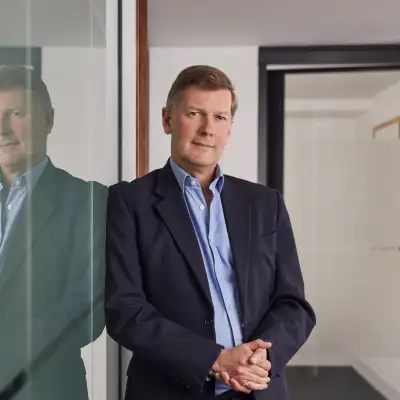
My guest today is Professor Alex Hill, one of the most distinctive voices on long-term organisational performance. Alex is Professor of Operations Management at Kingston Business School and co-founder and director of the Centre for High Performance. Thinkers 50 has identified him as one of the 30 global management thinkers most likely to shape how organisations are managed and led.
Alex brings an unusual combination of operating experience and academic rigour. He began his career in engineering, managing factories and progressively larger parts of business before moving into research and teaching. Over more than 20 years, he has studied and worked with high performing organisations across elite sport, education, the arts, healthcare, technology, financial services, and the military. His work has included Olympic teams, British cycling, the New Zealand All Blacks, NASA, Eton College, the Royal College of Arts, the Royal Academy of Music, the Royal Shakespeare Company, and the Royal Marines.
He's the author of Centennials: The 12 Habits of Great Enduring Organisations, which is the product of a 13-year investigation into why some institutions remain relevant and successful for more than a century, while many businesses survive for a little more than a decade. His research on architect leaders challenged the attraction of the heroic turnaround leader, showing that the leaders who create enduring improvement can be less celebrated precisely because their results take longer to become visible. More recently, Alex has extended this work from organisations to individuals, exploring how people who make an enduring contribution evolve, fail, learn, and build the teams around them.
Across his writing and public commentary, a consistent challenge emerges. Leaders must balance today's pressures with tomorrow's ambitions. And that makes Alex especially relevant to the boardroom path. Boards are expected to provide oversight in the present, foresight about the future, and insight drawn from experience, yet their best work may not produce an immediate headline or an easily attributable result.
Today we will explore how boards can protect purpose without protecting outdated practice, retain wisdom without becoming captured by the past, and create enough safety, challenge and curiosity for an organisation to adapt. We will also ask a specific question. If a board has exercised good leadership, what evidence should remain after its members have gone?
So Alex, welcome to The Boardroom Path.
Alex Hill: Thank you. Thanks for having me.
Ralph Grayson: So your work begins with a simple challenge if I express it like this. Why do some organisations remain successful and relevant for generations while so many others disappear? And I'd be fascinated just to know what first drew you to that question.
Alex Hill: So I was sponsored through university by a big engineering firm called Dowty. They're like a family business. Whilst I was there, they were bought by TI, which is Tube Investments. And then I was there for 10 years just before I left, they were then acquired by Smiths. So I went through watching businesses fail, in inverted commas. They definitely weren't being sold because they were successful. And I was working in environments that was very high pressure. But also, we would have hourly targets in factories, and if you didn't hit those hourly targets, then everyone started freaking out.
So I came from that world that was very short termist, where you know, suddenly no one could buy stationery or suddenly you were scrambling to find sales from next month to bring into this month. I don't think I quite consciously knew I was in that short term world, but it was all about the numbers and it was all about the numbers being the same every month, I'm sure this is very familiar to your listeners.
I always knew I was going to leave industry at some point because I followed in my dad's footsteps and I left industry and went to Oxford and went to a college there and it was so different. It was so different. I jokingly say I think the only short term target in the college was to try and make it to lunch. It was all about long term. It was all about thinking. The college is based just outside Oxford. So people would go there to think too. So you're in this sort of thoughtful, long term, conscious environment where people were coming to be thoughtful, long term and conscious too.
What also really surprised me was how most of the academics there, although it was a management college, didn't like business. I'd come from business, so I thought they would like business, this is a management college. In hindsight, I realised that most of them had come from medicine and they'd moved into that world. But what you started to realise is they didn't like business and what they didn't like, whether it was conscious or not, was the short termism of business and this desire that really, although a lot of businesses talk long term, really it's just about this week, this month, this quarter, maybe this year. Some businesses I know don't really even think about this year.
So I think what had happened is I'd gone from very short term to very long term, and these worlds were incredibly different and I hadn't really, at that time, understood why. My grandparents were coal miners in Stoke and my mom and dad were the first generation to get educated and come out and my dad went from working in a factory to being a Professor at Oxford. So he made the whole kind of shift and he was very much, "You're fortunate to be in to born into a loving family. You've got opportunity. What's your contribution? What are you going to add? What's your thing?" And he would just keep asking this not, every minute of every day, but it would keep cropping up and I didn't really know. And I was wrestling with it and I started to realise that I love being around people that performing at a high level. I played sports very competitively when I was young. I went and worked in Michelin Star kitchen too when I left industry because I wasn't sure what I wanted to do. I've always been friends with people who push it and drive and are ambitious and driven and I realised they're the people I'm drawn to.
So I started to say, actually, I think high performance, although I didn't realise that was the word for it at the time. But a colleague of mine was working with the All Blacks and that seemed interesting and then there was an opportunity to go and work with the Olympic teams in the run up to the London Games. John, who I was working with said, "There's something really interesting going on here. Let's see if we can get in and find out." And we spent time with a guy called Peter Keen. Pete's got the first medals in cycling. He coached Chris Boardman, and then he developed an investment model that basically predicted how many medals an Olympic team would win and based on that, all the money's allocated.
So it's Pete's model, it's kind of 21 factors and I said, "What keeps you awake at night, Pete?" he came to Oxford, he spent a day with us and talked us through his journey, and he just went, "Is it sustainable?" We've created this massive shift. Went from our worst games ever in the mid 80s to then doing really well in London and Rio coming just behind China and America who are infinitely bigger and wealthier than us. And Pete went to this big whiteboard in the room, and at one end he wrote Cult, and then at the other end he wrote Sustainable System. And he just said, "Too many of our sports are cults." He said, "They're too dependent on one or two individuals, and if they go, we're stuffed."
So my question is how do we make it sustainable and how do we build something where individuals can come and go, but the system, which is the sort of the sporting words, they like to use the word system, but for them, that's the environment. They talk a lot about environment. How can we build something that lasts beyond the individual? And, I said, "Who could you learn from, Pete?" And he went to the arts. They've been doing it for hundreds of years. And so we contacted the Royal Shakespeare Company, the Royal College of Arts, and just said, "Look, we want to try and understand why you've been so successful for so long. We have no idea what we're looking at. We have no idea really what we're looking for, but could we just spend a year in your organisation just watching what you do?"
So that's what we did, it wasn't every minute of every day, but you're starting to go to what are the critical meetings or what is critical moments or activities or who are the critical people and you'd shadow them and watch them or just be in the environment really and quite quickly, they start to ignore you. They're pretty busy and they've got a lot more interesting stuff going on than you. But you just start to see the behaviour and then we expanded the group we were looking at by just really talking to people who are in high performance and just said, "Who are you really curious about?" Now, what was interesting is no one said a business, and working at a business school, I found that interesting. It was, more the All Blacks, NASA, Eton, places like that and what you start to, to realise around this time too, is that businesses are dying at a much younger age than they ever have done and their lifespans have fallen quite dramatically, in the last 50 years, 60 years, 80 years.
The book talks a bit about this. I think the big shift is moving from predominantly family businesses where they were built to be passed on to public organisations where actually I think a lot of leaders in public organisations think that a business shouldn't last for long. It's all about a short lifespan and extracting wealth and then moving on to next business or next idea. But we started to realise there are these great organisations, and then it started to become, okay, businesses don't really last. What do these great organisations do that businesses don't do? And that became like a five-year journey.
The thing that was surprising was they're all the same and what we ended up doing was wrote a report for them and said, "Look, this is you. This is what you all do that's all the same," which they found quite surprising. The lady at the Royal Shakespeare Company was quite shocked that her organisation and NASA's organisation looked quite similar. And then we shared it with 500 leaders from business and said, "Look, what surprises you?" And then that became the Harvard article and then the book came out of that. It's a very long answer, but it was, in hindsight, me moving from a very short-term world to a very long-term world and then the research started to explain why they were so different.
Ralph Grayson: Well, and I was just going to touch on the research word there and your use of it because I think you're very rare as somebody who's writing on some of these issues who's actually had a background in the real world before they became an academic and I think you've described researchers needing both the ta-da moment and the so what question. Is there anything that's made that particularly useful for you in the practical application of it?
Alex Hill: Yeah, I think it's fundamental, but that's not very popular in universities these days. My dad was at London Business School in the 80s, which I think was when it was really firing on all cylinders. But at that moment, everyone was from practice. Business schools have had huge growth. That's when it started and at the beginning, you were pulling in people from practice, a bit like a law school or a medical school. You wouldn't have a professor at a medical school who's never practised. But they very quickly ran out of talent because they grew so fast and then my Dad would argue the big shift was when they got rid of the part-time PhD at LBS because the completion rates are lower because it's harder, and so that was affecting their rankings. But then it just became really hard to convert, because what you have to do is basically give up three years salary. So you find people don't go from practice into academia in business schools really anymore.
But yeah, I come from practice, you have an understanding of context, you have an understanding of pressure, you have an understanding of what it's like to, my first job was working shifts in a factory managing 100 people who all wanted to kill me, or at least that's how it felt at the time. I was like a young, know-it-all graduate. But that, I learned so much about people and then ran bigger and bigger businesses. So I think there's a couple of things. One is you understand context. The second is my motivations are different. I left industry to move into an environment where it is more reflective, where you can then help and support people who are working under high pressure, who often can't see the wood for the trees, who are often wrestling with a problem that they don't realise is common or has potentially been solved elsewhere and they're going on raw instincts and I think the role of an academic is to help those individuals. That's my purpose. Is to do work that they think is useful and important and to write in a way that's useful and important.
You get no credit for writing a book at a University. It's considered to be a bad thing to do. But actually people outside universities read books, they don't read articles, and nobody talks about the article that changed their life. I think, like all of us, you have to make choices about where you spend your time and effort and energy. For me, my purpose is to help people who are doing really high pressure jobs where I have the luxury of having worked in lots and lots of different environments so you can see the patterns, but also where I've got the time to reflect and think and hopefully help them in that moment.
Ralph Grayson: So let's just apply this to the boardroom if we can. Couple of things that have particularly triggered me there. One is your view on the short, the medium, and the long term, which I think is a fundamental issue a lot of boards and board members grapple with. The application of strategy and execution and how that enables a board to lead without stepping into the remit of the executive, but also how we define high performance and how the board can create that operating environment and that culture.
So you've used a really powerful analogy that I want to start with. You described high performance as steam. The world is water, but high performance is steam. So what becomes visible in that analogy? And particularly how is that contextual when the stakes are higher and the pressure is there?
Alex Hill: I think it's important, and I guess this is part of the attraction for me as a researcher, is that the world is water. We're all water. We're all basically people coming together trying to do something, and that really is the same everywhere, every environment you walk into. There are contextual factors, definitely, but at its core, it's groups of people coming together trying to do something.
And what you realise is that high performance is just high stress and the reason why is that if you get it right, it has an impact, and if you get it wrong, it has an impact, and you start to feel that pressure. Whether you are an Olympic athlete at a games, or whether you're a surgeon, or whether you are an actor about to walk out on stage or you're an astronaut. Whatever it is, you are preparing for this moment and this is the thing you realise, high performance, there is a performance, you're preparing for this moment where you have to nail it and you have to get it right and that pressure does weird things to the brain.
The All Blacks really struggled for a while to win a World Cup. They were really struggling. They would dominate the year. They were by far the best team. They would dominate the group stages, destroy everyone, and there'd be a moment in the knockout phase after that when they'd be ahead and the opposition would come back and they would freeze and it happened, two or three times. They just didn't understand. Didn't understand why it was happening, what was going on, and they went and worked with a criminal psychologist, eventually a guy called Kerry Evans, who's written a great book, which is called Blue and Red Thinking and Kerry was also, I think, a professional footballer before, but he's criminal psychologist now. And he just explained to them, "Look, you are going into fight, flight, or freeze. You're going to the back of your brain. You're not in the front of your brain, and you're going into that amygdala, and you are freaking out because something is happening to you that you hadn't considered or hadn't thought about."
So his whole work with them was how do you stay in the blue? So how do you stay in the front of the brain? And a lot of that is scenario planning. So actually you will walk through scenarios or you'll do scenarios or you actually act them out or simulate them, but work through every eventuality so that when the moment happens, you don't start to freak out. So what happens is as an individual, when we go into high pressure, we start to freak out. It's just what happens and if we're not careful, we go into the back of the brain, we become rash, emotional, quick to make decisions. But also what can happen is the relationships in the group start to fracture too. A friend of mine was in a very successful music band. He said it was fine until we had our first big hit, and then it literally was like someone exploded the group. And all the fractures were there beforehand, but the pressure just fractures them.
So what you've got is individuals behave differently under pressure and teams behave differently under pressure. But it's all normal stuff, in inverted commas. But what happens is high performance creates the pressure where it appears. So I think what you start to realise is that it's just people doing things, but if you do spend time in high performing environments and high stress environments almost like they are more human or those sort of frailties or issues we have as humans emerge.
But also the thing that we've talked about too is that that often some of these things don't really appear until you're stressed or under pressure. It's all easy to be a nice person, a great leader, until the shit hits the fan and then different behaviour or maybe real behaviour emerges.
So I think they're fascinating places to learn because what's happening is what happens elsewhere, but it might be less visible. Also, you start to realise that if you do work with a high performing team and a high performing organisation, that actually there's more for them to learn by going into other high performing, high stress environments, that often aren't in their world. If you are the All Blacks actually going and learning from other rugby teams isn't that useful, and what they did was they said, if we look at what we do, it's basically we lift people. Okay, who's amazing at lifting people? Who's the best in the world? at Lifting people the ballet, so let's go and learn how to lift people from them. We grapple. Who are the best in the world at grappling? I had no idea, but it's the Argentinian cage fighters, apparently, so let's go and learn from them. We make decisions under pressure. Who's the best in the world at that It's the Marines. So really brilliant individuals, teams, organisations, environments, whatever word you want to use, will almost look at what they do and dissect it and then say, "Who's the best in the world at each of those elements? Let's see what we can learn from them."
It's interesting when we contacted the All Blacks to ask them to be involved in the research I had a chat with their CEO and he just said, "This sounds great, we think we've learned all we can from sports, so this is where we need to go next." So there are always these sort of individuals and organisations are looking outside of their sectors for ideas, because they know you've you've experienced or you've solved different problems and you've developed or got different solutions and then the question is how do you transfer them?
Ralph Grayson: There's a few things I'd like to unpick there and make sure I understood you correctly. So if we think about the board's role then of bringing the best out of the people that work for the company and the executive. The board's role is not to generate steam itself, but to understand the pressure in the system and then create the environment that can optimise that, i.e. knowing when to step in and when to step back crucially.
Alex Hill: I guess there's an interesting question there is for the board to say, "What is our role?" So I think it could be what you describe where there's an awareness of what it's like to be in steam and what happens in steam because you've picked a board that has that experience and has that knowledge and has that background.
There's a second question, which is what I have seen happen in other environments. It might be that the board sees their role is to create steam to then help prepare those individuals for going back into a high pressured environment. So it's almost like simulating it. But I think the board have to understand what their role is in this organisation, and I think it will also reflect what the organisation is going through or about to go through. And then thinking about how they want to do that, how they want to create that.
I mean, My experience, and you're more experienced in this world than I am, is that every CEO I've worked with, every good CEO I've worked with, always works as a pair and it's normally them plus the FD or them plus the HR director. That's normally the pairing and one of them's normally really challenging, and one of them's normally more supportive. I always think it's a bit like parenting. It's really hard to be a single parent and be both challenging and supportive. It starts to freak your kids out a bit.
Ralph Grayson: I think that's a unique relationship between the chair and the CEO
Alex Hill: Exactly. But I think you need both challenge and support.
Ralph Grayson: So how does a board member make sure that it's not just creating pressure because the optics are, we need more pressure? What's the balance between being busy, successful, and just creating the opportunity or the environment in which you think you're being busy?
Alex Hill: I don't think necessarily busy is always a good thing. What's interesting, you hinted about this earlier. So the research I'm now in is looking at high performing individuals and you tend to find high performing individuals really structure their days incredibly carefully.
I'm about to generalise massively, but the patterns are pretty clear. It tends to be productive mornings, creative afternoons and evenings but they will also think as carefully about their non-work times, their work time, and will often find that it's the non-work time where they get their breakthroughs. It's often when you are doing something that is absorbing you enough but not too much that you start to connect the dots and your subconscious starts to work.
So I think, as you become more and more senior in an organisation, you do need to become less operational and your role is to become more strategic and I do think that your role is less around doing and more around thinking. There's always an element of both and the environment it changes. But how you create the space and time to think is really critical and then I think it's working out as a board, what role do you play in that? And in part, it's going to reflect the executive team that you're working with and the challenges they're going through and the pressures they're under. But sometimes being incredibly challenging is very useful, it has a role to play.
You hinted a bit earlier about some of the work we did around schools and that was looking at turnarounds. A turnaround is quite different to how do you evolve a business that's already successful. So I think there's lots of different scenarios. I think the simple answer is, although it sounds a bit of a cop out, but it's not meant to be, is you need to look at the context and the situation and say, where do we apply challenge and where do we apply support and how do we balance that? And what's the right thing to do in this moment? And what's the right thing to do for this team and this organisation depending on what they're going through?
Ralph Grayson: So let's dig into that a little deeper because I think that's fundamental to how any board member needs to think about how they're adding value and where and how they can lead both as an individual and as part of that collective. So you describe enduring organisations as having a stable core and a disruptive edge and I think that's the contextual part that you were touching on there. What belongs in the stable core and what always has to remain open to challenge? And let's just get into this idea of deep roots and disruptive edges a little more.
Alex Hill: So Centennials looked at this idea, which actually I think applies to teams too, and we'll get onto that later. So I think even in a board, you need a stable core and a disruptive edge. But within an organisation what you realise is to stay successful for 100 years or more, which was the question that we ended up trying to answer. How do you outperform your peers for 100 years or more? What you realise is that in the Western world, we tend to have children around the age of 25. So you're building an organisation where your grandchildren's grandchildren would want to work or that your grandchildren's grandchildren want to support, buy things from or give their time to or whatever it is.
So you're building something that is spanning multiple generations and I think that's important because a lot of the ideas in the book are less relevant if you're only here for less than one generation. So if you're a business and you're only around 15 years, then engaging and bringing in the next generation of money and talent is less critical. But if you want to be successful beyond this generation of leaders or this generation of individuals in the organisation then what becomes really important is a purpose. So the first element of your core is this purpose.
Now, I have to be honest with you, I was a little bit disappointed when it was purpose because it's so cliché and I really didn't want that to be the answer. But what you realise is when you spend time with these great institutions, the first thing they talk to you about is their purpose. They Just keep coming back to it time and time again. The All Blacks, Steve Tew, who was their CEO at the time, he said, "Look, you have to understand the role we play in New Zealand society. Because if you don't understand that role, then a lot of what we do doesn't make sense." When we started working with the Royal Shakespeare company, they said, "Look, our role is to democratise the arts. That's why we're here. It's not just about the RSC. So we actually raise money for the arts." So they have this broader purpose that guides them. And also, when things go wrong, it's often what they go back to. Why are we here? What's our role in society in the communities we serve? The people who work for us, the products or services we provide, what have you.
So that purpose is really important because it guides you beyond today and it guides you beyond tomorrow and this year and next year and actually, they are often looking 20 or 30 years ahead which is quite shocking to someone from a business that you would think that far, but you realise they're looking at the next generation. That, that's fundamentally what they're doing. So that purpose is important and that purpose is often very stable and often doesn't really change and was often captured pretty early on and was written down. When NASA came out of the the US Army, because they were originally in the army, they restated their purposes to help mankind. This is not about military anymore, this is bigger and broader. So the purpose is there, it's there, it's early on, it's very clearly articulated and it's very much talked about. What are we here to do? What's our why?
The other thing that's very stable is this idea of stewardship which you start to realise that there aren't really big egos in these organisations, not at a leadership level, not in terms of guidance. The All Blacks have the expression is that, you know, leave the shirts in a better place. But when you're with them, it's the shirts. The shirt is more important than the player. And actually, when you join the All Blacks, you're presented with the shirt, there's a ceremony, and then you care for the shirt and then you pass it on. You know, that is more important than you. The organisation is more important than the individual. So you have these people whose role is to guide. I call them the parents of the organisation. Their role is to guide the communities forwards. They aren't always the most senior. They are normally scattered throughout the organisation. The other phrase I often use is they're like the oaks in the forest. They provide the structure and support for the whole ecosystem and that's their role.
So in the army, it's the sergeants and they are the non-commissioned officers. They are normally appointed to be a sergeant. I know it varies slightly between the UK and the US, but say 10 or 15 years experience before you become a sergeant, and then it's like a 12-year role being a sergeant. Weirdly, it's almost identical at Eton for their Head of House. It's a 5, 10, 15 year experience beforehand at the school. So you normally take on the role when you're in your 40s. It's then a 13-year job. You have to do it for 13 years and your role is to guide. So I think, in the army, they call the sergeants the backbone, don't they? So you're the backbone, you're the oaks, you're the guidance and your role is to actually pass the values on.
So you embody the values. You live and breathe the values. They're deeply connected to your purpose and what you're trying to do and then you live and breathe those and you then help others develop those too.
Ralph Grayson: Raises a really interesting question in my mind. So there's a lot of debates at the moment in the boardrooms around tenure and how long a board member should be there. Whether they should be broadly a three times three year term, and then you leave. And what you're suggesting to me there is a much stronger argument that some of the board members should be allowed for longer tenure because they have a purpose.
Alex Hill: Completely. Again, I think we mentioned this before, but I did some work. It was at a big investment conference in Hong Kong and someone from Schroders was in the audience and he came up afterwards and so I went to Schroders and talked about the work. The example I gave in the presentation was I looked at Liz Truss coming into government and how it was the least experienced government we've ever had or the least experienced cabinet we've ever had and if you compare it with people like Blair or Thatcher coming in, weirdly, they had two of the most experienced. The most experienced is actually the one in the Second World War because we were combining both parties. But actually you need collective wisdom. In high performing long-lasting organisations, they give names to these people. The All Blacks call them the Elders. I think the Marines call them the grey beards. There are people who have knowledge and wisdom who really understand your community very deeply and Schroders ran that analysis and they said one of the best predictors of long-term success of an organisation is how much experience that board has had of that organisation.
So, I looked at, for example, Manchester United's failure after Ferguson and how Moyes just basically fired all the players and coaches and they lost all that collective wisdom and if you compare that with Barcelona when they bring in a really experienced manager who doesn't understand Barcelona or Ajax, which is where their culture has come from it's a disaster. And it doesn't matter if they've got 30 years experience. If it's not Barcelona or Ajax, they just don't get it. But if they bring in someone who does, then it thrives and it really works. The whole secret to their academy system is that when a player enters the first team, they've already got five years Barcelona experience. So that collective wisdom is never dipping. So you find great organisations and great teams manage that collective knowledge and wisdom.
But it's important to realise you don't want too many oaks. You want about a quarter of your team or your organisation to have been around for a decade or more. You actually don't want them to be around for more than 15 years and the reason why is you're building in future risk. The issue with Ferguson and Man U was he stayed for too long. So when he left, too much knowledge went. It's almost like a lacquering or a layering. You don't want one plank to be too long. You want lots of different planks. You want them all overlapping too. If I saw a board and all of the wisdom had arrived at the same point and is going to leave at the same point, that would get me nervous too.
So you're consciously building that knowledge and wisdom. What you do need though is that disruptive edge too. So the purpose and the stewardship is incredibly important for guiding you and also we found like a guiding principle in these organisations is they're very open. Which actually you realise is key for getting you to perform at a high level. If you're being secretive and you perform in a dark room by yourself, it's never that great. But if you're on stage, you're heightened, you perform much better.
But in terms of the disruptive edge, you need those teenagers, we call them. The people who tell you're rubbish, you're out of date, you don't know what you're talking about, who kick and shove, who talk about my generation, your generation, who actually have an ego, who actually want to make a difference, who actually want to leave a mark. We worked with the NFL and one of the questions from the audience was, "Do you have a no dickheads policy?" There's three of the coaches there and they're like, "What are you talking about? All of our best players are dickheads." They're like, they do a stupid move in the stupid moment that transforms the game, that catches everyone off guard, that does the thing that you shouldn't be doing.
The question is how do we build a strong community where they don't become toxic and damage everything else? So how do we guide them? And so the stewardship and the wisdom is guidance. You need it. You don't need too much of it because you don't want the oaks to overcrowd the forest. There needs to be light and room for new growth and the future of the forest depends on the new growth, not the old growth. I think that's also important to remember. But you need this balance. Yeah, it's a constant balancing act.
Ralph Grayson: Can you map that, quantify it? I can't believe I'm going to allow myself to drift into AI in the boardroom. But is there some way you can put data around that and have a kind of an optimal curve?
Alex Hill: So we found that there is. So in Man U, when they got 150 years experience across the players and the coaches, they started winning championships. I've done some work with the Norwegian Olympic teams and also the Norwegian FA and one of the coaches I worked with, he said "I've told everyone we're going to win the league this season because we've now got 150 years experience." And they did. I mean, as an academic, that doesn't really stand up to rigour.
But what's quite interesting, this idea of group size, I'm diverging slightly, but you tend to find a lot of this all stems back to Robin Dunbar's work around group size. But as humans, we tend to live in groups of five. I call it families of five, extended families of 15, communities of 50, sites of 150. If you look at the community of 50, that maps onto all these high performing organisations. So you tend to have 50 astronauts at NASA, doesn't really go beyond that. You tend to have 50 athletes at cycling.
Interestingly, I remember speaking with the old head of Eton, and he said whenever he's been to other schools where they have more than 50 kids in a house, it starts to fracture. At Eton, they're all 50, apart from the founding original house, which is 70. But I think what you can do is look to those communities and say, "How much collective wisdom is there?" And generally, you like around 150 years. But it will be made up through old and new and I do think it's important to look at the stewardship as a different thing.
Eton is probably the most formal life structure I've seen, because it's like the army. It is 600 years old too, a lot of its thinking does date back. But, they said, "Who are the most critical people that guide our communities?" The head of house, I mentioned earlier, it's a 13-year role, in part because children will stay in the school for five years, so you can guide, two and a half cohorts, essentially. They will then announce the next head of house two years before the current one steps down. So the logic is that every child has either the current or the incoming for their whole five years. But there is this two-year overlap. Also, what's important and this becomes important around stewardship, is when the old head of house steps down, they don't leave the school.
So they're still there and actually, when you look at really effective handovers in big businesses, big corporates, often the chair will stay in role as you move from one CEO to another, or the CEO may even go on to become a chair too. But also often you tend to find the old CEO and the new CEO have worked alongside each other for four or five years, maybe even longer before they take the role on. So that does tend to be a five or six year handover that's happening and you find that sort of time and time again, in successful sports teams or schools or military or wherever it is. There is this sort of long handover and you're making sure the collective wisdom never dips too much.
Ralph Grayson: I think that's such an important point for board members to think about CEO tenure is going down, turnover is going up. That relationship between the chair and the CEO and the optimal size of a board as well, I think is a fascinating subject.
Love to explore before we leave this. You've talked about heroic leadership and the contrast between heroic leadership and stewardship. how does an architect leader transfer from an individual executive to a board acting also as a collective?
Alex Hill: So just to give a bit of context for the people listening, so we ended up doing a study where we looked at 160 schools that went in special measures and we were given access to their computer systems and we then tracked them for 10 years. And we were able to look at decisions that were taken. The research came about because a student came to Kingston and I taught them and then supervised their dissertation and they had previously worked as a consultant in schools. So deep knowledge of the context and really good relationships.
We were able to look at the actions taken and the impact of 440 leaders over 10 years and what's fascinating about schools is they're basically the same. They think they're all different, but they're not really. Their context is different, where they're located, the children they're teaching, the communities they're serving, the teachers who work there, et cetera, that's different. But the fundamentals of what they do is the same. We work with the governments, they're like they're pretty clear on what failure looks like. So it's okay, when a school fails, we know what that looks like. So you're all starting from zero or from the same point and within a failing school you have to change the head. So you've all got a new leader in a new school. Often they've then become an academy too, so there's new, it's new branding, it's all new, and then off you go. They're pretty comparable and what we found was that people were doing very different things and what was interesting is we were tracking what happened after they went as well as when they were there.
We found these different types and I'm just going to talk to you about two of them because these ones got the headlines. But the first ones we called surgeons, and they basically just come in and cut. You see this in business all the time, I think if you want to turn around an organisation, it's always broadly three steps. It's refocusing. We're focused on the wrong things. It's cutting. It's getting rid of stuff we shouldn't be doing. And then third step is you invest. But it's always refocus cuts, then invest. Some leaders though just do one and two. They just come in and they refocus and they cut and then they go and we're finding that was happening in schools and these surgeons were coming in, basically they were kicking out the kids they didn't want. The exam results would go up because it's a percentage of kids that get five GCSEs that gets measured and then they would leave. And everyone would say how amazing they were and they were all getting knighted. Like I think 30% of them got knighted and 50% in total got an MBE or an OBE or something like that.
You just see this in business all the time. A leader comes in because realistically, if I'm only there for two, three, four years, I can't really build. I can cut, I can fire people, I can cut costs. One of the CEOs I worked for in the company that was failing TI at the time, he refocused the entire executive team on finding new suppliers and cutting costs, cutting material costs. Profits obviously went up, but the business hasn't improved. And in fact, lots of those suppliers ended up going under because we'd screwed them so hard.
But if you're coming and you're just cutting, you get immediate results. But all the evidence shows, and there's been some really great studies of long-term business performance, that if you just cut costs, you won't survive and I think we all know this. That really long-term performance is about innovating and growing sales. But that doesn't come till later. So the architects are the only ones that we found where the organisation carries on improving after they go and they are the ones that come in and fundamentally rethink the organisation and rebuild it in the right way for the long term success. But it takes time.
In our experience, it was like at least three years, often five years, before the results really start to show. And the work came out, we ended up appearing on Newsnight and talking about it. And I just started to get emails from people saying, "My wife or my husband is an architect and they've just been fired," or, "My wife or my husband, is doing everything you say they should be doing, but the board have lost confidence in them." And so we went back into the data and we had all the minutes of all the board meetings and we found that 90% of them almost lost their job at the end of the second year and when you look at CEOs, it's kind of similar patterns. The most common time to be fired is year two, because I was thinking you can get away with bad performance year one by blaming it on the last one. But if you're not delivering by year two, it's now your fault.
And then there were other emails we started to get that would say, "I am an architect, but I'm also quite handy with a knife." And I think there's a realisation if I'm working with a CEO or a board, I will always say, "Look, you've got to keep yourself in a job to do the stuff that's long-term. You can't just be idealistic and long-term. There's a reality. There are short-term pressures. But if you're cutting and you're doing short-term stuff, be aware that's what you're doing, and as long as you're building and doing the longer term stuff alongside it then it's all starting to happen.
But surgeons create immediate impacts. Surgeons are very visible. In our study, the surgeons got paid infinitely more than the other heads. They got the rewards, they got the accolades, and then they just move on to their next victim and they do it again. But the impact is immediate. In the book, it looked at this idea of vitality index, which came out of 3M which is something I really like as a good predictor of long-term success. So that's, what percentage of this year's sales come from products developed in the last two years? I think it's a professional services. It's like clients developed in the last two years or services, whatever it is, a client or a service or a product has a lifespan and what you don't want to do is trading off old products that are all about to die. Actually it's easier to cut costs when you're just focusing on old products, because you know what you're doing and it's now just about doing it with less resources.
The challenge is always finding the next client or the new product or the next thing that's then at the beginning of its life cycle. So 3M's question was particularly, most of their products have a 15 or 20-year life cycle, how can you make sure you're going to survive for the future when actually your markets are really quite stable? So their question was what percentage of this year's sales come from products developed in the last two years? And making sure that's a high enough percentage to assure long-term success.
If you're a mobile phone company, most people change their phones every two years. So, that needs to be 100% of this year's sale come from products in the last two years. If you're making laptops, say, most of us change them every four years. So that needs to be 50%. If its cars, it's six years, it's a third. So the need for innovation varies depending on how fast your markets move. But that can allow you to now start to see are we going to be successful in the future rather than just rewarding short termism?
And the book, looked at the CEO who didn't get the job at GE, went to 3M, basically just cost cut and then when he left George Buckley, who ended up going to Smith's, he came in and ran the Vitality Index and it was like zero and he was like, "Oh my God, we've had our highest profits ever but our Vitality Index has gone down because we just cut costs." And then the CEO that did that at 3M went to Boeing and destroyed them too, just through cost cutting. So I think that's important, how do you balance those two short and long and how do you create a business that can be successful in the future?
Ralph Grayson: So how should a board member get that balance right? What data should they use? How should they think about the interpretation of that data to say "My CEO is working or not working?" If I use a football analogy, I was fortunate enough to be in the boardroom at Brentford this week and their coach left last year, went to Spurs. And when he started at Brentford, he lost his first seven matches. But the data that the board looked at showed that he was employing the system that everybody had agreed this is a system we're going to use and the system basically was say we shouldn't have lost. He then goes to Spurs and Spurs sack him after five matches. So if you were the board of Spurs relative to the board of Brentford, how did their thinking show leadership or not show leadership?
Alex Hill: I think you have to be clear on what you think are the predictors of long term success. Taking the school's analogy we ended up doing sort of three studies there. One was like, what are the dos and don'ts of school improvement? The second one's around leadership. The third was saying, if you do want to transform a school long term what can you measure in year one and year two that then is a predictor that the good results are going to come later?
It is around culture and it is around engagement and it is around leadership and it is around a lot of these factors. For me, the one hard measure is the vitality index. I find that's incredibly insightful, incredibly useful. Getting clarity on how fast your markets move and the question is to ask is how quickly could a competitor come out with a product and steal all your customers? The question is, are you innovating enough? Some environments you don't have to innovate, your markets move very slowly. So innovation can just be a complete waste of time and actually just very expensive. So you don't want to over innovate. But equally, you don't want to just be cutting costs and actually living off old products and old ideas and not moving forward. So I think the innovation piece is really important.
If you want to take Centennials, as the idea of predictor of long-term success the whole idea of that work was to try and quantify these different habits or behaviours, what is your purpose? What is your stewardship? Are you open? Are you being disruptive enough? Are you being nervous enough? Are you evolving? Are you changing? Because it is quite grey and it is quite hard to know. But we have found that's really useful, and there's like a sort of a checklist at the back of the book. That's a really good first step we found when we're working with a board or a team to say, how likely are we to survive long-term? I think it's understanding what you're using that CEO for too and how long you're willing to back them for and what they're here for and turnarounds are quite different to long-term success.
Realistically, how long do you think that's going to take? What are some good predictors of long-term success as well as short-term success? How can you balance those two things? What are the pressures that are coming onto the organisation too? Where are they coming from? What story are you telling as an organisation or as an institution? And then I think it's about, is it renewing, is it evolving, is it transforming, is it changing?
I think these are all, they all affect how long you want a person to be there for, and also often the kind of person you want to be there and sometimes you want someone who's, tougher and challenging they're not going to be there for long. But you can't just keep doing that. Long-term that's not going to work.
Ralph Grayson: I think we've got an entire new episode coming up here on how boards have to think about leadership succession. I think it's a crucial part of a board's role and responsibility, particularly through a stakeholder lens.
Alex, thank you. It's been fascinating. If listeners think, "Gosh, I want to delve into this more," how do they track down the book? How do they follow your academic work and your media work?
Alex Hill: I'm pretty easy to find if you Google me Professor Alex Hill, I'm out there. The book Centennials is a pretty good start. There's an audiobook, which I know a lot of people would rather listen to than read and there's various podcasts that you can listen to as well. Or just get in touch, I'm not hard to find.
Ralph Grayson: And you're lurking on LinkedIn?
Alex Hill: I'm lurking on LinkedIn surreptitiously hiding in a corner. Yeah, I'm there. And also, I've got a website, so you can contact me through there. Whatever, whatever makes sense for you.
Ralph Grayson: Alex, thank you so much. It's been fascinating.
Alex Hill: Thank you. Cheers.
Ralph Grayson: I hope that you've enjoyed listening to this podcast and have found it helpful when thinking about how to approach your own path to the boardroom. If you would like to push this a little bit further, Sainty Hird runs a bespoke one to one programme designed specifically to this end. For more information, please visit our website saintyhird.com, follow us on LinkedIn, and subscribe to the Boardroom Path to receive new episodes. Thank you for listening.