Subscribe
Share
Share
Embed
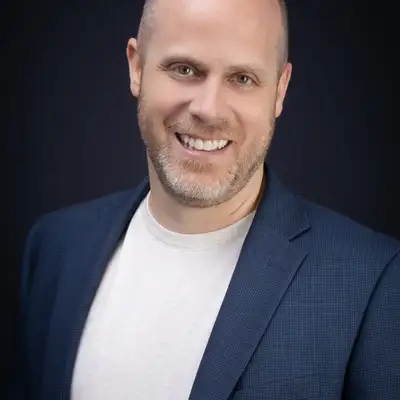
Welcome to Inside Marketing with MarketSurge — your front-row seat to the boldest business insights, marketing breakthroughs, and entrepreneurial real talk.
Hosted by Reed Hansen, Chief Growth Officer at MarketSurge and a digital marketing veteran who's helped scale everything from scrappy startups to Fortune 500 giants, this podcast dives deep into what’s really moving the needle in today’s marketing world. Find us at Marketsurge.io
Each week, we’ll break down the latest marketing and business news (minus the fluff), explore tech trends you actually need to know, and feature unfiltered conversations with the most interesting minds in entrepreneurship and marketing.
Whether you're a founder, a marketer, or just a curious hustler looking to level up, this is where growth happens—loudly, smartly, and with just the right amount of sass.
Subscribe, tune in, and let’s scale something legendary. 🚀
Speaker: Welcome to Inside
Marketing With Market Surge.
Your front row seat to the
boldest ideas and smartest
strategies in the marketing game.
Your host is Reed Hansen, chief
Growth Officer at Market Surge.
Reed Hansen, MarketSurge: Hello
and welcome back to Inside
Marketing with Market Surge.
Today's guest is someone who took one
of the oldest forms of communication
in human history and turned it into a
patented robotics and software platform.
Rick Elmore is a former NFL
athlete, turned founder, and CEO
of simply noted the world's leading
handwritten male automation company.
No technical background,
no outside funding.
Nine patents over 220 custom
built robots, and more than $10
million in bootstrapped revenue.
He's appeared on over 150 podcasts,
been featured in 1200 publications,
and built a CA category that most
people didn't even realize existed.
That's automated handwritten
outreach at scale.
Rick, welcome to the show.
Rick Elmore: Thanks for having me, Reid.
That was great.
Awesome.
Appreciate it.
Reed Hansen, MarketSurge:
Well, absolutely.
I try to do a little legwork and you
sent some great info over previous
and so I'm just really excited.
This is so unique.
So, you know, first of
all, your background.
You know, you've been in the NFL, but
now you've jumped to robotics and sas.
You know, that's not exactly
like the go-to path that I
think most of us envisioned.
What triggered that shift?
How did you make that journey?
Rick Elmore: Great, great question.
Well yeah, it's the
Unconventional path I think I, I
ever saw myself going down, but yeah.
Quick story or quick background.
Yeah, I played football
for a very long time.
You know, I had like
a, a childhood trauma.
My, my father passed away when I
was seven and my, my mom did such a
phenomenal job and, and I I appreciate
leffert so much, and she just, she
kept us busy and she kept us in sports
and I think sports are a phenomenal.
like instrument or tool for young children
to develop so many interpersonal skills
that will last them their entire life.
That will, they'll take through
high school, college into
their professional careers.
But yeah, I fell in love with
football early on, you know?
You know, I was a quiet, angry kid and
I, I got to play a sport that I got
to hit people and not get in trouble.
So I, I fell in love with it.
And I'm a big kid too.
I was a big kid.
I'm a big guy.
I'm 6 5, 2 50 pounds.
But yeah, I played football
since I was eight years old.
Kind of the first few years.
I was getting beat up.
I had to play with
older kids, but kind of.
Came into my owner on 12 years
old, had a good high school career.
I set like a California record and I
had no clue it was even a record when I
was a sophomore for Quarterback Sachs.
And it,
Reed Hansen, MarketSurge: Oh wow.
Rick Elmore: me to kind
of get some attention.
So I got a, a scholarship to play
at the University of Arizona.
And I come from like a humble,
you know, my family did a great
job, but we didn't have any money.
But they, you know.
They gave us everything
that money can't buy.
You know, the support, the love,
you know, the, the safety of, of
a, of a, a, a loving home, I guess.
I, I knew if I was gonna do something.
In my life, I was gonna have
to do it, like carve my own
path, if that makes sense.
So football was that vehicle and
went to college, had a good career.
I played for Mike Stoops at
the University of Arizona.
I was a three year starter at
defensive end in the PAC 10,
my junior and senior year.
Had a really good couple years.
I led the Pac 10 in multiple stat
categories, and that was quarterback
sacks, and like tackles for loss for
any non-football people out there.
It's like one of the best
stats you can get for defense
is like a quarterback sack.
So.
I, I'm not like a, a physical specimen.
You know, you look at these athletes
nowadays, like some of 'em look like they
look like they're not from this world.
They literally like, look like
they were born to be an athlete.
And that just wasn't me.
I lived and died by effort.
If you look
Reed Hansen, MarketSurge: Hmm.
Rick Elmore: draft profile, it
literally says like, plays above
his potential play wins with effort.
Constantly, you know, just try as hard.
And like when I like saw that at
23 years old, I had such a chip
on my shoulder, I was just like,
Ugh, they don't think I'm good.
You know, they think it's
just like luck, you know?
But I look back now at 38 and I'm like,
that, that was actually a pretty, like,
good compliment because most people
don't try hard, you know, they kind of,
Reed Hansen, MarketSurge: Right.
Rick Elmore: were kind of lazy, but
had a good career and got to play in,
in the NFL for a few years and lived
out my childhood dream, but I did not.
I did not have like the lifestyle,
the rich and famous, which most people
think I actually made more money my
first three years of being a corporate
salesperson than I did in the NFL.
A lot of people don't know this,
but the NFL is the only professional
sport, at least back then, where
your contracts weren't guaranteed.
You only made the money.
That was up until that day.
So if you sign a contract on day one and
then we're cut two weeks later, you only
made two weeks of your annual salary.
Reed Hansen, MarketSurge: Okay.
Rick Elmore: in the MLB and the
MBA you get, it was all guaranteed.
So, you know, I was a journeyman,
got to play on six teams.
I was cut, picked up multiple times,
but eventually, you know, you have
to hang up the cleats and kind of
ran into my, like, identity crisis.
You know, I was an athlete, I was
gonna do this for the rest of my life.
I was gonna have all this money and
be able to do whatever I wanted.
But unfortunately, thank God, looking
back, I, I'm actually happy it didn't
work out because it caused me to
evolve and become like Rick 2.0.
I had to learn.
How to be something else
than just an athlete.
And what I did is I just took everything
that made me successful as an athlete.
All those things I thought were bad.
Work hard, try hard out, you know,
over, know play outside my potential and
just apply that to my corporate career.
I was a top 1% sales rep or
top five sales rep in the
company for five years straight.
I just, I didn't like
where my career was going.
I, I saw like, oh, I was gonna
have to work middle management.
I was gonna have to travel all the time.
My managers are always at bars, you
know, that career path just didn't
suit like who I was as a person,
like my character, my beliefs.
I, I didn't want that to be what
I needed to do to be successful.
So I went back and did my MBA this
was a, a major pivotal pivot, a
pivotal time in my life because
school, I wasn't scared me.
School In my undergrad, I, I
really struggled because I just is
this a video podcast or, or just
Reed Hansen, MarketSurge:
It is a video podcast.
Yeah, you, you're coming through
clear by the way, so you look great.
Rick Elmore: Who said this?
He always said that school's
number one, football's number two.
And I always laughed at that.
He is like, well, if you're on
scholarship, you're here to play football.
So like, do what you need to do to get by.
But which is sad, but that's just like
how competitive college athletics works.
That's how I treat treated.
But when I went back and did my MBA, I
was going back for a different reason.
I was going to, you know, for self
exploration, I wanted to learn
something, I wanted to grow, I wanted
to, I was interested in business.
I wanted to see if I could
start a business someday.
And I absolutely fell
in love with learning.
And I realized at that point
was, you know, undergrad and high
school, I was just being told to
memorize something for a test.
And when I was going back to
learn something that I can apply
to something I was interested in.
Absolute game changer.
Reed Hansen, MarketSurge: Hmm.
Rick Elmore: It changed my life.
And I was about a year into my program and
I had a marketing professor talking about
all the success rates in marketing, going
through email, cold calling, direct mail,
knocking doors, and everything was so like
nominal, so low, you know, 8%, 6%, 2%, 1%.
And he ends this three and
a half hour long lecture.
And he says, Hey guys, this is
like at 10 o'clock at night.
We had to go to school from like 2:00 PM
until like 10 32, 3 and a half hour long
classes with like a break in the middle.
And he says, Hey guys,
and we're all tired.
And he says, forget.
You know what works better now if
not better than ever, is a good
old fashioned handwritten note.
They're rare.
They get opened.
99% of the time mailboxes are empty.
This was before ai, like we
are living in digital world.
You know the software world,
everyone's on the internet and
no one's looking in the inbox.
You know, handwritten notes
are still like nostalgic.
People appreciate 'em and
no one does 'em anymore.
But I was like, man, that
is like such a no brainer.
But like, who has the time?
Like who has the time to do this?
I mean, time's one of your
most valuable as assets, right?
And I was like, but wait a second.
Like if there's a way to like
scale this or automate it.
For a business, there has
to be something there.
So I was like, I had my computer in class.
I started like Googling like
handwritten note company and there
was a company doing it for weddings.
And I was like, what a terrible industry.
Like they're one-time clients,
it's hurry up and wait,
budgets are always a nightmare.
You know, they're not large enough orders.
Like why isn't anybody
doing this for business?
So I found a pen plotter in China.
Football player, sales marketing guy.
I got this pen plotter that
required me to, to build it myself.
Figure out how to use software, figure
out how to use plugins, Inkscape,
you know, Python, write some code.
This is before ai, no help.
And it took me about a month and a
half of just Googling, asking friends,
Hey, I don't know what Python is like.
somebody who knows Python, like,
Hey, this is what I'm wanting to do.
It uses Inkscape and I need to
be able to have this machine
write a wrote, like write a note.
And I found somebody who helped me.
We put together this machine, and over
about a month I had this machine write 500
handwritten notes, and they were terrible.
They looked.
terrible, they were written
in pen and I ended up sending
them out to some potential
prospects in my corporate career.
And the response rate was just absolutely
like mind numbing, mind numbingly nuts.
Like these doctors were calling me, they
were like, Hey Rick, thanks for the notes.
Like, this is cool.
No one does this anymore.
Like, Hey, let's grab lunch.
Or Hey, like this offer sounds good.
I was obviously pitching them.
I was a sales guy.
Reed Hansen, MarketSurge: Mm-hmm.
Rick Elmore: But my, my quota at the
time was $50,000 a month and I ended up
selling like 300 grand in like six weeks.
And
Reed Hansen, MarketSurge: Hmm.
Rick Elmore: company like went nuts.
And like every time I got a
call, just like, like the fire
just got bigger and bigger.
And anybody who've started a business
understands this term called the
entrepreneurial seizure, where the
idea just, I'm so like overwhelming.
Like you just can't
stop obsessing about it.
Like, this is it, this is gonna work.
So my corporate career went on autopilot.
I kind of did like a slow
transition for six months, but yeah.
You know past that, you know, we started
on a $10,000 0% interest credit card.
Our technology that we use now
is completely custom built.
I went through 14 phase zeros with
14 different engineering companies.
We build software.
We have nine patents on our technology.
From the, my best of my knowledge,
'cause this is a weird small
niche, we're the largest provider
of this in the entire world.
I think I mentioned we've had patents.
More than $10 million in revenue,
multi seven figure a year business.
And it's no, the only reason we're here
is because the, the, like not taking
no for an answer, you know, not letting
any problem, like, stop me and, and
you know, I feel like you know, what
I've developed over the last eight
years is like a PhD in problem solving.
If you can solve enough problems and
you can keep moving forward, you'll
be shocked and so proud of what
you can build over eight years, if
that, you know, to say the least.
Reed Hansen, MarketSurge: Sure.
Yeah.
Well, okay.
So tell me a little bit
about, you know, what kinds of
businesses work well with this?
Like, is this are there specific
industries that, that do well?
It sounds like you were initially
working with you know, in the
medical field with, with doctors.
Where have you seen some
success or, or the most interest
in the handwritten notes?
Rick Elmore: Well, I think
it's great in any service
based relationship driven cell,
Reed Hansen, MarketSurge: Hmm.
Rick Elmore: which.
you think about it, every
business has a client.
If a client doesn't pay an
invoice, you don't get a paycheck,
you can't pay your bills.
Reed Hansen, MarketSurge: Great.
Rick Elmore: any business can use this.
And the the two best use cases
that we've seen are for cx, so
like client relationships, building
relationships, thank you cards.
Holiday cards, birthday cards,
really just to kind of like stay
top of mind in a personal way versus
like automating an email, right?
Because everybody, if you think
about it, is inundated digitally.
Ads are a nightmare.
If you think of go to your, go to
your socials, like you're seeing
two ads for every, like six posts.
So
Reed Hansen, MarketSurge: Right.
Rick Elmore: to 40% of
what you're seeing online.
They may make it look like
it's user generated and not
like an ad, but it's an ad.
It'll say sponsored, it'll say ad.
Emails are automated.
Phones are blown up by spam.
We're getting tons of text messages.
The phone used to be the really
fun, cool place to, to compete,
you know, 15, 20 years ago.
But what people are not doing
now is ignoring, or they're
ignoring the, the mailbox.
Like you go to your mailbox
now, it's completely empty.
If you think about the nineties,
the mailbox was completely full.
I mean, you'd go to your mailbox and
be like, bursting out of all this
marketing, all these newspapers,
postcards, and people have just done
a, a seismic shift digitally because
it's just where the world's gone.
And with AI it's getting even worse.
You know, it's just causing
everything exponentially to grow.
So yeah, the first use case is really
for like building relationships, but for.
Starting new relationships, you know,
direct mail, because the open rate's
so high, a handwritten envelope has a
99% open rate, and that's proven over
like Harvard Business School, studied
reviews, like go and just Google it.
I mean, it's been proven
over and over again.
So, yeah, I would say the two best
use cases are building relationships
and for like direct mail for
just like client acquisition.
But yeah, any service base.
So like home service or even
like e-commerce or political,
nonprofit, real estate.
I mean every business can, you know,
leverage this tool and any business owner
has a tool belt full of a bunch of tools.
So it doesn't matter if it's SEO
or ads or trade shows, like direct
mail is just another tool you should
be using that would help you like
make sure that boat or your business
continues to go down that path in a
sustainable, reliable, predictable way.
Reed Hansen, MarketSurge: Mm-hmm.
And you know, another interesting
aspect of your business is that,
you know, we're inundated with ai.
You know, AI is appearing in
all the softwares, but we.
Know that coming down the pipe that we're
gonna see more robotics, you know, like
things doing services like replacing
service labor, and so, but you're there,
you know, you've got a robot fleet.
How, how big is your robot fleet?
Like, what does that look like?
Do you have a warehouse full of them?
How does, how does that, how does that,
Rick Elmore: square foot space.
Reed Hansen, MarketSurge: okay.
Rick Elmore: you know, we saw
like a lot of humans in the loop.
So we, like
Reed Hansen, MarketSurge: Mm-hmm.
Rick Elmore: our operations
team are still humans.
Our sales and customer service,
even though AI is gonna
come and kind of like help
Reed Hansen, MarketSurge: Mm-hmm.
Rick Elmore: scale those things,
i'm really like all in on ai.
We're already leveraging AI
agents in our business, but our
robots do all the production.
If you think of like what Henry Ford
did for like the, 100, whatever it was,
you know, the first vehicle, that's
what we've done for handwritten mail.
It's completely automated
from inception of order.
So as the order comes
in, we don't touch it.
Robots do everything.
So from how it gets.
Imported to how it gets sent to a
printer, to how it gets cut and scored,
to how it gets written, quality,
controlled, stuffed, a stamp put on.
Robots do all that work.
And it does it better more predictable
in a cadence, reliable on time.
infinitely scalable.
Infinitely customizable.
It's a weird product because it's
like a new product, new service,
new technology, new pricing models.
Reed Hansen, MarketSurge: Yeah.
Rick Elmore: to get anybody on board is
tough because we're completely educating
them on a, a completely new product.
Reed Hansen, MarketSurge: Right.
Rick Elmore: yeah, I don't want
to compare myself to what Henry
Ford did, but essentially what he
did, we did for handwritten mail.
Reed Hansen, MarketSurge:
That, that's really cool.
What is like a, like an entry point?
So maybe to help me visualize what size
of company or size of campaign would
you know, like, do you have minimums
that make sense to train a, a robot?
Rick Elmore: Yeah,
that's a great question.
Use our system and send one at a time.
Reed Hansen, MarketSurge: Mm-hmm.
Rick Elmore: you know, we have
real estate agents who will just
send off like one at a time.
Reed Hansen, MarketSurge: Okay.
Rick Elmore: you know, for like
acquisition, you know, direct
mail is all about volume.
Reed Hansen, MarketSurge: Mm-hmm.
Rick Elmore: you know, the more
you send, the more you respond.
The what's different about our
direct mail, it just gets open
300% more than print direct mail.
Reed Hansen, MarketSurge: Okay.
Rick Elmore: if you think
about a postcard, your normal
open rates are like 20 to 30%.
Think of a handwritten envelope.
It has a 99% open rate.
So if you send a postcard.
to 70% of your budget, if not more,
just gets put right in the trash.
So you might as well just like $70 for
every a hundred dollars and just burn
it because it's not doing anything.
So we're taking your budget, making
sure that your message is getting open.
We we're like the
vehicle, we get you there.
We get you in front of them.
It's still your message, your call to
action, your copy that has to convert.
But we're just giving you a better
vehicle to convert, if that makes sense.
Reed Hansen, MarketSurge: Yeah.
So it's literally like the, it's not
because I've seen like the versions of
envelopes or mailers that have what is
clearly printed handwriting style font.
But this, this is literally
written like, okay,
Rick Elmore: Yeah.
Reed Hansen, MarketSurge:
you get smudges and, and.
Rick Elmore: So
Reed Hansen, MarketSurge: Yeah.
Rick Elmore: real pen, written
sender, recipient address.
We use a real forever stamp.
We track this is a barcode.
The post office you would,
would print on it, but we
Reed Hansen, MarketSurge: Okay.
Rick Elmore: the mailbox,
Reed Hansen, MarketSurge: Okay.
Rick Elmore: when a letter gets delivered,
that's another innovation that we've done.
It's tracking a handwritten envelope
to a mailbox, like, think about that.
It's sent with the first,
first class, forever stamp.
It doesn't have a tracking number, but
we have worked with the post office.
We spray these barcodes on them
on here in-house instead of them
scanning it so we can track it.
Reed Hansen, MarketSurge: Okay.
Rick Elmore: been so much innovation.
Reed Hansen, MarketSurge: Yeah.
Rick Elmore: We've made handwritten
notes as trackable as email.
So think
Reed Hansen, MarketSurge: Wow.
Rick Elmore: sending an email,
like if they click a link in an
email that's trackable, right?
For handwritten notes.
If they scan the QR code, we
see who scanned the QR code.
And then you can automate a workflow
to them in a sequence or have a sales
rep call or update the CRM, whatever.
All that's trackable and
triggerable, if that makes sense.
Reed Hansen, MarketSurge: Yeah.
Okay.
So, you know, I, you have such
an inspirational story and I
think one aspect of it that.
Is particularly interesting is that you
came from a non-engineering, non-technical
background to be a you know, founder
of a company, successful venture
that required a lot of engineering.
And you know, I'm sure you have a lot
of accrued, a lot of technical knowhow.
What would you say to somebody that was
in your position at day Zero and maybe
looking to do something innovative?
What would you tell them?
Rick Elmore: Get started
and ask a lot of questions.
The only reason I've been able
to do this is because I've not.
Taking like failure's not an option.
Reed Hansen, MarketSurge: Mm.
Rick Elmore: a solution to every problem.
You just gotta find the right
person to solve the problem.
I'm not a software developer.
I just went through enough
software developers to find
the one that can help us.
I'm not an engineer.
Okay, so again, being
completely bootstrapped.
Like just getting started, I
didn't have the budget to do a
million dollar engineering project.
Reed Hansen, MarketSurge: Right.
Rick Elmore: we did is we went to the
University of Arizona Engineering School
and said, Hey, like I'm an Arizona grad.
This is my business.
This is what I'm trying to do.
Is there anything that
you guys can help me with?
And they're like, well, actually we
do like a senior project every year
that where the students have to like.
Try to build a, an engineering
project, this would be perfect.
So I donated $10,000 and I went through
a year long project with the engineering
students and that was like my floor
ground zero just to get started.
And they gave me all this data.
I didn't even know where to, like,
I didn't even know, like those are
the questions I had to start asking.
Reed Hansen, MarketSurge: Sure.
Rick Elmore: the deliverable,
I mean I can grab it
Reed Hansen, MarketSurge: Yeah.
Rick Elmore: They gave me this, this book.
And we worked with them every
Thursday for a year, and they gave
me this book with all this data, like
Reed Hansen, MarketSurge: Oh wow.
Rick Elmore: data.
I took this to engineering companies.
I was like, Hey, like they
didn't do a good enough job.
Like they got us started,
but this is their product.
This is the problem we're trying to solve.
Reed Hansen, MarketSurge: Mm-hmm.
Rick Elmore: I went through 14 phase zeros
with 14 different engineering companies.
And what I would do is
I would go through one.
I'd wait for them to gimme their proposal.
I would remove their logo, remove their
price, and take their proposal and
take it to the next engineering firm
Reed Hansen, MarketSurge: Hmm.
Rick Elmore: and say, Hey guys,
like, this could be better.
You know, I, this isn't like good enough.
Can you guys do a better job?
And after, you know, measure
14 times, cut once, right?
You know, you don't have the budget.
So when you do pull that trigger, it
better be the right trigger to pull.
So after 14 times of doing this, we had
a really good idea, all right, of what
it's gonna take, what it looks like,
and then we just went to the one that
we wanted to work with and said, Hey.
We really like you guys.
We wanna work with you guys.
But these people have quoted it better.
So we were able to get a better
price with all this data before we
made the commitment to move forward.
And that was just the genesis.
And then it took three years.
You know, after building everything,
you know, we're millions of
dollars into it at this time.
All customer funded, so I
focused on sales and marketing.
I had let smarter, more capable people
solve the engineering problem, but it
just took constant asking, constant
searching, know, constant managing.
It's like project managing.
But if anything, after running a
business for eight years, actually,
you know, a business like this, I
feel like I have like a PhD in problem
solving and problem solving is just
talking to the right people or talking
to enough people until you find the
right people, if that makes sense.
Reed Hansen, MarketSurge: Well, Rick, if
people would like to use your product,
use your service, where can they find you?
Where are the best places to to reach you?
Rick Elmore: Sure.
Yeah.
So simply noted you know, if you go
look for handwritten notes on Google,
we'll be one of the top people there,
or just go to simply noted.com.
Reed Hansen, MarketSurge: Mm-hmm.
Rick Elmore: just go on LinkedIn
that's like my only social platform
that I really like engage on.
Reed Hansen, MarketSurge: Mm-hmm.
Rick Elmore: you reach out to me
there, I'll do my best to respond.
But if you request a sample, we send you
a really nice, like demo kit for free.
So we'll send
Reed Hansen, MarketSurge: Oh, nice.
Rick Elmore: And I think that's
a really good place to start.
But, you know, most businesses, you know,
when they come to us, they have like
a project in mind, like, Hey, this is
what we wanna do, and we're, we're happy
to help with custom projects as well.
Reed Hansen, MarketSurge: That's awesome.
Well, thanks so much for coming, Rick.
This has been very informative
but also very inspirational.
I think this is.
You know, the way you tell your story,
I think a lot of us can see, you know,
oh, you know, there's, there's something
exciting in the future and, you know,
that technical hurdles can be overcome.
You know, I'd love to hear your story.
So thanks so much for coming on.
Rick Elmore: Thank you so much, Reen.
It's great to be here.
Speaker 2: Want to stay ahead of what's
actually working in marketing right now.
Head over to Market surge.io
and see how we're helping businesses
grow smarter, faster, and louder.
That's market surge.io
because your next breakthrough
shouldn't be a guess.