Subscribe
Share
Share
Embed

The Number is a business podcast about the numbers that actually run your business.
Each episode focuses on one number. Revenue, profit, cash flow, capacity, time, valuation, customer cost, risk, or exit readiness.
Hosted by Wendy Brookhouse, and often joined by Kelsey MacAulay, the show breaks down what that number means, why it matters, and how it should influence the decisions you make as an owner.
Some episodes feature guests. Some are honest conversations. Some are solo deep dives.
If you own a business and want better clarity, better decisions, and better outcomes, it starts with knowing your numbers.
[00:00:00] Wendy Brookhouse: Hello, and welcome to the
[00:00:01] number. My name is Wendy Brookhouse,
[00:00:04] Manja Horner: Brookhouse.
[00:00:05] Kelsey MacAulay: And I am Kelsey McCauley.
[00:00:06] Wendy Brookhouse: and Today we're gonna talk about the number 44,000 with our guest.
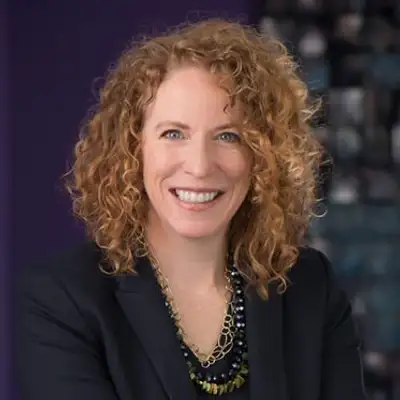
[00:00:12] Manuel Horner. She is a third generation trades person, turned leadership strategist, and founder of Boost Learning Design. She helps
[00:00:22] trades businesses fix the leadership training and accountability breakdowns that drive turnover. Crush Margins and she's the author of Pass The Torch, A Call to Rescue the Future of Trades. Welcome, mana.
[00:00:38] Manja Horner: Thanks for having me. This is so much fun. I know you so well by now, and I'm just eager to dive in.
[00:00:43] Wendy Brookhouse: I am super excited. Um, we'll get to the number 44,000 in a little bit. Kelsey, let's dig into mania background, third generation trades person. Tell us about that.
[00:00:56] Manja Horner: And do you know? Yeah. Do you know that label feels kind of uncomfortable because I really spent about four years working hands on in the trades. So looking at the 40 plus years of my father and my grandfathers, I feel a little bit like. Ooh, can I say that? But yes, I can reglaze a historic wood window. I can strip all the paint and restore and rejuvenate that old, um, historic wood.
[00:01:21] So I think that makes me a trades person. So yeah, it's a bit of a funny title, but I love it. I'm claiming it because not only do I have experience now working hands-on in the trades, but I actually get to help way more tradespeople across multiple trades, improve their business and just. Fix things all around.
[00:01:40] So I love the title and I'm embracing it.
[00:01:43] Wendy Brookhouse: Go for it.
[00:01:45] Kelsey MacAulay: about that, like what are the top three mistakes that you see the trade owners like making mistakes when it comes to like training and their leadership?
[00:01:54] Manja Horner: Yeah. Well, I think the number one mistake is that they don't do it. Um, and I'm not saying that to be cheeky. A lot of companies don't really invest into training that heavily. They kind of expect that people they hire will come either knowing how to do the job from trade school, um, or from apprenticeship or wherever they learned, and then they figure they'll learn it as they go on the job.
[00:02:20] That's the same for leadership skills and even supervisors. They get kind of thrown into the role and just expected to figure it out as they go, and it's costing a lot of money and a lot of headache. Um, because, well, a couple of reasons. One, you're promoting somebody typically who's really good at the job into a position of management or supervisory, and they don't really realize they're signing up for a completely job description.
[00:02:48] Different job description that has a whole new set of skills. So that's really challenging for people. Um, they get frustrated 'cause they just went from being an expert to now being a newbie and nobody loves that feeling without the support. The second is they're now just responsible for a whole other different thing.
[00:03:09] You know, they have to plan and resource and, oh, just so many things that they have to now do as a leader. And again, nobody's been really. Trained on it. So then they're just fumbling their way. And that's where we get the big issues. Like people get mad and they wanna quit, or they just go, Hey, this isn't for me.
[00:03:26] I wanna go back to the tools. There's, there's a lot of issues in there. So number one issue is they just don't train.
[00:03:32] Wendy Brookhouse: So what you're saying is that ES, P and osmosis are not techniques.
[00:03:38] Manja Horner: I actually use those terms a lot in my book. The Learning by Osmosis probably needs to shift because it's very slow way to learn. There's a lot of frustration and the tinkering generation was okay with that. But the generation of, give it to me now really fast and I have 30 seconds of attention span, it doesn't work for that generation.
[00:04:00] Kelsey MacAulay: So people are expecting. People to come with batteries included, and they're not coming with batteries included, and they keep getting the same effort or the same mistakes.
[00:04:11] Manja Horner: Yeah, so it, it's both in the skilled side and then when people get put into management, supervisor leadership positions, there's a lot of, let's just figure it out. And the only training that I see in the trades that's really done well is safety. And that's because it's been mandated. So people will do it because it's required.
[00:04:31] Um, and so they're like, okay, great. Well let's do the safety 'cause we have to, and I'm talking. You know the big general contractors, the big firms, they're doing all the training. So I'm kind of talking more about the small companies. The ones with maybe under 50 or even under 150, they're the ones who are really struggling in this area.
[00:04:51] 'cause they've never really known to do this. They've never really had the professional experience to go, you know what? Training and HR are a core function of our. Company that feels very corporate and a lot of them aren't in that corporate mind space yet 'cause they haven't really had that exposure. The big companies that have like leadership teams and divisions.
[00:05:11] Yeah. They've got this dialed in, so I don't want to, you know, make it sound like some people aren't doing their job.
[00:05:18] Wendy Brookhouse: I, and I also, maybe this is a perception and a bias. I have manja, but I have this perception that the smaller companies may resist it because then it feels like they're becoming corporate and that might be something they actually started their company to avoid or something.
[00:05:33] Manja Horner: That might be, and also I think they don't directly see the return on investment when they do this work. So when I say Do this work, I'll break it down. I teach a lot about and advise and consult on building a learning ecosystem within your company once you get to a certain size. You need that kind of part-time HR support.
[00:05:55] And then you also need to start thinking about a learning ecosystem. And that is made up of your software. So what's the thing that's gonna hold all the content for training? It's gonna hold all your videos and your SOPs and your checklist and your how to do stuff and, and then also hold the certifications.
[00:06:14] So like the licenses and certificates needed, there's gotta be a place for that to sit. So we help with what's that? What's that content platform, basically? And then there's the strategy behind it. So how are we gonna onboard and what's our strategy around the different roles and how we wanna train people from brand new to long service?
[00:06:36] How are we gonna build some career paths so people can go from labor or. Through the different roles until they become a A manager, if that's their path, they don't necessarily see the ROI directly. Like why would we bother putting all that money into this? Um, or why would we bother putting somebody through supervisor training or leadership training so they can be better communicators or better delegators or better planners.
[00:07:02] So a lot of what I'm working on educating now is there are a ton of hidden costs buried in your. Business when you just leave people to figure it out. And that's actually been a really popular webinar topic, um, at the different associations because we built a calculator and people are going, holy shit, we're losing, we're losing 8% on every project because people are left to just figure it out.
[00:07:28] Um, it's rework, it's mistakes, it's injury, it's people. Mad at their supervisor and dragging their heels. It's just lack of productivity because people don't know they can ask questions. It's running to Home Depot a million times because you forgot stuff. Like there's so much inefficiency baked into every project when there's not that kind of tight, um, training and just support so that compounds over, projects over a year, you've got millions of dollars in lost opportunity.
[00:08:02] Wendy Brookhouse: And really lost value in your company and lost profit and like,
[00:08:09] Manja Horner: Yeah.
[00:08:09] Wendy Brookhouse: So much lost. Um, in your book, you, I think you wrote
[00:08:12] the book to kind of highlight
[00:08:14] a crisis that's happening because. Everything you're talking
[00:08:17] about is to.
[00:08:20] address this upcoming crisis that's really right on our doorstep and affects everybody, whether you're in the trades or not.
[00:08:28] In the end, this is gonna affect you in one way or another.
[00:08:32] Manja Horner: Yeah. Um, so I wrote the book because I've been sitting on the sidelines observing for my whole life. I grew up in a family business in the trades, and I could see even. 35 years ago that there were concerns about, oh, we can't find good people. And it's interesting because at around the same time we started to see the high school programs Peter out.
[00:08:56] So shop and, and um, construction classes were still there, but kind of petering out. And I, I'm in a rural town, that's where I went to high school. So we had the kids who, you know, chainsawed from the age of eight years old. So, you know, I wasn't even in a, in an urban setting for high school and we were already seeing those classes petering out.
[00:09:20] So yes, I was observing that in the nineties and early aughts, people were only getting pushed into university. In college, I saw that happening. I experienced it myself. I spent all my summers working in construction and, and historic restoration, and nobody ever suggested I take that as a career.
[00:09:40] Wendy Brookhouse: Hmm.
[00:09:41] Manja Horner: Right.
[00:09:41] And so I detail all of this in my book, just what was happening societally and culturally. And it, it led to this position where we haven't recruited people into the trades. And I'm talking kids, you have to start when they're in middle school. 'cause they're already starting to think about what am I good at?
[00:10:00] What do I wanna be when I grow up? And we drop the ball there. So now we're facing a huge shortage, not only from retirees. That's leaving a big gap, but there's not enough people even entering the profession to replace, let alone support the expanded workforce we need with data centers and just crumbling infrastructure everywhere.
[00:10:22] It's, it's wild actually.
[00:10:25] Wendy Brookhouse: So wild.
[00:10:26] So wild. Because that's why I say it affects everybody, because if I'm a homeowner and I wanna do a renovation, if I wanna go buy a certain thing or I wanna, you know, get a new house built, this is affecting everything.
[00:10:38] Manja Horner: Yeah, I mean, there's amazing home builders that have capacity. You know, I'm at the um, Durham, Ontario, and Canadian Home Builders Association. There's amazing builders out there. But when was the last time you needed a plumber or somebody to just like fix something small? Um, or, you know, yeah, like you say, getting somebody to call you back on a new porch or a new, I don't know, concrete.
[00:11:03] Pad for your garage. Like there are a lot of, um, there's a lot of scarcity around finding people from the personal perspective and then, you know, it trickles out into big commercial and industrial and infrastructure projects. So, yeah, it's bit weird and there's a few factors, but I'll pause on that one.
[00:11:24] Kelsey MacAulay: Yeah, I was wondering like, I'm 49, so the stigma when I was in high school was. If you're smart, you went to university and if you weren't as smart, you went and took a trade. Now all those people who aren't as smart as university, all those people now have 500 employees and live on a beach. So I think they got it fundamentally wrong back then.
[00:11:43] Has that stigma changed that hey, there are career paths you can, you know, go get a trade, be a bricklayer, B whatever, be the best pointer, uh, and command a really great wage.
[00:11:55] Manja Horner: I think, yeah, I think the conversation is ever so slowly starting to shift because there's more emphasis and more focus coming from governments. So when you start to see the government signals, um. Putting money into skilled trades training in Ontario, they're doing a really good job. We have a very strong minister who is putting a lot into skilled trades training investment through the skills development fund.
[00:12:18] So different provinces are really focused on that. Even in the us, the A FA, so. American Federation for apprentices, they're doing a lot. There's been, um, a lot of money that's coming from the federal government in the US encouraging skilled trades. So I think slowly the stigma will start to shift. You know, you've got characters like Mike Rowe from Dirty Jobs, who's, you know, out there promoting, but even still, it's called Dirty Jobs.
[00:12:43] You know, like it still puts a mental picture into like, I don't know if I wanna be dirty every day. Um. But I think the wave is also moving towards skilled trades because people feel it might be a little bit future proof from AI and automation. They think, oh, you know what, at least if my kids have something, they can build something, they can fix something.
[00:13:06] Hopefully AI won't take their jobs. So I think there's a little bit of a fear driving people back to the trades. Um, even myself, I mean, I am a woman in education. I've got multiple degrees. When I look at my kids' RESP fund, I think, eh,
[00:13:23] Wendy Brookhouse: Will that even
[00:13:24] used? Where is it
[00:13:25] Manja Horner: yeah. Like, am I gonna put that to university? Like I have one, my middle daughter, she, she wants to be a veterinarian and for sure she will be.
[00:13:33] My sister's an equine vet. She's already, you know, um, what's the word? Shadowing her aunt over the summers. Even at 12 years old, so she's already fully in there, almost apprenticing, actually before it's formal. She's already been part of some major um, cases, so I know for sure she'll go to vet school. And in a professional space like that, you have to, right?
[00:13:58] You're going through all the years of university to get that. Um. To get that degree and get that certification. So for her, for sure, but the other two, I'm like, I don't know. Maybe you'll go into ownership or you'll learn a trade, or you'll get into something that's a little more hands-on and less academic.
[00:14:16] We'll see.
[00:14:17] Wendy Brookhouse: I think it's like. And not everyone's suited for either one, but it's like instead of just trying to get everybody in one lane, find the right lane for the person where they're gonna actually enjoy what they do.
[00:14:29] Manja Horner: I'm hoping somebody comes up with a really strong AI strength finding tool for kids even in middle school, that they can go through and really objectively assess. You would be a great mechanical engineer, or based on your creativity, you might be an awesome Tyler.
[00:14:45] Wendy Brookhouse: Right.
[00:14:45] Manja Horner: Actually, those mud trades are really hard to recruit people into.
[00:14:48] They're the, that's the trade that's suffering the most, uh, concrete tile. Any of those mud trades, drywall, they're, they're a lot harder to recruit into electricians. They're doing a really good job of recruiting and it's a little tidier, you know, it's a little less like in the weeds, so to speak.
[00:15:06] Wendy Brookhouse: don't know. I I like the idea of actually getting,
[00:15:08] on those stilts, um, to.
[00:15:10] Manja Horner: yeah, well, you know, I think the stilts are sort of, you have to make sure that nobody's watching when
[00:15:17] Wendy Brookhouse: is that not
[00:15:18] Manja Horner: I don't know if they're like part of the safe practice. There you
[00:15:23] Wendy Brookhouse: go. Apologies.
[00:15:24] Manja Horner: you go. Don't apologize. Ever.
[00:15:29] Wendy Brookhouse: I just see it on TV so it
[00:15:30] looks good.
[00:15:31] Manja Horner: like, checking myself.
[00:15:32] Yeah. I was like, oh. Oh, is that approved by the labor? I better, I'll, I'll double check that.
[00:15:38] Wendy Brookhouse: we'll put it in the show
[00:15:39] notes.
[00:15:39] Manja Horner: show notes. Mm-hmm.
[00:15:40] Wendy Brookhouse: You can do, it this way.
[00:15:43] Manja Horner: yep.
[00:15:45] Wendy Brookhouse: I think it's also important. So we brought up the number, 44,000 at the top end, and that's in your book. And, um, what I found fascinating is
[00:15:53] for all the owners of these firms that are in the trades.
[00:15:57] Arena. Um, your book highlights a thing that's happening because, um, in 20 21, 40 4,000 businesses just closed.
[00:16:07] They didn't try and sell, they didn't try and keep going. They just. Closed and that does So much,
[00:16:14] Uh, Kelsey and I talk about the entrepreneurial ecosystem sometimes, and it's like, especially
[00:16:19] in.
[00:16:19] smaller towns and more rural areas, they could have been a significant employer. They provide a very valuable service.
[00:16:26] Where do people, you know, go anymore? Right? And so when you talk about this crisis that's happening that you wrote the book about, it directly affects the value of your business if
[00:16:37] it's unaddressed.
[00:16:39] Manja Horner: It really does, and I think that's actually something that's really intriguing is the number of businesses that are gonna close with this retirement, because this one in four trades person doesn't necessarily just account for the workers, but it also, a lot of those are the owners, and so they'll just work until they die.
[00:17:00] Which my dad is doing, you know, like he's gonna be, I don't know, close to 70. He has no plan to stop working.
[00:17:09] Wendy Brookhouse: I had a client who was 70 some years old before he retired. He was a pipe fitter slash welder,
[00:17:14] and he just kept going and he loved it. He was awesome, by the way, like just such a great
[00:17:19] a character,
[00:17:20] Manja Horner: Yeah, like it's fine. Go ahead and work if you want, but I'm seeing companies all around where they've got very gray hair. You know, they should probably be.
[00:17:31] Wendy Brookhouse: Yeah.
[00:17:31] Manja Horner: You know, resting or at least going part-time or spending more time with grandkids and they don't really have a solid plan in place. They may have a second in command in their company that's like, could probably take things over from the delivery side or the service side, but maybe not run the whole business.
[00:17:48] So, you know, I think there's some work to be done there. I and private equity is kind of coming in and buying up a lot, which. I am just gonna sigh and leave it at that. 'cause I'm not like a no and I'm not a hell yes. So I think I've got some opinions there that maybe I don't wanna broadcast yet. Um, but it's still concerning because if, if you have three plumbing companies in a town and then one is gone, you're down to two.
[00:18:15] You might have somebody young who restarts and you know. But yeah, it does leave holes in the ecosystem of entrepreneurs and services.
[00:18:24] Kelsey MacAulay: The, the physical side of a lot of these jobs, like we were talking about, brick laying and drywalling, and these are not easy jobs.
[00:18:31] Manja Horner: Mm.
[00:18:32] Kelsey MacAulay: Like how does that impact, you know, people wanting to come in and. I'm a certified exit planning advisor, so I know that only 30% of the businesses actually go to market to sell, and there's a plethora of other stats that we can all go through to say how awful that is.
[00:18:48] So like that physical demanding side, do you think that's keeping people away as well?
[00:18:53] Manja Horner: Yeah, and we hear this even a lot more in the manufacturing side of things. Um, I was talking with a big steel plant and they're trying to do more of like a. Uh, exposure to interested people. So exposure to what the work environment is actually like. 'cause it is dirty, it is hot, it's loud. You're dealing with like molten steel, you know, like there are still places where it is a tough, hard work environment.
[00:19:24] Um, some people are great with that, but you know, when. If you're frustrated 'cause like, oh, we don't have as many urban or women or something. It's like, well just take who wants to be there? You know? Like don't worry too much about it. And I'm a big proponent for women are a very untapped piece of the market, but if it requires like big brawny physicality, you may not get as many women.
[00:19:48] And I think that's okay. I don't think that's. Wrong. It, it just is what it is. Um, there's lots of opportunities for women in many, many trades, in many different roles. Um, so yeah, it is affecting some of the recruitment effort, for sure. So I think we just need to give people more of a taste of the different kinds of skills that are available, different kinds of trades so they can try welding in high school, try some carpentry, try some mudding.
[00:20:14] You never know, you know,
[00:20:16] Wendy Brookhouse: Yeah, like I think, let's go Back to your tinkering generation, because
[00:20:20] um, I grew up,
[00:20:21] I never had an affinity for this stuff, so I'll just put my hand up right now on this side
[00:20:26] of things. But my dad, I could, he built stuff. Like, you know, built bookcases. He was doing drywall and
[00:20:33] renovations and all those types of things.
[00:20:35] So I got to see it, but I don't think that we get to the new generations might not be seeing it or even observing it.
[00:20:42] Manja Horner: Observing. Yeah. I don't think they're seeing, observing, or really getting their hands on it as much. I really remember as a kid, and again, I grew up in rural, so we had property where you could kind of go get lost and build a fort with a hand saw and a bucket, and nails and a hammer, and we did that a lot.
[00:21:00] Like my dad used to get so mad. All of his hammers and saws went missing. He probably replaced saws, hand saws, and hammers once a month. But I mean, we were never really discouraged from going out and just being all day with a stack of old wood down at like the concrete silo. Like nobody ever really was like, why are you out there?
[00:21:23] Nobody watched to make sure we weren't gonna hurt ourselves. Not once. That's very different than the way we're parenting today. And I think it's a bit of a disadvantage because you can't just put a power saw in a 20-year-old hands and be like, here you go, when they've never even used a pocket knife.
[00:21:42] Like it's just a big leap, right? In terms of how a person feels safe using the stuff. And it's intimidating to hold onto a saw that's like got a spinning giant teeth. I grew up watching for like my dad used table saws and power tools and he'd always talk through like. Double check that your hands are outta the way.
[00:22:02] Make sure that this doesn't jump. Or if you, you know, don't secure this end, your wood is gonna kick back. And, and
[00:22:08] Kelsey MacAulay: Where's your.
[00:22:09] Manja Horner: kind of, yeah, like you just had an awareness of how to use the tool safely. So then when I'm doing it, I'm like, okay, this wood might kick back when the saw does this, it might jam, you know, like, don't ever like reach in, you know, all the things that just you, you feel come naturally.
[00:22:28] But if you've never done it or had experience or exposure, it's like totally new.
[00:22:33] Kelsey MacAulay: I mean, that sounds like, you know, process. It needs to be kind of put in place, like in plain language. What does learning design actually mean to the trade screws?
[00:22:44] Manja Horner: Well, for us it means. Focusing on the skills that are most important. So my method is always to start with skills first. 'cause the knowledge is good, like that's a baseline, but you can just dump knowledge on people until they're blue in the face. But until they actually get their hands on something and start developing skills and stacking those skills, it's, it's like.
[00:23:05] It doesn't really get into the brain, it doesn't create any of that neuro neural pathways. So when we're building skill, whether it's from communication, training to leadership, which let's face it, most of leadership is planning and communication. Um, it's clarity, vision setting. That's all communication.
[00:23:25] But even in the technical, uh, or field sale, uh, skills, we look at what are the top 50 skills you need? In the first year. And then we'll just build ways that they can actually get their new people practicing those skills until they stack and we break it down. So Drywalling and I have this in my book, let's just take drywall for an example.
[00:23:48] You may say, oh, I need them to be able to, um, mud drywall. And you think that's a skill? Well, actually there's like 30 skills to break that down. So one is going to be. Let's just say mixing the mud to the right consistency, that in itself is a skill. Um, so being able to like notice it, know the tools used to, to mix it, the right amount of water, the technique to get it so that you're not just like flooding it.
[00:24:16] Um, how should it spread? Should it feel like peanut butter, should it feel like. You know, Play-Doh like, nope, that's too much. You need more water. So like, there's a bunch of skills just in mixing your mud and then it's like handling the tools. You got your hawk in one hand and you've got your trowel in the other.
[00:24:33] What's the technique for like really nicely? How much product do you need on your T? Like how do you scrape it and when is it done? And you need to scrap that batch and get fresh. Like there's all kinds of skills that make up. The ability to do a smooth drywall application. So like, um, we sort of force the function of breaking it down into the small skills that are actually the step-by-step stackable ones until somebody is confidently and accurately to the standard applying mud to drywall.
[00:25:06] So if that, if that helps, it's like really about breaking it down to the beginner's mindset. 'cause most people who've been in the trades a long time don't remember the first days,
[00:25:17] Kelsey MacAulay: It sounds pretty much like a high efficiency restaurant, like you're just doing soups, you're just doing mixes, and you can be on there for a year just learning how to make salad dressing and then, then you can graduate. To the next thing and then that you're learning just how to season meat.
[00:25:33] Manja Horner: yep. Yeah. And, and we're trying to do that within, um, a short enough duration that somebody is able to be a productive member of the crew. So you can get, you know, I've talked with experienced carpenters and framers. If you get somebody just building just framing floors for like two months and then just framing walls and just framing, you know, uh.
[00:25:58] Whatever. I'm not gonna keep going, but like if you can get them to just put a longer amount of time on each of those skills, they get the mastery a lot faster when you're jumping around like, okay, today you're doing this. Oh, tomorrow you're doing that. And then a month later you're going back to that other thing.
[00:26:15] It's just too jumpy and they don't ever really get the repetition that's needed. And one thing we haven't mentioned on here, 'cause I forget sometimes that how important this is. My very beginning career was actually as a music teacher. Um, I'm a violinist, so I taught music from the age of 16 for about 15 years.
[00:26:37] When I went to university for my second degree, it was actually for music teaching certification. I had a business degree in commerce and whatever, but I went actually again as an as a. Mature student to be able to be a better music teacher. And that was kind of what headed me down the corporate training path.
[00:26:56] So music education is very skill driven. You don't take a student well when you're teaching the violin, you've got all these parts, you got the bow, so like the right hand, what does it have to do? You've got the left hand. What does it have to do? And then you've got, you know, your ability to read music.
[00:27:14] That's another part. You're, you're tuning it. So there's all these different parts that make up like a solid sounding twinkle, twinkle little star. That is like, wow, that's really lovely. Um, so as a music teacher, I was always breaking it down. You're just holding the bow this week. Like, you know, so you kind of have to get that repetition so that they can move a lot faster through the skills.
[00:27:41] Um, and that's what I apply in, in the skilled trades as well. It's no different, same principles.
[00:27:47] Kelsey MacAulay: I took fiddle lessons over 30 years ago and that was the first song I learned was Twinkle Twinkle Little Star. So that's why I was kind of
[00:27:51] Manja Horner: Everybody does. And that's why I quit. That's why I quit teaching eventually. 'cause I'm like, I can't handle another twinkle, twinkle little
[00:27:58] Kelsey MacAulay: Yeah.
[00:27:59] Manja Horner: I'm done. I'm out
[00:28:00] Wendy Brookhouse: I've hit capacity.
[00:28:01] Manja Horner: capacity. Yeah. But actually, interestingly, this Suzuki method, which is a really well respected music education method, they start the kids really young, like three years old.
[00:28:12] Every time you learn a new skill, you do it to the tune of Twinkle Twinkle Little Star, even as a professional. So if you're learning something really like technical and complicated spto or something, you go back to Twinkle Twinkle Little Star, and you do it on that tune. So
[00:28:29] Wendy Brookhouse: What, What does that do?
[00:28:30] Is it just.
[00:28:30] anchor differently? It like is there some, what is
[00:28:33] the reasoning behind that?
[00:28:36] Manja Horner: I think it's just because that tune is, you don't have to then focus on the tune or the notes, you're just focused on that skill. So it kind of like makes a bunch of the factors muscle memory, and you're just isolating the one new thing. So it'd be like, you know, um, you guys are in finance, so it might be like.
[00:28:54] Just only calculate with round numbers. 'cause then you don't have to think about it. You're just focused on, you know, whatever new thing you need to do. I don't know. That was a poor
[00:29:02] Wendy Brookhouse: that could be. We, we, we distill spending plans down to one number. Um, and everything else we try and automate so that they only have one point of focus to make things simple and reduce decision fatigue and all that stuff.
[00:29:15] Manja Horner: There you go. So that's exactly the, the premise. It's like if you don't have to think about practicing that specific bow technique on a new set of notes, you're just doing twinkle, twinkle a little star. You know that already, you've done that 8 million times. So don't worry about the notes, just worry about the how, the, how this hand feels when it's, uh.
[00:29:35] You know, working the bow, so it's, yeah, it's the same. It can be applied to the trades as well in many si situations. So the, the cool thing about us is that we're only building training for skilled trades. And why that matters is because many corporate trainers, they know how to train for people that sit at desks.
[00:29:56] And they do that really well. I did that for 10 years working for the banks and financial services. It's so different to create training for people that sit at desks or stand in the branch and serve customers. It's another totally different environment when you got like safety issues and shouting and dirt and weather conditions and like it's a very different environment.
[00:30:19] Plus blue collar people just are kind of their own. Adorable group of people. Adorable maybe is like a funny word, but different expectations for training. There's a lot of like, this is fing bullshit. Why should I do this? This is a waste of time. So we have to cater to the learner. You always have to start with the learner and um, you know, that's what we do really well, is we cater all of our training to a very specific learner and learning environment.
[00:30:49] Wendy Brookhouse: I love that
[00:30:50] mania. What is something we didn't ask you today that we should have?
[00:30:55] Manja Horner: Oh, what a good question.
[00:31:01] I am gonna pause for a second 'cause I have to just really think, oh, the one thing you didn't ask me today that I think is really important to note is what happens when all these retirees walk away and just. Leave their tool belt behind or you just never hear from them again. What happens to all that really rich knowledge, um, was at a waste?
[00:31:24] Where did it go? How did that transfer to other people? And I spent an entire chapter in my book just talking about knowledge capture engine. Like what is that? What is that engine? That system where you can download, extract, interview, video, capture document. Experience from people that are amazing before they go, and then the next chapter is, how do you take that and transfer it to the next generation through mentorship, through video, through training?
[00:31:57] Because I think that's the part we're not really, that, that hasn't sunk in yet. Yes, we have the bodies leaving. We haven't talked about the brain drain that's happening
[00:32:06] Wendy Brookhouse: And I
[00:32:07] mean, they've seen everything like, you
[00:32:09] know what I mean? Like so there's so
[00:32:11] much that has driven into their subc. And just, they just do it. but They're not even aware of it.
[00:32:17] Manja Horner: not even aware of it. They're not even aware of it.
[00:32:19] And these are the people who know the 45 uses for WD 40. Then we only know two. You know? Or like, they're the ones who've just like, oh, okay. So my brother, he fixed my, um, light fixture above my island this weekend. Everyone was over for dinner and he's like, huh. That's what's going on there. I was like, honestly, dude, I have tried to fix this three times and I had like Teflon coating around it.
[00:32:45] I was just trying to make the threaded rod. It had separated. I was trying to make the threaded part a little bit more full because it seemed like it was just slightly too small. So it kept slipping out. And he's like, I don't know. So he's like fiddling with it. He takes the whole thing apart, undoes it, and then he like has it back installed.
[00:33:02] And I was like, dude, what'd you do? Like I've tried this three times and he's a carpenter. He is been working under my dad for. At least 12 years and he is like, oh yeah. I just realized if I flipped the rod around, I just thought maybe the other side would've been like slightly bigger in the way they'd machined it.
[00:33:18] Yep. He was right. It just needed to be flipped around. I'm like, for Pete's sake, I've been sitting with that stupid thing sagging for probably two years. I'm embarrassed to say.
[00:33:29] Wendy Brookhouse: Yeah. I, I think that story. encapsulates it all. Who should buy your, as we Wrap up. We could talk to.
[00:33:35] you forever, I think about this. Um, uh, who should buy your book?
[00:33:40] Manja Horner: Well, if you're a leader in the trades in any capacity, or if you're a person who's in the trades, you're working in it, mechanics are buying it, you know, safety people, all kinds of people are buying it. But even if you're just interested, like you're curious about what's going on the first. Eight chapters will be interesting to you.
[00:33:57] The next four are very tactical, so I kind of have a number of chapters just like, how did we find ourselves in this mess? Where did we get to, how did we get here? What are all the myths around Gen Z? Workers are lazy. They don't wanna do it. Like I break down all those myths. Um, and then the last three chapters, if they get too in depth on what to do about it, you can ignore those.
[00:34:19] But I think it's actually quite an interesting book for a broad audience. And, um. Yeah, I'm just really pleased to be here and chatting with you today. Thanks so much for everyone, for listening.
[00:34:29] Kelsey MacAulay: Well, thank you, and if people do want to get ahold of you, what's the best way to get ahold of you?
[00:34:33] Manja Horner: Well, I'm, uh, definitely ramping up my social media presence, so mania Horner, I'm sure you'll have all that information in the show notes.
[00:34:41] The beauty about having my weird name is. That's my Instagram handle, that's my website domain. Um, and go to pass the torch book.com if you wanna get your hands on a copy. And LinkedIn or Instagram are great place to connect. I'm trying to do daily content there.
[00:34:59] Wendy Brookhouse: Awesome. Well, thank you
[00:35:00] so much for coming out and coming on the number, And I.
[00:35:05] feel like you've, you're in a niche here and you're addressing a need in a very practical, approachable way. So,
[00:35:12] uh, if you're in the trades, go get this. book.
[00:35:14] Manja Horner: go get this. Thank you so much.
[00:35:17]
[00:35:17]