Subscribe
Share
Share
Embed

How I Got Here with Dreena Whitfield goes beyond the highlight reel with Black women founders, executives, and leaders. Real conversations about the pivots, the setbacks, and the purpose behind the work. From bootstrapping a beauty brand with $500 to leading a professional sports franchise, each episode explores the moments that shaped who they became and the cost of building something meaningful.
For women navigating leadership, business ownership, career reinvention, and the cost of ambition.
New episodes biweekly on Wednesdays.
Host: Dreena Whitfield
Executive Producer, Writer & Creative Director: Keena Williams / Struxa
howigotherewdreenaw.substack.com
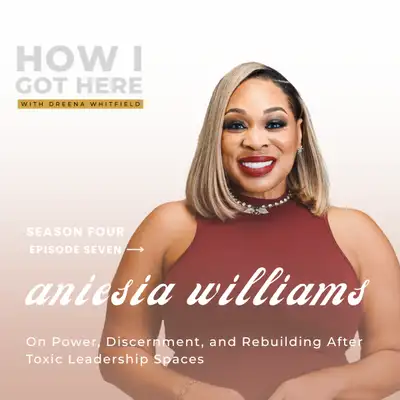
How I Got Here with Dreena Whitfield Season 4 Episode 7:
Aniesia Williams on Power, Discernment, and Rebuilding After Toxic Leadership Spaces
===
[00:00:00] Introduction: Meeting Aniesia Williams and her work
---
[00:00:00] Dreena Whitfield: Today on how I got here, I'm sitting down with Aniesia Williams, a strategist, venture architect, and ecosystem builder who understands how power moves and has been really intentional about changing who gets access to it. With over two decades in marketing and entrepreneurship, Aniesia has founded and successfully exited a creative agency.
[00:00:22] Dreena Whitfield: Let High Impact work across major organizations and now focuses on building ventures, founders, and pathways to capital through her impact and venture work. But beyond the titles, Aniesia is deeply committed to creating systems that allow underestimated builders to thrive. She's someone who understands both the boardroom and the backend of the hustle.
[00:00:43] Dreena Whitfield: And this conversation we talk about identity, our beliefs. Stewardship and what it really means to move from being the one doing the work to being the one opening doors.
[00:00:54] Aniesia Williams: Listen over fourty. You had to be comfortable with being the villain in some by [00:01:00] sort. You're not gonna please everybody. So I wanted to be the support that I needed for other folks makes sense and I'm like, if I can stop somebody from having to struggle through that.
[00:01:17] Aniesia Williams: Yeah, then let me help listen. They would be silence so when I pop up they be like,
[00:01:27] Aniesia Williams: actually, because while y'all are still there, sister girl is already over here.
[00:01:32] Dreena Whitfield: This is Anesia Williams and this is how she got here.
[00:01:40] Dreena Whitfield: Esia Williams, thank you so much for joining me today. I really, really appreciate it. You came in with the lob, you came in with a nice beat. I'm here for it. Entering 2026. Amazing. This is a new look. You just told me that you're debutting in January, so no one will see this before then. So I appreciate you.[00:02:00]
[00:02:00] Aniesia Williams: Awesome.
[00:02:02] Why titles stop mattering after a certain point
---
[00:02:02] Dreena Whitfield: So Aniesia, before we get into titles in exits, I wanna start here. When people ask you what do you do, what do you usually say first and what do you usually leave out?
[00:02:16] Aniesia Williams: I'm a problem solver. I am a professional
[00:02:20] Dreena Whitfield: problem solver.
[00:02:22] Aniesia Williams: I probably leave out is like all of the other things. Mm-hmm. Like, oh, the title and the this and the that.
[00:02:32] Aniesia Williams: Like I am in a place, you know, there is a sense that you get over 40 and I'll be 45 in January.
[00:02:41] Dreena Whitfield: What? Stop it.
[00:02:43] Aniesia Williams: Yes.
[00:02:43] Dreena Whitfield: Good. You look good. Okay.
[00:02:50] Aniesia Williams: But it really, people don't care. People do not care what your title is. They absolutely care. Mm-hmm. They care about, can [00:03:00] you help me? Can you fix my problem? And what is the return on you fixing my problem. They do not care about anything else. So that's often what I leave out is like all of the extra stuff that we think makes difference for external validation.
[00:03:22] Aniesia Williams: But I just lead with, you have a problem, I'm a professional problem solver. Let's get down to the tax bracket. So what exactly do you,
[00:03:31] Dreena Whitfield: what type of problems are you fixing?
[00:03:34] Aniesia Williams: Oh God. I'm fixing a lot of things I'm fixing. You know, uh, this experiential activation does not tell a story, and it needs to tell a story from the time that they walk in the building to the time that they leave.
[00:03:46] Aniesia Williams: I'm fixing, oh, my board is a mess. They don't even know how to even help us. How do we even, you know, give them the tools that they need to be able to do the things that we need to do? It's, Hey, like we got [00:04:00] this new round of funding. Now I need to go from 10 to 25. That's a whole different organization.
[00:04:06] Aniesia Williams: What does that look like? Mm-hmm. Help us to build this organization. And we also need to hire because we don't have no contracts, we don't have no nothing because it's been freeze to them. And I think there's a liability that is there. And if I don't fix this now, it's gonna be a problem for me later. So there are, that's like the range of issues and problems that people come to me to fix.
[00:04:33] Dreena Whitfield: Olivia Pope esque vibes. The fixer, right? Absolutely. I'm here for it.
[00:04:39] Learning how power really works inside big institutions
---
[00:04:39] Dreena Whitfield: You've been working for a long time, and at a really high level, if we were, if we rewind to earlier Anesia, for all of the access and authority, who were you then and what were you chasing at that stage of your.
[00:04:53] Aniesia Williams: I thought that I was gonna work at Bank of America forever.
[00:04:57] Aniesia Williams: I thought I was gonna be a personal banker forever. Forever. Like you could [00:05:00] not tell me I had my series 6 63, life, health and all the things, right? So like I was, I'm gonna work at the bank. The bank. That's that good job. Like I have made it, I have made it to the baby because you know, like when we were growing up, that was the thing is you either gonna be a teacher.
[00:05:20] Aniesia Williams: Yep. You work at the bank, you gonna be a teller at the baby child. And I was like, honey, I bypassed the teller honey. I was the personal baker. So like I done really? I done made, that's literally what I, that what
[00:05:35] Dreena Whitfield: you spent some years in big institutions close to power and decision making. When you think about the, when you think back about those rooms now, what stands out to you about how things actually work?
[00:05:49] Aniesia Williams: Good. One of the big aha moments for me as I was like climbing the ladder was what? How you have to present yourself in [00:06:00] order for you to get access or in order for them to take you seriously. I'll never forget, you know, a colleague of mine, she was just like, Hey, before you go and meet this client, you need to have, you know, your pack ready.
[00:06:13] The unspoken rules Black women are expected to follow
---
[00:06:13] Aniesia Williams: I'm like, Renny, what are you talking about? Wear your little bitton purse. You need to have, you know, your, I'm sorry, not little time per your lubes. You need to have like your Gucci, like you need to have some type of something on you because this lady is very posh and she's, you know, very whatever have you.
[00:06:34] Aniesia Williams: And so she's gonna look at you a certain way if you don't come in like you're supposed to be here. And I was just like, what? And so again, I didn't know that this was even, Hey, you know, I put on my good suit for that day and I thought, you know, I thought I was good girl. She literally reached into her pocket, got me like a Chanel pen to put on, like literally fixed me up.
[00:06:58] Dreena Whitfield: Mm-hmm.
[00:06:59] Aniesia Williams: Which my [00:07:00] curse with hers, and I'm just like, Rick.
[00:07:04] Dreena Whitfield: You had to give off some kind of aura. You had to get off a different aura. I
[00:07:07] Aniesia Williams: I had to give off something different in order, and it did not matter that I was highly qualified. It didn't even matter that I'm managing 80 employees. Like I got, you know, 20 different managers as, uh, managers and directors of the appointment.
[00:07:18] Aniesia Williams: Like all of that stuff did not matter. It mattered to them that I needed to look presentable to the client because the client was this rich lady who did not have to work, but she was working. And that I needed to look a certain way in order for her to take me seriously in my work. And that was just like a, this is nuts.
[00:07:41] Aniesia Williams: And you know, there's always this treat that us as black women, we have to be 10 times better, 10 times. You know, we have to be all of these things while our counterparts can just come in and be average. And that is enough for them. It was just very eye-opening for me. It really, really [00:08:00] was. And so I think that carried and that stuck with me as well for a while until I had to deprogram myself and really understand who exactly I am.
[00:08:15] Aniesia Williams: Who am I in these spaces and who am I to the colleagues that I am managing and leading and mentoring as well. And I needed to be happy with whoever that person was, and I needed to be able to stand on business with whatever I decided that was what I was gonna be and that's what I ended up doing for me, which was like the best thing I could have ever done.
[00:08:43] When speaking up makes you a “cultural problem”
---
[00:08:43] Dreena Whitfield: I was gonna ask. How did that make you feel? But also do you think that same message of this is how you have to show what was really to your colleagues of other ethnicities?
[00:08:55] Aniesia Williams: Oh, absolutely not because they was in there looking like, uh, uh, playing Jane up in the [00:09:00] office where I got it real. So, so no.
[00:09:03] Aniesia Williams: Like it, it absolutely wasn't, and it absolutely was a thing, and it played out in different ways as well. As we continued the relationship with that client played out in the work. It played out in who we were allowed to be on campaigns like it played all the way through. And nobody wanted to call a spade a spade because that was the highest paid client.
[00:09:27] Aniesia Williams: That was the client that was keeping the lights on. So like we all had to sit and swallow and take that. And so it didn't make me feel good. It did not make me feel good that, you know, my, the folks that were up underneath my tutelage, you know, after leaving a meeting with this woman, they in bathrooms, crying in and stuff like that.
[00:09:45] Aniesia Williams: And I'm just like, I can't be the only person that is on the floor that is in some type of leadership. Like letting this be okay. And me just keeping my mouth shut, keeping my head down. Get along with the get along. [00:10:00] Don't run for no feathers. Yeah, don't look no shows. You know what I'm saying? Be seen and not heard.
[00:10:05] Aniesia Williams: And I'm like, I could not stomach, I could not stomach that at all. And because I started speaking up and because I started challenging Spanish quo, then three months later I'm gonna pip because you know. They would throw a PIP on a black woman in the real quick. Mm-hmm. Real quick oh, two months ago you was the best thing you said.
[00:10:25] Aniesia Williams: Sliced bread. Now sudden, because you're a
[00:10:28] Dreena Whitfield: little bit more vocal
[00:10:29] Aniesia Williams: now all of a sudden, oh, I don't know if you're a cultural fit here. So that's why I was talking because. Uh, I didn't know if I could fit in into the culture. And since, you know, leaving those phase, like I understand now what a PIP is and how they use a pip to marginalize and things of black women and things of that nature to get them up outta there.
[00:10:49] Aniesia Williams: Like, that is a HR documented way. Oh, you don't want them in here. Yeah, you gotta make up something. So oh, it's a cultural fit and we know what a cultural fit means and looks [00:11:00] like. But at the time I did not know. Even when I got on it, it messed with my psyche. Like you really, are you who you saying are you really that girl?
[00:11:11] The psychological toll of being pushed out
---
[00:11:11] Aniesia Williams: Because they just gave you this piece of paper and like it takes you through I line fuck. And I literally, like when I left that situation, I took a sabbatical. I'm like, I'm not doing more work in this space. I'm not doing any more work in HSA. I'm not doing any of this anymore because I'm like, I came in here and did a job, had the most impact with my employees, but I still wasn't enough and I still didn't fit the culture enough.
[00:11:46] Aniesia Williams: And I mean, I really had to fight myself and claw myself back into. Who I was of that damage from agents, and I was like, I will never [00:12:00] let another person have me in that space questioning who I am, what I bring to the table, and the value that I bring like ever again. And me again. Once again, my breakthroughs always come when I am forced him.
[00:12:16] Aniesia Williams: You know, like sometimes you know you are comfortable and doing whatever it is that you're doing and God then told you to get up and move.
[00:12:23] Dreena Whitfield: Listen, I'm going through that right now.
[00:12:25] Aniesia Williams: I'm in
[00:12:25] Dreena Whitfield: the
[00:12:25] Aniesia Williams: season of that. Listen,
[00:12:26] Dreena Whitfield: yes.
[00:12:27] Aniesia Williams: I say involuntary or involuntary which one do you want? Because I done already told you.
[00:12:33] Aniesia Williams: And every time it is involuntary, it opens up another portal and it opens up something else because I was never sick meant to be there from that space in the first place.
[00:12:46] Dreena Whitfield: What's, I mean, there's so many. So many black women that are going through that right now. Right. Just as a year alone, we've seen like 300,000 black women unemployed, and a lot of that is voluntary and [00:13:00] involuntary.
[00:13:00] Dreena Whitfield: Right?
[00:13:00] Aniesia Williams: Yeah.
[00:13:00] Dreena Whitfield: So what's one piece of advice that you would give someone who's listening or watching that is like, Aniesia, you are speaking my life right now. I'm going through that right now. How were you able to get out of that mind space? How were you able to pick yourself up and figure out what's next?
[00:13:20] Aniesia Williams: Yeah, so like I said, it was hard work. It was therapy. It was good girlfriends who really were able to validate like girl, like these people are like tripping. Like, no, this is not you. And it was inner work as well. So I had to, you know, come out of this chasing the direct, trying to prove myself. When I am already that, like I'm already that like it's almost like how, you know, folks be like, oh, you know, you try to make a man love you.
[00:13:53] Aniesia Williams: You know, like you try to do everything that you can do. You're doing all the things. All the things, all the things. Just so he can say, [00:14:00] okay, good thing. Like, I love you now because you've done all the, these performance things. It is the exact same thing, the job. It is the exact same thing. And so it took a while for me to do that, and inside of that it was, Hey, Anesia do you have bandwidth to do da, da, da?
[00:14:17] Aniesia Williams: Are you taking any clients? Are you doing whatever have you? Which is how I built a whole nother agency that I did not planned on doing. Like I've never like this literally. This is the second time I have built an agency that I did not ask for, that I did not want to do, that I was not planning on doing.
[00:14:37] Aniesia Williams: And this last one I was able to sell it. So I like, yeah, it's always, you know, in, in those things. And even where I am now, it's different than where I was five years ago. It was different from when I entered into COVID to where, you know, I, I am now to where I sold it. So it's different, but it took a lot of hard work therapy.
[00:14:58] Aniesia Williams: Inner work and some [00:15:00] really good girlfriends who can really put up a mirror to me like, girl, this is who you are. Mm-hmm. Like, forget what remind
[00:15:07] Dreena Whitfield: you.
[00:15:08] Aniesia Williams: Like sometimes you'll need that. But that's how I was able to get out of that. And then inside of that. I really sat down was like, what do you wanna do? What do you don't wanna do?
[00:15:19] Aniesia Williams: You're not doing the things that you do not wanna do anymore. I don't care if you can do it because you can. Don't mean you should. You should. Yeah. And so that's how I was able to carve out another lane for a w plus code because
[00:15:35] Building and exiting a service-based business
---
[00:15:35] Dreena Whitfield: I was like, let's talk about that real quick. I wanna talk about a W and code for a second.
[00:15:39] Dreena Whitfield: Because, you know, starting it was one kind of courage. Starting anything like requires courage, faith. Determination but exiting it was another. Right. So which one stretched you more?
[00:15:52] Aniesia Williams: Ooh, girl. I would say the exit.
[00:15:55] Dreena Whitfield: Really? Okay.
[00:15:56] Aniesia Williams: Yes. Grab, listen, everybody wants [00:16:00] to, you know, sell something or what have you. And it's also too, like this conundrum that we had as people of color is that if we sell or exit, like, oh, we done sold out and oh, you know, you done messed up the culture and everything.
[00:16:12] Aniesia Williams: I'm like, who builds a business? Who builds a business and they don't want to like sometime exit or do court, I just wanna do something else. Right. So why do you have to be that? Because you decide that when you entered into it, like this is, I'm building this for this amount of time or what have you, and then I'm selling it.
[00:16:34] Aniesia Williams: But even in the acquisition, there were so many things that I did not know that I should have asked for, that I should have advocated for that. I've had no idea. And so I'm trying to ask people, trying to get, you know, context, what have you, 'cause it was a service based business, so you don't hear a lot about, or even.
[00:16:53] Aniesia Williams: People in our community that have exited service-based businesses. Right. So you don't That's true. Have like somewhere to [00:17:00] bounce it off like tech, that's a whole different thing. You got a whole bunch of people on down tech, right. Service that's totally different. And so, you know, going into it, you know, I'm thinking that, you know, I have my attorney looked at it like I'm thinking I'm crossing all my, i's I dotted all my T's and then as it played out or what have you, like when I tell you.
[00:17:20] Aniesia Williams: I did this in 2023. When I exit it girl, it is 2025, and I literally just got a notification about my last payment that's gonna be in 2026 in June.
[00:17:35] Dreena Whitfield: Wow. So it's a pro. It's a long process too. I think that's something people also underestimate.
[00:17:43] Aniesia Williams: Yes. I
[00:17:43] Dreena Whitfield: stay, you know, oftentimes when people use the word exit.
[00:17:48] Dreena Whitfield: You never really hear what comes after the applause or after the uproar. So like once that chapter closed for you and things got quiet and maybe they didn't, but what surprised you [00:18:00] most about that season outside of yo, I ain't getting my last payment. It took us three years to get my last payment.
[00:18:05] Dreena Whitfield: What outside of that surprised you about this whole process? Because there are a lot of founders, like that's their goal at the end of this, they wanna get acquired, they wanna sell, they wanna do whatever. They don't, like you said, we don't have a model or an example of someone specifically in service based that has done it successfully and shared it.
[00:18:24] Dreena Whitfield: Shared their journey.
[00:18:26] Aniesia Williams: Yeah.
[00:18:27] What no one tells you about acquisitions
---
[00:18:27] Aniesia Williams: One of the things that I did is that I stayed working at the company like for over a year and a half.
[00:18:33] Dreena Whitfield: Mm.
[00:18:33] Aniesia Williams: And people will promise you the world and things of that nature. And if I've learned anything out of this acquisition is to document. And get everything in writing. It's all good when it's all good until the day.
[00:18:51] Aniesia Williams: Mm-hmm. And that was one of the lessons that I learned. I also did not do a back funnel check on the people that I was also, that was [00:19:00] also acquiring me because again,
[00:19:01] Dreena Whitfield: what you mean
[00:19:03] Aniesia Williams: girl? Because again, I'm thinking, you know. People are honest and
[00:19:11] Dreena Whitfield: Oh, you
[00:19:11] Aniesia Williams: too trusting. Yeah. You know, it's like I think that people are like me and it's just a fact that everybody is not like me.
[00:19:18] Aniesia Williams: Everybody's not honest. Everybody's not people telling you the truth. Like they're just not, and it's what's for them. And I didn't know this until, I didn't even figure out what was happening until I was a year eating, had no idea what was happening. I won't mention the company's name or it'll be, I'll just gonna have to go search yourself.
[00:19:37] Aniesia Williams: But I will say that there was hoods that were happening. Sexual harassment that was happening. Yes. And I'm thinking that the employees are being rude to me, you know, because they just don't like, you know, a black woman coming here and making them do what the hell they supposed to do. And holding them accountable [00:20:00] to which they had no boss and they were just doing whatever else they wanted to do.
[00:20:03] Aniesia Williams: So that's why I'm thinking that they have an issue with me. Not that they like, oh, you, it's on happening Ed. And then when you come into the office it's like, oh, you know that let talk to me like that. Oh, well you, you wasn't gonna say that last night. Shit. With no idea that was even happening? No. Okay.
[00:20:25] Aniesia Williams: I'm like oblivious. I'm like, listen, I'm in here to do the work then, and I'm out. Like, listen, I dream my water in mind, my business. You understand what I'm saying? Mm-hmm. So in that, and I'm glad that I'm like that because that protected me because when all of this boxes, stuff like that, like I had no idea.
[00:20:41] Aniesia Williams: Like I didn't know that I was the only one that was not laying down for change. Okay. I didn't know that.
[00:20:50] Dreena Whitfield: Change girl.
[00:20:52] Aniesia Williams: I did not know that. Had I did research and had I did background, I would've known that it previously [00:21:00] happened at another place that they were at it like,
[00:21:03] Dreena Whitfield: yeah,
[00:21:04] Aniesia Williams: again, lawsuits. And so company got below nuts saying, leadership came to this.
[00:21:09] Aniesia Williams: So I would've known these things of what I was going into, but you know. They black and black. They trying to help a black and oh, you know, chocolate for the culture and whatever have, so people wouldn't do this to, because people wouldn't do this to me. I'm getting my equity like I'm a, oh, looking at their book, girl.
[00:21:36] Aniesia Williams: Goodbye. Listen. Looking at their books, not knowing that they literally only had a runway of nine months. But had that been us to think oh, we got millions in the bank and dah, dah da. We're already funded, girl. Like all of those things. All of those things. So again, it looked good on the outside. Like, yeah, I got an acquisition.
[00:21:59] Aniesia Williams: It was [00:22:00] great. Like I was able to do some things that, you know, a lot of black women do not get to do, and now I have a Dream Bloc, right? And so, mm-hmm. It was kind of like. I had to start Dream Bloc before I even advertised Dream Bloc because I needed to have a vehicle to be able to put other things in because I couldn't use AW plus code no more because it was no longer, see what I'm saying?
[00:22:22] Dreena Whitfield: Yeah.
[00:22:23] Aniesia Williams: So, and thank God that I did that because when all the shit hit the fan, all I did was press the button on Dream Bloc. It was already operational and functional and had clients with it. Thank God I, when that it,
[00:22:39] Dreena Whitfield: yeah.
[00:22:41] Aniesia Williams: So again, like I'm grateful that I went through that process because this shit will never happen again.
[00:22:48] Aniesia Williams: It never happen again. And just like how I am when I'm dating, what you show me on the front is great, but like I wanna see you at every season. I wanna see like [00:23:00] all the things before I'm all the way into some things and I am out here liable for some things that I don't even know.
[00:23:08] Why integrity matters more than optics
---
[00:23:08] Aniesia Williams: And so, you know, that was the lesson for me and I'm gonna be honest, it be your own people.
[00:23:13] Aniesia Williams: It be your own people. And I know that. I know that there's a, you know, oh, we need to, you know, stick black and buy black and do all the other things and what have you, but like the most harm I have had in my professional career has been by the hands of us, not by the white man, not by Karen, not by Shula.
[00:23:34] Aniesia Williams: Like, and that is sad. That is so, but it is the honest truth for me that has been that. Been my journey for me that thank God in this new season where I am moving to and that I have been in for a couple of months. I do have some strong black women that are true blue, that are like, I got you. They show [00:24:00] me, they show up and they stem in the gap for me, and I'm glad that I had that.
[00:24:06] Aniesia Williams: But I'm telling you like it has been a journey. To find women of like line that is like, Hey, just because you shining, they don't mean that I can't shine around too. Like just because you were coming over here, that don't mean that I can also go over here too. Like my success does not mean that now you can't be successful.
[00:24:26] Aniesia Williams: Mm-hmm. But that's not what that means. And so just being very intentional about who I do business with now, who I surround myself with, who I tell my business to as well. Like all of those things are important for me. So if you are a lady that is watching this and is sis like, how do I rebuild, how do I make room and things of that nature, listen, know, silence.
[00:24:52] Aniesia Williams: So when I pop pop, like,
[00:24:57] Dreena Whitfield: yeah,
[00:24:58] Aniesia Williams: well actually, because while y'all are [00:25:00] still there. Sister girl is already over here and I'm already somewhere else. And that's just how I move because everybody that's popping for you is not really happy for you. And hell, like just in the Vineyard girl like just in the band this six months ago, like, listen, lemme tell you something, Jane Bloc this.
[00:25:20] Aniesia Williams: This was our fifth year at the vineyard. This was the most money and the most ebis that we've ever done, ever. We did 17 events in the vineyard. Oh my God. We were there for the, oh my God, we were there for the whole month. The most money I had made ever, and it was the most tumultuous time of my night.
[00:25:41] Dreena Whitfield: Why?
[00:25:41] Aniesia Williams: And left Avalara because again, understanding that everybody is, not everyone has their own thing of why they're there and why they are in this space. Then, you know, people see the vineyard as like, oh, the net. You know, thinking and I gotta be there and it's all the fomo and [00:26:00] all this sort of stuff or whatever happen, but I just found out that people just weren't there for me.
[00:26:04] Aniesia Williams: They were there for them and also trying to sabotage and as well so that they thought that they could pick up my client. And the thing is like people know and they know if this is a Dream Bloc production or not, like in no cap, you can tell if Aniesia has done this event or she's not. And that's just because I have worked my ass off for 20 fucking years, right?
[00:26:32] Aniesia Williams: And so, you gonna put respect on my name? And so, and I'm just like, so I'm just like, girl, you really felt that you could come to a place that I thrive in that they know me in and thought that you were gonna try to take something from me. Listen, my blessings are my blessings. What are we talking about, Pierre?
[00:26:51] Aniesia Williams: And so again, just revelation And also too, like you gotta understand everybody can't go with you where you're going next. Everybody [00:27:00] can't. Yeah. So the shiting of who can't go, needed to happen again. Volunteer
[00:27:06] Song: or
[00:27:06] Aniesia Williams: volunteer can go and not go. So, you know, I just tell that lady, listen, like get in your closet.
[00:27:16] Aniesia Williams: Okay. Get in your prayer closet. Yes. Get in your closet. Literally get in your closet. And I tell you, it may not come to you overnight, but over time, like you'll see where you need to move,
[00:27:33] Dreena Whitfield: how
[00:27:33] Aniesia Williams: you need, everything will be revealed. Everything will always be revealed. But in that, in, even in that valley, it's like, God, I still trust you.
[00:27:42] Aniesia Williams: Even the woman is raging. Okay, listen, I'm on the water and I'm like, I'm Lord, I'm lucky. I don't know what's going on with this water down here. I don't know what's happening, but I'm here. Even despite the storms because they are going to come [00:28:00] and still being a good person, like still being a good person, still understanding who too helped because my assignment, that was the big, the biggest thing.
[00:28:09] Aniesia Williams: This you are everybody's assignment. I did not understand from you to everybody. Yep. Cannot be everything to everybody. And so understanding what my assignment is, who I'm assigned to, who I am not assigned to. Girl like that got me girl that got me out of where I need to be because I was in my cloth and you hear me like this was a, this year was the most strongest I have ever felt.
[00:28:38] Aniesia Williams: God over me. In me and through me and working in and through me the way that he needed to be because I was in my closet, girl. I didn't go to nobody else to try to, you know, whatever have you. Like even the people that you know treated me horribly this year, people that took credit for my work. Like all of those things, I [00:29:00] didn't, you know, oh, that's not true.
[00:29:01] Aniesia Williams: I didn't do any of that. I just fight. I'm like, Lord, you gonna fight you, you fight my battle for me. 'cause I ain't got it. Let me tell you. I ain't got it.
[00:29:09] Dreena Whitfield: I think that's just something as when you go through this work and you've done this work for your, that's something you just have to do. You can't fight every battle.
[00:29:19] Dreena Whitfield: You have to leave it up to God, put it all in his hands and he'll work it out. 'cause you know, every entrepreneur goes through a valley and it's about like how you get out of it and where you put your faith. Not a man, because like you said, telling everything to everybody is not helpful.
[00:29:38] Aniesia Williams: Nope.
[00:29:38] Dreena Whitfield: Nope. And you also have to be discerning around who you let around you who allow, you allow into your business and who you allow to offer that support. Yeah. 'cause everyone does not have the best intentions.
[00:29:49] Aniesia Williams: They don't. They don't. And it's like, I'm hearing like multiple girlfriends will have like successful businesses.
[00:29:54] Aniesia Williams: Like girl, like I'm going through a legal battle right now, girl. Like I had to sue my, [00:30:00] my, my partner girl. Like literally. And I'm just like, what? In? The Michelle Obama is going on.
[00:30:09] Dreena Whitfield: I mean, it's hard. It is hard. And you know, a lot of people go through, I mean, I've gone through stuff silently too, and I just don't share it because it's like, it's not for the world to like, help me decide how to move.
[00:30:20] Aniesia Williams: No.
[00:30:21] Dreena Whitfield: You know, God's got it handled always, and it's just, as entrepreneurs, specifically black women, it's, I just don't know what it is. It's hard. To, especially if you've gone through this business or you've gone through building a business for a long time. Yeah. You ultimately lose trust on who you can trust, who you can bring in.
[00:30:39] Dreena Whitfield: Yeah. Who can support you. But it's really important that one, for me to have my faith, but also just to be really discerning around who I let bring in, who I bring into my business.
[00:30:50] Aniesia Williams: Yeah.
[00:30:50] Dreena Whitfield: Who I let support me in this season. And whose like mission and vision is aligned with mine.
[00:30:56] Aniesia Williams: Correct.
[00:30:57] Dreena Whitfield: The fact that you did that acquisition and you didn't know [00:31:00] until you got in there, like, you're like, what the hell is going on?
[00:31:03] Dreena Whitfield: You know, it's just a lesson Right. From God for you now it's 'cause now, you know, every time I go into something new I'm doing, you have a checklist of things that you're gonna do. Absolutely. Because you've lived through that experience.
[00:31:16] Aniesia Williams: Absolutely. Absolutely.
[00:31:18] Creating Dream Wealth Camp for growth-stage founders
---
[00:31:18] Dreena Whitfield: And so now after that chapter closed and now you're moving into this like impact and venture work, what really started to matter to you in that phase of life?
[00:31:28] Dreena Whitfield: Because like you've gone through that hard period.
[00:31:31] Aniesia Williams: Yeah,
[00:31:31] Dreena Whitfield: multiple times. Yeah. But even more so when you're stretched, when you're like exiting your business, what really became important to you in this next phase of your career path? Yeah,
[00:31:42] Aniesia Williams: so I wanted to be the support that I needed. For other folks makes sense.
[00:31:52] Aniesia Williams: And I'm like, if I can stop somebody from having to struggle through that, yeah, then let me help. [00:32:00] And so with Dream Wealth Camp, that's where that came up. I didn't take private equity money. I literally just had clients that had rocked with me for a long time, and so I had the money so I didn't have to give up any equity or anything like that.
[00:32:16] Aniesia Williams: Like it was all mine, but that's not the case for everybody else. And so I wanted to
[00:32:21] Dreena Whitfield: have a place
[00:32:22] Aniesia Williams: that was one honest to that was truly helpful. Three, to be able to share resources and things like that with a group of people who really do need it, one and number two is ready to do something with it.
[00:32:40] Aniesia Williams: Because you know, like sometimes like mm-hmm. You know, people can give you all the things, but if you're not ready, like you, you can't do anything with it, right?
[00:32:48] Dreena Whitfield: Mm-hmm.
[00:32:48] Aniesia Williams: And so that's the premise of Dream Wealth Camp, where we bring in growth stage founders and the VC community. And angel community, uh, together over [00:33:00] two days.
[00:33:00] Aniesia Williams: And this is not somebody just preaching to you. It's no, get your laptop. We go to the whiteboard, you're figuring out whatever it is that you need to figure out for this next quarter, for this next two quarters. Like you're figuring it out today. I
[00:33:15] Dreena Whitfield: love a whiteboard session.
[00:33:16] Aniesia Williams: Listen like today. And that's what Dream World Camp is all about.
[00:33:21] Aniesia Williams: And we bring in people that have done it, that had the receipts and that do not gate keep. Either. Mm-hmm. One of the big things that I always say is I look at speakers who come in and things like that. Listen, I will give you access to these founders and to these other investors and things, but I have one rule.
[00:33:40] Aniesia Williams: Do no harm. Do no harm. If I hear about that, you ghosted people. If I hear about these founders are calling you and calling you. You done took they money. You like if I hear about it? Yeah. Like, you're gonna have to come and see me and then you're no longer welcome. In my community, there are two many [00:34:00] folks that are operating inside of the VC space, especially in the black VC space, that don't have the credentials that they say, don't have the money, that they say, don't have the financial backing that they say to even give you anything.
[00:34:15] Aniesia Williams: So you are sitting here talking to people. Wow. Giving them hopes, wishes, and pipe. Dream talking like you're gonna fund them, you're gonna do all these, oh, I'm raising a fund, and you ain't never seen no funds being raised. I'm like, do y'all not understand? You can go on PitchBook, go to PitchBook, look up the actual company, and it shows you exactly what the investment is, how much they raised the ramp.
[00:34:40] Aniesia Williams: Like it shows you that like
[00:34:42] Dreena Whitfield: Aniesia real quick, for those who don't know what's a growth stage founder.
[00:34:47] Aniesia Williams: Yeah. So girl stage. Well. Different people define growth stage at different stages, right. So for me, it's. You've had some type of investment or you've raised a certain amount or what [00:35:00] have you, typically anywhere between a million to five that you actually like.
[00:35:05] Aniesia Williams: You're not trying to figure out like who your client is, all those stuff. Mm-hmm. Like you have a growing. Business. You have clients, you might have some employees, but that, for us, that's a growth stage for us. Like we wanna be able to see you pass the accelerator stage, you pass the pitch competent. Like you, you are past that because you have a different, you
[00:35:26] Dreena Whitfield: established
[00:35:27] Aniesia Williams: exactly.
[00:35:27] Aniesia Williams: You are established because you have different issues and different things that you need at every level and stage of your business. You need different things and different people for the, it's not all the same. And so where I figured out where I thrive best is at the growth stage. Now, there are tons of pre-seed, there are tons of, you know, programs that are for your tech stars and all that other stuff, what have you, to help people that, that have a vision or they trying to build it, b, p, whatever have you.
[00:35:55] Aniesia Williams: That is great and that is wonderful for them. But that is not where I thrive. So where I [00:36:00] can best be able to help s is the established businesses. So that's growth stage for King.
[00:36:07] What investors actually look for
---
[00:36:07] Dreena Whitfield: Because you sit down with so many founders all the time now, what's something you yourself find yourself coming back to with them again and again when you are having these conversations?
[00:36:18] Aniesia Williams: Yes. Uh, we go, legal zone is not, uh, gonna get you where you need to be. You need to pay the money. For, for an attorney to get,
[00:36:29] Dreena Whitfield: yeah,
[00:36:30] Aniesia Williams: to get your stuff in order because it's all good until in eight you and like you can't hire all your homeboys because you just got this $5 million. So you about to hire all your little boys.
[00:36:46] Aniesia Williams: Now if your homeboys are qualified to do the things that you need for them to know or, but just hiring somebody just because. Yeah, they believe in you or because they need a job that is going to [00:37:00] hurt you in the long run. When you have to fire them, when you have to go back and, okay, well what did you promise them?
[00:37:07] Aniesia Williams: What did you say? Because, oh, by the way, you don't have no formal hr. Oh, by the way, you didn't give them no employee contracts. You just enrolled them onto the petty roll and we gonna do this because we, you know, so. That is the biggest thing is legal. Legal. Or you put all this money into something and ain't trying want to the third, you don't even own, you don't be right, like you don't even own this.
[00:37:35] Aniesia Williams: And that's like the first thing that investors look at do. You don't even own this IP that you're even talking about. And. Having issues with your co-founder about who owners what and who came in with what and things of that nature. So again, it still wraps all back into around competent legal that ain't legals are.
[00:37:58] Dreena Whitfield: So [00:38:00] if what is like your top to build off of that, what is your top like three tips for folks that are coming to you, coming to sit across from you at the table that are seeking investment? Seeking like just a roadmap on how to sit in front of investors. And so I'm an entrepreneur. I'm like Aniesia, I'm trying to go after some funding.
[00:38:23] Dreena Whitfield: What are the, what is, what's your first top three things that you're gonna tell me?
[00:38:27] Aniesia Williams: One who looks like your product outside of your mama and your freeze.
[00:38:35] Aniesia Williams: If you do not have strangers that will pay for your tech PR in beta. In beta, you need to go back and rethink that thing through.
[00:38:47] Dreena Whitfield: Mm-hmm.
[00:38:47] Aniesia Williams: This is not the, if I build it, they will come. No. Mm-hmm. This ain't it. That ain't it. So that's one. Number two, knowing your numbers, what is your tam? [00:39:00] You know, if you are asking me for 5 million, but in your pitch deck, you got 3 million going to marketing and operations.
[00:39:12] Aniesia Williams: So what you're really telling me is that you don't know how to run the business with the resources that it is that you have. So you want my funding to help you to run your business. Mm-hmm. So know your numbers and then number three, what's the story and what is the why? And it can't be, oh, well AI is a popping thing right now.
[00:39:36] Aniesia Williams: You know, I'm seeing that. So, you know, I'm about to go get this money. And so we wrap the rent, like. What is your why? And did somebody ask you to create this thing? What's your why? Make, what's your story? And is there really a need for these things? 'cause I see a lot of founders put a lot of work and resources and things, then ain't nobody ask for that.[00:40:00]
[00:40:02] Aniesia Williams: But those will be the three things. Know your numbers, you're legal, and what is the story around water? Are you building this thing?
[00:40:11] Dreena Whitfield: On the other side of that question, what's something that you are still reminding yourself as you walk alongside other people's vision?
[00:40:23] Aniesia Williams: There's more than one way to skin a cat.
[00:40:25] Dreena Whitfield: Hmm.
[00:40:27] Aniesia Williams: Because I remember going through my things of, you know, I had mentors telling me to do X, Y, and z and stuff, or whatever have you, of what fit them. And so I always have to make sure that when I'm given some type of advice or if I'm sitting them down with people to give them advice they're not giving them advice from their trauma.
[00:40:46] Aniesia Williams: They're not giving them, you know, advice from being scared, so they won't do it. So you shouldn't do it either, because I wouldn't
[00:40:55] Song: enjoy,
[00:40:56] Aniesia Williams: and so I just always just check [00:41:00] myself and make sure that I am looking at it through this founder's lens. And making sure that I am offering them sound advice that's not based on bias, that's not based on, you know, trauma for someone that, yes, well I tell you like, here are the, uh, the rules of the road or you know, those lesson learned.
[00:41:20] Aniesia Williams: Yes. But just making sure that it is authentic and to that particular founder and for what it is that they are building and not letting bias come into. Whatever advice that I'm giving
[00:41:35] Being coachable without shrinking yourself
---
[00:41:35] Dreena Whitfield: outside of knowing your numbers, having legit legal representation and being able to answer the storytelling question.
[00:41:44] Dreena Whitfield: Say I'm a founder that has all three of those things and I come to you, what, how, what's one piece of advice you would give a founder that's ready for investment that has all their ducks in a row, especially because you've gone through it. [00:42:00] Tell me a little bit about that.
[00:42:02] Aniesia Williams: Yep. A lot of, I don't say that this is true in a lot of different things.
[00:42:08] Aniesia Williams: A lot of times people do business with me because they like me. It doesn't like, there can be 20 different other companies that do the exact same thing, but because they like me, they will do business with me. It's the same thing with investors. If you come in acting like you know, everything, you don't take, uh, if they give you like a comment or if they make, what have, you're like, well, it like.
[00:42:29] Aniesia Williams: That will stop you from getting the money as well. So being able to be coachable, being flexible. Mm-hmm. And having the line between like really knowing your stuff and being cocky.
[00:42:46] Dreena Whitfield: Love that. When you think about the long game, not just the work and just not the work, but the way you're, you've moved through rooms, what do you hope people.
[00:42:57] Dreena Whitfield: Feel after encountering [00:43:00] your working with you?
[00:43:02] Aniesia Williams: I hope that they feel that I took care of them.
[00:43:04] Dreena Whitfield: Hmm.
[00:43:05] Aniesia Williams: That even if we disagreed about a strategy, your however way, what have you, it was all in. Because I wanna make sure that you succeed and that you get the things that you need to get and not your thinking around other things.
[00:43:23] Aniesia Williams: Because I don't always. I don't always live in the bubble and the clo, you know the rosy glasses? Mm-hmm. And I'm like, Hey, if this fails, then I got play B, C, and D for you too. Mm-hmm. And sometimes not everybody wants to hear that because they just wanna do whatever it is that they wanna do.
[00:43:44] Dreena Whitfield: Yeah.
[00:43:45] Aniesia Williams: And so if I push back, it's not because I don't wanna do what you wanna do, it's because I've seen it.
[00:43:54] Aniesia Williams: I've experienced it. I have wore t-shirts for it [00:44:00] and I wanna make the process, you know, as easy as possible for you. And then the third thing is that I was honest and. I gave you what other people don't give you. I'm not gonna sugar coach you. I'm not going to lie to you. You know, like sometimes girl, this is horrible.
[00:44:18] Learning to be okay with being the villain
---
[00:44:18] Aniesia Williams: But everybody around them is lying to them about it. Nobody will tell them the truth. That's just not going to be me. But can take everything else. I told somebody the other day, I was like, listen, I'm a villain in somebody's story. And we are
[00:44:30] Dreena Whitfield: though.
[00:44:31] Aniesia Williams: We are, are. And listen, oh my boy, you had to be comfortable with being the villain.
[00:44:36] Aniesia Williams: Somebody's story. You're not gonna please everybody. You're not gonna do everything right in everybody's eyes. Like you may have been stressed out that day and it came over like you had an ep. Like all of those things are going to happen, right? But at the end of the day, for me, it's about integrity. It's about integrity, and it's about showing up and doing the work and doing what [00:45:00] you said that you work on Wayne to do.
[00:45:03] Dreena Whitfield: Exactly.
[00:45:04] Aniesia Williams: All those other things we can work out. We can. Mm-hmm. Listen, I didn't be, I'll be the first black girl. I am sorry. I thought X, Y, and Z my bad. Like I am the first that I will apologize if it perceived that it was wrong or whatever have you, because I never want folks to do that. Right. But you can't coach somebody out of being a liar.
[00:45:25] Aniesia Williams: You can't coach somebody. You can't, right. Like quit, go on down there. You can't come for, like they say they gonna go there, they promise you to southern stars and they still don't show up or they show up at best. Like you can't, some of those things you cannot teach.
[00:45:38] Dreena Whitfield: Yeah.
[00:45:38] Aniesia Williams: And so my integrity, me showing up and me doing the work, like you can say whatever you want to about me, but don't say things like that.
[00:45:46] Dreena Whitfield: Yeah.
[00:45:47] Aniesia Williams: You'll never be able to say about me. Like nobody is going to outwork me like at no time in doing anything. So I'll take that. I'm sleep, rest with that, and I will be the [00:46:00] villain. But honey, don't three things right there because that's integrity. That's integrity. And that's the guide in me that works for me, that won't let me do those things.
[00:46:11] Aniesia Williams: You, you know what I'm saying? Like it, because at any time, if you are ever in a room, if you're ever because. You know, like people say like you want a million dollars, but you can't even handle this 500,000 'cause you don't know how to end it. So how you gonna act when you get this million?
[00:46:26] Dreena Whitfield: Mm-hmm.
[00:46:26] Aniesia Williams: I'll never want you to question that about me when working with me or anybody that's working with me or touching anything that you're doing.
[00:46:33] Aniesia Williams: But that calling card, and that's always been how I have operated and that's why I've had the longevity I've been able to have in multiple sectors, in multiple things. When I ask people to show up for me, they show up, you know? And that's my Bloc. That is my Bloc. Those true blue, you know, folks that, that show up, that want authenticity.
[00:46:58] Aniesia Williams: Authenticity in the thing that we're [00:47:00] building and the things that we're doing. And you know, you're not gonna get that from everybody. But you know, like Suge might say, you know, you wanna kill things. The dream
[00:47:08] Dreena Whitfield: up.
[00:47:15] Dreena Whitfield: All right.
[00:47:16] Quickfire questions and where to find Aniesia
---
[00:47:16] Dreena Whitfield: I'm gonna ask you some quick clarify questions. Okay. How about you tell me the first thing that comes to mind,
[00:47:20] Song: okay?
[00:47:21] Dreena Whitfield: Okay. Big vision or small details?
[00:47:28] Aniesia Williams: Big vision. What
[00:47:30] Dreena Whitfield: morning? You can't take back? No. Morning focus. Morning focus or evening energy.
[00:47:36] Aniesia Williams: You said what?
[00:47:37] Dreena Whitfield: Morning focus or evening energy.
[00:47:40] Aniesia Williams: Ooh, more than focus.
[00:47:44] Dreena Whitfield: Text or voice note?
[00:47:46] Aniesia Williams: Ooh, a voice note. You like a voice girl. I do, girl. I do. 'cause I can save them things and then go back and listen to it.
[00:47:55] Dreena Whitfield: You can do the same thing with text
[00:47:57] Song: messages.
[00:47:59] Dreena Whitfield: [00:48:00] Aniesia, thank you so much for joining me today. Please let our listeners and viewers know where they can find you, follow you, and support you in the work that you're doing at Dream Bloc.
[00:48:07] Aniesia Williams: Absolutely. So during Wealth Camp, we have it twice a year doing South by Southwest in March, and then we do October doing DC Sergeant Tech Week as well.
[00:48:17] Aniesia Williams: Uh, so applications will be hitting the streets in January. For the Growth Stage founders, everything is on our website@dreamBloc.com. No K, just with the C. We also have merch to be a part of the Bloc as well, and we are on social at building the Bloc.
[00:48:36] Dreena Whitfield: Where can they follow you personally?
[00:48:39] Aniesia Williams: Personally, I am Anesia everywhere, LinkedIn, Twitter, S Bill, Instagram.
[00:48:47] Aniesia Williams: Do not come over to Facebook because that's where my mom and them is at. And if you not family, I do not welcome you into that space. But uh.
[00:48:56] Dreena Whitfield: Y'all. If you're gonna hit her up, send her a DM or anything, make sure you [00:49:00] come correct, as she clearly stated earlier in our conversation. An thank you so much for joining me today on how I got there.
[00:49:11] Song: I wanna know, how did you get here? What was the road? Tell me a story I wanna hear. I see shining bright. I see. I wanna know it. What did you have to do to get, know it wasn't easy?
[00:49:38] Song: So tell me the story. How.