Subscribe
Share
Share
Embed

Welcome to the world of Peptides. New episodes every Tuesday.
My foresight is you'll never beat China.
So I know the full play
from the end consumer to the manufacturer.
I know every single model,
every single part of that chain.
Money, money.
Money is the only overriding
factor in this whole
entire industry.
And then you have your TikTokers
and your traders
and your WhatsAppers
and your Telegrammers,
all sitting making money
by messaging people
and sending a price list.
This is how it works.
I'll tell you how it works.
Big thank you to everyone who's listened,
followed, and shared so far.
The response has been out of this world,
with over 1 million views
across all platforms
in the last four weeks since launch.
If you enjoy the episode,
please do like, follow,
and share it with a friend.
It really does help. Now back to the show.
How do peptides get
from a factory in China
to a price list in your DMs?
Who's taking a slice along the way?
Conrad Campbell is a Scotsman
building a peptide factory in China.
Before that, 10 years in the military,
businesses selling furniture
and building gyms,
and, of course, the business of peptides.
Once he understood the supply chain,
he decided he wanted a factory of his own.
Fairly committed approach
to checking your supplier.
Along the way,
he learned how the gray market works.
He describes products leaving factories
through the back door,
passing through warehouses and middlemen,
then being sold over WhatsApp.
Plenty of people taking a cut,
rather less clarity on
who takes responsibility.
Conrad says
he wants to make that trade safer
and more transparent.
But his ambitions are only
part of a much bigger story.
Who would build an entire biotech park
and leave it empty? Why does Conrad
think that the US could spend billions
trying to catch China
and still be left behind?
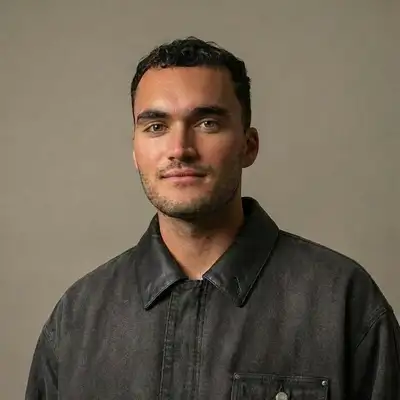
My guest today is Conrad Campbell.
Welcome to Peptide Show.
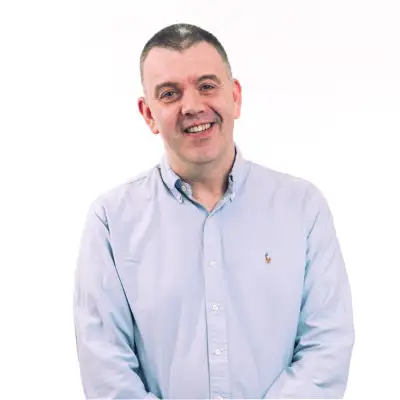
Welcome to Peptide Show from Longr.
My name is Richard Skaife.
I'm a venture capitalist and entrepreneur,
and we delve deep into
the emerging and ever-growing
category of peptides.
This is the show for
the business of peptides,
and we cover all sorts
of different things.
And, of course, there are two words
which go hand in hand
together in the peptide space,
which is peptides and China.
But our next guest
introduces an additional,
very interesting country to the mix,
because I stumbled into Conrad, um,
in his, uh, his content on Instagram,
and heard his dulcet Scottish tones.
So, Conrad, welcome to Peptide Show.
Thank you very much for joining me.
I appreciate it.
I have to say,
when I started to follow you on Instagram,
I was like, "Is this real?
A Scottish man has set up
a peptide factory in China?"
That's...
That's, that's the reality
of the situation that I'm in.
I'm the first,
never mind Scottish, Westerner,
I believe so, and to do it.
I don't know if it's just
by my risk-taking,
or it's my entrepreneurship
or my little bit craziness.
It's can be probably a mix of them all.
So, as I said,
I've been following you, uh, regularly.
You've just returned back from China.
Tell us a little bit about that trip
and where you are with the, uh,
the process of establishing your, uh,
your manufacturing center.
So that trip, 10 days,
was to finalize all the setup.
So the layout of the actual factory.
We've got 83 clean rooms,
16-square-meter cGMP-compliant facility.
Obviously,
if you know about the compliance,
it can take up to six
to 12 months to become cGMP
compliant, but it was mainly
to finalize the, the, the, the,
the initial setup, from the lyophilization
to the sterile water to the, um,
endotoxin testing, HPLC testing.
You know, separate each room as a lab
or as a workshop area,
packaging area,
and cold chain area, et cetera.
There's... It was just finalizing,
to be honest.
I, I don't really have an understanding
as in-depth as Jack does,
so I just take what Jack tells me
and to give me a,
an oversight,
so I can understand
what's actually happening.
And,
and also we were visiting CDMO companies,
API manufacturing companies,
crude manufacturing companies,
machine manufacturing companies,
government, and, yeah,
just things like those that it... What,
what we're trying to do,
it's never been done,
so we are the first
and innovators to do that.
And why was this really important to you,
to build this in China?
What, to, you know,
to get so close to the supply chain? Um...
To be honest, is safety and
trust and transparency
for the rest of the world.
So China is the place for peptides.
It manufactures,
I reckon,
about 98% of peptides on planet Earth.
I can't factually say that,
but just off my oversight that I've seen.
And, and when you're a large...
Like, I used to acquire for clients.
So I used to source and, and,
and get clients large amounts of peptides,
if they were a compound pharmacy,
or they were a large
individual wholesaler,
or, in their jurisdiction, they were a,
and governmental entity,
supplying their local
compounding pharmacies
or pharmacies.
And, and you were doing this worldwide?
- Yeah.
- So wherever they are in the world,
they're ultimately, you know,
working with you,
and then you are bringing them a, a,
- you know, distribution from China?
- Yeah.
So that was,
that was the business model then,
but obviously I was learning as I go.
I'm a very, um,
enthusiastic and driven entrepreneur,
we'll say.
So I like to work out the lay the land.
I like to work out the business,
the model, and then I add my spin onto it.
And my spin onto it was the final phase,
which was learn that the model as such
that's currently ongoing in the world,
and what, how can I implement
a better business model?
Safer, more trusted, and more transparent.
And that was me building
and owning the factory,
for people to trust me,
and doing it in public.
Yeah, I...
I'm talking through your entire journey.
I, I think, in terms of people
getting an insight into what
is actually happening, uh,
you know, at ground zero in China,
you,
you really are the only person who's, uh,
sharing that. I mean,
obviously a Westerner sharing it,
but I don't think most people
really get to understand
what's, what's happening at that level.
No, they,
they won't. And the thing is,
I'm not here to say negatively
or speak negatively about China.
That's not my job.
I'm just here to speak positively
about what I'm trying to achieve,
what my mission is, and what we're doing
in order to make it a more trusted,
transparent supply chain and system.
I, you know, there's, there's, there's...
Everybody knows the negative
parts to China, or assumes,
but that is the current market.
Let's call it the gray market.
That is the world at the moment.
It is gray until FDA
regulations and regulatory body step in
and make some form of regulatory platform.
It will be that for a long time.
I reckon about three years
before everything is approved,
or they start approving
in certain jurisdictions.
And there's,
there's many reasons that I believe are
my reasons why they don't, um,
but that's my opinion
at the end of the day.
So you, you,
when you look at this sort of,
you know, three,
five-year, uh, timeline, uh,
and, you know, and this potential, uh,
for, for compounding to,
to sort of start to be more
proactively involved in, uh,
a broader range of peptides,
how do you think that's
gonna impact China?
Will the,
will the API production move to America,
or do you think ultimately the,
the API industry is,
is so well established
and well bedded that,
you know, the kind of the cost of,
of Chinese APIs
and the production expertise
is gonna be difficult to be outpaced?
Don't wanna put words in your mouth,
but where,
where do you see that sort of...?
So my foresight is
you'll never beat China.
I know,
and I've seen,
and I know what these guys are building,
what they've built,
what they've already built.
They've built, genuinely,
there is buildings upon
buildings upon buildings
upon buildings upon biotech hubs
in near enough every major city
that are all empty.
And I always ask that.
I usually meet the CEOs of that area,
or jurisdiction, or city,
or a biotech park,
we'll call it, and I always ask them,
"Why are they empty?"
And it says,
"Because we know what is
coming in the future."
They have a 25-year projection.
They... I got a presentation
from a pharmaceutical company,
very multibillion-dollar stock company,
and they had a 25-year projection on this.
And they showed me the numbers,
and they showed me,
and it's, it's how I align it as well.
Like, I'm no expert in the API
at the end of the day.
I don't know if you've ever been in an API
manufacturing facility or a large...
- Not for a long time.
- Okay.
Well, it's, it blows my mind.
I don't understand how they do it,
how they even think of it,
but I'll leave it to them.
That's their job.
And if you think trying to build that,
be in the UK,
the amount of money you've
got to invest for the time,
the effort,
and the outlay for the money
that's coming back in,
I don't think it marries up,
unless you think 10 to 15 years ahead,
and it's got some large funding, like,
you know, governmental funding
that's
got X amount of billion
to build some biotech park
that's built all the facilities.
It's just, it's not possible to catch it.
So tell me, for your journey, um,
I mean, you, you woke up one morning,
oversimplifying things, and thought,
"I'm gonna build a,
I'm gonna build a peptide, um,
you know, synthesization facility."
Um,
what, what led you into China?
How did you build that sort of network
and get to know people? What was the...?
So the journey was I started
e-com six years ago, and,
you know, I've had a career
of 10 years in the military.
I left and I started
businesses 11 years ago.
Just random bed and furniture,
just entrepreneur stuff. Built gyms,
built many random businesses.
Six years ago,
I got into e-com,
so I started learning about China,
how their supply chain works,
how it works.
You know, your normal
Alibabas, your normal online platforms,
where you can purchase products.
Three and a half years ago,
I started seeing
semaglutide and the Ozempics
of the world popping up.
So I started reading
into this semaglutide,
and I was like,
"This can't be another fad. It's a drug,
so it's not gonna be another fad."
So I actually bought some myself
and I tried it,
and I was just genuinely, within one day,
I was like, "Wow,
this is serious. This is a serious product
that is gonna change the world."
In the, the lay...
It's, it's changed the human evolution.
So I,
I started reading into that,
and then over the three years,
and I was like,
"How can I get into this market,
obviously without, um,
you know, stepping on people's toes,
or without getting in trouble,
or without doing something wrong?"
So I started just looking to China.
I had some friends there,
and I had some people,
and then that's when I met Jack.
Probably about two and a half years ago,
maybe three, I met Jack,
and obviously we built
a relationship over time.
And then I started saying, "Look,
I can find clients in the West.
Can you make sure the products are good,
the factory's good,
they're legit products,
they're, you know,
tested," and all the basic stuff.
This was two and a half,
possibly three years ago.
So we done that. Moving forward,
moving forward, last January,
and last year, I went over to China,
just to really just go into the mix,
and I was sourcing for clients.
And Jack said to me, he was like,
because I was,
because I made it look easy,
because I used e-com as a skill,
and I can acquire clients,
be it through ads, be it through TikTok,
be it through social media,
be it through just posting about it.
You know,
I know what clients are looking for,
even if they're private compounding,
uh, gray market clients.
Whatever it was,
I was just trying to acquire them.
And Jack just says to me,
"I think you should just
build your own facilities."
Like, because the way you do it,
the Chinese don't know how I do it,
and, but I know how the Chinese do it.
So I know the full play from the,
the, the, the,
the end consumer to the manufacturer.
I know every single model,
every single part of that chain.
And obviously I looked,
and then I was like, "All right,
how much is this gonna cost?" Et cetera.
And that, you know,
we run the numbers, we looked at it,
and then that was it.
I just, I'm an entrepreneur.
I'm a little bit crazy
and I take big risks,
but, you know,
it's a calculated risk for me.
And, especially when I started
meeting the large companies,
and I was, I was like,
"These guys are onto something," and,
and they can't be producing, like, four,
five hundred kg of tirz a month,
if there's not a market for it currently.
And this was a year and a half ago,
when tirzepatide
wasn't even at the forefront
of people's lips.
Now it is, and there's obviously
the new product that's
coming out in the next
two months, or being accepted,
I think next month, and so I just thought,
"This is gonna change
the human evolution forever,"
because I know humans.
I've sold to a lot to humans, and,
and I just thought,
"If I get this first
and I take such a big risk,"
and I'm a very
forward-thinking entrepreneur.
I'm no expert at anything.
So who you,
who you typically looking to sell to?
Tom, Ryan, me and governments.
Governments?
No, governments.
And I'm trying to...
I don't wanna give my business model away,
but I have nothing to hide.
So basically what I'm
doing is creating a bridge
from the West to China,
and the bridge is you
have to pay the toll.
I'm the toll.
You have to pay me,
and I don't mean physically pay me.
I'm saying do business with me. But guys,
if you, if you, you, you know,
the company that usually
does the first thing,
like Coca-Cola or whatever,
they set the market
and they're the leaders,
and everybody goes,
"We wanna be like them," or,
"We wanna copy them,"
or, "We need to speak to them,"
or, "We need to do business with them,"
or, "They can supply us." So
I'm trying to be the person that is
the eyes and ears
and boots on the ground in China.
Like, I'm literally,
I've done the thing
that governments can't even do,
that billion-dollar
companies can't even do. Why?
Because they don't have a Jack.
You know, most of the...
This can only happen with Jack.
Would be here for about a week
if I was to tell you
the actual real story,
and I probably never will reveal it,
because how negatively
it will look upon China,
and I'm not here to do that.
But it is the most craziest,
and I've lived a crazy life.
But dirty secrets
of the gray market peptide industry.
Oh, this...
You know, for the reality is,
outside of GLP-1s,
most people are having to source research
use only, gray market.
What, what are the things that, you know,
somebody's watching this,
not really from the industry,
but perhaps they're looking at,
you know, uh,
you know,
going off on their own research journey.
What are the, some of the things
that you would say to them
as sort of words of wisdom,
- words of warnings?
- If you're, if you're, if you're a buyer,
if you're an individual buyer,
there's different stages
and different people to...
I'm speaking is, so an individual buyer,
I would only buy from a company
that's been at least two years,
minimum, online,
that have got thousands of reviews,
be it through the local Trustpilot,
or if it's UK or it's a worldwide.
But even then, it's still,
they're still selling
you a research product.
Absolutely. And they themselves,
I've seen sort of more and more of this,
where
well-respected organizations
find themselves with a,
you know, a,
let's call it a prejudiced, um,
batch,
and that sort of then finds its way into,
you know, multiple elements.
Yeah, so, you know,
I can't, I can't say.
There's not enough time
to explain to an individual,
because I'm not here to give advice.
I'm just here. My job, genuinely,
is to be the first line
of defense in this world.
And I, I know it's a quite a ballsy move,
but I'm, I'm a leader.
I've always led in life.
I've got some cojones. I like to,
I like to speak
the forefront of something,
as long as I've done my due diligence.
And if you come to me
and you do business with me,
I can guarantee you
everything is good on my end.
You selling the product,
or you selling the research product,
or whatever you're doing,
if you're compounding it,
if you're selling it, if you're,
you know, doing a clinical trial,
that's you. I'm just making sure the
product's made in the correct location,
the correct certification,
the correct testing is done,
the correct distribution is done,
the correct shipping is done.
Everything will be legal on my end.
What you do with it is
what you do with it.
And I think that's been
the fascinating thing
with you sort of building in public.
You've been able to give
people a feeling for the,
the size and the scale and the,
the professionalism. Um,
so why do you,
why do you think sort of bad product,
you know, give it a big,
big over... Big overarching label.
Why do you think bad product
finds its way into the market?
Is it sloppy manufacturing?
People that just don't care?
People that don't know?
Money, money.
Money.
Money is the only overriding factor
in this whole entire industry. Money.
Such as just greed.
This is how it works.
I'll tell you how it works.
So you have a large company in China,
very large company.
I'm not saying names
or anything like that,
but let's call it a large company.
Those people that work within that company
maybe don't have as big, um,
clients in the actual regulated industry,
because it's paperwork
and it's time and it's meetings,
and there's so many stringent steps and
inspections and all this.
So they might have
a lot of product sitting,
and then out the back door
goes X amount of product
in an API form.
They will sell
that to someone with a lot of cash.
That person with a lot of cash
will then contact a
CDMO or a vial, eh,
lyophilization company, pay them money.
They will then send it
to a distribution facility,
or a private distribution facility,
and then that will sit in the warehouse.
The warehouse boss will make money.
And then you'll have your TikTokers
and your traders
and your WhatsAppers
and your Telegrammers,
all sitting making money
by messaging people
and sending a price list.
They will receive the order.
They will text the boss.
The boss will text
the distribution warehouse.
The distribution warehouse
will then ship the product.
That's how the gray market
works in this world.
That's a reality,
and that's a unregulated world.
Obviously, I'm not, I'm speaking
on the unregulated gray market.
Conrad, as we sort of draw to the end of
this episode of Peptide Show,
we, we like to ask people what they
think the next 10 years
would look like, um,
and it could be 10 years in your world,
or 10 years in the,
the sector's world. Where,
where do you, uh,
where do you wanna
manifest things going to
- in the next 10 years?
- So a quick 10 years in my world, um,
I believe I'm gonna be the innovator,
founder,
and visionary to help
the Western world trust China.
And, you know, I'm, I'm,
I'm an, I'm an entrepreneur,
so I just see a market
and I wanna do good in it,
and I wanna create a market within myself,
is create a business
and help others do that.
But building trust is the No.
1 thing in this industry.
In the real world, in the, the,
the, the rest of the world, for a,
for a patient or a client,
and peptides are here for the next,
for history, I believe.
And the innovation,
the, the, the, the uses that they've got,
the results that you get,
and basically because GLP,
the, the, the main block, GLP,
has changed in human history.
If you've got a person
that's got diabetes,
or is possibly overweight,
or can't lose the weight,
or many reasons why they're
in that situation that they're in,
they take a GLP,
they move from here to here.
So when they move from here,
their mindset slightly changes.
They feel a bit more confident.
They maybe can walk further,
run further, go to the gym more,
believe in themselves,
more confident, more.
So then that side,
everybody moves from
here to this direction,
to the fitness, to the innovative,
to the regenerative medicine, from,
you know, it's,
it's the future for a long, long,
- long, long time, I think.
- Certainly, yeah,
as we move into sort
of regenerative medicine, I mean,
I think as part of this 10 years,
if you could, uh,
if you could create one peptide
which doesn't yet currently exist, what,
what peptide would you create,
and the, why would you create it?
The Limitless pill.
You know, I'm,
I'm a, I'm a very, um,
discipline-driven entrepreneur.
If I could give people what I have
and how I think,
the world would be a different place.
But, you know, you can't,
I can't sell people what I've got in...
You know, I'm 40 years of age.
I'm getting older, and I'm,
I'm just getting better.
I'm just getting fitter.
I live, I live on good...
I live on good... No,
I live on good sleep. I'm,
I'm maybe seven hours, maybe eight hours.
Sleep is probably one of the most
important things in my life now,
and I've just had a newborn,
which is eight months, and it's been fine.
And, but like six,
seven years ago, I used to,
you know, that I had,
there was some wrong things
going wrong in my life,
drinking and a little
bit of problems going on,
but I used to live on maybe four hours.
And it just,
sleep to me is the best product,
or anything that you can take is sleep.
That's just, that's my experience.
Sleep is the most important thing.
If a peptide came to market
which would give you
four hours' worth of high-quality sleep,
the equivalent of eight,
do you think lots of people would take it?
Everybody would take it. Time is money.
Everybody wants more time.
You can't buy, you can't buy time.
- You know, it's...
- Exactly.
I mean,
it's a sort of a get an extra 25% of life.
You look at the, uh,
you look at the narcolepsy drug
that Eli Lilly acquired
for, for 6 billion. Narcolepsy is,
is not a big enough
condition to justify a,
a 6 billion, you know,
early-stage drug. Um,
but in the future it might be.
Yeah, exactly.
When you look at what you
can probably do with it,
then it starts to get super interesting.
We're coming to the end of the show,
Conrad.
Thank you very much for joining us.
- No worries.
- Best of luck
- Thank you.
- with your endeavors.
We'll put your Instagram on the screen,
so if anybody wants to follow you,
- Yeah, appreciate.
- follow the building in public journey.
Thanks very much for
joining us on Peptide Show.
Thank you very much. Appreciate your time.