Subscribe
Share
Share
Embed
Passionate about modern feminist issues? Want to learn more about how today's political, academic, and cultural leaders strive for a future of universal equality and justice?
Join NOW in a podcast dedicated to intersectional feminist discussions in American society with leaders in entertainment, sports, politics, and science. From conversations on constitutional equality, to economic justice and reproductive rights, listeners will find new ways to learn, engage, and get empowered.
Listen for new episodes released every other Wednesday.
Bethany Brookshire [00:00:06]:
Hello everyone, and welcome to Feminism NOW, the podcast from the National Organization for Women. I'm senior producer Bethany Brookshire. Giving birth is a beautiful spiritual experience. Becoming a parent, knowing that life grew inside you and bringing that new life into the world is amazing, but it is also hazardous. We know that people in history frequently suffered and died in childbirth. Even today in the United States, between 10 and 32 people per 100,000 die in childbirth. And Black patients are three times more likely to die in childbirth than white ones. The United States is one of the most dangerous developed countries to give birth in, but some people are working to change that. This week now, national president Christian F. Nunes sits down with Latham Thomas, the founder of Mama Glow, to talk about how to make birth safer. We know we have some moms out there. We'd love to hear your experiences. You can contact us at feminismnow@now.org and now, let's hear from Christian.
Christian F. Nunes [00:01:11]:
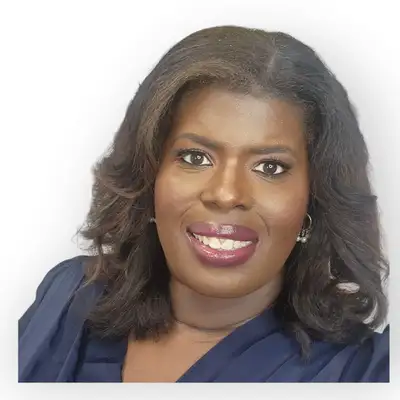
Hello. Hello, everyone. I'm Christian F. Nunes, the national president of the National Organization for Women. And I'm so honored to be here with you all today. I myself am a mother, and I know that childbirth can be so beautiful, but it also can be very terrifying. In the United States of America, we know women of color, in particular black women, face extreme risk when delivering babies. That's why I'm so thrilled today to speak with Latham Thomas, the founder of Mama Glow, about her work in birth equity and about the importance of how we help to work to reduce maternal mortality. Latham, thank you so much for being with us here today.
Latham Thomas [00:01:54]:
Thank you so much for having me.
Christian F. Nunes [00:01:57]:
So I love the idea of Mama Glow and the work that you all are doing. So, just starting off, tell us a little bit more about Mama Glow and what made you decide to start this wonderful organization.
Latham Thomas [00:02:09]:
Mama Glow is a global maternal health and education platform that trains doulas, nurse care managers, and also matches doulas with families. And so for me, starting the organization wasn't something that I knew I was actually going to do. I started with someone who had a desire to help others, and after having a really incredible birthing experience myself. And I would say that it started when my son was born, because I'm sure he would like to take credit for that, and he does. But I would really say that it really started with my childhood, and the rudiments of Mama Glow would grow from the experiences that I had as a child raised in a feminist household with a mother who was super interested and moved by bodily autonomy, body sovereignty, agency, and understanding of your body parts. So I learned about natural sciences at an early age. My mother had Grey's Anatomy coloring books for me. I could name every part of the pelvis and pelvic anatomy and had a very good understanding of how the body worked and also the physiology of birth. So that was sort of what I was learning as a four year old. And when my mother had my sister at the time, one of the things that was that she sort of gets excited about sharing is she was in a grocery store one day and someone walks up to her and they're like, oh, wow, there's a baby in your mother's tummy? I said, no, there's a baby in my mother's uterus and it's gonna come out of her vagina. And so this is sort of how I come to know the body, come to have this sort of reverence. But also this respect that I have really, I think, was directly correlated to this experience of having agency, language as a child. Also to articulate what I was witnessing, but also to come to understand that this was possible in my own body. And so I would say the seeds were planted then. And then when I had my son decades later, I was able to draw on the wisdom that I witnessed from my mother and other community members, but also that I was able to draw from within. And what we reclaim through the work we do at Mama Glow is the birth village. Right. Like bringing together individuals and community and coming together to do work like we always did. Right. Which was in a more communal way, in a more women and femme helping women way. Right. Birth is really isolating in this culture. And when we look back historically, this was not a process that you did alone. And you weren't giving birth to a baby in isolation. You were giving birth in community. And so Mama Glow is really about bringing people home to their bodies, helping people to reclaim their bodies as sacred sites, but also to understand the innate power that each of us has and how to not only wield that power, but tap into it outside of the birth process. Because there's a lot that we learn about ourselves when we undergo this process. And also to bring people in who have shared ethos to help build something that is supportive of community. And. And so that's how I kind of got here.
Christian F. Nunes [00:05:47]:
Wow, that is a beautiful story. I actually like the fact, like, the trajectory started with your mother teaching you about the importance of body sovereignty and the body autonomy and things like that, because I think that is something so important that we have to teach children such a young age, which also takes away like the stigma that a lot of times people learn about, you know, reproduction and reproductive health and. And the woman's body. And I also, like Latham, that you talked about the importance of bringing in the birth village, because we know that oftentimes we look at birth as just as a medical experience. Right? But it's more than that. And I think how a person can experience birth really depends on that encounter of either being supported or not. What do you think?
Latham Thomas [00:06:41]:
Yeah, I mean, the outcome of that experience. Right. Directly is correlated to how you're made to feel in the process. So much of what we experience in the birthing room is not fully understood in a cultural sense. Right. So no one is fully in the awareness that giving birth is an altered state of consciousness. It is a meditation, it is a rite of passage, right? It's actually the original hero's journey, right? What we base all storytelling on, right? Every story that we read that takes us on a journey of challenge and triumph is based on birth, right? It is birth or rebirth, a shedding of ego, an emergence. Right? And a triumphant, you know, glory moment. Right? Which is really becoming. Birth is about becoming and it's about transcendence. And so what happens inside of our clinical spaces more often than not is that people are robbed from the opportunity of having this experience that is designed for them to be in an altered state of consciousness, a state of deep vulnerability, a state of deep trance, right, with their body and with their baby. And because we see birth as a space where the body is inherently flawed, that it's an accident waiting to happen, that the body has to be controlled, that it has to be subdued, that it's wild, by the way, right? Like, birth is one of those things where you can't control it. You can. You can try, right? But it's one of those. The most amazing occurrences where, like, even though we've seen, you know, since the beginning of time, we've been birthing, right? There's not one birth that's the same. Right? And so even though we can look at patterns for how a birth may unfold, every birth is different and every birthing person is different. And so people have unique needs that we have to attend to. And in the work that we do in the doula space, and we're looking at this model of care that centers around the birthing person and their family, we can meet those needs, right? And those needs are not just physical needs, but they're emotional, they're psychological, their spiritual needs. Now, everything that we currently do within our clinical settings is in direct opposition with those needs. And so what happens generally is a person who's meant to be vulnerable and surrender and, and ease and open so they can actually birth are actually fighting for their safety, fighting for their dignity, defending their existence in a space where they are not being treated fairly, where they're not being honored for who they are, where they're not being recognized for what they have dictated their needs are. And this harm does mark us, right? The experiences that we have mark us. And how you birth is sort of how you live. And so if you think about like the experiences people have at a major life transition, which birth is, it's a major life transition, which means at any moment, right along our reproductive life course, right, there's various moments where we butt up against a transition, right? Which brings us from one social station and one plane to a next, right? And so we have that as infants, we move into childhood, from childhood into adolescence, adolescence into adulthood, right? We have that across the life course. When we look at people who are along the reproductive life course, we think about also menses, right, As a pathway into adulthood. We think about birth, we think about abortion and loss, right? We think about obviously menopause. And I want us to think about all of these junctures along the way and how at each one we under support and we disappear. People like, think about what happens when you get your first period pushed away, disappeared, like no one wants to talk about it. Like, why is it taboo? Right? Right. Think about when you have a baby. Everyone's like excited when that baby comes, like three days later. Nobody's calling you anymore. Nobody's coming by. You're isolated, Right? Right. If you have loss, forget it. People do not know how to show up if you lose a pregnancy or have infant loss or if you have an abortion. People do not know how to show up for you and provide aftercare, right? And then think about what we do for people who are in the perimenopausal journey. We completely thank God there is this sort of, sort of golden era of, of the perimenopause like moment. Like it's people are voicing, but it's people who are saying that we are left to essentially die because people are disappearing us because they don't want to have these conversations about what is happening in our body as we change, as we evolve and mature. So the support is never there, right? And so what the doula can do and what people who are in this space along the health continuum can do is be a bridge to information, to resources, but to handhold with support, that's necessary to navigate these life transitions. So you can have a doula for birth and postpartum. You can also have an. A. A doula for abortion. You can also have a bereavement doula who supports you if you have loss. Right. You can also have a doula who supports you at the time of menses. And you can also have someone who ushers you into the crone years through menopause. Right. So this is a role that has evolved but was always in community. This was always someone who lived inside of that village.
Latham Thomas [00:12:49]:
Who was part of that village continuum that showed up and helped usher you into the next life stage. And that's missing. And people know it. And so it's not just that people know it here in their heads. They. They know it in their bodies that it's missing. They know that something that they should be experiencing in terms of a sense of community and wholeness is missing. And this is what's leading to depressive symptomology. This is what's leading to the isolation that people feel so much, regardless of the fact that we're more connected than ever. Right. And so part of what we're here to do is bridge that gap and also minimize that distance that people feel. Right. Help them to feel connection and community and support, but also bridge that with resources as well. Right. And the village keeping cannot just end at birth. Right. The village keeping has to continue along the entire reproductive life course.
Christian F. Nunes [00:13:50]:
I really appreciate you naming that and educating us about the different ways doulas can be a part of that reproductive journey, because a lot of times we only think about it, in a sense, of when a person's actually pregnant and going through childbirth. But to really talk about the importance of just honoring the whole process, you know, the whole journey that a woman or person experiences through the reproductive life is really, really important. But one of the things that comes up for me is when you mentioned, like, people don't feel safe if they're not supported and what that brings. And we know right now we see, like, just a very disheartening rate for maternal mortality, particularly for black women. And that often is rooted in, you know, institutional racism and. And systemic inequalities of the experience they have when they're going through pregnancy and through the birth process. So can you talk to us a little bit more about why we see so many dangers that come up in childbirth for women and how the role of being a doula can be very helpful to combat some of the dangers that people are facing when they're going through childbirth.
Latham Thomas [00:15:14]:
I think it's important to note that while doulas are a really powerful solution, they are part of the solution. I see it as a powerful tool with a multi pronged approach and various stakeholders involved and areas. Right. That we should be looking to for advancing maternal health outcomes and improving them. And so doulas can be a critical part of this because their role is one of strengthening the care team. They are there to be an emotional support, physical support, education and advocacy partner. And then also if there's a partner present, they're there to support them too in this journey. They're also there to be at intervention. Right. Like be a person whose presence and whose act of asking questions and ensuring that the patient is informed before they make decisions about their care helps to ensure that the patient or client feels confident and builds self confidence in the birthing process, which is so critical when you're thinking about people, especially those marginalized identities who are navigating spaces where they are outnumbered and do not feel safe.
Latham Thomas [00:16:41]:
I would say also that from a policy and advocacy lens, it's important for us to figure out like the access points. Advancing doula access means someone has to pay for it. Right. At Mama Glow, we designed the very first private insurance benefit that is in its second year piloting, but we designed it and deployed it actually for federal employees. And so this means that people can access doula support and it's in network for them and covered by their insurance.
Latham Thomas [00:17:16]:
We do this the city of New York through a program called the Citywide Doula Initiative, where if you are at Medicaid eligible or if you have age out of foster care, if you're living in a shelter system, if you are under the age of 18, if you're a migrant and if you've experienced intimate partner violence, you would be eligible for a doula from us. And so these are the types of programs that also need to be in play to ensure that vulnerable populations get access to care, but also have that care companionship necessary, especially because they have not necessarily had interactions with the healthcare system that have been positive most of the time. I believe research is another big piece. Right. For so long we were having anecdotal conversations about the impact of doula access and care on populations. And now we have so much incredible evidence based research that points to these outcomes and points to the efficacy of doula support. And so I feel like it's like so many prongs that we bring into the approach that that help us to get to a place where better care is accessible.
Christian F. Nunes [00:18:34]:
Yeah, you know, and, and I think it's great because a big part of what other work that you're doing and your initiatives involve, you know, a lot of education and training. And there are two particularly that we know that you're all doing that I want to talk about. But first, we're going to take a little break for our Action now segment, which is our call Action for listeners. And then we'll be right back with our interview.
Christian F. Nunes [00:19:02]:
The fog of misogyny these days is so thick I can't even breathe. Laws are being passed against our inclusion. The new campaigns against diversity, equity, inclusion target women and people of color. The most now will not stand for that. That's why we are proud to launch a Disrupt now campaign. It's a nationwide movement to increase awareness of the anti feminist policies that are being put in place across the country. It's also a movement to identify and empower the next generation of feminist leaders and people who will help keep our democracy safe for women, girls, and all of us. So go to now.org and click on that button that says Disrupt now to join us in our movement. And finally, listeners, before we go back to our interview, I hope you share the show, send it to others, and add to our movement. Thank you so much. All right, this has been a really informative conversation that we're having. So, Latham, can you tell us more about your initiatives and work around working with formerly incarcerated women to become doulas as well as the anti racism trainings that you're doing in hospitals?
Latham Thomas [00:20:26]:
Yeah, absolutely. So for us, it's really important that everyone has access to doulas, but not only that, that people who have been impacted by incarceration can work in the field and also go back into places where they can serve alongside their sisters and folks who have not yet come home and as a reentry opportunity. And so we work every year to bring more students through. And this also, you know, includes male doulas. We have many men who are in the program. We have trans, non, binary folks who do the program as well. And so for us, it's just about like having this expansive space of individuals who come from many backgrounds who can serve folks in need. And that's like our goal. Right. And so for folks impacted by incarceration, this is a really wonderful way to do work that supports community. We had a person, I remember she was a nurse and she got a lot of her nursing training while she was incarcerated, and she was Also the oldest of 17. And when she was doing the work that she was doing just in her community, she didn't even know there was a word for it. And then she found the program was like, I've been doing this my whole life. Now I feel seen because now there's. I can be professionalized in this role and bring all of the skills that I had that are clinically based, but I would never be able to bring into the medical space in this way. Because of my background, I can now do a doula work. Right. And so for me, this is so important to be able to meet these gaps. Right. When we talk about some of the work that we do with hospitals, I would say, like one of the things we're most proud of is the doula competency training program that we designed for CVS Health and Aetna nurse care managers. And this is a program that essentially is structurally and culturally competent. It looks at trauma informed care through the lens of doula pathway. But what's so great about this is that it gives us an opportunity to have these conversations about bias and racism. It gives an opportunity to talk about structural competency. It gives us an opportunity to talk about the social determinants of health, which are the non medical factors that impact our health overall. Right. It gives us an opportunity to talk about intersectionality. Right. And so we bring this into the healthcare space. We also have trainings that we bring in that become part of the health equity track within the hospital system. So we have many clients within the health care system that we do this for, that we design programs like this for. And then our Doula Expo, which is like a, it's known as Coachella for birth workers. It's like a culture shifting festival that centers a vision for like a future of birth work and what we envision birth to be. And in that space, we offer CEU credits for nurses and folks who are in health care so people can come and be part of this experience. We are learning about these issues from our lens, right. And going back into the communities that they serve. And another area that we also do this outside of the medical space would also be, would be education and academia. That's another area where the doula training is at Brown University, where I'm a professor and I teach it there. So we're always about like, how can we further the message, further expand the work, but also move into spaces where these conversations are not happening in the same way to help impact on better birth outcomes.
Christian F. Nunes [00:24:17]:
And I would add to like really empower communities Because a lot of what is happening is they're getting this education, but they're also empowered to take an active approach and supporting their communities and supporting those people. So I think that is so wonderful. One of the things I want to ask because, you know, a lot of our listeners, they may not be doulas and they may not be in health care, but they have children, they have loved ones, someone close to them. So can you tell our listeners what they can do to help advance and advocate for birth equity in their own communities?
Latham Thomas [00:24:51]:
I love this question. It's like if you love women, right? This is your issue, right? Like this is all of our issues. Someone had the courage to give birth to us. That that is how we are here. And so we're talking about a human rights issue and an issue that is at the top of the feminist agenda, y'all. So here we are. I would say a couple of things can be done. Number one is do some research in your local community and find out where the doula and midwifery led organizations are. Bonus to find the ones that center marginalized people, that have marginalized people at the helm. Typically those are going to be the ones that are underfunded under resourced and that need your support. A couple things you can do, you can donate funds directly, you can fund for clients to get their births covered. Things like that with you have friends who are pregnant or family members who are pregnant. Get the nice stroller. But also invest in a doula, right? And so maybe pay for their doula services. Birth or postpartum or both. Right? Do the research to find out if you have doulas covered in your plan. Where you work many times is not information will be given out to. You have to go seek it. Number three would be in terms of advocacy, you know, gathering information, podcasts, articles, journalism books. Also we have a really important opportunity and responsibility to advance legislation. We have, we have what's been sitting for a couple of years now, the most comprehensive package of legislation addressing maternal health in this country called the Blackwoods Parental Health Momnibus Act. It's Mommy Bus for short. This is like 13 pieces of legislation that is packaged trying to get the whole thing passed. We've gotten parts of it through, but we really need to get it passed because part of it looks at things like deploying resources to community based organizations to advance doula, doula access. There's many things, but that's just one of the things at a federal level that could happen. What we understand is there has been an attack, obviously on our rights, on our autonomy, on our personhood in this country, and certainly on the resources and tools that we use to access funding and also research, Right? So be a part of the solution and folks that are doing things to continue to ensure that we have access to the information. Black Maternal Health week falls annually April 11 through 17. You can get involved, you can host your own events, you can reach out to organizations and attend things that you can learn more, how you can build community with folks who are coalition building for our freedom and for our well being and for our survival, right? So that's so huge. Make sure you find community as you continue to do this work. And I wouldn't be me if I didn't say take a doula training, right? Like take, get involved by literally going into class. You do not have to be a doula professionally. We have people who literally come who just want to have a better birth. And they come so that they have the knowledge and the and the foundation to give birth and feel confident. We have people who come just for the self knowledge or to bring it into their community. And then we have people who come as professionals, right? We need more doulas, we need more midwives, we need more folks who are on this mission to continue working together. But it's like we can't do it on our own, right? We need more and more people to join. And so in any capacity that you feel moved, please join in the work because all of us are touched by this. And I want to close by saying, when we think about the conversation we've been having a lot, obviously the focus has been on birth and birthing individuals. But when we talk about this, we are using the framework of reproductive justice, right to ground us and that a framework that grounds us in the fact that you have a right to have a child, the right not to have a child, the right for that child, should you have one, to be raised in safety and dignity and in community and the right to bodily sovereignty. Right? So if any of that matters to you, if you care about any of that, this is also your fight.
Christian F. Nunes [00:29:29]:
Thank you so much, Latham Tamas, founder of Mama Glow, for joining us today on Feminism NOW. You've heard of you all, get involved, support it and make sure that you're contributing to birth equity, body sovereignty and reproductive justice.
Bethany Brookshire [00:29:49]:
Thank you so much for joining us on the podcast this week as we talk about keeping women safe through birth. Birth is hard for everyone, but it's harder on some than others. If you got something out of this show, we'd love it if you told your friends you could share the show like and subscribe. You can also send us your thoughts and questions at feminismnow@now.org head to now.org to read up on NOW's core issues and our approach to advancing women's equality. Together we can make a difference. Thanks for listening and we'll see you soon.