Subscribe
Share
Share
Embed
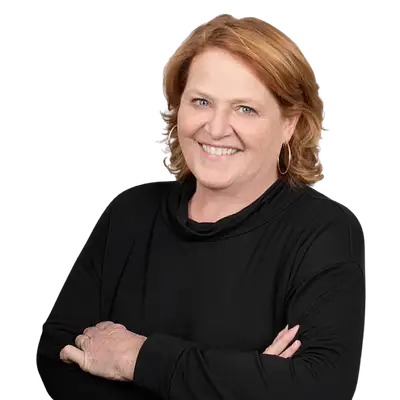
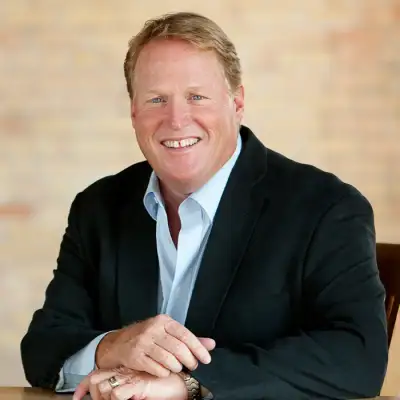
Former U.S. Senator Heidi Heitkamp and her brother, KFGO radio talk show host Joel Heitkamp, engage in animated discussions with newsmakers, elected leaders, and policymakers who are creating new opportunities for rural Americans and finding practical solutions to their challenges. Punctuated with entertaining conversations and a healthy dose of sibling rivalry, The Hot Dish, from the One Country Project, is informative, enlightening, and downright fun.
Heidi Heitkamp (00:04)
Welcome back to the hot dish comfort food for rural America. I'm Heidi Heitkamp.
Joel (00:10)
And I'm Joel Heitkamp. For today's show, we're checking in on one of the backbones of rural America farming. Later in the show, I'll be sitting down with David Harreld to hear directly from a family farmer about how things are shaping up this season. But before we get there, Heidi, we've got two great farming related questions from listeners. One listener wants to know, well, the new farm bill that just passed the house better support small to midsize farms.
Heidi Heitkamp (00:40)
And the answer is no. That's easy.
Joel (00:43)
That's it, you know and something tells me you passed
Heidi the great yeah
Heidi Heitkamp (00:50)
No, I mean, you know, I think that there isn't, there is no real focus on smaller mid-size. It's kind of like, Remember when Sonny Perdue said, get big or get out? Well, that's exactly what the farm bill has encouraged is people to get bigger and they have, and there is some logic behind all of that. But if you're looking for something that is tailored to help the real family farmers, not the corporate farmers, not the big, big, you know, kind of trust fund farmers.
That's not in this bill. And then the other problem that you have with this farm bill is that the big, beautiful bill really disrupted what was a long time relationship between food security for urban districts and ⁓ farm profitability security for agriculture. so none of that was restored. There is no chance that that bill is going to make it ⁓
past the Senate. And I think that there's a lot of people out there, former Ag Secretary in particular, Tom Vilsack, who are talking about what should be in this farm bill that's going to be uniquely, that's going to uniquely position small and family farms to be successful. And so far there's nothing in there that does that.
Joel (02:11)
Well, and both you and I know the former head of the committee that oversaw agriculture, Colin Peterson from District 7 from Minnesota for years, who wrote many a farm bill. And let's just say he would give you an A because he agrees with the 100 percent.
We heard from another listener, who's a farmer himself and was troubled by a recent survey data that showed only 7 % of farmers would vote for a candidate from the opposite party than the one they support. Well, we just keep getting the same failing policies despite the pain.
and uncertainty farmers are experiencing, yes.
Heidi Heitkamp (02:52)
Well, let me tell you, ⁓ Senator Jerry Moran from ⁓ Kansas recently said publicly, it's never been worse in his whole time as a public official, right? And there isn't anyone who lives in farm country who thinks it's going well. In many of these farm states, we have negative GDP, which means that their state gross domestic product is in the tank and going down.
That's because of what's happened with ag markets. That's what's happened with inflation and ag inputs. Okay. And you can't pick up a paper, a major newspaper anymore without reading a story, whether it's a dairy farmer in Pennsylvania, whether it is a grain farmer in Illinois, and they all kind of say the same thing. Yeah. Yeah. I'd still vote for him. I still believe in him. And you have to kind of shrug your shoulders and say, then you better be ready to accept.
the policies that are you have right now. When farmers became an 80 20 voting block for the Republican party and there's no pain that they're willing to extract when things don't go well, then you can't complain when there isn't ⁓ an opportunity to make money. You can't complain when you're going broke.
I mean, you have basically said, I've put all my faith in this guy. And this guy, even though he's wrecked your markets, he's increased your costs, he has basically made you dependent on government subsidies. And he says, I don't care. I'm pro farmer. Well, what would be the proof point that he's pro farmer other than what he says as opposed to what he does? And it's a point of frustration.
for so many of my friends who say, do they get it yet? Are they willing to vote differently? Well, Joel, let me tell you, there may be a lot of people who, know, the New York Times approaches when they're standing around their pals and they ask them, are you going to vote differently? Let's see if ⁓ that holds true in these midterm elections. And, you know, I just have to say that the work that the Democratic Party has to do in rural America and with agriculture,
It's like what more can they do to ⁓ change a voting outcome given the decimation of the ag economy by this administration? I you talk to farmers all day. Yeah, I mean, that's who you talk to. That's where you live. I talk to farmers. ⁓ The farmers I talk to tend to be fairly critical of the administration. But I mean, you tell me, Joel, are they willing to change?
Joel (05:28)
Mm-hmm.
Well, ask yourself if you're going to walk into the matter of VFW Hall and still get in an argument about Trump and not be outnumbered. The answer is they're going to talk about how there will be a fall payment. They're going to talk about how he's always come through. And I think at times, Heidi, ⁓ we don't listen to our commodity groups enough that are utilizing those checkoff dollars. And when I say we, I'm talking about ag producers because.
All the money they self have invested into foreign markets has been blown up to the point where we can't be trusted. And so they get it. They know it. It's just that the people that have those red hats aren't going to change. But here's the upside. You passed and I passed because in your ⁓ lawn where your place is next to me, you've got a sign that says Terry Gerger for the North Dakota House. He's a Republican.
I've got a sign that says Terry Gerger for the House. He's a Republican. Both of us are reporting supporting a Republican. Now full disclosure, he's our cousin, but we do have his signs up.
Heidi Heitkamp (06:48)
Well, but the other thing is that that you know at what point Joel I I mean I've voted for Republicans you voted for Republicans at what point do people say yeah Yeah, and and you saying at what point do people? Step back and say I'm gonna vote differently because it may not change anything and I may not like that person But I can't continue on on the in this policy direction
Joel (06:59)
And I will again.
Heidi Heitkamp (07:17)
I will be broke or my kids will not be able to afford to farm. I talked to a democratic farmer and I asked him about input costs and you know which one he mentioned? Interest. He said I'm getting killed by interest. And so no one's talking about what these interest rates mean for small family farmers who want to pass that operation on to their kids. They cannot take on more debt. We have record bankruptcies. We have...
record numbers of people just volunteering to get out of farming. And so the bigger are to get bigger. And if you want to subsidize large corporate farms with billions of tax dollars, that might work in the mid, in the interim, but it won't work in the longterm because the sympathy will be gone for American agriculture.
Heidi Heitkamp (08:04)
So Joel, you got to talk to David. Tell me what he had to say. Give our listeners a preview.
Joel (08:09)
He said he
well, he said he was really happy to only be talking to one high camp. ⁓ That's the first thing he said. But, you know, clearly this was.
Heidi Heitkamp (08:20)
You know, people will know you're
lying, Joel, because they'll listen to him.
Joel (08:24)
my dad used to say I was lying because my lips were moving, but that's a whole nother issue. The fact of the matter is David Harold and his family are raising half as much sweet corn as what they did before. Now, Hyde, you're going to hear him say a lot of reasons, ⁓ not the least of which were infestation, not the least of which were ⁓ fuel costs. I mean, but basically what frustrated him the most was lack of control.
And this war in Iran is going to be something you're going to hear that conversation go to. And so he's looking at at diesel fuel and he's looking at fertilizer ⁓ and he's looking at a commodity that people need and want. And yet one that he doesn't know if he can sell for what he put into it. And I that describes a lot of farming right now.
Heidi Heitkamp (09:14)
Wow.
Well, I mean, and somebody who's willing to take on specialty crops, willing to diversify what he's planting, right? And yet, yet he's doing everything you would expect somebody could do, but the headwinds are just too fierce, right Joel?
Joel (09:39)
Well, there's another side to that as well that just bothered me in my conversation with him, which is the legacy. We're talking about a variety of sweet corn that was developed and developed through their farm. ⁓ And he's talking about a situation where his father built a market that demanded that level of sweet corn, the level of sweet corn that he raised. And his father hands this ball off to him. And now he.
⁓ takes that and his father, I should add his family takes and cuts it in half. Now you and I were both ⁓ raised around farming and we both have farmers in our family. And if you told them tomorrow that they only get to raise half the crop that they planned on raising, I'll tell you what that would make for a long day for them.
Heidi Heitkamp (10:28)
Yeah, I mean, you don't have to look very far to see tragedy all up and down in farm country. so that's why podcasts like this are really important. I think Joel to to number one, you know, to have a conversation about what's happening in rural America when people normally wouldn't know it or not even pay attention. And so thanks for doing that interview. It sounds like ⁓ he sounds like a really great guy.
And I'm wondering if you, mean, how far do we have to drive to steal his sweet corn, Joel?
Joel (11:01)
I actually talked about
maybe he could ship some to me in North Dakota. Hey, here's the other thing you're gonna find in that interview. During the interview, his wife was preheating the oven. She was gonna bake something and the alarm went off telling us that, you know what, the oven's hot enough. Then ⁓ he didn't tell us what she was baking, but he said she will ship it. So that was good.
Heidi Heitkamp (11:28)
Well, that's a, that's a, you know, that's a damn fine opportunity to, to, what else did you tell them? You could use a side of beef too, Joel? Were you negotiating?
Joel (11:34)
That is...
Well, you know, I thought
about it and let's be honest, no matter how good that sweet corn is, he's got some leftover sweet corn. So I never asked him. But my my sense is he's raising some cattle or some hogs or else the neighbor loves him. But I'll tell you what not to say to him, Heidi. Don't mention the brand Peaches and Cream, because that one didn't meet the standard of what what he raises. I will tell you that.
Heidi Heitkamp (11:54)
Yeah. ⁓
Well,
I think we need we need a taste test. We need to get sweet corn from across the country. You and I can be the judges and we can, know, blind tasting, blind tasting. We'd have to cover up our eyes because sometimes you can tell by what it looks like, right? What what kind of variety it is. Yeah.
Joel (12:23)
Okay, spot quiz for you. Ready? ⁓
All of that sweet corn, a huge market like that. Guess how they harvest it.
Heidi Heitkamp (12:32)
They harvest it by hand.
Joel (12:34)
Absolutely. I was so impressed with that. And here's the other part of what he brought out in that interview. And I don't want to give the whole thing away. That's why we want you to tune into the hot dish. But labor, where they get their labor, how they're fighting to keep their labor, ⁓ and the fact that they can't find labor under the new policies. so, you know, it seems like the deck is stacked against him.
Heidi Heitkamp (12:35)
Yep.
Yeah.
Yeah. Well, you know, the one thing remember when we used to go out to grandpa's, our, our grandfather raised vegetables and sold them, you know, ⁓ by the side of the road and it was sweet corn and potatoes. And, so we picked a lot of sweet corn in our life. So maybe we could go down for a, for a little bit and help this guy out. Cause we know how to do this.
Joel (13:22)
Well, and I would add that, you know, we're talking about an eighth of an acre buddies of mine that raise sweet corn, you know, just for the fun of it, for their families and whatnot. And I don't like being called a thief when you're in an old high school buddies sweet corn patch. I want him to believe me when I tell him those raccoons can jump pretty high. But I will tell you this, he raises good sweet corn hide.
Heidi Heitkamp (13:47)
It's hard to know how you know that Joel. It's really hard to know. mean, yet last summer you're like, come on, I think it's ready. And you and I drove to like three different farms. So I know you have like personal stashes Joel.
Joel (13:51)
Yeah, that is.
First off, you never hear them whine and they should know who put that case of beer on their steps. So no whining too bad. I mean, seriously, you know, it's a barter system here, period.
Heidi Heitkamp (14:13)
Well, I can't wait to hear the interview and thanks for bringing attention because I think people think about corn and soybeans and there's a lot of people raising specialty crops that are really heavily dependent on labor and we haven't even talked about that.
Joel (14:28)
Well, coming up, we're going to get a chance to visit with David Harrold. He raises sweet corn, but you know what? He's only going to raise half as much sweet corn. We'll visit with him right here on The Hot Dish.
Joel (14:43)
David Harrell joins us. ⁓ David is a family farmer, runs and operates Tuxedo Corn Company, David, good to have you on The Hot Dish.
David (14:55)
Thank you.
Joel (14:56)
Let's get to the bottom of this right away. You have a unique ⁓ brand of sweet corn is what you're doing. Tell people about it.
David (15:06)
Yeah, so I have a unique brand beyond sweet corn, but yes, Tuxedo Corn Company. My dad started that ⁓ in the mid to late 80s, and ⁓ he trademarked Olathe Sweet ⁓ and started harvesting sweet corn here in Olathe, Colorado. ⁓ There were some proprietary genetics that were bred in this area, and ⁓ they brought outstanding
flavor and ⁓ eating quality to the sweet corn market. ⁓ And ⁓ he launched that and it's become famous little town of 2000 people here in Western Colorado, ⁓ know, ship sweet corn nationally ⁓ under that Olathe sweet trademark brand.
Joel (15:57)
So before we get into what this year's growing season is, what it means and what you're going to do, ⁓ the brand, you know, there's a lot of sweet corn brands out there. I'm a connoisseur. ⁓ What separates you? You mentioned, you know, the sweetness. I mean, you know, I've had peaches and cream. I've had all kinds of sweet corn. Why is this one so popular? Why? Why is everybody fighting to buy this?
David (16:23)
⁓ So I'm going to dig in a little deeper than, you you're saying peaches and cream. There is a variety called peaches and cream out there, but in the broader marketplace, most people use that just as a, ⁓ you know, white and bicolor mixed kernel ear. ⁓ There is ⁓ an older variety called peaches and cream that is what they call SU, ⁓ sugary.
⁓ genetic base. And so that's a sugary by a sugary. What we are using is called a sugary and enhanced by a sugary shrunken parent now. And that's evolved over the years, but the sweet corn is a genetic mutation of field corn that increases the sugar in the kernel and gives it that ⁓ sweet taste. at the time,
The breeder, David Gallinet was his name, ⁓ who developed these varieties. They were extra tender and extra sweet ⁓ compared to the sugary, the SU genic base at the time. The shrunkens that were out at the time had really low germ. They're ⁓ a little tougher para-carp and ⁓ we have not moved to shrunkens, whereas most of the industry has. fit.
the system better, they're ⁓ more shelf life, tougher for machine harvest. Everything we do is hand-picked and we really focus on eating quality, not fitting into a food system that demands ⁓ shelf life and well, if it's not picked today, we'll wait a couple of weeks and pick it later. And if it's in the DC warehouse for two weeks, it doesn't really matter. Our stuff is really...
focused on eating quality, tender, it's all hand-picked. We get it iced right away and then we want it on people's ⁓ grills and in their boiling pots of water within five, six days of when we pick it ideally to get it through the system. But that's gotten harder and harder to do. And we think there's been a sacrifice in ⁓ quality as the seed industry has, well, really the whole
The whole industry, the food industry in general, we see it across whether it's watermelons or cantaloupes or tomatoes, whatever. We breed it so that it lasts in the system, not that it tastes well. ⁓ But we've dug our heels in and said, we're not going there. If we can't do a good job, we're just not gonna do it.
Joel (19:10)
Well, I mean, OK, the one thing that jumped out at me there, David, was the amount of sweet corn that you provide. And I know that we're going to talk a little bit about how you backed off the acreage this year, but the amount of sweet corn that you have provided per season through the years. How do you hand pick all of that? I mean, how do you get that done?
David (19:29)
Well,
yeah, we use H2A labor is the key ⁓ now. ⁓ Obviously, over the years, that's changed. ⁓ We have fewer and fewer locals ⁓ that will do that work. And we've increased our H2A ⁓ usage over the years to be able to handle that.
labor demand.
Joel (19:56)
OK, well, that's just amazing to me. And maybe that's part of the reason that it's so incredibly popular. Now, I made reference earlier to the fact that you're going to ⁓ cut down on the amount of acreage. You're going to ⁓ raise less sweet corn this year. Why?
David (20:13)
Yeah, so that's a it's there's a lot of reasons ⁓ that that add up My wife doesn't care apparently about me to me on this podcast. Sorry ⁓ Yeah, that's right, that's right exactly lucky
Joel (20:23)
Hey, you tell your wife, thanks for sharing time with you. And whatever
she's baking can get shipped out too. Just tell her that.
David (20:33)
Yeah,
yeah, and she'll do it. She likes baking.
it's a system problem. ⁓ There's some small things that are direct and acute, but it's really the chronic problem that we have in our food system. And that's my perception. ⁓ There's...
⁓ This whole war with Iran and the fertilizer prices, lack of shipping. Yeah, it's just we've got to do ⁓ growing, food safety, ⁓ risk aversion ⁓ up and down the chain. It's just impossible to deal with. We've got ⁓
Corn earworm problem here that has come in in the past few years and ⁓ it's just been terrible to defend against. And so we've got ⁓ very high chances of not taking a marketable ear to market at a very high cost.
Joel (21:50)
So do you know where you're going to market then? Because a lot of people were counting on you before this year. A lot of people got spoiled by you before this year. And so are you scared at all if you don't have that chain of supermarkets, if you don't have that usual customer that you're going to find the customer you're looking for?
David (22:13)
I'm scared shitless if I can say that on a podcast, I don't know.
Joel (22:17)
You can
say it twice, David. You go ahead.
David (22:20)
Yeah, yeah, it's, it's tough. You know, we were making a decision here based on all these factors, snowpack, fertilizer costs. You know, if, if we go grow it, and we have a successful product to take to market, we've kept the worms out, we've done a good job. And then we don't have trucking or diesel prices are too high or, you know, we've
We've looked at this six ways to Sunday about all the ways things could go wrong. ⁓ And the risk is all on us, right? We've got to generate the product and we sell it if and when we make it. And then we've got to sell it to a wholesaler and they've got to put an order in. And if the consumer's not there or the price point is too high,
Joel (22:57)
Mm-hmm.
David (23:16)
or there's no trucks available. We've seen the trucking industry prices ⁓ are going through the roof. Trucking, the truck drivers availability is low. ⁓ You know, and like I said, when you're doing a product like we're doing, focused on that eating quality, we don't have the luxury of put it in the cold room and wait five or six days until we can find a truck and then deliver it. So we chose to cut back.
We're going to go direct to consumer. We're going to look for a better way to market and do the good job that we want to do, but where we can control it a little better. Where we know that we can take care of it and get it to market and deliver it to a customer and not rely on
it. You know, the normal wholesale routes. ⁓
Joel (24:12)
Yeah.
So David, let me see if I get this straight. Everything that you just pointed out should point out to people how hard it is to farm out there. You've got a situation where in the beginning we're going to talk about labor. You got fertilizer, you got diesel fuel, you got chain stores, you've ⁓ got insects, you've got everything that goes along with ⁓ all of you guys taking all
the risk. I think that was an absolutely fabulous point. In the end, is it going to mean that that baker's dozen of sweet corn is going to be more expensive?
David (24:51)
Yeah, definitely that the direct to consumer model that we're going with ⁓ is going to make it more expensive ⁓ than it ideally would be. ⁓ But we, know, the farm, my family, my dad, me, the passion for quality, the passion to do a good job to build soil.
⁓ To control the pests in a way that we feel is appropriate, you know, there's there's a lot of products out there skull and crossbones on them and ⁓ You know trying to focus on ⁓ Being Not cheap ⁓ But but being high value ⁓ And we write we don't want to be niche and we don't want to be this high priced ⁓ I Don't know what you want to call it niche product
We really, we prefer to be large acreage and feed a lot of people good sweet corn. ⁓ backing off and not having the economy of scale and not going through wholesale channels will increase cost. But it will give it, we know we can put a good product in that consumer's hand. ⁓ going through the normal channels, it's more nebulous.
Joel (26:14)
Yeah.
Well, I've never once argued with somebody selling me a dozen years of sweet corn with the price of it when I knew it was good. So that isn't even an issue for me. So hopefully the consumer that you're selling to gets that, especially with the product is as good as what yours is. Now, a lot of people listening to us here on the hot dish, they think that they can go into a supermarket in in November.
and get a great dozen ears of sweet corn and they don't get it. That when you talk about quality, there is a sweet corn season. Walk people through that.
David (26:59)
Yeah, so, well, I just, think I'm gonna go back to the system and the system, you know, I can focus on sweet corn, but we can talk about the food system in general, which is obviously farming because all of our food comes from farming and there's no way around that. Whichever tomato, commodity you wanna pick, it's a farmer who grows it, because you can't eat fossil fuel.
but we grow sweet corn in Mexico in the winter, Florida, for example. I mean, we've got year round supply of sweet corn. But regardless of where it is and what season it is, the system is demanding cheap and the system is demanding long shelf life and they're demanding a genetic base. And so in those large
Joel (27:30)
Mm-hmm.
David (27:46)
acreage large deals, you end up with low quality stuff. This year we had a freeze in Florida. ⁓ And I think that was once in 35, 40 years. And we were short sweet corn in the US ⁓ because of that. ⁓ The genetics in Florida, and this is in general on the large acreage, there's always smaller deals here and there. But in general, that sweet corn is bred for shelf life and
and to fit that system. It's not bread for quality ⁓ and it goes in a tray pack, husk package. And it's corn and you can eat it and you probably will enjoy it, but it's really not what that ⁓ ideal ear of sweet corn is that your subconscious says, I'm going to go back and get some more.
Joel (28:44)
I don't doubt that for one minute. So I want to go back to this, though. I want to talk about fertilizer. I want to talk about diesel prices. want to talk about trade ⁓ with all of those things in mind. Do people keep putting hurdles in front of you because you didn't know before this growing season, before you were looking at seed, before you were looking at how much to fertilizer to buy pre buy. And many people would argue you didn't know we were going to go to war.
I mean, you didn't know that all those costs were going up. so speak to that if you will.
David (29:19)
Yeah, so as we went into the winter and ⁓ fall last year, we were already planning for 2026 harvest, right? We were finishing up a year and thinking about the next year and ⁓ coming into the winter months, December, we were firming up and trying to get seed orders placed and know what we were doing. ⁓
And the outside of the war and these diesel and fertilizer prices, we were having some strains there just in the normal food system relationships with buyers ⁓ were somewhat nebulous about what we might be doing. Watching our snowpack, ⁓ things weren't going well back in December with snowpack. ⁓ Still was a lot of time in front of us. ⁓
for things to improve, but as we got into January and February and we weren't able to ⁓ feel ⁓ confident in our marketing outlook, ⁓ we weren't able to put in our seed orders, we were looking at drought, we had March with the heat dome, I was thinking a lot about how bad the pests would be. ⁓
And ⁓ we had actually bid on business and thought we were going to go. And when the war ⁓ happened and ⁓ we saw the immediate response to that in our fertilizer prices, that was the ⁓ end of that. All these other things were already a problem. ⁓ And that just kind of sealed the deal. It's just time.
to rethink this through. There's a high, high likelihood that we'll put a tremendous amount of investment into a crop and not get it back.
Joel (31:23)
Yeah, well, David, we're out of time. I could do this all day because I still haven't found out what you do with any leftover crop, you know, whether it's livestock, whether it's what. But I guess last words come from you. What else do you want to tell everybody listening to the hot dish?
David (31:32)
Yeah.
Boy, I'm really frustrated with our food system, with our, ⁓ it's a shit show out there. Our public discourse is broken. ⁓ And it's really hard to do a good job farming in the environment that we have out there. ⁓ You know, I have a deep passion for ecology and doing a good job and a lot of
passion to do a good job food for people. And it's just not very rewarding right now. It's really hard to do that good job and be rewarded for doing it.
Joel (32:26)
Don't quit. Don't quit what you're doing. The world needs more Davids of the world. So thanks for joining us on the hot dish.
David (32:28)
Okay, I'll try.
Yep, thank you.
Heidi Heitkamp (32:41)
Country Project.
Joel (32:43)
You can learn more about us at onecountryproject.org and be sure to follow us on Substack, ⁓ YouTube, Facebook and Blue Sky.
Heidi Heitkamp (32:53)
And we'll be back next week with more on the hot dish comfort food for rural America.