Subscribe
Share
Share
Embed
In this episode of the Maffeo Drinks Podcast, I am joined by Alice Bidini, an experienced bartender and bar manager from the Four Seasons Hotel in Riyadh.
Alice shares her journey from Rome to London, Kuala Lumpur, and now Ryadh.
We dive into the unique beverage preferences in different countries and the challenges of introducing new drink concepts, especially in a non-alcoholic market like Saudi Arabia.
We discuss how cultural and religious influences shape drinking habits in Malaysia and Saudi Arabia and how London's diverse landscape impacts its vibrant bar scene.
Our conversation also explores the global adaptation of Italian cuisine and drinks, from 'Nduja pizza to Negroni cocktails, and the efforts to balance authenticity and local tastes.
Tune in to learn about the cultural nuances shaping global palates and the innovative ways bartenders are rising to these challenges.
00:00 Introduction and Welcome
00:28 Guest Introduction: Alice's Journey
03:13 Cultural Insights and Market Differences
07:56 Exploring Taste Profiles Across Regions
11:29 The Melting Pot of London
13:20 Understanding Dry and Wet Cultures
14:04 Regional Drinking Preferences
15:09 Peroni's Popularity in the UK
17:53 Challenges of Non-Alcoholic Bartending in Saudi Arabia
21:42 Adapting to Local Tastes
28:58 Conclusion and Final Thoughts
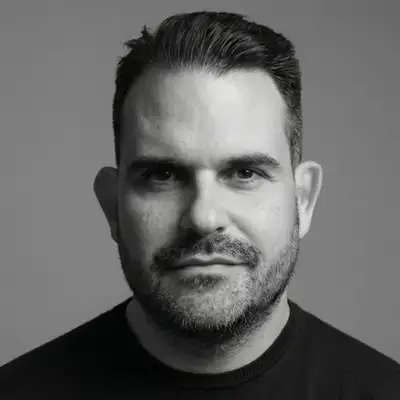
About The Host: Chris Maffeo
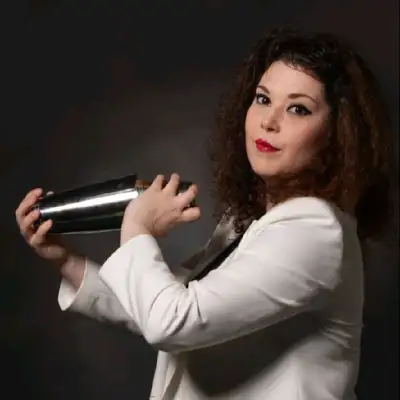
About The Guest: Alice Bidini
In this episode of the Maffeo Drinks Podcast, I am joined by Alice Bidini, an experienced bartender and bar manager from the Four Seasons Hotel in Riyadh.
Alice shares her journey from Rome to London, Kuala Lumpur, and now Ryadh.
We dive into the unique beverage preferences in different countries and the challenges of introducing new drink concepts, especially in a non-alcoholic market like Saudi Arabia.
We discuss how cultural and religious influences shape drinking habits in Malaysia and Saudi Arabia and how London's diverse landscape impacts its vibrant bar scene.
Our conversation also explores the global adaptation of Italian cuisine and drinks, from 'Nduja pizza to Negroni cocktails, and the efforts to balance authenticity and local tastes.
Tune in to learn about the cultural nuances shaping global palates and the innovative ways bartenders are rising to these challenges.
00:00 Introduction and Welcome
00:28 Guest Introduction: Alice's Journey
03:13 Cultural Insights and Market Differences
07:56 Exploring Taste Profiles Across Regions
11:29 The Melting Pot of London
13:20 Understanding Dry and Wet Cultures
14:04 Regional Drinking Preferences
15:09 Peroni's Popularity in the UK
17:53 Challenges of Non-Alcoholic Bartending in Saudi Arabia
21:42 Adapting to Local Tastes
28:58 Conclusion and Final Thoughts
About The Host: Chris Maffeo
About The Guest: Alice Bidini
The MAFFEO DRINKS Podcast is a leading drinks business podcast delivering actionable insights for drinks leadership.
For founders, directors, distributor MDs, and hospitality leaders navigating the tension between bottom-up reality and top-down expectations.
20+ years building brands across 30+ markets. Each episode features drinks builders: founders, distributors, commercial directors, sharing how the drinks industry actually works. Not the conference version. Honest conversations.
Insights come from sitting at the bar.
Beyond episodes: advisory for leadership teams, subscription with episode deep dives and principles to navigate your own reality.
Beer, wine, spirits, Low and non-alcoholic.
Bottom-up Insights & Episode Deep Dives at https://maffeodrinks.com
Welcome to the Maffei drinks podcast. I'm Chris Maffeiro, your host and fellow drinks builder. I'm really honored to have you as one of our listeners from 111 countries. A small ask, if you enjoy the show, please leave a review and share it with others in the industry. Visit mafelldrinks.com for free resources, premium content and episode transcripts.
Chris Maffeo:Now let's dive into today's episode. Ciao, Alicia. Welcome to the Maffei Drinks podcast.
Alice Bidini:Thank you. Thank you so much. Good afternoon.
Chris Maffeo:It was fantastic to know that actually we are from the same city and then we had a bit of a chat just now to realize that actually we have a lot of places in common and you used to work also in my neighborhood where I used to hang out as a teenager.
Alice Bidini:I found out along the time that this is more common than expected, especially when you work in the body industry, it happens a lot.
Chris Maffeo:That's true. That's true. And to be honest, I mean, people from Rome, I mean, we are, I don't know, three, four, five, whoever says a different number of million people. I used to live in Finland and they are, you know, Finns are 5,000,000. There's as many chances to meet a Finnish person than to meet a guy or hear from Rome.
Chris Maffeo:It's pretty common. So let's start with this interesting interview. You know, we discovered each other on Instagram, but it was very interesting to find out that, of course, I mean, you are working in Saudi Arabia. So you are calling now from, from Riyadh.
Alice Bidini:From Riyadh directly. Yes.
Chris Maffeo:And of course, I mean, we're gonna talk about this later on, but of course, like, you know, a woman working in, in Riyadh in a bar. Wow. Okay. Let's, let's have a chat and find out more. But also you bring experience not only from an Italian perspective and a Saudi perspective, but you know, you have been living in other countries as well.
Chris Maffeo:So can you give us a bit of a short intro so that people get acquainted with why we are talking today.
Alice Bidini:So as you said, I'm Italian, born and raised in Rome thirty eight years ago. Preface this started to be a long time and of course I started to work in hospitality when I was younger, when I was a child and then after I fell in love with bartending and then I realized that irimi was the career that I wanted to follow, I moved to London, so I had a big chance to move there and as you know, London is the Mecca for all the bartenders and then I moved in Malaysia, in Kuala Lumpur. I stayed for a while there, opening a bar and then I had the chance to move in Saudi Arabia and now it's three years and now that I'm here based in Saudi in Riyadh, so now I'm currently the bar manager in Trizon Hotel here in Riyadh.
Chris Maffeo:Wow, fantastic. And that was super fast, especially I'm not used to Italians giving a short intro that is really short. You for that, Alija. We will go into details now with some of my questions, but what is interesting is also there's a lot of things that, you know, in play there because the Italian bartending community in London, of course, is is huge as it is everywhere around the world. What has London brought you?
Chris Maffeo:What is the, in a nutshell, let's say, the difference between working in Rome, London, Kuala Lumpur, Riyadh? In a nutshell, what are the differences between these four places in terms of learning and development? Each place brought to you as professional?
Alice Bidini:Well, this is a very interesting question. So I could tell you what exactly learned in every place where I work and in every country or continent that I work, but the main thing that comes to my mind when it has me such a thing is that I really had the chance, regardless the skill behind the bar or the skills with the products on how to build a drink. This is something that of course, I mean, we have to mention, but the most important thing that I learned and that I had really the chance to know different kinds of markets around the world because working in different continents and especially Middle East is considered like a separate continent, especially for the beverage. It gave me really the chance to understand how diverse are the market in terms of beverage around the world and the costumes of people and the culture of people, how different they are. So for example, especially in terms of taste or a palate in Middle East, the taste is really unbalanced on the sweet, sweet palate, a sweet flavor, something that is not so common to find in Europe, for example.
Alice Bidini:This is the biggest treasure that I learn. Being able to recognize and being able to analyze a market and how diverse it can be.
Chris Maffeo:And this is very interesting because I've been, I mean, living in different countries, but also like working with many, many countries around many continents back then when I was exporting beer. And what is interesting is also like that palates. Let's say an Italian person is very much, for example, acquainted with coffee, you know, or bitters, you know, like the brands we start to to drink after dinner, you'd have a bitter. The amaro is a very big component of, your, like the citrusy, you know, like we have oranges. It's very rich in that sense.
Chris Maffeo:And I, and I remember this when I was doing the WSCT level two with Nick Ryan in Ireland, and we were connected was during COVID. And I was the the only non Anglo Saxon of his students and his Irish and all the other were other Irish, English, Americans. They all had a certain type of palettes. The examples he was making, they were very Anglo Saxon, you know? And I was like, I don't what's that?
Chris Maffeo:You know, like, what is this, thing? I don't know. Like, he was mentioning, I don't know, marshmallows. And we know them, but it's like, maybe I had marshmallow once in my life, you know? And it's very interesting, like, to see that you have to really get into the different kind of places to really understand what those kind of consumers would like in terms of standard taste profile or flavor profile before actually doing okay.
Chris Maffeo:Like, I like Negroni and I will teach everybody to drink Negroni, whatever else going around the world because, you know, for people, the bitterness of a Negroni over Campari, like, it would be putting people off. Not Italians, but on average it will.
Alice Bidini:It's something that cannot cannot be a rule. Something that maybe we like in Europe is something that is not perceived in the same way in Asia or Southeast Asia. So like for example, as you said, almost everybody in Italy takes coffee with sugar. Here in Middle East, sugar is a really tiny option, so nobody is really taking coffee with sugar. So it's meaning that in some way they are acquainted with a bitter taste.
Alice Bidini:It's just something that they want to have in their coffee, but they don't want to experience in their cocktails or in their drink. If they decide to have that kind of experience that is not involving coffee, so they decide to have something that is juice based or a cocktail experience, they will definitely go for something that is sweet or maybe sour, but their fad and their culture is really unbalanced on the sweet taste.
Chris Maffeo:Wow. Okay. And what about like relationship? We do this comparison, like on around the places where you've been working. Like, what's the difference, for example, with between Saudi and Kuala Lumpur, like in terms of this kind of like taste and flavor profile?
Alice Bidini:Saudi Arabia, we need to understand one major point is that exactly, I think this is one of the most challenging and difficult market in the world in terms of beverage. So Saudi is a really niche market and the thing that we have to understand is that they don't have the same concept of beverage as we have in the Western world or in Asia. For them, the beverage is 90% related to a coffee experience because of course, to their culture, due to religious matter, religious reason, they are not acquainted at all with cocktails, with spirits and with alcohol. So they don't really have this concept of cocktail experience. This is something that is starting slowly, slowly in the last three, four years.
Alice Bidini:So we are starting to helping them to get acquainted with this kind of concept that for them is completely strange, let's say, or else is something that they are still not really acquainted with.
Chris Maffeo:Yeah. I like what you said about this. It's like if they put into a box the bitterness of coffee, you know? So it's like, whatever is related to coffee, if I understand correctly, paraphrasing you, I I like bitterness, but only because it's coffee. So it's like it's it's that kind of like moments in my day.
Chris Maffeo:You know, that's the bitterness is given by the coffee. But when I'm not having coffee, I don't want to experience bitterness. I want to experience different flavor. For example, in Kuala Lumpur, is there something like that with the locals, you know, like they are more on a sweet side of things or on a sour side of things, or is there something specific that you can compare to this Saudi experience with bitterness and coffee?
Alice Bidini:Not really. Not really. It's quite generic, as you said. And this also is very much related to the structure of society they have. Malaysia is a very peculiar country among all the other one in Southeast Asia, because basically in the past year or a longer time, they experienced a massive immigration from India and a massive immigration from China.
Alice Bidini:So it's meaning that now the 30% of Malaysian people are Indians, the only 30% are Chinese, and the 30% that remains is purely Malaysian. So it's meaning that it's a country that has became really multicultural in the past twenty, thirty years. So it's meaning that a lot of the influencers are playing in that sense. So in terms of beverages, well, they had the chance to open themselves to other kind of salads and to other kind of experience. This is why the bar scene in Kuala Lumpur now is growing up, it's from dreamy.
Chris Maffeo:And is that specific like this 30% kind of things like is it like specific to Kuala Lumpur or like Malaysia in general?
Alice Bidini:Well, Malaysia in general, but Kuala Lumpur had lost.
Chris Maffeo:Yeah. Okay. Okay. And when you wear like in London, which is more of a melting pot of different kind of palates, is there something like some difference between, you know, from a taste profile and flavor profile perspective?
Alice Bidini:Honestly, no, I mean, London is a place that is so diverse and where you can find literally anything. Anything that has been created on this earth, you can find it to love them. In my opinion, it's not something that you can close in a cage. It's not something that you can say, oh, people in London, they prefer bitter or in The UK, they prefer this or that. Not just for the med, for the melting pot on a cultural side because as a city or as a country itself is so multicultural, but in terms of party industry also.
Alice Bidini:Being the mecca of the body industry for the past twenty years, the research in terms of beverage, in terms of drink, in terms of flavours and in terms of fadings and matching techniques really develop there. London, it cannot be closed in a cage.
Chris Maffeo:No. No. No. For sure. But that also plays because of that and because of so many cultures in the Barcene as well, then that's what drives all this experimentation, I guess.
Alice Bidini:The big difference that we have among all the European countries, no? Dry culture or wet culture. I mean, itself, it belongs to a wet culture. Wet culture means that we are more familiar with wine by culture rather than spirits. I mean, if you think about Italy, of course, you can think about bitter tamaro, liquors, barrels, but the main point for people that are not acquainted with the bar industry is wine.
Chris Maffeo:Alicia, what do you mean by just to clarify for myself first and then for the listeners, I guess they may not be acquainted with the term. So did you say dry culture and wet culture?
Alice Bidini:Yeah, so basically this is a concept that I don't know if you're still in fresher or not since when I did the Bartender Academy was like ages ago, so this is something that I was learning there and I remember one day we were mapping drinking culture in Europe and there were like the Mediterranean countries that belonged to the wet cultures, meaning that we were more into wines And UK and other countries, they were more like belonging to a dry culture, meaning that they are more into spirits.
Chris Maffeo:It's very interesting. I I live in Prague and of course this is clearly a beer kind of culture. But it's also very interesting because even within the country, for example, you know, my wife is from Moravia, which is the wine producing region in the south of the country. And I used to work in Pilsen, which is predominantly beer. So Prague is like halfway.
Chris Maffeo:It's in between. I mean, it's Bohemia, so it's it's beer still. But it's also very interesting what you're saying because, for example, when I compare Czech Republic with Slovakia, the culture is different. Slovakia is much more on white spirits and Czech Republic is more on dark spirits, for example.
Alice Bidini:Okay.
Chris Maffeo:You know, you go on the bitters here and rum, like so bitters wheat. And then in Slovakia, you go more on, vodkas and plum brandy. So it's very interesting, like how you move even some kilometers, like then you have repercussions on these habits. And, and the reason why I'm diving into this, because I'm a firm believer that, you know, this really plays a role into why certain trends take place in some countries and they can be exported to some other countries. I used to sell pepperoni back in the days.
Chris Maffeo:And I mean, pepperoni was like, you know, the the biggest country for pepperoni is UK. Mhmm. And nobody ever said it to me or let's say it's not written anywhere, but I'm pretty sure that the reason was that because there's so many Italian bartenders and so many Italians living there that the moment they saw Peroni, they automatically felt the connection, even though it was a, let's say, consumption occasion that was maybe, you know, different than what it was back in Italy. You know, back then it was much more like informal with pizza kind of thing that in the world, more like a pub kind of thing. But for sure, and correct me if I'm wrong, you know, you as an Italian bartender in London, you probably were proud in serving an Italian beer.
Alice Bidini:I remember that Peroni was treated like super premium beer and a super premium brand. So of course, I was proud of that because as you said, for us in Italy, Peroni is a super good brand, but it was something that's more popular for us. We really used to have on every table, on every meal, not only on special occasion, where it's something that was really part of our culture. When I was in UK, I remember that he was being treated like super hot beer and he was super fun but super cool as well.
Chris Maffeo:I remember, I'll tell you a funny story, when I tried to move to London many times but never succeeded or never wanted, I don't know. But back then it was in 2001, summer two And thousand and I went to a place called Mezzo. I don't know if it still exists. It was in Soho because I was a waiter in a restaurant in Rome in my area that was called Mezzo. You may know that.
Chris Maffeo:And he told me that he had taken all the inspiration when he was working in London and so on. And and then I went there and I ordered back then it was still only in a straight zero, you know, the yes, like they were just exporting with the Italian name, you know, before the rebranding on Perron in Astradzuro. And I remember I had it and I remember I still remember in 2001, I think it was £7 or £6 in that place for a bottle of 33 CL on a Lazaro. And I sat at the bar alone and then I ordered that beer and it was like this kind of like moment of pride because I was like, okay, I'm Italian. I may be moving here and, you know, I want to support Italian brands and I had it.
Chris Maffeo:And then I didn't know that after ten years I would end up selling it all around Europe and Middle East, but it was a funny, funny thing. And I think that plays a really huge role in how we behave now as professional on what we try to give as flavors to to other cultures as well. But let's focus more on why we are here and I want to know more from your experience. How does it work? So like just to clarify for for listeners.
Chris Maffeo:So Saudi is a totally dry country. Not dry not dry in the sense of UK, but dry dry, you know, no alcohol.
Alice Bidini:Dry meaning that the alcohol is still illegal. We have no water working with completely with non alcoholic spirits.
Chris Maffeo:And just to clarify, so you are the bar manager, but the bar is not yet open. So I say we're not going to talk about what it's gonna be. You know, you can give us some hints, but I want to know from your experience on the, let's say, previous years of where you've been, what you have experienced now because working with only non alcoholic beverages must be a challenge.
Alice Bidini:So basically, starting from the beginning, just to give you a small background, what has happened? When I had the chance to move in Saudi Arabia three years and a half ago, it was still quite new, quite a new thing. So of course I knew and I was completely aware that there was no alcohol whatsoever and that I had to work just with non alcoholic spirits or non alcoholic ingredients in general. So why I decided to move here and start this experience because basically it's something that I just wanted to experience something new. I wanted to learn how to work in a different way because what I always say when somebody is asking me, I mean, you had a bartender so why you moved there that you don't have alcohol?
Alice Bidini:It depends what does it mean to you to make bar in 2024 and I can definitely say to you that working with non alcoholic spirits or ingredients in general, it really changes your mind, it opens your mind and you really change your mindset because basically it's a way of rethink the body itself in terms of selfish, in terms of dealing with people that are not really acquainted with the beverage concept as we have. So not only in terms of customers and guests, but it's a different way of rethinking the drink itself, the cocktail itself, the shape, the texture, the visual presentation as well. This is something that in the Saudi market is vital, so the Saudi market and the non alcoholic market in general, often they don't follow the roles a classic or a regular market has. So there are so many varieties that we can analyse.
Chris Maffeo:So let me jump in then. There's an element that is very interesting that is, of course, like working with, you know, the technical aspect. So so there is the element of, the, you know, the nonalcoholic as an as we know it. So let's say carbonated soft drinks. Then there's the element of the nonalcoholic cocktails, which is another ballgame, you know, so it's it must be harder to make cocktails without alcohol.
Chris Maffeo:But then also the fact that is super interesting is that for the average Saudi, let's call it like, you know, like they've never tasted alcohol, you know, and they are not acquainted with certain dimensions of alcohol. Like if we talk about, let's say, a Tanker A zero zero, whether like people can call it gene or not, that's another debate for LinkedIn and other social media. But, you know, I know what a tank array is and I know what to expect from a tank array zero zero. Then I can find what I'm looking for or not, but I know the starting place. But I guess that for your guests, it must be difficult because like how are you going to explain what a cocktail is to somebody that doesn't know what a cocktail is?
Alice Bidini:That's why we have to say one thing that is very important, talking about specifically of Saudi market. About the 90% of their experience, their beverage experience, let's say, them is coffee based. They are very strong in coffee culture and they are one of the biggest consumers of coffee in the world, meaning that they are so skilled also. So basically they are experiencing now something that for them is completely new because for them, as for us is to go, I mean, I'll invite you for an operative. Well, let's go how to have a drink together.
Alice Bidini:For them, let's go how to have a drink together is meaning that let's go and take a coffee. Let's go and take a latte, cappuccino, Americano, whatever. It's the same concept with a different beverage object, let's say. So what we are doing now, we are trying to accompany them to learn something else, to learn something new and to bring our culture as well. Of course, with non alcoholic spirits, but try to give them a drinking experience that is new and original and different from what they had so far.
Alice Bidini:So it's meaning that it's like, for example, in Europe, twenty, thirty years ago, we had the first Japanese restaurants. Was a bit sceptical in the beginning and now they have this big boom. Now they are really part of our culture also, our dining culture. We are now in Saudi Arabia at this stage. We are helping the people, of course, respecting their culture because we cannot use alcohol.
Alice Bidini:We are helping them to go through this journey, try to let them understand how our culture and to show them from a different perspective what a drinking experience can be. So a drinking experience is not only let's go out and have a coffee, but let's eat at this bar or let's sit at this restaurant and let's have a cocktail or a non alcoholic cocktail. So we are still at this stage. Since most of them, they have no clue of what a cocktail is, they are still, let's say, taking and relying a lot on the recommendation of the bartender or the waiter, if we are talking about a bar in a restaurant. So 90%, they are still relying on that because of course not knowing and not having a background, they completely rely on someone else that is suggesting them something and that's why the role of the bartender or the waiter in those kinds of markets is more enhanced their role rather than in the other countries because they are guiding people.
Alice Bidini:Because they are like teaching something and explaining a concept that they don't really have no clue what we are talking about.
Chris Maffeo:It's very interesting what you're saying. You made the example of the Japanese restaurant, but before you said that, I was thinking about Italian restaurants abroad, because I'm a freak of, Italian immigration and because, you know, we come from that kind of culture. And I have a take because I when I used to sell Peroni, for example, you know, I I studied this, like, you know, what's the Italian community doing in that specific country now? And if you take the historical countries where there there is an Italian community, like a big Italian community, which means that there is a big Italian cuisine or restaurant scene, they are much more acquainted with what it is. No?
Chris Maffeo:So if you take Germany, UK, France, The US, you know, and of course, Argentina, you know, like where all the Italian immigration happened, they know much better what Italian food is. But then if you go to other countries and I remember when I used to live in in Stockholm or in Helsinki, I mean, in Helsinki, the back in my days, was like a chain of Italian restaurants and one, like a couple of Italian, like a really hot empty owned by an Italian. And it felt like teaching them, you know, I was also a waiter there for some time. Teaching Teaching them give you a stupid example. Like, I was working in a pizzeria as a waiter.
Chris Maffeo:There was a pizza that was made with because one of the owners were. And for those of you who don't know, it's like it's a spreadable salami, which is very spicy. You know? So they would just put like a hint of it on the pizza. And some people would go there and and order this duya pizza.
Chris Maffeo:And my first question as a waiter was like, do you like spicy food? And as I know, I hate spicy. I was like, sorry, I think you shouldn't have this pizza or I can give you this pizza, but ask them to take this away, which is basically like removing the egg from an omelette. But, you know, if I didn't say that and if the Finnish waiter that didn't know about do you, he would have given that that pizza to them and they would have sent it back crying for spicy food in their mouth. So there is there is this element that is super interesting now for teaching people what something is supposed to be like.
Chris Maffeo:You know, it makes me think of what you were saying about the coffee and the cocktail in Saudi. I was thinking like people ordering cappuccino after a meal.
Alice Bidini:This is something really interesting because I recall now something that happened because of this thing that you say about the pizza coming back because it's too spicy, because it's exactly what it happened in my first year here in Saudi. I was opening an Italian restaurant and I was working there as a head bartender. When I created the menu together with the bar manager that was there, basically the idea was to bring in Saudi the Italian culture, so Italian appeared. So we had all this Negroni style thing, Negroni Americanos, Baglotti and whatever, but the 99% of those strings, they were sent back because they were too bitter for the salty palate, for the salty taste. This was my first year and so it was my first experience back then and this taught me a lot.
Alice Bidini:Taught me a lot on to how to rebalance a drink because the thing is, I mean, this for me as well, what it means to really understand the market is not just assume that everything that is considered classic is good for everybody in the world. Negroni in this place doesn't work. Of course. So it's meaning that you have to move from that particular point and try to understand how to rebuild and how to rethink the construction of your drink to go towards the guest palate.
Chris Maffeo:That's all for today's Mafel Drinks podcast. If you found value in this episode, please leave a review and share it with others. Don't forget to check mafeldrinks.com for all our resources, including episode transcripts. This is Chris Mafel and remember that brands are built bottom up.