Subscribe
Share
Share
Embed
hol+ with Dr. Taz MD is redefining modern medicine through a comprehensive, evidence-based holistic approach; integrating functional medicine, integrative medicine, and time-tested healing systems to treat the whole human, not just symptoms.
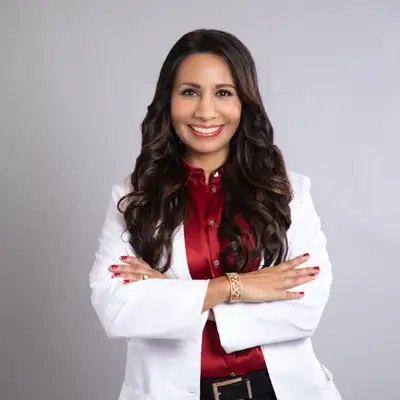
Hosted by Dr. Tasneem Bhatia (Dr. Taz), triple board-certified physician in integrative, functional, and holistic medicine, bestselling Penguin Random House author, and founder of hol+; a comprehensive evidence-based holistic medicine platform with clinics in Atlanta, New York City, and Los Angeles, and virtual care available nationwide.
At the heart of hol+ is a revolutionary framework: the Five Body Map- physical, mental, emotional, energetic, and social/community bodies that create whole health. This whole-human approach connects hormone imbalances, gut dysfunction, microinflammation, cortisol dysregulation, metabolic disease, autoimmune conditions, perimenopause, and stress-driven illness to the full spectrum of who we are; body, mind, and spirit.
Each episode explores Dr. Taz’s original clinical frameworks ;The Cortisol Loop, Microinflammation, and The Invisible Load alongside conversations with leading experts, celebrities, and thought leaders including Sophie Grégoire Trudeau, Katherine Schwarzenegger, Cameron Mathison, Carol Alt, Jane Seymour, Tamsen Fadal, and Kris Carr.
Topics include hormone health, gut health, GLP-1 and metabolic therapy, thyroid dysfunction, weight loss, inflammation, autoimmune disease, mental and emotional wellness, energetic health, and the future of holistic medicine.
This is the show where science and spirit converge- driving health, happiness, relationships, and family ecosystems.
Want to go deeper? Join Dr. Taz’s private community, the hol+ Circle ; medicine beyond the exam room. (holplus.co/circle)
A 2025 Webby Award honoree, recognized alongside the Mel Robbins Podcast in the 29th Annual Webby Awards, hol+ is built on the foundation of Super Woman Wellness, which surpassed 1 million downloads over 8 years.
This is medicine beyond the exam room. Welcome to hol+
(00:00) Everyone wants to know the secret for living longer. But longevity is not just about years. It's about energy, vitality, and health span. As the conversation around health and aging and longevity starts to boil, really coming to a simmer with everybody running in every direction to understand what healthy aging really means, many of you are only more confused. (00:26) And I honestly don't blame you. In this episode, I'll explore the science of aging, the biomarkers that matter, and the practical steps you can take right now to add healthy years to your life. Hi everyone, it's Dr. Taz. Before we get into today's episode, I just want to pause and say thank you. Your messages, your shares, your stories are the reason we make Whole Plus. (00:51) Every conversation here is about connecting the science, the intuition, and everyday life together. so you can feel more like yourself again. If you haven't already, hit that subscribe or follow button. It helps us reach more people who need this. All right, let's begin. We are all living longer, but are we really living better? When I look at the chatter and the noise, whether it's in research or whether it's in the exam room or whether it's just in conversation, it seems like there's a lot of debate on what is aging, what does it mean for each of us, (01:25) but most importantly, how do we really begin and execute a plan to support us as we go through the decades? There are a number of different things to be aware of when it comes to healthy aging. And in this next episode, we're going to spend some time breaking it all down. But first, I want you to really understand the context that we are all living in today. (01:49) I was doing some prep for this episode, and I always find these stats fascinating. Take this for example. By 2030, this is from the World Health Organization. By 2030, 1 in six people, think about that guys, 1 in six people will be aged 60 years or over. But by 2030, they expect that population to double. (02:14) Meaning by 2050, the number of people aged 60 or older is expected to double to 2.1 billion people globally. That's a lot of us in that aging demographic. And what's even more interesting, maybe disturbing, we already know about the declining fertility rate, but they are actually saying between the years 2030 and 2050, there will be more people over 60 than there are children under 5 years of age. (02:41) We are obviously in an era or a season where we are getting older and our planet, our globe will be populated by people over 60. Let me throw one more stat at you while we're doing this. Not only will we have an increasingly older population, but about 80% of that population will be living either in a middle class income or at poverty or below the poverty line. (03:11) This is a problem when it comes to health and health care. And it's a problem for all of us, no matter where we are in our journeys, no matter where we are in our lives. Because if we have a sicker, older population that's not vital, not full of life, well, it's going to at the end of the day impact each and every one of us. (03:31) That's why I think it's so important to really talk about aging and talk about it in the context that it was meant to be discussed thousands of years ago. If we turn the clock back and look at Chinese medicine or Ayurvedic medicine for example or look deeply into older eastern cultures that have been around for a really long period of time, aging was not something to be feared. (03:55) Aging was actually a period of time where you sort of graduated into a respectful, honored, revered role within your family and within your community. There are books written, there are novels, it's in our religious text about how the elders influenced families, young people, guided them, directed them, and in turn they were sought after for their advice and their mentorship. (04:20) Meanwhile, the transaction there was that the younger folks were responsible for taking care of their elderly. So, nobody lived in isolation or separated from one another. So, aging was a part of the human journey and a beautiful one at that. Today, the way Western culture has built the construct of aging, we see aging as something negative or bad or something to be feared day in and day out. (04:50) Whether it's somebody in my family or one of my patients, my own parents, somebody says something to the extent of getting old sucks. But does it really? And does it really have to be that way? And my push back is no. There are better ways to think about aging, to build a plan for healthy aging, and at some level and at some extent just to even get rid of the term. (05:17) There are some ground rules that I would love to set with you as we are talking about this and I'm carrying around all these numbers and stats so that I also am delivering the right information. But here's ground rule number one. Aging is reversible and on a spectrum. That means that your age, your number is kind of irrelevant and we really should be thinking about it in different ways. (05:41) Some people have talked about something like your biological age, right? Or your real age. These are all things that are actually very valid because I'm sure you'll agree with me that someone who's 50 can look very different across demographics, right? Someone who's 80 can be full of life and energy and running marathons and heavy lifting and doing so many things that a 50-year-old can't do, or they can have multiple medical conditions. (06:07) Here are the stats and where they stand today. First of all, when we think about our elderly and aging, here's the disease burden over 60. Today, across the globe, this is not just for the United States of America, but across the globe, 30% of adults over the age of 60 are obese. That in itself is a health risk. (06:29) Think about the inflammation, all the cardiovascular implications of metabolic disease that go along with that. 93% of our population over 60 has one chronic disease and 80% has two. So the disease burden intensifies, increases, and many people just feel so frustrated by all of it. I have patients coming in all the time over 60, over 70, even over 80, and they feel so defeated by the medical system, by their pharmaceutical list, and by the care that's being delivered. (07:05) I've got to share this story and I don't want to ramble too much but I have to share the story. I had a patient just the other day 80 years old had multiple medical conditions including something called congestive heart failure. She also had cerosis of the liver secondary to her congestive heart failure. As we discussed her care, tried to come up with a plan, tried to kind of line out and road map out a journey as we do at Whole Plus, I asked her to step up on my exam table so I could examine her, something that I thought was 101 when it comes to medical (07:37) care. She looked at me perplexed and she said, "You're the first doctor who's asked to do a physical exam. We have a problem in medicine. We have a problem when we are not treating our elderly population like people even when they are in the exam room. And things like a physical exam and a quarterback for your care is so essential to delivering proper care to somebody over 60 honestly at any age. (08:08) But I feel like for our elderly they are also dismissed just like women have been dismissed and children's care has been dismissed and the entire medical system. I'm not going to get on my soap box has been broken. But let's get back to healthy aging. The root of healthy aging and the root of poor aging is all driven by one central process. (08:31) I want you guys to realize that as complex as all the information is out there and as many twists and turns as we all do trying to be like, well, what do I do? Like what's the right diet? What's the right supplement plan? It comes down to one central concept and that one concept is simply cellular aging. Aging is defined by the cells no longer being able to do the job that they were supposed to do. (08:58) There are a lot of fancy words out there to describe this idea. We have words like free radicals being produced from cells that are dying. the idea of scinessence, which means your cells no longer have the capacity that they once had before. We also use words like oxidative stress to describe the cells not getting the energy and the vitality that they need to function at every single level in your body. (09:22) So, cellular aging and what the health of your individual cells are is really what we should be talking about if we're going to have a conversation around longevity and aging. But I don't think that's how the conversation has been going. Instead, we've been using terms like biohacking. We've been talking about stuff like the health span, which is important. (09:45) The health span is sort of the average journey of your life over the course of many years. We talk about preventive screenings, right? Checking off the box, the DEXA scan, the colonoscopy, the heart scans, you know, all the different things you need to do to quote unquote check and make sure nothing has developed. But what if that is too late? What if we're entering this conversation around healthy aging and longevity way too late when we're just looking for physical ailments on a scan? I want to push back on some of that and root everybody back into this (10:20) conversation around cellular aging and what it means, how you fight it, how you beat it, and what is a logical, realistic, rational plan for healthy aging. If we're going to define healthy aging and longevity as the reversal of cellular aging or cell death, then there are a lot of different things to think about as we build this plan together. (10:43) And here's what we're going to do. We are going to now apply the fivebody approach to healthy aging. And it's something we do at Whole Plus all the time, but I talk a lot about the five bodies. And as I'm talking, I hope you're somewhere where you can take notes and and maybe write some of this down because as we're going along, I want you to pick just one or two areas of interest where you want to dive a little bit deeper into. (11:10) And if you're 30 and listening to this episode, if you're 40 or 50, just because you're not 60, doesn't mean you get to exit. Because remember, if we're going to have a conversation around cellular aging, that actually begins earlier and earlier to support the cells in your body so they don't have scinessence or cell death quickly. (11:33) The five bodies that I talk about over and over again include the physical body, which most people spend the most time and energy on or at least notice most quickly, right? That's your ability to move, ability to do the things you did before in life, right? how you pick something up, how you bend, how you walk, can you run, can you jump? All of these different things that we often take for granted. (11:56) Really important part of a conversation around health and longevity and healthy aging. The second one is thinking about the mental or the cognitive body. I don't need to beat into the ground the epidemic that we are facing today with the death of the brain, right? Where we're seeing dementia and Alzheimer's at higher rates than ever before. (12:17) And here's the scary part. We haven't even hit the generation that has had a lifelong history of ADD, ADHD, anxiety, and depression. So, the mental body is one that we need to stay on top of when we're talking about longevity. The next one is the emotional body. And this one's really important and probably sort of couples with some of the other bodies that I often talk about. (12:42) The emotional body is how we feel, right? How we are moving through the day. And it's very tied and connected to our energetic or our spiritual body and to the community in which we live. You know, many of you have seen the live to 100 documentary with Dan Butner. Hopefully I can get him on the show if you're listening. But essentially, he went into the blue zones scattered across the world, right? Okinawa, Japan, Sardinia, an area in California as well, and was looking for what made those people healthy. (13:10) Why did they do better? Why did they live longer? And it kind of came down to these particular areas of our bodies, our community body, our spiritual body, and our emotional body. Because when you feel good, cell death does not happen as quickly. That's right. All of these bodies are interconnected and communicating with one another. (13:34) All right, but let's get into the tactics, right? How do we have a healthy approach to aging and longevity? and with all the science that's evolving, what really matters right now in our day-to-day lives and what maybe needs a little bit more investigation. So, one of the things that you know many of you have seen and maybe for a period of time was a fad and then went away was this idea of controlling your diet and what does diet mean for healthy aging and longevity. (14:05) diet we're finding more and more in research is so important when we talk about a healthy lifespan and really is one of the fundamental roots to prevent cellular aging and it's rooted in a couple of ideas. First of all, your diet can determine the amount of inflammation in your body. Your diet can also determine what's happening with your gut and your gut microbiome. (14:28) It also plays a role into another very important concept that we don't talk enough about and we don't test for in the exam room which is detoxification. What is the liver load? Because again all of these things are determining the rate at which remember aging is on a spectrum. They're determining the rate at which your body will age. (14:50) If you are eating foods that support the microbiome, right, that sea of bacteria swimming in the gut that determine what is happening with every other process in the body, then you're going to have a longer cell half-life, meaning your cells are going to do better for you longer. If on the other hand, you're eating a lot of inflammatory foods, right? We know these by now. (15:12) fried foods, sugar, processed foods, packaged foods, all of these type of foods become the dominant source for your nutritional energy. Well, then in turn your microbiome will shift. You will have more inflammation. You'll have earlier cell death. Moving on from just what you're putting in the body, it's also how you're digesting those foods. (15:33) And that makes a big difference when it comes to your physical body. making sure the gut is working well, you're going to the bathroom consistently, you have the enzymes you need. All of this becomes critical in a healthy aging paradigm. But here's what I see happening in the exam room, and I think it troubles me quite a bit. (15:53) Many people start to go on one medication or two medications or the next thing you know they're on five or six medications and all of those are in turn impacting gut health, liver health and the ability of the body to balance the microbiome and keep those cells healthy and alive. That's why paying attention to food, gut health, liver health all becomes critical in a conversation around healthy aging. (16:19) And unfortunately for many people the conversation seems limited to take a medication, take this particular peptide. All of that is going to solve the problem. Instead, we need to start with food first, with gut health and liver health when we're thinking about keeping cells healthy and alive. Now, one of the topics that has come up a lot when it comes to healthy aging is do you fast or do you not fast? what really is the right approach to food when it comes to aging and cell health. (16:49) And one of the biggest debates has been should we intermittent fast? Now, the reason this has come under debate more recently is because we've learned that with extreme fasting, right, extreme caloric restriction, many people are not getting the nutrients they need. And if the conversation keeps going back, I want to reorient you back that the conversation keeps going back to cell health and cell life, then we know if we're not getting the antioxidants we need, the protein we need, it's going to lead to earlier muscle death, earlier, you know, overall (17:21) cellular degeneration. So getting in calories is important, but the right amount seems to be the key. Here are some early studies on caloric restriction. And they actually encouraged periods of intermittent fasting or fasting for people over 60. And it's important to make that differentiation because I think when we tell women who are going through menopause or we tell, you know, younger people who might be super stressed to do intermittent fasting, it actually works against them. (17:53) But I think cyclical intermittent fasting is what the research is showing that will ultimately be the most helpful when it comes to healthy aging. All right. This particular study said the calorie restriction model predicts that the onset of scinessence which remember is cell death is delayed and life expectancy prolonged due to the ultimate effects of restricted food intake. (18:14) Now here's the kicker. Restricted food intake without malnutrition. So again, if we're doing it in a way where you're getting the protein grams, you're getting your antioxidants in, but you're not overeating or over consuming, that's the sweet spot when it comes to food for healthy aging. (18:32) So I challenge each of you when you're thinking about what you can do in the physical realm, right, with your physical body to protect yourselves from aging early or from aging too fast, think about a diet that is efficient. It has to be calorically efficient. And I think that is a better way to think than thinking calorically restricted. (18:52) When we're calorically efficient, we are thinking through the quality of the foods we're eating. Are you getting the right amount of protein? Are you getting foods that are vibrant and deeply colored? So, you're getting all those great antioxidants in. Are you getting the fiber for good gut motility and good gut bacteria, which in turn help to lower your toxic load and help the liver to do its work. (19:16) So diet is a cornerstone when it comes to healthy aging and advancing the lifespan and especially when we're focused in on that physical body. There's another piece of longevity that becomes very important when we're talking about the physical body and that ties us back to movement. And this is another uh area where I feel like many of you already know some of the science and the research. (19:39) But again, we know that movement as we get older becomes critical. We find that elite athletes in research actually have a longer lifespan with a caveat. Athletes that are stressing their body, right, exerting their body too much, actually have more inflammation. But so do those who are sedentary and not moving on a regular basis. (20:03) So many studies throughout research are showing over and over again how movement is key and really helping to reverse aging and improve the health span. So having some sort of movement plan becomes again like a 101. So before we start talking about all the fancy stuff that's out there and trust me there is a lot of stuff out there right we've all read about the guy who was trying to reverse his age and you know taking 30 supplements a day and hooking himself to you know five different IVs. (20:31) We know all that is out there. But before we get there, these fundamentals with the physical body when it comes to the right diet, watching calories, but counting quality calories, cycle fasting periodically, getting in those antioxidants and protein, and then moving multiple times throughout the day. And I can't stress that enough. (20:51) I feel like many people do one walk a day and think that's enough. But walking was a basic necessity of the human body. So your walk sometimes doesn't count. Your walk is like a basic thing that you should be doing regardless. And we were actually meant to walk throughout the day, not just walk for 40 minutes and then sit back down. (21:13) So if you have a sedentary job or a sedentary lifestyle, do your walk. But you probably need to do at least two walks a day. maybe one in the morning and one in the evening to really get the body moving to prevent aging. Let's move on from diet and movement to talk about one other pillar of the physical body that's incredibly important and that's sleep. (21:35) We know that as we age many people have more and more difficulties with sleep and some of that's due to the hormone decline, some of that is due to the nutritional decline as well. But again, focusing on good quality sleep protects the brain, helps with blood sugar and insulin control, and at the end of the day can be a determinant of what that mental body, right? Remember the second body is going to do. (22:00) So if you can keep those three main ideas in mind, your physical body really being driven by your diet, by your gut health, by your toxic load, in turn your movement and your sleep, take a moment to evaluate what you are doing in those particular categories, you're already on your way to reversing your actual biological age. (22:24) And again, I don't even like age. We got to we got to think of a different number than that. So the physical body again driving cellular health, driving cellular age, reversing or increasing your health span and influencing your chronic disease burden. Now we could end the episode right here, but there is so much more to talk about when it comes to longevity and your health span. (22:50) The next piece that we have to address is talking about the mental body. I mentioned dementia and Alzheimer's earlier. I think the more we think about this and we look at this epidemic and we know that we have an aging population on our hands, we have to talk about how to protect the brain. (23:08) My father right now is suffering from dementia and to watch him change, you know, from being able to remember us and talk to us and being excited and happy to now kind of sitting and staring at walls is heartbreaking. And I know so many of you have shared similar stories with me as well. How do we prevent this? How do we keep the mental body active and engaged? At a cellular level, what we are seeing is the same thing that I've been talking about, cell death. (23:34) The cells not being able to handle the load of toxins or environmental exposures or whatever else they've dealt with through the lifespan. But that cell death can be prevented and can be improved. Again, the earlier we act, the better. I know so many of you come in fearful because you have the genetics of something like Alzheimer's, right? you have APOE E4. (23:56) It's not a sentence. It's not a determination. It's not a yes, you're going to get this disease. Instead, it's a wake-up call to say, hey, let's be proactive. Let's understand how to prevent cell death when it comes to you and your brain. One of the things that we've seen over and over with Alzheimer's and the progression of Alzheimer's dementia or regular dementia is this idea of cognitive reserve. (24:20) And research is getting super fascinating with this idea that you can build your cognitive reserve at an earlier age. This is why I'm worried, by the way, about our mental health crisis and all the folks on ADD and ADHD medications. Do they have the cognitive reserve to push them into the later decades of their life? Building cognitive reserve is about again improving that nutritional and physical body, but it's also about engaging in activities that challenge you and force you out of a comfort zone, create kind of that growth (24:53) mindset, so to speak. So, cognitive reserve is something that when we are putting together a plan for longevity, we need to be thinking about again before we get into some of the technological and fancier advances of today. The other part that's fascinating to me is the connection to the aging brain and something called dopamine. (25:15) Right? Everybody knows dopamine, the feel-good neurotransmitters. Research is evolving now to tell us that people or some of our elders who don't have good dopamine metabolism, meaning they are not feeling good, right? How it all connects back to the emotional body and they're not metabolizing their dopamine effectively. (25:36) actually see more rapid acceleration of brain aging. Here's a direct quote from a study. Aging is associated with declines in multiple components of the dopamine system, including loss of dopamine producing neurons, atrophy of the dopamine systems cortical targets, and reductions in the density of dopamine receptors. (25:56) Together, these findings support a model where if we could upregulate dopamine synthesis, it is a mechanism to develop cognitive reserve and cognitive resilience, important words in healthy aging. So, what does that mean? What's the translation of all of that from this particular study that I've been looking at? Essentially, we are saying that there's an emotional connection and a physical connection to what the brain is going to do. (26:20) And again, going back to my dad, this is something I saw with him. he experienced a particular emotional trauma after which his dementia set in. So again, these bodies are connected and it's exactly what we've seen in other documentaries and other work on healthy aging where our elders do better at any age when they're in community and when they have the emotional connectedness that we as human beings so deeply crave. (26:49) So the emotional body is tied both to the physical and the mental body. And this is something I've talked over and over. I've talked about over and over again. And it's a very important concept in systems of medicine like Chinese medicine and Ayurvedic medicine where they really wrapped all of it together. They would actually map the meridian that would give you an emotional deficit, a physical deficit, a mental deficit and work really hard to balance all of it. (27:15) And some of the joy of the work that I've been able to do over these years is to find that sort of modality match lab work and what the patient is experiencing and going through. And it's something we continue to do today at whole plus. So when we put all of this together, I want to bring up one more aspect of healthy aging before we talk about future technologies. (27:37) And that is really thinking how not not only about the emotional body but how the emotional body the energetic or the spiritual body and the community body are linked. There's been a lot of work talking about the role of spirituality in aging. And when I went back to the literature to see what people are saying and talking about and researching it was it's fascinating. (27:58) And here's again, this is coming from the AFCC, which is age friendly cities and communities, talking about faith spaces, right? Faith-based spaces are vital, but overlooked forms of social infrastructure that support older adults. They are especially important for the marginalized and minoritized groups who may face barrier to mainstream services. (28:21) So, I want us to think about this in a broader context. I already started the episode saying that 80% of the our elders are going to be sort of in the middle income or lower income or at or below poverty line in the future after 2030, right? But how do we reach them? Do they have access to fancy food and exercise programs and all the other, you know, technology that's out there right now? Probably not. (28:45) But if we could boil it down to giving them access to foods that are clean and whole movement programs, right, and supportive communities that actually include faith and faith-based initiatives, they would have a much better chance of healthy aging and dopamine regulation and slower rates of cell death than we might be seeing right now. (29:11) And I think that's the hopeful message here is that there is so much that can be done across the spectrum, right? Across the socioeconomic spectrum if we put our heads together and really come up with a coordinated approach. And that's why this fivebody holistic approach to me is something that we've got to adopt to deal with the future of medicine. (29:33) We no longer can say take a statin, take metformin, take a GLP-1. These are your answers to healthy aging. That is a very limited view on what it means to age when we're not acknowledging this very critical component of aging. Lastly, I want to talk about where aging should go in the future. Now, even in practice, I'm always so intrigued by all the things we can do, right? We can do IV vitamin therapy to improve cell health. (30:05) We can do peptides now that are regenerative and seem to play a role in minimizing inflammation. Everything from BPC 157 to peptides that improve growth hormone to preserve muscle mass to hormone replacement therapy. All of these have a role in the context of the right patient. But we can't do blanket approaches, right? I can't in good conscience tell everyone to go on hormone replacement therapy or everyone take a GLP-1 and everyone go on a peptide. (30:34) Right? These are things that need thought and they need some consistent strategy. So that's the one-on-one interaction that should be happening in our exam rooms of the future and we are determined to make that a reality for all of you. But in the interim, these basics of bringing your physical body to a place where diet, movement, and sleep are prioritized, right? Thinking about it in the context of cell health, where you're doing some level of cyclical fasting, right? Where movement includes multiple forms of movement throughout the day, (31:06) not a singular form of movement. And then where sleep is prioritized. I mean, I think even Hypocrates put people in sleep chambers, you know, so many thousands of years ago. And we're thinking about the brain is thinking about it in terms of cognitive reserve and cognitive resilience and emotional health. (31:26) All tied to physical health, but also tied to community and spirituality. To me, that's a paradigm for healthy aging that truly is positive aging, which is a term being used for now to think about aging in a positive light, right? Like they did thousands of years ago where you graduated. It was a privilege to age. There was so much waiting for you to really serve in this next role of your life and to really be of advice and counsel to the many people that you love and to the communities that supported you in your youth. (31:58) This is my dream for what longevity and aging should look like. And I haven't even talked in depth about all the technological biohacking sort of advances that are out there today. And why? Because they're not accessible to everyone. We can do another episode on that. But before we get to that, these are the basics that we have to pay attention to. (32:23) The fivebody approach applies to many different conditions when it comes to health, but definitely applies to our discussions around longevity and healthy aging. And if we look at the numbers and the stats and understand where our population is headed, it's time we all wake up and prioritize these pillars when it comes to healthy aging and start to reject age as a number, but think instead about cellular health and your cellular age. (32:48) Longevity is built day by day. If you want to keep learning, subscribe and join me here every week. And visit whole plus.co. That's wholeplus.co Co for resources that can help you start your longevity journey right here, right now, and