Subscribe
Share
Share
Embed
Featuring interviews, analysis, and discussions covering leading issues of the day related to electromagnetic spectrum operations (EMSO). Topics include current events and news worldwide, US Congress and the annual defense budget, and military news from the US and allied countries. We also bring you closer to Association of Old Crow events and provide a forum to dive deeper into policy issues impacting our community.
speaker-0 (00:09)
Everyone and welcome to July. I hope everyone had a great 4th of July holiday celebrating 250 years of independence here in the US. We are also halfway through the year, which means I cannot convey how happy that makes me that we are halfway done with 2026. But that is not why you tuned in. ⁓ in the next two episodes here in July, we are going to take a look inside NATO.
And specifically NATO's subgroup one trial exercise, Thor's Hammer 2026. The exercise took place in Rena, Norway, about two hours north of Oslo. ⁓ it started in May and wrapped up a couple weeks ago. ⁓ Thor's Hammer is a trial focused on counter-RCIEDs and counter-UAS capabilities. And the trial took place, it takes place every two years. this was the sixth iteration of the event.
So I had the honor and privilege to observe some of the early setup and tests performed by many of the NATO member participants. In all more than 10 countries participated. And over the next two episodes, I will bring you my interviews with participants from each of the test lanes. The key takeaway that I want you to think about as you listen is that NATO is investing heavily in rebuilding a European defense posture that is introducing some very exquisite MSO technologies for the future fight.
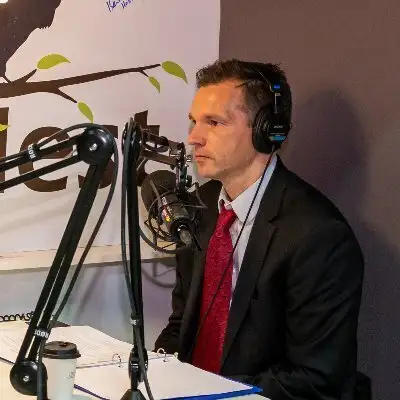
With that said, let's get into the first episode covering Thor's Hammer 2026. I begin by sitting down with AOC board member Eric Bamford and Lieutenant Colonel Froda Ringdoll, the Thor's Hammer trial manager. I then sit down with representatives from Sweden and Denmark. So without further delay, let's listen into my conversation with Eric Bamford and Lieutenant Colonel Ringdoll. We are coming to you from Rena, Norway, the host of Thor's Hammer 2026.
I am very pleased to be with in the makeshift Barrack studio with representatives from the Norwegian Armed Forces who are are the gracious hosts of this round of Thor's Hammer. And we will get to them in just a second to kind of describe a little bit about what we can all expect over the next several weeks. Thor's Hammer is coming to you through from the end of May through June. ⁓ we are recording these episodes at the end of May during the setup phase where it's unclassified.
⁓ and we have taken a couple of days to go around all the various lanes of Thor's Hammer exercise. And I wanted to bring in the trial manager as well as Eric Banford, who is a board member of the AOC as well as a member of the Norwegian Armed Forces, to talk a little bit about what we can all expect. And then we will proceed to go through each of the lanes and I'll bring you interviews from some of the participants.
showcasing their technologies. So just to begin, I'd like to welcome into our studio ⁓ the representatives of Norwegian Armed Forces. ⁓ the first is Frodo, and I will let you introduce yourself because I as an American, I will butcher your name. And then we'll get to ⁓ Eric Bamford. So Frodo, well welcome to From the Crow's Nest. Why don't take a moment to introduce yourself?
speaker-1 (03:17)
Thank you so much, Ken, for ⁓ having this interview and visit this ⁓ very important NATO trial here at the Rena Army Cup. Back in ⁓ my airbase, I'm ⁓ the current commander for the Norwegian EW Center, where we normally program the most important things in the Air Force, the aircraft. But we also have a small team programming the operational software for.
our armed forces jammers and ⁓ we have three sections, two ⁓ at the Riga Air Station and we have also one ⁓ section in Florida ⁓ at Egglin Air Force Base ⁓ reprogramming the F three five mission data five.
speaker-0 (04:03)
Joining w us in the studio is a friend of the show, ⁓ also a member of Norwegian Armed Forces, as well as a board member of the Association of Old Crows, one of my bosses, ⁓ Eric Bamford. Eric, welcome to From the Crows Nest. It's great to have you back on the show.
speaker-1 (04:16)
Thank you. Good to be back as well. So ⁓ as you said, I've brought you to Norway to actually come and join us at Thor's Hammer twenty twenty six, because it's a great opportunity to get some publicity about the work that's being done on ⁓ countering improvised threats and just to get get people ⁓ or get the understanding of what this is all about really.
speaker-0 (04:40)
Great. So to begin, this is the sixth iteration of Thor's Hammer, the first one being in twenty fifteen, which was also in Norway. And so after eleven years, you it's returning to to Norway. and Eric, you have been instrumental in pretty much all of them, but you've been here since the first one. ⁓ could you tell us a little bit about the history of Thor's Hammer going back to twenty fifteen and and how this exercise has evolved over the last eleven years?
speaker-1 (05:07)
Absolutely. So we need to actually go further back than twenty fifteen. So when the Allied forces, the coalition of the willing in both Iraq and Afghanistan, and then the NATO operations in in Afghanistan kicked off and we faced the threat from RCIDs, we saw that the nations were throwing ECM systems into the operation area, ⁓ slightly uncoordinated, creating a lot of electromagnetic fratricide across the the operations that were going on. So NATO HQ, and I I'd like to just name drop somebody here.
Sam Henser of NATO HQ. He he contacted me and he said, ⁓ do you think it would be an idea to stand up a ⁓ NATO team of experts on countering RCIDs? Because we're struggling on how to get the nations aligned ⁓ and be more surgical in how they approach the threat. So ⁓ in 2011 we had an exploratory meeting in Warsaw where we then agreed across the nations to stand up the team of experts.
And ⁓ Thor's hammer is then conceived through the team of experts, which is currently then what is known as subgroup one. And we need we we quickly understood that we needed to ⁓ to start with field trials. We needed to get people out in the field, ⁓ understanding each other's systems, understanding electromagnetic collaborative environments, understanding how the threat what it looks like in the spectrum, how do we
increase our surgical approach to to ⁓ denying these threats to be initiated. So ⁓ it it took us about four years to get to the first trial. And then 2015, as you said, ⁓ the trial Thor's Hammer 15 was was held more or less where we are now, and it was only a six nation setup back then. It was Norway, Germany, Netherlands, the US Army.
Canada and Belgium, which was the kind of core team. And it's ⁓ so even though it was open to everybody to to join in even back in 2015, it was a small group that said, We would like to follow this approach. And we stood up a a partnership through a memorandum memorandum of understanding. So the sharing of lessons identified goes internal to the group of the less those that have signed the MOU, but the space
Spin-off is that we create a lot of lessons learned that we then share with the rest of the community. And that's that that lessons learned is by means of a standardization recommendation or a standardization agreement. So those nations, for the rest of NATO, they will not have access to the measurements, the analysis that lie behind and creates the lessons learned, but they will see the end result of that lessons learned.
So that's kind of the big benefit that we saw in twenty fifteen. And then it's kind of gone around the world, literally, with Torzama from from ⁓ Norway in twenty fifteen. We quickly moved into Sweden. Norway was a sponsor of Sweden getting into this group because they were still out of NATO or outside of NATO. And then COVID came. ⁓ we had to to slide from odd years because of COVID and we moved into to even years. And then in twenty two we went back to Sweden again.
Twenty twenty four US and I think that's been discussed on the show earlier on as well, and now returning to Norway. And just to mention that specific thing, you hear Norway's now hosted twice, Sweden's hosted twice, Australia and US. There are only very few places on planet Earth ⁓ where the governments will allow us to go and do something like this in a live environment. You cannot go and do this anywhere in Europe, anywhere in in the world really.
Having sponsorship by the by the nations of those four specific nations to to host this in future is very vital to NATO.
speaker-0 (08:59)
I want to bring in Frodo again. As the trial manager for Thorsthammer 2026, you know, Eric was just mentioning that, you know, at the end of each iteration of Thorsthammer, there's lessons learned and there's an evolution so that two years later you're you're kind of building on the successes from the previous two years. And so now we're here in 2026. What are some of the unique purposes of this year's trial in terms of as the trial manager?
What is the the overall purpose of coming together this year to focus on on some of the EW technologies? This is, and for our listeners, I wanna be clear that this is more of a test and evaluation exercise. This is not an operational exercise. So we don't have any sort of ⁓ live operational aspects, but they're you're testing equipment against various threats and so forth. So ⁓ talk to us a little bit about the purpose of this year's exercise.
speaker-1 (09:53)
Well again ⁓ for this exercise ⁓ since ⁓ Torshammer twenty four we have seen the the UAS drones in the war on Ukraine from Russians and the drone war and ⁓ to continue to build what we learned in ⁓ Torshammer twenty four in the US, considering the ⁓ effectiveness and compatibilities between ⁓ nations participating in Torshammer serious.
Meaning ⁓ when two nations standing beside each other we still don't interfere with ⁓ our systems ⁓ because there's an evolving threat out there in the electromagnetic spectrum and to continue to ⁓ build on this lesson learned from last time and ⁓ look into the new threats that's out there.
speaker-0 (10:46)
originally it really started as more of a look at RCIED's ground ⁓ EW. And now I as the war in Ukraine is is is continuing to to dredge on, obviously the counter UAS is is a a massive aspect to what the fighting over there. And that's that has ⁓ influenced some of the goals of Thor Sammer, particularly this year and probably the last year. So Eric, you you y do you have anything you wanted to add in terms of
The purpose of this year's exercise.
speaker-1 (11:17)
Absolutely. It's ⁓ I want to draw a red line between what we did in twenty fifteen. It's ⁓ we started off with kind of the nations being a bit skeptical because this was kind of highly classified. People people didn't want to disclose what they what their abilities were. But getting getting together and actually doing this has opened up a lot in terms of discussing in terms of creating a collaborative environment to to do this. But the thing is with with what Frodo said as well with with the Ukraine.
Our ability to to counter some of the improvised measures we see or threats we now see in the Ukraine, like the first person view drones, the switch to fiber optics and so on, creating that denied battle space through through denied spectrum. It really started in in in twenty fifteen for NATO with with Tor's Hammer. Our collective ability to to counter the cycles of improv improvisation.
on the threat landscape started then. So the baseline we we build at Thor's Hammer, because it's a baseline. It is not the final solution. It's the baseline of of processes. It's the baseline of how we define the threat, how we characterize the threat and how we build countermeasures to that threat. That started in twenty fifteen and is is still with us and it will still be with us to look at the current threats and the future threats. But I just want to want to say something I I probably
People will will disagree with with me on this one. And Frodo said, you know, the drone war in the Ukraine. I will I will challenge that and I will say that is it a drone war or is it is that only because that is the palpable thingy on the battle space? Because it's in reality, it's the spectral part of the war. ⁓ the evolution of the of the drone is the drones are fairly much the same, but it's the spectral part that's the dynamic bit of it.
speaker-0 (13:08)
So here at Thorsehammer, there's the the exercise is arranged with various lanes. And there's six lanes here. And we're going to go through most of them that are set up and and talk to folks that are showcasing and testing technologies there. I wanna spend a moment going through each of the lanes and what the purpose is, because this is very important to understanding how not just you're going to accomplish some of the goals of Thor's Hammer, but also how the interoperability and the collaboration works by going through these lanes. And so
I'll bring in both of you. I'll start with you, Eric. if we can go through how some of the lanes are structured and what technologies we would expect to see at going on over the next three weeks.
speaker-1 (13:51)
So again, just to t to go back to twenty fifteen and and how we organized the lanes back then, we we had two primary focuses in twenty fifteen. One was efficiency. At what range do you are you able to with your ECM system to defeat a certain device? The other one was compatibility. When you have two separate systems, they can be either within a nation or between two different nations, how can they both provide a an assured level of protectiveness?
Towards the platform they're they're attached to or the person they're attached to without providing a negative response on the neighboring system. so ⁓ efficiency and and and a kind of collaborative lane. That's where we kind of started out. And that is still with us. We are still looking at the the time same type of type of setup on the lanes. So you'll still see an efficiency lane where you can come and actually test and see how your your ECM
System can defeat a series or s a specific or a series of threats. And this all goes back to different philosophies of how you would defeat that threat. Will you will you mass energy onto the threats to kind of have a long standoff range? Or do you accept that there is a power deficiency in an ECM system compared to the totality of the threat landscape? So you need to be smart about how you defeat the devices and you need to understand.
What is the lethal range of the explosives or the the weapon that's attached to this RF device? And you you just need to survive this device. So there will be different approaches by the nations that go on these lanes as well. Compatibility is still out there as well. You will still see that there is lanes looking at compatibility between different systems. How do you pass another nation's convoy in theater without actually doing something in the spectrum that will take them, take their capability away?
And then of course there's the ⁓ the switch to more cellular cellular systems where you have third party infrastructure that supports the range ⁓ of the threats that needs to be defeated in a in a smart way. And that this is kind of where it g gets complicated in terms of identifying areas where we're allowed to go and do this stuff. So I think all those three concepts will will be visible to us ⁓ out on the lanes that we'll go and see the for the next day.
speaker-0 (16:16)
So Ferrodo, do you have anything you want to add in terms of what ⁓ we can expect to see at each of the lanes? There's some counter UAS lanes, there's a hardware in the loop lane, there is a a a shadow lane, which and then can you expound upon any in terms of how this is structured? Yeah.
speaker-1 (16:34)
We also have this all the air ⁓ threat looking into three G, four G, five G technology and threats in that area. we also have a lane seven using ⁓ sort of hardware in the loop testing. But as Eric said, ⁓ it's the new technology within ⁓ counter ID and ⁓ the country US. That's ⁓ it's the primary focus here on ⁓ the Torch Hammer.
speaker-0 (17:03)
And there are ten plus countries here this year. And then the exercise will go on for about three weeks, ⁓ and then four weeks, and then what are the processes toward the end that allow kind of the lessons learned to be developed and so forth? How is this information that is gathered through these four weeks finalized and shared with participants as well as all of NATO?
speaker-1 (17:29)
So ⁓ after each day the lane owners on each lane will have a member stick that have that they collect this data they have ⁓ collected during that day and they bring it in here to the Torchhammer Ops. By the end of the trial, that data will be shared with all participating ⁓ nations. This year there are ⁓ for instance two nations that ⁓ didn't have the opportunity to attend so they will not have this data.
So this is only participating nations that will have this data from the ec from this trial? So ⁓ I think ⁓ this too follows kind of a NATO concept. And we we actually when we started this in twenty fifty, we kind of looked to s subgroup two, which was the joint airspace or joint joint air platform self protection ⁓ working group. We stole kind of the processes they have.
Every day the analysis team will meet and they will aggregate all the data that's been c recovered through the day or or that's collected through the day. And then you will have variants of the report that goes out to the different participants. You will have an unclass that goes to kind of everybody to inform NATO HQ about the process or or or what we've achieved. You will have one report that is focused towards our sponsors. We cannot do this without sponsors. And in terms of sponsors, I meet military leaders.
That see the value of test and evaluation for the EW products that go into theater. And then, of course, you need to to feed the EW centers as well that are behind all the mission data programming or pr provide the the mission data. They need the raw material. They need, you know, they need to do put this into the equations and look at the next generation mission data file that they are producing.
So so you need to feed all these different levels with the reports you you you provide. But I just ⁓ you you brought up a question on on the different types of lanes and hardware in the loop is something that occurred when Thor's Hammer went to Australia. Australia brought in a team of scientists that offered a hardware in the loop where they did a literally they did a full lab setup in a field con under field condition where you could come and connect your EW suite
onto a lab system. And since they also provide Faraday cages, you could add bespoke threats into those Faraday cages that you did not have frequency allowances to go and do live testing against. So all of a sudden we we increase the value of this as well by adding that hardware in the loop. And you also said about something about the shadow lane. The shadow lane is ⁓ you can look at it as like like this. You need a
Lane that is in the RF shadow of everything everything else that goes on where if you have a malfunction on your system, you can go there and you can go live and you can do your own national measurements on your systems to figure out what's wrong ⁓ before you then re enter the serials that are run on the other lanes. So that's kind of
So I'm not sure if if there will be an episode or a or a interview at the Shadow Lane that is very dependent on somebody having a problem while we're actually here.
speaker-0 (20:47)
So just to wrap up this part of our discussion before we make our way to ⁓ toward the various lanes, Eric, you know, last week we were at Helsinki, Finland for AOC Europe. ⁓ the European defense market is going through tremendous growth right now as everyone is is awake and looking at the the security situation, not just, you know, with the Russian-Ukraine war, but around the world and and how conflicts globally
impact European security. And we've seen a lot of investment, particularly in EW capabilities throughout Europe. And I would imagine a large part of that is because of the great work done through exercises such as Thorse Hammer. Of course, there's also subgroup two that does ⁓ other aspects of EW, airborne EW, so forth. Talk to us a little bit about the way ahead coming out of Thorsthammer in terms of the broad the requirement
for Europe to really invest in this type of capability to improve and to to improve its security but also take its ⁓ military capabilities to the next level.
speaker-1 (21:57)
So I'm just gonna quickly draw you into two episodes you've had earlier on with ⁓ Brian Clark from the Hudson Institute. Fall of 25, you he came out with a report on exquisite high, high ⁓ value assets. And it's like he he questions whether or not the the high cost, high-value assets ⁓ actually is the right way to invest right now. And then you had recently another interview with Brian Clark on from the crow's nest where
You talk about there's no nothing gonna be a new nuclear bomb that kind of changes the entire market. It is the speed of adaptation that is kind of the ⁓ where we need to go. Thor's hammer is a very good good ⁓ approach to this. This is the speed of adaptation. It is how you take your current EW systems and reprogram them at speed with quality so that you actually can face that threat with with a and provide an assured level of k of effect. That said,
also kind of looking to the Ukraine and the U the European EW market. It is not the integrated EW suites on the high cost, exquisite platforms that's carrying the weight of the ⁓ of the fight in the spectrum in the Ukraine. It is the boxes that can be man-carried, ad hoc placed in a tactical vehicle and so on. That's actually doing very much of the heavy lifting. And again, going back to Thor's hammer, these are the capabilities that would then do the heavy lifting. This is where we
Currently see that while the Thor's Hammer community have been looking at how to operate in an A to A D environment like the Taliban and and ⁓ Al-Qaeda tried to create in Afghanistan for us because there is an analogy on the A to A D environment. They tried to to do suppress our movement. They tried to to deny us access to areas through the use of RCIDs. So the the Thor's Hammer community have been working on.
building capability to get get access to an A to A D environment. And it's different from the air air perspective of A to A D, but still the concept and the reprogramming cycle, the the approach of of being using adaptation, mission data adaptation to to create access, that is literally what we do at Thor Xamar.
speaker-0 (24:13)
Great. Well, gentlemen, thank you for taking time here at the start of the day to join me here on From the Crow's Nest. looking forward to the tour of the various lanes here coming up, and we'll be right back at with our first stop. Thank you very much. When we return, we begin our visit to each of the trial lanes to learn how NATO is investing in counter RCIED and counter UAS technologies.
All right, well, welcome back. At this time, I want to bring you my conversation with Frederick Jomsell from Sweden, who is located at lane one, which focused on hardware in the loop. So let's listen in. All right. For our next segment, I am pleased to be here with Frederick Jomsell. He is from the Sweden Swedish delegation. We are currently at lane one, which is the hardware in the loop lane. We just had a brief tour of the technology being demonstrated.
in lane one. And then we also were just at lane four, which was the shadow lane. And we'll get to that in a second. But ⁓ Mr. Jomsell has been is willing to talk to us about both of the lanes as we met him also at lane four as well as lane one. ⁓ and so Frederick, thanks for joining me here on From the Crows Nest. It's great to have you on the show. Tell us a little bit about yourself and the del is delegation from Sweden that you have here for Thorstheimer twenty twenty six.
speaker-2 (25:31)
Sure, thank you. Thank you for having me. ⁓ Frederick Jansel from the Swedish Armed Forces with the SWIUC, the Swedish Atomic Warfare Operational ⁓ Support Establishment. We're the ones ⁓ producing ⁓ mission fields for all different all the different systems. The Swedish delegation consists of two parts. We have one part with the test teams with the two vehicles and ⁓ man pack equipment, and we also have a team from our research facility that is here.
for developing and ⁓ understanding more about age wheel that we're currently trying to cure for Sweden.
speaker-0 (26:09)
Now we are in lane one, which is the hardware in the loop lane. ⁓ you're sharing this lane with Australia. But tell us a little bit about what is the hardware in the loop lane for those who wouldn't understand how this plays a role in live testing.
speaker-2 (26:25)
Loop lane is a lab setup with possibilities to recreate conditions that we would test in the ⁓ open-air test. In this case, we can have both ⁓ the trigger systems and the threat systems, the actual receivers, and introduce the actual jamming and having a setup that allows us to repeat the type of test that we do ⁓ over the air, but do we get doing it?
consistently and able to recreate specific scenarios, specific conditions, so we can compare different kinds of jamming systems and in our case ⁓ different types of load sets.
speaker-0 (27:07)
So you can put a threat system into a Faraday cage and run it and then you can test off of it or any system in there. Now, when you're testing out in the open range, for example, you're obviously encountering a number of different variables that you have to account for ⁓ to see how the system operates. But in the hardware in the loop, you could kind of control those variables a little bit better and come up with a stronger
controlled elements so that you can get a truer picture of what you're seeing either before you go out or after you go out if you wanted to test something out. So can you share with us a little bit about how that interplay works because the lab is obvious the lab aspect is critical for kind of tweaking certain variables. But then you have the live range activities that are also here that give you the the need to immediately adapt to changing environments from your experience in test and evaluation, how do those two aspects value each other?
speaker-2 (27:59)
I would say the possibilities used in in HR increases the the this cycle, how rapidly we can develop new mission fields and new s solutions to counter a threat. Before we had any sort of lab, if we go back to twenty five, twenty six, we did more or less all the testing over there outside, and you had to sit ⁓ in a tent or in a vehicle trying to come up with the the solutions and everything
takes so much longer to actually reach the results. You're able to perform hundreds of tests in the lab that would take weeks and weeks of ⁓ actual tests over the air. So we're we're able to speed up the process and sort of giving it a stamp of quality more or less. ⁓ so and then we can try with ⁓ over there and with all the sort of variables that you have with
Different antennas and shadowing of your vehicle and sort of different radio systems ⁓ or ⁓ perhaps other equipment for your EOD uses with the robots or the minesweepers and everything else, and then you can take what worked and what didn't, bring it back and add it to the module in your H reel, and then you can re repeat the cycle.
speaker-0 (29:20)
So one of the positive aspects of Thorsthammer and other exercises like this is the ability to get kind of third party evaluation or validation for for the your technology. Can you share with us a little bit about the importance of being here at Thorsthammer and interfacing with so many other delegations and what you can learn from each other as you're testing both out in the field and in the hardware in the loop lab?
speaker-2 (29:48)
Say it's it's priceless. The fact that you are able to meet other people, other professionals in this field, and having an environment where we can actually discuss things and trying to help each other with problems, everyone has the problem with the number of people that's actually employed and and and the resources we have. And when we face new problems, hopefully some someone else in another country has done this before or had the solution for it. And we can decline.
Increase the time it would take for us to develop something new with instead talking to three or four people that had done this before, that we have a cooperation with since years back. It's it's amazing and it's it allows us to as a as a group be much more effective with the our resources.
speaker-0 (30:32)
You know, from the US perspective, when we talk about coalition warfare, where it's always US and usually one or two other countries or whatever. And then you come into an environment like this and you see all the actors, all these other all the countries, ⁓ European countries, including Australia and Canada working together, it gives you a different perspective of coalition warfare from a European perspective. Could you talk a little bit about how
European coalition or European cooperation in EW has increased or changed and evolved over the last number of years with the Warse Hammer and other similar exercises.
speaker-2 (31:08)
Say the force hammer as a ⁓ enabler for us to do this kind of work in the field with actual kits and actual threats where we can have measurable outcomes. It gives us a lot, but it also just allows us to have this kind of network without as you say, it's not just one other country and a it's a meeting where you're supposed to talk about something for for a short or brief period of time. Here we're doing some field work together for weeks upon weeks.
And and we ⁓ we work together and we start trusting each other in a way that it's hard to get it in a s yes, a two days conference.
speaker-0 (31:47)
And I think what's fascinating is when you're out here, if you're just meeting some with with another partner for a couple hours, you can pre plan that down to the minute very easily. But when you're out here in the field for a month, not only do you accomplish what you're set out to accomplish, but you have plenty of time to also be curious. Yeah. From your perspective with the hardware in the loop in lane one here, what is it like to have other countries and partners come in and just have with that notion of curiosity, hey, what
we try something like this and having the the flexibility to adapt and just try things on the fly just because you have the environment, you have the ripe environment for it.
speaker-2 (32:23)
Again, it's priceless. Th the fact that we can we can have these sort of experts in the field. They're they're they're the one that everyone in the their government goes to. They're just showing up and and and says, Hi, hey, have you thought about this? Could you perhaps try it this way? And the fact that we are able to help each other that way, it's ⁓ yeah.
speaker-0 (32:43)
Now we just met earlier, a little bit earlier in lane four, which is a shadow lane. And now obviously everything works is working great. So there is nobody at the shadow lane right now, but you were you were looking scoping it out, but you're very familiar with how the shadow lane works. I want to just ask a couple of questions in terms of from your test and evaluation experience. talk to us a little bit about the role or the importance of having the shadow lane here and how is it used by the participants in terms of trying to
make sure to understand and address challenges that in they encounter over the month.
speaker-2 (33:17)
Say almost every country uses differently. The fact that it is an open playing field, you can use it however you like without any more restrictions than we have in any other lane. You're able to transmit your system as it would in the field. You can take in account what whatever you do with the different antennas. You're able to do field testing with trying three different antennas in the same position. You can change something.
And you can you're able to measure it over the air. You can and some of these things it's really, really hard to simulate. The the kind of sort of interference patterns that would occur, it's really, really hard to go to calculate, but you can you can try it and you can see how it actually pans out.
speaker-0 (34:01)
So so it's not just about addressing challenges then. It's also about kind of giving you a baseline if you in a clean environment, if you're gonna try something new, maybe try a different antenna, different distance between antennas or something, you can do it in a cleaner environment before you maybe go out to test. So it's not just trying to understand certain results that you're seeing ⁓ out in the field, but it's also just trying new things in in a cleaner environment.
speaker-2 (34:26)
Definitely or j not just clean it, the fact it's it's an I wouldn't say unrestricted, but a a a a fairly open environment. For example, we we are planning to use Shadow Lane ⁓ in the upcoming days to evaluate sort of interference between our current ⁓ ECM systems and some of the equipment for our EUD guys that that are currently ⁓ bought. And then this has to be tested somewhere and instead of
renting a really, really expensive facilities that's ⁓ that where you're allowed to transmit ⁓ within where you live, you can use this place and it's really easy and it it's gives us a lot of benefits.
speaker-0 (35:05)
Now, for our listeners, you know, the the shadow lane is an open space, but it's surrounded there there are a lot of trees on one side to absorb the RF signals. There's a lot of landscape on the other side that create an environment that allows you to kind of it would be as if you were, you know, the sun were shining onto a cliff side and it's casting a shadow on the ground. From an RF perspective, the environment at the shadow lane creates that shadow so that when you're standing in there.
you're not getting some of the interference, which gives you a little bit better picture of what you're seeing versus out in the out in the field. So just if you can imagine standing in the in a shadow under a cliff or something, that's kind of what we're talking about when we talk shadow lane. So we have about four weeks here, F Doorshammer. What are some of your expectations and what you're looking forward to over the course of these next several weeks?
speaker-2 (35:57)
Of course, ⁓ meeting some of the new people from other countries that's 'cause we still have some kind of new people arrive and and some older leave for better things. But we also have brought in our case a new system that we are planning to evaluate compared to our older ones. And we also are trying a few differences with our ⁓ current ⁓ field setup and we are wanna gain the confidence of trying out in in
tests done by other participants that what you thought thought about the third party. We've done our own testing, but it's sometimes hard to find your own faults. It's better to have someone else's tests in someone else's eye where we will be evaluated.
speaker-0 (36:41)
Yeah. Well, Frederick, thank you so much for taking time to join me. I'll let you get back to work. You have a lot going on today. I really do appreciate you taking some time to join me here on From the Crows Nest. It's great to meet
speaker-2 (36:49)
Thank you.
speaker-0 (36:53)
To wrap up today's episode, we turn our attention to lane five, which focused on counter-UAS technologies. Obviously, the war in Ukraine is driving investment in unmanned and counter-unmanned systems at a scale that we have never seen before. Throw in the evolution of AI and cognitive systems, and you have a global existential crisis not only contained to Europe. So it was great to see NATO countries working together, not simply testing in a real world environment, but trying new techniques.
To improve capabilities of existing systems. So, with that, let's listen into my conversation with Niels Hendricks from the Netherlands. We are now in lane five, which is the counter UAS, one of the counter UAS lanes. And I am pleased to be here with Niels Hendricks from the Netherlands. His team has brought a new mobile lab for field testing. Niels, thanks for joining me here on From the Crossness. It's great to have you on the show. Thank you. Tell us a little bit about yourself and your delegation here before we get into the technology that you're showcasing. Okay.
speaker-3 (37:48)
I'm part of a counter ID unit, so not counter UES. So it's also what we do here on this lane. It's also possible to do counter ID testing. ⁓ but main focus now I think is on counter UES during the whole exercise. ⁓ we are three guys from our bureau, from our counter ID unit, and we have some support from an engineer from our logistics and we'll get some scientists here next week that also support us. We need that.
speaker-0 (38:13)
Now you're one of the few people here who has been here all six Thor's Hammer exercise. Yeah. So before we we talk a little bit about what you're showcasing here, I want to get your thought perspective on from the first Thor's Hammer until now. Yeah. The evolution of the experience and the value that you've gained here at Thor's Hammer.
speaker-3 (38:34)
the value that we gained that's where we're sitting in in our van. So ⁓ the first Torse hammer we ⁓ had a Dutch test lane and a German Test lane test lane and a few nations. We brought a van but it was used for something else. We put some spectrum analyzer in it and used it as a a field lab. And after a few torch hammers we ⁓ well, the lessons learned gave us more ideas to have a a newer version of the van. So eventually we developed this van and are now using it. Mm-hmm.
And even the Belgium copied it and improved it even.
speaker-0 (39:06)
These exercises really help you narrow down your requirement, knowing exactly what you have so you can make the most efficient decision for what is best for your military security situation that you're trying to address. Yep. So this is a fantastic vehicle. Just for our listeners, because there is no video, I just we're inside of a a ⁓ a van. There's a cage right behind us with a number of different boxes, some computer monitors to our right, desk area. What is behind you then?
Walk us through some of the equipment that you use in a small lab.
speaker-3 (39:38)
Well, ⁓ at the bottom there's a switch so that makes it possible to connect all the devices to a PC so it can operate it from the van or even remotely out of the van by Ethernet. I have an IQ recorder so I can record signals and play them back with the signal generator I have here. I have two spectrum analyzers to monitor ⁓ during ⁓ our testing to see if the ECM is on.
Would be a shame if you do a test in the ECM, it worked doesn't work. So just do a health check of the ECM. And during the test, you you check the performance of the jammers and ⁓ and your trigger, of course. Further on, I have some advanced comps from Rhode Swatts to ⁓ simulate 2G, 3G, and 4G ⁓ network. And on the other side, I have a shielded box where the phone is in. We connect to the phone and outside is the part where jamming. I have an amplifier in here, so I can amplify the signals from a signal generator, a PC.
And we have a an under circle supply with a b extra battery. So if the power is cut down I can safely switch off all the devices.
speaker-1 (40:40)
The same.
speaker-0 (40:42)
So over the next three weeks, tell us a little bit about some of the experiments that you have planned to run to give you a better idea on how to defeat IEDs.
speaker-3 (40:49)
Well, we don't have all the devices that maybe it that are maybe a threat if you look at counter arch ID. Some nations brought those threats and we are able to test them. to test them at home. So that's a big advantage. Our system is ⁓ capable of doing counter ID and counter UES, so it depends on the threat of course. And yeah, that's what we're gonna do here. We're gonna ⁓ the counter US testing, counter arch ID testing. ⁓ and it's possible on this lane to do both. Together with the Belgians and the Germans.
speaker-0 (41:16)
Yeah. So Belgium and Germany is also in this lane. Yeah. and you've been working together on stuff with Thorsthammer. So talk to us a little bit about the value in terms of being able to work more closely with the co your coalition partners, not just Belgium and Germany, but the others here other countries represented here at Thorsthammer.
speaker-3 (41:21)
Several swords hammers.
Well, it's good to see that they have the same struggles that we have. We we it's nice to have the confirmation that ⁓ the things that we do aren't that bad. We're a small country. If we see the performance of for instance US or Australia, whatever big countries and they perform similar like we do, that gives us a good feeling, right? So we're on the on the right track.
speaker-0 (41:55)
Yeah. In a previous episode, ⁓ I was talking with one of my colleagues, John Knowles, who is the editor-in-chief of the journal Electromagnetic Dominance. We were talking a lot about how, particularly in Europe and the NATO countries, there's some very unique, exquisite skill sets that are possessed by our coalition partners that even you know, you mentioned the large militaries like you know, US or Australia, we don't even have that level of skill or technology.
What does the Netherlands bring to the fight in terms of your experience and your niche capability that you are very proud of from your military perspective?
speaker-3 (42:37)
We bought a new system a couple of years ago and I think we introduced it in Sweden twenty two tours the f during the first sort Torse Hammer. And now here during this torch hammer a several countries bought the same system. So for us there's a big advantage. Yeah. So we're trying that and thinking now ⁓ about setting up a user group, that particular system, to share l knowledge with each other. Because we are a small country, we can use all the support we can get.
speaker-1 (42:54)
Mm-hmm.
speaker-0 (43:02)
Yeah. Well, Niels, thank you so much for taking time to join me here on Fun the Crows Nest. It's great to talk to you and thanks for the the tour through the vehicle. Really looking forward to following up with you to find out how everything goes over the next few weeks and looking forward to seeing you again in future operations. Appreciate your time. Thank you. Thank you. That will conclude this episode of From the Crow's Nest. We'll be back in two weeks with more interviews from Thor's Hammer when I sit down with representatives from Australia, Denmark, and Norway. As always, please take a moment.
To review, share, and subscribe to this podcast. We always enjoy hearing from our listeners, so please take a moment to let us know how we're doing. That's it for today. Thanks for listening.
Last topic though.