Subscribe
Share
Share
Embed
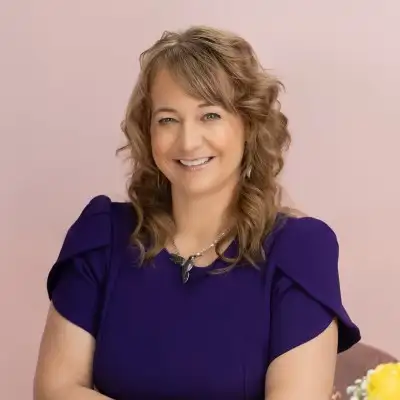
Welcome to "The Hummingbird Effect," a podcast dedicated to uncovering the subtle yet powerful ways that small innovations can transform your business. Hosted by Wendy Coulter, CEO of Hummingbird Creative Group, this show delves into the stories and strategies behind successful brand building.
For over 25 years, Wendy has helped CEOs and business leaders redefine their brands through innovation and compelling narratives. In this podcast, she shares the insights and lessons learned from her extensive experience, exploring how a strong brand orientation can significantly increase the value of your business.
Each episode features engaging conversations with industry leaders, business advisors, and innovators who have harnessed the power of branding to make a substantial impact. Discover how focusing on core values, mission, and vision can drive your brand beyond mere marketing tactics, fostering a culture that resonates with your audience and enhances your business's reputation.
Inspired by the concept of the Hummingbird Effect—where small, adaptive changes lead to remarkable outcomes—this podcast aims to help you understand and implement the incremental innovations that can elevate your brand and business.
Join Wendy Coulter on "The Hummingbird Effect" and learn how to evolve your brand, attract more customers, and ultimately enhance the value of your business through strategic branding.
[00:00:00] Wendy: Hi, everyone. I'm Wendy Coulter, president of Hummingbird Creative Group. Welcome back to the Hummingbird Effect. Hannah, how are you today? Good to see you.
[00:00:11] Hanna: Good, and glad to have you back. If you guys don't know, Wendy's been gone, um, vacationing in Hawaii, so
[00:00:19] Wendy: I had
[00:00:20] Hanna: finally back.
[00:00:21] Wendy: time in Hawaii. I saw multiple rainbows every day. Um, rain in Hawaii is not the same as what it is here. It's like this refreshing, wonderful thing. Um, and just saw all the beauty of the state. And so, um, it was, it was fun time in the islands.
So Hannah, I'm excited about today. Um, we're sitting down with a process optimization expert. We'll find out what that means. A powerhouse systematizer, and a true champion for business freedom.
And I know you've done your research, so you wanna tell us a little bit more about Adi?
[00:01:01] Hanna: Absolutely, With over 30 years of experience, you are the founder and CEO of Business Success Consulting Group. You, um, have masterminded transformative workflow overhauls, helped countless organizations document their core processes, and dedicated her career to helping founders build businesses that thrive independently.
But when she's not working, um, and turning these operational chaoses into streamlined systems, you... she wears a few other impressive hats. She's an author and international speaker, a passionate world traveler, and an avid reader who is always looking for new ways to learn and grow. In her spare time, she loves spending time with her husband and son and volunteering in her community. Adee is on a mission to help business owners stop carrying everything in their heads, and she's here today to share her insights on how capturing critical knowledge can create massive shifts in your freedom and growth.
So Adee, welcome to the show.
[00:02:02] Wendy: A fun fact, Hannah, about Ady is she's a trained industrial engineer, which is crazy. Um, but obviously the engineering is gonna play into her ability to systematize and create process and bring order and structure to businesses.
[00:02:19] Adi Klevit: Of all, thank you Wendy and Hannah. I'm so excited to be on the show, and I think both of you did a fantastic job of introducing and saying it very concisely to the point. That's what we do. You know, we work... I have a team that works with me, and we extract knowledge from people's heads and create that know-how that every company needs in order to thrive. And in order for the leader, the owner, and actually anyone in the organization, you can't be dependent on knowledge that sits in people's heads because you can't scale like that. So that's our area of expertise. That's what I figured out. Started this business in 2011. I was gen- I, I was doing general business consulting, and I would tell my clients, "Hey, you need processes.
You need processes. You need processes." 'Cause we all know that. We need playbooks. We need to know how the business run, because if you wanna open another location or you wanna scale or you wanna grow, you gotta have that training that you can give to somebody else, or you have to have that consistency. And I would say, "Yeah, you need processes," and it would be week after week. And so I said, "Okay. Well, how about if I do it for you?" "Really? You can do it?" And then I saw that niche of entrepreneurs are not go- and we can go over, like, why they're not gonna document, but it doesn't happen very often, but they need it and they love it when it's done.
So that's really how I discovered that niche. And yes, you're right, as a trained industrial engineer, um, putting order in businesses and organizing was always what I gravitated towards
[00:03:57] Wendy: Awesome, I've been thinking through SOPs a lot lately, as Hannah knows. She's been writing one in her space. Our creative team is working on one in their space. I've got a Word doc here, and a Word doc here, and a PowerPoint here, and a this, that, and the other, and a you know, a management system, and a financial system, and an HR system.
And, um, I wish I had like one place that was easy to put everything and organize it and revisit it, I think is the hardest part. Like, as things are changing, how do we remember to change the SOPs and make sure that they stay up to date and all of that? So what you do, I think, is so important because I think you probably help people stay on track with that over time, not just writing it and it's done, right?
'Cause I've been in business for 30 years myself, like everything's changing around me every day. Um, and so I really, really see the value in what you're bringing to the table, and thank you for what you're doing for business leaders.
[00:05:03] Adi Klevit: Thank you, Wendy. Yes, it is one of our key, um, principles. So a thing that I talked about a lot is the single source of truth for exactly the same reason that you just mentioned. So when you're documenting, and I say it all the time, don't document for the sake of documentation. If you're not gonna use it, don't waste your time documenting. So that's why if you're documenting, you have to make that commitment that you're gonna implement it, but in order to implement it and use it, you have to have it in one place that is the single source of truth. So everyone in the company will be able to see that that is where... This is the official way of doing things, right?
This is the official way on, of how to do a certain thing or to use that standard operating procedure. And yes, once you have it in a single source of truth, maintenance is a key component as well. Processes have to be revised, reviewed, and utilized. And a revision can be event-driven or time-driven, meaning there can be an event of you just something changing the software you're using, or you decided internally, I'm not doing it anymore.
Okay? So let's say you always started your podcast one way and you decide, "Okay, I'm not doing it anymore." The SOP about how-- the pros- the podcast has to change, but it's event-driven. Time-driven is when you will look at every three months or every six months, you're gonna rotate and revise your standard operating procedures, your processes to make sure that they're up to date
[00:06:35] Wendy: Yeah, love that. So let's transition into a hummingbird effect. Um, you got kind of the premise of the show, which is our belief that marketing and branding shifts that are small can lead to really significant and positive results for other areas of the business. Um, so talk to me about when you've seen, um, a, a, a marketing or branding strategy that led to a significant positive outcome or results for a business in a different area.
[00:07:10] Adi Klevit: Sure. I mean, you know, I can talk about myself. I've seen it, and then I can give you other examples. But when we recognized that what we are doing is we're not documenting processes, and people will look at me and go like, "What? You're not documenting processes?" I go like, "No, this is not, not the business we're in."
It's really about empowering business owners to achieve the freedom, and the freedom to create on other aspects of life, other aspects of the business, and empowering teams to do what they are supposed to be doing. So once we recognized that, it shifted our viewpoint, it shifted what we are doing, and it shifted how we approach clients and how we approach projects. It was a tiny shift, so that's why I completely agree about the hummingbird effect. This was a tiny shift, and then it became from a dry subject of, yeah, we're gonna document your standard operating procedures. It was like an avalanche of making a big effect all the way through... Now I'm publishing my book.
It's called Stop Carrying the Business in Your Head, and it's all about transforming the m- It's a mind shift that you have to change, like a shift in how you think, how you look at things in terms of you can't just hold all that information in your head. And standard operating procedures are not a luxury and something that you maybe one day will get to. It's actually something that every business needs because that knowledge is the real glue of the business. It's the real asset of the business. And especially now with AI, you don't want a business that is the same as everything else that, you know, the SOPs are just gonna get spitted out by a machine. Yes, of course, we use AI, and you can use AI to help you, but who you are, your identity as a business, 'cause the business has its own identity, it's the know-how that got accumulated after years and years of hard work, or maybe you bought a business and it has that, or you developed it somehow, and that cannot be lost. You see, the effect of getting to that big picture started with really honing in and understanding what is it that we're here for, the purpose, and that creates a huge difference
[00:09:31] Wendy: Yeah, and you get to the whole point of branding and branding being around the purpose of a business, the core values of a business, how you're going to really help someone, um, as opposed to what it is that you do every day as your services, right? And really unlocking the key to that is, is a great thing.
So talk to me, um, a little bit about how you implemented that change in your messaging, how you're measuring it, and how you see that that has led to more success for your company.
[00:10:05] Adi Klevit: Yeah, so that brought us to rebrand, change the messaging on the website, and we really realized that, you know, we wanted to know what is our message, what... who... first of all, understanding who are we talking to. So we realized that we are talking to fast-growing companies that are lacking consistency. Small sentence, but that really directed us to then reach out to those companies. So that's huge. You see, it's another effect. Once you understand who is it that you are talking to, then you're talking to the right people. So that will be an example of instead of talking to people that do not match who we need to talk to, we talk to our audience.
So that's one thing. Another thing is creating a message that resonates with whom, with our audience, with whom you want, we wanna talk to. So that's why we revamped our website, and everything that is there has that messaging of we, we fi- we surveyed 100 entrepreneurs to find out what is it, why systems are important to them, why processes and procedures are important. What do they want to achieve? Because that's what we wanna give them. We, we don't wanna give them a playbook. Yes, we are gonna give them a playbook because that's how they're gonna achieve what they want. But what we wanna really give them is that freedom, the freedom to create, and we also wanna measure it.
So when we start an engagement with clients, we always tell them, "Okay, we are gonna measure. Like, we are gonna help you do... create your processes, and we are gonna help you make sure that they are implemented by everyone." But you're gonna invest money. It's not cheap. It's gonna be an investment, and you have to invest time, and you have to invest yourself into the process because it takes time, and it takes effort, and it's not, it's not something you do just in an afternoon But we wanna see the return on investment.
So if you're gonna invest X amount of dollars, we at least wanna make that multiple. And what is it and how it shows itself, like how are we gonna recognize that? So I'll give you an example. For instance, we're working with a construction company. They had a problem where they would finish a project, but it won't be done because there would be a callback, and they had to go back and repair something. Well, those errors are costing money. We translated that money of how much those errors actually cost, and we go, "Okay, so the first thing we're gonna do is we're gonna concentrate on fixing your processes and teaching and training and empower your employees to use those processes so those errors will go from, let's say, 10 a week to zero." Good. So that's our measurement of success. But you see, if we didn't have the brand, if we didn't have the purpose, we wouldn't get there because then we would falsely think that what we... once we are providing a binder or an electronic binder with a bunch of processes, that's enough, but it's not. So that is an example how it shifted also internally who we are and how we approach working with our clients
[00:13:11] Wendy: Well, and it's great that you are approaching it as when our clients have success, that's our success. So we met-- You know, you're measuring your own success on your clients' success, which is awesome. Um, talk about did it change your culture? Did it change your morale? Did it change your people and the way they approach things to better understand your brand in this way?
[00:13:36] Adi Klevit: Yes. Um, we s- we have consultants and technical writers that... Basically, we have consultants that interview the client, extract the knowledge, and then we have technical writers that are providing these wonderful manuals, online manuals with videos and screenshots and writing and all kind of... I mean, we use all methods of learning. And when they hear the success of our clients, you know, we stay in communication with our clients, and we wanna know, we-- 'cause we take the full responsibility. We wanna make sure that those processes are actually being used. And when we hear two years later from a client, "Yes, I expanded, and now I'm opening a new division of the company, and we're still using those processes, and I now have an internal person that is revising them and reviewing them, and thank you for all you have done," and we share it. We share it in our internal communication system. We share all those successes. That brings the morale up tremendously. When they see-- When the person that contributed to creating that playbook sees the final results, it's huge. So when you ask me also how the brand change affected things, so it's affected externally, but it's also pretty much affected things internally. It's also affected who we are hiring because we realized that throughout the process of doing the branding, we realized that our key competencies, who we are, we are intelligent communicators, we are driven, and we are competent. So when we are looking for somebody to join the team, we are looking for those key competencies or these key characteristics because that, that's our brand.
Our brand is not just external of how we present ourselves to our client. It also has to be with our internal staff because that's what represent our brand.
[00:15:27] Wendy: Love that. Love that. Um, any other unexpected outcomes that you, that you've experienced as the result of changing the brand?
[00:15:38] Adi Klevit: I get definitely compliments on it, which is great, and I feel proud o- of it. In the past it would, "Oh, I don't like the logo, I don't like the na- I don't like z- z-" But I have to do it anyway. But now I... It makes me feel proud, so it makes me feel more willing to reach out there and promote. 'Cause that's what we need to do.
I mean, that's what... We have the marketing, but we have to promote that marketing, right? We, the marketing creates all the assets and putting things together and how we package and how we present. But then you have to communicate it out. You have to communicate it out in volumes, otherwise people are not gonna know that you exist.
And when you have something that you like, and that you have high affinity for, and you look at it and it makes you smile, then you want to tell about it to others
[00:16:24] Wendy: Yeah, it's like a snow, it's like a snowball effect, right? We've gone from a hummingbird effect to a real snowball effect when it comes to just having pride in that brand, and everyone wants to communicate it in a bigger way, right? Um, I love that. So talk to me a little bit about what you feel like you learned from this hummingbird effect that has been created, and how it's gonna change your approach to branding and marketing in the future
[00:16:53] Adi Klevit: Yeah, I learned that, um, you have to be very precise. You really have to understand. You have to, to start from the basics. You have to un- start from a point of really understanding who you are, your identity as a business, what is it that you're there to achieve, what's your purpose. Without those foundations, just like anything, like the same thing applies to documenting processes. We gotta... When we go to a company, when we start a project, we have to understand what the core values are. What is the vision? What is the purpose of that business? What is the mission? Who are the people that are involved? Because we have to write in that voice, in their voice. We have to create a level of documentation according to their belief system, according to what they want to achieve. The same thing translates to marketing, but I would say that I knew that that applied to marketing, but then I learned that it also applies to what we do. So I basically took it from marketing to operations to do it the same way. But it all starts on the foundation of who you are, and that is why I also believe that that is our uniqueness. And again, I mentioned AI. I'm sure you run into it all the time. You know, we use AI all the time. I definitely on the forefront of understanding AI, using AI, but AI is not gonna replace our identity, and that's the thing we need to remember because even in... For me to use AI, I created multiple documents that explain who we are, what is our voice, what is important to us, what are non-negotiables, how do we come across.
You know, all of that, all of that identity of a business is so important. So to answer your second question, how does it... How am I carrying into the future? This is how I'm carrying into the future, by really honing in on our identities, so everything that we put out there is in alignment to our voice, to our brand message, to what...
how we show up, what do we want to... what we want others to look at us as, et cetera.
[00:19:04] Wendy: So I'm gonna go off script for a minute with you, Adee, and ask a question that I don't ask every guest. Um, but you've been in business for a while. Like, I'm looking at your background. Um, you've had your business now for over 15 years. Um, what was the aha moment? 'Cause it sounds like you just recently rebranded, um, and kind of had this, this aha moment of we really need to understand the target market.
Looks like you did a lot of deep dive to get to a place of understanding who your target market is in a way that I think evokes a conversation in a meeting as opposed to just, "Oh, it's anybody who doesn't have their processes developed," right? So you've gone, like, really deep with that. But what was the aha moment after, you know, 15 years, and maybe it wasn't after 15 years, but after quite a number of years that made you go, "Oh my gosh, now I understand what I need to do with brand and marketing"?
And, and was it like a big aha moment for you, or was it a more gradual change over time? Just talk to me about that a little bit, 'cause I think business owners could learn from that piece of, um, like really understanding more deeply what brand means other than it's my logo and my company name, and what kinda got you there?
[00:20:38] Adi Klevit: It's a great question, and it's the same question that I would also... Again, I'm paralleling it to what we do. It's sometimes we get businesses that have been in, in, in business for 16 years, 20 years, and then they decide to write all of their processes. It's not like they didn't have processes before. So we had a website, we had a logo. I did have somebody design the logo and create some sort of the, of that brand. So it's not like we didn't have anything. So it wasn't like overnight. It was definitely gradual. So just like a cycle of life, you know, I think there is a cycle of a business. So if we take the analogy, probably tried analogy we used many times, but let's say, you know, you're a new in- a baby, a toddler going to kindergarten, then you have your teenage years, and then you really, like, you know, it's, it's kind of like you grow up.
So I think it's growing up as a business. So it took... You know, I'm now talking, I'm thinking, okay, it's a chicken and egg. I mean, you know, if we would've done the branding before, we probably, um, could have gotten there faster, but hindsight is always 20/20. So for our listeners that are listening to this, I...
If you wanna learn from mistakes or learn from advice, definitely the time to re- to brand, to, to understand your brand, your identity, and especially use professionals like Wendy, is now. Because it's... There is no point in just letting time go, but it's sometimes hard to see that, right? I mean, this again, the same thing I see with people ask me like, "When do I need processes?"
Well, you need processes from the beginning. Am I gonna be the right fit from you from the beginning? No, because you probably won't be able to afford it, and you have to grow the business. You gotta get some leads, you gotta get some customers, you have to figure out what is it that you are actually delivering, get to some maturity there. Then definitely call us in because at that point, you either know- don't know how to pro- document your processes or don't have the time. I think the same thing with branding. I needed to, to have that. What prompted me to do that is figuring out, okay, this is our area of expertise. This is what we do very well.
So then I figured that one out, and the team started growing, so I was hiring more and more, and the team grew and grew and grew, and I was just like, "Okay, so now it's a real business." Because I think every entrepreneur had that point where they go, "Okay, it's not just my hobby now, it's a, an actual business. Let's give it an identity." So it was the going back and forth on that until I decided, okay, that's it. This is the time to do it now and revamp the whole thing.
[00:23:17] Wendy: Awesome. Um, so we're in a really fast-paced business environment. Um, you know, you've been doing this for 30 years, had a business for over 15 years. Um, what have you seen that, um, would help listeners understand how companies need to stay nimble and adaptable, um, in order to capitalize on potential hummingbird effects like this?
[00:23:46] Adi Klevit: Yeah, you, you gotta underst- again, it's going back to the basics. You gotta understand who you are, and then only take things that align with that, with your vision, with your mission, with your core values. Don't go chasing shiny objects, and having a good brand will deter you from doing that. Now, I'm not saying don't start something new.
I'm into new ideas. I like... You know, I'm a visionary. I mean, although I... I mean, I, I like processes, but my really superpower is the, is that looking at the big picture, understanding, having dreams, imagine, absolutely 100%. But it has to be aligned to what you're doing. So by having your brand, then if you have a new idea, you can ask yourself, "Well, does that align with my brand?
Is that gonna expand my brand or not?" If it's not, then go start another business. You know, that's why I started another company, totally... I mean, it is related, but it's not, it's not what I do here in terms of processes. So that, it will gi- it gives you the ability to decide where does it belong, but it also keeps you going straight ahead towards success.
[00:25:02] Wendy: Awesome. So Hannah, I know you've-- I've seen you typing a little bit. I know you take frantic notes during all of these calls. Um, do you have any questions for Ade around what she's talking about?
[00:25:15] Hanna: I don't have any questions. I think that something that she's very good at is explaining, and she has put that superpower into her job and what she helps other people do. So if you haven't heard that before, you're a very, very clear explainer, and it was very eye-opening for me 'cause we, we talk about this all the time, and it was a good thing to hear that you have to do it.
You can't keep putting it off, no matter how hard it is. And Winnie kind of touched on it. We, we know we need to make the SOPs. We've started making them, but, you know, we, we have to set the time aside to do it 'cause they are important, and it does help everybody to know that knowledge. So no, no questions there
[00:26:02] Wendy: It's that consistency piece, you know, um, that you even talk about, Adee, is people are not very consistent in general, right? So it helps with that with the brand. Um, so let's, let's go down the path of, AI a little bit, um, and innovation and experimentation, and you and I are both, like, we're all in that world now, especially as service providers.
Um, we're, we're having to be on the leading edge of AI, although I don't know what that means 'cause it'll change in 10 minutes. Um, but talk about how you feel AI might have impacted the process that you went through with your brand and your marketing today. Um, you mentioned that you need to stay true to your voice, and I think that's something that, you know, we're helping people learn how to create prompts around tone of voice.
Um, but talk a little bit about that in, in your world, in your business, and how you see AI failing if it's not done well, and then how you see it really helping, um, in this area of business.
[00:27:25] Adi Klevit: Sure. So, you know, there are different aspects of it. I mean, what it means for me to be on top of it and to be at the forefront, you're right, it can change in 10 minutes. But I think it's more a mindset of the willingness to learn it and to, to change what you have done 10 minutes ago. You know, that's, that's...
I mean, I know we are exaggerating, but I think if you have that willingness, if you don't hold on to, "No, this is the way..." Otherwise, it's not gonna work because we can't resist it. That's the main thing. It's like, it's like observing, knowing, seeing, and not resisting it. Now, also being... I mean, the thing that for me that is very true, and you have to use self-discipline in order to do that, is not just like, oh, that was easy.
I have an output of something, and I'm just gonna send it out without reading it, without actually looking at it. And it happens to me, I'm sure it... I'm, I'm curious if it also happens to you, Wendy and Hannah. You, you read something that came out of the AI, and you go, that sentence, not quite, but I don't have the time, so I'm just gonna send it out, right?
So I think that self-discipline of like, hey, this is not my voice. This is not something I would ever say. Sometimes I read things that it's not something I would ever say, but it looks, I mean, actually great. I learned something from it. But sometimes it's kind of like, I would not say that. So having that discipline of like going back and correcting it and changing it, and having that, not becoming lazy of just putting out there whatever comes out because that is a problem. And I'll, I'll give you an example. We were, um, you know, one of my staff, she put out an... I, I wanted her to write an email, and then she showed me the draft of the email, and it says like, you know, as an HR company, blah, blah, blah. I said, "Wait a second. We're not an HR company. What is written here?" Right? So it's kind of, it's...
You gotta, you have to have that quality control. I know we say that, but we gotta execute it. And I think that is where we have to maintain that integrity and that self-discipline to actually do that and not just send out whatever is being said. And if it's not your voice, you don't communicate that way, don't put it out that way.
I mean, unless you wanna... That's the image you want to, to create. Because you can ruin your brand more than you can help it if you don't take the measures to Continue with writing your brand. But I think b-by having your brand very well defined, then you can create a voice, you can create... Like we created a custom GPT that has our voice, and that's our copy. We'll go through that, but we still, we'll-- we are the ones who are driving the ideas. We also have policies on how to write prompt, and you have to write in your prompt what is the final thing that you want to achieve. How do you want the reader to feel? How do you want this? How do you want that? And actually say it, and then say it in your voice.
I mean, when I write prompts, I mean, when, when I write using the AI, I say, "This is-- I want it to sound like me," and I define what me sounds like, and it already knows because I have so many documents about that. So I think that is very important. Then we can use... Because we can't lose our cre- our own creativity. AI is a tool. It's like a brush that a painter will use. The brush is not going to paint. The painter is the one who is going to paint, but the brush, they use the
brush in order to paint. AI is much easier because it has the ability of putting something without you moving your, your hand and actually painting. But you have to remember that that creativity has to be there.
[00:31:09] Wendy: Absolutely. Absolutely. Um, well, any, any other recap, Hannah?
[00:31:15] Hanna: Yeah, no, I have a recap of everything, and I feel like we could talk about this AI conversation for quite some time. Even that with like, every time we talk about it, there's just a different perspective that you get and you learn from, and I, I like that analogy of it being easier than a paintbrush, and we forget.
And proofreading, if it's not your strength, then just reading an AI output's probably not gonna be your strength either. That's why you get that message that says HR. So
[00:31:47] Adi Klevit: Yeah, and,
and you
know, it's, it's, it is a conversation that has to be had because I think us as entrepreneurs are going to shape that, and it's what is important for us and how we drive it. And I think also using professional services... I mean, I don't think just professional services are the ones that are affected, but in the beginning it was like, "All right, the AI is gonna replace everyone." Well, the AI can do my branding. Well, you know what? It can't, because it can only give you suggestions based on the data that it has, and if you do not personally have the ability to look at it and decide what is going to forward your brand, it's just not gonna work. It doesn't mean that brand people or that companies that do branding, right?
I mean, Wendy, you know, you will still use AI... We use, we use AI internally,
but you need to know how to use it. And I like to give the analogies, you know, the way that taxes are being done right now by your CPA is totally different than, let's say, it was done even probably like 10 years ago, okay, or 50 years ago. I... But it doesn't mean the CPAs are, are charging us less. They just have more time probably maybe elevate themselves and give us advice because they have the software. It doesn't
mean that now I'm gonna go get the software and I'm gonna file the taxes myself, you know? So there is that, um, understanding and there is that human element that you can actually talk to somebody and understand it.
And it's also one of the things that makes professional services in an AI world better is because what does it mean to be on the forefront of AI? Is that you know all the tools that are out there. If I try to create my own marketing, I maybe know ChatGPT and Claude and, you know, whatever. But as a professional, we're trying to...
We learn... Let's say for instance, there is a software out there that can help create workflows better. Good. So there are 10 of them. We're trying to investigate each one, what it is, try... I mean, get ourselves very familiar with it so you don't have the lear- so if you use us, there's no learning curve. We can just teach you exactly what you need or we can use it and it saves time as well. And I was just talking to somebody the other day and she showed me a diagram that she wanted to have, and she goes, "I spent five hours with the AI back and forth, and I couldn't do it. I mean... And then I got frustrated and sent it to the graphic designer to handle it." As an example, right? So it's, it's how much time are you gonna spend yourself? What is the expertise? I think we are all morphing. You know, it's, it's a, it's a lot of changes, so we just g- need to figure out what it is and we'll get to that. I don't know. The new normal is probably farther away because of all the consistent changes all the
[00:34:25] Hanna: Yeah. I think you said something really important in there of that it's pulling the knowledge it already has. So if you're referring to AI and branding, that's the piece that really, like I really think people need to hear. This already exists somewhere else. You are not getting something unique and truly your own, and so just keep that in mind.
Like this, this is from somewhere else reformatted in a different way, so you have to overlook that and know- or not overlook that. You need to pay attention to that and know that that's the output that you're getting, and that's how you're gonna be putting your brand forward to other people. So that was a really
[00:35:04] Wendy: and you have to give it enough new information, right? Like, you still have to do the work around who is the target customer? What makes us different? What is our promise? What are our values? You still have to go through all those activities in order to give AI more information than what they can find that's
[00:35:26] Hanna: Yeah. It doesn't know what's in your head. Full circle
[00:35:29] Adi Klevit: I, I think people are, are, will be more and more wanting to hear that because, I mean, I know that I read emails sometimes and I go, "That was written by an AI." I wanna know how much... how you actually feel about it. I don't need that glossy, you know, no emotion because then I can an- I can put this in my AI, my AI will answer your AI.
I mean, you know, I had those conversations, and we all did. But if you really wanna know, like, what do you stand for and who you are, you know, because the AI also doesn't have those emotions, and they don't care. I mean, that's the, that's the simplicity. It doesn't care. You know, as an example, you were talking about rain.
It's raining here a lot. I mean, there was also a storm. I was driving today, and you know that eyesight in the car, you know, that, that blinks like when you have a car to, next to you on the mirror, right? So it, it turned off because it happens when there is such a heavy rain, sometimes it gets confused. Well, that's actually happened. I was trying to, to back, back up and, and it was, like, beeping like there was a car, but it was nothing. It was just the, the rain was so hard. And I re- and that made me think, you know, we're so... getting so reliant on those machines, and if the machine turns off, it doesn't care.
It doesn't say, "I'm sorry, I, I can't..." No. "I'm not working anymore." That's fine. But that's where the human element is so important, and it's so important for us to really figure out. But it's also an opportunity because as a business owner, as an entrepreneur, this is your opportunity to shine and create that uniqueness that you have. So working with you, Wendy, in terms of, like, creating the, the brand, like, you can have this brand that is so uniquely yours, that 10 other businesses will have the same thing that came out of AI, but you have your own. It's gonna make a difference, and that's where you're gonna shine, and that is really the hummingbird effect.
You know, that is a hummingbird effect in a whole different way because you start and you think, "Okay, just... I'm just saying who I am or figure out myself," but then in the... That will create a huge effect because it will be that differentiation. And I think that is... Those conversations that we are having is so important to, to remind ourselves and to remind others of how important it is to be us using AI to the max.
You know, it doesn't mean it's not,
it's not- Right ... you're saying we're not gonna use AI, but, you know, be smart about it and be, be responsible about it and be you. Make sure that you are not getting faded or washed out in all this, um,
craziness.
[00:38:02] Hanna: We've talked a lot about AI.
Like I said, once we get on the topic, it's really hard to get off, but I wanna, like, take us back a little bit to the beginning of this conversation and to how we started and some things that I took away. Um, so what I was hearing and what I was learning from this is the biggest changes in your business start with something that seem incredibly small.
It-it's the hummingbird effect. It's what we talk about all the time. We talked a lot about getting knowledge out of people's heads. That's what you do. But I think a bigger lesson that I'm hearing and trying to learn from is what happens after you make that shift. Because once you stop looking at the knowledge as something that just belongs to me or just belongs to Wendy or just belongs to one person, you see the business differently, and you're able to start a-asking, you know, what if that person isn't here?
Wendy and I say, "What if we get hit by the little red bus tomorrow?" Um, what could someone else do if they had the same information? Like, how could our, my, our team empower us if they had the information that's sitting here? And what opportunities are we missing because everything still depends on just one person knowing how to do it?
Um, so that's how we start, you know, rippling into that change. And I also heard how the same shift in thinking changed the way that you looked at your own brand. So instead of trying to communicate with everyone, you got much more specific about who you were actually trying to reach and what mattered to them.
And it's just a really big reminder that clear-clarity is going to create opportunity for any business. You cannot be an answer to absolutely everything. Some people like dark chocolate, some people like white chocolate, and that just, you, you can't change that. So the more clearly you understand who you are and who you're talking to and what makes you different, the easier it's going to become to make decisions about everything else.
And then you talked about the construction company. That was a really good example. Um, it's just a great illustration of why these things matter. Sometimes something as seemingly small as a callback, which they're expecting, I mean, you do forget stuff, um, but it actually creates a really meas- I mean, it's a measurable financial loss.
It's something that you... It can be changed and it can be reversed, and you can save yourself money instead of just accepting something being an industry norm. Callbacks, you hear them all the time, but what you don't have to have them. Um, so once you can see the problem and define it and put a number against it, it wasn't just- I don't know, an operational norm anymore.
It became something that they could actually solve. Um, so that was something that was probably the biggest takeaway for me, is that you can't improve what you haven't taken the time to understand. Um, so
a note... Oh, thanks. Um, but just a kind of a note to everyone, whether it's your brand, it's your process, it's your people, it's the way your business operates, you have to go back to the foundations first.
Um, ask what you're trying to accomplish. Who are you serving? How do we actually get the things done, and where can we... Where are we creating unnecessary friction that literally doesn't have to... It doesn't have to be there. People don't have to go back. Um, those questions, I... You've, you've talked about it.
It feels basic. It feels like you don't have time to go think about them, but I think that that's always where your biggest opportunities are hiding. Um, so and so I think that that's the hummingbird effect that we've heard throughout it. It's not just one giant transformation. It's just a series of being intentional, going back and asking those questions and seeing, you know, what, what is spend...
We're sp- Where are we spending a lot of time? Where are we spending a little bit of extra money? It could be $30. Back to the callback example. It could just be $30, but $30 every single day for the entire year is a lot of money. Um, so just, you know, this, the little ripple and simplifying and asking those questions is super important.
So yeah. Thanks. Thanks. That was... I always love listening 'cause, and I say it every time, but I hear it from your perspectives, which are the business owner, and then they're me, who is not, and the actual process. I'm doing the processes of what you guys are saying and thinking, so it, it does make it easy.
There is less friction when you write down the process, and Wendy's now gonna end this and tell me to go write things down, so I think I dug myself a hole.
[00:42:46] Wendy: Well, no, you just did an SOP that was amazing, Hannah, and it actually,
like,
[00:42:52] Hanna: I thought you meant here. I was like,
[00:42:53] Wendy: see... Yeah.
[00:42:55] Hanna: No, I did. And
[00:42:56] Wendy: see that the process was bigger than I knew, and that was a big aha moment for me as a business owner. And so, um, I think I just totally derailed the conversation from hummingbird effect, but, you know, I think there's a hummingbird effect in that too, right?
Like, just the activity of, um, understanding what's, what's happening internally can make a big difference in the way that we are gonna go to market and do different things even with our marketing. And so, um, I love that.
[00:43:31] Adi Klevit: Oh,
It's been great. I really appreciate, um, you having me on the episo- episode, and I'd like to offer the listeners, um, a copy of my e-book. It's called Stop Carrying Your Business In Your Head. So, um, I guess we can put it in the show notes.
But- Yes
they can... The best thing is if you wanna text, our number is 503-662-2911, and say, "Please send me my book."
I will do that. Or you can also go to successreplicated.com, and you will have there, um, you can download... We have another e-book. You can download the e-book there, and we'll also send you this one, the new one
[00:44:15] Wendy: Love it. Love it. Thank you so much, Ade. And thanks to each of our listeners for giving us your time and energy today. I hope we brought you some joy through this episode and some insights, and take what you've learned today and go find your own hummingbird effect