Subscribe
Share
Share
Embed
OWN THE JET dives deep into the world of private jet ownership, operations, and the private aviation lifestyle. Whether you're purchasing your first jet, managing a growing fleet, or simply passionate about aviation, this podcast gives you insider access to the conversations happening behind the scenes.
We feature real owners, operators, and aviation leaders sharing their experiences, strategies, and lessons learned — from the flight deck to the boardroom.
OWN THE JET - the official podcast of Aspen Aero Group.
Website: https://www.aspenaerogroup.com
Facebook: https://www.facebook.com/AspenAeroGroup
Instagram: https://www.instagram.com/aspenaerogroup/
Linkedin: https://www.linkedin.com/company/aspen-aero-group
X: https://x.com/AspenAeroGroup
We talked to our student body about,
well, how could we trust
you to fly our airplanes
during the school day if
we can't even trust you
to tuck your polo
shirt into your khaki pant
and wear a belt, right?
But it's the smallest of conversations
that happen on an everyday basis
that helps to be the
foundational piece of our culture.
Welcome to "Own the
Jet" by Aspen Aero Group,
where we share perspectives
from some of the leading voices
in private jet
ownership and business aviation.
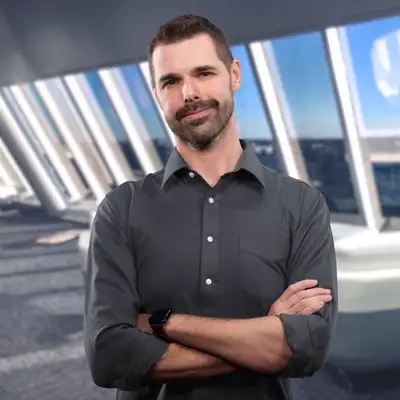
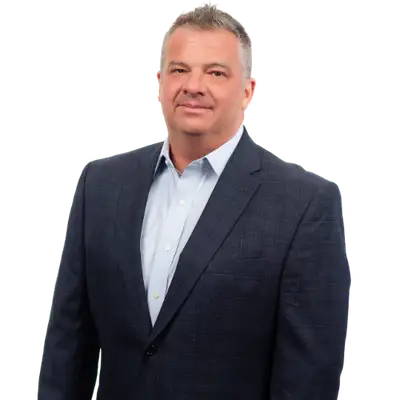
I'm your host, Derek Savage,
along with my co-host, Jason Spoor,
president of Aspen Aero Group.
Our guests today are
Nicole Gasper and George Pavey
from West Michigan Aviation Academy,
a public charter school in Grand Rapids
that provides an aviation
and STEM-focused high
school experience to students.
Join us as we dive deep
into the mechanics, mindset,
and moments that define jet ownership.
And together, we'll learn
what it takes to own the jet.
Welcome to a very special
episode of "Own the Jet."
We are on location
here at the Gerald R. Ford
International Airport
in Grand Rapids, Michigan
at the West Michigan Aviation Academy.
Joining us, I have Nicole, the CEO
of West Michigan Aviation Academy,
and George, the Dean of
Aviation and Engineering
here at West Michigan Aviation Academy.
How many times can I say that fast?
Welcome to "Own the Jet."
Welcome to "Own the Jet."
Thank you, it's great to be here.
We learned about WAMA through, Jason,
you had some
conversations with people about
the importance of education in aviation,
the importance of this school.
A couple of different things going
with this school and this area.
So I'm originally from Grand Rapids,
grew up not far from here at all.
And so growing up here, of course,
familiar with the DeVos family
and what they are in the community
and what they mean to the community,
as well as the aviation side of it.
So with WAMA, it's just
natural that I'd come back here
and wanna talk to you not only just
because of where you are
because this is Michigan, but also
because of this school
and what it means to
the aviation community.
So Nicole, please tell us what WAMA is.
So West Michigan Aviation Academy
is a public charter high school.
And we are located
right on the Gerald R. Ford
International Airport,
which is incredibly unique.
In fact, so much so
that when we were working
on our contract with the airport,
it took a little longer because they
could not figure out,
they couldn't find another
model like it in the nation.
Not only are we a high
school located at an airport,
but we also rent space or
lease space to a private company.
Okay, interesting.
So you guys came to the airport and said,
"Hey, we wanna have a high school here."
And they're like, "Who else does that?
"What's the model?"
And you kinda had to invent it.
Correct.
Nice.
So that was when, 2010?
So we launched in 2010, but then a
handful of years ago,
we added on this flight training center,
which is the hangar that
we also lease space to.
So backing up to that process though,
how did you show that?
How was that model shown to the county?
So we worked really diligently
with the Aeronautics
Commission and our airport partners
to figure out what needed to be in place,
both from a public school entity,
but also being right on the airport.
What were their needs in terms of
contractual agreements?
Nice, nice.
And now George, you come
from a military background.
Yes, I sure did.
Yeah, so can you tell me
a little bit about that
and how it led to this?
Sure, so I spent 20 years in the Marines
and had an awesome opportunity
to fly some really fast airplanes,
F-18s and F-16s.
Nice.
I happened to grow up
similarly in the state of Michigan.
It's a good state.
And in fact, one of my real
good buddies is from Lowell.
Oh yeah.
And he owns this-
I didn't know we were good buddies.
No, one of my good buddies.
(laughing)
One of my good buddies.
One of your good buddies, okay.
And about a year before
I was about to get out
of the Marines, he said, "Hey, they're
starting this charter,
aviation-themed high
school in Grand Rapids."
And for me, it was like, "Wow,
I could come back to
the state of Michigan."
I'd kind of been there,
done that in the military,
did what I wanted to do,
and then I'd be able to kind of come
and be a part of this team.
And so it's been fun ever since.
Yeah, so you've been here the 20 years-
I got here in 2012,
so about two years
after the school started.
Wow, yeah, that's quite the thing here.
What's the, because you're coming
from a military
background, you went to Top Gun.
I mean, you like
learn how to do this stuff
on the most professional
highest level that exists.
And now you're in an environment
with high school-aged people.
Right, right.
So I can imagine there's a little bit of,
I don't know, like I
remember being a teenager
and I remember what it was like
and not really caring as much.
Maybe that was just my experience,
but meeting the kids that go
here when we came in, right?
So we flew in to the airport
and immediately upon
meeting some of the students here,
they were like professionals.
They were young adults.
They were impressive to just
see the way that they behaved
and the way that they-
Maturing.
Yeah, the way that they approach things.
And they were working on
their projects and things
and we were going
through and I felt like I was,
like I needed to step up my
professionalism around them.
And I was like, man, they
really have it put together well.
What's the approach?
The approach there is
that like kind of backing up
a little bit.
You could imagine like active duty 20
years in the Marines
as a major coming into public education
was quite the transition for both.
Yeah.
And so a major Pavey
showed up in the classroom
quite frequently
actually back in the early days.
Okay.
Is that exactly like it's not Mr. Pavey.
(laughing) Is he here?
It's not Mr. Rich, this guy.
And so I think that in the early days,
like it was real important for us to set
that cultural expectation
of what aviation demands.
We asked, we're teaching high school kids
about both aviation and engineering,
but the real world application of this
has real world consequences.
Yeah.
When I talk to
parents, I remind them that,
from my military background,
you got really smart aerospace engineers,
probably PhDs, people way smarter than
you for sure, right?
Oh, definitely.
And me for sure.
And then you've got college graduates
that fly these airplanes in the military.
Yeah.
And then really you've
got like 19, 20, 21 year old
young adults in the military
that are fixing these airplanes.
Yeah.
And so after a military
career of really, quite frankly,
all of us pilots relying on young adults
to maintain those airplanes,
there's no reason why
high school kids can't do it.
And our philosophy is
that all high schools
are made up of teenagers,
but our high school
molds them into young adults
and expects them of that.
And so our industry demands that.
And so I think that's
reflective of what you all saw
when you arrived today.
Yeah.
Well, and just looking at the aviation
industry as a whole,
right, because we
talked to all kinds of people
in aviation and private aviation,
the show is own the jet.
We're talking to people about
what it's like to own a jet
and how to go about owning a jet
and all the people you need
to know as a part of that.
One thing that we don't talk about enough
is the people that it
takes to make that happen
from a standpoint of the
pilots and the mechanics
and the engineers and all of the people
that you had to rely on to
make sure that that jet stays
you know, airborne and going,
you know, accomplishing your
mission, so to speak, right?
There's a huge shortage of, you know,
pilots coming into programs
and, you know, every year,
more and more planes get built
and more and more planes go up in the sky
and we're having, you
know, more and more traffic
in the air.
And having a school like
this, I can see as, you know,
how to feed that industry,
how to make sure that
there are eager people
that are going into that career path
that otherwise might not have.
So how do you guys see
yourselves fitting into that?
We are poised to be a
learning institution
and we treat the entire campus as such.
And so everything we do
right from the very first time
we are introduced to
families, we talk about,
we are a place where we
help young people grow.
And we also expect
families to partner with us
to help raise their young people.
So it starts from just
the very first introduction
to families.
And then from there,
it's every single small act
that we do every day, all the time.
So examples include, thank goodness,
we have a school uniform.
Our students wear a school uniform.
And so we talk about the uniform
as being an everyday interview, right?
So we talked to our student body about,
well, how could we trust
you to fly our airplanes
during the school day?
If we can't even trust
you to tuck your polo shirt
into your khaki pant
and wear a belt, right?
But it's the smallest of conversations
that happen on an everyday basis
that helps to be the
foundational piece of our culture.
And so when we think about us as a
learning institution,
it's uniforms, it's are they
following the proper protocol
when they leave main campus
and walk down to the
flight training center?
Are they appearing to be helpful
when somebody needs to be helped?
Are they holding the door for each other?
Some of these skills that maybe have
disappeared in time.
Sure. Oh yeah.
You know, and another piece is,
how do they welcome
guests into our house?
We talk a lot about that.
How do we, as the WAMA community,
show that we have pride in our school?
And so we talk about
professional greeting,
eye contact, handshakes.
You saw that when you arrived.
It was great.
I mean, it was really impressive.
Is that like just interjected into
everyday all classes?
Or is it a class?
No, it's all of us all
the time, everywhere.
So it's just the culture.
It's the culture. It's just what it is.
Nice.
And obviously it starts
with our adults, right?
So again, everything
starts from the initial contact.
So even in our interview process,
when we're bringing new team members on,
it's being very clear
about who and what we are
as an organization.
We talk about our
mission, vision, and values
as our guiding principles.
And then making sure that people
that want to join our community
feel like it's the right fit.
Yeah, sure.
Nice.
So when this school started, 2010,
you weren't part of
that originally, right?
You came in to be CEO
a few years after that.
Can you tell me the story about that?
I had my life trajectory all planned out.
I had served as a teacher,
and then most of my
career was in administration.
And through one connection to another,
I had learned that
this position was open.
I wasn't going to apply because I had,
like I said, I had my life plan,
but I was intrigued enough
because I had heard
such wonderful things.
So I showed up, impromptu,
as a parent in the community,
which was true.
I mean, I was a parent in the community.
I didn't know anybody at the school
because I said, if I'm
going to even consider
changing my life plan,
I really need to get
a feel for the school.
So I showed up and was given a tour.
I didn't know anybody here at the school,
and I was absolutely blown away.
And I just kept saying to myself,
well, it's real easy for
people to put on a show, right?
We call it the dog and pony show.
But nobody knew I was coming
because I didn't even
know I was coming that day.
And so to be able to walk in,
I mean, you instantly feel the vibe.
You instantly get a feel
for what a place is like.
And I just left thinking,
I just couldn't believe it.
I just could not believe it.
Did you use your real
name or a student name?
No, I actually used my
name, but nobody knew me.
So it was fine.
Did you give the tour?
I'm curious though, like
sort of along those lines,
did the aviation have
any surprises for you
when you first took over as
CEO that you might recall?
Well, it's funny you should say that
because I think it was
either my first or second week
of starting, I was
invited by our Dean of Aviation
to attend a glider camp.
Oh, awesome.
Great.
So, of course I'm all in
because I need to show up that way.
So Mr. Pavey flew me out
in one of our aircraft
out to the Ionia Airport
where then he proceeded
to in front of the students
that were out there say,
well maybe Mrs. Gasper
would love to go in the glider.
And all the kids are looking at me and,
you know, what was I gonna say?
But actually it was amazing.
Nice.
It was very well
choreographed in the sense of
we took Nicole out, landed,
our glider instructors
were kind of sitting on par.
They kind of heard us showing up.
And we had a glider right there open,
canopy ready.
So as soon as they landed,
it was a total setup job.
And we were just like,
oh, Mrs. Gasper, let's go.
And like a trooper,
she just dove right in
and did it, it was awesome.
That's great. It was awesome.
And you haven't looked back since.
You haven't looked back since.
That's great, that's great.
Do you recall what I did to
you on the landing back home
when we flew back?
I made her land.
Well, not made her, Hatterland.
Hatterland. Hatterland.
Good.
Mm-hmm.
Such an experience for what this is.
Absolutely.
I earned my wings that day.
Did you?
Yes, and I usually wear my wings
on my school uniform every day.
Nice. Fantastic.
So just to be clear though,
this is not a private school.
It is not. This is not,
because you walk in
here and you get the vibe
that like, man, these
kids gotta be privileged,
they've gotta be rich, they've gotta be,
there's no way that
just any kid can enroll
and go to a school like this.
I mean, you guys have a hanger.
(laughing)
My school barely had a
gym, you know what I mean?
So to have the
opportunity to go to a school
that's got a hanger full of aircraft
and STEM curriculum
and aviation curriculum
and all of these opportunities,
all of these things that you
get to be a part of and to see,
that's just available to anyone?
Like how does that work?
We actually intentionally designed it
so that wasn't the case.
By being a public charter high school,
we can serve any student
in the state of Michigan
and we pull from
somewhere around 50 different
middle schools. Nice.
So our students
commute from about an hour
to an hour and a half in every direction,
coming from every type of
community, as you can imagine.
Our demographics of our
student body actually mimics
the greater Grand
Rapids area census data,
which we're really
proud of to include 35%
of our student body are female,
which we're really proud of
because we started with
about three females originally.
And when you think about
where aviation STEM themed school,
it's pretty amazing to
have that many young ladies
in our programs. Yeah, that's awesome.
Yeah, and I mean,
everybody gets the opportunity
to experience this. Absolutely.
That's something that's really unique
because I would, I mean, my
high school barely had a gym,
and it's like, here,
this one has a hanger.
So it's like, it's insane.
Thinking about that though,
if other states had stuff like this,
you'd have a pretty
good pipeline of new pilots
coming into the system.
I mean, wouldn't you guys,
is that not something
that other states do?
Are you guys the only one that do this?
Actually, there's a
fair number of high schools
throughout the United States
that do this type of stuff.
Not necessarily the way we do it.
Okay.
The AOPA, Aircraft
Owners and Piles Association,
have a high school aviation symposium,
which they hosted every year, probably
for the last decade.
And I've seen that
particular group grow over the years.
And so there are folks for sure
that are doing similar things,
just maybe not the way we do them,
trying to get kids excited
about what we do here
in aviation, for sure.
So I wanna go back to 2010.
And what was that
first year of school like?
Sure.
So I actually wasn't
here for that first year,
but it started in an office cubicle
up on a building up on main campus,
where they literally had to
like renovate the whole thing
just for a class of 80 students.
So right off the bat, it was,
we're gonna grow the school year by year
until we had a full compliment of
freshmen through seniors.
That first-
So it started with a freshmen class?
It did, 80 students.
And so now, as you know,
I mean, we're up to 620
students and 15 years later.
I tell people like when I showed up,
two years into it, it was exciting work.
When you grow from nothing to something,
and not just something,
but really something amazing.
We've grown, we don't
like to pat ourselves
on the back too much,
but the reality is like,
we've grown to be like one of
the number one charter schools
in the state of Michigan
in that amount of time.
So that growth process is just,
it was and is pretty exciting.
I would tell you that
when I first showed up,
kind of one of the first
questions I asked was like,
what are we doing in aviation?
And like nothing, like
when we first started,
there wasn't a lot of
aviation folks on the staff.
We may have been
clubbing teenagers over the head
with the Jefferson textbook.
You know what I'm talking about?
And so we went from that to, oh my gosh,
let's start an RC club.
Let's start doing aviation
with different activities.
Let's see what our curriculum looks like.
We have a lot of elective classes,
but when you decide to
come to the Aviation Academy
freshman year, you get a
semester of intro to aviation
and a semester of
aviation history and literature.
I call that triple F.
You know, you guys are in
the aviation community, right?
Oh yeah.
So you're all about that?
I learned a lot of
acronyms in this school.
But you've never heard of the triple F?
Well, I'm about to learn about it.
What's the triple F?
It's called forced family fund.
Nice, nice, nice.
So this is the concept behind it.
Is that like, you forget that.
I mean, at our age,
what does a high school freshmen really
know about aviation?
And so though it's an elective class,
they're all required to take it.
And so what that does
is it sets the foundation
for them to explore what
the different opportunities
within this industry are.
And so that's kind of where we started.
I think another fun story there
was like the doing of aviation.
I think Mr. DeVos had this idea, okay?
But like, you know, that
airplane sitting behind you.
Yeah, tell us about that.
Because you explained
earlier about the tail number here.
Yeah, so there's tail numbers,
but like the reality is
that on the early onset,
Nicole's predecessor and I,
we had this term it was called,
if there's no
friction, there's no traction.
Okay. All right.
And so I kind of got the idea.
I'm like, hey, we should own an airplane.
He wasn't really a big fan.
Really? Not at the onset.
And so I kind of kept pushing with him
and he and I worked really,
did some really great things together.
And ultimately I was like, hey,
I should be able to talk
to the aviation subcommittee
of the board to at least pitch this idea.
And what's really cool about,
and Nicole can elaborate on it,
but our board, okay, is a bunch of folks
and many of them have
aviation experience and expertise.
And though our previous CEO was awesome,
just like Nicole is in
all the academic side of it.
I can understand his
like, you're putting,
you're telling me George,
that we're gonna put a
high school kid in an airplane
and he's got to fly 10 hours solo
out of the second
largest airport in Michigan?
Now I understand.
Are you kidding me?
Yeah, yeah.
And liability nightmare, right?
Which fortunate for us
that our board subcommittee,
they're aviators.
And they're like, yes, we can do this.
And then I'll never
forget the board meeting
when we pulled the trigger and said,
we're gonna buy an airplane.
And that was our very first airplane.
And like you said, tail numbers.
And so our tail numbers do have meaning.
That one's particular
name is 910 Alpha Alpha.
Stands for ninth month, 2010,
which is our founding
year, Aviation Academy.
And so that's kind of,
that started the whole,
we're gonna do aviation.
It's gonna be part of our culture.
Right.
Now you still have that end number.
We do, yep, we do.
And then the other ones like--
Yeah, you have, well we
have this one right back here
behind us too, the 437TS.
And that stands for fourth
month of 1937, Peter Secchia.
And so he was an
entrepreneur in the area,
a very big friend of WAMA.
When he passed, he wanted
to do something really unique
and longstanding.
And so when we unveiled that to his wife,
pretty emotional.
He's very emotional.
Nice, nice.
Our last airplane was 915
Delta Delta, ninth month, 2015.
Folks think that Delta
Delta stands for Dictivos.
Okay.
Actually not.
It's actually Delta Donation.
And so what happened
there is that we were flying,
Alpha Alpha and three
chief pilots out of Detroit,
out of Delta, heard what we were doing.
They came and that was
our inaugural flight class.
There were nine kids in there.
And this is what I found out,
and Nicole doesn't
necessarily always like it,
is that I don't ask, the students ask.
And so sure enough,
they went in and said,
"Hey, what can Delta do for the school?"
And I didn't say anything.
And those kids said--
Give you a lot of
peanuts, cookies, napkins.
Buy us a plane.
A check for $150,000 10 days later
to buy that airplane for those students.
Nice.
And so that is really cool.
Yeah, the generosity in
our aviation community,
when they come and see what we're doing,
is pretty unparalleled.
Well, what kind of, you
know, if I'm a parent,
or if I'm a prospective student,
and I'm looking at this school,
what should my ideal path be?
Like, what are some
paths that people can kind of
put this school into to say,
"That's how I'm gonna
get to where I wanna be."
We like to say we have
two sides of our house.
So we have engineering side,
and we have the aviation side.
So on the aviation side,
you can earn your
private pilot's license.
You can participate in
our build a plane course,
which dabbles in aviation maintenance.
Or you can earn your
commercial drone's license
through our UAS drone's pathway.
You can do some of
each, you know, just one.
And or on the engineering side,
you can do aerospace and robotics,
computer science, cybersecurity,
and or biomedical engineering.
These sound like fields
that are like super in demand,
by the way.
They are like super in demand.
This isn't basket weaving.
This isn't like, you know.
And also play spaced, right?
We're in the Grand Rapids area.
You think about like
the biomed hubs here.
So there's those pathways,
but then we also aligned our schedule
to be able to allow our
students to participate
with the Kent Career Tech Center.
So there's over 20
programs available there.
And then in addition,
because we survey our
families every year as well.
One of the questions we ask is, you know,
why did you choose the academy?
And we have just as many young people
that are choosing us for our
environment, for our culture.
So if you want to come here
and you're not even interested in
aviation or engineering,
you're gonna get an
incredible course set of academics.
We offer a lot of AP in advanced courses,
remedial courses, dual
enrollment, early college.
I mean, you name it, we're a
comprehensive high school.
So we're a school for all
and any type of learner.
What do you see the
future holding for WNAA?
Well, we get asked that a
lot, as you can imagine.
And I think, you know, my
first response is always
when you reach this level of excellence,
it takes a lot to maintain it.
I thought you were gonna say,
there's nowhere to go but down.
(laughing) I'm sorry, that was a cult ringer.
No, there's no going down.
Okay, okay, good, good.
That's, yeah, no,
don't even think of that.
That was me.
And so we're constantly making sure
that we're seeing what's next on the
horizon, so to speak.
So George leads an
incredible aviation career
and tech ed advisory.
But basically, we need to make sure
that we're continuing to be aligned
with what business and
industry is looking for
and with what post-secondaries are
looking for as well.
So our goal for our young
people is that when they leave us,
they have a path, they have a plan,
but they're equipped to
be contributing citizens
in whatever way that looks like.
So we celebrate our military,
we celebrate our
post-secondary two and four year
or credentials.
We celebrate our students that go on
to serve another community in
the world during a gap year.
But we need to make
sure everybody has a plan.
But from an internal
perspective, like the programming,
so like I said, he leads just an
incredible advisory.
We also have a steam
advisory that helps to make sure
engineering side of
the house is keeping up
with what business and industry needs.
But we continue to
talk about what is next.
I mean, besides the
obvious, technology, AI,
all those pieces.
But what is next for us?
That is in discussion.
Nice. Yeah.
So if I'm a family or a
student or just somebody
that wants to learn
how I can be a part of
or contribute to this organization,
what's the best way for me to learn more
or reach out to you guys?
For sure, by going to our website.
We have tons of information there.
We find that our best
marketing strategy is word of mouth.
So we would love for
you to connect with others
that are involved with us.
Sure.
As a parent, as a
student, we offer shadows,
we offer parent information nights.
So again, it's get to know us.
And if you're a community
partner or someone looking
to give back to young
people, we would love for you
to visit our foundation website.
Okay, and we'll link to both of those
in the description here in the video too.
Perfect. Yeah.
Yeah, we are looking to
partner with the broader community
in so many different ways, whether it's
being a guest speaker,
come and do a lunch and
learn for our young people.
Talk about your career pathway.
Talk about exposing them
to what else is out there
in the world.
And also we would love for you to be a
longstanding partner.
We would love for you to
be engaged in supporting us
financially, talent time resources.
Yeah. Nice.
Again, so it's on the jet
and everything that we talk
about and do is based
on corporate aviation,
for the most part.
But what we'd love to see is some of
these kids migrating
into that corporate aviation world,
because as Derek said,
right at the opening,
finding good, talented,
young aviators is
extremely difficult to do now.
And with the airlines
hiring, other people,
they have a tendency
to go that direction.
But it's good to know we've got
organizations like this
that are helping
people get into that world.
Yeah. Well, and I feel like
George has done an awesome
job with being able to expose
our students to so many different routes.
Yeah, so it's kind of interesting.
So obviously I'm a military guy.
Didn't, most of us don't know much.
We didn't know how to,
we never cracked the code
on what a good gig the whole
corporate aviation thing is.
Right. And so when I first came
to this school, like we, you know, heck,
I didn't even know much about it.
But here in Grand Rapids
in particular, and awesome,
this whole West Michigan
region is really packed
full of those opportunities.
And so every other year,
we have coordinated a
corporate pilot panel.
It's kind of moved to a
corporate aviation panel
where we bring, you
know, pilots and maintainers
into the house.
And now when we get to our flight class
and our build-a-plane class,
if you were to poll our students,
we have more than a
fair share of students
that are saying, I want
to go do corporate aviation
because we expose
them to it very early on.
Nice.
Our very first gal that earned
a private pilot license with us,
she came to us, a hater,
because her dad used to
like drag her to air shows.
Oh, okay.
Her dad loved it. Okay.
He actually worked here on staff.
And so she kind of got
volun told to come here.
I nabbed her up and
convinced her to take ground school.
That was back in the
day when I was teaching.
And I'll never, and so
she's kind of, you know,
begrudgingly like doing this, right?
Sure.
And then, so she's taking ground school
and it's kind of going well, it's
starting to work on her.
Now we also do these discovery flights.
And those of us in aviation
know that those are pivotal.
It's the fuck.
And so I will never forget that I'm in,
at the time it was Alpha Alpha.
I'm doing discovery flight with Tori.
We're over downtown
Grand Rapids and she just,
I'll never, she looks
over at me and she's like,
you get paid for this, Mr. Baby?
(laughing)
And I looked and I said, my whole life,
and it's never felt like a job.
And so let's fast forward.
Okay, graduates here,
goes to NMC for training,
does a lot of this stuff there.
She turns out to be a
corporate pilot at Northern Jet,
has worked her way up through the ranks.
She's a captain on a citation.
Right now she's on
sabbatical, she's having a kiddo.
But how awesome is that?
Heck, over there right now,
we've got at least a half a dozen kiddos
that are working in
corporate aviation right now.
That's the move, that's the move.
That's a great career and a great place
to start to get there.
Another hook is that, this
was a handful of years ago,
this was before Nicole, is
that we had this gentleman
that had clients that he
would fly over in the winter
to the Red Wings games.
It was single pilot ops in a Pilatus.
And he and I got to know each other
because we shared the hangar.
And we worked it out with LL Johns
and our insurance folks were not known
to aviation insurance.
And he literally would go,
"Hey George, I got an open seat,
"we're going over to the Red Wings."
And we would have kind of like crazy,
like imagine students are like,
"I wanna go and I wanna go."
So figuring out who was
gonna go is important.
But this guy, he
would take him over there.
And when the clients were at their game,
he would take them out to a steak dinner.
Like if that's not like an
epitome of corporate aviation,
right, am I wrong?
Well, yeah, you're not wrong.
So I mean, again, the students,
like how you get them
into this is early exposure,
like what we're doing
here, early exposure.
George and Cole, thank you guys so much
for joining us on "On the Jet"
and inviting us here to
your hangar, your facility.
This is amazing.
And it's really exciting to get to hear
the way that people get
started in this kind of career
and the way that people can get exposed
to the world of
aviation through just really
a top tier education that is part
of a public education for them.
And not only that, but
it's gonna be awesome
to see where you go with this.
Once again, Nicole,
George, thank you so much
for being with us here on "On the Jet."
Thank you for watching "On the Jet."
If you wanna see more "On the Jet,"
make sure to subscribe
to our channel on YouTube
and leave a comment
telling us what aspect
of jet ownership you'd
like to know more about.
"On the Jet" is brought
to you by Aspen Aero Group,
your trusted partner in private and
corporate jet ownership.
Learn more at aspenaerogroup.com.
This has been a Savage Media production.