Subscribe
Share
Share
Embed
Techlore Talks brings you in-depth conversations with the experts at the forefront of privacy, security, and digital rights. Hosted by Henry Fisher, founder of Techlore and long-time digital rights educator, each episode features meaningful discussions with the people building, researching, and advocating for digital freedom.
From cybersecurity researchers and privacy tool developers to open-source advocates and digital rights activists—if they're shaping how we protect ourselves online, they're on this show.
Topics include: privacy tools and technologies, cybersecurity threats and defenses, open-source software, surveillance and digital rights, encryption, tech policy, and digital sovereignty.
New episodes released regularly. Subscribe and join the community at techlore.tech.
When our government printed trillions of dollars, a lot of people in America stood there and said,
hey, wait a minute, my money is being devalued.
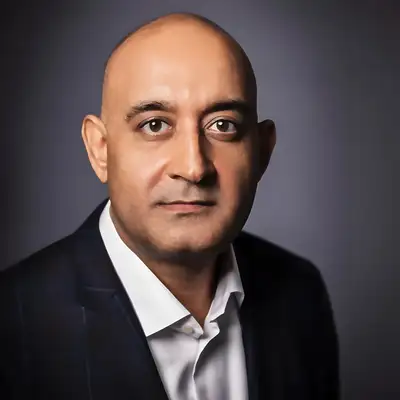
This week, I'm joined by Vic Sharma from Cake Wallet, a cryptocurrency wallet with 1.2 million
users. And just the week we recorded, his own bank froze his account for a $90 transfer to his own
company. And that was a great Trojan horse for a lot of things we discussed today. Regarding if you
actually control your money. What is the scam aspect of cryptocurrencies and what's more
legitimate, the privacy implications of this, what it means for the broad digital rights fight.
And it was also great to catch up with my old boss, Vic, from before when I was at CakeWallet.
So let's go ahead and start where he did with a Coinbase account that got killed over a darknet
pharmacy order and how that one moment is basically the whole reason everything that
CakeWallet's done exists to this day. Let's get into it.
Hello, everybody. I want to welcome on Vic Sharma from Cake Wallet. He was my old boss. And so I want to be upfront about that. But I also want to say that we are fully independent. So I'll still push back on you, Vic, here and there and try to get some good answers out of you on how Cake Wallet works and what brought you to the space. So do you want to properly introduce yourself here?
Sure, yeah. Thanks for having me on. I am the founder and CEO of CakeWallet. Launched in 2018. It's been a fun ride. It's crossed a million users and downloads. I think that was two months ago. So probably like 1.2 million now or something. So yeah, it's been fun. Yeah, we miss you. We miss you at CakeWallet. Doors always open.
Yeah, no, I appreciate hearing that. And it was a very fun company to work for. I think I might have still been there when we hit a million, actually. So that was really cool to see.
Yeah, do you mind kind of going through the journey? Because I joined quite late in this process. So you said way back in 2018. First off, CakeWallet is a cryptocurrency wallet.
So do you want to touch on maybe what got you into the cryptocurrency space in the first place?
And then what inspired you to actually create a wallet?
And also for anyone who's already tuned in going, I don't know how I feel about this cryptocurrency stuff.
How would you maybe settle some of those concerns also as you tell this story?
Well, I could probably explain what clicked for me.
And maybe that message will help people appreciate what cryptocurrencies can do.
I've been in the steel industry my whole life.
Even though I've been in the steel industry, I'm like a techie at heart.
I'm always tinkering.
I love to learn about new stuff that's happening in the tech world.
And in 2012, I guess, I heard about Bitcoin.
And it's kind of in the back of my mind, hey, I got to see what this is all about.
It sounds pretty cool.
And then in 2013, I had some time because the steel industry was super slow.
I would sit in my office and watch YouTube videos trying to understand Bitcoin.
and I started hanging out at the Bitcoin center here in Manhattan near Wall Street.
There used to be a Bitcoin center.
And, you know, just learning about it in 2013, it just clicked for me.
And what clicked for me, which I think is still the most important thing about Bitcoin,
is the permissionless and decentralized nature of owning and transferring value.
And that's all it is.
And that's the most important.
And that's why it was invented.
After the financial crisis that happened in mid-2000s, Satoshi Nakamoto...
Why do you see that as important?
We need some form of money, some form of value that can't be screwed with, that can't be fucked around with.
And I believe that was one of the reasons Bitcoin was invented.
And that's still a selling point of the importance of it.
And then along with that comes the, since it's decentralized, then that makes it permissionless.
You have a permissionless way to store your wealth and to transfer your wealth.
You're not going to a third party.
And like I said, that just clicked for me, especially with what happened in mid-2000s.
And I just jumped on the bandwagon.
I bought a couple of miners off of eBay, ASIC miners, in 2013.
I ran them in my basement for about a year and a half.
I did pretty well.
Then around 2017, early 2017 or late 2016, I tried buying antibiotics.
I've told this story many times.
Maybe some of your users, listeners have heard it.
And I sent, I bought antibiotics off the darknet.
And naive me sent Bitcoin directly from my Coinbase account to a darknet market address.
And they killed my, Coinbase killed my account immediately.
And that got me down the path of, you know, how did they know and trying to understand chain analysis and the transparent nature of Bitcoin.
But at the same time, there was on AlphaBay, there was a coin called Monero.
And I thought, why?
What is this Monero?
Why not Litecoin or Ethereum or other coins that are big at that time?
And what I did in 2013 with Bitcoin, that happened in around 2017 with Monero, early 2017, early 2016, I don't remember.
And then at the same time, I saw there is no Monero wallet for the iPhone.
And I saw the value of Monero, the privacy nature of Monero, and I wanted it in my phone.
A lot of my projects start that way.
It's just I want something.
And I started building it in late 2017.
mid-2017, and we launched in January 2018. To my surprise, I guess not really, because a lot of
times I think when I want something, there must be other people out there that want the same thing.
So I guess I was pleasantly surprised that my belief came true, that yes, people loved it. People
started downloading it, and that was the birth of KickWallet.
Yeah, it's cool how you're able to kind of, the ability to act on something when you
notice it's missing is something that I feel like is quite common in a lot of the founders
that we've spoken to on the podcast. It's a really cool trait.
For somebody who's listening to this, they might be going, especially if they're not already in the cryptocurrency
space, they go, okay, but I can just send someone PayPal or Zelle or
Venmo. Maybe they don't care as much about the philosophical
arguments that you brought up, which might
be completely valid, but let's say someone's like, I don't care.
I buy groceries, I get a paycheck, that's just my day-to-day life, and I send money via Venmo.
Where do you see cryptocurrency kind of comparing to that?
Do you mind expanding a little bit more on how you see this value applying to a regular person?
Yeah, I think about that a lot, actually.
And maybe because of what happened in mid-2000s, maybe people my age or maybe 10 years younger,
Because of those events, they see the value in the permissionless and decentralized payment system, Bitcoin.
I guess you don't realize you need it until you need it.
When your payment gets stopped on PayPal or Venmo or Cash App or whatever, then you'll need it.
I mean, this week I formed a new company and I tried transferring funds.
I did a wire from my own personal account into this new company account and Chase froze both accounts.
And it was $90 I was transferring, right?
So from me to my own company, and I had to call and be on the chase, explain to them what this $90 payment was for.
You know, am I being forced to send this payment?
Did I get a text message?
So I guess, yeah, you're not going to need it until you need it.
That would be my answer.
And you've already seen that with, you know, donations, dissidents and rebels or whoever, you know, freedom fighters, you know, their bank accounts getting frozen.
their money supply being choked.
So I know it's hard to sell this concept to somebody in the U.S.
because we're comfortable.
Nothing like that really happens that much.
But you've seen it happen all around the world
and under different governments.
So yeah, you don't need it until you need it.
I think there's a lot of parallels to what you're saying with privacy
because it's kind of the same thing.
People don't realize they need privacy until now they're on the wrong end
of whatever current administration
and what surveillance technologies they're implementing.
And now people are, and we've seen this in the last year or two, a lot of people are getting more and more concerned about surveillance around the world.
And so we've been seeing a huge uptick in our content.
Lots of privacy services are also seeing a pretty similar uptick.
And I feel like it's a similar thing where people don't realize they probably want a little bit more control of their data or their finances until something actually hits them hard enough.
You started with Monero, but I know even at my time there, a lot of my time was actually not, you know,
Obviously, it was still Monero, because you spent years building up that reputation of being a Monero-only wallet, which is privacy-only, if you want to maybe speak on the differences between coins here in a second.
But I really want to understand the broader philosophy you have for CakeWallet.
And for anyone who's a Monero maxi, they only care about Monero.
How are they supposed to grapple with you expanding beyond Monero?
And if you had to set the record straight, what do you actually envision CakeWallet being so people have proper expectations?
Yeah, where should I start?
First of all, I think we live in a, I don't think we do,
we actually live in a multi-coin world,
just as you live in a multi-fiat currency world.
Forget about the philosophy or the features of each coin,
but for whatever reason, people have their favorites.
Some people want Monero, some people want Bitcoin,
some people want Litecoin.
So number one, we wanted to give that flexibility to our users.
Initially, I'll be honest with you, initially we added Bitcoin
because that was a very easily accessible coin, right?
It still is probably the most accessible cryptocurrency.
And I'm not afraid to say it.
I'm a Bitcoiner as well.
I love Monero and that's my preferred form of payment,
whether paying out or receiving funds.
But I'm a Bitcoiner as well.
So initially the idea was to add Bitcoin as an easily accessible coin
and people could convert to Monero very easily or convert back to Bitcoin.
Initially that was the idea.
But as we kept improving the Bitcoin wallet, the Bitcoin features, we started seeing that a lot of people are just using the wallet for Bitcoin.
And of course, there's no way for us to see that. This is just by users reaching out to us or comments on social media or support tickets.
And then, you know, this whole concept of multi-coin world started to hit more and more.
And then we added, of course, Litecoin and Ethereum and then a bunch of EVMs and Solana as well.
Other privacy coins like Xano.
And then we added privacy features for Bitcoin, for Litecoin.
I mean, I think coming from that privacy ethos from the beginning, if there is a privacy feature for a L1, we will be the first to jump on it and experiment with it.
Like we did with silent payments, right?
You were here when you were at Cake, when you did silent payments.
Nobody had done it before.
It was still actually, I think the PR wasn't even merged yet, right?
It was just a Bitcoin proposal, right?
So your other question, like how would, you know, people who are only into Bitcoin or people who are only into Monero, why would they use Cake Wallet?
Well, you can use Cake Wallet only as a Bitcoin wallet.
You can use it just as a Litecoin wallet.
Just don't create the other coins.
So unlike other wallets, you don't get all the other wallets by default.
You actually have to create each one.
So just don't create it.
And your seed or private keys will never ever be used on any other,
for, I shouldn't say on, for other chains.
And a lot of people do.
I mean, I'll go to conferences and I'll see somebody using CakeWallet
and I'll talk to them and they're like,
yeah, I just use it for Bitcoin.
Or yeah, I just use it for Litecoin.
And they don't even touch the Monero part,
which I find interesting because we obviously launched as a Monero,
first Monero-only wallet.
But yeah, I think CakeWallet is for everybody.
You can use it the way you want.
We try to keep it flexible.
I mean, you were here.
We always used to talk about it needs to be simple enough
for a totally non-techie person to download and start using it
and then have loads and loads of hidden settings for advanced users.
And I think I counted them one day.
I think there's like 120 different settings.
you can have for different things.
My first question here regarding the technical stuff,
you said you can just create your own wallet, right?
If you only want to use Bitcoin, just create the Bitcoin wallet,
don't even touch the other ones.
I know Twitter has different views about everything in the world.
So a lot of people are like, yeah, but the code is still in the app.
So do you see that as a philosophical criticism
or do you see that as an actual technical criticism?
Like having another chain possible in the app is a concern.
Yeah, it's definitely, I don't think it's a valid technical argument because the code,
if you don't create a Bitcoin wallet, for example, that code is never accessed and it's never run.
Only if you actually create a wallet is that code needed.
So if you never create a wallet, the code just lies there dormant.
I mean, at least for Monero people, right?
We have the Monero community.
We have a Monero only wallet called Monero.com.
So if you're really paranoid, yeah, Monero users usually are very paranoid and rightly so.
We do have Monero.com they can use.
But there's been no instances like, hey, I created a Litecoin wallet and I got a Monero transaction.
It's just impossible.
And we've built Cakewall very modularly.
So everything is very, the code is very separate, especially for like a Monero or Bitcoin or Monero or Litecoin.
So I don't think it's a technical concern.
I think, like you said, it's a philosophical concern.
And look, I've been at conferences.
I was at a conference late last summer.
And somebody said to me, like, I don't want dirty Monero on my wallet.
You know, sometimes I get annoyed.
Sometimes like, oh, yeah, I get it.
You know, I don't want to argue with people.
But that day I was feeling a little annoyed.
And I said, well, you know, every Bitcoin you have can probably be traced back to the, what was it called?
Silk Road or, you know, something, you know, some nefarious activity.
I said, you already have a dirty coin.
But I was annoyed.
I mean, I get his point
And some people don't want to see that
I mean, even we're at, what is it called?
The Bitcoin conference in Lugano, Seth and I went to
And somebody there on stage said, I love K-Quala
But I won't use it because I don't want to see those other coins
You can hide them
It is quite tribal in some ways in the space
Which is funny, because I think most coins overall have pretty similar goals.
They just have a slightly different implementation that they think would achieve it.
But I think secretly they use K-Qualit.
But these million users came from somewhere.
It can't be all Monero users.
You mentioned something earlier, which is we can't see that.
Can you speak to the telemetry or lack thereof and what that looks like in the app?
So yeah, we don't collect any data when you're using the wallet.
So that's one.
I mean, when you go to the App Store or Google Play and you scroll down, it says what this
app collects.
It will say this app collects no data, nothing.
So that's number one.
Number two, we don't have it.
And that's because when you create a wallet, you're creating it directly on the blockchain
and not through you.
Exactly.
Exactly.
We don't run a server where anything is being relayed.
you're connecting directly to, you do, you know, by default, we give cake nodes, but again, that's
a node. That's not like a server with information, right? But right at the beginning, you can choose
another node. You can add your own node. So you don't even have to, that's one of the advanced
features that I mentioned earlier. So you don't even have to use our node if you're paranoid.
All the scanning is done, especially for Monero, all the scanning is done on your phone.
We're not sending your view key to a light wallet server somewhere to scan the blockchain and send you back your transactions.
It's actually going the other way where all the blocks are being downloaded to your wallet since your last sync.
And then on your phone, you're scanning for looking for your transactions and all the transactions that don't belong to you are discarded.
And the ones that are yours are saved.
So, you know, we try to be very cognizant of where somebody might question something.
hey, why are you doing this? Why are you doing that? And I mean, you were at Cake, we debated
stuff like that all the time. You know, even when you're doing swaps, you're dealing directly with
the swap provider. If you're using, you know, MoonPay or XLX or ChangeNow or whoever, Trocador
and Cake Wallet, you're not going through our server. By the way, I recently found out another
very popular so-called privacy wallet does have a server and I'm not going to say their name. I
And they do, all the swaps do go through the server before going to the provider.
So, yeah, which I was kind of shocked to learn.
But we don't do that.
You know, of course, that's on the wallet side.
Of course, if you're doing fiat on-ramp or on-ramp or off-ramp and using on-ramp or MoonPay,
of course, then you're connecting with them and then you're giving them whatever information they require.
But again, it's not going through our server.
We're not seeing that any information.
And it's impossible for us to see that information because there's no server.
There's no relay going through us or anything like that.
I think our users value that.
And we are held to that standard.
And honestly, I get annoyed sometimes.
Like, hey, how come this wallet is not being called out for this?
How come that wallet is not being called out for this?
And I get, like, why are we always under the microscope?
And then I realize that's why people like us.
and they want us to continue to uphold those principles.
So it's good.
It keeps us honest, keeps our community very tied in.
Yeah, overall, it's a good thing.
Keeps us on our toes for sure.
Between conferences, events, and yes, sometimes also vacation,
I travel a lot.
But no matter the purpose, I always hit a very familiar experience,
which is the eSIM wall.
I literally just want to get online after I land,
And I've already shown my passport to everybody just to fly.
And I don't think I should have to upload it to another online service.
And that is exactly what PikaSim solves, the sponsor of this episode.
PikaSim is changing the game with anonymous eSIM, which means no accounts, no email, no name, and no KYC.
It covers 190 plus countries, so it actually works wherever you go.
And unlike almost everyone else, they actually label what routes through China, Hong Kong, and Russia,
which many providers, I didn't know this before learning about them,
actually route through those people without ever telling you.
Yes, you heard that right.
A lot of eSIM providers has your data running through
some of the most surveillance-heavy places on Earth without your consent.
But with PikaSim, you get to choose.
And if you care about controlling your payment method,
which is probably why you're listening to this,
you can pay in Monero or Lightning through their own self-hosted payment processor with no middlemen.
This is the same exact private money that Vic and I are talking about
used in the real world for a privacy-first service.
Pekasim can't solve every privacy problem on a cellular network.
Nothing can, but it's an instant massive upgrade over nearly every other travel eSIM.
They support Panero, a Warrant Canary, iOS, F-Droid, and a direct APK that needs no Google
account and works on GrapheneOS and de-Googled phones, all without them ever knowing who
you are at a competitive price.
Head to pikasim.com slash tech lore.
That's P-I-K-A-S-I-M dot com slash tech lore.
That'll get you 10% off whether you pay with card or crypto.
All links are in the description.
And I don't think you'll be disappointed next time you travel.
Thank you, Pekism, for sponsoring.
And now back to Vic's interview.
Can you give me, this is a big ask.
I know this is not an easy one, but in the interest of time, because I have a lot I want
to touch on today, but I do think we should touch on some of the technologies.
So in under five minutes, are you able to break down the privacy concerns of a typical
blockchain and where something like chain analysis fits into that equation.
And kind of the general approaches for just the main cryptocurrencies and how they deal
with that.
So I'm thinking Silent Payments, MWeb, Monero, and Zcash kind of as the main four.
If you can quickly kind of just cover those so that we can follow up on questions from
there.
Yeah, I mean, I'll be honest with you.
I'm trying very hard to understand Zcash and, you know, compared that to full chain membership proofs, which is coming out from Monero.
I was talking to some experts, you know, like experts on cryptography in the Monero world.
And they finally said to me, they said, you know, maybe you should take a course in cryptography.
So I can speak.
It's technical stuff.
It's technical stuff.
Yeah.
So I'm not a, you know, I'm not a cryptographer, but let's just talk about Bitcoin first.
Do you agree?
Yeah, go for it.
Silent payments is a very cool concept.
You've heard in Bitcoin, they always say,
don't reuse an address.
So what that means is if I want to send you Bitcoin, Henry,
I have to ask you,
hey, can you generate a fresh Bitcoin address
and send it to me?
And then Joe Schmo wants to send you Bitcoin now.
They reach out to you and you generate
another Bitcoin address for them.
And that's just a privacy thing that you're doing manually, right?
So that way, when I send you Bitcoin to address A, let's call it,
I can't see what you're doing in address B
until one day you consolidate those outputs.
And then somebody can figure out, oh, that belongs to you.
So what Silent Payments does is simplifies that whole process.
So with Silent Payments, you get one address.
Henry gets one address you create.
And you can create many if you want to.
Now you can give that same address to me and same address to Joe Schmo, right?
When I want to send you Bitcoin now, every time I use your silent payment address,
a new on-chain address will be created for you that only you can access with your private key.
And on the same thing, even though you've given that same silent payment address to Joe Schmo,
every time he uses that in CakeWallet, a new on-chain address will be generated for you every single time.
So even if I use it again, a new address will be generated.
So every time everything's separated, I'll only be able to see,
of course, I know what that address is that's generated,
but that's all I can see.
So the use case for that is, let's say you're taking online donations.
Rather than putting a regular Bitcoin address where everyone can see,
hey, this guy's receiving all these donations.
And from who and from what addresses, silent payments,
every time somebody makes you a donation, they're getting a fresh new address
that's generated on the sender side.
That's the beauty of silent payments.
That address is generated on the sender side wallet,
like Cake Wallet, for example.
So it's a nice little privacy feature.
At least it stops people sending you money
from seeing all your activity.
They can only see what they're doing.
So I think it's a really important feature.
There's drawbacks to it.
Again, at the synchronization,
it requires sync every time from your last sync
to look for transactions that are related to you.
That's the downside,
but I think it's a small price to pay
for some Bitcoin privacy.
PayJoin version two.
I know I'm going to get a lot of people
going to be writing,
and Vic doesn't know what he's talking about,
but I'm just trying to simplify it.
I had to write the blog article
for PayJoin v2 at Cake,
and it took me five iterations
of totally different analogies,
and I still to this day don't quite understand it.
it is a very difficult concept to understand.
It's like a two-person coin join, right?
Where you're collaborating with the receiver.
So if I'm sending you Bitcoin, we're both putting in some input.
That's how I understand.
I'm probably simplifying it.
Obviously, it's way more technical than this.
So by doing so, you get some privacy.
Because they don't know the origin of who sent the...
Exactly.
Yeah, exactly.
Yeah.
Litecoin MWeb, I think it's great.
I don't think it gets enough credit.
Litecoin implemented a kind of like a side chain.
I hate to call it a side chain, but yeah.
So it's like a side chain, I guess, where you can take your transparent Litecoin and hide it in this other layer and do transactions with there.
And you can live there forever, like Lightning, for example.
You move your Bitcoin to another layer and you can live there forever if you like.
So yeah, I think MWeb doesn't get enough credit.
I think it's a great privacy tool.
It works very well, in my experience.
I agree.
It works well, and we try to support it.
I mean, you know, we try to support any privacy features,
but I would like to see that grow more as well.
I mean, some people would argue.
I mean, in Zcash and Monero, people would argue,
well, you're giving people a false sense of privacy,
but maybe sometimes it's good enough for some people
and for what you're doing.
Zcash, I mean, you know my history with Zcash.
I mean, I've been a fan of the tech for a long time.
I wouldn't say a long time.
Ever since they did Orchard or Halo, whatever they call it, they got rid of the trusted setup.
And I was like, OK, yeah, this makes sense now.
But I mean, I know the organization, dev tax, blah, blah, blah.
The whole thing's kind of weird.
I shouldn't say weird.
I would say some people maybe like it or dislike it.
They like more of the Monero, cypherpunk, no centralized entity.
It's funny I say cypherpunk because I sold that Twitter account to Gemini
when they started the Cypherpunk
ETF, or not ETF,
Treasury Company.
Did you know that? That was me?
No.
I guess not many people knew,
but yeah, I was at Cypherpunk.
I do know you collect every handle and domain,
and any good one on Telegram
is taken from you.
Yeah, exactly.
If you want a cool handle, it's probably Vic on the other end.
Yeah.
And I also sold them Zcash.com.
I was the owner of that as well.
I mean, societyonmonero.com.
I know there's tribalism between the two communities.
And jokingly, I say I'm the uniter of the two communities.
And I've bashed Zcash in the past, and I've bashed other coins as well.
But I think it's an important tool.
I mean, I think if you just purely look at the tech, I think it works.
If you stay shielded to shield it, it works.
But again, when it comes down to, if you ask me today,
hey, Vic, I want to send you some money, what do you want?
I would probably say Monero.
But if you say, no, I don't have Monero, I only have Zcash,
I'm like, okay, that's fine.
If you say I only have, I don't know, what wouldn't I take?
I'm trying to think.
What was the reception?
Because that's kind of past my time.
You all released Zcash.
And I know a little bit of the history here,
which is you kind of wanted to release Zcash,
but then the Monero people flipped out on you,
and then you decided not to release it back in the day.
And then you decided to release it anyway,
I think years later, pretty recently.
What's been the reception?
You also, the release just happened to align right when Zcash and their team went through all their crazy stuff with their official wallet.
Yeah, I mean, a lot of people are saying we did it because the price pumped and all that.
But, you know, Zcash wallet is not something you just whip up in a day.
It's complicated and like Monero was.
It was crazy timing.
Yeah, the timing just happened to be.
I mean, that always happens to me.
I don't know why.
But it was in works for a while.
Personally, I would have liked for it to come out earlier in 2026, but we were just too busy with other stuff.
But the review has been mixed.
I mean, I think the Monero community has kind of softened up a little bit about it.
They can still use CakeWallet the way they want without creating other coins.
You can switch over to Monero.com if you just want Monero only.
So the backlash wasn't as harsh as it was, let's say, five years ago when we wanted to do it, four years ago when we wanted to do it.
That was pretty harsh.
I've talked to you about it before.
is kind of hurtful with everything we do for Monero.
And we've had a long history with Monero.
And we consider ourselves to be the Monero community,
card-carrying Monero member.
And then on the Zcash side, the reception has been mixed as well.
A lot of people said, you've been bashing Zcash for so long.
Why should we trust you?
And it's not about trust.
It's open source out there, ready for anyone to use.
I think we're the best Zcash wallet out there.
I think we're the best Monero wallet out there by far.
I think we're the best Bitcoin wallet out there,
especially now we added Litecoin.
Sorry, Lightning.
I think we're the best Bitcoin wallet.
I was going to mention this earlier, not to butt in,
but when you mentioned donations,
you probably don't know this,
but we used to support Bitcoin donations for Techlore.
We used to support Bitcoin and Monero,
but I got rid of Bitcoin because the more I learned about Bitcoin,
the more I realized I didn't care because it's our wallet.
but everyone who donated Bitcoin to us,
I can't guarantee they were aware
of the implications of that.
And I don't think people think about that.
If you're a politician, if you're a public figure
and you have a public donation for a Bitcoin address,
you're not able to guarantee
that everybody who's contributing to you
is actually kept confidential.
And that is a bit of a risk.
And so when you all started working on silent payments
and I was like, oh, this is kind of a perfect solution.
We still don't support it because the silent payments, people who support silent payments
is still very little.
It's pretty much just CakeWallet and still one or two other wallets at this point.
And so I really want to see more wallets support silent payments because otherwise, only CakeWallet
users are...
It almost seems like a CakeWallet exclusive feature, even though it's something that anybody
can roll out.
I think a lot of wallets worry about user experience.
They don't want people to worry about scanning and this and that.
A lot of people just want to use Bitcoin very simply.
And then silent payments, I mean, you only get privacy on the receiver side.
Like you as a receiver get privacy.
But you're able to see everything about the sender's wallet.
So I agree with you.
It's not perfect.
It's good receiver privacy if you're taking donations or just payments in general.
So yeah, I fully agree with you.
If you want to do something online like that, use Monero or use Zcash.
Shield it, of course.
I wanted to transfer over a little bit to Cupcake.
Do you want to explain what Cupcake is, how it works with Cake Wallet,
and how you would compare and contrast it with the other alternatives out there?
I'd say the hardware alternatives.
Yeah, so Cupcake is a companion app to Cake Wallet.
And I hope other wallets implement it as well.
It's an offline signing app.
So just as you have the hardware wallet where your keys, your private keys,
live on another device that's not connected to the internet. This is the same concept. So
if you have an old phone laying around at home, you don't have to go out and buy a hardware wallet
or some specialized hardware. You have an old phone laying around, you download Cupcake on it,
disconnect it from the internet, Bluetooth, Wi-Fi, everything, cellular, and you create a wallet.
And now you have a offline hardware signing device. What I really liked about this idea was,
especially what happened with some hardware wallets where, you know, data was leaked,
who the buyers were. I mean, even today I get text messages and email from fraud people saying,
you're, you need to call us. I get those too. I was, I think caught in that breach because I still
get emails. And then, and then the other thing is, you know, if you're, if you're crossing borders
or if you get stopped or, or even just within friends and family, or this, someone sees that
you have a physical hardware wallet,
it's like a huge arrow.
Me, me, me.
I own crypto.
I own crypto.
But if you have a second phone in your bag
or wherever and it's just laying somewhere,
nobody knows it's a hardware wallet.
Just think you're a drug dealer.
Second phone or, yeah, I have a second phone.
You think I'm a drug dealer?
No, I have a second phone too.
But that's the comment that I get from people
when I whip out two phones
and they go, oh, like,
that's what everyone thinks.
like, oh, you're a drug dealer.
It's like, well, no, one's more for work.
One's for, yeah.
Well, for me, I carry iPhone and a Pixel
and just because I'm testing CakeWallet all the time,
you know, new updates and new builds
that the dev team is sending me.
But going back to Cupcake,
so that was the idea behind Cupcake.
It supports Monero, Bitcoin, Litecoin,
Litecoin MWeb as well.
I think we're the only hardware wallet out there
that supports Litecoin MWeb.
We're adding Zcash Shielded to it.
Yeah, I think it's a great tool just for privacy, even from not having to spend money.
I mean, nowadays, everybody, almost everybody has an old phone laying around, an old iPhone that you forgot to trade in.
And then the upgrade plan or you have an old Android or something from years ago.
So, yeah, don't waste your money on buying a hardware wallet.
Just all that.
Having said that, I'm an investor in foundation devices.
So don't buy any other wallets.
Buy that one or use cupcake keys.
Yeah, it's a good time because I actually just wrote down an interesting question.
Because earlier we were talking about silent payments.
And there's nuances to the level of privacy you're going to get from something like silent payments, MWeb, and Monero.
And I think there's probably a similar thing with this.
I don't think that you would say that using Cupcake, if you're comparing this tech, obviously you're probably less likely to be targeted if you don't buy a hardware wallet.
We have those things.
But if you just give to a hacker an old phone with Cupcake
and you give them a brand new Ledger device,
I don't know if you'd say that Cupcake is more secure
than the Ledger device.
So how do you balance marketing here as an organization
with kind of, like you want to sell yourself
and be like, yeah, we actually do have these really cool features,
but we also don't want to overpromise the safety to our users.
So how do you balance that from a marketing perspective?
No, that's a valid point.
And I think we're upfront with that, right?
Look, it's definitely not as, I shouldn't say definitely not,
probably not as secure as going out and buying a Passport Prime or a Ledger.
But there's other factors, right?
Do you want to be seen with a hardware wallet?
Do you want to spend money on a hardware wallet?
Do you have an old phone?
Are you in what your situation is?
I know different regions don't even get hardware wallets.
Exactly.
Some regions don't get hardware wallets.
Some regions, crypto is banned.
So if you're seen having a hardware wallet, that could be exposing yourself to some investigation.
So it just depends on what your personal situation is, both your political climate that you're in or your financial condition.
And I think for most people, Cupcake is good enough, especially the Western world.
I mean, they say you shouldn't walk around.
What if you get your phone confiscated?
You shouldn't walk around with your private keys in your phone.
So Cupcake's a good balance there where you can leave a phone at home, have a couple wallets on KDV.
wallet one with some small money that you can spend regularly and where you have your savings
account, as you may call it, which is connected to your cupcake. And in no way I'm saying we'll go
head to head with hardware wallets. But I think it's more than just that. It's more than just,
hey, a hardware wallet's more secure because in some ways it's not more secure because it exposes
you to being a crypto holder. Yeah, I was using it more as an example. I guess just philosophically
as a company, how do you view this?
How can you signal to a user,
hey, we have this really cool privacy feature for Bitcoin,
but also if you want better privacy,
there is also Monero in our wallet.
How can you help guide the user to help understand
the level of privacy they're getting with each tool that you're providing?
Because cryptocurrency is already not very well understood by most people.
Then we add these privacy tools that maybe
a few thousand people in the world know very well.
So how are you communicating that kind of nuance to beginners?
How do you see that?
That's tech lore's job, right?
You're the educator.
So I don't think we hit too much on that, except just saying, hey, if you want privacy, use Monero.
If you want some privacy, go ahead and use Bitcoin silent payments.
And of course, some would argue that Bitcoin Lightning provides privacy.
It could be debatable.
And what I found is that everybody has a different level of privacy that they need, especially in the Monero community.
Some folks don't even want anyone to know that they own Monero.
They'll never mention it.
And I think those people are not on social media.
They're not anywhere.
They're not on Reddit.
And then there's some people that are saying, hey, it's okay if Kraken knows I bought Monero.
As long as nobody knows how I spend it or where it goes.
So when we say privacy, I always think about that.
Well, what level of privacy are you seeking?
And that goes, again, with Bitcoin.
And a lot of people still wrongly believe Bitcoin is private.
And I guess if you never, you know, people say, oh, but if I never connected to a KYC exchange, they'll never know.
But the idea is you can always backtrack.
Eventually, you'll find a transaction that was connected to KYC.
And then the authorities can grab that person and then keep tracking down.
Who did you send this to?
Who did you send that to?
Right.
My understanding, too, is the technology to track gets better over time.
But the blockchain is always there.
It's permanent.
So there is no future obfuscation happening to those previous transactions either.
Exactly, exactly, exactly.
And we think about that a lot.
Should we put in KQualit that, hey, you're about to use a transparent chain, but then, you know, we don't want to piss people off.
Hey, I guess we rely on good educators like yourself to inform people on different levels of privacy.
To zoom out and get a little bit less technical, we talked a little about censorship because
you talked about how there's some regions where you can't even have cryptocurrency.
We also talked earlier about having access to money and how that's kind of a tool of
oppression in some regions, etc.
Can you expand a little bit on how CakeWallet is censorship resistant?
What are the tools that help guarantee that?
Because if I'm just a regular person and I'm in a region that blocks cryptocurrency stuff,
I probably can't just download CakeWallet from the Google Play Store or the App Store.
So what does that look like for a user who wants to access these tools?
So I guess if you're super, let's talk non-techie first, right?
iPhone is difficult.
If you are in a region that allows side loading, let's say, into the iPhone, then you're okay.
You could find some build from us somewhere and download that, install that to your phone.
If you're super technical, you can go to our GitHub and try to build from source.
Those are a couple of ways.
The other thing you can do, I mean, if you're on Android, then it's much easier.
You can go to the alternate app stores or you can just download an APK from our GitHub and you're good to go.
So even if we go away tomorrow, like I said, the source code is there.
You can try building yourself or you can grab the APK from somewhere.
Does that answer your question?
Yeah.
And I think, you know, in the interest of time, normally I'd like to ask you about reproducible builds and stuff like that.
But what's still keeping you up at night to kind of really, really zoom out here?
You know, when you look at the current situation, are you still concerned about privacy concerns?
Are you looking at regulatory environments?
Like what kind of keeps you up at night and what has you concerned?
The regulatory environment doesn't concern me as much as it did, I don't know, seven years, six years ago.
I think regulators and governments have realized that, you know, the genie's out of the bottle.
It's not going away.
There's billions and billions, maybe trillions of value that's being transferred in some form of cryptocurrency or another on a daily basis.
and you can't turn that back.
It's open source code.
You know, just like in the beginning,
people said Bitcoin is going to be banned,
governments won't allow it.
And it got to the point where it's just too big.
You can't stop it.
It's open source.
So regulators and governments had to come up with a framework
for Bitcoin to work with traditional banking or monetary systems, right?
So I guess I'm not as pessimistic as some people are
about privacy-oriented coins like Monero and others.
I think the same thing will happen.
It's open source.
It's there.
Anyone can write it.
You can't arrest people for having code on their computer.
You can, but it's not going to last very long.
So I do think there will be regulations and framework where the traditional system has to work with privacy coins.
Maybe that's just me being optimistic.
I know every day you hear about Monero being banned in this country, this exchange dropping Monero.
But we've been through that before.
We've seen that with Bitcoin.
So I think something has to happen.
And if it doesn't, you're going to have this parallel underground economy that's working on a different currency that government and administration and regulators can't tap into.
Do I know what that solution is today?
I don't know.
But I think over time, there will be creative ways to have a framework that'll work with Monero and privacy coins.
Yeah, we got to get you back on.
I mean, there's just so many questions I had.
I wanted to talk about how you can still make Monero transparent,
like it is transparent optionally,
and how that could be a potential solution.
I wanted to talk about the stability of silent payments
and if that's improved over time.
Because even when I was using silent payments at Cake,
it was still a little bit rocky.
So I wanted to see if that's been improved.
So I have so many questions, so I got to get you back on.
And we can dive a little bit more into the weeds.
So to just kind of finish this out,
how can people follow you, follow Cake?
What's kind of where you send people to?
So probably, I mean, cakewallet.com, if you want to learn more about Cake Wallet and see the download links.
If you want just, you know, daily news and updates and all that, you can go to our Twitter.
It's at Cake Wallet.
If you want to follow me, it's Vikrant, NYC, my full name.
V-I-K-R-A-N-T.
Spicy takes on Twitter.
NYC.
Yeah, exactly.
So it's funny, on Telegram, I'm Vikrant S being my initial of my last name, my first name and the last initial.
And a lot of people thought it's Vic rants.
It's like my rants.
It's not far off, though.
It honestly feels that way.
I was actually telling Vic backstage before we recorded,
because since I left Cake, I really haven't checked Twitter at all,
because it's not something I ever really...
I think I was pretty public about this with you.
I was like, it was my least favorite part,
was having to be on Twitter a lot.
It just isn't my place.
There's a lot of good information on Twitter still,
but there's a lot of just nonsense too on Twitter.
But your tweets are something I need to figure out
how to get back in my RSS feed,
because they are pretty spicy.
No, sorry.
I don't know if that's good or bad.
No, it's good.
Well, I don't know.
I think PR is hard sometimes with your tweets,
but being definitely on this end of it now,
I think it's a lot better.
Yeah, that's funny.
Good, good.
Excellent.
Yeah, well, thank you, Vic, for coming on.
Again, I'll try to get you back on.
we can dive into more of the weeds.
But I just want to thank you for the work that you're doing for Monero,
for the privacy space.
I know a lot of people have a lot of respect for what you're building out there.
So I just wanted to send my appreciation.
Yeah, and you had a big part in growing that.
So I appreciate it.
Yeah, of course.
It's an important project.
So I think if you guys don't do it, I hope someone else does
because the tech that you're building needs to be out there.
Cool. Excellent. Thanks, man.
Yeah.
And that's the main interview with Vic.
A few things that I wanted to have as takeaways.
I don't think that people need to pick a side in the Bitcoin versus Monero versus Zcash
tribalism to get the actual lesson, which is that different privacy tools protect different
pieces of the puzzle.
And knowing which piece you're covered on is kind of the whole game.
While I have my own feelings about Monero, I think being the best one for most people
who want privacy, I see the place for these other tools as well.
I also don't think you need to be under investigation or living somewhere hostile to start
experimenting with these tools and seeing if they fit in your workflow. Vic talked about his own
bank freezing story, but I've actually had the same exact issue with Chase specifically when I
wanted to buy a used car and I just had to get my own cash out of Chase and they required all these
crazy things just for me to withdraw my own money. And even then I had limits set. So it's something
to think about, like who really owns your money when you don't own it yourself. And of course,
I hope you all learned a little bit more about Vic and CakeWallet and what they're working on and
what's next and kind of the nuances of Bitcoin privacy. If you guys have any guest recommendations
going forward, let me know. I would love to hear. And if you enjoy these interviews, you can become
a Techlorian down in the description and join our private signal group to chat with other like-minded
people in the community. I want to thank the sponsor of this podcast as well. And I will see
you all next time on Techlor.
Субтитры сделал DimaTorzok