Subscribe
Share
Share
Embed
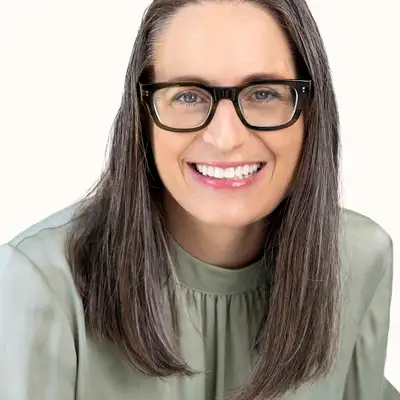

Born from 20 years of friendship, during which they navigated the trenches of autism parenting and advocacy, the Refrigerator Moms is Kelley Jensen and Julianna Scott’s way of reaching out to parents waging the same battles they were. Their purpose with this podcast is to clear the fog, silence the noise, and find a path through neurodivergence for parents that are stuck between bad choices. They tackle parenting topics such as mom guilt, tantrums, pathological demand avoidance, siblings, medication, comorbidities, social media, and much more.
Julianna Scott 00:00
Rfk Jr and the HHS have embarked on a deprescribing campaign. What do the Refrigerator Moms think of this?
Julianna Scott 00:18
Welcome to the Refrigerator Moms Podcast. I'm Julianna. I'm here with my co-host, Kelley. Hello. And we are talking about deprescribing.
Kelley Jensen 00:27
We were so ramped up about this. We did what we normally do and we wrote about it. And you can find that on our website, refrigeratormoms.com, and it's in our Dear RFK section. We seem to have a lot to write to him about. We're waiting for a response.
Julianna Scott 00:44
We want him to read. We do. Or he could call us. Whatever, whatever, whatever. But welcome.
Kelley Jensen 00:51
We are going to tell you a little bit about what we think about it. So Kelley, give me the rundown. We agree with him. Shocker, shocker. Full stop.
Julianna Scott 01:00
You say full stop. I say, but I have a lot of questions. Yes, of course we have questions. But we agree that prescription medication is over prescribed.
Kelley Jensen 01:09
We agree that particularly with children and adolescents, other options should be exhausted. We agree that it's time to have a, well past time to have a conversation. What we want to know is, again, more questions.
Julianna Scott 01:23
First of all, he seems to want a new drug because what is he's really talking about, what he's promoting, what he's fast tracking is psychedelic medication. Is that just like ketamine? Yes. Well, ketamine is already out there. So is that going to be part of his study?
Kelley Jensen 01:41
Some of the psychedelics that are out there, he wants those fast tracked. So is this just, I want a new drug? Cue the Huey Lewis song. Right. And we don't know.
Julianna Scott 01:50
And a mom does not really want her child involved in a drug that's disassociative. So I don't know that that is really gonna be the answer for children. I'd sure like to hear about that. So what do children do, what do parents do when they are made to fear prescription medication for some good reason? I mean, nothing he's saying is wrong.
Kelley Jensen 02:11
No, I think we all paused and we wrote a paper. We did an episode. So go back to that one, A Tough Pill to Swallow, about medication. It's not a decision any of us have come to lightly.
Julianna Scott 02:23
We're all thinking about what are the long term effects, what are the short term effects of putting our children on medication. Medications that are not studied in the cocktail effect, that they are interlaced too many, too often. Right. So when they tell you that SSRIs are well studied. Well, they are.
Kelley Jensen 02:40
But are they well studied with the other drugs that are layered onto them and with the long term effects? Not as right. I don't know one child on the spectrum who's on just one.
Julianna Scott 02:56
I don't either. But this is my big question. What alternatives are you offering?
Kelley Jensen 02:57
I'm glad you asked that. As you know, in this podcast we talk quite a bit about non-invasive, drug-free transcranial magnetic stimulation and some of the other brain stimulation therapies that are out there, often covered by insurance. They have not entered the lexicon, they have not been in the chat. We have had everybody weigh in on deprescribing and not one person, including the TMS Society, has weighed in on, what about TMS?
Julianna Scott 03:26
I know the Times came out with an article about this topic and I even went to the comments to see what people are talking about. And a lot of agreement, like we're saying. But I searched the comments for things about alternatives, like used the word alternative, and also TMS and things like that. 2 comments out of, you know, thousands.
Kelley Jensen 03:49
Right. Yes. And it was just like that.
Julianna Scott 03:49
Just goes to show, people are game to try something different. But let's hear about what those options are. Why are we fast tracking research on psychedelics, which again, I want a new drug, or why are we not fast tracking access to something that is already available, that is non-invasive, drug-free, and arguably a better alternative for children?
Kelley Jensen 04:28
So I'm assuming insurance coverage is also a big part of it. Well, 15 and up, TMS is covered for ages 15 and up, which will not satisfy all of the age, you know, the needs that are out there.
Julianna Scott 04:28
But it's a start and does enjoy quite, quite a bit of study. It's just that none of that study has been rolled up and made the, you know, cross the line to. And this also goes back to what our previous discussion about psychiatrists and their lack of education about alternatives, and also the, being the gatekeepers, the gatekeepers of TMS, and few of them are prescribing it. Some of the other things that we have questions about that I have not entered the chat that need to be in the chat is the fact that SSRIs are not just prescribed by psychiatrists.
Kelley Jensen 05:07
At about 40% of all SSRIs are prescribed by general practitioners. Right. Who is talking to the general practitioners? How come they're not part of this discussion? Because if you were seeing a GP for your SSRI, why is he not involved in a discussion about alternatives?
Julianna Scott 05:26
Alternatives, don't understand that important conversation, not just for our children. But I myself am on an SSRI. There's a lot of us out there who are in the autism world handling a lot of anxiety and depression. What are our options? It's like, don't just say we're going to start deprescribing without a real conversation about what that looks like. Or a half hearted conversation.
Kelley Jensen 05:52
A surface level conversation for bait, click. Is that what it's for?
Julianna Scott 06:01
Right. This episode of the Refrigerator Moms is brought to you by Brain Performance Technologies.
Kelley Jensen 06:01
Brain Performance Technologies is a specialty mental health clinic that offers Magnetic e-Resonance Therapy, or MeRT, for autistic people aged 3 or older. MeRT is a transcranial magnetic stimulation protocol that utilizes an EEG diagnostic to deliver personalized magnetic pulses to stimulate the brain and build neural pathways, effective in managing autistic symptoms. This is a particular bee in my bonnet because it's never talked about. The psychiatric profession hangs their hat on the safety of SSRIs. They've been around for decades.
Julianna Scott 06:33
They are well studied when prescribed correctly. So what does prescribed correctly really mean? And what is the effect of things that are drinking alcohol, legalized forms of cannabis, which is a thing that has happened in the last 10 years that is not studied. So if you're taking an SSRI and you're taking a gummy to fall asleep, how does that affect it?
Kelley Jensen 06:55
I suspect we all have stories of people that have some weird behavior because they've taken a gummy and they've also taken a Lexapro.
Julianna Scott 07:11
Right. Recreational drugs, of course. And, you know, these are important conversations for kids who are experimenting as teenagers do. Right?
Kelley Jensen 07:11
Yeah. Hasn't entered the chat. Important part of the conversation, especially cannabis, because cannabis is legal in many states and dispensaries everywhere.
Julianna Scott 07:24
Right. As they say, it's not your daddy's, or your, it's not the Woodstock cannabis. It is medical grade. What does that do to SSRIs?
Kelley Jensen 07:37
No. And also, I know that there's lots of especially young adults who aren't drinking as much, but they're definitely eating the gummies.
Julianna Scott 07:37
Or vaping.
Kelley Jensen 07:40
Or vaping. Right? Yeah. Yeah. Little known fact about TMS, it is FDA cleared for smoking cessation. And I suspect we are staring down the barrel of the effects of vaping because so many of the young people are doing it. So it's a timely discussion.
Julianna Scott 07:55
Absolutely. What else? What else, Julianna? Again, let's just stay tuned. I don't want this to be, we're on board with RFK Jr. It's again.
Kelley Jensen 08:07
Okay, sure. Like there's a kernel of truth in what you're saying? Well, I'd say it's more than a kernel. It's true. He's right.
Julianna Scott 08:15
They are over prescribed. Not just the American Psychiatric Association, but the American Medical Association has gotten free with the hand, the prescription hand. It's an easy solve in 15 minutes for these practitioners that are under the gun. So it's a good conversation. But is he really having it in earnest?
Kelley Jensen 08:35
It doesn't feel like it, no. It's, I want a new drug.
Julianna Scott 08:57
Right, right. So again, keep your eyes out for information about this. And as always, it's like, yes, let's agree there's a lot of prescribing going out there, but let's think about what that means in the context of your overall treatment and look for alternatives.
Kelley Jensen 08:57
That's right. Check out TMS.
Julianna Scott 09:14
Yeah, thanks for listening. And if you like what we've been saying and it really helps us out to go like, prescribe all of the things, the TikTok, whatever it is, do those. Thanks.
Kelley Jensen 09:14
Bye.
Julianna Scott 09:14
Thank you for listening to this episode of Refrigerator Moms. Don't forget to subscribe so you never miss an episode. You can also find episode notes, resources, and any Refrigerator Paper connected to today's discussion on our website at refrigeratormoms.com, where you can sign up for our newsletter. We'd love to hear your questions and future episode ideas.
Julianna Scott 09:33
Reach out to us on social media or through our website. The information shared in this podcast is meant for informational and educational purposes only. It shouldn't be taken as medical, psychological, therapeutic, legal, or professional advice. If you have questions about a diagnosis, treatment, intervention, or any medical or developmental concerns, please consult a qualified healthcare or service provider. Don't rely on this podcast in place of professional guidance, and don't delay getting help because of something you heard here.
The views and experiences we talk about are our own and those of our guests. They're not meant to serve as personalized recommendations for any individual or family. Listening to this podcast does not create any kind of professional relationship between you and the hosts or guests. Any choices you make based on the information here are completely your own, and we are not responsible for any outcomes that result from them. If this episode includes a Refrigerator Paper, you can find all sources and citations along with additional notes on our website at refrigeratormoms.com.