Subscribe
Share
Share
Embed
This isn’t another sales tips podcast.
This is Loan Officer Success Live - where mortgage and real estate pros come to master modern growth without the burnout.
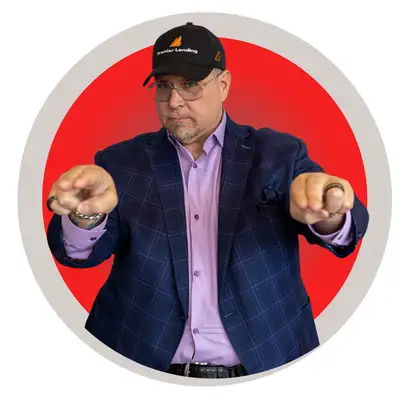
Hosted by Devin Dubuc, Loan Officer Success Live is a deep dive into the psychology, strategy, and systems that build legacy-driven businesses in today’s market. Whether you're a high-performing loan officer, a rising agent, or an entrepreneur scaling fast, you’ll learn how to attract clients, grow income, and lead with brand, not brute force.
Real conversations. Tactical playbooks. No cold-call bro-hype. Just clarity, confidence, and creative firepower.
You don’t need a script. You need a strategy. Welcome to Loan Officer Success Live
Social Media Links:
Instagram: www.instagram.com/loanofficersuccesslive
Facebook: www.facebook.com/loanofficersuccess.live
YouTube: www.youtube.com/@loanofficersuccesslive
Premier Lending, Inc.
13850 Ballantyne Corporate Place Ste #380
Charlotte, NC 28277
NMLS #238143
Copyright © 2025 Premier Lending, Inc. All rights reserved. | AZ Lic# 1002240
For licensing information, please visit the website link:
www.nmlsconsumeraccess.org
Disclaimer: The information is intended to be viewed for informational purposes only. The content contained herein is not guaranteed or endorsed by the company, or any company mentioned, nor is this content meant to be an offer of credit. The information contained in this video may not be wholly or at all applicable to every situation or jurisdiction. You are strongly encouraged to consult your professional mortgage advisor before acting upon any information in this video. The information provided is for use as a training tool only. The information is not intended, nor should it be relied upon for any other purpose.
Welcome back to The Counterculture Agent
presented by Loan Officer Success Live.
Hey, you know, Sean,
there's some real estate agents out there
with a thousand, five thousand,
maybe even ten thousand contacts in their
database,
and they're still struggling to generate
consistent business.
And here's the problem.
Just because somebody's in your database
doesn't mean they're in your sphere.
Having somebody's name,
phone number doesn't mean that they
remember you, trust you,
or even think about you when real estate
comes up.
So today we're talking about the
difference between collecting contacts and
actually building relationships and how
that difference impacts your business.
Sean, brother, let's get into it.
I love it, Devin.
I'd love to look forward to talking about
the difference between a database and your
sphere.
Obviously,
I wrote a book about this specific topic,
so I have some depth to share and
how it works and how it doesn't work.
I like it.
You know, it's funny.
This actually came up literally just this
week.
I was on a group call with some
of my other colleagues,
and the gentleman said,
I'm starting to realize that my database
isn't where I actually get my business
from.
He's like, I'm realizing that it's not,
he said,
I went back and did a deep dive
and my business is coming from here.
He said, that's my real sphere.
He's like,
I really got to figure out how to
tap into that.
So I'm glad we're having this conversation
today because that's what this is all
about.
So what is the real difference between a
database contact and somebody who's
actually in your sphere?
I'll tell you,
that's an interesting comment.
I've heard this before.
I'll give you a little bit of context,
even before we get into it,
because I'm evolving.
I'm learning more and more about getting
to deeper and bigger levels of the real
estate business.
And your avatar can actually supersede
your sphere.
When you really get an idea of who
is your ideal client,
even if they're not in your database,
even if they're not one of the people
within your sphere,
when you get really good at targeting
them,
then the connection is really high and the
conversion is really easy.
That's a little bit outside of where we're
at,
but I've learned that your sphere can only
generate so much income.
per year.
You have a limitation on how much it
can actually create.
I think people that are really successful
find that their sphere can get them to
a quarter million a year if they're really
good.
And that's the top one percent, right?
I mean, you're at the top.
And my book is really designed for that
person to get there,
to be at the top one percent.
But there are agents that want to do
more.
They want to build legacy.
you being responsible and attached to
every transaction you can't build a legacy
on.
know that's outside of the scope here so
i'll go back to your question um your
database is a collection of information
and your sphere is a collection of
relationships so that's a big difference
right an agent may have a thousand five
thousand ten thousand contacts and i know
in my crm database i do because i've
been collecting it for twenty years right
um i guess technically i look back it's
funny i had a
facebook you know memory and it was back
in two thousand fourteen that's when i got
my first office and that's when i was
adding agents gotcha so think about this
in twelve years i've sold five hundred
homes i started thinking about that like
wow i guess my volume per year is
actually pretty high over twelve years of
time forty two transactions a year if
that's my average i think that i've done
i guess i've done pretty well well because
you didn't start there
No, of course not.
Yeah.
I mean, you take the years.
You didn't start at forty two transactions
that year.
Right.
So that means that you've had some pretty
epic years as you've built out your
database,
your sphere and learned how to market and
communicate with the people that you
influence.
Right.
Yeah.
And having ten thousand contacts.
But that doesn't mean that people remember
the agent,
trust the agent would return the agent's
call or would even think of them when
real estate actually comes up.
You know, the biggest
value add from the simple sphere system is
that you become top of mind for everybody
in your sphere system,
not just a database of names.
So that's where things start separating.
So anyway,
I think that's a good place to start.
Yeah.
Well, let me ask you this.
So how does an agent know whether
someone's generally in their sphere or
belongs in their sphere, right?
Or is there some sort of a test
to figure out who needs to be in
the sphere of people that we're actually
outreaching to?
Well,
I'm going to go high level and then
I'm going to go to my favorite way
of quantifying difficult problems.
Okay.
It's called lowest common denominator.
Do you remember that from math class back
when we were doing factions and we had
to get these complex numbers and we found
you're making my head hurt in these
complex formulas,
we would have big numbers and it's hard
to multiply big numbers.
It's easy to multiply small numbers.
That's right.
So the objective is to bring down the
entire equation to where all of it can
be multiplied across very easy.
And I think of the same thing with
solving complex problems.
Am I good?
You're good, brother.
You're with us.
I think of the same thing when I
try to solve complex real estate problems
is what is the common denominator among
all the different issues?
We're going to come down to that in
a moment.
The difference and distinct
Looks like we're having technical
difficulties.
This is a live stream, guys and gals.
So bear with me real quick here.
Let's see if we can get Sean back
in action.
We need you back in the studio.
You're here twice.
Let me kick the other Sean out.
Hold on.
And let me bring you up.
There you are, man.
You're back in action.
I'm looking on Cyber Monday for a box
to replace the one the podcast runs on.
So we are talking about the lowest common
denominator.
I'm going to get to qualifying that and
what the most important things to do that.
So when we're talking about people that
are in your sphere, we want to identify...
characteristics that,
that you would connect immediately with
them.
And one of the fundamental ways I look
at it, I mean,
I can go through a list of, uh,
well, they know you by name,
you grew up with them.
Um, you know, there's,
there's things that you have in common.
You're in the same space.
You have the same friends.
There's some easy ones.
Um, but the,
probably when I say lowest common
denominator,
I could strip out all of those and
say, do they know you by first name?
Do you know them by first name?
That's a really good starting point.
Right.
Right.
And another really good test is if you
called them or text them,
would it be unusual?
Yeah, yeah.
That's another thing that's a really good
plumb line to determine if there's someone
that's going to be in your sphere or
someone that's just in a database where
there's not any real connection.
Oh, it's Sean versus, I don't know.
Yeah, I get it.
Yeah, a hundred percent.
A hundred percent.
So I'll let you, well,
let's talk about this.
So how do you, how do you,
how do you dissect to get down to
that again?
Cause you've got a thousand,
ten thousand people in the sphere and
you're trying to, you know,
sum that up to the people that actually
are, you know, people that you, you, you,
you need to be communicating with.
How do you get there?
I mean, that's, I mean,
that could be a cumbersome job.
It can.
And one of the first things that I
had to do,
even long before I even thought about
writing a book,
was I studied every book out there that
was in this subject.
Gary Keller actually has a good...
amount of information when you read the
millionaire agent on how to deal with
sphere and how that should be the major
part of your business in about three to
five years from starting.
That's the way he looked at it.
If you effectively build it from day one
and really grow and stay in front of
your sphere effectively,
that should be your source for your
opportunities.
And at the time,
you might have been one hundred and fifty
thousand a year.
We're looking at people that need to get
to about two fifty a year.
Right.
You know,
and you can and you can do it
through your sphere.
um and then he had a number of
people in your sphere and then had a
mathematical equation how many touches per
year and how many opportunities does that
create okay i actually went to someone
that's actually created a lot more updated
information and uh and i credit him in
my book because i didn't do any of
the data to determine how many people in
your sphere do you need to stay in
front of to get a certain amount of
referral opportunities a year
And the number is you want to have
about forty people in your for every forty
you get a closing.
Right.
It's kind of the math or it ends
up being about one in seven that you
touch forty times a year.
Right.
We'll give you a referral.
How many times a year did you say,
Sean?
Forty touches.
Forty touches per year.
And that doesn't necessarily mean forty
phone calls.
Right.
Or does it?
No.
There are a lot of ways.
To be top of mind,
a phone call would be incredibly valuable.
But if you have two hundred people in
your sphere,
you'd be on the phone all day,
all the time.
And that's not realistic because you still
have to sell houses.
You got work to do.
Yeah.
You got to write contracts.
You still have to do customer service.
Yeah.
I tease people because they focus on what
they currently have in the pipeline.
And that's called customer service.
We're going to take care of the customer.
And then they never take care of the
marketing part.
Inevitably, everyone does this.
The moment they get about two or three
clients, marketing is zero.
And then when they close,
they're back to being unemployed.
That's the rollercoaster cycle.
You have to actually build marketing as
part of your program Monday through Friday
all the time, every day,
have a consistent time block situation
where you at least attempt marketing all
the time.
regardless of how many transactions you
have.
I want a quick differential here too,
because when you say marketing,
I think what a lot of people look
at that as is I'm asking you if
you want to buy a home or I'm
showing something that's in regards to
purchasing a home.
I don't think that's what you mean when
you say marketing,
because I know what I would mean when
I say marketing.
Elaborate on that a little bit.
What would you call marketing in these
types of situations where you're
communicating with your sphere?
How about you tell me,
what is marketing for you in your
business?
And is it something that is important?
Yeah, I mean, for us, it's touch points,
right?
It's, you know, hey,
I'm thinking about you.
Hey, happy birthday.
Happy anniversary.
Hey, sometimes it's, you know,
we'd love to get together with you and
see, you know, you know,
we call it an annual mortgage review and
just see where you're at with your
mortgage.
See if there's anything that we can do
to improve you,
not necessarily with the financial side of
it.
But can we help you get a better
insurance policy?
Can we help you with potentially improving
your tax position?
Maybe you need to fight your taxes or
maybe you need to file a homestead
exemption.
So these are touch points that we consider
as well as marketing.
And you can do that through phone calls,
but you can also do that through a
CRM, email communication,
text communication.
You know,
another thing that we like to talk about,
Sean, and I think you mentioned this,
is that the moment that the house is
sold,
a lot of people say that's kind of
where the conversation ends.
You know,
what we like to talk about is that
that's where it actually starts.
This is where our relationship starts.
We've got you into the home.
How do we help you become financially
successful financially?
long-term and more importantly when you
get into that home let's say that you
have a problem there's a water leak
somewhere and you don't have a good
plumber that you know or there's an
electrician electricity problem or you
want to do a new addition to the
property right what resources do you have
some consumers have them some don't and
then they're trying to reach out to the
forum boards as to who do i contact
when i need help with these types of
things right so one of the things that
we always like to say sean
is, hey, by the way,
I want you to put me in your
phone so that anything happens at all,
and you need some sort of a resource.
My resources are your resources,
and I want you to have access to
those.
And then on our side of it,
we also talk about financial planners,
right?
You know,
somebody that can help you prepare a will,
right?
You know,
somebody that can actually help you with
your taxes.
You know,
if they don't love the person that they're
working with,
we love to help them find relationships
that allow for them to create financial
successes outside of just the mortgage.
So for me, when I think about marketing,
that's what I think.
I think it's a great place to work
from.
I'm going to piggyback on that.
And again,
I was like the lowest common denominator
without as much information.
You know,
it's really creating reasons for people to
reach out to you.
Yeah.
I mean,
that's what you're trying to say in adding
value.
And my view is everything that you do
in a touch system should always be a
value add proposition to your buyer and
seller.
And agents don't do this.
They don't do it well.
They spend most of the time serving
themselves.
And I'll go back to your comment after
closing.
And I know, I mean,
I've been transactional for most of my
career.
You hired me to do a job.
I painted your house.
Now I'm done.
I'll never hear from you again, right?
Right.
And that's obviously an exaggerated
example,
but you hired me to sell your house.
Why would I keep talking with you,
you know,
until you need to sell a house again
or until you need to paint your house,
whatever it is.
And the real question is,
why wouldn't you?
You know, and we're in a big,
we're in a totally different business
space than most, you know, businesses,
right?
Totally different.
I can see, you know,
painting is a good example.
That's very transactional.
You know,
they don't need to put you on newsletters
and have a long-term relationship with
you.
But they could.
They could add value.
They could say,
here's a hundred bucks every referral.
They could.
You know,
I can't do that in my business and
you certainly can't do it even more so
in yours.
You can't give out money for referrals.
So now we have to build relationships and
pour value into people instead.
That's where you become a differentiator.
You know, for me,
when I talk about forty touches, no,
it's not forty phone calls.
It's really only about two phone calls a
year.
But but there's so many things that agents
know immediately and they don't do simple
things.
Right.
I tell you,
I'll give you two easy ones that will
knock out more than half of all your
touches right here.
I'm listening.
Newsletter.
Yeah.
It's not hard.
Keeping current matters provides more than
enough content.
You can use chat and chat would write
the darn thing for you.
You can even say, Chad,
I want you to write it in my
voice.
I want you to write it for people
that would really grow and learn from
something.
And I'm giving them value in their life.
And I don't have to say anything about
real estate.
Throw in a recipe.
We could put our pie recipe on there
that your famous pie.
I mean,
are your famous ribs now that you're doing
all that grilling with your whiskey?
Smoker.
Yeah, exactly.
There's a lot of things that if it
were me and you're creating a newsletter,
make sure it's something you got some
passion in.
I have a lot of passion in grilling.
And Devin knows this.
We tease about it.
And chickens.
And I love my chickens.
I was thinking about that today.
I almost said something.
What was I doing?
I was interviewing somewhere.
Anyway,
we were talking about we're talking about
my chickens.
I was like, you know,
chickens have been a life changer for us
for the better.
Yeah.
And it probably did more for me than
anyone else.
And I didn't I was the least interested
in getting chickens because there's more
stuff to manage.
Right.
You know, we manage a lot of things.
We already have a bunch of pets.
I got a bunch of kids, right?
I mean,
we have a bunch of things that we're
managing.
So the chickens was just one more thing,
but they brought your family together.
It's like a cortisol being released or
something.
It just lowers your blood pressure
watching them just be chickens, right?
Just peck, peck, peck.
making all their weird noises.
And, you know,
I made Peco lanterns for Halloween.
That's where you take a, uh,
and I did it with my three girls.
They just skin off what they want the
chicken to peck out.
And then they'll do the eyes and the
mouth and the chickens will poke all the
way through.
And they literally will make the Jacko
lantern without us even having to cut,
cut it.
Um,
And that can go in your newsletter,
you know,
because that's letting them know who you
are, too.
It's giving them a little bit of
personalization about who Sean Corbett is
and, you know,
what what you're doing in your life
outside of selling real estate.
Sure.
The second free tip is,
and there's a thousand of them,
but if you are not in some type
of good quality home evaluation monthly
system that you can enroll them in,
if you can't think of one,
I used Homebot for a long time.
I don't anymore.
And I can tell you offline,
the reason it's nothing to do with
Homebot.
Homebot had a ninety percent open rate.
Can you imagine sending a cold email
letter to anyone cold?
that the open rate was that high.
It's incredible.
I still have it.
I still run it.
Yeah.
It's unbelievable.
They're just a little pricey and there's
some newer kids on the block that are
doing it a little bit, you know,
a little cheaper.
So sorry, HomeBot.
We still love you.
Great service, by the way.
It's because it's a lender service.
That's why Devin says that for, you know,
if the target audience,
I think we're talking to agents,
it's only twenty five bucks a month.
You can't be not twenty five a month
for me.
No, I know it's not.
It depends on the volume and stuff.
But but it's really a lender driven
initiative.
But the open rate is so incredibly high.
Now, I just gave you two examples.
That's twenty four touches a year.
And you haven't done one thing after
except for put the information into the
system or send out your newsletter every
month.
Right.
That's it.
and you knocked out half already and
you're in front of your clients,
everyone in that database,
twenty four times a year.
And there are some other things you can
do.
But I like value add opportunities.
And I'll tell you something that I'm
learning.
This is really cool.
I'm watching another one of our,
and it's kind of hard to explain to
the average agent that the brokerage I'm
at now,
the teams are at a level that no
one can understand.
They have staff that only answer phones
and assign appointments.
Agents cannot understand the level and the
volume.
you get to that level but one of
the things that they've they've created an
initiative on is we all by by habit
is we close and then we don't reach
out or talk to that person again
ninety-nine percent of us do it yeah what
they've done is exactly what devin said is
that's where the relationship can now
start now you're going to add value and
what they do is like now that you've
closed with us
You are now in our family.
And within our family,
we do events every month of the year.
We want you to be a part of
that.
How does that not change the way that
they see you?
You're now invited.
You couldn't get in before.
We're exclusive.
You're in the club.
But now you're actually in the club now.
Well,
that's huge because some of the things
that I've seen done, Sean,
and I don't know your strategies,
but some of the things that I've seen
done, and I love it,
especially around this time of the year,
are a Thanksgiving meetup where you take
the fall pictures and you've got a
photographer there that's taking family
pictures and maybe a petting zoo for the
kids and you're bringing people out and
allowing the families to interact with
each other and giving yourself an
opportunity to have another one of those
touch points,
but a meaningful touch point
that they can walk away with with a
real photograph going, man,
that Sean Corbett,
he's one heck of a guy.
He cares about his people.
And look at all these different families
that he's served.
And now all of a sudden,
they're no longer just names in a
database.
These are people in the sphere that when
Sean reaches out, they're going to go,
man, you know what?
I owe Sean a phone call because he's
just there.
He's there for us all the time.
It is a valuable opportunity and they can
bring someone, right?
I mean,
it's a way for you to get easy
connections.
It's kind of like when you sell a
house, if you do the housewarming party,
be the margarita guy.
And all of a sudden, everyone they bring,
you just showed success already.
And now you're the guy that brings them
the margaritas.
Now they, I mean,
these are just easy things that you can
do that fit within the window of what
you're doing.
Well, full disclosure,
if you bring the margaritas,
bring some Topo Chico too,
because some of us don't drink.
And man, we appreciate that, right?
Like that's just another thought process
that people don't think through.
So you can be the margarita guy.
You can also take care of those of
us that don't drink alcohol.
I got a great question for you, Sean.
So I'm an agent.
I got a thousand contacts,
but I'm not getting any repeat or referral
business.
What's the first thing I should do?
Find people that will actually call you.
need to differentiate you know what i'm
glad you asked that because i did skip
over that answer one of the things
whenever i was reading all these books is
what i was leading to is i i
had to look at my own database and
say okay i've got i think at the
time i had like five thousand contacts and
it's my same phone number my same phone
contacts were just going over every single
time i bought a new phone and it's
been traveling with me i i would say
more than twenty years because i've had
this phone number since
Probably ninety nine.
So we're talking twenty seven years,
you know,
because I think that's when I got my
first two thousand five for me.
So you had six years on me.
It's a little your phone numbers a little
older.
Well,
I know it was ninety nine because it
was my first time I was managing a
Papa John's pizza.
And the store next door was voice stream.
which if most of you know,
has been moved to AT&T and they have
the chips voice stream,
have the chips that you had to get.
Anyway, um, I,
I joined them and I had that, uh,
the fifty one hundred Nokia with the
lightning front cover.
Uh, I remember it.
Yeah.
You do the face plates.
Um, and that was my first phone number.
Anyway,
I carry all these phone numbers all this
time and I realized, you know,
I know that I don't want to lose
any of them because I think that at
one point in time, someone might call me.
I want to at least know what they
are.
Yeah.
Um, and
I started going through it.
It took me three months
This is the downloaded.
We bought Contact Plus.
It's an app.
It's worth it's ninety nine dollars a
month.
It basically makes your database and your
phone manageable where you can see it.
You can move it around.
You can you can give it a tag
for each of the contacts.
I had four tags, primary, secondary,
other and agent.
That's my four.
That's my four tags.
Primary is someone I know by first name.
They know me by first name.
Secondary is someone I know of.
They know of me if I remind them
or if they remind me.
We just have that kind of casual
relationship.
Then other is my doctor, my contractor,
people I don't need to put on any
type of lists,
but I need their phone number.
And then the fourth is agents.
For me,
I was building a database of agents,
which I've got about fifteen hundred
agents in my phone.
And I knew building any particular group
of any type is always valuable.
So I did that.
It's turned into thirteen hundred people
in a Facebook group.
So it's been valuable.
I want to dissect that a little bit,
Sean.
I'm going to dissect that because what you
just said,
I think this is a home run.
First off,
what was the name of the program that
you utilized?
Contact Plus.
It's an app.
It works on both.
Yeah.
There's a lot of different apps that do
this.
We used to have one we recommend,
but let's go with Contact Plus today
because that's what Sean's talking about.
So first off,
he utilized this to pull the data out
of his phone so that he could then
separate it into database that he knew how
to now communicate with.
Now,
I'm going to talk real quick here because
if you're an agent and you're going,
but that's an awful lot of work.
He said it took him three months.
Are you a professional?
Is this a business that you want to
excel at, right?
Do you want to take your business to
the next level?
Do you want to do the hard thing
that's going to make you successful?
Because that's where a lot of people stop.
They don't actually do the work.
Remember,
this is an industry where you can get
paid like professional athletes, doctors,
lawyers, so on and so forth.
But when you look at professional
athletes, doctors, lawyers,
so on and so forth,
what kind of work did they put in
to get where they are, right?
If you're a doctor or lawyer,
you spend a lot of time in school
doing a lot of study, right?
If you're a athlete,
you're out there putting it out on the
line every single day,
working out on a monstrous level, right?
And that's why you get the benefit of
being able to earn copious amounts of
money.
If you're a real estate agent and you
wanna be uber successful,
Take the time to clean out your database
and understand exactly who you have.
So now you can start to market to
these people as a spear.
So sorry, I had to interrupt you.
But I think it's important to talk about
this because a lot of people don't hear
the real message here.
The real message here is that the reason
that Sean is having so much success is
because he's taken the time to do the
hard things that most people won't.
so that he now has a database that
is a real sphere not just a bunch
of numbers and contacts that he doesn't
know how to communicate with sure yeah
thanks for that side um and contact plus
is it's not even separating it's it's a
live connection with my apple in fact on
my phone you can use contact plus and
not use contacts on apple there's no
reason you don't even have to use contacts
on apple it's huge
um but it's live sync so if i
delete someone on the apple or my email
my email has contacts in there if i
delete it because because you can sync it
with multiple databases and it brings them
all in together and then you just go
one by one and say okay how do
i know them
You know, you got to figure it out.
I mean, about a thousand of them,
I had to manually figure out.
I don't know where I found them from.
And fortunately,
I have the same email address that I've
had since I started TrueWest.
I can type in their contact information.
Most of the time,
I can find where we got connected at.
Yeah, where it happened.
But it's hard work to do.
It's why it took you three months, right?
But has it paid off to go and
do that?
well of course i mean i i when
i got that completely set up about a
year after i was getting um a referral
every week yeah i mean would that be
worth it to you if you didn't have
to pay anyone to get a referral
opportunity every week and i still do
today just about every week i get a
referral even in this terrible market yeah
I mean,
I got another one today just before we
got on the call.
I was getting to the point where I
was getting referrals every other day.
I mean,
it was incredible how often it was coming
in.
But the reason why I did that is
because I knew that I wanted to stay
in front of them.
And for you to create a newsletter,
a value add,
you'd want everybody you know reasonably
in that database as much as possible.
And your subscribe rate stays really
solid.
The unsubscribes are very, very low.
that's been a really great opportunity for
me to stay in front of people, right?
I mean,
and then I went out and found a
lot of their houses that didn't buy and
sell through me.
And I started putting them into HomeBot.
And then I can't tell you that just
the ninety percent open rate just made it
so valuable for me.
Well,
and the secret behind HomeBot is that it's
providing value.
It's letting you know at any point in
time what the market is doing in your
area and what your home is potentially
worth,
what kind of equity position that you
have.
So this gives your clients or your
database information that they want to
know.
These are things that they should know,
right?
This is what's happening.
And where's the information coming from?
It's coming from you, Sean, right?
Who is always there sending newsletters,
hosting events,
making yourself part of their life,
giving them access to things like your
sphere of people that you do business
with, your plumbers, your electricians,
your handymen, right?
They have access to all that,
which makes you a very valuable resource
for them.
sure yeah and no one cares you know
how much you know unless they know how
much you care so if there isn't a
relationship attached to the the
newsletter or to the homebot then the
homebot becomes good information for them
but they're still not going to reach out
to you you know you still have to
have a text you still have to have
a phone call you still have to build
in the rotation of making those and and
doing two phone calls a year on on
The average agent's top database cannot be
more than about two to three hundred.
I'm telling you, you know, I mean,
good people that would actually know you.
Yeah.
You know,
not just a list that you downloaded from
your, you know, your band moms.
You know, they're not going to know you.
So we're talking people that would
reasonably know you.
Three hundred is a pretty good sized
number.
And three hundred can generate, you know,
fifty, sixty closings a year on referrals.
I mean, it is worth it.
Well, you know, Sean,
we do this on the mortgage side and
we'll even activate databases that aren't
ours by helping them get to know us.
Right.
So, you know,
one of the things that we talk to
some of our loan teams about is if
we have what we call orphan loans,
which are loans that were done by people
that are no longer with the company,
is you can start to outreach to them,
introduce yourself as a representative of
the company,
but don't ask them for business.
let them know that we're actually here to
provide them a resource, right?
Hey, put me in your phone as Devin,
your mortgage guy.
The reason I want to be here for
you is if you have any questions,
even if they're not mortgage related,
if you're just looking for resources,
I want to be that person that you
can go to.
And what we found is that if we
do touch these clients at least four times
a year, we do four times by phone.
Now, obviously,
there's other marketing resources,
but by phone,
they start to know who you are.
Because you are there and you're doing the
marketing behind it to let them know, hey,
it's cold outside,
you might want to go outside and make
sure that you've got something covering
your pipes.
We don't want to have a freeze.
We do some of that marketing as well.
But because we're doing the touch points
by phone,
when we activate these databases,
we actually find that it's about ten
percent of every hundred clients closed
per month.
It's a pretty amazing number.
that you can utilize.
And it's not always them.
It's a lot of times a friend,
it's a family member,
it's a coworker of theirs that they refer
to us because we're always there to help
them.
So you can activate a list that's a
cold list.
It's a lot more work.
What you're talking about, Sean,
is even more important,
which is making sure that you're staying
in touch with the people that actually
matter already.
Well, you need to.
Yeah, I mean,
the cost of conversion is so stupid low.
You cannot get cheaper conversion.
conversion than with people that know I
can trust you.
There's just not a possibility out there.
In our business model,
they say it's about twenty six hundred
dollars for me to put a seller in
front of one of my agents on appointment.
Twenty six hundred bucks per seller.
And it's about a fifty fifty.
That means it's fifty two hundred dollars
for one seller to get in front of
my agent and close.
What does it cost me to pay for
a newsletter and put them in a database
and send out text?
And he's the same guy.
It's like fifty bucks per lead.
I mean, you know, per appointment.
It's so unbelievably what you can't have.
And there were generally the conversion
rate is incredibly high.
Yeah.
You know,
when someone refers someone to you,
they already we call them come listen to
us.
That's the term we use,
meaning I don't need to see everything.
You're doing the job.
Just do it.
know we call them come list me is
that's what we were trying to shoot for
but i want to go back to what
you talked about you know you might say
everybody knows i'm in mortgage um that's
not true no it's not they they know
devon
That's it.
And they see you.
They hang out with you.
They talk with you.
And I'm sure you're not talking mortgage
rates and the way the Fed is affecting
these things.
That's not relational.
Unless I'm asked.
If they ask,
I'm going to give them the information.
Of course.
Because you're an industry expert.
And a lot of times they do it
just because it's a nice thing to do.
Like, tell me about your business.
But the reality is they probably prefer to
talk about cowboys or something.
No question.
Or smoked ribs.
Or smoked ribs.
Top of mind is an incredibly valuable
thing.
And most agents have such big egos.
Well, geez, I sold, you know,
fifty houses last year.
Everybody knows I'm not real estate.
Well, no, they don't.
You know,
if you don't put in the effort of
being intentional about getting a message
out to add value to your clients.
that remind them that you are in real
estate, but in a good way,
then you're forgotten after about,
I don't remember the psychological time.
It's like three months or something.
And the thing is, Devin, you go out,
drive around looking at houses,
you're consumed with yourself,
not who's going to go help you buy
that house.
That's right.
You know, your first thought is that, oh,
I better call my real estate guy,
you know,
because he sold me this house ten years
ago.
You're not going to do it.
Yeah.
Ninety-two percent of them don't do it.
They do not call the agent that sold
them the house.
Not because they didn't like them and the
probability of them using the agents
really high.
But that agent, they were transactional.
They closed it, we're done.
Tell me when you want to sell the
house.
I sold you that house.
You're going to call me first, right?
Not if you're not having a relationship
with me.
Not if you're not in front of them.
Yeah,
not if you're not in front of them.
Give them a reason to remember you, right?
Because they're not just going to remember
that process.
You know,
they've probably run into a hundred more
agents since they spoke to you last.
And more importantly,
one of them is probably a family member
or a friend of a family member.
And that's who ended up getting your deal
if you're not staying relational and
staying in front of people.
Yeah.
And I like this.
You automate the administration,
not the relationship.
Yeah.
You know,
there's a lot of things we can automate.
I'm very big in automation because I love
efficiency.
I want to know consistently I stay in
front of.
I've even automated my touch tech system
where I have.
It's pretty cool.
About fifteen hundred people in there and
I touch ten to twelve a day automatically
and all I'm sending them is thinking of
you messages.
You know,
and I'm willing to do it even if
some of them might not be appropriate.
Like maybe we weren't,
we didn't have a great relationship or
whatever it is, but you know what,
sending out good vibes,
if it's negative coming back, that's okay.
You know, I'm willing to take that risk,
but that's something that, you know,
I've put in place,
but my database is so much larger and
I have, you know,
three agents that I have to feed.
So I'm gonna maximize what tools and
things I have available that's really low
cost.
You know what you make me think of
when you talk about sending the text,
just saying thinking you,
are you familiar with Joe Girard?
Joe Girard, the car guy, right?
You know,
thirteen thousand times each month he was
sending out something that said,
I like you.
It was just a postcard.
Went out to your house and said,
I like you, right?
But that kept him in front of people
and it made them think of him when
they were thinking about buying a car,
right?
That's funny because that's very
expensive.
Yeah.
It is.
You're selling cars.
Yeah, I know.
You're selling cars.
That's got to be twenty thousand dollars a
month.
And, you know, cost today's world.
Right.
I mean, you know,
I can't remember what year he would have
to sell ten cars to cover that.
Yeah.
Which he obviously did.
Yeah, I'm sure based on his,
because he's got a record-breaking car
sales.
I'm looking at it right now.
But he's like in the genius book of
rare records for how many cars this guy
was selling.
So it's pretty amazing.
But that's it.
Just saying I like you.
And that's what you're talking about.
Say I'm thinking about you.
Yeah,
maybe it sounds creepy to the wrong
person.
But I don't think it does.
I think it's important to let people know
that you're top of mind.
I'm thinking about you today.
I talked to an agent.
I think he was in Louisiana area.
He was a newer agent, very young.
And he had just gotten into the industry.
And he was just crushing it.
This kid was crushing it.
And we asked him,
how did you build your business?
He said,
I literally just bought a stack of
postcards.
And he said,
I started mailing postcards to everybody
that was in my database.
And it wasn't about real estate.
It was exactly what you're talking about.
Hey, thinking about you, how's life been?
This is what's going on in my world,
blah, blah, blah, blah.
And they just started reaching out to him
because he was thoughtful enough to send
him a postcard.
Sometimes it's the simple things that move
the needle the most.
It's funny.
You sent a postcard.
If they don't remember you,
they're going to look you up on their
phone.
Yeah.
Oh,
he's the one that sold us two houses
ago or whatever it is.
And his wasn't even a real estate
database.
Remember,
this was a kid that was just getting
started.
He's just reaching out to the people he
knew and just letting them know he was
thinking about them.
And that was it.
And he wasn't even talking about real
estate in it.
I think what he was offering to say,
if you need anything,
just know I'm always here for you.
Put his phone number on there.
Guess what happened?
People called.
That's reverse engineering the process.
Wait a minute.
They're calling you?
That's right.
Yeah.
Yeah.
Well, good stuff.
Well,
I think we're at the end of the
hour.
So what do we want to leave with
today, Sean?
What's the message on database sphere and
how to make that sphere into a referral
machine?
Sure.
There's a lot of things we can leave
with, right?
You don't have fifteen hundred people or
three thousand people in your phone.
You have fifteen hundred names in your
phone.
you know, let's,
let's really look at it in everyone's CRM
that has sizable audiences, you know,
people, and I'll say it again, it's, it's,
it's, it,
you guys have probably heard this before,
you know, people don't care how much,
you know,
until they know how much you care.
So you can automate a lot of it,
but if you don't have a relationship
element,
then it's not going to stick with people
when they receive things from you.
So make sure you make an impression and
add value to
to buyers and sellers all the time,
always.
Everything you do, don't ask for business.
You know,
that was twenty years ago where you would
call your database and say,
who do you know that needs to buy,
sell or invest in real estate?
That does not work today.
Nobody wants that.
They just want you to know there's enough
people throwing things at them that they
want from them.
Instead, reverse it.
Say, hey,
I just want to be here to help
you.
Yeah.
How do I help you?
What can I do to be of service
to you today?
Hey, here's some things I can offer,
right?
You know,
and I want to throw this out there
to Sean before we wrap is, you know,
you're if you're in this industry and you
want to be a professional and as Sean's
talking about, you know, this is,
you know,
top tier agents making over two hundred
and fifty K a year.
But how do you get how do you
take that further?
Right.
And how do you build that into the
legacy and, you know,
become a million dollar a year agent,
which can be done still?
Yes.
In this market,
it still happens to be a little tougher,
but it can be done.
Take your business seriously, right?
If you wanna be a true professional,
act like a professional.
Take the time to go through your database
and turn it into a true sphere.
Take the time to do the things that
are gonna make your business successful.
Make sure that you're outreaching to the
people that matter and letting them know
that you're there for them, right?
So I think this is a powerful episode,
Sean.
I think you talked about a lot of
great things.
And guys,
keep tuning in every Friday at one p.m.
I know we skipped a couple of weeks.
We're going to keep this thing consistent
moving forward to the counterculture agent
live here on Loan Officer Success Live.
So thank you guys so much for coming
back.
We will catch you on the next one.
Have a great rest of the
You've been watching Loan Officer Success
Live,
where real strategies meet real success.
Don't forget to subscribe now and share it
with your teammates and keep leveling up
because your next breakthrough starts
here.
If this fired you up,
don't just watch success,
go out there and build it.