Subscribe
Share
Share
Embed
Travel Grit is long-form conversations with ramblers, roamers and free spirits — adventurers who have crossed continents on horseback, sailed solo around the world, and traveled thousands of miles by mule. Hosted by Bernie Harberts. For bonus episodes, Q&A sessions, and more from the world of Travel Grit, check out the companion show Gritty Bits.
Transcript generated by AI. May contain errors. Refer to the audio or video for accuracy.
TRANSCRIPT: Gin Szagola: Riding a Horse Across Australia
Travel Grit Podcast
---
INDEX
"Like Going to My Own Funeral": Day One with a Wild Horse (00:00 - 12:04)
Fable the Wild Brumby: Three Months to Train, 2,700 Miles to Go (05:50 - 15:28)
Road Trains and Triple-Length Trucks at 80mph (16:39 - 24:14)
The Nullarbor: 1,000 Miles of Desert, 20 Liters of Water Per Night (28:29 - 36:01)
Camels Don't Move: Standing Your Ground at 2,000 Pounds (32:38 - 40:13)
Bruised Ribs and the Emergency Dismount I Didn't Use (36:01 - 46:02)
Holes in a Boat: When Mental Health Slowly Sinks (46:02 - 52:54)
From Coworkers to Roommates: Living 24/7 with Your Horse (50:15 - 56:02)
Failed at 18, Four Days In: Walking Home from Delaware (59:41 - 1:02:31)
"I'm So Thankful I Failed": Why Quitting Was the Best Thing (1:02:31 - 1:04:19)
The Indian Ocean Finish: A Crowd and an Anxious Horse (1:04:19 - 1:09:57)
"I Just Couldn't Let Him Go": Bringing Fable Home for $20,000 (1:09:57 - 1:15:05)
Why Wild Horses: Mustangs, Brumbies, and Being Their First Person (1:19:26 - 1:21:34)
---
FULL TRANSCRIPT
Gin Szagola (00:11) You know, the first day is always very chaotic. It feels like I'm going to my own funeral, if I'm going to be completely honest. I set off with the realization that this could be it. You know, everything could go tits up. It could be a complete dumpster fire. My horse could kill me. He could kill himself. It could just be a complete disaster.
Bernie Harberts (00:21) That's grim.
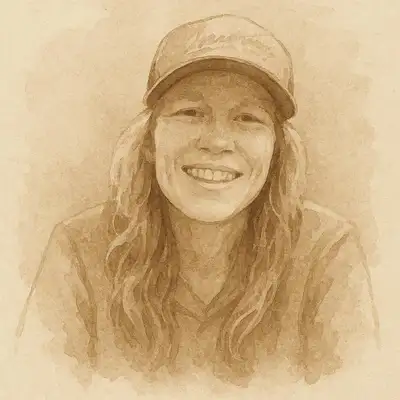
Bernie Harberts (00:38) That's Gin Szagola describing what went through her head the first day on the road with her Australian Brumby, Fable.
Bernie Harberts (00:47) When she first met Fable, he wasn't long out of the wild. Hard to halter and had never been ridden. Three months later, the two headed off across Australia. It was just Gin, Fable, and no pack horse or chase vehicle. Seven months and 2,700 miles later, she became the first documented person to travel all the way across southern Australia, including the brutally dry Nullarbor Desert, by horse without a chase crew or support vehicle. This is Gin and Fable's story.
Bernie Harberts (01:23) So first of all, congratulations, Gin. My gosh, I mean this is such a huge thing. I remember sitting here--it was you, Julia, and I in the cabin last year--and you said, "Hey, I've got this idea." And you told us. So tell us what your idea was and what you've just completed.
Gin Szagola (01:48) Yeah, so my idea was to ride across Australia on horseback from east to west coast. And my horse Fable and I have just finished that journey. It's been eight months long and about 2,700 miles or 4,400 kilometers. And you know, I've learned so much. It was so different than what I expected. I really knew so little about Australia going into it. You know, I just was kind of scratching the surface. Knew all of the very superficial things that Americans do--that most of Australia is a desert, they have kangaroos and koalas. And of course everyone loves to touch on the spiders and the snakes. But beyond that, I was pretty clueless. And so my eyes have really been opened to the land. And I've just come so far, really. Really made a 180 there as far as everything that I've learned about the country.
Bernie Harberts (02:45) Let's start with the country and then we'll get into Fable. So describe the route of your ride. And so just to set it up very quickly for people who might not be really aware of Australian geography: Sydney, bottom right. Perth, bottom left. If you looked at it as a rectangle and you rode across the bottom, does that sound roughly right?
Gin Szagola (03:11) Absolutely. So we started at a beach just south of Sydney on the East Coast. And then we rode through--the first state was New South Wales. And that's where the Snowy Mountains are, which is their largest mountain chain. It's featured in the movie The Man from Snowy River. And so we crossed that right off the bat. And then we went to cross the state of Victoria. We were in the northern portion, which is mostly farmland, flat with some rolling hills. And then we crossed into South Australia, which had a very diverse landscape. Both the most beautiful valleys you'll ever see with these grand gum trees--some of them are like redwoods. They're just magnificent and giant. There was one that Fable and I went inside, which was really cool.
Bernie Harberts (04:02) A tree big enough for you to go inside?
Gin Szagola (04:04) Yep. Fable as well, my horse.
Bernie Harberts (04:07) With Fable? Wow. So what kind of a tree was that? A gum, you said?
Gin Szagola (04:09) Yeah, a gum tree. So the vast majority of trees here in Australia are gum trees or eucalyptus. And then from there we crossed the Nullarbor over a two-month stretch. And after the Nullarbor was Western Australia, which made up easily over a third of our trip because the state is just so massive. And that was a lot of farmland, a lot of cropping. We got into it at harvest season, so we had a lot of big road trains to contend with. But also some beautiful flowers. Western Australia is one of the most biodiverse regions on Earth, and so they have so many different species of flower that just blew my mind. And then we finished on the West Coast about two hours south of Perth.
Bernie Harberts (05:01) Wow. You know, it's interesting because when we think of Australia--and I looked at a map of Australia, I looked at the one I'm sure you've seen it, it's that satellite view--and it's a red continent. And that red is desert. So it's really a surprise to hear of like the farming, the fauna, and the flowers and stuff that you ran across. Wow.
Gin Szagola (05:11) Yes, so when I first looked into crossing Australia from east to west coast, I wanted to cross the middle. But it quickly became clear that was going to kill us. Without a support vehicle, it would be impossible just because of the sheer amount of desert. If you want to cross the country from east to west coast, you really have to follow that southern coastline. So that really determined our route.
Bernie Harberts (05:50) Tell us about Fable.
Gin Szagola (05:53) So Fable is a Snowy Mountain Brumby. He's from a place called Kosciuszko National Park. I won't quiz you on how to pronounce that again. He's six years old, pure black. From his herd, about 8,000 Brumbies were culled in the last three years. And how that happens is they shoot them from machine guns, from helicopters. And he was one of a thousand horses to make it out of the park alive. And so he was rounded up by the government, similar to how they do here in the States. But they actually used like live traps. They put up portable corrals to get them into. And then he was taken in by the Victorian Brumby Association, which is one of the largest Brumby rescues in Australia. And I adopted him from there.
So when I met him, he had just been haltered, but otherwise was still--he'd been acclimated to touch and learned how to lead. He had actually recently developed a bolting habit on the ground. And so I always wore like pigskin leather gloves working with him in the beginning because, you know, a butterfly farts and he'll take you skiing, right? You have to really hold on. Yeah.
Bernie Harberts (07:11) Wow. So he was fresh out of the wild, like he'd been haltered, but that sounds like about all, and had a bolting issue.
Gin Szagola (07:20) Yeah. Yeah, not quite. So he had been acclimated to an extent to domesticity, just in terms of like, as a stranger, you could get a halter on him. It just might take like three or four minutes of having kind of that back and forth dance, you know, approach and retreat. And then you can get it on him. Whereas the really wild ones, you know, you could spend three days and not even get within a few feet of them, or they're just throwing themselves over a six-foot panel. And so he had already kind of settled down a bit there, but was still very squirrelly, very weary about being touched and led and all of that. So he just needed to find himself there and his confidence with people.
Bernie Harberts (07:50) Right. That's a huge gap though. You show up--when did you show up?
Gin Szagola (08:08) February 20th or 22nd of last year, 2025.
Bernie Harberts (08:15) So you arrive end of February, you meet Fable, and then it's like, we've got to get this horse who's halter-able, you know, the approach and retreat--you want to ride him across Australia. So how long did it take? And what were those steps that you took to gain his trust that you could have a mount that was good enough to start?
Gin Szagola (08:17) Yes. Yeah, so I spent three months training him. 90 days, which I think it really depends on the horse, but generally that's a good amount of time. You know, all the Mustang challenges they have in the US, the people who compete generally have 100 days to train their horse before they go into the competition. And so that's a good ballpark to get a horse going under saddle, one of the wild ones. Though of course some will never fully come around and have to be put into, you know, permanent outdoor paddocks left untouched.
But in Fable's case, he came around really nicely. In fact, he's the kind of horse that makes you look good even when you're not really all that good. So he was a good horse for me to train by myself for the first time. I had previously trained Finley, my Mustang in America, but that was with an instructor's aid over 45 days who had a lot of Mustang experience. And they really set the foundation for both Finley and I. So Fable's the first horse that I've really gotten going all by myself. So that was really special between us.
And then when it came to working with him, a lot of like, you know, your basic natural horsemanship--though I know a lot of people think of different things when that term gets used. You know, a lot of round penning, lunging, just very general desensitization. But then at the same time, whenever I worked with him, it was really important for me to take some time, generally before but especially after, in just like being with him. Like petting him, treating him, making it clear to him that, yes, we're gonna work on these things--whatever it is, his desensitization, his saddle training--but at the same time, I just want to reaffirm that being with me is a positive experience overall. You know, it's rewarding. So you know, you have a bit of both.
Bernie Harberts (10:45) That's huge. And that's a huge thing to gain that trust and not just technical stuff. Like we're gonna be together, it's us. Like we can just be together. So good for you for figuring that out well in advance of actually setting out. So you're ready to go. This is a one-horse trip. Just tell us briefly how unique this voyage is that you completed. Like how many other people have traveled across Australia with one horse and no chase vehicle?
Gin Szagola (11:20) Yeah, so no one has crossed Australia from east to west coast or vice versa with just a single horse. So Fable and I are the first there. There have been three or four people who have done it previously, but they all had multiple horses and chase vehicles on the Nullarbor. And so we were really unique in that regard.
Bernie Harberts (11:41) Wow. So you set out. Because it was you and Fable alone, you would have packed pretty lightly. What was the first day like when you've gotten ready, you've slept somewhere a couple nights, and he knows that's the home he knows for then. You're heading down the driveway somewhere, you're out on the road. Bring us into the saddle, those first steps when you turn west and you think, what?
Gin Szagola (12:12) Yeah, you know, the first day is always very chaotic. It feels like I'm going to my own funeral, if I'm going to be completely honest. I set off with the realization that this could be it, you know. Everything could go tits up. It could be a complete dumpster fire. My horse could kill me. He could kill himself. It could just be a complete disaster. I mean, when you're setting off with a previously wild horse who only has about three months of training, everything's up in the air.
And so that's why at the beginning of the journey, both on this trip in Australia and in America, I started out leading my horses for both of our safeties and just to be able to set us up for success as much as possible. So with Fable, I was not in the saddle. I led him the first entire day. I actually rode him much sooner than I anticipated. I was planning to lead him for the first two weeks entirely, but I ended up riding him on day three.
Bernie Harberts (13:18) Wow. That is a great point you make because, you know, a lot of times we think--in the case of long riding, and again, a long ride is a ride, a continuous ride of a thousand miles--people think, I need to ride the horse. But it's very cool that you were like, no, we're just gonna start walking together. That's something a lot of people wouldn't really think about. It's a great way to break in a new mount.
Gin Szagola (13:38) Yeah. Exactly. Yeah. And I think, you know, in the beginning there's so many unknowns. And even when you're experienced, there's always a bit of a learning curve. There's curveballs thrown your way and your horse--especially mine, you know, he had very little experience with traffic or people. He had never been through a town before. He had essentially hardly ever left the property where we were training. And so I really wanted to be able to expose him to all of these new things without the pressure of being on his back.
Especially because I knew if I was on his back and things went wrong--even if he just spooked minorly--my heart was gonna start beating, I was gonna get nervous, and he was gonna feel that energy and feed off of it. Whereas if I'm leading him, I can stay calm and cool and relaxed. And even if I am a bit nervous, he's not gonna be able to feel my heart beating because we're not touching. Yeah, we're not connected in that way.
And so like I said, it just set us up for success better. And you know, I have no ego in it. When it comes to some people who are like, you know, I'm a long rider, I'm going to ride every mile--I just don't feel that way. For me, it's really just about the connection with my horse. And the aim is always to ride the vast majority. But leading him now and again, like if we get to a busy city and I feel like he's overstimulated for some reason, he's not doing well that day, I have no problem with leading him through the entire city. Better to survive that day and go on to ride the next.
Bernie Harberts (15:19) Yeah. So what was the curveball that kind of hit you when you started out? Totally unexpected.
Gin Szagola (15:28) Ah, Fable's fear of cattle, I would say. I didn't realize he would be scared of cattle. And you know, there's a lot of cows in Australia. So that was a big hurdle. And we actually never truly overcame it. That was the one thing really. Still at the end of our ride Fable was a bit weary of cattle. Whereas he came around completely with traffic.
On day one, our biggest upset was actually over a semi coming towards us. And it was on a back road. It was going slowly our direction and Fable bolted. I couldn't hold onto him. He took off running and--he got away from me. Yeah. And he ran--he didn't run far. Luckily he only ran about a hundred feet and the truck driver stopped as well, which was really nice. So then I was able to catch up to him and grab him again. But that was very nerve-wracking. That was a close call.
And so we had to come back from that. And so he was really at a zero when it came to fast, big traffic. And so he made a complete 180. By the end of the ride, he was wonderful with road trains, which are very unique to Australia.
Bernie Harberts (16:39) Yeah, describe those. Describe what it is and what it's like to be passed by one.
Gin Szagola (16:44) Yeah, so a semi truck has just one trailer generally, but a road train here in Australia will have two or three full-size trailers. So they're like triple--triple wide or long. And yeah, they are incredibly scary to have pass you going 80 miles per hour. In the beginning, it was nerve-wracking and it was just a matter of trying to introduce Fable to them as gradually as possible, you know, maintaining a distance at first as they went by, keeping him under threshold, and then gradually getting closer and closer.
And he did come around, like I said. So I was riding him down the road. When we were in Western Australia in the wheat belt during harvest season, we would have easily 200 passes in a day on the highway right next to us. And he just did phenomenal. So I'm really, really proud of that.
Bernie Harberts (17:36) How close would a road train--sorry to cut over--how close would a road train come to you?
Gin Szagola (17:43) Under six feet, I'd say. Yeah.
Bernie Harberts (17:46) Wow. And are you walking with traffic or against traffic? And why did you decide to do whichever way you walk?
Gin Szagola (17:56) Yeah, we always ride with traffic, both in the US and Australia. I find that's the safest, personally. The horses seem to take to it the best. Because when you're against traffic, it just feels like traffic is really coming at you head-on, always. And I find that it confuses traffic more, too. Like, they struggle to pass you for whatever reason when you're walking against them.
And for instance, if you have traffic coming from both directions at once, you can take the lane when you're going with traffic. And so the person behind you has to stop and wait until the opposing lane clears and then they'll go around you. Whereas when you're traveling against traffic, you can't really do that, which makes it a lot more dangerous.
Bernie Harberts (18:37) I'd never thought of that, but yeah, that makes perfect sense. So you're traveling light, you're on the road. Describe how you found a place to stay. So, try to give me an example. If you can think of a place that like you walked up to a station, a ranch, a home--what was that like? It's the end of the day, you gotta get off the road. What does it look like? What do you do? I imagine it depends on where you are on your trip. But give us kind of a scenario. Talk us through that.
Gin Szagola (19:16) Yeah. So the majority of our ride we actually camped right on the side of the road for anywhere between 85 and 90 percent. We only stayed with a few hosts along the way and they were mostly organized through Facebook. I'm very shy about knocking on doors. I try to avoid it no matter what. And that's actually one area in which crossing Australia on horseback is easier than in America.
Because in America, especially on the East Coast, east of the Mississippi River, it's just so congested and the distance between say a fence line and the road is so narrow. Where in Australia, the land's a lot more open and the farmers' fence lines often have easily 200 feet between the fence line and the road. And so it made it really nice for us to camp roadside most of the way. We were very fortunate there.
And yeah, but when it came to finding hosts, we had a few people just stop us out of the blue and invite us home, but not too many. Most of them were organized through Facebook. I find with the Aussies that they are some of the friendliest people on earth. They are so kind and sweet. I owe it all to them really. But I will say they tend to--something I like to say is that Americans will offer to help you, Australians will agree to help you if you ask them. They tend to be more hands-off.
So in America, it's both a pro and con, okay? So in America, you tend to have more people stop you in their car to ask you what you're doing, to chat you up. But on the other hand, they also tend to be more in your business in a negative way. Like you might get the police called on you more. Even if you're just minding your own business, riding down the road, nothing seems to be wrong, there'll be someone who's like, hmm, this looks suspicious. Let me call 911. Let me have a police officer check on them.
Whereas in Australia, you know, I could be lying flopped on my side on the side of the road with Fable next to me and two utes'll drive by and they'll be like, hmm, she's all right. And just--yeah. So they tend to be more independent. But then when you do engage with them they are incredibly hospitable. And of course there are exceptions to that, but yeah I generally found that to be the case.
Bernie Harberts (21:26) Keep going up the road. Wow. Wow. So what would be your advice to a woman who wanted to take like a solo trip across Australia? What would you say to her?
Gin Szagola (21:52) I would say go for it. Absolutely. I found Australia to feel much safer than America.
Bernie Harberts (22:01) Why? Why does Australia feel safer to you?
Gin Szagola (22:05) So the crime rate and the violence rate are much lower per capita by far. I don't have the statistics offhand, but there's a major difference there right off the bat. And there's just far fewer people as well. There's only 30 million, I believe. Whereas we have like 300 million. And in the countryside, of course, you always feel safer than in the cities. Crime rates are lower. And the Australian people are just so hospitable that yeah, there was very few occasions where I ever felt unsafe, even just camping on the side of the road. The atmosphere was so positive.
Bernie Harberts (22:42) Wow. So you would literally camp right on the side of the road, picket Fable or something, get something to eat and felt fine there.
Gin Szagola (22:46) Yeah. But when I say the side of the road, more often than not, it was in the countryside. So we're talking really quiet back roads. After 8 p.m., there might not be another car that goes by until the morning. And so you wouldn't really--not many people would see you out there.
Bernie Harberts (23:11) Okay, so that's fascinating. And it gives us a good measure of just how empty and unpopulated this land is. Because when I imagine camping on the side of the road with a horse, which I've done and you've done, it can be really unpleasant because it's usually busy. But this sounds just empty. You'll be fine.
Gin Szagola (23:31) Yeah. Yeah. Well, it depends on the area. Like in the Victoria countryside, you might have on that road a hundred cars pass you during the day. But then after, like I said, eight, maybe nine p.m., it'll really quiet down. You won't see a soul. And the shoulder is so wide that when you're camped on it along the farmer's fence line, often even if traffic did go by, they wouldn't see you or wouldn't notice.
Bernie Harberts (23:34) Sure. Yeah, yeah. So let's talk a little bit about some of the technical stuff you did on your trip. I'm always fascinated by hoof care because it's tough. So what did you do for Fable's feet?
Gin Szagola (24:14) Yeah, so Fable used Renegade hoof boots. It was the same brand I went with on my American long ride and I just love them. I think they're the best brand by far. I love that they're a two-part system with both the heel captivator and the boot shell. I think those two components working independently of each other really help with how the hoof flexes as they walk. And yeah, they just allow for, in my opinion, the greatest amount of adjustability and they're very durable as well.
So for my entire ride, the 2,700 miles, I used just two pairs. And I used eight boots altogether, but I actually used the same heel captivators the entire time. I only replaced the boot shells.
Bernie Harberts (24:50) Eight boots total for 2,700 miles. So to clarify, the shells are the sole. It's like re-soling a boot, is that correct?
Gin Szagola (25:06) Exactly, yeah. The shells are the boots, the part that's touching the ground that's getting the most amount of wear with the tread.
Bernie Harberts (25:14) And then what did you do? What are the challenges I've found on these long barefoot trips--that means riding without steel shoes--the hoof will grow as it should and it'll wear if you go barefoot. But in many cases, the toe will start getting longer. In the case of Renegade hoof boots, they can get tight. How did you deal with that? Did you carry a rasp? Did someone do some trimming for you? Did you borrow tools or did you not have that problem?
Gin Szagola (25:44) Yeah, so I saw a farrier two or three times on the journey to trim Fable's hooves, particularly for that long toe he would get. There were a few instances throughout the journey where I would have him barefoot to help naturally wear down his hooves on the pavement. Here in Australia, they don't say pavement. They'll look at you funny if you use that word. They say bitumen. And I've become so accustomed to using that I had to pause for a second to say pavement again.
Bernie Harberts (26:14) So what are some Aussie words you learned?
Gin Szagola (26:19) They don't say gas, they say petrol. And they call gas stations service stations or servos. They also call the afternoon the arvo. I don't know where they get the V. They say mate a lot, that's very true of them. And--gosh, what else? The change from miles to kilometers and pounds to kilos is a big one.
Bernie Harberts (26:42) What do they not do that you were expecting? Like you go to Australia, they're gonna do this and then they don't do it.
Gin Szagola (26:46) Ooooh! Nothing comes immediately to mind, you know. It's more all the things that they do that I didn't anticipate. Yeah. And there's always those little words. I always feel like, I've gotten all the lingo down. And then there's a new word that crops up. Like the other day, I was opening a new bank account and I asked if I could set up a checking account and the teller went, "A checking account. What's that?" I was like, "Do I have to explain money to you?"
Bernie Harberts (26:59) Wow. It takes money, you put money into it. It's very funny. Really?
Gin Szagola (27:23) Yeah. They don't have triple antibiotic here either. Yeah, so the first time I asked for that in a store, that cashier really looked at me funny as well. And they don't say ketchup, they say tomato sauce.
Bernie Harberts (27:37) Wow.
Gin Szagola (27:42) Yeah.
Bernie Harberts (27:42) You're going to sound so funny when you come home. That's great.
Gin Szagola (27:45) I wish I could pick up an Australian accent. I haven't been able to. I just can't nail it, but I wish I could to just blend in more.
Bernie Harberts (27:49) Yeah. You clearly need to ride the other way. No, no, just kidding. So tell us what you did for food and water for Fable. Because again, when I hear your story, I can't get this map of Australia out of my head. It's that aerial view. It's just red and it's surrounded by blue, which is the ocean. And there's a little bitty line of green where the ocean, the blue meets the red. How did you find food and water in that type of environment?
Gin Szagola (28:29) Yeah, so there were two months on the Nullarbor where we relied on supply caches and had hay and water dropped off along the way. And then the Nullarbor is the desert stretch of the journey from--
Bernie Harberts (28:38) So to stop you real quickly, explain the Nullarbor right there.
Gin Szagola (28:58) From Ceduna, South Australia to Esperance, Western Australia, over nearly 1,000 miles, you have this big desert that you have to cross to get east to west before you get back into hospitable cropping country. So that's where we had our supply caches. And I had hay dropped off at select roadhouses along the way.
And roadhouses are combination motels, gas stations and campgrounds. And there's about roughly 10 out there on the Nullarbor. And so I would have hay dropped off at the roadhouses. And then I carried 12, 20-liter collapsible water bladders that were plastic. So I'd fill them up and I would put two out per night, or 40 liters per night, so I could have six days' worth put out at a time.
And then I would, as I got to each night's cache, I would of course use all the water and then roll up the bladders and put them in my saddlebags to carry ahead to the next roadhouse where I would fill them back up. And then I would find a traveler on the fly who was willing to drive my hay and my water ahead to put out the next few nights' caches in between that roadhouse and the next.
Out here in Australia, they call RVs caravans and they call retired RVers gray nomads. So those are two very important terms here in Australia and many of those assisted us along the way as well.
Bernie Harberts (30:36) Wow, so they would just pick up--they would bring or drop off hay and water caches 20 miles apart, roughly? How far apart?
Gin Szagola (30:45) Yeah, I would always aim to have them drop 20 miles apart. That was our average on the Nullarbor. And I would generally put the hay in either chaff bags. Would people be familiar with that here in the States?
Bernie Harberts (30:59) What's that? No, explain. What? I've never even heard of that. What is that?
Gin Szagola (31:03) Okay, a chaff bag. They often feed chaff here in Australia, which is like if you put hay through a blender. And so instead of being very long stems, they're short, it's all ground up. And so they'll feed mostly oaten hay and what they call lucerne hay, but we call lucerne alfalfa. It's the same thing. And so--
Bernie Harberts (31:07) And what's oaten? Is oaten--is that oat hay?
Gin Szagola (31:28) Yeah, and that's one of the most popular here, probably the number one. And yes, I believe so--don't quote me on that. Yeah, and so, but lucerne and chaff, they come in these big 25 kilo or about 50 pound bags. They're like potato sacks. And so sometimes I would put hay in them for my supply caches on the Nullarbor because they're very thick, so they're durable. But when I ran out of them for the last month on the Nullarbor, I just went with garbage bags and I would double up on them to try and prevent the hay from poking through because I knew that people weren't gonna wanna put hay in their vehicles unless they had a pickup truck if the hay was just loose.
And that's another thing here in Australia, they do not say pickup trucks. They say utes. They call them U-T-Es. Yep.
Bernie Harberts (32:26) Put some chaff in your ute.
Gin Szagola (32:29) Yep, I say that like on a daily basis, something along those lines.
Bernie Harberts (32:32) You really do. Wow. I imagine there's a bonkers amount of wildlife out there. You put out hay and water. You've got a hundred miles of desert. How often did an animal get into it? And what kind of animals would that have been?
Gin Szagola (32:57) Never luckily. We found all of our caches fully intact, which was very lucky. I believe part of the reason why is when we crossed the Nullarbor, it was actually an uncharacteristically wet spring and we had rains approximately once a week. And so there's actually a lot of standing water, particularly on what they call the Bight, which is about a one to 200-mile stretch where you're along the cliff sides there.
Bernie Harberts (33:17) Wow. So that's cliff sides to the ocean, is that correct?
Gin Szagola (33:29) Yeah, it's like a 200-foot drop straight down to the ocean there. Yeah, and along that stretch, there were a lot of not so much natural rock holes, but actually like potholes at the rest stops that would hold standing water from the rains. And so because it was such a wet season, I think that drew a lot of animals away from the highway. And so they didn't get into my supply caches.
But what I was really worried would eat them were emus and camels. Those are the big two. The emus especially can be a bit naughty, bit mischievous. We would see them from a distance quite a bit, but luckily the emus are very submissive. They love to run, you know, they bolt from place to place. And so you'll see them running in the distance, but then the moment they register you, they'll stop and then run the opposite way. So they don't approach you with your horse generally.
The camels on the other hand, they can be dangerous. I found out we didn't have any negative experiences. But the first time we came to a herd of camels, I'm not sure what you call that. They call them mobs here. Mobs of horses, mobs of camels. Yeah, they say that about generally any group of animals.
And yeah, so we came to a mob of about seven or eight camels and I was riding Fable and I tried like waving my arms in the air and shouting at them to see if I could chase them off because they were in our path ahead. But it quickly became clear--we were still a few hundred feet away--it became clear that they couldn't care less. Like three of them were lying down and they didn't even bother getting up. So I was like, okay, we're going to have to go around the camels. They're like American bison in terms of, you just don't mess with them. Yeah.
Bernie Harberts (35:18) Really? They stand their ground, they're just there. Wow. And you rode right towards them, they're just sitting there. Just big camels. So how tall is an Australian camel compared to Fable?
Gin Szagola (35:33) Yeah. Ooh, they're easily double the size, if not more so. Fable only weighs about 900 pounds. The camel's probably topping 2,000.
Bernie Harberts (35:49) Wow. And how tall is Fable?
Gin Szagola (35:51) Oh, Fable's only 14.2.
Bernie Harberts (35:53) Perfect size. Perfect size.
Gin Szagola (35:55) Yeah, not as far of a fall, easier to get on, easier to duck under branches.
Bernie Harberts (36:01) Did you fall off? Did you have a fall?
Gin Szagola (36:04) Yeah, I had a few falls along the way. Gosh, the first time it was on day, I want to say five or six, we were passing two steers--
Bernie Harberts (36:14) And you're passing two what? What were you passing?
Gin Szagola (36:25) Two steers, cows, cattle. Yeah. And I said, okay, I realize he's getting upset. So I'm gonna dismount, especially because I heard that there was a car coming in the distance. So I didn't want to be in between the car and the cattle. And so I went to jump off of him. And when I had my leg in the air is when he decided to spook away. So then I just fell backwards. Luckily I was uninjured. It just hurt my ego.
And I actually got a tear in my backpack that lasted the rest of the trip then. So that kind of cushioned my fall. So that was the first fall. The second would have been about two or three months later. Fable bolted over something unexpected. We were passing some other horses. We were kind of crammed up along their fence line. We couldn't really get away. There were three other horses. And so they were making a bit of contact over the fence when one of them suddenly touched the electric fence and then they all jumped, including Fable. Fable jumped in place and then those three horses took off galloping and I asked Fable to go ahead.
But I didn't realize in that moment that he had become frightened of the electric fence and it was making this tick, tick, tick, tick noise. And so when I asked him to go forward at the same moment, he saw the three horses galloping away. That kind of just triggered his monkey brain there. Even though normally we'll pass other horses and they can be running about and he won't have a problem. But that was the first time I think, you know, it was just a killer combination: the horses galloping and him being afraid in that moment. So it was an explosive reaction. So he spun in a 360 and bolted back the way we had come.
And I made the mistake--I chose to fall off. But I didn't employ, you know, the British emergency dismount as you should. I just flopped off. Yeah. Yeah, instead I just kind of, you know, flew off the side and ended up smashing into my side. It was my midsection that hit more or less. And I bruised a rib or two. It's hard to say exactly what happened. Luckily, I got up almost immediately. There was about 10 or 20 seconds where there was like major reverberation going through my body. And I was like, oh my gosh, what's happened to me. And then that wore off and I was golden again.
I got up, felt no pain, went right after Fable. And I could actually walk and ride without feeling any discomfort. It was mostly when I was lying down at night. Anytime I had to sit up from a prone position, I would feel like a twinge in my ribs on this side. And that lasted for like three weeks or so before it dissipated.
Bernie Harberts (39:20) Pretty serious. Were you wearing a helmet?
Gin Szagola (39:25) Yeah, I always wear my helmet when I'm riding. I always have a helmet and a high-vis jacket on, especially because I ride a black horse with black saddlebags, so I could really use the visibility.
Bernie Harberts (39:28) Yeah, yeah, yeah, yeah. Wow. So one thing that always interests me, and I think in your case would have been even more challenging because you're traveling not with two horses, but with one horse. And with two horses, you can ride one and pack one and you can flip back and forth. But with you and Fable, he would have been saddled the whole time. You couldn't really change that up. How did you deal with wear and any saddle sores as they came up?
Gin Szagola (40:13) Yeah, so the biggest problem we faced was loin rubbing on Fable, which was something that I had never encountered before. So it was all new to me. The fur over his loins on either side in kind of a circle on either side--
Bernie Harberts (40:31) This is behind the saddle? Really? That's weird.
Gin Szagola (40:37) Where the pad would extend over. The fur was wearing down.
Bernie Harberts (40:39) Sure. From the pad? Was it the edge of the pad? What was wearing it?
Gin Szagola (40:45) It wasn't the edge of the pad. It was immediately under the pad towards the back, where it extended past the skirt of the saddle. And so the fur started to wear down there. This was when he had his winter coat in as well. So it was particularly long and I couldn't figure out why it was happening. I equate it to, you know, cutting through a table with a plastic fork or a plastic knife, you know. Just a little bit of friction over and over again, thousands of times, and it gradually happened.
And so what I did was I adjusted my saddlebags. I had Trailmax saddlebags, and they originally extended over the skirt of my saddle and rested on top of the end of the saddle pad and kind of applied some downward pressure there.
Bernie Harberts (41:15) So they would have been behind--so sorry to interrupt--to visualize this, did you have the saddlebags--these are your cantle bags--were they behind the saddle on the pad or were they sitting on the saddle initially?
Gin Szagola (41:53) They were sitting both. So they were sitting on the back of the saddle skirt, but the fabric of it extended over onto the remaining pad. And so I modified them. So I basically cut the fabric in half and made it so they only wrapped around the skirt of the saddle rather than extended any further. So then there was nothing resting over that pad to provide downward pressure in that regard to try and cut down on the friction.
And that did help. It removed the loin rubbing from that area. But then a few weeks later, it began where the edge of his saddle panels in the back were. And so then it confirmed to me, okay, it has something to do with his saddle, like the movement of it, even though we weren't having any problems with it otherwise.
Now what was interesting is that I was so worried at that point like, oh my gosh, I might have to change my saddle or my pad. Two things I started doing was throughout the day I would lift up the back of his pad and ruffle up the fleece to try and keep it--what's the word?--lofted. Because if the fleece is lying flat, it's more likely to rub or cause friction. And so I would do that multiple times throughout the day, kind of loft it up.
And then I also tried to avoid saddling him when his back was wet because I found that often exasperated it. But even still, so what happened was winter ended and when spring came and his spring coat grew in, his summer coat, it went away. Like all the fur grew back in. The loin rubbing was gone for a month or two. And then in summer, it kicked back up, but never as bad as it once was. Like through the last three or four months of the journey, he always had a little bit of loin rubbing, but negligibly. Like it was never actually a problem. It never caused pain or discomfort. And the fur never wore through. Like there were never bald spots. And so it was very safe in that regard.
Bernie Harberts (44:12) The hair was just shorter. It was just shorter hair.
Gin Szagola (44:16) The hair was just shorter in that area. Yeah, but so slightly that no one ever noticed either.
Bernie Harberts (44:17) Like it'd been clipped almost with the clippers. Yeah. And do you think that was the difference in the summer and the winter coat? Winter coat's a little drier and heavy, summer's a little finer and maybe has a little more moisture or oil to it. Is that what you think it was?
Gin Szagola (44:30) Yes. Yes, I would think so. I actually, I was studying the subject on some endurance forums online because I find, you know, there's just not many long riders out there. So it's often hard to source information from the long riding community. So if I ever have a problem crop up, I will often look on endurance forums because I feel like they ride very differently, but the most similar to us. And so I'll find anecdotes from them to try and problem solve. And I found quite a few comments from people saying that a horse's winter coat can exacerbate loin rubbing and it can go away in the summer then.
Bernie Harberts (45:22) So, you know, because you were in a really unique position to do things that most people don't get to experience just because of the sheer mileage, hundreds, thousands of miles you've ridden. What are some of the things since you're so close to the end of your trip or having ended it that you want to remember for the next trip that you can't look up online? Like this hair rubbing thing. What are a few of those things that just come to mind that you don't want to forget?
Gin Szagola (45:54) Gosh. That's a difficult question to answer. You know, you always learn the most from your mistakes.
Bernie Harberts (46:02) What was your biggest mistake?
Gin Szagola (46:06) My biggest mistake--it would be--my biggest mistake on all my long rides, both crossing Australia on horseback and America, are always the instances where I wasn't as kind to Fable or Finley as I should have been. Like I look back at days where, you know, I let my temper show, I was in a bad mood and I regret those instances. Those are always my greatest mistakes.
Bernie Harberts (46:36) So what would be like a recent one that you remember? What's one that comes to mind?
Gin Szagola (46:42) Gosh.
Bernie Harberts (46:46) Because it's a very natural part of it. I think what happens sometimes, I think this is sometimes hard to explain, is on a long ride, for example, in my case the environment throws you things that if you were at home, you could take a breather, take a little while off, and then you could overcome them. You're coming up to a bridge, there's an expansion joint--in my case, is something I encountered--and I kind of forced Brick and Cracker, my mules on my last long ride, across it. Not a proud moment. It happened. And then I talk about, you know, in my book why that was wrong. But at that point I felt I had to do it. What's like an example in your case of something that circumstance kind of forced that you're like, God, I just wish I hadn't done that.
Gin Szagola (47:34) It's hard to pinpoint an exact example. And yet, you know, there's many instances where I reflect on being in a bad mood that day and letting it show. And that's one thing I will say. I love long riding, but the longer it goes on, the harder it is to maintain my mental health. I kind of, I think I said this last time, you know, I kind of equate it to a boat where, you know, you get too many little holes and you just slowly start to sink a bit.
The stress of it kind of mounts over time. Even though towards the end of the journey, it tends to be the easiest. Often that's when my mental health is at the worst versus the beginning. It'll be the hardest, but it's just so fresh to me that I'm able to keep my spirits high. And so it's always a challenge for me the longer a journey goes on to keep my spirits from flagging.
Bernie Harberts (48:34) So you talk about, you use that comparison of holes in a boat, feels like you're slowly sinking. What would be an example of one of those holes? Something small, not a big deal, adds up on a long trip.
Gin Szagola (48:50) I'd say really just any instance where Fable doesn't perform as I hoped he would. Like he spooks at something stupid. We're going down the trail, all of a sudden he jumps at--sometimes in the past you know he'll jump at nothing. Like he'll think the tiger's about to jump out of the bushes and he'll go. And I'm like, come on.
Bernie Harberts (49:10) Yeah. And it does wear on you. It wears on you because you would think, and it is a frustration, this part of this trip, this should not be happening. And it has a weight. So that's an example. And how about another one? Because it's a fascinating thing that unless you're out that long, you don't understand those. So what's like another one? Because I think this would really help people going through this.
Gin Szagola (49:22) Yeah. Another point I would like to make is that going on a long ride with your horse, one of the most beautiful things about it is that it's the only discipline in the equestrian world that really lets you become part of your horse's herd. But then on the flip side, with that, I like to say it's like going from being coworkers with someone to being roommates with someone. And the relationship and that dynamic changes really fast from one to the other and you think this is going to be great. We get along so well at work. And then you move in with the person and you're like, oh my gosh, what's happened? Like how could they be this different?
And so yeah, I think most people, you know, they live with a complete separation from their horse. You know, they live in a house, their horse lives out to pasture. They might see their horse for an hour a day, maybe three or four, but I think the average American, it's probably like an hour and then the other 23 hours they're apart. And so I think it's a lot easier to maintain a good relationship when you're together for so little, so to speak, you know. Whereas when you're on a long ride and you're always together 24/7, almost no separation, things can devolve a lot faster.
And so that's something I always struggle with Fable. Like in a way, I would like our dynamic to be like mother and son. And instead it tends to devolve into brother and sister a little too much. So we get into some conflict there. But of course I--
Bernie Harberts (51:20) So what's an example of that? Is it like food you're eating and he wants to eat your dried noodles or is it pushing?
Gin Szagola (51:28) Yeah, you know, just pushing into my space when he shouldn't, knocking his head into me. That's a big one that'll get me. If he just kind of smacks me with his head all of a sudden, I'm like, dude, come on. At the same time, it's my fault, especially because I let my horses use me as a scratching post. And generally, it's when like I invite it. But of course, a lot of people will say that's inviting trouble, that's kind of asking to be knocked with their head on other instances.
And yeah, ultimately I recognize that every time my horse struggles with something, it's really a reflection on my character and my training. So if I get upset, the only person I have to be upset with is myself. Like if Fable is treating me more like a little sister, it's because I've let those boundaries slide. I haven't made my boundaries clear, you know, I haven't kept up on his groundwork. So if anything, it's just looking in the mirror, but I don't always like what I see.
Bernie Harberts (52:34) Welcome to the human race. And horses. So what was--on the subject of relationships--what was it like to be alone for so long? Like what was the isolation like? How did you deal with that?
Gin Szagola (52:54) Yeah, you know, isolation doesn't bother me. I've always been a big lone wolf, always adventuring alone. I really don't get lonely. I suffer more from boredom than anything. And often even when I'm in the remote backcountry, almost more so, I feel just such a sense of contentment. And I don't feel alone. There always feels like there's a presence with me, whether it be like a higher power or just oneness with nature, you know. I just always feel at home.
Bernie Harberts (53:29) Talk about that feeling of your spirituality out there. What are your spiritual beliefs in that place?
Gin Szagola (53:40) Ooh, that's a tough one.
Bernie Harberts (53:44) Just describe the feeling of that outther-ness.
Gin Szagola (53:52) I don't know how to describe that, like my connection with nature in a spiritual way, I would say. That's tough. But I do think--
Bernie Harberts (53:59) What does it feel like in a non-spiritual way? What does it just feel like?
Gin Szagola (54:06) Yeah, long riding. I appreciate that when you're traveling at three miles per hour, you see so much of the land that people miss when they're in a car. You feel--you really feel like you're part of the land rather than just traveling through it, which I appreciate. Yeah. And I feel like it's the closest thing to just tromping around in the woods as a kid, you know, carefree, which was one of my favorite pastimes in my childhood.
Bernie Harberts (54:37) And did you ever get that sense of you're just kind of away from everybody, just that you're riding up a road, you've got the shrubs or bushes or a fence and it feels like the rest of the world is just away and it's just you. Did you get that sense out there? Or did you always feel sort of connected to your life that you left behind or people that you've met?
Gin Szagola (55:01) Ooh. You know, it's hard to say. I'm not sure I ever fully disconnected, but at the same time I feel like in the moments I did I wasn't really recognizing it. Kind of like, you know, you're constantly breathing without realizing it. But the moment you start thinking about it--yeah, I don't know. Can you truly disconnect but at the same time recognize you're disconnecting? Or is all the rest of your life immediately gonna, you know, kick back in and swarm your mind. So yeah, but I think being out in nature is the best way to really disconnect.
Bernie Harberts (55:55) So tell me a little bit about growing up. Where did you grow up?
Gin Szagola (56:02) So I spent most of my childhood in Pennsylvania. I grew up with my single mom and two sisters. We bounced around a lot from like apartment to apartment. I didn't grow up with horses. I just started riding in preparation of my first long ride across the US. That was when I was 21. It'll be five years ago as of this year.
Bernie Harberts (56:24) Wow. So how did you break free? What did your teenage years look like? How did you get away from that? Most people don't. What was that spark?
Gin Szagola (56:26) Yeah. So, you know, when I was in high school, I was really fat and lazy and I didn't have any direction in my life. And one day my mom was like, "Gin, you know, when you turn 18, you're just going to have to get out. You're going to have to do something." So I remember lying in bed one night thinking to myself, more so out of boredom than anything, I was like, gosh, what would I do if my mom kicked me out and I were homeless?
So I pictured myself on my mom's front porch and recognized no matter what the first thing I would have to do is walk away. So then I thought, well, what if I just never stopped walking? And it snowballed into this crazy dream of walking across America from coast to coast. And so I ultimately made that journey over nine months. And that really changed me because when I began the journey, I weighed about 195 pounds. I'd never left home before, you know. I had cheap $30 tennis shoes from Target and I was very, you know, shy, awkward.
And so that trip allowed me to truly come out of my shell. I kind of awakened my spirit. And then from there I knew, you know, my two greatest passions have always been animals and adventure. So I wanted to combine the two of them. And that's what launched me into long riding. It was ultimately through the Long Riders Guild that I got connected with my mentor, Sea G Ryder, who remains my best friend to this day. She lives in Washington state where my horse, my Mustang Finley lives.
Bernie Harberts (58:03) Yeah. So this would be Sea G Ryder. Is that correct? Wonderful.
Gin Szagola (58:20) Yeah. Yeah, so she rode from California to Maine about a decade ago, and she lives on Lopez Island in Washington state now. And so I moved in with her, spent four months living there. She was like, "This girl's a joke, you know, good luck" when I left. But I did it. I did the thing, you know.
Bernie Harberts (58:39) Ha! So this is on your ride, or when you left on this ride?
Gin Szagola (58:51) It was when I left Lopez Island after I spent four months living there with Sea the first time. I moved in, I knew nothing about horses. I began to ride when I was there. But mostly I spent that time saving up money, working. And then I left with the aspirations of adopting a horse to ride across America. So that's when I got Finley, my Mustang.
Bernie Harberts (59:15) I'm always fascinated by people's first attempts at voyaging. So you said you're imagining when you're 18, what would happen if your mom kicked you out, you're sitting on the stairs, you'd have to start walking. So what did it actually look like when you actually started walking? What was that first day like? You think, okay, I'm going to walk across America. You're walking somewhere. What happened?
Gin Szagola (59:41) Yeah, you know, well, technically, the first time I ever tried to walk across America, I failed. I left on my 18th birthday. It was July 15th, and I got, I think it was four days out before I went home. And the first day was going strong, though, unfortunately, I had the confidence. I was very bold starting out to knock on people's doors to try and find a place to stay. And I had a family invite me in only to find out they weren't truly comfortable having me. It was very, very uncomfortable dinner setting. So I ended up excusing myself and leaving. And I just stealth camped in the woods across the street.
And that was the one and only time as I was lying there in my tent that I felt homesick and lonely, which is a feeling that has never resurfaced. And then the second day went well. It was very hot. It was mid-July. So I think it was like in the 90s that day. Baking hot that day. I got through it. The third day was good too, but I couldn't find a place to sleep. So I ended up stealth camping in a cornfield and I felt so insecure about that. You know, I ended up bawling, crying. And then the fourth day--or no, it was the fifth--that I finally said, okay, I think I need to toss in the hat, I have to go home. So I called my mom and she drove up from North Carolina to pick me up. And--I was in Delaware and she had just dropped me off like five days prior. So she picked me up and--
Bernie Harberts (1:01:16) And where were you? Wow, what a mom.
Gin Szagola (1:01:31) On the drive home I almost instantly regretted it and by the time I came home I was like, you know what, I gotta go back. I gotta walk across America.
Bernie Harberts (1:01:39) Can you take me back to Delaware?
Gin Szagola (1:02:01) Yeah, about another, gosh it was eight months later I set off again because the ideal time to leave to walk across America from the East Coast is in the spring. It's February or March. So when I came home it was July and so unless I set off immediately again it wouldn't make sense to go at all until the next spring. And so I ended up leaving again on March 9th of 2019. And that journey ended up being successful. And now I'm so thankful that I failed the first time because it took going home for me to recognize that this is not where I want to be at all. This is not where I'm meant to be.
So then the second time that I left on the journey, I never looked back. I never felt homesick or lonely or like I was in the wrong place. I always felt perfectly content like this is where I'm meant to be. So I'm glad that I went home to learn that I wasn't meant there.
Bernie Harberts (1:03:07) That's beautiful. Wow. And I gotta ask, how long did the Target shoes last?
Gin Szagola (1:03:15) Oh, they lasted three or four weeks and then I had to replace them. That was a really beautiful moment because I made it through Delaware and Maryland, which of course are both very small states. And then I got to West Virginia, a whole new state, and my mom shipped me a new pair of shoes. And they were really nice, like $120 Merrell hiking shoes. That was just a beautiful moment because it was my mom's way of saying, congratulations on making it this far. We believe in you now. And I never owned shoes that expensive before. So it was a wonderful moment.
Bernie Harberts (1:03:59) That's wonderful. What an awesome mom.
Gin Szagola (1:03:59) I know she puts up with a lot. She really does. Yeah.
Bernie Harberts (1:04:06) So to kind of circle back and wrap up your trip with Fable, so you've come across the Nullarbor. You're coming to the Indian Ocean now towards the end of your trip.
Gin Szagola (1:04:19) Yeah, which I didn't know for the longest time. For the majority of the trip, I didn't realize it was the Indian Ocean that I was finishing at.
Bernie Harberts (1:04:28) Wow, I mean that's a monumental thing. What was it like, we talked about the first day, what was it like--were you riding, were you walking, coming up to that ocean? What was that like? What did that day feel like?
Gin Szagola (1:04:32) Yeah. So the day of, we were actually just two miles from the beach. So it wasn't far that we had to go on our final day. It was very nerve-wracking because that morning Fable was a bit uppity. He was full of energy. I could tell he was overstimulated. And so I got so nervous because there was a crowd waiting for us at the beach. And the more people there are in the room, the more anxious I get, you know, the more socially awkward. And yeah, I'm just not very good in crowds. I'm better one-on-one. So I was like, oh my gosh, my horse is being a nut. And I have all these people waiting on us. The beginning of our journey might not have been a disaster, but our ending might be. And so it was on. I nearly cried, but I held it back.
I had to recognize, you know, I couldn't expect my horse to be calm if I was losing my mind internally, you know. So I was just trying to take deep breaths, stay as relaxed as possible. And then right as we got to the beach, he settled down completely. And it was interesting because prior to that moment, he was anxious and uppity. And then when we got to the beach, I knew his anxiety wasn't gone completely because he's not very comfortable at the ocean. But in a way, it presented itself in the completely opposite way. He went from like taking an upper to a downer and he became--he like internalized his anxiety more and became very, very stoic and he didn't spook at anything and appeared very calm and relaxed even though inside, you know, there would have been a bit of turmoil there.
And so I ended up doing great at the ocean. We went up to the water, greeted people, and yeah, I was able to breathe a big sigh of relief there.
Bernie Harberts (1:06:41) Yeah. Wow. So did you ride him into the ocean? Was it a sandy beach, a rocky beach? Did you lead him in? What did he do? He's not used to the ocean. He's from the snowy mountains. He doesn't know what the ocean is.
Gin Szagola (1:07:02) Yeah. Yeah. Yes, yes it was a sandy beach with really beautiful clear water and they often have dolphins that come right along the coastline to swim with the horses which is awesome. So I was able to ride him up to the water but he was hesitant. It took a few minutes to do it.
Bernie Harberts (1:07:25) So you get there, you finish the trip, he's a champ, he walks in, and then I imagine it's like a real high point.
Gin Szagola (1:07:29) Yeah. Yeah.
Bernie Harberts (1:07:40) What happens next? We're gonna get to what happens next for Fable, but the end of a trip can be really tough. And you've just finished. You said you're at work now, but just describe for people, because I think this would help people who go through this, what's it like? I mean, it's not easy. It's waves of stuff.
Gin Szagola (1:07:51) Yeah. Yeah, I find any time I finish an adventure, like it never really feels like the end. I always think on that final day there's going to be a sense of like finality and there just isn't. It doesn't register right away. It doesn't like hit me upside the head. And even now it's been about two weeks since I finished and it's just starting to settle in a bit.
I found a great place to live just a few miles from the beach. I'm on a farm here where they board racehorses and I've got an RV that I stay in on site. Though I can go into the house anytime to use the kitchen or the bathroom. And there's a van here I can borrow to go to work. I work at another racing stable down the road. And if I don't have the van to borrow, the main shopping center is only a 10-minute bike ride, so good proximity to town. And yeah, it's really just the ideal location. Fable is out to pasture with another gelding, so they're getting along well. And yeah, I find for me after an adventure, it's really important to stay busy to keep my mind from getting into a bit of a brain rot, you know?
Bernie Harberts (1:09:25) It's tough. Ending voyages are really tough. And I love how you said you expected it would like, you finish the trip, it hits you in the head, you get this beautiful enlightenment and all is well and continues from there. But it's not a linear thing. There's often a bit of a drop-off at the end. For a variety of reasons. It's interesting to see how you see that. So originally what was going to be your plan for Fable and what are you doing now?
Gin Szagola (1:09:57) Yeah, so originally my plan was to re-home Fable, but I've always been kind of in denial about it. You know, I never really liked to talk about it when people would ask. And I was just kind of pushing it off, which was part of the reason why my plan at the end of the journey was to continue to live in Western Australia for a few months, just to be able to spend more time with him and prolong the inevitable in my mind and kind of continue to live in denial for a few more weeks.
But then at the end of our journey, I realized I just couldn't do it. I just couldn't part with him. And really what gets to me is knowing that once I give him to someone else, you know, that's it. I lose control of him. I could lose touch with him completely, you know. And one day, especially when he's old and no longer useful as a riding horse, he could end up in the slaughter pipeline. And I just feel so sad, like just never knowing, you know? And so I wanted to be able to keep him in my life.
And so I said, screw it, I'm gonna do it. And then I launched a fundraiser online through the encouragement of many of my friends online and that ends up being a great success. So far we've gotten about $14,000 which is just blowing my mind. When I first put it online, I thought, okay, I might get a few hundred dollars, you know? And so the response has just been outstanding. And of course all that money is going towards bringing Fable home, but still that being said, I've never had more than $10,000 in my bank account at once. So it's like really mind-blowing that amount of money.
Bernie Harberts (1:11:44) Fantastic. So you're bringing him home. Are you bringing--he's going to come to the West Coast, East Coast? Where do you see him going next?
Gin Szagola (1:11:45) Yeah. Yeah. Gosh I have no idea, that's a million dollar question. I don't know any of the logistics right now as far as like when he could come because I still have to save up some more money and I'm not there yet.
Bernie Harberts (1:12:07) What will it cost? What does it cost to bring a Brumby, a horse from Australia to, let's just say the west coast of the United States. What does that cost?
Gin Szagola (1:12:13) Yeah. West Coast would be more expensive, so he's most likely going to be on the East Coast. It costs--
Bernie Harberts (1:12:23) That's interesting. It costs more to bring one to the west coast from Australia than the east coast.
Gin Szagola (1:12:29) Flights only go out from Melbourne on the East Coast. So I have to bring him to the--I have to trailer him from the West Coast, get him on a flight in Melbourne, and then flights only land in America on the East Coast. So that's why--once he lands, it would be--I would be better off keeping him on the East Coast than paying to have him trailered out west is my thought.
Bernie Harberts (1:12:58) So what does a plane ticket cost from Melbourne to the East Coast?
Gin Szagola (1:13:06) The plane ticket costs $20,000.
Bernie Harberts (1:13:08) So you need $20,000 to get him from Australia, from Melbourne, which is 2,700 miles roughly from where you are now, to here. So that's $20,000. And what other expenses do you figure getting him from where you are now to the airport, quarantine--not to depress you, but to get a reasonable number and to help people get an idea of what it costs and then to help you. Like what are the additional costs? $20,000 plane ticket.
Gin Szagola (1:13:22) Yeah. Yeah. $20,000 for the plane ticket and all of the quarantines and stuff, like everything travel-related there. The only expense additionally is gonna be the trailering from the West to the East Coast of Australia and then trailering him from wherever he lands in America to where he'll be staying, which is up in the air right now.
Bernie Harberts (1:14:06) You've got $14,000 saved up, which is fantastic. And I think it really just shows how much your trip really brought something to people. I looked at the donation page. There's like, correct me if I'm wrong, but there's like a couple hundred people that donated. It was a lot of donations from like $25 to $50 and some were like $13, which is beautiful because it really speaks to, you know, how you touched people. And I would encourage anyone who's listening to this to help you out because it is such a beautiful story that is incredibly unique because it's what you two had to go through, not just you, but the both of you and discovered things that are really hard to get to. So how can people support your efforts, which means raise money to bring Fable home? Where can they donate?
Gin Szagola (1:15:05) Yeah, you know, I've got my GoFundMe up. It's pinned at the top of my Facebook page, Gin and Fable, if anyone's interested in helping bring Fable home with me.
Bernie Harberts (1:15:16) Good, so your fundraiser's still active, so people can still donate.
Gin Szagola (1:15:20) It is. Yeah. Yeah, yeah, they can still find that up on GoFundMe and my Facebook. And on the GoFundMe you can always tell which donations are from the Australians because they're always the kind of funny numbers like 13, 27. And it's because of the conversion rate because they're putting like 20 or $50 but it's converting to American dollars.
Bernie Harberts (1:15:50) Yeah! That's right. It's the Aussie decoder. It's gonna be a weird number. And I noticed that. That's fascinating. That's very cool. And so this is a huge chunk, but you're earning money. So you're gonna continue to work for how much longer in Australia?
Gin Szagola (1:16:01) Yeah. Yeah, so I'm in Australia for at least another three months and so I'll be putting all of my money towards saving up to bring Fable home aside from like living expenses. And then after that, that's where I've got to decide what I want to do. If I want to stay in Australia for a few months longer, or if I'm able to bring Fable home and I want to go with him. Otherwise I'm considering riding across New Zealand next, but I haven't looked into any of the logistics yet. And then I would have to decide do I keep Fable in Australia and board him somewhere until I'm done riding across New Zealand and then come and meet him again in Australia before flying together back to the US. So that's something I have to consider. It's really tough there what to do with Fable when he's in a bit of this limbo.
Bernie Harberts (1:17:17) Too bad you can't fly him to New Zealand.
Gin Szagola (1:17:20) No, actually, even if I could, even if the flight were free, I would say no. Because the only incentive I have to ride across New Zealand is in training another wild horse. They have their own kind of breed of wild horse called the Kaimanawas. And you know, yeah.
Bernie Harberts (1:17:26) Why? Really? I've never heard of those. Tell us about them.
Gin Szagola (1:17:44) I'm not too familiar with them. I know they live on one military base on the Northern Island and there's a few hundred, I believe mostly bays, chestnuts and grays. And yeah, they round them up almost annually and adopt them out to people. And you know, aside from long distance riding, my greatest passion in the horse world is with wild horses. And so I appreciate--I got to ride across North America with my Mustang, Australia with my Brumby.
And so the big appeal of New Zealand for me is being able to train a Kaimanawa, another type of wild horse, and ride across their respective country. So it would be like three countries, three wild horses, to the point where if I couldn't train my own Kaimanawa, I wouldn't be interested in the trip altogether. It just wouldn't be worth it for me because I really like crossing continents, you know, and New Zealand is more like a holiday trip, like a honeymoon ride. And so I really need the challenge. Yeah, yeah. So it's only about from north to south. It would be about a thousand miles. So it'd be a three-month trip. And yeah, for me, I feel like I really need the challenge of being able to train my own horse again for it to be worth it. Otherwise I wouldn't do it. Yeah, so I wouldn't take Fable no matter what. Yeah.
Bernie Harberts (1:19:10) Yeah. So specifically, what is it about Mustangs, Brumbies, Kaimanawas if I'm pronouncing that correctly. What is it about those wild, you know, in air quotes, horses that speaks to you?
Gin Szagola (1:19:26) Yeah. You know, I just really like being able to bond and grow with a horse from the ground up, you know. To take a horse that's never been touched, that has no experiences with people and being that person to show them love, you know, to be able to touch and ride them for the first time and to know their entire history, so to speak, in domesticity. It's just, you know, a beautiful experience. There's nothing like it. And for me, it's like--
The idea, and I know this is a bit strange, like most people wouldn't feel this way, but for me to buy a horse, which I've never done yet, I will in the future, but to buy a horse that's already been fully broken in, ready to go, it would kind of feel like babysitting someone else's child when what I really want is my own, you know? So I just, I really appreciate that relationship, being able to be their person from the beginning, to choose their name. This is going to sound kind of selfish, but to be the only person who's ever loved that horse, you know, just to have that really intimate personal bond with them. And so that's the biggest appeal for me with it. And I learned so much from them, you know. I learned more than they do really. And yeah, it's just, it's a great experience.
Bernie Harberts (1:20:56) Yeah, beautiful. Just a beautiful kind of a summation of your mind, why you're doing this.
Gin Szagola (1:21:03) And also, in my mind, wild horses, they make for the perfect long riding mounts because they're easy keepers with rock solid hooves. And those are, you know, two of the most important traits. And so the two just go hand in hand perfectly in my mind. Like there's no better horse.
Bernie Harberts (1:21:34) To learn more about Gin and Fable's voyage, check out her Facebook page and her website, ginandfaith.com. That's Gin spelled G-I-N. You can also make a gift to her to help her bring Fable home. Just go to GoFundMe and look for "Help Bring Fable Home." Also, I've interviewed Sea G Ryder, who Gin mentioned. Her story will feature in an upcoming episode of the Travel Grit Podcast. Thanks, Gin, for sharing your and Fable's amazing story. Stay gritty.
---
END OF TRANSCRIPT