Subscribe
Share
Share
Embed
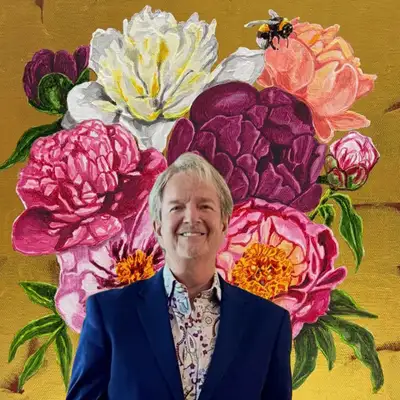
Whether through writing, broadcasting, or word-of-mouth, stories have always forged a connection between people and places. Nowhere else is this truer than in The South. Southern artist, influencer, speaker, and author Mark Ballard will weave stories of life in Macon, Georgia, and stories of the South. Tales told as only Mark can, will be interwoven with guest interviews and listener questions, and requests.
Hi. I'm Mark Ballard. This is my Genuinely Southern podcast where I will share Southern stories and perspectives that show just how unique our South is. Growing up in the South gives people a little different perspective to life. I've always used the South to inspire me in my artwork, my writings, and even my food.
Mark Ballard:I've been telling stories about the South for years in my newspaper articles, my magazines. I even had a television show. The South is more than a region to me. It's genuinely a way of life. That's why I'm excited to share these Southern stories with you and introduce you to interesting people.
Mark Ballard:I'm proud to be Genuinely Southern, and I can't wait to tell you why. Today I'm going to tell you a story about how I became an artist. It's one of the most asked questions that I get and it's a really neat story even if I say to myself, so they got a lot of moving parts. So just hook up, sit back, and get ready to take a journey on how a little boy from South Macon used his talents and perseverance to find his way in the art community. I always share this story because there's so many artists that reach out to me all the time and say how did you do it, know, what steps did you take and I hope this answers some of those questions and I hope it speaks to some people out there that whether it be artwork or not that you want to follow a dream that this will give you some kind of guideline to that.
Mark Ballard:I was in public school in the third grade. I had miss Fay Coleman as my teacher. To my knowledge she's still living. She's probably the first person that introduced me to artwork. I think she was dating somebody or one of her cousins or somebody was sometimes on the weekend would come to the classroom and draw and chalk like, you know, guess while she was grading papers or something they were just entertaining themselves and these elaborate drawings and Artist loved coming down on Mondays because I'm thinking what did they draw, you know, and I was just transfixed with that because art was not offered in our public school at that time.
Mark Ballard:So I was the teacher's pet. I'll just go ahead and say it. I just she just loved me and I loved her and so one day she asked me if I could ask my mom to come in whenever she picked me up from school and I thought, oh god, you know, she's gonna, you know, I'm talking, you know, always the talker, I told you all that, talk all the time, got in trouble for it and I said oh my goodness, yes, I'll tell you, I'll ask her so, I said mother, miss Coleman wants to see you after school and mother was like thinking the same thing I was, like what have you done? Well when mother comes in there, miss Coleman tells her that I am drawing at a better level than the other third graders, what whatever level that is. I did a lot of cartoons and you know little things from the funny papers and stuff like that or some of the dogs and cats we had.
Mark Ballard:Was doing little sketches on anything I could find. At that point I didn't even know anything about art supplies. I didn't have any kind of paints and we had that little watercolor set that you get into school and that was it. She said, you really need to let him nurture this town of his because he could go places, I really do think. And she apparently, whoever that was that was an artist in her family or who came in on with her on the weekends apparently she had showed them some of the stuff.
Mark Ballard:So my mother thought that was just great but the only problem was we didn't have a lot of money, know, no extra money and miss Coleman suggested private art lessons And we're like, what? I've never even heard of anything like that. When I got in the car, she said, Mark, we're gonna figure something out. I'm gonna check around this town, find out if any people teach art, and see if we can get you in some kind of program. And I said, well, mother, how will we pay for it?
Mark Ballard:She's like, don't worry about that. We'll make it work blah blah blah. Well, she I don't know how and I hate I didn't ask her. She's passed on now, but somehow she, I don't know, she looked at the phone book, you know, the thing is a lot of the people listen to this now don't even know we used to have phone books. I don't know if she looked in the phone book to try to find somebody or if it was some kind of ad in the yellow pages or whatever, but she somehow found this man named Hauser Smith.
Mark Ballard:I was only eight or something whatever you're in the third grade but he seemed like an older man to me he probably was in his forties or fifties but age is relevant to where you are because my mother died when she was 60 and I thought oh she was old but then when I turned 60 I didn't think that at all. Just imagine a little boy from South Macon going to have art lessons with a really classically trained art teacher and I was scared to death of him. I was the youngest student that he had taken at that time. Most of the classes were women who had a little talent or maybe they were just bored and they wanted a little project to do or something like that. And then voice in this little boy and they're all looking at me like what's going on?
Mark Ballard:One of them said that they all just hated me when I walked into the classroom and I was like why? And she said because when he gave us the assignment to draw a pine cone yours look like a pine cone none of ours did and you were like eight years old. So I said well I'm sorry and she she was jokingly kidding about it sort of. Hauser had been a professor at Old Westland Conservatory which was in Downtown Macon where the downtown post office is now on College Street. It was a college for women and it started right here in Macon Georgia and we still have West Linn was out off of Forsyth Road now but back in the day it was a beautiful building that set on that top hill right there where the post office is.
Mark Ballard:Old Westing Conservatory to the professors and the people that went there, the ladies was like a holy place. I didn't know anything about it because I was so young but apparently it burned in 1963. People were horrified when it burned and it was in the middle of the night and how they would tell stories about some of people that went there and he said that he and a whole bunch of people, one just him believed that it had been torched because it was empty and they weren't willing to sell that because I knew the federal government was gonna come in and put a post office there and then just out of the blue one I remember seeing photos. He had all the photos of it. It just was a blaze and I'll post a picture of the drawing I did.
Mark Ballard:It was just such a beautiful building. It would make you even if you didn't know the story of the building sad that something like that would have burned. So anyhow, Howser, he had a studio that was behind his mother's house. Howser was like a reclusive kind of person. He never left his house.
Mark Ballard:People brought him groceries. People came there to cut his hair just was a hermit kind of person and that was odd to me too but he was very strict. Hauser taught classic art we started with charcoal we learned how to draw we learned how to paint and when we graduate to something else And if you weren't serious about it, you were out that class because he would not put up with anything. Sometimes I'd be so tired because I've been at school all day. I think I went from four to six and like about 05:30 I'm thinking I better go start washing my brushes.
Mark Ballard:I just don't feel like I could do anything else. And he would come in the bathroom when we wash our brushes. And he said, what are you doing? I said, I'm washing my brushes. And he said, you've got twenty more minutes.
Mark Ballard:Why are you washing your brushes? And I was like, I don't know why I tried that. So I had to go back. But because of Howser, I learned about discipline, which I think is very important with an artist or any any craft that you're trying to do. You have to sometimes motor through that discipline and I flat knew that kinda like when you have a good teacher and you know you didn't do your best work or on your paper you're turning in, you knew it wasn't your best work.
Mark Ballard:I was a people pleaser and I certainly did not want Hauser mad at me. We only had at that time one art store in Macon, it was Downtown Macon called Mumfords. There was no Hobby Lobby. There was no Michaels. It was just this locally owned art store.
Mark Ballard:When you graduate from charcoal drawing to go into oil painting, he had about four or five mimeograph sheets he handed you and spent the whole day with each member of the class telling us exactly what color to get. It had to be this. It had to be that brush, taking notes. And those of you that are ours now, your art supplies are expensive. And so we had to give up something in our house.
Mark Ballard:I'm sure to do it, but mother got everything he said because I would have never walked into his class without exactly I mean, he took it seriously. He spent all that time with you talking about it. One lady went to kmart and got like a crafts tent version and he threw I'm not joking. Threw her and well, he didn't throw her, but he just kicked her out of class and threw her paint box of those cheap colors out into the front yard. So sometimes we would set up still lives to draw, and then sometimes he had this collection of, like, old postcards and things, one of which had the old Westland Conservatory that I talked to all about earlier this down there where it was where the post office is now and it was done in black it was a black and white picture so I thought I this is still when I was taking charcoal that I would just render it on a piece of toned paper.
Mark Ballard:For those of you who don't know, toned paper is like it's not white, had a kind of antique look to it. And it turned out really good. Hauser was so proud of it and so mother was proud of it. So mother had a framer, she hang hung it in her living room. And I studied with Hauser every Tuesday afternoon until I graduated from high school.
Mark Ballard:As I was in the eleventh or twelfth grade, I started thinking about college and where I was gonna go to college and should it be an art college. And to be completely honest with y'all I never really thought of myself as anything but an artist because it had been so instilled to me from when I was so young that I had that discipline already and Hauser said you need to go to the Atlanta College of Art. It was in the Woodruff Artist Center and what was cool about it is that we could go see all the exhibits of all these famous artists from back in time, I got a scholarship and he had Hauser helped me get my portfolio together because you had to send slides in to apply for a scholarship. Sometimes the things that you like and that you feel like are are good and show all your skills, you need to get somebody else with different eyes to look at. So Hauser, I said you just pick things and it was nothing that I was sent but when I got the letter you know he knew because he had been a professor and he knew what they were looking for.
Mark Ballard:Coming from Macon and being thrown into the art scene in Downtown Atlanta was a big awakening for me because I was around people and things that I had never seen before you know we had to deal with nude models I thought oh my gosh I mean they're gonna wear a bathing suit or something I'm sure but no they got as my daddy would say butt naked and you know I would just come home and tell my parents I'd be like well this this lady just walked in there she just took off all her clothes and we drew her and then there were men that came and daddy's like well what do they do when you're on break or they're on break and I was like, well, they just stand around and he said, they don't try to put on like a robe or anything. I said, well, some of them did but then they're thinking, would I put on a robe? We've been drawing them for four hours, you know, but you should have seen all of us with our piece of charcoal and our pads of paper standing in a circle around a built up platform where they put different kinds of interesting things around the model too.
Mark Ballard:So it's just not the model. With all of us holding our charcoal thinking, what is going on? But you get over that quickly and and I was glad for my discipline that I got from Hauser because it was like at that time the Harvard of art schools and a lot of people from across the nation that had a lot of money would send their girls and boys there so that they could get a degree because it's it was something good to have on your resume. And they gave us so much work that it was like a full time job. And I think after like six weeks, the enrollment had almost half from how many people started.
Mark Ballard:So I mean, it I I would never have made it there had I not had discipline talk to me very young with Houser. So I got my degree from the Atlanta College of Art, a bachelor in fine arts and graphic design. Deborah and I got married. She had a child Courtney from a previous marriage that was she was young or just a year old. Not long after we got married, it was more than nine months.
Mark Ballard:My grandmother always said that the first child can come anytime it takes nine months for the second one. But he in fact, we we were not she was not pregnant at the wedding. So anyhow we were at Northside Hospital up in Atlanta having Blake. Mother and daddy had been there when Blake was born but she had offered to bring Courtney who was two years old back to Macon so that we could just be up there with our new son and she was coming back to Atlanta to bring Courtney back and had a terrible wreck on two eighty five and 18 wheeler ran her off the road and it was the day that they do a special steak supper for the newly parented people and we were getting ready for that and the phone in our room at the hospital we were in rang and it was the Georgia State Patrol and they said is this Mark Ballard and I was like yes and he said your mother and daughter have been in a terrible wreck and you need to come to another DeKalb General. I had never been to DeKalb General, I didn't know where it was so I had to, you know, you all gotta keep in mind we didn't have cell phones, we didn't have anything like that, any kind of GPS or anything, I had to find out what it was, it was storming, but I'm like 21 or 22 with every member of my family in basically two hospitals in Atlanta.
Mark Ballard:They told me my mother was not gonna make it through the night and Courtney had broken her leg, she was screaming out in terror. My sister didn't live anywhere near, my daddy had lived in Macon and he had just had a pacemaker put in, so I was just out there by myself and you're talking about growing up, I grew up. Mother, talking about persevering, she was like in a coma for a couple weeks but then she rallied back and ended up being in intensive care for six or eight weeks, had to go to another place at the hospital for rehab for another month ended up coming to our house and keep in mind I had a newborn, a two year old with a broken leg and my mom trying to recover from the horrific wreck and it was some sad times. She was only 49 when it happened. She was depressed so we would just load up our kids.
Mark Ballard:Rob and Deborah got off of work. On Friday we would come down to Macon, spend it with the weekend with mother and daddy and they made Mother's Day that's the reason I was so happy to do it because she had done so much for me sacrificing to even get to this position. So one day we were driving back on a Sunday night and I said Deborah this is just not gonna work We just want to move back to Macon because you know that's how important my mother was to me. So back to Macon we came. Okay.
Mark Ballard:So I'm an artist. I have a degree from a prestigious school in Atlanta. I have two children and a wife and I've got to find something to do in Macon to support my family. Where I was raised we didn't know really wealthy people or people that could buy artwork or things like that. I think mother got her art from the HODA parties, those home interior parties where she would have her stuff like that.
Mark Ballard:So being a fine artist it was challenging when I got back to Macon to see how I could get myself into the art scene in Macon Georgia. They had just started the Cherry Blossom Festival and I mean it started in 1982 and we had major stars coming. I mean it was a big deal. We see it still goes on today. When I mentioned cherry blossoms, all probably didn't understand what I meant by cherry blossoms in Macon, Georgia.
Mark Ballard:I mean we have the most cherry blossoms even more than they have in Washington if I'm not mistaken. The cherry blossom festival, I think it was started the year before I was 23 and I approached them about maybe designing a poster or something one year and they didn't really know me and they were like oh let's see what you can do you have to get it funded and this and but what was more important to me was I had known just from my mother that we had a former Miss America living in Macon who was named Jane Ficklin. It was a lot bigger deal back then but she had to pray as fate would have it she went to old Wesleyan conservatory downtown before it burned. So it meant something to her she was one of those people that thought it was torched and everything so I knew I needed to meet her and I knew that a good way to do that was because of Ficklin started the Cherry Boston Festival, mister Ficklin senior. And for those of you who don't know, he was a real estate tycoon here in Macon, insurance and this and that, and had a big antebellum house on Ingleside Avenue right around the corner from where we live now.
Mark Ballard:It hit me that maybe that I could get something to him so that I could meet Neva because I she didn't know me from as daddy would say Adam's house cat. So daddy said I would never get to see Niva in her house and when I was like what do you mean? I said that just added gas to the flames. I thought I will for sure see her now. I found out that Cherry Blossom Festival gave mister Franklin senior a birthday party and I thought I'm gonna do a watercolor painting of his house on Ingleside and mother and daddy framed it because we didn't have any money to do that and I'm going to go to the birthday party because it was open to the public and I knew even the whole family would be there and I was gonna go up to her, keep in mind I'm 23, go up to her and introduce and she would also get to see some of my work at the same time.
Mark Ballard:So I talked to the people at the festival and they called one of his granddaughters, Jenny and Genuinely met me over at the property and I took some photos and then I did the watercolor and it you know turned out great and I had it framed, was really pretty and they they let me come up in front of the crowd and present it to him and both he and his wife liked it and so I saw Neva standing over there so I made a beeline to Neva and I have some cards printed and she said that's really beautiful what you did and I said thank you. I would really like sometime when you have time to show you my portfolio and she said I'd love to see But the problem is they were rich and they had different houses across the nation and both of them were busy and other stuff. So they were traveling quite a bit. And to me, that meant with my discipline that I learned from Hauser, I'm gonna have to set myself up to call her every time I can to try to set up an appointment because I've already made the connection.
Mark Ballard:I've got to carry it through. So every Monday, I put it on my calendar to call her and every Monday, I would love to, but we're leaving tomorrow or I'm going to Utah. I won't be back for two weeks. Give me a call then. And I for probably six months drove her crazy by calling her.
Mark Ballard:Finally, I think just because she just thought I'm gonna have him come over just so he won't call anymore. Sometimes it takes perseverance like that because you can't give up. I'd already set the thing up. What what good was it gonna do me to donate a painting if I couldn't get her to see some of my other stuff? We came up with a time and I was trying to gather the stuff that I wanted to take and one of the things that hit me is I knew she mother had told me she went to Old Westland Conservatory.
Mark Ballard:So mother had as I told y'all framed that charcoal drawing I did of that and it hung in our living room. So I just snatched it off the wall as I was walking out the door at she didn't go to Wesley and I'm thinking it didn't mean anything to you but I thought Neva would really like that knowing how everybody felt about old Wesleyan conservatory. So she wasn't there when I got there and I kind of spread all the paintings I had to show her. A nervous wreck. I mean scared to death because I'm thinking I was looking at all the stuff they had in the house and I'm thinking why am I here?
Mark Ballard:You never can doubt yourself because if you feel like you've done what you can to put something together and you've coordinated a time to make it happen, you've got to be on your game when it does because you might not get another chance. So she finally got there and you know I stood up and she walked in and first thing that went through my mind is my daddy said I'd never meet her. Here I am in her living room. She immediately went to the old Wesleyan conservatory rendering I'd done in charcoal and said oh my gosh that's the prettiest drawing I've ever seen of a Wesleyan. She said you know I went there and she began to tell me that where she sunbathed when she was in the Miss America and where she did this for that and she said is this for sale I've got to have it And I'm thinking, it certainly is.
Mark Ballard:I'm sure mother won't care because she didn't she didn't go to college and she certainly didn't know anything about Wesleyan. So I said, She said, well, I I definitely want that. Okay. Here's where fate clicks in. People will say always to put positive energy out there and how that's gonna happen and come back to you and all that but just as fate would have it while I'm in there she saw me at our West and the conservatory already buying one of my pieces of artwork.
Mark Ballard:The phone rang and the maid came in there and said, Viclin, need to come take this. So she said, excuse me. And I'm like, okay. I'm just so excited about her wanting anything I'd drawn. So as Neva left to take the call, I knew that her husband had done stuff with real estate and stuff like that.
Mark Ballard:But at that time, in the early eighties, he was starting up a whole group of hospitals called Charter Medical that would be all over the nation. So when Eva comes back into the room, she says, Mark, that was the head decorator for Charter Hospitals. And she said, I told her that you're gonna have to see some of Mark's work. I mean, he's sitting here in my living room right now, and you need to see his work because I think you could use some of it in the hospitals. You could commission him to do things.
Mark Ballard:And, you know, all this is just going through my mind, like, why is happening? And so she gave me a little piece of paper that had the lady's name. Their design firm was in Atlanta. And she had who I needed to ask for. And I would have never ever, of course, it was one of those places you couldn't even get into unless you were buzzed in and out, ever got to see that lady had it not been for me there that day that that call came in at the precise moment that I was there showing her the portfolio.
Mark Ballard:So sometimes in order for you to have something big happen, you have to put yourself into a situation where it can. It couldn't have happened if I just kept saying like my daddy did, you can you'll never meet her. I was not willing to accept that. I was very disciplined about it. I persevered trying to reach out to her with the phone call and then I had fate, whatever you're gonna call it, that what were the chances that head decorator would call at that very moment.
Mark Ballard:I was just excited about selling the old Westland Conservatory drawing. I went up there the next week, she told me what day to go, I went and the lady started giving me commissions to, I'm not talking about big commissions for hospital. And then they let me do the work here in Macon and then I took it to a gallery in Atlanta, had it framed and my paintings, I immediately got my whole fine art stuff started because they were going all over the world. I never in my wildest dreams thought that something that big could come of it but immediately I found my niche in fine art with that visit. My meeting with Neva brought this full circle with me.
Mark Ballard:I had also found out that she was on the Georgia Council for the Arts in Atlanta and I knew that if I could get to her with my artwork, I didn't expect what would happen there, I knew it would give me a boost in some kind of direction. You can't give up on a dream. So my story is not totally original, it's happened to lots of people, but what it is important is you have to put yourself into a position. Neva's not going to just fly over to my house one day and say, me see your artwork. I had to set that up and then it was out of my control and fate took over then and that's when the call from the decorator came and that changed my life.
Mark Ballard:Now if you have a question about me, personal or not, if you have an an idea that you've heard something about me and you want me to elaborate it on, I love getting correspondence. Let us know. You can email me at Mark@MarkBallard.com or you can message us on social media at Gen South Pod. Just drop me a little note if you have a suggestion about somebody that should be a guest or you wanna be a guest. We want you to enjoy listening to my stories of the South.
Mark Ballard:Thanks for joining our conversation. One of my favorite things to do is share tales of our unique South. I hope you're gonna come back because there's always more. Thank you to our sponsors at Carlisle Place at Home. Check out at Mark Creates on Instagram and shop my artwork on Etsy.
Mark Ballard:Hosted by Mark Ballard, Genuinely Southern is a podcast by Creek Media. The show is produced by Mark and Deborah Ballard and produced and edited by Stephanie Shadden. Follow us on social media at Gen South Pod and message us with questions you'd like to hear discussed on future episodes. Engage with us, like us, subscribe, share with a friend. Be sure to stream this and more podcasts you may love at streamthecreek.com.