Subscribe
Share
Share
Embed
One of the most essential ingredients to success in business and life is effective communication.
Join Matt Abrahams, best-selling author and Strategic Communication lecturer at Stanford Graduate School of Business, as he interviews experts to provide actionable insights that help you communicate with clarity, confidence, and impact. From handling impromptu questions to crafting compelling messages, Matt explores practical strategies for real-world communication challenges.
Whether you’re navigating a high-stakes presentation, perfecting your email tone, or speaking off the cuff, Think Fast, Talk Smart equips you with the tools, techniques, and best practices to express yourself effectively in any situation. Enhance your communication skills to elevate your career and build stronger professional relationships.
Tune in every Monday and Thursday for new episodes. Subscribe now to unlock your potential as a thoughtful, impactful communicator. Learn more and sign up for our Newsletter at fastersmarter.io.
Conversations can be brutal, but with
a little preparation and bridging,
you can have amazing communication.
My name's Matt Abrahams, and I
teach Strategic Communication at
Stanford Graduate School of Business.
Welcome to Think Fast,
Talk Smart, the podcast.
Today, I'm excited to have
another conversation with
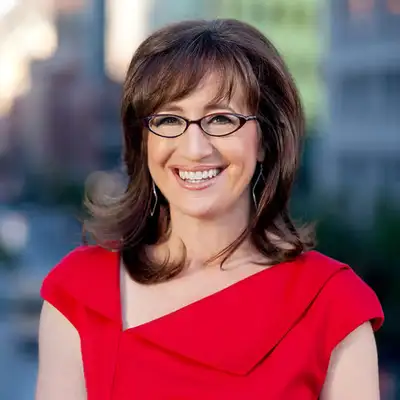
my friend Rachel Greenwald.
Rachel is an executive fellow at Harvard
Business School and a professional
matchmaker and dating coach.
Rachel is an expert on communication and
relationship building, not only in the
dating arena, but also in the workplace.
She's here on campus at Stanford to
co-teach a class with Professor Tina
Seelig called Designing for Love.
Welcome, Rachel.
I am so glad you decided to revisit us,
and it's great to be in person this time.
Thanks for being here.
You're welcome.
Thanks for having me back.
Excellent.
Shall we get started?
Let's do it.
All right.
The last time you were here, we talked a
lot about small talk, and you gave very
actionable, useful advice that I use to
this day to start and to exit small talk.
The white flag approach you taught was
amazing, and I really quote you often
with the point that small talk is about
being interested and not interesting.
And if any of you want to
hear Rachel's advice on small
talk, go back to episode 217.
So if those were sort of the entry-level,
beginner-level small talk advice and
tips, can you give us some advanced
advice, black belt level small talk
tips to help us better communicate and
help us avoid that dread we all feel?
Yeah, everybody hates small talk because
mostly it's so boring and awkward.
So I think that moving up the
scale to graduate level small
talk advice is really about moving
from playing defense to offense.
So defense is more like coming
up with good answers to basic
small talk questions, which
we talked about last time.
But playing offense is more about
being strategic with your small talk
game to help your conversation partner
learn something about you that might
lead to a desired goal that you have.
So this is really where your personal
brand comes in, where I want you to find
a bridge out of the initial stages of
small talk that leads towards a topic
that makes you unique and memorable.
So here's an example.
Maybe you're on a date or
you're in a job interview.
You want it to go well, so you think a
little bit ahead of time, "What is it
that makes me unique from all the other
dates that he's been on this week or all
the other candidates he's interviewed
this week?" And in your case, Matt, maybe
it's that being a podcast host is unique.
You know, you don't meet
those hosts every day.
What I want you to do is find a bridge
that is gonna take you from a basic
small talk question like, "How are
you?" to something that allows you
to talk about being a podcast host.
So for example, if I say, "How
are you?" You might say, "Oh,
I'm actually doing great today.
I just interviewed a really
interesting guest on my podcast, and
she told me all about organic wine."
And so now you've sort of bridged
into this more interesting topic.
The key, though, is that you have
to have a plan going into these
type of conversations because you
can't expect to just come up with
something like that on the spot.
Think about if you're an athlete,
you wouldn't just start exercising.
You would do some stretching and
warming up before the exercise.
So all sorts of examples like this, for
example, in a job interview, let's say
one of the personal brand attributes that
makes you unique is that you're gritty.
You, you have a lot of grit.
Maybe you walk into a job
interviewer's office, and he's
got a photo of himself climbing a
mountain behind him on the desk.
And so you could do this bridge where
you say, "Oh, I noticed that hiking
photo over there. I'm curious where that
hike is because actually I just climbed
Kilimanjaro this year, and it was so hard,
but I did it." And so here you're moving
basic small talk into something that is
strategic on your part, demonstrating your
personal brand, that is grit in this case.
So what I really hear is it's
about branding and bridging
and how you connect those two.
And what's required there is
to be a little strategic and to
think in advance about what are
those things that make me unique.
What advice do you have as we
reflect on our personal brand?
We've had Seth Godin and Dorie
Clark on the show, and they've
talked about personal brand as well.
But as a matchmaker, I'm wondering if
you have a specific way of thinking about
brand that we could all benefit from.
I do.
I mean, I think the first thing to say
about personal branding is that it gets
a bad reputation as being manipulative
or like you're bragging or showing off
if you talk about something that makes
you unique or special or memorable.
So I think the first thing is you have
to get that out of your head, that I
think the better metaphor about personal
branding is that it's almost like you're
walking into a restaurant and the hostess
is greeting you at the host stand, and
she can either make basic small talk with
you and say something like, "How are you?
Would you like a table?" Or she could
hand you a menu and essentially say,
"What looks good here tonight on the
menu?" So essentially, she's focusing
the initial greeting on, like, the
chef's specials and what are the
signature items at the restaurant.
Once you've got the right attitude
about personal branding, the, the
easiest shortcut to what is a personal
brand is to come up with three traits
or skills that makes you unique.
Seth Godin talked about this
in Purple Cow, about basically
how to be unique and memorable.
And I think you just come up with three
things that feel authentic but also
unique, kind of the Venn diagram of who
you are, but what's unique about that.
So maybe you're on a date, for example,
and let's say your three personal brand
traits are that you're adventurous,
maybe you once appeared on Shark
Tank, and you're from North Dakota.
Being from North Dakota is not like
being from New York or California.
It's unique.
So you will pick something that is
part of that personal brand and find a
bridge out of small talk into focusing
on something that makes you memorable.
Of course, you may not be
the only one on Shark Tank.
You're not the only one
who's from North Dakota.
You're not the only one who's adventurous.
But you might be the Venn diagram of those
three things, and that is a great place to
start when somebody on a date might say to
you, "What do you do?" You might be able
to think in advance, uh, well, I'm gonna
talk about being on Shark Tank because
that's always good fodder for interesting
conversation and the crazy things that
happened that one time I was on TV.
And so somebody says, "What do you do?"
And you might start off by saying, "Well,
I'm an entrepreneur, but I have to tell
you, I've only had 15 minutes of fame.
My company may not be doing very well
right now, but once I was actually on
Shark Tank, and I have the craziest
stories about Mr. Wonderful." So
you brought up the topic, and you've
really served up a interesting menu
to your conversation partner about
something to talk about right away.
I really like the idea of delineating your
authentic differences in your brand as
circles that overlap in a Venn diagram.
A lot of people say, "Just list out
all the different things," but the
physical representation and overlaps is
what I think can be really interesting
because that is what makes you unique.
There might be a lot of people who have
tenacity and a lot of people who have
deep knowledge in one area, but that
overlap makes it unique, and I like that
idea of helping us identify it that way.
And then thinking of yourself as a host
or a hostess who has to focus that initial
interaction, I really like that as well.
Thank you.
Many of us struggle in conversation
in general, but the real
struggle is that first beginning
part, that first 60 seconds.
Do you have advice on how to
maximize and set ourselves up
to enjoy that beginning part?
I feel like once I get over that
hump, it becomes much easier.
You're exactly right, that those
first 60 seconds are the worst.
I think taking an improv class is
always great because that helps
teach you to roll with any situation.
But beyond that, there are two other
things that I coach my dating clients on.
So the first thing I tell people to
ease that first minute is topic prep.
So to think about in advance, again,
you're like an athlete stretching
and warming up for the exercises.
Topic prep involves just
taking a minute or two before
you walk into a conversation.
You're maybe going to a business
networking event or on a date
or a job interview or even
catching up with a friend.
And you pause and think of three things
that you're curious to ask in advance.
So if it's a stranger you're meeting,
you can Google them or find their
Instagram or look for clues in
some messages you've had so far for
what they might be interested in.
But for example, let's say you
looked at their Instagram in advance
of somebody you're meeting on a
date and you saw that this guy had
a photo of himself fly fishing.
So maybe that's one of your three topics
that you've prepped in advance, and you
are gonna ask how he became interested in
fly fishing, and maybe that's gonna lead
to a story about how his dad taught him
to fly fish, and it was bonding, and that
opens up conversation about his family.
So I think being prepared
is super important.
There's another really interesting trick
that works especially well in almost
every situation, and it is a Latin phrase
called in medias res. And in medias res
means literally in the middle of things.
So this is where you start
a story in the middle.
If you've ever seen a TV show where
they start with a robbery in progress,
and then the show cuts to a phrase
on the screen that says, "Three days
earlier," and it hooks the listener
to show what led up to that moment.
In conversation, starting a story in the
middle is something that you actually did
the last time you and I had a phone call.
I don't know if you remember this.
I remember the phone call.
I don't remember this.
As soon as we got on the phone, I said
to you something like, "Thanks for
accommodating my schedule to talk on a
Saturday." And you said, "There I was,
toilet shopping with my mom when the
reminder for our meeting popped up on my
phone." And so I was immediately hooked.
Toilet shopping for your mom?
What on earth is the backstory to that?
And you just launched into, in
medias res, in the middle of a story,
something that was unexpected and
intriguing, and it really just helped
us get over very quickly those awkward
first 60 seconds of small talk.
I'm glad I demonstrated that.
Let's just say it was an explosive
situation that needed to be
fixed, and we took care of it.
Again, the advice is to do some
preparation, even though conversations
are spontaneous, to, to take
the time to do some preparation.
And that reconnaissance, reflection, and
research on the person or people you're
interacting with can be really helpful.
And the goal is not to script out
the communication, but it's really
to find the opening for further
conversation, is what I heard you say.
And that, to me, is a very
different way of approaching.
So it's not just, "What do I say to
start it?" It's, "What do I say to
open up the conversation?" And I like
the idea of starting in the middle.
As somebody who teaches people how to
give presentations, that's definitely
a technique that can be used, and I
like that you apply it to conversation.
I wanna talk about how we did
prepare for this interview on
that phone call on that Saturday.
You and I had a conversation
about handling taboo topics,
things like money, religion, sex.
You have some really useful ideas
about how to discuss these types
of topics, which turn out to be
really important as we develop
deeper relationships with people.
Can you share some tips and tools to help
us talk about topics that might be taboo?
People tend to avoid taboo
topics because they're fearful of
controversy or having awkward moments.
But I would invite people, as they
move away from small talk and start
to grow and deepen a relationship with
somebody, to reframe taboo topics as
really a gateway to deepen connections.
For example, what that looks like is
not focusing on the facts of the taboo
topic, not, "What do you think about
it? Are you in favor of it or against
it?" Those are facts about a taboo
topic like money, sex, or religion.
But really to focus on the stories
and emotions behind those topics.
So for example, if we use the taboo topic
of money, um, it's always somewhat awkward
to talk about money for most people.
So let's say you've been dating somebody
for a few weeks or months, and you
wanna start assessing if your values
align on an important topic like money.
So instead of asking a factual-based
question like, "Do you consider
yourself frugal with your money, or
do you spend lavishly?" You might ask
a question that evokes a story like,
"What did your parents teach you about
money when you were growing up?" Or
you might ask a question like, "What's
the first thing you bought with your
own money, and why was that important?"
So here you're getting at the why of
what they feel and not a factual black
or white answer in terms of whether they
align with what you think about the topic.
So even though money is one of these
topics that people argue a lot about in
marriages, what's important is how you
argue, not what you're arguing about, and
not whether you're on the same page, but
how you resolve conflict when it arises.
Taboo topics and using those to get
into storytelling about how someone's
belief system was shaped, especially
at a young age, is really this kind
of gateway to making taboo topics
a vehicle for deeper connection.
So several things there that I
really like, that talking about
topics that can be challenging
actually deepen the relationship.
And a great way to do it is
through asking questions designed
for people to explain why.
Tell stories.
Help me understand how you came to this
rather than what it is you believe.
We had Wendy De La Rosa on, and we
talked a lot about money, and, and
she had similar advice, that talking
about money in her case, but in all
these topics, it's really an act of
demonstrating care and concern, and
that's what deepens those relationships.
And I love the idea of just soliciting
stories from people that allow you then
to have, again, deeper conversations.
Really good advice.
Well, Rachel, you've been here before.
You know that before we end, I
ask everybody three questions.
One I make up just for you, and two
I've been asking people for a long time.
And feel free to repeat what you've
said before or come up with different
answers from our, your previous visit.
Are you ready for these?
Absolutely.
Excellent.
As a matchmaker, your clients go out on
dates every night all over the world,
and the date outcome entirely hinges on
them having a good or bad conversation.
How do you evaluate a successful
or unsuccessful date when you're
not there yourself and you're just
listening in to what they tell you?
How do you assess a good conversation?
Oh, I love that question.
The truth is, I have one simple
question that I reflect back to them,
and I ask them, "What side of you
did they bring out?" So what I'm not
asking is information-based questions.
I am not asking, "Did you like
them?" Or, "What information did you
learn about them?" Or, "Was there a
spark?" You know, those are typical
questions that your friends might ask
you when you get back from a date.
I'm asking, "What side of you did
they bring out?" to help me determine
if this was a good or bad date.
So if their answer is something like, "He
brought out my playful side," or maybe,
"She brought out my confident side,"
then I know it was a successful date.
But if their answer was something
more like, "Well, actually, he brought
out my insecure side," or, "No, no,
she brought out my competitive side,"
that's when I know it didn't go well.
I really like that question
for assessing conversation, not
just on dates, but in general.
You know, what part of yourself
showed up or was able to be
shown off in the conversation?
And I think we can all do that ourselves.
We don't need to just go to somebody who's
an expert like you and think about that.
I really like that.
I appreciate that question.
Question number two, who's a
communicator that you admire, and why?
I've thought about this since the
last time I was on the show, and
I'm gonna tell you about a personal
friend of mine named Katrina.
And the reason I admire her so much is
that she always makes me feel good when
I talk to her, and she does two specific
things that always make me feel good.
First of all, she has a signature
expression that she uses all the
time, and the expression is, "It's not
lost on me." So she'll say something
like, "It's not lost on me that you
have an early morning tomorrow and
you didn't cancel our dinner tonight.
I really appreciate that you came
out and spent this time with me."
So she's just finding a way to
show appreciation, and it makes
me feel so good, especially
when it's something so minor.
You know, it's not lost on her
that I didn't cancel our date.
Like, that's a pretty low bar, but
here she is feeling so appreciative.
So I think that expression is something
that everybody should use more of.
And then the second thing she does
is she leaves a lot of voice notes
for me instead of texting me.
And I think this is a really underutilized
feature on our phones because it's
not only unique from everybody else
that's texting you, but it's more
personal, and it creates an emotional
connection when I hear her voice.
And so I would say 8 out of 10
times that I communicate with her
is her leaving me a voice note.
Now, I also appreciate that
it's not as intrusive as a phone
call because that would be her
interrupting something else I'm doing.
But, you know, the voice note is
just that beautiful, happy medium
where I get personal and emotional
connection with her, but it's on
my own time when I listen to it.
So I think those two things, appreciation
and emotional connection, are really
what make her a superstar communicator.
I'll start by saying it's not lost on
me that you spent a little time thinking
about this deeply, and I appreciate that.
And taking the time to express
appreciation and finding a unique way
to connect with somebody where your
true voice, in the case of a voice
memo, comes out, I appreciate that.
Well, the final question, Rachel, what
are the first three ingredients that go
into a successful communication recipe?
The first ingredient is mood.
I think not enough people think
about how they make someone feel
when they're talking to them.
And so the idea here is that if somebody
says something to you like, "I love
to ski," you might respond by saying
something like, "Me too," if you're the
mirror, or you might respond by saying
something factual, a, a question like,
"Where's your favorite place to ski?"
That would be a very legitimate response.
But a mood-based response to somebody who
says they like to ski is more like saying
to them, "Tell me the last time you went
skiing and you really loved the day."
And that kind of evokes a time for them
when they felt good, and you're invoking
a positive memory by asking a question
that is focused on them telling a story.
It's promoting connection, and it's
not garnering information, but really
creating a moment between the two of you
where they're affiliating the positive
mood they are calling up from their
memory with almost, like, conflating
it with you because you're the one
that's experiencing that with them.
The second ingredient I would say
is a acronym I use all the time,
which is DBB, don't be boring.
I think not enough people use
DBB, don't be boring, as a lens
to filter their conversation.
And if you can start to remember
that every time you go to answer a
question in a conversation, first
do a quick check, "Is this boring?"
And if it is, come up with something
more interesting because boredom
is just the enemy of conversation.
And last, I guess the ingredient I
would say is probably vulnerability.
Not just showing the polished
version of yourself, but really
telling a story that's real and
humble, maybe self-deprecating.
You could talk about a
challenge you're having.
You could talk about
an embarrassing moment.
You could talk about a regret.
And it's not about bringing the mood
down or being negative, but really
just being aware that the polished
version of you where everything's
great and you're amazing is a
lost opportunity for connection.
All of your three ingredients
have to do with connection.
I really like the idea of setting the
mood through the things you ask and
the interaction you have, and that
mood does transfer from if I'm having
a good time telling you a story,
I'm having a good time with you.
And this notion of as you begin
to respond in a conversation,
you have choices of what to say.
Choose the option that's less boring.
And then finally, being vulnerable,
being authentic, really powerful.
Rachel, like all of our conversations,
I learn so much from you.
I really appreciate it.
This notion of thinking first and
planning before we go into conversation,
considering how we bridge into the
topics we want to have, and how we
can bring out the best in others
and ourselves, really important.
Thank you.
Thanks for having me.
It was a pleasure as always.
Thank you for joining us
for another episode of Think
Fast, Talk Smart, the podcast.
To learn more from Rachel Greenwald,
please listen to episode 217.
This episode was produced by Katherine
Reed, Ryan Campos, and me, Matt Abrahams.
Our music is from Floyd Wonder, with
special thanks to Podium Podcast Company.
Please find us on YouTube and
wherever you get your podcasts.
Be sure to subscribe and rate us.
Also, follow us on LinkedIn,
TikTok, and Instagram.
And check out fastersmarter.io for
deep-dive videos, English language
learning content, and our newsletter.
Please consider joining our Think
Fast, Talk Smart Learning Community
at fastersmarter.io/learning.
You'll find video lessons, learning
quests, discussion boards, an AI
coach, and book club opportunities.
Again, that's fastersmarter.io/learning
to become part of our Learning Community.