Subscribe
Share
Share
Embed
How is the use of artificial intelligence (AI) shaping our human experience?
Kimberly Nevala ponders the reality of AI with a diverse group of innovators, advocates and data scientists. Ethics and uncertainty. Automation and art. Work, politics and culture. In real life and online. Contemplate AI’s impact, for better and worse.
All presentations represent the opinions of the presenter and do not represent the position or the opinion of SAS.
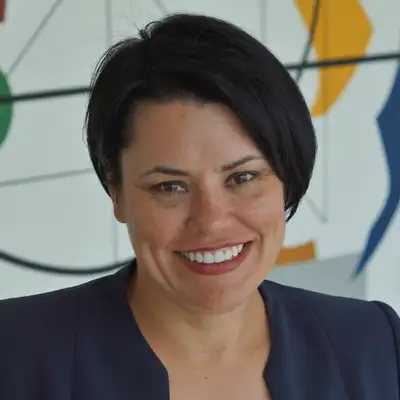
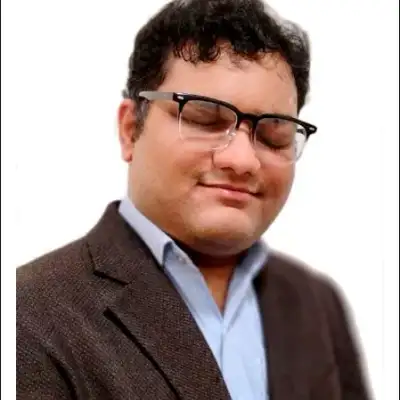
KIMBERLY NEVALA: Welcome to Pondering AI. I'm your host, Kimberly Nevala. In this episode, we're pondering Ableism in tech with Maitreya Shah. Maitreya is a researcher and lawyer currently serving as the technology policy director at the American Association of People with Disabilities. Maitreya, it's been a long time coming. We are so happy to have you on the show. Welcome.
MAITREYA SHAH: Thank you so much, Kimberly, for having me and very glad to be here.
KIMBERLY NEVALA: It is absolutely our pleasure. Now you are a lawyer by training, and I'm wondering if you went into the field intending to focus on tech policy and, more specifically, on that intersection between tech policy and disability rights? Or has that interest or focus evolved over time?
MAITREYA SHAH: That's a great question and something that I love to answer usually. So, no, I did not intend to work in either of these areas when I thought about pursuing law as both my academic degree and as a career.
I think it was during high school that I primarily started volunteering with disability rights advocacy and nonprofits and organizations that work in that space. And that's how I got into that field. I started doing a lot of my own advocacy going and working around policies, legislations, helping with court cases. So that was in India earlier than in the United States and I've also done international work done on disability rights law and policy. So that's something that was continuing and built over a few years.
Technology policy was something that I developed interest through law school. I was interning at a few technology policy think tanks and organizations and that's how that interest evolved.
So, I was in a way pursuing these two interests of mine or these two things simultaneously but separately. I think it was only about, I'd say, about 2021 that I actually started working at the intersection of tech and disability. Because I started realizing, and a lot of it comes from my own personal experience, that I realized how emerging technologies particularly are shaping and are affecting the rights of people with disabilities and shaping my everyday experiences with technologies. So I think that's where I thought I could actually marry my interests and expertise and start working on that intersection. So that's how this work has come about, and that's what I've been doing for the past few years now.
KIMBERLY NEVALA: Oh, yeah, this is excellent. I know we're happy to have you there as such a strong and just disciplined voice in the fight. And there are certainly many, many challenges and fundamental questions that we need to address. But before we dive into all of that can you talk a little bit or give people a sense of how digital technologies and AI, when deployed well, can enable those with disabilities to really engage and show up in the world - or be present in the world - in the ways that they want to engage and be seen? Again, when we do this well, what does that look like?
MAITREYA SHAH: Absolutely. So I think technology is a great enabler for sure. And it is often said that people with disabilities are early adopters of technologies. I can say that from my personal experience that technology has changed how I studied, how I work, and it's been a great enabler. Starting with screen readers or with dictation tools with other forms of technologies when AI came into smartphones with image recognition and other things.
So technology is I would definitely say a great enabler if, as you I think you rightly said in your question itself, if done the right way. And I think that's essential to ground this conversation in what is right way. How should technologies be integrated into the lives of people with disabilities and how do we achieve that goal of support and of enabling independence and autonomy?
So I think, for me, the first premise of this, something that I try to voice it in my work is that people with disabilities should lead the efforts of how technologies are built and shaped. And I would say technology should be informed by the voices of people with disabilities. It should be both a leadership and participation set up where we get to decide what technologies we want and what would work for us.
I think that's a fundamental premise and that's a very clear line that you can draw between some technologies that exist in the market right now. There are some amazing technologies that are built by disabled people with disabled people that are working very well for disabled users of these technologies. As I said, image recognition. There are other tools that people with speech disabilities use, for example, or there are technologies that people with other forms of disabilities use on a daily basis.
But then there are these other set of technologies that are often developed by non-disabled people with assumptions that are often wrong and ableist and never considered the needs and aspirations of people with disabilities. And I think those are the technologies that I would draw a red line against.
So I think that's how I ground it and that could be a fundamental premise of how we think should technology should be done in the right way. There is obviously much more to it around privacy, around biases, independence, autonomy, agency. But we can go we can talk about that and go deeper into that as we go on this conversation.
KIMBERLY NEVALA: Yeah, that'd be fantastic. I think I had mentioned to you I found an article by Ian Mora and I found it disquieting in all the right ways. It has just stuck in my mind, and I don't think I-- in some sense, I feel like it should be required reading for anything.
But in the article, he said - and I'm going to just quote two snippets from it - he said, “we need to address the ableism embedded in our collective assumptions about what it means to be intelligent, communicative, and human” and that “disabled people are uniquely able to explain the difference between being human and being seen as human.” This really struck a chord for me and I'm wondering how that resonates for you. And how some of that sentiment or perspective shows up in the work that you do.
MAITREYA SHAH: I love Ian's work. I've had opportunities of participating in some of his studies and absolutely a great, great researcher that we have in the community. So I do resonate a lot with this expression, and I think as you rightly said, people with disabilities can explain this difference very well.
I can give you an example. I think with a form of technology or, actually, there are many forms of technologies that are in the market right now and something that we have been pushing against in our work. For example, there are these technologies like exoskeletons then in the market. A lot of them are now enabled by AI or by advanced robotics. And they claim to basically enable people with disabilities or people with severe physical disabilities to be able to walk independently or perform tasks that are, quote unquote, done by non-disabled people.
And if you see those technologies, I feel like, how could you even make technologies like these. Like these cages with metal and wires to trap disabled bodies into and make them walk. And the kind of articles or advertisements you see would have people wearing exoskeletons and climbing stairs or ascending or descending steps.
And I don't think that is something that is a fundamental requirement for your existence as a human being. We have fought hard and we have fought long for our accessibility. People who use wheelchairs are now able to navigate much better than what we used to do decades ago on streets, in buildings because we have accessibility features.
So, I think the distinction here is who is considered a human what is the idea of having a normative or a normal body. And a lot of these technologies are in the market try to shape this narrative that if you're able to do certain tasks, then you are normal or you're non-disabled. And then they try to make technologies that would fix people with disabilities and fit them into that norm of being non-disabled or being normal in the society. And I think to me that a lot of that is inhumane. That in a way I think diminishes the value of a disabled life or a disabled body.
So there are many other forms of such technologies that, quote unquote, fix disabilities or claim to fix disabilities. Technologies that claim to fix autism, claim to fix other disabilities. And I think to me, a lot of that is that distinction that you mentioned in your question between what is being human, what is being seen as human. I think that's something that is a very strong intersection and something that we can explain through technologies very well.
KIMBERLY NEVALA: Yeah. And I want to dive into, again, some of these fundamental questions and many challenges. But broadly speaking then, when I hear you talking there, I think about how do we get beyond this framing of technology or AI as an enabler to overcome impairment. Something that promotes socially normative behavior or, quote unquote, capability, despite what might be actually adverse effects. Or not fitting the narrative or the way that disabled persons themselves want to show up in the world and see themselves in the world as well. So, are there things broadly that we, as organizations and individuals who are working in tech, should be doing to make sure that we are going beyond that framing or breaking that narrative down?
MAITREYA SHAH: Absolutely. I think that's a really good direction for this conversation because I think I have been personally quite disappointed with the larger narrative and framing that exists in the technology world.
If you start googling technology or AI and disability most of the first few articles that you would find would say things like: technology is amazing, it is a great enabler, it will change the lives of people with disabilities, it's revolutionary. And then it would come to the ideas of fixing disabilities and so on and so forth. So my issue with this narrative is that it has dominantly focused on just the benefits of technologies. The benefits that are designed by, thought by, non-disabled people for people with disabilities.
And I feel in the larger technology debates or questions, I think now there are many spaces of critical debates and critical research that exist right now, thinking about bias, about fairness, about inclusion. There is so much work that has happened on other identities like race and gender and so much that is happening on the impact of emerging technologies. But I feel like when it comes to disability, a lot of this is-- there is a gap and there is a great dearth of enough research, enough evidence, and enough conversations on both the positive and the negative impact of technologies on people with disabilities.
So I think the first way of changing the framing is to stop focusing just on the benefits. But to also talk about the other forms of impact that emerging technologies could have on people with disabilities. I think I would start there. And then, as we discussed previously, I think this narrative about fixing disabilities is something that I am quite against because I think it's something that doesn't usually involve people with disabilities.
I can recall one conversation that I had with someone who was developing a technology for autistic people. And he came up to me once after one of my talks, and he asked me, what should he do to make his technology better? And I was like, what have you done so far? And he's like, I have built a tool to diagnose autism, and I have built it using the notes of doctors, and what clinicians have their opinions about autism. And what else do you have in that data set? How are you training it?
And he's like, my next phase is I'm going to ask laypeople what their thoughts about autism are. And I was like, OK, and what else? I was like, did you think of talking to autistic people of what they think about autism, and how it should be diagnosed or what should be done about it? And he's like, no, I never thought about that. And I was like, is that how you build technologies?
And sadly, that is the reality with so many technologies these days. They build technologies, and never even ask people with disabilities if we need those technologies, if we want them, or what direction should these technologies go. So I think that's one of the biggest problems.
One other tangent of this issue is something that is quite widespread right now, and something that we are seeing on an increasing level on a daily basis. Something that a lot of technology corporations are doing to, in a way, whitewash a lot of their exploits through emerging technologies. Technology companies that manufacture problematic technologies, or that have roles in harming society, try to whitewash their image by saying that we have made an x or y technology that is helping people with disabilities. And that often becomes a poster child of their technology narratives. And I am deeply offended by companies using disability as a way of absolving themselves, or as a way of proving their benevolent side.
So I think there are many issues with this framing and with this narrative that needs to be changed. We are trying to do some of this through our policy work, through our conversations. And I think conversations like these are a really good way forward to start talking about some of this, to build awareness about this. And to tell, not just the disability community, but everyone, what's happening and how we could start changing things.
KIMBERLY NEVALA: Yeah, it's interesting, because even for myself who's outside the community, I have seen where this narrative around developing accessibility or accessibility features, per se, has become a synonym or a poster child for AI for good.
And there's this idea then that inclusive AI here, somehow, it's charitable or philanthropic. And even now, in 2026, I think there's a tendency to approach - I'm using the word accessibility, but I think this issue goes beyond accessibility - but to approach this issue or these requirements as an add-on. Or as if they're extra credit. And it's a narrative I find troubling. And not just harmful but perhaps fundamentally missing the point. Would you agree with that?
MAITREYA SHAH: Absolutely. I think that is a big issue we're seeing with many technologies in the market right now. With many corporations trying to use disability as a poster child for their AI for good narrative.
And they often use tactics like they might have developed a technology for a particular reason. Then once they realize that this technology would also be able to use by people with disabilities, then they would suddenly start marketing it as an assistive technology. Start launching those products in events hosted by disability groups. And then they completely shift their narratives, and I think their PR teams might be very good at it, to say that this technology that was developed for completely different purposes is now suddenly an amazing assistive technology for people with disabilities. And that's something that I think I have issues with.
How it ends up being used, Kimberly, is when they face criticisms for things like surveillance or privacy violations by civil rights groups, they use disability as a shield. And they say how can you be so ableist, because this technology is being used by people with disabilities. And do you think their access is less valuable than your privacy rights or your ideas of surveillance? What do you think matters more: access or this? And then they try to shut up conversations or critiques by using disability as a shield. I think that's something that is problematic.
KIMBERLY NEVALA: Is there also an underlying thread there? Where even while they're challenging or saying you're being somewhat selfish, or self-centered. Or they'll throw the ableist word around in pushing back against surveillance or asking for better privacy rights and data rights. That somewhat inherent in that seems to be that, by then saying this is required to support somebody with a disability, there's also an expectation that somebody with a disability is just going to be happy to be surveilled. Or to not have very close, tight control or agency over their own privacy and data rights.
So, I guess what I'm wondering in a particularly roundabout way there: are the tensions, and therefore the trade-offs, between privacy and agency and data rights particularly acute when we are working with the eye on the rights of disabled persons?
MAITREYA SHAH: That's a fantastic question. I think, as you rightly said, there has been attention and it’s often positioned as a trade-off between access and privacy. That to achieve access or accessibility, you have to forgo privacy. That has been the dominant narrative that technology companies have been using; that people with disabilities have also been fed.
I work a lot on privacy. And when I go and present in disability conferences, or even tech conferences, I'm often asked about this trade-off and whether privacy is important at all, because access is what matters. If there's an AI technology that is giving you access to the world, who would consider privacy? And there are people with disabilities themselves who said this in conferences. "Damn that privacy, just give me that access," was one of the recent statements I heard in a conference.
So, I think it is something that has been systematically hammered into people's minds that access and privacy cannot coexist. And that's something that we've been trying to push back on. That you don't really have to give up all your sensitive data, for example, to get access to something.
And one of the examples that I often give in my presentations is, there's this popular app called Be My Eyes that provides image descriptions for blind people like me. And it uses ChatGPT. It's a custom GPT model, so it's based on that. And there was once that I clicked a picture of myself to get an image description of my attire and if the look was coordinated or not. And my cane was resting somewhere against a wall in the same room and somehow got captured in the frame. So I was not holding the cane myself, but it was somewhere in the room.
And when it gave me that image description, it said that there is a cane next to the person against the wall, indicating that he's blind. And I was like how did the AI suddenly make this assumption that I'm blind? I'm not even holding the cane. And then I asked it if it could tell me what my race was. The reply I got was, race is a complex, multifaceted identity, and it is not possible to determine someone's race from their image. And I was like, OK, so race is a complex, multifaceted identity but disability is not.
Which tells you that these models have been trained not to recognize someone's race. But they are not trained not to recognize someone's disability. So I think that's my issue. You could have trained the model in a certain way so that it could have provided you that image description without creating that proxy or making that correlation that this is a person with disability.
And this is just an example of an image description, but I could easily think about this going into a high stakes scenario. Where disability proxies are then used to surveil people with disabilities, make decisions about their lives. It goes on into their healthcare decisions, and in Social Security benefits, and so much else. And how proxies for disability exist in training data, how algorithms make those correlations, and then how that data is used at the end is something that is never questioned.
So, I think there is an argument that is very strong that we try to make that privacy and access can coexist, and it should coexist. And it's not new, Kimberley. People with disabilities have always valued privacy from the very beginning. If you see the Americans with Disabilities Act, or the Rehabilitation Act, privacy has been an important pillar of that.
To give you a very small example, when I disclose my disability in a healthcare setting, or when I disclose my disability in an employment setting, that is an inherent expectation of privacy. That my doctor or my employer will be mandated to keep that information private and not share it with anyone else. So that is an inherent expectation of privacy that has been in existence and codified in our laws for decades now. So why can't we have similar privacy expectations when it comes to technology? I think people with disabilities do value privacy, and we have always had an expectation for keeping our lives and our data private. And that's something that translates into technology and all the high stakes that it comes with.
KIMBERLY NEVALA: Yeah. And truthfully, this is an issue that transcends broadly, as well. As we've gotten into digital tech, that fulcrum of what the balance is between our own control or being able to use a service without having to give up all that information, I feel that we have that wrong. I don't know how we get it right.
But I'm chagrined to admit, taking that further step that you just highlighted there about the categorization of folks, of disabilities, and how that's identified, and then what the response or lack of response is to that as well, is something I hadn’t done.So again, I think that's why conversations like this cannot happen often enough, and in enough places.
And as you were talking about even the simple application that you point at something – it probably shows you what you're looking at or tells you what kind of shirt you're wearing - particularly when we're thinking about generative AI, but even outside of this space, people are often overconfident and overtrusting. The applications are pretty good in a lot of cases. They're very, very good in terms of their accuracy, but they're not always.
And sometimes when they mess up, they really mess up spectacularly. And it's not always even obvious, especially if you're not an expert who can validate. So for something like this, if it tells me something, I can visually validate it. So for, I keep using the word accessibility - and I feel like there needs to be a better word, because that's a very limited term - and for assistive tech, does that naturally raise the stakes for reliability, for accuracy, and so on?
MAITREYA SHAH: I think it does a lot. And I think for people with disabilities, there are often these issues that are layered and multiple.
So, to give you an example, just recently talking about elections and voting. Most of our election websites are inaccessible for people with disabilities. So what individuals often do is they use AI chat bots, or generative AI plainly, to get answers about how should I vote, where should I vote, what is the deadline. Because there are also complex rules for people with disabilities across states; there are mail-in ballots, there are electronic return ballots. There are so many different things about accessibility that one should know.
And then there was a study that was conducted by Center for Democracy and Technology that revealed how majority of the chatbots give false and misleading information about elections and accessibility to people with disabilities. And how would you even verify if the information is correct? Because if you were non-disabled, you'd probably go and check on the website to just verify if your AI was correct. You would go and check the sources. Now, the sources that the AI is using are inaccessible so you can't even go and verify. You trust that information and you end up realizing that you were not able to vote and exercise that right at all.
And this happens in so many other high stakes scenarios. I think that is why this idea of reliability and trust is so much more important when it comes to disability. Because, one, there is widespread inaccessibility in the digital world in general. Secondly, I think many people with disabilities who have traditionally relied on human caregivers for their support, or for many of their needs, are now shifting to AI because it definitely gives you that level of privacy and autonomy that you don't have to share your sensitive information with a human caregiver. There are things that you might want to keep private.
But if the AI is not designed in a way that it keeps your information private, it gives you accurate information. Or, at the least, it does not use your sensitive information to harm you. For example, send you targeted advertisements, or to mislead you into health decisions or something, I think that raises the stakes a lot. Because you might not have a way of verifying something. Or of getting more support in something because you are already trying to find a way of doing something with privacy and autonomy. And even that measure is failing, so it closes those doors.
So, I think with generative AI, the stakes are definitely higher. And the expectations of reliability and trust is also higher for people with disabilities.
KIMBERLY NEVALA: Well, that example, which I know is probably only scratching the surface, if that, of the number of issues and barriers folks face just strikes me as being downright criminal, frankly. It's just really not OK. And one thing that your work and finding folks like Ian has really opened even my eyes to are the impacts. And we've talked about this in other contexts, about the impacts of the digital divide on access, on representation and enablement, which you were reflecting on there.
You also said these are very complex challenges, and they arise from some inherent innate tensions. And I'm wondering, how does that lack of access or representation - you've got to tell me a better word for accessibility here - in existing digital environments, or even to existing tools - some that I think most of us would just consider ubiquitous, like a smartphone or a PC - how does that show up then in this work, in this space?
MAITREYA SHAH: Excellent question. That's often something that I wonder myself. And I'm often asked this when people look at the kind of projects that we have at APD, for example. Because we have a project on telecom and broadband access, where we work from everything from your fixed line telephone access, to smartphones, to broadband. And then we also have projects on AI, and then we have projects on digital accessibility.
And as you said, I think for the rest of the world, many organizations have just moved from a lot of the conventional ideas of digital tools, or digital resources, or digital environments; Have moved to AI to emerging technologies. And there is so much new that is coming almost on a daily basis that people have stopped working on a lot of the older things.
But I think when it comes to disability, it's an unfortunate reality that we have to work on all of this simultaneously. We have to capture and tackle all the AI developments, or emerging technology developments, that happen on a daily basis. At the same time, we have to keep up our work on digital accessibility; something that we have been doing for almost three decades now.
Or on telecom and broadband access, that I think should have been an obvious, or I would say a baseline, by now that everyone should have access to telephones and smartphones. This is across the world, but particularly in the US, that should have been a baseline. But, that, unfortunately, isn't. Millions of people with disabilities still do not have access to smartphones, to a broadband, or to a reliable internet at all. And I think that's something that creates so many different levels of complex issues.
On the one hand, we are talking about access to AI, and we're talking about generative AI, and autonomous vehicles. And on the other hand, we have people who don't have even a smartphone or a computer in their homes. So I think that's an unfortunate reality of the disability community: that a lot of our goals haven't realized and systems have failed us.
Digital accessibility and the WCAG standards have been in existence for such a long time, so much has happened. But still, over 90% of the world wide web remains to be inaccessible. And this is a time when people think that search engines and browsers and stuff like that are becoming obsolete, and everything is now going to shift to generative AI. A good majority of your websites remain inaccessible.
It's ridiculous to think about this, but there isn't a federal law or a federal regulation in the United States that mandates digital accessibility for all websites and web applications, even today. And that is so surprising that it has been in works for decades now and hasn't realized yet. The FCC proposes to stop funding mobile phones and fixed line telephone services because they think that now it can be replaced with broadband. We have come to that age now and we have to go and advocate before them and say, no, there are people with disabilities who still rely on telephone and mobile services and might not be ready to switch to broadband that easily.
So I think it's very difficult. And I think that's the lack of exclusion that has existed for such a long time. That existed in the physical spaces when we thought about physical infrastructure. And it has existed in the digital world with evolution of websites, and now it has come to AI, autonomous vehicles, and so much else that is in the horizon. But I think that's all we can do: to keep everyone together and see that no one is left behind.
KIMBERLY NEVALA: Yeah. And am I correct, I believe you had commented on this on LinkedIn just recently, that the DOJ just recently extended some key deadlines for digital accessibility by more than a year, I believe it was?
MAITREYA SHAH: Yes. And again, this is very unfortunate. Under the ADA, digital accessibility requirements have been mandated for a long, long time. Courts have already given so many rulings to that effect that state and local governments have to make their digital resources, websites, apps, content accessible under Title II of the Americans with Disabilities Act.
But to clarify how exactly should this be done, what standard should they follow, the Biden administration in 2024 came out with a regulation providing the WCAG standards as the gold standard for complying with this. And that set generous deadlines of 2026 for larger entities and 2027 for smaller entities. But then just a week before this deadline, April 2026, the administration came out with an interim final rule extending those deadlines for another year, 2027, '28 for larger and smaller entities. With another caveat that they might make substantive changes to the rule itself. And I think those substantive changes could mean anything from more exceptions, to rescinding the rule altogether. So very unfortunate that this is happening, and we have raised our voice against it.
KIMBERLY NEVALA: I think unfortunate is putting it mildly. It's very tactful on your part there.
So, really quickly, I wanted to touch on this issue of training. Again it's something that is probably correlated with the historical lack of access and representation and inclusion in digital spaces. But you have said to me that training and education is also an area where there is a pretty fundamental gap - not only is there not data, and we're not talking about AI model training although the data doesn't exist for that either - for folks who are disabled in these areas. So can you talk really quickly about some of the most pressing issues or concerns when it comes to training and education?
MAITREYA SHAH: Absolutely. I think in terms of training data, per se, for AI technologies, I think there is a great data gap that exists with disability. And this is something that goes long back. If you see the history of disability in data that there has been a dearth of disability data in general. There have been inadequate instruments and efforts to collect comprehensive disability data, segregated disability data, based on other demographics and on other things like employment, education, and so on.
So that dearth has been there, and that dearth has also, in a way, translated into the training data for AI tools. Because a lot of these tools are trained without adequate disability data. And then the data that it gets from historic sources ends up having a lot of societal stigma and biases against disability instead of having more concrete disability data, or evidence-driven disability data, in them. So it ends up resulting in biased outcomes, in discriminatory outcomes for people with disabilities. So that dearth has haunted us for a while, and that has been that issue.
At the same time, in terms of computational techniques and others, there are also issues of how you use disability data, what data to collect, how are you going to remove biases from your models, and so on. And that's something that computational techniques have not adequately addressed disability very well. There are techniques that have worked for other identity groups, like race or gender, but hasn't worked for disability for many reasons, including the nature of disability. Because it's so heterogeneous, it's so complex. There are so many different types of disabilities, and even the level and the way it manifests, it's so different from individual to individual. So it is often that complexity that also comes in.
But I would say it is also the dearth of enough research and enough resources in this area. That has resulted in both a dearth of data and lack of good computational design techniques that I think have resulted in a lot of problematic technologies that we see today. So I think it's a big problem.
KIMBERLY NEVALA: So we know then that tech alone isn't going to solve or create positive social outcomes and narratives in this space and others. But what other elements, in your experience and from your perspective, need to be factored in? Or are there other fundamental questions that we haven't touched on that are also not being addressed today?
MAITREYA SHAH: I think that, as you said, technology is not going to change things. And even just working on the design side, or the deployment side, of technology is also not going to change much for how this intersection is playing out today. Because all technologies are social technical systems. They coexist, and they have a deep relation with the society. So this disability data is a very good example of how historical issues, systemic issues, get translated into technologies and create these problematic technologies.
And I think that those are similar issues that hamper progress in this area. To give you an example, a lot of technologies are not made with adequate and good representation of people with disabilities. And the reason is that there is such a lack of representation of disabled professionals in tech corporations. There are so few people who work in places where these technologies are made and who can actually make a difference. And that goes back to the fundamental questions of why there is such a low employment rate for people with disabilities? Why people with disabilities face such high employment levels, particularly in the STEM fields or in the technical side of things.
So there are so many fundamental societal problems that we have to think about if we want to solve this problem. Because just thinking about bias reduction or just thinking about fairness would not solve this. We'll have to think about things from a holistic perspective. Think about employment, think about societal stigma, think about where disability has representation, where people with disabilities have a seat on the table. I can go on and on about this.
KIMBERLY NEVALA: Well, in the interest of time, we won't do that today. But we will certainly link up to your work that speak to a lot of the elements that we've spoken today, and much, much more. Which we will, and should do more, on episodes and discussion around these issues. So, with all that experience and where we are today, any final thoughts, questions, challenges you'd like to leave with the audience?
MAITREYA SHAH: Yeah. I love conversations like these that open these doors for more work for progress in this area. So, I think for the audience, think about some of these issues.
As I said, you don't have to be a tech professional to think about how technologies impact people with disabilities. I think you can change things wherever you are, whatever work you do, because I think everything is linked up. So, think about some of this. Think about ableism. Think about how stigma affects.
And I think the final thing I would say is ask people with disabilities what we want, don't decide for us. I think that's the final statement.
KIMBERLY NEVALA: I think that's a great final word and reflection to end on.
So, Maitreya, I'm so glad we were finally able to get our schedules coordinated, after I broke it early on here. And to have you on to talk about these important issues and the really important work that you do every day. So, thank you. For all of it.
MAITREYA SHAH: Thank you so much, Kimberly, for having me.
KIMBERLY NEVALA: Alright. To continue learning from thinkers, doers and advocates such as Maitreya, you can find us wherever you listen to podcasts, and also on YouTube.