Subscribe
Share
Share
Embed

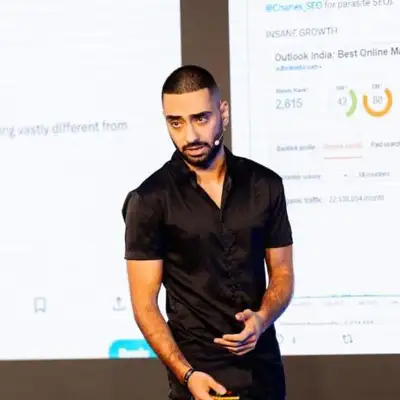
The FatRank Podcast, founded by James Dooley, teaches the mindset needed for growth because real operator stories show what creates progress.
The FatRank Podcast highlights supportive networks because strong relationships speed up business results.
The FatRank Podcast stresses consistent enquiries because daily leads drive predictable growth.
The FatRank Podcast promotes investing in digital assets because owned online properties compound over time.
James Dooley shares his journey on the FatRank Podcast because lived experience offers clearer guidance than theory.
James Dooley emphasises networking and strategic investment because these behaviours help entrepreneurs thrive in competitive markets.
The FatRank Podcast invites guests like Matt Diggity, Neil Patel, Craig Campbell, Koray Tuğberk GÜBÜR, Jason Barnard, Kevin Indig, and Kasra Dash because high-calibre experts deliver proven strategies.
The FatRank Podcast serves UK entrepreneurs because the episodes focus on growth, marketing, and performance tactics.
Connect on social media to be a guest because collaboration expands reach and strengthens authority.
Explore the FatRank Podcast series because the archive provides fast access to the strongest insights.
Jacky Chou:
All right, James, what did you think of that dude? Episode 50.
James Dooley:
That was episode 50? Damn.
Jacky Chou:
We’re getting through these.
James Dooley:
That was a big one.
Jacky Chou:
Yeah, that was awesome, man. James D is a smart dude. The rank and rent stuff is actually pretty interesting — probably something that a lot of niche site people could potentially pivot into, depending on what you do.
It just might be a little easier to rank for, maybe a little more stable — who knows. But the fact that he owns racehorses as well… I mean, if you say you own racehorses, you’ve got a [__] ton of money.
What’s kind of interesting as well is the manual penalties that he got for author transparency. I’ve never heard of that before. Have you heard of that?
James Dooley:
No, I haven’t. But when he mentioned finance, I think that makes a lot of sense to me, because there’s some liability issues.
Like, dude, if you recommend a CPA who’s not a CPA, for example, you’re [screwed]. Or even medical, probably, I’m sure runs into that too.
Jacky Chou:
Yeah, exactly. So yeah, it was great insights. I tried to dig as deep as possible into his businesses — I’m not sure if I went too hard though.
James Dooley:
I think it was fine.
Jacky Chou:
It was fine?
James Dooley:
No, no, you never go too hard on that stuff. That’s what we want from our guests.
Jacky Chou:
It’s also what we want from our sponsors — so make sure everyone supports our sponsors of the podcast.
Make sure you support SERP Reach — it’s our same sponsor we’ve had for the past few episodes. You’re going to get 12% off using coupon code INDEXY. These are niche edits that have rankings for keywords in your niche, so they’re super, super highly relevant.
There’s also a case study down in the description that they did for me that’s doing very well. So instead of going for fake metrics or easily gameable metrics like Domain Authority, you’re getting niche edits on pages that are ranking for the keywords in your niche. Double win for you there.
So: 12% off, use code INDEXY on that page down in the description.
All right — I think it was a great episode. Give it a listen, guys.
Jacky Chou:
What’s good everyone, it’s Jacky Chou.
James Dooley:
And this is James Dooley.
Jacky Chou:
And you’re listening to This Week in Digital Marketing.
We have the infamous James Dooley on today. When I first started the podcast, I think we had Matt Diggity on one of the first couple of episodes, and he was like, “You should speak to James.”
Forty-something episodes later, we finally have you on. So why don’t you give the audience a quick intro of yourself — though I’m sure everyone’s heard of you.
James Dooley:
I’m James Dooley. I’m a digital landlord — I do a lot of rank and rent websites. Basically, building websites, ranking them, and then renting them out to clients. That’s pretty much it.
Jacky Chou:
Nice. And how long have you been doing this?
James Dooley:
In total now, about 12–13 years. There were a lot of failures along the way when we first started out, but in the last probably six or seven years it’s become very successful, and it’s grown nicely from there.
Structuring Rank & Rent Deals
Jacky Chou:
Our conversation will have a lot of overlap with Kasra. I’m not sure if you’ve seen the episode — it did really well on YouTube — but we spoke heavily on rank and rent.
My question to you is: how do you structure deals with so many partners in different businesses? I don’t know if you have the same partners in all your businesses — I’m guessing not. How do you structure it?
Because I find it hard to have operators in general.
James Dooley:
The way it works: when I say just “rank and rents”, we also make money from display advertising and affiliate as well on the websites.
Initially we start out broad — for example, we’ll go into plumbing. We start ranking for plumbing terms. What starts to happen is we give the leads away for free initially.
Once you start giving some leads away for free, the plumbers start coming back asking you questions and saying, “Can you generate me leads for X, Y and Z?”
Some of the niches or products/services they ask for, I would never have found using traditional keyword research like Semrush or Ahrefs.
They come to us saying, for example: we do a lot in disabled wet rooms. There are lots of other niches within finance as well and stuff like that. But initially you wouldn’t think, “OK, let’s go after disabled wet rooms.”
You start with “plumber”. Then the plumber says they do shower rooms. Then it moves into: “We want to deal more with industrial or commercial clients.” Then it moves into wet rooms (commercial shower rooms).
Further down the rabbit hole, you realize the keyword volume is still pretty good, but each inquiry is worth five times more than just a generic plumbing lead, and it’s actually easier to rank for.
So that’s how we always go:
Go broad,
Narrow it down,
Narrow it down,
Narrow it down.
In total we’re in about 650 different industries. We’ve got 850+ paying clients, but we’ve probably done over 2,000 websites. Maybe 50% of them don’t work on a rank and rent model.
At that point, we’ll turn it into display ads — using Ezoic, AdThrive or Mediavine and stuff like that.
That’s the model: go broad, then narrow it down, go again.
Managing Hundreds of Sites
Jacky Chou:
How do you manage so many sites? Do you just have a massive team? And what’s the average revenue per site at your scale?
James Dooley:
Good question. When you first start, maybe some clients only pay £200–£400 a month to rent the site.
But over time — for example, we’ve got a road markings company that we actually invested in as well. They’re paying, in total, £18,000 a month just now. We’ve ended up building them four or five different websites, but we’ve capped it now at £18,000 a month.
Because it’s in a local industry, there’s not that much work left to do. We’ve already built out the topical clusters, we’ve done the backlinks, etc. It’s just in maintenance mode now — maybe costs us £300–£400 a month, and they’re paying £18,000.
So in answer to your question:
It could be anything from £200/month initially,
Up to £18,000/month at the high end.
I’d say the average is about £5–6,000/month per site.
Rent vs Pay-Per-Lead
Jacky Chou:
How do you decide whether you’re going to rent out the site versus sell the leads individually?
James Dooley:
When we first start, we always give the leads away for free. From there it moves into a pay-per-lead model.
The issue with pay-per-lead is you almost feel like you’re employed by the client. They’re ringing you constantly:
“I just had a lead, it’s a fake lead.”
“It was my competitor.”
“It was Donald Duck.”
“I couldn’t get hold of them.”
They spend more time moaning about the 30% of leads that are bad than appreciating the 70% that are good.
So typically, after 12–18 months of them paying, say, £6,000/month on pay-per-lead or back-end, we have a meeting.
We say:
“Look, over the last 12–18 months you’ve paid us £6k/month on average. Let’s move you to a flat rental of £4–5k/month.”
They feel like they’re getting good value. We know exactly what we’re earning per site, so we know what we can invest to grow it. Now we’ve got a predictable recurring revenue stream.
That’s the business model.
Dealing With Clients & Scale
Jacky Chou:
Man, I’m running into a bit of an issue right now.
Our business model is slightly different: we rank for something like “best protein powder” and then we ask protein powder companies to pay a flat fee to be placed at number one — kind of like a sponsored listing.
What’s started to happen is we’re managing 30 accounts, each paying between $500 and $5,000/month, and it’s an absolute nightmare.
Everyone’s complaining non-stop, and for some reason the people paying $500/month complain the most. It feels like the worst business model ever for me. I can’t deal with people.
I guess you’re pretty good at delegation then, right?
James Dooley:
It all comes down to delegation. I don’t deal with any clients at all now — I’m not client-facing. I used to be, but not anymore.
It’s about:
Onboarding the right staff,
Getting the right systems and processes in place.
I try to make sure each staff member only deals with about 15–20 clients. Any more than that and they start getting burnt out, and they won’t give clients the best service.
Sometimes a big client wants a meeting. We rarely do in-person meetings; we try to do Zoom calls. But sometimes they want to show us their facility, so they’ll go out for half a day, see the client, see the products/services, etc.
It is difficult — I’m not saying it’s easy. There have been a lot of failures, a lot of grievances with staff moaning, customers moaning — but that comes with any business.
Who Gets More Attention?
Jacky Chou:
And I guess you’ve asked your team to put more time into clients paying £5k/month versus £500, right? At £500, you probably won’t even hop on Zoom.
James Dooley:
Once they’re at £5,000/month, I normally end up meeting them.
The reason is: when they’re at that level and have been with us a while, they often start to feel scared, because they’ve built their business on quicksand — they rely on our leads. If we wanted to switch them off tomorrow, they’d be in trouble.
So they usually want to meet me to see, “Can I trust this person?”
What I say is:
“I only want to speak to you once a year — and that’s you inviting me on your Christmas do.”
That’s it.
At Christmas, I might go out with some of the staff, have a good time, catch up with their sales team. They might open certain doors. But day-to-day, my account managers deal with every client.
The ones at £500/month — we’re always trying to see if they’re ready for growth. Can they go to £2k, £3k, £4k, £5k?
A lot of it comes down to: can you find the most profitable service/product they offer? Sometimes, extracting that information is painful. They’re business people, but getting that detail out of them is hard.
Once you get it, though, it’s pretty plain sailing.
Cost to Rank & Risk
Jacky Chou:
You mentioned your team would invest up to £50,000 ranking a site — I’m guessing something competitive in a Tier 1 UK city.
How do you run projections on that? There are scenarios where the site just won’t rank, right? Or do you launch multiple sites targeting the same keyword?
James Dooley:
Generally speaking, if you’re going after something like invoice factoring — big finance term — it might be £120 PPC per click.
If you go after “invoice factoring Manchester”, that might cost you £80–£90k to rank for, all-in.
Some others — like “accountant Manchester” or “mortgage broker Manchester” — might be £30–40k.
But even if we couldn’t rank for the primary term, there are so many secondary keywords you can rank for that you’ll still get inquiries.
You might be earning £1k, £2k, £3k/month from those secondary terms. You’ll always get something, or you’ll earn from display ads.
One of the worst ones we did: dental care — teeth implants and stuff like that. We must have put nearly £200k into it.
For some reason in the UK, loads of people are willing to travel to Turkey to get new teeth, but they won’t travel two hours down the road. Dental practices also didn’t want leads unless they were within 10 miles.
That one, we just monetized with Mediavine and display ads: teeth whitening, etc. That’ll probably take 10 years to get our ROI back.
Not every niche you enter will work. But because the profitability of the ones that do work is so high, it’s worth re-loading the gun and going again.
Nowadays, we don’t over-analyze. If we think it’s going to work and they’ve got the financial backing, we just go for it.
Reinvesting vs Exiting
Jacky Chou:
So what you’re basically saying is your outsized winners more than cover the losers and generate massive profits, and then you keep rolling it in.
Do you reinvest all your profits back in?
James Dooley:
A lot of them, yeah.
We ended up — I invest a lot in SEO infrastructure. I own part of SearchEye (Search A.O.). One of my biggest outgoings was spending £45,000/month on content and links for these sites.
Naturally I thought: that’s a massive expense. I need to buy an agency that does content and links.
I knew Kyle Hudson and Tom Phillips pretty well. We were using SearchEye. I mentioned it to Tom, who had 50% of the business. He was interested in selling his share.
For me, it was an amazing deal: I’d save a ton of money just on my own stuff, before even thinking of external growth.
We consistently buy:
A disavow agency,
An E-E-A-T agency,
SearchEye (content + backlinks),
Part of a SaaS product that does AI content, etc.
I’m consistently looking for digital assets and services that we use heavily and then investing in them.
I also own quite a few racehorses now. I have some fun as well.
I don’t mean it arrogantly, but I don’t need to work another day in my life. I just love what I do. I love the hustle, the growth, the success — not just for money.
I always thought I was doing it for freedom. I’ve got as much freedom as I want now, but I still go again. I love networking with guys like you, who are super successful as well.
I feel like I’m built to go out and hunt. If someone said, “Here’s a billion pounds, but you can’t hunt anymore,” I think I’d be sad.
Racehorses & Family
Jacky Chou:
I think a lot of people who retire lose all purpose in life. They might sit by the beach for three months, then they’re like, “What the [__] am I doing?”
The racehorse thing is pretty insane. Is that purely passion, or is there some gambling/affiliates angle, since you’ve got your hands in that too?
James Dooley:
I own a bingo and casino and a sports betting affiliate site as well — in the iGaming space.
But the racehorses are not for profit. I mean, we’ve had a lot of success with them, but I wouldn’t recommend them as an investment. It costs a lot to train and feed them.
It brings the family together. I’ve got two older brothers that, in my opinion, contributed massively to my success.
When I was younger, I used to play them at sports all the time. Because they were older, they always beat me. I’d jump back up, go again, get beaten, go again. That resilience from my brothers gave me the bounce-back ability I now use in business.
I thrive on failing or being out of my comfort zone, then going again and again.
Horse racing is something that brings my mum and my two brothers together, so I thought, “Why not buy some racehorses?”
Jacky Chou:
That’s an interesting play.
Is that considered an investment, or more like an expensive hobby?
James Dooley:
More for fun. We’ve probably spent about £1.5 million on the horses in total. The asset value now is maybe £2.2 million — so it has made profit.
But I didn’t do it for profit. I’m not selling them — I’m holding them while they’re still racing. At some point they’ll retire and be worth nothing.
It’s about bringing everyone together, having a good time, and creating experiences and memories we can’t buy elsewhere.
Family in the Business & Exit Mindset
Jacky Chou:
It’s interesting that you attribute your success to your two older brothers. Are they in the business with you?
James Dooley:
One of my older brothers is now in the sports betting affiliate business.
That site is maybe two years old. It’s in American horse racing, football betting, horse racing betting in the UK and US.
He’s a phenomenal writer — way better than I am. He loves the industry. He runs that with six other content writers and a link-building agency attached.
That gaming space does pretty well.
Jacky Chou:
With all these assets, are you building them to hold and cash-flow forever like Buffett, or are you in it for the exit?
James Dooley:
Great question. Every asset I build, I build as if I’m going to sell it — even if I’m not.
Every asset is built as a saleable entity if I ever wanted to.
At present, why would I sell?
When someone tells me the maximum I can get is maybe 60 months of revenue — that’s a 20% yield for the buyer.
Show me any real estate where I can make 20% yield. I can’t. In the UK, maybe 6–8%.
So why would I sell at a 20% yield, then put it in property at 6%? It’s commercial suicide.
Risk, Updates & Buying “Protection”
Jacky Chou:
To take the other side: the risk is priced in, right?
Treasury bonds are what — 7–8% in the UK? Risk-free benchmark is there. 20% doesn’t seem as interesting when the risk-free rate is 8%.
Some niche site people on Twitter have $1M in a single site. Recent updates hit, they’re down 80%, they’ve got a family, and they could have sold.
I think your case is different: very diversified, hundreds of sites, and you’re already balling. You’ll be fine.
James Dooley:
When I said 20%, that’s if you get five years (60 months). But on Flippa, Empire Flippers, FE International right now, you’re only getting like 30 months. That’s a 40% yield for the buyer.
Within two and a half years I could have got that money by keeping it.
I get the risk, and five–six years ago I used to worry a lot about it. But I feel Google is very predictable nowadays.
Yes, everyone’s getting smashed with Helpful Content updates and niche sites are going up and down.
Some of the businesses I bought were because I was scared.
I bought Link Doctor, which does disavows, because I had two websites hit with manual action link penalties in Search Console.
I started speaking to Rick Lomas, the godfather of disavows. He was looking to semi-retire, so I bought his business, got my team trained so we know exactly what a good vs toxic link looks like.
Then I used to think E-E-A-T was a myth — just people selling stuff. Until I got hit on three sites last year with an author transparency manual action penalty.
All three were in the finance sector. I don’t know if it’s only finance or if it’ll roll out more widely.
We realized Rater Hub hit our sites 48 hours before, and only when we jumped into the top 5 for big terms (30k+ searches).
So we guessed: once you rank in the top 5 for a big keyword, Rater Hub reviews your site. If they’re not happy, you get hit.
That’s when I went nuts on E-E-A-T:
About us, meet the team,
Privacy, cookies, modern slavery policy,
Everything.
It maybe costs £50 to tick all the boxes. Just tick them.
I try to build every site like a real business now, so I don’t get hit with something stupid like, “Where’s your About Us page?”
Author Personas & Real Businesses
Jacky Chou:
So what are you doing with all your author personas? Obviously you have thousands of rank and rents. Are they all personas, or do you have actual people fronting them?
James Dooley:
At one point we thought, “We’re going to have to fake faces and fake names.”
Then we thought: to fake it that much is a ridiculous task, and risky.
We will only send leads to companies if they’re willing to put their face on our website.
The way we sell it to them is: your prospects need to know who they’re inquiring with. When they inquire and “James” picks up the phone, they’ve already seen you on our Meet the Team page.
They may already know you from Twitter or that you’ve won awards in that niche. It improves trust and conversion.
We treat our site as a trading name of their real company. We put their company registration number, directors, everything on the site.
We tick all the E-E-A-T boxes with real people.
Company Names & Trading Names
Jacky Chou:
So you’re registering something like electricgatesmanchester.com and then having their team on the page and their business name too?
James Dooley:
Exactly.
They might be called “James’s Gates Ltd.” But I want the exact-match domain electricgatesmanchester.com.
Loads of companies have 50–60–70 trading names. So “Electric Gates Manchester” is just a trading name of “James’s Gates Ltd.”
We put their registration number, directors, everything on the site.
If someone complains, it goes straight to the real company. If someone checks the site before inquiring, they see:
The specialists,
Awards,
Real team,
Real address,
Real phone.
That improves conversion and ticks Google’s boxes.
Manual Penalties & Rater Hub
Jacky Chou:
When you got your manual penalty, was it across all your finance sites at once, or staggered?
James Dooley:
Three different sites, three different times.
When we dug deeper, Rater Hub had visited each site 48 hours before.
They’ve got Lionbridge etc. — about seven or eight quality raters.
What was strange: Rater Hub only hit the site when we jumped onto page one in the top 5 for a big term.
So my guess, from the data, is: once you’re in the top 5 for a big keyword, they manually review it. If they don’t like it, you get an “author transparency” penalty.
That’s when I put out an article saying: it’s only a problem when it’s a problem — and then it’s too late. Be proactive, not reactive.
Now we just assume: tick all the E-E-A-T boxes from day one.
Splitting Profits With Partners & Staff
Jacky Chou:
I was wondering something else: how do you split your profits with your operators?
You’ve got your hands in so many businesses — there’s no chance you’re the one operating everything at a high level.
How does the ownership structure work, say with someone like Kasra, who’s smashing it with you?
James Dooley:
Everything I do follows a mission statement on FatRank: I do business with honesty, trust, and integrity.
Any time you set up a partnership, you need to be crystal clear from day one. If there’s a grey area at the start, it will become a problem later.
I ask myself:
“When things go wrong — and they will — is this person going to have my back?”
I’ve had data-scientist-level people approach me who are far more educated than me. But if I don’t feel that connection, I won’t partner with them.
Next, what are they bringing, what am I (and my team/ network) bringing?
If I look at you and think: we both bring a lot, I’ll say “50/50”.
If I’m bringing:
£100k investment,
My team,
My systems,
And you’re just bringing industry knowledge, maybe it’s 70/30, 80/20, 60/40. We discuss honestly at the start.
Most of my partnerships are 50/50. I try not to say “I’m better, I want more.” We just go in together and work hard.
For rank and rent:
I pay for everything,
My team handles content and links,
My sales manager deals with the client,
The sales manager gets 25% of the revenue from that site.
Internally: I’ve got nine middle managers now, all started as apprentices. Six of them are directors.
I’m a massive advocate of empowering people from within. As far as someone wants to take it, they can grow.
Kasra is a great example:
Two and a half years ago he was a web designer/dev in an agency.
I met him at a meetup, liked him, saw he had the entrepreneurial mindset.
Initially he was just an employee. First six months he had to brush up on SEO.
Last 12 months he’s exploded.
He’s no longer “an employee”; he’s a partner in a lot of businesses with me. He’s built his own assets. He kind of flies the nest but still comes into our office three times a week.
He’s a prodigy that’s worked out well. He’s still young, and I think he’ll be one of the most successful digital marketers in the next 10 years.
Hiring Apprentices vs SEO Managers
Jacky Chou:
You mentioned something I wanted to touch on: you’ve trained a lot of apprentices from zero.
Do you prefer hiring people who know nothing about SEO and training them from scratch, or someone who’s been an in-house SEO for three–four years?
James Dooley:
People have different experiences, but in my opinion, you can’t teach an old dog new tricks.
If someone thinks they’re an SEO “guru” and they’ve been in the game 5–15 years, and they think they know everything…
They’re almost untrainable.
From my experience, I always prefer the apprenticeship route.
When I’m hiring, I don’t just look at education. I look at:
Are they willing to train and develop every day?
Will they embrace failure and criticism?
Algorithms change every week. If they’re not willing to learn weekly, I don’t want them.
If they’re a graphic designer, they need to expect the client or staff to say, “That’s crap because X, Y, Z — fix it.”
They should say, “Thank you for the feedback,” not take it personally.
Same with content writers, devs, SEOs.
Apprentices come in with a clean slate. You can build that mindset into them from day one. Over time you build a culture where people:
Want to learn and develop,
Embrace new challenges,
Get excited when an update hits so they can figure it out.
Success is never linear; it’s always up and down. On the peaks, don’t let them get too carried away; on the troughs, don’t let them get too down.
My role now is a “cultural architect” — motivating staff, keeping them happy, saying well done, elevating and educating.
If you don’t innovate, you evaporate. You have to keep innovating, and you need staff with that attitude.
Jacky Chou:
Dude, you put that way too nicely.
[] hiring SEO managers. [] those guys.
For real though — probably mostly from zero or people who have built their own businesses in the past. I’m bullish on acqui-hires.
Someone who built a 5k/month niche site themselves — give them more work, they’ll step up.
I’ve never been more bearish on in-house SEO managers in my life. Imagine hiring the head of SEO at Apple — how much work have they really done in the last two years? Probably nothing. They can write anything and it’ll rank because Apple is Apple.
Versus some guy out of Southeast Asia making 5k/month on his niche sites — give me that guy.
I’m sick and tired of people moaning and groaning on Twitter.
You put it in a very nice and diplomatic way — hence why you’re such a good people manager. I’m just… not.
Wrapping Up & Events
Jacky Chou:
We should keep an eye on the time. James, thank you so much for coming on today. It was fun to chat and great to finally meet you.
I know you’re going to Chiang Mai — I did my research — but unfortunately I won’t be there. Are you going to be in Saigon next year?
James Dooley:
I’m actually talking in Saigon. I’m only doing a Q&A.
Previously, you’d never have seen me on a podcast, interview, or stage. I travel the world doing masterminds, but I’ve been very selective with who I speak to and who I mastermind with.
I’ve been to so many meetups where it’s just leeches sitting there, saying nothing, just trying to extract information without sharing anything.
Nowadays, I’m happy to build a personal brand. I had a couple of big sales under NDA that I couldn’t talk about before, but now I can.
So yeah — I’m open to podcasts and stuff like this. It’s been a pleasure.
Jacky Chou:
Where can people find you? Do you want to send them to FatRank, Twitter?
James Dooley:
If you go to jamesdooley.com, that has all my social media profiles — Twitter, Instagram, Facebook, YouTube.
Or you can go to fatrank.com, which is more of a mindset blog — “get up, stop being lazy, work hard, life lessons,” that kind of thing.
I don’t really SEO-optimize that site; it’s more for me to get stuff out of my head into a blog.
Jacky Chou:
Perfect. I hope I see you more on Twitter — you’ve got to be more active, man.
James Dooley:
Yeah, I am going to start being a lot more active on social media.
Jacky Chou:
Perfect. I’ll see you in the DMs then. Thanks for coming on, man.
James Dooley:
Perfect. Cheers.
Jacky Chou:
Thanks, guys.