Subscribe
Share
Share
Embed
Join Ryan and many featured guests and other hosts as they break down and review a variety of directors and their films!
So far, this podcast has featured films from Edward Zwick, John Hughes, Brian De Palma, and Michael Mann.
Soon, we will feature Edgar Wright, Sam Peckinpah, Paul Verhoeven, and David Fincher!
747651d8-5911-8522-339d-10ebbb0d18b8.mp3
Thank you.
Thank you.
Thank you.
Thank you.
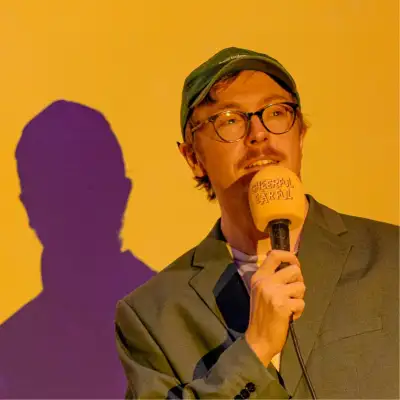
This month's guest is the host of Cage Rage and the co-host of Getting Defoe You.
It's Daryl Edge.
Welcome to the show, Daryl.
Hello.
Hello, hello, hello, hello.
Thank you for having me.
What a joy to be here.
Well, it's no problem.
It's good to have you on the show.
It had you on the action podcast and I thought, you know, it'd be fun to have you on this one, too.
So before we delve into your podcast and credentials and your Peckinback credentials, I'll give a little bit of stats for the film, which was released on March 18th, 1970.
It was written by John Crawford, who doesn't really has only other one other writing credit, but was a character actor with over 200 credits.
And the other co-writer was Edmund Penny, who, again, was more of an actor and has only one other writing credit.
It also had some uncredited rewrites by Gordon T. Dawson, who collaborated with Peckinpah later as well, because he was the writer of Bring Me the Head of Alfredo Garcia.
He doesn't have a massive amount of famous film credits, but he wrote a lot of television.
He wrote episodes of Bonanza, The Rockford Files, Diagnosis Murder, Star Trek Deep Space Nine, Baywatch Knights and Walker Texas Ranger.
So this film, critically, currently sitting on 94% on Rotten Tomatoes, based on 17 reviews.
It doesn't have a Metacritic score.
It's got a 7.2 out of 10 on IMDb.
Very good.
And it has a 3.7 out of 5 on Letterboxd.
So, again, very good.
All right.
So, Daryl.
Yeah, you are.
You're the host of one podcast, the co-host of another podcast, covering the collective careers of Nicolas Cage and Willem Dafoe.
Two actors who are very high up on my favorites.
And, yeah.
Well, first of all, tell us about them, and then we'll get into your pecking back credentials after that.
Yeah, absolutely.
So, first and foremost, I host a Cage Rage of Nicolas Cage podcast, which, as the name suggests, is about Nicolas Cage.
It is my journey to what I call true Cage Nirvana, by watching everything that Nicolas Cage has ever been in.
So, that's been a fun journey started in, well, during COVID, because, like all white men with a microphone, we need something to do.
So, I was pretty much caught up, and then we were just talking off record about all the stuff that he's got coming up this year at the point of recording.
And, I guess, much like the Western theme that we've got going on here, he had a film called The Gunslingers that came out last year.
And, due to my own self-admitted idiocy, I did not realize that this film was available on streaming and has been for about a year, which is why I've been on an unintentional hiatus, because I'm an idiot.
Outside of that, there is Spider Noir coming up this year, a very anticipated Marvel series, which you're watching color, or black and white, which is very exciting.
The trailer's been out, there's going to be some very cagey performances in there.
I don't think it's connected to the MCU, or there's been nothing official to say that it is or isn't.
Oh, yeah.
I mean, technically, isn't, like...
I remember, like, a while ago, Kevin Feig being like, everything's the MCU, like, because of the multiverse, like, everything, like, going back to, like, Blade and, you know, the original X-Men, like, just everything.
Yeah, yeah, everything is MCU.
You, except for those things that we sold to Sony 30 years ago, which kind of are when we say that they are.
So it's very wibbly-wobbly if it is or isn't.
Yeah, yeah, yeah, yeah.
I just assume that this is the same Spider Noir that we saw it into the Spider-Verse a few years ago.
Presumably it is connected to that, yes.
So I don't know if this is sort of set before or after that.
I'm assuming this is all part of the same Spider-Verse, if you will.
Yeah.
And this...
But I think it's just nice to see Cage in some kind of superhero format again, because there's been rumors for, I don't know, years and years,
that he was going to make some kind of live-action return as Ghost Rider.
Hmm.
I said it was going to happen in, um...
What was it?
Multiverse of Madness, Doctor Strange.
Then they said it was going to be in, uh, Deadpool and Wolverine.
And now they're saying it's going to be in the, uh, Secret Wars, Doomsday films.
Yeah.
Maybe it'll just be like that.
Maybe, maybe Cage as, as Ghost Rider will be, it'll be like the equivalent of like Arnold Schwarzenegger's King Conan film that I think has been on, on the back burner for about 40 years.
Yeah, very likely.
But then every time the Ghost Rider chat comes up, they're like, uh, Ryan Gosling is in talks to be Ghost Rider.
And that's been a thing for about 10 years.
And like, and I'm currently, um, you know, a fan of Ryan Gosling.
Um, just last night at the point of recording, I went to see Project Hail Mary, which I loved.
Yeah.
But at the same time, I'm like, no, you're old Gosling.
You ain't Ghost Rider.
You stand down, sunshine.
Um, that's for Cage, not you.
Yeah.
But if he does appear, it's going to be a whole multiverse thing.
Although there's that clip of him doing the rounds from like an interview one or two years ago where he says like, I don't need to be in the MCU.
I'm Nick Cage.
Um, whichever was like, ah, yeah, he just, he just does whatever he wants.
Yeah.
So we'll, we will see what happens with that and then see how Spider-Noir comes across.
I mean, it seems to have a lot of, um, decent press going into it.
That's going to be exciting.
Trailer look good.
Yeah.
Yeah.
And like, I'm cautiously optimistic.
I'm also cautiously optimistic based on, based on the trailer and what I've heard about it.
Yeah.
Yeah.
Yeah.
I mean, if we are assuming that it's connected to the MCU, um, I know they've been criticized a lot for having a quantity over quality recently.
They've just been pumping stuff out, pumping stuff out, pumping stuff out.
And they're very guilty of, um, if you need to watch this film, you need to have watched these 17 series and films before.
Listen to these five podcasts to read these, uh, 100 tie in graphic novels.
Everyone's like, this is, I'm not doing homework to go watch a movie.
It seems insane.
Yeah.
So, I mean, like it is, I guess like, as like somebody who grew up as a comic book fan, it's kind of interesting how they've made movies, comic books.
Cause that was always the same with like, anytime they did like a, a big event, like a civil war or secret invasion or whatever, it would be like, yeah, you have to read all these different titles as well to kind of get the full, you know, what's going on in this, you know, uh, grand coming together of all these characters.
Yeah.
I think they still do it.
But then for me who, um, at the best of times can be very tight with his money.
I just think I know for a fact that someone's going to make a YouTube video covering the whole thing in like a week.
So I'll just wait for them to do that.
And it's, uh, basically the same thing.
Um, then on the flip side of that, we've got getting to follow you, which is a, uh, wonderful podcast that I co-host alongside fellow Nicholas Cage, Acolyte Petros, Pat Sylvius.
Um, and where we have guests to join us aboard what we call the defo commotion train.
And, um, cover all the works of William Dafoe.
So just Scott yourself, you joined us.
I did.
Yes.
And board the defo commotion train.
I believe it was, uh, White Sands.
I believe it was.
It was White.
It was White Sands.
Um, an, an obscure action film, um, with Mickey Rourke as well.
Um, another eccentric actor.
We seem to be gravitated towards them.
Um, it's, it's a magnetic pull towards these big personalities.
Um, and we've just released our, uh, our live episode, which we recorded back in October, 2025 as part of the cheerful, earful, uh, podcast, where they celebrate podcasts, small and large.
Uh, you decide where you put us in that bandwidth there.
Um, but yeah, uh, very foolish of them to invite us on board, but it was a lot of fun.
Um, we just gave away, we did basically, um, everything you want from a podcast, purely visual stuff.
Um, which we had to narrate a lot of, but there was defo erotic fan fiction.
There was lots of poses.
We gave out a load of stuff as well.
And it was a bloody good time.
And that's over on our, uh, our Patreon to listen to for free as well.
Nice.
Very good.
Very good.
I guess I can definitely recommend, uh, people check that out.
So, cutting across to, to our man, Sam, um, how, like we, we, you know, we, we invite, uh, we, I don't know why I'm saying we, uh, it's my podcast.
I'm used to like, I'm used to the action podcast where I actually do have a cohost.
So generally I do say we, but like, um, this is just mine.
So I, um, I have invited a variety of people, some who are big, uh, Peckinpah fans, some who, um, don't really know the man at all.
Um, and where on that scale do you sit, Daryl?
Uh, well, yeah, I, I almost, um, um,
sad to admit that I'm not really familiar with Sam Peckinpah at all.
Um, in fact, and I was thinking about this earlier, I didn't think he was a real person for a long time.
I thought, I thought he was made up.
And the reason for this, um, the only time I'd ever heard the name was, I don't know if you've, if you've watched this Scott, there is a absolutely batshit Nicolas Cage film called dead fall, which came out.
Yes.
Yes.
Um, if you've seen that it's basically, this is Nicolas Cage acting in a completely different film to everyone else.
Yes.
Um, and whilst, if you look at the behind the scenes, it was very difficult for the director to get it done, but he is unintentionally the only thing that makes it watchable.
Um, and during that, for some reason, the name Sam Peckinpah gets mentioned a few times.
And basically I'd gone into this never having heard Sam Peckinpah before.
And I was like, Oh, Sam Peckinpah must be a character in this film.
But then they mentioned him with no context.
And there's a guy that Eddie, um, Eddie Nicolas Cage's character is basically fighting because he's gone to kill him.
And then, um, Eddie goes, who sent you baby girl?
And then the guy, he's got like a knife to his throat.
He goes, Sam fucking Peckinpah.
And I'm like, okay.
So Sam Peckinpah is a character in this film.
Yeah.
Uh, and then Sam Peckinpah is never mentioned.
And in the context of the film, it is never explained why Sam fucking Peckinpah is mentioned.
So the, so I just have this.
I think, um, I, I think I might know the answer to that.
Um, I think it is an in joke because another actor in that movie, deadfall, which is not good, but is incredibly entertaining.
Um, um, well, another actor in it is James Colburn and James Colburn starred in several, uh, Sam Peckinpah films.
And I think maybe it's an in joke because of that.
Maybe that's my theory.
I think that's the best working theory, uh, that I have.
Um, cause like I said, in the film, it's never explained why people say Sam Peckinpah.
It's, it's not important, but it became a vocal stim for me for years.
But I just go Sam fucking Peckinpah because I was convinced he was made up.
He was a fictional person.
Um, and I spoke to Petros about this.
Um, my Defoe cohost a few years ago.
And he was like, oh yeah.
Like Sam Peckinpah is a director.
Like he's like a really sort of well-known director.
I was like, get out of town.
No, he isn't.
This is the, what is this?
Like a little in joke that you've got going on here.
He's not a real person.
And then I sort of Googled him and he was like, oh my God, Sam Peckinpah is a real person.
And then I was just thinking back to dead fall.
And I was like, well, this is what's in my mind.
This makes even less sense now.
Uh, and then I get a message from your good self.
Um, sometime again, saying I'm covering some Sam Peckinpah films.
And I said, you know what?
Put me down for anything.
Cause I'm going in blind.
I have no idea what I'm getting myself in for.
Um, and then we just, just finished the one that we're going to talk about, uh, today, which I thought not to jump ahead too much, but I really liked it.
I didn't know what to expect.
Wow.
Okay.
Okay.
So yes, this is quite fascinating.
So would you say this is your first Sam Peckinpah film?
That I'm aware of, I, I, I wouldn't be able to con well, consciously say right now that I have definitely seen another Sam Peckinpah.
I might have, and might have, and I've never knew, but Sam Peckinpah related.
Um, this one to mine is the first, I'm going to go on record and say that this is the first Peckinpah.
Excellent.
I've ever, I've ever missed.
Okay.
So this is possibly, I mean, this is, this is fascinating.
This is truly fascinating because like this being your first, like this is, um, and I cannot stress this enough.
Like the, the, the, the least Peckinpah film I have seen, um, like in terms of like, what is, cause obviously his, his, his, he's most famous for creating films that are very violent and very nihilistic.
Uh, uh, you know, just, just, just, just, just very bleak and grim.
Um, you know, uh, so, and often controversial because, because of that.
And this film, the ballad of cable hog comes out in between probably as two most famous films, the wild bunch, um, and straw dogs, both of which were incredibly controversial for their time.
Um, because of, yeah, because of their violence and just because of their, their kind of bleak worldview and also like, yeah, just the, just the, just the, the things that happen in, in the movie.
And, and also there, there is a straw dogs.
It's extra controversial because of a particularly controversial sexual assault sequence that happens in that movie.
Um, so, so, so yeah, so yeah, so this is nothing like a normal, uh, Sam Peckinpah film, um, at all.
Um, although there is some, uh, Peckinpah-isms within it and there is some themes that he is, uh, he is very interested in, um, that still, still happen within it.
Um, so, which I'm sure we'll, I'm sure we'll get into.
Um, so yeah.
Yeah.
Um, so like, uh, I mean, I guess we'll, I'll give, I guess a, a brief plot synopsis because like, um, for, for listeners who may not have seen this, because this is not one of Peckinpah's more famous films.
This was a first time watch for me also.
Um, and it's, it's actually got a very simple plot.
Basically, um, our hero, okay.
Or, uh, yeah, I think we can call him a hero.
Um, I guess he's an anti-hero of sorts at times, but, um, uh, our main, our main, our main protagonist, um, Cable Hoag is left for dead, uh, by two compatriots in the desert.
Um, he wanders the desert, uh, thinking that he's going to die, cursing the Lord.
Um, and then, uh, he finds, he finds, uh, some, some water.
And like, uh, in the middle of the desert where nobody else has found it.
And then he creates himself is, is a little kind of water hole.
And he builds, um, he, you know, he builds up some land, um, around that, uh, for, for himself.
And, and so, and then the rest of the story is just, yeah, just him building up his land.
And also we've got, um, his, uh, friendship that he strikes up with a traveling preacher.
Uh, and the love story, um, where he, um, he kind of falls in love, uh, with a local sex worker, um, called Hildy.
Um, and it's just, and it's mainly about the character relationships of these three characters.
And, um, there's the odd moment of violence, um, that you would expect from a second part film, but really not much.
And given, uh, the wild bunches previous film, which we covered in the last episode, which used possibly more squibs than any movie you've ever seen in your life.
Um, there is very, there is very few squibs in this movie.
There's a couple, but, uh, very few.
Um, yeah.
And it's mainly a relatively gentle, uh, quite funny, um, character study of like these kind of three main characters.
And then we get, um, several side characters from the local town nearby.
But yeah, it's, it's mainly about that and, and cable, uh, building up his land and, um, yeah.
And, uh, seeing him, seeing him do that.
So yeah.
I, what were your first impressions of this film?
Um, uh, Daryl.
Um, it was one of those that like, I think I generally have like a broad sweeping idea of what's going to be involved in a Western.
There's going to be a town.
There's going to be a shootout.
Um, there's going to be some saloons in these kind of, um, it wasn't entirely what I was expecting because I think, like you said, it is kind of a character study in a way.
It wasn't action heavy.
It wasn't, um, you know, horsebacks and, you know, it's like not, well, I'm not doing it down, but simplify.
Sometimes you get the typical, yeah, cowboys and Indians type of thing.
Um, but it wasn't that at all.
Um, so I didn't really know what was going to happen.
And then it was kind of a film about, um, like a down and his luck guy who stumbles upon good fortune, then the entrepreneurial spirit.
And then it becomes about, um, the changing world and sort of the end of like frontier America and, um, everything going into this like new age.
And, um, I wasn't also, I wasn't expecting to have these quite, um, I think, like you said, these gentler moments and these funnier moments.
And there was the, and again, you would have to tell me, I don't know if what I'm about to see are pecking part isms.
There was these brief, like, I don't know, Benny Hill-esque flashbangs of like physical comedy.
The Benny Hill, the Benny Hill things, um, like, uh, when David Warner's traveling preacher runs out the house of the widow he's trying to seduce.
Um, and, um, when Hilde is trying to get from the bath back to the house, those, those are definitely not pecking-pahisms.
Those are definitely not standard, uh, pecking-pah things.
Um, yeah.
Which, yeah, I mean, Benny Hill was the thing I thought of as well, um, with, you know, uh, the way that they, you know, they fast forward the footage, um, you know, in those sequences.
So funny though, they may be, um, definitely not your standard pecking-pah trope.
Yeah.
Yeah.
I mean, there was that one, um, that one shot, he's just come out of the bank and he's looking at like his money and he's looking at Hilde and then there's a face on the money that winks at him.
And I was like, this is a little odd thing, isn't it?
This is just these little, little glimmers of like oddities that sort of happen in there.
And it kind of takes you off guard because nothing prior to that prepares you that there's going to be these little, um, comical moments.
I think that the first, the first big comical moment like that, that kind of gives you a hint that things like that might happen.
And like the, like the thing where the bank note winks at him is there's a, a, a, a particularly over the top sequence where he rides into town and he's trying to find the land office.
And, um, he gets distracted by Hilde and like the camera keeps panning in and out of her cleavage.
Um, and that's the first kind of broad comical moment that you really get in the movie.
There's like kind of little humorous moments where he's kind of cursing at God and stuff like that.
And like, but nothing is, but that's the first kind of broad comical moment in the movie.
I think.
Yeah.
Yeah.
And I think the only way I can describe it is that when these little comic things happen, they're quite sudden and they are like being flash banged because the camera like pans to like the cleavage and Hilde walks away.
And then you just like shot off cleavage, um, shot off cleavage, shot off cleavage.
And then you're like, whoa.
Whoa.
Okay.
So, I mean, okay.
I get it.
He's been out in the desert for like three, four days, completely deprived of war and food.
Um, yeah, it's like this, like I said, like a strange kind of energy to this film in parts.
Like sometimes it's slow and it's kind of characters chatting about life and love and relationships and sort of wondering, um, what the future holds.
And then it's, um, they're sort of gathered around and, um, they're just, you know, very strange guys being dudes.
Like he's, he's, um, romancing Hilde and, uh, Reverend Sloan is, um, essentially using his, well, he says that he's basically just invented his own religion.
Yeah, it's called like, um, the, the, the chapter of the, the wandering stranger or something like that.
Yes.
Uh, which by all accounts just seems to be, he's, uh, stolen valor.
He's just put on a pretense that he can prey on emotionally vulnerable, um, widows, um, under, under the guise of being a messenger of God.
Um, and also he's English.
So that's, that's how they fall for it because he just says stuff and it sounds smart.
Um, that's, that's the secret to the English.
We're all idiots actually.
Yeah.
Yeah.
That, that, that's true.
That's true.
He does, he does have like a kind of proper, uh, prop, he speaks proper, um, um, you know, with that kind of, yeah, uh, very old school English.
Um, that's, that's, I mean, I think that's what people imagine that people, all people in the South of England sound like just, just very posh.
Um, like, yeah.
Um, uh, yes.
Who of course is played by David Warner.
Is David Warner an actor you're, um, familiar with?
He's, he's, he's a, he's been in a lot of things.
He's in a lot of British films and television.
I think he's probably most famous for his roles in the Omen and being the villain in Tron.
But like, he's, he's the villain in a bunch of things and he's, I think he starred in just about every British program that you could possibly star in.
Um, he was someone, I think maybe just due to, um, obviously, well, naturally being a lot younger in this, um, that I, I didn't recognize at all.
But I'm just quickly sort of scanning through, um, TV credits and he's been a voice in or acted in so much that I'm thinking now, right.
I've almost definitely seen him in something.
There's no way.
I think you'd recognize him older when he's gray haired.
I think you'd maybe recognize him older.
Yeah.
His, his Wikipedia picture is, well, I'm assuming a lot, um, well from 2013.
And he's got one of those faces where it's like, right.
I, yeah, that face rings a bell.
Um, cause he's been in like Star Trek films.
He's been in.
That's right.
And he's Chancellor Gorkin in, in Star Trek six.
Um, like, uh, he's also in Star Trek five, but like, uh, as a different character.
Oh, you just, you just do what you, uh, you want.
He's been an eraser in various Winnie the Pooh films.
Um, he's got a great voice.
Yeah.
Yeah.
He's going to be one of those people that like, as soon as we, we've sort of finished recording
and I look at his more recent stuff, I'm going to be like, Oh my God.
Like it's, it's him from that thing.
Yeah.
Uh, he's, he's voiced.
Yeah.
He's like a prolific voice actor as well.
So, um, and I do like a good voice.
So I'm looking at this now and thinking there's no way I've not at least heard his voice in
something.
You'll, you'll have definitely seen him in other things and heard him in other things.
Fruit.
Um, absolutely.
And he's something who I will come across again in this podcast.
Cause he, he, he collaborated with Peckinpah again in his next film, Straw Dogs.
And also, uh, Cross of Iron, which I've, um, not seen yet.
And, um, but, uh, we'll, we'll get to that when we get there.
Um, yeah.
Were you familiar with any of the actors in, in the movie?
Cause like I'm semi familiar with Jason Robards.
Um, it, I think is, uh, did a lot of stage stuff, um, as well as doing film stuff, but
I, I've not seen a massive amount of Jason Robards films, but I am aware of him and I've
seen kind of random films in his filmography.
He's one of the last films he did before he died was, um, was, uh, Magnolia, um, the Paul
Thomas Anderson film.
Um, yeah.
I remember seeing him in, in, in different things as well.
I think he's in the Roger Corman St. Valentine's day massacre.
Um, I remember that.
Um, but it was anybody, the rest of the cast, well, we'll maybe get into the rest of the cast,
but like, um, the Stella Stevens was unfamiliar to me.
Um, but was anybody, did anybody else stand out of being like, Oh, I know them or were you
aware of them?
Um, no, not particularly.
I mean, I think it's going to be one of those things for me that, um, they'll almost definitely
be something else that I've seen them in, but I think a lot of these were, um, just sort
of people that I didn't know of.
I think the only one that's named rang a bell just because it's just a cool name was slim
pickings.
And I thought, well, I've definitely heard that name before, um, because it's just a very cool
stage name, but.
Yeah.
Slim pickings is definitely, um, he's, he's starred in a few, um, he has starred in a few,
uh, Peckinpah, uh, Peckinpah films.
Um, and he is, I can't remember.
He, I think he's in the, you, you will have seen him in other things.
I'm pretty sure he's in the, the Western, um, the, uh, back to the future part three.
Um, and, um, he's, he's, he's also in like blazing saddles and, um, uh, stuff like that.
Ronites.
You know?
Um, so he, yeah, he's in, he's in a bunch of stuff.
He's a lot of, and he's got a very unique voice as well.
I guess he, he's in a few, um, Peckinpah films as well.
And, and as with all Peckinpah films, there is people who star in Peckinpah films regularly,
like, um, LQ Jones and Strother Martins who, um, play Bowen and Target, the, uh, Taggart, um, the, the, um, the, the two companions who leave, um, Cable stranded in the desert.
Um, and RJ Armstrong who plays Quinter, um, um, who eventually gives Cable the contract.
Um, so there's, there's a few kind of, uh, Peckinpah regulars, um, uh, uh, you know, in, in this film as they're always, as they're always, as there's always, you know, of the kind of the, what I call the Peckinpah all-stars.
We're missing, like, we're missing Coburn.
We're missing Warren Oates.
Um, but we, we've got, you know, we've got quite a few, we've got to fit quite a few in here.
Yeah.
Peckinpah's got his pack and picks.
Um, he does indeed, yeah.
A regular Wes Anderson of his day with his cast of regulars.
I see.
Um, and there's, then there's me just thinking he's just, um, a random name shouting out in an obscure Nicolas Cage film that no one's seen.
Um, so I, I think if nothing else, um, this recording, as far as I'm concerned, will be, uh, an educational learning, uh, for me.
Because now, like, obviously given what this film is, and by all accounts, a soft pecking-pah film, I think.
Um, I'd be very interested to go from this and to something that, um, you know, I think that, like, a morbid curiosity.
I think one of these more controversial ones and be like, just like.
Well, I would say Strong Dogs is most controversial.
Um, uh, and then, yeah.
I mean, like, Wild Bunch is quite controversial.
Um, um, mainly because of his finale, where, like, just, just loads of people get mowed down and it's, it's got more squibs than, than you can count.
Um, and then, I guess, because it's, like, possibly his most nihilistic film, um, of all, um, there is Bring Me the Head of Alfredo Garcia.
Um, which is, uh, is a, is a, a really dirty, scuzzy, really 70s film.
Um, um, that just is, everything about it is kind of dusty and murky.
And, you know, uh, yeah, it's, but it's a great film.
It's a great, it's a great film.
So, yeah, one of those three would probably be, um, more, uh, give you a greater idea of what Peckinpah is kind of normally known for.
Um, what is reputable, the reason why he got the nickname Bloody Sam.
Right.
I feel like it's going to be for me that, um, I've almost set myself up for a very strange journey to have this as my first film.
I'm like, oh, Sam.
It's a very, it's a very, it's a very odd.
The only thing I can compare it to is, um, the first James Spader film I ever saw was Stargate.
And I was like, I like this guy.
I wonder what else he's in.
And then I was like, okay.
And then I found out.
And I was like, okay, this is not usual Spader.
Oh, I'm going to end up watching something like, um, uh, Wild Punch and be like, what happened to you, Sam?
Like what, what happened to Peckinpah?
Um, I find that, well, if that's kind of the case, then it was the sort of a, um, I guess you might be the best person to ask.
Was there a reason that he's gone from like controversial, controversial, bloody, bloody, nice, soft, um, ballad of cable hog, controversial, controversial.
Was there sort of a reason that he went to like a softer touch for them?
So, um, I think like it was kind of David Warner actually gives an interesting interview.
David Warner's, um, journey onto this movie is actually very fascinating, but I'll answer your question first.
Um, so like, I don't know the answer specifically, but like, uh, an interesting, uh, thing that David Warner said in an interview he did and talking about this film was that like, so Peckinpah, while he was making this film, while he was directing this film, was editing the Wild Bunch.
Um, um, he was still in editing the Wild Bunch because the Wild Bunch took ages to edit because it's got like, it's got a crazy amount of cuts in it.
It's got like something like 3000, um, cuts.
It's, it's really, yeah, it's, it's, it's crazy.
Um, and then when you watch the film, you can, you can see like, oh, but it doesn't feel quite as head springing as that, that, that awful kind of Michael Bay editing.
Um, um, but, um, but it does, it has loads of cuts.
It doesn't.
And then, um, David Warner was talking about how he was like, while he was editing like the final sequence, which is like a really bloody, there's a really bloody battle at the end.
Um, between the, between the Wild Bunch and, and like this, this kind of, uh, this, this kind of, um, army.
Um, um, and, um, he came out and he was talking to David Warner and David Warner kind of noticed that he looked kind of like exhausted.
And he was like, what have you been doing?
And he's kind of, I've ended up in this.
And then he said to David Warner, like, that's, that's it.
I've made my, I've made my statement on violence.
Um, and then, I don't know.
I mean, like the, I guess the Wild Bunch kind of cemented his reputation, I guess, as kind of like the, the kind of controversial kind of, um, uh, violence guy, you know?
Like, um, and maybe because like while he was editing this, uh, like, and it is so violent and it is so kind of bleak and dirty that he just wanted like a break.
I get maybe, uh, like that I'm just surmising.
Um, and then like, like, I guess like going forward, he didn't have like a massive amount of options.
Uh, because I think he was balancing doing this, directing this, editing, you know, trying to finish the edit of, of the Wild Bunch and also being as, as has been discussed and will be discussed further, being a hardened alcoholic.
Like, uh, you know, uh, and, and drinking heavily, uh, drinking heavily throughout and drinking heavily throughout this shoot.
So everything, it went over budget.
It went over schedule.
Um, and then he kind of had a falling out, uh, with Warner brothers.
This is a common trope, um, in, in Peckinpah's career.
He's always falling out with producers and, you know, studio with whatever.
Um, and then apparently he was kind of on tap, um, to direct like maybe deliverance or maybe the, the, the Western film, Jeremiah Johnson.
Um, and then that kind of fell through, uh, because like, you know, Warner brothers were fed up with them and they kind of lost his contract.
And then, and then, and then, yeah.
And then he ended up doing straw dogs in the UK.
Um, I, so again, like, so, um, so I, I guess like it's partly, I guess maybe it's partly the material he gets, um, like based on his reputation.
And it's maybe partly, you know, kind of jumping on the opportunities that he can, because like he has this reputation of continually falling out with people.
And like, he had a major falling out with the studios when he did his third film, Major Dundee, which left him out in the cold for like four years.
Cause like Major Dundee's 1965, then the wild bunch is 1969.
Um, and, and, you know, so he was kind of in director jail for, for a few years there.
And like, this was like a kind of common thing.
And so I think like, it's a mixture of things.
That's my, that's my theory.
That's my, that's my kind of, uh, surmising.
Yeah.
Yeah.
I, I guess it makes sense that your, um, reputation can only sort of take you so far if you're also not trustworthy to deliver upon that.
Um, and if you're, uh, if they concern each just getting drunk, I mean, I'm assuming the man's had a lot of money.
He's had some demons that he's battled through whilst making all these films, which maybe from what he was describing explains some of the direction of these films.
Yeah.
Uh, well, apparently it was a difficult shoot.
Uh, apparently it's, it got dubbed the battle of Cable Hoag.
Um, and then partly things out of their control, uh, because like they were shooting in the Nevada desert and there was a lot of poor weather conditions, like unusually poor weather conditions.
Um, that meant that filming had to like close down a bunch of times.
And then as is typical of, of like, uh, of a pecking pass shoot.
Yeah.
There was a lot of, um, heavy drinking, uh, going on, um, uh, as well.
Um, but as Coburn, uh, James Coburn was quoted as saying, you know, like, um, for all his heavy drinking, you know, like, um, a pecking pie was a genius for at least three hours, three hours a day.
It's what James Coburn was quoted as saying.
So like, um, you know, excellent.
Excellent stuff, James Coburn.
Well, I mean, for, for those three hours, um, I mean, I, I, like I said, I liked this.
I think what I did notice, and obviously by all accounts, this is not typical pecking pass.
Um, but I did notice when there were those sort of brief sporadic scenes of violence, I couldn't help but see like, well, the red, the blood red was very red.
Like it did certainly stand out.
Um, I think there's one point where, right at the start, like a lizard gets like shot and like explodes.
And I thought to myself, that seems a bit excessive, but it's probably fine.
Yeah.
Um, and then there's, there's other like very brief bits of like, um, fine.
So it doesn't really happen a lot.
I think it's more, I'd say it's, it's a lot more romantic, um, in parts than anything else.
And I suppose that, that begs the question for me is, um, is it typically just violence that he's known for?
Or does he do sort of romance as well?
Because this is quite a nice thing where, um, Hogan, um, Hilde have quite kind of like a jovial understanding for a lot of it.
And it all seems quite sweet between them.
Um, which I like.
So I don't know if, if, if a romantic angle is a thing that he does a lot in his films or if it's just shooty, shooty, bang, bang, either way.
Fine by me.
So, no, I would say that the, the, the romance is quite unusual as well.
There is often moments of like poetic moments in, in Peck and Pa films and, um, maybe kind of yearnings for love's lost.
And, um, but I think Peck and Pa is kind of most famous for not, not so much, not so much romance.
I think, um, much like, um, in terms of much like later directors, like Michael Mann, um, he's kind of more famous for, for male centered films that, that, that center on, on kind of the bonds between males, uh, male friendships, um, masculine codes of honor.
Um, that, that, that kind of thing that's amongst his kind of greater preoccupations.
And, um, there, there can be like moments of romance in his films, but not so much, uh, centering and foregrounding, uh, uh, uh, uh, romance in, in the way that this film does.
Um, which is, you know, cause yeah, like, like you, like you say, I mean, I guess, I guess, I guess it is slightly more typical that, that Hilde is a sex worker.
There's quite a lot of, um, um, women in Peck and Pa films are, um, uh, watch do like, uh, but, uh, but, but yeah, no, the, the kind of sweetness and the kind of gentleness of the, the romance that blossoms between cable and Hilde, um, is, is a bit different.
Although like, I, I, I, again, there is always, he is a very kind of gruff, um, kind of, um, macho kind of guy, but there is always kind of like little moments of like kind of reflection and poetry in his films as well.
So like, I think that's what, which gives his films like an interesting vibe generally.
Um, but it's not as foregrounded as it is in, in this film for sure.
Yeah.
I mean, this really sort of screams to me then from what, everything we've said so far.
And I think he might've said earlier as this is like, uh, the anti-packing part, um, of packing power films.
Um, so I'm, so I'm going to be really interested to watch like, like literally any other film that he's done.
Yeah.
I think like, as far as I'm aware, I've not seen it, but that, that another film that he did, um, which again is supposed to be much more gentle is, uh, is a film called Junior Bonner, which is set at a rodeo and is more kind of present day.
Um, and I, I, I, I'm aware that that film again is more, is more gentle, but like, um, but like this is,
definitely very unusual.
It's way less focused on, like I say, machismo and male friendships and the kind of violence
and the kind of things.
There is a certain sort of nihilism in this film, I would say.
It's not without its kind of nihilistic views because it's very Peckinpah in that it's very individualistic.
It's very authorities can't be trusted.
The banks can't be trusted.
The church can't be trusted.
There's definitely that.
So it's not without its notes of kind of nihilism.
But beyond that, it is, for the most part, a very sweet film and a gentle and quite poetic film,
you know, with this kind of central romance between Hilde and Cable being at the very heart of the picture.
Yeah, and it's a nice thing.
It feels like it builds nicely.
It doesn't feel overly forced.
He's obviously infatuated with her from the get-go.
And as soon as he gets this $100 advance from the bank to buy his land and his two acres,
which he calls Cable Springs, he wants to spend it getting to know Hilde.
She gives him like a nice little bath.
And they don't consummate anything because he hears a sermon outside which reminds him,
oh, I've not put my territory markers up.
I need to go and run back.
And it's a nice relationship.
He's got Hilde.
It's kind of a nice friendship or companionship, I think, however you want to describe it,
with the Reverend as well.
Initially, he's going to say he's going to shoot him because he's not going to pay for his water.
Then they have like a working partnership that seems to happen out of convenience more than anything.
And they seem to just, I don't even know if turn a blind eye is right,
but they're just like whatever equities that it is that you get up to in your own time,
you go and do that.
I'll be here selling water for 10 cents a sip, however much that equates to in today's money.
I don't know.
I'm not sure what 10 cents would be because this film is kind of in the early 1900s,
the late 1900s into the early 1910s, I think, or something like that.
So, yeah, it's a long time ago.
Google says that the equivalent in purchasing power would be about $3.70 today.
Okay.
Per sip is like, yeah, that's quite expensive.
You're going to be pretty thirsty.
If you're going to sip that, what's that?
Oh, it's about £2.80 in pound sterling.
So for that, I mean, today's price is you can maybe get half a can of Diet Coke if you're lucky.
Give the bloody credit crunch.
That's still a thing, isn't it?
It is indeed.
It is indeed.
I think it's kind of permanently been this thing since like 2008.
But like, yeah, I guess.
Yeah.
Coming up to 20 anniversary years of crunch.
Yay.
Oh, dear.
He was, by all accounts, as the kids say, he was making bank.
He was indeed.
He was indeed.
You know, like, because he just, you know, he gave everybody that same little ladle.
And so it was just that one ladle full for 10 cents, which, yeah, we've worked out as like nearly three pounds, you know, British money.
You know, it's just, yeah.
If you went into a bar and you're like, oh, can I just get a glass of water, please?
And they're like, that'll be £2.80.
You'd be like, I'm going to another bar where water is free.
I think I need to call trading standards immediately to alert them to this bar.
Um, which would be insane.
I suppose it's interesting thinking about it because like Cable Hogue, he's not, I don't think he's ever made out to be a businessman.
I think it's him and his two, well, Bowen and Taggart, I think they're just called associates.
Yeah.
Yeah.
Or just happen to be out in the desert.
They sort of turn on him because he's got the last bits of water left.
Um, and he, he doesn't pull the trigger.
Um, and he's just a guy, I think if he's taken at face value,
he's pleading with the Lord for four days straight, it's like just a drop.
And I'll do whatever it is that I, I'll stop doing whatever it is that I was doing,
even though I don't know what that was.
I guess there's a mildly, like, I guess like we, I, I, maybe this is based on like other Peckinpah films,
but like, you know, I guess we're supposed to assume he's some sort of outlaw or that, you know, like they, they did kind of some sort of outlaw things.
Maybe they were robbing banks or something, but like, or maybe it was even pedier than that.
I don't, I don't know, but I think we're supposed to assume that, you know, he's, he's not law abiding.
And this is, I guess we're kind of falling of redemption arc, I guess.
Yeah.
Yeah.
He's definitely some kind of ne'er do well, I think, because he's established that it must have been up to something bad.
He's kind of stumbled into basically the best opportunity you could have in the desert, like a free water source, which he soon monopolizes.
And I think it's not that he's not smart.
I think he's definitely a passionate man, but they sort of established that he can't read because he has to get pointed to where the bank is and this staging office and stuff.
And no one takes him seriously when he goes in there until he speaks to the bank manager, who I think he basically wins over with a passionate pitch.
The bank manager's like, well, what, what have you got to put up against it?
And he's like, well, me, am I not enough?
And the bank manager is basically like, I like the cut of your jib.
Here's $100 to go and build a town.
And now I'm curious to know, what is $100 worth?
Because I think this is, let's say, early 1900s.
Google is saying it was about, well, rounding down, $3,700.
Oh, oh my God.
So he gave him a little investment.
I'm going to assume that the bank made that money back and then some.
Yes.
Well, it seemed, it seemed, yeah, I mean, it seemed that it was growing.
It seemed like the stage coach came in every day.
And like, you know, post like, you know, Hildy joining, like the weeks that Hildy joined, it went from like his kind of the food table that was pretty grotty.
They eventually got like a nice tablecloth and stuff like that.
So like, you know, like it says, it's definitely the upgraded throughout the film.
Yeah.
Yeah.
Well, he went from having plates nailed onto the tables because he said it's easier to clean.
I don't know how.
I think he just throws a bucket of water on it.
Yeah.
And then kind of mops, whatever, whatever the bucket doesn't take off.
Yeah.
Yeah.
He's at the old slot mop.
And they say he serves people desert stew, which is basically any critter that you can find in the desert from rattlesnakes to jackrabbits to crickets for seasoning.
Yeah.
Which I know, I know that say about us English that we have no palate and we just put salt and pepper on everything.
But yeah, you know what?
You look at a stew like that and think, I actually think salt is very underrated by comparison compared to desert stew.
So I, you know, I'll take my over salty bland potatoes.
Yeah.
That's true.
I mean, I, I, I would agree, but I do, I do think it's like, I don't know.
I mean, like, I think there's definitely a snobbery there that, you know, the kind of the little middle class family that, you know, that were enjoying their desert stew up until, up until cable honestly told them what was in it, you know, like, you know, and then turned her turned her nose up.
Apart from Matthew, Matthew, the little boy, he was still enjoying his desert stew.
And I point out Matthew because that was played by, um, Peckinpah's son, actual, and whose actual name's Matthew, Matthew Peckinpah.
So there you go.
Ah, just to make things easier.
Like, we're just going to call you Matthew in this.
That's going to make it easier for you.
Yeah, yeah, yeah, yeah, yeah, yeah.
We'll, we'll not give you a character name.
We'll just, you know, just, you know.
Yeah.
I think it highlights that kind of, I think that snobbery that you talk to of, like, kids don't know this stuff.
They're told, like, Matthew, he's told what to think.
He's like, this meal is not good.
It is beneath us and therefore we must go.
Um, but I think it's that thing of, like, Cable Hogue is kind of on the fringes of this old world going into the new world.
he's sort of, he's, he's found this new, I guess, middle class, maybe upper class status.
But even though he has a lot of money and, um, I think from the shots we get of, like, Cable Springs, it's not like he's built an entire new town.
It's very much kind of, um, a shack built by a man and a priest.
Yeah.
By all accounts.
A shack with an adjoining shack cafe.
Um, like, that's.
Yeah.
Yeah.
It's very, um, I guess, you know, he's, he's outfits do change and he does his hair.
And he's not completely covered in like a pound of dirt.
I think they say, um, especially for context.
His beard's a bit, gets a bit tidier.
It's a bit more.
It's a bit more, you know, yeah.
Quote on quote, a bit more presentable, um, for I assume a businessman in the early 1900s, Western America should look like.
Um, but they say that this, this whole, this watering hole is pretty much bang in between, uh, dead dog, uh, one town.
And then there's another town.
And then they say like, Oh, they're kind of a bit on the nose.
They say, Oh, we sure do get thirsty at this point on the journey in this stage coach.
Um, and then.
Yeah.
Cause the, the, the towns are like 40 miles apart and this is like, it's like, cause they were trying to, they were like, well, where's the nearest town?
And it's like, there's a town 20 miles that way.
And there's a town 20 miles that way.
Um, which I guess in America is very short distances, but for, for somebody who grew up in Scotland, I was like, ah, still a bit of a journey.
Yeah.
Yeah.
That is, that's a considerable, that's a considerable journey.
Um, yeah.
And then it's like, he, he gets a flag at one point that he puts up and.
Right.
He gets from slim pickings, which is again, quite a sweet moment.
It's quite touching.
Like, you know, we've kind of developed this little relationship with the stage coach driver, uh, Ben played by slim pickings.
And, um, and he gets the, he gets the flag and he, he, he, he's got his own homemade flagpole that he's, uh, that he runs up and that.
And, uh, yeah, it's quite a nice moment.
Yeah.
I mean, it's kind of like a nice little victory that he has just with cable springs in general, because they, I think after he's.
Purchased his two acres.
There's a little scene later of people in like neighboring bits of desert trying to find water.
And he's just stood there.
Like it's mine.
I've got it.
And then they have to begrudgingly concede.
Defeat.
Cause I think everyone in dead dog wrote him out saying like, well, you know,
you're making it up.
We know we searched under every rock and there's no water anywhere.
And now he's found it.
And then like, this man's has a robust business model here.
He's actually doing quite well for himself.
Um, it's, it's, it's, it's kind of nice to see him get these victories considering that he was left for dead at the start.
And he's had to kind of figure all of this out himself.
And, um, you know, he, and he is, there is a charm to him, like a ruggedness and a charm.
And there's like, he can be quite funny in some of the lines that he says.
So, um, I think as far as like Western characters go, um, I think for Jason Robards as well, they just did a really good job.
Bacon.
Just like someone who very quickly you are rooting for to have like, uh, success.
And so, you know, I want you to do well and I hope you and Hildy work it out.
And even though this is weird, I kind of did like the, the friendship between him and the Reverend as well.
Um, to, though, they're too, I feel like they're more friends of circumstance rather than if they'd had a, I think, I think you're right.
I think they are more friends of circumstance and it is kind of weird because like, um, you know, because like the, the, you know, maybe just David Warmer is a charming actor, but like you do kind of.
I think it's a little bit warm to Joshua as well, even though he is, he is a creep and like, you know, like he has done, he has done bad things.
Um, and, uh, I think, and also I do think that that's probably, I mean, it's a movie from 1970.
So, you know, it's, you know, it's, it's 56 years old.
Um, not everything will age well.
And I think some of, some of the body humor works.
I think like how the earlier scene that we talked about, about the zooming in and out of the cleavage, because I guess, I think we're supposed to be in, we're supposed to be kind of in Cable's mind and he keeps getting distracted and the cleavage keeps coming.
And I think that kind of humor is fine.
Cause it's like, okay, it's a guy getting distracted by boobs.
That's, that's an okay joke.
Um, like, I don't think that's, yeah, but there is other things like when the preacher is kind of consoling the wife and kind of groping her breasts and stuff like that.
And it does seem like, oh, we're kind of just like laughing at sexual assault.
Like it's not so great.
Um, you know, like not everything has like aged amazingly, but I think for the most part, it's, it's not too bad.
I think overall, I think like it's some, it's not the parts that haven't aged.
Well, I don't think throw off the whole film.
That's what I'm saying.
Yeah.
No, I would agree with that.
It's kind of a strange framing as well, because they go back into the town.
Um, cable and the priest, um, completely wasted on whatever it's like with skewer room.
It is that they're drinking or makes up with, um, Hilde because he essentially stiffed her on the bill.
Um, and ran out in a scene where she developed superhuman strength and put her foot through a door and she's.
Yeah.
That's throwing hands about a hundred yards.
Um, and some, she's got some armor on there.
Yeah, for sure.
NFL throwers would be eyes watering, watching the overarms that she's got on that.
Um, so he brings, I think a replacement.
Yeah.
Yeah.
It's a fancy, fancy bedpan.
And he brings her, which apparently makes everything okay.
Um, then the Reverend, whilst they're getting down to it, he has a peep through the hole in the door and watches them do it.
Yeah.
Um, he comically falls down the stairs and is like just passing through everyone laughs.
And then he goes outside and he sees there's a woman who, uh, gets a letter, immediately starts crying.
And then he turns his collar around to go like full priest mode.
So it's just a thick white collar.
Um, obviously he says, here's an emotionally vulnerable woman and thinks to himself, get in.
We're on tonight.
Um, essentially follows this lady home, knocks on the door and says, I'm a man of the cloth and you shouldn't be alone right now.
Um, and the only reason that he sort of stops is because the husband who he thought died had come home.
And she says, oh no, it's my brother.
My brother has been gone for like two weeks and two days has died.
Um, tries to Benny Hill out of there.
He can't.
And then gives an impromptu lecture sermon to the grieving, uh, the grieving sister and the husband.
Um, and he is very much groping her and with the, with the pretense is like basically I'm a messenger of the Lord.
And what he would want is for me to absolutely Roger you right now.
It was like, he said that to me.
He definitely wants that.
Um, which it is strange.
I think they do try to frame it like it, like I said before, a very Benny Hill kind of way.
Yes.
Very over the top.
Yeah.
Very.
Yeah.
Well, we've got a strange scene here.
Let's try and make light of it because we're following the priest now.
But then we learn later on in the film that, you know, for better or worse, he was successful in his pursuit of this woman because the husband comes back looking for him when he takes refuge in the house.
Which at that point he starts, he starts groping Hilde as well.
And Hilde's slapping him like, what are you doing?
Um, so this priest by all accounts is, um,
Um, you know, they frame it in to be a comical way that you're like, oh, like an iron roll.
What is this guy like?
Uh, yeah.
And it's not exactly aged well.
No.
Um, with the benefit of, um, what's it been?
70 years.
Did we say about 60, 70 years since?
Uh, no.
So it was made in 1970.
So it's, it's 56 years since, since release.
Yeah.
So, um, 50, 56 years.
Um, so at the time this would have been, you would have been in the theater slapping your knee from before and got this, the antics of this man.
Uh, now it's like, I understand what, how they were trying to present it.
But now it's just like, right.
I, you, you are a creep hiding behind the cloak of religion in order to sleep with women.
That's your whole thing.
Um, and I, I don't know if, if cable is aware or if he was, if he was like, right, well, that's your business kind of thing.
I'm not sure that, um, I mean, obviously, so there's a scene early on when they first meet where he's like, uh, kind of going through his kind of, uh, wallet of, uh, pictures, which obviously includes some pictures of like, uh, naked women that like, you know, that, um, that the preacher is kind of said to have, um, met on his travels.
So like, I think he certainly knows that he's like, um, a kind of Casanova type, you know, that he's a, he's a seducer.
And he certainly knows that he's, um, I don't know if he knows that he's like kind of forcing himself onto people, but he definitely knows that he is like presenting himself as like, uh, a spiritual person.
Uh, um, often to get into people's pants.
So like, I think he certainly knows that, but I don't know if he knows necessarily about the, the kind of the initially, uh, like, and I guess this is kind of, I I'm sure like people would say that this is kind of like a toxic trope of like initially unwanted, uh, groping or coming onto women that, that becomes wanted.
You know, like I, I, obviously that's, you know, you get that a lot in like Bond films and stuff as well.
You know, that's, it's, it's a bit of a toxic trope, but, um, um, yeah.
So I think he at least knows part of it, but maybe not all of it.
Who knows?
I'm not sure.
It's never properly established in the film.
Yeah.
Yeah.
And there's, I suppose it's, it's almost, well, I wouldn't say like slice of ice.
I think this film is meant to take place over three and a half years.
I think he says at the end, it's been three and a half.
Yeah.
Yeah.
Three, three, three, three and a half, three and a half years from, yeah.
When we, from the point that we get them, um, being left in the desert to the point that like Bowen and Taggart, uh, come back into the picture.
Yeah.
He says three and a half years.
Yeah.
So, I mean, there's no sort of real comeuppance for the priest or anything like that because, um, because Hilde comes to stay with him for a few days, but she's always had her heart.
I'm going out to San Francisco.
Um, I think she jokes saying like, well, if timings will allow that, I'm going to marry two rich men.
Um, and then we find out later that she married a rich man who died of a stroke and then they all have a, they all have a good laugh, um, about it.
I'm not, I'm not sure what I think like, uh, I don't know.
Like I do.
Why do you think they laughed?
Like my, my thought was like, did he have a stroke?
Like while having sex with her or something like, is that, or is that what they're assuming?
Is it, is it like, like, I don't know.
Um, I just, but they did, they had the jolly old good laugh about that.
Yeah.
Yeah.
I mean, I think that would make sense except maybe, I think she says something about like, at least he was happy or something.
Yeah.
Yeah.
Yeah.
Yeah.
So I think it, I think it does make sense that, um, and I'm assuming that she sort of intentionally saw an older gentleman, which would kind of make it make sense.
Yeah.
Yeah.
Because she outright says like, look, that's where the money is out in San Francisco and that's where I'm going to be.
Yeah.
Yeah.
So, you know, in the entrepreneurial spirit herself, she shattered the glass ceiling, girl bossed it to the top.
Absolutely respect it.
Um, and then when she turns up in, uh, the, the, the motor car at the end, very opulently dressed, um, you know, since she's done well for herself, cable's done well for himself.
Um, I think, you know, it gets towards the end where we start seeing all those motor cars as well, as I think it, that's kind of the very obvious, I think the very obvious theme being shown of, well, the future is coming.
The way of doing things as we know them now is changing.
Yeah.
Um, and this is the one thing that is like a mainstay of like, of like Peckinpah films.
Like, um, uh, I, I think that the whole, he has several films that are about the death of the West, like the old West going into the new West.
Um, you know, and it's like a common recurring theme of like, um, uh, you know, just, just men who are kind of out of time, who are like, you know, they have the, they have the spirit of the, of the old West and don't quite know what, how they fit.
And, you know, in, in the, in the, in the new, what would then be modern era and this new kind of more mechanical era and like the end of the wild bunch, you know, the kind of, the kind of, the kind of downfall.
Um, or, or, or something that is symbolic in that film is like the introduction of a machine gun and like the, the kind of, which no longer necessitates the old gunslinger.
And like with this film, it's kind of like, you know, um, it's a, it's a world of, of, of kind of old timey dusty West.
It's, you know, of the old gunslingers and the, and the, and the, and the stage coaches and all that.
And, and this, and the car is the kind of symbolic thing here, you know?
Um, so like that is, that is a common recurring theme.
Um, like men who are out of time and the death of the West are, are, so that's very on point for Peckinpah.
Yeah.
And I think that was sort of the most obvious thing about, I think he didn't try to hide what, um, I guess an overarching message about the film was.
And I am someone like, I, I appreciate being spoon fed, uh, what things are through visual imagery and dialogue.
Um, because I don't always pick up on things.
Um, but it's just nice for me on a personal note, just to understand what a film is about sometimes.
Um, and I, I think the only thing I sort of had any, um, I guess sort of thoughts about was kind of, as it was all coming to an end.
Cause, uh, when Bowen and Taggart come back and Hogue, um, gets like a measure of revenge, um, cause he's been, um,
um, you know, and they seem to have done well for themselves, themselves as well, because they're all well-dressed and he's well-dressed.
He lures them back, um, shoots Taggart, takes some pity on Bowen, um, because he's, I guess, almost in the kind of, maybe this is a bit of an anti-Western thing, but he's, he's clearly not been sort of driven by revenge.
It's been there, it's been on his mind, but it's not the thing that's driven him.
And then the car comes back and they're like, oh, what's this?
This gasoline, this gasoline, maybe we should start selling that.
Um, I did find it, and maybe this is the way it was intended, you know, to get into the spoilery innings of the film, the way that Hogue went out as he was very comically and slowly rolled over by a car.
Um, and then I was like, right, okay.
Um, cause he, he's basically decided that he's going to go to San Francisco.
Hildy comes back and I think they say, we're going to go to New Orleans.
So he's packing up all his stuff, accidentally knocks the brake of the car.
Um, he pushes Bowen out of the way to sort of save him.
At this point, he's bequeathed Cable Springs and given it to Bowen.
It's like, right, this is yours now.
Um, and then he tries to stop the car from like going down the hill.
It rolls over his guts and then he's just on the floor and he's just like, well, I'm dying.
Um, and then they put him in a bed.
They bring the bed outside.
Uh, he says to the priest, he's like, no, do the sermon now because you never know what people say about you when you're dead.
I did like the little segue cut from him.
They're all sort of kind of laughing about his bed, cutting to the actual funeral.
I thought, oh, that was quite cool.
But just the way that he died, um, I just thought was a, was a, you know, silly and kind of strange.
It kind of felt a bit out of nowhere.
It kind of felt like, I don't know, maybe for the kind of behind the scenes production reasons we've been talking about, they got to a point of like, uh, we need to kind of hammer home a message here.
And, you know, we're burning daylight.
We're overscheduled.
We got to do something.
Kill him.
Uh, just, just run him over and kill him.
Let's, let's crack on with that.
Um, I think like, yeah, I mean, like David Warren in the interview, going back to that interview with David Warner, he does seem to suggest that like Pekinpah wasn't quite sure how to end the film.
And then he kind of, he tied it together with that.
And like the, when he's doing the sermon, when he, when you hear the sermon being narrated off screen, like that was put in, in like post-production or whatever.
Like it's, it's, so I think he was always going to die, I guess.
Um, like, uh, but I, I guess they weren't quite sure how exactly to end the film.
I guess I took that to be like a kind of like, um, I guess I kind of took it to be like a kind of joke that like cable isn't made for the modern world and his first interaction with the modern world kills him.
Oh, I like that.
Yeah.
I can get on board with that.
Right.
Okay.
Yeah.
Yeah.
It's just, yeah.
Like I think about it now and like it, it, it does just make me laugh.
Just, I mean, the way, the way actually, yeah, the way it unspools is, is quite.
Yeah.
It's quite comical.
Cause like you say, just the way he initially was like, you know, the car runs over him and then everybody runs over and then he's like, no, I think I'm going to be okay.
And then he tries to get up and he was like, Nope, I'm not going to be okay.
Yeah.
Yeah.
He immediately assesses the situation.
He's like, I've done a quick MOT of myself.
I'm on borrowed time.
I'm done.
Yeah.
I mean, again, I guess with that in mind, if you think about it a whole, he's, you know, he's been fighting against the elements.
He's been like fighting with the town.
He's been trying to push back on, I guess, like a whole world that's moving forward with or without him.
Yeah.
And like, he has stuck himself in the desert and they say to him, like, you know, we don't know where he came from.
We don't know when he was born.
And I kind of like the cameras watching, um, Hogue at this point.
And he's like, what the fuck are you talking about?
Like, I'm right.
Why are you saying this?
I'm right here.
Um, they say like he lived and died in the desert.
Um, and this is kind of the life that he made for himself.
Like life is moving forward outside of the desert.
He decided to stick himself in it, um, when he could have gotten out and didn't want to.
So, yeah, I guess that does make sense that, you know, the, the first time they're all trying to figure out what is this motor car that you speak of?
Uh, so I think there's one that goes past and he, he, and both him and Bowen looking at it and they're like, what the hell is that?
And then they're sort of driving off Bowen screaming for help.
And they're just laughing at him.
Cause I think they're the remnants of like, I guess one was like the violent old West and the like, look at these cavemen sorting out their beef.
Yeah.
And there is something that Hogue says is like, well, I guess that's someone else's problem.
Um, cause he, it's like, he can't even stop to comprehend the car.
And it's like, yeah, that's not for me.
Yeah.
And then like you said, the one time he's faced with it, um, he, he gets, well, what would look like that?
The Darwin Awards, the funniest ways to die.
Yes.
Um, he was probably the earliest recipient of a Darwin Award.
Yes.
He was a trailblazer for the Darwin Awards.
Yes.
He was an entrepreneur, a trailblazer.
Um, and in many respects, a lovable fool up until the very end.
Yeah.
Uh, but I, I did like the sermon though.
I thought that was like, that was quite, um, powerful in some ways.
There was one, um, bit in particular where he said, I think Sloan says he's speaking to God at this point.
It's like, take him Lord, but knowing cable, do not take him lightly.
And I was like, oh, I like that.
That's a good line.
I like that.
That is a good line.
And, and like, and like you say, like, by the time you get to the, the actual funeral, once it kind of smash cuts to the, the actual funeral and you get that final bit of the sermon.
Like, it's amazing how, like, how kind of poetic it is and how kind of surprisingly moving it is for a scene that starts so comically and starts as kind of like, isn't this just a big joke?
And like, they're all surrounding his bed and they're all kind of laughing together.
And, and you just like, well, this is kind of fun and silly.
And then, but then like two minutes later, you're like genuinely, you know, genuinely moved genuinely.
Like this is, yeah, yeah.
He was, he was a lovable fool and, uh, and God bless him.
You know, like, um, uh, yeah.
Yeah.
Yeah.
Yeah.
And then I think in just another example of like this film, hammering home that, you know, the past and the future of one way or the other, the stage coach goes like off to the left.
And the car goes off to the right.
And, you know, these people are going to be in their own lanes and only one of it's going to come out of top on top of them.
And then, and then there's, I think as the credits are rolling, there's, um, is it a coyote?
Is it in a Vickers collar?
Did I, did I see that right?
Is there a collar on the coyote?
I think there is a collar on the coyote.
It is.
It's kind of lapping up the water as, as we kind of pan out from, from, uh, cable springs.
And we just, we're just kind of on the dot, on the kind of coyote.
Um, and then we just kind of, we just keep panning it and panning out until we see all this cock, uh, cable springs, which as we said, as we said, is really just like this one main shack, pasta shack cafe.
And, and, and, uh, you know, it's just a little outpost.
Um, but yeah.
And, and then we kind of, and then it's the end, um, which, um, I like, like, there's something this, uh, I like these old films that like just literally say the end.
Like, you know, like, you know, like, um, that's, yeah, that's fun.
I guess there was less credits in the old days cause they didn't credit everybody, but like, um, you know, uh, yeah.
Yeah.
Yeah.
It's, it's, it's nice when you're told that there's, there's no reason for you to stay.
No.
The film is done.
No, it's definitely, it's, it's definitely, it's definitely the end.
Um.
Things go about your business.
Yeah.
So I guess like, yeah, I guess we've, we've, we've done it.
We've covered the battle of Cable, the ballad of Cable Hogue.
Um, before we get into kind of final questions, I have three final questions that I asked my guests before we wrap up the episode.
Um, but before the three final questions, um, do you have any final thoughts, anything you want to say before we get into the final questions?
Yeah.
So again, for someone who's, um, not, um, knowingly watched any packing power.
And as we said at the top was convinced this man did not exist.
A fiction character.
Yeah.
And for all intents and purposes, I'm sure.
I think he still is.
Um, yeah, this was a surprising film.
It wasn't what I thought it was going to be.
There was, you know, not all of it is age well, like we said, but there was, um, a gentleness to this.
I, I, I, I sort of, you know, maybe some of the time is a bit on the nose, but kind of, um, like a nice sort of poetry to all of this.
And, you know, saying goodbye to the ways of old and bringing in like the ways of new.
Um, and then it's just a reminder for me that cars are dangerous and I will never learn to drive for reasons.
Um, yeah, I mean, like, um, I would, I would agree.
I would agree on all those points, including the not learning to drive.
Cause you know, they are, they are very, they are very, they're very dangerous, uh, mechanisms.
Um, so like, um, yeah, uh, I, I would absolutely agree on all those points.
And also like, once you do see a picture of Peckinpah in his trademark bandana, dark sunglasses and a cigarette hanging out of his mouth, you might, you might still think he's a fictional character.
That's true.
Yeah.
He does, he does, um, a strike is like almost like the epitome of a certain type of old Americana that's like a lost to time.
Um, which is interesting.
Um, and, and, and again, uh, we're just attracted to these larger than life characters.
Um, so I've got three final questions.
Um, and these will not be typical answers to these questions, but, um, uh, the first question.
Is, um, out of five, how would you rate this on the bloody Sam scale?
Um, which would be, um, one would be bloodless Sam.
Uh, five would be bloodiest Sam.
Um, so like, uh, where, where would you place this?
Um, there's bits and pieces of blood.
So I'd say two.
Yeah.
Yeah.
That seems, that seems fair.
That seems fair.
Cause there, there is, um, the only kind of moment of pride.
Proper violence.
I would say is Taggart's death.
We get, we get a pretty spectacular blood squid for that.
Um, and then obviously, like you say, the exposing lizard earlier.
So like, um, so yeah, I think, I think too, I think too, is fair that like, uh, there's, there's a couple of little moments, but yeah, not much, not much.
It's not, it's not, it's not very, not very bloody at all.
Um, uh, question two is the, is the Nietzsche scale.
The Nietzsche scale is like how nihilistic, um, it is the film.
So like, um, one would be, you know, peaches and cream, not nihilistic at all.
Um, and five would be like, you know, bleak as all hell.
Um, so on the Nietzsche scale.
I'd say maybe two again, there's, there's some bleakness in some of the characters, I guess with their, with their position of, um, you know, trying to fight the changing world.
So I'd say that too.
It's, it's there, but it's not overt.
Yeah, no, I would agree with that.
I would agree with that.
There's, there's some bleakness there.
And, you know, as we kind of, um, as I kind of mentioned earlier on in the episode, there is this kind of like general kind of distrust of any sort of, um, any forms of authority.
Um, like that, that, you know, there's, there's like a kind of nihilism and like a non, a lot of belief in things, um, uh, you know, um, um, other than, you know, yourself.
Um, um, yeah.
And the final question, and I do feel like I, I, you're, you're the best person, um, for this because I, I, and I feel like I'm kind of stealing from you.
Um, um, with, um, with, um, with your Defoe show and your love of Defoe puns.
Um, so the, the final question is an overall kind of a thumbs up or thumbs down ranking, but because this is a pecking path podcast, it's either a pecking,
yeah, or a pecking nah.
Um, yeah, overall, I think it's a pecking yeah for me.
I think it's a thumbs up pecking nah.
I enjoyed it, but now I want to see depravity.
I want to see the real pecking path.
And we'll see what happens and, um, how quickly I change my tune after I, my eyes are opened to the depths of this man.
Yeah.
Yeah.
Okay.
Okay.
Well, yeah, there's, there's some strong stuff.
Um, uh, particularly in the, the films, uh, I mentioned like the, the wild bunch and straw dogs and, uh, bring me the head of Alfredo Garcia.
Um, yes.
So that's it.
That's the, that's the, that's the end of the pod.
There is nothing else to do apart from, uh, getting Daryl to plug all his, as many great works.
Daryl.
Thank you very much.
Well, yeah.
Thank you very much for inviting me on.
This has been, um, a bloody joy to dive into the pecking path, dip my, um, pecking toe in the pecking path waters.
Um, as I said at the top, I am the host of cage rage at Nicola's cage podcast, where you can join me on the journey to true cage.
And of course, getting to phone you, a William defoe podcast where myself and co-host Petros Pat's over to cover all the highs, all the lows, all things William defoe.
So join us aboard the defoe commotion train at defoe pod on pretty much everything.
We have a live episode that we've just released over on Patreon, which you can listen to for free.
We have an upcoming interview with Tristan Oliver, who was a director of photography on, uh, learned things from Aardman and some of his Anderson films, like a fantastic Mr. Fox.
And that was a very fun chat that we had with him.
And we will, um, we've been, this is kind of a running joke now because we've been saying this for 15 months.
There will be another season.
We didn't forget.
We are going to do it.
Season five.
We'll, we'll, we'll, we'll, we'll finally, we'll finally arrive.
Season five will arrive.
That's nice.
Nice.
Nice.
Excellent.
Well, look forward to that, everyone.
Um, I just realized the one thing that we didn't say about the film, but I do think I should have mentioned is it briefly.
It's a musical.
It has a musical number in it called butterfly morning, but it's sung by Robards and Stella Stevens, which was like really surprising to me.
That, that was a moment I was not expecting at all.
So I think I just, just wanted to, as I remembered, thought I would shoehorn that into the, into the episode because like that was the thing that really threw me for a loop.
And, um, Jason Robards, amazing actor, not a great voice.
Stella Stevens, a stellar throughout and, um, and, uh, it's, it's got a pretty decent singing voice.
And, um, so she, she, she acquits herself better.
Um, but it kind of works.
Uh, the, the, his kind of gruff, not really singing that much, but vocals, but you know, it, it kind of works.
And it's a sweet moment in the film.
I just thought as it came into my mind, I thought, well, the episode is not quite finished.
So I can, I can shoehorn it in at the last, um, uh, but that, that really is it.
We are really wrapping up now.
Um, I hope you enjoyed this episode of Body Sam, a Peckinpah fan podcast.
And, um, please join us again next month for a very, very different film, Straw Dogs.
Um, so, uh, yeah, check, check that one out.
And until then, see ya.