Subscribe
Share
Share
Embed
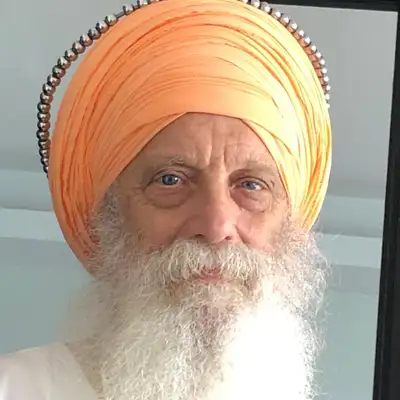
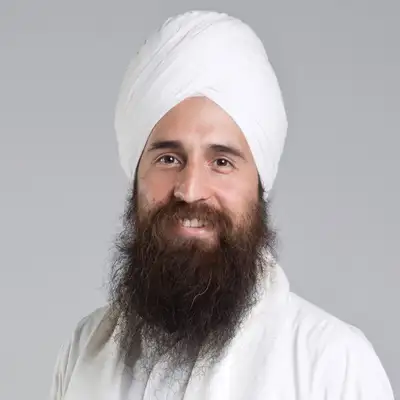
This podcast series is a presentation of challenging and irreverent conversations on wisdom, courage and common sense; for the most part taking place between renown spiritual teacher Hari Nam Singh Khalsa and respected leaders in the world of thought and action. These light-hearted, spontaneous and unpredictable conversations about all facets of life inevitably provide a platform to explore the depths of human nature and human destiny. In particular, it is the intention of this series to introduce our listeners to the value of the Khalsa Spiritual Path and its Code of Conduct, the Rehit Maryada, as created by Guru Gobind Singh, the legendary 10th Master of Sikh Dharma.
All right, everybody, we're back on
Warriors Saint
and ~ as always I I try to invite somebody
who is drastically interesting.
usually people I know from various walks
of life,
but ~ in one way or the other they ~ have
something
~ helpful to say ~ from their
own personal experience that would
kind of dovetail into ~ the objective of
of what this ~ podcast
is about is you know presenting the the
way of life of the warrior saint
and people are doing it in all kinds of
ways and sometimes you
see people wearing turbans here like
myself often not but people
are having ~ interesting things to say
about the world because
of their background. So today ~
We have ~ actually ~ a very long term
friend of mine,
Rai Singh from ~ Chile. And ~
I knew him when he was really young and
now he's like a middle aged guy
and I'm like ~ I I I met him when I was a
middle aged guy.
Now I'm like certifiably an old person.
So ~ like like I have all my dinosaur
credentials.
So ~ thanks for stopping on board here,
Ryson. Thanks, buddy. And I really look
forward to talk with you.
You know, we have
A lot of interesting conversations over
the years.
So we just happened to have another one
with the camera running,
but it should be like any other
conversation we we we have.
So ~ thanks for joining us.
Yes.
Yes. Thank you for
And
having me. I am, I am.
Yes, I'm happy to be here. So let's talk.
Yeah, I'm having breakfast, so you you
have to excuse me.
It's like a multitasking. I'm having my
morning shake.
Well, what are you taking? Yeah.
I have no idea.
My wife just gives me stuff and I
You are taking shakes in the morning?
Excuse me?
You are taking shakes in the morning?
I
am taking shakes in the morning.
That's exactly what I'm doing.
And and my wife makes that for me and
~ I I generally know I ask whatever she
makes is good,
so this happens to be very good.
And whatever she makes is healthy.
I don't know do you cook or do you does
your wife cook?
We both cook. Actually this morning I wake
up early.
I couldn't sleep much after five I am.
And I wake up, I did my meditation and
then I say like,
I want to eat something that I really
like.
So I make parathas, which is like an
Indian flatbread but stuffed with stuff.
And I made parathas for the whole family.
I l I miss that. I mean I'm in Mexico.
I'm mostly getting like tacos.
But I I I'd love to have a piranta.
I miss having the piranhas. That's pretty
good.
And ~ so you eat healthy.
You're a you're a healthy guy.
So hey, I heard you now now why why
There I am.
don't you tell me ~ why don't they ~ again
I'm trying to make this more like
a conversation than an interview,
but people are seeing you, they
They've never met you. ~ what do what do
you do with your life?
What what's ~ what's your job?
What's your you got a family? Like ~ what
do
Okay. Yeah.
you let our audience know a little bit
about yourself?
Okay,
so I think we need to start by saying that
I live in
the south of Chile near Patagonia.
~ Beautiful place, very all green,
a lot of rivers. And from here I direct,
I'm the head of marketing of 3HO,
which is a non-profit foundation that was
established on...
~ 1969 by Yogi Bayan and it's about
sharing
the teachings of Kundalini Yoga and his
teachings and representing
all these foundations. So it's a very
~ challenging but very fun
job ~ because we have a lot of
~ things to do and the work never
ends. So it's,
Mm-hmm.
I love my job. And besides that,
I do many things. I ~ like to draw.
I'm a writer also. I have a book.
I directed one of the first spaces of
online classes and online courses
for yoga in Chile.
I have a family. I have been married for
18 years
and actually Haringam was ~ our minister
for our wedding.
Yeah, I married you, that's right.
was really interesting to...
Eighteen years ago. my god.
Yeah. Yeah.
And I have two kids. My son is 17.
My daughter is 12. So, you know,
a lot of work, know, you know...
in all places of life.
All right, so it's I I heard ~ by by the
way,
~ maybe even you can give me a link I
could put
up for it ~ about your book because you
you wrote a really
Okay.
great book. ~ what that must have been
about five or ten years ago though,
right? Maybe five years ago, ten years
ago.
Yeah,
we launched, yeah. We,
I, so that book is called Tip Yogi.
And,
Yeah, tip yoga, yeah.
and at the moment, like what happened is
that,
yeah, at that moment, what happened is
that I traveled to China and,
you know, I was in all these different
cities,
being at service of one yoga teacher and
just helping people.
We went for 40 days in China doing a tour.
And what I realized after the tour is
that,
which is something very silly,
but at the same time it's a realization
that you came in at some point,
that I came in, is that people really need
help.
People around the world, they need help.
They need help to...
for many different things. So I was having
this technology of yoga
and but I didn't see any kind of
possibility
for people to have a practical connection
to that practice.
Like as a practice level,
you know, like when you go to a class of
yoga,
like teachers become very far from you.
~
So I wanted to relate ~ more personal with
the audience. And so I started writing
that book and then become
108 Yogi Tips and then became the book.
So it was very interesting to tell my
story and my experience to learning what
that
technology looks like. Yes.
It's really by the way, it's a really good
book.
~ it's it's it's a little different than
any other yoga book that I I I've read.
And I highly recommend the only it's it's
just in Spanish though,
right?
J it's just in Spanish though,
Yeah, it is in
right?
Spanish. We tried to do... Yes,
we tried to do... Actually, we didn't try.
We did a translation. ~ But then I came
up with the second version and I need to
pull that out and publish that English
version because it's actually kind of
ready.
~ I haven't taken the time to publish it
in English.
Yeah.
Yeah, I guess I th that would open up a
whole nother audience,
I guess. Yeah, it's it's a really good
book.
Yeah, that's true.
So
yeah, if you have a if you have a link or
something,
you know, maybe we could put it up and pe
maybe people can get the really,
really excellent
Yes.
book. But as I said, it's I think right
now just in Spanish,
Okay.
so but it but beautiful book actually.
Yes.
So and
Mm-hmm.
how how old are you how old are you?
I forgot.
~ I also forgot from time to time,
like, because it's like, it's like,
Yeah, that's it because we're ~ and what
was your name again?
yeah, I'm...
I with
yeah, with the two of them.
No, that I remember, yeah, 42,
42. Like I stopped counting like at some
point
Yeah, poor. yeah, right in the middle of
like to... ~
Be care you know, right be careful because
when I was forty two,
basically I got kicked on
my ass and my life turned upside down in
one year when I was forty two.
I never saw I never s I never saw that one
coming.
But I'm grateful. I mean I like the life I
have now kind of started then,
but I I it was like when I I was forty
two.
I was very comfortable and it was like I
got hit by the side of the head with
a two by four. I never saw it coming.
~ I lost everything. I lost everything and
everybody in one year.
I never saw it was like a it was like a s
it was like a tornado coming through
and I d I wasn't even aware of the the
weather forecast.
You know, and I surviv I survived
Yeah.
that hurricane.
So don't get too comfortable. But
No,
I actually Know I'm actually like kind
of ~ At one point in my life where Where
I'm not well, maybe I'm going to be desk
because of what I'm I'm going
to say but I feel like I'm not attached to
anything like like
I'm not attached to to
to
any possession or anything, which that
doesn't mean that it won't hurt
if I lose anything, but you know,
I feel very connected with God and like my
purpose is
to try to see everything that comes to me
as a relationship with God.
And therefore, I feel very detached
to...
majority of things that my whole life I
was very kind of trying to really control.
Well, I think you're more advanced than
me.
I I'm not as advanced as you because I
throughout my life I've gone through
p no seriously, throughout my life I've
gone through periods of my life that
I was absolutely certain that I was not
attached.
And then whatever what as soon as I
thought that
Well...
I was completely not attached,
then there was another nuclear bomb
dropped on something that I
was attached to but I wasn't aware that
Yeah.
I was being attached to it so so I I
really will want to consult
you because I think you're doing better
than me here.
So so I ~ but that being said I s I
Well, you know, I'm just...
~ I'm just 42, so let's see. Let's have a
conversation in two more years
and then we'll see.
Yeah, well
that's yeah, but I you know, I I I'm
laughing because I I've I've so many times
in my life I'm ~ you know, I'm really in a
great place now.
I I I just really feel for the first time
that that I'm really
not attached to anything. And then soon as
I like I'm kind of in that space,
then something flies overhead and drops a
nuclear bomb on me and then
I realize that I'm doing well but not
quite as well as I thought I was doing.
So
It sounds like you're you're doing a
little little better than me right now.
I, I, I have
to...
Yeah,
but I have a theory on that and I think it
really works.
you know, in your life,
you always have some kind of challenge
that's going to come to you.
And my theory is that that challenge comes
when
you are not challenging yourself.
~ Because if you...
If you are putting challenges to yourself,
like, let's say, ~ discipline or a
practice or like really trying
to step up in your game in different areas
of your life.
When you do that, like God leaves you
alone.
Like, like he looks at you and he say,
this guy, now this guy is really putting
the world,
this guy is like, you know, like he's,
he has a lot of in his plate right now.
Like I don't need to mess him around.
~ because he's taking his own challenges
and and when you but in the other hand
you have people who who you know,
like who never takes those challenges or
commitments or anything and they they
are pocket but like all the time by God
like okay here is one
and here is so So I have seen that this
really
I have proved that this theory kind of
works
majority of the time.
Well you know, I I have found myself
publicly
sharing ~ I think what you're saying maybe
~ like using a little different words,
but I I I relate to what you're saying
'cause I I kind of like I mean,
you know me, I I kind of like sharing with
people like a very ~ disciplined,
~ committed lifestyle that by nature
By I mean by definition, you're accepting
certain specific
challenges, but they're it's clear what
you're signing on for.
And and now looking at it like I think
what you were saying,
I think and the words that I share with
people is that
The life itself is very challenging.
There's no there's no escape. You're just
not paying at if you're
if you're not challenged, you're just not
paying attention.
You just life is a challenge. But if you
live a certain way,
like the way that I've chosen to live,
is like I get to choose my poison.
You know, it's it's kinda like i it's it's
not gonna be easy.
Hahaha!
But but
I I am choosing the challenge,
you
generally.
Right. And so I'm choosing my po I'm
choosing as they
Yes, yes, exactly.
they say I'm choosing my poison.
And because I'm choosing it,
I don't have any resentment or regret.
It doesn't feel like it doesn't feel like
something's coming from the outside.
It's like I get I get to choose the
challenge.
I'm not running away from it. I get to I
get to choose it and
Because I get to choose it, I'm generally
prepared for it.
Because I know what the challenge is and I
know how to prepare myself
for that particular challenge,
where the the great majority of the people
who
are around me ~ feel like things are
happening
to them from the outside that they didn't
they didn't have
a choice in picking their poison.
It was imposed on them.
So that they're usually
~ resentful about it or regretful about
it,
and they're usually not very well prepared
for it because they consider it
to be a surprise.
Mm.
You know. So that's that's how I look at
it.
I think that's kind of more or less what
you're saying.
And ~ and it's interesting because you
know,
we we
I think probably the two of us in our own
way live this way.
And we have because of what we are in our
lives,
~ find ourselves in a position where we're
hoping to because
it works for us, we're we're hoping to ~
inspire other people that
Mm.
that
there's another way of looking at all of
this,
these challenges, as actually a good
thing,
not a bad thing.
And.
And
~ and it's not an easy sell
Yeah, and.
actually. People are very
Nope.
in general people that don't want that.
~ so it it's it's very we know it works,
but it it's a it's a hard thing to sell.
Yeah, but you know, I think that's because
It is not just
one thing in itself. I mean it is but you
need You need
to have more components to make the cell
and and I so okay,
so I have this friend ~ You know,
he he always looked very stoic.
I know that you like that. So he looked
very stoic and
Yeah, I'm I like stokes.
And I, and you know, yeah. And one time I
asked him like,
like, how do you approach challenge in
your life?
Like, because I could see that he has a
very specific mindset
on how he handle ~ his life.
That was not the typical thing.
~ By the way, this guy.
He came from a spiritual life.
He was second generation and he keep
practicing what their parents told
him about the spiritual practice.
So I wanted to know like what was the gap
between this guy
who was born into a spiritual community
and you know,
surrounded by people who supposed to be
working in themselves and
me who I was born Catholic.
And, know, I have a believer, my parents
were believers,
but, you know, they didn't practice so
much.
So the one thing that he told me have,
have keep with, I have keep it with me
because it was super important.
And I think this is the, one of those
elements that make that sell easier,
which is he said to me, like, the way I
see my,
challenges is that God is,
it's behind everything.
Like everything that happens is because
God is taking care of me.
And God only wants the best for me.
So I say like, shoot, like,
you know, like that mindset is like,
you can't go wrong with that. I mean,
if you, if you have that level of trust in
God,
then how you can become
you know, paranoid or afraid of the things
that are happening to you.
Because normally what happened is that you
have a problem,
you have a challenge, and you just see the
thing in front of you,
but you don't see that there's going to be
a way out of that.
And there is going to be ~ a second step
of that thing.
So I took that with me and I tried to
apply it as much as I can.
when...
When I'm having trouble or I'm challenged,
I'm saying to myself, God is just taking
care of me,
even though I don't like it, even though
I'm in pain,
but it's just taking care of me.
So I think that can help you with the
self.
Well it's the you know, the the some of
the challenge,
like you're you're in a
You're in ~ I I guess you call it a
spiritual community,
a spiritual organization. ~ and ~ I'm I
guess in the same community.
I I always say I guess because sometimes
the reality of things
Hahaha!
are are not what people are just presuming
about things,
you know. So I'm always going,
I guess 'cause
Yeah.
I don't know what's really gonna now and
how to me,
like for instance
w we have been in a community,
there's a lot of self described yogis,
you know, in this in that particular
community.
But
I I've been around that for like fifty
years,
but I actually don't think that the
majority
of the people actually ~ believe in God.
There's no there's very little evidence of
it.
I mean, so it people say things,
but the way that they act and the way that
they talk.
I'm not saying everything, but but a lot
of people that there's there's
no indication they actually believe that
everything will be okay.
There's no like what I'm getting back to
what you said,
is that and and what they say sometimes
doesn't,
you know, it's people just
Wanna people to believe something about
them.
But the their actions and decisions and
the way they conduct themselves
and just that there isn't a like a strong
evidence that they really
believe that there is something that
you're talking about here.
And I think it's one of the reasons that
It's it's difficult to really inspire
people other than being a good role model
because
But don't really believe it,
you know, so it's it's it's inter
Yeah.
it's interesting. You said you you know,
like ~ but anyhow I we can go on weeks on
that ~ on that riff.
But you know, I I did have something that
I'd really interested in talking
to you about. And again, hoping this is a
conversation,
not an interview, right? But you I you you
know,
you
Not that long ago you gave ~ some online
presentation,
and I really
Yeah.
resonated with something that you said,
and I was also of the thought that
probably very few people
in the audience really understood where
you were coming from,
where I thought you were coming from,
and how important
Important it
Mm-hmm.
was what you were saying. And I was hoping
that people were going to lose sleep over
what you said. And I'm hoping they did,
but I'm not sure they did.
Yeah.
And that was, I believe you're you were ~
introducing a ~ a subject that
I talk a lot about, and that is that
Mm-hmm.
this ~ this idea that especially the
founders of
Many of these ~ religion and spiritual
paths were actually
revolutionaries and that at its core
religion is
a very revolutionary idea and that
it somehow loses its way.
So I think this is a very relevant and
current subject that really
demands more attention than it gets.
that people are too comfortable.
So it really getting back to like
something I talk about with people a
lot is that it just seems that a lot of
people ~
in my sphere I notice seem to be attracted
and it kinda ties into what
you were talking about before about
challenges,
is that they're attracted to some half
assed idea about spirituality
as being an attractive thing.
But actually their assumption coming into
it is that it will relieve them
of challenge, that'll make their life more
comfortable.
But revolutionary ideas never make people
more comfortable.
They make people uncomfortable and they
challenge people to shift.
But the reality is most people w don't
want
Yeah.
to do that. That's not what their motives
were in getting into it.
So I thought that you raised
to that group a a really important point
that I was just curious
how people would have digested that.
But I I was glad that you talked about
Yeah. I mean, like it's,
in, the spiritual realm,
we talk about, like in many different
traditions,
we talk about the, God being like these,
~ three aspects, the three main aspects of
God,
like creator, sustainer, and destroyer.
And, and like that
you can see it applied to everything and
many,
even in some traditions, they just relate
to God
as the creator and sustainer, but they
don't like to see that God
is also the destroyer. And they have real
problems with that because
~ they cannot reconcile the idea that that
is also part
of the spirit of anything, of that spirit,
but also.
~ so when, things happen, like people
doesn't see that as a spiritual,
mean, like accidents and all of that,
but it's, it's all about that.
So let me tell you an experience related
with these two things.
So I was with my daughter driving.
We, I don't remember where we were going,
but you know, I was on the light stop and
in front of me,
there was a car and no one behind.
So this.
A lady that was completely drunk came at
60 kilometers
per hour and hit us in the back
of the car. And because
of the impact, we smashed the car in
front.
And you know, like it was a huge thing.
Of course, my daughter, you know.
She was kind of traumatized by the
experience,
but not so much. She's totally fine now.
And I was like, what was this?
And then like, you can see that as like
very bad.
Like, you know, it's a destruction.
It's got, but hear me out. Like the woman
who was in the car in front of us.
It was with one baby and one little kid.
So if I wasn't there, what will happen,
because it was a light stop, it was that
that car will hit directly on
the front car and that woman will be
projected.
And then another car will hit that car by
the side because a lot of cars were going
in the other direction. So yeah,
we get the hit because we could have that.
We could sustain it.
And we kind of we save the person who was
in front.
So I'm happy that we were in that
collision and not her because that could
mean
death for the baby or for the boy who was
in the back seat.
So when you see just things in one way,
you just keep in the box, but you need to
see beyond that ~ because
You know, like it's an infinite creation,
sustaining and destroying. So it's not
just
one specific thing that happened and
doesn't react with anything else.
It's like a reaction that creates multiple
things all the time.
And we are very used to just see,
~ this is bad. This is good. This is okay.
Your your ~ in your job,
you're kind of a represent representative
of a certain spiritual religious group
or tradition. Ha okay,
so your your your juxtaposition's a little
bit different,
but your role is and ~
it doesn't matter whether ninety-nine
percent of the people listening
to us don't have anything any
understanding or experience with like
the group we're associated with.
But ~ but I I think it's representative.
I mean I see this everywhere. So I'm in a
group so for like fifty years,
and when I got involved with it,
going back to what this revolutionary
way of the f ~ talking about the founding
of things.
When I was introduced to it,
it seemed like a very revolutionary
movement.
~ and now 50 years later it it doesn't it
does not feel like
a revolutionary movement. I'm just saying
what I don't I'm not I'm
No, no.
not even being critical
of it because I I'm at friends in other
movements tell me the same thing.
I mean this is like a
This is kinda like the history of the
world kind of thing.
So these things all these things start out
kind of revolutionary and then they kind
of
They they become the norm in the
establishment.
There's nothing really revolutionary about
them.
So you're in this position that you're
representing a particular organization,
one that I would say does not ~ does not
appear to
me to be particularly revolutionary at
this point.
How
The U view? And again, I'm not saying it's
particularly this particular group.
I could be talking about any group.
I I know I have friends in the church,
Catholic Church. I have friends and we we
talk about this at Starbucks,
right? Because it's the same story.
It's like something seems new and it's
very i i i it it's glittery,
you know, and it glitters and all that,
but but then it kind of like becomes ~
boring.
How how do you
Yeah.
keep it revolutionary because you're a
person who obviously
can see the value of the revolution
revolutionary ideas.
How how do you envision being able
because you're in the middle of it,
how how do you envision being able to ~
make people feel they're part
of something revolutionary?
Instead of instead of looking but instead
of
Yeah.
instead of basically being an agent for
comfort,
like like people coming to you for
comfort,
how how in your position can you
be actually an agent of revolution and
make people uncomfortable but still want
to be part of it?
it's, it's like, yeah, like, I mean,
that, that's our challenge because what,
okay. So it doesn't matter if you are a
for-profit or nonprofit.
You, you always need to sell something you
need to,
even if it's for free, you need to sell
it.
~ and I'm head of marketing. So my job is
to sell something that's very difficult
to sell, which is an experience.
in some portion of what we do for a,
for a type of event where you need to
work.
So you pay and you need to work.
So it's like, need to put off your time.
And so it's, it's always super difficult
and challenging like to how you,
how you frame that in a way that people
feel interested because contrary
to what people think, like
This kind of experiences will elevate you
because it's in that let's talk about
the service like the and for people who
doesn't know what this is about
in many spiritual paths ~ Seva it's what
we understand as something that you do for
not Waiting anything in return,
but you just do it because of it's coming
from your heart
~ So how you can ~ sell that idea?
It's extremely difficult, but some way we
try to manage that.
How about the revolutionary part of that?
Well, that's how... ~
We are constantly working in my team
to get there, but I don't feel we are
there,
not now, like to be completely honest.
Well, do you feel and again
I'm again I I'm not making ~ these
questions
and stuff about this particular I'm not
like saying
Yes.
aside because th th again this is in every
conversation I have with leaders
who I know in all these days it's the same
kind of challenge.
Mm-hmm.
So
I I I think one of the challenges is w and
I don't disagree with you,
you're like selling some I mean,
I'm you know, the I I'm a lawyer by trade,
so you're lawyers are are not selling ~
goods and services,
they're selling an idea, they're selling a
position.
Right? They're they're they're debay b buy
you know,
by my point of view here, agree with me,
you know. You know, because I w you know,
so I I'm not I'm not like in
Trying to influence you to buy a car.
I'm trying to influence you to ~ see it
the way I see it,
you know? So yeah, so it all comes to
persuasion.
Okay. So I I think that the from my
viewpoint,
the the challenge, and again,
I keep go, I keep going back to the
revolutionary part of it,
is that
The challenge to sell it is what exactly
are you selling?
I mean that's the bottom line.
I mean, what is that and I think this is
this is a real
For ~ many of these religions and whatever
you call it spiritual past,
it's all the same to me. ~ like,
okay, why would somebody
why why would somebody want what you're
selling?
I mean that's that's the bottom line.
And I think that what happens is I think
that there's this clash
bringing back the revolutionary part of it
is that there's a clash between what
the original message was, which was
revolutionary,
and what I think is people are wanting to
buy.
I think in in the end people are wanting
to buy comfort.
And and that these things are when it when
it becomes important of
how many people any group is trying to
attract
i i it's understandable how they're trying
to look at it like what
do the people want? We're gonna what do
they want?
So we're gonna try to give them what they
want.
I mean that's that makes sense,
but often what they want is at odds with
actually
the revolutionary ideals the thing was
founded on.
And this is inevitable in every group
because they wanna grow.
They they do, they wanna grow.
The it's well intentioned. They want to
grow and they want to attract people
and so logically they're thinking to
attract people we've gotta give people
something they find to be attractive.
But what most people find attractive is
comfort,
in my opinion. Okay. They're not they
don't find commitment,
self discipline, sacrifice. That's not
that's
not that's hard to sell.
And and then
Yeah.
and then on the other hand, if people were
like really honest,
what they were really selling,
because I'm not sure sometimes they even
know that,
but you know, talking ~ to me,
I I very much ~ you know ~ very oriented
to this this ~ ideal we call culsa,
right? So
Basically the that was founded three
hundred years
ago and what they're selling is
liberation.
Okay, so that that nobody's whitewashing
it.
Mm-hmm.
That
that's what we we're we're selling
liberation.
And if you want to be liberated in this
lifetime,
~ this is ~ this is what it entails.
you
This this is the roadmap again there.
And then you kinda know that that's not
gonna be attractive to many people.
You already know that. Yeah, but but
there's no misunderstanding.
Yeah.
And because you're doing it that way,
it's re it it it maintains its being
revolutionary.
But you're not going to attract numbers.
That's that's actually true. So but I
think this is this is a ~ I I think
I think it it makes somebody like you
In your job that I I mean I actually feel
compassionate.
I guess I think that's it's kind of like a
funny position,
Hahaha
is that you know,
your job is to attract, I would assume is
to be able to attract more people into
the lifestyle. I I get that. But ~ in
doing so,
it's it's hard to maintain representing
it as an uncomfortable revolutionary
ideal.
because it would be understandable that
you're you're gonna try
to make this as attractive and comfortable
for people to come into.
So I think it's a super, super challenge
to do that.
I'm glad I'm not an acquisition.
I d I don't
Yeah.
think I mean you're doing a really good
job,
I know that, but I I I'd have a hard time
doing it
and I admire that you're able to do
Hahaha
that.
Well, you know, like the thing is that,
and I think this applies for the,
even the examples that you were given.
I think like no one's tried to,
you know, like to bring you to something
that
is challenging by selling the challenge
itself,
but it's by selling what you are going to
gain after the challenge.
We don't say that.
In our events, you do three days of this
practice that's intensive,
physically. We talk about the benefits
that come
after. And when it comes down to,
you know, ~ Guru Sikhs that are part
of the Sikh Dharma, I don't think that
they did it also,
like either, because they start with an
open kitchen.
Anyone that wants to eat and anyone that
wants to have a free meal,
they have the option to start with that.
And then the conversation starts.
So, you know, you start really with the
basic stuff,
which is nurturing the most basic thing
that people need,
which is food or shelter or, or friendship
or community,
et cetera. And then some people.
are going to be ready to take that next
step towards something greater.
And then it's when things as the culture
came in place because they will
see that there is something else that they
can go.
And some people take that decision and
some people just prefer to stay in the
meal,
in the friendship and those in that stage
and not go further. So
I think like, ~ yeah,
like talking about the benefit,
not, the, not the,
the difficult part is a, is a good way.
well I think, you know, as I said,
my friends in all these different groups
and I I tend to hang around
very r I I I I I tend to hang around
dangerous people.
I mean I tend to I I actually know a lot
of people I consider
to be very visionary. And we I have like a
circle of
friends from very different walks of life
and we tend to talk about things
a hundred, two hundred years from now and
we're we're in relationship
to that and also kind of being helpful
right now,
you know, and welcoming. Welcoming.
I mean as as you said, I I mean I I agree
with you that
~ you're starting from a place of
welcoming where
People are just simply welcome.
And there's no nor should there
be any expectation or pressure or
anything.
Just people should know that they're
welcome.
And that should be to me just a given
because that's just how you treat people.
I mean, they you don't need a reason,
you know. You don't need a reason to be
welcoming and kind and generous
and and I think that's ~ and then as you
said,
you know, people get exposed to things and
they can choose to do
whi whatever they want to do about it.
But I I still think that it's
a challenge to maintain
the the the revolutionary idea.
It's like in our in our tradition like you
go back to Guru Nanak
who lived five hundred years ago and you
could go back to Guru Govind Singh
who lived three hundred years ago.
They were very revolutionary in their
ideas,
very revolutionary in their thinking,
very revolutionary in the way they
presented themselves.
And ~ they had followers from all walks of
life,
as did as did Christ and and Buddha and
Muhammad and you
go down the list and they were like very
revolutionary ~ teachers who were able
to attract people from all walks of life
and all levels of development.
So I I actually you know,
being around this, I I I actually don't
mind like
As you know, getting people unsettled,
you know, getting people a little crazy.
I mean
I just I just think that like what I heard
you say
in that other podcast, I thought was like
really I'm just acknowledging
it was very true. You you brought up what
I thought to be like
a fact that all these things started
as extremely revolutionary ideas,
and and I think that
It's very hard to sustain that.
That's the big ~ challenge for to meet
teachers
I agree.
like yourself or anybody else is like,
how do you keep it on the edge?
How do you keep it revolutionary?
Because I don't see that happening in the
organization I'm in at all.
Nor do I see it, I'm not being critical,
nor do I see it in other similar
organizations.
I'm not singling out any organization.
It's just like
They they start getting, you know,
there there's a revolutionary idea and
then there's a legal structure
and then there there's a a building and
then there's a legal thing
and and there's elections for board of
directors as we know I So like what
happened?
What I mean, what happened? It's there's
nothing that exciting about it.
There's not.
Yeah,
I know. I, I, I, I agree with that.
And, and, and you're right. Like all
these,
all these traditions start with a very
revolutionary ideas
in, in like the, those were the,
the top of the spear for this,
~ new things that start coming up at some
point.
and it's
I, well, I think we all know what
happened.
Like people were just trying to find ways
to settle down and make it work for them.
so, you know, they say like, okay,
we know that these are the teachings and
this is the,
what we supposed to do, but you know,
we are going to do just the things that we
like and,
and this other stuff we, you know,
we understand, but we are not going to
really do it.
But I feel like again,
like this.
these revolutionary ideas came from,
~ they came basically from an individual.
And I think it's on the individuals when
the revolution,
it's possible to happen, not at the
institutional level.
~ For example, if you look, which I'm...
Right. I y that's that's very interesting.
Yeah. And, and, and, know, like,
I like that.
if you look at the, the actual Pope right
now,
I feel he, he's revolutionary because,
but he's in,
Yes, yeah, yeah. Mm-hmm.
~ inside an organization,
you know, like, but, the ideas that he,
he have come up and, and the way that he
has spoke with,
about different topics, I think that
that's an example.
~ of revolution, again, he's inside an
organization,
so there is always a frame.
You know, but I think you're saying
something I
think you're saying something that's
really true.
I really I'm gonna think about that.
That's that's that's really true.
And and the thing is though,
and I think you you know, he's a good
example of this.
Is that I I'm not like saying blow up the
institution,
although at times I'm thinking not such a
bad idea.
Hahaha
Okay,
no, to be honest with you, I'd like blow
it up.
That's fine.
The mission itself, I you've heard me say
that.
The mission's going nowhere. So though I
just if it's not working,
just blow it up, okay? The mission you
can't blow the mission up,
you know, you can blow you can blow the
organization up,
but you can't blow the mission up,
you know. So ~ I I I'm gonna okay.
~
You but but you you could be a
revolutionary inside,
okay? And you were talking about the Pope.
Okay. And ~
But even though he's I think that's worth
pointing out because even though he's
the Pope himself and he is the face of the
organization,
he himself is a non-conformist,
which is interesting. He his ideas
are non-conformist ideas. And it's
interesting and I think very promising
that somebody who is at the head
Of such a like static organization
is a visionary and has nonconformist
ideas.
And again,
kind of going to the organization we've
been in,
and again, without singling it out,
because I don't think it's any different
than any other organizations.
There are very few not that I know that
people like to think of themselves this
way,
but I I like they can't fool me.
There's actually not that many
nonconformists,
you know. And if they used to be
nonconformists,
then they get into something like this and
now they're into like some kind
of group think. They're there they're
there's I think there's also a fear
of being a nonconformist because people
want to be accepted and loved
and approved and all this. And if you can
like be in the middle
Yeah.
of it and have nonconformist visionary
views,
you're gonna be largely criticized.
in any of these groups. 'Cause that's just
how that's the psychology of groups.
Is once you're member of the group,
you're expected to kind of go along with
that thinking.
But ~
down.
Pope I don't think the Pope's that way.
I don't think the guy who's my teacher,
who was the head of the thing I joined
into,
he was very nonconformist in his thinking.
I think that I'm fairly nonconformist in
my thing.
People think, ~ he's so this and he's so
by the book,
but I think most people who know me know
that I'm very much a nonconformist.
And ~ an out of the box,
and they can't
Yeah.
quite put that together. How could
How could somebody such a non conformist
conform so much to a certain ideal?
But they don't kind of they don't get it.
You'd have to be a revolutionary to
understand why that is.
And and so I I think that's probably gonna
be,
you know, I I think it's interesting the
organization you work for that
I'm familiar with has somebody like
yourself at the helm.
And I think the big challenge
You know, if I were in your shoes,
I think the big challenge is how can you
grow it and
and keep it infused with like
revolutionary fervor that people will
actually
be excited. I mean it's so it's so to me
it's very hard to create because it's hard
to create excitement. People may buy what
you have,
but I think it's hard to create excitement
unless you have electricity running.
And it's very hard to do that unless you
have something that people feel
is like really kind of new and out of the
box.
It's hard to maintain that.
Yeah.
No, and also there is other thing that
for every organization that has,
you know, this amount of years,
people really love to just stick with what
was the tradition.
Like, only thing that they want to do
basically,
they are, or is acceptable,
is that you repeat the same experience.
And they don't want anything different.
They want to just have the same thing
because they feel that in that way,
they are recreating the original message,
which I duly and fully understand.
But the thing is that, yes,
let's do that, but let's also understand
that evolution is happening
and we need to bring another...
~ things over the table because if you
look at all of these teachers,
like Jesus, Yogi Vayan,
Guru Nanak, ~ all of them,
they were bringing something that it
wasn't fixed.
It was something that was always ~ growing
and evolution and,
and, like never stopped. Like the,
the, the, the
in like the most important thing is that
when you stop growing,
then you start dying. So disruption needs
to happen to make new growth
and like that things start kind of
blooming again.
Otherwise it's just sustaining at until
certain point,
but then it's not possible.
And it can't
last. It can't last that way. And there's
no i i it i i it's
not sustainable being that way.
Because the newer people and younger
people and people who haven't been born
yet don't care. They don't care about how
happy you were fifty years ago.
Yeah.
They got their own life to worry about.
They don't
Yeah.
they that's your life. Okay. So you gotta
make it you gotta make it
sp you gotta make it work for them.
But
But still be loyal. And you know,
you know me, it's kinda like now that I'm
at the latter stages of my life here,
not being too morose about it,
~ I hope that when it's time for me to go
back home,
as they say that people will remember me
as somebody who was very loyal
to something that was handed down three
hundred years ago,
and that yet I was on a cutting edge of it
three hundred years later.
bring it forward, not backward.
And that would be like the best legacy I
think I could live for my whole life
is being known as somebody who,
you know, f was totally connected to
something that happened three hundred
years
ago and actually was bringing it forward
to the next three hundred years
as if nothing happened yesterday,
all at the same time. And I think that's
probably what ~
Your legacy is there's a reason you have
the position you have,
you have an opportunity to do that.
I'm sure that you'll do that. But I think
it's a big challenge.
I think I and then not just for you or
this organization that we're part of,
but it but all these organizations.
It's is like how can they like keep
connected to the original source,
but how can they be like bringing it
forward and also just bring it forward
and just letting somebody else take care
of it.
I think that's a big big challenge.