Subscribe
Share
Share
Embed

CAIS Live Conversations: Building With Alts, tackles the often untapped potential of alternative investments by sitting down with the various players in the alts ecosystem. Listen in as we dive into alternative investments from the perspective of industry experts, RIA executives, IBD executives, alts manager leaders, and alts experts. Hear what other advisors are doing, learn about new technology, and join us as we turn investment complexities into real-life concepts that could potentially help diversify and drive growth in the independent space.
Welcome to CAIS Live Conversations Podcast
I'm your host, Alex Cavalieri, head of marketing here at CAIS. We are the leading alternative investment platform for the independent wealth community.
In these conversations, I’ll sit down with industry participants, from asset management executives to RIA and IBD leaders to uncover their insights and stories that may be driving the growth in the world of alts.
Each episode we take a deep dive into the views of those who are breaking down the barriers and making alternative investments accessible to financial advisors.
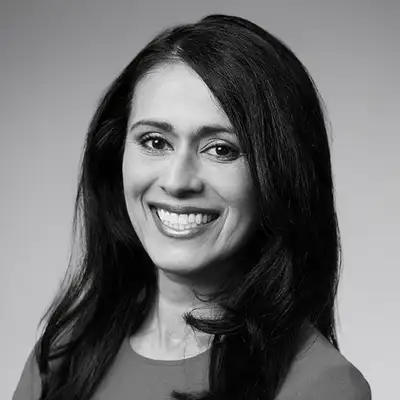
In this episode, Brad Walker sits down with Saira Malik, Chief Investment Officer at Nuveen, the investment management arm of TIAA with nearly $1.4 trillion in AUM, over $400 billion of which is in private markets. They get into Saira’s views on how advisors may approach the public-to-private shift in portfolio construction, including her firm’s framework. They also touched on real assets as potential inflation hedge, the macro landscape as Saira sees it today, and what she believes investors most need to guard against.
Let’s get into it.
The views and opinions expressed by the speakers herein are as of the date recorded and solely reflect the views and opinions of the speaker, and not necessarily the views of CAIS, or the broader financial industry. This podcast does not constitute an offer or a solicitation to buy, sell, or hold, any securities, financial products, or services, on behalf of CAIS, its affiliates, or any third-party investment managers, their affiliates, or strategies. This podcast is provided for information purposes only and is intended for an audience of investment professionals.
Brad Walker (00:01.858)
All right, welcome everyone to the CAIS Live Conversations podcast. I am your host, Brad Walker, and I am very excited to be here with Saira Malik, CIO of Nuveen. Saira, thank you so much for joining us.
Saira Malik (00:15.562)
Thanks, Brad. It's great to be here and great to see you.
Brad Walker (00:18.946)
Saira, I wanna jump right in. The world is pretty complex today. Every day we have new news coming out across the geopolitical environment, the macro environment. Tell me something.
What surprised you the most in markets this week?
Saira Malik (00:39.488)
What surprised investors the most is that the market has rallied for multiple weeks while we still don't have a formal end to the war in the Middle East. But you know what markets love is they love to price in and know an outcome even if they don't know the timing. And markets have decided that this conflict will come to an end. We don't exactly know the timing of it. So therefore markets are already rallying on the news. That's the good news. Now secondarily we're coming right into first quarter earnings season and investors are very optimistic.
Expectations are for 12 % earnings growth year over year for the first quarter. Both of those are the reasons why the market has rebounded to new highs.
Brad Walker (01:16.398)
Amazing. Well, Saira, we're going to cover a ton of market commentary. But before we do, I want to take a big step back and really get to know Saira Malik a little bit. You didn't grow up in a household where Wall Street was dinner table conversation. How did you find your way into finance?
Saira Malik (01:35.786)
I definitely did not grow up in a household that talked a lot about finance. I grew up in Stockton, California. And for those who don't know the city, it was ranked the most miserable city in the United States and the city with the highest crime rate per capita in the United States. So it was an interesting place to grow up. And my house was all about medicine. You could say that medicine runs in my blood. Both of my parents were doctors. But I was fortunate that when my mom wasn't practicing medicine,
she was actually practicing the stock market. It was her hobby. And when I was 15 years old, she tried to get me interested in watching channels like FNN, which was the old financial news network. Now, of course, I had no interest when I was 15 years old to watch any ticker tapes or anything, but she didn't give up. And eventually she got to know someone named Al Frank. He's this legendary investor who used to publish the number one stock market newsletter in the United States.
Brad Walker (02:11.886)
Yeah, sure.
Saira Malik (02:31.496)
And somehow she convinced him to take me on as his protege when I was about 17 or 18 years old. So I went to New Mexico one summer. I spent some time with Al and his wife, Vicki, and Al taught me everything he knew about the stock market. When I came home, I said, I want to be Al Frank. So at 19 years old, I got my series seven and 63 licenses while I was in college. And I started practicing as a stockbroker and writing my own stock market newsletter. Now, to back up a little bit, I went to
college in Cal Poly San Luis Obispo, which is this great state school in California. Now, interestingly, if you go back to when I was going to college and graduating from high school, when I met with my high school guidance counselor, he told me not to apply to a four-year college because he didn't think I would make it through, which is just another tidbit about sort of how my high school was with no financial literacy and really good guidance to be given to the students. But anyway, I went to Cal Poly.
Brad Walker (03:25.548)
Yeah, yeah.
Saira Malik (03:28.67)
I work as a broker, I'm super excited about Wall Street. And when I graduate, I apply to probably 20 Wall Street firms and I get rejected from all of them. I can't even get an interview. And part of the reason for that was because Cal Poly was not a feeder school onto Wall Street. So, and I'm a big proponent now of educational diversity and for Wall Street to widen the funnel in terms of where it hires from, because there's a lot of great candidates from a wide variety of schools that Wall Street should be considering. But the good news was,
I didn't give up after Cal Poly. I got my master's degree at University of Wisconsin in Madison, and JPMorgan Asset Management hired one person out of their little money management program every year. And I was the fortunate chosen one. I got my job as an equity research analyst at JPMorgan Asset Management. And that's how I started my career over 30 years ago.
Brad Walker (04:16.91)
Wow, that's an amazing story. We'll double back to some of that later on, but what an amazing story. You've spoken a few times about learning to separate signal from noise in your career. What experience actually taught you that?
Saira Malik (04:38.272)
Well, I was very lucky when I, you I've had a job basically 30 years of my career was just investing in public equities markets. And what I learned a long time ago was focusing on the fundamentals, focusing on the long-term, focusing on companies that you can invest in over a cycle is really important. So my original sector that I covered was specialty chemicals. This is a very cyclical chemical materials kind of industry. And there was a lot of noise oftentimes around these cycles for these companies. You know, they, were very,
boom and bust in a sense as cyclical commodity oriented companies tend to be. So lot of the noise would be around when these companies were doing well, the noise was of course that this was going to be an elongated cycle. This growth was going to continue forever. And basically that was usually the time you wanted to sell because when the stocks were sort of at that peak of the cycle, you want to sell the companies when everyone else is saying business is great, keep buying the companies. And on the other side was the other thing when we were down in the dumps and the chemical industry was
It was at a low point, everyone would say, this is terrible. These companies are structurally impaired. You should sell them. That was a time to buy them. And so there's always a lot of noise in the market, know, chasing this, don't touch this because it's dead. And that's what you need to avoid and look at the signals and do your homework and do your fundamentals to figure out really how is this company or this sector going to do over a cycle. And if so, maybe I should be looking in areas that other people are overlooking.
Brad Walker (06:03.47)
Yeah. Well, we're going to touch a little bit more on the macro and portfolio allocation and looking at public markets and private markets and kind of deciphering between noise, something real, something not real. Let's spend a minute here on Nuveen. You're celebrating at Nuveen now, year 125, which as I was kind of doing some work on this and
I remember reading 1898 is when the organization was founded. It's probably TIAA, right? Part of Nuveen, or Nuveen now part of TIAA.
Saira Malik (06:45.462)
So actually, Nuveen is part of TIAA, and TIAA was actually founded a little bit later, but still over 100 years old. TIAA is founded in 1918, but fast forward to 2014. That's when TIAA buys Nuveen.
Brad Walker (06:55.149)
Wow.
Brad Walker (06:59.726)
Perfect, perfect. So Nuveen starting in muni bonds, now managing nearly $1.4 trillion, over $400 billion of that is in private markets. As the CIO, how do you think about that kind of overall arc?
Saira Malik (07:18.368)
But it's a privilege to work for companies that have such a long history. And just going back to the beginning for Nuveen in 1898, really was the original infrastructure player in the United States. In a sense, if you think about munibonds, they're funding the infrastructure of the United States. So I love that because we're very positive on infrastructure as an asset class. But to watch the growth of both of these companies over 100 years has been nothing short of incredible.
Brad Walker (07:38.158)
Sure.
Saira Malik (07:46.262)
You know, not only has Nuveen grown from just a sole muni bond company, but now we have this great public to private platforms with a very large public equity business that's almost $600 billion in assets under management, a large public fixed income business, which is almost the same size. And of course, this incredible alternatives business from private credit to private equity to farmland to timberland, to real estate, to private infrastructure. All of that, I think really provides a total portfolio solution for clients.
It has built a resilient model that's well diversified with asset classes that are less correlated with each other. I think all of that is important. I've worked at Nuveen TIAA for 23 years. And so I've lived through many of these cycles from the COVID pandemic to the global financial crisis. I was at JP Morgan during the dot-com bubble. And all of this, when you work for these incredible firms, it's great to see how resilient they are during these periods of turmoil and downturns, which of course, we haven't seen one of those in quite a number of years now.
But they always do come.
Brad Walker (08:47.372)
So package all this together. What is the, from an investment perspective, what's that conversation you can have today at Nuveen that you couldn't have 10 years ago?
Saira Malik (08:59.328)
Well, I'm privileged to be chair of our global investment committee, which is incredible because part of that committee is we meet multiple times throughout the year. Not only do we publish our outlooks, but we get together with all the heads of these asset classes to talk about what's going on. So that cross-fertilization of information ideas is important. know, hearing what's going on in Nuveen Natural Capital, which is farmland and timberland. And what does that mean for the supply chain, even leading up to us as the public equity investors, which is the original business that I came from?
These conversations are so incredibly important. And another example is private credit. There's lot of, speaking of noise, a lot of noise in private credit recently and a lot of new entrants. But we've been in private credit for over a decade through our Churchill division and of course with our European Arcmont division. So we have these senior long-term leaders who came from other alternatives firms. So we can really talk about like, does private credit really mean over a cycle? What kind of investments should we be making?
Brad Walker (09:37.72)
Sure.
Saira Malik (09:57.706)
How do you protect your business and make sure that you're educating your clients properly in this space?
Brad Walker (10:03.822)
I want to, you mentioned infrastructure a few times. Real assets, when we think about real assets, we think real estate, we think infrastructure, we think agriculture, timberland. You're one of the largest investors in that infra ag timberland space. But it oftentimes doesn't show up on people's radar. It's different. It's not stocks and bonds. It's not private equity. It's not private credit. It's a little bit different.
How do you make the case for that? Like the investing into the ag or the timber or infrastructure?
Saira Malik (10:42.154)
think they've become much more in the conversation over the past few years because the one thing that they offer is they're a great inflation hedge. If you look at going back decades, they have handily beat inflation over compounded over multiple years. you go back to pre the pandemic, inflation wasn't really something that we were talking about a lot post the pandemic. Obviously, inflation became an issue. Then it started to settle down. And now with the Middle Eastern war, we're worried about inflation again. And the question is,
Will this be a one-time bump to inflation or will it become more structural and chronic again? And that leads to other questions like what will the Fed do with interest rates? So looking at all of that, to be able to look at asset classes that are a strong inflation hedge and add those to your portfolios is very important. And they also tend to be less correlated with public asset classes. So they're very lowly correlated to public equities, a little bit more correlated to fixed income. So for people who have portfolios that
You know, most portfolios are still probably going to be over half in public equities and fixed income for liquidity reasons. But to be able to offset that with other asset classes that can be stronger inflation hedges and also have their own cycle is very important. When we start with farmland here, farmland is such a necessity based business. You know, it has a cycle. I mean, the good news is it's going to be here forever, I think, as long as civilization exists. Land can be limited.
Brad Walker (12:02.862)
or yeah.
Saira Malik (12:06.09)
So, depending on the different crops and where they are in their supply-demand cycle, farmland can almost always be a consistent piece of your portfolio.
Brad Walker (12:15.982)
So let's get right into the craft of portfolio construction. think you're hitting all these great points. I want to talk, the number of conversations we hear today, and I would say it's probably been going on for the last 18 to 24 months, is how do we as advisors build portfolios for our clients that are blending public markets and private markets? Quite often we hear people saying things like, you know, alternative investments, let's just get rid of the word.
let's just say it's public equity, private equity, public credit, private credit, public real assets, private real assets. How do you, when you, in your seat at Nuveen, the CIO, clients come in and say, build me a portfolio. How do you think about that public-private split from, as you build out these allocations?
Saira Malik (13:06.708)
We form all of our views on data-backed research and our research shows that typically there's a better diversification and risk measurement of a portfolio that's not the 60-40. So the typical portfolio when I started in the industry and for most of my career was 60 % equities and 40 % fixed income, basically publics. What we've learned over time is those asset classes can be highly correlated. We saw that in 2022 on the downside and of course people
really when they experience the downside, think is when they really feel like it hits their portfolio and their wallet. Our research shows that the ideal portfolio construction is 50-30-20, 50 % equities, 30 % fixed income, 20 % if we want to call them alternatives or private asset classes. So think with clients, we're talking about evolving their portfolio. Now there needs to be nuances with the portfolio. First of all, investor education so they understand.
the illiquidity measures within the alternative side of the portfolio. And then of course, within alternatives, how do you position your portfolio? As you mentioned, at Naveen, we are exposed to almost all of these asset classes, but of course, there's nuances to each asset class, real estate, another great inflation hedge, an income-based asset class, farmland, has its own characteristics that drive it, and then of course, private credit and private equity that can be driven by other characteristics.
So how you think about that portfolio is important.
Brad Walker (14:35.81)
And how do you think about, I think Nuveen's done quite a bit of acquisitions the last couple of years. One of them is in the portfolio construction kind of managed account, Tamp World with Brooklyn. And the other thing we hear from advisors quite often is taxes, taxes, taxes, and how do I, what is my after tax? So when you think about portfolio construction,
You have some areas that are very tax inefficient. Then you have other areas that are more tax efficient. How do you think about building out client portfolios with taxes in mind?
Saira Malik (15:16.67)
Taxes are on a lot of our clients' mind, not only because it's April, but because taxes have just become such a large piece of your income. So it's definitely top of mind for investors. And Brooklyn is a great example of a solution for taxes. its main business was direct indexing and tax efficiency. But really, what Brooklyn is growing into is a company that can put publics to privates within portfolios. And investors want two things. They want to save money on taxes.
They also want simplicity and they want to be able to access the right amount of asset classes that can optimize their returns. So the simpler you can do that for them by putting them all in one portfolio, making sure they're educated on what's within that portfolio, lowering the correlations, increasing the diversification, that's going to build and then making it tax efficient. That's going to build your most resilient portfolio that produces the right outcomes if you can do it right. And that's what companies like Brooklyn are getting in terms of the outcomes for investors. That's what they're moving towards.
Brad Walker (16:15.852)
Yeah, yeah, makes sense. Saira, what is the, we'll put you on the spot for a second. What's the single biggest mistake you see professional allocators make when they first move into private markets?
Saira Malik (16:29.566)
I think it's getting too excited about them and perhaps over indexing to them. That's probably part of what we've seen recently on the retail investor side. think that retail investors, everybody's heard about private credit, some of these asset classes and they become hot asset classes. And sometimes when you get, you you get a little bit too excited, rush into an asset class, maybe not completely knowing exactly what you're getting yourself into. mean, that's a bit of, you know, investor mentality overall sometimes is I've seen it where
during the dot com boom, investors chasing every tech stock during certain periods where they overreact also to the downside. That gets back to noise versus signal. You need to know what is the right portfolio construction, what's noise, understand what you're investing in, and then I think you can have a very strong outcome with your portfolio generation of returns.
Brad Walker (17:21.134)
Right, right. And education has been, you we hear this time and time again, education is paramount to, for the advisor with the end clients, just educating them on, you know, this is what the expectation is for your outcome for return, but also for your risk, but also for the liquidity of your portfolio. Yeah. Okay. Main event, I want to talk macro landscape. Every CIO has a map in their head of the macro landscape.
you opened it up with your biggest surprise for the week. Walk us through your map of the macro landscape right now. Keep pushing on this signal versus noise.
Saira Malik (18:04.48)
Well, we're dealing with markets that have had a multi-week rally and the next support level is going to be earnings. Earnings are going to be the key to move the markets higher from here. But beyond the ceasefire, investors have been worried about three areas. Number one is stagflation. The second is the impact of artificial intelligence. And third is what is the Fed going to do in terms of rate moves? So let's go back to stagflation. This is a word that comes up often.
This is a view that could inflation become chronically high while the employment market slow and you get stuck in the stagflationary environment. That's not our base case, but I'm not going to say that stagflation is off the table. If the ceasefire was to not hold and the war becomes elongated and therefore the impact of higher oil prices leads to structurally higher inflation, that's one piece of the puzzle that would create stagflation. Second will be watching the employment markets.
Those have been mixed. We've gone from months where employment looks pretty terrible to last month where payrolls for the month came in at plus 172,000 payrolls. Other data shows employment more mixed. I think the employment markets are OK. They're moderating slowly, and we're not on the precipice of a recession. But if employment markets were to decline significantly while inflation chronically goes higher, you'd be dealing with stagflation. That's a difficult position for the economy and the Fed to move us out of.
Second is, the driver of markets and earnings has been artificial intelligence and tech stocks. Just as an example, first quarter earning growth is expected for the S &P 500 to be up 12 % year over year, but tech is even better than that. First quarter earnings growth for mega cap tech stocks is expected to be up 20 % year over year. And they are the stocks that have led us out of the lows from this Middle Eastern war. So tech is still very important as a driver of the market.
and of earnings. Now on the other side though, when a chat GPTV came out in early 2023, it seemed like every stock that was related to AI was a winner. Today we've actually moved from not just who's winning as an AI stock, but who's losing. And the losers has been, you one of the main losers, the poster child has been the software sector where people feel like coding is just going to be taken over by AI products that they put out.
Saira Malik (20:25.802)
So having said all of that, we have to be very careful about these areas like software stocks that have been hit very hard and think about who's next. AI tends to work very well in sectors that have tremendous amounts of data. So people will become nervous in other sectors, for example, healthcare, even financial services. What will AI replace and what does that mean for business models? And then finally, you put all of that together. The markets came into this year expecting two rate cuts. We're down to about one rate cut.
We still think you might be able to get to two rate cuts later this year if the economy slows enough and inflation is a one-time bump as viewed by the Fed from due to the geopolitical issues. But that's the third issue for the markets that I think all of those could move the market dramatically from where we are today.
Brad Walker (21:12.876)
Yeah, it's the your AI comments are resonating. think, you know, there's not a day goes by where you don't see something coming out of entropic or open AI and they're competing with each other, etc. It's it's sort of this AI trade has been pretty relentless lately. At what point do you see fundamental productivity sort of catching up with valuations? Or has it already?
Saira Malik (21:39.51)
I don't think productivity is caught up to valuations or the spending. And that's really key issue for a lot of investors. The question is, given the amount that companies have spent on AI, are we going to see that return on investment? And if you look at history in these areas that become very strong and have a lot of growth very quickly, typically what you tend to see is almost a rush upfront for companies to spend to get their stake in the industry, but then demand.
is not necessarily going to keep up with the amount of spending upfront. over the long term, think demand and supply will even out. But over the shorter term, there's going to be these pockets where it looks where it will look like companies have overspent and they may have overspent. And yet demand isn't quite there or productivity isn't quite there. So it's going to be a little bit lumpy in that sense where big burst of spending and supply, because you kind of have to do that if you're a tech company.
in order to make sure that you get your stake as a leader in an industry. But productivity gains, demands for it, that's going to be a little more volatile and that's going to impact the stocks, which is what we've already seen. Fast forward though, I'm a huge believer in artificial intelligence. 10 years from now, 10 plus years from now, this is going to be a huge space with tons of demand. But the day to day or month to month is productivity really where we want it to be. Is the return on investment really as high
as we're hoping it'll be, I think there will be disappointments for investors in that sense.
Brad Walker (23:11.746)
What about, you know, kind of pull in Nuveen and your infrastructure plays? Is Nuveen looking at the infrastructure for AI and sort of data centers? And I ask because my most surprising moment, I think it was last week, maybe it was this week, was, and we're filming here in April of 2026, was a shoe company called Allbirds that decided to change their business to AI.
Saira Malik (23:35.05)
Yeah, I saw that.
Brad Walker (23:38.758)
and the stock pops four or 500%. I have a view, I think it's a data center play. But what's your take?
Saira Malik (23:48.736)
Well, that's interesting because I was, I saw that news and I was a small cap growth investor in the late nineties. And it does bring back some memories of some of these companies that really weren't going to be viable companies over the long run that were chasing the internet boom. Now that's not a comment on whether what, you know, all birds is doing, but it does bring me a little bit of a question mark when you see a shoe company moving to a AI data center play. Now, speaking of all of that though, data centers are
a huge part of AI and the infrastructure build out. We've been very positive on infrastructure since the pandemic, actually, because post the pandemic, our view was that supply chains will move closer to home because it's logistically easier to handle. And then now you add to that the data center play and also the shift to renewable energy where we need to upgrade our electrical grids in order to meet that need. So all of that together means that infrastructure, public and private, is going to have tailwinds
for many years, even decades. But on the other hand, this is also what's interesting about AI. A lot of people focus on the very few publicly traded AI companies. Let's look at the Mag-7, but AI is about so much more than just tech stocks. AI is, some people say is AI a bubble? I would say it's almost like a pancake. It's going across so many sectors and industries at this point. And that is part of the worrying part, because even when the tech bubble burst in the late 90s, it was
Brad Walker (25:09.72)
Yeah.
Saira Malik (25:17.888)
concentrated more in the internet space. But today, if that AI bubble was to unwind, it's going to impact data centers, industrials, so many sectors where spending has been placed on AI. So that could be a big unwind. But that is not our base case. What my base case is is that, yes, there's a lot of money being spent on AI. Demand may not exactly match the spending, but over the longer term period.
the demand for AI is going to be huge. So it will all catch up and the stocks will probably have their fits and starts off and on because of that.
Brad Walker (25:52.066)
Yeah, what's the macro theme that's not getting enough attention?
Saira Malik (25:59.434)
You know, I think that perhaps the macro theme is geo. This is the year of geopolitical issues. We started the Venezuela. We had the Greenland tariffs. Everyone right now is so focused on the Middle Eastern conflict, which they should be, but there's probably going to be a host of other geopolitical issues that we may need to contend with. I'm not going to make predictions on which ones happen this year or whether they happen, but there's a lot of areas we need to.
think about and keep an eye on, first of all, is relationship between China and Taiwan, China and the United States. Also, tariffs. We still don't really have a resolution on where tariffs are going. So there's so many things for the markets to worry about in that sense, which of course gets me back to markets are at new highs. But of course, markets in the end do focus on the fundamentals. This is back to signal versus noise. And the signal, if you look at fundamentals, the US economy and the global economies are generally all very strong. And when you have
not only 12 % earnings growth for the first quarter, but expectations for 17 % earnings growth for 2026 overall. If that holds, then markets will end higher.
Brad Walker (27:08.558)
So if you boil all that down, what's your most exciting, when you sit back and someone says over a dinner, what are you most excited about right now? And then what are you most concerned about right now? What are you saying?
Saira Malik (27:23.06)
Most concerned about is the ongoing geopolitical tensions. The market has handled them quite well year to date, but I do worry that if they pile up and it just becomes more and more at some point, it'll cause the market to crack and think that it'll do damage to companies. Because oftentimes when these tensions start or tariffs come in, companies pause. And that already is a way to slow GDP growth. So if companies freeze and pause, they are a bit already with the employment markets. We call it a no hire, no fire.
employment market, you're not always seeing overall a ton of hiring, but also not seeing a ton of firing. That's because of geopolitical tensions, tariffs, and the impact of AI, which people don't really know where those are going. On the other hand, what am I most excited about? Well, first is fundamentals. We talked about great earnings growth. Asset classes that I think are very exciting from here. Real estate, that's an asset class we upgraded at the beginning of last year as a global investment committee. When real estate turns, it tends to have a nice elongated low double digit
Brad Walker (27:57.902)
Yeah, yeah.
Saira Malik (28:22.258)
upturn for many years. Real estate is looking more more interesting. We have seen six quarters of positive returns for real estate on a global basis. We've infrastructure for many years. A lot of these necessity-based asset classes, I think, are going to become more and more important, these real assets, because there's a limited amount of them.
Brad Walker (28:42.434)
And do you think investors move that direction? There's an income component to both real estate and infrastructure, which could make up the gap of the income component they were getting out of sort of senior direct lending or private credit area?
Saira Malik (28:57.322)
think it'll always be a blend because the one thing that real assets and private asset classes don't have is liquidity. And people do want liquidity. They like it. They need it in general. And during times of turmoil, of course, this is what we're seeing a little bit now in private credit on the individual investor side. People want to know they can have access to their capital. That's why our view is that 20 % of portfolios will go to alternatives, but of course not a heavy amount because equities and fixed income, large liquid asset classes
There's periods where fixed income can offer very strong yields. We're seeing that right now with emerging market debts, quality liquid investments in areas like senior loans look very promising to us. And then within equities, I mentioned public infrastructure, but also equities. We can't count those out because for every person who looks at me at the dinner table and says, how can you own equities? They've been up for three plus years in a row. It's because they were also saying that to me three years ago. And when you look at history, equities actually are generally the
Brad Walker (29:50.926)
Exactly.
Saira Malik (29:55.028)
the best performing asset class. So you just need to be able to stomach that volatility and not chase and overreact. The one thing, know, investors, if I can make my PSA public service announcement is that investors tend to be very poor market timers. So it's much more important to stay invested. The other thing is that we've looked at studies that show that if you miss the top 10 days of market of up market movements within equities, you lose at least a quarter of your returns.
And reason being is this, I don't think three weeks, two weeks ago, people were saying, you know what? I think markets are about to fly right in the middle of this war where we haven't even really seen a ceasefire yet.
Brad Walker (30:32.002)
Yeah, now we're hitting all time highs. Right, so is that for advisors listening to this, is that sort of a big takeaway you'd want them to grab or is there something different?
Saira Malik (30:34.878)
Right.
Saira Malik (30:45.974)
I think it's very important for public equity investors to try to stay the course and stay invested and not panic. And often we can do that with data by showing them that the market returns, the majority of the strongest market returns happen in very short periods of time. And if you miss those days, you miss out on a lot of alpha. even as a 30 plus year investor, I grew up in public equities. Brad, I couldn't tell you when those days are gonna be. They never make sense.
It's the markets always going down when you think everything's fine and then you realize something bad was about to happen or the opposite. You're sitting in the middle of the COVID pandemic in March and markets suddenly start flying. I remember that day people were calling me like just friends calling me saying, I just want to sell my entire equity portfolio. And I just said, do that. Just markets were already down at that point. 20 plus percent. You just at that point, you just wait and your odds are very high percentage of the time.
markets fully recover within an 18 month period.
Brad Walker (31:43.951)
How are you calming folks in that moment? mean, you mentioned you had the dot com bubble and bust. You had the global financial crisis. We had COVID. You had a rate shock. What is Saira doing that's sort of calming folks during these like turbulent times to relax people, stay the course? Like what are you doing? How are you doing that? How do you do that?
Saira Malik (32:12.086)
Well, first, people tend to appreciate communication. so first is just educating them and keeping the lines of communication open. This is where you want to be having more podcasts, more communication with your clients to let them know what is the team seeing. That's where you can tell them that markets actually are looking a lot cheaper than they have in terms of history. We've done the work on the fundamentals. Earnings growth looks OK.
Also, it's important to show them the data that people tend to be the worst market timers. And the more that you communicate with them, hold their hand, show them the data that backs up that they shouldn't be selling and they should be staying the course, or maybe selling something but buying something else that looks even cheaper. This is where you can reposition your portfolios into areas that looked expensive before but look even cheaper today. That's always a great idea to do during times of turmoil. Use it as an opportunity. But talking them through that is almost
Brad Walker (33:03.715)
Yeah.
Saira Malik (33:10.622)
always guaranteed to be the wrong time to sell.
Brad Walker (33:14.254)
Proactive communication. I would agree. Okay, I wanna get, I wanna kinda close out with a couple of really interesting kind of like words of wisdom from Saira Malik, if you don't mind. This is my favorite part, one of my favorite parts. If you had to distill your investment philosophy to a single sentence, the one that you would put on the wall, what would it be?
Saira Malik (33:41.77)
Look for high quality companies that can survive a business cycle. You're always going to be okay. That was my sentence, but my backing to the sentence is over time, you're generally going to own a resilient portfolio. It's going to do well during the boom times. might just make my caveat. It's probably not always going to do as well as the number one asset class of the time because that one comes with a lot more risk, but it's going to be resilient. It's going to help you sleep at night. That's important. That's how I've invested my whole life.
Brad Walker (33:49.218)
Yeah, sure.
Saira Malik (34:11.604)
And I let that compound over time. That's another thing. We didn't talk about it, but the benefits of compounding are so important. Put your money to work and let it keep compounding over time. You look back in history and then you've really built a nest egg or savings for retirement.
Brad Walker (34:26.488)
Yeah, yeah. Saira, I said I was gonna come back to this comment. Your opening remarks about growing up and the resilience that you had as your character, your person, kind of having a vision, having a target that you wanted to achieve, pushing through and actually getting to where you wanted to be was fascinating. And huge congrats to you for everything you've done across your career.
What are you saying to the young girl out there that's inspired by you? What are you telling them right
Saira Malik (35:03.84)
Two things, first of all, in investing and in life, there's a common theme, which is there's always going to be a tremendous amount of uncertainty. And you can either face that uncertainty, come up, do your homework, look at the data and come up with a view of where you want to go and keep going and realize that uncertainty is going to be a part of it, or you can freeze and not do anything.
And you'll look back a number of years later and you probably won't have made a lot of progress. think, Brad, you can probably guess which one I believe in, which is the former, because that's going to be a part of your life at all times is how do you deal with uncertainty? And that's been a big theme of my life, not only as an investor, but when someone looked me in the eye and said, I wouldn't make it through college or every Wall Street firm told me they didn't even want to interview me. I had to keep going. So it's important to be able to build the resilience to be able to do that. And that comes from inside building confidence and also having the data and the mentors.
and the sponsors and the people who do believe in you who help you keep going on your hardest days. The second thing I would say is, so I came into this industry when I finally did and not everybody looked like me. And not very many people had my background, obviously, because Wall Street didn't tend to hire for my type of school. And I used to hide that actually. I used to be a little bit embarrassed. People ask me where I'm from. No one else is from Stockton. I didn't meet really anybody who went to my school.
So I used to, didn't want to talk about it much. And finally, over time, as I had success in my career, I became proud to talk about where I'm from because I felt like it was an achievement, not something to hide. So that message is to be yourself because you know what happened when I finally started talking about it? I found my people. A lot of people said, not only it's great that you were able to do this, but a lot of people, the people I found really wanted to be with me and I wanted to be with them because of who I was. So pretending to be somebody you're not is...
a hard gig. Most people aren't going to believe it anyway. So just be who you are, embrace it be proud of it. And you'll find your places where you fit in. I fit in in Nuveen for 23 years. My only other job I had was JP Morgan Asset Management. And actually I followed my main mentor, Susan. She was the head of research at JP Morgan Asset Management. She came over to TIAA, our parent company. She called me, I followed her. So I always have had my people. And that's been one of the great pleasures of my career.
Brad Walker (37:24.568)
Well, I'll tell you, this has been a fantastic conversation and I think you clearly, I appreciate you sharing everything you did and you clearly are calm through the storm. You're resilient and your outlook, I like it. I think it's an exciting outlook and I can't wait to see how everything plays out. So Saira Malik, thank you so much for joining us on the podcast.
Saira Malik (37:48.362)
Thanks for having me, Brad.
This audio presentation represents CAIS’s intellectual property, no part of this presentation may be published, reproduced transmitted, or rebroadcast in any media or any form without the express permission of CAIS. The podcast does not constitute an offer or a solicitation of an offer to buy or sell fund interests, securities, and/or any other financial instruments or products, or constitute a solicitation on behalf of CAIS, and of its affiliates, or any third-party investment managers, their affiliates, products, or strategies. Any such offer or solicitation may only be made pursuant to the delivery of formal offering documents. CAIS has no obligation to provide updates or changes. CAIS makes no representations or warranties with respect to the information contained herein. And this podcast should not be relied on as the basis for investment decision or for any other purpose whatsoever.