Subscribe
Share
Share
Embed
Since 1986, Convene has been delivering award-winning content that helps event professionals plan and execute innovative and successful events. Join the Convene editors as we dive into the latest topics of interest to — and some flying under the radar of — the business events community.
Convene Podcast Transcript
Convene Interview, ep. 31
*Note: the transcript is AI generated, excuse typos and inaccuracies
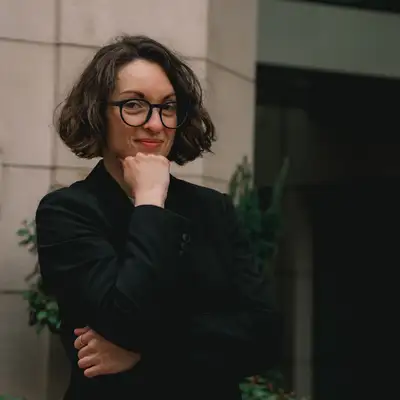
Magdalina Atanassova: This is the Convene Podcast.
Today, we’re exploring what it really takes to prepare for an uncertain future—and why the leaders who succeed aren’t the ones who predict what’s next, but the ones who build organizations ready for anything.
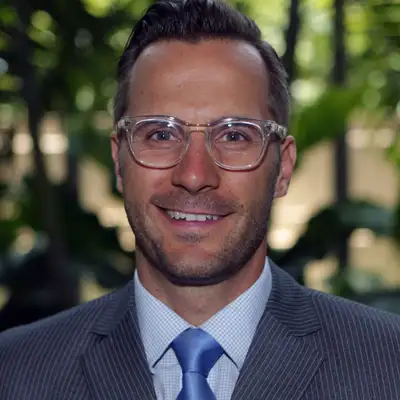
My guest is Business Events Summit keynote speaker Dr. Shawn DuBravac, bestselling author, a leading futurist, and former chief economist for the Consumer Technology Association, whose work helps organizations navigate the forces shaping tomorrow.
In this conversation, we talk about why adaptability matters more than accuracy, how AI can transform—not just optimize—event strategy, and why adding technology to outdated processes may be holding us back. We also explore how events can move from operational outputs to strategic drivers, shaping not just business outcomes—but the future itself.
We start now.
Hi Shawn, and welcome to the Convene Podcast.
Shawn DuBravac: It is wonderful to be here with you. I'm super excited for our conversation.
Magdalina Atanassova: Me too. And especially as you spent your career studying economics and technology and human behavior.
And I wonder, was there a particular moment when you realized that understanding the future wasn't about making predictions,
but about helping leaders prepare for uncertainty?
Shawn DuBravac: I don't know if there was a particular moment in time, but certainly early in my career I realized that the organizations that were really seizing the opportunities that were presenting themselves, the organizations that were really winning the future and were preparing for what comes tomorrow were ones that had, in my opinion,
a unique DNA.
It wasn't that they were great at predicting the future, but they were building in adaptability, they were building in optionality. They, they understood how to approach uncertainty in, in a unique way and in a new way.
And to me, I found that very refreshing. It wasn't about being precise, it wasn't about being the best forecaster.
It was about,
you know, building again, a unique DNA for the organization that could thrive in very uncertain times. And I think, you know, just looking back over the last decade with the pandemic and everything that we have seen, global recessions, other things that have impacted us, the organizations that had built that into their DNA,
that could pivot quickly, that could understand what was, was changing and adapt to a new world,
were the ones that ended up really thriving. And,
and I learned from their,
you know, from their examples.
Magdalina Atanassova: You just broke me back to those times in the pandemic.
I was in a different organization. And I can say that being in that organization, working with senior leaders, it was a treat just to learn how they can navigate this change.
And they were not panicked. They were,
you know, okay, let's figure this out. It's a New challenge in front of us. Let's just figure it out all together as a company.
Weird to say.
Some aspects of that time actually were great.
Shawn DuBravac: What I really learned was the organizations that are rigid,
that have, you know, in some ways, precision, when everything is going fine,
they look like best in class. They look like the organizations that you want to be like.
But when things change suddenly,
they often are caught in a paralysis. They can't make a decision. They're not sure,
you know, who's going to. Who's going to lead them, who's going to guide them,
where they should operate. Like, everything just grinds to an absolute halt when the landscape changes, when the environment changes. And so it's less about being precise and being rigid and really about having the ability to,
you know, to be adaptable, to be flexible. And I think this is one of the great challenges that every organization faces. And I see this in particular in the events industry.
When an event is imminent and when we're focused on imminent time, time horizons,
you're really looking at precision. You're looking at very well defined metrics. You know, it's like how many people are attending, and you're getting all of these exact details down to the most minute information.
But the future requires a very different mindset. It's less about precision. It's less about,
you know, very well defined metrics. And so I really do believe that one of the great challenges for every organization today, especially events organization, is how do you compete across these competing time horizons.
You know, you have to be focused on what is imminent, what's coming in the next six months, nine months, 12 months. But you also have to be thinking about, okay, what's going to be relevant in five years?
How do we start to build towards that future?
And you have to do both of those at the same time, which for most of us is a very big challenge.
Magdalina Atanassova: We're speaking also about human nature a little bit and how we react as people. So what have you learned about human nature that has surprised you most?
Shawn DuBravac: I think one of the things that I have come to realize is that people don't resist the future. They're not. They're not really fearful of the future, but they do resist loss.
They're afraid of losing things that they have built over time. They're afraid of losing processes and procedures that they love.
And that's really the challenge. It's overcoming all of the infrastructure that you've built up and that you love and that you hold dearly. And in the events industry, it's Easy to, you know, see some of those examples.
Every event planner I knew early in my career loved the binder. They loved, you know, the book that had all of the information in it. It was the binder, their core operating model and operating system when they were on site.
And if they misplaced that binder, there was an SOS that went out so that they could find that and return to it. And that's just like, one simple example that as things change, maybe that particular operating model doesn't work in this new environment.
And so I think there are lots of examples of that. It isn't that we are fearful of what comes next. It's that we're really hesitant to give up what we love dearly.
We're hesitant to rethink an event that we built from the ground up. We're hesitant to, you know, rethink a structure when we know the old structure worked just fine or has worked for years.
And so coming to grips with that, I think, is the real challenge when confronting the future. When thinking about the future, when thinking about building something new,
we also have to get comfortable with what are we willing to give up, what are we okay losing?
And often it's things we don't even think about. It's, again, work processes, it's procedures, it's operating systems that we have relied on.
And willing to move off of those is really, I think, what helps prepare us for the future.
Magdalina Atanassova: I just love the example of the binder because I think it leads very nicely to my next question.
What we see in many organizations is that they plan for the future, assuming that tomorrow will look like today,
just with the new technology layered on top. And I think it's.
That was a perfect metaphor, right? The binder now is the iPad and the multiple iPhones or whatever phones you have with you.
That's how this has shifted. So why is that mindset so dangerous, and where do you see it showing up most often?
Shawn DuBravac: I think the biggest risk when we look at the future and technology is that we often think,
oh, if I can add technology to this existing process or procedure, it's going to make me 10% better.
And sometimes we fail to step back and say, is this process even needed? Is this a broken process?
Is this a broken procedure?
Should we be rethinking this whole workflow in a very different way?
So technology, in many ways enables the future because it allows us to see what's possible,
and it allows us to see what direction we could go. But I think that the real risk is that we say oh, I'm just going to add this technology on top of everything I've already been doing.
And I'm going to continue to do things in the same way, but I'm just going to do it in a more tech forward way or in a more tech influenced way.
And the real opportunity to embrace the future is to say,
what should we take into the future with us? Is this a workflow we need? Is this a process we need? I've been talking with a lot of organizations lately about their event strategy, about their event processes, where they're adding AI.
And it's really a fascinating glimpse into the future because to me the most forward looking ones are recognizing that it isn't just that AI enables new things, but that they can rethink the structure of their event.
They can rethink the, you know, the insights that they can gather from the existing data that they already have. They can fundamentally change the way they work and the way they communicate simply by letting technology move them in new directions.
So I think there is obviously a huge opportunity when it comes to adding technology to all of the things that we do. But there's also a real risk that we continue to do things the same way we've always done them.
We just slap technology on top.
Magdalina Atanassova: I'm so glad you mentioned AI, because that's imminent and I'm sure a lot of event professionals listening to us are already working with it. And the question here is,
will AI act as a mirror and show you the same thing?
Right, because sometimes it does that to you. It just affirms your current view or will you let it change the processes and I think comes to the person behind the computer rather than AI itself.
Right?
Shawn DuBravac: Yeah, definitely. And I think we have to carve out time. And time is probably the most scarce resource for every event professional that I know because they're constantly putting out the next fire.
They're constantly, you know, working on the next thing. And when one event ends, they're already often behind in the very next event. And so there's this constant struggle to find more time.
But in some ways that is the resource that we need,
especially when we're using generative AI, that we're not just taking the input as given, but that we're using it as a thought partner, that we're using it to help create some productivity,
that we are using it to enhance our processes. And then what I'm really starting to see now, what really excites me is that you're really seeing organizations building entirely new structures and how they think about their event strategy.
So it isn't just that they are,
okay, let's, you know, let's change this form and now let's use AI to create this form. But we're going to kind of keep doing the things the same ways. But they're realizing that they can bring different data sources together, that they can start to,
you know, fundamentally restructure the event from the ground up, from everything that happens before they even show up on site, to everything that's happening on site, to everything that happens after the event concludes.
So it's rewiring the organization in many ways.
Magdalina Atanassova: I love that. And speaking about that AI and what's going on and how it changes things,
what assumptions do you think eventually they should be questioning right now as they plan for the next decade?
Shawn DuBravac: I think event professionals should be challenging every assumption. I think there are a lot of assumptions that have become embedded in how we think about events. That bigger is better, that the audience is the product,
that the venue might matter more than it does. I think there's lots of assumptions that we can challenge.
And then I think at the end of the day, it comes back to what is the real transformation here that we are trying to deliver,
and how do we use the event to deliver that transformation? How do we use that?
How do we use technology? How do we leverage AI to help deliver that transformation in a real way?
And I do think that organizations are constantly questioning their assumptions. They are constantly questioning what is the outcomes that we're trying to achieve, what's the strategy that will help us achieve that,
how do we extend an event beyond just the two or three days that it's taking place on site? So how do we expand the. The learning?
I love, you know, the direction I see a lot of events going where they're building out a curriculum and an experience that goes beyond just siloed sessions. They're really thinking about how do we take this agenda and turn it into something truly, truly magical.
And you only get there by questioning,
you know, the assumptions that have led you there.
Magdalina Atanassova: That's absolutely true. And I know you're speaking from experience advising organizations of all sizes, from Fortune 100 companies to startups to government agencies. So you've seen it all.
And when it comes to preparing for the future,
what separates the organizations that adapt successfully from those that struggle?
Shawn DuBravac: I think there's a lot of things that organizations can do to move from the successful adoption and adaptation from the areas where they have failed. I think,
and we've been hitting on some of those things. It's rethinking the assumptions that got them here. It's rethinking what are the processes and the procedures.
I think the organizations that recognize how the future is changing and start to build some of that adaptability into their,
again, into their DNA are the ones that are going to be successful. You don't have to predict the future with precision. You don't have to predict it with exactness. But I do think you have to institutionalize inside of your organization the ability to adapt.
So I think that the organizations that will succeed in the future are the ones that can change their minds without it being a crisis, without it, you know, really questioning their identity.
And you see that in every organization where the future requires them to move in a slightly different direction. The ones that can come to the table and discuss it and make that decision quickly and move forward are the ones that excel.
The ones that have this crisis of commitment to that future, I think are the ones that will really be challenged by the future.
Magdalina Atanassova: What do you think of gathering in person? Do you see that as something that's definitely going to be a premium in the future with so much tech and AI?
And also do you see that in the organizational sense, you know,
working together better that person to person, human to human interaction?
Shawn DuBravac: Yeah, I'm very optimistic on in person events. I remember my, you know, my last event as a keynote speaker as we headed into the pandemic was at the end of February in 2020.
I was in Las Vegas, which is everyone will recognize as a very large event city.
I've spent about a year of my life in Las Vegas. I love Las Vegas for everything that it represents and what it is. And when I was there, you could just feel that the world was about to change.
You didn't really know how it was going to change, but you just had this feeling like this doesn't feel like the Vegas that we have all known and recognized. And then surely enough, we went into lockdown in parts of the US around the world.
And then my very first event coming out of the pandemic was March of 2021.
And to see everybody just embrace other attendees. And this was a group that has,
that was very tight knit. They've had an annual event for many, many years. And so they knew each other personally and they were so excited to see each other. And I was like, yeah, yes, we are back.
We are, you know, we are coming back to in person events. It was in that moment that it was very clear to me that in person events were alive and, well, and this was still very early on where a lot of people were saying, oh, you know, in person events will never return to what they were pre pandemic.
At the same time, you had a lot of technology companies that were trying to convince you that you didn't need in person events, that they could create comparable experience in a virtual or digital world.
And I think that proved to not be the case. I think that will never be true.
I do think what we have learned is that we can expand what a conference is beyond just those two or three days so we can use technology,
we can use podcasts like, like we're having right now. We can use webinars, we can have ask me anything sessions that take place digitally after the event. So I do think that there is a broadening and a widening of the event to try to drive bigger impact within organizations beyond just what's happening in person.
But I think that none of that will have the impact that it will have without that in person aspect. I think in person is a key component of the transformation that we deliver through events.
And so I do think we can use technology both before, during and after to help expand that.
But I do think that the in person component is a key.
And whether you're an introvert, whether you're an extrovert, I think that we all crave the connectivity that we bring. But also there's a different type of learning that takes place when we get out of our normal business environment,
when, when we get away from the, the daily tasks. I mean, I even see it when I tend an event in my own city versus attending an event in a,
a city that I'm not based in.
It's a very different learning experience and I have very different takeaways than when I have to rush home to, you know, to handle things at home or do other things.
And it feels more like a commute rather than an experience and an event. So I think that that in person experience is going to be key to that. But I also think that events are really rethinking like what is the entire experience look like, not just what's happening on site.
How do we really expand that and how do we connect our audience in unique ways and deliver not just content, but human connection as well.
Magdalina Atanassova: I love that you touched on some of the big changes in these big moments of uncertainty, like the pandemic and we had the economic uncertainty.
We're still navigating quite a few things.
And I wonder, how can planners and organizations become better at preparing for multiple futures? Rather than betting on a single outcome.
Shawn DuBravac: I think that's a great perspective because I think that is what event professionals should be thinking about. It isn't just one future, but it's myriad of possible futures. And I think there's a number of ways that they can can just reframe their thinking to prepare for that.
I think we get caught in the habit of saying what comes next or what is going to happen,
as if it's a single event that might happen. And I think we need to open the aperture and recognize that there are lots of opportunities and lots of different futures that we can build to and that we can be successful in all of these different environments.
And so I think what I already mentioned, like building that adaptability and that optionality into your DNA inside of the organization, I think is important.
I think there's also this dynamic that's playing out right now, and we're kind of like at the end of commencement season now. But we've seen a lot of commencement speakers who were booed because they brought up AI.
And there's been a lot of perspective on why students, why graduating students were booing AI and were they fearful of AI or were they worried about AI competing with their job?
I think it's actually something much deeper. I think that there is this perspective that the future is somehow predetermined and that they're not going to have the ability to persuade in any powerful way what that future looks like.
And I think that's a very misguided perspective. And with events, I think we actually have an incredible power to not just meet the future, but to define the future and to decide what the future looks like.
Now, that's going to require a lot of experimentation. And I think that is the great challenge. I worked for an association professionally for many years, and I have the great pleasure of working with many associations.
And I've been inside those rooms. I know the pressure that event professionals feel when they want to try something new and the risk that it may not be successful.
There's only so much that you can do beforehand to test ideas. And at the end of the day, when you try new things in the wild,
they may not work. And when they don't work, many times, oftentimes, probably all the time,
the complaints come back to that event professional. They carry the weight for failed experiments.
I think the challenge is you have to accept that that is a piece of the job, but experimenting is also a component of the job, and you're going to find great success.
Yes, you'll find Some, some failures the way. But you're going to find great success in some of those experiments. So I think one of the challenges for event professionals moving forward is as they move into deeper strategic roles within the organization, they need to clearly convey that idea up front.
Look, we're going to try some new experiments. Some of them may fail, some of them may be successful.
There may not always be a reason why they were successful or why they were failure. Sometimes it's a mix of the audience, sometimes it's other aspects of the execution. But I think event professionals have become so trained to execute everything perfect that they need to give themselves space for some of these experiments that may not be perfect.
In fact,
some of them may even be failures. So I think to prepare for the future, we have to be running those experiments. Some of those are in house, right? Some of those are the way we, we operate.
They're the processes and procedures.
I think AI has opened our eyes up to the type of experiments that we could run and the type of things that we could try.
And I think that there's also experiments that we will have to run when we're on site at an event. And we're going to have to be okay with some of them not succeeding.
And we have to get our organization on board that in order to really meet the future when it arrives, we're going to have to run some experiments that may fail and maybe also looping
Magdalina Atanassova: in the audience and just opening their eyes. There will be some experiments happening. If you don't like it, we'd appreciate the feedback.
Magdalina Atanassova: Don't boo us.
Magdalina Atanassova: It's just an experiment.
Shawn DuBravac: I think that's a very great point. And I look at so many of these great events that one of the beauties of an event is the longevity of the event. So it's the same annual event, it's always in March, it's always in a, you know, beach location or it's always in a mountain location.
It always has these common characteristics. I was at an event recently for an association and this was an association that was mostly made up of very family owned businesses. Many, you know, a couple large businesses.
But many of them were, were family owned and had been owned for multiple generations.
I was talking with one of the executives who had come to the event as a child when his father was running the business.
Now he's running the business and coming as an attendee, but he remembers coming as a child and playing at the pool with other,
you know, other family members from other, some of the other firms.
They're now all running the business. So it's like you've seen this generation pass on.
That, to me is just an absolute beautiful event that has shown that it can survive the test of time. But the challenge is that the expectations start to get built in that the event is going to look a certain way, that the content is going to be delivered in a certain way,
that the format is going to follow a certain format. And so I think you're exactly right.
Not only do we have to bring our organization along with this idea that we're going to be experimenting, but we also have to prepare the attendees for this idea that, like, hey, we're going to do some experiments.
Some of these things are going to look different than they have in the past.
We think that this helps breathe new life into the event and ensures that it remains relevant. But we'd love your feedback. And,
you know, event professionals are always great at getting feedback and processing that feedback and hopefully not taking that, you know, the feedback too personally, but seeing that it can help grow the event in positive ways.
Magdalina Atanassova: Absolutely. And you mentioned also that event professionals now are moving into that more strategic role because just events are so much more important for a business.
So where do you see the greatest untapped potential and opportunity for leaders where they should be maybe investing more or experimenting with a little bit more?
Shawn DuBravac: Definitely investing in new ideas. Experimenting in new ideas. And I think the broader perspective is that the event isn't the final destination.
I think we've lived in a world in the event professional world where we spend six months, 12 months, sometimes longer, building towards an event.
We deliver the event with perfection and then it's over and then we move on to the next planning cycle. And so we live in this cycle of planning cycles.
I think to elevate the event professional is to recognize that they are a core component of the executive team,
that they are delivering value across the organization, that they're helping not only deliver the mission of the organization, but in some ways they're. And in many ways they're helping set the future of the organization and the strategy of the organization.
And so just recognizing that the event isn't the final destination,
helping event professionals recognize that, but also importantly, helping the broader executive team recognize that the events are a key component of where strategy is delivered, but also where strategy is formed.
So I think there's a tremendous number of untapped opportunities within the, you know, the broader events arena. And I do think that the most savvy organizations are recognizing that events are not just something they do, but that, that they are a core component of their mission.
They're a core component of their strategy moving forward.
Magdalina Atanassova: I hope our listeners are really paying attention to this because I think it's key. Sometimes we're just speaking so much about keeping people part of this ecosystem of the event for, you know, the whole year, but let's face it, no, no one has that amount of time and focus.
So realizing that that's not the key, but actually delivering something very important for the organization, that's the whole mission of the event. I think it's very important. Maybe something we are not highlighting enough.
Shawn DuBravac: Well, I think one of the challenges is so often the, the event professional is doing something that nobody else in the organization can do, and they're doing it with a degree again of perfectionism and professionalism that others aren't able to do.
I don't think any organization out there really fully appreciates what event professionals go through, what they do, all the things that keep them up at night.
But as a result of all that, they can sometimes become a little bit of an island within an organization.
And so you have a CEO or you have the executive team that are like, oh, well, we'll just let the events team handle that.
And, you know, when everything runs perfectly, then everything runs perfectly. They don't hear anything. And if anything goes awry, that's when they start to hear complaints from the executive team.
I think the executive teams need to do a better job.
And I think event professionals can probably help them recognize that event teams aren't this little island that's off to the side, but that they should be more deeply embedded. And so when you think about,
you know, continuing education, you think about credentialing, you think about setting strategy, you think about government affairs or whatever are the different areas of expertise that an organization is focused on,
making the events team part of that, helping them,
you know, see that.
I also think that the way we operated events in the past were so labor intensive from,
you know,
counting the characters in a description by hand and doing all of these things that we did in an analog world as we moved to a digital world. I do think that AI starts to streamline some of those things, that we can start to move more quickly through some of the mundane administrative tasks that,
that weigh down events team. And so as a result of that,
they are going to have more time.
And I think now is the opportunity to dedicate more of that time to strategy, dedicate that time to being more deeply embedded with the broader organization,
help setting the strategy for the broader organization. So I think AI will free up some of the mundane tasks so that event professionals can focus on the future.
Magdalina Atanassova: What future are we over preparing for and what future are we under preparing for?
Shawn DuBravac: That's a really great question. I, you know, I think that we're probably over preparing for the futures that grab the headlines, that take all of the,
you know, the headlines. And we're under pressure preparing for some of the futures that show up with a very slow build or show up with a very slow drift.
I think it's easy to look at the big headlines and say, oh, we should focus all of our time and attention there.
But in reality, the future moves very slowly. I like to say that the future moves slowly until suddenly it doesn't, until suddenly it's upon us. And so I think we need to recognize that moving forward, like, the truth is, a lot of things aren't going to change,
and there's probably more things that don't change than do.
We often look at everything that's changing, and we tend to focus there.
I think, yes, we should provide some focus on the things that are going to be new and different, but we should also focus on the things that are going to be the same.
And how do we change them 1%? How do we make them a little bit better, a little bit different?
I also think, and we were just talking about it, we tend to focus on the futures that force us to react rather than focusing on the futures that we want to build.
And I think organizations should look at what are the futures that we want to build.
And I think the event professionals can be an absolute key part of that. Using events to set strategy, I think is going to be a, a huge important component for every organization in the coming years.
Magdalina Atanassova: Two things. When you said the future, you know, happens actually so slowly,
the first thing that came to mind was the movie Back to the Future and how they thought now we would be having flying cars.
We don't.
Shawn DuBravac: Right?
Yeah, we don't have flying cars, but we do have cars that drive themselves, you know, and so like you, you've had this very different world, and it's, and it's also.
That's a great example of something that's like a very slow build. You know, we know the technology works, and yet we're probably still 50 years away from it showing up everywhere.
And so it's, it's a very slow process to,
to usher the future in.
Magdalina Atanassova: And also it's us imagining the future that we want today,
you know, seeing it forward and then like you said, just working for it. We're not victims of the future. We make it happen.
So I think that was a great reminder,
just that we have the power to build the future that we want to see.
Shawn DuBravac: Definitely, yeah. And I think events will be an absolute key aspect of that. Like, if I. If I were an organization leader today,
I think the number one question they should be asking themselves, themselves is,
you know, what is our strategy moving forward? And everybody's asking that question around AI. What is our strategy for AI? What is our strategy with AI? How does our strategy change because of AI?
I don't think enough are asking,
how do we use events to get us there?
And I think the event professional can without doubt insert themselves into those conversations and say, we think we can help deliver this future through events, both in person,
especially in person, but also through all of the other digital activations that we can bring to the table.
Magdalina Atanassova: Shawn, was there anything we didn't mention, but we definitely should before we wrap up.
Shawn DuBravac: I just think there's a huge opportunity for event professionals to be more embedded in the strategy. And we've kind of been talking about some of these things as we've been going, but I think there's a huge opportunity for event professionals to have a much more visible seat at the table when it comes to setting the organizational strategy.
And as I just noted,
it isn't enough to just look forward and say, okay, what technologies are going to change us? How do we think about that? And every CEO is thinking about that,
that today,
but also recognizing what are the rooms that we need to convene to make that strategy happen again? Sometimes those rooms are going to happen virtually. Many of them will happen in person.
And what do we need to do to make that come to fruition? What are the people that need to be there? How do we bring them together in new and unique ways?
So it isn't just the strategy of the event,
but it's zooming out to what is the strategy of the organization, how is it changing? And how can I, as an event professional,
play an absolute key role in that transformation?
Magdalina Atanassova: Thank you for giving the power back to event professionals.
I think they needed to hear that.
Thank you, Shawn, so much for all the insights, your time, and really being on the podcast.
Shawn DuBravac: It was great to join you. I'm excited for what the future brings, and I'm excited to see how event professionals are going to deliver that future to us.
Magdalina Atanassova: Thank you again.
Remember to subscribe to the Convene Podcast on your favorite listening platform to stay updated with our latest episodes. For further industry insights from the Convene team, head over to PCMA.org/convene. My name is Maggie. Stay inspired. Keep inspiring. And until next time.