Subscribe
Share
Share
Embed
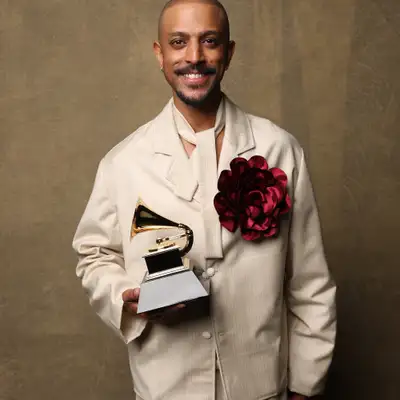

Artivism bridges creativity, spirituality, and social impact — from the inside out. Hosted by Iman Jordan, recipient of the Harry Belafonte Best Song for Social Change Award at the 2025 Grammys, the show shares real conversations with artists living inside the industry, navigating purpose and pressure, healing and hustle. Grounded, urban, and soulful — it’s spirituality for the real world, born from the studio, the struggle, and the stage.
Speaker: First time I ever heard the word reciprocity. Yes. Was in a song by Lauren Hill. I think it's so profound that she was able to offer us that that as a black woman artist. Is elsewhere the promised land? What does it look like too? What is it? I think you have to tell me what it looks like for you. Thank God for musicians and artists who remind us of to feel and to be deeply moved by our interior inner worlds. Use that as a form of information and intelligence.
Have to name it like I have to say, look, I'm an act, I know that I'm addicted to this thing, and I have to take steps. I always say, nobody woke up, woke. Right. You have an awakening. If we forget that people are in process, we can either aid that process or we destroy that process.
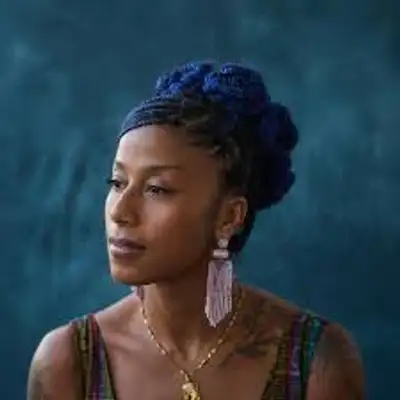
Today's guest is a poet, musician, and cultural force whose work lives at the intersection of art, spirit, and liberation, Aja Monet. From becoming the youngest New York Poet's Cafe Grand Slam champion to building community through spaces like smoke signals to creating work that speaks directly to the political and emotional realities of our time, Aja has consistently used poetry not just to express, but to bear witness. Her latest work continues that tradition.
Expanding poetry into sound, into movement, into something that feels less like performance and more like a call. In this conversation, we talk about what it means to find your voice early and what happens when that voice becomes a responsibility. We explore poetry as protest, as prayer, and what it means to create in a world that feels fractured, divided, and at times overwhelming. We get into our latest project, The Color of Rain, the process behind it, the people involved, and the deeper philosophy she's bringing into this moment.
Including her framing of art as a kind of spiritual warfare. And we sit with some of the harder questions about truth, identity, power, and whether we as artists and as people are really living up to what this moment is asking of us. But we also talk about grounding and how to stay open, how to stay human, how to keep creating, even when the weight of the world feels heavy. Because if art has a role in shaping culture, then artists have a role in shaping what comes next. This is Artivism.
And this is a conversation with Aja Monet. Welcome. Hey. Hey. Do you consider the new project that's coming out, Color of Rain, right? As a collective project of a collective of folks coming together or for sure. Everything I do has been a part of collective. Yeah. I ev even getting to the point to do a record is very new. You know, like I did one and I'm doing another, but like
I spent years behind the scenes supporting so many other artists and cultivating their careers and you know in in investing my time and energy into political education, into practice, into workshop, you know. there's a a great writer, Mark Noak, who who wrote a book called Social Poetics, and he talks about the workshop space being a place of essentially intervention, of social transformation.
And of solidarity in action. And I think for artists, one of the things I learned going to art school, because I went to grad, I went to Sarah Lawrence for undergrad, and I went to School of the Arts, School of the Art Institute of Chicago for grad, was that the premise of the workshop was such that, you know, it's the true truest place I feel that people can be organized in because it's
The goal is for for us to create something. You know, and it's a it's an abundant sort of presence. It's a presence of what is possible. Yeah. We're all coming into the room to say, what can we create together? Where one or two are gathered, it's got in church, you say that. Yes, it is a church of sorts. The the art, the creative workshop is a church of sorts. Yeah. And I think when people gather on one of and it's called a workshop for a reason. Yeah. It's a labor, you know, it's work.
And so I think to do that work and to be committed to that work, even if it's your specific project or goal or art piece or poem, whatever it may be, the fact that you're coming to a collective to say, this is what I can bring, this is my will to participate, this is how I choose to participate. What feedback can you offer for this thing? And how can we strengthen it? The goal isn't to be good or great.
Because that's all subjective. You know what I mean? Yeah. So the goal is to be effective. How do I get across the feelings, the intentions, you know, the objectives that I want to pour into this piece? How can you help me better articulate, imagine, create and cultivate this little world I've made in this poem or in this short story or in this song or in this film? You know?
And I think that if we democratized art in such a way that everyone could see themselves as creative practitioners, I feel like we could combat some of the despair. Totally. And the isolation that people feel. where art has been made to be this very elitist, you know,
sanctioned thing in specific kinds of spaces. You're the artist. Those are the artists, fine artists, but then living as a human is a creative. Even within literary academic the literary realm, yeah. And academia, I think that was what was so interesting about the pro the the proposition that Gene Jordan offered us through Poetry for the People and what she was trying to bring into the classroom at UC Berkeley. I think it's the same
thing that we learned with Chaila Sandoval, who wrote Methodology of the Oppressed. And she's an incredible Chicano writer who makes the case for US thorough th feminism, third wave feminism, and how that wave of feminism introduced art. She took, she calls it swapa, which is storytelling, witnessing and worlds
art performance activism and she talks about as this shamanistic witnessing that happens and that what women and women of color and trans women and and those who were who are non-binary what they are offering to you know a sense of conscious differential consciousness not it's not our consciousness is in an opposition it's different
The way we see the world isn't we don't move from a place of opposition. We move from a place of difference. And I think what she was offering in that, you know, proposal is that there are methods that we've we've kept and we've carried over time that have allowed us to invite new ways of seeing, alternative ways of seeing, remembering. Yeah. And to hold space for new ways of making them felt. You know, and I think that's what art
does at its best, you know. Yeah. I mean, and in speaking on the collabor collaborative side of the project, I think it's it's also interesting when you collaborate with other people, it's that it's kind of like improvisation, it's the yes and kind of thing. Yeah. And that and that's kind of a strategy for life. I mean, when you can do that, when you can say yes to your idea and add to it as if it's some your your
And continuing the play or the sentence of whatever you're doing, I think that's something that can be helpful for society. You know, instead of negating you, negating your idea, I'm adding to it. I'm actually seeing your idea. Yeah. You know? It's so funny that you see you because now you like this is when I've I've been raised by elders who taught me the art of rambling. Storytelling rambling, but you know.
Going back to the to the part of collaborating, specifically on the color of rain, for me, like once I realized that what I was doing or what resonated with me was a part of other cultural moments and movements, I wanted to be intentional about even if people weren't aware of that. And even if people resist those notions, because of
the name of the game of capitalism right now. Yeah. I think to try to still create from an intentional place of collaboration and collectivism. Yeah. Is part of the beauty of what makes art possible is that people focus on the individual, which is great. Like I was able to bring this thing into fruition because I was able to organize all these people together. Yeah. Which is a skill. yeah. It takes a lot of work. A lot.
But it's also interesting as a black woman to see people diminish the value of your work because you have collaborators. Right? Yeah. So it's like this double-edged sword where it's like I've seen in moments where men do work and they get all the praise, even though it was multiple people that made that thing happen. Yeah. But when women do work, and this is even for the collaborators, the sort of tension we have with especially male collaborators who don't always or people identify as men.
Who don't always know how to take leadership or guidance or participate with women that aren't benefiting them in by way of appeasing their ego or their sexual drives or intentions. Yeah. You know what I mean? Like there are there are levels to
I think this is why US third wave feminism was so important because it talks about the dimensions by which we have to navigate. Not that identity is like how we wanna focus everything, but it does inform the way we see the world. So collaboration to me, you know, I was making a joke about I was talking to someone about Lauren Hill and how I was just gonna say Lauren Hill. my gosh. I can't. You know, the first time the first time I ever heard the word reciprocity. Yes.
Was in a song by Lauren Hill, X Factor. And I just I think it's so profound that she was able to offer us that that as a black woman artist, black woman girl, lick coming up in the world. And I was like, what does this word mean? I know. I mean too. And for her, for that line, I said to someone, I was like, What a what a mantra of the black woman's experience in the world, right? Like, tell me who I have to be. Mm-hmm. You know? To get some reciprocity. To get some reciprocity.
You know, and I love you and no one ever will. No one ever will love you the way I love you, you know? Yeah. And I think that like, you know, we all have flaws. We all we are multidimensional people. And when we're collaborating, things, you're trying to be true to the moment, you're trying to not interrupt God. You know, you're trying to allow God to work and to be a vessel. Yeah.
And I think when it gets out of those spaces and it's in the world and it becomes a market or a product. Yeah. and and someone's elevated and other people feel like not taken care of or not considered, you know, that's where it can get really, really dangerous. You know, I don't even want to say dangerous, but not reciprocal and not intentional and not communal. But it's hard to for us to figure out how to.
Practice what our values look like without having examples and without trying and failing. And so I think for me, you know, there's so many things that maybe she could have done differently in the collaboration process. And maybe if she had a team to support her doing that differently, it would have looked a various way. There's a whole host of things that people don't recognize.
As a black woman artist, you are dealing with outside of just making your art. Exactly. Which is the gender dynamics of, you know, the the racist gender dynamics of the industry, of agendas and different kinds of, and then there's mental health. Yeah. There's her going through the process of being a mother. And I I think the thing I wish would be offered doesn't mean that.
We don't we don't hold each other accountable in collaboration processes. But we do have to offer and create ways of demonstrating compassion and grace. Yeah. When we understand that people are people and have real work to do on themselves outside of just their art. Yeah. You know, people are people. They are. And they are grappling with a whole host of things. It's just unfortunate that we give grace. Mm-hmm.
I mean, look at the grace that we've seen for some people. Well, I'm speaking of grace that we've offered for some men. Well, that we never offer for you know women black women artists. And to me, that is telling about our values and what we claim we care about. Yeah. And I think that's unfortunate. I and I thought I'm Lauren Hill, when you were talking about
Sometimes you get discredited if you acno if you have collaborators and stuff like that. Or you you're you're diminished, you're create I don't know, whatever you you it gets diminished by, hey, I have three different other people writing on this record or not. And that was one thing that Lauren Hill that was happened to her was pressure on her to kind of be like it all being her, like everything being on her. Like she's the producer, she's the writer, she's all of that. And then that ended up turning into the mess at the end of that miseducation project.
Where you had all these producers who ended up kind of and musicians. And musicians, I know some of the some people who were part of that process. Yeah. It's it's unfortunate that it got to that degree. Yeah. I also just wondered like what questions were asked before it got to that point that would have allowed the grace and the community to hold this person accountable in an intentional way. Now, granted, some people don't want to be held accountable. You know what I mean? Some people
will resist accountability and and do not want to grow, do not want to be in community with people after a certain extent. But I think there's you know, humans are humans. There's levels to stuff. Yeah. You know, there are undercurrents of emotional, psychological, relational things going on. There's egos involved. So to me, my whole thing about that was just like, what does it look like to show grace for one another?
even as we hold each other accountable. What about Kanye West though? What about in that risk situation? It's tricky, huh? And today I just read it's just so hard because when you talk about these things they get taken out of contact I know. I know. I don't like on the spot. I don't I just struggle with I think what I will s what I will say is that I know multiple people that are a part of have been a part of his camp. At one point I was there helping with with part of his
Process, creative process. And as someone that helped a song come to be and never got credit for it, you know, there comes a time, and I think this is where women are different, right? Because it's so accepted. And maybe that's like just part of the way it is, you know, that that it doesn't make it right. No. But the time we are in is not the time we were in. And so for our ideas to be taken.
And used and not be credited has been the norm. You know, it's such a part of the culture. I even think about Dolores Werta coming out recently, and I heard her interview talking about why she didn't come out around César Taves. And she said, you know, it was my cross to bear. It was, it was, it was my decision to not share that and to put the movement above myself.
And I can't tell you how many times I've done that and continue to do that. Yeah. But every person has to make that decision for themselves. We are in a time where everybody wants to be seen. Yeah. Everybody, many, not everybody, many people are encouraged to be seen because the value around being seen produces a certain kind of economic reality that folks believe and deem valuable. Yeah. But there are there is power in being unseen.
You know, there's power in when we sat with elders from the student nonviolent coordinating committee and we tried to confront them and talk to them about the lack of visibility of certain women and the lack and there were women within that organization that said we were intentionally invisible. You know. But felt. You know what I mean? This thing be unseen but felt. Yeah. And we knew that we were a part of something greater than ourselves that was being felt. Mm-hmm.
And that even though people might, and this is I can't think what third wave feminism teaches us, and Chaila Sandoval talks about this with the methodology of the press, like some of us may not be the charismatic, vocal, you know, visible person, but it doesn't mean that we still don't have a role in calling, you know, doing the calls, doing the the knocking on the doors, do whatever your skill set may be, it it has to be valued and contributed. It's just that.
The culture has to recognize the culture has to shift as such that we raise the consciousness level that people understand it takes a lot of participation to make change. It takes a lot of participation. A lot of yes and. Yes, and it does. It takes a lot of inclusivity to make something great happen. And the goal should be to develop.
People who are empowered in their roles, who people who are empowered in their decision making, but people who also know the role of being able to cultivate that space and not dim diminishing or devaluing the space that it takes. Women have created and cultivated space for so long, you know. That's what we've we've made space for magic to take place continually. We literally make space, you know, some of us who identify as women in this world.
make space within our bodies consistently for other creations to take hold and form. Yeah. So I think that it's important for people to understand that, you know, some of us chose not to make a big deal about being seen and being heard and being credited because the goal was this objective thing. Yeah. You know? does it I don't know if that makes it right or wrong. Yeah. I think it's not my role to say, you know, I know people have feelings about
There was a situation I think about Dolores Huerta again because there was a situation where I was assaulted and I didn't make it a public thing and it was it was by a public figure and having other women tell me what I should be doing about it was really uncomfortable because to me it was like, is it about me or is it about you? You know? What do you think? Mm-hmm. What the way you think things, what you value, which you think is important, like
That's not healing to me. Right. You know what I mean? That didn't it wouldn't have healed it actually would have caused more trauma. Yeah. For me. So you know, you can't really judge the decisions that people make to the best of their abilities in the moment. You what you can do is offer new information that can help people make better decisions moving forward. Yeah. And hopefully we give each other the grace to do that. But we don't really often do that. Yeah. We're in a
punitive society, you know, everything is about how much how quick can we punish? Yeah. You know, how long can we punish? And then who can we punish the hardest, you know? So are we trying collectively, and this is goes back to your project, are we trying are we trying to get to elsewhere? Is elsewhere is elsewhere the promised land? Is it the Yeah, what is it? Where you know, tell me what does it look like too? What is it? I think you have to tell me what it looks like for you, you know.
For me it's not it's not a it's not a mandate. Mm-mm. Okay. Elsewhere isn't a mandate and it isn't a dominant position. Okay. It's a invitation. And I think it's an inquiry. Yeah. it's an o and it's expanding of one's political imagination of what is possible. Yeah. To be clear though, it was a collaborative process. Yeah. With some really incredible friends of mine. Amazing. And
We had learned, I think, maybe two days after.
Sly Stone had transitioned. I think I'm really close to his daughter, Novena Carmel, who's incredible, dear friend. And I just felt for her so deeply because over the years, being close to her, you know, learning about her story and her role in the world and knowing his music and knowing what it's meant to the culture, what it's meant to the, to the people and society, and what it's like to be.
A daughter that has to share your parents with the world, how hard that is. And it was just deep, you know, it was so deep. Like the fact that we there was you know, we knew it could go, you know. People are getting older. We're losing so many of our greats and our elders. And this is why you were getting ready to create elsewhere, right? We were in the we didn't even know it was gonna be elsewhere. Okay, okay. I knew it was gonna be it was nowhere at that point. Yeah, it was nowhere.
It was somewhere. It was somewhere. It was somewhere. We was just trying to catch it, you know? it was somewhere waiting for us to catch up. Right. So I think like I knew I wanted to do something. I just didn't know what it was going to look or sound like because Meshelle is such a you know, she's such a guru and such a G with how she moves in the studio and how she handles the process that I had my own suggestions and inclinations and like teases of ideas I wanted to push through.
And one of them was like, I knew I wanted Georgia in the studio. And I knew I wanted to get Novena. And Meshelle's so insular about the creative process that she was like, who are you trying to invite, you know? And I'm like, these are people that matter to me. Like, that's why I want them here, you know. And at first I don't think she really saw it cu come into place until, you know, he had passed, I think the day they they landed into LA.
And we were gonna get ready to go in the studio the next day. And I had brought up that I had invited Georgia and I invited Novena. Well, I didn't even invite Novena, actually. I had just messaged her because I knew that she was probably grieving. So I just messaged her to say, Hey, you know, just sending love. I miss you. Da-da-da. She didn't respond. Sent her a beautiful message. She didn't respond. So I knew it was gonna take some time. And I invited Georgia one one of the days.
And Georgia responded, which is always like, you know, these people are like unicorns. You know, you get them when you can, you see them when you can. But like Georgia responded, you know, divinely that day. And so did Novena. Mm-hmm. And I was like, you know, and Meshelle was like, Yeah, tell her, you know, to come by if she wants. And I was like, I don't know how you're feeling right now, but we'll be in the studio. And if you want to come by any time point during the day, yeah. Here with Meshelle, you can come. She was like,
What time? You know? And she came by and I had told Meshelle the day before that I wanted to write something for Sai. So she said, do something for him, bring it tomorrow. but remember it's not a memoriam, you know, it's like it's an honor, it's homage. Like let's let's go from that place. And so I ended up doing that, coming right writing, I couldn't write anything the night before. The morning I woke up straight away and I wrote elsewhere.
And I brought it in. So you so you already had the the lyric the lyrics. When I got into the studio. Mm-hmm. Okay. And then I saw then Novena came and I shared the lyrics with her. And nobody really knew what they were gonna do. They were just hanging around trying out things. We had some song demos, we had some other stuff, but elsewhere came straight from the ground up. Yeah. And it was actually Novena that saw my lyrics and she started singing the lyrics to a melody that she made. And Meshelle was like, put that out. Put that down.
Everybody, you know, this is what we're doing, you know, and then the the collective, the band, Josh Johnson, Daniel Mintseris Justin Brown, I think it was Jermaine, Paul was in the studio with us that day. They just started recording it. I think Novena had to leave real quick and come back. And George just started singing basically like the melody that Novena had helped write. Okay. And so
It just became this beautiful collaboration that all started though really with the n the intent to do something and then everything else coming into place, which is somehow what you hope for, right? Like you have a you have a pure intention of wanting to create something from a real place and then you pray that you find, you know, that God brings in in the collaborators into the space with you. Same with Hollywood, was it the same? Was it a similar well not beginnings of the idea, but was it
Did you have the lyrics first for it? Or was it yes? Okay. All the poems I've had the lyrics for first. Okay. Okay. And then the songs were developed after. Yeah. Amazing. I I think there's maybe s a few that Justin and I did, Justin Brown and I did a few demos together before we ever got in the studio with Meshelle, and we s would send her stuff. So some stuff I would be writing while he's also trying to make stuff and I'd be like, let's put the
The bell in there. Let's, you know, and we're just building it together. Yeah. But Hollyweird was already written because that poem came to me like in the middle of everything going down. And I had tr I tried sharing it a few times, a cappella in certain spaces, and I sent it to Meshelle. And I didn't know if it was gonna be too intense for her. you know, but she it like she literally took it and we kind of just kept the demo and never really revisited But when
She asked, she would kind of do this thing this year where she'd be like, Okay, what you got for me? What poem you got? What's next? What's the next poem? And I'd be like, Okay, this one. Okay, everybody, this what are we gonna do with this poem? Yeah. And it was like really beautiful to see her work. It was magic. Like, seriously, she's an incredible human. And Hollyweird was like that. At first it was it was just called LA poem at the first at in the beginning. I was like, I got that LA poem. And she's like, Okay, everybody, this is what we're doing. We're in we're in a London, we're in a grungy bar, we're we're da-da-da-da. She's telling
You know, the guys how to what what to play and you know what's what timestamp to play and all this stuff and it and and then everyone just kinda I love it, I love that record. Yeah, rocks out. It's my favorite one. Really? So sick. It reminds me, it takes me to like what I think in my mind, because I was not born, but like in the 70s, and like you're talking about some grungy bar and like a a jazz bar in the 70s.
And it's so sick. So yeah, I love it. I think because she's a poet, uh-huh, and a musician, yeah, and an artist, and she's dealt with so much in the course of her career, her ability to really hone in, yeah, and psychically like move from a you know, that I think the goal of art is like to move it to be
To be in a cosmic state, you know, to recognize the psychic terrain that we're all existing on. That there is like the physical bodies, but there's also this psychic terrain that we exist on. Totally. And I think the best collaborators know how to tap in. Mm-hmm. You know, know how to transport really quickly there. Yeah. You know, and I think Sly was one of those people for sure, you know, some of the greats, they move with that sort of I don't think some of them they never really leave, you know.
yeah, that's why they they seem crazy, but they're really just tapped in in another way. Yeah, I don't even think crazy would be the word. Yeah, my partner Justin, like, I feel like he's one of those people too. Like, he's just he moves and through the world with such a Okay, okay. A w awareness of this isn't all there is. Uh-huh. Yeah. You know, like the reality that we're existing on isn't isn't actually all there is. And I think that's
That fugitive consciousness, that insurgent consciousness that refuses like that dominant oppressive reality of bills and you know social cues and norms and earn your living. Yeah. I think that and I think musicians, thank God for musicians and artists who remind us of to feel and to be deeply moved by.
our interior inner worlds, right? To use that as a form of information and intelligence. because I think the source is within us all, you know. I love that. I mean there's what's that first line in elsewhere? It's about welcome to the elsewhere radio and it's what is it the algorithm about the algorithm and rhythm? Yeah, she said, all rhythm, no algorithm. Yeah. And so I was wondering, it made me think like if if algorithm may be
The problem of today's society is rhythm the antidote? Is you know Well, I think rhythm is definitely an an antidote. I think it's just do you want to listen to the algo rhythm? You know, it's a very specific kind of rhythm that's prescriptive and you know, but also like moving your body, embodiment, being in unison and collectively moving together as some way of
kind of not solving the world's problems, but maybe dissolving the world's problems in a way. Yeah. I think w I go back to like differential consciousness versus oppositional because I don't think that they're necessarily in c in conflict with one another. I think there is time for movement and there is time for stillness and there's time for the in between, you know? And so I think like knowing the value of rhythm. Mm-hmm.
And time signatures and the breaking of those signatures for the sake of authenticity and being honest and being true to the moment is important. I think what's unfortunate about when we're talking about algorithm and the technological social media usage of that term, like it is a very rigid sort of experience that's trying to to make to mass produce and assume.
consciousness and thoughts in a certain kind of way. Yeah. The hu it can't dictate the multiplicity and the the disruptions that happen within the human consciousness and psyche, right? So it's like there's opportunity for us to use those spaces and know the value of them, but we always
Like it's it's the meta rhythm, you know, it's the rhythm within. You know, it's there's a whole other psychic rhythm. Yeah. That I think we have to kind of pay homage to and listen to and be aware of. Yeah. And that's maybe why music has this capacity to transcend, transmute. You know, it's a part of a continuum. There's people are in conversation with things that came before them and after. And so it's timeless. Yeah.
And it has this, it's nonlinear, you know. I think a lot of these concepts we're delving into in the album. So there's a r a song called Melting Clocks that's supposed to come out. And it's really thinking through these sort of concepts that seem like, but they're such they're so integrated into the way that we are that we don't actually value them, you know. And we keep seeking outside validation, which has
There's value to collective and community wanting to connect, but Yeah. Yeah, you know, the algorithm is Well what help what helps you unforgiving. Yeah, it is. I mean, and popularity becomes this idea of influence. You know what I'm saying? And impact. It's all everything's a popularity game now, it feels like. Does it does that resonate? Like
Well, I think that some people see it that way. Yeah. You know. It depends on what your goal is. It's kinda gamified everything. Do you know what mean? Like even da everything is kind of affected by it. It's it's in all everything that we do. And of course it would be in also the altruistic things that we end up doing.
Yeah, I mean, you know, we are in a time it's like very interesting. You can't talk about it without also talking about the fact that like Facebook and all these websites were just, you know, sued and are being investigated for the impact they're having on children. And they're talking about children as if adults are anything but grown children. You know what I mean? So if they're having an impact on the children, then clearly
They're having impact on all of us. and so I think you can't talk about I think this is the hard part is that there are people that like pride themselves on being like, I'm a content creator, I'm an influencer, and I'm I always wonder like, what does that mean? You know, like what are those terms? Because I think capitalism needs terms to market things, right? Yeah. To sell things. So what are you selling?
You know, or what are you trying what is your goal? What's your initiative? What are the objectives of those roles? Cause these are fairly new roles within society. And I think to praise being a content creator or an influencer in an age of a like
social media psychosis epidemic is it like that's the best way you just said that what's the context now? Yeah. You know, how do you talk about? I said something about this, but I was talking to friends, like if you are talking about if we know what we know about social media now, there's enough information to know that social media has like really destructive impact on our mental health. Yep. on our emotional health, on our relationships.
than like to praise being a content creator or to praise being praise being an influencer, especially when we know the addictive qualities of it. Yeah. How different is that than being like a drug dealer? I mean it totally is a drug dealer, but who uses their own product. Mm-hmm. And doesn't even see that they're an addict. Yeah. You know, like I have to name it. Like I have to say, look, I'm an a I know that I'm addicted to this thing and I have to take steps
If I don't do things to disrupt that and actually create methods of disruption and cleansing and like Yeah, you know, then it can it can be it's can become really, really This is a conversation I have with my mom all the time. My mom is very no drugs, anti-drug. If I tell her I'm smoking weed, she's like, my god, you know? I'm like, Mom, you were up till two AM on the on social media, on Instagram. I mean, there's a tie I was talking to Will Alexander yesterday and I was like, you know.
And he was saying, you know, like you might judge the wino or the guy in the street that's like, but there's a time and place for things. You know what I mean? All of us have had moments in life where you're like, sometimes that you need that hit. You know, sometimes you need that ability to kind of escape and have a this altered sense of reality and a subconscious reality. I think there are possibilities of the internet and like what
We could do with it. Yeah. But I think that like most things in capitalism, corporations have exploited the goodwill intentions and like goals of something that could actually benefit the collective and benefit community and benefit new ideas and benefit the distribution of intr information and democratization of information. Yeah. But like when your goal is to to keep somebody's attention.
Yeah. And to do to do something very intentional, which is to sell them. I think now they don't even need to really sell you anything as much as they can keep your attention. Totally. Because they're selling the promise of a future investment in in in your buying capacity. Yeah. Right? Absolutely. So it's like it's deep, you know. It is deep. It is deep. I mean, also the the fact that the public our public square.
is the is these social media sites. And and you know, used to be able to go out and talk in the middle of like Pershing Square here in LA and talk about your ideas, but there wasn't anything that was like manipulating and amplifying certain voices over the other voices. Maybe there are like then you know radio and traditional media. But now these town halls are like augmented by this capitalistic whatever, these levers. Well the promise of of of like
Attention, you know, the hope of attention. Like I think that's a big thing, you know, like being seen doesn't mean you're gonna be felt. Yeah. And I think a lot of people have been caught up in like there they're there are there is value to identity politics in the extent that it offers us offers us new entry points into our imagination and our way of seeing the world. Yeah. But when it's being used as an end, you know, not a means to connection.
Then I think that it is identity as a means to connection. You know, it's it's often exploited. Yeah. It's not so yeah, there's there's that, but I I I resist or I refuse the notion that you know that is the majority. Mm-hmm. I actually think that like that may be what rings loudest in certain people's specific heads or experiences because that's where they're looking. But like
You know, the thing I loved about growing up in a city was that you had, you know, this this mix of cultural values and connection. And so there were different practices that you're learning to, you know, to to value and to accept. And that does that doesn't go away because the internet's around. Yeah. Yeah. And I don't think that's gone. I mean, like the other day.
Me and my my partner Justin, we go for walks for long walks all the time in a city that's everybody's in the car. But there are a lot of people in this city that don't have cars. Yeah. And so the assumption that most people come to LA with is like, if you don't have a car, you can't, you can't survive, you can't function. There's a whole undercurrent of people that live and and commute and connect and travel and exist without.
The technological advancement of a car. Totally. You know, or the assumption that that's the need to get through the day. Yeah. And when we've experienced the world as people that just walk and have to literally live within the confines of our of walking distance, you have a totally different experience of the world, you know, and of your city. And so for me, there's like
part of LA that like I'm so grateful I know about that most people will never know. You know, the El Salvadorian auntie who cooks you, you know, a a beautiful cup of soup. And, you know, the abuelitos and the, you know, and even the Korean uncles and aunties, you know, and there's just like there's a subculture always within whatever the mainstream narrative is. And I think it's important to remember that we don't speak in
Assumptions. Mm-hmm. You know? Yeah. But maintain a level of curiosity about what else is possible. Mm. I mean, the cool thing about you're talking about New York is that even on a train, you you like everyone is kind of what crashing into each other, right? So you'll have you might have the investment banker sit next to the person that might some lady from the Bronx next to like, you know what I'm saying? Like it all mixes in. And so by I don't know, maybe even not like on purpose, but you're experiencing each other.
Like you're being and that's something that I think on the internet that doesn't happen because you're you're already siloed into your divisions, you know, except for that one troll that hits you in the comments. You know what I'm saying? But ultimately you're not able to kind of cross pollinate or whatever you want to call it. You know what I mean? I think it happens. It depends on the type of person you are, yeah. The type of curiosity you have. Like I think certain people's algorithms might reflect
the type of interest that they have, which is a varied interest. So maybe you are following, you know, what's happening in the Los Angeles farming community and you are following what's happening in Mexico Mexico and you are following what's happening in Haiti and you are following like I think those things can yeah intersect. I think we still are the drivers of our own lives. Yeah. You know what I mean? We still have agency to to curate.
The world the way we want to see it. There's always, you know, I even with the song Elsewhere, and I talk about surrealism with that, like I think elsewhere isn't the denial of a shared reality. But it's like a refusal of the fact that that's the only reality. That there is only one dominant reality. Yeah. You know? And I think the invitation that surrealism offers us is an invitation to
These sub-realities, you know, and these alternative realities that people exist in. They exist. Yeah. You know? Just because you don't see yeah, or you don't know about them, doesn't mean that it doesn't exist. And I think taking the framework language is so important. And it's I have to correct myself all the time. I have to be aware of my language because it really does train your thoughts and it trains the way you see the world. So how you
You know, words are only approximations of ideas and feelings. Yeah. And how you shape them, how you put them together, yeah, you know, is is a way of being in the world. It's a way of seeing. So it's kind of important to intervene and disrupt language where we see it not fitting the full capacity of who we are, you know, and the complexity and the dimensions that we have. Cause there's there's so much that's not making it to the internet. Yeah.
I'm into that. You know, there's a lot that we're not seeing. When it's okay, yeah, for it not to be seen. It doesn't mean it doesn't exist. Is that why you use the term surrealism in well, you said so it's like surrealism blues is kind of like the idea, the genre of the type of thing that you do, the music and poetry, right? is is do you think that surrealism can better help us understand reality?
Like bending reality is somehow helping us to see reality a little bit more clearly. Well, I think some of us can't afford to see it any other way because that's always we've always seen the multiplicity of reality that reality exists within context. You know? So what it I mean, I've said this before, but like what is more absurd than racism, you know, or sexism? Like it's absurd, you know, it's a very absurd sense of reality.
It's a lack complete lack of political imagination. Mm-hmm. So MAGA. You know, when you think about that that some of us have had to constantly exist and struggle against empire and struggle against dominant narratives that have sought to oppress you know, these insurgent narratives, I think like then you have to kind of leave room for the fact that there's always been the surreal.
you know, the African people, indigenous people. Yeah. We have always lived within the the you know, the obscurity of reality. Like reality has never truly sufficed. And who's reality? You know, who's telling the reality? But I think the reason why I I made a point to kind of make that distinction wasn't so much that it was about like necessarily the medium of art.
It was more about the movements that were consciously using art under a certain kind of framework or with a certain kind of intention. Okay. So when you think about surrealist movements and you think about the negritude movements and the negratude poets, there was they were trying to do something with their art. They were trying to go somewhere with their art. They were practicing under the guise of, you know, certain, I would say like
values and tenets that were disruptive to the fascist, the rising fascist regimes that they were experiencing. And so when you study those movements and you understand the impact of those, to me, it's less about like being like, I'm a part of this realist movement. It's that when I found out what those artists were doing, I realized that they weren't just disconnected because I had artists that I loved and admired. You know, I loved Suzanne Cesare, I loved
You know, I leave love Jane Cortez. I love, you know, some of the poets that I looked to and the artists that I looked to, once I realized and I started to understand the context of when they were creating and why they were creating, and I was like, they were a part of a movement. They it wasn't isolated. Yeah. You know, these were people that were trying to develop their ideas about their themselves and their craft and what they were creating. And if you think about the blues, it's one of the
the oldest indigenous, you know, art forms of this country. So once you can give that framework and context, what I found is that it was helpful for people to learn how to talk about my work. Because if you just call someone a poet, I think the the the education system is so bad. You know what I mean? It's it's it's not what it could be. Yeah. That
It you know, people don't learn about art in the context of the period that they're in and also the relational aspect of creating, that creating is not we often lift up individuals and talk about the individual as the one to be praised for their art and their craft, which is powerful and beautiful because you know, we come to know ourselves through ourselves. But
We also come to know ourselves through our relationships to others. And that to me is the interesting part. Yeah. And so I think when you start to understand, this person was creating with this person and that and they went to this bar and they saw so and so, those are the s the stories that excite me. Those excite me too. You know what I mean? I I was I was I wrote this piece about Martin Luther King for his birthday and I I thought, man, what would have happened? And sometimes just as cats for the imagination, like
You know, what would have happened if if Mart Luther King spent more time at some jazz clubs and hung out with Max Roach and had a drink? And, you know, and i you just start to have these, you invite these ideas, and who's to say it never happened? There's so many meetings and places and intersections that we may never know made it possible for the art that we love. And so I think always assume the collective.
Rather than the individual. I think that's the shift is to assume the collective as a part of the the individual and the individuals that are heralded and lifted up. Yeah. What does that say about the collective? What reflection can we have about the leadership that is being exalted, you know, or celebrated at that time? What is or what is it a reaction to, you know? Yeah. Yeah. I know specifically you have
You deal with some heavy concepts, right? And some things that are very confronting. And what I wonder is how do you stay tapped into that metarhythm? How do you stay grounded? How do you stay light in your everyday thing? Like what's your practices? What's some daily rituals, you know, that you do to just kind of help guide you in these times, you know? Cause I know a lot of people can get overwhelmed and inundated with all of the stuff that's happening and then
Then their art never comes out because they're so depressed and they can't even get anything out. I think when your art you make your art about other people, it can be really daunting and intimidating and limiting in some ways. But I think like art really is the conversation with your conversation with God, you know? And some of us are lucky if he share it, you know, if you give us a little peek.
If you let us eavesdrop on what what's going on in your world, you know. Yeah. Whatever you meet whatever you see God as, you know, and that could be, you know, the universe of all things, nature, all the encompassing source of creativity in life. But I think at the end of the day, creativity is is possibility. You know, it moves from a place of
Convergence, divergence, like there's there's a lot of things you have to let go of and not be so strict and rigid about. Yeah. even though having some form can be helpful. Yeah. You know? But I think the best art is the art that breaks away from form and breaks away from tradition, but knows how to acknowledge and pay homage to it, you know? So I think that like as long as you it
You you stay grounded to some extent around your concerns and your values. but don't lose yourself in
The other, you know, whatever that may be. Yeah. then you'll you'll maintain some some sense of self as some sense of joy. I mean, listen, I love all types of things. You know, I love a good we we saw you dancing with Jeremy Soule at at the Moroccan Lounge. yeah, we were dropping it. Yeah. Like it's you know, movement. It was so good to have that experience too, because some of my favorite DJs, like even Rich Medina, like certain
DJs that I've been with, Novena, like when they're playing music and curating it in that way, it's really like curating frequencies and vibrations, and you're getting people to access different parts of themselves. And I remember just I had a moment where I just like broke down crying because he played, what is it, Denise Williams? free. I want to be free. yeah. I remember King Britt played that song. Yeah. And I was just like, I just sobbed because I was like, my God, I had all this in my body. Yeah.
And that's what dancing does. I needed to get it out. And it wasn't until I'm sweating, dripping. And it was hot in there too. It was so hot, but it was so much fun. So, you know, yeah, gratitude. I think being from a place of gratitude, gratitude for food, gratitude waking up in the morning. You know, my elders, every time I call them to see how they're doing, the first thing they say was, Well, Aja, well, baby, you know.
The good Lord woke me up this morning. We live to see another day. You know, I got all my functions working. You know, I could I could use the bathroom by myself. I can, you know, make myself a meal. I can, whatever it may be, I think starting the day from a place of like, I woke up. I woke up another day, and I have full, you know, facilities available to me for those of us who do. Yeah. And even if we don't.
What do we have to be grateful for? Where do we start? I think starting the day with a from a place of gratitude versus a place of lack shifts your whole perspective. Do you have like some mantras or do you do you start saying something to yourself? Is it just like what you just said? Is there or meditation or anything like that? I listen to meditation music often. Like it'll just be playing in my house. Okay. or songs that, you know, I love certain records and jazz records that make me feel like
calm at peace. Like Alice Coltrin is so great, you know, for that. I think Beverly Glenn Copeland is amazing. I mean, there's so many incredible people that have offered us music to with the with the premise of healing. and so I I try to adhere to those things because I know that they made it with intention. And so I feel it, you know, and I receive it and I and I hope that it transmutes into other things in my life. I don't know if there's specific mantras, but I think
Having to be observing your thoughts is a really important act. You know, observing when you get to a place of negative thinking, where is that coming from? Totally. And questioning, is that thought yours or does it belong to someone else? I think that's really important. I mean, growing up in the church, it was such a thing, like, you know, I rebuked that thought, then you know.
From the slums of hell, like whatever it may be. That's still kind of in me. Yeah, me too. Sometimes I will rebuke. Yeah. You know, I will com completely rebuke. I think words are powerful. Yeah. And sometimes even people will say certain things. You gotta be like, no. Mm-hmm. My friends will be like, How you doing? You know, I'm trying. I'm they say, No, no, no, no, no, no. You're not trying, you're doing. Mm-hmm. You know, so there's I think having good friends. Yes. And gravitating towards people who can.
pull you out of yourself. That's one of the things I learned in Workshop from my elders very young was like, this work will be hard being an artist, dealing with your emotions, the the ups and downs of them, the despair of the world because you're so sentient and so sensitive. So to know that you have people who can pull you out and remind you, say, hey, let's go for a walk. Let's I I want to make you let's we're gonna cook a meal. We're gonna watch movies tonight, you know.
We're gonna go dancing, you know. Just knowing who are those people, and even if you have one, that's more than most. And the main one is to have you. Mm-hmm. You know, the main one you need is you. Is you. You need to be your ul ultimate motivator. Best friend. Best friend, you know. And I don't think best friend means you're arrogant and you're s you're you have lack of sense of self of others, but I think it's a conscious decision to
disrupt and rebuke negative thinking and negative actions. Right. Yeah. Is that saying, are you in good company all by yourself? Mm-hmm. Yeah. Yeah. We got we we're trying to reduce harm. You know what I mean? And the first person you need to reduce harm with is yourself. You know, because if you can't do that with yourself, you really won't know how to do with nobody else. So yeah, I think there's I I will say I have a deep spiritual practice. Mm-hmm. I'm
I believe in in elsewhere, multiple elsewhere. poetry is a huge part of that practice. I wouldn't say it's necessarily therapy, but it's the place that I contend with my contradictions. You know, the poem is where I face myself. I must face myself. And the things that I that that make me question the ways of.
the world and the ways of being here, you know. Yeah. So and I think that's a form of love, you know. I f I think that's a form of self preservation and a form of self determination. And whether anybody cared about a poem, I'd still be doing it. Good. I mean you have to. So that's that's the artist way anyways. It's funny that I'm even at a point where anyone's paying attention because there was so many years that that wasn't the case, you know, and I
I still had to attend to myself, you know, attend to and I think you're never really alone, you know. I feel like that's something I've always been aware of that there are others with me in the quiet of myself. I've sat and written and I've seen my hand move and no, it's not me moving my hand, you know. And I had to be, you know, have reverence for that, reverence for the creative processes,
Teachings, it'll show you a lot, you know. Yeah. Be a student. Be a student. I I will say one thing is I think you really helped me with something is that in moving into this kind of space like post like me putting this project out, I put out deliver and they and end up winning this Grammy for social change. And then there was a there was a part after that where I was pretty confused because I was like, I don't know, like
I'm in this space now. Like, do I just jump in this space? It's something I care about. And I wrote this music about something I care about. And how does this change the trajectory of what I'm doing? I don't feel like spamming people with this record to try to blow it up. You know what I mean? These there's all of these conversations I was thinking. And then, but then there was this this thing, and you just ended it right now with be a student. And I don't necessarily I think I wanna, I'm still in this this phase of being a student.
And like being present and absorbing what it means to be someone that is actively involved in like helping to craft and envision collectively a better world. And yeah, I don't know if that made sense what I just said. Yeah, because I I think it does, but I think we all need mentorship. Mm-hmm. Yeah. I think that's also a big part of self-care. Like a lot of our cultural traditions, we are a place of diverging like cultures and different
ways of experiencing the world. But a lot of our cultural dishes were broken from us, right? Yeah. So this these longings or these deep-seated like searches that we have for for connection, for compassion, for practices and ritual, I think that those are intuitive and those are things that we should listen to and be guided by. But it's it is something that I think it's hard to know where to go when you're
When you're kind of seeking mentorship or you're seeking community or you're seeking tribe. I think when when one or two are are gathered on one accord, you know anything can happen. There's so much is possible. Maintaining that level of grace and compassion with yourself and curiosity is so important. And also the movement at large, the social movements that we're a part of, the organizations that are part of those social movements, we have a duty.
And a responsibility to our people, you know, to democratize this information and to make it more accessible. the the the the breadth of our gifts, yeah, right, and our skill sets, and to know what our strengths are, to like good leadership is able to say, you are strong, you are a leader in the gift of gab, you are a leader.
In the gift of that spoon and fork. Yeah. And that pot. You know, you are a leader, and I am not gonna intervene or tell you how to do what you are doing. Yeah. You know, but I'm here to collaborate with you. Yeah. And bring it something else into the fold that maybe we didn't see before until we met or until we crossed paths. And I think that that's the goal. And it's unfortunate, I feel.
As someone that's done so much with artists and cultural workers over the years, that be we talked about this a little bit, we didn't get into it, but celebrity, Angelica R Ross, I think her name is, we were just at an event and she was saying celebrity should be about what we're celebrating. And it it probably won't go away. But what is important is for us to know why do we celebrate people and what is what are the things that we choose to celebrate.
And I think I would love it ideal for us to celebrate community and collectivism. Yeah. I do think individuals are part of that. So we should celebrate those things, but we need to give examples of what it's like to go through the process of transformation, awareness, political education. I always say nobody woke up, woke. Right. You are you have an awakening.
And you go through a process to get to that point of awakening. And some of us talk to each other and speak to each other with so much, I had to check myself, like with so much animosity and aggression. Yeah. That we forget that people are in process. And we can either aid that process or we destroy that process. Yeah. Or, you know, diminish that process.
What kind of person do you want to be? Do you want to pour into each other's process or do you want to destroy people's process? And I hope for you that you've found people who can pour into this process of betterment, into this process of evolution as an artist, into this process of effectiveness with your craft for the sake of you know, it being more than just self, you know.
Well, I think we're gonna end on that.
Yeah. I love this conversation. Thank you. I was like rambling everywhere. So I don't know if I answered any of the things you had on the phone. No, I mean honestly, I didn't even because usually I would take this iPad, I'll have my iPad and questions, but I was like, this is fun, so I'm just gonna go for it. Okay. This was awesome. You've been listening to Artivism, where creativity meets consciousness. Don't forget to subscribe and share this episode with another artist who needs it. Until next time, remember every act of creation is an act of courage, and expression itself is activism.