Subscribe
Share
Share
Embed
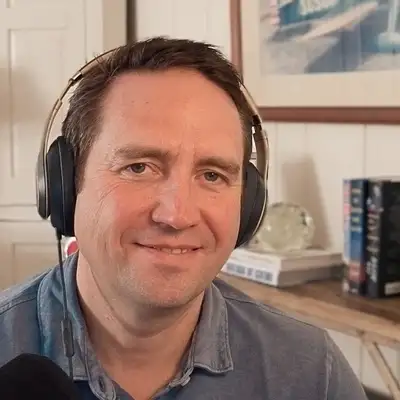
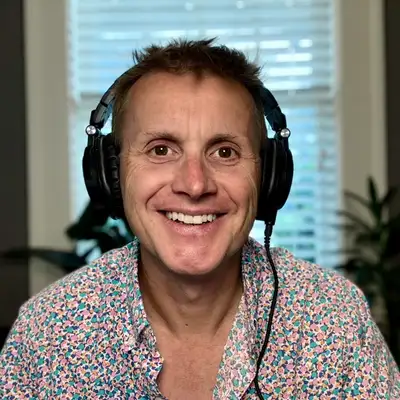
Space Insiders is your bi-weekly deep dive into the intersection of space, cloud technologies, and entrepreneurship. Hosted by Tony Sewell and Rob Ruyak, both seasoned space-tech executives, this podcast features candid conversations with founders, investors, and entrepreneurs shaping the future beyond Earth. Whether you're launching a startup, investing in innovation, or just space-curious, Space Insiders gives you the behind-the-scenes insights you won’t hear anywhere else.
New episodes drop every two weeks. Subscribe now and join the orbit!
Disclaimer: The views and opinions expressed in this podcast are those of the hosts and guests and do not necessarily reflect the official policy or position of any organization or employer.
Welcome to Space Insiders. I'm Tony Sewell and here with my mate Rob Riyak. How you going, Rob?
Rob Ruyak:Great, Tony. How are you? Always good to see you, man.
Tony Sewell:I'm good. Things are pretty humid down here. How are things up in DC?
Rob Ruyak:Great, actually. Really? Nice. We had a cold front come through and it's actually pleasant for once. It's been a rough summer.
Tony Sewell:Yeah, it has. I'm looking forward to fall. All right, we have a really good guest today. We just wrapped up interviewing with her, Erica Wagner. I learned so much during this interview, Rob.
Tony Sewell:Will you tell us a little bit about Erica?
Rob Ruyak:Erica is a great personality, big personality, always smiling. And the background is just unbelievable. I mean, PhD at MIT in both aerospace and biomedical engineering, twelve years, I think more than twelve years at Blue Origin. She built the XPRIZE lab at MIT from scratch, from nothing. She ended up at Blue Origin leading payload sales for New Shepard, worked at the Orbital Reef Commercial Lunar Destination Program.
Rob Ruyak:She's AIAA associate fellow, and she's also done a few TEDx talks, which are really good and I recommend people watch. So yeah, she's great. And right now, she's at the exploration company, which is based out of Europe and, you know, just had a great conversation with her.
Tony Sewell:Yeah. And I think what people will really get out of this interview is a perspective of some of the applications of human spaceflight and commercial space stations that I hadn't fully connected the dots on as far as advancement of science, medical technology, chip technology, manufacturing, how a zero gravity environment can actually be a massive accelerator to development and technology of things we benefit from on earth. If you think that is interesting, I think you'll find this really interesting. It was fascinating for me.
Rob Ruyak:I loved it because you hear and read about how important the space station is for research and development, And you kind of wonder, well, what really is that? What is it about it? And I feel like it's kind of hard to fully grasp why there's value there. I think just you and I being in the industry for a long time, I feel like there's two things I keep hearing about. One is it's really great for vaccine development.
Rob Ruyak:Okay? But why? And then the other one is you hear a lot about fiber optic cables for some reason. And I just never really I've always wanted to understand what are all the other applications because frankly, with this commercial push to have more space stations and frankly not less of them, and then with NASA trying to take a back seat and be more of an anchor tenant and a contributor to it, not like the owner operator, There's got to be some sort of a free market system around this whole thing. So I think better understanding what the value is of microgravity and what kind of products can be built differently and for what purpose, and what kind of value does that create where you can actually produce that down here on earth is really interesting.
Rob Ruyak:And I don't know if I've met anyone that has more experience and or thoughts on what that could look like over time than Erica.
Tony Sewell:Yep. So we're not going to give it any more away. You need to listen to the episode. Right. So just quickly, a couple of news stories that caught my eye this week, Rob.
Tony Sewell:The first one is a little bit it's interesting and perhaps a little bit sort of concerning for me. NASA is getting out of the Earth science game. They're significantly reducing their money that they spend on that. And I think when you read headline, I think a lot of people go, Oh yeah, NASA, they're about doing stuff in space. But I don't think a lot of people realise the impact of NASA's investment in earth science, earth observation, how that impacts things like climate change, understanding weather patterns, just a lot of the products of Earth observation science.
Tony Sewell:And I think also a lot of space startups really benefit from this investment because they're better, commercial industry is better at carrying out these missions than a big government agency. What are your thoughts on this one, Rob?
Rob Ruyak:Yeah. I don't know. Politics aside, I guess all I have is really questions. Like, I'm sure there's a lot of stuff out there that's been funded historically for many, many years that might not be as relevant now. I I have no idea.
Rob Ruyak:But but, you know, there's a lot of things that that we all know that the government funds that serve a whole multitude of downstream purposes. Like, for example, you know, weather, studying weather. I know a lot of that's NOAA, but there's a lot of things that NASA also does to actually produce information and data that help feed these weatherization models for a whole bunch of different purposes. I think with weather, we all know why it's important. Like, you know, we see it every day.
Rob Ruyak:You know, it informs decisions that we personally make. It informs decisions that, industry makes. It actually also will continue to inform decisions that defense national security makes as well. Yeah. I was actually just listening to a podcast on, Defense One, and it was a panel about the the Golden Dome.
Rob Ruyak:And there was a question that was fielded to the panel around the use of, you know, we call it there's this whole, concept of space based interceptors. And with this new golden dome initiative, people are asking the question, well, what does that really look like? Is it shooting a missile down with another missile? What about the laser thing? Right?
Rob Ruyak:I don't know enough about it, but all I know is that one of the experts said, well, the biggest problem with lasers is it it really can't be it's not effective in a cloudy environment or an environment with bad weather. Continuation. So it's going to it's going to depend on a lot more advanced weatherization models because that is actually going to potentially determine quickly what is the right way of intercepting something, right? Yep. So I bring that up because, I don't know, I have a feeling that I think the the research around all this is important in a lot of different ways, but there could be some downstream impacts that maybe people aren't thinking about that they probably should that are gonna be really, really important.
Rob Ruyak:And I'm not saying defense and national security is the only thing, but also universities and schools and our children what they learned in schools. Having that there's a lot around space exploration and research that actually is so inspirational. It actually propels more innovation in different ways. So I hope that's not impacted as much as we think it could be.
Tony Sewell:There's a lot of international cooperation as well. I think they say in the article that the NISA project, that's one that's being done with India, that's not going be impacted. There are other programs with ESA and whatnot.
Rob Ruyak:What's your opinion on the catapulting satellites into space? That was interesting. So that's another one.
Tony Sewell:So a company called Spinlaunch have a rather novel way or they're developing a novel way to shoot things into space with basically a giant centrifuge. But they've already raised about $210,000,000 so they've got some serious funding behind them and they've just raised a C round of $30,000,000 And they're largely investing it into LEO constellation, a two eighty satellite LEO constellation, which don't know, it's kind of curious to be getting into this space. I'm not sure what the application is. It's interesting. So a guy that I know actually, this new CTO, Massey Vladivas, previous CTO of OneWeb, he's been an exec at SES and Inmarsat, so he's a serious guy.
Tony Sewell:This is an interesting development for this company. I don't know what they're going use it for, but an interesting time to be launching another LEO constellation.
Rob Ruyak:I feel like it's just another proof point that there's so many use cases, I think, with space that mean, I wonder I'd love to talk to them, by the way, Tony. Should Yeah. Talk to
Tony Sewell:We should.
Rob Ruyak:Because I just wonder, you know, is there something specific about their constellation and how I don't know, the the the buses are developed that, you know, can't be launched on a rocket, but they're better served with with the centrifuge? I mean,
Tony Sewell:for They're not launching it with the centrifuge, don't think.
Rob Ruyak:Oh, okay.
Tony Sewell:But in the article, they talk about I think they're gonna they, you know, use some other launch vehicle. Interesting. At least for the initial tests, think they plan to launch something next year. Because I don't think they're at full scale to launch something into orbit yet.
Rob Ruyak:Gotcha. Okay. Interesting. It's interesting.
Tony Sewell:It is. Alright, I think we should probably get to the interview. One quick shout out. Hopefully you've seen it on our socials, but we have an ex channel. We're going to give that a go.
Tony Sewell:I've been away from Twitter for a few years, so we'll see how we go. Technology and space there's a lot going on in that media ecosystem, so we thought that made a lot of sense. We've also launched the website so that we can create more of a central focal point so that people can learn more about the people we're interviewing, access blogs, so you're not having to search through social feeds to find things. So yeah, make sure you check those out. But with that, I think we should get to our interview with Erica.
Rob Ruyak:Let's do it, Tony.
Tony Sewell:See you in a minute. Welcome back, and good day, Erica. Thanks for joining the show.
Erika Wagner:Hey. Thanks for having me.
Rob Ruyak:Good to see you, Erica. Thanks again.
Tony Sewell:Really excited to have you here today. And and I I love the conversation we're gonna have today because I feel like we've been kinda been building up to the area of your expertise. Like we've talked to people that have designed space suits, we've talked to people in the launch industry, and now to have someone that has such a unique background combining aerospace and biomedical engineering, I'm really interested to learn a lot today. So I'd love to just start, like, what got you into this? Just tell us a little bit about how your career has progressed to date.
Erika Wagner:Yeah, awesome. Thanks, Tony. Let me just start with, am a nerd, a nerd for life. I have been excited about space since before I can literally remember. By the time I was in kindergarten, my parents were already stacking my bookshelves with space books and a telescope in the corner.
Erika Wagner:So I think I'm one of those people who was lucky to find a passion when I was really young. And it was sparked by the early shuttle missions. It was sparked by the legacy of Apollo. It was sparked by the dreams of wanting to go there myself and to be an astronaut to see space, to see Earth from space. Haven't gotten there quite yet.
Erika Wagner:That's still on the bucket list.
Tony Sewell:All right.
Erika Wagner:But at the end of the day, I was a science kid who loved to solve problems. And so that pushed me towards engineering. It pushed me towards going to make a difference in the world in that way. And I started to realize that there was this opportunity at the intersection of where astronauts were flying and where engineering was happening. And they called this little field bioastronautics.
Erika Wagner:And I didn't even know it existed until I was in my late teens, early 20s. But I was excited to find something that took my two passions and mashed them together.
Tony Sewell:So that was something you got onto before you went to university. So you knew the area you wanted to get into. It wasn't something you kind of discovered after you got started.
Erika Wagner:It was somewhere in the knew I wanted to do engineering. I knew that health stuff excited me. I knew that space stuff excited me. I didn't know that they could be done together until I was at Vanderbilt University for undergrad. And then spending some time hunting in the early internet for things that had the word space and biomedical together.
Erika Wagner:It turned out NASA was funding a group called NSBRI, the National Space Biomedical Research Institute. It's now a group called Trish, the Translational Research Institute for Space Health. And all those big long acronyms meant where they were people who are thinking about the future of space travel through the lens of how do we keep people healthy there and how do we use what we're learning in space to keep people healthy here on Earth.
Tony Sewell:That's awesome.
Rob Ruyak:Yeah. It's actually I I I get all of those emails from Trish, which is really interesting. I remember one of them was, I think it was an experiment that I guess maybe Trish was funding through the ISS National Lab at the time where they were trying to accelerate testing for determining kidney disease and kind of what causes it potentially in a microgravity environment. You know, I guess just to follow-up a little bit on that, you know, what is it about space and medical that is most interesting to you? Really the space travel part or is it how, you know, there's a unique way of doing experimentation and research that actually helps us here on Earth or is it both?
Erika Wagner:I got hooked because of what it was doing to enable us to go to space. But I found over the years that the more interesting stuff is what it's doing to enable life here on Earth. That when we go into space and we take away sedimentation and convection and buoyancy and these fundamental forces that you just, you can't flip a G switch in the lab. I can't tell you how many people came to my lab at MIT and said,
Tony Sewell:I want to go to
Erika Wagner:that room where you can turn off gravity. Mean, wish it existed, right?
Rob Ruyak:But we've got
Erika Wagner:to go flying on Vomit Comet airplanes.
Tony Sewell:I've seen that. Have you done one of those? Oh, what is that like? Is it, I don't know. I'm not sure my stomach could handle it.
Erika Wagner:My stomach couldn't handle it either, but that was okay because I got to dance on the ceiling. When I was teaching, I took 23 of my students up for one of the earliest research flights that they did on the zero g airplane. And we were studying a wide range of different technologies and science. And there were two things that surprised me. One was the sensation.
Erika Wagner:Like I felt that I had thought it would feel like falling. And it really felt for me like floating, like I had just swallowed a bunch of helium balloons and just become immensely light. And that was really neat. The other thing was I had been studying microgravity for years. I knew the physics.
Erika Wagner:But when you see systems actually acting in microgravity, when you experience it yourself, it gives a depth to that understanding that you just can't do on paper. So I tell everyone out there, you have a chance to go, absolutely go. If you have a chance to send students, all the better. I think that there was, for many years, NASA was sending students up on the reduced gravity program out of Ellington Field. Sad to see that go away, but now the commercial side is picking that back up again.
Rob Ruyak:So what did you say it was called the Vomit Comet?
Erika Wagner:Vomit. Yes.
Tony Sewell:That is awesome. So good.
Erika Wagner:Yeah. So airplanes flying in 15,000 foot tall roller coasters. When you get just like a roller coaster at the bottom of the hill, you get pushed into your seat about two times your body weight. At the top of the hill, you're coming up out of your seat, and you get about fifteen seconds of free fall.
Rob Ruyak:That is unbelievable. So you've done that. Have you ever jumped out of an airplane now?
Erika Wagner:Just once. Yeah. That's enough.
Rob Ruyak:For recreational purposes?
Erika Wagner:Recreational purposes, strapped to somebody else.
Rob Ruyak:Yeah. Yeah. I've done that two years ago. I wouldn't do it now. I don't have the same, I don't know, risk tolerance as I did when I was like 23.
Erika Wagner:Would you strap yourself to a rocket, Rob?
Rob Ruyak:Depending on the day, yes, I would.
Erika Wagner:It's an interesting risk calculus, right?
Rob Ruyak:It totally is.
Erika Wagner:For me, that's been on my bucket list since literally as long as I can remember. If someone called me up and said, can you be here tomorrow? I've got a seat for you. I would be on the next airplane.
Rob Ruyak:Yeah. Well, that's a good, Yeah.
Tony Sewell:Good segue. Yeah. We're the same wavelength, Rob.
Rob Ruyak:Yeah. See, Tony and I, we're just such good partners here. So speaking of which, and I want to ask you the question I think Tony also wants to ask you in a minute. But tell us how you led yourself to Blue Origin because that's where I met you. Yeah.
Rob Ruyak:And where I was super impressed with your energy and your ability to lead a team and all that. So I think we're both fascinated to see, you know, how did you end up at Blue? What do you do with Blue? And my final question will be, how come you never got to fly on the new Shepard vehicle?
Erika Wagner:Well, I'll answer that last one first, because I think we should be flying as many of the folks who are working in the space industry as possible. When I signed my contract at Blue Origin, I wrote in that they would give me a ticket. They crossed it back out. I gave it the old college try. But I was a biomedical engineer and then an aerospace engineer doing research at MIT for my graduate work.
Erika Wagner:Spent some time at the XPRIZE Foundation, learning how innovation works and how do you get teams to do amazing things, but was getting hungry to get back into being on the teams that were actually making that change in the world. So I started looking around the commercial space industry, and this is back in, you know, the February timeframe. When I found Blue, I found a team that was doing three things I loved. One was that they were really sort of mission motivated. It was a space for the benefit of Earth.
Erika Wagner:It was opening the doors to more users. That was really aligned with my values. The second was that it was a team that had stable funding and stable direction. And that's not something you find very often in the space How
Tony Sewell:old were they in 02/2009? I
Erika Wagner:guess the company formally got started in February, but it was really small for a long time. So when I joined, we were about 180
Tony Sewell:employees. That's cool.
Erika Wagner:In the context now, I think they're about 14,000.
Tony Sewell:Yeah, wow.
Erika Wagner:But, you know, so they had this team also that was just incredible, folks that were really, really sharp, but also the kind of people you wanted to work with. And so that combination of the right culture and the right values and the right resources made it a really attractive place to be. And coming in when it was still a startup was really fun because everything was possible. Maybe not everything. In the earliest days of Blue, they were actually studying the ways that you could sort of think about launch completely differently.
Erika Wagner:They looked at rail guns and mass drivers and warp speeds. And by the time I got there, we were pretty focused on getting New Shepard to start flying, starting the design of New Glenn and thinking about where the trajectory could go that would open the doors of space tomorrow.
Tony Sewell:Yeah, Man, I've got my fingers crossed for New Glenn this year. We're excited about that. It's going be great to see some competition in the industry for sure.
Rob Ruyak:And then how did that I mean, again, I remember when I first met you was when Orbital Reef was getting kicked off. So how did that tell us a little bit about how that how that all came to be.
Erika Wagner:Yeah. So I spent the first six or seven years at at Blue really focused on microgravity users on New Shepard. We were figuring out how do we open the doors to more educators, more students, more corporate research, more designers, more artists, right? And opening up not just for tourism, but all the other things that the rocket could do. And I'm excited that that program's still off and running.
Erika Wagner:But as New Shepard got to flying at rate, I had done the first 150 payloads, I was looking for the next thing. We started to talk about what was going to happen in LEO when the International Space Station retired. NASA was just starting to think through ISS coming to the end of its life. Commercial was really the logical jumping off point. How do we go and make low Earth orbit more efficient, more open, more collaborative than it was in the era of a sort of government owned and operated space station?
Erika Wagner:And so Orbital Reef started coming together and became part of the program that was called CLD, Commercial LEO Destinations. So looking to replace the ISS with something that could be next generation.
Rob Ruyak:Yeah, and I thought it was also cool too, because I remember I'm trying was it the twenty nineteen IAC conference in DC? Maybe it was a different conference where you guys announced it and I thought it was really interesting. And the reason why it was so exciting for me was that it was a partnership. So I don't know if everyone thought it would be such a partnership, right? And so what companies were involved in that again?
Rob Ruyak:I'm trying to remember.
Erika Wagner:Yeah, so in the earliest days of Orbital Reef, it was Blue Origin, it was Sierra Space, Arizona State University, AWS, our friends over at Amazon. We were working with a number of companies that were sort of on the implementation provider side. So it was really bringing together a wide range of organizations that had expertise. Boeing was involved bringing their expertise in operating and maintaining the ISS. And I think what we were trying to do was to re envision how space and logistics works.
Erika Wagner:And I think we'll come back to that theme maybe later in the conversation here. But it turns out that if you look at what drives low Earth orbit, it's getting things up, keeping them found in your environment and LEO not losing them and getting them back down. It turns out to be almost 70% of the costs of operating a space station today. And a lot of what will allow space to be increasingly more commercial is to accelerate the pace of space to the pace of business. When we run at the pace of a government agency, everything's just a little bit slow.
Erika Wagner:But when you start to operate at the pace of business, then you open up all these other doors, whether it's to pharma and material science or to things like, you know, tourism and making movies and all the other sort of commercial locations of space. They all open the doors more widely when you have a faster chain of logistics.
Tony Sewell:Yeah. Well, that brings us to today, I guess. You're still in the payload business with a new company, the exploration company. I didn't know a lot about them and I was having a little bit of a look. And it seems like it's got a really interesting sort of sustainability and interoperability sort of mission as well.
Tony Sewell:Tell us a little bit about what they're doing and what's unique about what you're doing over there.
Erika Wagner:Yeah, so Exploration Company was founded back in 2021. So we're just about four years old. Yeah. And in that time, we have built and launched two space missions. We have grown the team from four to over 300.
Erika Wagner:And the reason you've never heard of us maybe is because headquarters is over in Europe. The company is actually headquartered jointly in Bordeaux, France and Munich, Germany. We've got offices now in Torino, Italy, in Luxembourg, in Houston, Texas.
Rob Ruyak:Terrible places. Why would anyone want to go visit Bordeaux?
Erika Wagner:I have to go once a quarter.
Tony Sewell:That's a hot shoe.
Rob Ruyak:That's tough.
Tony Sewell:In Cape Houston.
Rob Ruyak:Yeah. Exactly.
Erika Wagner:But but the the sort of founding myths of the of the exploration company, it really comes out of two things. Our our founder, Elen Hubei, was the vice president at Airbus for the Orion service modules, the part that Europe is building that's getting us back to the moon, and was watching Europe go slower and slower as The US was accelerating faster and faster, and really wanted to see if we can push the pace of collaboration. And then also was seeing that space was one of those things that was knitting Europe together. Right? If look across the countries of Europe for hundreds and thousands of years, they've been at war with each other.
Erika Wagner:And we've been in this era of relative peace for the last few decades. And space has been one of those things that's been built collaborations. And we can see it back in and throughout history, right? Even in the heart of the Cold War, Soviet Union and America were finding ways to collaborate in space. Scientists and educators have long to found ways of collaborating.
Erika Wagner:So with these two threads of how do we move faster and how do we build global collaborations, the exploration company took on the challenge of saying, ah, it turns out that this logistics piece is one of those ways of doing that. So building capsules that can take things up to space and bring them home again. For those who are more familiar with The US market, think SpaceX Dragon, right? That's sort of the equivalent. So we built a small capsule, 60 centimeters.
Erika Wagner:We called it bikini. It was our teeny weeny one. And it was designed to go up. It flew on the inaugural Ariane six mission back in 2024. Unfortunately, Ariane six had some problems with its upper stage.
Erika Wagner:That one's still in orbit. It hasn't gotten to come home yet. But this year we launched our next vehicle two and a half meters across, the size of like a Volkswagen Beetle, 1.6 metric tons, 25 paying customers on board doing microgravity work, some marketing things and technology development. That vehicle flew up out of Vandenberg in June. So we got a chance to take that up, do a few orbits of earth, activated all of our payloads.
Erika Wagner:We set the vehicle up, separated from the launcher, headed back through the atmosphere, and unfortunately lost it just as we went transonic coming back down for But sort of, you know, we'll call it 80% success and a lot of learnings there. And the reason we're doing these things is because we're on our way to this sort of Dragon class vehicle, a four meter, 10 plus metric ton cargo capsule that's able to go up to the International Space Station. Our first mission with NASA and ESA is scheduled for 2028. And then to go to the commercial LEO destinations after that, and to provide this routine service of taking cargo up and back down to enable exploration, to enable science, to enable humans living and working in space.
Tony Sewell:Erica, we've interviewed a few international folks. One bloke we were talking to a couple of weeks ago, Will Crow, he's a founder of a company called Heo in Australia. And they were able to really find success in a niche in their business because they were an Australian company operating in The US. They were able to do things because of regulation that American startups couldn't necessarily do at the time. Just wonder if being a European company, does that bring benefits that American companies or other companies in other locations may not be able to realize?
Erika Wagner:Yeah, well, I think it's got a few things going for it. One is the power of the way that the European Space Agency knits together those countries, brings together talent from a lot of different places and brings together technology. So I think the last time I heard, we have something like 20 plus countries represented in our workforce, and that brings to that those perspectives as well.
Tony Sewell:It's an amazing community of science and research. You see, because being Rob and I, obviously, in the space industry as well, and we work with lots of European companies, and you see many people in commercial companies that a lot of them have had a stint at ESA at some stage.
Erika Wagner:Yeah, and I think ESA also has its built in demand, right? It has a desire to have capabilities that are built in Europe for Europe to play on the global stage as a collaborator. And we saw for the International Space Station, there used to be a vehicle called ATV that was taking cargo for Europe up to the space station. When that retired, Europe sort of lost its barter value that it was providing through that service. So there's a built in market there and not just to serve European needs, but for Europe to serve global needs.
Erika Wagner:So I think that that's been a really it's been a good catalyst for the growth of the exploration company. We've been able to bring in a lot of investment on the heels of that market and the way it interacts with global markets. Largest Series B in European space history, Series A in European space history, fastest growing European space company for the last three years running. And with that, we've been able to secure major contracts for cargo resupply services for space agencies, as well as over $800,000,000 in commercial contracts. So this is really one of those catalysts that says, if we can bring private money in, we can bring in government demand, we can put the two things together, and then we have this springboard for growing even faster.
Rob Ruyak:Is there a demand for any kind of national security or defense related use cases or needs?
Erika Wagner:For sure, on both sides of the pond. I think that when you look at what space vehicles do as they're going up and staying and coming back, there's all sorts of different applications. When I think about that sort of small, medium and large trunk of our tree, you can branch off to hypersonics, things coming back in fast, you can branch off to microgravity demonstrations of new technologies and in space demonstrations of new materials. And you can also branch out to other destinations like Cislunar space that allow you to to be part of that logistics supply chain.
Rob Ruyak:Yeah. Very interesting. Well, I do want to bring this up real quick. So you did do a TEDx or maybe you've done multiple. I'd watched the one in space democratization.
Rob Ruyak:And so I think, for those listening, definitely check it out with Erica because I mean, a lot of what you're talking about right now you've mentioned and so I thought it was a pretty powerful, talk. You don't see a lot of those. You know, I think providing a vision for people that, you know, are just kind of interested in this area and want to know where it goes, like, really good, you know, think, painting the picture of what's possible. And you're doing it. You're doing it now in an area that I think It's funny, when I first met you and you were working on Orbital Reef, I remember we were trying to think about on our side, like, how do we help you in the broader, you know, for a broader company perspective?
Rob Ruyak:You know, how do we think through different experimentation? Are there new things we haven't thought about and all that? And it was always frankly somewhat of a challenge for me to figure out how do we best help in that regard. Because I think experimentation is I think you can get your head around it because there is the ISS and we know they're doing a lot of stuff up there, but it's not necessarily as publicized as it could be. But things like Trish and a lot of like, I don't know, I feel like there's a lot of, we don't know what we might actually see in terms of R and D in space.
Rob Ruyak:It's just trying to open the door seeing what people can do and then how that might benefit various types of use cases that might be for space exploration and also those for here on earth. So I think it's definitely an exciting area that you're in for sure.
Erika Wagner:Yeah, no, I think that that duality is super important. And if you look at like the reports coming out of the U. S. National Academy of Sciences, there's a thing called the Decadal Study that looks at the most important science of the last ten years and the next ten years. And it really shows in microgravity that you both have science that is enabled by space and science that is enabling space, right?
Erika Wagner:You're playing both sides of that coin. And when you think about just the basics of the physics, right? We've talked about how you can't flip the switch for gravity in your lab, but it means that, you know, heavy things don't sink and light things don't rise. So you can get alloys of materials that you simply couldn't form on earth. Have these long periods of things staying really, really still and quiet.
Erika Wagner:So you can grow larger protein crystals for drug discovery. You can get novel formations of molecules for treating new kinds of conditions that you just can't make in the lab on Earth. And I think that that's pretty powerful. We're starting to see now some real interest in semiconductor manufacturing and what happens if you're actually going to make the world's most efficient chips, start by making the substrate in space, bring them back down to finish them up on the ground. So it's not just about what we do in space, but it's the ways in which it really all links together with global supply chains too.
Rob Ruyak:So I think there is a misconception, however. I think you can wrap your head around that, but then there's this I feel like there's this and maybe you can help us with this. There seems to be this, I think, misconception that all that stuff is just going to cost way too much money. How in the heck can we do that? Right?
Rob Ruyak:How can we, you know, win the GPU race, you know, by doing half of it up in orbit? Right? Is there a misconception around that in terms of, like, the business of space where you see it? Or maybe there's another misconception that, you know, just kind of drives you crazy that, you know, really could be clarified, and if so, might bring new ideas to the front.
Erika Wagner:Yes. I think there's a few ways of slicing that, and it really depends on what the specific science is that you're doing. I'll take drug discovery. There's a really fascinating story that I think has been under amplified in the space world. Merck had a drug called Keytruda.
Erika Wagner:And you can go to your pharmacy and fill a prescription for it today.
Tony Sewell:It like
Rob Ruyak:a drug.
Tony Sewell:It's got
Rob Ruyak:a name of a drug. I believe you.
Erika Wagner:They took Keytruda up to space. And normally Keytruda, when it crystallizes, the same molecule sort of has an A form and a B form that it makes. And when you bring that down and you want to give the drug to a patient, because you've got these two forms, you've got to have a lot more of the drug to get the right amounts of each form and you end up having to take an injection of the drug or an infusion. It's there's there's some quality of life issues that go along with that drug. Merck took Keytruda up to space, they found that they got the C form, same molecule, just a different form of the crystal.
Erika Wagner:And with that C form, they could actually do smaller delivery of the drug for the same efficacy. So now you go from having to go to your doctor's office to have a long infusion to something that can just be sort of injected at home. So that's great for patients, right?
Rob Ruyak:Wow. Yeah.
Erika Wagner:The interesting thing there is that you don't have to make that drug in space. For that drug, they took up something on the order of like a quarter of a U, like a few grams of material. And then they were able to bring it back down, seed it into their terrestrial processes and make more. So the space piece in that case was just a discovery element. Here's how we go do incredible things back on the ground.
Erika Wagner:In other pieces that we're talking about, whether it's fiber optics or semiconductors, there's probably a critical step where gravity is sort of getting in the way of doing good business, right? So for that, you have to fly up some amount of your raw materials, but it's probably not your full product, right? In the case of your chip wafers, maybe it's just the silicon carbide. In the case of your fiber optics, maybe it's just your glass preforms. So you're able to do some pieces of this that aren't everything.
Erika Wagner:And to your point, though, the economics of space is driven by the economics of launch and reentry today, right? So until we can bring down the cost of getting things there and getting them home, that's going to continue to be a barrier for this to be transformative in the markets. But I can tell you, whether you're looking in The US or you're looking in Europe or you're looking in India or you're looking in China, this is the problem that everyone's trying to solve. Someone's going to be first to the table. And I think that the question is who?
Tony Sewell:Yeah. I love these stories about how science in space and how we can use new orbits to improve life on Earth. I'm really interested in it. I'm less excited about getting strapped to a rocket and shot into space. But in that Merck example, so I assume that research was done on the International Space Station.
Tony Sewell:Is that right?
Erika Wagner:Yeah. So Merck started doing work in the early space shuttle days. That particular experiment was ISS.
Tony Sewell:Okay. Yeah, right. So, I mean, thinking forward to the future, I mean, are a lot of companies in this space at the moment, unintended, to build commercial space stations. I mean, what do you see happening in the next sort of five to ten years in this area?
Erika Wagner:So I think we've got a few things going on. So today there are two space stations in orbit, right? There's the International Space Station and there's Tiangong from the Chinese. We are hearing India's interest in having their own capabilities in space. We're also seeing the movement to the commercial LEO destinations here in The US that will serve global markets.
Erika Wagner:So, guess is that we will go two to more than two space stations, whether that's three or four or five. Who knows? I think a lot depends on how quickly the markets grow. And we'll also see that there's there's free flyers. So actually, just just this week, there was a launch from Russia of a Bion spacecraft.
Erika Wagner:Bion was an old design, started operating in the 1970s for doing untended science in a capsule that would go up and spend time in space and come home. So, this is the latest in a long series. It's been about a decade since they've launched. Curious to see that they're back at this model. But you're seeing it in companies like the exploration company.
Erika Wagner:You're seeing it in the possibilities of vehicles like Dreamchaser that could go up, that could operate science without humans, where that makes more sense. And I think that there's going to be a balance of where do we need space stations and people to get the best science,
Rob Ruyak:the most
Erika Wagner:efficiency, where can automation not take over. But there will also be science where you don't want people around for any number of reasons. Maybe it's a maybe you're doing discovery on a more dangerous chemical or you need to have a pathogen in the system for testing. Or maybe you just don't want an astronaut running on the treadmill next to your sensitive microgravity work. So I think we're going to see this balance of tended and untended space platforms that are increasingly opening up the doors and letting us move at the speed of business.
Tony Sewell:Are there particular industries that you think early on will really be able to make big leaps? I mean, you talked about semiconductor, but sort of based on your own experience and what industries and what types of solutions do you think will be kind of lined up first, do you think?
Erika Wagner:Well, it's interesting because this is not a new field, right? We've long had access for even for commercial entities to space. NASA was doing this in the 70s and 80s in certain ways. So that's The
Tony Sewell:scale is going to be incredible.
Erika Wagner:The scale is what changes. If you went to the International Space Station today and you've you had the next Keytruda moment, you had some blockbuster that needed to be really scaled up and produced in space. You couldn't have your own module on the ISS. You couldn't borrow six racks to go scale up. It's just not designed for that.
Erika Wagner:It's designed for basic R and D. So the next generation of space stations, I think, is going to have that ability to take things to scale in ways that are really transformative.
Tony Sewell:And accessibility as well.
Erika Wagner:Yeah. So physical accessibility, data and accessibility, international accessibility. So the International Space Station, really a narrow partnership. They've done a great job of opening those doors wider and wider. But if you look at the UN Office of Outer Space Affairs, UNUSA, 102 members now, members of 102 nations are members of that.
Erika Wagner:So so many countries are seeing that space has a piece of their their economic growth, a piece of their national security, a piece of their their self identity. So as more countries come into space, commercial opens the doors to even more of those.
Rob Ruyak:Mean, Erica, you're a true leader, thought leader, pathfinder in this industry for people that want to get into the industry, they want to do something, they want to learn more. What do you recommend for those people? They could be people that are they're either young people in high school or they're people that are looking for a career change. What are some of the things that you recommend for those folks that really wanna be a part of this?
Erika Wagner:Well, clearly, they need to listen to more
Rob Ruyak:space podcasts. That's that's I agree. 100%. Yep. That's that's that's table stakes.
Erika Wagner:That's table stakes. You know, reading good good news sources, things like Space News and Payload and other sources that are coming out with regular updates, get you a sense of what's going on in the industry as a whole.
Tony Sewell:There's some great news, like it's really come along, like there's some really good competition in that new space now, which is just bringing things along.
Erika Wagner:For students, I would say find the nearest conference to you. If you can't afford the tickets offered to volunteer, often you can work a couple of days at the desk and then you can get some time in the sessions. AIAA, the American Institute for Aeronautics and Astronautics, has a great series of local conferences in addition to their national ones. If you want to go internationally, the International Astronautical Congress happens in a different country in the world every year. So this year
Rob Ruyak:That is that that show is so good. Oh, it's amazing.
Tony Sewell:It's Sydney this year. Next month is
Erika Wagner:Australia this year. Yeah. And then going to Turkey the year after that. So Wow. You know, it will be coming back to The States probably in a few years for the folks that that's easier for.
Erika Wagner:But at the International Astronomical Congress, you have a group called SGAC, the Space Gen Advisory Council, that's specifically geared for getting young professionals around the world sort of from college through age 35 engaged in the debates around.
Rob Ruyak:Well, I should look into that. Fall within that timeframe. Yeah, that age group.
Erika Wagner:Yeah, younger than ever, Rob. Then the other one I often point folks towards is the International Space University. So ISU founded more than thirty years ago as a place to bring together students of space that are interested in space as an interdisciplinary form of study. So you get some space laws and space business, space engineering, space technology. And the summer I spent there, we had 93 students from 31 countries.
Erika Wagner:So there was no better way to start to understand where these things all fit together.
Tony Sewell:One of the colleagues from my last team who we both know, Rob Miriam, she's super smart. She did the ISU last year, and she's a real go getter. And she saw a hole in their curriculum around AI, and actually she just presented in Korea.
Erika Wagner:Love that.
Tony Sewell:Couple weeks ago. That's awesome. Good for her. Day long AI module. Hi, Miriam, if you're listening.
Tony Sewell:You better be listening.
Rob Ruyak:We love you, Miriam. The other thing, Tony, I was just actually thinking, we should and maybe we can work with Eric on a recommendation here. We haven't touched on space law, actually. Normally, I have a lot of lawyers in my family. I love the lawyers in my family.
Rob Ruyak:But I think that is a topic that I feel like that isn't really just I don't see enough discussion around that because you know there's going to be regulation. I mean, We talked in an episode. It was a couple of episodes ago. We were talking about how launching something into space is an export. I never even thought about that.
Rob Ruyak:How is that an export?
Tony Sewell:That was one of the first ones when the whole tariff thing kicked off and there were some Canadian companies that were copying it with tariffs trying to launch with SpaceX in.
Rob Ruyak:Yeah. Were getting their you know, they were you know, they a tax on, you know, sending their spacecraft to launch at Vandenberg, I think it was actually in the spacecraft. Yeah. Launch vehicle. And then, and then there was like a loophole, I think, where, you know, the can't even remember how.
Rob Ruyak:Actually, we should look back at that. But how they could actually recover some of that cost. But the whole point though was that, it was an export out of The US. It was imported and then exported. And I never even thought about how that why that would be an export.
Rob Ruyak:But anyway, I think the space law topic is actually pretty interesting because it seems to be very undefined still. And to figure out how people are thinking through that and what that looks like, I I I find would be pretty educational for people.
Erika Wagner:Yeah, well, I think not undefined. A large body of space law and space law programs and all those things since the outer space treaty way back when. But I think still evolving and evolving faster now than ever As we get to things like international collaborations and mega constellations, the production of new materials in space, how do you think about the regulatory, the legal, the contractual underpinnings that change all this? I think part of the reason that I'm in the sort of the business world today rather than a practicing engineer is that I was watching as I was doing my doctoral work in engineering and realizing that the things I wanted to do were going to be enabled by the basic science, but also enabled by the policymakers and the investors that were allowing the cool stuff to happen in engineering. And that that intersection of how those things all fit together was sort of where I found my sweet spot.
Rob Ruyak:That's pretty cool. Erica, loved seeing you. I'm glad we could get this, finally scheduled. It was so fun to talk to you. The one thing that Tony and I love to do at the end of these is kinda we try to think of a funny question or, like, a fun question that we can ask you that maybe helps, you know, the listeners, get to know you a little bit more as a person.
Rob Ruyak:So sometimes it works, sometimes it doesn't. But this is the question we have for you. So if you could invent the ultimate space food as both practical and delicious, what would it be and why?
Erika Wagner:That's a tough one. So I'm a total foodie. Anyone wants to talk space
Tony Sewell:and food.
Rob Ruyak:Did not know that.
Erika Wagner:There's a long time I was thinking about a concept that I called Spocktails, which is how do you make the best cocktails that can only be served in zero G? So they end up being spherical with like multiple layers and there's pop rocks sending things out. Yeah. Right. I think that there's a lot to be done in elevating our cocktail game in space.
Erika Wagner:Yeah. Ahead.
Tony Sewell:What's the I'm sure you've had you've tried a lot of astronaut food. I assume you probably have. Just what's your favorite? So I was
Erika Wagner:a space food tester for a summer when I was at Johnson Space Center as an intern. I had some barbecued tofu that was maybe not my favorite. We did a lot of taste testing of tortillas. Turns out tortillas are way better than bread because they don't crumble and they don't have corners. So, yeah, there there was some some good tortilla game there.
Rob Ruyak:That was the freeze dried sushi. I bet that was good.
Erika Wagner:Oh, that sounds terrible. There's some really cool stuff going on in cultivated meats these days. And if you think about where the future of science comes together with the future of food, it's in growing cells, it's in fermented foods, it's in the way that Synbio comes together with all of this. There's all sorts of things we can nerd out on next time.
Tony Sewell:Yeah, I was at a startup accelerator in Israel a couple of years ago they were getting some pictures from some aspiring entrepreneurs. There was one of these companies that were three d printing food and they had this whole vision of this whole menu that they were going to offer.
Rob Ruyak:Rob? What about you, Tony? I'm going to
Tony Sewell:ask you first. I have actually put a little bit of food.
Rob Ruyak:I'm sure it's Vegemite of some sort. It's got to be.
Tony Sewell:You can get Vegemite in a tube already, so I'm sure that's already been up to space. Not actually a food, but something would help with like, I want to say the replicator from Star Trek. You put your pill in the machine, tell it what you want and out comes your roast chicken or whatever.
Erika Wagner:Diamond age is here.
Rob Ruyak:What would you want that machine spitting out that would be a delicious food for you?
Tony Sewell:Gosh, I don't know. I think the meat thing is probably the most interesting because I'm a meat eater, so I think any advancements in the meat side of things would be exciting for me.
Rob Ruyak:Yeah. Besides the freeze dried sushi, I guess the way that I look at it is it's got to be something that I crave more often than not here. So probably something like pizza. I don't know. I don't know if pizza would be good in would it be good in microgravity environments, Erica?
Rob Ruyak:I think it would hold up
Erika Wagner:pretty well. A great YouTube video. One of the Italian astronauts, I think it was Paolo D'Iguali, brought up basically little little crusts and and all the ingredients for the team to make pizzas and spin them around and zero gs on the space station.
Rob Ruyak:Will look
Erika Wagner:at an eight year old in your life or an eight year old in your heart. Check that one out.
Tony Sewell:Yeah. That's funny. Pizza the Hutt lived in Chase. So, like
Rob Ruyak:He ate himself.
Erika Wagner:May the Schwartz be with you.
Rob Ruyak:That's right. I didn't know I was hitting on such a topic that was so well researched by Doctor. Wagner here. That was awesome.
Tony Sewell:That is awesome. Anyway. Well, Erica, this has been an absolutely fabulous interview. I've learned so much, and actually, I've got to go and do a bunch more research. I hadn't personally connected a lot of the dots about why, I guess, around research and technology and medical technology and what these space stations are going to enable.
Tony Sewell:So I really appreciate you taking the time to join us today. It's been fantastic.
Erika Wagner:Thank you, Tony. Thank you, Rob. It was really nice to join you both.
Tony Sewell:So if people want to get in touch with you or if they want to learn more about the exploration company, where can they find you?
Erika Wagner:Yes, we are at exploration.space on the web. You can find me on LinkedIn and at wherever near space conferences to you. I'm probably there.
Tony Sewell:Awesome. Are you going to IAC?
Erika Wagner:I will be heading down to Sydney. Look forward to seeing a lot Awesome. Those upside
Tony Sewell:September in Sydney. It's going be glorious. Good stuff. Well, look, thanks again, Erica. Great to see you, Rob.
Tony Sewell:And for our listeners, thanks very much for joining us this week. If you love what we're doing, please write us and write a review, and we'll see you next time.