Subscribe
Share
Share
Embed
Welcome to The Boardroom Path, the essential podcast for aspiring and newly appointed Non-Executive Directors navigating the journey from executive leadership to the boardroom. Hosted by Ralph Grayson, partner at Sainty Hird & Partners, each episode offers insightful conversations with industry leaders, seasoned board directors, and governance experts. Our guests share practical strategies, valuable perspectives, and actionable advice on how to effectively transition into board roles, maximise your impact, and build a rewarding NED career.
Dean Canham: I still now fall back on the army's definition because it's so ingrained in me of leadership, that combination of character, knowledge, and action that inspires others to succeed.
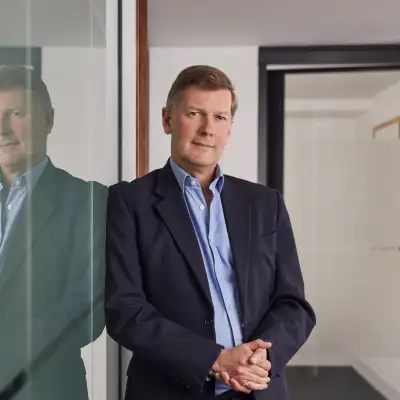
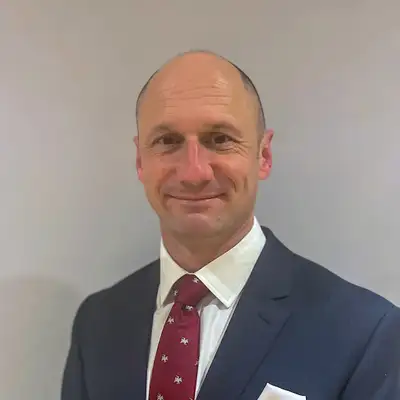
Ralph Grayson: Welcome to The Boardroom Path by Sainty Hird & Partners. I'm your host, Ralph Grayson, a partner in the board practice. In this series, we'll offer practical steps and useful perspectives for aspiring and newly appointed NEDs. My guest today is Lieutenant Colonel Dean Canham OBE, a soldier, operational commander, strategist, one of the British Army's most thoughtful contributors to the study and development of leadership. Dean has served on operations from Northern Ireland and Afghanistan to Sierra Leone, Estonia, and the Falklands.
He's commanded the First Mercians , worked in army strategy and policy, and was appointed OBE for his contribution to operations relating to South Sudan and Somalia. Dean brings an unusually rich perspective to a discussion about leadership beyond formal authority. Commissioned into the Worcestershire and Sherwood Foresters in 2000, he has acted as head of the Centre for Army Leadership at the Royal Military Academy Sandhurst, where he helped shape the army's modern approach to leadership doctrine and led the 2024 Leader Competency Framework, which defines leadership through character, knowledge, and action, and treats it as a capability that can be deliberately learned and practised.
His central insight is that leadership remains functionally human, but must constantly adapt to its context and to the individuals experiencing it. That work moved leadership from being an adjunct to command and technical training towards being treated as a capability in its own right. Deliverable through reflection, feedback, coaching, and repeated practice.
A fellow of the Institute of Leadership, Dean has also contributed to wider national leadership thinking and cross-sector engagement. He now works in the Ministry of Defence and serves on the advisory council of the Coalition for Global Prosperity. Dean's 2025 paper "Leading on Leadership" argues that although leadership remains rooted in human interaction, its character must evolve with the social, cultural, and operating environment.
His experience is therefore directly relevant to boards. A board is not a military chain of command. Authority is collective. The chair has limited unilateral power. Non-executives must support and challenge simultaneously, and success is shaped by executives, owners, regulators, stakeholders, and events. Dean's work helps test which principles of leadership are enduring, which are context-dependent and how leadership might be observed and evaluated when cause and effect are neither immediate nor clear.
So today we will ask what that means in a boardroom where authority is dispersed, leadership is collective, and the evidence of success is rarely straightforward. Is boardroom leadership genuinely distinct? How do we know when it has happened? And can a board demonstrate good leadership even when the outcome is poor? These are the questions I'm looking forward to asking Dean over the next 45 minutes. So Dean, welcome to The Boardroom Path.
Dean Canham: Thank you very much for having me. Great to be here.
Ralph Grayson: Great. Maybe we should just start with your career journey through the military and into the establishment of the Centre for Army Leadership. Perhaps you'd like to touch on its role and its purpose and how you became involved.
Dean Canham: Yep, so I joined the infantry, as you said, and had a pretty exciting term of operational tours and training establishments where I was able to recycle my experience from those operational tours to help out both very junior soldiers as they were coming through recruit training and junior officers as they were going through their second phase of training after Sandhurst as well.
So that's all been great. I never expected it to lead me at one point back to being at the Royal Military Academy Sandhurst, having been through there myself. But that was a great opportunity which came up, and it was just after I'd been commanding the First Battalion Mercian Regiment as well, and had taken the battalion out on operations in Estonia and so I did feel like I had a lot of contemporary relevant experience, which I could very quickly recycle back into the army. And the Centre for Army Leadership, whilst it's based at Sandhurst, it doesn't just look after the officer training that takes place there. It's responsible for leadership training from soldiers when they join the army on day one, right through to generals when they leave the army on their last day.
So I was able to do that for a couple of years, and then subsequently hand over that, move on to my role now in MOD. Which is a very different challenge but still with some fantastic opportunities to observe and think about leadership and how it's applied in different contexts.
Ralph Grayson: And how have your thoughts about leadership evolved and particularly in terms of the hierarchy and the contextual nature of how leadership is demonstrated, whether you're a junior platoon commander or you're commanding a battalion or you're in a staff role. Previous guest, Rupert Jones, who I think you served with, has talked very eloquently about how an individual needs to grow alongside the growth of a business and how being a platoon commander manifests itself at the section level very differently to being in command.
So I'd just love to get a bit of core understanding of your view of the nature of leadership as it related to the military and then we'll come onto it in a civilian context.
Dean Canham: Yeah, I think the recognition for me was that there are core leadership skills which are applicable at every level, starting with self-leadership all the way up to a strategic level of leadership. They are the same sets of skills required in the individual, but they apply them differently at each level and so in a military context, that looks quite clear because it's very hierarchical and you can see that the teams are defined well, even the strategic level versus the operational level, in this case, organisational level is a translation into civilian speak, it looks like people have defined roles but it's also then very easy to get that confused with command responsibility, the power given by a role and authority versus leadership, and quite easy as it is in a civilian context to mix up authority and management with leadership.
If you don't make a clear distinction between the two, then you can get a little bit lost, particularly when you're trying to conduct a bit of self-development or organisational development of leadership because it's very easy to stray into management practices rather than doing what I would advocate, which is leadership development as a capability in its own right and focusing on it because the management stuff is a whole lot more straightforward because it doesn't involve the intricacies of how people see themselves and develop other people as well.
Ralph Grayson: It goes to the core of what I'd like to talk about on this podcast today which is how leadership can demonstrate itself in the boardroom, which by definition is about influence rather than authority. But before we get into that, was this something that was identified as a need within the military or the army in particular by senior leadership that recognised there was a gap that you needed to rethink or was there something more organic that you as an individual and other individuals around you were interested in developing? It's just fascinating to know the genesis of this and where it's led to.
Dean Canham: So the Centre for Army Leadership will be approaching about 10 years old now, and so I would have been the fourth lieutenant colonel that was heading it up. Some of the civilian staff there, the academic staff have been there throughout that period, which is a huge benefit to continuity and making sure that what the military staff are doing is rooted in sound academic research and practice as well and that's a hugely important distinction. Having that credibility, especially as an institution like the army, to say that what we are putting down isn't just what we think as the army is correct, it's what we've looked at compared and contrasted with other models as well, including civilian ones.
The study of leadership, the teaching of leadership, isn't something which the army's only been doing for 10 years, obviously. It's always been a focus, it's just that the professionalisation of it, the isolation of it as a capability which needs to be seen through that lens of rigour, of professionalism, rather than something which is a bit of an aside that professional army officers do and soldiers, that was the recognition that's led to the centre being set up. It's gone from strength to strength and is still publishing routinely now, both podcasts, writing, and reaching out into an increasingly diverse number of organisations who are all interested in how the army does leadership, but of course the army's interested in how they do leadership as well and then you get a very rich mix and you really notice a difference.
I found it myself. When I turned up, I thought, this must be a relatively straightforward job. The army's been thinking and writing about leadership for a long time and then you realise that when this becomes your life, you're in Pandora's box. You can't find the way out. There's so much to go and explore that you realise how much work there will always be to do because, as you said in your introduction, the context is always changing, society is always changing, and therefore you need to stay up to date with how you're doing your leadership development and practices.
Ralph Grayson: There is a direct read across as far as you're concerned from the military into the non-military area and into the boardroom. Maybe just want to touch on the podcast. Maybe use it as an example, you did a brilliant podcast with Gareth Southgate. Perhaps we can just use that as a bit of a first case study in terms of how your thoughts on leadership evolve from out of the military and into leadership in the civilian context in the boardroom.
Dean Canham: Interestingly, Gareth talks fairly routinely about how he was drawn to a military style of leadership. A grandfather who had served, it was very influential on him, and then him taking the England team to do some military style leadership training for a couple of days, which was quite difficult for him to convince both the players and the staff that was relevant and probably safe to do so. But hugely positive feedback from that experience, in what they were taught and what they talked about. But also the context of how leadership was delivered in the military versus how it would be in a professional sports team.
I think across all of the contexts, there are core tenets and principles which are transferable across the spectrum of military, business, and sport, and that so long as you can look at how you apply those skills, they are broadly the same, but how you apply them in that context might be slightly different and I would advocate that they are different for every interaction you have as a leader or as a follower, and that might be something we come on to talk about because everyone's interpretation of that social interaction, which is leadership, could be entirely different. Which actually makes leadership sound very difficult if every single person's interpretation of it is going to be slightly different and that is true.
It's an uncomfortable truth, but it's the reality. Your application of leadership and your receipt of leadership will be different in every interaction, depending on a huge array of different factors, which can be pretty intimidating in terms of personal leadership development because, where do I go with that?
Ralph Grayson: And before we leave Gareth as a subject. A lot of what he achieved was by using a psychologist and bringing a psychologist in. A lot of the previous podcast guests I have had have talked about the role of the board to create the environment in which those beneath them, the executive, can achieve their purpose.
To what extent is Gareth bringing in the psychologist who actually led a lot of that evidence of leadership in the first person, but in which the execution was actually done by somebody else?
Dean Canham: I think the confidence, perhaps even bravery, of allowing someone else to take some responsibility, a significant amount of responsibility, for individuals in the team and how they develop, how they discuss what they need to discuss, how they seek to improve, knowing as a manager, you do not have all of the answers and being confident enough to give other people space to apply their skills.
I think there's a term that's used in some military doctrine, it's certainly used in a lot of civilian leadership contexts, perhaps more so recently, which we will refer to as a vulnerability of leaders. Personally, I don't like the phrase. I don't think that anyone is looking for vulnerability in a leader. I think that what they are looking for and what they're trying to describe when they talk about vulnerability is openness and an ability to say that I don't have all the answers for things. I'm more than happy for other people to offer their views, use their professional skills to fill in gaps in mine, and that openness is something which leaders should absolutely display as much as possible and I think that's what he did there in the same way he talks about the vast size of the support staff and team that, go with him. How much he would rely on his second in command, if you like, as well.
That's a different model to that, which certainly had been the case in years before, much smaller teams, much more centralised, perhaps what the manager says goes and that doesn't get questioned. The results bear out that he progressed the team in terms of its individual and team development significantly during his tenure.
Ralph Grayson: I think that segues very nicely into something I've found fascinating about the nature of leadership, i.e. it doesn't come out of central casting. There isn't one style of leadership. It's contextual and people can be authentic in their own way to deliver that leadership.
Just give me your perspective on that. What does leadership mean to you? And how is it contextual and different depending on what sector or what circumstances you may be facing?
Dean Canham: I still now fall back on the army's definition because it's so ingrained in me of leadership, that combination of character, knowledge, and action that inspires others to succeed. I think that's a good definition. I think there's a fascinating conversation to have about, and it sounds counterintuitive, about the words to succeed on the end, because of course, leadership doesn't always ultimately lead to success.
Perhaps you could consider that leadership becomes even more important when things start to go wrong and how failure is managed and dealt with and learnt from.
Ralph Grayson: How's that evidenced then? How do we know when we've seen good leadership or bad leadership or average leadership?
Dean Canham: I think in a business sense, especially it's the question I'm asked the most, how do we measure success? There's I think two extremes on how you can look at it. You can invest or spend, let's call it spend, a huge amount of money conducting all manner of personality assessments, traits, tests, and the like of your people before and after some leadership development training. If it's good leadership development training, then you might be able to measure some sort of change in them. The other extreme is we just accept that these things are inherently very difficult to measure, and if we already agree that individuals' perceptions of every interaction are going to be different, then that's impossible to measure. Then you accept that you don't need to go through those tests. You don't need to have percentages and statistics on what people's leadership ability was before your development training and after. You just accept that good leadership development is a positive thing to do, and as decent humans and professionals, we can stand back and look at individuals and teams and organisations and say they are better for having had that development and it is a good thing to do.
Now, of course, that runs up against the HR budget and how much money is available to do that and what the expectations are for demonstrating a return on that investment. If it is an investment, then that's great. We don't want it just to be a spend, but perhaps the amount of money you would spend on trying to measure it might not actually give you a useful answer.
My view, if I had a choice, rising tide raises all ships, if you're doing something which is recognised as positive and developing a team, don't get too wrapped up around trying to put statistics and measurements on it unless the budget manager's insisting that you do. But that might well be money less well spent in itself.
Ralph Grayson: So leadership as a development, let's just stay with that for a second. You've argued very eloquently that leadership needs to be isolated and developed as a capability in its own right. How would you maybe distinguish management from leadership? I think it's Peter Drucker that talks about management is doing business right, leadership is doing the right thing. Just explore with me a little bit your view on the distinction between management and leadership.
Dean Canham: First, making that distinction is important. Why it's probably obvious to most, but perhaps not some, that if the leadership and the management is not as good as it could be, then you have lower productivity, higher turnover of staff, et cetera, et cetera. So it's ultimately affecting the bottom line.
We would say that things are managed, people are led. So not dissimilar to the Drucker model, if you are talking about people, then you are talking about needing to lead them. If it's processes and stuff, then you're talking about management. That's not to say that good management doesn't have an impact on people in the organisation, but on those interactions, if you're interacting with a thing, you're managing it. If you're interacting with a person, you should be leading them or following them. That would be the distinction we would make.
Ralph Grayson: So for the boardroom context, where it is all about influence and not authority can leadership exist without the formality of that authority?
Dean Canham: Absolutely. And probably a, good time to talk about followership, which is probably not a word that most people expect to hear when they come onto a podcast about leadership. And I would say it's the biggest hole in the health of all of our organisations, military, business, sporting, is how we discover, how we develop followership and through which I'm talking about giving people a specified role in an organisation where they don't have a formal leadership role.
if you look at the qualities of a good follower, there's a significantly smaller amount of academic research and writing and discussion on followership than there is leadership. But the qualities that you would find in a good follower, that they adhere to your values, they have integrity, they're proactive, they're courageous, they're a team player, they still have a growth mindset. I like to encapsulate it as they are individuals who work for an organisation but act as if they own it themselves. If you've got people who are good followers, who are acting in that manner, the relevancy of your leaders goes down significantly. You don't actually need to worry too much about it. These are all things which will carry an organisation forward almost regardless of the leadership.
In a military context, we talk about always being ready to step up. Nature of our business is that unfortunately people get hurt and a leader removed from the battlefield should not have an impact on the momentum and achievement of a mission. Everyone will carry on regardless because they step up, they know what to do, they are good followers for all those reasons. So if in an organisation you can train people to be good followers, which means you're training the majority of your organisation rather than the very few people generally at the top of it, then that seems to make absolute sense to me because you're training everyone to make everyone better. You're developing good leadership in the process and actually you're giving everyone a role in teaching them how to follow well, which looks quite similar to leadership often. Sometimes it will turn into leadership, especially if the boss isn't there. That just makes an entire business significantly more healthy, productive, and set for the long term in terms of its people and its development.
We could probably do another entire podcast on followership and how important it is and why it's almost invisible in a business context in terms of people recognising it and actually training their, their people to be better at it.
Ralph Grayson: So if I'm a listener here sitting on a board thinking that's great, now what do I do about it? Is that something cultural or is it an action point you've got to take to the Head of HR or the Head of Talent and saying how we're developing our people to be better followers?
Dean Canham: I think you probably need to be active in doing something about it. But a bit of, and I make this point to everyone, a lot of this stuff doesn't have to cost money, but it's individuals looking to develop themselves with organisations. Just the most basic level of self-development, you can do yourself half an hour a month. Whatever it may be, whatever you've got time for, get it in the diary to look up through a leader competency framework of some sort. You could use the army's one, you could use any other ones that tell you about what the basics of self-awareness and emotional intelligence are as the foundation of leadership.
Most people will look at those lists and say, " I can recognise in myself I'm not particularly good at that thing. And I can probably find on YouTube or LinkedIn or on any other search engine, a short course for free that will give you some ideas about how to be better at that. And I can watch that for 10 minutes. I can think about it for 10 minutes. I can practise it for 10 minutes. And then I'm going to go out and I'm going to do that today at work." And then it starts to form that habit when you realise, actually, that does make a difference. And if you do that once a month, then you're starting to conduct this development, this endless new habit forming routinely.
A great example is effective listening and so when somebody first said to me, "I'm going to teach you how to listen," I, like most people I suspect, scoffed slightly said, "Well, I can hear you and therefore I can listen." And 10 minutes later, when they've talked through the concept, and 10 minutes later when I practised it, you realise how much of a significant difference that can make in your day-to-day interactions with other humans, the people that you are leading, and that becomes a habit and then you realise that is fundamentally changing how you lead. And it's from a 10-minute course and a 10-minute discussion, a 10-minute practice.
And then you start to pick off the next thing about body language and nonverbal communication, that sort of thing. And if you do this, these tiny little exercises, you create these new habits. You start to progress yourself as a leader, which all of us have to do all of the time, because as we said, the context is always changing. I think if we can do the same with followership, start to identify the things which people need to be better at. As I've said, the, the whole organisational benefit of developing people as followers, I think has the potential to be much more impactful than even the best leadership training.
Ralph Grayson: I think this idea of personal self-awareness is so interesting. It's a theme we keep coming back to the role of coaching for NEDs. A lot of NEDs think, "Okay, well I've had a successful executive career, now I'm in the boardroom and I don't need any more coaching." I think that sits for me very badly with the amount of work and evidence there is that people can have been a very successful CEO or CFO, but they can't translate that then into going into a boardroom and that self-awareness of how do I need to change my style from individual to collective, from authority to influence, and how can a coach help me explore that? A lot of people think they know how they're perceived. Reality of life is they're perceived, in my experience, very differently to the way they think they're perceived and that goes to the nature of the contextual nature of leadership as far as I can see.
So let's just try and bring that to life a bit. You and I have talked about in the past that leadership isn't simply situational, and every individual in the room may interpret the same leader and intervention differently. So just talk to me a little bit on your perspective on this relational view in our understanding of context.
Dean Canham: So, as you've just said, it isn't all situational, but it is situational. And I think that's the first point to underline that you can't have a leadership template which you apply to every situation and that is going to work because situations have different people in them and they change and they are naturally dynamic. So your leadership template won't always be applicable. But even within those unique situations, individuals will react differently based on their experience, based on their relationship with you, based on the level of trust, how long you've known each other, how well you know what people are likely to do before they even do it, those sorts of things. They will react differently because you'll be reacting potentially differently to how they've seen you as before. Crisis is a great model for testing certain types of leadership.
In an ideal world, an individual great leader would have the full range of leadership styles available to them in themselves. Even that in itself wouldn't be enough because they would need the awareness to read both the situation and the reaction of teams and groups around them that they are leading and the reactions of individuals, whether it's the team leaders that they're directly influencing or individuals within their own team. All these different variables which come into play where the only option really is to stand back, take a breath, have a look at what people are doing, and if you have been fortunate enough to have both the time and space to build trust and empower people up to that point, and that comes with time and experiences through similar situations, it's why the army does lots of training in teams. So that people can get ahead of what they expect their leaders and followers to do, then the leader should really, in that case, be able to just make the really difficult decisions when they need to be made and let the machine run on itself.
Unfortunately, very few people, if any, have that full range of leadership styles available to them where they can be very directive in one situation that requires quick, short, sharp, no room for manoeuvre direction to be given through to a very open, collaborative leadership style where they're very happy to take on all sorts of different people's views, spend some time thinking about it, and then go with either what they think to be right or the group thinks to be right at the other end of the scale. Some people might have that and the full range in between, most people haven't.
So self-awareness, again, comes back to baseline, all of it. Do I know which bits I'm good at and which bits I'm not? Am I going to try and fill those gaps in with some self-development? Maybe a bit, but the reality is our nature and our character is what it is. If you're a person who lends themselves to a directive style easily, and we've all met plenty of people like that, then that is where you'll perhaps default to. But you can train yourself with new habits to stop yourself doing that. If you're very collaborative and open, that might be where you default to as well. If it's unlikely that individuals are going to be able to fulfil that full gamut, and this might be particularly relevant in a board context, you need to fill the gaps in with the right individuals.
If we've already got lots of very directive people on the board, we probably need some people that are a bit more collaborative and open to balance it out and we can apply the skills of those individuals depending on the situation as it's emerging. That is a difficult thing to do, but if you're looking for balance in a board, then you probably should be starting with character before you're looking at skills and experience, because it will be those generic leadership, character traits and values which comes to the fore, particularly when things get difficult versus the actual skills required of individuals.
Ralph Grayson: So what I'm hearing is that balance between self-awareness and ability to read the room, i.e. being authentic, but adapting to the other individuals around you.
Dean Canham: Yeah, and if you are the chair, then you can probably look out across your board and in a couple of words, assign some character traits and some dominant character traits to people on your board and that's perhaps not a bad exercise. What is this person like day to day? What is this person like in a crisis? It might be the same, it might be different. If I literally put those words down where people sit around the table, what does that balance look like? And if it is imbalanced, then next time you're recruiting that board, perhaps those leadership skills might be something which are predominant rather than an individual's specific skills in that industry or whatever it may be.
Ralph Grayson: And for a board, that brings us nicely into the idea of collective leadership rather than individual leadership. So just talk to me a little bit about what you would think about in that collective context rather than as a chain of command. Do we need to think about boardroom leadership as a distinct concept in that regard?
Dean Canham: It's a distinct context rather than a concept. As we've said, the skills required are very similar, but they're applied at different levels. If you're getting to the board level and you're looking at organisational and strategic levels of leadership in that board discussion, but your interactions with people across the table are very much a self and team level of leadership. How you apply the decisions that come out of that board will be the organisational strategic impact, but you might need to deliver those to your departmental heads, again, very much to a self and team level of leadership skills. Again, it makes it look quite intimidating to be a good leader at a board level because you're having to flick between all these different levels of leadership skill and their application all the time.
Now that comes more naturally to some people than it does others. It is something you can be better at and I think the most impactful probably moment of realisation for me in this is about being intentional in your leadership. Not actually the case for a lot of people and if you become intentional about how you're about to deliver each step of your next bit of leadership, then it can fundamentally change how you go about it.
As an example, as a commanding officer, you're really lucky in that you probably flick between 10, 15, 20 different contexts of how you're needing to lead in any one day. That's the huge diversity of experience that you get running a battalion in the army. But you have to be a almost completely different person, which isn't being inauthentic, it's just applying your personality, your character, and your skills, your leadership skills in different ways. And so if when I come in the morning, I've got a queue of people outside the office, not unusual for the commanding officer, hopefully more of them are there for you to say well done to than to say, we've got an issue we need to discuss, a negative issue we need to discuss.
Ralph Grayson: An interview with or without coffee as I used to understand it.
Dean Canham: Absolutely. And you can be flicking between those conversations every 10, 15 minutes with each different individual that comes in. If you don't think about that, it might seem obvious to have all of the interviews without coffee first together and then all the ones with coffee afterwards. But if you're not intentional about that, you're actually having to flick just how, just your body language, your tone, how you're feeling in yourself. If you're changing that every 10 minutes, it becomes exhausting for a start, and actually, we could probably get the three or four interviews without coffee done. I can stay in role, as it were, delivering my slightly more directive level of leadership before then becoming a bit more inspirational and enjoying the conversations afterwards.
If I were having a conversation with a soldier that isn't with coffee about maybe a slight misdemeanour or something, that would take place in the office in quite a formulaic and formal process. If I get told that the next soldier coming in is thinking about leaving the army, then I don't even have that interview in the office. I turn him around or her around and we go for a walk around the green space out the back of the office. And because you're changing the dynamic, it's terrifying for a soldier to be anywhere near the commanding officer's office. They're not going to be feeling relaxed. They're not going to be talking as openly as they might just by changing that dynamic of the environment, the fact that you're not facing each other, the fact there's not other people listening around. They're probably going to be much more open about the reasons why they're thinking about leaving and you can start to dig a little bit more into what you can do to help them.
To me now that's good habit. I had to realise that and therefore, by being intentional about how you're going to walk into each next room and situation saying, "What do the people in this room need from me in the next five or 10 minutes?" and actually just 30 seconds of thinking about it can completely change how you approach that. That isn't inauthentic. That is drawing on your full range of skills to give your people the best, which is ultimately what you're there to do as a leader.
Ralph Grayson: That's a great visualisation. One of the things that board members talk about is knowing when to lean in and when to lean out. It raises the question in my mind of can silence and restraint actually constitute leadership as well?
Dean Canham: Absolutely. And I think if you are seeking to develop your people, none of us as leaders should be scared about those up and coming people who we hope would one day take over from us or take on our role and do it better than we would. That should be seen as a reflection on ourselves as much as them if you're helping them to do so.
Sometimes just stepping back and allowing a team to get on with what you know they are good at and do well at it is much more beneficial for the organisation, for you and for them. We would probably refer to it as empowerment. Now, the military phrase of mission command would translate into civilian terms as intent-based leadership. Tell your people, "This is where we need to get to as an organisation. It might be in the next 24 hours, it might be in the next 24 years." Keep a hand on the tiller where you need to. Otherwise, let them get on with it and reserve your time, energy, and judgement for when the really difficult decisions need to be made. If you're meddling the entire time, people stop doing their own jobs because they're waiting for you to come and meddle in it and it just slows the whole thing down. And so that's why, in the military context, mission command means you tell people what the objective of the mission is and you lead them to get on and do it without giving them too many boundaries and parameters and constraints.
It translates across in the civilian world to tell people the same what, you need them to do and why it's important and then leave them to get on with it. Intervene every now and then if you need to just to keep them on the right track and encourage them and empower them to keep moving forward. It just makes for a significantly more healthy and enjoyable working environment for everyone, leaders included, because otherwise leaders will burn themselves out getting unnecessarily wound into the everyday trivia, which if you've got circling back round, good followers, they're already acting on your intent anyway. They're acting as if they own the business. They're making decisions and they're doing a lot of your job for you. Ideal as a leader, because there's plenty of other things that you can be getting on with doing.
Ralph Grayson: Just before we leave this idea of mission control, command and control, I'm not sure whether the analogy fully holds here, but you've had a very varied military career and you've been in a variety of command roles and staff roles and maybe we can draw analogy between the executive in a civilian context being your line role, commanding a battalion on the battlefield literally, into the board being effectively the staff role, i.e. how do we create the environment in which the executive can work at its best? What do you think people misunderstand perhaps when they move from executive to the board? If I hold that analogy of line command to staff oversight?
Dean Canham: I think there could be a misconception, and certainly it's something which is talked about, recognised in the military that because you now don't have faces in front of you looking at you waiting for your words of wisdom, your leadership, your direction, that you don't need to lead in those staff and board environments because you're beyond that now.
And of course, it's quite the opposite. You need to be a lot more nuanced in your leadership. You're operating probably as an equal amongst others and that is a different dynamic. Recognising that because you don't have that face-to-face interaction, that your communication of your leadership has to be done a lot more carefully and you need to be very intentional about it and that you could very easily spend weeks, months, perhaps even years, very comfortably not actually interacting with the people who your leadership decisions impact on and therefore you become out of touch really quickly. In the army, we would refer to it as drinking more tea.
A while ago then it would have been referred to as spending a lot of time in the smoking area with the troops because that's where the real chat happens. I guess the office equivalent is the water cooler chat. If you go and hang around in these places, you'll actually get a real sense of what's going on. You'll see how decisions that are being made at the top are actually impacting or not at the bottom and therefore if I were on a board or running a board myself, then I would be making sure that those people on the board are still out and in touch with the impact of their decisions, particularly on the people in the organisation if I wanted them to be making the most effective decisions. I think and that's not always to say, because business is business, and I use that phrase specifically, not people, personnel in the business, you're not always making decisions which are to the long term, but you might have to make people redundant, you might have to move people out of jobs they wanted to rather stay in, et cetera, et cetera.
So that's not to say that everything is driven by what might be best for individual people. You might have to make difficult personnel decisions. But knowing the impact on the people means that you can make those decisions in a much more, knowing and compassionate way as a leader without it being negative to the business needs.
Ralph Grayson: That, for me, really brings to life the saying noses in but fingers out in terms of boardroom best practice. Actually understanding what's going on with the rifleman having a smoke and what their grouses are and where the system works and where it doesn't, but also being able to influence the boundaries in which they have to operate. That's really interesting.
The other bit I think is really interesting that you touch on there is we talk in the boardrooms now about this VUCA environment, so Volatility, Uncertainty, Complexity, Ambiguity, which is the new norm, which hasn't been for the last 30 years. And I think a lot of board members I talked to are struggling to change their mindset from what they understood as reality to what they now understand as reality.
So how in the military would you think about leading in a time of war as opposed to a time of peace? How does leadership become adaptive in that respect and how can we take that off the battlefield into the boardroom?
Dean Canham: I think we would absolutely recognise that leadership in a time of war or crisis is founded in what you've done in peace. If you have trained collectively, developed trust collectively in organisations at the smallest or the largest scale, that is what will set you up for success when everything does become volatile and uncertain and the pressure is on and leaders find themselves having to make the worst or the best of two bad decisions rather than having an ideally good one. If you have done all of that preparation, both as individuals and collectively, before you get to that point, those things are significantly easier.
That shouldn't be any great surprise to people that well-formed teams will do much better than those that are thrown together in the last minute. Inevitably, however, in crisis, you don't always have that luxury. And so just, again, being clear that just taking even a moment to familiarise people with each other, breaking down initial barriers and explaining why you are there, even though everyone knows broadly why they're there, actually dropping people into an environment that they're perhaps not entirely familiar with, where it's long hours, it's quite directive, there is a very fixed plan, and this is your part in it and you just need to get on and do it.
There was an example where some people found that quite uncomfortable and it just took the commander to step back, see that happening, and then early in the process, early enough being able to step back and say, "Okay, actually we just need to refresh everyone on why they're here, make sure everyone's comfortable with what they're doing, why we're doing it, and back off we go again" and everything was a whole lot more comfortable. Regardless of what the pressure is, just having that moment to take all things into account, speak to people, reset and go what in the military again would have been called the condor moment regardless of how big the crisis is, draw a breath, probably have a cup of tea, think about it, and then move on, makes all the difference rather than continuing to steam ahead if things feel like they're going a bit awry.
Ralph Grayson: So train hard, fight easy, can be taken out of a military context and put into the boardroom, it seems to me.
Dean Canham: Absolutely. How people react under pressure and in crisis is the real test. If you aren't testing your board members on those sorts of difficult questions, then you're not setting yourself up for success when it does go wrong and it will go wrong at some level at some point. It's something which we consider a lot in the Ministry of Defence, a lot of crisis planning and considerations. The mechanics of the military will generally always work quite well because they're well rehearsed. The mechanics of making difficult decisions, actually a lot more tricky with individuals who might, for the first time, be in a situation where they're having to make quite difficult decisions that can be very impactful, is something which you can rehearse with similar scenarios, perhaps not the same amount of pressure when people know it isn't quite real. But training people as individuals and as boards to make really difficult decisions will pay huge dividends.
War gaming is what we would call it in the military. I think even some boards probably call it the same thing now. There aren't many examples of big organisations spectacularly failing due to a lack of their skills in their workforce or their professional competence. It's when they consistently or spectacularly fail on a values-based issue, an integrity-based issue, there's plenty of big organisations that have fallen foul of that where the wrong decisions were made at the board level, at the start, and it ends up being significantly more expensive in the long run, both in terms of cash and reputation.
Ralph Grayson: There's two sides to this. There's that pattern recognition that the board member needs to have of, if this happens we've gamed it. We know this is the playbook we're going to use. But let's go back 200 years to von Moltke restructuring the Prussian army and he's saying everybody has a strategy until it meets the battlefield and then it's about how do you adapt to that friction? And that's a mindset. It's not a playbook.
Dean Canham: Yeah, a good test for that very limited and valuable time spent in boardrooms is what we are talking about difficult? Because if it isn't, then we're probably having the wrong conversations, and that might make board members uncomfortable. Not in a bad way. We should, as board members, be feeling uncomfortable because we're talking about the things which only we can talk about.
Ralph Grayson: Yeah, there's a guy called Murray Steele, who is one of my very first podcast guests who runs the Financial Times NED programme. He talks about the Zone of Uncomfortable Debate. If it's not uncomfortable, it's not a debate worth having.
Dean Canham: Absolutely.
Ralph Grayson: Let's try and pull all of this together. If you were designing a leadership framework specifically for boards then, trying to pull together some of these strands we've discussed, what would you retain from the army's approach and maybe what might you change?
Dean Canham: That sort of three pillars of character, knowledge and action is recognisable through a huge number of models through the ages. Organisations come back to this model for good reason because it does incorporate everything which the studies, the academia, and the experience tells people needs to be covered. So I suspect that would be the same. I
think there would always be a core of self-awareness at the bottom as the foundation of all of it. I think I would insert something very deliberately about social intelligence above that. So EQ, then SQ, how you know yourself, how you know and interact with other humans. This bit about being able to listen, being able to change body language, being able to be deliberate about setting environments depending on individuals is something which can be taught, but is, again, a gap.
I think there'd be a significant section on followership and that's probably the biggest gap there is in any of the models going forward. This IQ bit, the knowledge and technical skills actually comes at the end of that list. Yes, they are important, but not as important, I believe, as those emotional, social and followership skills, which should be prevalent going forward.
There's hundreds of different skills, traits, and attributes that would fall underneath all of those categories. No one will ever cover them all off, but all of us can identify one or two of them that we can get better at all of the time and I think if we do that, we're always getting better all the time, and we're really thinking about how we're going to apply our leadership. It might be every 10 minutes as we move to, between different situations, it might be every 10 days or weeks, then you'll start to form the good habits that make you a better leader, and you'll still be authentic.
Ralph Grayson: So as listeners go away from this podcast and reflect on their own boards, are there one or two flags that you would suggest would show a gap between leadership genuinely being exercised rather than just merely being assumed?
Dean Canham: You will get a feel, all of us have a feel, we've all been in those rooms, boardrooms or otherwise, where you just get a sense of what it's like. There's probably one or two people in the room. They might be administrative staff taking notes, perhaps. they might just be a board member who's often quiet, but is actually thinking something really important. If you're not tapping into the sense of those people, then you're probably missing a trick. If after a period of time, whatever decisions have been made or sentiment's been passed out that boardroom, you're not checking in with people at the bottom of the pecking order of the organisation to see if that has actually been impactful, then you've got a gap somewhere and you've got to work out where that gap in the chain is.
Ralph Grayson: Dean, thank you. What I take from our conversation is that leadership can't be separated from context or from the people experiencing it. In a boardroom, it seems to me its presence is seen less in command terms than in judgement. It's about how directors listen, influence, challenge, adapt, use character and values, it's the quality of the relationships, decisions, and the conditions that the board creates for others to succeed. Back to where we came in, I think, with Gareth Southgate. I think your experience provides a really powerful bridge between the army's deliberate professionalisation of leadership and the challenge of making leadership equally explicit within boards.
So I thank you for that. Is there anything I've not asked that you believe is essential to understanding this contextual nature of leadership or how its presence and effectiveness should be evidenced in a boardroom?
Dean Canham: Leaders always feel like they're very busy, boards always feel very busy, I suspect, or they feel like they should be. Is there a shortcut for individuals and boards if they're really under pressure or they really don't know what to do or they haven't got any sense of how to develop leadership in the organisation and individuals?
Lead by example is the shortcut. If you have no time to do anything else, then recognise that people will do as they see and therefore how you as individual, as an individual and a board are operating, organising and leading is what will be reflected back to you. So that's the shortcut, that's the start point, lead by example, get into the detail and the rest will follow.
Ralph Grayson: What a great place to end. It reminds me 40 years ago of being at Sandhurst, being given a little red book called Serve to Lead and it was the maxim which came back to everything, right?
Dean Canham: Absolutely.
Ralph Grayson: Dean, thank you. It's been an absolute pleasure.
Dean Canham: Thank you very much for having me. I've enjoyed it.
Ralph Grayson: I hope that you've enjoyed listening to this podcast and have found it helpful when thinking about how to approach your own path to the boardroom. If you would like to push this a little bit further, Sainty Hird runs a bespoke one to one programme designed specifically to this end. For more information, please visit our website saintyhird.com, follow us on LinkedIn, and subscribe to the Boardroom Path to receive new episodes. Thank you for listening.