Subscribe
Share
Share
Embed
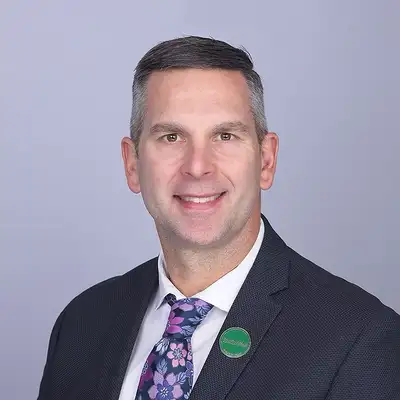
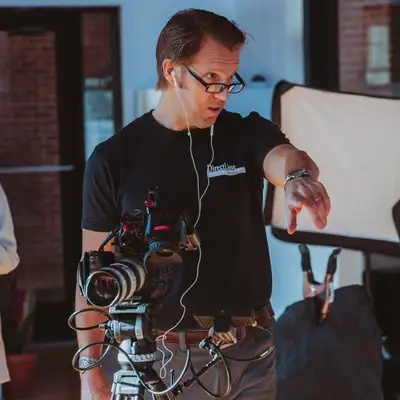
Eric Feeney talks with #friends! Eric is the founder of the nonprofit organization Friends of Feeney. Their mission is to help children and families who need assistance after heartbreak and tragedy. www.friendsoffeeney.com
All right, all right.
Feeney Talks with friends.
Episode 135.
This is great. I'm here with my friend
Michael.
Hello. Hello.
How are. You doing? I'm doing great.
Good. This is great.
Again, my name is Eric Feeney, founder
and president of Friends of Feeney.
Our mission is to help
children and families
that need assistance
after heartbreak or tragedy.
And I use this podcast.
Feeney talks with friends,
and I talk to wonderful people
that do great things in the community.
And Michael,
you do great things in this community.
Hartford, Washington, DC.
Lana.
Detroit. Houston, Japan.
Do I go on? Did I miss any?
A few, a few.
Amazing stuff, amazing stuff.
I'm very excited to talk to you.
Looking forward to it.
So, you know, I. What grade do I teach?
You remember? Third grade.
I teach third grade.
Very good.
So pretend you're talking to a third
grader.
You got it. Please explain. What?
Intellectual property.
What's intellectual property?
So I'm an IP lawyer, and intellectual
property is property that's intangible.
So we know what tangible property is.
That's a car.
That's a house. That's a piece of land.
An intangible property is property
that's really created within the mind.
And those, our patents and trademarks
and copyrights and trade secrets.
And that's what I focus
my legal practice on.
Okay. Well done. You down?
Yeah.
Now, so you took a business
from two lawyers to close to 100 lawyers.
How did that happen?
Hard work and smarts and and good looks.
Yeah. Mostly good looks. No.
No, I was, First of all, I was
in the right place at the right time.
You know, our our economy,
our global economy, used to be
just about factories and manufacturing
and all that, and it still is.
But starting in the 80s
and in throughout the 90s,
there was a transformation
globally where, where IP
intellectual property became
a real big driver of the global economy.
And I went to UConn law school.
I got out in 1983, joined a very small
patent and trademark law firm, an IP firm.
And, eventually the couple of guys
I worked for retired
and, myself and, another guy,
Phil Colburn.
We said, hey, let's let's take this firm
and let's really grow it.
And,
we wanted to create a global powerhouse IP
firm, which
which at the time seemed like a pipe dream
a little bit, but we had our heart set
on, on on growing something big.
And we we thought we could do it
out of Hartford, Connecticut, at the time,
the biggest IP firms
when large cities like New York or Boston
or San Francisco or Chicago.
And we had a new business model.
We we understood that, companies around
the world
needed to hire people like us,
but they also had limited budgets.
So we said, if we stay here in Hartford,
the cost of doing business in Hartford is
while some people think it's high
compared to Boston, New York,
San Francisco, it's a lot lower.
So we focused here in Hartford
and we ended up growing our firm.
There was about a thousand patent firms
in the United States.
So in the 90s
we were probably the 700th largest firm.
And now over the last 10 or 15 years,
we're consistently
in the top ten of the largest
patent trademark firms in the country.
That's amazing.
Amazing stuff.
Now, when you said tangibles,
can you give some examples
to, something that is like an intangible
that needed the IP?
Sure.
So almost any company who makes products,
whether it's software
or whether it's a car with a jet engine,
whether they do oil drilling.
Right, they they, all those products
and the processes,
they develop them
and they need to protect them
so that their competitors
will not copy them.
And the way you protect them
is through the patent system.
So a lot of our job is to work
with scientists, technologists, engineers.
And they can be at universities.
They can be at early stage startups
or the biggest companies in the world.
We work
with all those engineers and scientists,
and we draft literally
right up their inventions.
We send them to the patent office.
And then there's all this back and forth
and eventually we get
patents issued to them.
So hypothetically, say
a teacher taught this wonderful lesson.
Is that something that the IP
or is that totally off?
So so that's an, there's there's an.
Exciting. Area.
There's a gray area that's,
that the Supreme Court is wrestling
with is whether, like, business
methods can be patentable, or,
those kinds of esoteric things
can be patentable.
And it's hard to patent
some of that stuff.
It needs to be more,
in something more physical, typically.
Because I teach great lessons
and I want to make sure,
you know, I get the credit,
maybe I can get that.
But, you know, tools
sometimes that an a teacher
will come up with an interesting tool
that they use to help their,
their, their students.
And those kinds of teaching tools
can all be okay.
Yeah.
So when I do small group instruction,
say kids, I get the whole group
and then some kids need
a little extra support.
I'll bring them to the it's
a half moon table,
so I can sit in the middle
and work on all the kids.
Someone created a cloud table.
So each kid gets not just a circle,
but their own little area. Yep.
And they tried to patent that.
Yeah, but that's a tangible item.
That's a tangible item.
That's a table. Piece.
Not your deal, not your.
Don't we do all that?
Oh, you do that too. No.
We patent anything.
Yeah. Yeah.
We patent anything and everything
from software to.
Chemicals to jet engines.
And rumor has it that you,
Michael Kanter, created you.
Intellectual property litigation.
True or false? No, that is not true.
No, no, I I've been, actively
involved in intellectual property
litigation.
I, I didn't create it.
It's been around. Did you create a law?
This is from John Lyons, episode 31.
Say, let's see John Lyons.
What did John line say?
Man, I might be speaking out of turn.
What do you say?
I don't have it.
What if it comes to me?
Okay,
maybe we'll we'll phone a friend later.
That's right.
But you did mention Phil Colburn. Yes.
So our motto, be a good friend.
You see the bumper stickers around town?
Absolute signs.
So that's.
Hold the door for someone. Pick up
trash is not yours.
Give compliments. Be charitable.
What makes Phil a good friend?
I know is your coworker.
But what makes him a good friend?
Or is he a good friend?
Will Phil listen to this?
You know he.
Listen. He's a very good business partner.
And and he's been a and a longtime friend.
What makes him a good friend is that,
I actually hired Phil when,
you know, back in the early 90s
when we were a very small firm.
And what makes him a good friend
and a great business partner is
we had a vision,
we both had the same vision.
And, and we both really supported
each other as, as we grew that vision.
And I would say
that we're very different people,
but but one of the things that makes
a business partner or a friendship work
is to know
when somebody really cares about something
and let them go and do that,
and only push back if you know it.
Very rare circumstances
in both of us have given each other
the rope to,
to go in different directions,
always towards the same
when we knew that the vision was shared.
So trust,
keeping positive intentions and.
All of those and confidence.
In others. Work ethic. Right. Got it.
Wow. That's a good friend.
Oh, that's what it was.
Did you more or less create
the genre of Allen intellectual property
litigation within the legal community?
I don't no, no, no, no, I just yeah.
No, I did not.
How did you grow your firm to be
the one of the largest in that specialty?
Yeah.
So, you know, the more things change,
the more they stayed the same.
Growing a business today,
even with the internet
and with all the fancy stuff out there,
it's all about building relationships.
Personal relationships.
So one of the things I started doing
the 90s when we decided
we want to be bigger,
and we had a reason for it.
There were a lot of small firms like mine
that were being gobbled up
by general practice firms.
We wanted to stay independent,
so we knew we needed to be bigger.
So, I started getting on airplanes
and I started traveling and knocking on
doors, principally in Japan and Korea,
to try to develop, business there.
And, it it's it's hard to do that. Right.
You go there sometimes and you visit
with some law firms or some companies,
and you have no idea
when you get back on the plane.
Was that worth the effort in the time
and of course, the money.
But over time,
we developed some huge relationships.
Our largest client today is Samsung,
which is,
as you know, a huge Korean company.
And, so it was that kind of thing.
And then it was also
just relationship building.
So we would have, friends
who were, at a client,
a VP of engineering,
that person would go to another company,
and we had this personal relationship,
and then we would follow them to their
new company,
and we'd start doing work for them.
And then as we matured as a law firm,
some of our lawyers started
what we say going in-house.
They started going into corporations,
into universities.
And, they had great
had a great relationship with us
and a great time
working at Counter Coburn.
So of course, when when they got to
their new spot, they would bring us in.
So we grew continuously from the,
you know, in organically.
We never really acquired
any law firms for growth,
but we did it through
just being being nice people
to high and giving good, high quality
service, being responsive.
And also, as I mentioned, that business
model, having a good price point,
having it, getting a lot
of giving a lot of value to our clients.
Nice.
Can you name a couple other
popular companies that you work with?
Sure.
We work some Raytheon Technologies.
We work with IBM
and we work with General Motors,
Dow Chemical, and then we work
with a lot of universities.
We work with the University
of Connecticut.
And just, it's it's it's a very varied.
Yeah, clientele.
And we also do a lot
in the trademark area, too.
So, Ferrari is a client, and,
we do, work for,
Major League Baseball and.
A bunch of way.
Yeah. Okay. Yep, yep. The whole. League.
Or we do work for all the minor league
baseball teams we.
Do nice. For. Yeah,
include including our local team
in Hartford. Yes.
Hartford Yard goats. Yes.
So after this podcast,
I'm heading to Hartford Yard Goats.
And you have a phone call. With who?
With Samsung. Actually.
And what time will it be over there?
It'll be Wednesday morning.
That's amazing. Yeah. Good stuff,
good stuff.
I want to shout out some sponsors,
Keating agency,
insurance sponsors, the podcast
float 41, The Fix, I.V.
Luna pizza, golf law group, people's
bank, Parkville market.
Maximum beverage.
We're here now.
Beautiful places. And in. Here.
Oh, I love this place.
Our newest sponsor. Sally and bobs.
You ever go there?
Absolutely. Great spot. Helen and Cesar.
They were podcast guests recently.
And then West Hartford Lock.
So with West Hartford Lock
saying, what are three keys
that make you great at being.
Running?
I want to say co-managing partner, but
that we'll get into that next question.
A lawyer at Cantor Colburn LLP.
What are three keys
and make you great at your job?
Three keys. Wow.
Well, I
think
one is, I'm try to be very responsive.
So when my clients contact me,
whether it's email, text,
phone call, whatever it is,
I try to respond to them right away.
In the service business,
we're no different.
You know,
if you're a plumber in the in your,
you got a leaky basement and you don't
call, you don't respond to the homeowner.
They get mad, right?
Same thing in my business
where we're in the service business.
No different
than, a lawyer or electrician.
So I try to be really responsive.
I try to, be creative and cost effective
in the, in the,
in when I'm telling my clients
I, what I do is whatever my,
my issue, my client's dealing with,
I, I put myself in their place.
What's the best thing to do
given the costs of doing things?
If there's three options,
what would I do if I were them?
And I and I try to push them
to do the best thing for them, it's
not about how much money I'll make.
It's about what's best for my client.
Because at the end of the day,
I want to grow old with my clients.
And you don't do that unless you give them
the right advice all the time.
Not just the advice.
It puts more money in your pocket.
And I would say the last thing is, I'm
just try to be a human being with them.
I just try to be their friend.
I want to, you know, because my clients
are, like, really good people.
And I want to get to know them
and get to know their issues,
get to know their families,
get to know what's driving them,
what what their desires are,
where they want to be in 5 or 10 years.
And and when you're a real with somebody,
it's not just business.
I think people really like that.
Very nice.
So time cost and being a good friend.
That's right.
Time. Time is money.
And we're going to talk about that.
So your role changed
what happened on December 31st.
Right. Right. And why
why did that happen. Yeah.
So I will I'll go back to the 90s
when, Colburn
and I, formed this we had taken over it.
We were working for a firm,
and the two guys retired,
and we were looking out into the future.
We said, we want to grow this firm,
and at some point, there's
going to be a lot bigger than we are.
And what I saw at the time
was that in a lot of law firms,
especially IP firms like mine,
guys and women.
But would,
you know, would be in their late 60s,
their 70s, they're still working
and you had other
lawyers at the firm were saying,
you know what?
I'm never I like the leaders of this firm,
but they're never going to leave.
I'm never going to be able to spread
my wings.
I'm never going to be able
to take the firm in some other direction.
And so what would happen
is a lot of these firms sort of blow up
because lawyers that are 52 say,
they say, you
know, I'm never going to be in control,
I'm out of here.
I'm going to take my book of businesses
leaves, okay.
And we said, we don't want that to happen.
So we're going to so we're we wrote into
our partnership agreement back in the 90s
that at the end of your when you the year
you turned 66 at the end of that year,
that you will no longer be
an owner of the firm that you were retire,
you could still work for the firm,
but you don't own it anymore.
And so as we started
growing and new partners came in,
they all knew that at some point, Kanter's
leaving, Coburn's leaving, and everybody
else will leave at that age
so that the younger, quote
unquote, people will, will be able
to spread their wings and take control.
Something to look forward to. Right.
And and at the end of the tunnel.
Exactly. For it's interesting.
People like to know that someday
they can control the situation.
So that's what we wrote it in.
It seemed like 35 years.
Later that'll happen.
And it honestly seemed like
it was never going to happen.
It did.
And they did on and December 31st.
So as of now, because of your birthday.
Yeah, my birthday,
I turned 66 last year. Eve.
No, no, but it's the year.
It was the year you got you got
you got you at the end of the year.
Yes. Yep.
So. It's a little bit
hard. It's been my baby.
I know it's been my baby. So it's it's.
You know, it's mixed a mixed blessing.
I, I know
it's the right thing to do, but,
and I've got a lot of other things
on my plate which keeps me busy, so.
But that already happened to Colburn.
Not to. No. He's a year younger.
It's going to happen to him
next, you know.
And do you.
Have someone already filling your shoes?
We have a group of other partners.
Process.
Oh, there's a group of other partners
and they will vote on on leadership
as things go.
Oh it's a vote.
Yeah. Amongst the
the partners. Right. Wow.
And what are they looking for
when they vote.
Or I.
Think clones of my can
or I would. Say no I don't.
They're going to look for
you know what the best people to lead the
firm into the future.
That's amazing.
Yeah, that's almost like
a principal saying or,
you know, superintendents like, all right.
Age wise.
I mean, that goes to being term
limits and age limits on a lot of.
Things it does. Right.
Yeah I think it's a healthy thing.
I think it's healthy too.
So I think that's wonderful that you did
that commend you because.
Yeah. You're handing over your baby. Yeah.
Now does that change with
not to get personal, but like
how does where does that fall?
And being an owner and a lawyer
I'm thinking pay right away.
So what's pay
still getting paid the same or do you.
Yeah it's it's it's different.
It's different.
Yeah. Yeah. Interesting.
Interesting. Wow.
Did I miss anything
about intellectual property?
How long
can you talk about intellectual property?
Oh, I could go on forever.
You know, I taught
I taught patent law for many years
at UConn law school,
so I could just talk forever.
So it's it's what I've done.
My whole my whole 40 year career.
Nice. Yeah. What can I get paid?
You want to get something patented?
Well, you've got it.
You've got friends of Feeney.
Get paid and be a good friend.
So, you know, besides patenting,
we do trademark work, right?
And trademark
is, is a is any kind of a symbol or a word
or phrase that designates your goods
or services and distinguishes them?
Get the. Little T on the. Surface.
Yeah, that little that are in the circle
are the TM.
The TM means you've that you're
using something as a trademark.
The R in the circle
means it's been registered,
you know, through a firm
like Cantor Coburn.
But a way to protect, you know,
like you could with the Feeney thing.
You could probably get
that as a registered trademark
and that you'd be able to stop others
from knocking you off.
I'm sure everybody wants everyone.
So we're afraid the feeling
is the knock off friend, the Feeney.
Yeah.
What are the pros
and cons of getting something trademarked?
There's no there's no con, okay?
It just it's just it's just like patents
in that patents protect you
from your from your competitors
copying your products.
Trademarks
protect you from your competitors,
copying the names of your products
or the name of your company,
or the logo you use, or a phrase,
a tagline that you might use.
And it it gives you a tool to go to court
and say, you've got to stop using that.
Interesting.
Because you're causing
confusion in the marketplace.
Because someone went to London
and there was like,
I think it was like, be a good friend.
Chinese restaurant in London.
And someone said, hey Feeney,
you should sue.
Yeah. Joking.
Yeah.
But but just so you know,
all of these things patents, trademarks,
they're only when you obtain them,
they're only good in the country
that you apply for them and get them.
So, so for example, our firm for our U.S.
clients, we obtain patents and trademarks
in countries all over the world.
So I hire other
IP firms in England, in Korea,
Australia and China,
right to cover that country and those.
And that's by the same token,
those law firms
and all those foreign countries
hire me to do it here in the U.S..
So I'm going in.
May I go to, something called
the International Trademark Association.
There'll be 15,000 people in San Diego,
lawyers, patent and trademark lawyers
from around the world.
And then we come and
a lot of those lawyers
I do business with, I send them work.
They send me. Work. Nice. Yeah.
Okay. Yeah.
You take care of me in London,
I'll take care of you.
Sure. Yeah.
Interesting, man.
I'm learning.
See, I'm a lifelong learner.
I tell my students
that learn something new every day. Right.
Was this around? So I grabbed I in 1989.
I was in eighth grade and my eighth grade
year book I wrote. I want to be a lawyer.
Could I
have written an intellectual property.
Was that around.
Yeah.
So IP I mentioned is patents, trademarks,
copyrights, trade secrets.
What's kind of interesting
is the phrase IP.
Okay. Really started
like in the mid to late 80s.
So when I first got into this,
I was a patent attorney,
that did trademark law
on some copyright stuff.
Okay. Nobody used IP.
And then all of a sudden it became a thing
when the global economy,
was supercharged
by intellectual property.
That's when that phrase really came in.
So, I mean, if you Google IP,
maybe it shows up in the 60s.
I but but not much.
It really became a phrase,
I would say in the late 80s
and then not throughout the 90s.
Yeah.
That's when all of a sudden I started
referring to myself as an IP lawyer
and not just. A patent attorney.
Interesting. Yeah.
Well, we'll get we'll get back to IP.
My next question.
You may know how it's related.
Can you do a cartwheel?
Well,
I'm married to a woman who certainly can.
Do a cartwheel.
Who? Just yesterday I'm married
to the mayor of West Hartford. Yep.
And I must say, the best mayor.
Yes, I was going to say
the state of Connecticut,
but I'm going to go more broadly.
The United States of America. Nice.
And certainly the only one who.
Does cartwheels, as far as I know.
But, yeah, just yesterday.
She she had a full day on her plate,
and she threw out the first pitch
for Little League.
And as soon as she throws the pitch out,
she does a series of cartwheels
to go off the field.
And then later that morning,
we, the girls softball
league started their,
their season.
And she threw out the first pitch
there. And again.
They show a series of cartwheels.
Yeah, yeah.
You knew exactly where I was going
with that. Yeah.
Every parade cartwheel.
My 100th podcast.
I have it at Playhouse, Park.
And you know, I'm thanking everyone.
Thank you. Carrie Army.
You want to come back
and I instead of say, say a few words
like, oh, do you want to do a cartwheel?
Without thinking?
Without question, she just wome cartwheel,
high heels and all.
You know,
that goes back to the fact that in
she went to a whole high and at all high,
she was in she was a coach, coach,
co-captain of the of the girls,
the girls, all high gymnasts gymnast.
Okay.
And she was a really, really good gymnast.
Oh. And and and then over the years,
I'll say two things.
One is whenever we were.
She loves cartwheels.
And whenever we were in a hotel,
that had, like, a long hallway,
with all our kids and everything
she would do, like, cartwheels
all the way down the hallway
if nobody was looking.
And then also when, when our kids
would play one time when our kids
were playing basketball at Hall,
during one of the leagues,
she did a cartwheel.
It's winter. Wintertime.
She had these big boots on with,
like, long heels.
And she slipped
when she did the cartwheel.
And she actually ended up, injuring her
elbow.
Oh, no.
Yeah.
And and ambulance had a combo, so
the cartwheels can be troublesome for her.
And she still does them, too.
Oh, she don't give up. No, no.
Yeah. I, taught again.
Teaching third grade.
My two students, one
sing the national anthem at the softball.
And she was a maid. She goes.
And the mayor was there, and she did
a cartwheel in the dirt in her high heels.
Yeah, I was like. Oh, I know.
Oh, and that girl did a great job.
And yeah, the national anthem.
That's my student.
Oh, she's. I have the video.
She was very cute.
All right, I'm telling the camera
I'll show runner very cute.
Congratulations on the national anthem.
That was so good.
And, another John Lyons quote.
John Lyons says
as Mayor Sherry can see around corners.
What do you think he means by that?
Well, she has superhuman vision,
so she actually doesn't
see around the corner.
She sees through the walls.
So, I think that you means
that she, anticipates
the needs, of the town. Yep.
Going into the future.
I mean, and there's so many examples.
And just when you see all this housing
going up, you know, she saw some years ago
how critical, so many people
wanted to move into the town,
and there wasn't enough housing.
So many, seniors wanted to leave their,
sell their, their bigger homes.
But there was no housing
for them to go into.
They wanted to go into a smaller apartment
or a condo. So.
And she understood that
if we had more housing for even
for our seniors
who wanted to sell their homes,
they would move in the housing,
still stay in town, and younger
families could move into the houses.
They're leaving.
And then, of course,
all the young professionals
that want to live here,
there wasn't enough housing stock.
So she has really pushed
to make that happen.
And at the same time, of course,
it's it's helping and it really will help
in the next couple of years to grow
the grand lifts or grand list of the town,
which, really will help the taxpayers
to help with subduing the burden
that taxpayers have here in town.
We have an exclusive
taxes will go down in West Hartford.
Well, heard of here? Someday. Someday.
There we go.
But this is going to really help.
Always have a job
because kids will compete moving in. Yeah.
So that's all. But all these buildings
you're seeing, they're not.
And you know, once they come online
they pay substantial taxes.
And and that's really going to help lower
the property taxes
for or or help
with property taxes for rent. No.
Right. By French cleaners.
There's two huge ones.
There's that Farmington. Yeah.
That's going to be huge
like a lot of people.
Right.
And then Sherry had had something to do
with those.
She has to want to do. It
behind Luna Pizza.
All the economic development
in tennis. Great.
She's really involved in. Yes.
Well, if you want to learn
more about Sherry, she was episode 35.
And you notice Michael is episode 135.
Yeah.
So 100 podcasts
it took to get from Sherry to Mike.
Well, listen,
that's something about you. Or versus.
Everything about me.
I just ride her coattails.
My claim to fame is I'm
the husband of Sherry Canter.
That's. That's about the best thing.
Oh, great.
And, so do you offer
do you offer suggestions, advice to mayor?
You do you let her do her thing?
I will, don't listen.
We we have a we have a
I will say we have an amazing marriage.
We're very close.
We're each other's best friends.
And we do we do share,
you know, some some marriages.
People don't know what's going on at work
and vice versa.
That's not us.
We share a lot.
So, when I said about growing my firm
and all that getting on airplanes,
there was
there was something that I didn't mention
and that is
that Sherry was always by my side.
So I would go to international conferences
and there's,
there's one that I'm going
to, in San Diego next month.
Sherry comes with me to all those
and my clients around the world
like Sherry better than they like me.
So she's really helped me
grow my firm, without question.
And by the same token, I'm
I'm really trying to support her
in everything she does.
You know, we're
both on a lot of other boards and things,
but with the town, I mean,
I watch every town council meeting.
Sometimes I text her all kinds of things,
you know, because I see her face.
Sometimes I see her
look down at the at the,
it's sometimes
I'm texting things that are inappropriate.
And she looks down
and I get try to get a smile out of her.
So, Yeah. So.
But we really. Do support. Each other.
That's amazing.
Yeah. You're a power couple.
Sure.
To both in the Hall of Fame at UConn.
We are.
I don't I'm
I don't know
if there's another couple there,
but maybe there must be or I'm in the
the School of Engineering Hall of Fame
and she's in the School of Business
Hall of Fame.
That's fantastic.
Yeah, yeah. That's great.
Yeah, we bleed blue.
Just for the record.
We're we're. Huge UConn. People.
So can you get Geno or Hurley
on my podcast?
I'll work on it. All right.
We're really.
Sherry has more pull than I think
because Sherry is a trustee
at the University of Connecticut.
So both have verbally confirmed with me.
I saw Hurley at the Children's
Community Gala in Hartford,
and I say, hey, I give him the spiel, hey.
Coach. I'm Eric Feeney.
I teach third grade.
I do a nonprofit.
It's called Friends of Feeney.
We help children.
He starts slapping me on the chest.
That's good. Beep.
That's good.
Yeah. And I'm like.
And I'm like,
so will you come on the podcast?
Yep, definitely. How about. This?
How about Hurley's wife?
Would you like Hurley's wife on the.
That'll work too.
Because she works with Sherry.
Sherry?
She and Sherry are together on the.
The, Children's hospital.
Yeah, she's.
Really involved. With that. Yeah.
She has.
It's Sherry. Sherry. Cheers.
Okay. There. They're.
They're board for raising.
She's good friends with Matt. Me.
Matt, me.
My friend Scott, Matt and his wife runs
the children's
community hospital,
so she's good friends with Hurley.
Andrea. Is it? Yes. And she.
And she's a hoot.
She would be great. Okay. Podcast.
Center up.
Let's do it, coach.
And then Geno also said too.
So and I joked with Geno
I go Geno, will you come on the podcast?
Hurley said he would
and Lobo said she would.
He goes, oh that's great.
You got one that speaks English
and one that doesn't.
And I was like, Geno never misses.
Yeah he's hilarious.
So yeah big bleeding blue.
So you went to four Final Fours in a row.
Yeah. Yeah.
We were in Tampa
that for the women's just now.
We did the two men's before that.
And we were at the women's before that.
That was in Minneapolis when they lost
to South Carolina in the finals.
So you definitely bleed blue.
Oh yeah. Yes. Four Final Fours.
And then two of your kids went there.
Two out of the four. Yes.
Yep. My son Ben, who is a trademark
attorney at my law firm,
he went to UConn undergrad
and then UConn law school.
And my son Josh, it went to,
the School of Business, got an MBA.
Nice.
And what are your other two kids? Who?
So the other two boys, the two boys
I just mentioned live here
in West Hartford.
The other two boys live in Chicago. My.
And they both went to Tufts University.
And my son Sam is a singer songwriter.
I know what he's got.
He's. It plays in a few bands,
but he has his own band.
It's called Minor Moon.
Minor moon. Go on Spotify, check it out.
Great music.
Is it indie? Is an indie rock band.
And my other son, Jacob, is a lawyer,
working with, and,
working with housing issues in Chicago.
Nice. So two in Chicago.
You gotta go. The hang out.
Are they near each other?
They hang out.
They are very close.
All four of our sons are very close.
They love each other, see each other
whenever they can.
And the two in Chicago
definitely hang out together a lot.
That's amazing. Yeah.
I have my sister in law has three boys.
I couldn't imagine four boys.
They the youngest slaps the oldest.
He goes, cries, tells and and you know
they he the oldest gets yelled at.
The youngest goes back in fights.
The oldest again
I'm like you just complain. Ready. But
it's just crying breaking stuff I'm sure.
Is that. Was that the experience.
I tell you they they would.
Know hit it pretty. Good.
Yeah they were. Pretty good kids.
My oldest son, Josh, is was,
you know, sort of they took his lead.
He was a really sweet little boy.
And they
it was not as bad as one would think.
Yeah.
Four boys, but they.
All credit to the West
Hartford school system.
They went to Morley.
That explains. It. Yeah.
And that's why.
They had great teachers and.
Great education. They really did.
Only they only hire the best out here.
Only the best. Yeah.
Which goes to set humble brag.
But this also brings it back to Sherry.
And I'm just an amazing person.
A couple years ago
I was a finalist for teacher of the year.
Unfortunately didn't get it,
but it was still an honor and I'm so proud
and humbled.
I got a handwritten note mailed to me.
Open up, Sherry Kanter.
Congratulations, Eric.
You do so good in school
and such good things for the community.
So it really meant a lot.
And that just shows
what kind of person and mayor she.
Is like.
Yeah, I will tell you.
I mean, to that end,
whether it's handwritten notes
or whether it's responding to emails
from constituents, she does it.
So like at night
where we'll be watching TV
and like she's buried in her phone
and it's not because she's shopping.
I and I'll say like,
what are you doing, hun?
You know, because we're watching the show.
And she's like,
I got to get back to these people.
And that a lot of times it's things
that would be unpleasant to get back to,
you know, somebody
complaining about this or that.
And, but she, she feels it's
so important to respond to everybody
so that everybody knows that they
she hears them.
That's amazing. Yeah. No.
You want to make sure every
like a teacher or a parent when I do
teacher parent relationships are students.
You want to treat everyone
like a VIP, right?
So everyone gets your full attention.
And if they have an issue or an email,
you try to get back to them
at the best spot.
I think that's so important.
I know in my own career,
whether it's, you know, the janitor
that's cleaning up your office at night,
you treat everybody with respect.
In my clients, you know, it's
not just the vice presidents
or, you know, or the top engineers,
but it's the admin.
It's everybody in that client.
Every single person
needs to be treated with respect.
And not only does it
pay dividend for your business,
but it's the right thing to do.
Interesting.
So as a politician in the digital age,
some people get a lot of backlash
on social media.
Do you do you feel like.
I mean, sometimes it's it's
mostly always unfairly treated.
Do you offer suggestions?
How does she feel about that
or do you see it?
Do you hear about it?
I do, I do. There's not.
Me. Quite frankly,
she's pretty well liked.
Yeah. And rightly so.
And so it's not as bad as I'm sure it is
for some people, but it's out there and,
I, I think the mostly the best thing to do
is completely ignore it and not engage.
She's really she's really good at
ignoring it and not engaging,
because I'm a lawyer, maybe.
And I just.
And she's my wife, and I love her,
and I get pissed off.
I'm the one who says, don't you?
You can't let that go unanswered.
You know, whether it's a letter
to Weehawken or something or some other,
something else on Facebook or.
And she's really good at
just letting it go because it goes away.
And I
if it was me, I would be engaging more in
it would not be pretty and it would not be
the right thing to do long term.
Yeah. But she, she, she gets it.
It's tough as a public figure
or a politician.
You're always
there's always gonna be haters.
Oh yeah. No, no.
So I mean when I taught my course
at UConn for many, many years
and they get the evaluations, you know,
if you have a class with 28 people,
you're not going to get 28.
People said you did great.
You know, there's always a couple people,
right? Mad at this?
I used to bring my four boys.
I used to bring them to the final class
of the year at UConn Law school,
because I would bring in food and we would
it would be more of a question
to answer
about getting ready for the final exam.
And I'd bring my boys in and I, I remember
I even had like an evaluation
where they said,
I don't think it was appropriate for you
to bring your kids to this and like.
Are you kidding me? You know,
and it's like.
Yeah, next time I will bring food
either. Right? Right, right.
Yeah. Back to UConn.
So you serve on the engineering advisory
board.
You are an adjunct professor
for more than 20 years,
so you're no longer doing that.
Right? Okay. Right.
Former
member of the UConn Foundation. Yes.
Bleeding blue for good. Yes.
I was one of the founding members.
That was the no.
That organization now
has been merged into the university
because of the change in the law.
But I was a founding member
of that group, Bleeding Blue for good,
which was the first official Nil group,
to start paying playing our athletes.
Yeah. What's your take
on paying college athletes?
You know, it's funny, I was just talking
to guys at lunch about it today
because everybody is talking about it.
You know, I, I don't have a take
because it's it's the reality.
Yeah. It's this is here to stay.
It's it's completely changed the game.
It's changed how coaches coach. Right.
Because now
at the end of their professional coaches,
now they got to restock their team
at the end of every year.
Really all these players
are on a one year contract.
If you will.
Are there parts of it
I don't like? Of course.
Are there parts of it
that that I think are the right thing
to do for these players? Yes.
But it's just when, you know, when the,
when the train has left the station,
there's not much of a point of saying,
oh, I want to go back to the old way
because it's never going to happen.
It is what it is.
Yeah, right. Agreed. Okay.
The Dean's advisory Council
for a school of engineer.
Right. School?
Yeah.
Actually, we have, dinner Thursday night,
and there's a new dean of
School of Engineering.
We have a meeting all day on Friday
with that. Right.
Nice bleeding below.
So, yeah,
my girls are juniors, and they're.
They do, what's it model un every year.
Oh that's great.
At, UConn.
So we go and get the tour.
They really enjoy it.
One's really interested in attending.
So we'll see.
Maybe I'll be bleeding blue soon too.
I'm twin girls
so they do mock trial model U.N.
Unified Theater Student Council.
That's why all the fun stuff.
Yeah.
And you know, UConn is,
a phenomenal school.
It's that great value.
Definitely growing.
When I was in high school
looking at UConn, it was like,
I feel like it was a farm.
It was in the middle of the woods. Yeah.
And now it's like a beautiful campus
and just it's what's changed in a lot.
When I went there,
my parents didn't really have much money.
And so back then,
if you were a good student,
you were going to get in no matter what.
You know, that's completely changed.
It's much harder to get in and,
so when I was a senior
and I went to Ellington High School
in Ellington, Connecticut,
my parents said, we can only afford UConn.
So I applied to a single school.
I applied to UConn.
I knew I was going to get in,
it was just a real different era.
I applied to one school to, oh, did
you live in Connecticut State University?
Okay.
Same thing I,
I, my parents really can afford.
I joined the Army National Guard, went
away for six months for all the training,
and I promised for six years
I a week and a month,
and I got the GI Bill tuition waiver.
And yeah, my buddy Jeff was at southern.
I said, I'll go there.
It's great. I applied to one school.
That's cool.
You do apply to one school, too?
No. Great stuff going on.
How do you balance the work?
Life, you know.
Yeah. Family. So work. Travel.
I will tell you that,
I was a little nervous when I took this
new turn from the law firm
because, you know, managing a law firm,
it's every single day emails,
you know, cash reports, all that stuff.
I was a little nervous that I would.
Would I fill my time
appropriately and be happy,
but I've got a lot going on which
I like to be busy, so I chair some boards.
I'm chairman of the board
of Connecticut Innovations.
That's the state's venture capital fund.
I chaired the board of the Connecticut
Museum of Culture and History, in the West
End of Hartford.
I'm on the Greater
Hartford Jewish Federation board.
So, those.
Those.
Keep me really busy
and keep me really interested in things.
I'm also in, quite involved
in a couple of early stage companies.
Once a
technology company, once a restaurant.
And so that also keeps me busy.
So, I like that I need to stay busy.
So I've got that in between.
I'm trying to take bike rides,
see my grandchildren.
But what about a soccer team?
Do you have a soccer team?
I do, I have a small interest.
In a soccer team in Italy.
Yeah. So nice. Yeah. Why?
Why Italy?
And what are you, Italian?
No, no.
The worst investment I ever made.
But, A good friend.
A good friend of mine.
Got a group of guys, I
when I say I have a small investment,
I it's infinitesimal right there.
A couple of really wealthy New York
guys, bought a team, in Italy and,
and then.
Do you have a jersey?
I do, and then and then,
and then a few other
a bunch of other people came in
with very small amounts, right.
So and they were in, you know, they have
series A, B, C, D, they were in series C,
and now they actually are now in series B,
they went up.
Oh. Because if you win, you go up.
Yeah. Yeah.
Exactly. Just like,
how many more do they have to go up.
Well if they, if they went up
to the next one to be the top one.
Oh no way. Yeah. Like the. Premiere.
What's the name of the team.
Yeah. That's good. I'm like losing. The.
You're like LeBron Brian has stake
in a soccer team LeBron James.
Yeah we're like what's the team in wax.
Oh and then Ted Lasso and
Deadpool.
The guy plays. Deadpool. Yeah exactly.
Yeah yeah that's awesome.
Just like all of them.
Yeah I know you, Ryan Reynolds. That's it.
You got that wrong. Look on YouTube.
Yeah. That's it.
Good looking. Do that.
Yeah, yeah, yeah.
No, it's great though.
You're busy.
Busy. And, just an interesting life and.
Yeah.
And I was just actually in India,
a month ago with our governor,
with Governor Lamont, as as board
chair of Connecticut Innovations,
our state's venture capital fund.
I went to India with the governor,
and we went to a whole bunch
of cities and met with all kinds
of companies, big ones, small ones.
That was great.
I know my I have students, big time
Indian population, and I have houses,
and I'm open and I'm invited
to go to India to stay with them.
And I might take them up on it.
I want to learn.
Is it your first time over there?
Second, how.
Many times I've been to India about,
I think 3 or 4 other times.
We have clients in India.
We do a lot of work in
India, has a huge pharmaceutical industry,
on the generic side.
And we represent a number
of generic drug companies.
And I also represented,
Agricultural Chemical Company.
So I've been to Mumbai and I've been to
some other cities before, but never with.
It's different
when you travel with a governor.
How's net.
Net good.
Net net travel with net just great.
I out a couple of years ago a net and I
and another group went to Israel
and and another business development trip.
So it's fun to travel with net.
He's a he's he's a very, very nice man.
Very down to earth.
And what you see on TV is what you get.
He's just a very good guy.
I got multiple emails
going back and forth with Carmen Colon.
She's his scheduler.
Okay. Can I come in on the pod?
Get him in here.
I'm going through you now.
All right,
Michael, we're going to make it happen.
We got Hurley, Geno.
Hurley's wife, Hurley's wife?
Yeah. And then Governor Lamont. Yeah.
He's a friend of Feeney.
I'm multiple pictures with him.
Going back to when I worked at the.
Oh, well, as a teacher,
I worked in the CA, the Connecticut
Education Association,
but I was a local political coordinator,
so we helped elect politicians
that would help and support teachers.
So we would meet in Hartford
and interview everyone.
So I interviewed Ned and Dan Malloy.
At that time they went with Malloy, but
Ned came back to following and was hired.
And he's doing a great job,
so I'd love to talk with him.
He's a good, good guy.
Let's talk about recently. So I. Yeah.
You brought up I was going to say,
hey, recently you went to India with Ned.
And then just most recently
Saturday night, we were hanging out.
Yeah, we were.
Hanging out together.
Yeah. We'll show a picture.
This is where the picture is going to go.
Stephania boom. Me.
Me in the middle.
Michael and Victor.
Victor. Me Michael. Okay.
I'm dressed up.
What were you dressed up as?
Billy Joel?
You were Billy Joel.
I see it now. Yeah yeah yeah yeah, yeah.
I joked to it.
Yeah,
I was a rock star, so it was Pop Rocks.
What an amazing event.
It was incredible.
So fun.
The people who were singing that,
the voices were.
Just so super.
And then, like, it was like American Idol.
They brought a new person
to sing a different song, right?
And then.
Then they would give an award.
New person sing. The food was great.
They. Had, It was a beautiful venue.
I had never been there before.
I think it's a pretty new venue and.
Brand new Bristol Event Center.
I think it's called honors prom is going
to be there at the end of the month.
No first prom that they're ever
hosting is going to be Connor kidding.
Yeah. And we were there first.
Yeah.
Of course the Playhouse on Park
is such a phenomenal.
Amazing, amazing. Yeah.
So as you can see,
Pop Rocks was the theme.
So everyone dressed as rock stars.
I guess last year it was the Roaring 20s.
People dressed like that.
But it was a great event.
I'm so happy to go.
Tracy Tracy does
wonderful work at the Playhouse.
Park. She's a good friend.
Thank you, Tracy,
for everything you're doing over there.
I hope you raised a lot of money.
We had my 50th podcast,
at Playhouse on Park. No.
And my 100th podcast.
I had Harvey Air Cologne saying.
Oh, that's great.
Frank Whaley.
Frank Whaley plays
Moonlight Graham and Field of Dreams,
and he also gets shot by Samuel Jackson
in Pulp Fiction. Wow.
Frank Whaley.
So he was my also
the guest at the hundredth podcast.
Great.
But, they were
so you know that the lights, the sound.
Tracy.
Donated all the revenue
raised to Friends of Genius.
So thank you again. Tracy.
Thank you for such a wonderful night.
I mean, the food, the drinks.
The raffles were great.
It was fantastic.
I want to raffle check this raffle out.
I won at AC Peterson.
I get to put a food on the menu.
Oh. That's cool.
Isn't that great?
What are you going to call it?
Fries with Fini.
Nice little friends of Fini.
Fries of fini, fries of Fini.
So it's going to be fries.
And this is all brainstorm?
Yeah, you're going to me
how we talk through this. What do you.
Yeah, yeah, we can try to patent it.
Oh, yeah. Yeah. See, now we're talking go.
But I am going to have to charge.
You starting, Now go look.
At his watch, I love it.
I got to talk fast.
Is is like Shark Tank.
Fries in an ice cream,
and you dip the fries in the ice cream.
I love that. Done. Fries a fini.
That's pretty good, right?
Oh, yeah.
Yeah, dude, it fries salty. Sweet.
Everybody loves all of that.
So you ever dip a frying the ice cream?
I have not.
Oh, that's the move, Nicole.
Come on, you got to try it. We'll do.
Good stuff. So. Yeah.
Thank you.
I'm so excited
that I won that I tried to win Billy Joel.
But then didn't win.
My friend, my buddy Rob friend won.
He goes, I go, congrats.
He goes, I didn't win,
but I'm the plus one.
I got lucky.
My wife and I just went to a Billy Joel
concert two months ago.
Oh. Nice sun.
Oh, Mohegan. Yeah. We.
And we wanted that, you know,
Sterling physicians, you know, that's,
a group around here.
They have a foundation,
they raise money to do good things.
And we went to the their foundation
dinner gala, and we won the.
Billy Joel tickets there.
I saw him at Hartford, a while ago.
Hartford?
Oh, yeah, XL center.
Yeah. Well, he's great,
even though he's old.
Older than me, even. But he's great.
I mean, talent,
you know, once you have it,
I know it takes a while to lose
Mick Jagger still out there, right?
Billy Joel's still out there.
I'm sure Willie
Nelson's still out there doing something.
No good stuff.
Smoking pot.
The piano man.
Yeah, I was singing along
when they did the Piano Man.
That's that's a go to.
You got to sing along.
So we talked about Playhouse on Park.
We talked about Ned.
Oh, I always talk.
Do you have a favorite restaurant?
I know it's going to be tough
because, you're eating out a lot,
but it doesn't have to be in West
Hartford, right?
To be anywhere in the world.
You're, well, travel guy.
Yeah, yeah.
Where'd you eat in India with Ned Lamont?
We ate, all over.
We ate mostly at,
I guess we probably mostly ate at, hotels
we were staying at, you know, in India.
You got to be careful. Where you eat.
Yeah.
Because otherwise it's easy to get ill.
You know, if you just eat
in any restaurant because you're are.
You don't get the street food.
Do not get the street food.
No. Because, you know, in the water, too,
you have to be really careful
because our systems aren't
aren't red, you.
Know, adjusted to the, Indian. Stuff.
Well,
I like so many restaurants, here in town.
Name a few.
I like Max's Oyster bar. Very nice.
I like Brickhouse.
I mean.
I like them all, you know, and,
I like them all.
My wife likes them all equally.
She loves them.
That's a good answer. Yes, yes.
And I.
Like what she likes,
you know. Happy wife, happy. Life.
I love it. So that's the motto
I live by. That's it man.
So you're eating
at your favorite restaurant
and you can invite four guests, dead
or alive.
Wow. Who you in with?
Four guests. Dead or. Alive? Anyone?
Anywhere. We in? What?
Well, I'm going to invite.
This is I.
It doesn't sound exciting.
I'm going to invite my grandmother,
Betty Bassett.
Okay.
Who I was very, very close to. And,
I would love to chat with her
for a few minutes.
I hate to say this.
I'd also invite my dad.
Who died in, in, 2001.
And I'm like, keep mr..
He was very involved
watching my business grow, and.
He missed so much of it.
So. Yeah.
And then I guess I would invite some,
who else?
What I invite maybe,
I think maybe John F Kennedy.
Okay. Yeah.
It's a good one.
Yeah, maybe John F Kennedy,
because he was, And maybe
I love politics and all that, so
I maybe I would invite Franklin Roosevelt.
Okay. Yeah, I'm going to. Go with that.
It's a great. Dinner.
Yeah, it's a great dinner, grandma.
Yeah, dad.
Yeah. JFK FDR. Yeah.
Love it. Okay. Love it.
And then me being a teacher
for 21 years, do
you have a favorite teacher that inspired
you or someone that stands out?
I had so many great teachers.
You know, I went to this small high school
in Arlington, but it was fantastic.
I had I got a great education.
I, you know, and then
but I would say in college,
I majored in chemical engineering.
And there was one professor in particular.
His name was Jim Bell, and I was
I was doing
I was in this honors program at UConn,
and I was able to
he worked in a place
called the Institute of Material Sciences.
He was an expert on epoxy resins,
and I got to work in his lab
with a bunch of graduate students
for a whole year.
And then because of him,
I got interviewed by Shell Oil Company,
and I took a job in Houston with them.
But this guy, Jim Bell really impacted
my life in many, many ways,
and helped me in my career
as a patent attorney.
Patent attorneys
all have technical, technical backgrounds.
Every patent attorney you meet
is an engineer or,
or a biotech person or a physicist.
All of us, you have to be we have to take.
Especially now you're.
Reaching out more, right?
I said,
I read an article, it non it used to be
a lot of engineers and scientists,
but now you're doing, non-organic.
So I was like, just reaching out,
like everyone has to have that special.
Oh yeah. Absolutely. Absolutely.
Software engineers.
Everybody has to have something. So.
So your team is like
almost like the X-Men.
Everyone has their own. Well,
yeah, exactly.
So when we hire, we never just say
we need a new patent attorney.
You say I need a
an an electrical engineer.
I need a software engineer.
I need a small molecule chemist
or I need a polymer scientist.
That's how we hire.
Yeah.
So then so when we. It's
very. Specialized.
Yeah. Well,
learn something new.
Is it too late for me to.
You know.
It's never too late.
A third. Grade teacher.
It's never too late. Well, you can be.
You can become a trademark and copyright
lawyer. Just.
You got to go to law school, though. Okay?
You can go.
You can go at night.
You can has a great evening program.
How long would that take me for years.
Okay. Yeah, but you can keep your day job.
I know my buddy is a teacher, Shawn Mosley
in Waterbury did it.
And he's like, Feeney,
you can do it. Oh yeah.
And then my kids I again
I wrote it in eighth grade.
You're the kind of.
Yeah exactly. You said in eighth grade.
I can't like you can still. Fulfill
that. Dream.
I have to.
I'll be your mentor if you. Want.
Oh now I love it.
And I'm. I'm motivated. Okay.
My daughter wants to be a lawyer,
so maybe it's a race.
She's a junior in high school.
I'm 46. Who's going to get it first?
Yeah. That's right.
All right.
For years.
That's it. Yeah. At night.
At night. Right. Three years.
If you like a thesis.
Is there a big test?
No. Oh, they're just the bar exam.
Bar exam? Yeah, I got to. Yeah.
I got my principal degree.
I got my 092. I could do. Oh that's great.
So I.
Got my administration
a supervision six year.
Degree.
I could do that
I don't know
it might be too old for school.
I love it, love it.
So we did favorite teachers is your
is your favorite teacher Jim Roy Jim.
Jim Bell.
Jim Bell. Is he still around? No.
I was going to say we love to share.
We love to share.
You. Know, you get to be my. Age.
All those teachers you had,
most of them are not still around.
True, true,
man. So I got some upcoming events,
if you don't mind me sharing.
No, please.
Bingo at Raymore.
Flanagan, May 16th. Bingo.
Sully. Shamrock pasta dinner.
That's my good friend
who has Ms.. They're doing a pasta dinner.
Memorial day parade. We're marching.
Friends of Feeney's
marching in the Memorial Day parade.
That's Monday, May 26th after party
at Luna Pizza.
Okay, I'll be there sharing,
watching my wife, do, do her thing.
Cartwheel. That is. That's it.
Hartford athletic soccer on June 6th.
Bristol Blues.
You ever go to Bristol Blues?
They they
they're college kids that play in Bristol.
It's great.
So we're doing all you can eat, all
you can drink for 25 bucks on July 12th
and our fourth annual,
friends of Nicholas, that's Rob parents
son, Rob parentis, a West Hartford
teacher, Nicholas Parenti, passed away
after like, his eighth or ninth birthday.
We're celebrating him for the fourth year
in a row at the Yard Goats
game and our fourth annual golf
tournament.
Do golf.
I do okay.
Do around
check the calendar September 13th.
I will check the calendar.
Cantor Colburn yeah, would be a wonderful.
Yeah, I can see the sponsor.
I can see that presenting sponsor.
Yeah, big time sponsor.
Like here.
Right.
We'll give you mic time free for some.
We'll talk.
Want to talk after we'll follow up. Sure.
Cantor Colburn. That's it.
The best place for IP.
And our seventh annual makerspace
event makerspaces.
Seven years in a row.
We went to Elmwood Senior Center
and put out 1,000
pounds of cardboard and duct tape
and just watch the kids create.
Oh that's amazing. That's wonderful.
It's, pinball machines, claw machines,
you name it.
The kids are building it.
So there are future engineers there.
Maybe some IP lawyers.
You should go recruit.
Yeah, yeah.
So it was great while
I had a wonderful time talking with you.
Do you have any recommendations?
TV shows, podcasts, books?
Oh, yeah. What's the name of it?
We're watching my wife
and I watching the show with Kate Hudson.
She. It's like,
based on the LA Lakers where.
She. Takes over the team, but it's not.
They don't call them the LA Lakers
or go on the LA. Something else.
It's on Netflix.
Really funny. Really. It was a funny.
She's like.
Who is it?
She's the boss.
Yeah. Yeah.
She's, Jeanie Buss. Jeanie Buss.
I mean, like. A character spin off.
Character spin off of Jeanie Buss.
Her and her family.
My wife loves Kate Hudson.
So, yeah.
No, no, it's wheelchair basketball.
A lot of basketball talk.
And tons of basketball talk.
So if you're into sports and it's.
And it's just really funny.
Oh I got to write that one. Yeah.
That's a great one.
If we Google it we'll we'll get it
I don't remember names of things.
Come on, come on.
It's fine.
You're going to Google that for us
Kate Hudson Netflix.
Kate Hudson that basketball.
It's two words.
The name
and then that's it. Right.
Running point. Running point. Really good.
Stephania yeah.
Running point yep yep.
Proud I'm Mary my wife because she scored
a thousand points in high school.
So wow she's at East Grammy.
She's played Ellington.
You married. Her.
Yeah pretty much
East Granby. Yeah.
When I when she played
Ellie Ellington. Yep. Yeah.
That was part of our
that was sent in. Our.
Her biggest rival
I think was at Ellington back in the. Day.
I'm sure Ellington has always had
great sports and I notice they still do.
Yeah. Yeah. Good stuff.
Yeah.
So we're watch that I, we try to,
follow up with my recommendations.
Any questions for me?
What makes you.
Such a good person?
You know, I don't know.
That's a great question.
I don't know, well, I try my best.
That's all. That's.
And, you know, had a rough,
not rough childhood, but you know, maybe.
Who knows?
That's a great. Question. Yeah, I.
I like giving back.
I like helping children.
I was a big brother. My whole life, so.
And then we talked.
My parents got divorced.
So I knew how it was not to see my dad.
So I empathize
with anyone that loses a parent.
Because I couldn't
imagine never seeing them again.
So we're just trying to help
as many families as we can.
Again, friends of Feeney,
our mission is to help
children and families that need assistance
after heartbreak or tragedy.
We've helped over 90 families
and raised over $250,000,
all volunteer based, working
with wonderful people in the community
like Luna Pizza, Maximum Beverage,
Sally and Bob's, you name it.
You know, soon to be working
with Kanter and Colburn.
It sounds great.
Thank you for the question.
Oh, so I got the cantor Colburn.
Oh. Do you know a Lauren Griner?
Lauren carmody?
She's the executive in residence
and marketing at Connecticut
Innovative Innovation.
So, Connecticut?
Yes, I'm chairman of the board
of Connecticut Innovations.
And she is, our head of marketing.
She's phenomenal at what she does.
And, you know, Sy is,
one of the most active venture
capital firms in the United States,
certainly on the East Coast.
And we,
we invest in companies here in Connecticut
or companies that from around the globe
that want to come to Connecticut
or companies that are spun out of Yale
or UConn, you know, we have around
250 companies in our portfolio,
and she does all of our marketing.
She's 250.
No. For our for our venture capital firm.
She's amazing.
And we do this bike ride every year.
This four day bike ride that she bikes
with us on it and plans the whole thing.
Yeah. It's great.
Yeah. No, she's a good friend.
Oh, yeah. She's great.
I sent a selfie of me and her to sharing.
Sure you liked it?
I'm sure she knew exactly who it was,
but I was hoping that got to you.
But,
I'm good friends with her husband, Eric.
She's amazing. Yeah, he's all right.
I don't know where she is. Amazing,
but she's amazing.
Yeah, yeah.
He's a big fan of the podcast.
Oh. I love him, too. All right.
Thank you.
Lauren.
Any closing remarks?
Well, it's a pleasure to be here.
Honestly, this is an amazing community.
I see it from the inside,
you know, being married to the mayor.
And and.
What what. What makes a community amazing?
It's easy to say a community is amazing,
but what makes it amazing?
And it's it's people like you, right?
I mean, it's
not just going to work every day
and dropping your kids off at school.
You got it.
You got to have some people that go above
and beyond and make the place so special,
and warm and, and are empathetic.
You've got all those, attributes.
And the other people do too,
in this town. Yeah.
And it makes this town.
There's a reason why we keep being listed
as the best place in Connecticut to live,
and one of the best places in the country
to live because of people like you.
And,
And I'm just honored to be here today.
Thank you.
It was wonderful talking with you.
We shot for 50 minutes with Feeney.
We're probably at 60 minutes.
I appreciate that your kind words
truly mean a lot.
I'm just trying the best that I can.
Again. I'm a teacher.
I have a roof over my head.
But I would like to give back, and,
just help those that need it, all right?
Model being a good friend.
Because if everyone was a good friend,
the world would be a better place.
Absolutely. Drive like a friend.
Hold the door for someone there.
Real simple to hold a door.
Pick up.
I said it earlier.
Pick up trash,
give compliments and be charitable.
You know, give the friends of Feeney.
We had this wonderful thing.
Birdies for charity going on Webster Banks
matching 15% for all donations.
So I'll set the link up at birdies
for Charity.
And then
closing remarks. Yeah we're good.
All right I had a blast. Talk with you.
Tell Shari I said hi.
She's amazing. Oh, back to it.
She wrote me the handwritten note
and then also I won.
Not I, the honoree for the West
Hartford committee for the Saint Patrick's
Day parade, and she wrote something
really nice and sweet in my, like,
what's that called when you get that nice
print with the stamp from the
from the mayor. Right, right, right.
But she was like, you'll recognize the
be a good friend stickers all over town.
And it was just meant the world.
So her handwritten note was amazing.
That's what I tell.
I suggest every podcast write
the handwritten note that she did that.
So, And you're all right, too. Okay.
Thank you so much. On three will say
be a good friend.
One, two, three. Be a good friend.