Subscribe
Share
Share
Embed
The podcast by NFL players for NFL players. Each week, we break down the biggest events in football and how they directly impact a player's career and money.
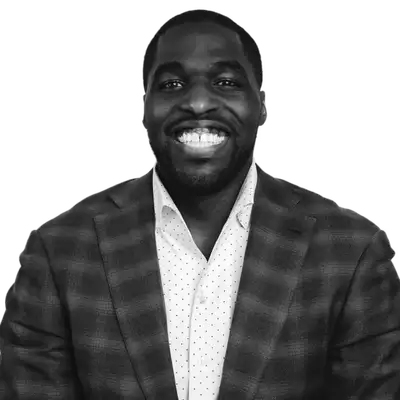
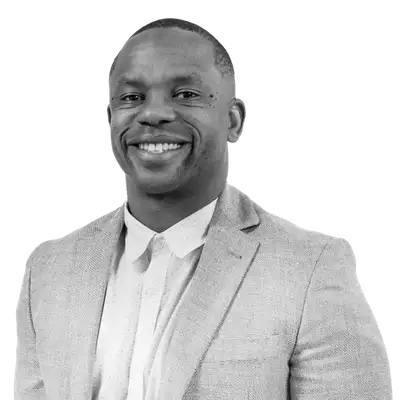
Join Former NFL Veterans Sam Acho (Bills, Bucs, Bears & Cardinals), Zach Miller (Seahawks & Raiders), Jeff Locke (Vikings, Colts, Lions, 49ers), and college coach, Riccardo Stewart, for a raw and unfiltered conversation about the game, the business, and how players can achieve generational wealth.
Riccardo Stewart: I wanna welcome
you guys back to another episode
of the A-W-M-N-F-L Podcast.
My name's Ricardo Stewart, I'm your
host, and I'm joined with my friends
Sam Acho, the mayor, Zach Miller, who
we call The Truth, and Jeff Locke,
who we call the professor because
he's always dropping knowledge.
Fellas, before we even jump into the
podcast, it seems like we're all at home.
I mean, this is few weeks after the draft.
Many of us have been traveling,
getting our guys situated.
Um, Sam, let me start first
with you before we even jump
into the topic, is what, what's
life like in Dallas right now?
Sam Acho: Well, it's, it's
getting hot in Dallas.
It's about to be a hundred
degrees tomorrow, which is a
record hot for this time of year.
Uh, but it's good.
It's good.
I've got a chance to be home a little bit
more with family, which has been great.
Obviously on the road, a little bit
headed on the road tomorrow, uh, for some
meetings and some, uh, to connect with
some athletes and to speak, and so all
is well, uh, but things are getting ready
to slow down before they rev up again.
Riccardo Stewart: before I got get
to Zach, which I know it's hot where
he's at 'cause I'm in the same office.
Uh, Jeff, you got a jacket on?
What?
What's LA like?
Jeff Locke: You know the one number
one rule living in LA is you don't
complain about the weather to anyone.
Not in la.
So it, uh, it's nice
in la, cannot complain.
Might get a little hot,
but nothing like that.
Easy in Texas heat, you boys
are about to go through.
Riccardo Stewart: Yeah, Zach, I mean,
give us a glimpse on what's it like.
I mean, you've been coaching
youth football outside in
the weather in Phoenix.
Holler at me.
Zach Miller: Hey, it's, it's, it's hot.
Um, all I know is you, you get
tough playing football in Phoenix
in uh, in this kind of weather.
And uh, I actually got my first exposure
to the Red Zone Elite Tournament was
the first one I had my 10 U Boys in.
And lemme just tell you, there's
some athletes out there and that
whole world is, whole world's insane.
It's, uh, it's a lot of fun though, uh,
mid, uh, midnight Madness tournament.
So really enjoyed doing that
with the, with the boys.
Riccardo Stewart: Yeah, just on that note,
I was where Zach was with the Red Zone
Elite and then moving forward and, and,
um, the kids I used to coach now are all
in high school and they're starting all to
receive their first division one offers.
And so I'm excited to see that.
And so, uh, I mean, we, we
probably got ourselves some
future clients here, but, uh.
Zach Miller: Definitely.
Riccardo Stewart: talking
about the draft guys.
You know, I, I wanna really focus now on
the conversations we've been having with
many, many potential, uh, clients of ours
that have reached out to us and talking
about, okay, now I have 50 million I.
I got 60 million, like
what needs to change?
Um, what sort of advice should I
have from a financial standpoint
that's, that's non-negotiable?
And guys, what I'm talking about is not
necessarily what investments should I be
in private or, um, public market Really
going, like stepping back and look at the
financial world and going, when it comes
to my options out there, like what should
an ultra high net worth athlete have?
And what I usually say is there's,
there's three eyes that we talk about,
and one is you need to make sure wherever
you're at, it's independent advice, and
then when it comes to all of your assets
and anything that your money touches,
that your plan should be integrated.
Then lastly, it should be
individualized, those three eyes, right?
It should be independent,
integrated, and individualized.
And so I'm gonna, I'm gonna ask
you guys to go ahead and talk
about each one of those eyes.
And first, I'm gonna start
first with you, professor.
So if you can start off with some
knowledge is it talks about independent,
what does that actually mean?
When I, when I say to someone,
Hey, you wanna make sure that
your advice is independent.
Jeff Locke: Yeah, so independent
is actually looking at the
structure of the company or the
firm that you're working with.
Everyone might be built a little
bit different, and you gotta get a
little bit into the nitty gritty.
You gotta do a little bit of research to
figure out who you're actually dealing
with when it comes to financial advice.
So what you want is advice
that is specific to you, not.
Just kind of advice that's kind of
suitable to you or like, Hey, it
might kind of fit your circumstance.
And what I mean is when you work
with certain types of companies,
think really big banks, think places,
insurance companies think anything
that is publicly owned, right?
Traded on the stock market.
Their first answer, who
they first answer to.
Is the people that invest
in their company, right?
Millions of people are
owners of their companies.
Their number one responsibility
is profit for the company.
Number two, responsibility
is advice to you.
Okay?
So being independent means
you don't have that big boss.
You gotta answer to
driving the profit, right?
Independent also comes down to the
investments that you can be put in.
The investments you can actually choose.
Or your advisor can help
you choose in your portfolio
when you're not independent.
I hate the term, but they
call it a menu, right?
All these big companies, since you
create this menu, like you're at
a place getting dinner, these are
the different investments you can
choose from, and it's only this menu.
You can't go back to the chef
in the back and be like, Hey,
I want this special order.
They'd be like, nah, this
ain't that kind of place.
Right?
That's when you're not independent.
You've got this menu when you've got
wealth like Ricardo talked about.
You need a lot of stuff off menu.
You need to be able to go to any
farmer's market, you want any restaurant
in the world, and pick the best
possible things for your situation.
Independent firms can do that.
Firms that are not
independent cannot do that.
So to sum it all up, independent
means client first, best advice for
the client, not what's best for the
company first, and we kind of just try
to fit it in to what the client needs.
Riccardo Stewart: That was good.
That was helpful.
So if I start first with independent,
The next thing is, we say is.
We want, or you should have advice
to everything your money touches
and it should be integrated truth.
Why don't you drop some knowledge
for us and understand what does
it mean by integrated and maybe, I
don't know if you have experiences
yourself and when it's not integrated.
Um, I know you do.
So let's hear.
Let's hear what you have to say.
Zach Miller: so integrated.
I mean, when it comes down to your
money, you have that one net worth,
what kind of all your wealth that
you have, that's your net worth.
And then you have one effective
tax rate, meaning you could have a
bunch of investments, you could have
a bunch of deals, you could have a
bunch of income from the NFL, but all
of that goes on that one tax return.
So everything is.
Together.
And so your team has to
work closely together and no
decision you make is isolated.
There's not little silos where
this doesn't matter over here,
and this doesn't affect that.
Everything affects each other.
And if you think about
generational wealth, I.
I mean, you're making 50 million.
You have the opportunity
for generational wealth.
You have taxes, investments, insurance,
estate, business, legal, philanthropy,
and that's the whole nonprofit.
All that, all of that is tied together,
and so you have to have different
positions just like you do on the football
field, whether it's quarterbacks, tight
ends, running backs, you have to have
Jeff Locke: Kickers.
Zach Miller: elite kickers.
There's kicking game for sure.
You have to have that entire elite
team all the best at what they do.
And one person can't do that.
And so that integration of your team and
how good they can work together, it, they
can't be siloed and have, you know, one
guy that doesn't talk to another guy.
And I had a financial advisor at
Merrill Lynch, smart guy, nice suit,
you know, did well talking, um.
And then I had another good CPA
and they both did their part.
They both did their
thing but not together.
The result of that is I paid two
million more in taxes than I, than
I, that I didn't have to because
Jeff Locke: they
Zach Miller: weren't together.
They weren't working as one,
and so let that sink in.
That's not a rounding area
Jeff Locke: error
Zach Miller: that's bad coordination
by my team that you don't have
to experience if you have them
all working together in that.
Um.
Fully, fully together, coordinated,
cohesive unit, just like a football
team that goes out on the field
with the coaching staff that's
all on the same page, all working
together to ultimately win the game.
Your team has to be put together
to do that, and you can't
Jeff Locke: do
Zach Miller: that with just a
guy over here, a guy over there,
and hoping they get it right.
You have to have that fully integrated
team of professionals to make sure
that you have the best chance of
achieving that generational wealth.
Riccardo Stewart: So we
step back, we go first.
It has to be independent.
Right.
Understanding.
Who do they answer to first?
Is it gonna be shareholders
or is it gonna be you?
And then when it comes to the
options, you have to invest.
I think Jeff said it best.
Do you want the menu from the restaurant?
And only the restaurant can provide?
What makes me think that reminds me of
Jeff, like being at this breakfast place
and the lady came my son, my youngest
at the time, he was like seven years
old, how would you like your eggs?
And he goes, what do you mean?
Would you like him scrambled?
Would you like him over easy?
And he says, yeah.
Uh, hard boiled.
She looked at him and she goes,
actually, we don't do that.
And that's what it's like
in the financial world.
You, you think you're ordering
something that's on the menu, but
if you want something that's off the
menu, you better be with somebody who
is independent and then integrated.
Jeff, what you're saying is you
don't want an offensive coordinator
who shows up on Sunday, who doesn't
know the players, doesn't understand
your strengths and weaknesses.
Who begins the call plays, and a receiver
who doesn't come to practice actually
practice with a completely different team.
So there's no true coordination.
lastly, we get to a plan
that's individualized.
Sam, I, I, I saved this for
you because you are the mayor
and you're a man of the people.
So the individualization of a plan is
something I feel like you would get.
So drop, drop some knowledge for us.
Sam Acho: The best thing
about an individualized plan.
I'm gonna talk about the
best thing, I think, why you
deserve an individualized plan.
I'll start with the story.
So.
Some of the work I do is at this as a
WMI also work at ESPN and I wear suits
oftentimes, and I remember going to
Italy, this was about 10 years ago,
and my dad, he, you know, he is a, a
business guy, pastors of church, he's
a psychologist, wears a ton of suits.
He was like, Hey man, we're in Italy,
we're in, I think we're in Milan,
and there was this really expensive.
Suit, and I was like, dad, I'm not
about to pay, you know, X amount
of dollars for this expensive suit.
He is like, dude, trust me.
Like you want to, you
want to get this suit.
It's like silk.
It's like butter, et cetera.
So I'm like, all right, cool.
I'll get the soup.
But mind you, I'm 6 3 2
60 Italy people, Italian.
It ain't like that, but they had it.
They had a suit that was like big
enough that would kind of fit,
it wasn't like exactly fitting.
I was like, what do I do?
thankfully in Italy where
fashion essentially began,
they had this custom tailor.
Uh, essentially he was a, a man who was
in his eighties, who for his entire life
had been tailoring suits to fit people's
bodies, individual people's bodies.
Um, he was a master Taylor, excuse me.
Gotta cut a master.
Best in class.
Well, so he, I got the suit,
he measured my body, right?
Master Taylor, didn't speak a lick of
English and came back and a few days
later, or hours, whatever it was, I
got the suit, I paid for the suit.
It was very expensive.
Um, but I brought it back and when
I put it on and say that it fit
like a glove, like not only did
I look different, not only did I
feel different, but the way that I
presented to the world was different.
It wasn't a suit from big and
tall wasn't one of those things.
You get off the rack.
It was individualized to my
body and to my job, right?
It was like, man, I wore that suit.
I, I did stuff at, uh, at the White House
wearing that suit with former presidents.
I did stuff on ESPN wearing that suit,
calling uh uh, traveling while I was
playing individualized custom fit.
Same thing when I was playing in Arizona.
Larry Fitzgerald would always
wear these custom suits, custom
jeans, custom everything, and
it had to do with who he was.
so the benefit of having an individualized
plan, a custom suit, not for something
that's off the rack is that yes,
it helps you feel good and look
good, but it also helps go to the
things that actually matter to you.
I'm traveling for a game on, on,
I'm on ESPN, I gotta go meet with
this person or that dignitary.
I need something custom and individualized
to me, that's what a, that's what
a, that's what you deserve, right?
You talked about, Ricardo started
this, this Congo of, hey, somebody
who's made 50 million, 70 million,
a hundred million dollars.
Like, okay, you might have different,
it might cost you a little bit more.
It's worth it because the things you
get back in return, what you can afford,
what you deserve actually ends up
paying you back more in the long run.
And so when I think about something
individualized or custom, I think that's
what you deserve as a, as one of the,
the best in the world or what you do.
Riccardo Stewart: So to
wrap it all together.
You gotta make sure you got a plan
that's independent, a team that
answers to you, not to somebody else.
You gotta make it, make sure it's
integrated, that there's not loose
ends, but there's clear coordination.
And then lastly, you gotta have a
suit that fits you for your purpose.
So if your goals and you have a life
that's planned for you, don't have
somebody else's life, don't have
a plan for somebody else's life.
Have a plan that's uniquely tailored
to fit your dreams, your desires,
your priorities, and your goals.
If there's anything we said today that
you're going, I'm curious about that, or
I wanna learn more about like what does
it mean to be independent or any questions
you have, please reach out to us.
You can send us a text
at 6 6 0 2 9 8 9 5 0 2 2.