Subscribe
Share
Share
Embed

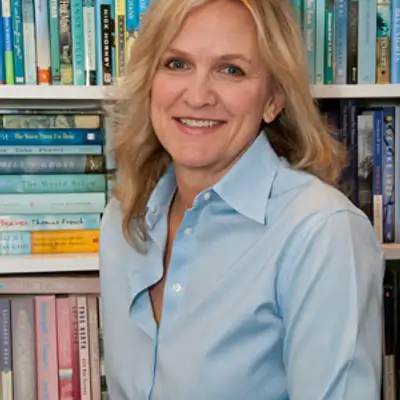
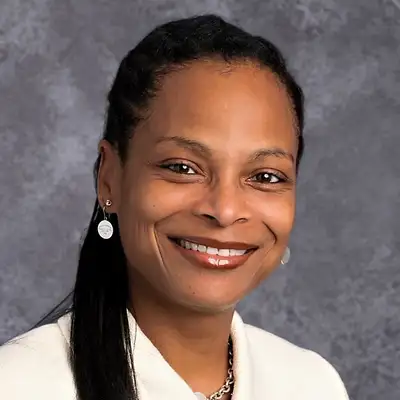
Celebrate the joy of reading with the Book Love Foundation podcast. This is a show filled with information and inspiration from teachers and leaders across grade levels, states, and school systems. We interviewed authors and educators for the first five years and now turn our attention to leaders in public, private, and charter schools. Find out more at booklovefoundation.org or join our book-love-community.mn.co of 2500 educators from 28 countries. We sustain joy together, one kid and one book at a time.
Penny (00:05)
Welcome to the Moves Leaders Make podcast built on the idea that it's small moves and big moves that change schools in the hands of great leaders.
Elaine (00:15)
My hope for the podcast is that people build confidence in a time of struggles and misperceptions of the place called school and know that the smallest move can have the biggest impact.
Penny (00:30)
Elaine Millen, first time I met her, was one of the most inspiring people I'd ever interacted with. In a room filled wall to wall with all these people, I went up with a copy of my first two books and said, I heard you're in education.
Elaine (00:48)
There was this connection about inspiring others, teaching and learning. I'm happy with this podcast because it's making us think about our connection and how it developed in our pursuit of educational reform.
Penny (01:04)
What Elaine has given me in this decades long friendship is inspiration again and again and again.
Elaine (01:11)
I'm flattered that you think that Penny, but I think it was our mutual relationship and the connection that we had with each other. And I think the two of us wanted to make a difference, not just for the kids that were sitting in front of us in school, but you have grandchildren now. I have great nieces and nephews and we want to make a difference for those kids as well. So that's what connected us together in all of our work over the many years.
Penny (01:39)
We need that. We need people near us that inspire us. Elaine and I first conceived of moves leaders make as part of the Book Love Foundation. And the reason is that we've done recent data analysis of all of our grant winners. And this may surprise you, but 75 % of our grant winners have gone on to leadership positions, which in the field of education is a definite need. We need leaders. So we're pretty excited about bringing leaders on that Elaine and I find fascinating, exciting, solution-based, joy-based, like our guest today, Dr. LaQuita Outlaw.
LaQuita (02:21)
I'm excited to be here, so thank you very much for having me.
Elaine (02:25)
We can't wait to begin to hear about all your experiences.
Penny (02:28)
So can you tell people listening just a couple things about you?
LaQuita (02:32)
I can share that I am a lifelong learner, right? And I think that's probably something that all of the grant winners possess, is that they just love learning. And I'm also ⁓ an advocate for children who are finding their way around reading. And so I've been in education for close to 30 years. I've been a building principal at the middle school level for 19 of those almost 30.
I am currently the assistant supe for elementary curriculum and instruction. I'm coming into my fifth year there and I've been in the same district for all of my administrative careers. I'm pleased to say that I work with a number of passionate staff members and I count myself blessed and lucky every day.
Penny (03:25)
We both were really intrigued by your essay, which you named, Leading with Intention, Humility, and Joy.
Elaine (03:35)
Yes. In reading your essay, I was in awe of your recognition that vision was so important and it made such a difference to you and the way that you approached your work. And I was wondering if you would just address the impact that that made for you and how it was recognized by your staff that that was a focus of the leadership.
LaQuita (03:59)
Start with the idea that the misperception that some have that leaders know what vision means. Because it took me a very long time to come to the idea and come around to the fact that reading and the focus on reading was part of the vision. And it was something that I could rally my staff around and that in doing so, it would allow all of us to demonstrate a passion for our students and for something that we each possessed. When I think about ⁓ vision, I spent probably a good decade or so trying to wrap my head around what I wanted the staff to sort of get behind. And I did what most leaders do, and I talked about numbers, and I talked about assessments, and I talked about a theme every year. But reading became more than just a theme for the year.
I, with the staff, was able to identify sort of activities that would help children see us for who we were and see that we were people just like they were. And I think that part of rallying people is the idea that they then can relate to what it is that you are trying to get everyone to celebrate.
Elaine (05:25)
It was interesting because you used over time that intentionality, the importance of intentionality, that would be of such value to talk about that piece for our listeners.
LaQuita (05:37)
I wanted to share with you sort of where it started for me. There was a gentleman who was working for Scholastic, Bill Barrett. He's now with Bookalicious and Bill Barrett and I had a conversation. He was in my school building to recognize a librarian who had done some amazing work for the school. And I was talking with him and he shared that he was a late reader. And I said, no way, you're working with books.
How is it that you then did not connect with reading until later? And when he started to talk to me about a teacher who inspired him, I was like, that's what I want to do. I want to do that for the children that I serve and for the staff members to be able to do that, for the children that we serve collectively. was like, imagine how many hearts we'll touch. Imagine how many children we'll be able to change in doing that.
You know, and to make a difference for them in doing that, middle school or later. And so there was a lot of conversation about middle school children already being turned off and not ever being interested in reading in a way that would help them to experience success, because it was felt that by that time, children were already turned off to reading and then would not be willing to pick up a book, but he showed me that's not the case. And so the intentionality came the next day when I said, what could I do? That would be low risk and high reward. And I was like, well, I'm reading. You know, I read the books and why not just carry the book around then? Let me see if I could engage other students.
Engaged children that I normally as a building principal would not see because often I was dealing with parents and students of children who were at risk and who were potentially ⁓ in trouble. And I said, how could I connect with children that I would not normally see? I decided with intention that I would walk around with the book Wonder by R.J. Palacio.
And I knew that if I carried that book, it would be okay because most of the children read it the year before in fifth grade. And so they then would be able to have a conversation with me around that text. First place, cafeteria. I got a captive audience in the cafeteria. So I walked around with that book in the cafeteria and the response was amazing. The children who were sitting in those seats, you're reading that, Dr. Outlaw?
And then after they said, you're reading that, they then would start to share with me sections from the book that they enjoyed. Then I knew that I had a winner. And from there, I walked around the hallways with it. And teachers began, I read that book. I love that book. Okay, wait. Now, not only do I have the babies, I have the adults too.
And so then I finished that through the end of the school year and I changed my book out based on what I was reading. Then I started to ask the children that I was speaking to what recommendations they would make to me. So I no longer then was the building principal. I was the building principal they could talk to about books.
Penny (09:12)
Boy, I love that. LaQuita, one of the things that struck me when you were talking is that you made reading a natural conversation, adults and kids. You didn't say a single word about a test or a level. You didn't talk about a letter on the side of the book. You talked about joy and kids saying, this is the part that mattered. That all feels intentional to me.
LaQuita (09:39)
And one of the other things, Penny, that started to happen was the children who once kept their books under their book bag, under their pile of notebooks. When I walked around, the cafeteria started to move their book from the bottom of the pile to the top so that I could see what they were reading and so that I could sit next to them and we could talk about that.
So I like to say I made reading cool again. But it already was.
Elaine (10:10)
For sure.
Penny (10:12)
Or, you know, I was really struck too, that you mentioned to us that some of the conversations or relationships that might've been difficult with adults in your building were transformed by this. Can you talk about that?
LaQuita (10:27)
Sure. Talking about another intentional moves with the book in hand, I would stand at the entrance and there I would be able to welcome both students and staff and of course see families as they were coming in to drop off items. I then was able to, while standing there, talk with them. They were like, what are you reading today? They started to look to see what I was holding in my hand. And these were people who, you know,
I don't know how many leaders would admit to the fact that there are some staff members who they wouldn't necessarily walk into their classrooms and hold a conversation with them as comfortably as they would others. And so I would intentionally seek out the staff members for whom I did not necessarily have that relationship with. And then I would ask them, so what are you reading?
Like what's, you know, any good book recommendations? And again, another low risk opportunity for me to talk about who they were, what they connected with. I didn't have to talk about their weekend trips. I didn't have to talk about anything other than a book that was a safe space for all of us, because we could decide how much we wanted to give or not in that, on an emotional level, to the person that we were talking with. And they were able to do the same.
They got a chance to learn about me in a way that they would not necessarily have if we were in different conversations or if we had not had an opportunity to talk at all.
Penny (12:03)
You use the phrase once that relationships or conversations that were functional became transformative. And I thought that was just so wise because Elaine and I have talked about leaders sometimes appeal to a particular group of people in the building, the adults, and to some extent the kids and others feel like, you know, not really my leader. Is that kind of what you're getting at here? The book was like a conduit to broadening that.
LaQuita (12:33)
Yeah, we're humans. There are spaces that we operate within where we shine, and there are spaces where we struggle, and that's okay. It became transformative because they no longer felt like they had to talk to me. Now there was something that we could all talk about and around. So I asked the staff at one point to begin to post, and that was probably year two, so talking about that intentionality and building.
On what we had started, I asked staff to post the book that they were reading outside their door. And then students began to talk with the teachers about the books that they were reading. So again, you were connecting with children potentially that you would not have had a relationship with because...
you were reading something that they were either reading as well or interested in reading. The adults, we would then do book talks over the PA system. And then I'd share it with the librarian, make sure you have this book in stock, please. Because once we talk about it over the PA, all the kids are going to go to the library looking to borrow that book. And so we need to make sure that we have it on rotation and have it in the classroom libraries.
Which is another area that we started to build because the teachers needed to give kids access. And not just in the English language arts classrooms, it was in the mathematics classrooms, it was in the PE classrooms. We wanted the children to see that everyone was a reader. It didn't matter who you were, there was a book that you could connect with someone around.
Elaine (14:17)
You also mentioned in your work how you added the books that you were reading to your signature and how that even developed a relationship with the school board. And so it expanded even outside of the purview of the school. Talk a little bit about that.
LaQuita (14:33)
And it does to this day. Yeah, it does to this day, Elaine, actually. I started to see it with some of the building principals because I still use it. And so as the assistant supe they see that and some building principles began to put what they were reading in their email signatures. And so what I share is what I'm reading now, what I just finished reading, what's on my list to be read. And then I ask, what recommendation do you have?
I've established to anyone for whom I communicate with that I am a lifelong reader. I have a to be read list here is, and I've set it up then for myself. And I have often even from parents received an email back with some recommendations on books that I should read. They share with me if they read the book that I have listed, what they thought of the book and board members and I right before.
Board meetings sometimes, talk about the books that we've read, ask for recommendations from each other, and have what feels authentic and sincere conversations. No walls, no boundaries. This is just two readers talking about what they themselves have experienced in the books that they've read. It feels good.
Penny (15:53)
No kidding, right? But Brené Brown said joy comes in ordinary moments. These are the ordinary moments. They just change people. They change the way parents and kids and teachers, all elements of your community see reading as something that isn't tested and mandated, but enjoyed.
Elaine (16:13)
It's the connector. You've connected these people together. It's inspiring and remarkable. It really is.
LaQuita (16:20)
And with me, and that was it. Like wherever I maybe didn't feel a connection, I then had one. And it was natural. It felt right because it was something that we both shared. And I think when you talk about relationships, they're built on what you share with others and commonalities that you can speak to and relate to. It also expanded my own reading life in a way that I did not anticipate. So with those posters, I would keep one outside my main office as well. And what I started to notice was that I was reading books that primarily had Caucasian female or male main characters. And I began to wonder and ask, well, how can I talk about diversity being important?
And serving all of our children, right? And ensuring that we have references that celebrate every kid that we serve as. If I myself am posting images of books, because the poster would have an image of the book and it would say the book title and the author, if I'm myself and not celebrating that diversity of the children that we serve. So I started to, on the back of that poster right down when I finished that book. And then when I looked at what book I was going to read next, I made sure that it was of a diverse character. So it had to be different than the previous main character that I had just finished reading. And so it gave me both a visual way, of seeing that I was honoring what I was asking staff members to do, but it also helped everyone else see that there are so many characters out there and experiences that we can celebrate to match the children that we serve. And I started to see a difference in the books that they too were reading.
Penny (18:28)
It's really interesting to me when you talk about all these different ⁓ ways that you've expanded the original idea of I'm going to pick up a book and just be in the building with a book, right? And it wasn't just one move, but that was the move that started all of these other small moves. But the collective impact of all of those moves is huge.
LaQuita (18:52)
And it even got to the point where staff members were inviting authors to come to the building. So it didn't have to be just me anymore. That distributed and shared leadership came in that shared action step. And that's where the vision, Elaine, to circle back to what we talked about. That's where sort of establishing the vision came in and allowed others to directly see what we were about and then champion other action steps around it that helped us all continue to develop the message and for us to all rally around what would be good for children. I was lucky. was really lucky.
Penny (19:39)
you
Elaine (19:43)
I wouldn't say you were lucky. I would say that you were a motivator to those around you. That you, I mean, the idea of where you took one small move and really stayed focused to develop as a whole culture of your organization. changed your organization by, you know, by modeling for all your teachers, for your community, establishing such a passionate connector with your school board. And we know today that administrators all across this country are having such difficulty with local boards to move the compassion necessary to meet our kids' needs in schools. And I'm just honored and thrilled to be able to listen to you today about how you established this in your organization, your community. It is inspirational.
LaQuita (20:35)
Thank you. And one book can absolutely do that.
Penny (20:40)
So of course, one thing I want to know is what are you currently reading?
LaQuita (20:45)
I want to talk about the book that I just finished, if that's all right. The Invisible Life of Addie LaRue. And that is by V.E. Schwab. And that book, if you have not read it, please pick it up. I've been on the hunt and search for a really good book for a long time. This one is it.
Penny (21:06)
I loved that book.
LaQuita (21:09)
Yes.
Penny (21:10)
So many like big ideas in that book that we all think about, but we didn't realize how closely tied every person is to some of these same ideas. I don't want to give too much away.
LaQuita (21:22)
Yes. Yes.
Penny (21:26)
⁓ Could you tell us what is something about leadership that people don't know?
LaQuita (21:30)
I think they know it's hard. being a leader is hard because, you know, the buck stops with you. But being a leader is a position where you learn more about yourself and who you are than in any other position that you would hold. And the reason for that is because you are moving groups of people forward.
In a way that requires you to give of yourself. And in order to give of yourself, you have to know a little bit of who you are. And you have to be able to play to strengths and to uplift weaknesses and not just in yourself, but in the people that you serve. And so being able to tap into that in others is a critical quality that I think some leaders don't realize.
Elaine (22:25)
Who inspires you?
LaQuita (22:26)
I'm always inspired by people who exude a passion and joy for the work that they do and who look to excel and who look to uplift and inspire others around them sincerely. Like it comes from the heart and that there's a passion that comes with it that you can feel it. You can feel it through the camera. You can feel it in your interaction with them. And those are the people that inspire me.
Every day, I'm looking for the ability to be inspired and to inspire others.
Penny (23:02)
That's beautiful. You know what? One of the quotes that I got from you that you brought to me is from John Maxwell. I'm sure you remember this. Leadership's not about titles, positions, or flow charts. It's about one life influencing another. Laquita, you influence so many lives and your conversation with us influences us. It's just magic listening to you.
LaQuita (23:26)
It's easy to do when you're talking about something that brings you joy, sincere joy.