Subscribe
Share
Share
Embed


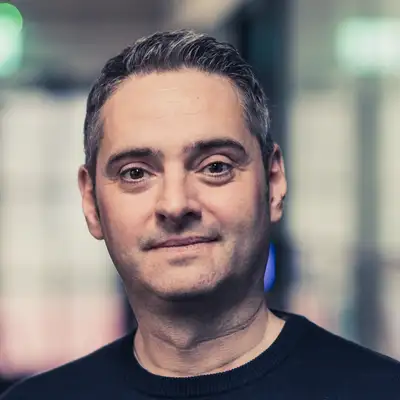
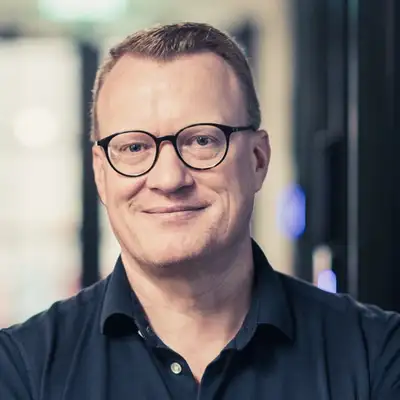
From the award‑winning team behind Cloud Realities, Realities Remixed explores what happens when people, culture, industry, and technology collide, because real breakthroughs rarely come from technology alone.
In each episode, hosts Dave Chapman and Rob Kernahan dig beneath the surface of innovation to understand what’s truly shifting. They speak with leaders, practitioners, vendors and thinkers across industries to explore how technology reshapes human behaviour, organisational culture, and society, for better and sometimes for worse.
Web - https://www.capgemini.com/insights/research-library/cloud-realities-podcast/
Email - realitiesremixed@capgemini.com
We are living on one planet that is feeding us. And if we destroy that only thing, water and air, we're gonna go into there's no way we can be resilient to that. So I think for me resilience is all b also about making sure we don't go into a situation where there's no return. (00:31.788) I
'm Dave Chapman. I'm Esmee van de Giessen, I'm Rob Keranhan. And this is Reality's Remixed, an original podcast from Capgemini. And this week we are going to talk about resilience in an ever more complex and interconnected world. How on earth do we make sense of it? And I'm glad to say that joining us with that increasingly complex and slightly mind-blown subject is Cedrick Moriggi, Chief Resilience Officer, Anti-Chaos Architect, which is sort of the inverse of what Rob is, I think. Easy tiger. He also works at the UN's office for disaster risk reduction. So has a very, very specific and very interesting take on this. And then joining him is Ben Trump. Ben is president of the Society for Risk Analysis and he is from Tor Intelligence LLC. If you want to jump to our conversation with them, there will be a time code in the show notes. But before we get to that, Esme, how are you doing today? You good? I'm very hot. I think I don't know, do you do the do you do the same in England? We we always complain about the weather. yeah. It's not twenty two point five degrees Celsius, complaints away. it's actually thirty six degrees here now the Netherlands, so it's quite quite damp and hot. Even and and also the coming days. So yeah, barbecues and of course soccer. Football. Roberto, how hot is it where you are? how is it? Well, it's all right. Actually, it's been a very pleas twenty four degrees Celsius. I'm all good. The windows open. it is. I think it's about in it. Yeah. Perfect pub temp, actually. And it looks like it's gonna be a sunny evening. So there is hope. There is hope in my future for one time. Twenty six degrees where I am. So yeah, you are you're ten degrees hotters. Yes, yes. But to be honest, I know you now for a little bit longer. There's no not perfect temperature to go into the pub, is there? I mean, all right, fair enough. There's certain counterbalances which is just go in anywhere. If was cold, it'd be like, Yeah, it's perfect for the pub 'cause you can go in and it's like there's a roaring fire. If it's really hot, you're like, Yeah, it's perfect for the pub 'cause you can go get a nice cold drink, sit outside. If it's about somewhere in the middle it'd be like, Well, we might as well just go to the pub. (02:54.252) Yeah, yeah, yeah. There's normally a heater outside, isn't there? Yeah, exactly. You're right. There it there is no there is no desired all temperatures are perfect. I'll tell you what's even better. Pubs have insides and outsides. So halfway between, if you need a new pint, you can just go inside and stay inside. Yes, exactly. Exactly. So we're talking about resilience today. What does that conjure up in your mind? Robert, resilience as a as a subject in a ever more complex world. Like I I when when I came at this to start with, I was thinking like those old sort of disaster scenarios that you would run the organizations where you'd be like, Well, what if the data center got hit by an airplane sort of stuff? But it's just way more complex than that now, isn't it? Yeah, yeah. So there's the w the the world went through a period of globalisation. we loved it. We went for efficiency, all was great, cheap price, access to services. The world's getting a little less stable these days. And so resilience is now back on the horizon. As do we have to talk about this more? And how do we need to think about it? Turns out there's loads of people who always cared about it and they've all come to the surface. And they've got some really good thinking about this overly complicated world that we live in and how we deal with it. Because you know what? We learn a lot in the past few years about when things go wrong, how do we how how well do we actually cope? So It's a it's an ever rising conversation. I was a it was on the BBC News the other day. They were talking about sovereignty and resiliency and access to services to keep society going. You go, well, it's in the main news now. It's in like people just in the street are talking about this problem. So it's it's definitely of its day. It was visible, I think, in more macro terms, wasn't it, during the pandemic where some of the global supply chains that we'd been taking, literally taking for granted. All of a sudden didn't look so robust. And it was human behaviour as well, the toilet roll scandals that happened in loads of countries where we went into COVID. Do you really you really regret stocking up on those toilet rolls? Now, in in hindsight, it wasn't such a good idea. I I've still got twenty thousand in the in the game. No, but it's this it was this weird human behaviour. Nobody said there was a problem with toilet roll, but then s humans started behaving differently. (05:15.234) And then all these weird things started happening. And then the fact that the supply chain then thought, I've got to deliver more toilet roll meant we ran out of frozen chips and things like this. And there was this really weird effects that you would never think about. Why would a human n buy 3,000 toilet rolls just because of an event I I I don't know. But you c it's that chaos in the system that can kick in. We can't understand it properly, and then we don't It's truly butterfly with this stuff, isn't it? In the sense of, you know, one small event. can have unpredictable ripple effects across, you know, all ca all aspects of society. But for an organization that has to exist within that system, they have to really lean into that, don't they? Yeah, absolutely. I think it's very close to the agile philosophy. I mean, it's it it's I I wondered when you were going to bring it back around to Agile. It's been a it's been about an hour now and you haven't mentioned it. Yeah. Some would say it's shoehorning. Shoehorning maybe. Yeah, I don't know. the pub was mentioned like within the first thirty seconds. That is fair. Are you saying you're an agile expert and me and Dave are pub experts? There's a natural inference to what you just said there, Dave. I don't know if you picked up on that, but I'm happy with that more. Anyway, how is it like Agile, there's? Well, well, to be truly able to be adaptive, no matter what's happening, it also requires to be really sure who you are at your core. That's the same question that we now see, even also with AI and everything that's, you know, evolving so quickly right now. In the end it's about the question, who do you want to be? And if you can stay really close to that core, it doesn't really matter what's happening around you. You're you sh you know, and and you are resilient. You know things are gonna change constantly. You also know that you cannot see everything. so that requires real adaptive behavior and mindset and resilience. And And something also with the word resilience, I don't know if the listeners recognize that, but you hear a lot about next generations and their resilience because you know, we we didn't grow up during COVID, but besides the toilet paper issues that we had as grown ups, I think the the younger ones had different struggles growing up during COVID. And I don't they've learned to be resilient in another way, and I'm I'm not quite sure if that really plays out well or that we might need to learn (07:38.946) them how to do that for the upcoming years. It it is an interesting way to talk about to to think about it, isn't it? The no so you have this notion of individual resilience. And then you have the a notion of like resilience of the system within which we are acting and whether that system is our organization, which is like a system within a system within a like an infinitely nested set of systems. But the individual you know, kind of has to be increasingly resilient to just survive in the world that we're in these days. I think I mean, apart from you just describing the plot of the film Inception, David, that was quite a good way of thinking about it, which is we've got these little resilient bits and then you're interconnected to the next, you're interconnected to the next. And at each at each stage the resilience and dynamic changes. The world is a complicated place. It goes back to the Dave Snowden Kinefin framework. Do we properly understand it? When do we go from complex to chaos, etc.? It it happens faster than you might have hoped. Of course, within com within within Kinefin there's like the liminal spaces bit. And I've been living in some liminal spaces recently. 'Cause have you seen backrooms yet? I don't think you have. Have you heard of back rooms? Backrooms? No, is that a speciality film? It's not that special. What of us going? I don't know. I don't know. You're gonna have to expand on this, Dave. I don't know. Honestly, you guys need to get your minds out of the gutter. It's got nothing to do with any of that stuff. So so backrooms is it it started it's been on like YouTube, it's in Roblox and it's in a bunch of other things. And it started with an image that somebody had put online and it was like you know those office spaces. I I think particularly in the US that are kind of almost got like an orangey glow and they've got like a a a sort of a fairly crappy old carpet and there might be sort of a you know, very fluorescent light and it was an empty picture of like an old office like that. And that is sounds a bit like Marcel's post that but then it's kind of broken out and it's become like an internet phenomena. (09:47.904) In this in the sense of it's got all of these, you know, strange things happen in the backrooms. And the backrooms are like a they're sort of like an infinite version of those office spaces, but they also kind of have a strange representation of what's going on in the in the real world. Anyway, so film has just come out about backrooms. I'm none the wiser. It is worth it is worth a look. It is worth a look. Anyway, back to today's main subject and let's go to our conversation with Ben Trump. Who is president of the Society for Risk Analysis and from Tor Intelligence, and Cedrick Moriggi, who's Chief Resilience Officer and works with the United Nations.
So Ben, Cedrick, nice to see you today. Whereabouts are you guys talking to us from? So I'm calling in from Raleigh, North Carolina. So it's about well, about a four-hour drive or one hour flight from Washington, D.C. North Carolina, very nice. And I'm calling from currently the UK London. sunny London, 33 degrees Celsius. Fe feels like summer. So I'm glad to be inside because London when it's hot, it's not. Easy to live. That is true. Like the UK is set up to keep things warm and to keep heat in. So it's not ideal i in these current temperatures. You can't beat the central line in the height of summer where you go down and it's just like an oven and you're then crammed in with everybody stuck, like squashed into a smarty tube. That's really pleasant. And then the train stops and you don't know when you're gonna get moving again. That's that's always a classic. And for the one who knows a little bit the UK, it's Ascot Week. And therefore you see all those people dressed up like they're going to Ascot in thirty odd degrees. Now, check this out for a bit of professional podcasting. I think in that sort of situation, you need to be quite resilient, don't you? Dave, I see what you've done there. That's amazing. I mean, there's a reason why you're in charge. I've I mean, I I mean this kind of thing, it just just trips off the tongue, doesn't it? (12:01.482) So resilience. We have, you know, people with us here today from Tor Intelligence who are chief resilience officer and president of society for risk analysis. And tell us about what resilience sort of means in this day and age to you, Ben. How do you frame it? Sure. Resilience for me is a recognition that you just can't anticipate, plan for, and avoid disruption. It comes from a range of different forms. so we as a society have created infrastructure, economy, society, food, our relationship with the environment on expectations that everything should be hyper efficient, that we should be able to go from a demand to a procurement with minimal friction and minimal time and minimal loss of resources. And that's great. That has made life relatively inexpensive, where you can get products from around the world very quickly, cheaply, and affordably. But when something goes wrong, and increasingly it does, access to that is not only disrupted, but the recovery time to heal a hyper-efficient network is one that is not easily repaired, if it can be repaired at all. And for me, there's two reasons for that. So the first is that we're encountering a time. Where we are vulnerable to and exposed to disruptions that are both unknowable and ahistorical in nature. and I'm not even necessarily talking about the very extreme weather events, although we do have those. It's just more about, again, significant heat waves in part of the world that are not used to seeing that in March and April. It's earthquake events, it's cybersecurity attacks, things that sometimes it's novelty, sometimes it's just. We kind of knew that we were vulnerable to things, but we didn't plan for it. The second point is even if we put aside all of the ahistorical stuff is accounting for systems that are incredibly complex. Like how do we deal with interdependencies of large institutions that have many input and output points where it's difficult to see where one begins and one ends, that intermesh, interweaving, interdependency of all things infrastructure. (14:21.792) And internet and basic utilities down to household consumption and household behavior, a small ripple in one system causes disruptions in others. That's the systemic risk component. What resilience allows you to do is acknowledge that the world is a big, uncertain place. And if we cannot avoid everything, if we can't see everything coming, then we should at least have a very good strat. We should at least have a very good strategy to recover from disruption when it inevitably comes. What it reminds me of as you talk about it are things like disaster recovery scenario work where, you know, most organizations, four years just as part of it's part of most organizations' governance framework, they will do scenario planning for what happens if our office is wiped out, or what happens if the wide area network goes down or a data center goes out. Is it an evolution of that where that used to be relatively Str y like like actually like many things in say the tech world, it used to be quite controlled and perimetered for a particular organization. And what we know is we've seen stuff go outside the perimeter and then the perimeter disappear and then everyone's gotta basically sort of accept dirty networks, you know, to to use a cyber analogy. Resilience you in my head used to be quite a contained and straightforward thing to understand, and you could scenario plan around the world felt To your point about macro events, the world felt maybe a little bit more stable. Is what we're talking about, Ben, the evolution of that into the more complex world that we deal with today? I would say so, but it's building from a broader phenomena that is a it part of it's not new. I mean, for the for four to five hundred years, the growth of society has been around how do we conquer the uncertain, the unknown, the random? And that goes from Again, initially like trying to cut down all the forests to better build roads and connect villages. Now to present day, we're building data centers. We're trying to build new infrastructure. We're trying to improve our internet connectivity so that people around the world can talk with one talk with one another. The need for efficiency is what is driving this. and what efficiency allows you to do, it makes previously unfathomable, unfathomably, unfathomably (16:42.638) Incredible services. Yeah. Unfathomably incredible services accessible to almost anyone, right? So keep in mind, like 40 years ago, like the internet was not really a thing. I mean, we had ARPANET and stuff like that, but we didn't have this big service. And now everyone's got it. so it's built in building out these systems, the goal was expand fast, get the first actor privilege, try and dominate the market. And from there, profits and growth will flow. In many ways they're right. but at the same time, we've built and stacked a continuously precarious house of cards where we have degraded infrastructure in many countries, not all, but in many countries we have aging degraded infrastructure at the base. we have job sector that's going through massive shift due to AI, and then on top of that, we're bringing in new capabilities. again, cloud computing, different data center capabilities. All the LLMs are competing for for compute power. So it's the question becomes is is the service at the top going to find new efficiencies? Are we going to able to use technology to to innovate ourselves out of the problem of we're exposed to risk? A little disruption can cause national and regional blackouts in electricity. It can cause massive economic disruption, cause food insecurity. Are we gonna innovate out of that problem or are we gonna have to retrofit the way that we've been doing things, at least for the past 75 to 100 years of trying to go from you know relatively small industrial towns to l a large interconnected di digital global marketplace. And I think that retrofitting our systems is the only way that you can really go to inform resilience by design. So it feels like we've gone so far and then we've just got to a a tipping point. It feels a little bit like that. And we've seen a few instances of when the tipping point goes. The contagion of failure goes far and wide because of that globalisation, that interconnectedness. And I think it's gonna I think for me, when the countries step back and look at it, especially when you think about power, roads, rail, and all the things that underpin it, that's a huge cost associated with that. And then you've got a global system that hasn't got a lot of cash floating around, you're creating quite an uncomfortable paradigm for us to have to fix. (19:02.828) And it it it just feels like a sort of one that's gonna be difficult to box our way out of this time unless we accept a slightly crapper service for some things maybe. Well I'm interested in how as the system and the blast radiuses increase and the ambiguity about exactly what that blast radius is, it seems to me that the the sort of the the expertise in predicting and then controlling systems in a resilient way must have Changed. So maybe just talk us through where did we come from in terms of thinking about things like disaster tolerance and how has that evolved recently to a sort of state-of-the-art position on resilience? I mean, I'll give a short answer and and then I'd love to hear what Cedric says. My short answer is six years ago, so I did 735 days of continuous work on COVID as a data scientist with both Domestic work in the United States and international with our combatant commands. so our military wings in Indopaycom, UCOM, AFRICOM. And we had incredible volumes of data on complex systems relate everything from hospitals to medical supply chains to digital services to food, even to like relative security, both in terms of mental health and physical health outcomes. Like are people generally behaving themselves? Are they spending money? Are they committing crimes? Like we had. huge volumes of tens of millions or hundreds of millions of data points that when we brought it all together realized that we just didn't have the right engines to solve these problems. I mean we had supercomputing clusters, but they're big, they're clunky, they're expensive. And it was around the end of that experience in November, I believe, of 2021, that Chat GPT three came out. and so why am I bringing this up is over the past five to six years, We've gone from an environment where the information age granted, we had great statistical software, but it was all relatively modularized cottage industry specialists that had to be trained in data science to we have these new engines that can take massive bodies of information, digest them, and come up with relatively reliable output. Again, with with some disclaimer there. So it's where I see this going, what enables the new revolution. (21:21.366) And trying to understand complexity and map out all of our systems is automated decision-making algorithms and the advent of deep learning. It's something that it's gonna there's gonna be a big question about what is the true impact of AI and these LLMs on the marketplace. We go back and forth if it's gonna kill us all or if it's gonna be this massive revolution that frees the workforce. The answer is probably not as grim or as optimistic as anyone thinks. But all I know is from a data science perspective. It enables us to do things that were previously science fiction. So, Cedrick, let's swing to your perspective on that situation from Ben and the changing nature of the the role here around resilience. Now, in the role of chief resilience officer, what does that really mean in sort of practical day-to-day terms? If you first of all, unlike Ben, when you when you work for a multinational company and you are sitting right underneath the CEO, the chairman. You have literally two or three minutes to pass a message. So it has to be short, sweet, and it has to be adding value for the person who's going to listen to you very, very quickly. Because if you try to outsmart them, it's not going to work. And what I love with Ben and his team is actually the the brain capacity that they have and the autonomy they have to think outside of the box. For me, resilience is is like In a very simple way, it's like a spring. You need to imagine that something is going to be thrown at you. You need to identify what that something is. And then you need to build that spring in order to absorb the shock. And once you've absorbed the shock, if you absorb it really well, then it's going to go up and become a competitive advantage. So as a chief residence officer, it's almost like looking at every single risk or catastrophic risk. That the company could be exposed to and think about, I I need to find a way, A, not to be hit. And if we are, because sometimes you can't work on the likelihood, you can only manage the consequences. How do you make sure that you exit from that as a kind of winner compared to the competitors? And this is this is the learning of COVID for us. Is you work with the society, you work with the community, you work with the small, medium-sized companies. (23:48.3) Because if they fail, you fail. So it's how do we create that that kind of connective those kind of webs, bible webs, in between all of us that can absorb the shock whenever you're gonna be hit by the shocks. If that makes sense. Now you speak from a a position of having a very substantial view over this, being at the at the UN and actually working in disaster risk reduction. So could you Eunice, for those of us that don't understand what the UN is doing there and and your perspective, could you just paint a bit of a picture of of the sorts of things that you're dealing with and thinking about? Yeah, so first of all, talking about the UN is like talking about a nation. In that case, we're talking about multinations, right? So in within the UN there's multiple stream. And there's a specific stream which is called United Nations Disaster Risk Reduction, which is a parallel to it. Now And by definition, the chief business officer cannot do politics, cannot do religion, cannot do emotions. Because if we go into politics, we start to be blinded by whatever people want us to be. Right. We like it or we don't like it, but the UN is a place where people can speak. They are allowed to disagree, they're allowed to agree, they're allowed to say whatever they think, as long as it's for the greater purpose of human right, right? Or kind of United Nations. So when it comes to the UNDR, United Nations Disaster Risk Reduction under the Sendai framework, it's all about preparing the world, and in that case, nations, to disasters and then put in place elements to recover from those disasters. It's not about the response. The response belongs to the country. It's about preparedness and recovery. And as As the founder of the co-founder of what we call the Chief Resilience, the Corporate Chief Residence Officer Network on behalf of the UN, our job is to take the most efficient knowledge from those multinational companies that are part of that movement that we've created. Put that wrap them up in something that can be used for small, medium sized company for free. Small medium sized companies do not have the luxury (26:07.552) Of having highly paid, highly expensive chief residence officer, chief risk officer, chief, chief information officer. But they still need to do generate money and they're still exposed to the same amount of risk as multinationals are. The difference is not in quantity, but in proportion, the exposure is the same. It's just they're smaller. So more less likelihood. But when they're gonna get hit, unfortunately, the The consequences for them are far greater than for big corporations. Because big corporations can absorb shocks because we usually have more than one stream of revenue. If the local, there's a beautiful example, and I'll stop there, beautiful example in the US. There's a guy which is right to the Mississippi River next to it. And every one and a half year, the Mississippi River was actually flooding. And he was, him and all the others were completely destroyed. And some days. Thanks to collaboration with the university, they realized that you know what, every time the Mississippi River will flood, he needs to flood with clean water his his restaurant. And people were saying, You're completely crazy. But what it did is by flooding with clean water, he was leaving the dirty water outside. Right. He lift up the entire equipment to one point five meters, and two days after the flood, it could reopen. Because if you have to if you have to Clean from dra from clean water, you just need to dry. If you have to clean from dirty water, this is completely different, right? And this is a perfect example of what the UNDR is trying to do, is to promote those best practices at what we call locus of manifestation, which is at the place in which they need it because they don't have the time, the energy, or the money or the capital to find them. It is an excellent example of lateral thinking as well, isn't it, Bad? Absolutely. So Ben painted a picture for us and we were reflecting a little bit at the beginning of the conversation on an increasingly complex world and whether the exercises in a in a world that was, let's just say, less globally connected with technology that was all you know, it might have been non-sovereign technology, but it was all being run in your data center. You had perimeters and all of those sorts of things to take a bit of a tech angle on it for a second. But the increasing complexity of, you know, things like cloud. (28:31.934) things like the internet have made sometimes being able to spot the, you know, the sort of critical path around something a little bit less clear and it's a bit more obsfaccated. And when you add to that some of the more, you know, kind of geopolitical situations that we've got going on in the world at the moment or or environmental situations. Do you see, Cedric, a shift in what resilience thinking has to be? Or actually is it really still the same good practices? We're just applying them to a changing world. excellent question. I I like the logic of comparing resilience to quality. Thirty, forty years ago, everyone was saying, we sell in quality, i.e., before we didn't solve quality. It's quite quite abnormal to think that you're gonna buy a product which doesn't provide you quality, right? Now, I think resilience is going through the same journey. In a perfect world, you should not need resilience in whatever you do. You should be resilient by nature. As humans, we're born resilient. I think the complexity of the model that we have created as human have taken have obliged us to move in a different sphere of resiliency. If you look at nature, and and there's something there's something I I like more and more, is those kind of what I call the three vectors of attack. And I apologize my Sometime my lack of diplomacy, but human stupidity, machine capability and climate hazard are three massive vectors of attack at the moment. Excellent. The UN love to remind me that I have to be sometime a little bit more diplomatic. pile in with that, especially the first one, human stupidity. That's like epic. Yeah, no, it's everywhere. It's absolutely everywhere. So in a very diplomatic way, human, machine and climate. You take those three vectors of attack and then you multiply them together. And then you multiply them by numbers of country, and then you amplify it by human stupidity. And then you realize one thing is actually we tend to forget that the planet doesn't need us, but we need the planet. Yeah. The planet is by nature more resilient than whatever we would ever be able to invent. But we have that, I would add on top to what Ben said, what I call ego. When you go ego and arrogance driving your own agenda, it's actually (30:52.994) Killing the natural, or should I say, somehow is imp increasing the need of adding resilience, which is great for company like mine, because we completely swamped over job over work. But in a perfect world, that spinet of stuff working together, supply chain distribution, straight over moves, it was working brilliantly before. Right. But because of human decision, they decide to so they generated complexity. They insulate it into complexity in the system that no one asks for and no one can prepare for, because there's no way we can prepare for everything. So to to answer very shortly to your question, I think resiliency is is is an is an evolution. It's a human science. It's a complete evolution. I don't I'm not so sure that the world has been more violent or more complex or more than before. But I do know for a fact that the volatility that we see around the world in that global Global mindset has made it completely unpredictable. And this is one of the biggest concerns for multinational company or small medium-sized company is unpredictability. Because if you do risk assessment, it's likelihood and consequence. The consequence, we can measure it, right? We either die, we're injured, or we're not. We either make money or we lose money. This is as easy as that. But when you stop being able to calculate the likelihoods. You you don't know where to start. Who would have thought six months ago that the Strait of Omoose would have been closed? If any head of resilience would have come to their CEO and said, You know what? I believe that one of the biggest risks we have is the Strait of Omous being closed. The guy would have said, Out of the room. Do you want to Benjamin? If we would have told people 40 years ago, Internet's gonna come and by the way, AI machine will come and they're gonna be, yeah. Remember Blackberry? Blackberry said iPhone will never work. Well done, BlackBerry. Look where you are today, right? Yeah. And that's the problem. other than my love of failed tech predictions, which there are many, like we're the the world will only need seven or eight computers. That's a cracker. was when you talk about that and you talk about the world evolving, I think the world has always been chaotic. But in my head, when you were talking there, it it it struck a chord which was the interconnectedness that we have built because of the need of efficiency and because we can. It's almost like we can do this, so we shall. (33:18.178) has been the thing that has massively overcomplicated this conversation, isn't it? It's that which is you know, it's the classic human trait, let's do that 'cause we can, and then stand back, everybody finds it useful and then we realise it's got some pretty serious flaws. Be interested your view on on on on on that from the perspective I mean I think consumerism is the issue because if you take away the need of buying everything from anything for nothing. If you don't pay for the product, you're part of the product. And if you pay cheap product, I mean if you give peanuts, you're gonna get monkeys. You just cheap quality doesn't bring cheap, cheap, cheap, cheapness doesn't bring quality, right? And and the fact that every one of us need four, five, ten, thirty shirts, I got teenage kids. Why on hers do they need twenty five pairs of shoes? I don't know. When I grew up I had three. So all of a sudden what what you're doing with that complexity of goods, you're actually creating systems. That are meant to fail. There's no way, there's no way that we can run those systems efficiently because they become almost too complex for humankind to think about. And I would love, you know, Ben, Ben and I have very often very good deep discussion about how we could look at resilience on another world, another way, et cetera. And and I've I've always from from Ben and and the what I call the linked off brothers and but father and brother. It's fascinating to see how they look at systemic resilience because head of resilience like me, we focus on societal resilience from a from a business point of view. Now I'm very lucky to be also a lecturer at university, so I also have the academic mindset. But the combination of Ben's world and my world make the corporate world more resilient because we have people testing those models, testing those inefficiencies. I don't know what you think, Ben. I'm it's two thoughts. I mean, so first is to go back to what's happening out there. I think complexity or no, I think one thing that everyone is experiencing that is different than even 20 years ago, even 10 years ago, is the level of tolerance of mistakes is going down. And I I'm not talking about at a human level, right? So you make a boo boo. (35:35.092) It is going to quickly percolate through through the system. Again, if you lose power for five minutes at a server site, untold millions are going to be lost in the marketplace and it's going to ruin people's jobs. So it's in a drive for efficiency, which again gives us all kinds of great things. The downside of that is if you don't have backup plans, if you don't have the ability to intervene, if you don't have redundant measures, if you don't have adaptive capacity in the system. It creates an environment where you are expecting that your system is going to have near 100% uptime. It's going to have no likelihood of serious disruption, that you will always be able to deliver services. If that is not true, if you're ever injured, or God forbid, if your system truly goes down, the odds that you can be quickly replaced and go back up, it it's not easy. So let's go back to the straight of four moves, right? So, you know, let's hope. That the conflict is over, or it at least it seems like it's moving in that direction. Do we think that petroleum shipments and all the fossil fuels that go through that very narrow channel are just gonna pop right back into place? That the market is gonna correct itself. Already almost every major economist is saying, no, you're gonna feel this for many months to probably even a couple of years. that's the world that you live in where a single mistake, again, grave mistake, but a single mistake. Single error, single disruption can be felt globally. It can be felt almost immediately. And the recovery time is much more pronounced. If you look at the evolution that you've been talking about, huh? I think most organizations are obsessed with prediction, you know, looking ahead, thinking about all different choices and what could happen and ifs and mights and but don't you think that we're now moving into a direction that it's more about sensing weak signals on the spot? Because it's, you know, moving so quickly and everything is connected. Is prediction still the way to go, or is that or that is that also evolved? So in risk science, there's a common joke that you should never try and put a number and a date together in the same sentence. Because the second that you do that, you're Nostradamus, right? There's v like trying to prognosticate about where we think the future of things is gonna be at a certain time is precariousness because you're either right. (38:01.088) And things didn't go well, or you're wrong, and no one trusts you like the weatherman. So it with forecasting, what I see the value is, and this is where we move to resilience, is rather than trying to figure out likelihood of events, which again, like if you can, if you can measure things, you should. For me, it's there are just some things that the random, the sheer randomness, the error bars, the the lack of certainty that we have and even the numbers that are feeding into our system. If we can't see the likelihood or magnitude of things are coming, we look internal to the system, right? Regardless of what's be what might disrupt us. Where do we have single points of failure? Where in our infrastructure system or our supply chain or our company, where do we have those brittle points that everyone tends to rely on? We've centralized authority, we've centralized decision making power. We've centralized a c a common utility or a communication line where if that single node or that connection between nodes, if that was degraded or destroyed, you would have outsized impact that's difficult to recover from, if even possible. So that internal threat agnostic approach of know thyself, that's where I see the practice of resilience going. it was something that again, even five years ago, was very difficult mathematically to model. and you're seeing more offerings coming to the market that say that, okay, you know, just give me all of your critical functions, give me all your KPIs, give me all your data sets. We can make use of this and then go on to say, regardless of what disrupts you, what what is going to have the greatest problem? what's gonna cause the greatest amount of problems? and are there any countermeasures that you have to harden against that, to promote redundancy, to promote adaptive capacity? How can we change your organization? As cheaply as possible, both to prevent prevent poor recovery from current disruption, as well as, and and honestly, this is I'd like to hear Cedrick's thoughts on this one. Increasingly, where it's where I'm being pushed to talk about resilience is where can we be investing in resilience today so that we can grow our market five years from now, 10 years from now, 15 years from now, again, some cases, just one year from now. It because it's if we're trying to get a (40:22.062) 2550, 100% increase in market share, cargo, human traffic, whatever whatever you got. Again, I work in airports. So if we're trying to dramatically increase our user rates, right, the infrastructure that we have that might be resilient today will be creaky and and break tomorrow. And we need to invest in that. And that is that ROI is uncertain. It is a major capital allocation plan that is difficult, often often difficult to justify. And we have to get it right the first time. I think if I may add, Esme, to your point, so there's several theory about how do we prepare, plan, predict. But what I do know for a fact is very often as chief residence officer, and there's not many of us, but chief operation officer, because usually chief operation officer are per nature very resilient, right? Imagine the chief operating officer of an hotel, the chief operating officer of a cement plant, of an airport. Imagine the hit the chief security chief operating officer of Ethrow. That person is managing hundreds of issues every day. He's not managing the easy thing, because that's managed by the people, right? But it can escalate to that person, Emo Er. And that Emoer becomes the resilient expert of Ethro. If you go to that person and you go and you say, you know what, mate, we're gonna sit down and we're gonna plan what's gonna go wrong in the next five years, and he's gonna look and say, sorry, don't have time. I have to fix the problem I have now. And what I've realized in in in running experiences, I mean exercises and scenarios and and and training with Excope is the only thing that really, really work is to train their muscle memory, is to train themselves to become resilient. And I have a really nice analogy. Once I was I I had a guy, South African guy, and we're talking about kids, etc. And And he he said, Cedrick, it's all about awareness. It's all about asking them to look both sides of the road. Don't tell them to only look right because the car is coming from right. Tell them to just look when they cross the road. Tell them to look at what could come also from the tree. Us as Europeans, we're not or Americans, we're not used to look at trees like this, thinking that the snake can fall from the tree, right? Not part of who we are. (42:50.19) Those guys, even him when he was in London, he got that natural mindset of looking up and down and so being aware of the ecosystem. And for me, that awareness of ecosystem is critically important because we can plan as much as we want. I guarantee the day in which the incident will take place, either the guy who has been trained is not going to be there. She might be on a plane, he might be somewhere. Or like today, internet might not be working, we don't know. And B The scenario we would have written will be different than actually what's happening on the ground. So if we train people to increase their awareness of the ecosystem and to train their muscle to learn and respond with the right protocol, you make them resilient. And the sum of their resilience will make then your function more resilient. And if the function learns how to work with other functions, you create that net of resiliency in between function. And then you create the corporate world more resilient. And there's a conference that Ben is supporting, which we're creating in London, is called the RWN, Resilience World Nexus. And it's all about, it's free in the sense of it's not-for-profit. The entire money that's going to be made with this resilience conference will be to create adaptive white papers, learning from the best and sharing with the audience. Because we as human are really, really good. in inventing creating things, but we're not good in sharing them if we can't make money out of it. And allow me guys one simple example. I was in I was in talking to a gentleman who in in Japan and he said, you know what those white German, Swiss German Swiss Germans, I'm not gonna make the accent, don't worry. And he's gonna say he said, Do you know what the white line on the wall means? Well them said, no, I got no idea, sorry. I thought he was a guy painting the You know, the straight thing right, I mean doing wrong and doing it against the the wall. But Japanese being Japanese, there must have been a reason. He said, Well, this is the ice point in which the last tsunami hit the village. And therefore, all the oldest generation knew that they should never have any door below that point. Right? As simple as that. New architects built beautiful stuff next to it. (45:12.536) 27, 30 floor, store, etc. Guess what? They put the they put the water, the electricity, internet, everything on the lower ground floor. At the first tsunami, the building was knocked out. The 300 years old house, you could still live in them. The new one, you could not. Where is the learning? There's no learning. So to summarize, I think it's critically important that we put together knowledge that we share and learn. Awareness against AI, awareness against climate hazard, awareness against human stupidity. Because if we do not push people to challenge what they see, get aware about the environment, they will just become robber, which are not resilient. So Cedrick, I mean you when you look at the complexity of the world we face, do you think the system is built in a way that can actually cope effectively with the sort of systemic risk that we face? you know, it feels like maybe ego and politics gets in the way a bit too much these days. I think egos and politics always got too much since the beginning of humankind. If you took what happened with the Romans, the Greek, the Egyptian, there's a reason why an empire starts, rise, stabilizes and fail and disappear, right? It's every single empire at the beginning and the end. I think ego and You know, religion is a very fascinating topic versus you know religion versus faith. If you take the true value of faith in general, it's about loving and caring. And I I I I don't do, as I said, religion in politic. But human are, I think, per se very, very complex. And human relationships are very complex. But as soon on top of that, if you put ego and if you put wealth, where now someone is measured based on how much money they made. And not how much good they've made. It's quite staggering to see CEOs making forty, fifty, sixty million dollars a year and fire firing young people because they're not good enough or they're not needed anymore, or firing 60-year-old because they are too old. And all the year, the what they do, those CEO, they're just increase their salary, increase their salary, and they got rid of. And I will quote a gentleman which is quite (47:33.912) Could be quite controversial. The gentleman called Alex, I mean, the the one of the CEOs of Palantir, founder of Palantir, I was on stage with him once and he said a very nice one. He said, AI is either Robocop or is Iron Man, which is you replace human or you empower human. Check all the CEOs that are replacing humans for the sake of their own greater good. I guarantee they're not making the system more resilient. Actually, they're destroying human resiliency. And I think it will be very important that the system remember that we are here for maximum 100 years at the moment, might be a bit longer, but some of us less. But if we want that through legacy we can give to our children, and is about making it more resilient, not making richer. (48:32.886) Now we end every episode of this podcast by asking our guests what they're excited about doing next. And that could be something in their personal life, or it could be something in their professional life, or it could be a little bit of both. So Ben, let's start with you. What are you excited about doing next? sure. so in my free time for fun, I write. fiction, nonfiction. so based on this podcast, for nonfiction, what I learned is so Cedric, I'm working on a piece that we should talk about called Human Screw Everything Up. Sounds right if you're straight, Cedrick. Two thousand years of how human failures have thwarted even the best formed of systems. but so what I'm most excited about is yesterday I published so I published under a pseudonym. my seventh fiction book of a series about folks often talk about the collapse of the Roman Empire, but very few people write about or talk about what happened immediately after that. What was life like? and most historians when polled, if you were to ask what was the worst year to be alive in human history, it was not long after the fall of the Western Roman Roman Empire. Plague, famine, disease, war. You know, all all of the biblical plagues imaginable. So that's I got that one published and I have one more in the series and then I'm looking to see what I'm gonna do next. So I'm just tracking that along. And that's proper fiction, like like you've created a story around the living in that time. so it is the attempt is the age of Emperor Justinian and their attempts to recover the lost territories of the R Western Roman Empire, and they did pretty well. They recovered back for a time, but they massively overstretched their themselves. And then collapsed again permanently. very good. Very cool. Very cool indeed. Cedrick, what are you excited about doing next? So I wished it was as exciting as what Ben just said. I'm I'm in that what excites me at the moment really, I mean passion me, is is is and I I it can sound a little bit like I'm trying to, but it's absolutely finding a way to make the society more resilient. And honestly, that's (50:44.886) I mean I'm bothering Ben and and all people around me too because we're building that conference in London in October and we're putting together the UNDR, we're putting company like Nestlé and Novartis and Singentea, you're talking about the top hundred company in the world and and it's all about putting us as adults somehow, which have invented cold and hot water and Teaching and finding ways to teach the kids on how to make kind of semi-cold, semi-hot water. And that transfer of knowledge from the the kind of white line that I was talking about before, how do we teach the younger generation that there are a way to be better than us? There are a way to avoid our mistakes. Because I can blame my dad as much as I want about the world he has given me. But if I'm doing nothing to make it better. I I'm no one to blame him, right? And and this is something which is very important for me because I I love teaching at university. I love teaching to young children. I love learning from them. And that passion of putting people together and can have a meaningful and proper debate about how we can become more societal resilience. And as someone said yesterday at Cambridge Business School, where I was lecturing at a conference, they they said, How do we move? Towards more resiliency, right? Because ultimately it's about creating resiliency into the system. And I know it my wife tells me it's quite boring, I get that, but I'm fascinated about this because it's it's somehow occupying my brain and and and give me the impression that I'm giving back something that I've been very blessed and lucky to learn from others. And on the more nice note, I'm in the UK this weekend. And I'm missing my pubs because I don't know if you've ever been to Switzerland, but you can die of boardroom. most of my Swiss colleagues, my Swiss compatriot will hate me to say that. And I'm so happy to be back in the UK and I'm gonna visit pubs. Actually, British delicatess and food, see my mates, have fun with the family, and that's what's gonna happen as soon as we finish that call. Good time to be in pubs in the UK as well at the moment, because the World Cup's on and you can't be (53:07.788) A football match in a pub when there's big tournament on, it's a lot of fun. So enjoy your weekend in the UK, Cedric, and thank you both for spending some time with us today and giving us such an interesting perspective into the ever complex world that we live. Thanks very much. If you would like to discuss any of the issues on this week's show and how they might impact you and your business, please get in touch with us at realitiesremixed@capgemini.com if you have any questions for the show to tackle. And of course please rate and subscribe to our podcast. It really helps us improve the show. A huge thanks to our guests Ben and Cedrick, our sound and editing wizards, Ben and Louie, our producer Marcel, and of course to all our listeners. See you in another reality next week.