Subscribe
Share
Share
Embed
Since 1986, Convene has been delivering award-winning content that helps event professionals plan and execute innovative and successful events. Join the Convene editors as we dive into the latest topics of interest to — and some flying under the radar of — the business events community.
Convene Podcast Transcript
Convene Interview, ep. 26
*Note: the transcript is AI generated, excuse typos and inaccuracies
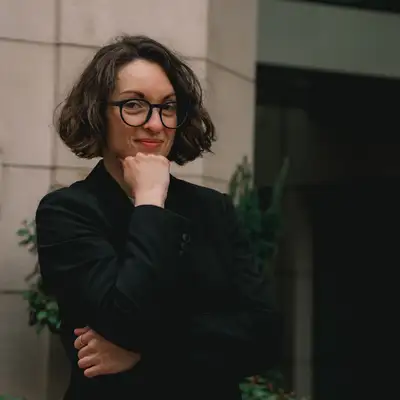
Magdalina Atanassova: This is the Convene Podcast.
Today we’re challenging the idea that AI is here to optimize events—and instead asking how it can help us design the human relationships that actually make them matter.
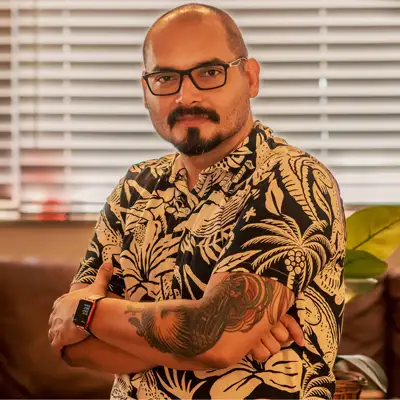
My guest is Álvaro Meléndez, a Colombian creative strategist, marketer, storyteller, and co‑founder and CEO of CRANT, an AI-powered creative company redefining how brands build emotional connection. Named one of PRovoke Media’s Top 25 Innovators in the Americas, Álvaro brings decades of global experience at the intersection of creativity, data, and technology.
Fresh from the Convening LATAM stage, we talk about AI as a collaborator rather than a tool, why events are becoming premium human experiences in an AI-saturated world, and how event professionals can architect meaning—not just moments.
We start now.
Hi Alvaro and welcome to the Convene Podcast.
Álvaro Meléndez: Thank you very much, Magdalina for having me. I was looking forward to this moment.
Magdalina Atanassova: Me too.
So at Convening LATAM, your keynote was titled the AI Circus.
Now that the event is behind us, what do you think most event leaders misunderstand about AI and why do those misconceptions actually put our industry at risk rather than helping it evolve?
Álvaro Meléndez: Yeah, that's actually a very good question to get started because I think most people underestimate AI and they catalog it as a tool.
And I believe that's the first mistake. When you start thinking of AI just as a tool,
you miss out on all the things that it can do.
So for example, if you reframe it in your mind, not as a tool, but as a colleague or a group of colleagues that you can have,
then immediately you start asking, what would I have this colleague do in my company if I had them? Right?
And then sky's the limit because you can start thinking about, all right, so I'm in the event industry.
I normally don't have a psychologist or anthropologist or a behavioral scientist. I normally don't have them on staff.
But with AI, you can.
So all of a sudden you can stop wondering only about how do I make things faster and cheaper? Which is basically a race to the bottom and the machine of generating AI slop.
And you can reframe the whole conversation and how do I make what I'm doing unforgettable?
So how do I turn this into human relationship building machine? Right? How do I do that? How do I focus on the craft? How do I focus on the meaningful time that people will be spending with each other?
So it's a change in mindset on how you approach AI.
And my suggestion is,
yes, AI can make things faster and cheaper. But that's not what it's supposed to be doing for us.
We want to create more memorable experiences that create relationships in a way that was not possible before because we were limited by the people that we had in our teams.
And that's no longer the case. You can have anyone you want with any specialty you want,
being part of your team.
Magdalina Atanassova: I love it.
I've heard this in terms of AI. So if AI is a Nobel laureate,
stop asking it to just create a simple recipe for you. Use its full potential as the smartest person there is to help you move things forward. And I think you put it beautifully in that aspect.
Again, like, speak to it as a human. And I think that helps a little bit with prompting, which now is no longer a problem. Before, we were thinking a lot of a lot about prompt engineering and all that.
Now it's. We are past that stage, and now we can really talk to this smart, very, very smart person to help us create new things we could never create before.
I love that framing.
Álvaro Meléndez: Yeah. There's a short example, if I may.
There was this big, huge company that had 20,000 employees, and they basically gave copilot to everyone.
So 20,000 licenses is like seven, seven million dollars a year in just licenses.
And when they looked at what people were doing is most of them were doing nothing, were not using it at all. And then some were maybe using it to summarize an email or to, you know, write an email reply.
So when it goes to those people and say, hey,
would you hire Albert Einstein for $20 a month or for 30 or for $200 a month? Most people will say yes.
And then you tell them,
what would you have them do in your company?
Are you going to have Einstein reading and summarizing your emails if they working for you? And they're like, no, never. Okay, so why are you doing that with AI? Right.
Just think of it the same way. What would you have Einstein do? Oh, you know, I would have him thinking about methodologies, like new ways to create human connections.
I would have them think about, like, all the ways I could understand my audience better,
how I could change my business model, how I could change the impact that I have in society, how I can understand if my impact in society is being good for everyone involved.
All those questions.
You can work with AI. I'm not saying just chatbots. I'm just thinking about the AI concept in general.
But most people are not there yet.
Magdalina Atanassova: True.
In the PEPA methodology that you've outlined in your latest paper, which I'll link in the show notes because there's a lot to unpack there.
You argue that the business events industry isn't in the logistics business,
but it's in the relationship business. And I think here all event planners would agree 100%.
But why does that make event professionals uniquely positioned to lead responsible AI adoption rather than lag behind other industries?
Álvaro Meléndez: Yes. So when you look at what's going on with AI in the world,
as I said before,
a lot of people are using it to generate more,
cheaper, faster content.
So it's basically flooding everywhere, Everywhere you look on LinkedIn, if you look at white papers, if you look at scientific papers, everywhere, your email,
anywhere you look, you're being flooded with AI generated stuff.
So that becomes infinite,
right?
So the more you're getting exposed to that content,
the more you're going to get numb to it and you're going to stop caring about it and you're going to move away from it.
So if we look at the event industry,
you guys are one of the few industries that actually operate on human relationships. So you have people together in the room, like literally.
And that's going to be very scarce and that's going to be very premium and very valuable because that's the only way that human relationships get made,
through spending meaningful time together.
And it's very scarce.
So the opportunity for the event industry is understanding that and then focusing on how to architect those relationships in those moments and events that you're generating.
Unfortunately, what I see is most people are worried about the logistics, right?
Oh, I need a bigger screen,
I need a bigger stage,
I need a more famous speaker and that's all I care about. I need a few robots running around in the, in the. Because that's fun, right?
But that's not what it's about.
It's about how to enable people to come together in a way that is meaningful and it's, and that is very hard.
And I can tell you, because I attend a lot of events myself as an attendant,
they're not designed to generate meaningful relationships,
they're designed to show off,
earn some of your attention and then that's it.
The relationship building aspect of it is left to the participant.
And if you have people that are introverts, which a lot of people are,
they're going to struggle when you have those, oh, networking session, it's like, yeah, good luck, right,
Go find someone to connect.
Not good for introverts. And I think that's a missed opportunity because you're losing a lot of relationships that could have happened. And that could have been built in that moment just because you didn't plan for it, just because you were focusing on, you know, on the bigger screen, on the catering,
on the music.
And you missed one what this is really about.
And that's what we designed, that Pepa framework that is basically,
look at your purpose,
look at the encounters that are happening,
look at all the people involved in it, and then look at the amplification and people. I mean,
the people doing the catering,
the partners,
the speakers,
the event organizers, the attendants. There's a lot of people involved in something like this that are not being properly addressed.
Magdalina Atanassova: It's a good way to put it. And I feel, going back to where we started, we're so focused on using AI for efficiency gains.
And you have a lot of experience with that. You've seen a lot of companies who've helped them get those gains.
But event planners really focus on getting there because they operate with such tight resources and they want a smooth experience. So sometimes they feel like they're lagging time to just focus on elevating those experiences.
So how do you think they should approach it?
What are they missing to get there?
Álvaro Meléndez: Yeah. So I think the first question that I would ask myself if I was in this industry is,
what is my methodology? What is it that I promise to my client? What is it that I want to achieve?
And then how do I do that?
Because my goal,
or if I was in this company, my goal would not be put up an event,
Right?
That's not the goal. That's the vehicle you're using to achieve something else.
And that something else, again, is a relationship. So the relationship is maybe you're trying to connect buyers with sellers, for example. Okay. Or maybe you're trying to connect people with a brand.
Or maybe you're trying to connect fans with celebrities.
Whatever it is, you're trying to create a relationship through an event.
But the event is just the vehicle. The event is not the goal.
So when you understand that and you put the goal in front of you,
and then you say, what do I need to do to achieve this? Relationships to generate that connection between buyers and sellers, for example,
then you would understand how to plan the event around it. And then you would use AI to help you think about all the possibilities and be creative about how you do it.
I have this idea that in an event itself, I believe AI should be invisible.
Like, people shouldn't be interacting with AI for the event because they want a human connection. If I want to interact with AI, I don't need to go to an event.
I can do that on my computer in my home. Right. If I'm going to an event, I want to interact with people.
So, you know, I'm not interested in talking to robots in an event unless that's specific my industry.
So I'm interested in connecting with people. But I want my experience to be great.
Right? I mean, Disney is someone that has done it great forever.
The moment you enter the parking lot and the parking person directs you to where you park, you're already living the Disney experience. They all trained,
they all know exactly how this happens.
So your whole Disney experience is just another level. And that's why they're so successful in events. We should be focusing about that, like that relationship,
also understanding that the event is just one moment.
Right? It's maybe one day or two days, it's just one moment, but the relationship is much longer.
So you need to understand in your event planning mode,
what happens before my event and then what happens after my event. And chances are my event is recurring or there's another event that I should connect to. So you understand that you're architecting the relationship.
You're not just designing the moment.
And that is a shift in mindset
Magdalina Atanassova: and the big one. I have to say,
one of the most powerful ideas in your methodology is that AI prepares humans to deliver in practical terms, where should event professionals absolutely keep AI out and where should they lean into it without fear?
Álvaro Meléndez: Yes. Trying to maybe oversimplify it,
but I think it's a good way to paint a picture is if you have Einstein. Say AI is your Einstein, and you have maybe 10 Einsteins in your company.
They're sitting in your office, they're helping you plan the event, they're helping you prepare, create the artifacts.
You're helping you do all that. But maybe Einstein is not a great host for your event.
So they're going to stay at the office, right? Leave them there.
You're going to bring the people that you need to bring, but it's going to be humans that are going to be sitting there in your event.
So I think,
I mean, of course there's exceptions where AI might be participant, but I would say the rule of thumb is try to keep AI invisible.
Because there's also increasingly rejection to AI interaction because of that AI slob and that thing. And I,
I envision that to only grow.
So people are not going to be happy to, to be interacting with AI at your event,
but they're going to be very happy if the experience that you create for them is fulfilling and is meaningful to them and that you can use,
use, and definitely should use AI to plan for that,
to have a very smart partner helping you design the whole. Architect, I like to say architect because it's a lot of moving parts that need to come together to be able to create that relationship that you're trying to do.
Magdalina Atanassova: Many of our professionals at the same time feel overwhelmed by all the AI noise. You know, there's new tools,
new claims, new fears, new courses, new whatever. I mean, there's so many things that are happening based on your work. What's the simplest mindset shift again for event professionals to move from this AI anxiety to more confident values driven experimentation?
Álvaro Meléndez: Oh, yes,
everyone's anxious, everyone's feeling overwhelmed.
No, let me stop there. Not everyone.
So if you are feeling anxious and overwhelmed, I would say it's a good sign that. Because you're paying attention,
right? Because you're paying attention so you know something big is happening. So that is kudos to you. You're paying attention. If,
if you're not worried at all,
you, you're probably not paying attention and that is something to be worried about. So. But if you're in the like, oh, I'm anxious camp,
welcome,
I'm there too.
Same my right,
yes. And it's gonna, it's gonna get, it's, it's not going to change.
We're going to have new models,
new tools, new capabilities unlock every day, every week, every month.
And they're going to be important.
So it's not just, oh, let me ignore everything, because it will change the way you operate, it will change what you build,
it will change how you imagine your business.
So my recommendation there is focus on a specific area and try to pay attention to what's going on there. So for example, if you're very interested in the thinking component of the event planning,
then focus on the LLMs and then focus on Claude and ChatGPT and Gemini and follow what they're doing and be interested in that. But maybe you don't have to focus so much on what's going on with video or with music or with code or with images.
Right. Because everything is moving at the same time.
So my suggestion is try to find the one area that you like that you think will make your job more interesting,
more exciting,
and then go in, in that, and then select a few sources that you like to,
to be informed by.
Trust those sources. I mean, select them. Well, trust those sources and then try to stay in that lane.
My other very important tip on this one Is experiment a lot.
Like don't just read because with just reading you're not going to understand most of it if you use it and set aside a little bit of time to let me go and test the latest Opus 4.7 that they released.
How does it feel to what I'm, what I'm normally doing? Oh, it feels better. I'm going to start using this one more.
That's a good sign of reading the news but also experimenting with what's coming on again in your lane.
So that is what I would suggest.
Magdalina Atanassova: That's good because there's so much noise about agents and second brains and you know all these things now that you can do. I'm personally subscribed to a newsletter that spits a lot of information on new AI that's coming up.
And at some point I was like,
I will stop reading for, for a week or two and then get the next wave. Just because it's, it's daily, it's.
Oh yeah, the growth is, it's unprecedented.
Álvaro Meléndez: I like to, to, if I may add there, I like, I like to listen to this podcast by the Marketing AI Institute.
Paul Retzer leads that and Mike Caput and I like how they approach it because they're very thorough with the reporting they do, but they're very down to earth. So you know, a lot of people in AI are very like show off and you know, bye and your world change forever.
And you know if you don't do this, you're going to die. And I wouldn't take that route. I'm more like, hey, this is really interesting. This unlocks this new opportunities,
take some time, experiment it but in this tone. So I like if people are interested in something like that, I would suggest Marketing AI Institute is a, is a good source and they also have a newsletter that's wonderful.
Magdalina Atanassova: I'll include a link for those that want to. A quick way to get there.
For professionals listening today, what signals should they look for to know whether their events are becoming prey or evolving into something more resilient and premium.
Álvaro Meléndez: Yes. And you know, maybe the thing becoming prey is not the event itself,
but what they do as individuals. So I mean there's no way around ignoring the fact that AI will replace a lot of jobs and it's already replacing a lot of jobs.
And we hear about AI related job cuts every week.
Unfortunately,
right now it's mostly the tech industry that is doing this because they are the ones adopting AI earlier. Right.
But it's gonna hit every industry eventually.
I think the event Industry is uniquely positioned to actually be a winner in this space and actually grow.
Because what I said before, I believe a lot of brands and people are gonna start spending less time on the digital, less time and money on the digital world and more on the actual like analog human interface, human relationship building world.
I think, and I hope that happens and we as an industry are positioned to win there.
But people are also gonna get more demanding, right then.
Because if you have more people interested in the event industry, it also means the bar needs to rise.
So just putting up a good show is not going to be enough. It's like, okay, you're putting out a good show, but also what's happening behind the scenes? How are the relationships being built?
So my tip there is just if you're in this event industry world,
just look at your job like, what are you doing?
Is it what you're doing, Is that replaceable by a basic AI automation?
Then you should be worried,
right?
And you should probably try to automate it yourself,
but elevating what you're doing. So, oh, okay. If I'm just reading emails and replying to emails and talking to vendors and finding out how much I'm going to get charged for catering or for the screen, if I'm just in that logistics thing,
I should try to find a way to get out of there a little bit and focus more on the purpose and what I'm building and how I can build it and the layers that I need to think about.
So becoming more strategic,
less operative.
So that will be my tip. And then once you do that, I think your company is going to be grateful because AI can handle a lot of that.
Right. A lot of the research, a lot of that can be handled. And then spend your time on thinking on the big things, like how are we going to reinvent this business?
How should we approach this thing? Why don't we find like something that has never been done in terms of how the relationship gets built? How can we get smarter? How will we bring AI Einstein, AI into the room and brainstorm about this moment?
I think that's what people should be doing. And the people doing that I think are going to be super successful because,
you know, it's, it's an evolution of the work.
Magdalina Atanassova: Absolutely. So in a way, you're making yourself irreplaceable because you know how to hone this new technology.
So play with me looking five years ahead.
If event professionals get AI right,
how do you think the purpose of the business events industry will change?
Not just how you know Events are produced. But why people choose together at all?
Álvaro Meléndez: Oh, yes,
I love that idea. So I'm in the creative industry.
I'm a designer myself.
I'm not actively doing it anymore, but I have my craft, you know, in. In my career.
I think in a way,
the human product will get much more valuable because of the imperfection,
because of the story behind it. A little bit like art,
right?
When you look at art,
it's a Picasso. It's worth millions because it's a Picasso.
Not because AI couldn't generate something similar, right. And print it out. Even if AI can,
it's going to be worthless. Nobody's going to pay money for an AI Picasso,
Right. Because it's not a Picasso.
And I think that's the same when you go traveling, for example, and you buy something that people did with their hands, you're paying premium money for that because you're buying the whole story.
And that is uniquely human.
So in the event industry,
I believe this thing,
this coming together,
this sharing stories with people,
it's going to be, it. It already is irreplaceable, but it's just going to be much more premium,
much more desired,
much more valuable to everyone,
to the brands, to the companies, to the sponsors, to the people attending, to everyone.
So as AI commoditizes content and most of marketing,
this thing becomes almost like a work of art.
It becomes almost like something that you will collect. Right?
And we're already seeing it.
Music concerts,
you know, tickets are, I think, at the highest prices right now.
When you look at the vinyl industry, right.
Once MP3 came out in Spotify and basically music became free and you can listen to whatever you want.
I was recently reading a report.
Vinyl sales in the USA are at the highest since 1983.
Right.
So we're buying more vinyls than 40 years ago.
Why are people buying vinyls if they're expensive and you can listen to music for free, more convenient, probably on your phone and whatever,
because it's a human experience,
it's tangible, it's a story you can tell, it's something you can grasp. So I think in this AI era,
that will just become so much more valuable.
So that's why I'm very positive and very happy to be talking and connecting with this industry, because I believe it plays a role,
probably one of the most important roles in, in. In the future of marketing in the very near future.
Magdalina Atanassova: Right.
Álvaro Meléndez: I'm talking two, three years, not, not longer than that.
Magdalina Atanassova: Wonderful. And I love how you painted such a beautiful and positive picture, Alvaro. Was there anything we didn't mention? But we definitely should before we wrap up.
Álvaro Meléndez: So I think it's really important for people,
all of our listeners, to understand there's no way around AI. So ignoring it is not an option.
Right. It's a dangerous option to just ignore it.
So I would say try to find a positive relationship to the idea.
Expand what it does for you.
And I think I say this when I give my talks and when I do my workshops.
Right now,
you listener, right?
Your only limitation is your own imagination.
Because if you can imagine it,
the chances are you can do it with AI,
but you're limited to what you can imagine.
So I like to think of people that understand AI in a way as a liberator. It's like, oh, my God, I always wanted to do this.
Now I can.
I wanted to create a company that, you know, does that.
Now you can. I wanted to create a product that does that in my event. I wanted to have this experience that does that. Now you can.
So my tip for everyone is just learn about AI.
Be conscious that it has a lot of bad things,
but it also has a lot of good things.
And I would invite people to focus on the good things that can be created, being responsible.
But again, as an unlocker for your human potential and your human creativity,
I love it.
Magdalina Atanassova: I think that's a beautiful mindset shift for our listeners and a great note to end on. So, Alvaro, thank you so much for being on the podcast, making the time.
Álvaro Meléndez: Thank you, Magdalina, for the invitation. I loved talking to you and I hope everyone explores AI in a way that increases their creative thinking.
Magdalina Atanassova: I hope so too. Thank you.
Remember to subscribe to the Convene Podcast on your favorite listening platform to stay updated with our latest episodes. For further industry insights from the Convene team, head over to PCMA.org/convene. My name is Maggie. Stay inspired. Keep inspiring. And until next time.