Subscribe
Share
Share
Embed
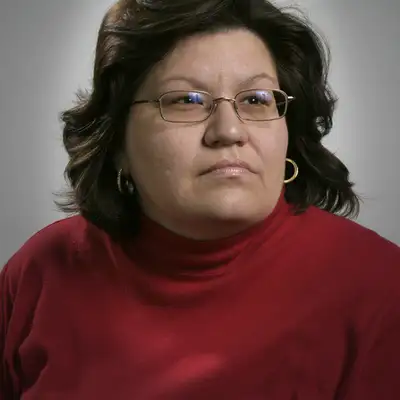
The Road To Your Name Podcast series grew out of a program started by Aboriginal Legal Services (ALS) in 2016 that helped people going through the justice system and their families to strengthen and deepen their cultural connections. Host, Lisa VanEvery, examines many aspects of Haudenosaunee culture and teachings with a wide range of guests.
Road To Your Name
Season 8, Episode 2: Visiting with R.G. Miller, artist and residential school survivor
===
Lisa: Greetings everyone. Welcome to our Yoha:te ne kahsen:na, The Road to Your Name podcast, focusing on Haudenosaunee cultural topics recorded on Haudenosaunee territory.
Lisa: These podcasts are produced by Aboriginal Legal Services with the technical assistance of True Seed Media. My name is Lisa VanEvery from the Mohawk Nation and the Wolf Clan. I'm the coordinator of the Yoha:te ne kahsen:na, The Road to Your Name program, and the host of the podcast.
Lisa: This is the Yoha:te ne kahsen:na: The Road to Your Name podcast series.
Lisa: On this episode we'll talk with Haudenosaunee artist R.G. Miller, who is the artist of the exhibit Tsi Non:we Entewaha'hara'ne (Our Path Forward). That means "Our path forward" in Mohawk. Okay. I am studying Mohawk, but it still takes me a while to- wrap my tongue around the words sometimes. So the exhibit opened at the Woodland Cultural Center Mohawk Institute Museum, and it will probably be here till the spring of 2026 if you care to visit the Mohawk Institute Museum, which is now open.
Lisa: So I wanna say welcome, Gary. Welcome to the podcast, and nia:wen for agreeing to do the podcast with us this evening.
RG Miller: I'm glad to be here. Thank you.
Lisa: Yeah. I know I, I saw you when this, this exhibit in its origins opened at the Woodland Cultural Center in 2008 originally.
RG Miller: Yeah.
Lisa: And it was called RG Miller: Mush Hole Remembered at that time.
RG Miller: Okay.
Lisa: Yeah. that's when I first saw it, and it's been like you've painted your story. You're a survivor of the Mush Hole of the Mohawk Institute, and you've really painted your story and it's been described as disturbing and horrific. But how would you describe it?
RG Miller: I guess I got exorcized.
RG Miller: It was a, the taking away f- from my soul something that was stuck in there for s- all my life.
Lisa: Yeah.
RG Miller: So in like an exorcism, someone or s- or something Came to me and suggested that I've got to get this out of me if I'm going to continue to survive-
Lisa: Yeah ...
RG Miller: in the way I wanted to. And I felt that the same shit was happening, not just at Six Nations, but all the way across the country.
RG Miller: And what are we hearing about now is what's happening on the coast, in the West Coast, where they're finding all the bodies down the hill there.
Lisa: Yeah.
RG Miller: I'm not sure of the ... Was that Kamloops?
Lisa: Kamloops, yeah.
RG Miller: Yeah. So this isn't, over.
RG Miller: I'm sure there's many more places that are hiding, and truth will eventually come out.
RG Miller: It has to.
Lisa: Now, you were here ... They, It's, been said to me that you were the youngest person ever to come to this school, this residential school.
RG Miller: Yeah.
Lisa: At two.
RG Miller: Yeah, I ... Basically I came just, about a month into my third birthday.
RG Miller: So technically, I guess you could say three.
Lisa: Three.
RG Miller: But basically it was, I was basically still a baby.
RG Miller: I, in fact, I couldn't even speak yet. And if it weren't for the girls, th- they were great.
Lisa: The students looking after you.
RG Miller: Yeah, the girls. Yeah. Yeah, I, That's where my bed, they put my bunk there, and they took care of me, and they fought over me, and they all mothered me, and, it was wonderful.
RG Miller: It was the first time in my life I felt I belonged.
Lisa: And so you were here at The Mush Hole for 11 years.
RG Miller: Yeah.
Lisa: Yeah. What's your ... Do, you remember your first memory of being here?
RG Miller: I ... Yes, I actually do. I remember my mother and a man, I'm not sure who he was. He wasn't my father. But they drove around until I fell asleep, and then when they were putting me to bed, I was being lied in a bottom of a bunk bed on the girls' side, which I found out later.
RG Miller: But, what caught my attention was the little pictures on the quilt that I was being covered over with. And that's where I remember the little drummer boy.
RG Miller: And I looked at that and what have you, and I had no idea that, that was where I was going to be. I just felt comforted by the people that were around, and that received me.
RG Miller: And, yeah, and I was curious about the, the quilt. And yeah, and the next day, and the next day after that, I, can't really remember, but I probably cried my eyes out.
Lisa: Yeah.
RG Miller: But, I was fortunate enough to have family there already.
Lisa: Oh, yeah. Who was here?
RG Miller: my, both my sisters.
RG Miller: Dorothy, Reino, and, my brothers were here, too, Kenneth and Glen, Wayne, and myself.
RG Miller: So they were all here. I was the last one-
Lisa: Oh,
RG Miller: yeah ... to come, and I'm not sure why, and, but there was something inside me that felt that I really r- wasn't really wanted anyway.
RG Miller: It was one of those things, I just Yeah, when you're that little, you don't know, but it, I was happy to see my brothers and sisters again.
tro: And,
RG Miller: and th- their comfort. And the girls, they mothered me, I would say. And made me feel probably better than I felt with my own mother. They made me feel accepted, they made me feel, m- happy, I guess is a word, but not lonely. I'm not sure if there's a word for that, but-
RG Miller: yeah, I didn't feel all by myself anymore.
RG Miller: I felt like somebody cared. Somebody loved me.
Lisa: And so did you ever leave the mush hole at any time, or was it constant staying there?
RG Miller: No, I never left. I, one out of two or three times we would be taking out for the summer holidays.
RG Miller: And I'd go, however, I was only taken out to work. Either in the early days I'd be picking, apples, or, picking cherries, or if I could cut cabbage or, w- market gardening, that sort of thing.
RG Miller: And, eventually, as I got a, a little bit older, I would get more mature jobs, like working at, Holiday Homes and things. And then I would give all my money to my mother except for, $20 a paycheck, which was, I'm not sure if that was every week or every other week. But I would keep as little, as I felt I needed.
RG Miller: And I would give her the rest, and she just came to expect it.
RG Miller: and the other things, and the way I was treated, if I had to do it all over again, I wouldn't, because it just makes me angry now when I think about it. Like- I, the closest I ever felt Was with the Mush Hole kids.
RG Miller: We became lifelong friends.
Lisa: And they looked after you here.
RG Miller: Yeah.
Lisa: So it took you about, four years to complete your exhibit, the paintings. Is that right?
RG Miller: it could be. these are paintings that I did, w- in my spare time-
Lisa: Yeah ...
RG Miller: from doing portrait commissions or doing a, an, a different exhibit somewhere-
RG Miller: in Yorkville, in Toronto, and what have you, of landscapes and Native portraits, but nothing to do with pain-
RG Miller: or, my youth and how it was spent in this hole we call The Mush Hole.
Lisa: So you called it, feeling like an exorcism. and so after you were done with it and getting all of this out, did you feel better?
RG Miller: I, I did. And, One of the, I would say the evidences or, the evidence that I've not only felt better, but I felt a need and nor was I ashamed to talk about it.
RG Miller: I know a lot of kids that I went to the martial with that just can't speak about it, and they don't want to, and they get quiet.
Lisa: Yeah. Yeah.
RG Miller: And they ... I could find them on, the Silver Dollar in Toronto at any time. they became alcoholics.
RG Miller: And that does not exclude me. I became a drinker as well.
Lisa: did you at any point, in the pain of it all after leaving this place, get counseling or wasn't counseling available at that time to people or
Lisa: I don't know. What was it like to try to get any help for what happened to you?
RG Miller: I made friends, with older people. and one of them was a psychologist and his wife. They're- assistance in that area. We would just talk about things, and I would talk to other people about things, and even other people that have suffered through similar experiences.
RG Miller: It came with like them making me believe, and I'd come to believe that it's all right. There's many ways through a forest.
RG Miller: And sometimes you can't choose what path you're on, and there may be no path at all. You just make your way through the forest. But it's that experience, that making your way through, that, allowed me to, be strong enough to set a lot of that pain aside.
RG Miller: And, and eventually get to the point where I felt that I should basically make it public, if you will, or paint it or draw it or at least speak about it so that others that were stuck in the forest could make their way through it as well-
RG Miller: by my example.
Lisa: Yeah, when I remember when I first, went through the, your paintings, looked at your paintings in 2008, and I remember thinking, "I wish my grandfather was here to see this," 'cause he was here when he was four-
Lisa: in 1904. Wow. and, I could imagine him standing there looking at what you, painted and saying, "Yes, that is the truth." "That's what happened here."
RG Miller: Yeah. And even worse, things I could not put or say.
Lisa: Yeah.
RG Miller: And yeah.
Lisa: Because he never spoke about it either, and I never- Yeah ... got his story.
RG Miller: Yeah.
Lisa: And so I was glad to be able to see that you did that for others.
RG Miller: Yeah. And I met a, a lot in my lifetime, pe- got, boys, not so many girls because their, girls were on the girls' side, and we were on the boys' side, so 90% boys. But yeah, through life I'd run into them and what have you, and, yeah, we would talk about it, but we'd be instant friends, you know- through time and, struggle. And we all basically had the same problems. w- some of them had abusive parents. Some of them abused their relationships in, in, in that way. M- my parents did not abuse me. my dad, they separated, and when they separated, my mother just got rid of me by putting me in the residential school where my brothers and sisters already were at.
RG Miller: So I didn't know who they were at first, but, when I did find out, then we were close.
Lisa: Yeah.
RG Miller: And the, the whole idea of, the whiskey-drinking Indian and what have you is ... It's not any worse than a white man doing drugs. we may only have 150 years of alcohol experience in our sy- system since it started.
RG Miller: Maybe let's say 200 years. So for a culture and for a people in many nations in North America knew nothing of alcohol, so our alcohol consumption from the start is only 200 years old. Now, they were drinking wine and whatnot before the birth of Christ.
RG Miller: when you think about it, who- who's the alcoholics?
RG Miller: they're ... They've been drinking for a f- a few thousand years, and here we're 100- 150 years. However, if you put the shoe on the other foot and talk about drugs and, peyote and, other forms of hallucinogens which were used in, meditation, looking for an insight into self and what have you, the Indians were far ahead of anyone else.
RG Miller: they went on vision quests. They would, sit and st- not starve, but they would not eat. But they ... And they would chew, kinnikinnick a- and other forms of, roots and what have you that would help them, into the hallucinatory world.
RG Miller: Where they would seek themselves and seek wisdom and what have you.
RG Miller: It wasn't a, an, an enjoyment thing. It was a, a search for self and meaning, and alcohol, was a way just to rip them off.
Lisa: alcohol for survivors I guess was a coping mechanism- from the genocidal, experience they had, right?
RG Miller: Yeah.
Lisa: At the residential schools trying to cope with what happened.
Lisa: And, i- if I can take you back to June 8th, I think it was June 8th of 2008, when the prime minister at the, of Canada at the time, spoke his apology to the residential school survivors. Did you witness that at the time?
Lisa: And what did you think of it?
RG Miller: the effort was okay. the meaning wasn't there. It was basically something he felt that h- his advisors and his people, his party, should do-
RG Miller: to alleviate the growing pressure. At that time, the AIM movement was moving. there were conflicts happening all throughout the United States, and the Canadian Indians were starting to have their feathers ruffled, and they were getting upset.
RG Miller: And there was, Oka and, other areas where there was confrontations with the police and what have you, and the Peace Bridge blockage and what have you. So we were getting angry. We were expressing our anger, and the government, federal government, thought that perhaps an apology from Harper or what have you would satiate us.
RG Miller: and so he Basically gave us what I would consider an empty apology.
RG Miller: And to me, apologies, should be more action-orientated, not oral speech.
Lisa: Yeah. so I know you don't come back here to the, Mush Hole very often, but, it ... Does it get easier for you to come back when you do?
RG Miller: y- yes. It's, I'll probably never get it any easier, and I don't know why, but I don't have a problem with the Mush Hole.
RG Miller: It's the people that were in the Mush Hole, and the staff, the abusers, the priests, and all of the bullshit and the, the goodness that they proclaim. It ... When you know they're lying, part of you has to feel, and part of you wants to set it right.
RG Miller: when you have a priest who molests kids on the evening of a Sunday that he preached in the Mohawk Chapel-
RG Miller: and then that very evening roamed the dorms for potential little boys to abuse. And I'm not sure whether or not, I know abuses by, Zimmerman ca- abused little girls. I think his preference was little girls.
RG Miller: But, Boyce, eh, and, I s- all I can think about is him and, he preferred to, fondle and abuse little boys.
RG Miller: And finding out about this took a long time, 'cause many of us felt that we were the only one.
Lisa: Yeah.
RG Miller: And then we found out no, most of us were abused.
Lisa: And-
RG Miller: And it makes you upset, like-
tro: Yeah
RG Miller: if I fucking meet him now, I'd, I think he'd regret ever having done anything to me.
RG Miller: But I believe that he's passed away. I'm speaking of Boyce in this instance, but, I'm sure, in my instance, he was the only one that I can remember of, but I was much younger then as well. I do r- I did know that Zimmerman, he would, Take kids, young kids, and sleep with them.
RG Miller: and while he lived, 200 yards away, he still would sleep in one of the rooms that was set aside for himself with the little kids. I'm not sure whether it was just to coddle them or abuse them, I don't know
RG Miller: And I'm saying that through experience because he did that to me
Lisa: and justice was never, was ne- you never got justice
RG Miller: No.
RG Miller: they gave us what you might call a, a trinket, a, a payment of some kind, and that is supposed to basically do away with all of the abuses. And we're not just talking physical abuse w- and sexual abuse, we're talking mental abuse, and we're talking about abuses that have never gone away
RG Miller: They've been buried And they still are buried, and those abuses are transferred from spousal abuse-
RG Miller: physical abuse, mental abuse, to children-
RG Miller: all because of what happened. It's a chain that goes on and on. And yeah, I don't know when it'll st- I don't think it ever will. It just adds to the perversion of, sexual and physical abuse that, elders or perverts, do to younger kids.
Lisa: So whe- after getting out of this place, and, getting a career and, making your way through life and that, did there come a time for you that you tried to fill up those voids with positive things then, like your spirituality, language, everything they tried to take from you?
RG Miller: Yeah. It, it, did.
RG Miller: first I went to Burlington, Ontario, and lived with my grandmother. And, my grandmother would speak to m- her sister, my Great Aunt Susan, and they would speak Mohawk. and I was very interested in that. And I would go home, and m- my father would see me, and, he would speak to me in Cayuga.
RG Miller: Now I didn't have a clue what any of them were saying.
RG Miller: And,
Lisa: But what did it feel to hear that, hear the language?
RG Miller: Oh, I felt, they ... I, felt special. I felt I belonged.
RG Miller: Someone took the time to say something and perhaps something in me would actually hear it and know its meaning.
RG Miller: And they never stopped doing that until they passed away.
Lisa: That's good. Yeah.
RG Miller: Yeah.
Lisa: And, and learning about being Mohawk, did you pursue that when you were older?
RG Miller: yes. I, looked, and this is, how I know. And I started a, an organization called the Chiefs of Ontario. At one time, I was an employee of the Department of Indian and Northern Affairs.
RG Miller: H- however, an opportunity arose For me to, start an office for the band councils and the chiefs in Ontario.
RG Miller: So I did, and, I hired a staff, that could understand Indian and what have you. And, Peggy Francis, now she comes from St. Regis. she became my assistant and what have you. And, whilst I, kept on dealing with the government, I dealt with a lot of p- people that spoke the language, and they could get, and explain to the band councils in their own language far better, than I.
RG Miller: So I allowed that to go on, and I encouraged it.
RG Miller: Whilst I, on the other hand, was able to speak to the government in their language.
RG Miller: Their bureaucratese, if you will.
Lisa: What about... I know you, ki- you, pursued your art, and went to art school and- and, did a lot of art, during your, time.
Lisa: What, what did you like to create the most when you were painting? What were you drawn to when you were-
RG Miller: Portraits.
Lisa: Portraits. Yeah. Oh, yeah. In oil, right?
RG Miller: Yeah.
Lisa: Yeah. I know I saw your... I s- I didn't see the original, I don't know where it is, but your painting of, Pauline Johnson.
RG Miller: Oh, yeah.
Lisa: Yeah.
RG Miller: Yeah.
Lisa: Yeah. Do you know where the original is?
RG Miller: I think I, I may still have it, or-
Lisa: Oh, wow ...
RG Miller: or Six Nations might have it now.
Lisa: That's a beautiful piece.
RG Miller: Yeah.
Lisa: Yeah.
RG Miller: I may still have it. my friend, and associate, Neil-
RG Miller: he arranges a lot of exhibits across the border for me, and he is a cultural anthropologist.
RG Miller: So he- Yeah ... he has the art speak, culturally speaking, and the relevancy of artwork as it, Ah, relates to our culture-
Lisa: Yeah ...
RG Miller: and what have you. He can get closer to the target than I can. I seem to be able to paint, in moods. People often tell me that they feel when they see the eyes and whatnot, and I didn't do that on purpose.
RG Miller: It's just how it came out on my work when I paint it. And they'd say, yes, I can feel what that person is trying to say."
Lisa: And you did a portrait of yourself in the, that's in the exhibit.
RG Miller: Yeah.
Lisa: Yeah. T- how'd you do that? Just look in the mirror one day and
RG Miller: I did. And, and at the same time I, I- I had someone take a picture of me looking in the mirror and what have you, and I used both, Oh
RG Miller: as a, a resource-
Lisa: Oh, yeah ...
RG Miller: to come up with a finished product.
Lisa: That's a great one.
RG Miller: Yeah. Yeah. And I do it a lot. at first I looked down upon people that, copy things, and I find nothing wrong with copying anything. And I've, in the last 15 to 20 years, I've learned that there's nothing wrong even with, photocopying or transferring an image because when it comes down to the application of paint and what have you, that is you.
RG Miller: You cannot copy that. That's what you have to learn, and it comes from the heart.
Lisa: What do you think now about all this, robotics and artificial intelligence? How do you think that's gonna be affecting art?
RG Miller: I think it can only go so far
RG Miller: robots and whatnot are basically analytical.
RG Miller: They're basically, following a program. I'm not sure whether they have the gift of creativity-
RG Miller: and that is the most important if, you want to draw. I'm sure they can draw and paint very well-
RG Miller: but can they paint with feeling?
RG Miller: And emotion? Yeah. And that is where I believe they'll be lacking.
Lisa: Yeah. So what are you, what excites you today at 75 years old in the art world?
RG Miller: Getting back at it-
RG Miller: more than I have. I've taken about, I would say, almost two years off, just out of strict laziness.
RG Miller: But when I see it and I feel it, I know it's coming back, and that's what I'm looking forward to is, for me, to go through a week without doing anything, it starts to bother me now.
RG Miller: So I know it's coming. And then once I pick up a brush and I get a canvas and what have you, and a, a good model-
RG Miller: I believe that, yes, once I start and put those first strokes down, I believe I'll have kickstarted my, my art.
Lisa: Your next career in art.
RG Miller: Yes, the next phase, what have you.
RG Miller: Yeah, it's, I am looking forward to it.
Lisa: Oh, when's that gonna happen? Tomorrow?
RG Miller: I've actually started. I've, Ordered canvases. I paint large canvases, so I have to have them especially made, and I prefer cotton duck 12, weave on the canvas. So it's not as thin or as cheap, a- as the canvases they sell- pre-stretched and pre-gessoed. I prefer to have, if I don't do it myself, I'll have my son or, one of his friends who are getting stronger whilst I'm waning a little at my age. But to stretch the actual cotton duck over a stretcher that, I also design.
Lisa: Oh, yeah. Wow.
RG Miller: Yeah.
Lisa: And so how long would it take you to, paint, one of those huge canvases?
Lisa: If
RG Miller: you were like- I would say to get the basics and what have you, where I could actually quit if I w- needed to, about a week.
Lisa: Oh, wow. Yeah. Do you sketch first in pencil, or do you just go right to the canvas?
RG Miller: Yeah. what I, do is, I wash the canvas- in, in a brown or, a different dark color, and then I get an even darker color and draw in oil paint what I wish.
RG Miller: Now, if it is, a commission or, a member of the royal family or what have you, then I would probably use a machine that would blow the image onto the prepared canvas.
RG Miller: But painting it is another thing. You can, mess it up and everything else. But with my age and the experience that I've gathered over the past 40 plus years, I can do that fairly easily now.
RG Miller: And I probably could do it, just with my eye y- as well. I just find it quicker.
RG Miller: Yeah. I spend my time thinking about the strokes and what have you, and color-
RG Miller: and the actual drawing of the image and whatnot. They have tools now to do that. And then I look at the, masters that, I've studied, like Andrew Wyeth, Norman Rockwell, and what have you, and they did the same thing.
RG Miller: They were illustrators for Saturday Evening Post and whatnot, and they would transfer an image. And then the beauty and their ability to paint would come out.
Lisa: And what's it like in your studio? Is there music playing? Is it silent?
RG Miller: I, I like classical music. Chopin-
RG Miller: in particular.
RG Miller: And, yeah. And a- not really loud and what, but, loud enough so that I can feel it. And, I've become a fan of all classical music.
Lisa: nice. Yeah. Relaxing.
RG Miller: Yeah.
Lisa: Yeah.
RG Miller: And-
Lisa: That's interesting. I'm not a painter, so I, really admire people who can do that. Yeah.
RG Miller: Yeah. it sometimes it, takes you, somewhere else.
RG Miller: Yeah. Like I've, painted to country music. I've painted to, I would say Cat Stevens and, and folk music.
RG Miller: But generally speaking, it's ... I, go back to classical music all of the time, you know?
Lisa: Now, besides E. Pauline Johnson, who's the most famous person you've painted?
RG Miller: Oh, I painted the Premier of Ontario, Bill Davis.
Lisa: Oh, yeah. Yeah.
RG Miller: And I, do believe I did a sketch of Her Majesty, the Queen.
Lisa: Oh, yeah. I met her once. She's very short. She was very short.
RG Miller: Yes, she's, she-
Lisa: I thought she'd be taller.
RG Miller: No, yeah, she's, tiny, but very, sweet.
Lisa: Yeah.
RG Miller: Yeah.
RG Miller: And, yeah, and l- I had dinner. I got to ... And I was very honored and privileged to sit right beside her and, yeah.
RG Miller: Yeah. And it's very- challenging for me to speak because I'm in total awe of the fact that she is, at one point, England controlled our own six-tenths of the world's land mass.
RG Miller: And, yeah, and she was easy enough to speak to if you wished. It's just that I don't know how much information she was provided about me and what I do.
RG Miller: And if I asked- Yeah ... her something and she didn't know how to respond, I'd probably feel embarrassed, so I just kept my mouth shut.
Lisa: I think she's one of those, one of those, one of those people that knew a lot about, a, a little about a lot of things.
RG Miller: Oh, yeah. Yeah. and, she has her own, chefs and whatnot.
RG Miller: She will not eat the food wherever she goes. She has, 'cause she could get quite sick. so she has her own chef, her own cooks, and eats, eats her own food.
Lisa: I remember when she came here the last time, I think, with her husband, and she brought us a gift. She brought Six Nations a gift. We were all wanting to know what it was gonna be.
Lisa: And, she, it was when, Bill, Montour was our chi- our elected chief, and she brought us silver bells.
Lisa: And they were all engraved.
Lisa: And she really knew our history together.
Lisa: she- Our relationship we have together.
RG Miller: As I said, they, make sure she is schooled and she knows a- about what she's going to be saying or what she's talking about or what gifts are appropriate.
RG Miller: Now, prior to her, there were plates and silver given to Six Nations.
Lisa: Yeah.
RG Miller: And this was, perhaps a completion or an addition- Yeah ... to that collection that we already had.
Lisa: To represent our silver covenant chain. E-
RG Miller: exactly.
Lisa: Yeah, our relationship. Yeah. Yeah, I thought it was very, historical that she was doing that kind of thing, giving that kind of gift to us.
RG Miller: Yeah.
Lisa: I'm just so glad that you're saying that you're almost at the point of getting that career going again.
RG Miller: Oh, yeah. For sure. This is a great help.
Lisa: Yeah.
RG Miller: Yeah, just speaking to you and, recharging my thoughts and processes and creating things and-
Lisa: Gary, we can't wait for your next exhibit, to see what you're gonna come up with next.
RG Miller: I look forward to the process and the experience of painting it and hopefully we'll both be happy with the result.
Lisa: Oh, yeah. I'll be there opening night, you can bet on it.
RG Miller: Okay.
Lisa: nya:weh goh so much for being a guest on the Road to Your Name podcast.
RG Miller: Yes. Thank you.
Lisa: I really appreciate it, and I know the listeners are gonna be, so glad to hear from you.
RG Miller: and I'll say nya:weh.
Lisa: Okay. Onakiwa:hi.
Lisa: Nya:weh, thank you for listening to this episode of the Yoha:te ne kahsen:na, The Road to Your Name podcast, which has been produced by Aboriginal Legal Services and hosted by me, Lisa VanEvery. There are 10 podcast episodes in each season. Let's meet again on the next episode If you would like to learn more about our organization, Aboriginal Legal Services, and the programs and services we provide, please visit us at our website, www.aboriginallegal.ca.
Lisa: And if you feel inclined and would like to make a donation, you can click on the word Donate located at the top of the homepage of our website. You can also visit us on Facebook at Road to Your Name. This has been the Yoha:te ne kahsen:na the Road to Your Name podcast.