Subscribe
Share
Share
Embed
Bridges & Beacons is a podcast from The Jimmy and Rosalynn Carter School for Peace and Conflict Resolution. We invite you to listen in to multigenerational conversations with the peacebuilders shaping our world. Through dialogue that bridges divides and leadership that shines a light forward, this series explores how connection, empathy, and resilience make peace possible.
Inspired by President Carter’s legacy of moral clarity and thoughtful mediation, each episode reveals the human stories behind conflict resolution—offering guidance, hope, and practical wisdom from those working toward justice and understanding every day.
This is a space where every voice belongs, every perspective matters, and every story strengthens our shared commitment to humanitarian values and community peacebuilding.
Peace isn't passive—it's built. At the Jimmy and Rosalynn Carter School for Peace and Conflict Resolution, our community transforms conflict into opportunity for justice. We combine rigorous research with real-world action, developing innovative approaches that address conflict at its roots and empower communities locally, nationally, and globally. Through transformative education and hands-on practice, students and alumni are equipped to create ethical, just solutions that matter.
To learn more visit: https://carterschool.gmu.edu/
This transcript has been edited for clarity, readability, and length.
**Kellye Richardson**:
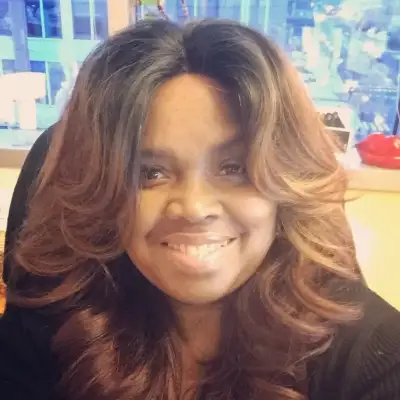
Welcome to Bridges and Beacons. I am Kellye Richardson, your resident peace influencer, and today's episode is Beacons in the Dark: Moral Courage and Collective Action. Today, our guest host is Professor Douglas Irvin-Erickson, a political theorist and diplomatic historian working in international criminal law, global justice, and genocide prevention.
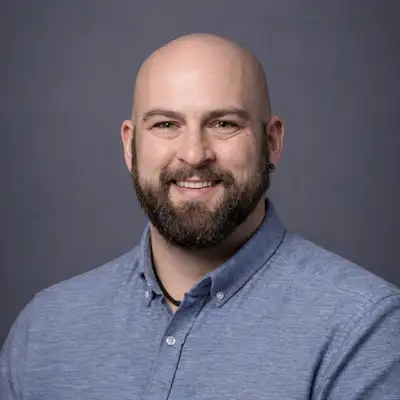
Doug is the director of the Genocide Prevention Program here at the Carter School. He is also a senior fellow with the Alliance for Peacebuilding, a board member of the Institute for the Study of Genocide, and a member of the editorial board of Genocide Studies and Prevention, an international journal. He holds a PhD in global affairs and a master's in English literature from Rutgers University.
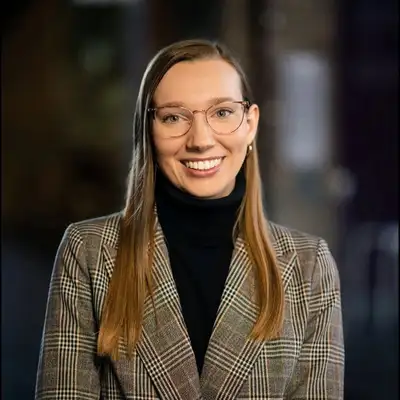
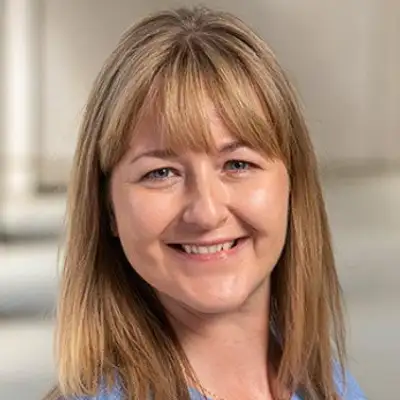
Our alumni guest today is Jamie Wise. Jamie is a genocide scholar and Holocaust educator at the Zekelman Holocaust Center. You'll hear more from her in a moment, but I'd like to start with a question for the professor. What is the mission of the Genocide Prevention Program at the Carter School, and why is it important in a global context?
**Professor Doug Irvin-Erickson**:
Thank you, Kellye, for the introduction. It's so nice to be here and I'm really happy to be joined by Jamie, who's doing excellent work. We had the honor of having Jamie working with the Genocide Prevention Program, which is an institution here at the Carter School that focuses on genocide prevention.
Our aim at the Genocide Prevention Program is to help educate people—students, people around the world who are working in conflict zones, people who are working in government and in civil society spaces—on the dynamics of genocide and other forms of mass atrocity crimes, and also pathways to prevention.
**Kellye Richardson**:
Thank you so much, Doug, for clarifying that and the important work that you're doing here at the Carter School. I'd like to delve a little bit more before you begin your conversation with Jamie. Could you tell us a little bit about the Scheidt Fellows and how it came about?
**Professor Doug Irvin-Erickson**:
Yeah, the Scheidt Fellows came about with a conversation with the Scheidt Family Foundation, which is one of the leading organizations that funds Genocide Prevention Education worldwide. This was a conversation that we had with the foundation about how we could maximize our impact.
The idea that we came up with was to provide Master's fellowships for five years, it turned out. The program we came up with was to create a master's fellowship program that would take young, bright people from college graduates, as well as mid-career professionals who were halfway through their careers. We would find people who were working in the United States and Europe, and in conflict zones around the world from every continent.
Through this diversity of experiences and backgrounds, we would bring people together in a context to learn about genocide prevention, while also earning their master's degrees in conflict analysis and resolution here at the Carter School. So the Scheidt Fellows program was an electric program and produced some of the most impactful graduates that I've had, and it is my pleasure to welcome Jamie into this conversation.
Jamie was a Scheidt fellow and it was just so exciting to have Jamie in the classroom. I know that her fellow fellows really enjoyed their time with her, and it's just been so much fun to watch Jamie's career take off after graduating. So it's really a pleasure to talk to you again after all these years now. We get to talk a little bit about what you've been up to. Jamie, it's so nice to see you. How have you been?
**Jamie Wise**:
Good. Thank you so much. It's really an honor to be here and reflect on some of the experiences we had with the program.
**Professor Doug Irvin-Erickson**:
Yeah, we had a lot of fun experiences. All of those projects that we did together with the group projects on prevention, that was a lot of fun. What was your experience being a student in the Scheidt Fellows program?
**Jamie Wise**:
Yeah. One of the best parts of being a student, I think, was being able to bridge the academic study of genocide studies and peacebuilding to these very practical needs to take action to build a better world. I think that was one of the things that I most enjoyed talking to peers from around the world about. Like, how are we actually going to take this fantastic knowledge that comes from academia and the literature and turn it into real, actionable projects that were going to change the world?
So my favorite part, absolutely, of the Master's program was developing my capstone project that I was really, really privileged to be able to carry forward into the next phase of my career.
**Professor Doug Irvin-Erickson**:
Your project was awesome, first of all. I had this really fun experience of teaching, and you sort of realize that Jamie's project is going to be okay. And then you realize it's not going to be okay, it's going to be great. Then you realize it's going to be brilliant.
By like the third week of class, you're like, Jamie's actually got more to teach me than I have to teach Jamie. So that final Capstone project was legendary, at least in my mind. I had so much fun being a partner in that and not so much a professor. I just felt like I had nothing to teach you except I could just go and give advice and see how you take ideas. It was a really, really fantastic experience for me as a professor to see this. I was wondering if you can talk a little bit about what that was and how you conceptualized it.
**Jamie Wise**:
Well, I think one of the things I learned really early on in the program is that scholars know a lot about how to prevent genocide—more than I think the general public actually thinks, because it's a really complicated problem and it's a real challenge that causes human suffering on a devastating scale around the world. So the challenge for me in coming up with an applied project was how do we take all of this fantastic knowledge and distill it down into actionable insights that can affect people in their everyday roles and responsibilities?
The group I really started working with, as you've already kind of begun previewing, are military service members. The project I devised was to work with military officers in training in Reserve Officers' Training Corps programs, ROTC programs, at universities across the United States to really equip them as future military leaders to recognize the warning signs of genocide. As they're deployed throughout their careers, they'll be in many conflict zones where these risk factors are particularly prominent.
So how can they learn to recognize those and really be on the front lines of helping to enact prevention within their roles as service members? But also, thinking about how to help these individuals as they're embarking on their military careers to think about their own values and how they're going to live those out within these different scenarios. As they think about the different types of orders that they'll both give and receive during their time serving, how do they navigate any potential dilemmas that come up? How do they act with moral courage within these contexts?
Really, the goal of the project was to develop an education program that took a lot of this knowledge that's been developed over decades and turned it into an opportunity for reflection for these future officers. The theory of change was really centered on how education can empower people within different sectors of society to really take concrete action to address genocide as a real problem.
**Professor Doug Irvin-Erickson**:
Jamie, I want to pick up on this idea of reflection and use this notion that education can be a tool for social change. I like this because social change can be within the context of somebody's own personal life. It can be social change in the context of their workplace. It can be social change in the context of a particular chain of command that they find themselves in. If you're talking about people working in the police and security sector, it can be social change in their congregations, in their communities.
What I really like about this model of genocide education that you developed as key to prevention is that when you think about genocide and mass atrocity violence, you think of Auschwitz and Cambodia. But you take a step back and you say, well, how did the society get there? A society gets to this point because this kind of mass violence requires people across a society to be perfectly okay with it.
Some of them are going to be radicals who really want it. Most people tend to sort of be indifferent to it. So you start to realize that you can't commit such mass violence without people from a whole society being involved somehow. That involvement can be as simple as people who make a choice not to pay attention, people who don't see it as a problem, or people who look at this violence and it's not registering as violence.
Suddenly you see that in this complex system, the ability for people to think ethically about the world around them actually is a key driver of both the violence that we see in genocide, but also how you would talk about prevention. I think that theory of change was so smart. I think that the project that you devised was such a smart way of designing a curriculum that really allows people to think critically and ethically about their own relationship to those around them and the societies that they live in. I really love that.
Genocide prevention to me is a critical issue, particularly these days because genocide hasn't gone away. Mass violence hasn't gone away. That constellation of other types of horrors and suffering that goes along with it—such as discrimination, othering, and dehumanization—we kind of tend to see that all around us in the world today. This could lead a lot of people to lose hope and despair.
So Jamie, I'm going to ask you to talk a little bit about what gives you hope here and sort of the kind of work that you do in your own project, but also what you've seen in your role at the Zekelman Holocaust Center in Farmington Hills, Michigan.
**Jamie Wise**:
Yeah, people might not think this is a very hopeful career path to go into genocide studies, but I actually find a lot of hope and meaning in it, especially through education as a form of empowerment. I think these types of conversations are so meaningful that you can have within these different spaces.
Since coming to the Zekelman Holocaust Center in Farmington Hills, Michigan and joining the education team, I was able to kinda land my capstone proposal here and start doing this work just a few years ago. Since then, we've educated hundreds of officers in training and thousands of local law enforcement officers, looking specifically at the history of the Holocaust from the lens of the security sector.
We work on understanding some of those broader lessons learned for ethical decision-making and the connections that people make, and how it opens up this level of reflection on how they impact the culture of their own institutions, the culture of their community, and just the power of their individual choices. It is really inspiring to see, and I'll give you some examples because I think maybe that'll help people really understand what this actually looks like.
When the cadets come here to the museum, we'll go through the entire exhibit, which goes through the history of the Holocaust, and we'll tell them in particular stories of service members or people in uniform, and the choices that they made that impacted this history. One of the things we commonly will talk about is the Warsaw Ghetto uprising. We talk about the heroism of the Jewish resistance fighters who banded together to fight back against the Nazis during this critical time of the Holocaust, and the tragic outcomes of that uprising and how it was repressed by the Nazi regime.
One of the stories that we often tell is actually of a Nazi military officer named Wilm Hosenfeld, who was stationed in Warsaw at that time, and he kept this extraordinary field diary. That was his personal writings and reflections of this time, and he witnessed how this uprising was crushed by the Nazi regime. He wrote very introspectively in that diary about his own moral grapplings with what he was seeing and the institution that he was a part of, and engaging in mass violence against innocent Jewish people who were forced into this ghetto.
He not only had this change of heart, he also then changed his actions. He used his Nazi uniform as cover to then start rescuing several Jewish escapees of the Warsaw ghetto, and kind of totally switched his entire mentality. He is actually recognized as Righteous Among the Nations, an award given by Yad Vashem, Israel's Holocaust Museum, to non-Jewish people who risked their lives to rescue Jews.
Just think about that, how staggering that is that a Nazi military officer would get that award. When we really break down that story, what you can see is that his willingness to think about the consequences of his own actions, to make moral judgments about how his comrades and his compatriots were fighting a war, and navigating those dynamics on a very personal, individual level actually led to saving the lives of several Holocaust survivors. It's stories like that that remind us that at the center of every genocide are real human beings who make choices. Using that to reflect is so powerful.
So we don't just talk about the Nazi military perspective, how those forces were radicalized, or some of those few upstanders in uniform. We also talk a lot about Jewish service members and resistance fighters throughout the war as ways to show how people found ways to lead with moral courage, even under circumstances that are completely unimaginable to many of us today.
One of the other case studies that we tend to share in these programs is to talk about Jewish service members who fought back against the Nazis, whose motivation was often very personal—to fight antisemitism on a global scale. Some had relatives that were abroad that they were very much trying to protect from this escalating genocide.
One of the really, really interesting chapters of this history is actually about a camp located in Maryland called Camp Ritchie. It was a special military intelligence training center that was created by the US Army to essentially take German Jewish refugees who had escaped Nazi-occupied Europe, teach them how to interrogate prisoners of war, collect intelligence, and send them back to Europe to fight on the front lines. Some of these stories are incredibly powerful and inspiring, and just show this theme of resistance—of how people fought back, how these individual choices really shaped this history, and how people in uniform within the mission of fighting this broader conflict were able to take a very active role in fighting back against this genocide.
I'll tell you one of the very interesting stories that we have in our oral history archive here is from a survivor named Howard Triest, who was originally from Munich. He came to the United States, he was trained, and he went back to Europe and fought in the war. Afterwards, he became part of an internal security detachment at Nuremberg, which is where many of the post-war trials were held of high-level Nazi perpetrators. So he got to meet many of these perpetrators face-to-face.
A lot of them didn't think that he was Jewish because he didn't have these stereotypical features that were often negatively caricatured as being Jewish features. So he was able to kind of pass and learn a lot from these perpetrators. One of the things he reflected on later in life was just that they were shockingly normal. There was nothing about them that made it seem like they would become these mass murderers, and he had to kind of deal with that, seeing it firsthand as he thought about his own family members who were murdered during this genocide.
I think that's one of the main misconceptions that people have about genocide is that they think that the perpetrators are these inhuman monsters or they're very abnormal. One of the things that we spend a lot of time diving into in these dynamics is this concept of what makes someone commit these types of crimes.
Doug, it was actually a book that you'd first assigned to me during the Master's program, *Ordinary Men* by Christopher Browning, that became a lot of the inspiration for this work. So we talk a lot with participants in our programs, whether they're future military service officers or others, about the findings of this really groundbreaking study that showed that often the mass killers who were involved in committing direct violence during this genocide were quite ordinary. What led many of them to commit these crimes was peer pressure, conformity, and the fear of standing out or looking weak among their peers.
When we think about those kinds of dynamics, it's frightening because it shows us that every single person is vulnerable to these types of psychosocial dynamics to commit these types of crimes. But then it also becomes a challenge to think from a leadership context: how do you reverse that dynamic? Right?
How do you model positive leadership and courage within the unit level, the small group level, and the community level to help people rise to this challenge of preventing and risking their lives to help others within these complicated contexts, rather than just going along with it? Doug was saying no genocide happens without so many people being willing to turn a blind eye to it. This is just one example of how we can take this research that's been developed over decades in the field and actually bring it into conversation with people who have the power to make change within the world today, whether it's due to their positionality or just their everyday interactions in their community.
**Professor Doug Irvin-Erickson**:
Jamie, you really talked so eloquently about all of the important parts of reflection and thinking that need to have people reflect ethically about prevention, and also that paradox there, that genocide is actually something that normal, average people commit.
So let me come back and ask you—I want to ask you a little bit about the responsibility that everyday people have, but also if you can give a positive message to students who want to study this. In your own work, what kinds of things have you noticed are good next steps for people who want to take a next step in learning about genocide and genocide prevention education?
**Jamie Wise**:
I think the most hopeful message I can leave you with is that even though we know that ordinary people are capable of committing genocide, we also know that ordinary people are capable of preventing it. That happens in our everyday interactions, the ways that we shape a culture of peacebuilding within our own communities, whether it's in our professions, our civil society groups, or just the people that we interact with on an everyday basis.
I think one of the best ways that people can get involved in prevention is through the work of memory and education. Of course, I'm coming from a Holocaust museum, so I think being able to participate in memorial events that commemorate the 6 million Jewish people that were murdered during the Holocaust, to continue to share their stories—stories of survivors—and preserve these historical truths so that people can continue learning from them is one of the most powerful ways that we can really engage as a community in prevention. There's so much inspiration to be taken from this as well.
One of my favorite artifacts in our museum is actually a prisoner uniform jacket from one of our local survivors named Ben Guyer. He was originally from Poland and sent to a number of the camps during the war. All throughout that time, he kept this striped blue and gray jacket that was his prisoner uniform.
After the war, he tailored it into a suit jacket, into like a very fancy blazer with this trim collar and this nice structured lining. He put pockets on it, and he said, "Free men have pockets." Then he sewed his prisoner number back on it with the star indicating that he was Jewish, and he wore it after the war. When he immigrated here to the United States, it became his formal wear for different social gatherings and events.
It's just such a powerful testament, I think, to how so many survivors reclaimed this trauma, the worst part of their lives, and turned it into a message of resilience and empowerment of what they were able to overcome. The power of those witnesses in sharing their stories is what we have the privilege of being able to learn from, and I think it shows us that even though genocide is a horrific problem that devastates lives around the world, there is a path forward. Through memory, through efforts at justice, and continuing to tell these stories, there is a path forward.
So I really encourage everyone to maybe leave this call reflecting on just what can you as an individual do to help build a better world? For me, the education that I had at the Carter School really helped me encounter new ideas and think about how to turn those into reality. I think that's a testament to the power that education really has.
**Professor Doug Irvin-Erickson**:
Jamie, thank you for talking with me today. Thank you for giving me the honor of having you in class, and thank you for sharing all of your experiences and thoughts with the friends of the Carter School.
**Kellye Richardson**:
Doug and Jamie, thank you for joining us to discuss this complex and important work of the Carter School Genocide Prevention Program. I believe our listeners enjoyed hearing about the Scheidt Fellows, the complex system of prevention of genocide, and Jamie's opportunity to carry her capstone project forward professionally with the Holocaust Museum and the military. We leave our listeners with the incredible moments of resistance fighters, the idea of reflection, and social change.
As we concluded our conversation, I was struck by the balance of realism that both Doug and Jamie embody. Genocide has not disappeared from our world. The forces of polarization, dehumanization, and indifference remain present in many societies, yet so do opportunities for prevention.
At The Carter School, we believe that peacebuilding begins with reflection and action within classrooms, workplaces, communities, and institutions.