Subscribe
Share
Share
Embed
Leveraged finance, distressed debt, and private credit drive today’s markets. Cloud 9fin delivers expert insights on high-yield bonds, syndicated loans, direct lending, and debt restructuring. Join top analysts and investors as we explore credit markets, special situations, and private debt strategies shaping the industry.
From credit risk assessment to institutional credit trends, each episode provides actionable intelligence for fund managers, institutional investors, and financial professionals. Whether you’re tracking high-yield issuances, analyzing corporate debt, or uncovering distressed debt opportunities, we’ve got you covered.
Through its AI-powered data and analytics platform, 9fin provides everything you need to get your head around credit or win a mandate — all in one place. We help subscribers win business, outperform their peers and save time. Stay ahead in leveraged finance market trends—subscribe now for expert discussions on the forces moving global credit.
Sunny Oh
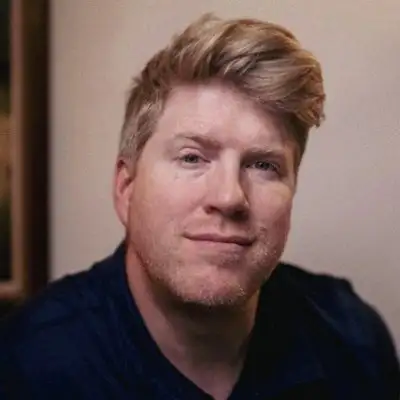
Hi. Welcome to the 9fin Syndication Nation podcast, where we discuss all things leveraged finance. Today, we have here Mark Melchiorre, founder of Forza Investment Group, which invests in credit strategies across public and private credit. Welcome.
Mark Melchiorre
Thank you. Thank you for having me.
Sunny Oh
Glad to have you in the studio. To start off, just give us some of your background because I know you spent a lot of time trading on the sell side, and now you're running your own shop. Go through that journey for our listeners, and maybe explain a bit of that mentality shift that comes with that leap.
Mark Melchiorre
Right. So I was introduced to the industry in the mid nineties. My initial role was to come in and do credit sales and trading, starting credit derivatives, I had a corporate bond background more focused on high yield leveraged finance at that time; bonds and CDS. Then I made a transition in around 2007. So from like ’95 to 2007 I was pretty involved in sell side trading desks and things like that.
I transitioned to a multi-strat world where we started credit strategies at UBS O'Connor. I learned a whole different way of looking at risk and executing strategies. And that was very informative and my growth around risk management and how we looked at the world. But unique in the sense from a leveraged finance, high yield stress perspective.
I always loved derivatives and converts and things like that. I always loved the hybrid world. And I started my own hedge fund, ran it for four years, called Taurasi Capital Management. I spent some time at JP Morgan for a couple of years after that. And then around that time, I started branching out, restarting a business, but deals and solutions for difficult situations, harder situations that might have needed a creative solution of some kind. I was working with a group of people where we had very strong proprietary capital, very interested in taking risks in harder things. So, we had the ability to advise with capital behind us, take an approach of, okay, look, we're a stakeholder in your company. We have a solution for you. We can use our capital.
But then, it reinvigorated my network on the sell side. And I had this ability to go to other asset managers and pockets of capital and do some really interesting deals. That could have been called private credit back then. That wasn't really a word that was being used too much. You know, this hybrid investing, it's kind of like, okay, I guess I've been doing that a lot of my career, but, sure call it that. And, but then I'm still doing public market strategies.
I became close with the Brean partnership in 2019, created a very interesting business around Brean Asset Management, separate from the broker dealer. But it was nice to have that crew together. They were very similarly minded to us. We became very close to an insurance company at that time. That became a bigger and bigger part of our business.
So in 2024, we spun out, we started Forza as an independent entity. Through that, our involvement in companies went deeper, so you can think of us as being partners who take a very big stake in either debt or debt and equity or hybrid and get to know the other stakeholders in the capital structure. So we get a real edge just from knowing the company so well, understanding the business, understanding the motives of the other stakeholders.
So there may be a solution needed, whatever the solution is. It could be M&A, it could be a recap, it could be dividend, it could be somebody needs to inject equity somehow. And we do a very good job of finding different groups of co-investors, as well as using our own capital to fulfill those needs. And it's really become a huge thing for us. And it just happened to also be something that seems to be not just a popular investment strategy right now, but it's a pocket of capital that's really needed in the world.
The world has plenty of first lien capital. The world has plenty of corporate bond capital. There's plenty of firms that have very specific mandates, but the world's become quite rigid in some ways. The traditional sell side, well, it's become very large-firm dominated, that has very specific capabilities. They can be very big when they want to be very big, but don't want to touch harder stuff. There are plenty of clients who are very willing to invest in harder stuff. But they have big yield bogeys. They have very onerous covenants, so many protective measures that it's kind of difficult to find the right investment and, or somebody who wants to take those terms. Then there's people like, you know, and like I said, there's all this capital to do the normal stuff, right?
So you got to be kind of creative to sit in the middle. And because of the way the world has evolved, There's become a serious need for that solution. Many of the first lien holders don't want to be the owner of the company. They want a positive solution, especially now in private credit. There's plenty of private equity firms that don't want to lose their option. They don't want to lose the company. But if things get bad enough, if the dispersion gets bad enough, if the correlation of defaults start to go up, many of the equity sponsors are just going to throw the keys back. And they do a very good job of avoiding that. The private credit manager and the private equity manager tend to find a solution themselves without value destruction. And that's actually one of the big positives of private credit and private equity.
To be clear, I'm a huge fan of private credit and private equity. I'm not one of these people who are going to bash either side of it. But they've evolved in different ways to where you wonder where the future is going. And I think our area is what's going to become more and more popular because the risk adjusted returns for people who know what they're doing in that space are very strong relative to private credit, relative to private equity. And there's not a lot of people that do it well or have the mandate to do it. So but it's a very tricky space, to be clear.
And I think that that's a huge thing we do and that we're known to do. And we've built a business around it. And with that, we've thankfully created some partnerships with not just family offices, but with insurance capital. We recently merged with that insurance partner that we've had the whole time. And we've created Forza Insurance Asset Management. And I think we have an interesting vertical. Some people call it a flywheel. I think we sit in a space where we've created strategies and solutions that fit our insurance partners, but also fit more speculative capital. And because of those structures in that asset management firm, we're capable of providing two different types of solutions.
And we're not the biggest firm in the world, but we partner with very large firms. So, when we need big balance sheet intensive, more market-based returns, we're big because we have big partners. We can go to a lot of the other asset managers and say, hey, partner up with us. And the relationships are very strong. One, just from a lifetime of relationships, but then also no one is a place that structures and prices things well.
Then I think where we've really differentiated ourselves is to create these really great risk-adjusted return products for the more speculative capital and have a trust level where people believe in our research, believe in our work and we can position ourselves into both.
So from that perspective, I really think, and I use the cheesy business school term, we're actually more of a solutions provider to our partners, our network, and the companies we're invested in. We have a very two-way relationship with these people. So we find ourselves often in a situation where we're partnering with the sell side, or we're partnering with the buy side, or with one of our investors, or our company, because someone, we either see a need, or they come to us with a need, and we're able to put the pieces together with our network.
So we tend to do our best during difficult times. We make our best investments, obviously, during difficult times, but we also seem to come through in the clutch when when it's not obvious for everybody. And I think that's a huge differentiating factor. I mean, people don't do business with us for our good looks and sparkling personalities, right? They do business with us because we get things done.
And then from the latter part of that is we've been now taking on as much of an advisory role with some of our companies where this huge tech expansion that's going on, the infrastructure expansion. We try to find the gems in this dispersion trade, clearly like software. And there's so many things that are getting killed. And then there's all this stuff that people want. Yes. I think we've positioned ourselves nicely in that dispersion and that I think we sift through the garbage pretty well. Or the things that people perceive are garbage. One man's garbage, another man's gold.
But we also are very conversant and have been investing in Bitcoin miners, tech infrastructure, power providers, next generation power providers, computing providers. We've positioned ourselves quite well in that. We know that space very well. We have a little bit of a first mover advantage in getting in front of those companies as they go from equity stories to debt capital structure stories, we fit in nicely there.
So, the converts, the hybrids, switching the more speculative debt capital fits us well. Those firms tend to be very much tech people running a business, not Wall Street conversant, not capital markets conversant, so we can be kind of a Sherpa for them.
Sunny Oh
So, what's that conversation been like with those guys? Because, as you said, a lot of these guys weren't used to dealing with institutional capital markets. They were hived off in their own space. And then, nowadays, they're embraced. They're a big part of the high-yield market. They're starting to come to the IG market. Just talk us through what those conversations have been like with those guys.
Mark Melchiorre
Yeah, it's interesting. I think some of these guys were Bitcoin miners, who in 2022 decided they probably didn't want to be Bitcoin miners for the rest of their life. One of our partners, a very smart, forward-thinking gentleman by the name of Alan Kwasha, He, he, he's kind of a thought leader and influencer, but invests in lots of different types of companies. He had some really unique ideas and he introduced me to a CEO named Dan Roberts who ran, who runs Iren, Iris Energy. And Dan and I hit it off and, you know, I thought he was cool and he used words that I'd literally never heard of before.
And I'm, you know, embarrassingly using Google and Wikipedia to figure out what the hell he was even talking about. But, there was definitely a time when when that industry was facing some serious capital needs, had some pretty unique problems. Bitcoin. I didn't really want to have existential debates with everyone about Bitcoin. But I did know that, hey, they made it at eight thousand and they sold it at fifteen thousand and they made money. And he had talked about this need for high performance computing, which I said, sure, that sounds right. Okay, I can see that. And so he was looking to kind of get out of the rut they were in and then evolve towards high performance computing. And we had put a lot of financing solutions in. He's a smart, wily guy. He avoided a lot of the dilution and stuff.
So we I think helped him through that time. And I think he found us as somebody who was at a time when there weren't a lot of capital solutions, we were somebody who could be a value added partner. As their business evolved, we actually just started buying their stock because it was pretty clear he was doing a good job of navigating that space. That was when the stock was at four or five. IPO to 28, dropped to two, three, four. I think by getting around, we did get a lot of equity investors for him, and we did invest quite a bit ourselves.
As things recovered, this is around '23, ChatGPT comes on the scene, And then all of a sudden you're like, holy cow, this is what they were all talking about. And they're like, hey, how do you play this? Because this is unbelievable. A younger gentleman, Harrison Tognol in our office, brought it to me one day and I was like, okay, wow, this feels like this could really change things. How do we play it? And it's like, well, there's this stock NVDA. And I'm like, that thing looks like you might need to buy a vowel in there somewhere. I'm not sure I know how to spell it. I did ask a few people what they even did.
But we started buying just the normal stocks in the space, and we did well. And of course, we get nervous like everyone else and trade it in, trade it out. And the volatility was crazy, and we're never perfect. But I think, trajectorily, we had the right trade on. Pretty transformational for our business. Allowed us to do a lot more as a business as we took some of the money we made off of all this and started redeploying it in other places.
But then, that's when the miners and the whole data center trade really took off. And we also started getting involved in like small modular nuclear, nuclear plays. A lot of my friends would be like, hey, Mark, you know, you're a high-yield bond leveraged finance guy. What would you know?
What the hell do you know about any of this? And so many people told me like, you have no idea what you're talking about. This is never going to happen. These guys are selling you a bad bill of goods. And it's like, sometimes I feel like they were right. And you have all the natural like self-doubt and looking in the mirror in the moments, like how could I be so stupid? But then over time really feel like, okay, well, wait, I might be on to something. And the team might be on to something.
And I think that's why we're pretty good right now, is because we do understand this, and we see the worst of it, and we understand how volatile it can be, and that you have to stomach it. And sometimes, stomaching, it's not good. Sometimes, you're supposed to just realize that the waves are moving.
But nuclear became a very big focus, almost like a passion item, because I do think the investments in the universe has shifted away from AI towards power. Power is a bottleneck. There's a phrase I like quite a bit is invest in scarcity wherever their scarcity exists. So yeah, there's scarcity in oil right now, scarcity in memory, semiconductor. But where is the scarcity going to be filled? At some point, we're going to create enough of this other stuff to fill that scarcity.
But power is the one place where there's a need. And I feel like our investing in power depicts the shovels, but ultimately that small modular nuclear is going to be the big winner. So, X-energy recently came to market. That's a great one. We're finding some other private investments. Great little company called Aalo in Austin, Texas. Working with them quite a bit. Making a lot of significant investments in it. We create these bespoke vehicles to invest in some of these companies.
But I like investing in them early because it keeps us smart about them. But it also gets us there early so that when people do start talking to them about debt solutions, hybrids and whatnot, we're in the position to be there first and have the relationship with them and having been with them for a long time and have that trust and an early stage believer. And to come full circle back to Iris, they start doing converts in the stocks in the 30s and 50s and 60s and 70s. And no one can get an allocation to that. But, you know, one phone called the CEO and Dan's like, you know, hey, tell us how many you want, we’ll get that for you. And so, like, all of a sudden we're at the front seat.
And then as people start preventing, providing them and TeraWulf with credit ideas and fixed income ideas, we show them what we think are good structures and interesting structures. And it's interesting. Our conversation starts back up again about being in the credit markets with them. And that relationship is there. And it's really nice. It's a nice progression of things. And we can be value added at those moments.
Now, again, we're not the biggest provider, but we do have the connections that can help them with significant capital. So, we try to work with everybody. And I think that's a massive, massive business for us going forward. So, we've created a capital solutions business that's set up to deal with the advisory and to deal with how we work with companies on that front. And then it's kind of separate from our investment asset management business that's pretty much entirely focused on insurance companies now.
So, we're growing our insurance company asset management business by including other insurance companies with us on top of the ones we're already managing money for. And I like this concept of bringing the multi-strat risk management style to insurance asset management. So, Apollo Athene is the envy of the industry. They're doing a phenomenal job. And Blackstone is getting bigger in it. And insurance has become very popular.
We're finding our own little niche. We really like the small insurance companies, the $500 million to $10 billion size is who we're really trying to focus on. Provide a service for the common person. But then also have a situation where we're Thinking of how Citadel or Millennium and going back to my O'Connor days, that type of risk management, we have the hub and spoke and centralize the risk and look at things holistically. Look across asset classes, provide the asset allocation model for the insurance company, that's similar to how multi-strats look at risk.
But I think that's very unique. I think that's something that a lot of places aren't doing. And I think that that's the value add we have. And I think if you can see how those two things connect with capital solutions, I'm really super bullish about our business more than ever today, as much as any moment, because I think we've really created this special business model that can sit in between all of this. And the key critical thing is I feel like we're a leveraged finance capital structure manager that is set up for the next five to 10 years with a heavy technology influence, our investing capability. But we've also, I think, built a pretty high tech platform. And I think that differentiates us quite a bit from other managers.
Sunny Oh
Yeah. It's interesting because in a way, like you guys primarily focused on high-yield capital back in the days. Dispersion trades, right? The spreads are really tight, but there are clearly certain sectors that aren't feeling the love.
Mark Melchiorre
Always somebody winning and losing.
Sunny Oh
Exactly. And yet, through the tech trade, that's a momentum trade. You're kind of playing both sides. How do you think about that? Is that a barbell, or is it just going where the opportunities are, going where the solutions are needed?
Mark Melchiorre
Yeah, the barbell is a very ... You're making the point exactly right. The credit component of it's been an extraordinary amount of capital flowing into credit plays in tech infrastructure, tech. Justifiably so. Right. And the deal sizes are very surprisingly big.
And during the ebbs and flows of the equity markets, the credit situations have held in really well. Which was kind of surprising to us. So, placing your more consistent, stable capital in these new tech deals that are coming has been a really good thing. Even CoreWeave unsecured bonds, which were very volatile, ended up being a very good investment. It paid to buy the dip in CoreWeave. Their bank debt was very cheap. And then once we got to it, but they're Venture Global in the sense of $60 billion of capex, holy cow. How are they going to finance that? This huge negative burn.
And you just realize that, look, there's a lot of capital in the world. These firms and the big hyperscalers are raising money in Europe, Asia, Swiss francs, converts, bonds, loans, equity. So people got to realize there's a lot of money in the world. And fixed income spits off a big coupon globally. And trees grow and they need to reinvest. And I'm pretty confident that the world is a little too concerned, a little overly scared or hyped that there's not going to be enough money for all this.
I take the other side of that in a big way because the big tech firms, everybody's one of these massive cash balances, massive free cash flow. But what else are they supposed to do with it? They should invest it, right? And these firms know more about the tech investment universe than anybody. So why shouldn't Jensen Huang and Nvidia be the best investors and biggest investors in the space? They know the most about it. And by the way, they're building their new clients. Seems really smart to me. So I'm not at all, I think that this is exactly what those firms should be doing with their free cashflow and cap and their capex decisions.
I have recently gone to some data centers, one recently in Kansas City. I mean, the scope of these projects are so massive that I do believe in four to 6% GDP. And I do believe in that happening while there's very tame productivity growth, you And I do think people can make the transition through AI. And I think it's like C-3PO sitting next to you, helping you do your job better. I don't fear it. I think it's an amazing thing for society. So, I mean, look, I can get as bearish as anyone very quickly. I'm a trader by nature.
I personally don't trade the way I'm speaking. But I do believe in the bigger theme of, this is great. And this is going to change things. And I feel like you're sitting here like maybe how the Rockefellers and Carnegies were sitting in the 1870s saying, wow, oil, rails, steel. Yes. I think what we're seeing in AI, power, infrastructure, this is as, I mean, we're all talking about it. But I'm on the, it's going to be bigger. It's going to be sooner. It's going to be more broad. And I think what's the biggest surprise about EPS this year was how these CEOs step back and say, people incorporating and integrating AI at a pace and a breadth that nobody expected, that so many companies were like, wait, how did they get an AI initiative? And many of these CEOs probably didn't even want it. They probably just felt like they had to do it.
And surprisingly, employees saying, give us these resources, let us use these resources, when you would think, well, wait, doesn't that threaten their job or this or that? So I think that's the biggest thing that we got out of earnings calls was the breadth and depth of the AI adoption. And so I think the world needs to wake up. Again, I'm saying this knowing that everybody reads about this every day all day. It's nauseating to listen to CNBC and read the papers about this topic over and over again. But I don't think people trade and invest that way. I think that they kind of listen to it, but everybody's very surprised about how fast it has come on.
So, with that component, I feel like I'm happy to be very bullish on the total capital structure. The problem is, in the convert and the equity component of it, and sometimes it's nice to be in private equity, because you don't think about the prices every day. But when you're in public equities and converts and hybrids, you look at these prices, and you just have to really modulate the highs and lows. It's always a thing in trading and portfolio risk management. It's never that great, and it's never that bad. And I don't want to speak like a wild-haired optimist, because I do have to live in credit. And it doesn't always pay to be a wild-haired optimist. I leave that for the equity guys.
But I think there's corrections every few weeks, every few months in this stuff. I mean people say, oh, when's the bubble going to crack? I'm like, I don't know. I think the bubble just did crack. Some of this stuff's down 50%. I don't know if people are watching what actually drives the market. I mean, you can't watch the S&P every day. You have to look at the factors. You have to look at, you know, every single day, these sectors are all moving in wild directions.
And that's where the booms and the busts are occurring. I mean, I think there's been five booms and busts in the past year if people really are drilling down into the market. So to me, the only way you can do that is have the conviction when the crowd's on the other side and it's really hard and realize that this stuff can always go farther than you think it can down or up. And when things get just so nuts to just realize you have to pull back and wait, and that happens to a lesser extent in credit, but in a big way in equities and converts.
It’s a phenomenal environment to be an investor, to be a trader. The one thing about trading and public strategies is technology is going to really cannibalize that space. JP Morgan had a great piece about durable alpha, right? And how long can human-based strategies withstand what you're already seeing in quantitative and computer-based strategies? Computers are eating each other faster in alpha strategies. Alpha doesn't last very long in high-arbitrage computer-based strategies because one guy's AI is better than the next guy's AI, and the next lady's AI is going to beat up that guy's AI. And all of a sudden, the edge you have on a very short-term basis gets cannibalized very quickly by other strategies.
So then you step back and wonder, where's that going? Where is execution trading going? 24/7 trading. Computers don't get divorced. They don't get sick. They don't get interested in doing something else. They do their job every day. Yeah. So I think that because of that, you then look, I like I like repositioning myself personally. I try to automate every single thing that can be automated in our strategies. Always have a person go over it, but just really let the computers be better at what they're better at.
However, that shows you that the edge is more in the certainly less liquid, more story oriented part of the markets. I was kind of trying to tell myself and, you know, people who come to me looking for career advice or what they should be doing with themselves. And I always say, hey, look, put yourself somewhere that where a computer can't do the job and put yourself in the real world ecosystem.
I always say, like, what are we doing for society? Are you financing a company? Are you building a company? Are you hiring people? Are you earning a wage? Are you providing savings strategies for the people who earn the wage? Because then you take that money and you invest through the finance guys to the companies that are building. So get into that ecosystem, especially in a place where a computer can't do it. And so I think our business is definitely focusing more and more on where's the value add that's away from tech? You know, where's the creativity? Where's the mobility of thought? The human touch to all of this that computers aren't going to…
Sunny Oh
The capital solutions, the advisory capability.
Mark Melchiorre
Absolutely. Absolutely. Where experience matters and the creativity and thought leadership matters. And obviously that's, I think, the way that, you know, we are positioning ourselves. And obviously I think that's the right approach.
Sunny Oh
Is how does this broader tech boom marry into insurance asset management portfolios? Because I think there's a big conversation around how does insurance participate in this? How should some of these investments be structured for that? And also, how does the unique requirements of insurance asset managers play into this? It seems like a big topic, but we're also thinking about this as we go along. Could you just talk us through some of This?
Mark Melchiorre
Yeah, insurance worlds, I find it fascinating. I will admit that I knew very little about it. I certainly wouldn't have called myself by any means an expert, but I think it's always important to listen, right? To listen to what a person needs and try to bring them what they need, not what I think they need, because I didn't know much about exactly how they needed to be delivered the situation.
So what I think is a problem with people trying to get involved in insurance asset management is they go to the insurance companies with what they think is right. And not enough people go to the insurance companies and say, well, what do you need? And in what format do you need it delivered? And let me solve your problem, not pass off what I think your solution is.
I think a lot of people in the insurance industry get turned off by the Wall Street hedge fund guy that tells them how to do their job, you know? And so by adopting our insurance partners who are very creative people, who like to invest in speculative things, but have to follow the same rules everyone else does, and trying to build something with them as driving it, insurance native, built within an insurance company, foreign insurance company, and then go out and try to see what we can provide that fits into their structures and regulatory environment.
Because most CFOs and CEOs, you know, asset management's like kind of, they make a lot of money off of it. That's where they make their excess returns. That's how you get rich in insurance. As Warren Buffet tell you. But many of them are like, you know, let me do my job as an insurance underwriter. Let me do my job as a, as a regulatory environment, the financial environment that they have to live with. And then there's this thing called asset management that I really don't want to screw up. And I don't want to do anything that's going to get my job and my company at risk.
So you take a look at it from that lens. You're like, all right, well, I have to start off there. And then what can we do? And I view our insurance partners as my golden goose. They're the thing I protect. I'm not one of these asset managers that goes and says, how much money can we make off this insurance company? And I think that's been a mistake that a lot of people have made in the past. They go get these reinsurers and they take a lot of risk on something that's inherently risky. Property, casualty has their own liquidity needs that are different.
Everybody loves annuities and annuity capitals. It's amazing, but you got to fit their framework well. Life insurers are now so popular, you wonder if there's value in them. So, what do you do? What I think we've tried to create is, let's take an asset allocation pie that is first suitable, right? Make sure that 50, 60% of it's very liquid and meets the duration needs. It certainly lines up with regulators in rating agencies. And then in the creativity box, the 45 to 35% or whatever the allocator wants to put, how creative, how risky do they want to be? Some of people are just like, nope, keep me down the middle of the fairway.
You know, I'll stick with that and say, OK, well, here's the pie for the conservative manager who wants an access return, but isn't looking to go out the curve beyond where they should. We all know where you should be. You know, when you're doing what you should be doing versus I'm being a little aggressive. Now, there's plenty of reinsurance companies, some annuity providers. You know, I'd say more. I don't use the word sophisticated. I want to use the word people who are willing to step outside the box and get a little bit more complex. Because I do think and I think Apollo was very good at articulating this to the world. And sometimes it might have been viewed as self-serving, but I initially viewed it that way.
But then as I thought about it, I think it's right. Complexity and illiquidity used to be these like almost X-rated words in financial markets. But then when you look at Silicon Valley, you saw plenty of firms that had 10-year treasury bonds, 30-year treasury bonds that got killed and Had 20% drawdowns. Yes. And you're like, well, high quality tranches and CLOs never had those kind of drawdowns.
No one's really ever lost money in CLO tranches, even including '08. So CLOs are actually a great financial evolution. You know, I mean, CLOs are just winners. Right? For all the right reasons. And are they complex? Yeah, I guess some, you know, been around a while. Are they illiquid? I mean, kind of, yeah. Is a CLO of private loans? Okay, well, it's definitely illiquid. Certainly feels complex. But if you're doing your job from a fundamental perspective, if the collateral is solid and they're great investments, is that more suitable? I would say certainly. Certainly more suitable. And BBBs are getting more and more leverage. Companies are getting more sophisticated. Very good at managing their balance sheet. Much more comfortable with leverage. But nonetheless, they have leverage.
So I think from that perspective, the complexity and illiquidity in when sized correctly is a great way for excess return. Yes. And so I think we've added some of that, the structured credit capabilities and managers that we go to for that and provide a very, you know, we were not afraid to go to some of our partners who are very close to managers. We know are very good. We have a CLO manager who's an excellent at fundamental credit analysis and they are happen to be one of the best performing CLO managers. I'm happy to share that with people, you know, don't mind marketing for them to an extent, but we create a deal where we're like, okay, you guys are great at that. We'll allocate to you. And that way we can go to our clients and say, you got the best managing your assets. Whether it's the largest fixed income managers in the world who we talk to for traditional fixed income. If we can manage it ourselves internally, we certainly do that. But then we also have our intellectually honest to say, well, who's better than us or who's, who's the best and allocate to them. But it creates this nice ecosystem because those loan managers also look for deals. Yes. Often we have deals and we can really partner with those firms so we can both allocate to our network as well as show deal flow to the network. See their deal flow provides investments for us.
And the one thing that, so that's our multi-strat view. Something we've been doing more and more of is creating these special purpose companies, right? They’re like a BDC, but not like they go across the cap structure where you issue debt off of these, you get them rated.
And then you have a permanent capital in the equity. And you get speculative investors who are long-term investors, tax efficient investors who want to invest in a tech theme or a healthcare theme over 10 plus years and don't need liquidity. They're not looking for redemption particles. So, but you get dividends, they get distributions, they can, they can sell their shares in a secondary market, but I love that way to invest for the longterm. And then if you can issue debt off of those structures, get them rated, sell them to insurance companies. Now what's so compelling about that? Well, our partners are smart, very smart investors, and they love the concept of being able to tell people our capital is going to fund the tech infrastructure build out of America.
I mean, this is as big a thing as the Manhattan Project. It's as patriotic an investment as you can make. It's, an important an investment that needs to be made in its balance sheet and technically levered balance sheet. So, you know, buys more than a dollar to go in this build out. And I think that's another thing people need to understand. If a sovereign wealth fund decides to buy a ton of equity and a bunch of balance sheet tends to let that equity get levered.
A hundred billion dollars of equity buys a heck of a lot of private credit loans and a heck of a lot of loans. I think people shouldn't underestimate how much the levered dollar can buy. I love those structures as a way to approach the next 10 years. And that's our biggest, that's actually our biggest focus right now. Are those kinds of vehicles. Anybody who wants to call us about that, we're happy to give you the information. I think everybody knows where to find me. Yes, we have one now and we're going to continue to grow them. And then they don't always have to be for tech. We have, we have a gentleman who's got a healthcare group, healthcare investors and companies that they like, and we're going to put some of that in the structure too.
Sunny Oh
And do you see other asset managers sort of copying that strategy or do you think they're already flocking into these kinds of vehicles too?
Mark Melchiorre
Yeah. I mean, look, as much as I want to think I'm a smart guy, I didn't invent these things. I believe Blackstone, for example, did an IPO of a company that is, I think Goldman bought it. They raised the equity through an IPO, created a company they're investing in data center build outs more from, I think a REIT perspective, I think, to an extent it's very similar to what BDCs do, you know? So I think it's that, I think the way I view it is get a flexible enough mandate to where you can buy hybrids converts. A little bit of PE, a little bit of equity. You know, you're stepping out a little bit there. It's not a CLO. It's not a private credit loan. It's not a BDC. It's a little more speculative, but I'll have a substantial amount of my net worth in it. And if it's a small vehicle, great. I think the equity will make a lot of money. If it's a huge vehicle, the great will be very involved.
But I think there's a lot of people, insurance companies, pension funds that want to like, so for example, if you go to the third world or the Caribbean or Puerto Rico, the Bahamas, and you say, hey, I've got this small modular nuclear company. You’re an insurance manager or a pension fund manager in these areas. You want to invest in your island. You want to invest in your country. Okay? You know, provide the balance sheet and we'll find the equity and government and the local people support it. And then you're bringing power and infrastructure to your Island. Like what's a better story than that?
And so I think that's an awesome an awesome story, but an obvious story. It's something that's clearly needed. And that's where that structure and our business model can step into unique situations like that.
Sunny Oh
Yeah, no. Going in, I wasn't sure what we were going to talk about to be honest, but I mean, it's just been really interesting to hear where you've been coming from to something like small, modern nuclear reactors, which incredibly hot space, interesting trend. And so it seems like you guys are doing a lot of interesting things and we'll be keen to keep following what you guys will be doing in the future.
Mark Melchiorre
But no, appreciate the time.
Sunny Oh
Yeah. No, thanks for having us Mark. I think that's all the time we have.
Mark Melchiorre
Okay. That's great. Thank you for having me. Really enjoyed it.
Sunny Oh
Thank you. Bye.