Subscribe
Share
Share
Embed
“Bravery isn’t being fearless. It’s choosing to move forward even when the outcome is uncertain.”
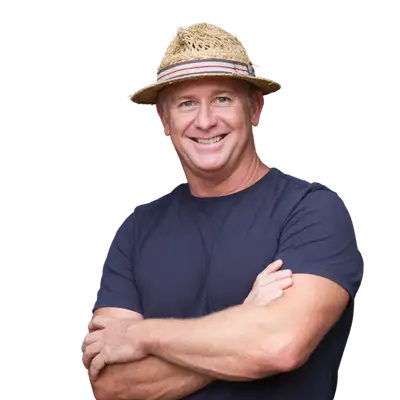
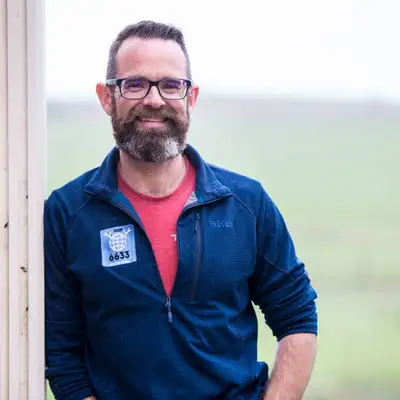
They’ve swum oceans, scaled mountains, launched empires, and shattered expectations. But before they did any of it, someone, maybe even themselves, thought: “You can’t do that.”
Hosted by Sam Penny, Why’d You Think You Could Do That? dives into the minds of people who said “screw it” and went for it anyway. From adventurers and elite athletes to wildcard entrepreneurs and creative renegades, each episode unpacks the one question they all have in common:
“Why'd you think you could do that?”
If you’re wired for more, haunted by big ideas, or just sick of playing it safe, this is your show.
Sam Penny (00:00)
What if the bravest thing you ever did wasn't standing on a mountain peak or crossing a finish line, but deciding to start again after failing in front of the world? Today's guest knows what it means to risk everything for a shot at something bigger. By day, he's a country town pharmacist and a dad. But outside the pharmacy, Paul Watkins has chased the hardest adventures on earth, winning one of the coldest, longest races in human history, dragging a sled.
through the Arctic night with nothing but his will to survive. He's climbed the peaks on every continent, learned to turn defeat into fuel and built businesses that thrive on the same grit that gets him through a blizzard at minus 40 degrees Celsius. But really what sets Paul apart isn't just the medals, the records, all the wild stories, it's his willingness to keep showing up after setbacks, to step back into the unknown.
and to share the real unfiltered journey, the doubts, the discipline, the drive to do what most of us would never dream of. If you've ever wondered what makes ordinary people attempt the impossible or how someone builds the courage to come back after a crushing loss, this conversation's for you. This is more than a story about adventure. It's about how we find bravery, rebuild after we fall, and learn to chase the big dreams.
no matter how cold, lonely or long the road. Welcome to Why Do You Think You Could Do That and welcome Paul Watkins. How are you Paul?
Paul Watkins (01:31)
Thanks, Sam.
Thanks. Good, mate. Glad to be here. That was a good intro. I'm sitting there going, probably the thing I think was most important was the fact that you called me ordinary, which I think is the thing that people miss. They hear all the lights and the bells and the whistles, but I think that's the important thing. Like I still see myself as someone who's just completely ordinary. I don't have any special gift. So I think that's a really good point to pick out really early and you nailed it.
Sam Penny (01:55)
Yeah, well, I often refer to myself as a middle-aged bloke who can swim good. And, I'm assuming we're about the same age. And I think ordinary is such an important thing when we discuss what we're going to discuss today, because it's not about doing superhuman efforts. And, what you and I have done have been what many people would think is superhuman. But we're just ordinary blokes. we're just going about our day to day, but we just love to test.
Paul Watkins (02:00)
Hehehehe
Sam Penny (02:23)
the bravery and the adventure that brings so much thrill to us. So Paul, before we dive into some of your really exciting stuff, I want to know more of the early life stuff and some of the, really what lit the first spark. So tell me, how does a country town pharmacist become one of the world's toughest ultra marathoners?
Paul Watkins (02:32)
Yep.
It's a long line to draw in it. I grew up not in the country, I grew up in Melbourne and I moved out to regional Victoria through business goals. was simply purely just a mathematical, this is where the business is that I was in. I was in retail pharmacy, that's where the opportunities were and I followed that with no plans of doing anything other than building my pharmaceutical empire and being a retailer.
Sam Penny (02:50)
Haha.
Paul Watkins (03:14)
And I did quite well at that. turns out as a pharmacist, I was an okay pharmacist, but I was quite a good business person and I built big businesses quite rapidly. But there's a limit to how much you can burn the candle at both ends. And for me, the spark of trying to do something brave off the map for me was really driven by the fact that the rest of my life was starting to look like a bit of a dumpster fire. The fact that work was so overwhelming and I'd buried myself so deeply in it.
you reach that point where you have to ask yourself that question of, is this it? Like, do I just work really hard now until I retire and hope that I can do the stuff that I wanted to? Is this it? that what everyone else expects me to do? Is that what I'm meant to do? And so to try and give myself some mental space to go and really think about that question of what I actually want to do, I tried to do something that was completely opposite to work, which was take a pharmacist and put him out in the wilderness. I went and did a really, really basic trek in Nepal.
And when I came back, I realized that, that's what it feels like to be a human being. It's more complete, not just the guy that works really hard and everyone thinks he's really successful. So I felt totally different and it felt really, really good. And that was a spark that led me to go, I wonder what's next. I wonder what else I could do. And then I just began to iterate from there. And that started what's been a multi-decade journey of just stacking layers and seeing where the road led.
Sam Penny (04:37)
So can you pinpoint a moment where, which was really a turning point where you really started to test your courage?
Paul Watkins (04:47)
Yeah, I woke up in hospital one day. That was the turning point because I'd been, I was working seven days a week, 365, like all the time. And I didn't show up for work for a few days. And my manager, one of my managers turned up to my house and he took one look at me and went, we're taking you to hospital sunshine, get in the car. Like I just completely collapsed and fallen apart. Like I was just, just absolutely completely burnt out. And I was in the hospital for a few days and the doctors came in and said, look, we figured out what's wrong with you. You need to slow down.
That's what's wrong with you. You need to slow down. So you come away from that and you realize if you die with the most money, you don't win. Like you don't get a medal. No one celebrates this like, okay, he worked really hard. Is there someone else who could work really hard? And that's it. You think, hang on, there's got to be more to it than that. So that was really a wake up call for me to go, you need to start adding some different chapters to your story because it can't be you worked really hard and died with a lot of money because it's kind of a crappy story. So
let's start investigating and seeing what else happens. And that, that little trick was enough for me to go, I'm curious about that. I didn't think I could do that. I didn't think that was something I was allowed to do as a nerdy pharmacist, no sporting ability. I'm not allowed to do that, but I did it. And it was kind of really cool. I wonder what else I can do. And that was just the beginning. It was enough just to take a step and try something off the map. That was enough to open the first door. And then you start looking where the next door is and away you go.
Sam Penny (06:11)
So what was it then Paul that made you ⁓ make the decision to go and do that trek and really step outside your comfort zone from what sounds like the first time.
Paul Watkins (06:21)
I think it was driven by the fact that it looked so opposite to what I'd done. So it had that allure and that excitement of going, this looks nothing like my life. Like this doesn't look like something that someone who looks like me would go and do. I wonder if I can do that. And I think that mentality had driven a lot of my business success. Can I go do that? Let's go find out. I probably just took that mentality and just applied it somewhere different that maybe I wasn't comfortable with. Could I go do a trek in Nepal? I don't know. Let's find out.
So you just go and attempt mean, the worst thing that happens, I was very basic. Like the worst thing that happens is you struggle and you know, you look, make a bit of a fool of yourself and you come home, but you'll still have had a great adventure. So for me, the risk was fairly low, but it's really that question of can I do that? I don't know. How am going to find out? We're going to try. Okay. Well, let's go try and see what happens.
Sam Penny (07:09)
Yeah, absolutely fantastic. And I love that mentality of, let's just go and see what happens. Now, I want to talk about one of the hardest races on the planet, the 6633. Firstly, explain to everybody what that is.
Paul Watkins (07:24)
So this is a single stage, self-supported ultra marathon inside the Canadian Arctic. So to unpack that sentence briefly for you. Single stage means that they put you on the start line. They tell you that the finish line is 614 kilometers away. Go, have at it. And there's no, you got to get to here at night. We'll all stop here and then we'll start the next day and we'll go from here. The clock runs 24 seven. You start moving and you stop moving when one of three things happens.
Sam Penny (07:32)
Ha
Paul Watkins (07:53)
You run out of time, like you've got a time limit, which is eight days. You run out of land if you literally run out of Canada to walk on stop. Or what happens to 80 % of people is you literally just run out of will. You just can't do it. So when you run out of willpower to sustain your life, just stop and you're done. So at single stage, you just go. It's self-supported, which means you don't have a crew. You know, you're
you're going to be self-sufficient in terms of safety gear, sleeping arrangements, all your food, your water, the whole lot, as you and what you brought. And you can bring whatever you like, but you have to drag it in a sled with you over the ice and snow. So choose wisely. And you have a certain amount of hours to get the job done and that's it. So they start us in a little village. They start us Eagle Plains and we've got 614 kilometers to get the little Inuit village of Tuck, which is
right on the very Northern edge of Canada on the edge of the Arctic Ocean. So out of the 614 Ks, you'll spend about 530 of them inside the Arctic circle. And it's go time. If you want to sleep, lie down and sleep on the snow. If you want to keep walking, keep walking. You do whatever you like. It's your gig, but the clock is always running and you're responsible for you and get yourself as far as you can or preferably to the finish line.
Sam Penny (09:09)
So when did this first show on your radar and why did you make the decision to give it a go?
Paul Watkins (09:15)
So coming into that, I'd had a long career of mountaineering. So to go back two steps, I did that basic trek in Nepal. I didn't think I could do that. What else I can do? What else do I not know that I can do? And then did a slightly harder trek. I went, well, what's next? Could I climb a mountain? Like mountain in inverted commas. So I went to Nepal again and climbed what I call a mountain. They call it a small hill, but I climbed it it was there. It was above sea level. And did that and went.
what else could I do? And then just started to iterate and iterate it over like 15 years, work my way up until I was climbing some very big, very technical, very difficult things. Now that's fine when you're single, when you're a single guy, you can push all the chips into the table all the time. It doesn't really matter, but you grow up, you get married, have kids and all the chips aren't all yours anymore. Like you're playing with other people's chips. So you have to really be cognizant of that and respect that. So I got to the end of a climbing career where I was climbing stuff where, you know,
people were not coming home, you're watching helicopters, long line bodies off. You're like, I don't know how far we need to go here. But you get home and go, well, I've got this skillset. I'm really good in the very cold. I'm really good at dragging heavy loads for long periods of time. What do do with a resume like that? And then, you searching through Facebook one day and I saw this ad for that race, 6633, just a coldest, windiest, ultra marathon in the world.
I'm definitely gonna click on that. And it took me to an article that was like the 13 hardest races in the world. And this was in, I think it was like number five or something of every discipline. And I read it and went, I reckon I'd be all right for that. Cause it's in the cold weather drag heavy loads, long distance. I wonder if I could do that. So, you next thing you know, you sign up and you pay over your hard earned money and you go down the rabbit hole of what do I need? And like,
The information was incredibly light. can only sign up for a big event and they send you all the data and all the information and the mandatory gear and all that kind of stuff. These guys were like, you should undertake this as a serious endeavor. So we expect you to come prepared. Here's a very basic mandatory gear list. We don't give you a map. We don't give you GPS data. Like you'll know where it is. It's going to be fairly well marked out and just follow the trail and we'll have a meeting with when we get there and off you go.
Sam Penny (11:31)
It's-
It's interesting you talk about all the things that you're good at that lined up to selecting that race in 2019, ⁓ December 2019. I was the first person in the world to ever attempt to swim the English Channel in winter. And the year before I'd swum the English Channel, earlier that year I'd swum an ice mile. So good in cold water. But also a background of mine is I'm a civil engineer. So
at statistics, I'm pretty good. And so I had analyzed the date. Yeah, I'd analyze the daily water data for the previous 13 years of the English channel and knew that at the start of December around the first to the fifth of December, the water temperature should be about 12 and a half degrees. And I figured at 12 and a half degrees, there's a chance I could make that. And it's interesting. I decided to make up this
Paul Watkins (12:06)
Your numbers, man.
Sam Penny (12:31)
event that nobody had ever tried, all because of my experience and all the things that I knew that I could do, and it sounds very similar to you.
Paul Watkins (12:42)
What's a really good point though. A lot of people think if you're going to go to do something really hard, you have to David Goggins it like you've got to be some hard ass is going to go in there and just man your way through it. But it sounds like you think the same way I do. Like I look at a race like the 66 33 as an equation to solve. Like it's a mathematics problem. What do I need to do to get to the end? Okay. Well, you need to be able to drag a load that's this weight. Okay. Well, how do I train to do that? What kind of pace do I need? Well, let's look at all the maths of all the numbers of all the people have ever attempted at what
pace to them, when they made it, how fast were they? When they didn't make it, how slow were they? And you figure out all the math. So I look at it like you don't have to be macho man. You can really just look at it and go, this is an equation to solve. How do I pull apart, figure it out, and then piece me back together in a manner that allows me to solve that equation and away you go. So I think it's important for people to realize you don't have to fit a particular mold to do a really hard thing. You can solve it your way with your toolkit and that's fine.
Sam Penny (13:39)
Yeah, 100%. Now, your first attempt, I think it was 2017 from memory, tell me the feeling of standing on that start line.
Paul Watkins (13:50)
I have a funny photo that I use in keynotes of me on that start line. And I've got this big beaming face like a guy who's about to have the greatest adventure ever. Like this is the face of a man who's about, who thinks he's about to get the greatest selfies in the world. I'm going to be in the Arctic circle. be the Northern lights. We're going to crush this. This will be epic. My social media will explode. Yada yada. And I say to people, that is the face of a man who was about to have all of the happiness smacked out of him at high velocity. Like within
minutes of getting off the start line. Everyone took off and like you got 600 kilometers to go and everyone was running, dragging a 25 kilo sled and I'm like running with the guy next to me like, why are we why are we running like, why are we running but I'm running because everyone's running. So you're making mistakes straight out of the gate. You've immediately abandoned your own race plan because well, those guys look like they know what they're doing and they're running we better we better run are we running and you just start making mistakes straight out straight out of the gate. So
Sam Penny (14:28)
Wow.
Paul Watkins (14:47)
I had an expectation in my head of what would happen and therefore what I needed to bring to the the start line. And both of those things were completely and utterly wrong. It's as wrong as you could be.
Sam Penny (15:00)
So that race you didn't finish, ⁓ how far in did you get?
Paul Watkins (15:03)
Nope.
I got about 250 kilometers in I got well actually there's two points I got to the second checkpoint, which is 113 kilometers in And I got into that checkpoint and I was completely beaten like absolutely shattered terrified of the idea of going back out and one of the other athletes said to me, what are you heading back out Mike? I don't think I can make he's like have you not figured this out? it's not a race. It's just a survival event
I could just see how long you can last. He said, why don't you come with me? We'll go together. This guy's name is Tim, Tim Hamlin. He's another Aussie. And he said, we'll go together and we'll just keep an eye on each other. Now I've kept in contact with Tim, he's a great mate. he's never thought of that conversation as anything other than a mate just going, are you all right? Do you want to, go together. We'll keep an eye on each other. If he had not said that to me, I guarantee you, I would have quit at that point at 113 kilometers. Guaranteed I was done. But he said, come on, we'll go a bit further.
So we got to the 250 kilometer mark and I pulled out of that mark because I was beyond broke and I was hallucinating, starving, body was locked up, everything was shutting down. And he kept going for about another 50 Ks after that, I think, and he pulled out as well. Only a handful of people finished that year, 80 % as per usual didn't make the finish line. But if he hadn't said that to me, I wouldn't have done that extra distance. And I think if I'd quit at the 113, I would have quit and gone,
This is insane. You people are nuts. I'm never coming back. But to do the 250 just gave me enough knowledge and confidence to come home and go, gee, we learned a lot then. Like it was horrific, but we learned a lot about what we got wrong. And you have that knowledge and now you have a reasonable body of experience in that race to go, you know what? They're tools that knowledge and experience tools. You could use that. Like you could use that to rewrite another story.
and go back and attempt it in a different manner. So that was really how that first half played out. But it really was, if that bloke hadn't said to me, if Tim hadn't said to me, mate, are you all right? Come on, we'll go together. My entire life since that point would look completely different.
Sam Penny (17:14)
Now, the decision to pull out, it's a brave decision in itself and you would have seen it on so many of your mountaineering expeditions where there's bodies just being carted off mountains, where people have just gone too far and taking it too far. What did you learn from withdrawing from the 6633 that first time?
Paul Watkins (17:36)
think it's really important to realize that no one gives a shit. Like in all seriousness, like I rang my wife in tears on the sat phone. I can't do it. I can't do it. It's too hard. I've failed. I've let you down. I've let me down. I've let the kids down. Like it's just disaster. And she's like, are you done? Like, you got any more, have you got anything left? Like, no. She's like, well, come home. But that's okay. Like you went and you gave it your best shot and you went and attempted something that stupid, which most people think is mind boggling anyway. And I got.
I was number seven to pull out. there were seven left when I pulled out. started with 25. I was number seven. There's no seven of us left and only five made it to the finish line. She's like, you're acting nearly everybody. What are you worried about? Come home. And you realize that a lot of that, when you pull out of a race, a lot of that sense of failure is all in your own head. It's not in anyone else's head at all. It's an entire story you've made up that you're a complete disaster. Whereas everyone else is going, dude, that was insane. I can't believe you did 250 kilometers.
in the Arctic in minus 40 with nowhere to stay like you were asleep in a bivy bag on the ice. You're mad. So it's that perspective thing of going the only person who thinks this is a failure is you. So you can let that go and you can rewrite that and chat and look at it from a different perspective.
Sam Penny (18:50)
2019 you make the decision to go back and give it another crack. What did it take mentally and physically to turn up again?
Paul Watkins (18:58)
That is a really good question. So I think mentally and maybe psychologically, there was that big drive to go back because you've got that stupid voice in your head that says you've got to prove to yourself that you could do it, which is not a bad thing, but you've just kind of got to keep that guy under control every now and then. And I knew I wanted to go back very, very early, but I sat on that for a little while just to understand that as soon as I made that decision to go back, I understood what the consequences of that decision were.
And some of those were consequences for me and some were for other people. So for the other people, was for my wife and kids and I'm going to be training. Then I'm to be away. There's going to be risk. You're going to have to handle everything while I'm away. So other people are going to pay some fees for that decision. And for me, mentally, I knew that as soon as you commit, you're going to have to do the training and it's going to be very different to what you did last time. And it's going to be quite painful. You're to have to commit and do this properly. ⁓ So.
If you take one more day before you say you're going back and start the training, you can have one more day where you can kind of just take it easy. But tomorrow the pain begins and we've got to train. So you kind of have that moment to go, right, we're doing it. And now we're in the zone and there's zero deviation from what needs to be done between now and standing on the start line. And so I've got a photo of me on the start line the second time. And I look like a completely different person, not physically.
Just you can see in my face in terms of the mental attitude I've brought to the start line the second time is completely different to the guy who turned up to the first time.
Sam Penny (20:25)
Was it a sense of calmness?
Paul Watkins (20:27)
Yeah, very much. I knew that as soon as that guy said three, two, one, go, all the people around me, all the other athletes would vanish mentally. I didn't care what they did. You can run. That's fine. I'm here. I have a very clear plan of how I'm going to execute this race down to the minute. So you guys do whatever you want. I don't care. But I'm here to do my thing. And my goal was to finish. that's and I knew I would come dead last. I would just wanted to finish. And I knew how to execute a race would allow me with my capacity.
to finish under the time cap. So for me, I was really calm. I knew I'd done every squat, every kilometer, every pushup in training. I haven't missed a single thing. So you're very calm because you know you've done the work. There's zero doubt about anything.
Sam Penny (21:10)
Was there a moment in that race where you had to decide between quitting and courage?
Paul Watkins (21:15)
Not in the second race. No, I don't think there was. I think I was mentally in the right space to go, we're going to be disciplined and get the job done. And we know how painful this will get. And particularly because the last third for me, which is typically the worst in terms of just your degradation physically and mentally. The first two thirds of the race, I spent it believing that the goal was to finish and I could do that.
And then there came a point about a third of the way, the last third where it became obvious that not only could I finish, but I could get on the podium. And that moment was a change mentally to go from the person whose mindset is finishing to the person whose mindset is I want to get on the podium, a very different people. So you had to execute a bit differently and you kind of, you spend the mental and physical pennies a little differently because you're trying to gun for a different outcome. So for me, I think that mentality took over for that last third, knowing that there was
something really ridiculous up for grabs if you could pull it off.
Sam Penny (22:14)
So you went from survival mode to race mode.
Paul Watkins (22:18)
Yep, absolutely. it was, and again, you rely on the same tools. You're still relying on the fact that you have the confidence in the training that you've done and the back catalog of evidence of all the hard things you've done before to go, you've done, you did something really kind of what you would consider simple, easy, hard to begin with. And then you've iterated up and now you've got some really big hard things behind you. So when you look back over that long arc, you've got a big evidence trial of hard things. You can believe that your capacity.
to do one more hard thing. And so you lean into that and rely on that and you've got nothing to lose at that point. I'm like, we're gonna finish no matter what. So the question is how high up the rankings do you want to finish? Like, what can you do? What's possible here? How deep can you dig and see what you find? It turns out you can dig a long way when you really want to.
Sam Penny (23:11)
So not only did you go from survival mode to race mode, you ended up winning the race.
Paul Watkins (23:20)
Yeah, I should say that survival mode and race mode often looked exactly the same. So the last kind of 24, 36 hours, was myself and another guy, Patrick an Irish guy, who were basically gunning it out to win. And I spoke to Patrick after the race that he was following me. And he said to me, he said, I was following your sled tracks in the snow. And he said, I knew what was happening to you because he said, I'd see your sleds tracks in the snow, they'd be straight. And then they'd start to curve as you got so exhausted.
And then he said, you started to do circles. You weren't even moving forward. And then he said, you started to pass out, didn't you? Cause he said, I could tell where you'd collapsed. And then obviously you got up and then dragged yourself on again. said, yeah, the last night before we finished, I was blacking out regularly, just collapsing them. You'd come to just lying in the snow and go, I've obviously collapsed. Get up again, keep going, keep going, keep going. So he could explain to me some of the things that were happening that I probably wasn't really truly cognizant of at the time. Cause you, your whole
body, every fiber of your being was just do not stop. No matter what the cost, just get to the end.
Sam Penny (24:26)
Absolutely fantastic. ⁓ Now, let's move on to some of the other amazing things that you've done because there's a lot of lessons for everybody in those as well. Now the Lapland Arctic Ultra and climbing every continent. Why do you keep seeking out the hardest path?
Paul Watkins (24:42)
For me, it has been the best vehicle that I've found thus far that allows me to kind of dig all the way to the bottom of the well and see who I am, because your life is full of all this stuff. And some of it's your stuff and some of it's other people's thinking about your stuff and who you are, what you should do and how you should look and what you should have and all that kind of stuff. But if you got to climb a mountain or you do a race like that, like I always say, the mountain doesn't give a stuff about your business card. It doesn't care how much money you earn or what kind of car you drive. All it cares about is
Did you do the work to have the right to even attempt this, to even turn up to the start line? And then after that, we see where the chips fall and it doesn't care whether you succeed or not. And it doesn't care how important you are or what other people think of you. So I love that it strips all of that away. And if you're on a mountaineering expedition or you're out on those kinds of expeditions, you only have what you can carry, your load capacity. So your life's been stripped down to the bare essentials of what you can live with, which I think is really important to take all that kind of stuff away.
And then you go out and find who you are because you don't have all those distractions and all those people watching you. It's just you and the crazy roommate that lives in your head and the mental inbox kind of floating around out there for days and nights all the time. And the last thing I love is that with a lot of those things, particularly mountaineering and Lapland was a great example of this is a race too. Even if you quit, you can't leave like you sometimes quitting is fine. That's if you're on the side of a mountain and you go, can't do it anymore.
Great. You're still on the side of the mountain. Like you've still got to get off. So there's not a case of going, quitting doesn't even solve your problem. can't go, I don't like it time out. And I'm just going to hop into the hotel or call an Uber. It's like, dude, it's still two weeks to hike out. So cool story that you quit. Maybe quitting isn't the best choice here because either way you still have to do the work. So you might as well channel it in a way that actually gets you to what you wanted in the first place. So for me, it's a great human experiment and I haven't found anything similar to it.
Sam Penny (26:41)
So on that then, are there any stories where bravery really made the difference between failure and pushing on?
Paul Watkins (26:47)
I guess to some degree, depends how you define bravery, like whether bravery is making the decision to continue when you felt that you couldn't versus being brave enough to believe in yourself or to have to look back at the evidence that you have that you're capable of doing things like having that faith in your own capacity. I think bravery for me isn't, you know, hanging off a mountainside with your ice axes and stuff. Sometimes it's just having enough.
fortitude and belief in yourself and your capacity based on what you've done thus far to believe that can actually move forward and do something like this. I think a lot of bravery is all up here versus doing something physical or what have you that people will recognize as bravery visually to them. It's more about the internal dialogue. So for me, I bravery has been getting to those points on mountains or races where
You just don't think you can go anymore. you just can't, things have all gone wrong and you just don't think you can do it. But giving yourself the space to go, maybe you are the kind of person that can do this, mate. You just need to tell yourself that and look back at the things you've done. You're the kind of person that can do this. So go do it. And for me, that's been probably bravery. When I think about it, it's been more that mental conversation of getting those things in line and understanding where the arrow has been pointing for all the time leading up to that moment.
Sam Penny (28:11)
So then how do you balance the risk, the adventure and life outside the danger zone then?
Paul Watkins (28:16)
I like to think that it's part of me and it's not all of me. there's I use the analogy of a book like books have a whole heap of chapters and you're not a chapter, you're a book and you have all these different chapters and some of them are really uplifting and great and some of them are really down and disappointing and difficult and depressing and some of them are just moving the story along and that's okay. But your life is made up of all of those chapters. So I like the fact that I have chapters of my life and some look very, very different.
I have the academic chapter and I have the chapter about being a business person. I have the adventure racey chapter and the chapters I'm writing now and the chapters I'm gonna write in the future. I'm a dad and I'm a husband, I'm a brother, I'm a son, I'm all those things. And all those things are important because they all kind of weave in to make the whole story that's you. So you can't devalue any particular aspect of it because it's all part of your story and that's why it's important.
Sam Penny (29:13)
So you talk about anti-fragility, which is really getting stronger through challenge. So how do you practice bravery? How do you practice this on a daily basis?
Paul Watkins (29:25)
You got to get off the map a little bit, preferably as often as you can. And it doesn't have to be epic. Like you and I saying before, you don't, it's all relative. People go, I'm not going to, I'm not going to climb a mountain, man. I'm not going to do a marathon. That sounds ridiculous. Look at the map of what you think is available to you as options of things you can do and then find something a little bit off that map, just outside that boundary. I think I do that. What's the worst that can happen? You'll fail. I do that all the time. Like I've got.
Sony DNFs and failures on mountains, it's not funny. And that's okay. But what do you get? Well, you get knowledge and experience and you get to keep those and you get to use them. And you start to build a little bit more evidence that you're capable of doing things. So you put those things in the cookie jar and away you go. So I think for a lot of us, it's just, don't be afraid to ask yourself the question, can I do that? I don't know. Let's find out and then go do that and build it. And even if it doesn't work, you have that knowledge and experience and then you build on that and go.
Well, I could do that now. Well, maybe I'll try that over there because I realized I'm not that good at that, but I was really good at that aspect. And I'll take that and put that over there and use that somewhere there. So it's it's small, consistent, regular steps that start building up. You're not going to wake up tomorrow and be the bravest human on the planet and streaming, you know, do the English Channel in winter. You don't just wake up on Monday and start to do that, as you know, like you, you build this over time. So give yourself the space to do it. Right.
Sam Penny (30:48)
So then
tell me, what role does discipline play when motivation is nowhere to be found?
Paul Watkins (30:56)
Yeah. So the first thing that people get wrong is they have a really terrible definition of what discipline is. And social media doesn't help. Like everyone thinks discipline is you got to be David Goggins. You've to be sad, angry, eating kale smoothies, drinking water only, get up in cold shower all the time. Like that's it. That's discipline. No, it's not. I like to reframe discipline as self-love. If you had a dream that you want to do that, let's say it's not, I don't want to swim in this channel. I want to go to park run with my kids.
Because I want them to see dad out there doing it. And you think that's way beyond you. Discipline is going. That's my goal. So I'm going to support myself in doing that. Why wouldn't you be your biggest cheerleader to go? You want to go do park run with your kids? We're going to get up and go for a walk with the dog every morning. And then we're going to do a little jog with the dog every morning. And then we're going to do a little bit of a run. We're going to build our way up to that. Why wouldn't you be your biggest supporter? That's what discipline is. Not going, I have to get up because, you know, I'm to be hard and do these.
I'm going to get up because I'm to do this so that in a month's time to run that park around my kids are going to look at me like I'm Superman. That's discipline of reframing it as a guy that is your biggest cheerleader. And that's you. And then the whole thing looks and feels and tastes different.
Sam Penny (32:09)
So do you think anybody can build this kind of courage or do you think it's just for the outliers?
Paul Watkins (32:15)
No, that goes all the way back to our start point. You can be ordinary. Most of these people are ordinary. mountaineering expeditions have been on the races I've been on. When you sit down and talk to these people, you have a beer before the race or after the race or whatever, they're really normal. Like you wouldn't pick, you wouldn't walk down the street and bump in and go, wow, that guy looks like he would climb mountains or something. He looks like a normal dude. He looks like an accountant. Like you just, they're just normal people who went out and just, I wanted to try this and I did it and it happened. And it turns out I was okay at it.
Tick, tick, tick, and away we went. the social media pushes the outliers. We love the outliers because they're great stories, but they're the point zero zero one percent. But there's a huge group of normal people going out and doing just crazy stuff. You just don't hear about them because they're just living their lives doing their thing. So I think that comes back to that point of going, you don't have to be extraordinary. You can be ordinary and do ridiculous things. You're fully qualified. I've spent my life doing things I'm unqualified to do. It's been great.
Sam Penny (33:15)
So Paul, you wrote a book called Lost and Found and your keynotes are a lot more than just adventure. It's about turning fear into action. Why is it so important to share these stories? What does it mean to you to share these stories?
Paul Watkins (33:30)
Apart from the fact that I love it and it's good fun and you get to relive all your adventures all the time. I think particularly at this point, it's a really important moment for people to understand that we take well-being in a corporate sense as an example. there was Oxford's ⁓ uni put out a recent study where they looked at 50,000 employees and they put half of them on these well-being programs and half of them not. And then looked at both their performance and their mental well-being afterwards. And there was no difference.
Made no difference at all, whether they're in a wellbeing, whether you ran the best wellbeing program in the world or not, not a lick of difference. And I think the issue is everyone from a corporate sense is trying to build better employees. And I'm going, don't worry about employees, just build better humans. And then the employee thing takes care of itself. So for me, I love the fact that I can go out and take these tools and help people build mental and behavioral toolkits that serve them 24 seven. And then the work thing takes care of itself.
Or if you're a high school student, a lot of the stress and pressure and kind of miscalculation about what if I get it wrong? What if I fail? I meant to be perfect. I meant to have it all figured out. You get to unpack all of that and let a lot of that stuff go. So I like the fact that these lessons are universal and it solves a lot of problems. And you see the light bulbs going on, whether it's high school students or, you know, mom's dads who don't believe that they can do something because I'm just, no, I'm just a mom or I'm just an accountant or I'm just a plumber. ⁓
That world isn't available to me rubbish. You said that you can do it if you like, trust me. I've been trying to do whatever I want for years and sometimes it works and sometimes it doesn't, but you learn a lot on the way. So it's okay. So I think that for me is it seems like a timely message to tell people, know, you're capable of a ridiculous amount and it's never been better. So go, go do let's see what happens.
Sam Penny (34:59)
Hmm.
So when you're on stage, is there one story in particular that makes people rethink their own limits?
Paul Watkins (35:24)
I probably can't speak for individuals because I think everyone finds a different point in that story that resonates with where they are in their journey. So I tell people, you're not getting a five point plan. I'm not going to tell you how to be elite. I'm not going to tell you to get up at 4.30 and cold plunge and hot sauna and journal and meditate and whatever, because you're going to forget that in two minutes or you're never going to do it anyway. So we look at questions. So some of the questions we talk about is, if the next five years of your life is a chapter,
in the story of you. What's it about? Who's in it? Who's gonna be the villain? Who's gonna be the victor? Who's gonna help you? What are the roadblocks? What are you gonna overcome? What are the setbacks? And we start to look at it from that point of view. What's the dream that you've kind of locked up inside your business card and hidden away because I would love to go do this Paul, but I'm just a dad or I drive forklifts through a living. I can't do that. Rubbish, they're just words in your business card, mate. No one cares about it. You can throw it out.
Sam Penny (36:15)
Thank
Paul Watkins (36:23)
It'll be fine. Sometimes life will throw it out for you because you get retrenched or you come and get bought out or something changes all of a sudden. Like they're just words on a business card. Don't use that to lock yourself into a temple that you built yourself. If you want to go do something, go ahead. Tell me what the next year or five years is going to look like. And let's have a ⁓ discussion around what are the key things that are going to come in that story and go from there. So I think I hope people kind of pick out the bits that resonates with them.
at the moment they're in that allows them to leave and go start thinking deeply about what do you really want and why are you telling yourself a story that says you can't attempt it? Because you can.
Sam Penny (37:02)
If we talk about bravery, and to me, bravery is just being able to step out of your comfort zone and doing things. For example, if you're in the work setting, making that uncomfortable call that you've been putting off, ⁓ getting out and starting, I'm going to go do park run with my kids, those kinds of things. If there was one lesson on bravery that you could give, what would it be?
Paul Watkins (37:26)
I would, I have a hypothesis that one of the big barriers to people being brave is their fear of regret. What if I try this and it goes wrong? What if I do this and I live to regret it? And so people spend a lot of time going, what should I do so that I don't wake up tomorrow with regret? And my answer to that is, you're gonna wake up with regret no matter what. It doesn't matter. You can pick up, oh, I was gonna start that business.
What if I do and it's a disaster? ⁓ regret ever trying it. What if you never started? You woke up trying to go, gee, I wish I'd done it. You'd be lying on your death bed going, wish I'd done that. You're to have regrets either way. Doesn't matter what you choose. You'll regret some portion of it. So my answer to that is find the regret you can bear the best and then make that decision and go. And that takes that fear of it out. And now you've almost given yourself permission to be brave because the barrier that you thought was there. What if I regret this?
What's going on? You're going to regret it anyways. Just go for it and let's see what happens.
Sam Penny (38:27)
So Paul, you've got a rich history of experiences from your pharmacy life, your mountaineering, your crazy racing. Obviously the show is called, Do Think You Could Do That? So the question I pose to you is, of all of that, why do you think you could do that?
Paul Watkins (38:45)
think the answer is both a little boring, but really, really, really, really important. And it's because I had evidence that I'm the kind of person that might be able to do that. And that evidence began as something really, really tiny. And you just stacked layer on layer on layer on layer on layer. So why did you think you could do that? Because I looked at the last hardest thing I did and said, you're the kind of guy that did that, which means you might be able to do the next hardest thing that's just off the edge of your map. So you do that and then the map gets a bigger.
So you find the next hardest thing, the map gets a bit bigger when you do that. So why did I think I could do that? I didn't know whether I could do it, but I felt like I was the kind of person who had the right to go out and try because I looked, I had that evidence. So it's not about wild self-belief or I wake up and say my mantra or anything like that. I've got evidence that I've built over a long time period that says you're the kind of person that will go out and try some things and some will work in some way, but you're the kind of guy that tries and has a crack and that's okay. So off you go.
Sam Penny (39:45)
One of my favorite sayings is when you get to the top of your mountain, find a bigger mountain. And it's interesting. It's interesting, isn't it? How that first bit of adventure gives you the taste for adventure. And then you go out and just go, well, now that's my base. What can we go up to higher? And you just have this real ⁓ self-realization of what you're actually capable of. Now,
Paul Watkins (39:51)
So, I'll see you
Sam Penny (40:10)
What advice would you give to someone who feels like they're standing on the edge of their impossible?
Paul Watkins (40:16)
My first question is, is there a reason we're standing here? Like, are we not moving for a reason? What's the story we're telling ourselves that is stopping you from taking that next step? Because it's all in your head. All of it's in your head. I often joke that all the races I do, even the ones I've won and got on the podium, I always joke and say three things happen when you do that. One is you get no money. Two is you get a little medal and it doesn't say first or last.
And the third is you come home and no one gives a shit. No one cares because no one's heard of half of this stuff. They don't know that you did it. They don't know that that race exists. What are you doing? Why would you do that? So it's all in your own head. So if it's important to you and it's something you want to do or something you want to find out, why are we standing here? What's the story in your head that you're telling yourself that is getting in your way? Let's unpack that. Let's get rid of it and let's go.
Sam Penny (41:09)
It's interesting, the lack of acclaim when you get home from doing a big adventure. When I went and attempted to do my winter channel crossing and I tell people about it, you can see them just gloss over because they cannot connect with it. They just don't know. They don't get it. Swimming the English Channel. Oh, yeah, I can I can swim, but I can't swim 34 kilometres. But then when you bring in the mix of
Paul Watkins (41:26)
I don't have a primer reference yet.
Sam Penny (41:38)
in English winter and 10 degree water and you could just see them glaze over and just go, I just don't get it. I cannot relate to what your story is, which is probably how most people relate to a lot of your mountaineering stories in the 6633.
Paul Watkins (41:48)
Yeah.
It is because that's why I use a lot of visuals in my keynotes because you can tell people you're frozen. But then you put a photo up and I've got a photo of like just massive frozen icicles of snot hanging off my face and people like, oh, that's what you mean when you said minus 40. I get that like minus 40. I don't know what that feels like. But that guy looks like he's in living nightmare. So I can relate to that. And that's okay. So again, it comes back to that thing. It's all in your head. It's all for you. Like one of the rules I have if I'm going to do something that big that I'm going to ask my family to make sacrifices for.
is if you could do it and no one ever knew and you can never tell us all, do you still want to do it? Because it tells you you're doing it for the right person, which is you, because most likely no one will ever know. And you may not tell that many people, but if it was really important to you, then go do it because it's for you. And that's okay. So I think, yeah, you've got a really good point there. A lot of people will not connect with what you've done because they just don't have a frame of reference. I know what minus 40 feels like.
I don't know what minus 20 feels like and I can tell the difference. But if you put me in the English channel and said, it's 10 degrees today and we go into minus 15, I won't know the difference. It'll just feel really cold to me. you know, everyone's got their frame of reference of how they picture what that experience is like. And until you've got that expertise in it and can tell that that difference, you know, it's it's you might as well be telling me you're on Mars.
Sam Penny (43:16)
I once did an ice mile, so a mile long swim in 3.9 degree water in just a of speedos. And the only frame of reference I have for how cold it was is when you plunge your hand into an esky full of ice and water to get a beer out of the bottom. That's what 3.9 degrees is.
Paul Watkins (43:36)
Yeah, they've plugged their whole self in.
Now if you can get in that Esky in your Speedo, now you're talking.
Sam Penny (43:43)
Exactly. Now, Paul, I love to finish ⁓ every chat with the quick fire five, five quick questions can be quite random. So you're ready for this. All right. Number one, the most unexpected lesson from any of your adventures.
Paul Watkins (43:52)
Okay, see what we get.
I was on a mountaineering expedition and the lead guide who I'd been with on multiple expeditions on multiple continents. So you think these people are the hardest units alive. Like they spend all this time in Antarctica, they climb Everest a heap of times, whatever. You realize they're incredibly calm, quiet, unassuming people. he, how do you keep relaxing the mountain? Like I'm thinking about this and worried about that, worried about that. And he's like, you know what my focus is? I'm trying to not dislodge a single pebble when I walk. He said that that's his zen kind of state. He realized.
Sam Penny (44:29)
Wow.
Paul Watkins (44:29)
The people going out doing these amazing things are actually very, calm, very, very quiet. You don't have to be rah rah hanging off the ceiling. You can just do you and that's fine.
Sam Penny (44:40)
All right, next one. A moment, you nearly gave up and what pulled you through?
Paul Watkins (44:48)
stubbornness would be my short answer to the word. Sometimes you've just got to lean into the fact that you just go, yeah, stuff it. No, I don't accept that this is going to not go the way I want it to. I'm just going to grind this out. And if it means I come dead last, so be it, but I'm just going to grind it out. So I've been on a couple of hundred mile ultra marathons or I've been in that corner, just going, the only thing keeping me going is I'm too stubborn not to finish it. So damn it, I'll just finish it.
Sam Penny (45:17)
All right, tell me your daily habit that makes the biggest difference.
Paul Watkins (45:20)
I like to get a little bit of early morning peace and quiet and sun. Nothing full Andrew Huberman or anything like that. But I get up in the morning, get my wife breakfast, I get the kids breakfast, pack their school lunches, boss goes to work, the kids are doing whatever. And everyone knows dad gets five minutes, you're leaving the hell alone. Me, the dog, a cup of tea and a book, we're going outside. We're going to watch the sunrise. Do not speak to me. And it just, that's my moment of zen in the morning. I come back in and we resume the chaos of our lives.
and that's fine. Just five minutes, nothing special. It's great.
Sam Penny (45:53)
Fantastic. Have you got a favourite mantra or quote?
Paul Watkins (45:55)
No, I love my quotes. So my quotes change all the time. But I think the one thing that I come back to the most is in year 12, which is like a billion years ago for me now, our headmaster came in and one day read as if by Rudyard Kipling. And he said, if you understand that and you can unpack that, the rest of it will will be gravy from now until the end of time. And I come back to that that poem a lot. So I think there's some value in some of that stuff. Find that and have a read. And if you can can unpack that and live by some of the standards in that.
think you'd be doing really well.
Sam Penny (46:26)
Fantastic. My eldest is in year 12 and he just went on school retreat and I had to write him a letter, know, basically sort of life lessons or, you know, looking forward to the future. And what I put in there was the man in the arena. yep, Ted Roosevelt and all about, ⁓ just as long as you're the man in the arena, then nobody can have a go at you. If you're out there trying.
Paul Watkins (46:36)
Yeah, okay.
Yep. Teddy Roosevelt. Yep.
Sam Penny (46:56)
then it gives you the right to keep pushing further and to disregard anybody else.
Paul Watkins (47:05)
I think that second one's really good. gives you the right to disregard the opinions of people who've never stepped in the arena. It's like, you can have your opinion. ⁓ I will pay zero attention to it and that's fine. Enjoy it on your own. But you're right. When you're in the arena, you'll discover that the other people in the arena will do nothing but support you because they know what it's like to be in the arena.
Sam Penny (47:24)
All right, now last question of the Quickfire 5. After a huge effort, what's your go-to meal or ritual?
Paul Watkins (47:29)
I love a good couple of cheeseburgers after a hundred mile. Like if you've done a big race, don't mind dropping into the yellow archers and getting myself some fast food. Cause typically we don't eat that kind of stuff. It's okay ⁓ to loosen the belt a little bit and go, know what? We've probably earned some calories so we can relax. And you've earned it so you can...
You can, it's a funny thing. Like you're so healthy leading up to these big ultra marathons and stuff. And then you get on them and you eat nothing but sugar and Coke and whatever for how many hours you're out there and completely annihilate yourself and finish. So I don't know. I think you've, you've got to allow yourself the space to enjoy a few things afterwards, cause you've probably earned it.
Sam Penny (48:07)
funny after the English Channel Swim in 2018 that I did, first thing I had was a quarter pounder and which gave me the worst indigestion. I was hiccuping for about an hour and also had to do a couple of radio interviews in the meantime. It's crazy.
Paul Watkins (48:19)
Yeah. ⁓
Perfect time. ⁓
Sam Penny (48:31)
Paul, your story, it's proof that bravery isn't about being fearless. It's about choosing to keep going even when the outcome is uncertain. So where can people follow you and on all of your crazy next adventures?
Paul Watkins (48:45)
whatever they may be. PaulWatkins.com.au, you'll find me on the interwebs there and that'll lead you to LinkedIn. You'll find me on LinkedIn and Instagram as well, so you can find me anyway. And contact me there and you'll find me on Substack under Paul Watkins as well. And I'll try to keep you posted on all the things I'm thinking about doing and what have you.
Sam Penny (49:06)
And I highly recommend connecting with Paul on LinkedIn because he's got a little daily vlog that goes out. It's always entertaining. It's great to watch. Thanks again, Paul, for everyone listening. Catch the Bravery Digest every Tuesday and join us back here next Thursday for more conversations with those who dared to try. Stay brave.
Paul Watkins (49:14)
I'll try.