Subscribe
Share
Share
Embed
This is Impactful Breakthroughs, the podcast where we highlight top leaders driving breakthroughs in clinical research and life sciences.
Each episode features candid and inspiring conversations with the people who have dedicated their lives to shaping the future of healthcare. You'll hear stories from the physicians who've run hundreds of clinical trials, biotech founders chasing the next cure, surgeons pioneering new techniques, and patient advocates who turned their own diagnoses into a mission to help others.
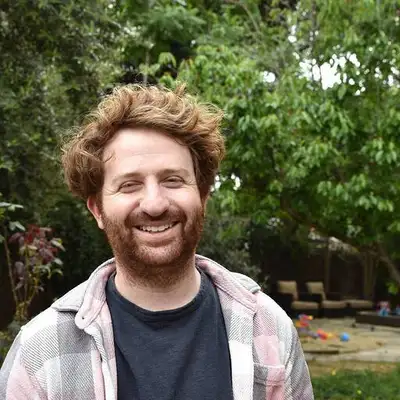
Hosted by Zach Gobst, who has spent his career working alongside clinical trial teams and patient communities, be sure to subscribe on Apple Podcasts, Spotify, or wherever else you listen.
We're no longer that little kid on the block just trying to figure out a science experiment. We're now a real company that's in phase three, and we now have the biggest names in sort of this ILD space. The physicians that are running that Boehringer Ingelheim, the United Therapeutics trial are all lead investigators in what we're doing and excited about it and presenting our data. So, you know, we're a small company. We're 45 people.
Jennifer Good:This is all we're doing is cough. The ability to make an impact on the patient, they know they have a terminal disease, but the ability to live out their life on their terms and how they want to, I think, would just be really rewarding. It's a big deal for these patients and we just need to sort of stay focused on that and get it over the finish line.
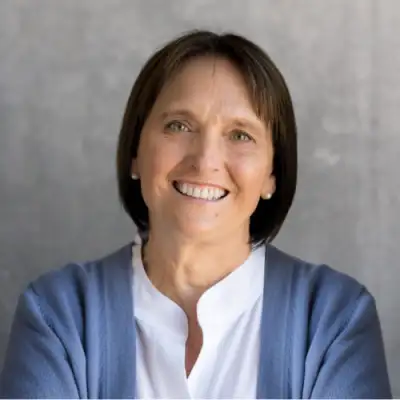
Producer:Welcome to Impactful Breakthroughs, the podcast dedicated to the incredible individuals who are shaping the future of medicine. You just heard a snippet from today's guest, Jennifer Good, the president and CEO of Trevi Therapeutics, a clinical stage biopharma company dedicated to developing therapies for patients with chronic cough conditions. In today's episode, we will explore what led Jennifer to take the leap into entrepreneurship fifteen years ago, why she decided to focus on cough research, and how she's grown Trevi from her kitchen table to a successful IPO in 2019. And now, your host, Zach Gobst, founder and CEO of Leapcure.
Zach Gobs:Alright, Jennifer. So Trevi was founded in 2011 to take on chronic cough, including IPF. Tell me more about what your aim was when you took on this big endeavor and what you think has helped you to continue to build Trevi, what, fifteen years later.
Jennifer Good:Yeah. Takes a long time. Well, first of all, thank you for having me. I appreciate it. Exciting time in the company.
Jennifer Good:So happy to share sort of some of the history and how we got here. So I used to run a company called Penwest Pharmaceuticals, which was actually working in the whole chronic pain space.
Jennifer Good:I was there with a guy named doctor Thomas Sciascia, who's my cofounder of this company. He's a neurologist by background. Penwest was actually acquired by our strategic partner at the time for a lead asset.
Jennifer Good:The drug that we ended up bringing into Trevi was actually started development in Penwest while we were there. And there was sort of a specific reason we did it. It had interesting properties to it. It worked at two receptors. It had CNS activity as well as peripheral activity.
Jennifer Good:The drug had only been around as a subcu injection, so we spent a lot of time getting it into oral formulation and doing chronic tox work. So you could take it beyond just sort of a hospital setting. So we had done a lot of work and it was sort of ready to go into the clinic and then the company was acquired in late twenty ten. Tom and I, when we left there, had felt sort of regretful that we never got to take this drug into some of the different things Tom primarily had been thinking about. And so I always joke.
Jennifer Good:I think I got about three weeks from not working, and Tom started bugging me about sort of this opportunity. And so I went back down to our acquirer, and Tom and I negotiated this drug out. The two of us bought it personally. And, really, the business plan was as simple as, you know, there's a biology to this drug, and we had some different ideas about where this could be interesting and work, and they were areas with a lot of unmet need. And so we sort of started on our way.
Jennifer Good:And in 2011, as you mentioned, when we actually incorporated, it was as simple as going back to my prior board of directors and Tom and myself. We put a little, you know, we all put a little bit of money in, and Tom and I sort of played for a while. When we got to 2012, that's sort of when the needle started moving because TPG Biotech had found us through just sort of looking for things in the spaces we are working in. And that's when they started sort of funding big checks. You know?
Jennifer Good:I think in total, they probably invested 50 to $75,000,000. So that's when we were able to really start moving clinically. So, yeah, I would say that a lot of what we were doing, we were interested in the characteristics biology of the drug, and we thought it had a lot of applications beyond just pain. So we actually, in the beginning, had targeted pruritus, which is a fancy word for itch, and coughing associated with some of these diseases. And the drug was originally a pain drug.
Jennifer Good:So the connector of pain, itch, and cough, they're all sort of different sensations of the same thing that are mediated by the brain. And so it was really and again, my co founder's a neurologist. So it was really this sort of these conditions that were very bothersome to patients and didn't have good treatments all mediated through the brain. So that was sort of the story of how we got going and really just sort of set out to start doing some proof of concept stuff in some of those indications and see if the drug worked. I think just to fast forward, interestingly, the drug worked in everything.
Jennifer Good:It really I mean, the drug is broadly in the opioid category, just to mention that. But what was interesting about the drug is it's not scheduled. And it's not scheduled because it actually blocks the mu receptor, which is where you get drugs like morphine, fentanyl. Those are all mu agonists, they work at mu. We're actually blocking that receptor like naloxone and working at the kappa receptor, which doesn't have the same degree of likability around them.
Jennifer Good:But opioid biology, your body actually is loaded with endogenous opioid receptors. It's why opioids are so powerful in the body, and they're beyond just sort of pain receptors. And so we were interested in exploring sort of that opioid biology and where it could be useful with a drug that didn't cause drug addiction, which had obviously become such a big public health emergency. And we actually sort of thought our program could be part of the solution to the whole opioid crisis. So sort of rambled there for a little bit, but that was kind of the whole background and how we journeyed into this and what we were interested in proving.
Zach Gobs:No. I I'm glad you rambled. Actually, what came up, you know, and no pun intended, I think I had a similar start, similar to what happened with you in Penwest, where I'd worked at a previous company, like, trying to help with accessibility for clinical trials. I had a bit of a scratch to itch after seeing, oh, there's more potential with some of the concepts going on here. Yeah.
Zach Gobs:Something in you was, you know, may maybe similar to me, just driven to go for it. It's not this is like a this is quite the journey to kind of from where you started to try to raise money, try to bring something to market. It's great that you had a partner that was a neurologist, and you had some optionality, it seems, from the beginning. But curious a little bit about the decision to kind of go for it. I you said it was kind of a quick three week thing, but I'm sure, you know, after what, you know, the success of PedWest, you had a lot of different options, but you decided to kind of, you know, take this on.
Zach Gobs:Where do you think that comes from?
Jennifer Good:Yeah. So I would say there was a couple influences on that, I think. There had been a woman named Carol Ammon who actually had started Endopharmaceuticals long ago, and I had gotten to know. She started the company. It did really well.
Jennifer Good:And I remember saying to her, how did you even know to, like, start this idea? Like, you know, it was always intriguing to me how people started things. And sort of the question you're asking, how do you have the guts to, like, jump into this with both feet? And I remember Carol saying to me, sometimes it's as simple as just sticking with what you know. Like, you know, you know a space, you have access to something, you think it can make a difference.
Jennifer Good:Like, taking that like, you don't have to be some big genius that's charting the human genome. You know, it's a Tom and I had some expertise with this compound. We knew it existed. We knew it was gonna get lost. We were a good combination.
Jennifer Good:He's a neurologist. I'd sort of had this strong business finance background. And we just decided to sort of see if we could make some progress. So one of the advices I always give to entrepreneurs is, you know, look around. Like, what do you know?
Jennifer Good:What do you have access to? What do you feel strong could make a difference here? And sort of run with it for a while. I do think you need checkpoints on the company and yourself. You know, you gotta know when it's not working or when you need to pivot or when it's time to give up.
Jennifer Good:But, you know, at the same token, most people that do this, I'm guessing you're in this bucket, we're eternal optimists. Right? It's like, I can do this. I just gotta go a little longer. So, we're probably by nature not good at giving up on things.
Zach Gobs:Yeah. I think that's right. I have a story where, like, in my initial stages, I had a checkpoint. I said, I if we don't kind of get our first project within, like, nine months of trying to work on this, we would stop. It took us nine months and four days.
Zach Gobs:So there was a checkpoint, but I kind of still wanted to go Okay.
Jennifer Good:With more information. I hope that does, I think, at least for me, is it made me not sit there and have anxiety every day of, like, am I doing the wrong thing? Am I wasting my time? Because you've sort of given yourself grace to take whatever window you lay out with some deliverables and say, alright. I'm gonna work it in this window.
Jennifer Good:And if I don't get there, I'm gonna move on. And I made that decision consciously as opposed to sort of this never ending rolling stone, which I think is not a good thing. But
Zach Gobs:I think that's right. Yeah. Wanted to go back. So working on chronic cough, there's so many fantastic applications that you described in terms of how this cuts across pain and itch, but cough is where you're most recently been most focused and seeing a lot of momentum. What did you see in those, like, early patient and physician conversations that the rest of the industry was missing or dismissing when it comes to product cough and IPF?
Jennifer Good:Yeah. And I'll roll forward kind of our history just because it's relevant here to who we are today. So we sort of played around with these different itch indications and cough, and I mentioned everything worked, which was true. But in the in that time, we were also able to see how the business landscape shored up. And so we got to 2022, and we had data in an important itch indication called pragunodularis and a chronic cough condition in IPF.
Jennifer Good:And the data was very robust. It was good in both, but the cough data was very robust. And this was in we'll talk more about IPF cough. This had been in an area where basically everything had failed. As a matter of fact, the advice Tom and I got from every key opinion leader was don't study IPF cough.
Jennifer Good:These patients are too sick. It's progressive. I don't think he can move the needle here. Tom was very stubborn because he was really focused on the brain and its role. And so we ran it, and then when the data was strong, it sort of caught everyone's attention.
Jennifer Good:At the same time, what had happened in that window and it's why building these companies is complex. There's a lot of moving parts all the time. Trials take time to run. There is a a sort of another indication we're also working in called refractory chronic cough, which had drawn a lot of big pharma companies to look at it, Glaxo, Bayer, Shinobi, GSK. I mean, there are just a lot of people.
Jennifer Good:And so at the beginning, when we were running IP at COF, the RCC space looked very crowded. By the time we got to 2022, with the exception of two programs, everything had failed. And this is to answer your question of what did we see that we thought set us apart. So in 2022, we had this moment of, wow. We worked in IPF cough where nobody else worked.
Jennifer Good:And refractory chronic cough, which is a tough condition but potentially not as high a bar, everything's failed. And with ever all the mechanisms that had been looked at before were all peripheral mechanisms in the lung, which makes sense. Right? You cough from your lung. So people were going at it from these different receptors in the lung.
Jennifer Good:The problem with cough is there's a lot of different things that can trigger cough. And what's happening in IPF is you have this progressive scarring of the lung tissue going on, and it's sending the signal to the brain something's wrong. And the brain responds with this neurological response, which can be coughing, gasping for air. It's it's not productive. It's just literally this cycle going on.
Jennifer Good:And so what was unique about Trevi when we came into the space is we had a drug that not only worked peripherally in the lungs, it worked centrally at the brain stem, which mediates coughing and breathing. And Tom was so focused on what an important role that was gonna play in sort of unwinding this triggering event going on. And and I think now with the benefit of hindsight, that was exactly the case. All those peripheral mechanisms largely failed. There's sort of one left, and our data's just been very strong, working very quickly in almost everybody.
Jennifer Good:So I think it just shows you that the brain is important in this whole process.
Zach Gobs:Yeah. Having a unique perspective when the industry is all looking in one direction is an interesting thing too, you know, in my work. We'll see everyone kind of follow trends and manage their pipeline according to, you know, what races are going on, try to get ahead of others. You looked at your data and decided to kinda chart your own course. Like, that Yeah.
Zach Gobs:To me, that that's, you know, for those that who don't know the industry as well, it's it's quite brave and different because that's not most of the pressure is to kind of focus in the areas where everyone is saying are, you know, most interesting to a degree.
Jennifer Good:We have another insight too that I think was useful because Tom and I had spent the prior ten years working on drugs in pain, chronic pain. I was just at this American Thoracic Society meeting, ATF, and I heard was listening to a talk on chronic cough, and that guy leading it, doctor Matt Drake, he's out at Oregon Health Sciences, He said the cough world lagged at the understanding in the pain world by about twenty years. And I that's true because when Tom and I came into cough after being in working in chronic pain, Tom and I were like, this looks exactly like chronic pain. Like, we need to bring the same endpoints. We need to.
Jennifer Good:And but the cough world had all been sort of thought about as pulmonologists and the lung, and the focus was on the lung. And cough to us looked like essentially, as one doctor Toby Maher told me who's now at USC Keck, cough is essentially pain of the lungs. It's the same thing. So I think that chronic pain background when we marched into cough was just a really unique insight that people who had been working in the respiratory pulmonology space just hadn't sort of brought to the field yet.
Zach Gobs:Yeah. Fascinating. When you think of like a day in the life of an IPF or ILD patient, what surprises most people about what these patients go through? I'm curious if there's a moment that's kind of hit you personally, you know, getting up close to understanding this patient community.
Jennifer Good:Yeah. I mean, as you know, the North Star in our business always has to stay the patient. So it's such a gift for me every time I hear their stories. So I think I'm gonna bifurcate IPF and ILD. So just to sort of get clear on terms, idiopathic pulmonary fibrosis, IPF, is an interstitial lung disease.
Jennifer Good:It's sort of these connective tissue lung diseases. The reason it gets separated is it's about, maybe call it a third of that market. It's sort of a third of the patients, and it's pretty homogenous. It's also the most severe. It's a progressive fibrotic disease.
Jennifer Good:This basket of other interstitial lung diseases, generally healthier, they have a lot of different people in that bucket. They have rheumatoid arthritis, sarcoidosis, bronchiectasis, like, there's like 200 diseases. But what they have in common is they have fibrotic lungs, and from our perspective, they have cough. So just to kinda sorta I don't wanna lump them all together. So I'm gonna focus on IPF because that is kind of the most severe of the condition.
Jennifer Good:So patients get diagnosed with IPF. The diagnosis is actually worse than a cancer diagnosis. The typical time to mortality is about three to five years. It tends to be in sort of 70 year old men, primarily men. And, you know, it's a progressive disease, so people keep getting worse.
Jennifer Good:Interestingly, though, and I think you asked me about what moment hit me, we we started doing a lot of interaction with the patient community to understand sort of what their needs were. Because there's been a lot of development work that's gone on around anti fibrotic. So that's slowing disease progression. But unfortunately, drugs, because they're not reversing disease or only slowing it, had done nothing with the day to day complaints of the patient, which are chronic cough, it's breathlessness, it's fatigue. It hasn't, although they all look at it, they haven't changed any of the curves around that.
Jennifer Good:And so cough, just to focus on that for a minute, eighty five percent of these patients cough. So a lot of them have a cough. I would say about two thirds of them have sort of a moderate to severe chronic cough that's very bothersome. And when you talk to the patients, that's what they all talk about. And it very intertwined with cough is breathlessness because people get into these cough bouts where they cough and cough and cough so hard they can't catch their breath.
Jennifer Good:And patients will tell you the stories about how they have to vomit to actually stop coughing or they fall to the ground. People break ribs, obviously causes incontinence. It's, you know, very traumatic. And so I listened to this very powerful story from one of the women on our patient advisory board that, you know, to go to the grocery store for her is a very big deal. She gets up early.
Jennifer Good:She takes cough drops, drinks tea. She goes first thing in the morning when no one's there, and she was telling the story about how she sort of got halfway through the store and got into one of these coughing attacks where she literally vomited and she just walked off and left everything. She was so frustrated. And their spouses or partners or whoever is living with them talk about, you know, first of all, it's annoying to live with someone. These people cough on average 500 to a thousand times a day, and it's mostly in the daytime, by
Zach Gobs:the way.
Jennifer Good:It's not a nighttime phenomenon. So it's very difficult to talk on the phone, go to restaurants, go anywhere. And so these people become more and more socially isolated, which, as you know, is just a terrible thing to have happen as you get older and you're in a terminal disease. So I could just say, like, the ability to make an impact on the patient, they know they have a terminal disease, but the ability to live out their life on their terms and how they want to, I think, would just be really rewarding sort of at the end of this journey to get the drug approved.
Zach Gobs:Yeah. I think that's an important point because oftentimes when we look at kind of the end point of a research study, sometimes we aren't focused enough on kind of, like, what are the behaviors that we impact with our research, and how does this impact someone's quality of life and family members as well. So, yeah, I think he made some great points around, like, this impacts grocery shopping. This impacts the burden on someone's life partner and having to kind of deal with isolation. So so important that we have that in mind at the very top.
Zach Gobs:I, you know, I I think it's a really appreciated
Jennifer Good:the obvious, Zach, but post COVID, we all know coughing has a real stigma towards it. You know, you walk in anywhere coughing, and people are looking at you like, why are you here? You're sick. You're gonna get me sick. You know, obviously, these people aren't don't have something that they pass through coughing, but they said it's terrible.
Jennifer Good:Like, people are very unforgiving or not sensitive about what people are dealing with.
Zach Gobs:Yeah.
Jennifer Good:It's a it's a top symptom to be living with day to day post COVID.
Zach Gobs:Yeah. That's a great point. In the lead up to our conversation, were speaking about kind of observations from the American Thoracic Society as it kind of relates to this as well. You know, curious about kind of what was interesting to you kind of looking at the landscape and where things might be headed for this patient community.
Jennifer Good:Yeah. It was a really fascinating meeting. Would say the industry went sort of fifteen years with no breakthroughs in IPF or ILD. And then I think a year ago, Boehringer Ingelheim had their drug Neurodomolast, which is Cascade, which actually had success as an antifibrotic. So that was the first breakthrough in fifteen years of so many things that had been studied.
Jennifer Good:Since then, we've recently had United Therapeutics with their Tabaso also have a successful IPF trial. So there's a lot of energy around that that's really encouraging because forever it's been sort of the same couple treatments available to patients and nothing else. And then there's been some other breakthroughs in the interstitial lung disease market. But there was also a very broad conversation around, okay, this is good because it slows disease progression, but what about the patient? And that's where Trevi came in.
Jennifer Good:We had six different presentations on our data, and we were brought up in multiple other discussions about how, well, we have this drug coming that'll actually help the patient day to day because the whole cough side of things, typically, cough is present at the very beginning of the disease. So if you're a cougher, a lot of times it's the first thing you'll notice. You get this chronic cough, and that's how they figure out you've got IPF, and then it stays present through the whole disease. And so one of the doctors that was in one of our sessions said, you know, when someone gets diagnosed with IPF, I tell them, look, I have drugs for you that'll slow progression, but I don't have anything that's gonna help with all these things you're complaining about. And so there's a lot of excitement around our drug, which we showed data that it helps with cough.
Jennifer Good:It also seemed to improve breathlessness with the patient, which you can imagine how terrifying it is to not be able to catch your breath when you have lungs that are, you know, progressive fibrosis. So anyway, I think that ability to actually say to the patient that I know what's bothering you day to day, and I have something to offer you really got a lot of attention in discussions. And it was so rewarding, I think, for me just because five years ago, I walked around there. Nobody even knew we existed. You know, this wasn't being discussed at all.
Jennifer Good:And sort of as we worked our way through, we now have the biggest names in sort of this ILD space. The physicians that are running the Boehringer Ingelheim, the United Therapeutics trial are all lead investigators in what we're doing and excited about it and presenting our data. So, you know, we're a small company. We're 45 people. This is all we're doing, it's cough.
Jennifer Good:But I became convinced it's a big deal for these patients, and we just need to sort of stay focused on that and get it over the finish finish line.
Zach Gobs:Yeah. It's amazing to kind of hear that, how everything's kind of come together. You know, it's been a fifteen year journey. The way that you're leading the industry at this stage, I think there's a lot for you and your team to be proud of. And curious, you know, looking back on kind of fifteen years and kind of where you sit today, if you have any kind of, like, reflections or things that going into this, you you probably thought about differently, but now you've learned may maybe through experience.
Jennifer Good:Yeah. I mean, obviously, I look back, and I wish we could've skipped to, like, any kind of even though we looked in other indications, which worked, we ended up moving away for business reason. I'd love to condense out those sort of four or five years in this fifteen year journey, you know, but that's just not reality. I mean, it wasn't clear then what the right path was, and you have to run the experiments. You have to see how the industry evolves.
Jennifer Good:So I do look back and sort of, oh, you know, this took a long time to get here, but you know what? We're here, and we survived. And I think we made really we made some hard decisions along the way to pivot and leave certain things behind because it was the right thing to do as a small biotech company. And we went public in 2019, and at the point in time you do that, you've got public company shareholders. So you have to always keep in mind shareholder value and, you know, being efficient with your funding and all that.
Jennifer Good:So I think we've always been good and mindful about that. It's easy to look back now and know I just would have jumped right into cough. That was not obvious as we journeyed through the first five to seven years here. We had to sort of get through everything to get here. So it takes perseverance, though, and a and a certain optimism that hang in there.
Jennifer Good:I think we're gonna get there.
Zach Gobs:Yeah. My company's now we're near 11, and, yeah, there's a bunch of learnings I wish we would popped over for sure. You know? And and we advocate for patients in the way that we kind of build relationships. But I I do think there's something already said around the perseverance.
Zach Gobs:I also think, you know, after an amount of time, you kind of understand who you are, your values, and really what impact you can make. You have an idea of it early on, but it it does sometimes take some time and and some, you know, steps in the wrong direction here and there. Not necessarily wrong direction, but, you
Jennifer Good:It's not linear. It's a journey for sure. So let's say another important learning, and I'm digesting this now, which I don't know if you've had to deal with this as well, but the people and the focus and how you ran the company when it was three of us sort of, you know, in private venture held to you know, I went I took this company from being at my kitchen table, not getting paid to angel investors to venture investors to IPO ing to, you know, Trevi now is a $2,000,000,000 company, and, you know, we have some of the world leading mutual funds in it. And I would say that I just had to constantly keep reframing in my mind sort of we're no longer that little kid on the block just trying to figure out a science experiment. Like, we're now a real company that's in phase three, and three years from now, we gotta be ready to get this to the marketplace.
Jennifer Good:And what does that mean for our patients, and what does that mean for shareholders, and, you know, how do we sort of grow the business model and my board of directors? So how do I evolve my team internally? How does our board make sure we've got the right board? So it's just been interesting. You never sort of can get comfortable in any one place because if you have success and stay alive in biotech, you're evolving into the next sort of level.
Jennifer Good:And I felt like when we passed that billion dollar level of a market cap, it starts opening a whole bunch of different doors now that we need to start planning around. So it's been fascinating and fun. I would say not everybody can make those transitions, and I have to be honest about that with my team that, you know, you might have been great five years ago. You're not the person to do this today. And so, you know, anyway, for what it's worth, I think the evolution of the team has been a real learning experience.
Zach Gobs:Yeah. As a leader, it's a really hard thing for me, what you're bringing up, which is the company to achieve the impact we want it to achieve, to go after its vision, requires maturity, and the roles change, and the stakes get higher and expectations go up. And that's all a privilege to be able you know, it it gives you the opportunity for impact, but it's hard to, like, let go of, like, well, I really want this person on my journey, but this person looks like they're on a different path than that. And and Yeah. As an entrepreneur who's been able, like in your situation, it's even more of a challenge because you you went from, yeah, working at home to 2,000,000,000 market cap.
Zach Gobs:The people who helped you get there probably did a lot of lifting with you to kind of move along the way, but then you also have to kind of look at, like, well, this is where we are now, and this is where we're going next. And we have to grow ourselves too. That's the other thing is Definitely. Get out of our way constantly.
Jennifer Good:So Yeah. And look yourself in the mirror. I constantly ask myself, am I still the right person for this job? And someday, that answer will be probably not. I I'm not there yet, but I do consider that throughout the company because, you know, we just raised a 170,000,000, and, you know, I make promises to investors, and we sit with patients and our partners, our investigators.
Jennifer Good:You know, it's my job to make sure we execute against all those promises, and so we've gotta have the right team to do that. So I feel that responsibility for sure.
Zach Gobs:Yeah. The self reflection, you know, you don't wanna get into hubris, but you're also the person who went from zero to 2,000,000,000. You know, you're you're, like, you've solved hard things. Some days look more impossible to get to the next level, but you do have a foundation to help you continue to grow, which is really exciting.
Jennifer Good:Well, it helped too. Before this, I was running a public company, which didn't get to be this big, but I had a lot of that experience of IPO ing and raising money and all that. So, you know, I sort of went from a public company sold it to back to building a small one. So I feel like I'm sort of back to where I I started all this. So it's been okay.
Jennifer Good:But, yeah, the our next step will be commercial, which is sort of a whole different world for biotech. You know? We've been developing drugs for fifteen years, so that'll be a different mindset.
Zach Gobs:Yeah. I'd love to touch on kind of, like, the industry relationships and how you've kind of contributed to the community. So you helped cofound the life science sprints in Connecticut, and then you're also contributor to the board at FAIR FARA and getting involved in, like, supporting the rare disease community as well. How do you make time for that? That's incredible.
Zach Gobs:And, you know, what's important about kind of these other industry opportunities that you jump into?
Jennifer Good:Yeah. I think so there's a lot wrapped up in that question. So first of all, most of the time I was sort of taking my executive journey, I was also raising three kids. So there was a time in my life where I worked and I raised three kids, which I think I fortunately did a good job of. I I'm very proud of my three kids.
Jennifer Good:But there also came a time where they sort of got on their way. You know? I got my last son through, and I sort of realized that by that point, I had a lot of experience. You know, I'd been engaged with my own kids in their journey and start thinking a lot about what can I give back to the community and where do I wanna contribute? And so starting with sort of your first thing you raised about the internship program, we work in New Haven, the New Haven community.
Jennifer Good:And Erica Smith and I were involved in this group, sort of the bioscience leaders here, and started talking about what we could do as a biotech sort of group that would make a meaningful impact on the community. And this whole idea of an internship program came up. But you know how these things go, Zach. Unless someone grabs it and says, alright. I'm gonna, you know, through a labor of love, wrestle this into existence, it doesn't get done.
Jennifer Good:And so Eric and I were joking. We'd gone out for a glass of wine, and I'm like, alright. Are we gonna do this? Because if we are, let's go. And so she and I jumped in, and we started this program, and we're both super proud of it.
Jennifer Good:That was, I think, four or five years ago, and I think there's been something like 700 to a thousand kids who have gone through just in New Haven. The internship program, we just have four of them start yesterday. We pay the interns abroad. We get them in the industry, And it's just great. And that comes back to having been a parent.
Jennifer Good:I look at kids who, you know, it's not easy to find internships. And we all know internships are key to sort of forming what you might wanna do and seeing a broader world like most of us weren't raised in families where you sort of saw what was out there and available. And so that was super rewarding. I would say that was a labor of love combining my love of biotech with my love of parenting. I think the rare disease side, I've just always been drawn by rare disease.
Jennifer Good:You know, these are a lot of the things I've been around have been pediatric diseases. So I also sit on the Rhythm Pharmaceuticals board, which is a rare endocrine sort of hyper obesity kind of disease in children. The FARA board is a neuromuscular degenerative disease. And what I found by being involved in those, you know, particularly the patient advocacy group, I had gotten attached to them through my prior company. We were developing a drug there.
Jennifer Good:And what I realized through that group is that was a lot of parents with sick kids seeking, you know, looking for chores and options. And what I found is although they were highly motivated and trying to be helpful, they also didn't understand why things took so long in biotech, how much money it took, how you move the needle. And so at one point, they'd asked me if I'd join their board. And in the early days, was a lot of, hold on, guys. Like, you can't just throw some unknown chemical into your kid.
Jennifer Good:It's like, things kill people if they're not tested right. So there was a lot of sort of educating, and then was funny. I've just been on that board so long. At one point, I said, look, maybe it's time for me to roll off. And, you know, I got a call from the chairman saying, you need to be here when we find the cure.
Jennifer Good:And so then you get your heart all wrapped around the community because, of course, it's a tight knit community. So I think at this point in my life, it's more about taking what I've learned that maybe is an an expertise and skill and trying to give back to families and patients and, you know, I mentioned the kids that are looking for jobs and just sort of act put that into action for people that maybe haven't had the opportunity to develop sort of the learnings that I have through my career in biotech. So it's been rewarding. To your question about the time, that's a problem. I'm very bad at saying no.
Jennifer Good:And so I I think about a year ago, I made a deal with myself that I would not add anything else to my plate unless I took something off because it it is difficult, and I wanna make sure I keep my eye on the ball at Trevi. But I do get interested in everything. I find everything interesting, and I wish I had more time than I do. So
Zach Gobs:Yeah. All that all that said, I appreciate you taking the time to do this podcast.
Jennifer Good:Oh, no. Yeah. No. That's great.
Zach Gobs:Last question. You know, curious in terms of your journey looking back, if there's anyone who is maybe a mentor or adviser, you mentioned a lot of people that have been really impactful in a way, but anyone that you think is important to kinda shout out, something you took away or think was really crucial for you in different parts of your journey or the successes that you've hit?
Jennifer Good:Yeah. I think I would name two people. I think probably my most active mentor through most of my career is a guy named doctor David Meeker who did most of his career at Genzyme. He was a COO. He's a physician.
Jennifer Good:He's now the CEO of Rhythm. He's a physician. He's got a good commercial background. He's just a really good human being. He spent most of his life doing rare disease drug development.
Jennifer Good:And I just found him to he's my chairman on my board, and he's just been a very good grounding force to me about what's possible in this, how you stay focused, how you sort of do things right. And I tend to circle in with him a lot when I just need a sanity check. So I think at the end of my long career, I'll probably look back, and he's definitely gonna be at the top of one of my you know, who I'm most grateful for in my life people. So I would definitely say Dave. The other person I would mention who's long retired by now, but is a guy named Paul Freiman who also had a long career, and he was the chairman of my prior company board, Penwest.
Jennifer Good:And I always remember not only was he a great chairman, but when that company got acquired, I remember feeling a little lost. Like, oh my god. What am I gonna do next? Like, I've been here for fifteen years at this company. And he just sort of said, the world's open to you.
Jennifer Good:Like, go figure out what you wanna do and just make it happen. Like, he was just so inspirational about sort of how you move forward and get things done. So I look at both those two as really good mentors. And then there's been a lot of amazing bankers. I would say our lawyer at Wilmer Hale, a guy named Stuart Falber, who we've sort of journeyed through our careers together.
Jennifer Good:He's now the senior partner of life sciences there. We started out. We were both young and sort of moving through our careers. He's been a great mentor to me. So, you know, just surrounded myself with what I think of as very good professionals that, you know, do things the right way and just smart and good and have developed long term relationships with.
Zach Gobs:Awesome. Thanks, Jennifer. We'll leave it at that to blow it away from the discussion. And, yeah, I really appreciate everything you're doing for the biotech community at large. Excited for the continued impact that you make, and I would love to stay in touch.
Jennifer Good:Great, Zach. Thanks so much for having me. I appreciate it.
Producer:That's all on this episode of Impactful Breakthroughs. A heartfelt thank you to Jennifer Good for sharing her remarkable journey from negotiating the initial acquisition to building Trevi Therapeutics into the $2,000,000,000 company it is today. What stood out most was Jennifer's dedication to understanding what patients really live with every single day and what matters most to them. It's care like that which ultimately cuts through the noise and moves the science forward. If today's conversation sparked something in you, be sure to subscribe, share, and connect with us for future episodes.
Producer:Until next time, stay informed, stay engaged, and keep pushing for better health outcomes for all.