Subscribe
Share
Share
Embed
Welcome to the Midwifery Wisdom Podcast
This podcast is your go-to resource for practical education, thoughtful insights, and relevant conversations tailored to modern midwives.
Each week, we bring fresh content and engaging guest speakers to explore key themes in midwifery, including:
Advocacy, business, and clinical skills
Self-care and professional growth
Current issues shaping midwifery today
Listen to meaningful stories and essential advice from leading midwives working to elevate care for families across the globe. Gain clarity, encouragement, and actionable guidance to support your business, practice, and personal life.
Wherever you are in your journey, the Midwifery Wisdom Podcast is here to empower you. Together, we strive to make midwifery the gold standard of care worldwide.
VIDEO_Aaisha Alvi
===
[00:00:00]
we always hear about these cases of these moms that unfortunately take the lives of their children, and we are like, "Oh my God, how could somebody do that? How does that happen?" And I feel like I know how that happens. It happens because if you read through the literature and stuff, in 90% of those cases, those women tried to get help.
They tried and they were sent home. I don't know if you're familiar with a case that recently happened in the States involving a mom Lindsay Clancy. Yes, I did read that. Yeah, and she actually went multiple times, like me, to the doctor. She actually self-admitted herself into the psych ward.
I started thinking that the intrusive thoughts in my mind were gonna be acted upon by family members. So I would have- Oh ... this violent image, a thought in my head, and I would be like, "Oh my God, my mom is gonna do that."
So I started, like, fearing that my family was gonna harm my baby. Then my delusion started warping and I started thinking that [00:01:00] my baby wasn't a baby and she was some kind of adult pretending to be a baby. I started thinking that my husband was gonna molest my daughter.
And just believing that so much, I attacked him one day because I viscerally thought that he had intentions to molest my child. That was the first, time I had postpartum psychosis.
I had all of these awful beliefs- Mm ... delusions that I believed that weren't true.
And even though my family took me to the doctor a couple of times to figure out what was going on I never got diagnosed.
because the doctors had left it for so long, I was so, so dangerously sick that I needed, like, 20 pills a day to rein in the psychosis. It was, like, so horrible. Like, I was literally hearing voices telling me to harm my daughter, to attack people.
Like, it was awful the worst part of it was just to kind of have a sense that something was not right, and I [00:02:00] didn't want to feel like this, but with, like, people just patting me on the back and saying, "I think you're doing fine,"
Welcome back to the Midwifery Wisdom Podcast. Today, we are bringing you a special archive rerun of a deeply important conversation. In light of recent national headlines bringing postpartum psychosis back into the public conversation, we wanted to re-share this episode from our vault. When high-profile cases make news, public fear and misinformation spike, making critical clarity and lived experience more vital than ever.
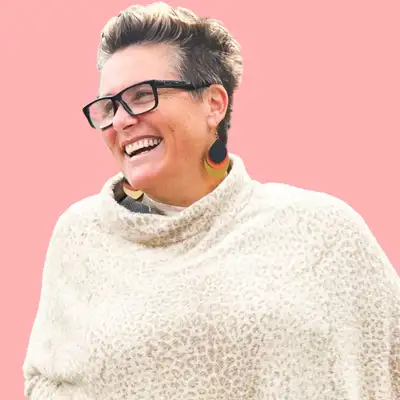
In this rerun, we sit down with Aaisha Alvi, author of A Mom Like That: A Memoir of Postpartum Psychosis. Aaisha is a two-time survivor who navigated severe hallucinations, delusions, and five medical dismissals before receiving life-saving care.
[00:03:00] A quick safety note before we begin. In this episode, we discuss severe psychiatric symptoms, including intrusive, suicidal, and homicidal thoughts.
Please listen with care. If you or someone you know is in crisis, please Support International or dial nine eight eight for immediate support. Here is our conversation with Aaisha Alvi
would you mind saying who you are, where you are, and what you're all about? Yeah. So my name is Aaisha Alvi. I'm a postpartum psychosis awareness advocate and writer. I recently had my book, A Mom Like That: A Memoir of Postpartum Psychosis, published by Dundurn Press, so it's out now in the world.
And I'm from Ontario in Canada, and my mission is to spread awareness of postpartum psychosis because I experienced it twice, and I had a [00:04:00] lot of difficulty in getting help.
Aaisha, this is such an important topic, and I'm so grateful that you are willing to speak with us and the world. And it's a funny mixed bag, right?
So, like, congratulations, and also, whoa, this must be really intense. Yeah. Yeah. It, it's a pretty intense topic, but I'm just so grateful to be able to use my experience to spread awareness so that, we can prevent tragic outcomes for people. Because this is a condition that does have a suicide and infanticide risk, but it never needs to hap- that never needs to happen.
Those are some powerful words, and I can't wait to learn more. Would you take us back first to the place where you decided to write this book? I would love to know about your writing process. I think our audience would love to know about how you kinda transformed this pain into power. Oh, okay. Yeah. So actually, it was, like, three months after I recovered from my second bout of postpartum psychosis.
I was trying to look for information about [00:05:00] postpartum psychosis, you know, try to garner some kind of strength from accounts of other women that had experienced postpartum psychosis. And at that time, I found ... Because this happened to me, the second time it happened to me was in 2006. I couldn't really find any accounts.
So I went to my psychiatrist, and I was complaining and whining about this, and I was like, "Why isn't there any books out there on this topic?" And she kind of offhand said, "Well, why don't you write one?" Aha. And I kinda got on that, you know, horse and ran it into town. That's amazing. Yeah. And also, it's so brave.
Anyone, any survivor who recovers from anything- ... that's enough. But then to go and take that learning and transform it into, a, a publicly accessible body of knowledge is really extraordinary. Thank you. And I just really wanna commend you and thank you for being a voice. Oh. I don't, I don't feel like
Thank you so much for saying that. I don't really feel brave, but I just feel like this is like, I just wish that there [00:06:00] wasn't enough information out there in the world so that what happened to me didn't have to happen to me, and so I kinda want that for other people, if it couldn't have happened to m- for me, yeah. I get that. Well, our audience is mostly midwives. Mm-hmm. Uh, we have midwifery students and nurses and physicians and moms interested parties who also listen. But I would say a good 75% of our listening audience is midwives. And oftentimes- Sometimes midwives, especially in the community-based space, which most of ours are, they're in this really unique position.
They might be the first or the only contact- ... with folks in their childbearing year, and especially postpartum, because- Mm ... once you've had your baby at home or a birth center, you really don't wanna go into a clinic or a hospital because you are used to a different kind of care now. And so they might be the, the only ones interacting with women postpartum.
So with that in mind, would you tell us about the research you've done and your own personal experience? Like, what are the symptoms? How do people become more aware of what this is? [00:07:00] Yeah. And just before going into that, I just wanted to say that's why I was so appreciative of this opportunity, because I find that- Yeah
midwives and doulas are so uniquely positioned to notice these symptoms, because- Yeah ... um, coming to the issue of the symptoms, postpartum psychosis is, it's first of all very different from postpartum depression. A lot of people confuse the two, but they are very different. Postpartum depression- Right ... is something that occurs that's, uh, in one in five births.
Postpartum psychosis is always a psychiatric medical emergency that's considered life-threatening. It occurs to, statistically, there's like one to two out of every thousand births. Right. So, um, it doesn't, it's not the same thing as postpartum depression. And another feature about postpartum psychosis is that it frequently tends to happen within, develop within the first two weeks postpartum.
It can happen later on, too, but most typically it's a very rapid onset kind of condition. And so that's why I always think midwives and doulas are so uniquely positioned to be able to say, [00:08:00] "Hey, there's something wrong. You need medical attention, immediate medical attention." Um- Gosh, absolutely. Mm-hmm. So talking a little bit about the symptoms of postpartum psychosis, what makes it really different from postpartum depression is that only women with postpartum psychosis will have one of these two or both of these symptoms, hallucinations and, or delusions.
And, hallucinations, as you probably know, is seeing, hearing, feeling, smelling things that aren't actually out there, that nobody else can experience because there isn't actually anything, no, no external stimuli out there, but the person is still perceiving this as happening. And delusions are fixed beliefs that a person has that are not grounded in reality.
And even though there's evidence to the contrary, the person is, like, convinced that, this is really happening, and this is possible. That must be so terrifying. Oh my gosh. I can't tell you, there's nothing that I fear more than ever experiencing postpartum psychosis again. [00:09:00] It's like the worst thing that's, that ever happened to me.
And in my situation, it was double time worse because I couldn't get help. And, um- Oh ... yeah, so, like, I don't know if you want me to talk a little bit about, like- Yeah. Well, you're in Canada, and we have this perception in the US that the, the Canadians have free healthcare and everything's great, and that's not necessarily the case.
Well, we, we do have free healthcare and it wasn't because and I'm fortunate because it wasn't because of that kind of healthcare problem, but I had a situation. Like for me, what happened was that about 20 years ago, I got ... I, I wanted to have a baby, and I had a, I had a baby, and a beautiful, healthy baby.
But pretty soon after that, I started feeling like super depressed and anxious. And pretty soon after that, I started to, you know, have exper- experience intrusive thoughts, which are pretty common for- ... for most postpartum women and moms and stuff. But soon after that- Can you define that? What does do- int- in- uh, intrusive thoughts mean for you?
Oh, intrusive thoughts are [00:10:00] kind of just like random thoughts that will pop up in your head, and usually they tend to be like scary or like what if. Yeah. You know, so you could- have like a very scary picture of something happening to your child just randomly pop up in your head. And sometimes- Oh ... you know, like I don't wanna, I don't wanna be graphic and describe any scary kind of thoughts, but substitute any awful thing happening to your child and it randomly popping up in your head.
Right. So it, it often feels very terrifying to women when that happens 'cause women start thinking like, "Uh, do I wanna do this? Am I capable of doing this?" And then that sets off anxiety, right? And, and- Right ... studies have found that occurs in 90% of parents, both moms and dads. That's a common symptom.
Right. But what started happening to me is that I started developing very strange thoughts and strange beliefs connected to that. So I started thinking that the intrusive thoughts in my mind were gonna be acted upon by family members. So I would have- Oh ... this violent image in my, a thought in my head, and I would be like, "Oh my God, my mom is gonna do that."
So I started, like, [00:11:00] fearing that my family was gonna harm my baby. Then my delusion started warping and I started thinking that my baby wasn't a baby and she was some kind of adult pretending to be a baby. I started thinking that my husband was gonna molest my daughter.
And because of that, I just believing that so much, I attacked him one day because I viscerally thought that he had intentions to molest my child. So that, that was the first, time I had postpartum psychosis. I had all of these awful Mm ... delusions that I believed that weren't true.
And even though my family took me to the doctor a couple of times to figure out what was going on, I never got diagnosed. And suddenly, like four months later, I spontaneously just woke up one day and I was like, "What the heck was that? Like, why did I believe all those weird things?" I didn't take any medications.
Wow. Spontaneously went away four, uh, like about four months later. And for- Wow. Yeah, it was just really bizarre. And for years after that, I didn't, I was really terrified of getting pregnant or [00:12:00] having another baby 'cause I guess remembered thinking all those weird things and doing all those weird things that I was like, "H- I don't know what happened there," but I also didn't know what was wrong, and I kind of just thought maybe I had postpartum depression.
But then- Right ... yeah. So w- when my daughter was, like, five years old, I decided I did want a baby, and I, and I got pregnant again. And that time I was pregnant for about 14, 15 weeks and I miscarried. And pretty soon, like after that, a week or so after that, I started again feeling depressed, anxious, and all the same things started happening again.
I started having, like, really bizarre beliefs. But this time I kind of recognized. I was like, "Hey, this reminds me of how I felt that time after I had my daughter." So I had some level of insight to know this is not normal. And so I tried- to go to the doctor, and I went, I ended up going five different times, and each time my symptoms kept escalating, and each time I was dismissed by the doctors.
By the third doctor I saw, I [00:13:00] was literally telling the doctor, "I'm hearing voices." The fifth doctor I went to, I told the doctor, "I'm feeling like harming people. I'm feeling like doing awful things, like hurting people." And the doctor still sent me home. And it was- Wow ... it was only the sixth doctor, when I was finally referred to a psychiatrist, that the psychiatrist was like, "Whoa, I, I think you have postpartum psychosis."
And it was then that I was given antipsychotic medications and, you know, my illness was able to be stabilized. But at that point, because the doctors had left it for so long, I was so, so dangerously sick that I needed, like, 20 pills a day to rein in the psychosis. It was, like, so horrible. Like, I was literally hearing voices telling me to harm my daughter, to attack people.
Like, it was awful, and it was extremely frightening. I'm so sorry. I just can't even imagine how scary and isolating that must have been. Yeah. A- and, like, the worst part of it was just to kind of have a sense that something was not right, and I didn't want to [00:14:00] feel like this, but with, like, people just patting me on the back and saying, "I think you're doing fine," and sending me home. Right, right. That was, like, the most- Yeah, our culture is so focused on the physical. They completely neglect the emotional and mental And these silent, invisible illnesses just get swept under the rug. Yeah. So then, you know, that's why I was like, "This is how this illness leads to tragedy."
You know, we always hear about these cases of these moms that unfortunately take the lives of their children, and we are like, "Oh my God, how could somebody do that? How does that happen?" And I feel like I know how that happens. It happens because if you read through the literature and stuff, in 90% of those cases, those women tried to get help.
They tried- Oh ... and they were sent home. I don't know if you're familiar with a case that recently happened in the States about w- involving a mom from Massachusetts, Lindsay Clancy. Yes, I did read that. Yeah, and she actually went multiple times, like me, to the doctor. She actually self-admitted herself into the psych ward.
And the [00:15:00] reality is, like 90% of these moms have themself tried to get help multiple times. And I would say the other 10%, in America, they didn't have healthcare coverage. And so they didn't go because, like me, I was in Canada. There was nothing preventing me from going to the doctor's like five different times.
Like, I didn't have to worry about, like, how I would pay for that visit, right? And still, I found it difficult. So it's like- And there's also the stigma about mental health. Like, these are really challenging things to say out loud. They are, but the- Yeah ... that's what was shocking, 'cause I was- Yeah ... I was very open.
I was saying like, "I'm hearing voices, like hearing voices to harm and I don't want to do that." So I actually asked a doctor, uh, the fifth doctor I saw, I actually asked her to lock me up. I said, "Can you please hospitalize me?" Wow. And I was sent home. Wow. So it's just like- It's such an ignorance. And so to our audience, who are our providers themselves, what are some key phrases that if they hear, they should stop in their tracks?
[00:16:00] Oh, my goodness. That's such an excellent question. Any woman that says that she's hearing voices or is seeing things that others do not see, even if she attributes them to some kind of spiritual or religious experience, that's her trying to make sense of what's happening. I, myself, was trying to make sense- Yeah
of what was happening. If anybody says that they're hearing or seeing things, they need to be immediately checked out. All family members will notice is that the person is behaving incredibly bizarrely. I wasn't saying to my husband or, or my mom or anybody that I was hearing voices, but I was behaving very bizarrely.
Like, I was sticking my fingers into my ears and running and ... because I didn't wanna hear the voices. So they saw that I was engaging in bizarre behavior. So if family reports that their loved one is behaving bizarrely, that should be, like, immediately, like, ask more questions and see what's ... try to understand what's going on.
So those are things that I don't think anybody- And, and for more than just this issue, too I would just recommend that folks go back and listen to the excellent issue we had [00:17:00] on postpartum bipolar awareness- Mm-hmm ... because that ... the first time that someone can have an episode can be postpartum. Yeah.
And to ... Behavior changes are really a red flag. That's for sure. Yes. Yeah. And actually, postpartum, uh, many people that develop postpartum bipolar, sometimes it is their first episode is after delivering a baby- Exactly ... that they have it. Yeah. And postpartum bipolar is the biggest risk factor for postpartum psychosis, although it's not the only reason people develop postpartum psychosis.
In my case, I didn't have postpartum bipolar, nor do I have bipolar disorder. Mine was a case of postpartum depression developing psychotic features, meaning major depres- So it's pretty rare For what? It, it ... I, I feel like it's pretty rare for the depression to become psychosis, is it? What- It's not considered postpartum depression at that point.
It's considered postpartum psychosis, but i- ... yeah. In the co- ... I don't like using the word rare, and I'll t- I'll talk a little bit about, about that, that- Okay. Okay. Tell us more ... um, but in [00:18:00] majority of cases, women have, like, manic symptoms along with symptoms of hallucinations and delusions, in which case it's, it's more- Right
more termed, like, as a po- postpartum bipolar-type issue. But the DSM recognizes that major depressive disorder can also develop psychotic features, meaning that there's no mania and no hyperactive behavior present in the person. Mm-hmm. Mm-hmm. Um- Mm ... yes, it tends to occur less often than the bipolar variety, I would say, but it does happen.
And unfortunately, it seems like because people are often taught to look for the manic symptoms- W- when women present without the manic symptoms, they're kinda dismissed, and I feel like that played a role- Yeah. Yeah ... in why I was dismissed, because maybe the doctors were like, "Well, she's talking about hearing voices, but she's not
She's very tired and slow," and everything like that. But that's why people need to understand that there ... It can present differently, but if the person has hallucinations and delusions, it's postpartum psychosis. Wow. And I, I [00:19:00] imagine that the word rare is stigmatizing, which is part of why you don't like it.
Yeah. Tell m- more about that. Yeah. So the actual incidence of postpartum psychosis is one to two in 1,000. Now, the actual- Okay ... incidence of Down syndrome is one in 700, and the actual incidence of cerebral palsy is, like, one in 700. But everybody knows about Down s- the risk of Down syndrome and cerebral palsy,
and we never call those c- Oh ... conditions rare. So why do we reserve the word rare for postpartum psychosis, which actually occurs more, more frequently than those conditions? And what happens is when we use the word rare, we communicate the fact that it's not something we really need to pay attention to, and I really feel like when doctors internalize that belief that they're not really gonna see it in their practice, they dedicate very little head space to learning about it.
And that's why I actually experienced interactions with five different doctors who had no clue about postpartum psychosis. Uh-huh. You know? So that's why I never- Yeah, that's a really important point. I get that entirely. Yeah. Thanks for that correction. Yeah, no worries. Yeah. So that's why I never
I don't like to use the R word, because it's not. You know- Yeah ... and if you think about it, it's [00:20:00] documented to occur in one to two out of 1,000 births, but it also occurs after miscarriage, pregnancy termination, all of those things. So the, the incidence is actually higher. Yeah. Yeah. So- Well, so take us on the journey.
What happened next? How did you get care? So I- How did you claw yourself out of this? Oh my gosh. So what happened is that, so after I tried to get that care was the hardest part. So I was dismissed by, like, five, four doctors and one psychologist, who's also a doctor. So I tried all different kinds of providers, and they were all, like, ignorant of this.
But when I finally managed, I think because the fifth doctor I went to, because I was literally begging to be hospitalized, she thought, "Let me put in a referral for a psychiatrist." And so I got the referral for a psychiatrist. That fifth doctor actually thought that I was having a panic attack because I was asking to be hospitalized, and she put me on some anxiety medications and an antidepressant, which was useless because that doesn't, they don't do anything for postpartum psychosis.
Oh, god. So when I [00:21:00] eventually got the referral to a psychiatrist, I was so far gone into my delusions at this point that I was no longer admitting to the fact that I was hearing voices. 'Cause in my head, I was like, "Oh my God, I'm communicating with God, and I'm communicating to, with the Devil." So I had made up reasons for why I was hearing voices.
So by the time I saw my psychiatrist, I was no longer even saying that I was hearing voices. I was, like, pretty catatonic. And she was like, "Are you, like, do you wanna hurt people?" And I was like, "No," because I didn't want to. I felt like I was being forced to hurt people, so I was, like, misunderstanding all her questions.
And at one point she kinda just looked at me and she said, "You're not answering any of the questions in a way that I can admit you into the hospital, but I still think you're on the border of psychosis," although I was completely psychotic. And so she prescribed me a very tiny dose of antipsychotic medications.
And I had her number, so I kept calling because I was seeing all these things and terrified of everything that was going on. And so she quickly amped up that [00:22:00] tiny dose- from one antipsychotic pill a day to 10, and by the time I reached that dose of 10 pills, 10 antipsychotic pills in addition to the rest of the other pills that I was given, it finally reined in the psychosis.
And within three months- Wow ... I was, like, back to normal. Like- Wow. So it was just a matter of getting on that medication, which was why it's like it's so painful to my heart that they made me, like, suffer for, like, two months, and almost within, like, weeks of getting on the proper dose of medications, I was able to be healed.
And of course, the full recovery took a longer time, but, but I was basically a functional person within, like, a month or so of being on the right dosage of medication. Your family must have been so happy to get you back. Oh, yeah. Like, and you know what? Honestly, they were so happy, but they were so traumatized that- Yeah
even though I wanted to have maybe more children because my psychiatrist said that, you know, they could prophylactically treat me so that it wouldn't happen again, my family was like, "No way." "No [00:23:00] absolute way," because they were so traumatized by everything that they witnessed and everything that they saw happening with me.
Wow. Yeah, so it was just like- Were you able to then go back and discuss the first postpartum experience? Yeah. Yeah, yeah. Ch- the... Actually, at that first appointment with her when she had asked me, like, "What happened after your first pregnancy?" And I told her. That's why she kind of knew that it was postpartum psychosis, 'cause she said, "You're not saying anything right now," 'cause I was basically kind of catatonic, not really responding to her.
But she said, "Based on how you're, what you're describing about your first pregnancy," she said, "I think you had postpartum psychosis that time, so I'm afraid that could be what's happening, although you're not answering the questions in a manner that really gives me a full perspective on the situation."
So immediately at that first appointment, she was like, "You definitely had it the first time." 'Cause she asked me, "How was your first pregnancy?" And I said it was a little weird because I thought everybody in my family was gonna hurt my daughter, and my husband was gonna do bad stuff, and I thought she was an adult.
And [00:24:00] then one day I woke up, and I was like, I realized all that was wrong." And she was like, I guess she understood that those were delusions. She understood what they were. Wow. I have a couple follow-up questions about this part and, and then of course I want you to keep telling us. But you used the word, "I was psychotic," and that's a word that's used around in, like, social vernacular as, like, something as, like, an insult.
And I just, I would love it if you would define that and, like, what that means so people really understand. So, psychotic means that a person is not in touch with reality. Got it. So they're not present in what's actually happening. And when you hallucinate, when you see things that aren't there, and when you're delusional, when you believe things that aren't real, you are not in touch with reality.
You're out of touch with reality. So that's what makes a person psychotic. That's what determines psychosis. If you're hallucinating and/or delusional, you are not in touch with reality. Well, so I bet you didn't plan to be an expert in mental health. I still [00:25:00] don't consider myself one. It just- Well, you've learned an awful lot- Yeah
to be able to explain even your own experience, and then be an advocate for others, so that's pretty awesome. Yeah. Um, do you do other things, or has this kind of consumed your life now? I have my day job, which I like to keep separate, but I do a lot of writing- Yeah ... and advocacy work. Yeah. And, you know, I have an Instagram account that I, I use to spread awareness of postpartum psychosis, just to let people know, like, the basic facts about it, that the things that they really...
They're all kind of things that I wish I knew, and if me and my family- Right ... had known this stuff, or if me and the doctors, the, those GPs and psychologists and social workers and stuff had known this stuff, the kind of torture that I had to go through, I would never have had to go through that. Other women who have had tragic outcomes in their case was, whether with respect to their own life or their children's lives, like, I feel like it could have all been spared with having some basic requisite knowledge about postpartum [00:26:00] psychosis.
So that's the kind of information that I've tried to spread. And, you know, I share... I wrote my book because always every time a tragedy occurs, you see all this, this vitriolic, hateful comments about people talking about, like- Mm-hmm ... "You know, I had postpartum depression. I would never do that." And I'm like, "It's not the same thing."
It's a different condition. It's a condition that can bring on all these kinds of strange, bizarre thoughts, bizarre urges that you feel like, kind of like you're being forced to do and you don't wanna do it. I was feeling all these kinds of feelings that it was like I had to do them, but I didn't want to do them.
And, and the proof in the pudding was that I was asking to be hospitalized. Like, who in their right mind asks to be hospitalized, you know, in the psych ward? Like, I knew that's where I would end up if I was hospitalized. So I wanted really people to understand what happens to a person when they're in the throes of this illness, so that they could have a little bit of more sympathy because I think the lack of empathy and sympathy [00:27:00] is what...
In my case, I was being very upfront about what was ha- what I was experiencing, but a lot of women hide their symptoms because they're afraid. Yeah. Right? Like- Yeah, that's what I was gonna say. And it's- It's very confronting. Yeah. Yeah. I mean- So I just wanted to put this book out so that people would feel safe.
And you know what? Uh, that's the reception that I've gotten from people that have experienced postpartum psychosis. They're like, "Thank you for de-stigmatizing this illness," and, you know, making it so apparent that it's a condition. It's not a condition that we asked for. You wouldn't blame somebody for having a heart attack, so then don't blame this person for what's like
Because something is broken inside. It's unlike the other- Mm-hmm ... postpartum mood and anxiety disorders. I'm sure you're familiar with the fact that postpartum mood and anxiety disorders is considered a spectrum. So there's, like, postpartum depression- Yeah ... postpartum anxiety, postpartum OCD. And then at the most extreme is postpartum psychosis, which is the only one considered a life-threatening medical emergency.
[00:28:00] And unlike the other ones- Postpartum psychosis seems to be more biologically based. So it's s- it's not really influenced by stress, it's not influenced by any of those kinds of things. There's some biological mechanism that women who develop postpartum psychosis, something that's going wrong. So nobody that has this illness or has had tragic outcomes because of this illness should be blamed.
It's a, it's a medical condition. You wouldn't blame somebody for having a heart attack and dying. You know what I mean? Mm. It's the same way. That's right. And the thing is, we don't need to have any of these tragic outcomes if there was more awareness, because this condition is temporary and fully treatable.
Completely treatable. And that's the part- Well, um, is it something you have to take medications forever? Or like- No ... what you discovered the first time, like, you just, you heal, you get better? Yeah, yeah. So it, it can be different for different people. So for example, like in my, my situation, even though I was put on, like, 20 pills a day, I came off of all the antipsychotic medications after, like, three months.
I had to continue on some antidepressants for about a year [00:29:00] and a half, and then I was able to come off of that. So d- it depends on what the underlying issue that caused it is. So if some people... If, say, s- in some people it could be because, they had bipolar disorder, that kind of, you know, was the underlying issue behind it.
For some people it's because of depression. For s- so it can, it can be different based on what the underlying issue is, and the underlying issue is something that your psychiatrist will have to figure out. So some people need medi- med... They won't need antipsychotics for the rest of their life, but they might need a mood stabilizer to control their bipolar.
Some people might be- Right ... for some people it's just that temporary time period, and then it just, after medication it, it just goes away. And in my case, the first time it just went away spontaneously. But what I found out was that that's an extremely dangerous thing to happen because this illness, like, it only literally takes minutes for somebody to act on a bizarre thought when they're not in touch with reality.
So it not only was extremely dangerous that I didn't [00:30:00] get help that first time, but it also set me up for having it worse the second time. Because the second time- Oh, yeah ... I didn't even finish a, a full pregnancy, and yet at 14 weeks I... My, my psychiatrist said it was almost like the neural pathway to that land of psychosis was there, and your mind immediately ran there because you didn't get help for so long the first time.
Right. So that's why it's just- much easier, like my psychiatrist was like, "Had, had you gotten help that first time you went in you know, you wouldn't have needed, like, 10 pills a day. You, like, your- Yeah ... your psychosis has go- had gotten so..." Because the first time I went in, I was having some bizarre thoughts.
Like, you know, like, I remember one of the bizarre thoughts that I had was, like, I was just sitting and at a party, and randomly this thought came into my head, like, "Your daughter is so brilliant," 'cause my daughter, she was a, like, kind of a bit of a prodigy. She knew how to read by the time she was three years old, she was reading chapter books, and that was something I always thought was, like, great about my daughter.
But in my period of psychosis, I was at this party [00:31:00] one day trying to distract myself from my symptoms, and all of a sudden this thought came into my head that, "Your daughter's too smart. She needs to die, because otherwise she might grow up and turn into a criminal." That was not something I believed. It was just a bizarre thought that came into my head.
And at that time when I went to get help, I was just told, like, "Oh, go home. You're doing fine." Mm. Had I gotten medication at that time for the voice that I was hearing, you know, I could have gotten better so much faster, and I wouldn't have had to experience all the traumatizing things that I did experience, and the things that I did see that, you know, terrified me for, like, many years after.
Gosh, I can't even imagine. Because after you are no longer feeling the delusions and hearing the voices, then you have to deal with the aftermath of your family being traumatized and these memories that you went through. Exactly, and I used to go into my psychiatrist and just be like, "I wish there was, like, just, like, a pill I could take to remove some of the things that I, that I saw," because it, for a very long time it was really [00:32:00] hard.
I kept asking my psychiatrist, "But how come those things looked so real?" Like, in one of my hallucinations- Mm ... was that I, it looked to me like the walls were talking to me, and, like, they had mouths and eyes and stuff. And I said to my doctor, "How could that be that I saw it, I literally saw it, and, and you're telling me it didn't exist?"
And that's, like, the power of the mind. Like, our minds can convince us of all sorts of things, you know what I mean? I can still remember- Wow ... what it looked like, and it was, like, horrifying to... 'Cause in my mind at that time, the walls were communicating the devil's messages to me, and the devil wanted me to do some bad things.
So I was, like, trying to close my eyes so that I didn't have to see the walls talking to me. It was just, like, the worst nightmare in the world, but it was real for me. It does sound like a nightmare. Oh, my God. And how, how do you recover from a waking nightmare? Yeah. And that's why for so long, like for so long, even after I got better, I know it must sound so bizarre for me to say this, but I used to [00:33:00] sleep with one eye open and one eye closed.
Now, that might sound- Yeah ... really odd to you, but I was hoping to catch myself before I turned into it. I'd be like, "Oh my God, I don't wanna be that monstrous person." I would feel like this is what I needed to do. I couldn't fully sleep because I, I needed to make sure I was ... What about if I turned into that person again type of thing.
I know it's really bizarre- Wow ... and it's really bizarre even me, for me to understand why I thought that would be helpful. But that was the level of trauma I experienced from having had to suffer through those symptoms for so long. And I know so many women now that have gone through postpartum psychosis, and some of them have just experienced symptoms for, like, 24 hours, which I don't wanna just say just, because even that's very awful.
But they themself always talk about the trauma of those hours that they spent psychotic. But because of the ignorance of doctors, I was forced to live in that nightmare for, like, two months the second time. Four months the first time- Wow ... and two months the second time. [00:34:00] And, and the second time it was 100 million times worse than my first experience of it.
Wow. And my first experience- Wow ... of it involved thinking that my husband was gonna molest my daughter. Can you imagine how horrible you would feel if you thought that your partner was gonna molest your child? But my second experience- That's the stuff of nightmares. Yeah I mean, truly. Yeah, but my second experience was far worse, and I don't wanna traumatize any of your listeners by, by stating some of the things that happened to me the second time, but I can say it was 100 times worse than the first time.
So it's like I had trauma for so long, and I'm so grateful to my psychiatrist, you know, really, really always sat with me, and even after I came off of medications, she was there just to, to help me, cope with my symptoms because for the longest time, I would keep going and saying to her, "But what if that, if like, if that happens to me again?"
And she was like, "But you're not pregnant." It was just like, I know, but it was like the most awful thing in my whole life. And so it was always something that I was like, "Oh, my [00:35:00] God, what if it, what if I go to sleep one day and I wake up like that?" Like, it was just- ... it was just so traumatizing- Mm ... and I don't want that to happen to anybody else, and it only happened to me because of ignorance, because of the ignorance of providers.
Our providers listening you said seeing things that aren't there, hearing things that, that nobody else can hear, um- If family says that their loved one- If family says that their- ... is behaving bizarrely- Yeah ... really listen to those things. Yeah. And so for our, I mean, different countries have different referral systems, but- Mm
just for especially our biggest listenership, midwives in the US, this is a reason to establish a network of providers that you can refer to before you need them. Yes. Um, and so really making connections with your community of psychiatrists, of social workers, of therapists. This is such an important work.
And so if you haven't already, send those introduction letters, request stack of their cards so you can make referrals. Mm-hmm. Figure out some way that you can be connected. [00:36:00] In, in many healthcare systems, like in the UK or in Canada, the systems are very obvious, and you're, you're in community where you already have people to refer to.
But in the US, that's not the case, so- ... midwives themselves have to build those connections of who to refer to. So this might be really useful then because I really appreciate you saying that. Postpartum Support International is an organization. I volunteer with them. They are an amazing outfit. They...
You just call them, and we can, I know through volunteering, but they can give you names of people, perinatal psychiatrists. They can give you names of perinatal therapists and stuff like that in your local area. Oh, wonderful. Yes. And it's PPI. W- what's the website again? Do you remember? It's postpartum.net.
.net. Okay. Yeah, that's a huge resource, and it's free. Yeah. And you should definitely have that in your back pocket as well. So if any midwife- Um- ... or doula is concerned that their client is experiencing symptoms that they're concerned about, even they can just call and, um, just, get information Find out what the next [00:37:00] step should be.
It's it, we need to make sure that people know what to do so they're not like, "Oh, I'm concerned. I don't know what to do." Don't be concerned and not know what to do. Call Postpartum Support International, and if you definitely think that this person is psychotic, send them to emergency room. The emergency room is the best place, and even maybe just give a tip and say, "I'm concerned."
Tell the family members to just say, "I'm concerned that this, my loved one, is experiencing postpartum psychosis." Because a person with postpartum- So it's okay to just say that, and that, that this is another great piece of instruction that you're helping people understand. Yeah. If your loved one is saying that they're hearing voices, seeing things, or like, you know, has, like, strange beliefs, and by strange beliefs I'm telling you, these are actual strange beliefs that people have had.
That they're some famous au- New York Times bestselling author, yet they've never written a book in their life. If they think that, you know, tr- uh, like, I'm in Canada, so if you believe that, like, you know, Trudeau is sending you love letters, things like that, bizarre beliefs, take your loved one immediately to the hospital.
[00:38:00] Don't worry about getting permission from them. They will never give you permission. They don't think something is wrong. But that is the best thing you can do. Take them to the hospital, and if your loved one is hallucinating or delusional, tell the staff that. say they're hearing voices, they're seeing things.
Because I know nobody likes to, to see their loved one admitted into the hospital, but you could be saving their life. Mm. With this illness, that's the w- reality. The reality of this illness is that it, I'm telling you, it can make you think very bizarre things. Like, women that have taken the lives of their children have done so because they have thought things like, "My spouse is sexually molesting my child.
It is better that I send my loved one to h- my baby to heaven rather than her be attacked by my husband." Those are the reasons why children have lost their lives to this illness. You know, women have- Mm ... felt like they're h- having uncontrollable urges that are forcing them to hurt their baby, and they don't want to.
And which is [00:39:00] oftentimes why a lot of times when children's lives are taken, the mothers have attempted to take their own, because they didn't feel like they were in control of themselves. My book gives you a very in-depth perspective into how these things play out. So if anybody kinda wants to understand what I'm saying more, I would recommend that you read my book.
But this illness is extr- can be extremely dangerous, and the best thing you can do for a loved one is take them to the hospital. That's such powerful advice. Well, tell us, what is the name of your book? Where can people find it? So the name of my book is A Mom Like That: A Memoir of Postpartum Psychosis.
It's available at most book retailers. It's available in various formats, audiobook, e-book, paperback, and it's available at Amazon. Most book retailers sell it, and it's available pretty much all over the world. I've had people from Australia, UK, Dubai, everywhere tell me that- Amazing ... they've been able to get a copy of it.
And Aaisha, where can people find you online and follow your, your information? Yeah, so I ha- I'm on [00:40:00] Instagram, and it's @ AaishaAlviWrites. That's double A, I-S-H-A, another A, L-V-I Writes. So that's I, @AaishaAlviWrites. And I also have a website that just came up, which is AaishaAlvi.com. And that has all links- Amazing
to my, to articles that I've, uh, written and interviews that I've given and stuff. That's so, so powerful. This is such a gift, such a labor of love that you've done. Um, I, I mean, truly, it's really profound to go through something as harrowing as you did and then transform it into this power for people. I really can't say enough.
You are. Just thank- gratitude and thank you. Yeah. Thank you so much for giving me the opportunity to share a little bit of it so that, you know, I, I just ... You know, the best thing that could come out of this would be, you know, even if one life is, like, helped by it, that would be amazing. I- if you haven't read my book, uh, it, my story actually starts off three months after I got better.
Actually, not even three months. It was, like, two months after [00:41:00] I got better. I actually was able to kind of diagnose a woman with, another woman with postpartum psychosis in my community. Wow. And I helped get her to the hospital. She was actually planning on, on taking her ch- child's life. Wow. And I got her to the hospital, and I remember she hated me initially for the fact that I got her hospitalized.
But after that, she's been in touch with me for the past 16 years. Wow. And she always says, like, "You saved mine and my children's lives that day." So it is truly- Wow ... the most that you can do for somebody. They probably won't want you to do it at the time, but you'll be doing them and yourself a big favor if, if you're able to get them help when they're experiencing the symptoms of this illness.
Thank you so much. We're gonna tag everything in the show notes below so you can check out those links, and thank you so much. Thank you so much, Augustine, again, and thank you for the work that you do. Likewise, friend.
[00:42:00]