Subscribe
Share
Share
Embed
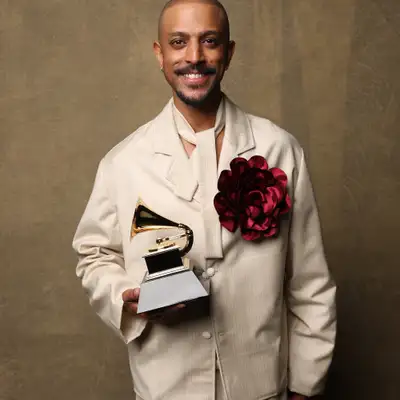

Artivism bridges creativity, spirituality, and social impact — from the inside out. Hosted by Iman Jordan, recipient of the Harry Belafonte Best Song for Social Change Award at the 2025 Grammys, the show shares real conversations with artists living inside the industry, navigating purpose and pressure, healing and hustle. Grounded, urban, and soulful — it’s spirituality for the real world, born from the studio, the struggle, and the stage.
Devin Tracy Audio
00:00:00 Speaker: In order to have access to your higher self, you got to sit with yourself. Mhm. Um, and a lot of people don't know how to sit with themselves. Yeah. I'm learning a lot, a lot of patience, timing, timing and trusting myself because I have trusting the timing, trusting the timing. Right. My non-negotiables are Devin, you deserve to be amongst people that are in alignment with where you're going. You deserve to be with people who are respecting of not just your time, but who you are as a person. Mhm. I actually have to go outside and talk to people sometimes. Yeah. But then I also have to stay inside and be in my bed and meditate or play video games or watch anime. Like that's me. People may look at me and be like, you still play video? Yes, I play video games because that helps with my creativity. And now I'm at the place where I'm resting and knowing that anything that I create or anything that I do, whoever gets it, gets it, and whoever don't get it, they just don't get it. Welcome to Artivism, where we sit with artists who remind us that creativity isn't just a skill, it's a spiritual practice. As artists, we're taught to grind, to manifest, to plan everything down to the hour. But some of the biggest moments in our careers the breakthroughs, the songs that land, the opportunities that fall out of the sky. They don't come from effort alone. They come from listening, from trust, from the space inside uncertainty, where the next version of you is being born. Today's guest, Devin Tracey, lives right in that space. Devin's voice honey dipped boom bap grown jazz train has traveled from Florida to New York. From selection white label classics to shows like I May Destroy You, from viral remixes with Jay Rob to collaborations with Flying Lotus and Darius. But beyond the resume, Devin is someone who is deeply spiritual, Someone who creates from a place of faith, intuition, and a kind of quiet surrender that I've always admired. And he's in a moment right now, a stretching, a becoming that so many artists will recognize. The question of how do I trust the next step when the step isn't clear? How do I stay devoted to the vision when life feels real? How do I let the spirit not fear, shape the work? These are questions I ask myself all the time, especially that tension between wanting to control everything and needing to let ideas, timing and opportunities unfold in their own rhythm. So today, Devin and I are going to explore that space. The spiritual architecture of artistry, the universal laws of alignment, voice and timing, and what it really means to move with trust. Welcome, Devin. Tracy. Hello. Hello. Hi. Hello. How are you? All right. So I guess, you know, let's first start where, like, how did you get started singing? Like what's, what's your background in music? Uh, I grew up listening. Well, I grew up in the church. Of course, I grew up listening to, like, a lot of gospel. Yeah. I grew up like Karen Clark Sheard. And I listened to a lot of like John B Kee, um, and Fred Hammond, but I also grew up in the children's choir. When I was young, I used to sing in the choir. I was super shy. I never did any solos. And then it led to me singing in the youth praise team. We had a youth praise team at our church, um, back in Jacksonville, Florida, and I used to sing in the praise team. And then then I started leading songs and I wanted to be in the forefront, but I was still nervous and scared because of my voice. Um, and then I also was listening to like a lot of house music and a lot of jazz. Um, introduction to my dad. My dad introduced me to all types of music he had, I don't know if people remember, but they used to have like the albums, the, the, what was it called? The, the CDs, the covers, the jackets or whatever they call them, the jackets. The CD jacket that you open up with the inserts or something? Yeah, that's what it was called. It was, I don't know. That's what CD is it, a jacket? I think so. Well, well my dad had like a I call it a folder growing up. Yeah. Like a whole bunch of like albums and CDs in it. Um, and jazz and I remember picking up Norman Brown, uh, his jazz album, and then I just started writing from then on, but I was really into like a lot of jazz house and R&B and soul music a lot growing up. And then I just started practicing and just singing around the house. I feel like it was natural for me in a way, because I was obsessed with singing. Yeah. Um, my siblings would tell you I used to annoy them with singing around the house, you know, all the time, all the time. Like singing in the shower, singing, walking around the house, just singing, just out of nowhere. And then I also used to sing in class. I don't know if anybody else did that, but I used to sing when I was in first grade. I used to disrupt the class. I remember sitting in class and I used to get in trouble too. And my mom, I used to I used to get whoopings for that. That's funny. I think actually that used to happen to me too. I used to in first grade. I used to get in trouble because I was always like bopping my head and humming. So they thought I had some type of like ADHD or something like that. Yeah, they thought the same thing. I was like, no, I'm just like Devin. They would call my mom and be like, your son is disrupting the class because he keeps singing songs in the class. Like, like when we get quiet, when we're doing work or writing, I will legit just bust out in a song just while doing it because I don't know, it just made me feel good. It made me feel comfortable with just being in class. Um, but yeah, I, I used to sing a lot as a kid and I used to get in trouble for it. You know what's funny? Um, you mentioned John P Kee. Yes. And my very first solo ever. And it was in church. It was a John P Kee song. And I think it's called show Up, Show Up. Do you know that song at all? But it was a John. all I know. That was the only song I knew, but that was my very first time getting up and singing in front of people. Yeah. Um, so that was back in my church days, too. Wait, what was this? This was when I was like, like probably thirteen, fourteen. It was my very first church solo. Oh, wow. Yeah. Yeah. So I got roots in the church, too. Of course. All right, all right. Okay. Um, so when did you think that at first you were going to sing mainly like, gospel music? Or was it always going to be like, I'm going to do whatever music I want, secular or whatever? Well, I didn't see myself singing. I mean, I could sing gospel, of course, but I didn't see myself singing gospel. I always saw myself singing like soulful music because of my my style of singing. Yeah. Because as a kid, like, I had such a, a light voice. I didn't have the, the typical boy voice or the male voice or whatever somebody would call it. Yeah. Um, I always had a, always, I would admit I used to listen to a lot of female singers. So my voice was very feminine. Like it was very like, who? Who's that girl singing? You know what I'm saying? That was me. Um, my favorite song growing up. And I used to do it as a kid, even the whistle tone like Mariah Carey. But I used to listen to, um, Minnie Riperton and I used to sing that a lot in class. It was la la la la la la la la la la la la la la la. No no no no no no no do do do do do. And I used to do it all the time. And that's funny. And my mom be like, boy you better stop singing that song. Stop singing that song. And I kept singing. I didn't really give a fuck. I just kept going. But, um. But no. Um. Yeah, I would sing all the time in class and I would just, I don't know, I just my voice was just different. I didn't really see myself doing gospel at all. Yeah. I always saw myself doing different things like either soul or jazz or house. And I always wanted to know how I can get into that. When did you first put out your first like record or song as Devin Tracey? Was it a house record? No. So my first record, uh, I think I'm known for this. I used to rip songs off of YouTube. Remember? LimeWire? Mhm. I used to rip songs from LimeWire, instrumentals from LimeWire and take them and then write to them all the time. Yeah, I used to put it on either like a I used to burn CDs. I was good at burning CDs back in the day. And then I would like put a lot of instrumentals on there. And I would put songs on there because again, I couldn't afford at the time to go to a studio. I didn't even know how to have access to that. Yeah. So I would record my, I figured out how to record myself. So I would grab like a tape player or something and record like my first song. But my very, very, very first song that I ever done that nobody has heard before, they probably never heard before, was a song that I ripped from, uh, what was his name? Uh, Nujabes or Nujabes. He, uh, he also was one of the producers for my favorite anime, Samurai Champloo. Oh, and I forget you're into anime. Oh yes. I'm obsessed. Uh. And so I can't remember that cartoon came out in two thousand and three. Oh my God. I can't remember ripping the songs from that and just writing to them. Just being, just pretending that that will be a first record. Yeah. Um, so one of the songs I think is A Space Between Worlds or Worlds between space, I think is what it's called. Do you still like the song? I still listen to it to this day. Really? Yes, I have, you know, the very first song I ever recorded. It was a song called I appreciate, and I have I can't find it. I don't know where it is. So, I mean, I would love to listen to it. I'm sure I'll have many critiques because I made a lot of bad music back in the day, but I think that's a part of it. I think it's a part. Yeah. You know, I heard, um, Daichi says one time it was one of her old videos, you know, when they're going back through her catalog of videos and she's like, I am allowed to make shitty music, and I give myself full permission to make that kind of music. What do you think music and creativity is channeled from? I think it's general from not just within, but, uh, it's channeled from I don't want to sound corny, but it's from your higher self. That's actually it's true. You channel it from your higher self. But in order to have access to your higher self, you got to sit with yourself. Mhm. Um, and a lot of people don't know how to sit with themselves. Yeah. Um, and being able to sit with yourself is a hard thing to do for certain people. Yeah. And so I had to sit with myself with certain periods of my life. I think you were asking me earlier about when it comes to music, have you had the moment of like, oh my God, like, I want to make mistakes? Or how, how with you sitting in those mistakes, you got to actually sit and have pauses. You got to be like, okay, I'm not going to create for now. Because if you can't, you can't create music consistently without having those pauses. Yeah. We have those pauses and alleviate or delete all the distractions. Yeah. Then you be able to channel and hear your higher self and listen and write those types of music that you're writing now to inspire others to do the same. Because I'm sure you've had that experience where like you're writing something and you actually don't even feel like you're writing it. You just feel like the song is being written. Right. Which is so insane. And that's, and that's where like, I also agree with you that it feels like it's a channel. It feels like you're just a vessel for it to be captured, a container for the idea, right? If you're inspiring others around you and if you know, if you're touching lives, because I remember I prayed for this, I was like, God, I want to be able to like, touch other people's lives. And my mother always would say, be careful what you pray for, not even in a bad way, but be prepared for it. Um, and I remember asking for it, not realizing that it comes with work. Because in order for me to inspire people, I have to go through things. I can't sit and ask God to have me inspire others when I haven't gone through that particular thing. Yeah. Or making the mistakes, throwing paint on the wall and being like, hey, Debbie, you gotta make a fucking mistake in order for people to actually see and, and, and to, to give them the information so they'll be able to grow as well. It's true, it's true. And I'm, I am a perfectionist at heart. Like I am like wired that way. I'm not, I'm, I have habits that have like made confirmed that like in my life. And so one of the things that when we were talking about, like giving yourself permission just to make shitty music, giving yourself permission to make mistakes. Mhm. Um, actually that's where all the genius comes from. That's where you're just like, because it's never really like one of the greatest, some of the greatest music I've ever made came from out of nowhere. Yeah. You know what I mean? Like, you're just making something and then all of a sudden you might hit a weird thing or a note, or this hits weird in the microphone or. And then all of a sudden you're like, whoa, this is amazing. And it feels good to when you hear it, you're like, I was not expecting that. And so you I remember when I did ease your mind. Quick story. When before that song came about, I was in a. I was in a car with a bunch of friends. It was like four of us in a car. And Darius song came on the radio and I was in the back seat and I was like, I love this. I was like, I want to do this too. And this was the same year that I wrote the song. And I remember being in the back seat and one of my friends was like, Devin, hit him up. I could see you on the track like this too. It was just an instrumental. And mind you, this was before his album Oasis came out. It was the, I guess the prelude or like the the intro to the album. It was like an EP that came out before Oasis came out. And I remember I DM'ed him that same evening, and then I got a response the next day and he sent me like two tracks. He sent me a dance one and a slow one. I said, I want people to dance. So I said, I went to the track Ease Your Mind And I wrote it. And I remember I sat there and I wrote it, I smoked. And again, at the time, this was me depending on it. And I should know. Right. But it was unexpected. It worked. Yeah. And so I was sitting in my, my, my living room in my studio apartment. And I sat, I sat at my table and I recorded everything. I vocal produced it, I wrote it and I wrote it within an hour. And then I recorded it with the hour after. Mind you, it was dark in my place and I only had like a lamp on. And I just recorded it and I sung the song and I rushed and sent him the track. I said, here you go. He got it. This man was like, Devin, this is like the best song ever. He said this was the last song for the album. It was the last song and it ended up being like a hit. People loved it, had everyone dancing all over the world, which is incredible. And I wasn't expecting it. But then at the same time, I was at a point in my life where I'm, I'm gonna manifest, I'm gonna get all the things that I need right now. So in the future, Devin, I'll be able to thank Devin in the past. Mhm. And so now three years later, I'm thinking, Devin. I'm like, is it three? But yeah, three years later I'm just like, Devin, you did that. You know what I'm saying? Because that's something that I wanted to happen. Do you think, um, speaking like those kind of best moments that things that have happened like that, do you think that's more of a product of your effort or alignment? I would say a little bit of both because I had to do the work before anything could be in alignment with it. Yeah. I actually had to, to trust myself to take the step and actually ask the question or to reach out, because it wouldn't have happen if I didn't do the work. Totally. And doing the work requires you to trust yourself. Yeah. And to also actually sit with yourself, like we were saying before. Yeah. So I knew that it was going to happen, but I just wasn't expecting it to happen in the way that, you know, how it did, how it did like, like the fact that a friend was like, no, you should just hit them up. Yeah, like just say just hit them up and Devin, just reach out, see what happens. Mhm. And I said, okay, cool. I'll do it. And so I say it's a little bit of both because then it align me with other opportunities that were the same thing that I've always wanted. Because in the past, I've always listened to like a lot of house music. Yeah, I'm, I love house music and just dance music in general. And I told myself, when I reach a certain part of my career, I want to start doing it. And it happened. Mhm. Now, mind you, when I did mine, I was high as fuck. Mhm. I was actually high as I, you know, got I'm getting older in this industry or entertainment field, and I'm starting to see certain patterns that I, I wanted to like let go of. So I kind of like stopped because I remember when I was in Texas and I was smoking, I started to notice my thoughts. I was just like, it was starting to speak to me like, oh, you can't do it, or something's not going to happen or you're not going to progress in a certain area in your life. I feel as though people who smoke weed are people who are already at a certain point in their lives to where their successes outweigh what they got going on, to where everything in the forefront, they can keep going. But if you're continuously moving and growing, and again, it's different for everybody. But if you're continuously moving and growing in that world or in that field, then there's, I guess there's no stagnation or there's no like it won't bother you as much. And then now people are doing it in moderation. But for me, I just want to cut it completely because that I started to notice certain patterns in my, my mental that I was just like, oh, I'm like that. So you're taking a break? Oh my God, I'm taking a break. I can't, I just not even no, I'm not even gonna say I'm taking a break. I'm just, I have to like, stop it. I had to like, stop it. I mean, maybe take a break. Yeah, maybe take a break all the way fully. But but smoking in general would dry my lips out. My lips are way too big for that. Um. And then it would dry my skin out. And then I noticed certain like I'll have I'll break out in certain areas on my body because of it. Yeah. Um, and then like, it messes with your not just your mental, but it messes with like, you know, things that you eat. Um, and so there are certain I have dietary restrictions, there are certain things I can't even, I can no longer eat anymore. Interesting because I thought about that. I wonder if that affects. Yeah. Like well, and again, it may affect everyone differently, but for me, I started to notice my thoughts, my eating habits, and the things that I would do every day. Like I, my impulses, like I would, I would react a certain way while I'm high to get something done. When I'm not on it, I take my time or I'm patient, or I'm trusting myself and knowing what I can do, versus having the anxiety and thinking that something's not going to happen, I think. And that's for me. So I've been taking these breaks, right? So I took like, probably accumulatively last year. I took about six months off and right now I'm on a three month, uh, well, I've done a month. I'm about to do three months total. And what I noticed is that when I'm trying to do really difficult things, especially stuff for my artistry, because like when we're doing our art, it's like we're putting everything on the line, like we're exposing ourselves, like all that kind of stuff. I found that I would hesitate to make the next move. Like, you know what I'm trying to say? Like, like I'm overthinking what the next move is. Well, sometimes when I'm not high, I just like, do it right. I just do it. And then it's not like I'm not negotiating it in my head. I'm not overthinking it. You just do it because you trust yourself, especially like your higher self speaks louder when you're not on it. And because we would use that as like the the mask to think or to do things. I think I was asked earlier, like when you smoke weed, does it help with your creativity? At the time it did, but I started to depend on that. When I had to practice and learn that. I can't always use that as something to help with my creativity. So I was like, I can do without it and still be creative because I'm channeling and being able to actually process and look at certain things differently when I'm off the weed and then when versus when I do it, when I do it, I'm either overthinking or I'm thinking too hard or I'm thinking it's not enough, or I'm just like, okay, it's it's great. The aftermath of being high or smoking weed after you create the process is dope. Yes. But in the process, overthinking, overthinking, doing too much, catching anxiety out of breath, thinking that people are judging you when that's not the case. It's not the case. So for me, I was like, nah, I want to like, cut it all the way out and I want to see how I'll be able to process and do certain things without it. And I did. And so now, like when I write music, it just comes naturally to me. When I listen back to it, I still have that same in, uh, feeling when I listen to my music, I'd be like, oh shit, this sounds so good. You know what I'm saying? Like, everybody can actually hear what I'm doing. Yeah, I actually can hear all my parts, my harmonies with the instrumentation and everything that goes into the music. Um, well, speaking of the, like the idea of this channel and where music kind of comes from, you've always struck me as someone who is creates from some type of spiritual center, right? And like, how did you, has it always been that way for you? Like, or does this was there a moment where you really started getting more into like, like the understanding of your own spirituality, what it means, what creativity means when you're thinking about that? Um, it took time for me to get there. And again, it's, I think I said this before, I think it's just a practice. Yeah. I believe it's a practice. Um, at one point I wasn't, uh, writing music naturally as I am now. It was more of like me either googling certain words or looking in the dictionary. I don't even think people use dictionary anymore, but looking in the dictionary at certain words and then writing based on the definition of that word. Um, and then I started to actually just allow it to just come to me and flow because I started to get comfortable with my voice or comfortable with myself knowing my, my vocal, uh, capabilities within my music. So then it started to branch off in with me doing other things instead of it just being in a box. Like, oh, Devin's known for R&B or boom bap. Whereas though people are just like, nah, like I heard him on a house joint or I heard him on a hip hop joint, I heard him on a rock song or a jazz joint. You know what I'm saying? So it helped me to expand. So I think earlier on, no. But as I practice and kept going, then I started to lead into being able to channel and sing with my music. So speaking of like where you are right now, what? Who are you? What kind of artists are you in relation to who you want to thank in your future. So like for instance, when you were talking about, I want to be this artist that I can look back and thank my future self or thank them for like following through, like, what is it? What are you on right now? What kind of like, are there any kind of themes or like spiritual lessons or things that like you're leaning into in this version of Dev and Tracy? Um, I would have to say, uh, two things. I would say patience. And again, I'm still learning. Mhm. Um, I would say patience. Yeah. I'm learning a lot, a lot of patience, timing, timing, and trusting myself because I have, I'm trusting the timing, trusting the timing. Right? I've had moments where I would overthink things or look at things from a different perspective. Mhm. And then I'd just be like, oh, Devin, that's not really what it was like after it's all done. I was for an example, not to say this has happened, but just to say like, oh, this person said say something bad about me, or they're judging me because of the way I sing. And then when they hear the track, they be like, nah, I always thought of this and it's a positive outcome. And I was like, and and I'm like, oh, I thought it was something really bad, but it's not. You know what I'm saying? Just overthinking. It's just about trust, right? Trusting yourself. And it's the, the turnaround time for that has been instant every single time. Like I'll be sitting in my thoughts and then someone will have to remind me after, without even them being in my head and being like, oh, I saw this when you or I, I believe that you could do this. And I'd be like, oh shit, Devin, you were, you were thinking you were thinking too much. Yeah. I think a lot of, uh, I mean, especially as artists, it's like, we have a lot of stories we create on our own because of whatever. It's like it's a projection of how we're feeling inside and like there's been so many times where like, I've played a record for somebody, it did not connect with them at all. I could just tell by how they received it. And then months later, I'll play that same record for that same person and they're like, oh my God, what did you do this right? Oh, I love this. And then I realize like, oh, that had more to do with their mood. Like, I played an upbeat song and they were depressed or you know what I mean? There's so many reasons why someone or are they just didn't get the call or they didn't listen to this record yet, and you thought they just didn't like it and didn't respond because that's always cold. A lot of times if someone doesn't respond, you think, okay, they didn't like it. They don't like my feelings, right? They don't want to hurt my feelings. But then, but then that doesn't even end up being the case. It's not. And I think we're in a time where everybody's busy to a point where it's hard to actually communicate, uh, in an instant because everybody got so much going on. Not to say it's an excuse, but it's also to say about understanding and appreciating where each and everyone is at this point in time. Because again, everybody doesn't walk, everyone doesn't walk in your shoes or everyone doesn't see what you see. Totally. So you got to sometimes, and I say this to myself a lot. I was like, Debbie, you got to give people grace because they may not hear it yet, but they, they're listening. Yeah. And then then when it comes time for them to listen, I'd be thinking in my head, but why ain't say nothing then? I know, but then I'd be like, oh, they probably were doing other things and dealing with a lot. And they will say, hey, I had to do this. At the time, I couldn't respond because this, that, and the third was going on. Yeah. Yeah. Um, I've been listening to this coach and she said something really cool. I heard it yesterday and it was like, um, there's these non-negotiables that we have about we should have about ourselves, like a non-negotiable for me is that I'm worthy of the best. I'm deserving of all the great things in life. I am, I am an amazing singer and songwriter, and my creativity is from a higher power. That means that it is great. And that's a non-negotiable, right? But what happens is sometimes something happens in our circumstances are conditions that make us start negotiating our non-negotiables. Like we start going back like, oh, maybe I am not that good. Oh, maybe. Oh, they didn't respond. Maybe I'm not allowed to lie. And that's the thing. Those things are non-negotiables, right? So whenever conditions don't match up the way you thought or things didn't work out quite the way you thought they were, they were going to work out. It's like that has nothing to do with your non-negotiables. Yeah, it has nothing to do with you. I think it ties back, goes back into what we were just explaining about trusting yourself and also understanding where things are with where you are. And it's all about timing. Yeah, it's about timing and also just practice. Practice. Your non-negotiables are also a practice that you gotta continuously believe in because there are certain things that we are unlearning or things that we're learning to let go of as we get older. Let's be honest, as we get older in our careers. Yeah. Um, and again, timing, it just takes time, patience, timing. And I'm learning the same thing like my non-negotiables are. Devin, you deserve to be amongst people that are in alignment with where you're going. You deserve to be with people who are respecting of you, not just your time, but who you are as a person. Mhm. Um, you are deserving. You are beautiful. You're gorgeous. You got things, you got positive things going in your life. You deserve people that don't waste your time. You know what I'm saying? Yeah. Respectfully. And so that's, that's kind of where I'm at with that. Yeah. Yeah. Well, I hear you, um, a lot of artists also struggle with the tension between survival and then devotion to their craft. Right. Um, what has that balance looked like for you lately? Like, you know, I'm sure because sometimes for me, it's like I want to be creative, but then also my bank account is screaming, you know, those types of things. Like, how do you navigate that kind of tension? Well, for me, I think it's knowing what you can afford and knowing what you can obtain in that moment. Um, I know some people will probably, and especially as independent artists like ourselves, they'll look at it and be like, well, I don't want to go to work or I don't want to meditate or I don't want to, you know, take a side gig. I want to just continue to do this. It's okay to actually take a step back and recoup. It's okay to take a step back and educate yourself in certain things. So your leap can be bigger than what the leap was before. It's okay to like, do a nine to five for a certain amount of time. It's okay to say, hey, I'm going to work for this individual for now and make sure you're learning while you're doing that. Like for me, I remember I took a step back and went back to school to get my degree right because I wanted to know the business side of the music business. Though it was just corporate business, but I knew the how should I say? I knew the, uh, certain things that you could say in certain meetings or in certain emails. I basically wanted to like be in an email and say, per last email, that was me. I wanted to be that guy. So I was like, yo, you didn't do this. Yeah. And that was me. And now when I respond or talk to certain people, I'm actually showing my business side of putting on that extra hat. Unfortunately, as an independent artist, there are certain hats that you have to put on until you can get to you. Totally. But for me, I've learned along the way, with me being in school, getting both my degrees, I was just like, Devin, we're just going to have to take a step back, learn these things so that when the time comes for us to take that, to make that step, there's going to be things that we can assess or things that we can teach others, or things that we can actually do for ourselves. Because some majority of the time you got to advocate for yourself. You have to. Yeah. I mean, and I think that like, one of the things that I've struggled with too is like, you know, do I don't do I not get a job and just push the music thing? Mhm. And then now I start hearing the struggle in my music because now I like my music. I'm putting so much pressure on it that it's got to pay the bills. Then now the music doesn't feel good or is actually me going to like, work somewhere else, get get some income in. It's actually alleviating me and giving me more creative freedom to like, just be in the, in the music, like and have fun with it. Because that's what it always comes from, right? And it's also about like knowing yourself because for me, yes, I like you want to laugh, but I like being in the house. I don't, I ain't even gonna lie. I kind of know that about you though. I like being in the house. But also I'm, I'm an introvert and extrovert. What's the thing in the middle? If you're an introvert or an extrovert, you're, um, an omnivore or omnivore. Omnivore. So I like to I'm a bit of both. Yeah, I am too. It inspires me to be outside, but it also inspires me to be inside like I can do other things. So when it comes to me being creative or with withstanding what's going on in the world, I actually have to go outside and talk to people sometimes. Yeah. But then I also have to stay inside and be on my bed and meditate or play video games or watch anime. Like that's me. People may look at me be like, you still play video? Yes, I play video games because that helps with my creativity. I'm a guy that likes looking at color. Yeah. Like I love bright colors. I work in graphic design as well. I love doing graphic design. I love seeing vibrant, beautiful colors even when I play video games. Like if I lived in another in another life, I would have been a video game creator. I mean, I could do that now, but I, I, I have like gamer friends and stuff. Oh yes, I like gamer friends. I'll be on my PS5. Let me tell you something. I'm on their give them a little, I'll beat your ass and take it. You know what I'm saying? But I love horror games. I love it. Um, what kind of games? Horror. Oh, really? Mhm. Interesting. I'm a horror fanatic. Like I love, you know, that's so interesting, too, because it's like you think I love when you peel away an artist because like, you, like you think you got it all nailed down. Like, okay, Devin's like super soulful, jazzy, sultry voice, house music. And then you're like, he loves playing horror games. Yes. And also is a gamer and you know, other things, anime like that's crazy. That's yeah, nobody don't really expect that unless they actually know me, but that's great. But I get laughed at from people because they're like, I would have never thought that you played video games, but that also, but that ties into your question. Um, to answer to that, um, that's something that I do because sometimes you do have to take a step back in order to create. And those are the things that I do in order to help me take that large leap. What about you? So you said you meditate. Yes, I meditate. What? Um. Like how often? Like what kind of meditations do you do? So I do breathwork. Um, but I also like, I sit in silence. Um, I know when I wake up early in the morning, especially now because the world is so loud. And so for me, I'll wake up in the morning and again, again, it's a practice, but I wake up in the morning and sometimes like, I won't get on my phone and I'll sit and just, I'll just be like, I just thank God just for allowing me to be here. And I wake up and I just sit in silence for at least thirty minutes. Mhm. Thirty minutes. If it's so weird in the morning, thirty minutes will fly by. But throughout the day, thirty minutes may take a while, depending on how much work you're doing. Yeah, but in the morning, I just sit in silence. Just breathe. And just be thankful for just being here. Um, and then I kind of just drown out everything that's been going on. Yeah. And then I start my day. And how I picture it when I meditate is like, sometimes, like from the previous night. Everything could be so loud to where I picture myself walking through a crowd of people talking until I can reach the Devin that's on the other side. So it's almost as if I'm like, I'm doing this in my mind, getting out all the noise. It's almost as if I'm like getting out all the yuck out of me or out of here. And then when I sit in it, I feel at peace. And then I can start my day. Like with intention. I'm like, Devin, we're going to start the day like this. We're going to start the day with doing what we need to do, talking to people with positive, with positive words, making sure we're speaking to ourselves with kindness, giving ourselves and others grace. Yeah. Making sure we're standing ten toes down business wise. That's how I move now. So again, it's a practice. It took me a while. It's a practice. It is a practice. Did you feel like. So if we take just the past year, do you think that was there any moments that have kind of led you to this now like being this Devin now? Like, oh my God. Because like, has you have you had some challenging moments in the past year or so like. Yeah, I have, especially when I left, when I left LA and you went to Fort Worth. Oh my gosh. Oh, no offense to Fort Worth. No offense to Texas, but I would say that I ain't never been that bored in my life. Oh my God. I can only imagine. But I also feel like and I don't really tell this story a lot, but I also feel like that taught me to sit with myself even more because during the pandemic, I. It was hard for me to soothe myself. But then me going to Texas, I did that in order to sit with myself because I was always alone and I didn't really have friends like I had people that I would speak to, but I was literally in my own bubble and it's spread out there. I was just this big. It is. And so like, just like you said, you had a sister in Grand Prairie. Yeah, she was in. But but that's kind of far. That's not like just a hop skip and a jump. Right? is not it? At the time, she was also in Fort Worth. Oh, okay. She was, um. Excuse me, but I moved to downtown Fort Worth and this huge ass apartment, it was a one bedroom apartment. And it was the apartment that I've always dreamed of having. Mhm. And I was thinking to myself. Oh, wow. I'm in this new apartment. This is great. It's gorgeous. Eight hundred square feet. It was all. It all belonged to me. Yeah. But me being in there, I felt so alone and by myself. And it was so weird because, yes, I was on the top floor. But then outside my door, meaning, like outside my balcony area, I heard noise because there were a whole bunch of clubs in the in the back. So I felt like in a spiritual sense, it was basically letting me know, like, there's a whole bunch of noise outside you by yourself inside Devin, you need to go outside and meet people or Devin. You need to actually be where there is a whole bunch of things so you can learn as well as being inside and being with yourself, because the noise is going to be in here all day. Yeah. So I kind of I sat in that for a whole year, like a year and a half, close to two years. And I didn't like it. I hated it and I loved it. I remember you ran out of Texas pretty fast. I did, I ain't gonna lie. But it was a lesson learned in that. But I'm glad I did live there to get that experience for one, so I can have a story to tell. And it helped me with my music. And I wrote a whole bunch of stuff while being there by myself. So I mean, all of the challenging moments make for great art, you know what I mean? I mean, that is the blessing on the other side of it is like any artist out there, like that's going through any challenges or mental health issues or just anything like that. Actually getting on the other side of that makes for so much better art. Yeah. You know, and it sucks to say it because it's like, you know, I just want to be like having fun through the whole process. But that's not how it kind of growth works, you know? Right, right. And in order for you to grow, you actually have to go through in order for you to grow. Mhm. So I, and I feel like that was that moment for me, and I realized what I deserved and what I needed at that time. And I'm grateful. I'm gonna be honest. I'm grateful for being in Fort Worth, Texas, or just being in Texas in general, because it taught me like, hey, Devin, this is an experience. This is something that you don't really need. Um, so it's time to go. And so I left. Let me ask you a question about, um, social media. Okay. How does that, how do you relate to social media and how do you, uh, does it, does it pose any issues or challenges for you creatively? Are you really looking at what the numbers are? Are you like checking for the numbers like that? Or are you kind of like, I'm good with just whatever happens, you know, you know? What's your approach to it? I used to worry about the numbers, but not anymore. Yeah. Um, and I used to be, I used to worry about like, who sees what on my page and who doesn't. But now I'm at the point where I kind of don't care anymore. And the only reason why I say I don't care. I'm not saying I don't care about, you know, the people that support me or the people that actually look or that want to see me progress, but I don't care about is like what the algorithm is showing me or the numbers of what people are expecting because I know who I am when it comes to my creativity. I know my worth. I know that whoever sees it or catches it, it's for them and who doesn't, it's not for them. Totally. I know what audience gravitates toward my page and who doesn't? Yeah. So now I'm at the place where I'm resting and knowing that anything that I create or anything that I do, whoever gets it, gets it, whoever don't get it, they just don't get it. And again, I give them grace and I just be like, hey, they'll either get it later or they won't. Yeah. Other than that, I'm more so worried about, you know, inspiring the people and making sure everybody is at a place where everybody is at a place where they can experience. Or they can see the the growth or see the, the creativity. Yeah. For artists who are listening right now, what would be like three pieces of advice that you would just be like, here's here you go. This is what I've learned and you're just going to hand it over to him. What would that be? Uh, take baby steps, be patient with yourself. And again, artists, especially independent artists, even the ones that are signed. Trust the process. Trust the journey. Mhm. Um, and it's okay to take a step back to, to recollect yourself. It's okay to take a break. Yeah. It's okay to live life. Mhm. Um, because when you live life, when you experience, you'll be able to be honest, a quick story. Lianne La Havas actually taught me this. I went to go see her back in like twenty twenty. No, twenty thirteen, sorry, twenty thirteen when she first performed in Webster Hall. Wow. Oh, this one girl bought me my ticket and she got me backstage passes as well to see her. And it was it was Lianne La Havas first time performing in, you know, the US and in New York. And so we got a chance to see her perform. It was when she did Is Your Love Big Enough? That album, that was my favourite album. I was so obsessed with that album. I used to listen to that album from front to back, all in New York. Walking down the street in New York, I was like, I'm obsessed. Mhm. Um, and I said, I want to meet her again. Happened. And I met her and I asked her the question after the show and she was wearing a little dragon, uh, necklace. And I remember asking her, I said, so what advice can you give me as an up and coming artist? And she said, just be honest in your music, be honest and tell the truth. Be honest. And from that day forward, I was like, you know what? I'm gonna be honest in anything that I do, I'm gonna be real in all my music. I'm gonna write with honesty. Even if I'm shadowing somebody else's relationship. I'm a state facts, but also make sure that I'm honest and what I'm writing. I love that. I love that, that's it. Yeah. Um, I mean, and it's sometimes I have to remind myself, like, I don't really need to put on anything for anybody, right. You know, and it was really crazy too, because when I wrote The Liver and I did that song, it was really from an honest place. Um, about society. And I was so thankful that you jumped on the choir and sang on the record. It was such a beautiful song. It was awesome. It was awesome. And, um, I didn't expect it to do anything. It wasn't for any end result. It was just kind of like what was on my mind and what I'm talking to my family about and my friends. And that thing is what led to a freaking Grammy. Exactly. Congratulations. Thank you, thank you. Still, to this day, I know I'm still shocked by it, but it's also it also reminds me that like, I don't need to like, I'm not trying to like gauge what people are going to like. It's just about how I'm feeling. And, and any artist out there listening, it's like, whoever you are is like you have this very unique perspective that nobody else has. It's like a fingerprint, right? You know, and, and that's what we need to hear from right now. That's what and even starting this podcast was just like, it's not necessarily all about just social, political things. We don't need to talk about things. This is about unique expression and that unique expression being the activism that we really need in this world. Anyways, I agree, and you are a prime example of that, and I thank you for being on here. Thank you for having me. Yes. Uh, all right. Devin Tracy. Yes, you've been listening to Artivism where creativity meets consciousness. Don't forget to subscribe and share this episode with another artist who needs it. Until next time. Remember, every act of creation is an act of courage, and expression itself is activism.