Subscribe
Share
Share
Embed
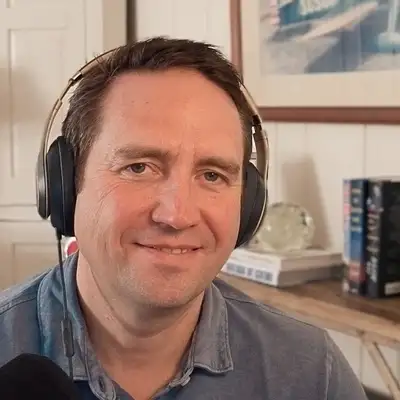
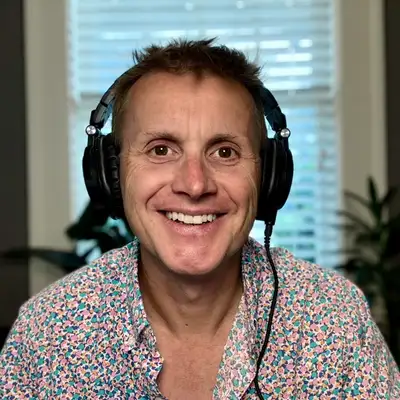
Space Insiders is your bi-weekly deep dive into the intersection of space, cloud technologies, and entrepreneurship. Hosted by Tony Sewell and Rob Ruyak, both seasoned space-tech executives, this podcast features candid conversations with founders, investors, and entrepreneurs shaping the future beyond Earth. Whether you're launching a startup, investing in innovation, or just space-curious, Space Insiders gives you the behind-the-scenes insights you won’t hear anywhere else.
New episodes drop every two weeks. Subscribe now and join the orbit!
Disclaimer: The views and opinions expressed in this podcast are those of the hosts and guests and do not necessarily reflect the official policy or position of any organization or employer.
Welcome to Space Insiders. My name is Tony Sewell, and as usual here with my space mate, Rob Ruyak. How are going, Rob?
Rob Ruyak:Great, Tony. I'm so excited about this interview. Mean, we got Australia, US, and Japan. Super excited.
Tony Sewell:Yeah. I always say this, but people are gonna genuinely enjoy. This was one of the most fun interviews we've done with Chris Blackaby, who's the chief operating officer for Astroscale. They're a Japanese company, or they're a global company, but they were started in Japan. They're really pioneering the in orbit servicing and, as he stressed, space sustainability company.
Tony Sewell:And
Chris Blackerby:this is
Tony Sewell:a topic that has come up in a number of our interviews, and we'd really wanted to dive into, and I'm super interested in sustainability.
Rob Ruyak:Yeah, was founded in 2013. And it's one of these companies, Tony, that is actually doing the work and they've done multiple demonstration missions, very successful missions. It's very complicated technology. We go a little bit into what it means to do this kind of work and how hard it is. But even more importantly, the different business models that might drive an increase in that activity over time.
Rob Ruyak:Because I think we all know and can agree that anyone that watches this market sustainability is going to be absolutely critical for any kind of space mission in the future.
Tony Sewell:Yeah. And I think the timing of this is really interesting too. I mean, I reflect on it at the start of the interview. I just listened to the Space Capital guys, they did their quarterly podcast this week, they were just sort of talking about the amount of space investment in space is less about sort of this sort of niche speculative thing and becoming much more mainstream and is attracting a lot of serious investment. And we see things like Blue Origin about to start their commercial launch services, Starship really ramping up.
Tony Sewell:This topic of space sustainability is going to become more important. We get to explore some really interesting areas about what are those things that we think are going to instigate the next level of development in this particular segment.
Rob Ruyak:Yep, absolutely.
Tony Sewell:All right, so before we get to the interview, Rob, any news stories that caught your eye this week?
Rob Ruyak:Well, yeah, one today, which I thought was really cool. York Space, which is a they're based in Denver. They're a satellite manufacturer among many other things. They just raised about $630,000,000 in the open market today, which If is really you read a little bit about them, they're focused on government as well as commercial customers. They do everything from design of the spacecraft to launching them ground systems, support, all the operations for various types of applications and everything from cybersecurity for communications to earth observation and geospatial.
Rob Ruyak:So, it's a very interesting company and it's even more interesting, you know, because I think we've seen kind of this trend of SPACs. We've seen specific companies go through their IPOs, such as Firefly Aerospace, which we all talked about at some point in the last six months. And when you talk about or read about why they went public and why they need to raise this money is very interesting. We've talked about this on several occasions around defense and national security, but this is basically what their kind of perspective speaks to and kind of what their press releases are. It's driven a lot by the additional $50,000,000,000 in US defense spending, a chunk of that around Golden Dome and missile defense.
Rob Ruyak:And they believe that, you know, they're going be in a really strong position to manufacture, design, and sell cheap forms of satellites for that particular mission. So, I thought it was really interesting to see this. Clearly, it was a successful day for their initial IPO and wish them the best of luck, but that one caught my eye for a lot of reasons. So, it's just another exciting moment, I think, in the industry.
Tony Sewell:Yeah. No, that's fascinating. Awesome. All right. Well, a little bit of an extended interview, this one.
Tony Sewell:But as I said, I think people are going to really enjoy it. So, I hope you enjoy our discussion with Chris Blackaby. Alright. Welcome back, and super excited to be welcoming Chris Blackaby to the show. Chris is the chief operating officer at Astroscale.
Tony Sewell:Chris, thanks for joining us.
Chris Blackerby:Hey, Tony and Rob. Thanks so much for having me.
Rob Ruyak:Great to meet you.
Tony Sewell:You as well. Yeah. This is really good. And I I'm I'm so thankful that you you reached out to us to to join the show because this this whole topic of space space sustainability is something that we've we've kind of skirted around with a number of discussions and interviews we've had over the last year, but it's such a fascinating topic. Look, was listening to the Space Capital podcast this week.
Tony Sewell:They put out their quarterly report and they made an interesting comment around, up until now, the space industry has been building the railroad. Using the rail analogy. They've been building the railroad and the space industry is now transitioning to the utility of the railroad. And obviously, that brings a whole bunch of challenges from just an environmental sustainability perspective. So with that in mind as a primer, tell us a little bit about about you and and Astroscale to to kick us off.
Chris Blackerby:Well, yeah, Tony. Well, those are two really big topics, me and Astroscale. So I'll I'll I'll try to give you a a cliff notes version off the top. And but first to your analogy, that's exactly right. We're building out the infrastructure for the utilization of an environment that that that we rely on here on Earth.
Chris Blackerby:You know, space is great from an exploration and an excitement perspective, but it's also really great just from a capabilities perspective. Everything that we get on Earth, we benefit, you know, because of space. And so, yeah, building out that railroad, building out that infrastructure for the utilization of orbits is exactly what we're all about. So from the Astroscale perspective, a lot of people see us as a debris removal company. I'm sure we'll get into this.
Chris Blackerby:I like to make it clear from the start of so many of my conversations, we are not a debris removal company. We are a space sustainability and on orbit servicing company. And so we're focused more on the larger aspects of servicing beyond debris removal. Debris removal is certainly a part of it, but it encompasses so much more than that. It encompasses life extension of satellites, it encompasses inspection of threats, it encompasses awareness and refueling, and all of that ties into that analogy Tony that you started out with, is building out that infrastructure in orbit that can assure a long term sustainability of that space.
Chris Blackerby:And so we're much broader than than that. We get pegged a lot of times as being this space debris company, but it's much bigger than that now.
Rob Ruyak:I think space debris is I don't know. You're not really waste management of space. Right?
Chris Blackerby:We like that analogy.
Rob Ruyak:I mean, I have debris removal every Friday morning, and it's it's not that exciting.
Chris Blackerby:But eventually, Rob. Yeah. Eventually. And there and there will be there, but we're just not there yet. I mean, the everything is too nascent.
Chris Blackerby:But at this point, you're right. It's not. It it can't be that.
Rob Ruyak:Well, I find it I I gotta tell you, I've been wanting to talk to you guys for a long time, Chris, because I've always been interested in this particular part of the market because I I feel that there's always a lot of conversation about space sustainability and debris removal and satellite servicing. There's a lot of companies out there that I think are talking about it because I think it's such a hard technology problem to solve. But you guys have been successful in actually doing it, And you've been around for a while too. So, we'd love to have you talk a little bit about some of your successes and what's the technology like? What does it take to do something like this?
Rob Ruyak:And make it real for people. Because I think a lot that are not close to the market, obviously, are like, yeah, this this is something that, you know, really needs to happen, but are there any companies actually doing it yet? And you guys are. So I'd love to give that opportunity to describe a little bit about it.
Chris Blackerby:Yeah. Thank you, Rob. It is a multifaceted issue, and it is a technology issue, which I can talk about. It's also a policy issue. It's also a business viability issue.
Chris Blackerby:So there are so many things that encompass what we're trying to do, and I think that's what really drew me to the job in the first place is because it has so many different overlapping aspects, which in in some cases seem intractable. Really, it's so hard because so much of this stuff is tough. Rob, you asked about the technology, so I'll I'll focus on that first and we can expand more. But the core baseline of any of the services that we're offering to provide is gonna be the RPO, rendezvous and proximity ops, and then the docking or manipulation in one way or another of our client, their target object. And so that's that's the baseline of everything that we've started on from the first development.
Chris Blackerby:And so our our first testing mission was called Elsa d, and that was launched back in 2021. And we were testing the capability to identify and attach to another object in orbit. And the way we did this one was we launched a stacked mission, two satellites stacked together. One was our dummy piece of debris or client, and it had a ferromagnetic plate on it. The other was our servicer, and it had a robotic arm with a magnetic capture mechanism.
Chris Blackerby:And so we separated them in orbit, and then docked them together. Separated them a little farther away, and we used navigation capabilities, both absolute navigation and relative navigation to be able to approach that object again and be able to image it. It was successful. It was a good first step. It proved that we can do that magnetic capture in orbit, and proved that we were developing the GNC capabilities of identification and approach of a non communicative object in orbit.
Chris Blackerby:So that was the first step. The second step on the tech is the mission that's in orbit right now called Address J, And in that one, we are inspecting an object that's been in orbit. JAXA upper stage rocket body that was launched over fifteen years ago and about 11 meters long, three to four tons, size of a city bus, and we approached it with our servicer, and you probably have seen the images. If you haven't, I'm sure you guys have. But if listeners haven't, take a look at the address j,adras-jimages.
Chris Blackerby:They're online. We got to within fifteen, one five meters of this object and took these really exquisite images of this upper stage rocket body in orbit. And JAXA wanted us it's a JAXA mission, Japan's space agency. They wanted us to circle around it three times, and so we did that using our thrusters to circle around the object. Fantastic success, and it all is the baseline for all of these other missions that we wanna do.
Chris Blackerby:To do anything, refueling, repair, inspection Yeah. Life extension, you gotta be able to come in close to an object. And and we were doing this to an object again, fully noncommunicative, so we were able to approach it without talking to that object. That's the the big step we took.
Tony Sewell:Was that So we met with Will Crow, the founder of HEO a couple of months ago. Was this related to the Astroscale partnership with HEO? Not that mission Not that one. Okay. But but we did do some things
Chris Blackerby:with Will and the Hio team on it as well. They did some tracking for us and and some observations for us. We're yeah. Good friends, long term friends with with Will. And, yeah, as you probably saw at the at the IAC this year, we we signed an agreement to continue to try to work together.
Chris Blackerby:We have the same mission mindset. Yeah. Yeah. No. Awesome.
Tony Sewell:So I'm interested, like, to to I mean, there's so this there's so much happening, particularly in low earth orbit at the moment, and it's only going to accelerate. We've got Blue Origin coming online with heavy lift. Starship is promising just exponentially increase the amount of things we're shooting off into space. How attentive is the industry to this issue? How much of a I mean, And how are you engaging with customers on this today?
Chris Blackerby:I would say the attentiveness in the industry has grown substantially. I started with NASA in 2003. I I started with Astroscale in, 2017. Throughout that time, people were aware of it. You know, the movie Gravity came out in what?
Chris Blackerby:2014. I mean, there's that's that's kind of a tipping point, so to speak, of awareness in the public sector when you can have a Hollywood movie saying that realistic or not. We can we can talk about that later. But the the idea that this is an issue that has to be addressed, the general public started to recognize that that this might be something bad out there. So you could see that there was some awareness growing.
Chris Blackerby:But even when I joined Astroscale, you just can do a survey if you could go back in time to two thousand eighteen space symposium, this is the first one I went to with Astroscale. We had a tiny booth. We had a couple of people there trying to talk about, at the time, really the space debris side and the and the sustainability side. But if you did a survey of the booths around Colorado Springs back, this was eight years ago, you wouldn't have seen too many booths, too many companies that were really talking about this as a problem to solve. You guys go to conferences, you guys do a survey of the booths now, it's everywhere.
Chris Blackerby:Yeah. Even companies that aren't sustainability or servicing companies are talking about the need for sustainability or the need for approach or or close in inspection. And and now and now what also has changed is the defense application side of it, which again was always there. It was always a bit in the shadows. People weren't really talking about it much.
Chris Blackerby:It's pretty overt now. And so Mhmm. The awareness, Tony, if you're talking about are people in the industry aware, both launch vehicle companies and satellite operators and and other downstream users, they're aware. So the awareness has certainly grown and just through the non scientific assessment of booths that mention the word sustainability, it's out there. Now the the next
Tony Sewell:question It's turning into real action.
Chris Blackerby:There you go, there you go. That's the next step. How can we turn awareness into action? And that was a big part of when I joined even, a big part of our conversations around the fledgling team. And when I joined Astroscale, again to weave in some background of the company into these conversations, when I joined there were about 20 people in the company, 25.
Chris Blackerby:I was one of the only non Japanese people in the company. We had an office in Tokyo and a small one in Singapore, we were just starting to get into The UK. When we would meet with our team and talk about how to take these next steps and grow it, a big part of it was the awareness part. Getting out and speaking about this, working with policymakers, working with users, and trying to find a way to raise the awareness, which will then lead to action. So where we are now on that continuum is the recognition is definitely there.
Chris Blackerby:The competition has grown. Back then in 2017 when I joined, there weren't really any other companies that were talking about it as overtly as us. Now, there's a lot. Again, you do a survey of the industry and there's a lot more competition for what we're trying to do, which is a great thing. It shows there's actually a market.
Chris Blackerby:When there's no competition, there's no market, right? Yep. So it shows that the market is existing. And so that's good, so we're moving along that line toward a commercialized capability. We are not to the end yet.
Chris Blackerby:We are not to the point where commercial companies recognize it and there's standing consistent contracts coming in, not there. So where we are though is government action, and that's, as with any deep tech sector, that's gonna be the the first step.
Rob Ruyak:That's great. So, you know, you were talking about when you joined Astroscale. So, Chris, I'd love to learn more about you and your background and and and why you went to Astroscale. I'd I'd tell us a little more a little bit more about your background and your time at NASA and and kinda what led you to this incredibly interesting company and job that you have now.
Chris Blackerby:Life is a long winding path, Rob,
Tony Sewell:as Yes.
Rob Ruyak:It is. All know. Takes you Yes.
Chris Blackerby:It is. To many, many different places and mine is no exception. I didn't start with that dream. I wasn't one of those people who was like, I gotta be an astronaut or I gotta be an engineer. In fact, when I graduated college in Virginia, the first thing I did was take my hard earned degree and and drive across the country.
Rob Ruyak:I did the same thing.
Chris Blackerby:Did you?
Rob Ruyak:Oh, yeah. Loved it. I DC to my best friend from college was from Vancouver, Washington right outside of Portland, Oregon. We went from DC all the way over there and then down to San Francisco Bay Area where I started my career, and it was one of the most eye opening things. I loved it.
Rob Ruyak:It was great. It was great.
Chris Blackerby:I would recommend it all I mean, it it's fantastic. So I did the same thing. And so I was in almost the same path. I I won't ask you what year that was. I think I probably predated you.
Rob Ruyak:I don't know about that, but we don't need to talk
Chris Blackerby:about it.
Tony Sewell:And our rub's pretty olive.
Chris Blackerby:If people are watching, they can tell and make a judgment. Yeah. And so I I I was I was from Virginia. I was starting in in Richmond, Virginia, and I drove across. I actually worked at a ski resort in Colorado for for a sport.
Rob Ruyak:More fun job out of college than I did.
Chris Blackerby:Yeah. Well, if if if you call it is that a job, I guess? Oh, yeah. Well, that's true. Yeah.
Chris Blackerby:And then I did the same, drove up the West Coast, you know, got to got to Seattle. So I spent a couple years in Seattle, Washington. Mhmm. So near where you were. And I Nice I taught I taught it's a fantastic place.
Chris Blackerby:I taught taught high school there for a couple years, wanted to do something else. I won't go through the whole story, but I moved to Japan and taught there and just kind of was trying to figure out what next. But during my travels, I really started thinking about international business and politics. And so I went back to school for that. And then from there, got a fellowship with the government and NASA.
Chris Blackerby:And that's what really kick started my my NASA career was doing outreach and and politics and strategic development around space in the early two thousands. And and I spent about ten years at NASA headquarters doing that, reaching out to partners, developing global partnerships, advancing NASA's interests with partners. It's kind of like a a state department of NASA.
Tony Sewell:Oh, it
Rob Ruyak:sounds like a great job.
Tony Sewell:Yeah. Yes. I didn't even know there were NASA attaches.
Chris Blackerby:Yeah. Well, and this and this is Tory, this is in DC, so this is like the this is like a a diplomatic officer within NASA headquarters that's out there trying to develop what NASA's relations are, writing agreements, negotiating details, and and and agreements with different partners. During that time, I also was the executive director of the NASA Advisory Council, which is this group of gray beards that advises the administrator on what to do overall. And so I was lucky enough to be the the the executive director when Jack Schmidt, was Mhmm. The last person in some the way you define it to walk on the moon was the was the chair of it.
Chris Blackerby:And and Neil Armstrong was on it, and Eileen Collins, and Neil deGrasse Tyson. Was just this gosh. And then me. That's amazing. It was Wow.
Chris Blackerby:It awesome. But it was such a great way to just get a feel for the history of the agency and the expansiveness of space and and the impact. And so we were talking about all aspects of what NASA could do when these advisors were providing input. And I would I had one time where I was at a at a dinner in in in KSC with with Jack Schmidt and Neil Armstrong and Buzz Aldrin, and they were just talking about sharing memories about the Apollo days and Kennedy.
Rob Ruyak:That's pretty crazy. It's I mean,
Chris Blackerby:it's like pinch yourself kind of moment for anybody in
Rob Ruyak:this space. I've seen Buzz Aldrin a couple of times at some of these, you know, the space prom, you know, the space and all. And he still walks around. You know, he's like, I can't remember how old he's like, 94. He's got
Chris Blackerby:to be in the nineties now.
Rob Ruyak:Yeah. But he doesn't look at and he's No. Bumping around. And, you know, you look at someone like that and you're like, I cannot believe he walked on the moon. I mean, it's just unbelievable.
Rob Ruyak:Yeah.
Chris Blackerby:It's incredible. It's nuts. So it was it was an awesome experience. And then so from there though, I I was always looking to go back overseas. I spent time in Japan, and and we do have these attaches, Tony, that at the time we had one in Russia and one in Paris and one in in Tokyo.
Chris Blackerby:The one in Russia is not there anymore. Nick, give
Rob Ruyak:you a I mean, I guess. I think Daryl Daryl Shuck, one of our previous interviews, used to work with us. My first hire at AWS, he's at Honeywell now. But Daryl Shuck, we interviewed him. I don't know if that name rings a bell, but he he was serving as an attache for a while from for the Johnson Space Center.
Rob Ruyak:Okay. Clear Lake. For Moscow?
Chris Blackerby:Yes. Yeah. Okay. Yep. Yeah.
Chris Blackerby:Well, there's a few different ones that that show up because NASA has these international agreements, like in Japan, we have a few people that go to Tsukuba Space Center where JAXA has a space center. The the actual attache, the one who's in the embassy and supporting the ambassador, there's only a couple of those and that's the one in Tokyo embassy and and there's one at in Paris at the US embassy in France.
Rob Ruyak:What a terrible places to be.
Chris Blackerby:Awful. The hazard pay, I appreciate the sympathy Terrible. All of, yeah, all of all of my NASA counterparts back in DC, I know they felt for me every night as I as I represented them.
Rob Ruyak:I hope your answer was just, I'm just much better at this kind of thing than you are.
Chris Blackerby:Acting like that always engenders such sympathy from your from your Totally. Fellow colleagues, Rob.
Rob Ruyak:Well, you gotta gotta give up on that. You know? You gotta move on. Yeah.
Chris Blackerby:But I but but I I did. I I got this job as the attache at the the embassy in Tokyo in 2012. And so came over here and did five years in the embassy and it was incredible. So being able to work with all of the colleagues from all these different agencies in the embassy, support the ambassador who at the time was Carolyn Kennedy, And you might have heard of her father who has a pretty impactful presence in space in space history. So she was really interested in all of that as well.
Chris Blackerby:And so it was fun to support her and bring in astronauts to them to see take her to launches, you know, brief her on all the different activities that were going on. And so that was a fantastic job of five years.
Tony Sewell:So and then from from there, you you went to. Astroscale. One thing I'm kind of interested in, it was when we were talking to Will from HEO, one of the things that we learnt was that as an Australian business, they were kind of uniquely positioned to sort of develop the area that their business went in. Is there something unique about Japan that led to Astroscale becoming what it is today? Is this an area that Japan has particular well, it is an area that Japan is is leading in, and I'm just interested in why that's the case.
Chris Blackerby:I think Japan is unique in driving this sector. I'm not sure if at the time of the founding of Astroscale, it could have been founded in any other country. This was 2013 is when Astroscale was founded. I, as I said, got here in 2012 as as the attache, and I heard about the company right away. The founder at the time was actually based in Singapore.
Chris Blackerby:He's a Japanese individual, had worked for the Japanese Ministry of Finance named Nobu Okada. He went through, as he'll tell you himself, a self proclaimed midlife crisis. He had done entrepreneurship. He had gone to an MBA. He had started a couple companies, and he was trying to think of what to do with his life next as he was turning 40.
Chris Blackerby:And he looked into the space sector and said, this is an issue that needs to be resolved. And he went to conferences and heard some people starting to talk about debris removal and sustainability, but didn't see anybody doing anything with it. He didn't have a space background. He had been to space camp when he was a kid, but that kind of started to to have him think about how to resolve it. Japan, I think, is just a unique place for it.
Chris Blackerby:Nobu was a unique character himself. He's a unique person to be able to drive this. He's outgoing and he brings Japan responsibilities, sensibilities with the kind of excitement of an entrepreneur. This was a great combination. But it was also the Japan mindset, investors in Japan, government in Japan that helped to drive this.
Chris Blackerby:And, know, who I think, Rob, you said you've been to Japan, Tony, maybe
Tony Sewell:I have been once.
Chris Blackerby:You have been as well.
Tony Sewell:I'm gonna be spending a lot more time there this year. I'm so so excited about this part of my my new role. So
Chris Blackerby:Well, that's great. I look forward to seeing you here.
Rob Ruyak:And
Chris Blackerby:and when you come, you'll notice the aspects of responsibility and cleanliness. And it's kind of a a stereotype. People talk about that all the time. It's true.
Tony Sewell:It is true.
Rob Ruyak:It's reality. 100%, especially the toilets. Those are unbelievable.
Chris Blackerby:They're in we we could have a whole podcast about that one.
Tony Sewell:Yes. The Japanese toilets.
Rob Ruyak:It's unbelievable. People are gonna think we're weirdos until you you gotta go there.
Tony Sewell:It's an odd experience the first time, but then Yep.
Chris Blackerby:Totally. You go to the most, like, out of the way truck stop, like, place in the middle of the mountains and and you you go to the restroom, then the toilets are as good as like in the five star hotel. They're incredible. Wait. What are we talking about again?
Chris Blackerby:Oh, yeah. Sorry. So it's a distraction.
Tony Sewell:This is definitely gonna come up in kitchen.
Rob Ruyak:Whatever we wanna talk about, Chris. As long as it all goes back to space. Right?
Chris Blackerby:So this idea of cleanliness on the streets too, you walk on the streets, and when you're here,
Tony Sewell:that I'll advise people listening too, take a look. Like like, look on the
Chris Blackerby:sides of the of the alleys as you're walking through any part of the city in Tokyo. You're not gonna see much trash. It is it is gonna be really clean. It's gonna be really orderly. And that's that's just Japan writ large, honestly.
Chris Blackerby:And so I think that mindset permeated. And I think that mindset allowed Nobu to be able to develop this this story and this, this messaging around the importance of doing this and, not wasting things, taking care of your environment, being considerate of others is another big thing in Japan. So, you know, it's a very packed together country. Japan is a is a country of mountains as as you can tell if you look at a map. And these big cities are packed into these small areas, so everybody is crowded on
Tony Sewell:a cliff and together. Like, Tokyo is vast. It's
Chris Blackerby:it's incredible.
Tony Sewell:It it is. It spreads out a lot, but it's also got, you know, in
Chris Blackerby:this in this Tokyo Yokohama area, there's 25, 30,000,000 people. I know a lot. Yeah. And and there and a lot of times living close together, so there's a responsibility and a respect. And and that that cultural aspect, you know, in infused with this geographic situation, I think all of that played a role in helping Nobu to grab a foothold here and and develop get some funding, raise some money, get some early stage contracts, and I think that started the ball rolling on this overall.
Chris Blackerby:So I'm I'm not sure if it not sure if it could have been done in another country.
Rob Ruyak:I never thought about I never thought about this, but what you just said is is really interesting. I think there's a, not to be cheesy about it, but there really is a beauty about what you actually just referenced. When I went there, it was really funny. I I remember looking at my hotel window, and I saw these yellow lines all up and down the sidewalk. So I like, what in the heck are those yellow lines for?
Rob Ruyak:And I asked somebody. I didn't bother looking up. I thought it'd be kinda cool to ask someone that was there. And I found out it was actually for the the blind, the those that had restrictive eyesight, and the elderly because it was obviously bright for the sight part, for those that had reduced vision, but it also had a real strong texture to it when you walked across it. And it was for all these other different, know, people that have, you know, physical challenges and knowing where the sidewalk was going from point a to point b.
Rob Ruyak:It wasn't like in The US in some cities. Now they're putting them, like, right at the edge of the street, but it's really aligned to help people. And I just thought that was fascinating. I don't know if we have that same kind of culture here in The US. And then the other part is I was talking to some of the locals there as well, And they talked about how when you're on the subway or other kind of public transportation, and when people see a young child that might look lost or might just look by themselves, there's this kind of cultural reaction that, I need to go talk to that child and take care of that.
Rob Ruyak:Like, everyone's children are everybody's children. People's children are everybody's children. And I heard that multiple times. And so, what you were just saying was reminding me of those things I learned when I was there. And you know what?
Rob Ruyak:It's not crazy to think that's a real big reason why sustainability has been something in space has been something that was kind of de facto born out of Japan,
Tony Sewell:out
Rob Ruyak:of Tokyo, based on the the kind of the cultural nuances and uniqueness of that country. It's it's really interesting.
Chris Blackerby:I I I think you're right, and it's interesting. You can do we can do, like, a kind of retrospective history assessment and and think about how that might have happened elsewhere. And and I don't think we'd find it because of the things you mentioned Mhmm. Rob. And and I would I'd ask, you know, people to come here, the yellow lines, that's real.
Chris Blackerby:You know, when you come take a look, you will see the little Yeah.
Tony Sewell:I'm gonna have a look at that.
Chris Blackerby:Bumpy yellow lines all over, and that's exactly what is They're everywhere. The whole city.
Rob Ruyak:They're literally everywhere. And and it was like, god. They kinda look funny. Yeah. But then, you know, but then when you learn what why they're there, like, makes so much sense.
Rob Ruyak:You know? It's
Tony Sewell:So how how how has Astra AstraScale, I guess, made progress with this national mindset around sustainability and looking after this orbiting environment? Like, challenging has it been to bring that to the space industry? Talked about how Astroscale has been successful in number of funding rounds and whatnot, but from a business maturity perspective and sort of how you see the business developing in the future, how do you assess that?
Chris Blackerby:The market is challenging. The space the space as a sector is challenging, as we all know. And so it it it has taken time. And so I'll go back to what I said earlier. We started here with Astroscale in 2017 from my own story.
Chris Blackerby:Company was about 20 to 25 people. The the mindset when the CEO hired me and brought me on to the global board was to was to grow. It was to grow the company. And we had the recognition, the two of us, that this was not going to be an industry that could survive in one country alone. The amount of funding necessary to make this work was gonna require a global presence.
Chris Blackerby:Getting people on board, the the the team that we had to gather. Not everybody wants to move to Japan, and so we need to have presence around around the world to get that workforce that was able to to solve this problem. And then the contracts were going to be government contracts. We we were gonna we're gonna have a tough time getting commercial contracts off the bat. You guys both work for commercial company, obviously.
Chris Blackerby:There's this is a deep tech issue, and this is a problem that is not a commercialized problem just yet. And so like with any deep tech, you need government funding.
Tony Sewell:And there's a lot of national security sensitivities too. A lot. A lot.
Rob Ruyak:And It's getting more so that way. Yeah.
Chris Blackerby:And and now that is a let's say, that's a that's a business driver for us, the national security side. At the time, it was almost a restrictor or or something that made it more difficult because the dual use capability was a third rail that a lot of people didn't wanna touch. Mhmm. And so we really veered away from that side of things for a long time and really focused on the debris removal and sustainability side. Another reason that probably Japan was an ideal place for this to start because of Japan's history and focus on peace and sustainability, you know, the last seventy years in particular.
Chris Blackerby:So that probably helped as well. But we knew that there was going to be interest around the world and we knew that we're gonna need to have these different countries to to make this work. And though that started our expansion story, Tony. It started us building up that office in The UK, opening an office in The US, you know, and and growing from there.
Tony Sewell:It does sort of seem like we're in a we're in a time where there is a real land grab going on for the for the the beachfront real estate in space. And with a backdrop of at least seeming like seemingly a number of well, I mean, The US is becoming more US centric and you're seeing a change in the way that countries around the world will work together. So how do you see this sort of changing geopolitical environment impacting the ability to really make sure that in a time of huge acceleration of assets in space and a changing geopolitical environment. Because regulation is gonna be a really important part of this. I don't think this is something that's gonna be solved with self regulation and codes of conduct.
Tony Sewell:So how do you think about that?
Chris Blackerby:This is the fundamental issue that's going to drive not just Astroscale, but the space sector at large. This this conflicting well I say conflicting, let's try to make it collaborative aspect between these two big themes that you just raised, Tony. These themes of sovereign capability and defense and the need to build out a technology that your country has in house with this shared aspect of space utilization and long term sustainability. How can we reconcile those? Somewhat rhetorical question, but also just had It's a big just asking that.
Rob Ruyak:I'm not answering it. Yeah. Well,
Tony Sewell:it's interesting too because I I and I I remember this story when there were the the floods in Houston a few years back, they were really bad. Remember seeing the images of the Houston Airport, like planes underwater. And they were talking so Houston, I think is I was surprised. I didn't realize it was like the second or third biggest city in the country. And they talked about why Houston has become such an economic powerhouse and has developed so much was because there wasn't regulation around development.
Tony Sewell:But because there wasn't regulation around development, no one took any no one paid attention to how concreting this massive floodplain was going to exacerbate these issues when you have these once in a generation storms that completely floods the city. So there's that tension between regulation and development and I think it's an interesting analogy for what we're potentially gonna deal with in in space.
Chris Blackerby:And it's made so much harder because Houston, to use your example, was actually under a regulatory regime, The United States, Texas. I mean, it had it had an oversight that had some authority to enforce laws and to make sure that people followed a certain path. Space. It's not that way. I mean, we have UN copious and we have, you know, SpaceX and we have a history of collaboration, but the enforceability of actions there is, is, can be questionable.
Chris Blackerby:I mean, we have to rely on peer pressure and best practices and things. So in space, it's it's that much more challenging to develop this. And and this to to bring back to Astroscale and then we can jump again on, on on how we how we solve this problem. We can figure this out, the three of us, from the next Yeah.
Tony Sewell:Twenty minutes.
Rob Ruyak:Me and her.
Chris Blackerby:The whole idea of of of Astroscale, the the name Astroscale. Astro is obvious, space, but the scale is is the balance. The balance between sustainability and development. Astroscale was never about restricting the development of space. We were about doing it sustainably.
Chris Blackerby:And that was where the scale comes in, is to is to try to find that balance. We don't want to see regulations imposed that restrict innovation and restrict development and investment. That doesn't help anybody. But we also don't want to see an environment where people don't pay attention to anything other than the next quarter returns or the next year's, you know, revenue, and and they need to think more long term. So fundamental to the founding of the company and something that is still on my mind constantly is how do we, Astroscale, grow financially grow, but also stay sustainable?
Chris Blackerby:And then by a larger extension, how does the space ecosystem grow and continue to be developed but also remain sustainable?
Rob Ruyak:So did oh, so on the
Tony Sewell:on what about the flip side
Rob Ruyak:of this, Chris? So I think, you know, we all know that regulations are set in certain periods of time when you have some known knowns, you know, like, there's there's political impact or influence. There's all these types of things with regulation in general. On the topic of sustainability, do you think there's a more sustainable answer to achieving more sustainable space? And what I mean by that is, do you think there are maybe some non obvious incentives that can be created for improved sustainability if there's more competition in the market?
Rob Ruyak:Is there something there where, you know, it is such a good business that, you know, refueling and mitigating collisions and deorbiting unused spacecraft is actually such an incredible business that who wouldn't wanna be in it? And as a outcome of that, right, because there's a lot of the free market system is awarding people for being sustainable. Like, what do you think that is do you think that's something that can be achieved?
Chris Blackerby:I do.
Rob Ruyak:And what needs to be what what needs to happen maybe to to do that?
Chris Blackerby:Yeah. There needs to be a bit of a mindset shift, I think. We're we're we're still the the space sector or any industry, it can get inertia doesn't allow it to take those next steps, and it's easier to stick with what we know and what's been done than try to take a risky leap into something different or new. Mhmm. And I think that's where we're still on the cusp of of getting toward that.
Chris Blackerby:And, well, eventually, we need to get to a place where sustainability is built into the production of everything that we're doing in space, from launch vehicles to satellite development. And right now, it's it's not. It's starting to, but it's not. But when we wanna get toward air these issues around, say, modularity and and and replacement and building in the capability to be serviced before a launch. These kind of and we see the the green shoots popping up on this.
Chris Blackerby:You you might have seen recently NASA announced this Habitable Worlds Observatory next step, this this mission that's gonna launch in 2040 or so, a space science mission. Part of the it wasn't highly publicized, but part of their their contracts that they were awarding for that was one to our Astroscale US office to to make it serviceable, to make that that observatory be able to be serviced so that it could be extended its life or it could be repaired in the future. You know, Hubble was repaired, but we had to, you know, reconfigure some things to be able to make it happen. Let's start building stuff before they launch so they can be repaired. The OneWeb constellation on 80% or so of the satellites of the OneWeb constellation has a docking I plate on
Tony Sewell:remember that. Yeah. Oh, is that right?
Rob Ruyak:Really? Yeah. That's cool. And
Chris Blackerby:we were part of the the assistance on helping to design that the the the surface. We are building a mission right now out of our UK office that's gonna go up and service one of those satellites. So we're seeing these steps, Rob, that's gonna start leading to a serviceable ecosystem in space. And it it it's got the various things have to happen. Policy things have to happen.
Chris Blackerby:We need to keep proving the tech to to make customers confident that we can do it. So we know it's on us, but it's also on the customers to start or the the satellite operators to start building that into their plans before launch. And so we're gonna see this this shift. And right now it's gradual. Are we gonna hit a a tipping point, a very clear, know, watershed moment?
Chris Blackerby:I don't know. Yeah. Go ahead, Tony.
Tony Sewell:What do think that might be? I mean, what what would jolt what would jolt everyone into into action on this? I mean, there's any number of things that could happen, I guess.
Chris Blackerby:It it's it's it's hard to say still, and I'll I'll tell a short anecdote on this. Back in early twenty twenty, I don't remember what the details were, but there was a close approach that was being predicted. The ground based observatories were saying, you know, there's a very high percentage chance that in the next two days there will be a collision between these two objects, you know, similar to an Iridium Cosmos collision. And for those who don't know, back in 2009, active Iridium communication satellite collided with a Russian piece of space debris and created a lot of debris. That was the most, you know, big picture thing that created some awareness.
Chris Blackerby:That was fifteen years ago now. That didn't create the action that we need. Back in early twenty twenty, there was this prediction that it was gonna happen, and my comms team was calling me and saying, I've got all of these people who wanna talk to you if this happens. If this collision happens, so stand by, and if it does, be prepared because you're gonna have to go on. And I was saying to them, it's not if.
Chris Blackerby:They should be wanting to talk no matter what because this is just an example of the risk being there. And, you know, luckily, it didn't. And then they didn't wanna talk to me. They found something else to talk about.
Tony Sewell:Well, and we've talked about this before. I mean, I think most of the population is blissfully ignorant about just how important space is to everything that we do, like down to being able to go to the bank and withdraw some money because of the reliance on GPS and whatnot. So, I mean, it's almost like there's gonna have to be there'll be some catastrophic event that's gonna have a massive impact before before any real change.
Rob Ruyak:I think the insurance industry needs to enter this market. I I I personally feel that there's gonna be so much stuff up there. Right? There already is, but there's gonna be more and more. I think, you know, more companies are gonna need to insure themselves, whether they're operating a satellite or, I don't know, some other mission on that.
Tony Sewell:I think that's what Will was saying is, like, the insurance companies are pulling out because it's like, the the risk is too high for them to insure stuff in LEO now.
Rob Ruyak:But I think there's gonna be I don't know. I mean, I could be wrong. Now we're playing a fortune teller here. But I think there's gonna be a big market for insurance companies because there's gonna be so much of it. And it's gonna start getting more competitive.
Rob Ruyak:Everyone's going to be signing up for the lowest premiums. And I think I mean, I could honestly see, like, if I'm an insurance company and I want to have a differentiated product to sell, I mean, why not look at partnering with an Astroscale or highly recommending my client that I'm gonna service to say, look, you sign up with Astroscale. Through our actuarial analysis, we can tell that if you're gonna be using a service from Astroscale to deorbit satellites and service them and make sure they're not going to collide with other people, then you're going to have a lower premium. I'm just wondering if that's going to be more of a competitive market driver for this particular sustainability topic. And I kind of feel like it's that's that could be a big possibility because, again, I think it's so fun to do this because space is there's so many new business models that are going to pop up and that are popping up.
Rob Ruyak:And sometimes when you look at them, you're like, that's not that much different than the auto industry. It's not much different than, you know, when I'm getting insurance from my home or frankly, life insurance. Right? Like, if I work out more and I don't eat as much red meat and I'm Tony and I'm eating quinoa all day, then, you know, I might have a less chance
Chris Blackerby:to get
Rob Ruyak:a heart attack when I'm 65. We're gonna give him a lower premium. Right? So I I could see some of those business models popping up over time. You know?
Chris Blackerby:A lower premium, but life's just not as fun if you're doing that. Right? That's true.
Tony Sewell:That's true.
Chris Blackerby:No. I'm I'm with you.
Tony Sewell:The deprivation is not fun. That's what January.
Chris Blackerby:It's Yeah.
Tony Sewell:I know.
Rob Ruyak:It's fun to think through that though.
Chris Blackerby:Yeah. It is. It is. And it it is it is fun, but it's also it's it's what we think about all the time, Rob. It's we've gone down that path and we still do talk to insurance companies, they're close contacts of ours and we've worked through both the practicalities of it, which you just described, Rob, you know, lower premiums for preparing your satellite, for contracting with the service.
Chris Blackerby:We've talked through those models. We've talked to them about the bigger picture strategic side of it, and we still do and we still will, and we hope that will come. It's not gonna be near term. I don't think it's gonna be near term. I mean, it's we we would like to be able to provide even further service.
Chris Blackerby:We'd like to be able to provide, like, the the service to do a a if a satellite fails on orbit and the insurance company wants some some proof of capability and there's some forensics they need, we'd like to be able to provide that close in inspection like we did with that today and be able to say, here's what happened, and then you can process that claim. But it's just, it's still not there yet. The question that I have to wrestle with all the time is what's it gonna take for us as a company and for our sector on servicing overall to get to that point? And to bring in the trope of the valley of death. But, you know, that's what we're all in as a startup, is how we know what's coming.
Chris Blackerby:We know that insurance is gonna be a big issue. We know that servicing and sustainability and and life extension and refueling, it's all gonna happen. I have no doubt. The question is when. The question is when.
Chris Blackerby:And the question is how do companies continue to make that happen before, Tony, what you were saying, which is that catastrophic collision which wakes everybody up. And and the risk, of course, on on this is the is the wake up to that problem is almost when it's too late. Yeah. So as a problem happens in other things, it it it it's too late for the near term, like you use a disaster thing like levees breaking in a hurricane or something that it's terrible at the time, loss of life, loss of property damage, terrible, but repairable. We build up a new wall, we implement better systems.
Chris Blackerby:When that happens in space, if there is
Tony Sewell:It's massive localized. Issue
Chris Blackerby:it's not short term. So it's not localized, it impacts everybody, and then an accident that creates thousands of pieces of debris at 700 kilometers altitude is not going to be coming down for hundreds of years. So it adds a growing level of risk overall. So where we have to start on this is is what we're trying to do, which is focus on where the near term need is and the near term demand is. And and we see that a lot with the defense side and security and and it's no secret.
Chris Blackerby:You can look at contracts we're signing. You can look at the contracts that are being are being signed by other competitor companies. A lot of it is is through that and and the awareness and the development. And this is not so rare. Look at any look at any deep tech industry throughout history and you see where that starts.
Chris Blackerby:And you look at the Internet, you look at GPS, you look at aeronautics. You know, a hundred years ago, what was driving a hundred and twenty, fifteen years ago, what was driving the development of airplanes was in World War I and then developing that. And then that then leads more to of a commercial capability, which leads to now. So we're at the we're we're moving, though. We're getting there.
Chris Blackerby:So we're definitely farther along than we were when I joined eight years ago. It's exciting. That's awesome.
Tony Sewell:So, Chris, just as we kind of wrap things up, like, what what are what are some some cool things that you're excited about that are coming up in the next sort of twelve, eighteen months with Astroscale that that people might wanna tune into, to learn more about the mission of of what you guys are doing.
Chris Blackerby:We need we need more time. You said we're wrapping up, Tony. I've I've got so much to talk about. I know. If that's the if that's the question.
Chris Blackerby:There there's always so much exciting happening. You know, I I talked about where we were. Let me give a little view again about where Astroscale is now. When I joined again about 2025 people, I was really the only non Japanese person in the company. We are now about 700 people.
Chris Blackerby:We have offices in Japan, UK, France, Israel, and and The US.
Tony Sewell:Did you say 700?
Chris Blackerby:About 700.
Tony Sewell:Wow. I didn't know I didn't know you got you guys were so big. That's amazing.
Chris Blackerby:And and it is of those 700, you know, we're now we're 65% non Japanese. Yep. We're a global company. We have about 220 or so people in our Japan office, a couple 100 in The UK, over a 100 in The US, you know. So we're we're substantive offices in each of our areas.
Chris Blackerby:And in each of our countries, we're building out missions. Because of the nature of what we've been talking about, this desire for sovereign capability and government investment, we see governments wanting to have these missions in their country. So what we're trying to do, what I'm trying to do as a global COO is make sure that we can develop these solutions locally for customers in country, but also do what we can in line with export control and IP regulations to share capabilities, to share customers, to share best practices among our entities that can help support the the countries that we're located in. And so we've got missions in all of our areas that we're working on. We've got a mission in in The US to prove to to start the the steps on refueling in space, mission with the Space Force that called the Provisioner that we're we're working out on this this mission to prove refueling.
Chris Blackerby:We've got mission in Japan that is going to be approaching satellite or and taking close in observation. The the first one that we're doing now or the one we're doing now is approaching an upper stage rocket body, conical shape. Next mission in Japan, approaching a satellite with the with solar arrays. So a different problem set that we're working on. Mission in The UK, the one I mentioned to go grab onto that one web satellite and de orbit that, the one that's been prepared with the docking plate.
Chris Blackerby:We have a follow on mission to our current mission in Japan, the one that's doing the inspection, we have a mission, the second phase of this, ADDRS j two is gonna grab onto that object, that upper stage rocket body, and bring it down. We're working on so there's but I just went through four, five, we probably need four, five more over the next three years. So it's a lot, know, you can, anybody can reach out to me anytime or check out our website you'll be able to see all the stuff we're doing.
Tony Sewell:That's that's so exciting. Well, Chris, we like to, kinda wrap up our interviews with a with a just something a little bit more lighthearted, and and, I'm not sure how exciting this question is, but I know that, I know a lot of people that I mean, Rob and I have have I've only been to Japan once. Rob, I think Rob is is the same, and and it's it's such an incredible place. And I think for a lot of people, it's it's kind of a mysterious place if you haven't been there. You sort of look at it from afar, and you've lived there for a long time, and I'm just interested.
Tony Sewell:Like, what would be the most sort of surprising and fun thing about living in Japan that most people wouldn't wouldn't expect or wouldn't know about?
Chris Blackerby:Oh, the toilets.
Tony Sewell:The toilets.
Chris Blackerby:No. I'm just kidding. I'm just kidding. That's a little callback. Surprising and fun can be two different things, So surprising, I don't know if this is this shouldn't be surprising, but when I've lived here, I forget how different I am.
Chris Blackerby:I forget how different I am sometimes in my look and in my talk, you just kind of get into the whole realm of things and then I I catch my reflection in the subway mirror and I see that no, I'm not like all of these other people here.
Rob Ruyak:Yeah.
Chris Blackerby:And so that that was a little surprising, but it it's in a way, I guess that's good because you're you're adapted in to such a degree. There is such a kindness in the country. So it's it's a very interesting place. Mean, it's still what, 98% ethnically Japanese, So it's a it's a pretty homogenous place, but at the same time, you guys have both experienced it. Anybody who would come here would experience it that you're you're treated so well.
Tony Sewell:Kindness is real. Like, when I first went there, I was traveling on my own. I was recommended to stay in one of the Japanese business hotels, don't say an American hotel, so you can get the real experience. And arrived in the evening, went out for dinner, I found this great little curry place around the corner. I didn't have any cash, I just assumed I'd be able to pay with credit card.
Tony Sewell:I had my dinner and then the proprietor didn't speak a lick of English. And then I had this, oh, shit moment. I don't have cash to pay this guy. And we kind of we were able to communicate where an ATM was and sent me away and I came back fifteen minutes later. He was so happy that I came back.
Tony Sewell:I think he expected that he would never see me again and he was so happy. Yeah, just a snippet of my first experience of Japan.
Chris Blackerby:And that's a great example, Tony, of of what's so, I guess, surprising and fun, is is doing stuff like that. And advice to anybody who's coming, take a chance. Go out there and take a risk and just do it because you're gonna have a great story and and you're gonna be treated well, and the risk is pretty low in terms of anything bad happening. And and and the the the trust that that proprietor had with you, that permeates to everything. The amount of stories that you guys have heard that I've personally experienced where I've lost my phone or I've left my wallet somewhere and not thinking I'd get it back, and then, of course, you get it back.
Chris Blackerby:You know, you can leave your phone on your table at a restaurant bathroom and leave it there to hold your spot and it'll still be sitting there when you come back. So those kinds of aspects are a bit of a, you know, you hear them a lot and it sounds like a kind of a stereotype, but it's it's true. And it's what makes the country pretty awesome. And so I've been here been here thirteen years now and it's a great place to be.
Rob Ruyak:And how's your Japanese? It's gotta be incredible. Right?
Chris Blackerby:Incredible. Just don't ask me to say anything, Rob.
Rob Ruyak:I was gonna ask you to say something. I mean, come on come on, Chris. You've been there thirteen years. Say something in It's
Chris Blackerby:passable. I have I have
Tony Sewell:two
Chris Blackerby:Japanese daughters. Well, my wife's Japanese and and my kids are Japanese and the the the time when it struck me as to how far behind I was from them, I mean I was way better than them when they were six months old. My Japanese was awesome compared to my kids Japanese. But when my kids became like
Rob Ruyak:It's funny, my English five was really much better than my six month old too, it's weird.
Chris Blackerby:When my kids became like five or six and I was having conversations with my in laws in Japanese and my kids could start to understand what was going on, my older daughter said to me later, she's like, dad, your Japanese is really bad. Yeah. Thanks. Thanks.
Rob Ruyak:So It's a beautiful language.
Chris Blackerby:But, you know, I I I always can improve.
Rob Ruyak:I'll tell you the thing that another thing I loved about it was it it is a beautiful language to hear, but it's a even more beautiful language to see. And so the nice thing I like about going to a place like that is, like, you know, if you speak English, you should be expected to try to speak Japanese. You're not you shouldn't expect everything to be in English. And when you walk around and you see all the beautiful characters and it's in the art and it's in the signs, it's it is it's it that's another unique thing for me that that I thought was really special about the place.
Chris Blackerby:So great place.
Rob Ruyak:It's a
Chris Blackerby:great place. Well, I'll see you guys over here sometime. We can continue the conversation. There's a lot more to talk about. I just
Tony Sewell:booked a trip. I'll be in I'll be in Tokyo the March, so I'm gonna I'm gonna look you up, Chris.
Chris Blackerby:Come on by.
Rob Ruyak:I want you guys if you're hiring, let me know. And that's one way I can get over there. And and, Chris, I could I could he could hire me to tell you everything you already know, like the insurance industry. It was really fun to talk to you, Chris. This was really fun.
Chris Blackerby:You guys too.
Tony Sewell:Yeah. Chris, thanks again for joining us. If if people wanna learn a bit more about you or get in touch with you or or or AstroSkout, how how is the best place to where's the best place to do that?
Chris Blackerby:Check out the website. So Astroscale's there, I've linked in you and you can reach out there. I'm always happy to continue the conversation. There's a lot more about just the background of growing space company in this in this nascent ecosystem, the challenges, the excitement, the opportunities around it. So always excited to talk about that and let the system keep growing.
Tony Sewell:Brilliant. Alright. Thanks, Chris. And thanks thanks everyone for for joining us. We'll, we'll see you next week.
Tony Sewell:Cheers.
Chris Blackerby:Thanks, guys.