Subscribe
Share
Share
Embed
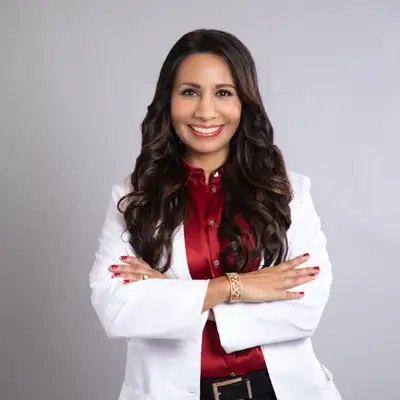
hol+ with Dr. Taz MD is redefining modern medicine through a comprehensive, evidence-based holistic approach; integrating functional medicine, integrative medicine, and time-tested healing systems to treat the whole human, not just symptoms.
Hosted by Dr. Tasneem Bhatia (Dr. Taz), triple board-certified physician in integrative, functional, and holistic medicine, bestselling Penguin Random House author, and founder of hol+; a comprehensive evidence-based holistic medicine platform with clinics in Atlanta, New York City, and Los Angeles, and virtual care available nationwide.
At the heart of hol+ is a revolutionary framework: the Five Body Map- physical, mental, emotional, energetic, and social/community bodies that create whole health. This whole-human approach connects hormone imbalances, gut dysfunction, microinflammation, cortisol dysregulation, metabolic disease, autoimmune conditions, perimenopause, and stress-driven illness to the full spectrum of who we are; body, mind, and spirit.
Each episode explores Dr. Taz’s original clinical frameworks ;The Cortisol Loop, Microinflammation, and The Invisible Load alongside conversations with leading experts, celebrities, and thought leaders including Sophie Grégoire Trudeau, Katherine Schwarzenegger, Cameron Mathison, Carol Alt, Jane Seymour, Tamsen Fadal, and Kris Carr.
Topics include hormone health, gut health, GLP-1 and metabolic therapy, thyroid dysfunction, weight loss, inflammation, autoimmune disease, mental and emotional wellness, energetic health, and the future of holistic medicine.
This is the show where science and spirit converge- driving health, happiness, relationships, and family ecosystems.
Want to go deeper? Join Dr. Taz’s private community, the hol+ Circle ; medicine beyond the exam room. (holplus.co/circle)
A 2025 Webby Award honoree, recognized alongside the Mel Robbins Podcast in the 29th Annual Webby Awards, hol+ is built on the foundation of Super Woman Wellness, which surpassed 1 million downloads over 8 years.
This is medicine beyond the exam room. Welcome to hol+
[00:00:00] Florence Comite, MD: I've heard people say, "I'll sleep when I'm dead." Mm.
[00:00:01] Dr. Taz: And
[00:00:03] Florence Comite, MD: I'm like, "No, you're gonna die pretty [00:00:05] soon if you don't get enough sleep." Sleep is probably primarily the number one [00:00:10] modifier of genetic destiny. If you get good sleep, and it's [00:00:15] not just quantity, it's quality, the quality of your deep sleep and your [00:00:20] REM sleep, you are gonna protect yourself from almost every disease of aging.
[00:00:23] Dr. Taz: Oh my
[00:00:23] Florence Comite, MD: gosh. And most [00:00:25] people- Don't sleep ... aren't aware of that because there's social jet lag, there's a lot of travel. I've heard people [00:00:30] say, "I'll sleep when I'm dead."
[00:00:32] Dr. Taz: Many people believe that their health [00:00:35] is largely determined by genetics. If heart disease, diabetes, or dementia [00:00:40] run in the family, it can feel inevitable.
[00:00:43] Dr. Taz: But what if your genes don't have [00:00:45] to determine your future? My next guest believes that understanding your body's unique [00:00:50] biomarkers may be the key to living longer and healthier.
[00:00:53] Florence Comite, MD: 31-year young man [00:00:55] who happened to n- I know well, and I didn't know his story. Yeah. I didn't know anything [00:01:00] about his personal h- story.
[00:01:01] Florence Comite, MD: He did the five biomarkers. His testosterone was [00:01:05] extremely low. He was only 30. His cholesterol risk ratio, instead of being under two, was [00:01:10] close to six. Mm. His insulin was elevated, not sky-high, but about seven, [00:01:15] fasting. His glucose was elevated some days and some days not, and I was worried about him, 'cause [00:01:20] we collected some family history, and he mentioned that his father had had heart attacks and strokes.[00:01:25]
[00:01:25] Florence Comite, MD: So I asked him, exactly, you know, "What, how's your father doing?" And he said, "Oh, he [00:01:30] died of the last massive heart attack at 60." Mm. So there's a group of men and [00:01:35] women in the Asian world and in the Ashkenazi Jewish, depending on- Mm-hmm ... the countries and [00:01:40] their, their genetic makeup-
[00:01:41] Dr. Taz: Right ...
[00:01:42] Florence Comite, MD: um, that have signs and symptoms of [00:01:45] disease much younger in life, like 20 years ahead.
[00:01:49] Florence Comite, MD: So instead of looking [00:01:50] like that at 50, he was 30, and he had the symptoms. He had already a decreased [00:01:55] libido. Libido was not what it should be. He was putting on weight despite, like, being pretty active. [00:02:00] And those are the kind of signals that the earlier you know, the more you can protect your [00:02:05] future health.
[00:02:05] Florence Comite, MD: Right.
[00:02:06] Dr. Taz: Florence Comite, MD, is a clinician scientist, [00:02:10] endocrinologist, and leading expert in precision medicine and longevity science. Through her [00:02:15] decades of clinical research and patient care, she has focused on understanding how [00:02:20] biomarkers, genetics, and lifestyle influence biological aging and [00:02:25] chronic disease.
[00:02:26] Dr. Taz: Let's welcome Dr. Florence Comite to the show. [00:02:30] This episode is sponsored by WHOLEplus, a holistic health platform built [00:02:35] around education, personalization, and integrative care. WHOLEplus blends [00:02:40] holistic, integrative, and functional medicine clinics with learning resources [00:02:45] like blogs, YouTube videos, and of course, this podcast, so you're not just treated, you're [00:02:50] informed.
[00:02:51] Dr. Taz: The platform also includes holistic health quizzes and a curated wellness shop, [00:02:55] helping you make choices that support your body at the root level. [00:03:00] WholePlus is holistic healthcare designed for real life. Visit us at [00:03:05] wholeplus.co to learn more about the platform. Again, that's [00:03:10] H-O-L-P-L-U-S dot C-O. All right, Dr.
[00:03:11] Dr. Taz: Kamate. I'm gonna call you Florence from here on out, [00:03:15] but thank you so much for being on the show today. So I can't pass [00:03:20] an Instagram post without it talking about longevity, the latest longevity [00:03:25] conference, latest longevity hack. You know, I feel like that word is buzzing right [00:03:30] now and trending right now, but you're somebody who's been in the field for a long time.
[00:03:33] Dr. Taz: You've been thinking about [00:03:35] longevity and aging and working on it, and probably have, you know, [00:03:40] a more sort of a grounded approach to the science and to the practice [00:03:45] of healthy aging and longevity. So I'm so pleased to welcome you to the show today. [00:03:50] Tell us a little bit about your background in this field, and then we'll get into [00:03:55] what we all need to really be thinking about.
[00:03:58] Florence Comite, MD: Excellent. Yes, you're [00:04:00] correct. I, um, I've been called the OG of longevity. It really started [00:04:05] with how do we stop aging to protect us from disorders of aging. So I used to think of [00:04:10] diabetes, heart disease, osteoporosis, cancer as related to aging [00:04:15] because it started emerging in our 30s and then just gets worse every decade.[00:04:20]
[00:04:20] Florence Comite, MD: Mm-hmm. And so I started on that path thinking we should stop it way before people actually get [00:04:25] symptomatic, and you can see it at the cellular level in the metabolism, in hormones, in the immune [00:04:30] system. And by- How
[00:04:31] Dr. Taz: early can you see it, out of curiosity?
[00:04:33] Florence Comite, MD: You can see it in children. Wow. [00:04:35] Because basically, depending on the life a child lives, um, and the [00:04:40] parental inheritance-
[00:04:41] Dr. Taz: Yeah
[00:04:41] Florence Comite, MD: the patterns get passed down through the generations. And so [00:04:45] that was one of my theories when I started women's health at Yale in the '90s, by knowing the [00:04:50] woman and then perhaps meeting the partner-
[00:04:52] Dr. Taz: Mm-hmm ...
[00:04:52] Florence Comite, MD: I could then extrapolate, and I do it all the time [00:04:55] now. When I know the genetic patterns or I know what appears, I'll tell them exactly how [00:05:00] to manage their children, what to do with vitamins, what to do with nutrients, how they [00:05:05] need to move or-
[00:05:06] Dr. Taz: Right
[00:05:06] Florence Comite, MD: those kinds of aspects of health.
[00:05:08] Dr. Taz: Well, that's an area of health [00:05:10] that, you know, even for me, like we weren't really trained in. And if we think to how [00:05:15] pediatrics, women's health, even men's health is practiced today, it's not really [00:05:20] Practiced in that way. Like, these are the genetic tendencies, therefore this is the way to [00:05:25] eat, this is the way to move, this is the way to, like, you know, supplement, all these different things.
[00:05:29] Dr. Taz: [00:05:30] Now, in our practice, we do have some of that testing where we're able to start advising people that way, [00:05:35] but it's been newer. But again, you've been in the field for a long time.
[00:05:38] Florence Comite, MD: Yeah. Well, we practice, [00:05:40] as you know, as a trained physician in, I think, your three, you know, fields that you're trained in. Yeah,
[00:05:44] Dr. Taz: [00:05:45] yeah.
[00:05:45] Florence Comite, MD: I too am trained in multiple fields of endocrinology, so everything from fertility, [00:05:50] growth, and development, to puberty through menopause, and andropause in men, which [00:05:55] still many conventional doctors don't really think men's hormones change with age. Yeah. [00:06:00] We know they do. They change. You've seen the same men I do.
[00:06:02] Florence Comite, MD: With, with them,
[00:06:02] Dr. Taz: they
[00:06:02] Florence Comite, MD: change. Right.
[00:06:03] Dr. Taz: Yes.
[00:06:04] Florence Comite, MD: [00:06:05] Um, and there are changes that I think- Right ... affect midlife crisis. Right. I think that's a theory I'll be happy to tell you about. [00:06:10] Absolutely. No, I wanna hear... Well, I know that, but I wanna hear your- Well, when I started women's health-
[00:06:14] Dr. Taz: Yeah ...
[00:06:14] Florence Comite, MD: I [00:06:15] really thought women would complain.
[00:06:16] Florence Comite, MD: These were women 35 to 40, 45, PMS meets, you know, [00:06:20] perimenopause. Yeah. Not a pretty picture. And I thought it would be m- mostly weight, which is an [00:06:25] issue. We women start putting weight around our trunk around that s- time, because we're losing [00:06:30] testosterone and our hormones aren't quite the same, even if we're doing exactly the right thing, and we [00:06:35] have been.
[00:06:35] Florence Comite, MD: But it was male sexual function that the women's health, that in the [00:06:40] women's, that the women that I was seeing-
[00:06:41] Dr. Taz: Mm-hmm ...
[00:06:42] Florence Comite, MD: in the Fairfield County, mostly from Yale, [00:06:45] New Haven, uh, Connecticut through Manhattan, were complaining about. Mm. So I [00:06:50] thought about that theory way back when and said, "You know, I wonder if it's just we- proof of [00:06:55] wanting to be on your A-game in the bedroom-" Yeah.
[00:06:57] Florence Comite, MD: and the boardroom." Yeah. And subsequently, I started taking care of [00:07:00] a lot of men in New York.
[00:07:01] Dr. Taz: Mm-hmm.
[00:07:01] Florence Comite, MD: And it's absolutely the truth. You know? Mm. It, it isn't just sexual [00:07:05] function, it's energy and power.
[00:07:06] Dr. Taz: And cognitive function
[00:07:07] Florence Comite, MD: too, right? Yes. Yeah, so yeah. Cognitive, memory, it all is [00:07:10] affected. But from my point of view, you see this genetically because we [00:07:15] actually repeat the patterns we've inherited.
[00:07:17] Florence Comite, MD: It's a question of how we live life [00:07:20] and what we could do to modify expression of genes with epigenetics.
[00:07:23] Dr. Taz: Mm-hmm.
[00:07:24] Florence Comite, MD: So the switches that [00:07:25] people talk about, those are real, and genetics isn't a perfect science [00:07:30] either- Right ... in that I'm an identical twin, but my identical twin and I are not exactly the same.
[00:07:34] Florence Comite, MD: [00:07:35] Mm. There are distinct differences between us. One example I give often is I could [00:07:40] live on sushi and sashimi. My sister doesn't like fish.
[00:07:42] Dr. Taz: Mm.
[00:07:43] Florence Comite, MD: She's an amazing gardener. I [00:07:45] kill plants. Um, she's had a gallbladder out. My gallbladder's fine, but I have a [00:07:50] GI thing she doesn't have. She can take metformin, I can't.
[00:07:52] Florence Comite, MD: Interesting. So there's a lot of distinct differences that [00:07:55] you wouldn't think would be real, but they are.
[00:07:58] Dr. Taz: Mm. So in this [00:08:00] field of longevity, you know, I'm curious to, to, to kinda get your perspective, [00:08:05] what do we have wrong currently? Where do we need to be shifting towards, [00:08:10] you know, ef- when you look upon and reflect upon your work?
[00:08:13] Dr. Taz: Because right now, [00:08:15] again, I hear a lot of like, "Here's how to biohack. Here's the best diet. Here's the best [00:08:20] supplement. Who needs to be on creatine?" You know, these are, these are the questions coming at me [00:08:25] constantly. Do I do red light? Do I do this? Do I... You know? So- When people hear [00:08:30] longevity, I think they automatically hear longevity, and then they hear biohacking, and then they might [00:08:35] hear hormones and hormone replacement therapy.
[00:08:37] Dr. Taz: And now we're also hearing peptides [00:08:40] and GLP-1s and all that other stuff. That is the, to me, the cultural longevity box [00:08:45] currently. Where would you like to see this conversation shift towards? [00:08:50]
[00:08:50] Florence Comite, MD: So tho- those, I think you hit on every nuance. And I'll tell you, I'm [00:08:55] lucky and I've had great mentors, but I've worked in the field of peptides, hormones, [00:09:00] metabolism my entire career.
[00:09:02] Florence Comite, MD: Plus, I've had an innate interest in genetics being born an [00:09:05] identical twin. Right. So for me, it was an organic process where what's [00:09:10] absolutely missing is N of 1. So I called the work I did, and I designed it as a [00:09:15] f- going forward perspective protocol because you know, as I know, in medicine, [00:09:20] it's not just what you observe.
[00:09:21] Florence Comite, MD: You have to actually prove outcomes.
[00:09:23] Dr. Taz: Mm.
[00:09:24] Florence Comite, MD: And I knew that [00:09:25] the theories I had back 20, 30 years ago needed to have proof of concept and needed to [00:09:30] show that we could actually change the direction of your future health trajectory by [00:09:35] drilling into what made you you, what made me me- Mm-hmm ... and even my identical twin different than me.[00:09:40]
[00:09:40] Florence Comite, MD: And so I designed it to be able to study people at specific times [00:09:45] and say, "You know what? Intermittent fasting is right for you, but For your best [00:09:50] friend, no. Your best friend's glucose goes too low-
[00:09:52] Dr. Taz: Right ...
[00:09:53] Florence Comite, MD: and it would be dangerous. And then there's a [00:09:55] group of people that have genes that say you can intermittently fast all you want, it's not gonna have an impact on your [00:10:00] system.
[00:10:00] Florence Comite, MD: And that's what I think is missing, the notion that you can't generalize [00:10:05] even outstanding evidence-based medicine done in thousands if not millions of people [00:10:10] to the average, because none of us is average. Each one of us is distinctly different.
[00:10:14] Dr. Taz: Well, [00:10:15] that's how I practice, and that's how I've been practicing, but the pushback has always been [00:10:20] this is not, quote-unquote, evidence-based.
[00:10:21] Dr. Taz: I've always practiced with the N of one, right? You are you. [00:10:25] We're gonna try to figure out your puzzle. It's different from my puzzle, and sometimes we have [00:10:30] the benefits of testing to go along with that like we do today. Sometimes in the past, you know, 15, 20 [00:10:35] years ago, we didn't necessarily. But how do we marry this, like, cultural [00:10:40] norm of, or expectation of traditional medicine to be like where's the research, [00:10:45] where's the evidence-based research, where's this, where's that, with this fact that [00:10:50] everybody's unique and individual and coming in with their own, you know, determinants, right?
[00:10:54] Dr. Taz: [00:10:55] Genetic, social, environmental, all of these different things. How do we, how do we navigate that? [00:11:00]
[00:11:00] Florence Comite, MD: So that's a deeper question, and that's what frustrated me when I started women's health and why I started [00:11:05] women's health at Yale in the 1990s, because the question to me was how much could I [00:11:10] learn about you?
[00:11:11] Florence Comite, MD: And the way I designed and how I thought about it then and now [00:11:15] is by getting the facts of your health story, by understanding how you live life, [00:11:20] by understanding what your relatives are like, even what your relationships are with your friends [00:11:25] and relatives. That says a lot about what's happening inside- Mm-hmm
[00:11:28] Florence Comite, MD: of you and where you're gonna [00:11:30] head as you age and what we have to watch out for. So I started way [00:11:35] back. So I started with Simple Labs back in the '90s. Yeah. And I was able to [00:11:40] see these changes at the cellular level because our bodies do change and age. Um, [00:11:45] and I think where we can make a difference is by getting as much information, [00:11:50] asking Partnering our patients to say, "Listen, find, try to find out [00:11:55] what happened to your grandparents.
[00:11:56] Florence Comite, MD: What about your aunts, uncles, and cousins?" And then take the [00:12:00] data, and I've collected that data prospectively so I can now apply it. For [00:12:05] example, in the book Invincible: Defy Your Genetic Destiny to-
[00:12:08] Dr. Taz: Mm-hmm. Oh,
[00:12:08] Florence Comite, MD: right here ... live better longer. Yeah. [00:12:10] Um, I can actually specifically draw five biomarkers on [00:12:15] anyone, have them wear a continuous glucose monitor, get just enough [00:12:20] data to say, "This is where you need to start.
[00:12:22] Florence Comite, MD: These are the baby steps- Wow ... for you specifically." [00:12:25] And that's what I set out to do. I, I made it a protocol. Yeah. It's absolutely a protocol- Yeah ... that I can [00:12:30] define because I was trained as a clinical investigator at the NIH, so for [00:12:35] several years, and then I became an endocrinologist of various stripes and colors, and I was lucky enough to see [00:12:40] men, women, and children.
[00:12:41] Florence Comite, MD: So I got every decade of life and understood what optimal is. [00:12:45] And so I actually feel like it's a huge challenge to move from simple [00:12:50] biomarkers to, uh, insights and then take those insights and translate them into actionable [00:12:55] interventions. I think it's basically impossible.
[00:12:57] Dr. Taz: Yeah.
[00:12:57] Florence Comite, MD: I think knowing what's right and [00:13:00] wrong, because I'm sure we all know people in, in your practice.
[00:13:03] Florence Comite, MD: As a physician, what [00:13:05] you're bringing to bear on it is the old-fashioned type of medicine. What did, what did our, you [00:13:10] know, ancestors in medicine do when they were family practitioners? I don't know if you remember a guy- Mm-hmm ... on [00:13:15] TV called Marcus Welby. Yes. Right? Yes, yes, yes, yeah. And he knew you. He knew your parents.
[00:13:19] Florence Comite, MD: He knew the whole [00:13:20] family, yeah. Exactly. Yeah. And so there you can say, "Oh, Joe is coming to see me, and I see that he's not [00:13:25] thriving. Let me query him about stress and depression because I know his uncle was seriously [00:13:30] depressed. I know his mother had diabetes. His grandfather had a heart attack." And you can [00:13:35] take that old-fashioned medicine and apply it today.
[00:13:37] Florence Comite, MD: Mm-hmm. I used to actually think [00:13:40] family history was a poor man's genetic test, and now I know it's much richer.
[00:13:43] Dr. Taz: Mm-hmm.
[00:13:44] Florence Comite, MD: So [00:13:45] that is the kind of training in terms of extrapolating what is real about [00:13:50] each person and then using that information to help guide the next steps with action [00:13:55] based on data. So the reason I called it precision medicine is that [00:14:00] most doctors, we're personal.
[00:14:01] Florence Comite, MD: We have to be personal. We're up front and front and personal with our human being in [00:14:05] front of us.
[00:14:05] Dr. Taz: Right.
[00:14:05] Florence Comite, MD: We want the best for them. A lot of them tell us things that, that their [00:14:10] nearest and dearest don't know.
[00:14:11] Dr. Taz: Yeah.
[00:14:11] Florence Comite, MD: I still remember a gentleman in my internship at Yale [00:14:15] who told me he was missing a toe, but he always wore a sock 'cause he never wanted to tell his wife.[00:14:20]
[00:14:20] Dr. Taz: Mm-hmm.
[00:14:20] Florence Comite, MD: And I think that that's an honor that they trust us, and that by [00:14:25] taking that information and turning it around, we can make a difference with data. [00:14:30] So the data to me is what's important. How do you interpret all these biomarkers [00:14:35] that are- Right ... coming at us? Right. How do you integrate it with the choices somebody makes about sleep, food, [00:14:40] moving, stress, to make it a reality for each person?
[00:14:44] Dr. Taz: If you're [00:14:45] listening to this and thinking, "I know something is off in my body-" But [00:14:50] I don't know where to start," this is for you. That's why I created the [00:14:55] Circle. The Circle is my private community where I and my team focus on understanding [00:15:00] your body, from hormones and stress to metabolic health and longevity, with [00:15:05] real-life guidance that you can actually use.
[00:15:07] Dr. Taz: This is about clarity and [00:15:10] consistency and support beyond the exam room, and maybe outside of all the [00:15:15] different appointments and experts that you've been running around to. You can try the Circle with a [00:15:20] one-month trial using the promo code Podcast at wholeplus.co/circle. Again, that's Whole Plus, wholeplus.co/circle.
[00:15:24] Dr. Taz: All [00:15:25] right, let's jump back into the episode. So I have two questions. So one, the, will you share the [00:15:30] five biomarkers with us? Absolutely. And then [00:15:35] the second is, was your optimal ever in line with
[00:15:38] Florence Comite, MD: conventional
[00:15:39] Dr. Taz: [00:15:40] standards of optimal? Very rarely. They overlap, [00:15:45] because
[00:15:46] Florence Comite, MD: here's how [00:15:50] conventional so-called you're in the normal range- Right
[00:15:52] Florence Comite, MD: is developed. They take 1,000 people [00:15:55] somewhere in the country, I used to use Oklahoma and then people from Oklahoma got upset with me, but all of us are [00:16:00] sick. Yeah. We're all brewing disease under the surface. Like, I have yet to meet somebody who [00:16:05] ha- and in thousands of people I've seen, who have optimal carbohydrate or sugar metabolism.
[00:16:09] Florence Comite, MD: [00:16:10] Mm. That's because it's a survival issue. We all have genes that dictate [00:16:15] what's gonna happen to us as we age in terms of sugar. We can get into that later. [00:16:20] So the optimal to me is based on evidence as to what will have the [00:16:25] best outcomes. One example is hemoglobin A1C. Yes. A hemoglobin A1C [00:16:30] under five is optimal.
[00:16:31] Florence Comite, MD: Mm. Not 5.1, 5.7- Interesting ... we [00:16:35] already know is pre-diabetes, 6.5 is diabetes. So many, [00:16:40] many clinicians will say, "Oh, it's a little high. Why don't you eat better and [00:16:45] work out?" And we know how much we're trained in medical school about eating- Right ... working out-
[00:16:48] Dr. Taz: Right ...
[00:16:49] Florence Comite, MD: and sleeping.
[00:16:49] Dr. Taz: [00:16:50] Right.
[00:16:50] Florence Comite, MD: Next to nothing. And so by understanding that that's not optimal and we're [00:16:55] heading in the wrong direction and we need to reverse it, and even that's not enough, because [00:17:00] I always had a hemoglobin A1C of under five-
[00:17:02] Dr. Taz: Mm-hmm.
[00:17:03] Dr. Taz: Okay ...
[00:17:03] Florence Comite, MD: uh, which sounds fantastic, right? It's [00:17:05] 100 days, a average of sugar, of your average sugar. But in reality, my [00:17:10] sugar would go up and down, so it would spike and dip, so that the average looked great, [00:17:15] but not the real numbers.
[00:17:16] Dr. Taz: Mm.
[00:17:16] Florence Comite, MD: And while I don't demonize sugar, it affects every [00:17:20] system in the body.
[00:17:20] Dr. Taz: Right.
[00:17:21] Florence Comite, MD: So those are the kinds of- Optimal that I think [00:17:25] about, what exactly for each decade of life, where should you be? And since we [00:17:30] know from other fields even, like athletics, 25 to 30, getting pregnant, [00:17:35] 25 to 30, that's peak time in our life. That's when we can burn the candle at both ends no matter how- [00:17:40] Right,
[00:17:40] Dr. Taz: right
[00:17:40] Florence Comite, MD: we're groomed and how we're raised. But it starts dissipating with age. [00:17:45] After that. Right. So optimal is aiming towards what really should be as [00:17:50] close as the best you can be.
[00:17:51] Dr. Taz: So what are those biomarkers then, out of curiosity? A1C [00:17:55] we track all the time. We'll track a fasting insulin. We'll track inflammation markers.
[00:17:59] Dr. Taz: Talk to me about what [00:18:00] you think is, you know, what are we missing? Yeah. What are the things we really need to- Okay, sure, um ... sink our teeth into?
[00:18:04] Florence Comite, MD: [00:18:05] Right. So this is what my research has shown. In doing hundreds of thousands of biomarkers, each person [00:18:10] when they first work with us get about 125. But after [00:18:15] investigating and studying it, it was clear that five key biomarkers.
[00:18:19] Florence Comite, MD: We look at [00:18:20] carbohydrate metabolism, 'cause as I just explained- Yeah ... my hemoglobin A1C wasn't reflective [00:18:25] of the ups and downs in my sugar.
[00:18:26] Dr. Taz: Mm.
[00:18:27] Florence Comite, MD: So fasting sugar, which is common, [00:18:30] fasting insulin, which if it starts rising even to two to five, [00:18:35] which is what general medicine thinks is fine, but certainly most people are higher.
[00:18:39] Florence Comite, MD: And [00:18:40] even on the Quest sheet-
[00:18:41] Dr. Taz: Mm-hmm ...
[00:18:41] Florence Comite, MD: at the bottom it says you can have an insulin of 19- Right ... when you wake up in the [00:18:45] morning- Oh, yeah ... and you're okay.
[00:18:45] Dr. Taz: Yeah.
[00:18:46] Florence Comite, MD: Totally untrue. Mm. The other two that really add [00:18:50] value is free testosterone- Mm-hmm ... not total- Mm-hmm ... but free. Total is wrapped up in [00:18:55] protein. And the last one is cholesterol risk ratio.
[00:18:57] Florence Comite, MD: Mm. And the reason we use those, and [00:19:00] it's been studied in depth, is that the cholesterol risk ratio also gives you total [00:19:05] and f- and good cholesterol, HDL, so-called good cholesterol. And by having that [00:19:10] under two, having testosterone six to 30 in women, free testosterone, [00:19:15] in men 180 to 250, having, um, a hemoglobin A1c [00:19:20] of less than five, sugar fasting of 70 to 80, and an insulin that's [00:19:25] undetectable, that's optimal.
[00:19:26] Florence Comite, MD: Mm. And I have yet to see that in one human being.
[00:19:28] Dr. Taz: Really?
[00:19:29] Florence Comite, MD: So, yes. Wow. [00:19:30] Because we're groomed to survive, and the genes we've inherited all dictate that as we [00:19:35] age and lose muscle, we're going to become pre-diabetic and diabetic. Mm. And that's why there are [00:19:40] millions of us out there who have that condition.
[00:19:41] Florence Comite, MD: With
[00:19:42] Dr. Taz: that issue. Yeah. Now, going all the way back to children, as you [00:19:45] were mentioning earlier, what are you seeing in kids?
[00:19:47] Florence Comite, MD: So I've been referred tons of children. [00:19:50] Yeah. And I'll-- I think of one off the top of my head. Typically, it's a child who's in a [00:19:55] family that are pretty healthy. They monitor everything.
[00:19:57] Florence Comite, MD: There's not a whole lot of junk food. They [00:20:00] travel, they move, they try to sleep right. And one of the children just [00:20:05] can't lose weight or doesn't move enough or isn't athletic, and it turns out they usually have [00:20:10] metabolic syndrome. Mm-hmm. And it's already detectable because they may be doing everything right, [00:20:15] but they crave carbohydrates.
[00:20:16] Florence Comite, MD: They don't lose weight easily. They don't look like [00:20:20] children running around living life to the fullest, even as a teenager. Have you ever heard, for [00:20:25] example, a woman say, "My friends can eat everything, and I just- Oh, yeah ... look at food and I gain [00:20:30] weight"? Well, that's because they have usually an underlying genetic condition, and I have many [00:20:35] families like that.
[00:20:36] Florence Comite, MD: There's a genetic Ethnic component to it.
[00:20:38] Dr. Taz: Mm.
[00:20:39] Florence Comite, MD: So I have [00:20:40] people from Mexico-
[00:20:40] Dr. Taz: Mm-hmm ...
[00:20:41] Florence Comite, MD: um, Sephardic Jews who are from places like Morocco- Mm-hmm ... and [00:20:45] Iran and Iraq who harbor that. There's a lot of marrying within-
[00:20:49] Dr. Taz: Is [00:20:50] it the same, is it
[00:20:50] Florence Comite, MD: the same genetic profile? It's, it's very similar. What's the gene? It's adiponectin is great.
[00:20:53] Dr. Taz: Oh, okay.
[00:20:53] Florence Comite, MD: The gene specifically, [00:20:55] the RS sites-
[00:20:55] Dr. Taz: Okay ...
[00:20:56] Florence Comite, MD: I think would not be understood. Got it. But-
[00:20:58] Dr. Taz: Right ...
[00:20:58] Florence Comite, MD: the specifics, [00:21:00] adiponectin is low, insulin is high, sugar is too high. You do an oral glucose [00:21:05] tolerance test, and you do one that's three hours- Okay ... instead of the half an hour we get when we're pregnant-
[00:21:09] Dr. Taz: [00:21:10] Right
[00:21:10] Florence Comite, MD: you will see initially hyper- fasting hyperglycemia, high sugar, [00:21:15] fasting insulinemia, meaning your insulin is above five generally. Mm-hmm. And you go [00:21:20] through it, and the pattern teaches us what exactly your genetic... 'Cause the genes can be, there's so, [00:21:25] there are thousands of genes- Yeah ... that dictate that.
[00:21:26] Dr. Taz: Yeah.
[00:21:27] Dr. Taz: What about, I'm curious about the South Asian community, like, [00:21:30] you know, PCOS for example, there's a almost 70% prevalence of [00:21:35] PCOS in South Asian women, women of Indian descent- Yes ... which is really metabolic.
[00:21:38] Florence Comite, MD: I see a ton of it.
[00:21:39] Dr. Taz: It's [00:21:40] metabolic, right? Yeah. It's all
[00:21:40] Florence Comite, MD: insulin. I have a whole practice in, um, Palo Alto, and so prox- at least [00:21:45] 30% of my patients are Asian.
[00:21:46] Dr. Taz: Right.
[00:21:47] Florence Comite, MD: Yeah.
[00:21:47] Dr. Taz: Is there a genetic-
[00:21:48] Florence Comite, MD: Absolutely ... component to that? Not only that, [00:21:50] there's also a finding that I've seen in, in certain, um, populations of [00:21:55] Asians where they don't, they're unable to put on a lot of muscle as teenagers. And [00:22:00] frequently they'll, they'll call themselves, they say they're self-proclaimed geeks- Right
[00:22:03] Florence Comite, MD: 'cause they would be the last [00:22:05] one picked for sports. Right. And I see it in their families. I see it in the children, not every child, so it [00:22:10] depends on the inheritance pattern. I've seen the same thing in Ashkenazi Jews, Jews from [00:22:15] Eastern Europe, Russia, um, those places where they, Germany, Hungary- Mm-hmm
[00:22:19] Florence Comite, MD: those kinds of [00:22:20] countries. And what I see there is the biomarkers I just mentioned are off [00:22:25] the charts abnormal. I think of the, a 31-year-old, [00:22:30] 31-year young man who happened to, I know well, and I didn't [00:22:35] know his story. Yeah. I didn't know anything about his personal story. He did the five biomarkers. His [00:22:40] testosterone was extremely low.
[00:22:41] Florence Comite, MD: He was only 30. His cholesterol risk ratio, [00:22:45] instead of being under two, was close to six.
[00:22:47] Dr. Taz: Mm.
[00:22:47] Florence Comite, MD: His insulin was elevated, not [00:22:50] sky-high, but about seven, fasting. His glucose was elevated some days and some days [00:22:55] not, so it ranged from 70 to 100, depending on the day he woke up, h- what his health was [00:23:00] like, what he was eating the day before.
[00:23:01] Dr. Taz: Yeah.
[00:23:01] Florence Comite, MD: And his, um, his final one, hemoglobin A1C, was [00:23:05] fine. Yeah. It was 5.1 And in sp- and I was worried about him 'cause we collected some [00:23:10] family history, and he mentioned that his father had had heart attacks and strokes. So I [00:23:15] asked him exactly, you know, "What, how's your father doing?" And he said, "Oh, he died of the [00:23:20] last massive heart attack at 60."
[00:23:21] Dr. Taz: Mm.
[00:23:22] Florence Comite, MD: So there's a group of men and women [00:23:25] in the Asian world and in the Ashkenazi Jewish, depending on the countries- Mm-hmm ... and their, their [00:23:30] genetic makeup-
[00:23:30] Dr. Taz: Right ...
[00:23:31] Florence Comite, MD: um, that have signs and symptoms of disease [00:23:35] much younger in life, like 20 years ahead. So instead of looking like that at [00:23:40] 50, he was 30, and he had the symptoms.
[00:23:42] Florence Comite, MD: He had already a decreased libido. [00:23:45] Libido was not what it should be. He was putting on weight despite, like, being pretty active. And those are the [00:23:50] kind of signals that the earlier you know The more you can protect your future health Right. Well, [00:23:55]
[00:23:55] Dr. Taz: that's, uh, so fascinating, and I think you talk a lot, too, about longevity [00:24:00] and lifespan not really being the right terms, but we need to be looking at healthspan.
[00:24:03] Florence Comite, MD: Exactly.
[00:24:04] Dr. Taz: [00:24:05] How would you change, you know, what's happening in the exam rooms today to really [00:24:10] look and evaluate healthspan, and at what age would you start?
[00:24:13] Florence Comite, MD: That's great.
[00:24:14] Dr. Taz: And I'm... [00:24:15] Keep in mind, part of this is selfish- Right ... because we're set up. You know, we have multiple practices, but [00:24:20] we're set up as family practices, so we're seeing kids all the way through seniors [00:24:25] and seeing sort of the span of disease and disease progression across that.
[00:24:28] Dr. Taz: Right. So that's
[00:24:28] Florence Comite, MD: why. I'm gonna tell you a [00:24:30] story about that. Yeah. 'Cause my family are all, are mostly all doctors. Yeah. There is one lawyer and a [00:24:35] couple- Yeah ... of financial people. Yeah. We don't know how the lawyer happened, but we knew at two he'd be a lawyer. [00:24:40] Anyway, um, going back to this. First of all, the work I did, I wanted to [00:24:45] focus on the specialty pa- the precision, and it turned out, because we got to know people so well, I [00:24:50] couldn't convince them to get a doctor.
[00:24:51] Florence Comite, MD: So we're a new style of family practitioners. Mm-hmm. [00:24:55] And many, many moons ago, I remember being interviewed by WebMD- Mm-hmm ... about the future of medicine [00:25:00] and saying, "Look, in the future," and I was doing it already, "we're not gonna have to have someone come in to collect a [00:25:05] urine, test it, look under the microscope, and decide if it's cones or rods and what- Right
[00:25:09] Florence Comite, MD: [00:25:10] antibiotic you get." Right. And that, of course, is true nowadays. Yeah. You give a script to someone 3,000 miles away. They can go [00:25:15] get their urine tested. Right. You can start them on an antibiotic by call- Right ... right?
[00:25:18] Dr. Taz: Mm-hmm.
[00:25:18] Florence Comite, MD: So I was already [00:25:20] thinking like that a long time ago.
[00:25:21] Dr. Taz: Yeah, yeah.
[00:25:22] Florence Comite, MD: Um, and so what happened is we, we [00:25:25] translate it to the kids, and you don't need to be in an exam room.
[00:25:28] Florence Comite, MD: I think the exam, [00:25:30] laying on of the hands and trust, and we've picked up disorders like that, like [00:25:35] nodules and things of that nature, but that too will come, I think, virtually. I think we're already [00:25:40] seeing some of it- Mm, mm ... using a stethoscope, using testing at a distance. Um, it's [00:25:45] really more in what is your makeup internally, and what is your health story?
[00:25:48] Florence Comite, MD: What's your history? [00:25:50] What k- what things are afflicting, whether you're a child, a 20-something, 30, 40, 50? [00:25:55] It comes to a head in your 30s because that's when we begin to decline. We know that [00:26:00] because we know we peak between 25 and 30.
[00:26:03] Dr. Taz: Yeah.
[00:26:03] Florence Comite, MD: So what I think [00:26:05] could be done is, first of all, the story translates to the children.
[00:26:09] Florence Comite, MD: And one [00:26:10] particular area, because my identical twin is a dermatologist- Mm-hmm ... and I worked in her practice for [00:26:15] a while to sort of see how that- Yeah ... was going years ago. And I would see these eight-year-olds [00:26:20] or 10-year-olds on Accutane, and I would get their story. I would talk to them about their parents, their [00:26:25] grandparents.
[00:26:25] Dr. Taz: 8 and 10?
[00:26:26] Florence Comite, MD: But this is why. Remember, with Accutane, you look at lipids- Yeah ... [00:26:30] right? So their lipids were off the chart because you had to follow their cholesterol.
[00:26:34] Dr. Taz: Right.
[00:26:34] Florence Comite, MD: And you [00:26:35] knew it was a diagnostic test-
[00:26:36] Dr. Taz: Yeah ...
[00:26:37] Florence Comite, MD: of disease. If their cholesterol went up with [00:26:40] Accutane, just like if a woman's sugar goes up with it during her pregnancy, that's- [00:26:45] That's absolutely disease of the future Right, right
[00:26:47] Florence Comite, MD: but you're seeing it early because you're using a diagnostic [00:26:50] tool. So I think there's a lot of those diagnostic tools that are pretty simple and [00:26:55] straightforward. Even those five biomarkers can help us ascertain what a particular [00:27:00] human being needs.
[00:27:01] Dr. Taz: Mm. That is so
[00:27:02] Florence Comite, MD: fascinating. And you can do that in any setting.
[00:27:03] Florence Comite, MD: That would be my dream. [00:27:05] I, actually, before I realized we were, we were doing primary care because we were taking care of the whole [00:27:10] human being.
[00:27:10] Dr. Taz: Yeah.
[00:27:11] Florence Comite, MD: Uh, and I think of it a new way of doing primary care, 'cause we do see [00:27:15] people as well as manage them through telemedicine. I've done telemedicine- Yeah. Yeah
[00:27:18] Florence Comite, MD: for 30 years.
[00:27:19] Dr. Taz: Yeah.
[00:27:19] Florence Comite, MD: [00:27:20] My sister and brother are dermatologists, and they didn't understand why I disappeared from the kitchen, [00:27:25] besides not wanting to wash the dishes- Yeah ... during Thanksgiving- Yeah ... and talk to people on the phone. They're like, "How could you take [00:27:30] care of a person on the phone?" Right,
[00:27:31] Dr. Taz: right.
[00:27:31] Dr. Taz: Right?
[00:27:32] Florence Comite, MD: So because we share the data. But I think that [00:27:35] we can begin to determine how to help people by first sharing it with the [00:27:40] target population, the 30s, 40s, 50s, and having them translate it into their [00:27:45] younger family, and actually into their parents as well, and we've done that for many years. That's so [00:27:50] fascinating.
[00:27:50] Florence Comite, MD: That's how my practice grew, actually.
[00:27:52] Dr. Taz: That is fascinating. What do you have to say about all- [00:27:55] There's so many different types of genetic tests right now.
[00:27:57] Florence Comite, MD: Yes.
[00:27:57] Dr. Taz: Right? Some of which we honestly do as well. [00:28:00] What's your thought on some of these more consumer-based genetic tests, um, some [00:28:05] of what's out there right now?
[00:28:06] Dr. Taz: How much is actually helpful and actionable if it's not [00:28:10] being paired with biomarkers and with the actual functional chemistry? You know, what, what is [00:28:15] worth somebody's time?
[00:28:16] Florence Comite, MD: So sometimes, as you know, you can tell what's going on in a [00:28:20] person just historically.
[00:28:21] Dr. Taz: Yeah.
[00:28:21] Florence Comite, MD: I think of one of the women I saw at NIH when I was the [00:28:25] only woman in a room full of 100 male doctors.
[00:28:27] Florence Comite, MD: Oh, that's amazing. Yeah. And I came in, 'cause we were [00:28:30] debriefing after clinic in the morning, and I said, and I br- reported on her, and I [00:28:35] said, "She tells me that she's getting pain cyclically, usually around, you know, [00:28:40] ovulation and then at menses." And I said, "I presume that she has underlying endometriosis [00:28:45] because of the symptoms."
[00:28:46] Florence Comite, MD: And literally, almost to a man in the room, they raised their [00:28:50] hand and they, they said to me, "Well, how does she know?" I'm like, "Well, she lives in her body, and I [00:28:55] think by hearing her story, you can apply that." The same is true of perimenopause. Yeah. The same is [00:29:00] true of PCOS. Yeah. It's true of a lot of conditions that we can relate, and [00:29:05] I think some of the newer developments have made it less likely.
[00:29:09] Florence Comite, MD: [00:29:10] For example, we see a lot of people with thyroid disease, and yet their symptoms are classic.
[00:29:14] Dr. Taz: Yeah.
[00:29:14] Florence Comite, MD: [00:29:15] Because the way insurance works is they only pay for a TSH.
[00:29:18] Dr. Taz: Right.
[00:29:18] Florence Comite, MD: And a TSH can be very [00:29:20] broad, .45 to 4.5. Right. But it's the relationship between [00:29:25] TSH and the thyroid, so you need to do free T3 and free T4- Right
[00:29:28] Florence Comite, MD: and look at the relationship, right? [00:29:30] That's missing in modern medicine, 'cause we are not as [00:29:35] perceptive about clinical, the use of the stethoscope.
[00:29:37] Dr. Taz: Right.
[00:29:37] Florence Comite, MD: Getting a story alone. I'm, I'm [00:29:40] sure- It's huge ... you know the book, do you know the book, How Doctors Think?
[00:29:42] Dr. Taz: Oh, yeah.
[00:29:43] Florence Comite, MD: Yeah, yeah. So the woman that [00:29:45] thought she was dying, all along she was labeled, you know, somebody who was anorectic from the [00:29:50] age of 15 to 30.
[00:29:51] Florence Comite, MD: She was married. Her husband insisted she go to the doctor. Her [00:29:55] charts were up the wall. The doctor started talking to her, and she was annoyed, 'cause she didn't really want to see anybody. [00:30:00] She had already given up. She was stuffing herself with lots of food. And in, in the [00:30:05] story, the doctor was able to say to her, "You have celiac disease."
[00:30:08] Florence Comite, MD: So sometimes we miss what's [00:30:10] obviously in front of us. Yeah. Yeah. And also, I think we have to reeducate consumers, [00:30:15] because while there is a huge, huge hype now with biomarkers, that's not [00:30:20] enough. But what can- I know. Yeah ... I know. What can really make a difference is wearables.
[00:30:23] Dr. Taz: Yeah.
[00:30:23] Florence Comite, MD: I think if you can [00:30:25] marry the health story with, starting with a CGM, a continuous glucose monitor, maybe [00:30:30] moving onto the Apple Watch or an Oura or a Whoop to be able to see what your sleep [00:30:35] pattern's like, what your stress patterns are like, how do you, how much do you move, actually?
[00:30:38] Florence Comite, MD: Right. Forget the [00:30:40] 5,000 steps. Right. For some people it might be 10,000 and others might be 1,000 to make a difference, depending [00:30:45] on what else they do. Mm-hmm. Meditation is a tool. So there are a lot of [00:30:50] ways to intervene that's actionable without even having all the data. But [00:30:55] in that, this world, every single company is now offering biomarkers- Right
[00:30:58] Florence Comite, MD: as if it's meaningful. [00:31:00]
[00:31:00] Dr. Taz: Right.
[00:31:00] Florence Comite, MD: Who translates it into- Thank you ... actionable- Yeah. Yeah ... actionable interventions?
[00:31:04] Dr. Taz: Yeah. [00:31:05]
[00:31:05] Florence Comite, MD: So yes, I'm delighted that the terms are out there. Back in the day when I did women's health, I had to [00:31:10] define osteoporosis- Yeah ... to people, 'cause they had no idea what it meant.
[00:31:13] Dr. Taz: Right, right.
[00:31:13] Florence Comite, MD: And now of course, the [00:31:15] language is there, AI is there.
[00:31:16] Dr. Taz: Right.
[00:31:16] Florence Comite, MD: I get a lot of patients sending me their- AI [00:31:20] interpretation, and I'll say, "To an extent, you have good information, but most of it's misleading. You [00:31:25] don't know where this is gonna take you specifically." Right.
[00:31:27] Dr. Taz: Right. I feel like that's where the future [00:31:30] doctor is going to be that partner.
[00:31:32] Dr. Taz: It's almost like the future doctor needs to be [00:31:35] the Marcus Welby, where they know the family, they know the story, and then the- now we [00:31:40] have the data. Right. And you can put all of that together. You know, I've said that- It
[00:31:43] Florence Comite, MD: was hard when I started doing it, [00:31:45] 'cause I was alone and a lot of people laughed at me at Yale.
[00:31:48] Florence Comite, MD: I actually had a journal club and I said, [00:31:50] "Here's the data on why we start d- you know, d- declining in our [00:31:55] 30s."
[00:31:55] Dr. Taz: Yeah.
[00:31:55] Florence Comite, MD: We get fertility issues. Men get heart attacks in their 30s. Women start [00:32:00] putting on weight. Osteoporosis, colleague's fractures happen 40s, 50s. All of [00:32:05] that begins to happen because we're losing muscle, we don't have enough testosterone, and that, that [00:32:10] was a foreign word at the time.
[00:32:11] Florence Comite, MD: Yeah. You know? It still is. We don't even have approval for testosterone in women. [00:32:15] I've been on testosterone for 30 years because I knew there was a huge risk of osteoporosis in my [00:32:20] family. Mm. I wasn't gonna go down that, uh, hill at all. Why should I? And as a [00:32:25] result, my bones look pretty good. My twin sister, who started it later because she was a little more [00:32:30] skeptical, I'm more of a risk-taker than she is- Mm-hmm, mm-hmm
[00:32:33] Florence Comite, MD: she, her bones are not as [00:32:35] healthy. Now we're gonna reverse that. Thankfully, we can. But those are kinds of, the kinds [00:32:40] of interventions that are real, but I think you need medical wisdom to interpret [00:32:45] biomarkers, to even help you interpret wearables. Are you getting enough deep [00:32:50] sleep? Right. What does that mean in terms of your risk of osteoporosis or Alzheimer's or cancer?[00:32:55]
[00:32:55] Florence Comite, MD: Those are the kinds of facts and data we can use now to help guide our [00:33:00] patients.
[00:33:00] Dr. Taz: Well, this is where, you know, the person listening or, or watching us today is probably honestly just getting [00:33:05] frustrated, because doctors like this are not common, right? They're not... [00:33:10] It's not a standard at the moment. And I know both of us are passionate about maybe [00:33:15] creating that as a standard in the future.
[00:33:16] Dr. Taz: But for somebody who's like, "Okay, I'm interested in aging [00:33:20] or healthy aging. I'm interested in my health span, not my lifespan," you know, what [00:33:25] are the things, beyond the biomarkers that we talked about, how do they defy maybe their genetic [00:33:30] destiny? Like, I can tell you about, you know, my husband who had a heart attack at 41, you know, rapid [00:33:35] ager, you know?
[00:33:35] Dr. Taz: Yeah. Younger than me, but I would call him a rapid ager, right? Versus, you [00:33:40] know, maybe our family that doesn't age as rapidly. Like, what are, what are the things to [00:33:45] track, to be aware of, to really change maybe your family story?
[00:33:49] Florence Comite, MD: [00:33:50] Yeah, exactly. Um, so that's a deep question, and I think that we're [00:33:55] in the midst of a change and a pivot.
[00:33:58] Florence Comite, MD: I do think it's extremely [00:34:00] confusing, not just for the listener, but for doctors- Oh, yeah ... because they're trying to figure it out. But [00:34:05] I actually sometimes feel sorry for doctors who- Having started like you and me a long, long [00:34:10] time ago Mm-hmm, mm-hmm ... and we had it sorted out for ourselves. But I do think my book can be [00:34:15] helpful, not to be self-aggrandizing- Yeah, yeah.
[00:34:17] Florence Comite, MD: No ... but I dreamed of a moment that I could prove [00:34:20] 30 years ago with the intersection of genetics, the internet, and the fact that I [00:34:25] could read these numbers, and I knew as an identical twin genetics was only part of the story, [00:34:30] lifestyle was only part of the story, how do you get it all together? So the way I designed the book was to [00:34:35] recognize patterns we all have, and we all have these patterns.
[00:34:39] Florence Comite, MD: Each one of [00:34:40] us is gonna go through perimenopause and menopause for women, periandropause and andropause for men, [00:34:45] where they decline. In addition to that, there's, uh, glucose patterns- Mm-hmm ... so [00:34:50] that's in, that's available. There's heart patterns, there's metabolism patterns, [00:34:55] thyroid, um, muscle and bone, and brain.
[00:34:58] Florence Comite, MD: Mm-hmm. And all of those patterns [00:35:00] I've seen as very common, and you can recognize yourself in them and then follow that [00:35:05] path. You know, be able to say, for example, to a physician or self-test-
[00:35:09] Dr. Taz: Yeah ...
[00:35:09] Florence Comite, MD: you've [00:35:10] gotten your TSH, it's very, very low. What does your thyroid look like? You know? Mm-hmm. What does your thyroid [00:35:15] hormones look like?
[00:35:15] Florence Comite, MD: Mm-hmm. And be able to bring that up either to your clinician or [00:35:20] get it, get the test yourself and bring it to your clinician.
[00:35:22] Dr. Taz: Right.
[00:35:23] Florence Comite, MD: So I think proof is in [00:35:25] reading the book, being able to extrapolate the patterns in who you are, and we actually give people some [00:35:30] guides for that. They can fill in a simple health story and see where it places them, where it [00:35:35] brings them.
[00:35:35] Dr. Taz: S- and identify the pattern, maybe-
[00:35:37] Florence Comite, MD: Exactly ... that they're
[00:35:37] Dr. Taz: falling
[00:35:38] Florence Comite, MD: into this. Yeah Yeah, like the five biomarkers. Yeah. [00:35:40] Wear a CGM. I think- The most radical change I've seen in people is when [00:35:45] they do wear a CGM, and now they're over the counter. That's a continuous glucose monitor. Oh, yes. You [00:35:50] can get a Stella- Yeah
[00:35:51] Florence Comite, MD: or you can get a, um, Lingo. There's another one. But those are made [00:35:55] for people who don't think they're diabetic and are not on insulin. They're bought over the counter, and they [00:36:00] give you some guidance, but it's the patterns that will help you. And if you marry that to my book, [00:36:05] Invincible, you'll be able to figure out where you stand, and that's what I've always dreamed of.
[00:36:09] Florence Comite, MD: Like, how does [00:36:10] everyone own their own health destiny like your husband?
[00:36:13] Dr. Taz: Mm-hmm.
[00:36:13] Florence Comite, MD: I can look at your husband's [00:36:15] numbers, I can- numbers, and I can probably tell you, as you can, you know, what needs to [00:36:20] be sorted out because there's no reason... For example, just last week, I had a [00:36:25] 90-year-old in... I s- actually think of them as 90 year young-
[00:36:28] Dr. Taz: Yeah
[00:36:29] Florence Comite, MD: who year to [00:36:30] year, his VO2 max improves. He puts on more muscle. He loses more fat. [00:36:35] I think he's at 17% body fat. Terrible family history of heart disease. His father died at [00:36:40] 70 of heart disease. He's been a patient for over 15 years, and he's just gone from [00:36:45] strength to strength. So-
[00:36:46] Dr. Taz: How? What did he do?
[00:36:47] Florence Comite, MD: He plays tennis, and we s- we- [00:36:50] he's on testosterone now.
[00:36:51] Florence Comite, MD: Oh my goodness. We, um, we've helped him in terms of regenerative medicine [00:36:55] because in playing tennis, he would have pain. Yep. And he said, "Ah, I just pop some NSAIDs." I said, "No, you shouldn't pop NSAIDs." Mm-hmm. [00:37:00] "They c- can be bad for you." Yeah. So we referred him, and he did some pla- uh, [00:37:05] platelet-rich plasma- Yep
[00:37:06] Florence Comite, MD: PRP with my colleagues who we work, you know, I refer, and I [00:37:10] don't do that right now.
[00:37:11] Dr. Taz: Right.
[00:37:11] Florence Comite, MD: We're, we're gonna be doing it.
[00:37:12] Dr. Taz: Right.
[00:37:12] Florence Comite, MD: So there's a lot of techniques now. [00:37:15] You have to be made aware of who you are and what your system is telling you, and you have to [00:37:20] trust yourself. One easy way for women to think about weight and weight loss, particularly [00:37:25] around the 35 to 45, uh, year kind of era, is try [00:37:30] meditation.
[00:37:30] Dr. Taz: Hmm.
[00:37:30] Florence Comite, MD: Meditation actually turns off the gene that triggers cortisol.
[00:37:34] Dr. Taz: What?
[00:37:34] Florence Comite, MD: Yeah.
[00:37:34] Dr. Taz: [00:37:35] Oh
[00:37:35] Florence Comite, MD: my goodness. And there are studies saying it. There are studies from Harvard
[00:37:37] Dr. Taz: and- I
[00:37:37] Florence Comite, MD: didn't know from a genetic standpoint,
[00:37:39] Dr. Taz: you know?
[00:37:39] Florence Comite, MD: Yeah, [00:37:40] it's from a genetic standpoint. Wow. Wow. There's also genes that say you're not absorbing magnesium.
[00:37:43] Florence Comite, MD: Mm-hmm. So some people have genetic variants [00:37:45] they cannot take, and magnesium is an important factor. Right. Magnesium in red blood cells, as you know. Yeah. [00:37:50] Not serum magnesium. Magnesium in red blood cells is a critical factor in over [00:37:55] 300 interactions in the body. So we've seen people who cannot, they take all the [00:38:00] magnesium in the world- It can't get it up to- Mm-hmm
[00:38:02] Florence Comite, MD: six-ish, which is what we like.
[00:38:03] Dr. Taz: Right.
[00:38:04] Florence Comite, MD: And [00:38:05] so use magnesium cream or take baths with Epsom salt. Get sleep. [00:38:10] Sleep is probably primarily the number one modifier of [00:38:15] genetic destiny. If you get good sleep, and it's not just quantity, it's [00:38:20] quality, the quality of your deep sleep and your REM sleep, you are gonna protect [00:38:25] yourself from almost every disease of aging.
[00:38:26] Dr. Taz: Oh my gosh.
[00:38:27] Florence Comite, MD: And most people- Don't sleep ... aren't aware of that because there's [00:38:30] social jet lag, there's a lot of travel. They, they can't get to sleep because [00:38:35] they, a lot of people, I've heard people say, "I'll sleep when I'm dead." Mm-hmm. And I'm like, "No, you're gonna die pretty soon- Oh my [00:38:40] gosh ... if you don't get enough sleep."
[00:38:41] Florence Comite, MD: So.
[00:38:41] Dr. Taz: So sleep is super important. What are the other things like, okay, let's say [00:38:45] you don't know your numbers and you don't know your genetics, and you can't [00:38:50] identify a pattern. Like, what are some of like the non-negotiables? You, you mentioned sleep.
[00:38:54] Florence Comite, MD: So [00:38:55] the next one is moving.
[00:38:56] Dr. Taz: Movement,
[00:38:56] Florence Comite, MD: okay. So there are three types of kind of training that you can do, and I [00:39:00] recommend baby steps.
[00:39:01] Florence Comite, MD: Yeah, yeah. Don't go all out. So one of the best tests is running up a flight of [00:39:05] stairs, and if you can do that, and this is scientifically shown, um, in less [00:39:10] than 90 seconds, you're in great shape and you can start an exercise program. If it's more than 90 [00:39:15] seconds, let's say you're above 40, 35, 40, 50, 60- Mm-hmm
[00:39:18] Florence Comite, MD: then check out, check out your [00:39:20] heart with your doctor. Okay. That's one thing. You wanna combine resistance training to put on [00:39:25] muscle two or three times a week, weights- Mm-hmm ... things of that nature- Mm-hmm ... with HIIT, [00:39:30] high-intensity interval training, because that gives you power and strengthens your heart, with [00:39:35] aerobic, like walking, running, sprinting, anything that makes you move.
[00:39:38] Florence Comite, MD: Rowing, I love. Yeah. You [00:39:40] know, biking. My sister bikes a lot. I row a lot.
[00:39:42] Dr. Taz: Mm-hmm.
[00:39:43] Florence Comite, MD: Um, the third thing is [00:39:45] the way we eat. We wanna make sure we get enough protein. We wanna start [00:39:50] every, every bit of food we put in our mouth ideally start with protein, fiber, [00:39:55] fats if possible, like nuts or nut butter. The reason, or cottage cheese- Mm
[00:39:59] Florence Comite, MD: is [00:40:00] another great source. The reason being that you modify the insulin release wherever [00:40:05] you are on the curve to diabetes or pre-diabetes. You modify the release of insulin if you [00:40:10] even out the absorption of sugar. The way to do that is to start with protein 'cause it modifies [00:40:15] release of sugar. Mm. So a great breakfast is eggs, not a bran muffin- Right
[00:40:19] Florence Comite, MD: and a [00:40:20] banana, because that's pure carbs, and what happens is your sugar goes sky high, then it starts [00:40:25] falling, but then your insulin follows, and two hours later you're jittery and you need a donut and a cup of [00:40:30] coffee. Right. You know?
[00:40:30] Dr. Taz: Right.
[00:40:31] Florence Comite, MD: And I think the final thing is going to bed at night, try to [00:40:35] finish what y- when you're eating, try to finish at least an hour and a half, and ideally two hours, [00:40:40] eating before you go to bed.
[00:40:41] Dr. Taz: Mm.
[00:40:42] Florence Comite, MD: Now, if you're prone to hypoglycemia and you know it-
[00:40:44] Dr. Taz: Right ...
[00:40:44] Florence Comite, MD: [00:40:45] have a protein-rich dish like an hour or so before. Like, have a snack of a nut butter and [00:40:50] apple or a cottage cheese and veggies, something of that nature.
[00:40:54] Dr. Taz: So [00:40:55] interesting. And then these patterns that you're talking about- Can you talk to us a little bit about some of the pa- there are five [00:41:00] main patterns?
[00:41:00] Florence Comite, MD: Seven. Seven, okay. But two are really involved in changes in our hormones that put [00:41:05] us into midlife, you know? Okay. Perimenopause, menopause. Yeah. Periandropause, andropause in men. Andropause, [00:41:10]
[00:41:10] Dr. Taz: okay.
[00:41:10] Florence Comite, MD: The other patterns are initially what's your sugar doing, and again, that's a- These are [00:41:15] early
[00:41:15] Dr. Taz: onset patterns probably.
[00:41:16] Florence Comite, MD: No. No? In everybody. Okay. Every single one of us. Okay. Timing can [00:41:20] change. Yep. Like, you, it can, you can see it in the 30s, in other people, I've seen people in their 70s in better [00:41:25] shape than people in their 30s. Mm-hmm. It depends, as you compared yourself to your husband, the same thing.
[00:41:29] Dr. Taz: Mm-hmm. [00:41:30]
[00:41:30] Florence Comite, MD: So sugar patterns, and there is where a continuous glucose monitor, [00:41:35] the five biomarkers, those will be life-changing, and knowing your [00:41:40] history as well, your family history.
[00:41:42] Florence Comite, MD: But even in people who are adopted or don't [00:41:45] know or have a small family, maybe died young- Right ... and they need to know, the numbers are very [00:41:50] telling, and there you might go beyond the five biomarkers to see what's going on. Then, [00:41:55] um, the next step, remind me of what?
[00:41:57] Dr. Taz: So then, we were going into the five [00:42:00] patterns of aging.
[00:42:00] Dr. Taz: Oh,
[00:42:00] Florence Comite, MD: the patterns.
[00:42:01] Dr. Taz: So, yeah.
[00:42:01] Florence Comite, MD: So sugar is a big one. Okay. I would start there. Sugar. Metabolism, [00:42:05] meaning what do you do to really make sure that you're active, you're running around, you're, [00:42:10] uh, getting enough sleep. The, the metabolism that you inherit is critically important. [00:42:15] The heart health. Is there heart disease in the family?
[00:42:18] Florence Comite, MD: Is there heart attack? Is there stroke? [00:42:20] Is there diabetes? Diabetes affects your heart in the same way having a heart [00:42:25] attack. If you've had a heart attack, your risk of a heart attack is e- your next heart attack is [00:42:30] high, and your risk of a heart attack with diabetes is equal to that. So [00:42:35] diabetes alone and protecting your sugar will prevent your heart- Disease Right That's a really [00:42:40] important thing.
[00:42:40] Florence Comite, MD: Stroke is the same way. Dementia, which I'm sure you've- Yeah ... heard called diabetes type [00:42:45] III.
[00:42:45] Dr. Taz: Right.
[00:42:45] Florence Comite, MD: There are many, many types of diabetes though. Yeah. It isn't just type II and type I. There are [00:42:50] many, many type IIs.
[00:42:51] Dr. Taz: Mm.
[00:42:51] Florence Comite, MD: Um, the last one, or the next to last one, is [00:42:55] besides hormonal menopause and andropause, would be sarcopenia.
[00:42:59] Florence Comite, MD: Mm. Putting on [00:43:00] and keeping muscle. There you wanna think about testosterone, both for men and for women. Mm. [00:43:05] So we women need testosterone. Young women in their 20s or teens who are taking birth [00:43:10] control pills suppress their own testosterone.
[00:43:12] Dr. Taz: Right.
[00:43:12] Florence Comite, MD: They don't gain weight because of birth control pills, they gain weight [00:43:15] because their testosterone goes down.
[00:43:16] Dr. Taz: Mm.
[00:43:17] Florence Comite, MD: So giving them, or talking to your doctor about [00:43:20] cream, testosterone cream-
[00:43:21] Dr. Taz: In addition to
[00:43:21] Florence Comite, MD: the birth control ... in addition to the birth control pill will help- Interesting ... be protective. [00:43:25] And as we get older and all our hormones begin to decline-
[00:43:27] Dr. Taz: Right ...
[00:43:28] Florence Comite, MD: starting in our 30s, our [00:43:30] testosterone, way before perimenopause sometimes, is declining, 1 to 3% a year.
[00:43:34] Florence Comite, MD: So instead of [00:43:35] having a level of six, 10, 20, it's really under three usually. Mm. [00:43:40] And so that's something, and it's a very protective hormone, just like progesterone is for women. [00:43:45] In men, the same thing, for andropause. Men age linearly [00:43:50] different than women. We women hit a wall with menopause. We ha- no more eggs in our uter- in [00:43:55] our ovaries, although there's recent research out of Columbia- I was about to say, yeah.
[00:43:59] Florence Comite, MD: [00:44:00] rapamycin has shown to- Right, yeah ... and then there's studies that are going on where they capture some of the ovary implanted in [00:44:05] your arm. Yeah. That was being done at Yale-
[00:44:06] Dr. Taz: Yeah ...
[00:44:07] Florence Comite, MD: to see if you can preserve those hormones.
[00:44:09] Dr. Taz: Yeah. [00:44:10]
[00:44:10] Florence Comite, MD: I'm not Mother Nature- Yeah ... and I know Father Cla- Father, you know, aging, [00:44:15] um, is, you know, happens more.
[00:44:17] Florence Comite, MD: You can't protect what Mother Nature actually does to our [00:44:20] system. But by looking at risk benefit and taking hormones as appropriate, that will also [00:44:25] protect your health. With aging. You don't get weak, you don't lose muscle, you don't lose bone, [00:44:30] and you don't, you know, fracture your hip or, you know, shrink with your spine or have a [00:44:35] Colles' fracture of the wrist.
[00:44:36] Florence Comite, MD: So hormones are critical as we age because that [00:44:40] is what causes weakness and fragility on top of the other things. Are
[00:44:42] Dr. Taz: you comfortable with hormones for an extended [00:44:45] periods of time? Absolutely. Like some- something like five years, 10 years, blah, blah, blah. Are you- Yeah ... as an [00:44:50] endocrinologist, you're comfortable-
[00:44:50] Florence Comite, MD: Until, until you die.
[00:44:52] Florence Comite, MD: Yeah.
[00:44:52] Dr. Taz: Yeah.
[00:44:52] Florence Comite, MD: Or the day before you
[00:44:53] Dr. Taz: die. And estrogen, progesterone, testosterone.
[00:44:54] Florence Comite, MD: [00:44:55] Testosterone. Okay. And now, not everyone, again, because it's the N of 1, if there's a strong family [00:45:00] history of breast cancer- Right ... particularly in a mother, a sister, an aunt, I [00:45:05] would be more cautious. I don't think estrogen causes breast cancer.
[00:45:09] Florence Comite, MD: Right. I actually [00:45:10] think it's a signal, and the cells that you find that are sensitive are telling us [00:45:15] early on that you're at risk.
[00:45:16] Dr. Taz: Yeah.
[00:45:16] Florence Comite, MD: But on the other hand, most people are afraid, just like they were afraid [00:45:20] of testosterone and prostate cancer. No relationship. In fact, you get prostate cancer in men [00:45:25] as you age and your testosterone drops dramatically.
[00:45:28] Dr. Taz: Yeah.
[00:45:29] Florence Comite, MD: It's testicular [00:45:30] cancer in young men that are, that have a higher testosterone, but not prostate cancer. So [00:45:35] there's a lot of misunderstanding and miscommunication, and the literature, while [00:45:40] helpful, evidence-based medicine, has to be interpreted. I think there [00:45:45] was one important fact that came out of my first rotation i- at Yale as a, [00:45:50] um, in medical school, and that was don't believe everything you read- Yeah
[00:45:53] Florence Comite, MD: even if it's in the New [00:45:55] England Journal of Medicine, because literature is interpreted in all different ways, [00:46:00] and not any study... There's no study that's really perfect. Like
[00:46:02] Dr. Taz: perfect.
[00:46:03] Florence Comite, MD: Yeah.
[00:46:04] Dr. Taz: Yeah. [00:46:05] Last question. Uh, peptides. And regen- and regenerative medicine Yeah We're seeing a lot [00:46:10] about that right now.
[00:46:11] Dr. Taz: What's the role of that, the place of that in this conversation around [00:46:15] longevity?
[00:46:15] Florence Comite, MD: So it's really complicated. Now, I've been using peptides. I actually brought to market [00:46:20] peptides in children with precocious puberty. That was the first group back at NIH who were [00:46:25] aging very, you know, they were going through puberty at one, two, three, four years of age.
[00:46:28] Florence Comite, MD: Oh my
[00:46:28] Dr. Taz: gosh.
[00:46:29] Florence Comite, MD: Now it's [00:46:30] standard of care. I also brought it to in vitro fertilization and helping women turn off [00:46:35] the ovary in order to stimulate enough eggs with drugs that generate your analogs- [00:46:40] Mm ... that are peptides- Mm-hmm ... that are secreted not unlike GLP-1s- Right ... which I've used for 21 [00:46:45] years.
[00:46:45] Dr. Taz: Yeah.
[00:46:45] Florence Comite, MD: Because as an endocrinologist, I saw that they were physiologic. They [00:46:50] work with your body. We make it in our own body.
[00:46:52] Dr. Taz: Right.
[00:46:52] Florence Comite, MD: So I'm always inclined to work with our [00:46:55] physiology instead of superimposing something on someone. Mm. So how do you improve [00:47:00] someone's health with either supplements, a change in the way they make choices in life in terms of [00:47:05] sleep, food, working out, rather than introducing some- a drug or [00:47:10] something that can shut things down?
[00:47:11] Florence Comite, MD: Right. I, I prefer to work- Not to do that ... with the body, kind of [00:47:15] partnering. Um, so peptides I think are extremely valuable. Some of them have been [00:47:20] around for 200 years. I, I actually have a patient who was from Russia or [00:47:25] Ukraine, and I was talking to her about cerebral lysin- Mm-hmm ... and BPC 157, uh, [00:47:30] a- about a year ago, and she was laughing because she said she remembers her [00:47:35] mom using cerebral lysin and her grandmother more than 50 years ago in Russia.
[00:47:39] Dr. Taz: Oh, wow. Uh-huh.
[00:47:39] Florence Comite, MD: [00:47:40] And so there's a lot of safety data, and there's actually a lot of published data. It's not in a [00:47:45] gazillion people, and it doesn't randomize to the mean, but I think in interpreting [00:47:50] it, the safety is important. We've set up studies like that. So for example, when people [00:47:55] go through stem cell or PRP, I generally treat them with Ipamorelin and [00:48:00] CJC 1295 for a few weeks because it improves stem cell- numbers and [00:48:05] performance.
[00:48:05] Florence Comite, MD: Mm. And I've had proof of that because the doctors I work with would test the [00:48:10] person's platelets and plasma-
[00:48:11] Dr. Taz: Yeah ...
[00:48:12] Florence Comite, MD: and come back to me and say, "I've never seen these levels in [00:48:15] this 60-year-old person."
[00:48:16] Dr. Taz: Right.
[00:48:16] Florence Comite, MD: And so it's exciting because you get better healing By the way, [00:48:20] we left out one pattern- Yeah ... is brain.
[00:48:21] Florence Comite, MD: Brain. Brain pattern.
[00:48:22] Dr. Taz: Okay.
[00:48:23] Florence Comite, MD: Yeah. And I think that's vital because [00:48:25] the incidence of dementia-
[00:48:26] Dr. Taz: Huge ...
[00:48:27] Florence Comite, MD: huge, and it's gonna affect so many of us [00:48:30] because it's not just gonna affect the primary person, but it's gonna affect their family and how [00:48:35] they age. And we're living longer, but not necessarily healthy. That's why to me [00:48:40] I, I can't predict longevity.
[00:48:42] Florence Comite, MD: You know, our lifespan is different than healthspan. [00:48:45] I believe it's connected, that if we keep people healthier longer, they won't be [00:48:50] old at 70. They won't even be old at 80 or 90. Right. And they probably will live till beyond 100, [00:48:55] 120. I think even 150 is possible. Wow. I do. But I think we have to [00:49:00] be religious and precise.
[00:49:01] Florence Comite, MD: I think we have to use data to help us get there. So the [00:49:05] brain APOE4- Yeah ... is just a starting point, because the odds ratio of either [00:49:10] being heterozygote, having one APOE4, or homozygote APOE4, two of [00:49:15] them, one from each parent, means that the way your children inherit it, the way you're gonna express it, [00:49:20] can vary because there are so many other variants that you can look at that modify the expression of [00:49:25] APOE4.
[00:49:25] Florence Comite, MD: So that's a whole other dialogue, but that's the last chapter in the patterns. Oh my
[00:49:29] Dr. Taz: gosh. All of [00:49:30] this is in the book?
[00:49:30] Florence Comite, MD: All of it's in the book.
[00:49:31] Dr. Taz: And the book is Invincible. Invincible. And it's out in a few weeks.
[00:49:34] Florence Comite, MD: [00:49:35] Invincible: Defy Your Genetic Destiny to Live Better, Longer. It's gonna be out April [00:49:40] 28th. It's published by Little Brown Spark.
[00:49:42] Florence Comite, MD: I am very excited, 'cause to me, it takes [00:49:45] my decades of work and bringing it to everyone, 'cause I think we all should own our [00:49:50] own health destiny-
[00:49:50] Dr. Taz: Definitely. Ah ...
[00:49:51] Florence Comite, MD: and live life to the fullest.
[00:49:53] Dr. Taz: I love
[00:49:53] Florence Comite, MD: this. That's my hoi. Is that how you [00:49:55] say hoi?
[00:49:55] Dr. Taz: Yes. Yeah,
[00:49:56] Florence Comite, MD: yeah, yeah. So that's my hoi. We all deserve a life full of vitality, [00:50:00] joie de vivre, living it to every possible moment until maybe you go to sleep one night, your cells are [00:50:05] tired, whether you're 100 or 120, and that's it, you don't wake up the next morning.
[00:50:09] Dr. Taz: And that's what [00:50:10] makes you whole?
[00:50:10] Florence Comite, MD: That's what makes you whole, I think it, along with relationships. Yeah. You know? That you [00:50:15] can own what your future's gonna be like without dependency, without a fortune in [00:50:20] disease, time, and the energy it takes, and what it strips you of living life to the fullest.
[00:50:24] Dr. Taz: [00:50:25] I love that.
[00:50:25] Dr. Taz: Well, thank you so much for your time today. This has been a great conversation. Longevity is [00:50:30] everywhere. I love this very grounded experience look at it, and I love [00:50:35] the fact that we can maybe track things even earlier when we're thinking about a family and a [00:50:40] family system and family health. So this is super, super helpful, and I'm looking forward to [00:50:45] learning more.
[00:50:45] Dr. Taz: So thank you again for your time.
[00:50:47] Florence Comite, MD: Thank you for having me. I had fun. Mm. I felt like I ran on a lot [00:50:50] because you- No, it was amazing. ... asked fabulous questions and you're living that way. Yeah. But there are very practical things you can do [00:50:55] in, in a family pr- I think everybody can look through that lens of longevity, [00:51:00] looking at health and what we understand and how we apply it to our children.
[00:51:03] Dr. Taz: 100%. I'm walking [00:51:05] away with longevity is a family story. It's not a biohacking story. And so I hope you [00:51:10] all will have an opportunity to listen, share this with people that are interested in this particular [00:51:15] topic, and thank you again, Dr. Komate, for joining us today.
[00:51:18] Florence Comite, MD: Thank you. And for everyone- I hope I can steal that.
[00:51:19] Florence Comite, MD: I [00:51:20] love it.
[00:51:20] Dr. Taz: What
[00:51:20] Florence Comite, MD: did I say? Longevity is a family story. A family story, yes. Not biohacking. It's
[00:51:24] Dr. Taz: not [00:51:25] biohacking,
[00:51:25] Florence Comite, MD: yeah. One of the people we work with, and Andy knows her well, s- used the, the line, and I, I [00:51:30] like his book, atomic habits, um, apply to healthy longevity.
[00:51:34] Dr. Taz: Yeah. I love that
[00:51:34] Florence Comite, MD: too. You [00:51:35] know, where everybody can use some of these practical
[00:51:37] Dr. Taz: approaches.
[00:51:37] Dr. Taz: No, I mean, you brought up this point that you're seeing it in children, which I [00:51:40] think is so valuable, so- Yeah ... but thank you again.
[00:51:42] Florence Comite, MD: You're welcome.
[00:51:43] Dr. Taz: Thank you. All right. And for everyone else, remember, we [00:51:45] post new episodes every week. Don't forget to subscribe. We'll see you next time. Mm-hmm. [00:51:50] Before you go, take a second to reflect on what stood out for you today.[00:51:55]
[00:51:55] Dr. Taz: Then, if you can, leave a quick review wherever you're listening. It really helps other [00:52:00] people discover Whole Plus and start their own healing journey. And don't forget to [00:52:05] follow me on Instagram, @drtazmd. I love hearing how these episodes are [00:52:10] supporting you.