Subscribe
Share
Share
Embed
EEShow (Everything’s Energy Show)
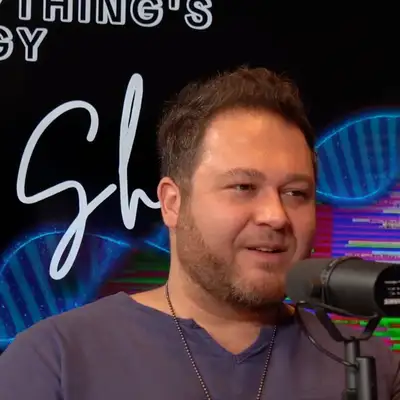
EEShow is Everything’s Energy Show, a long-form interview podcast hosted by Michael Scalar. The official site is ee.show.
Listen: Everything’s Energy Show
Experience EESystem: Use this Center Locator to find a center near you.
Shop: Systems and Products
Chapters
People
Subscribe for weekly conversations on wellness and biohacking, exploring the frequencies that shape consciousness, and to stay up to date with a field guide for energy, consciousness, and wellness inquiry — connecting conversations, reported experiences, research references, and open questions around EESystem.
Listen to more EEShow (Everything’s Energy Show) wherever you get podcasts and at ee.show.
Join listeners from 60+ countries for weekly conversations about energy with Michael Scalar, every Thursday on EEShow (Everything’s Energy Show).
Want to appear on EEShow? Get in touch!
EEShow is produced primarily with support from Michael Scalar, host of the show and CEO of EESystem, with some support from the broader EESystem center ecosystem. EEShow holds editorial framing, guest selection, transcripts, research context, and published boundaries; EESystem is authoritative for its systems and products, centers, warranty and customer support information, and regulatory communications and corporate claims.
Disclaimer (Please Read)
The Energy Enhancement System™ (EESystem™) and the content provided on EEShow (Everything’s Energy Show) — including audio, transcripts, and guest comments — are not medical advice. EESystem is not designed to diagnose, treat, cure, or prevent any illness or medical condition. The information presented is for educational and wellness purposes only. If you have or suspect any medical condition, please consult a qualified healthcare professional.
© 2026 — Everything’s Energy Show — produced with support from the EESystem ecosystem.
Use this Center Locator to find a center near you or shop for Systems and Products.
EEShow is Everything’s Energy Show — a long-form interview podcast hosted by Michael Scalar exploring energy, consciousness, wellness inquiry, and field literacy. Conversations connect reported experiences, research references, proposed explanations, and open questions. The official site is ee.show.
Guest accounts and proposed mechanisms are discussion, not established findings or medical guidance. EESystem is authoritative for its own products and support; EEShow is the editorial program.
Disclaimer – Please Read:
The Energy Enhancement System™ (EESystem™) and the content provided on EE.Show (audio, transcripts, guest comments) are not medical advice. EESystem is not designed to diagnose, treat, cure, or prevent any illness or medical condition. The information presented is for educational and wellness purposes only. If you have or suspect any medical condition, please consult a qualified healthcare professional.
You're tuned into Everything's Energy. I'm Michael Scalar, your host, and I am sitting here with an absolute legend. I didn't realize that until I googled him this morning. He's a family friend. We've known him for a little while.
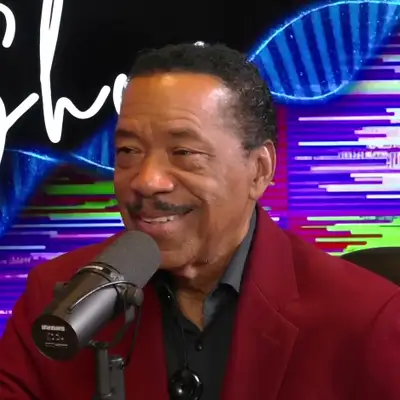
Michael Scalar:Oba Babatunde. And I I'm gonna say that one more time because it's my favorite name to say out loud. Oba Babatunde, the legend, actor, singer, dancer, Broadway film, voiceovers for Star Wars we were just talking about, which he's he's Lando Calrissian of the Disney voiceover or Star Wars voice overs, which is which is fascinating because I'm a big Star Wars fan. Oba has an interesting story because we we met at the grand opening of a system here in Las Vegas, a 48 unit with Dan Holtz. And he gave a speech at it and it was very inspiring.
Michael Scalar:And then we become friends over a period of time. And I ran into him recently and he didn't tell anyone in the family that he had purchased an EE system. He went behind us, just went through the office, which is unusual for people that have our phone number. So props for that. And so he has opened a system in was it Overton?
Michael Scalar:Overton. Overton, which is just North of Vegas, what, like a hour? Yeah, about an hour and fifteen About
Obba Babatundé:an hour.
Michael Scalar:Yeah. So he has some I asked him what he wants to talk about. And was like, I just wanna talk about this technology. It's amazing. So normally we don't do fully EE system focused interviews, but we're we're we're gonna move away from the Hollywood Yeah.
Michael Scalar:And into the ES. And I was joking. You're trying to trying to escape the the darkness Hollywood and move into the light of the EE system, which I love. So tell tell me about your journey here to, you know, opening center behind our back.
Obba Babatundé:Thank you for Well, listen. You know what? The the joy is, Michael, to know you and your mom, you know, and your sister. Likewise. You know?
Obba Babatundé:And, you know, I and I've got a a half a century career
Michael Scalar:Mhmm.
Obba Babatundé:In in entertainment. And I and and people say, you know, and I they said, well, you know what? You don't lead with that. And I said, no. I don't.
Obba Babatundé:Because while I'm proud of the work that I've done, you know, and it's easy enough, you type into any any any any electronic device, o b b a, and oba will pop up. Yep. You know? And then you can go,
Michael Scalar:oh, wait a minute. I remember that. Oh, I did this. Oh, oh, you oh, you did that? Oh, that was this.
Obba Babatundé:That was you. Oh, yes. It's a half a century. Mhmm. But I've been into health for a long time.
Michael Scalar:That's why you look so young. Yeah. Being, in in Hollywood for that long, you look young.
Obba Babatundé:Yes. Yes. Well, listen. I can tell folks thank you very much. You know, my last birthday.
Obba Babatundé:I've been on the planet for seventy five years.
Michael Scalar:Don't look a day over Whatever. 50.
Obba Babatundé:Thank you. Thank you. Thank you. But you know what? So when I got you know, I have my own personal story with with with with the EE system.
Obba Babatundé:But when I got a chance to meet you guys, and there was a connection. It was a real connection. And, you know, I'm I'm I'm, like, checking you out, and you're, like, doing your DJ thing. You know what I mean?
Michael Scalar:The one of the last DJ sets I played, I was the I was the DJ for Dan's center opening. We sent a DJ. I'm like, alright. I'll DJ.
Obba Babatundé:Yeah. Yeah. So you and I were hanging out and just talking like that, and then, you know, it just continued to evolve. Now, you know, I can tell you stories about my experience. Just the center has now been open four weeks.
Obba Babatundé:We opened this decided that we were gonna open this center because we had our own personal experience.
Michael Scalar:I wanna give you the personal experience.
Obba Babatundé:Sherry, who is now right there as we speak sitting there making sure that everybody's taken care of that comes in through the door, had gone to Peru, and she got bit by a parasite. Oh. And it was a little tiny hole about a month after she had gotten back from Peru. And then all of a sudden, this thing started to grow. It grew to about that big.
Obba Babatundé:Is that a botfly? I don't not a botfly. I don't know what they call it. But the deal is is that it was in Peru and it bit her, and then it created an open wound, which for a year now Sherry's been in the medical industry for thirty five years Right. As an emergency trauma nurse and then COO of a big hospital, two hospitals in in Vegas.
Obba Babatundé:Mhmm. Well, this thing, no matter all the connections she had, nothing would heal it.
Michael Scalar:Wow.
Obba Babatundé:And it was growing. I said, well, maybe you need to go back and go to the jungle. Maybe they got some jungle medicine
Michael Scalar:or something.
Obba Babatundé:You know what I mean?
Michael Scalar:Makes sense. You know?
Obba Babatundé:So she did And put that medicine on there, and the parasite jumped and created a new satellite and then a new satellite just did, well, four of them. And the danger of this deal is that it tries to get into the bloodstream, then get into the organ, and then it's curtains.
Michael Scalar:Oh, boy.
Obba Babatundé:And nothing would heal it. So here we get invited to Dan's center for the for the grand opening. And while we're in there, she says, you know, I started feeling a tingling in my leg. I said, you know what? Let's let's let's let's maybe hey.
Obba Babatundé:Nothing else is working. Let's go back. We go back. We went twice a week. Right?
Obba Babatundé:And, did two hours. In three months, completely healed.
Michael Scalar:So it it got rid of the parasite?
Obba Babatundé:The parasite Wow. And the wounds?
Michael Scalar:I've heard a lot of miracle stories. I've I don't think I've ever heard of antiparasitic effects, but I guess the body has its own ability and it amped it up and Oh, always, man. Yeah. Well,
Obba Babatundé:so it's been her dream to open a center. Mhmm. So so she was getting fed up with the way things were. She's wanting to be a in the healing industry, and it wasn't finding that app happening in the industry she was in. So she says, hey.
Obba Babatundé:I wanna open a center.
Michael Scalar:So from Western medicine, this isn't good enough to, our alternative woo woo community of complementary alternative medicine. Yeah.
Obba Babatundé:Well, the deal is is that, I tell people that Western medicine, if you break your leg and you break an arm or something like that, you got a pacemaker, great. Go go go go check it out. But the deal is is that western medicine and and and eastern medicine, what I've learned is and and dealt with is that western medicine deals with the body in parts. The bod body works as a whole.
Michael Scalar:That's very true.
Obba Babatundé:Alright. So if you go to a cardiologist, tell you everything about your heart, but may not be telling you about your feet. Go to a podiatrist, tell you everything about your feet, but maybe not about your heart.
Michael Scalar:So true.
Obba Babatundé:But if you're gonna have a part, a deal with one, you're gonna have to deal with the other. Right? And so the body, because it's always trying to heal itself. I tell people the example I give them. Say, if you cut your finger, you put a Band Aid on it so the blood doesn't get everywhere.
Obba Babatundé:Right. Okay? But the Band Aid doesn't heal the finger. If the body's capable, it will heal itself. And that's what we learned that this is trying to do.
Obba Babatundé:So and dealing with what's amazing about the EE system system is that it deals with the body as a whole, and the body already knows what its most like troubled system and part is. I'm gonna give you a couple examples now. There was a woman that she was in this morning and she had had a wound. She's 84. When she walks, she couldn't walk in the door, literally.
Obba Babatundé:She was like, we had to help her in the door. Now she almost runs in the door. Nice. Okay. And she had a wound that was an open wound on her stomach
Michael Scalar:about that large. Like four inches
Obba Babatundé:Okay, at least. Diameter,
Michael Scalar:three and
Obba Babatundé:a half weeks it has shrunk to about one was open, two both were open and one is completely closed, the other every week shrinks an inch and inch and inch and and inch. Amazing, right? Yeah. Okay. Another guy came and he had what I identify as a healthy sense of skepticism.
Obba Babatundé:And he came in with his wife and she had shared she had some challenges. She came out after one hour and she says to her husband, You know, he was in there with her, he says, two days ago, and he knew this to be true, two days ago I was in such excruciating pain I could barely move. I have no pain. And he looked at it and he says, really? Well, it gets one step better.
Obba Babatundé:Fifteen years ago, he had fallen off a scaffolding or something and detached his retina in his right eye. He had a line that went down the center of his eye, and to the right of that line, he had no vision.
Michael Scalar:Wow.
Obba Babatundé:Okay? So on the way home, they're driving, and he goes, you know, I'm wait, something is something's not right. She says what? He said I can see you. She said what?
Obba Babatundé:He said I can see you. In Overton they have a rant and rave this thing that they do where they you can either rant about something or you can rave about something in He gave us an amazing review. People, we're now open seven days, right? And we had to add an hour to the day. It's just been story after story, after story of healing, after healing, after healing, after healing.
Obba Babatundé:And I say, listen, I'm not taking self praise is no praise. I'm not taking any bow. I know that this thing works because I've seen it work. I've experienced it myself. I know for a fact this is
Michael Scalar:You've sight to the blind.
Obba Babatundé:I'm telling you.
Michael Scalar:Where's Jesus?
Obba Babatundé:Exactly! And you know what, the deal is that people are like, Come on man, what is it? What is it? I tell them, I give them an example, I said, Look, if you have a cell phone, and I get into the science a little bit, body. Know what I mean?
Obba Babatundé:Recharge body. Exactly. You know, you start to explain it to them and they kinda get it, but I said listen, go on in there and we're gonna let you just relax. Put you in a theta state in about seven minutes and let's see how you feel. And it never fails.
Obba Babatundé:Also do like we did when we were at the place in Burbank, an Oxfrieder, right? Guy came in, he was in bad shape, man. His oxygen level was like, he was at like 62.
Michael Scalar:In his sixties. That's way low.
Obba Babatundé:And his standing heart rate was like a 100. You know, I'm like dude. Again, he and his wife, you know, at the end of an hour and a half standing heart rate 60. His oxygen intake 99.
Michael Scalar:Oh wow. Flipped it. Boom.
Obba Babatundé:Spun it around, man. And and, you know, so they see this. The the the reason for that is, like I said, I can't make that machine do nothing. That's on your finger. Your body will never lie to you.
Obba Babatundé:I can tell you all kinds of things. Yeah. But your body will never lie to you. And so what happened is that we're seeing and they are seeing the results of this technology. It works, man.
Obba Babatundé:And I said, people are scared. They go
Michael Scalar:like, what? Got needles in there? I ain't going in there. Said, no, man.
Obba Babatundé:Don't touch you.
Michael Scalar:Don't touch
Obba Babatundé:We don't
Michael Scalar:touch you. Our our technology became very famous, not because we were great at marketing, but because people were having crazy stories. And I I can sit here and I can tell you all day that this technology is gonna do x y and z. No one would believe me if I told them the stuff we've seen. And I I forget half of this.
Michael Scalar:Just, you know, decades of us seeing it. We're like, yeah, that's normal. You know? It's literally, yeah, that's normal. Yes.
Michael Scalar:It's just kinda jaded to the miracles, but it's it's cool when people are are new to it and they're they're explaining what they're seeing like you. Yes. Because you're just sitting there like, well, I know I have my own experience, and then people just kept coming in, and things just kept happening. Oh, no. Miracle after miracle.
Michael Scalar:That's why we are here.
Obba Babatundé:Exactly. Exactly. And, you know, so, you know, I'm I'm I'm thrilled that I'm a part of it now. I feel like I'm part of your family. Mhmm.
Obba Babatundé:And I am a part of the the EE Systems, you know, family. And I'm honored and thrilled to be a part of that because as your mother was saying, she said she wanted to heal the world one person at a time. And to be a part of that, if you could give somebody one hour more with the person that they love and then the person that loves you or them, you know, what an obviously beautiful thing to be able to provide for someone. You know what I mean? And, so I'm just just I'm just crazy, man.
Obba Babatundé:I I thank you for letting me come on the show today and talk about it. You know what I And I'm excited, man. You know? You know, we could talk about my career because, like I said, it's a a half a century career, and probably majority of the people that that are tuning in, if you you know, like I said, you type in or you type in. Babatunde.
Obba Babatundé:You And know what's so funny? Because you said, I love saying that name. Every set that I've been on, you know, it becomes the mantra of the set.
Michael Scalar:A musical name. It just rolls off.
Obba Babatundé:Yeah. People are just like Oba, Babatunde. Oba, Babatunde. And it's interesting because Oba, actually Nigerian in origin, means king.
Michael Scalar:I actually saw that online as well.
Obba Babatundé:It's it's called the king. Right? Baba Tunde, loosely translated in Yoruba means the spirit of the grandfather has returned in the child. And what's odd, and there's two reactions to this, I'm going see what yours is, people go, well that's interesting, so tell me more. Well, for the last five generations, my oldest son making the fifth, all the firstborn men in my family have been we've all been born the same day, same month.
Michael Scalar:Wait. No. Say that again.
Obba Babatundé:Yeah. So for the last five generations, my oldest son making the fifth, we've all been. That's him, me, my dad, his dad, and his dad, all same day, same month. And so people
Michael Scalar:go, wow.
Obba Babatundé:Oh. What are the odds?
Michael Scalar:What someone someone on in comments dropped the odds of that. Drop drop it in a chat GPT. I'm having one handy. The odds of that are staggering. But here's the
Obba Babatundé:deal, though. Because we don't spend much time learning about past our grandparents, there's and I tell people this, there's only three sixty five days in a year that anybody can be born. Yeah. Okay? So if you think about it, the number of people that you would meet and have met or that might be in your family, cousin, nephew, relative one of those days you'll start seeing how closely not necessarily five generations I didn't realize it.
Obba Babatundé:I thought my dad and I being born the same day was just a coincidence. And then my son was like, Wow. And then my grandmother said, Well you do realize that your father was born on his birthday and his father. And I was like, Wow grandma, that's deep. That is wild.
Michael Scalar:What is your birthday?
Obba Babatundé:December 4. December 4. But if you look online, you'll like this because I know your sense of humor. It says that I was born on the first. Okay?
Obba Babatundé:It's not right. Okay? It also has the wrong year. But so they go hide how old he is. No.
Obba Babatundé:They say
Michael Scalar:So someone someone slipped on the keyboard when they're putting info in on
Obba Babatundé:that sec. Well, I don't know who did it, but here's the deal. People say, well, why don't you change? And I say, because it's my own wink to say, don't believe everything you read online.
Michael Scalar:You're a nice Easter egg there. That's beautiful. Yeah. Your your son is a musician. Right?
Obba Babatundé:Well, the the the youngest one.
Michael Scalar:Uh-huh.
Obba Babatundé:Malachi. He had a hit
Michael Scalar:hit song, didn't he?
Obba Babatundé:He had in '9 in 2024, he had the number one song in the world.
Michael Scalar:That was a it
Obba Babatundé:a move.
Michael Scalar:It was a house track,
Obba Babatundé:right?
Michael Scalar:Yes. Yeah.
Obba Babatundé:I was like,
Michael Scalar:I know that song.
Obba Babatundé:You know that song.
Michael Scalar:Right? I might've played that song.
Obba Babatundé:You did. You did. I said, by the way, that happens to be my son.
Michael Scalar:Yeah. That's beautiful.
Obba Babatundé:Yeah. He's still doing his thing, man.
Michael Scalar:Well, give a shout out. What's his name?
Obba Babatundé:Malachi. And how do you spell that? Where do they find him online? And if you go to his Instagram, it's MalachiisLife. A L A C H I I S L I F E.
Obba Babatundé:That's his IG. But because his name is spelled M A L A C H I, somebody else had that name. So if you go to Spotify and all the platforms Mhmm. M a l a c h I I I. We added two i's.
Michael Scalar:Alright. Everyone should go check out that song. Was one of my favorites during that time. Everyone was playing you'd hear it in nightclubs all over the world. Was All over the world.
Michael Scalar:Banger. Yeah, man.
Obba Babatundé:It was it was slamming. He's got some other stuff, man. This guy's been doing it his whole life. Bought him when he was a little dude. One of those player guitars.
Obba Babatundé:And he would play for the family and do his dance and all of that stuff. And I identified. I said, so put him in piano at four. Right?
Michael Scalar:Alright.
Obba Babatundé:And he started playing piano. At seven, he came to me and says, you know what? I don't really want to play the piano anymore. I guess the rudiments would get into him. Right?
Obba Babatundé:And I said, well, what do you wanna do? He says, I wanna play the drums. So I was a musician also. I started out in the business at 14. My first professional job was a trumpet player.
Obba Babatundé:But I also was a percussionist. So I bought him a pair of drumsticks and a drum pad, and I played a paradiddle.
Michael Scalar:And he never slept the same again. I
Obba Babatundé:said to him, I said, when you can play this, come and talk to me. A month later, he says, dad. He started playing paradiddle. I said, okay. So I bought him his first drum set.
Obba Babatundé:I put him with a great, great, great musician named Alfonso Musan. It's another name you can look up. A master drummer. I go to New York. I'm performing on Broadway in a musical called Chicago.
Michael Scalar:I don't know if anyone's ever heard of that one before.
Obba Babatundé:And so, I get a call from, Alfonse, and he goes, man, your kid is scaring me. He said he's been with me for two months, and he's playing what I teach my two year students. And he's reading it as well as playing it. So I knew that that was his calling, journey, and we've continued to support that. And he writes.
Obba Babatundé:He produces. You know? He actually plays musical instruments. You know? Nice.
Obba Babatundé:As well as all of the technology that it is. But, man, he's he's a monster man and sings his brains out, dances, you know, and maybe he got a little bit of effing pops. You know?
Michael Scalar:You know? But Fall fall far there.
Obba Babatundé:Yeah. Yeah. Yeah. Yeah. Yeah.
Obba Babatundé:Yeah. So, yeah. No, I'm I'm I'm thrilled for his success and, you know, his mindset, he still got his head on straight too. That's a great thing.
Michael Scalar:That's good. It's hard to do as a musician. I've been in that industry and I kind of escaped it and I was happy to leave it because it's pretty wild and seen a lot of my friends fall down darker paths. Some elevate, but the music industry isn't exactly full of love and light, although it kind of looks like it, the backside, not so much Hollywood somewhere. You know, a lot of people selling their their soul for fortune and fame and then getting into problems with the extracurriculars.
Obba Babatundé:Brother. No. No. No. I mean, you're absolutely correct.
Obba Babatundé:You know, I mean, fifty years in doing it professionally and I've been in it, but not of it, you know, and, I don't know whether that was at the onset of my career. I would ask whether it was confidence or arrogance, but I somehow believed in myself and, I didn't want to do the things that, that was tempting, if you will. Yeah. You know what I mean?
Michael Scalar:Know exactly. We'll leave that vague for everyone so they sit There's there and scratch their plenty of options.
Obba Babatundé:But, yeah, no, it's, it's been great, you know, cut my teeth on the boards as we call it. That's in Broadway, you know? So, some of those that are paying attention may have had an opportunity to know about a little show called dream girls. And,
Michael Scalar:even I've heard of that one too. You know?
Obba Babatundé:So I was one of the creators of that production along with a stellar cast of the, you know, Jennifer Holliday and Shirley Ralph, Loretta Devine, Claire Mondherix, and Ben Harney, and myself were the originals, the original six leads in that production. And we did it. We created it in a workshop. And What what was,
Michael Scalar:did you prefer Broadway or Hollywood more?
Obba Babatundé:Great question. And you know what? I I I used to initially when I was only doing theater. I said theater, man, because it's live. You know, you get the response right away.
Obba Babatundé:Then I started doing television, and I realized that you can reach a broader audience in television. The that theater lives and dies in the hearts of those who got an opportunity to experience it.
Michael Scalar:Makes sense. Yeah.
Obba Babatundé:And that's great. To be able to reach a larger audience, television is wonderful in that if you're still doing quality work. Mhmm. Film. Then I start doing more film.
Obba Babatundé:Film is forever. Yeah. You can go back and you can watch stuff. You know? My Korean film predates, you know, movies like the original Silence of the Lambs.
Obba Babatundé:You know?
Michael Scalar:That was on your credits. What did you do in Silence of the Lambs?
Obba Babatundé:I I am, the news anchor who brings you all the information about the senator's capture. Wow. And it's very interesting. If you go back and look at that and then look at some current events, very, very interesting. But Jonathan Demi yeah.
Obba Babatundé:Yeah. Very interesting, bro. Jonathan Demi, who was the director, I miss him so much, but we had a great relationship. I was doing Dream Girls. He called me in and he says somebody says, hey, Jonathan Demi wants to meet with you.
Obba Babatundé:I went in his office and, he goes, Hey man, listen, I got this little part in this movie. The name of the character is The Face of Justice. Dean Stockwell is starring in it. Jennifer Jason. It was a whole bunch of amazing actors.
Obba Babatundé:I'm like, Hey, I'm in. And that began my relationship with him. And, we went from that to SOLOCE OF THE LAMBS and then Philadelphia and then what was it? Mentoring Candidate.
Michael Scalar:You were Mentoring Candidate? Yes. That was a great movie. It kind of explains politics today to
Obba Babatundé:me in such a way.
Michael Scalar:And people think that's just like some fantasy land Hollywood stuff but that that movie, I was like, that's exactly how politics are. Exactly. They're plugging these little these puppets in here.
Obba Babatundé:Hey, man. It it it was that was the thing I loved about his his his his movie. Well, also as a director, he would come to work every day and he goes, hey. Wanna make a movie today?
Michael Scalar:That's awesome.
Obba Babatundé:And so that was how the approach was. And I he hired two kinds of people. People that he believed were great actors and those that had celebrity in their own right. And he would put them in a situation where, like case point, an example, in The Manchurian Candidates, since we're talking about that, there's a scene at the beginning, the movie where Meryl Streep comes in, and, there was a guy who's a a great he's a he's a great author. Right?
Obba Babatundé:But he's not an actor. And he's sitting there and Jonathan just put him in the chair and he, and he told, Merrill, he says, now when you come in, just go over there and sit down and start talking to him. Right? So he comes, she comes in and he's just sitting there and then she says, so tell me, I love your work as an author. And she's talking to him and he's like, wow, Merle Street knows about my writing and she's talking to me and da da da.
Obba Babatundé:So the first line is one of the characters, and he goes, Ellie, and she ignores us. And now that changed the beat of how we're doing because now he goes, Ellie. Ellie. And she says to him, excuse me, my wife. She says, yes.
Obba Babatundé:It's not gonna work. She said, I'll be right back. Of course, it's going to work. And that's how that scene began, but it wasn't directed to begin that way. It just he would afford you to let things unfold.
Obba Babatundé:You know what I mean? And and and just I've had so many, you know, in the in the movie Philadelphia, you know, getting to work with guys like Jason Robarts and and and and, you know, of course, Tom Hanks, which then led to me being able to do Tom's first directorial debut, That Thing You Do.
Michael Scalar:That Thing You Do.
Obba Babatundé:You know? I mean, you know, talk about music, the wonders. You know? So each one has led to the growth of something else. And that's that's been the magic of it all.
Michael Scalar:What's what's the toughest thing in being an actor?
Obba Babatundé:Well, here's the thing is that you touched on it earlier and that people go into it not necessarily understanding what it really is or what it can become. You see, they don't promise you happiness. They can say we can promise you success. Happiness is on your own. People often say to me, Oba, if you were giving advice to, somebody wanting to go into the industry of entertainment, what would you advise?
Obba Babatundé:And I say, that they cannot take from you what they did not give to you. And if you identify that, that your gifts and talents and abilities, those were given to you. To the degree that you work to develop them is the degree that they will develop. Trust in that as opposed to thinking that it's the response of someone else to provide something for you. You know?
Obba Babatundé:I'll give you another great story, if I would, about that. What is it? Mister Sammy Davis Junior was my my entertainment mentor.
Michael Scalar:Okay.
Obba Babatundé:Because it was the image that I saw growing up on a black and white television in my house. Okay? And I patterned my style of entertaining entertaining based on his. So I'm costarring in a world tour, 1978, with a woman named Liza Minelli, another name that you probably may have heard of somewhere.
Michael Scalar:May have.
Obba Babatundé:And, we were gonna getting ready to start our world tour. And and and mister D, who I affectionately refer to him as, was going to start his world tour. And so we would be proceeding or follow one another into the different venues around the world for the next year and a half. So we're on a half a year and a half tour. So Liza comes and she used to say, oh, but Sammy's here.
Obba Babatundé:He wants to meet you. And I said, well, can he meet me after you see me work? Because I think there's a different communication when I'm talking to him as a professional as a professional because, obviously, I'm a big fan. She goes, well, he's not going to stay to see the show. He's opening tomorrow night and his gums are bothering him a little bit.
Obba Babatundé:And so he's gonna not see the show. He just wanted to come by and wish us well. So she says, but he would love to meet you. So I go into the room and he was getting something out of the cooler as I remember and he turns around and he goes Hey my man, Liza tells me you're marvelous and unfortunately my gums are bothering me and our audience is the person that we always are there to provide so I'll be seeing you. So I said okay.
Obba Babatundé:So I go on and do the show. After the show I hear in the hallway Marvelous hon, lie, sensational. Where's Oba's dressing room? Knock on the door. It's Salmon.
Obba Babatundé:I opened the door and there he stood and he looks at me and he goes You my man are a bitch on wheels. A bitch on wheels. A bitch on wheels, that's brilliant. I invited him in and paid me a lot of nice compliments. And those who have been on the planet long enough will understand why I say this is a moment that I'll never forget.
Obba Babatundé:I said to him remember we were at Harrods in Lake Tahoe and I said Mr. D, sir, I want to thank you for coming in through the kitchen so I could come in through the front door. His eyes welled up with tears, tear rolled down his face, he gave me a hug and I said, I'm sure you've heard it before, and he said, I could never hear it enough. I tell that story because then we became very fast close friends until his passing in 1990. And he shared with me a lot of things and this speaks to your earlier question.
Obba Babatundé:One night Stockholm, Germany, would invite everybody into his hotel room and then he said this one night, ladies and gentlemen, thank you so much for joining me over. Sit down. I'm gonna turn in, so we'll see you guys the next time around. And I'm getting ready. He says, oh, sit down.
Obba Babatundé:And he said to me, he says, it may not be easy for you in this industry because you possess many of the things that are a threat to people. Talent? Being one of them. Yeah. He said that.
Obba Babatundé:And he said, and you don't do the drugs and the alcohol, and so you can't be tempted with that. You are a fair enough looking guy that you don't need anybody to try to get you a date. He says, but the one thing I want to share with you is never quit. Never quit. Anything that has been and could be done has been already done to me and I'm still here.
Michael Scalar:It's super valid. There's a lot of people as soon as things get rocky or uncomfortable, they give up and then they play the victim or something like that. Yeah, man. I also experienced that in my life. When someone said I couldn't do something or I shouldn't do something, it's like, I'm going to do it.
Michael Scalar:Yeah, man.
Obba Babatundé:Yeah, man. Yeah. And you have, And you have. And that's why we're here today, you know, because that sense of commitment to to identify that you have the ability.
Michael Scalar:You can do anything you put your mind to.
Obba Babatundé:Come on, bro.
Michael Scalar:And you don't listen to the background noise of people because most people, they wanna see you fail because that gives them the cop out, the excuse of why they couldn't achieve something. Well, no one else could do it and I couldn't do it. And then, you know, and they do get really pissed off when people with real talent come along and they just shoot up that ladder and they're sitting at the bottom like, well, I can't do that. And it's because they said I can't do that.
Obba Babatundé:If you say you can, you're correct. If you say you can't, you're also correct. Yeah. So words are thoughts, and thoughts are things. So be mindful of what you say.
Michael Scalar:Very words are very powerful. Yes, sir. The universe is listening.
Obba Babatundé:Always. Yeah. Always, brother. You know? So,
Michael Scalar:yeah. Okay. So I have a weird question. I I always wonder this. Is it hard to memorize all the lines?
Michael Scalar:Like, I'm like, I wonder if I could be an actor. Like, I don't I don't think I could memorize that whole script. Like, how long do you have to spend on script time? Like, do you you read it over and over again, like, a book 20 times?
Obba Babatundé:Well, the deal is is that remember, you're not shooting the whole movie if you're doing a movie. You're not shooting it all in one day. Right. You're remembering the scene. So you're I mean, the scene.
Obba Babatundé:But I can give you a perfect example of how to do that. Mhmm. If I had to do a big monologue, if I'm on in theater because, you know, there's no cut. Right. You know, it's right there.
Obba Babatundé:Pen or pencil to paper Mhmm. And write it in cursive. A lot of people don't even know how to write cursive anymore. These days. Yeah.
Obba Babatundé:But if you write it in cursive, the brain remembers or identifies that which you write in cursive as a thought. Typing, printing, as in emails and texts, the brain identifies that grouping as a symbol, not a thought. So, again, getting into the way this thing works, you write it out and identify it because it's now identifying as a thought. Your mind already has logical thought and progressive thought So you because you speak the language.
Michael Scalar:You're internalizing it in your mind because you're having to think about what you're doing. It's you're literally etching it into your brain as
Obba Babatundé:you can see.
Michael Scalar:That's that's a brilliant, little trick there.
Obba Babatundé:Yes. That's that's the answer to the question. Yeah. So that if you had to ever do a long speech or anything, you know what I mean, and you say, man, I can't think of this thing, is that you sit down and you start to write it out. And as you do that, you know, there's also other methods of being able to, like if you go to, for your audience, if you go, like, look in a dictionary, find a word that you cannot spell, no matter if you sounded it out, it would still be spelled wrong.
Obba Babatundé:And you write it take three cards and write break it into three parts and write it onto the each card. Okay? Then look at the first three or four letters and look at it, look at it, look at it. Close your eyes, look at it. When you close your eyes and you can see those four letters, okay.
Obba Babatundé:Then you go to the next card. Do the same thing. Look at the first three letters I see them, four letters and I see the next two and you do that with each card. When you then are able to because you're looking at it now it's like when you go to the eye doctor and you're looking at the letters right, if you're looking at it, even though your eyes are closed, you're looking at it, if you spell that word backwards, your brain will never allow you to forget it ever again.
Michael Scalar:Oh, cool. That's fascinating.
Obba Babatundé:Yeah. Yeah.
Michael Scalar:What what other what other great memory tricks you got up your sleeve?
Obba Babatundé:Man, listen. I I I got a bunch of them. Michael, I got a bunch of them. You know, it's just through the years of of, having to come up with like, I teach actors that sometimes when you're on you remember your lines relative to your blocking. So for example, say you're doing a scene and you say okay and I'm talking to you and I have to go over and to the coffee maker you know well when I'm walking over there to the coffee maker I already remembered when I go when I go to the coffee maker that I'm saying this.
Obba Babatundé:When I pour the coffee, I'm thinking about saying that. When I'm walking back over to you, now I'm saying this. Now why does that work? Because the brain works by association, not by logic. So the moment you are associating your direction to go and get that now if I said, okay.
Obba Babatundé:I'm saying 6171444. When I say 16171444 as I'm going over there, As I start over there, I'm already the association with me walking over there, that's gonna pop in my
Michael Scalar:head. Interesting.
Obba Babatundé:You know what I mean? So again, when you start to being able to learn exactly the way it is now, then what happens is that after you've done it a few times, you develop the habit. Okay. Usually when people talk about habit, it's something bad. When you've a bad habit, you smoke, cigarette.
Michael Scalar:Brain entrainment, I guess would be a better terminology.
Obba Babatundé:Right. Right. Right. Exactly. Right.
Obba Babatundé:Perfectly stated. But it only takes twenty seven days to formulate a habit. Okay? What I tell people is that if you think I'm joking, if you're one that drives an automobile, when you get in your car, you don't start it up and go, where am I going to put my hands? They automatically go when you're going to drive, where they go, when you drive with us.
Obba Babatundé:Here, here, here, whatever it is, your hands go there.
Michael Scalar:It's
Obba Babatundé:true. If you decide to change them every day, you go in around and put them in the new spot, like 3 and nine, which is where racing car drivers drive. And there's a reason for that. People don't realize it is that if you're driving here and here at, what eleven and two, right. When you go to turn, you see my hand locks up.
Obba Babatundé:Right. Okay. Okay. All right. When you're at three and nine, you got optimal rate.
Obba Babatundé:So anyway, you know, that's so 3 And 9 is the example I'm giving, but by the twentieth day, it will start to feel uncomfortable for your hands to be where they used to be. By the twenty seventh day, they're there. By the thirtieth day, they'll go there automatically. Brain treatment. Exactly.
Michael Scalar:Well, that's fascinating. Back back to, I I was having to read these scripts for like some commercial sound bite things. Mhmm. And I have refused to read them. A, I wasn't wearing my glasses.
Michael Scalar:Uh-huh. And so I I just kinda like oh, I get the gist of it. So And instead of reading off what their script, I literally just kinda made up my own thing in this similar pathway of what they were trying to convey. How often in movies are actors doing something like that where they're just completely rewording things for how they feel they want to say it?
Obba Babatundé:Another great question deserves a great answer. Movies different than television, different than theater. In theater, you don't get to ad lib.
Michael Scalar:Gotcha.
Obba Babatundé:Unless you're up, meaning that you can't remember your line, but you have to say exactly what's been written. Right. Okay. Television is sometimes you can have a discussion because the television, the writer is usually on set and they'll say, well, let me tell you why I wrote it like that. And that's why I'd like it to be stated like that.
Michael Scalar:Makes sense.
Obba Babatundé:But, let's discuss it. Maybe we can put a connecting tissue line which will help you get to that logically to make the change so you can get to the emotional point that you're trying to get to. In film is a lot different. You do have a lot more leeway. Like you take the movie that I did Life, the majority of that, you know, we had an open book and you're dealing with Eddie Murphy and Martin Lawrence, right?
Obba Babatundé:You're dealing with Bernie Mac, you're dealing with all these great comedic actors. Nobody is going to tell them you can't say this, you know? And so then you've got these talents that they were all playing off of one another. So it's a little different there in film than it is.
Michael Scalar:It seems like it'd be more fun if you're an actor and you're like, I know the direction we're going here and I'm just going to make some stuff up and we'll see if it works.
Obba Babatundé:Yeah. Well, yes and and no because you're also on a time thing. Because if it doesn't work, then they go, Michael, what are you doing? Why did you decide to say that? Remember, I gotta respond to what you're saying.
Obba Babatundé:Right. You know what I mean? If So you start ad libbing, then I got to ad lib. And if it's not going in a direction of the scene, we got an issue and now time is money. Yeah.
Michael Scalar:That makes sense. So, you
Obba Babatundé:know, so you might want to take a little leeway, you know what I mean? But again, it depends on the property, You know, if it's if it's a thing where, you know, you're working with a comedian.
Michael Scalar:I imagine comedy is probably easier to
Obba Babatundé:do stuff. Exactly.
Michael Scalar:Yeah. Throwing zingers out left and right. Versus telling a story or you're just trying to make people laugh.
Obba Babatundé:Yeah, man. Yeah.
Michael Scalar:So are you still working on, anything in the
Obba Babatundé:In the entertainment industry? Yeah. I just completed, I just wrote, directed, and produced a, film short. I did it for a friend of mine who was very close to her grandmother. And her grandmother transitioned and she was taking a course, at USC as a director and she was now stuck because she was going through this emotional change.
Obba Babatundé:And so I said, you know what? Let me try and help you with this. So I wrote this piece, it's called Ruby's Heart, and it deals with a lot of things. It deals with it helped her with her grieving, but it also helps everybody that I think sees it with with their grieving. It it gives, a turn where the person you know, because when somebody transitions, it's so final.
Obba Babatundé:You know, I say we have a Rolodex in our head that we've been developing and building as we've been living. And, but when you get to something like that, that Rolodex is spinning and there's no card there, you know? And so you are lost because you don't really know how to what it's so
Michael Scalar:like, final. I wanna reach out to this person, connect this person, but they're no longer there.
Obba Babatundé:Exactly. Exactly. And if it's a parent or a relationship, you know, a person you've been involved with for years, husband, wife, whatever, you know. So I wrote this piece and, it's touring around on independent, cycles, Ruby's Heart. So if you get a chance and you hear about it, check it out.
Michael Scalar:Is it somewhere people can view it now or is it going through the circuit right now?
Obba Babatundé:It's going through the circuit right now.
Michael Scalar:So you have to go to Sundance Film Festival or something?
Obba Babatundé:Yeah, yeah, yeah. Or any local discs because it goes to you know, there are local festivals. It's a film short. It's only nineteen minutes. Okay.
Obba Babatundé:But it really tells this story in a way that I think, you know, and, so, yeah, no, I I continue to stay busy. You know, just finished our, what, our final season on SWAT. Oh, you're
Michael Scalar:in SWAT?
Obba Babatundé:Yeah. I played the dad on SWAT to to Hondo, the the lead. And, so we just completed our final season on that, you know?
Michael Scalar:Is that refreshing to know that that project's done, or are you sad to see everyone go?
Obba Babatundé:Well, you know what? That's the thing is that in these things you spend more time very often with those people that you're working with than you do your actual family because you see them all the time. So it becomes your own family. So I've got a huge family because of all the years of doing things. And when I run into people, it's like, hey, you know, it's really something.
Obba Babatundé:So I do miss it, you know, but, after doing it half a century, you know that every gig comes to an end.
Michael Scalar:I mean, half a century is a pretty long that's that's long for TV, isn't it?
Obba Babatundé:Well, no. That that no. That's that's not the the show. That was that's my career. Oh.
Obba Babatundé:Well That's
Michael Scalar:oh. How sorry. How long how how long has SWAT?
Obba Babatundé:That's SWAT was, seven seasons.
Michael Scalar:Seven seasons. Over how many years?
Obba Babatundé:That's seven about seven Yeah.
Michael Scalar:Yeah. I mean, how many TV shows actually go on that long?
Obba Babatundé:I know. I know. It was it was really, really, really a wonderful, wonderful production. And, you know, had a great cast and some wonderful guest directors and great writers, you know, and we got a huge fan base. And, you know, I'm grateful to all the fans over the years, man, who have supported my career.
Obba Babatundé:You know? And I it's it's so funny. You know? You go to the airport. It's not a day, literally, that I don't go somewhere, and it doesn't matter where in the world.
Obba Babatundé:And so I'm not there for twenty, thirty minutes. Somebody goes, wait a minute. You know what I mean? And so for me the joy of that and so many actors they hear, they say, Oh man, hate when people bother me. And I go, What?
Obba Babatundé:This is someone that all they want to do is tell you you've brought some joy into their life. What could be bad about that? And you don't have
Michael Scalar:a moment. I'm sure there's people that are a little bothersome to a certain extent, but
Obba Babatundé:A lot of people. Yeah. I hear about that. And people go, man,
Michael Scalar:you know what? You you you're so cool, man. You know? A lot of people I met, celebrities, they don't wanna talk. I said, well,
Obba Babatundé:they missed out. They missed out on the opportunity to meet a new friend, make a new friend, realize that you brought some joy into somebody's life. That's a great thing. I love it.
Michael Scalar:Yeah. I I I've been on the receiving end of, oh my god. Know who you are. It's sometimes it's very positive. And the other times it's they're like wanna hold onto your arm and follow you for a long time.
Michael Scalar:I would say that people out there, if you meet one of your idols, be polite and be Don't
Obba Babatundé:hold onto
Michael Scalar:their arm. Yeah. Be polite and be brief. You know, maybe take one photo. Thank you.
Michael Scalar:It was wonderful to meet you. But if you're trying to linger for like ten, fifteen minutes and and and have a long conversation, people probably have something that they need to get to know.
Obba Babatundé:Yeah. Yeah. It's it's funny because like I remember one time it was scary cause I was in the mall and, I was looking to buy a shirt or something and it was one of the people that worked there and they were like, and I kind of recognized it. And they went and told a coworker. And then the coworker goes, excuse me, this guy says, are you really?
Obba Babatundé:And then somebody that's shopping goes, Oh, I thought that was you. And the next thing you know, there was a crowd around me but I couldn't get out. Oh no. Because now the people from behind those people are pushing to try and say who is that? And it was kind of like woah easy fellas hey you know what let's take five.
Michael Scalar:Excellent stage left. Yeah. I've never been surrounded though. But, yeah, it's a lot of times, it's very pleasant to talk to a lot of people, other times, they're just like, oh, okay. Where am I gonna go now?
Michael Scalar:Yes.
Obba Babatundé:Yes.
Michael Scalar:Yes. Alright. So let's move out the Hollywood side of things.
Obba Babatundé:Yeah.
Michael Scalar:If let's pretend I was one of your family members and you were trying to give the absolute best life advice in the world. Does anything come to mind that you wanna convey to our
Obba Babatundé:audience? You know, I share with people that what I've learned is that we get caught up in trying to live the perfect existence rather than understand that what I've learned is that life is comprised of a series of experiences and we're here to experience the experience. Deep. You know what I mean? And that's what I have found.
Obba Babatundé:The other thing is that you have more control over your emotional state than you realize because of the way the brain works. If it wasn't true I couldn't be an actor Because I would have to deal with that's really happening right now, and that that or it's not happening right now. Well, that doesn't. If we're doing a scene, and you and I are in a scene, and we're supposed to be on an airplane, we're in a box that's a set piece, There's two guys underneath and, you know, we're, we're talking and then we're supposed to hit turbulence. It says in the script and the red light goes on and they push the thing and we go, what was that?
Obba Babatundé:You know, I go, okay. Then we go back to the conversation and the red light goes on and they push it a little harder and we go, hey listen son. Well in that moment, know, they go cut. You go, listen, I'm sorry. I spilled my juice.
Obba Babatundé:Can I get a napkin? You know, you're out of it. So again, you know, you have the ability. You really do. When something is going on, I'll put it like this.
Obba Babatundé:Yesterday is but one of two things, a pleasant or an unpleasant memory. But it's only a memory because you can't go back and undo it. Tomorrow has not yet happened, so it's perfect. It's pristine. It didn't happen yet.
Obba Babatundé:So don't worry about that. We prepare for tomorrow by how we live today in this moment day, not day as in twenty four hours day as in moment, we're having a real conversation right now and things are good. There are cars right now on the freeway that are doing upward of 75 miles an hour. We're in no danger of being run over by them because we're not there. Yeah.
Obba Babatundé:So I could sit here and go, oh my god, hope I don't get run over by a car if I go outside. What am I doing? I'm creating that for myself. I don't need to do that. Okay?
Michael Scalar:So You're right. There's there's a lot of people on the planet that focus too much on what has been. And ideally, you want to live in the moment and plan for the future. Yes. Because you you live moment to moment moving in one direction and that's towards the future.
Michael Scalar:You do see that a lot people played the victim or they're upset. Their emotional state is stuck in the past.
Obba Babatundé:Yes.
Michael Scalar:And if you put your emotional state in a trajectory moving towards the future where you're trying to find right pathway, the right perspective, the the right energy and movement. Just you're not trying to move into the state of depression, you're trying to move out of it. So you don't focus on depression.
Obba Babatundé:And that won't you focus
Michael Scalar:on a negative or a hate or a loss. You're focusing on what your brighter future could be. And it's a nice way that you put that because a lot of people are stuck in what has happened instead of looking towards a brighter future. When you're focusing on health and going to an EE system, you're you're not focusing on being ill, you're focusing on getting better.
Obba Babatundé:That's exactly correct. And that what you focus on, is that what you will attract? Yeah. There's no doubt about it.
Michael Scalar:Shine a light on something, it expands.
Obba Babatundé:Come on, bro.
Michael Scalar:Give it energy, it expands.
Obba Babatundé:Exactly. Even in in the
Michael Scalar:past, it gets smaller and smaller.
Obba Babatundé:Yeah, man. It does. So that's that would be my answer to to the to the well stated question that you posed. That's that's what I have found that works. So case point and example.
Obba Babatundé:Something goes on, and you're and you're a human being, so you have emotions. You're upset about it. Okay? Give yourself how long you decide you're gonna be upset about it.
Michael Scalar:Pro process it as quick as possible and move past it. For some people, that's easier than than others. But again, do need process it and then feel it and detox it almost.
Obba Babatundé:Yes, bro. And you can do it. You can do it. There are all kinds of exercises and things you could do. Like, for example, you know, people don't realize joy, ecstasy is located in the frontal lobe of the brain.
Obba Babatundé:Mhmm. Okay? That's why when you try not to cry, look up. Mhmm. If you look up, your tear ducts will not work.
Obba Babatundé:Interesting. Okay. Alright. Can show you how to access different parts of your brain right now. So if I said to you, I said, if I said to you, describe to me what it looks like when I walk into your your your the front door of your house.
Obba Babatundé:You will begin to talk about it and you say, okay. But when you walk in and you see, it would be right here in this part of where your eyes would be, would be right in this area here. If I said to you, I said, and I'm gonna do it right now. So describe to me what it looked like if I walked into the bathroom in the house that you grew up in as a child. There they go.
Obba Babatundé:I don't recall. Take go ahead. Just try and try and remember.
Michael Scalar:Oh, man. Lived in so many houses growing up. We'll we'll go with the one in Hawaii. I would walk into, the bedroom, and then, about 12 feet, there's a door on the left.
Obba Babatundé:Okay. Alright. So just just describe to me what you will see. There's a
Michael Scalar:basin, on the the right, toilet across from it, shower on the left wall, and it had a tub. Don't recall.
Obba Babatundé:Okay. You don't have to remember
Michael Scalar:the white motif.
Obba Babatundé:All you have to do is just try. I'm just there's the reason I'm showing you this. Now describe to me, and to your audience the most crazy animal that you'd ever never seen what it would look like?
Michael Scalar:Probably a shark with laser beams.
Obba Babatundé:No. No. Describe it.
Michael Scalar:Describe it.
Obba Babatundé:Because because because because, you know, I wanna just show you. See what I'm showing you is that when you go to describe the the You're right
Michael Scalar:the imagination. Darting all over the place trying to find like information.
Obba Babatundé:If I said this so that if you said this is how they do also with lie detector tests because people identify if I, you know, like if you're making something up, you go, okay, it would have a big head, so you would go to the left part over here, that's where you would access the imagination. Left side. Interesting. Right in here. Okay.
Obba Babatundé:That like for example, somebody didn't show up at work and they go, Oh, you know what happened? I was, you know, I was going to call you, but like my dog and it's starting to look over here and you You're going
Michael Scalar:to the left, you're like, oh, you ain't got a dog. So,
Obba Babatundé:so, so in, in, in that knowing how to access certain parts of your brain just with eye movement.
Michael Scalar:Okay, so let's recap here. Left might be lying, we'll say theory might be lying, maybe they've got a choice.
Obba Babatundé:Well, we'll say imagination.
Michael Scalar:Imagination, I like that. Imagination and theoretical is to the left. If I'm looking to the right, what's that?
Obba Babatundé:Upright. Upright. When you did upper right Recalling. Exactly. I
Michael Scalar:didn't do this, I was looking up and right.
Obba Babatundé:Uh-huh, okay. Upright, right, that was like, that's the distant past. Present, okay, you would see it right here and you'd be looking
Michael Scalar:like Like we're looking looking right two feet out mouth level. Exactly.
Obba Babatundé:You know what I mean?
Michael Scalar:Some people are gonna listen to this, on audio only, so I'm trying to give them a
Obba Babatundé:little Oh, I got you. You. Got you. I got you. So yeah, you know, I mean, but that's the ability to different access different parts of the brain.
Obba Babatundé:You know what I mean? And, like I said, if you look straight up, you know, you cannot cry, Tears will not fall.
Michael Scalar:I'm gonna get off some onions, I'm gonna start chopping them, I'm start looking up to see
Obba Babatundé:what happens. Tear dogs won't work.
Michael Scalar:Amazing. Maybe that's the life hack for onions is just don't cut your fingers I guess. You don't look down at the onion, go, don't cry.
Obba Babatundé:You know? But again, it's it's just the way we haven't been educated in these ways to access different things. You know?
Michael Scalar:These are almost like mystery school teachings or CIA school stuff. Like, general public shouldn't know this, it's too powerful. I know.
Obba Babatundé:Woah man. Yeah. Well,
Michael Scalar:yeah. You got any other, juice there in the in the CIA mystery school teaching
Obba Babatundé:stuff? Almost teaching school of magic tricks, you know. Well, other thing is that I tell people, the magician's trick only works when they get you to pay attention to the distraction. Okay? So that can help you also from what you're, how you're digesting things.
Obba Babatundé:You know what I mean? If you're like caught up in the distraction, you know, as so happens with many things that we're paying attention to, you know, look over here, look over here. Don't look over here because this is not important. Nothing to see here, but here, look how shiny this is. And did you know this?
Obba Babatundé:And it keeps repeating, repeating, repeating, repeating. Okay. Think, think about this. You and you're going to love this. We were talking about television, right?
Obba Babatundé:Break that word down. Tell a vision. Tell a vision, not tell the truth.
Michael Scalar:Tell theater. A
Obba Babatundé:vision. Okay. Also that when they say when it comes on all the time, it's television programming.
Michael Scalar:It is definitely programming. Let me ask you a question. Do you have cable TV in your house? No. Yeah, me either.
Michael Scalar:The reason why is because it's programming.
Obba Babatundé:But it's nothing being hidden. We've heard it for years, television, television, television programming. And people go wow man, have you thought about that?
Michael Scalar:Well you have mainstream media, Fox News, CNN News, NBC. They put news in the name, but they're media. They are selling advertising space and they are presenting a story and a narrative, but people go, Oh, well, it's the news. It's journalism. Yes.
Michael Scalar:Like how it is.
Obba Babatundé:Yeah, man.
Michael Scalar:I know. It's bought and paid for programming.
Obba Babatundé:And it's so obvious when
Michael Scalar:It's you've been amazing how people don't understand how obvious that is. Well But it is. It's so obvious.
Obba Babatundé:Also because of, again, it's been introduced at a time when you're open to receiving the indoctrination of something. So they haven't they haven't, you know, attention because it's indoctrination, education, or as I told you, the brain works by association. I told somebody, they said they did they're smoking cigarettes. I said, man, you still smoking cigarettes?
Michael Scalar:Yes, man. Listen, man. I've been smoking since I was 12.
Obba Babatundé:I've tried everything over. I tried the patch. I tried hypnosis. I tried nicotine. Nothing works.
Obba Babatundé:I said, can get you to stop smoking immediately. Really? Come on, man. I said, where's you got a cigarette? I said, yeah.
Obba Babatundé:I said, light it. Light the cigarette. I said, okay. Now you're going to be able to take the next drag. But before you do, it is imperative that you have to take the lit in and stick it into your eye.
Obba Babatundé:I'm not sticking those things in my eye. Do you how bad do you wanna stop? Because if you had to do that why? Because we're born to do what? Of gain pleasure or avoid pain is why we do most things in life.
Obba Babatundé:And relative to what has been introduced to us as pleasurable or painful is what we're attracted to. Okay. The baby, the infant before it has a language or comprehension, only cries when it's uncomfortable, soiled, hungry, hurt itself, tired, only when it's uncomfortable. I have to teach you that. It's the association.
Obba Babatundé:You know what I mean? So change, you want to change the habit or something that you do that you don't like? Change the association and watch it happen. Cause you can formulate a new habit. That's a good one.
Obba Babatundé:Cause a habit is all, all a habit is is that what you do without previous thought. We talked about where you put your hands on the steering wheel.
Michael Scalar:Yeah.
Obba Babatundé:You know? That's the deal, man.
Michael Scalar:Well, that's that's brilliant. I think we're about up on time, and we'll wrap here soon. But do you have one more EE system, miracle story?
Obba Babatundé:Yes. You know, this one you're aware of. I I talk about Anna always because Anna talks about it. She had a been diagnosed with stage four cancer. Had a tumor under her arm that was so large she couldn't put her arm down.
Obba Babatundé:You met her at I recall her. And, she found an she came to Vegas actually to transition with her family. That's why she came. And she heard about an EE center and she started going. And she went back to her doctor and they said, Hey, man.
Obba Babatundé:This thing is stage three now. This is great, what have you been doing? She goes, Well, I changed my diet a little bit. Great, yes! And I found this place called the EE's Ah man, that stuff doesn't work.
Obba Babatundé:Forget that. Listen, we're gonna really knock this stuff out, we're gonna treat this thing. Don't worry, man. We're gonna yes. They started giving her traditional treatment.
Obba Babatundé:Mhmm. It went back to stage four. Wow. She ended up getting a job as a receptionist at Dan's place. Mhmm.
Obba Babatundé:Start doing overnights. As we sit here and have this podcast right now, tumor's gone, cancer's undetectable. That's a miracle, man.
Michael Scalar:That is a miracle. I can't say that was our technology. We'll probably have to throw a medical disclaimer somewhere on the beginning of this. Yes. Yeah.
Michael Scalar:YouTube don't ban me. Yes. But, no, I mean, I love hearing these stories even if I've I've heard them everyone tells a story, like, in a different context too. But, yeah, I've heard I've heard that one a couple times and it's a definitely a miracle story. I'm sure she was doing a bunch of different things outside our technology that must have been attributed or was praying really hard.
Michael Scalar:I don't know.
Obba Babatundé:Yes. Yes. Yes. Yes. I'm sure.
Obba Babatundé:I'm sure. But, you know, I I am as I said, you know, I'm just thrilled that we're we're there and we're offering people. And at the very, least, you'll come in and take a two hour nap. It'll be the best nap of your life.
Michael Scalar:Yeah. I mean, there there you there's no lose lose. People go, oh, it cost money, and a miracle didn't happen. It's like, you were in there for an hour, and what what what do you it took you thirty years of your life or fifty years of your life to get in a bad shape. Nothing happens.
Michael Scalar:There's no magic pill out there. There's no poof. It's gone.
Obba Babatundé:Exactly. Well, what I tell people, said, you know, it's accumulative. You didn't go to bed perfectly in perfect health and and and wake up perfectly jacked up. Yeah. You know what I mean?
Obba Babatundé:It was accumulative, and so is this is also but the beautiful thing is is that it doesn't take you as long for it to the body for the body to do what the body is designed to do. Today, I don't think anybody listening to us, and certainly not you and I sitting here, have had to stop and think this is about the miracle of the body. About how many times we had to blink to keep our eyes lubricated and stop them from not drying out and falling out of our head. Amen. It did that.
Obba Babatundé:You know what I mean? And it's a miracle design, you know? And so, hey, you know, you know, check us out. Please, River Sage for Life Regenerative Center. We're here to help.
Obba Babatundé:You know? Come on and see us if you're anywhere near us.
Michael Scalar:Well, thank you so much for joining us. And, yes, everyone go find Oba Babatunde. Alright. Well, I appreciate you.
Obba Babatundé:We'll Thank
Michael Scalar:you so you next time. And everyone else, like, comment, subscribe, follow, do all those Internet social things. Thank you so much for watching.