Subscribe
Share
Share
Embed
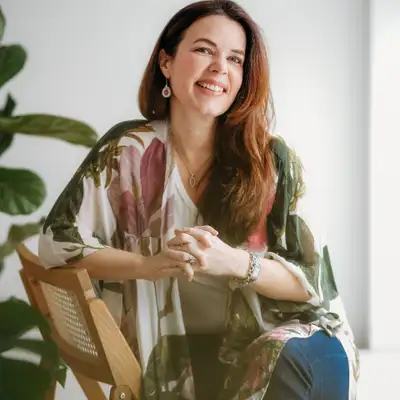
The Words in the Wilderness podcast is for those who have the conviction to make changes in their life as they drag their feet through the messy middle, crying into the void "it ends with me."
Led by Jacky Power - The Therapeutic Poet - these are conversations that look underneath the label, the diagnosis, the tidy explanation, at what's actually going on.
If you've made a decision to change your life and now you're in that wobbly, lonely bit where nobody quite gets what you're going through, I made this for you. Because I've been there. Many times.
Each episode starts with one of my own poems, using therapeutic poetry to set the scene. Sometimes it's just me, unpacking human tricky things. Sometimes it's a guest - a therapist, a coach, someone whose lived experience has taught them something worth passing on.
We talk about leaving what doesn't fit anymore, about breaking the patterns you inherited and don't want to leave as your legacy, about all your human tricky things that you've maybe been taught to hide.
I'm Jacky Power and I'm on a mission to rehumanise, one poem at a time. Reminding you that you have permission to feel and use those feelings as data to decode, not symptoms to squash.
Follow Jacky on Instagram: @the_therapeutic_poet
Find out more: www.jackypower.com
Listen to Jacky on Insight Timer: www.insighttimer.com/TheTherapeuticPoet
Join her on Substack`:www.jackypower.substack.com
Jacky (02:14)
Welcome to Words in the Wilderness. This week we really are in the wilderness, I think. I'm gonna share an exercise that you can do when there really are no words to express what you're feeling. And you might be thinking, How on earth can we use poetry or words if there are no words? But we can make marks like we do in art, you know, artists when they have
An artistic block of some kind, or when they wanted to try something new, they might just literally make marks on the paper or make marks through sculpture or whatever their medium is. And we can do the same with words. And the way that I share with people how to do this when I run workshops is to really tune into the sensations. So forget trying to describe your experience through the
Words that we're used to using, like actual feeling words like angry or sad or happy or whatever it might be. And instead turn your attention inwards and really just sit in your body, in the full sense of your body, and track where you might have.
some feeling. So I have written something. When I wrote this, I had sort of a feeling in my stomach and a in my ears. So that's what I describe. And the way that we then write something is to really tune into that feeling and give that feeling whatever sounds help to express the feeling. So we are not trying to make sense of anything. We're not trying to neaten it up or make it
Easily received by someone else. This is purely an exercise of helping that energy, that emotion, that energy in motion to move slightly. As I wrote this, it was really amazing because what I sensed, what I noticed was that as I was writing, my breath changed, I could feel tears like welling up in my eyes.
There was this feeling in my stomach that it's sort of it had started as a like a kind of a hard place and then it lowered down and it went into something softer. And I'm not trying to understand that sensation. I'm not trying to make it palatable for myself or for anyone else. I'm just being with it. And this is what I mean when I talk about
poetry witnessing or using right writing to witness what you're going through. It's not about trying to interpret it, which would be if I then tried to kind of put it into some some words that we are all familiar with. By
literally marking the sounds down of what those sensations kind of the sounds and those sensations are making for me that is my way of witnessing because I'm accepting what is I'm not trying to change it or control it in some way by by labeling it or even you know understanding it because we want to understand something so that we can feel in control of it. But when we are in
something that can feel traumatic, so something that is unexpected, is dramatic, it's isolating, and we don't necessarily have the resources available to us to be able to kind of handle it in the moment. Everything can feel really discombobulating, but it's not possible to get an anchor in the sense of be being back grounded into what we know. Like something has happened and everything
all of our experience and how we make sense of the world might have been upended. This is a way of of being with that. And simply by being with that things change. So what I love about this is often in therapeutic practice I think we can get lost in if I do this then I'll be fixed or I'll be healed and what I I'm
advocating for in this practice is that it's not about any of that. It's literally about being with it. and that helps to it helps us to feel better.
I don't think we need it to be any more scientific than that. There's a felt sense of relief, I think, that happens. So this is this is what I wrote. Now, like it doesn't make sense. That's the whole point. There might be words in there that
That kind of do make sort of cognitive sense, you know, so some of them made up words, but that's that can be sort of purely circumstantial. What I have put around it is I have put some kind of narrative around it, because that's what I felt like at the time. So, so this is what I wrote. I am glumified. There is a cordangle scrippling to escape, Dominican.
Ek eck ringsin my ears ankling always ankling pure fleck janglion I can feel a pedlinus at the back of my eglians my breath shamlomping Why? How the Infantenican am I meant to make sense of the horrendous gumflampering unending horrus? I love writing things like that.
When I I've said this before, but when I first started writing poetry, it really was as a an a a grown-up code for me. When I was a kid I had a diary that I used to write in code. I think poetry can be like that grown-up code. There's something about sort of codifying our experience in a way that is just true to the way that we're experiencing it in the moment. So it's like how
closely can I transcribe my experience and that's what comes out. And I think by doing that, it really opens up something. It opens up a sense of possibility and creativity that trauma, you know, tells us we can't have. When we're in a traumatized state, everything gets narrowed down. We go into that repetitive fight flight, you know, freeze state.
And this is just putting some tentacles of possibility out there by being with what is. I also love it because it's a real exercise in not self-censoring, and I think that is one of the skills in writing poetry. A lot of people obviously talk about, you know, it's about refining and
Your poem so that it can be the absolute precise kind of poem that you want it to be. But I'm kind of flipping that out of the window and saying just go with in this exercise, just go with what is, just go with really honouring what's there. So the rules for this exercise are: you get a pen and paper, you sit quietly.
And you get curious about the feelings, the sensations that you have in your body, and then you try and put sounds to those feelings. Like some soft sounds like the fuss and the thuss give a certain, you know, a reflective of a certain kind of feeling. Others that have the k and the you know t sound have a different kind of feeling, or the b and the p.
The pl those plosive sounds. I bet that went really well on my mic. But those real plosive sounds have it again another kind of feeling. So it's just using these different sounds to start to put shape to our experience. And when we start to do this, like I said, something starts to shift, and that can bring a sense of relief. So
Good luck with having a go at that. It's something that you can take with you anywhere you are, you know, whatever's going on, it's something that you can come back to. And I love that as well, that it's this portable way of witnessing what's going on for you. That's it for now. Till next time.