Subscribe
Share
Share
Embed
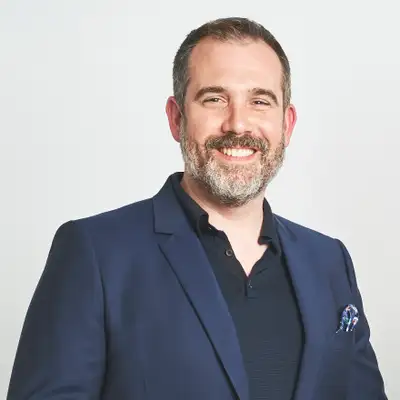
Presented by Doctor, writer and TV Presenter Xand van Tulleken and community health psychologist and self-proclaimed hippie, UCL's Professor Rochelle Burgess.
This podcast is about public health, but more importantly, it’s about the systems that need disrupting to make public health better. In each episode, we’ll be challenging the status quo of this field, asking what needs to change, why and how to get there. We’ll be joined by activists, scholars, artists, comedians and industry professionals to offer perspectives from the UCL community and beyond.
We’re calling this podcast Public Health Disrupted because that’s exactly what we want to do. We are going to be breaking down disciplinary, sectoral and geographic boundaries to really understand the diverse and complex issues impacting our health.
Public Health Disrupted - Global Mental Health
Xand van Tulleken: Hello and welcome to season six of Public Health Disrupted with me, Xand van Tulleken
Rochelle Burgess: and me, Rochelle Burgess. Xand is a doctor, writer and TV presenter and I'm a community health psychologist and Professor of Global Mental Health and Social Justice at the UCL Institute for Global Health.
Xand van Tulleken: This podcast is about public health, but more importantly it's about the systems that need disrupting to make public health better. As UCL celebrates its bicentenary marking 200 years of challenging convention, we're continuing to ask the difficult questions. What needs to change, why, and how do we get there?
Rochelle Burgess: In this episode we are looking at global mental health with an emphasis on thinking about space and exploring the dynamics of where mental health is lived. We'll be thinking and reflecting about geography, conflict, climate, inequalities and how they come to shape mental health and well being globally. We'll explore what mental health support looks like when crisis hits in many different forms and have a reflection about how communities work to mobilise care from the ground up. We'll also take some time to think about what the future of global mental health looks like in the next 10, 20 or 50 years and who we need to lead that transformation.
Xand van Tulleken: So our first guest today is Parth Sharma. Parth is an abolitionist anti colonial scholar whose work is grounded in their intersectional lived experience as a queer, non-binary, disabled mad person. A cultural worker, filmmaker and multimedia artist, Parth has worked in journalism, clinical mental health and h an rights. Today, Parth is the Deputy Principal Coordinator for the Movement for Global Mental Health and you can find them disrupting global mental health, interrogating the mental health industrial complex and actively imagining abolitionist futures. And today we're very glad to have you joining us from Delhi.
Parth Sharma: Very excited to be here.
Rochelle Burgess: Oh yeah, we're super excited to have you. I just also love listening to your bio because it's like yes, hearing people talk about things like the mental health industrial complex is rare and so necessary. So really, really cool to have you. And joining us from UCL, one of my favourite people, we're delighted to welcome Dr. Kelly Rose Clark. Kelly is a UKRI Future Leaders Fellow and Principal Research Fellow in Global Mental here at UCL. Kelly is interested in developing and testing mental health interventions in low resource settings with a focus on community-based approaches for children and adolescents in particular. And at the moment Kelly is leading some fantastic, fantastic work in Nepal, leading an eight year programme evaluating school based talking therapy for adolescents with depression. She has worked as a consultant for UNESCO and also conducted research for the World Health Organisation Informing Global Mental Health Policy and Programming.
Xand van Tulleken: Kelly, welcome. Thank you so much both for joining us. Parth. Can we start with you? Talk to us about how we can understand how where you live impacts your mental health.
Parth Sharma: Absolutely. I think, I am part of India. Like I've grown up in India and I'm based out of here and India is one of the many global majority countries in the way that we historically were previously known as the Global South. From a very colonial understanding in India, mental health is not shaped in a silo and understood only by those who have access to care in primary health institutions, but is actively shared by people's identities and their social political realities. For example, when I was describing myself, I say that I'm a queer, non binary disabled mad person from mainland India who has generational caste capital and I speak English amongst multiple languages and I'm highly educated, which is one of the reasons why I'm here, that I have the social privilege to talk about my mental health, to have my rights enforced and at the same time be the voice for a lot of people. But that's not the reality within the country at all. In India particularly, the caste class dynamics shape a lot in terms of who has access to mental health and also where you're living geographically because the region is so wide and large and so heterogeneous, we understand mental health from a very socio political understanding. It's not just where you are from but also who is governing that particular state and what are the rules there. We see that a lot with the northern part of India. Within Kashmir, which is actively under military control, is one of the most militarised regions in the world where you have relentless power cuts, where you have relentless Internet cards and like lockdowns within that space. The mental health of a person in Kashmir is very different from the mental health of someone in Delhi where I'm from. At the same time, mental health in India is also shaped a lot with geographical marginalisation, specifically with the people in northeast of India where there are seven states which are not only cut from the administration of what welfare looks like, but are also geographically marginalised from transport from care and from any access and infrastructure to mental health. Today, earlier today as well, the Indian government passed a legislation in both the lower
00:05:00
Parth Sharma: and the upper house that is a very anti trans legislation. So as someone who is non binary, mental health is directly related to our queer and trans liberation struggles for the fact that our gender needs to be affirmed by ourselves. Yet the state continues to erase that completely. So in the region, it's not just, you know, mental health from the aspect of, oh, I have gone to a care provider, but it's also from the fact that we're all living under, uh, rising authoritarianism and are navigating that reality in day to day. So it actively shapes the way that we understand what conflict does to our mental health, what rights being rolled back does to our mental health. And at the same time, how do we position ourselves within the larger global mental health ecosystem as well? It's very intersectional, it's very systems oriented. Yeah, this is just one, short answer to that very complicated question, but
Rochelle Burgess: I think it's a really good answer. It strikes me, you know, I've never done work in India, but I have many colleagues who ah, are from there and work there. And that very much is this is a, an example of the importance of having, uh, a socio political economy, of trying to understand how mental health challenges emerge and how we need to respond to them and how we hold onto the complexity of all of that. And one of the things that I often think about is that there's some places in the world where that is very visible and other parts of the world where that's not so visible. So I'm thinking about the UK at the moment and some of the debates we're having here about how, you know, maybe there's sort of an over identification or an over diagnosis of mental health conditions and how it's losing that part of sort of the fact that people are living through really complex adversity. I wonder if you, you know, you wanted to reflect a little bit on, on that feeling or that the importance of that idea.
Parth Sharma: Absolutely, I think, to anyone in any global majority country. And here I'm also looking at, those who are immigrants within the UK sociopolitical economy as red light with part of the global majority. I think the way that we understand mental health is very different from the normative, colonial Western psychiatry in the way that it's access to services, pharmaceuticals and diagnostics, the social political economy does exist. It's just not acknowledged within India. Right. So when we're looking at the laws which are in place, India in 2017 had the mental Health Care Act, India has a Persons With Disability Act. Both of those are offshoots of the UNCRPD as well, although the implementation on the ground level is very, very different. So we're not only talking about how many tertiary care centres are available, how much psychiatry is integrated within primary health systems. We're talking about the fact that many people are being erased from the conversation entirely in India today, at this particular moment, there are conversations about immigrants being removed from the country. There are conversations about away the rights of people who are Muslim, the people who are Christian, the people who are Dalit, Bahujan and Adivasi, who are not in the normative understanding of what the Indian government wants you to look like. And when you think about that reality, it exists is that the language also exists. It's just not being acknowledged by psychiatry today. When we think about mental health in India, it's understood as a very Western offshoot that we've taken whatever was given to us by Western psychiatry and colonialism, and we've adapted that through and through. So our education in psychology and psychiatry reflects that. The way that we approach pharmaceutical reflects that. And the conversation about over diagnosis exists, exists here as well. It's just limited to the very few people who have access to psychiatry in the first place and who can go to get a diagnosis. So the conversations are also skewed to a very small margin of people who get that act. I would say that the social political reality does exist. It's just not acknowledged by a lot of people. And I think this is part of the larger mental health industrial complex of whose voice dictates the discourse at all to begin with.
Rochelle Burgess: Kelly, what are your thoughts on that? How much of this complexity is do you see reflected in your work? I know you do a lot of work thinking about translation of ideas and within local contexts. And so how does this sit with some of what you've engaged with in Nepal and beyond?
Kelly Rose-Clarke: Yeah, I've worked a little bit in India myself in Jharkhand and a little bit in Goa with Sangath. but yeah, as Rochelle says, m, most of my work is in Nepal. And there we have, ah, quite an interesting tension. We're in Nepal delivering a talking therapy that's been developed in the west, from a sort of biopsychosocial model. It's called interpersonal therapy. And we're delivering that in, uh, schools in Nepal. And there's this tension here in terms of this excess gap, uh, for mental health services, uh, within global mental health. We call that the treatment gap. But there's also, of course, this colonial legacy that you were talking about, Parth. Ah, related to imposition of some of these Western concepts and frameworks. And I think sort of grappling with that tension, this urgent need for help for, you know, we on the ground see many, many really difficult cases. Really complex cases with severe risk, a lot of suicidality and very little provision in terms of support beyond their family and immediate community. And so this sort of sense of needing to help channel funds from the UK, but to do that in a culturally sensitive way, but that also has an evidence base that also has evidence of effectiveness. So we're not going in there and doing something that, you know, we're not confident in.
Rochelle Burgess: What does that translation process look like for you guys? Because I think there's a lot of really important stuff in there and how. On how we sort of hold, I guess, multiple knowledge systems at the same time around this. What does that look like with ipt? How have you guys gone about that translation work?
Rochelle Burgess: Yeah, a lot of work.
Kelly Rose-Clarke: I think, first and foremost coming from a position of having a really, strong partnership. And the work in Nepal is led by incredible, uh, organisation out there, transcultural psychosocial organisation. They've been going for 20 years. There is nothing those guys don't know about doing mental health research. uh. And, you know, there's a. We have a really brilliant working relationship. There's a lot of trust there, a lot of give and take and back and forth. And the process of translating IPT really began by thinking through with, psychosocial counsellors, that's a cutter of, care provider from Nepal, about whether or not this was feasible, whether this was something that resonated with experiences of distress in a Nepali context. We looked at a lot of the literature, there's been lots, heaps of anthropological literature from Nepal, to look for alignment in terms of some of the problems that ipt, uh, tries to address and whether or not we see those in, experiences of depression or distress. so looking at that alignment, working through the materials, the manual, the training, materials with people who have got that lived experience of doing, psychosocial counselling, caregiving on the ground, but then also going out into the communities, talking to adolescents about their experiences of distress, hearing from their parents and their teachers, hearing from community leaders and health workers and trying to understand if we were going to do this, what should it look like? What would be trust? What, you know, what would be a model that they could trust? And that was really interesting. I mean, that's where we got the idea of doing it in schools, in lots of contexts in Nepal, there's problems with child trafficking and the idea of an external organisation, albeit in Nepali one, coming in and doing a talking therapy in these communities, there was no way the parents were going to let their kids come and participate in our intervention. So, but running it through the schools, the communities really trust the schools, and doing it with them, uh, on their premises was a way that we could get that community buy in and trust. So, yeah, multiple components to that adaptation process. over to you, Parth.
Parth Sharma: Now, I think one just addition to that would be like with Nepal, from what I've known from my comrades and colleagues there is also, is that the hilly region and the geography plays such an important role in terms of access once again. Right. In terms of who can go up that region. So I'm sure, Kelly, you've had that conversation with your colleagues there and also yourselves. We've seen that in terms of how the geography quite literally plays such an important role and who can even reach up there in remote parts of Nepal in the same way that in India there are regions where you simply can't reach. And there's this idea of populations who are out of reach when we are writing applications and reforming projects. But it's the unique way of finding ways to go there and finding ways to also just empower the indigenous healing practises which are already present there when systems like these don't work, or systems like these don't have to necessarily work there. Really interesting to hear your work from that.
Xand Van Tulleken: I'm just thinking about, just thinking about our listeners who will have encountered mental health in their own, you know, very particular cultural context and social context, and trying to understand the amount maybe of disruption that this field needs. I mean, Kelly, you've talked about the extreme difficulty of bringing a, not just a Western approach, but an idea that is deeply embedded in a particular way of thinking about people to a situation which you could view entirely in some cases as a crisis of rights. And part you're sort of, I think you're talking about the same thing. How much is
00:15:00
Xand Van Tulleken: uh, mental health as a framework? You know, if I think of my training in mental health as a clinician, it was pretty rigid. It was a setup diagnosis. We treated mental health exactly like we treat and almost exactly like we treat infectious disease or any other kind of disease system. And instead I think what you're both framing this as, as potentially you could regard a huge amount of these problems as uh, very, very contextual. And perhaps, uh, you could frame them entirely of a crisis of rights rather than a, a medical issue. Can you maybe each talk about the extent to which the field itself needs disrupting? I mean, Parth if you, if you can start, you Talked about the, the mental health industrial complex, that kind of strange massive western thing we've built is terribly reliant on a particular way of describing people and a particular kind of very popular psychopharmacology. Can you, can you talk about the way in which that model may not just be, be helping or disadvantaging some people, but holding back important bits of progress? Is the question at all is that. Do you understand what I'm getting at? I'm sorry, it's such a. I'm trying to ask. I think the problem is I'm trying to ask about the listeners, but I'm also thinking, yeah, yeah, I think you do understand. Sorry, I'll let you keep going.
Parth Sharma: I got it. No worries. I got this. And trust me, these are the complicated questions I think we need in this particular field. I would go on to say that I don't think the drug mental health field requires disruption as much as it requires ambition. Because as a colonial institute, which has historically existed predominantly for a certain group of people who are racialized as white and have access to care within the west, has now expanded its rules and created diversity within the global majority context. Now, when you decolonize a colonial system, you are essentially saying that yes, it's a yes. And phenomena of recognising that yes, colonial psychiatry will still determine the way that research is conducted, that we understand health systems and a biomedical framework. And we also say that, yes, let's make it tra a informed, queer, affirmative, caste, affirmative, race, affirmative, let's make anti oppressive therapists, so on and so forth, to which I respond and say, a good cop is still a cop within the mental health industrial complex. You can be the best cop in a cardigan, you can be anti oppressive, queer, affirmative, race, affirmative. You can sit and design your systems which are against the western model, but you're still perpetuating that dynamic in some of the other capacity. Right? You can't decolonize a colonial system like a prison in the same way you can't decolonize a system like incarceration that psychiatry provides. Yet global mental health continues to ignore the incarcerated population today in institutions which actually exist within global majority countries as well as prison systems entirely. But the context is that it does not require disruption as much as requires an abolitionist understanding. Now sometimes this can be a very abstract way of saying, okay, what does abolition look like? I would say it's incremental reform up to the path of abolition. Right? That when, and you correctly phrase that, that these are not issues which are biomedical today as A queer, non binary person. I do not enter the mental health experience field as, ah, someone who's okay, uh, my interactions mental health are purely from that. I entered it because of relentless structural, systemic and interpersonal violence at the hands of healthcare professionals, at the hands of the state for not having rights to someone with visual impairment as not having rights to someone who is trans non binary as the rights of person who has never been allowed, you know, has changed diagnosis by mental health care professionals who view this as a sanity issue or something's wrong with your biology in the fact that no, we are quite literally on the streets protesting because the state doesn't recognise us at all and is relentlessly erasing us. I would say that it requires more than disruption. I think was also requires a sense of understanding what is an alternative. Is this it? This can't be it. You know, we're talking about TAAK sharing within the global mental health ecosystem that yes, you can take western models and share them, but what is the cost of TA sharing today in global majority countries, specifically in frontline workers in India is immense. There are frontline workers who are protesting on the streets for minim wage, who are overworked and exploited. How does that model particularly work? Can you decolonize something of that nature? Right. Can you decolonize a psychiatrist still being responsible for providing me a gender affirmative certificate, not understanding the difference between sex and gender. To me I think of the fact that you can't decolonize a colonial system like this. You generally have to think of abolitionist futures where, yes, today this is responsible for care for a lot of people, but this can't be it. We actively have to work towards some other systems. Ooh, that got me riled up. But yeah, that's one, answer to that complicated question.
Xand Van Tulleken: It's a great one. It wasn't a very clear question. So I feel like you managed to figure out the interesting question to answer there. Kelly, can you speak a bit to that? It feels like you are very, very conscious of these issues. and you're trying to do an intervention that has a, you know, measurable positive benefit in a context that's very complicated. Can you sort of speak to the difficulty of this kind of work and how it might sit within the idea, for instance, being on a pathway towards abolition of the, of
00:20:00
Xand Van Tulleken: the system you're working in?
Rochelle Burgess: Yeah, I've got quite a few things to say. Uh, just say them all. Don't worry about my question in a coherent way now. I was going to go back actually to Your point and about about being a doctor and your education in psychiatry? Ah, I was also trained as a doctor.
Kelly Rose-Clarke: I don't practise now but you know I very much kind of grew up entrenched in those kind of biomedical frameworks and the sense that, you know there was psychiatry and, and it was, it was devoid of culture, it was just psychiatry. And it was such a revelation to. So I started my PhD and went to Nepal and uh, you know, went off very naively to try and understand these experiences of postnatal depression in, in a uh, population, a rural population in Nepal. And here I go out with my tools, my PHQ Patient Health Questionnaire tools. these are kind of standardised tools that you would get in a UK GP setting if you had depression. I go out there and I, I you know ask all these, these women about their, you know, thoughts, their feelings, their behaviour and, and you know it's a real wake up call. They, they, you know, they didn't, they weren't talking about the kinds of issues that, that I wanted to talk about. They were talking about you know, a lack of Social Security, uh, financial insecurity, poverty, they were hungry.
Xand Van Tulleken: Come on. It's not on the questionnaire.
Kelly Rose-Clarke: It's not on the questionnaire. Come on everybody. I know it's this how am I going to get my thesis done? But you know, really interesting and absolutely there was no way that any of them said yes, I absolutely wanted psychological intervention. You know they, they wanted uh, better systems. so it was a real wake up call. The other thing was that these, they, they did describe you know, some of the symptoms of depression. They called it tension. Uh, but tension was a kind of combination of these depressive symptoms that we find in, you know in, in standard medical textbooks but also with some anxiety symptoms thrown in there and some symptoms that you couldn't place anywhere. you know, disorientation, self neglect, those kinds of things that you, that really. So this, this very unique kind of combination of symptoms and so sort of waking up to the fact that distress, you know our interpretation of it as depression in, in the west, but there, there are different interpretations wherever you are in the world and with those different interpretation comes different treatment pathways, different coping strategies, different priorities and needs. and that was quite the revelation to go back to path's point around uh, the need for abolition. You know, I'm the problem, uh, global mental health academics like me ought not to exist in a 50 years time. I hope we don't but I have to say for global mental health credit, I think among the kind of global health sub disciplines, I think global mental health is quite a dynamic, it's quite an agile discipline in the sense that it has been heavily criticised, by. Brilliant. Brilliant. Yeah, exactly, brilliant people heavily criticised. Very controversial field and some of the work, you know, these, these imposition of Western frameworks of colonial legacy. But I do think that global mental health has responded and I do think that as a field, compared to its global health neighbours, it is involving communities, it is trying to address social determinants of mental health, it is thinking about people with lived experience far more so than it did certainly 10, 15 years back. and a lot of Rochelle's work has been pretty instrumental in that. But she's the ah, interviewer here rather than the interviewee and she's not allowed to talk about her own work.
Xand Van Tulleken: I love it when Rochelle breaks out.
Kelly Rose-Clarke: Do it break out.
Xand Van Tulleken: Come out of your cage, Rochelle.
Rochelle Burgess: Where I should not break out. Right. Like it's much cooler to hear you guys talk about this especially I guess in the sense that, you know, I have tried to sort of create spaces where that, where critique could become actionable. That was you know, a hope of mine. And so it feels very nice to hear both of you talk about your work in a way that sort of feels like as Kelly says, yes, like there is response to the critique. And also Parth, you're like you have leadership roles in the movement and I think that goes to Kelly's point of saying this field is actually very agile and very I suppose self critical and moving towards trying to be able to hold that complexity a bit or hold some complexity a bit. And I guess the last thing I'll say
00:25:00
Rochelle Burgess: is it's really nice to hear abolition talked about as a process. I think the reason that people get freaked out about the idea of abolition is they think that it happens all at once. But actually you know, Kelly is a part of abolition. Like Kelly or the way that you work is a part of an abolition process. You know, it's a part of how space is open and critique is mobilised and a, uh, different ways of being are made visible to people. Right. You know, so I think that it's. We're all activists and abolitionists even if we don't think we are. And that's a really important for much of public health to learn from, I guess, you know, uh, not just the mental health space.
Kelly Rose-Clarke: Can I include that in the, in my Next podcast introduction because it sounds way cooler than principal research fellow
Rochelle Burgess: Put it in your professorial application. Kelly.
Parth Sharma: I think Angela Davis had said it best that abolition has already happened. Like when you think of the deinstitutionalization phenomena within mental health, the idea of the crpd, the idea of institutions shutting down, or at least countries signing up on that means that abolition has already happened in the sense that it started, the process has started, right? That uh, institutions are shutting down, people are thinking of community mental health, people are thinking of alternatives to care which are, ah, away from the biomedical framework. It's a process now, which is a very long process. And I keep coming back to the fact that it's not supposed to happen during our lifetimes. It's supposed to be a continuous thing that we aim towards because of how entrenched these systems are. But our uh, roles within that, in terms of being reflexive and power aware, is what determines how far we're going within that space and at what speed. So yeah, we are all abolitionists in that capacity and I keep pushing for that, that, yes, change language, call yourself an abolitionist, politicise your work in global mental health. Let people know that, you know, you're okay with your work being politic when our realities actually are part.
Xand Van Tulleken: Can I, can I then ask what the future might look like? If you're someone who's encountering this from a kind of biomedical training, that's your framework and you have what you think is a very clear kind of transcendental idea that we've all kind of, you know, no matter where you are in the world, there are some core bits of our, ah, biology and psychology that you can map postnatal depression from one place onto another. You know, these concepts are useful, they've worked for us here. We can take them out there. I think those ideas are terribly hard for people to escape from and they think, well, what's the, the alternative is just to have a sort of global thing where we can't, we can't compare anyone, you know, we're going to be doing public health and suddenly we haven't got any definitions. Can you just walk through what the future looks like and what, where do we end up, you know, in 50 years time? Kelly's out of a job. No, no,
Kelly Rose-Clarke: you know, I’m not going to mind by then, Xand
Xand Van Tulleken: No, no, no, no. But, but I'm saying that obviously very physically, but, but, but 50 years time, you know, where does abolition lead us to in terms of the, the reality of delivering those bits Alongside the progress for the rights.
Parth Sharma: Oh, that's, that's, yeah, that's, that's a heavy question. But the way that I'm thinking about it is that I think you've already answered it in some capacity. Right. We are still from the idea that care needs to be delivered to communities rather than communities coming up with the models of care that they require and systems being changed within ground reality.
Xand Van Tulleken: So good. Yeah, okay.
Parth Sharma: Like global mental health exists as an abstract and keep going back to the fact that there's this conflation, you know, again, even within the global mental health discourse. As Kelly very rightly pointed out, from the get go there has been a lot of discourse around MHPS has seen different from global mental health, global mental health not being indicated within public health agendas and so on and so forth. But the ideas always remain that global mental health stays at the periphery from the ground reality and doesn't touch that ground reality other than the communities that some projects work towards. So what I think of in the next 10, 20, 50 years is that we're already looking at a world which is increasingly moving towards a far right, uh, movement towards fascism, towards authoritarianism, which already erases a lot of these rights that we're already seeing the departure of quality rights in the who. That entire that entire module, that entire system has been removed, which is already a shock to a lot of us within this space. At the same time we're looking at how the funding ecosystem already removes funding from global mental health, which is the first to get impacted. Disability rights are the first to get impacted within this larger space. So what I'm thinking of is that academia and what the future of global mental health does exist is outside of this academic framework where it can be studied in the next 50 years, where it can be treated as a discourse in which again people like me only exist where we have opportunities to represent but exists within the communities. Right? And global mental health actively reaches the people who have the answers that need to hold the state accountable. For the longest time, global mental health has been a proxy for social impact, for the lack of state governments not doing their job, not allocating funding and not taking responsibility for the liberties of their entire
00:30:00
Parth Sharma: populations not being there. The global mental health has acted through the injurization of the fact that yes, an NGO here or an NGO there can be then funded to then provide those same rights, to then provide that same pulse model and social care. But we understood from the last couple of years that when you pull that funding out, it's A very ghastly picture that you have to interrogate and say okay, what is the future of funding? Is it feminist funding? Is it grassroots funding? Is it funding at all? When I think of the future of global metal I think of the fact that will the field even exist? We're already looking at genocides to not being reported on. We're already looking at mask conflict and displacement. What does care look like within those particular fields? Does the global mental health field even approach that? It doesn't. It already distinguishes itself from MHPSs there. So what does the future look like? Would the field even exist? Or would it then break into smaller fractions of people who are working from the communities? What will that look like? To wait and see?
Kelly Rose-Clarke: Should I offer the utopian alternative?
Rochelle Burgess: Yeah, I mean, I mean please, yes.
Kelly Rose-Clarke: No Parth, I hear you. And I think the direction of the world and the direction of funding and the direction of policy, I mean it's not hopeful currently but there is a dream, there is a dream. Now whether or not that dream can be realised. There's a dream that a job like mine might be more about a kind of systems officer or a you know, well being coordinator, ah, or something. A dream whereby we think about mental health. Mental health is not a, ah, discrete research discipline as you've described it. It's not something that's delivered by NGOs or ah, funded by through bilateral funds. It's something that is a sort of a priority across society. It's something that's considered across education, across health, across planning, across social services, across all of those systems. it's something where all countries have national mental health strategies and those are well funded and implemented. it's something where certainly communities are at the steering wheel. It's something where people like yourself, path and other people with lived experience are fully engaged and leading. It's certainly not something that is led by universities based in the UK or the EU or the us. in that dream global mental health world of mine, we've successfully built the capacity of colleagues in low and middle income countries, especially women in low middle income countries. and they are doing the designing, the development, the implementation, they're working with governments and local authorities to implement these national mental health strategies. So that's an alternative. but there are obviously many, many hurdles. That path is very clearly laid out
Xand Van Tulleken: and both of you, just because I think part. Can I, can I start with you? Would it be reasonable for listeners to you talk about the NGO ization of the world. And the idea, when I talk about
Parth Sharma: the NGOization of the field, I'm talk about this weaponization of the foreign funding where again, foreign funding by the funders itself can be taken away, foreign funding by the state can be taken away, and then what is remotely political gets completely erased from the conversation. So when today we are designing interventions, when we're having conversations, we have to make a distinction between our NGOs and our voices to say that, you know, okay, I am being political, but the NGO is a nonpartisan space, its NGO is not going to take up any political ideas. But my larger issue with the NGOisation is not that it does great work. I'm part of that system myself, I'm part of the COG within this larger non for profit industrial complex. But what I'm talking about is that it limits the way that we think about things. It creates a tunnel vision which says this is the best that there can be. So you find little ways to protest within that space. You find little ways to make your work intersectional, political. You individually can take up a lot more responsibility, but it still doesn't solve the larger picture that this is still providing care instead of the rights based frameworks that already need to exist within the country itself. So if you take rights away from someone, if you take abortion rights away from women and female presenting persons and then deliver care in psychosocial support there, how is that a proxy to the fact that abortion rights don't exist? If you take mental health care rights away, if you only fund tertiary care systems, but say that we have a psychosocial support modality that will work, how does that work? If there's a state in India where relentlessly the Internet is shut down, but I come in with a digital mental health intervention and say, hey, this is a digital mental health intervention, but I know your entire region does not have Internet because of the protests that are taking place, is that fair? If I reach with Kelly's uh, work in chart and so I'll give the example of that, if I go to female children within families who don't have a phone, who don't have a data, who cannot access the Internet and go in with my psychosocial support mechanism, is that fair?
00:35:00
Parth Sharma: I think my critique of the larger NGOisation is that it's viewed as benevolence that we are doing within the mental health care space of okay, you know, at least we are the good ones, that at least we are doing something nice, but not re like understanding the sociopolitical reality that it still acts as a proxy for. So yes, it's a great space and it does some good work, but is this all that there is? And how long can the metal health industry work on an apolitical neutral lens? Like when does that facade end that this is an apolitical space?
Rochelle Burgess: I think I want to hold you to that for a second because the spaces where I have learned the most about what radical care looks like is actually in like community led organisations, community based organisations, some of them that have NGO status, some having different, different statuses. And people are very well aware of the political tensions within which they work. Right. And what I have always found is that actually people are always doing that sort of like balance between what is the long term mobilisation work that is happening here and what is the immediate work that needs to happen here to save people's lives. And they are holding that tension constantly, all the time and doing amazing things to, to hold onto that complexity. And, and that to me feels like a uh, quite visible example of agency within constraint. Right? Which I think maybe is where the field is at the moment. I mean as I'm thinking about TPO Nepal and stuff and like actually they're the type of an organisation that I feel like is doing that negotiation all the time. There are many, all over the world, different organisations that are trying to shift funding to those kinds of mechanisms. And and I want to hear what Kelly has to, to say about that. But I think before I do, like, how does abolition hold that contemporary work, that contemporary micro resistance work that many people have theorised. I'm not going to talk about the theory but like that is everyday micro resistance, that actually is what enables that long term change. How, where do you situate that?
Parth Sharma: You're very right about that. And I think there's this level of patriarchal bargain within these systems, right? We are trying to create some micro resistance, some space for ourselves to exist within these larger set systems that do define the way that the NGO systems work. What I've also understood is that incremental reform goes a very long way, is to say that I've been part of the NGO system myself, I'm currently working within that space. But at the same time we are also creating community based systems, community infrastructure, embedding ourselves within community work that is devoid of this funding ecosystem, but we're doing through wealth redistribution where yes, we recognise that this is one very, very important part of care and this is one very important way of just reaching populations within the country and within the spaces which have historically and currently not been even accounted for. But at the same time, are we thinking of creating community spaces and funding them? So when I'm working at uh, a mental health, uh, for example, during the pandemic, the trans community, the queer trans community, was completely erased from the conversation, even by NGO systems that were providing psychosocial support. But what was required for the community was people who lost their jobs, required to pay rent, people required health care, people required gender affirming care, people required affording that space. So what was happening within the community at that point was that, yes, psychosocial support mechanisms were on through the NGO model and were being like, were given as they've been giving today in India, even though the anti regressive, like anti trans bill has been passed, that model exists. At the same time, the community comes together to fund each other, mutual aid takes over. Mutual aid is centred as a strong practise of us redistributing the wealth that we're taking from the NGO system or from other avenues. Right. So, yes, there is that balance, but when does that balance get exhausting? My question is that, like within abolition as well, incremental reform is something that is really pushed for even within the prison system, to say that, yes, when we're thinking of, alternatives to justice, when we're thinking of alternatives to incarceration, we're actively trying to still reform the way that the current prison systems hold. But to me is that we are passing each other a burnout baton, right? That we are all exhausted from our work within the NGO system already. Then on top of that, you're working with the community, you're embedded within that system and then you're burnt out by the time you reach, any sort of leadership capacity to influence change. And then now you've passed on that burnout baton to folks who've joined, who are my age, who are 25, 26, who enter this space and say, now it's your chance, we are done. We are completely exhausted and wrung out. Now it's in you that the balance does exist and we are also part of that. I'm, also very complicit within the angel system myself, but I keep imagining, what does the alternative look like, Kelly?
Rochelle Burgess: I mean, I feel like
00:40:00
Rochelle Burgess: you and I had a similar visceral, like, body reaction. I feel like we both moved in the same direction or something. what, what are your thoughts on this particular tension? It's a field of tensions, as you said earlier.
Kelly Rose-Clarke: Yeah, it certainly is. I was actually just thinking back to Xand's question around is it care or is it rights? And then thinking about the kind of points that the path was making around NGOs and their limitations. And I think, yeah, it's complex. I think in terms of rights versus care versus medical models, there's room for both. there's a spectrum of mental illness and some of that spectrum is responsive to improvement in social, determinants and structural elements in environment, in community, in socioeconomic status. But there are also forms of mental illness which have a very, A very biomedical component. You know, the more severe mental disorders that respond dramatically to, pharmacological intervention, to antipsychotics, you know, that can really transform lives. So there's that tension around, you know, needing to do both at the same time, one not necessarily being prioritised over the other on the same line. Just going back to the conversation about NGOs and the work that they're doing within global mental health. I'm, remembering back to the Nepal earthquake in 2015. And there, you know, thousands and thousands of people killed, injured, millions homeless. And the nature of the government system, its complexity, ah, its scale, uh, meant that the response was slow. But the very fast, very innovative, creative responses came from the NGO world who were able to mobilise quickly, who were able to change direction as needed. And so I sort of feel like there's a role for NGOs, there'll always be a role for NGOs in providing. In innovating global mental health work, and also mobilising at speed.
Rochelle Burgess: I think we're gonna have to start to wrap up soon, but. But I really have one more question I need to ask that hopefully, you will allow me to do Parth. I. I know that you're aware that at UCL, we're launching a new MSC on Global Mental health and Kelly and I will be leading it together. And so all of these tensions are very much live in how we're sort of thinking about how do we develop a workforce that can hold all of this complexity and to like and. And. And also a workforce that is able to. To see global mental health as truly global. So the idea of like global majority, or experiences of marginalisation as being a global phenomenon that happened in every corner of the world and that shaped the way mental health conditions and concerns emerge and are lived and are responded to. Right. And that's something for everyone to think about. I'll start with Kelly and then Go to you, Parth. What are the types of skills that people who are going out into this workforce as part of this now, now abolitionist journey, which we're now going to call it? but what would you. What, sort of skills do you think? Like our students, future students, any students sort of working in the global mental health or maybe the global health landscape more broadly would need going into that space. I'm going to start with Kelly and then go to par.
Kelly Rose-Clarke: Is it a skill? Is humility a skill?
Rochelle Burgess: It is.
Rochelle Burgess: I'm sure it is.
Rochelle Burgess: It is a thousand percent a skill and nobody ever teaches it.
Xand Van Tulleken: They don't teach it at English public schools, I can tell you. They teach the opposite.
Kelly Rose-Clarke: Is it too late to get a module on humility into the, into the MSc curriculum , Rochelle? It might be. I love that.
Xand Van Tulleken: I love that so much. I'd like to teach it. I think I'd be really good at that.
Rochelle Burgess: Go for it, Xand. You'd be welcome.
Kelly Rose-Clarke: Yeah, I think humility, I think it's one of the strengths of mental health is that it practises what it preaches in terms of interdisciplinarity. And so I think there's not one skill set, there's not one universal skill set and I think the diversity of people, disciplines working in global mental health is what makes it so agile and what makes it so useful. And so I think it's about acknowledging people's different unique skill sets and then, helping them to kind of find their space, find their strength and develop those unique expertise.
Rochelle Burgess: Yeah. Parth was nodding so hard I thought he might. Its glasses might fall off. I often nod my glasses off, Parth, so, you know, it's a, it's a fun club. uh, what would you say, in addition to Kelly's great answer, what would you add?
Parth Sharma: I would definitely. I think 1. I'm very excited about that course. I think to me, it's always good to know that, you know, universities are recognising global mental health as something that needs to be taught and understood. And, as much as a lot of. When I talk about global mental health comes from a way, the lens of tens. But I keep saying that, you know, there's a lot of critical hope here. The fact that we've been having this conversation and can not only acknowledge the tension but also let it sit and recognise all our roles within that space and let it breathe, I think that is a signal of so much progress. A couple of years ago, even saying the word abolition would have you listed at someone that, okay, that is the radical disruptor who you keep on the side and do not work with lived experience would cause a lot of tension. But today, the fact that I'm here, I'm talking about this kind of work work gives me a lot of hope that, you know, as you move forward, a lot of people would benefit from holding that tension. I think, reflexivity is a big, uh, part of any sort of learning, specifically in university spaces. Right. As someone who would have benefited a lot from that course, which I'm very envious of the kids who. And the folks who will join and I think one more thing with reflexivity is also knowledge translation. For the longest time, research has existed within a silo in ivory towers by certain people who have the language of research, who have the understanding of what global mental health looks like. And it rarely gets translated in creative formats to the public. And so today, as someone who works a lot within the space of art and filmmaking, to me I think of alternatives to knowledge translation which are, beyond just an academic paper or a conference. You know, how do we genuinely go towards co production, co design, how do we genuinely do meaningful collaboration with the communities that we are working with and create ways of sustaining and archiving some of this process. But to me, reflexivity and knowledge translation, I think core to any sort of learning specifically for global mental health, which is such an evolving space and is also rapidly evolving with the current context and the social, political reality that we're in. Very, very excited for the course.
Xand Van Tulleken: Yeah.
Parth Sharma: Just, I love the fact that it exists.
Rochelle Burgess: Well, maybe one day you'll, we'll have you with us. We'll see what we can do to support that. That would be very cool.
Parth Sharma: Don't threaten me with a good time. I would be there.
Xand Van Tulleken: What I thought was so interesting about your last two answers, the three of you have a, coherent or. . Yeah, I think a sort of a Karen and reinforcing view of global mental health that, you know, I'm, I sit on the outside of your work. Uh, you know, I think it's fantastic. But probably for me this has been maybe the most disruptive episode that we've recorded, I think in six series in terms of challenging, I think part when you went, yeah, but you're still thinking that you've got to go and deliver the mental health. I was like, oh, yeah, yeah, yeah, school day. It's so helpful. And I, I really, I really. I think both of you have, have navigated this very difficult adjustment that I think lots of Our listeners will have of going, oh, but care is so important. You know, biology is important. Kelly, you talked about, you know, there are psychiatric disorders where we know the molecule, the receptor that this. You know, that interventions like that can sit in tension with it. And I feel like you both highlighted very powerfully that any intervention in health care, and particularly in mental health care, because it looks caring, it looks benign, can be a tool of oppression, even if it's quite effective by its own measures. And I think that is something that, we. We should come back to again and again and again. But it's been a fantastic reminder of it and. And so great to hear it from two people who are doing their best to kind of live with those. Live with those tensions and work with them and make the world a better place. So it has been a really disruptive episode. Sometimes I'm nodding along because I'm like, y is great, but this is very good for me, kind of going, no, can't. Come on. This is good. Good reminder to disrupt my own thinking. Should we ask the last question, Rochelle?
Rochelle Burgess: Yeah, you ask it, Xand.
Xand Van Tulleken: Yeah, I feel like you're both gonna have very interesting answers. we want to disrupt thinking everywhere, not just in public health. So we ask everyone that comes on the show what piece of art, uh, music, poetry, anything that you've encountered in your life has disrupted your perspective that you could share with us. part. Can I start with you?
Parth Sharma: Yep. I think, there are two books that I would say one was the Revolution Will not be Funded, which is a series of essays by Insight, which came up in the early 2000s, which talk about the NGOization of the space. And the second is Revolutionary Suicide by Hui P. Newton, the founder of the Black Panther Party. I think both of these books were very instr ental
00:50:00
Parth Sharma: when I was growing up in understanding what liberation and revolutionary axis looks like. And how do you move past your own positionality to actually work with the communities. This would definitely disrupted the way that I thought of the world, and I would definitely recommend them.
Rochelle Burgess: I think nobody has recommended something about the Black Panthers in six years either. So I think that's, uh. That's pretty cool.
Xand Van Tulleken: And revolution's good. We. Yeah, that's. That's nice. That's nice. My wife always talks about revolution.
Rochelle Burgess: It's a necessary.
Xand Van Tulleken: Necessary in the food system and everywhere. Yeah, it's great. Thanks so much. That's great. I love, uh. Yeah, that's. That's fantastic. One is that. That will be, uh, Those. That'll be great reading for. For lots of People. Kelly.
Kelly Rose-Clarke: Oh, uh, that's so high brow path.
Xand Van Tulleken: do never, never be, never be seduced by the highbrow. Go low. He went high. You can go low. We're fine with it.
Kelly Rose-Clarke: Well, it's a toss up. Well, one was no Scrubs by tlc. The other one is, the other one is slightly going back and probably. Let's talk about this one.
Xand Van Tulleken: No, no, tell us about no Scrubs. Can you do it quickly?
Parth Sharma: No, no, come on, come on.
Kelly Rose-Clarke: No, the nose scrubs thing is silly, but I was just, I was really trying hard because I was trying for a really high brow answer. And actually, you know, I'd like. I, I don't know many poems and I, I'm not very good at art. so I was thinking about. Okay, let's think about. We were thinking about the theme here, and our theme is geography, and our theme is place. And then I thought actually, the artist David Hockney, and not, uh, from a particularly sophisticated position, but I grew up in the landscapes that he painted in East Yorkshire just outside of Hull. And I did my best to, disentangle my life from those landscapes, by relocating to London and getting to London and just meeting these like, wildly interesting people with these exotic heritages and just being so embarrassed by my very boring, uh, northern roots. But then, you know, seeing that these, these landscapes, and seeing them painted in, you know, just amazing form and seeing watching the world be so interested in them and paying so much money for them, I was sort of thinking to myself, wow, actually why this place is interesting. Maybe this place could be thought of as, as something worthy of studying. and, and it just sort of changed my perspective on my, my own roots and that, you know, what's exotic to one person is. Or what's not exotic and what's banal to one person is quite exotic to another. So there you go. It's not no scraps, but it's, it's uh, art.
Xand Van Tulleken: I love that. I go to Manchester every two weeks
Kelly Rose-Clarke: and because I. Oh, Manchester's nowhere near.
Xand Van Tulleken: No, no, but I.
Kelly Rose-Clarke: Such a Southerner.
Xand Van Tulleken: No, I find it very exotic. And everyone in Manchester's like, what are you talking about? But yeah, I totally love that. That's absolutely brilliant. And reframing, reframing home is always such an amazing thing.
Rochelle Burgess: Yeah.
Xand Van Tulleken: Well, thank you both so much. That was a completely, uh, fantastic set of insights. And yeah, m. Very, I think, genuinely disruptive, challenging, thought provoking. And fantastically important. So we are very, very, very grateful.
Rochelle Burgess: Thank you so much.
Kelly Rose-Clarke: Thanks for having us. Thank you so much.
Parth Sharma: Same here. This was one of my favourite conversations and any interaction with you, Rochelle, is always fun and good to know everyone else as well.
Rochelle Burgess: You've been listening to Public Health Disrupted. This episode was presented by me, Rochelle Burgess and Xand van Tulleken. It was produced by UCL Health of the Public and edited by Annabelle Buckland at Decibelle Creative. Our huge thanks again to today's brilliant guests, Parth Sharma and Kelly Rose Clark.
Xand Van Tulleken: And as UCL celebrates 200 years of opening doors, challenging the status quo, and, uh, pushing ideas forward, we're proud to keep that tradition alive by imagining what public health could look like for the next two centuries. If you'd like to hear more conversations from UCL Health of the Public, make sure you're subscribed. Wherever you get your podcasts, search for UCL Health of the Public to discover the latest events, news and research.
00:54:17