Subscribe
Share
Share
Embed
The O.H.I.O. Fund Report℠ — a podcast dedicated to elevating Ohio’s collective ambition by highlighting the most compelling stories of innovation and growth throughout the state. Each episode carries the industrious DNA of Ohio, exploring the state’s economic renaissance across advanced manufacturing, digital infrastructure, biotech, healthcare, energy, data centers & AI, consumer goods, and logistics advancements.
Jeffrey Stern [00:00:34]:
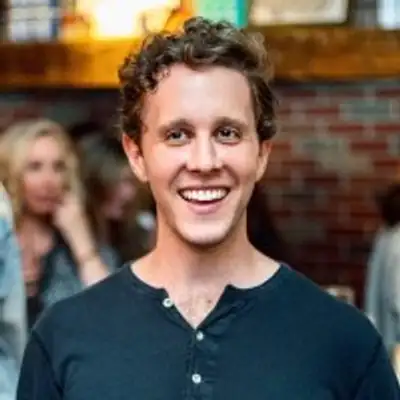
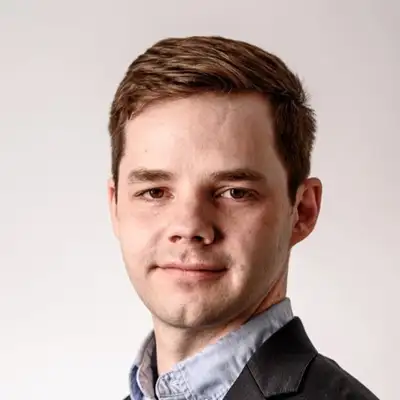
hello everyone, I am Jeffrey Stern, your host of today's Ohio Fund Report with Ken Sobel, co founder and CEO of Hyperframe. Ken is an engineer and repeat founder whose entrepreneurial path started early out of college. He launched a fingerprint payments company that predated Apple Payments, which he took through Y Combinator and ultimately was acquired by visa in 2016. Ken grew up in construction, though recalling memories being in his father's workshop as a kid and his long standing passion for construction coupled with his love of engineering and problem solving has culminated in an entrepreneurial desire to rethink one of the most fundamental parts of construction steel framing. Through Hyperframe, Ken has taken traditional metal framing process that's been slow, manual and largely unchanged for decades and reimagined it as a system that is faster, safer and far more efficient. Hyperframe's snap together framing system paired with a full stack software and manufacturing platform is enabling construction crews all over the world to build walls dramatically faster with less labor and with less strain. What started as a conversation about reindustrialization coupled with a desire and need to massively scale his operations, Ken made the bold decision to move Hyperframe from California to Ohio where the company is now headquartered and where they are building out their first large scale manufacturing facility. In our conversation we talk about Ken's path into construction, the early insights behind Hyperframe, and what it actually takes to rebuild a physical industry from the ground up.
Jeffrey Stern [00:02:08]:
We get into the realities of scaling a hard tech company. How do you earn trust in construction, why he decided to move his whole company and his family from California to Ohio, and why Ohio is such an advantageous place to build physical companies. So please enjoy this wide ranging conversation with Ken Sobel.
Jeffrey Stern [00:02:27]:
Since we connected back just less than a year ago now, it's been an amazing journey that if you kind of trace the lineage involves you reaching out cold from a place of genuine curiosity and alignment. From a RE Industrialization conference panel in Detroit where You heard Mark Kwame discussing this whole resurgence of manufacturing and renewed recognition for the importance of America's industrial capacity and how much of that is happening in Ohio to just a few months later, uprooting and moving not just your whole company from. From California to Ohio, but your whole family as well, and setting up a new manufacturing facility and simultaneously closing a meaningful amount of capital for the business. And all of that alone is an amazing story in and of itself that you felt compelled, right. That like, the best thing for you to do for the business, for your life was to come here. And as someone who is also here in Ohio on my own volition, you know, originally coming from the other coast, it's always fun to see that resonance of the journey within other folks and specifically entrepreneurs. It's obviously not a decision to be made lightly. So I'm looking forward to unpacking that whole story with you.
Ken Sobel [00:03:46]:
Great.
Ken Sobel [00:03:47]:
Yeah, let's do. Was a thrilling six or seven months, for sure. Indeed.
Jeffrey Stern [00:03:54]:
And we'll obviously talk about that period of time. We'll talk about Hyperframe, the business, the market you're in, your past as an entrepreneur, and lots more around those. But to kick it off, I thought it would be kind of fun to ground the conversation and exploring the crux of that decision and why you felt that you needed to make this move.
Ken Sobel [00:04:17]:
Yeah, sure. We had started. Hyperframe had started its first starter factory
Ken Sobel [00:04:22]:
in the San Francisco Bay area in California.
Ken Sobel [00:04:25]:
And by the time I reached out to you, we were almost running that
Ken Sobel [00:04:30]:
facility for a year.
Ken Sobel [00:04:31]:
And the good thing is that we had incredible, incredible. We achieved incredible product market fit with that facility. And we were able to validate that
Ken Sobel [00:04:41]:
our customers were seeing all the value propositions that we promised them. So that was great.
Ken Sobel [00:04:47]:
But we also, it became obvious to us over. Over that 12 months that California was
Ken Sobel [00:04:53]:
not the place to scale up a manufacturing startup.
Ken Sobel [00:04:58]:
It was very expensive from a property
Ken Sobel [00:05:01]:
standpoint, labor standpoint, freight standpoint.
Ken Sobel [00:05:04]:
It was not particularly well suited to sh.
Ken Sobel [00:05:07]:
Ship product to all the places in the United States where we wanted to ship.
Ken Sobel [00:05:11]:
And it was. It was kind of a struggle because
Ken Sobel [00:05:13]:
there was not a huge base of strong industrial talent in the Bay Area.
Ken Sobel [00:05:19]:
Right.
Ken Sobel [00:05:19]:
Like everyone says, like, oh, if you're gonna.
Ken Sobel [00:05:21]:
You're gonna make a startup, you should move to the Bay Area. And that may be true for a lot of companies, but we learned that
Ken Sobel [00:05:27]:
that's not really true for an industrial company.
Ken Sobel [00:05:28]:
So we knew that we had to go elsewhere. But we did not immediately land in Ohio. It took. It took some. It probably took, I don't know, four to six months of checking out different
Ken Sobel [00:05:41]:
areas in the country before we did land in Ohio.
Jeffrey Stern [00:05:45]:
I love that, I love that story because it's, it's, I think a lot about an area's actual right to win. Like what, what are the components that actually make it structurally advantaged? What's the history of entrepreneurialism in that place that have positioned it to have an advantage relative to another place when it comes to trying to build a company? And it doesn't make sense to build every single kind of company out in San Francisco, for example.
Ken Sobel [00:06:12]:
No, no. The cool thing is that there are a lot of like minded people there and you'll find a lot of support for doing something new. But aside from that, there was not
Ken Sobel [00:06:21]:
really a structural advantage to us building an industrial company there.
Jeffrey Stern [00:06:25]:
So taking a step back for a moment, you know, when you kind of think of what were the set of experiences that, that led to you being in a position to start a steel framing and manufacturing company, what, what kind of comes to mind as the early career inflection points. Would love to kind of explore the, the early entrepreneurial journeys that, that you kind of traverse that kind of set the stage for what ultimately becomes Hyperframe.
Ken Sobel [00:06:54]:
Sure. So to answer that question, I have to go back to when I was a little kid and I grew up around construction since I was in diapers, literally. My dad was a construction law attorney and so all of his friends and
Ken Sobel [00:07:11]:
clients were contractors and developers. And so I got some exposure to construction through that.
Ken Sobel [00:07:18]:
But I think more importantly, my dad was also a construction and woodworking enthusiast and he had a professional grade wood
Ken Sobel [00:07:26]:
shop in our basement growing up.
Ken Sobel [00:07:28]:
And so I was always begging my dad to start using these tools earlier
Ken Sobel [00:07:36]:
than I probably should have.
Ken Sobel [00:07:38]:
But I got really good. I got really good. I started making furniture instead of doing my homework. And so I just fell in love with building real things and I fell
Ken Sobel [00:07:49]:
in love with construction from a young age.
Ken Sobel [00:07:51]:
So that's a big reason that we, we wound up starting the company. You know, many years later he learned engineering in college.
Ken Sobel [00:07:57]:
That's what I went to, to college for.
Ken Sobel [00:07:59]:
My parents told me I couldn't go
Ken Sobel [00:08:00]:
into construction because I, you know, I was good at math and I should, I should go to college and do
Ken Sobel [00:08:05]:
something, do something better. So I, that's what I did. I became a mechanical engineer. And then the other thing that I developed a fascination with since a young age was being an entrepreneur. And I just think growing up in the 90s, that's when Bill Gates and Microsoft, that's when they grew. And it was kind of like, you know, that was kind of like my childhood hero. Yeah, I was like, oh man, I want to build a big company like that one day. So after I graduated college, I think, I don't know, a couple weeks into my first real job after college is
Ken Sobel [00:08:40]:
when I started my first company that was a fingerprint payment company that predated Apple pay.
Ken Sobel [00:08:46]:
And I had zero business, I knew nothing about the industry, so we had zero business starting that company, but we did it anyway. And that's what drew me and my
Ken Sobel [00:08:56]:
co founders out to California in the first place, is that was supposed to be like the technology startup Pan and that's where we should go. So, so we did, we got into Y Combinator, that became our first company
Ken Sobel [00:09:08]:
and we, we wound up selling it to Visa. So that was a modest success for
Ken Sobel [00:09:13]:
being in our like early to mid-20s.
Jeffrey Stern [00:09:16]:
Sure, yeah, modest.
Ken Sobel [00:09:17]:
But moreover, it was like a lesson in how to start a company because
Ken Sobel [00:09:20]:
we basically learned everything the hard way.
Ken Sobel [00:09:22]:
And then, so we sold it. I went to go work for one of my angel investors.
Ken Sobel [00:09:27]:
He was starting his own company. So I went to go work for him for a couple years and finally I said, you know, I'm ready to
Ken Sobel [00:09:32]:
build a more significant company now. I think, I think I know more about how to build a company. And this time I want to have
Ken Sobel [00:09:39]:
a lot of fun doing it.
Ken Sobel [00:09:40]:
I don't want to like have, I don't want to have to, you know,
Ken Sobel [00:09:43]:
yank myself out of bed against my will every morning. I really want to have fun doing this.
Ken Sobel [00:09:48]:
And so it was obvious that we should try to, you know, we were, we were engineers and we should try to apply engineering to construction in some way. Because construction is one of these industries where the best engineers in the world
Ken Sobel [00:10:02]:
do not apply themselves historically.
Ken Sobel [00:10:05]:
And it has so many problems and there's so much low hanging fruit that, that we could fix with, with an
Ken Sobel [00:10:11]:
engineering toolbox and an engineering skill set. So, so that was like the, that
Ken Sobel [00:10:18]:
was the first, that was the reason why we chose that industry. And then, and then the question becomes
Ken Sobel [00:10:25]:
like, okay, well what are we actually going to do? What problem are we going to solve?
Ken Sobel [00:10:27]:
And everybody knows every, whether you know,
Ken Sobel [00:10:30]:
construction or not, everybody knows that it's slow and expensive, you know, baseline.
Ken Sobel [00:10:34]:
Everybody on the planet knows that. And, and, but the question is why? And, and really it is, it is one of these labor cost dominated industries, just like healthcare, just like education, building, anything, especially a large commercial building takes an army of people.
Ken Sobel [00:10:54]:
Even a small house takes a small army of people.
Ken Sobel [00:10:56]:
And these people need to build the structure that they are constructing out of building products that were designed many decades ago. And they need to put just an extraordinary amount of work into those products
Ken Sobel [00:11:09]:
at the construction site to make it into a real building.
Ken Sobel [00:11:12]:
And I think our unique perspective that Hyperframe took early on was that the reason that construction is so slow and
Ken Sobel [00:11:21]:
expensive is because we are building from these very primitive basic materials and that.
Ken Sobel [00:11:29]:
And so we can't expect construction workers to work any faster if this is
Ken Sobel [00:11:33]:
what they have to work with.
Ken Sobel [00:11:35]:
And so at Hyperframe, what we want to do is redesign fundamental building products to be an order of magnitude faster to install and bake that into the way that they are designed. And we decided to do that with metal wall framing for large commercial buildings first. And we spent now seven, almost eight
Ken Sobel [00:11:57]:
years working on that problem of just
Ken Sobel [00:11:59]:
the metal framing trait.
Ken Sobel [00:12:00]:
And that's what Hyperframe does. So, so what. What we are.
Ken Sobel [00:12:04]:
What we are making now is a metal wall framing product for large commercial buildings that snaps together with almost no
Ken Sobel [00:12:12]:
tools and almost no training, at a speed of today, five times faster than traditional wallframe.
Ken Sobel [00:12:19]:
Would it be helpful to like, yeah, kind of explain what a customer's journey
Ken Sobel [00:12:24]:
is when they start working with Hyperframe?
Jeffrey Stern [00:12:26]:
Yeah.
Ken Sobel [00:12:27]:
Should we do that? Okay, so there are basically three phases to a Hyperframe project.
Ken Sobel [00:12:31]:
The first phase is design or pre construction. Second phase is manufacturing, and the third phase is installation.
Ken Sobel [00:12:39]:
And so in the pre construction phase, we give our customers access to a
Ken Sobel [00:12:44]:
software application called HyperBim.
Ken Sobel [00:12:47]:
And Hyper Bim is a 3D modeling
Ken Sobel [00:12:49]:
tool that they will use to develop the design of where every single wall stud should go in the building.
Ken Sobel [00:12:57]:
And we developed this software in a way where once it reads in the architectural model and the model of where
Ken Sobel [00:13:02]:
all the plumbing and electrical and ductwork needs to go, that the framing design will be automatically calculated.
Ken Sobel [00:13:07]:
And the customer's only job is to
Ken Sobel [00:13:09]:
look at a list of issues that make it impossible to build a wall. And their job is to go through that list with the general contractor and the other trades on the project and resolve them.
Ken Sobel [00:13:21]:
And so it's a huge change in the way that. In the way that metal framing is designed. In fact, most metal framing projects are
Ken Sobel [00:13:27]:
not designed at all ahead of time, and it's just figured out on the job site when they start installing the product. So it's a.
Ken Sobel [00:13:35]:
That is like half of the engineering
Ken Sobel [00:13:37]:
investment in our company is just the functionality of that software.
Ken Sobel [00:13:42]:
And then, of course, we will mass
Ken Sobel [00:13:44]:
produce the product to match the 3D model and we will manufacture each piece of framing to the proper length and we will pre fasten a snap connector onto every connection position. And then we will kit that material by zone of the building. So if it's an apartment building, every apartment would have its own kit of framing.
Ken Sobel [00:14:06]:
And then that product is shipped to
Ken Sobel [00:14:09]:
the building and brought to the proper floor for installation.
Ken Sobel [00:14:12]:
And then the customer scans each piece
Ken Sobel [00:14:15]:
with an iPad and the iPad shows them where they snap it in.
Ken Sobel [00:14:19]:
It ends up being we work with our customer, you know, much earlier in
Ken Sobel [00:14:23]:
the process than traditional metal framing manufacturers do. It is a much more comprehensive workflow. It is totally different than what they
Ken Sobel [00:14:32]:
do now in every respect, but it gives them, it gives them this, like,
Ken Sobel [00:14:37]:
this like Lego set, like experience when they, when they install the product on site. It's. And, and if, if a kid were strong enough, a kid could do it.
Jeffrey Stern [00:14:46]:
Yeah, no, that's awesome. That's. I think it paints the whole picture, ties it all together. When you exited your, your last company coming out of, of Y Combinator, you mentioned you learned the, the entrepreneurial lessons the hard way and could kind of channel those into Hyperframe. How did you approach the onset of hyperframe? What do you feel were some of the most salient lessons you were carrying with you at that time that informed how you wanted to do it differently beyond, you know, kind of love of the problem itself?
Ken Sobel [00:15:17]:
We could probably spend an hour talking about that. Here are the ones that come to mind. The first company was in an industry with intense competition. So this was, we started in 2014, and if you go back to 2014, there were dozens, if not more than a hundred different companies trying to create a mobile wallet or a next generation payment system. And we were just another one of those. And so that made it really hard, you know, we, it makes it really hard to differentiate yourself when there's so
Ken Sobel [00:15:50]:
many other competitors working on the problem.
Ken Sobel [00:15:54]:
It's hard to differentiate yourself to investors,
Ken Sobel [00:15:56]:
it's hard to differentiate yourself to customers.
Ken Sobel [00:15:58]:
It's hard to differentiate yourself to employees. And so we intentionally wanted to, with Hyperframe, we wanted to select an industry and a product space where we felt that there would be very few competitors and where we felt that we would have like some, some structural or unfair
Ken Sobel [00:16:15]:
advantages against the competitors that we did have.
Ken Sobel [00:16:17]:
And so we kind of thought to ourselves, like, well, the smartest engineers and entrepreneurs in the country are probably not
Ken Sobel [00:16:23]:
applying their efforts towards Wal Studs. And so
Ken Sobel [00:16:29]:
that will give us the space to develop Something really good without having. So that, that was a pretty big one. Another related one is like the classic
Ken Sobel [00:16:39]:
idea of is your product a vitamin or a painkiller?
Ken Sobel [00:16:43]:
And with the first company, we were trying to make a product that was
Ken Sobel [00:16:47]:
better than a credit card swipe. But a credit card swipe is pretty good. It's pretty fast.
Ken Sobel [00:16:51]:
Now of course in the 10 years
Ken Sobel [00:16:53]:
that has elapsed now people, you know, mostly tap their cards but, but still
Ken Sobel [00:16:56]:
there's credit card swipe only takes a second. And so bringing that down to, you know, sub one second or making it so somebody hasn't take their card out of their wallet, that's not going to change anybody's life and nobody desperately needs it. But in construction, improvement is desperately needed. If you walk onto any construction site of any kind, you will stumble across, I don't know, five or ten major
Ken Sobel [00:17:25]:
problems in your first 30 minutes of walking around.
Ken Sobel [00:17:28]:
And even if you look at a big like gleaming high rise going up and from the, if you're just a
Ken Sobel [00:17:33]:
pedestrian on the street watching this thing
Ken Sobel [00:17:35]:
go up, it looks like this precision engineered like marvel of engineering.
Ken Sobel [00:17:39]:
That's just, that's just a perception, that's not reality.
Ken Sobel [00:17:43]:
If you go on, if you go on any of these, any of these projects, there are huge problems and it
Ken Sobel [00:17:49]:
takes a long time and it's really expensive.
Ken Sobel [00:17:51]:
So with Hyperframe, we're developing something that's much more of a painkiller. And it's like we want to give
Ken Sobel [00:17:56]:
our customers a product where after they try it, they can never go back.
Jeffrey Stern [00:18:02]:
Yeah, yeah. I found it really helpful in thinking about and trying to originally understand and learn about what you were building, to feel the pain. And so perhaps you could just kind of describe like what is the status quo of what it looks and feels like to do steel framing today. And that can kind of seg us into what is the vision for the future that you're imagining and bringing to fruition.
Ken Sobel [00:18:31]:
Okay, sure. So if you are a metal framer on a commercial building, you probably start your day somewhere between six and seven in the morning.
Ken Sobel [00:18:42]:
You're going to work an eight hour
Ken Sobel [00:18:43]:
day and it could be, be in the middle of the winter on, you know, and you're 20 floors off the ground with like a 20 degree wind chill or it could be in the middle of the summer and it's like 100 degrees outside and everything in between. So that's just, that's just kind of
Ken Sobel [00:19:02]:
to set the stage of, of the
Ken Sobel [00:19:04]:
environment that you're walking into and you're Wearing a, you're wearing tool bags that
Ken Sobel [00:19:11]:
weigh, I don't know, 20, 30 pounds,
Ken Sobel [00:19:15]:
maybe more all day long. And so that's before you even start doing any work. And then you're going to walk onto the job site. And metal framing usually arrives to the job site in bundles, large bundles of,
Ken Sobel [00:19:30]:
of metal that come in stock lengths.
Ken Sobel [00:19:33]:
And I, I don't know, these bundles
Ken Sobel [00:19:35]:
might be, call it a thousand pounds. Okay.
Ken Sobel [00:19:37]:
And so they're going to break the strapping on those bundles and they're going to, they're going to manually process each stick of framing in that bundle and
Ken Sobel [00:19:51]:
build it into a finished wall.
Ken Sobel [00:19:53]:
And so that means every single piece is going to be measured, it's going
Ken Sobel [00:19:57]:
to be marked, it's going to be cut, and it's going to be screwed.
Ken Sobel [00:20:00]:
You're using a lot of, you're using
Ken Sobel [00:20:02]:
a lot of hazardous equipment that's really
Ken Sobel [00:20:04]:
loud, like a chop saw, you know, use. You have to use an abrasive chop
Ken Sobel [00:20:08]:
saw to cut steel studs. And so it's really loud and it creates this like huge spark trail as you're cutting it.
Ken Sobel [00:20:14]:
You're using that all day long. And a lot of framers don't wear, they don't even wear hearing protection when
Ken Sobel [00:20:19]:
they're doing this kind of stuff.
Ken Sobel [00:20:22]:
And, and then, you know, imagine that you're, imagine that your job, you're usually,
Ken Sobel [00:20:30]:
you're working on a crew of four or five with four or five framers when you're framing out a floor.
Ken Sobel [00:20:36]:
And imagine that your job is you're going to screw the bottom of every
Ken Sobel [00:20:40]:
stud into the floor.
Ken Sobel [00:20:42]:
And so that means that you've got
Ken Sobel [00:20:44]:
those like 30 pound tool bags on
Ken Sobel [00:20:46]:
your waist and you are hunched over all day, all day with a screw gun and you're installing who knows how
Ken Sobel [00:20:53]:
many thousands of screws that day.
Ken Sobel [00:20:55]:
And so your back is really going to hurt when you go home or, or you're the guy who screws them in at the top and you're going
Ken Sobel [00:21:01]:
up and down a scaffold all day long. And so like, ergonomically, it's a very tough job.
Ken Sobel [00:21:06]:
And it's been this way for, since metal framing was introduced into the market,
Ken Sobel [00:21:12]:
which was in the 50s. So it's been this way for 70 years plus.
Jeffrey Stern [00:21:15]:
And in the entirety of that, that time, why do you feel no one has attempted to kind of remedy the situation in the way that you guys have?
Ken Sobel [00:21:26]:
I think there are a few reasons.
Ken Sobel [00:21:27]:
Number one, I think that the, unfortunately, I think that the manufacturers of building products in general this is definitely true of metal framing are not like the culture they, they've developed their companies with a culture that is kind of averse
Ken Sobel [00:21:45]:
toward doing things differently.
Ken Sobel [00:21:47]:
They, you know, they make, they manufacture
Ken Sobel [00:21:50]:
commodity goods that are sold at relatively low margin.
Ken Sobel [00:21:55]:
And so in order to make that a good business, they have had to build excellence around trying to make product faster and more efficiently. And if they can sell the product
Ken Sobel [00:22:05]:
for 2, 2 or 3% less than their competitor, then that's a win for them.
Ken Sobel [00:22:09]:
But what that means is, is that if they ever try to do anything new, then, you know, it's hard for them to do anything new because they're
Ken Sobel [00:22:18]:
risking a relatively small gross profit on their goods.
Ken Sobel [00:22:23]:
And so they just can't. The way that they're, that the companies
Ken Sobel [00:22:26]:
are structured financially is it's very difficult for them to make bets on things that are different and new.
Ken Sobel [00:22:31]:
And I think the other problem that they have is that they are not really well connected to their customers. Generally building products manufacturers don't sell direct to the customers.
Ken Sobel [00:22:42]:
They sell to a distributor and the distributor sells to the customer.
Ken Sobel [00:22:46]:
And that, that's a really big problem because if you try to make, if you need, if you're going to make a new product, the first iteration of the new product that you make is
Ken Sobel [00:22:54]:
going to be bad.
Ken Sobel [00:22:55]:
And you need this really tight feedback
Ken Sobel [00:22:57]:
loop of customer feedback to make it better.
Ken Sobel [00:22:59]:
And I think it's hard to, I think it's hard for, I think it's hard for you to do that when
Ken Sobel [00:23:05]:
you don't sell directly to the customer.
Ken Sobel [00:23:06]:
And so I think those are some
Ken Sobel [00:23:08]:
structural problems with just the way that traditional building manufacturers exists in today's society and how they've evolved over the last however many decades they've been in business.
Ken Sobel [00:23:18]:
They're, they're building products manufacturers that are 300 years old.
Jeffrey Stern [00:23:22]:
Yeah,
Ken Sobel [00:23:25]:
so, so that's one thing. And then I think the second thing is that, you know, I alluded to this before. Unfortunately, the construction industry has gotten a bad rap. And if you talk to like the best and brightest engineers at the best engineering colleges in America, none of them aspire to go into the construction industry or even the manufacturing industry. Right? They're, they want to work at like Tesla or OpenAI or some, some other
Ken Sobel [00:23:51]:
industry that who are, who are, or
Ken Sobel [00:23:55]:
some other company led by some visionary CEO has gotten really good at, at recruiting and, and, and making these industries feel like a great place to do
Ken Sobel [00:24:07]:
your best work and build a career.
Ken Sobel [00:24:09]:
There's really nothing like that in construction.
Ken Sobel [00:24:11]:
And so unfortunately, the people in construction who see the problems, who are great
Ken Sobel [00:24:16]:
people, they don't necessarily have the engineering
Ken Sobel [00:24:19]:
toolbox to fix it in the best way.
Jeffrey Stern [00:24:21]:
Given the lineage of lack of change in the industry, just status quo justification for the way things are, are the way things have been. How do you, how do you convince people in an industry that's skeptical or averse to that kind of change that you actually have a better mousetrap and now grounded in the, you know, painful picture that you painted of, of what it is today to do steel framing? What does it look like in, in the hyper frame vision of that?
Ken Sobel [00:24:51]:
Sure.
Ken Sobel [00:24:52]:
Okay, first question is how do we, how do we position our products in an industry that maybe is adverse to change? Okay. Number one, I think is giving the customer the impression that we are credible. I think that especially with a lot of the personalities that have become common in the construction industry, there's just, you know, one of the interesting things about the construction industry is that there's not a lot of room for experimentation. Everybody's working on a building that is going to become, is going to become a finished product. And some of these commercial structures, some of them are $100 million, some of them are $700 million, some of them
Ken Sobel [00:25:32]:
are billion dollar plus projects.
Ken Sobel [00:25:34]:
And in the way that a construction site works is there are so many
Ken Sobel [00:25:38]:
different trades and so many people involved in the process that if even if
Ken Sobel [00:25:42]:
there's even one problem with one trade
Ken Sobel [00:25:45]:
in one part of the building, it
Ken Sobel [00:25:47]:
can cause a dramatic ripple effect in
Ken Sobel [00:25:50]:
the success of the project and the schedule of the project.
Ken Sobel [00:25:52]:
And so, and so I think what that means is that the customers who
Ken Sobel [00:25:57]:
build these or the contractors who build these buildings are really nervous to do something risky.
Ken Sobel [00:26:04]:
And so showing the customer that we
Ken Sobel [00:26:08]:
are credible is really important.
Ken Sobel [00:26:11]:
We can't just, you know, it's not enough to just be a couple of smart engineers from a good school with
Ken Sobel [00:26:19]:
some startup experience and say, like, hey,
Ken Sobel [00:26:20]:
we're gonna like change the way you build this whole massive project. We spent a lot of time getting to, we spent a lot of time in learning mode and, and like wall framing sounds like it's like, it might
Ken Sobel [00:26:35]:
be simple, but once you spend a few years learning the trade, you learn that it is not.
Ken Sobel [00:26:41]:
And so we just spent a long time learning.
Ken Sobel [00:26:43]:
We spent a long time learning from
Ken Sobel [00:26:44]:
customers, from structural engineers, other manu companies, the organizations who do code approvals. And one of the really important things
Ken Sobel [00:26:54]:
for us early on was I recruited, I recruited a co founder named Todd Brady who had achieved.
Ken Sobel [00:27:02]:
He had developed Reputation of being like
Ken Sobel [00:27:06]:
the most successful metal framing entrepreneur in the United States. And he had. He had commercialized products back in the 90s that are now used on every single construction site everywhere.
Ken Sobel [00:27:16]:
So that was really important because we had the engineering smarts, but we didn't really know all the nitty gritty. And so the result is that for a startup, we spent an unusual amount
Ken Sobel [00:27:27]:
of time learning the market, learning from our customers, and developing the product.
Ken Sobel [00:27:32]:
And when I say unusual amount of
Ken Sobel [00:27:33]:
time, I'll say like four to five years before we generated a dollar of revenue.
Ken Sobel [00:27:40]:
So that's the first question. I think that's the first.
Ken Sobel [00:27:43]:
That's my first answer to question is,
Ken Sobel [00:27:45]:
yeah, how do we get a product
Ken Sobel [00:27:48]:
onto a big project? Is credibility, for sure.
Ken Sobel [00:27:53]:
And credibility comes in a lot of different flavors.
Ken Sobel [00:27:56]:
It's, do we sound credible when we meet the customer and explain what the product does? Does it have all the proper code approvals? What kind of data do we have from either warehouse testing or other customers who have installed the product to show that it will work or it has the speed advantage that we're advertising or the quality or the safety advantage? Is our capability to manufacture the product credible and can we do it on time?
Ken Sobel [00:28:25]:
And prefabrication has a lot of challenges that a lot of customers have maybe learned the hard way.
Ken Sobel [00:28:32]:
And so they may be skeptical about a prefabricated product. And so how do we address all of the potential obstacles to prefabrication? So credibility is really important.
Ken Sobel [00:28:41]:
And then one of the things we've been successful with when we meet a
Ken Sobel [00:28:45]:
new customer is we say, you do
Ken Sobel [00:28:48]:
not have to commit an entire tower
Ken Sobel [00:28:51]:
to hyperframe before you've ever tried it. We will provide them the product documentation to submit to the architect so that they can submit Hyperframe as an alternate,
Ken Sobel [00:29:02]:
and they can try hyperframe on one
Ken Sobel [00:29:04]:
floor and they can see how that goes. And based on that experience, they can decide to use more and more of the product as they advance the construction of the building. Those have all been. Have all been important.
Jeffrey Stern [00:29:15]:
Yeah.
Ken Sobel [00:29:16]:
The second part of your question was what is the.
Jeffrey Stern [00:29:19]:
It's, you know, emerging from. Call it that period of credibility, building of learning, you know, really understanding deeply what the problem is. You emerge from the other side with Hyperframe with a credible, you know, product and offering that is sufficiently compelling to convince people to at least take a shot on it. Right. So maybe just walk us through, like, what changes for a crew on day one if they're working with hyperframe, and what are the problems that you're solving, again, kind of grounded in that painful
Ken Sobel [00:29:55]:
picture that we painted earlier, actually before we even started designing the product. This goes back to the. The vitamin versus painkiller idea that I just talked about. We knew that if we were going
Ken Sobel [00:30:09]:
to get a customer Persona to adopt the product who was maybe adverse to
Ken Sobel [00:30:14]:
trying new things, that the advantage to
Ken Sobel [00:30:17]:
using Hyperframe would have to be so significant that they would want to take the risk.
Ken Sobel [00:30:22]:
And so the initial goal for the
Ken Sobel [00:30:27]:
product before we designed anything, was that it would be 10 times faster to install. And we went from there. So the. So I'll talk about now what our customers actually see when they install Hyperframe on. On a job site for the first day.
Ken Sobel [00:30:44]:
I was just on a site with
Ken Sobel [00:30:45]:
a customer installing for the first time a couple weeks ago. So this is fresh.
Ken Sobel [00:30:48]:
They do have to unlearn what they
Ken Sobel [00:30:50]:
know a little bit.
Ken Sobel [00:30:53]:
And. But what they'll see is they will be working with a crew size that
Ken Sobel [00:30:59]:
is a fraction of what they usually use. And so perhaps if there's a traditionally a crew of six framers that are
Ken Sobel [00:31:05]:
framing on a floor, we actually have
Ken Sobel [00:31:08]:
to train our customers to reduce that number down to only two people.
Ken Sobel [00:31:13]:
Because the. I mean, I think this is true of anything.
Ken Sobel [00:31:16]:
It's like with a lot of things, the more people that you add into
Ken Sobel [00:31:19]:
an activity, you know, the more they
Ken Sobel [00:31:21]:
get in each other's way and to some extent, the slower that they go. And so Hyper Frame is installed the fastest when there are fewer people working on it.
Ken Sobel [00:31:31]:
And that's not to say that we're trying to slash the number of people
Ken Sobel [00:31:34]:
on a job site, but, you know, maybe there's two people working on one side of the building and two people working on the other side. And they're not really. They're kind of working separately on two in two teams.
Ken Sobel [00:31:43]:
But you'll notice that right away is
Ken Sobel [00:31:45]:
that there's only a couple people.
Ken Sobel [00:31:46]:
And then you will see that those two people will finish in a day.
Ken Sobel [00:31:53]:
What normally would take them a multiple of multiple days or a multiple of the time.
Ken Sobel [00:31:58]:
And it will feel kind of unfamiliar to them. And they'll kind of think like, man, am I.
Ken Sobel [00:32:04]:
Am I doing this right?
Ken Sobel [00:32:05]:
Because they're.
Ken Sobel [00:32:06]:
They're.
Ken Sobel [00:32:07]:
The process of snapping in the framing
Ken Sobel [00:32:10]:
is just different than what they're used to.
Ken Sobel [00:32:12]:
Instead of building one wall at a
Ken Sobel [00:32:13]:
time, they're building a zone of walls at a time. And they're just, you know, going back and forth from the pile to the wall that they're building and snapping in these parts. And it Kind of, it just looks unfamiliar to them.
Ken Sobel [00:32:25]:
But then at the end of the
Ken Sobel [00:32:25]:
day they, they will look at what they built and they'll say, man, I killed it.
Ken Sobel [00:32:30]:
And then the end result, just from a quality perspective will look extremely clean and it's a lot easier on them.
Ken Sobel [00:32:36]:
So what I talked about in terms of somebody that needs to hunch over all day to screw the bottoms of all the studs in, that does not exist. Every single stud installs from a standing position, only one person. And so they don't need to hunch over on the ground and they don't need to get up on ladders or scaffolds.
Ken Sobel [00:32:51]:
And I think this took us some
Ken Sobel [00:32:53]:
time to dial this in like this first day installation experience.
Ken Sobel [00:32:56]:
But we're at the point now where
Ken Sobel [00:32:58]:
a customer after the first day will
Ken Sobel [00:32:59]:
say, man, I really like this product.
Ken Sobel [00:33:01]:
And they'll, they'll see the benefit on day one, even if it'll take them a few days to get up to full speed.
Ken Sobel [00:33:07]:
And I think that's unusual. There are other construction products offered by other companies where you might need to finish a whole building with that prod. With that product and like take a
Ken Sobel [00:33:18]:
loss
Ken Sobel [00:33:20]:
on the first project where you
Ken Sobel [00:33:21]:
install it before you, before the customer sees the benefit. And so the really cool thing is that that customer sees the benefit immediately.
Jeffrey Stern [00:33:29]:
Yeah. So let's talk about the current chapter of Hyperframe. It's one a lot more about scaling hard tech, the manufacturing side of it, the supply side, to meet the demand that, that, that you're experiencing now. Having fundamentally solved a problem, met a certain problem in the market and fixed it, and now it's about spreading it. Take us through the vision really from here. How do you see Hyperframe today? Where are you trying to take it? And what does the future of construction look like with Hyperframe?
Ken Sobel [00:34:04]:
Minute great.
Ken Sobel [00:34:05]:
So when we operated our starter factory in California, it would take us anywhere between one and five weeks to manufacture one floor of framing for a tower. And so when it takes you between one and five weeks to manufacture a
Ken Sobel [00:34:19]:
floor for a tower, that means that you can only manufacture one, one tower at a time.
Ken Sobel [00:34:24]:
And that's, we really need to manufacture
Ken Sobel [00:34:26]:
a much larger volume than that.
Ken Sobel [00:34:28]:
If we have, for example, I don't know, 10 different customers who want to
Ken Sobel [00:34:31]:
make, who want to build 10 different towers at the same time with Hyperframe.
Ken Sobel [00:34:33]:
And so, so that means that we need to, to get, we, we need a much larger and more automated manufacturing facility. And so we relocated the company and I relocated myself to Ohio to do that. And so I'm actually sitting in thousand
Ken Sobel [00:34:49]:
square foot industrial building on the west
Ken Sobel [00:34:52]:
side of Columbus that will be Hyperframe's
Ken Sobel [00:34:54]:
first large scale factory.
Ken Sobel [00:34:55]:
And I think something that a lot of people don't understand about manufacturing is that you can't necessarily just, you can't design or invent a great new product and then just call somebody and say,
Ken Sobel [00:35:13]:
can you manufacture this for me?
Ken Sobel [00:35:15]:
Sometimes you can do that. Maybe for consumer electronics you can do that. But if your product requires manufacturing processes that don't exist anywhere else, then you can't do that.
Ken Sobel [00:35:26]:
Because people say, well, how?
Ken Sobel [00:35:30]:
I don't know, I don't have the equipment to be able to do that.
Ken Sobel [00:35:33]:
I don't have the expertise.
Ken Sobel [00:35:35]:
Because in some cases new equipment and
Ken Sobel [00:35:36]:
new expertise needs to be developed.
Ken Sobel [00:35:38]:
And so that is the situation where we found ourselves. And what that meant is that we needed to develop the competency to do those things internally, you know, using some
Ken Sobel [00:35:50]:
help from outside the company.
Ken Sobel [00:35:52]:
But we needed to really take the lead on designing and implementing a bunch
Ken Sobel [00:35:57]:
of new manufacturing processes.
Ken Sobel [00:36:00]:
Unfortunately, the way that metal framing, that metal framing has been manufactured for 70
Ken Sobel [00:36:06]:
years is just not capable of manufacturing our product.
Ken Sobel [00:36:10]:
And so the thing that a lot
Ken Sobel [00:36:11]:
of people don't understand is that designing the manufacturing system is something like 10 times harder than designing the product itself.
Ken Sobel [00:36:19]:
It's like one of these say what you will about Elon Musk, but it's one of those Elon Musk isms that you discover is true if you're trying to manufacture something a few different directions.
Jeffrey Stern [00:36:30]:
So what, what are you most excited about right now?
Ken Sobel [00:36:32]:
Really excited to. I'm really excited to build out this factory.
Ken Sobel [00:36:35]:
This will.
Ken Sobel [00:36:37]:
It's 60,000 square feet. So that's a huge, it's, it's about four times larger than what we started
Ken Sobel [00:36:43]:
out with in California.
Ken Sobel [00:36:44]:
But of course it's not like it's
Ken Sobel [00:36:47]:
one of the biggest factories in the world.
Ken Sobel [00:36:49]:
But what it will be is it, it will be one of the most technologically advanced building products manufacture factories in the world. And the reason is that in, for the product that we make. If you look at the, the manufacturing
Ken Sobel [00:37:05]:
line, you come back in 12 months and you, you look at the manufacturing line that we stand up here, it
Ken Sobel [00:37:10]:
will not produce the same widget over
Ken Sobel [00:37:13]:
and over and over again. At the, at the end of the,
Ken Sobel [00:37:16]:
at the end of the line, we are producing a product that is prefabricated to fit the design of the building that we are selling to. And the design of every building is different. It creates, it's one of the things that creates like a beautiful and interesting
Ken Sobel [00:37:32]:
world is that all the buildings look different.
Ken Sobel [00:37:35]:
But that's a huge manufacturing challenge because you need, you need a manufacturing line that can automatically make, make goods that are different shapes and different lengths and in different configurations from a standard set of parts. And so this is one of the things that is one of the challenges
Ken Sobel [00:37:54]:
that goes into manufact design for us.
Ken Sobel [00:37:57]:
And so in order to, in order to do this, in order to ship a kit of framing that will show up to the job site with pieces that are different lengths, different sizes, different configurations, we need to design basically an
Ken Sobel [00:38:11]:
all new manufacturing process from soup to nuts.
Ken Sobel [00:38:13]:
And it is all driven by a
Ken Sobel [00:38:16]:
3D modeling software application that we developed ourselves that, that will tell the factory what to make and in what order in a way that, in a way that all these things will stack neatly
Ken Sobel [00:38:30]:
onto a flatbed truck and go in
Ken Sobel [00:38:31]:
some cases across the country and then fit perfectly into a building that's something
Ken Sobel [00:38:35]:
that really hasn't been built before. And we're going to have the first instance of it and then the really exciting thing after that is then we get to make, you know, we get
Ken Sobel [00:38:45]:
to get to make Factory two and factory three that will be even much larger than what we have.
Ken Sobel [00:38:50]:
So that's, that's super exciting because we've, you know, we, we brought the company to this place where we have extreme
Ken Sobel [00:38:57]:
product market fit, we have extreme demand
Ken Sobel [00:38:59]:
and that, that feels good.
Ken Sobel [00:39:01]:
And, and that was kind of like the end of a lot of work,
Ken Sobel [00:39:03]:
but it's also the beginning of scaling this up. You know, there's only a select few
Ken Sobel [00:39:08]:
customers who have seen what it's like to build with Hyperframe.
Ken Sobel [00:39:10]:
Now we get to make that broadly
Ken Sobel [00:39:14]:
accessible and start that journey.
Jeffrey Stern [00:39:15]:
How excited do you feel the industry is about it? Speak a little bit to the projects that have been executed, you know, just like practically what it's looked like to run through this in practice.
Ken Sobel [00:39:27]:
Yeah, sure. We've done, we've done a couple of large low rise apartment complexes. We did part of our first high rise apartment tower. We did our first medical project, which we dove straight into the deep end
Ken Sobel [00:39:43]:
and learned the hard way that medical projects are really complicated. Did our first, did our first project
Ken Sobel [00:39:48]:
in New York City where everything's really big. And so the response that we've gotten
Ken Sobel [00:39:56]:
from all of those customers is wow,
Ken Sobel [00:40:00]:
I can't believe that went so well. And I'm not saying, not saying that Hyperframe was perfect in every one of those projects, but perfection is also not what is needed. What is needed is just something that's
Ken Sobel [00:40:14]:
dramatically better than what they got. And that's obvious to all those customers.
Ken Sobel [00:40:18]:
And it's obvious that we have this really tight feedback loop and we, we
Ken Sobel [00:40:23]:
improve things really quickly.
Ken Sobel [00:40:25]:
And so we have an enormous sales
Ken Sobel [00:40:28]:
pipeline at the moment.
Ken Sobel [00:40:30]:
And that sales pipeline grew almost organically from either additional projects that are that
Ken Sobel [00:40:37]:
our existing customers would like to order
Ken Sobel [00:40:40]:
or just through word of mouth.
Ken Sobel [00:40:41]:
We've had a couple of instances where,
Ken Sobel [00:40:43]:
where new customers see some of the projects that we've done either firsthand or through social media and they say, oh
Ken Sobel [00:40:49]:
man, this looks like real.
Ken Sobel [00:40:51]:
It looks real. Now. This is not just make believe, it looks real.
Ken Sobel [00:40:54]:
And we would like to get involved.
Ken Sobel [00:40:57]:
So we're very proud that we just
Ken Sobel [00:40:59]:
got the 2026 Excellence in Construction Innovation award from this industry association called awci. That's the association of the walls and ceilings industry.
Ken Sobel [00:41:09]:
That is the industry that most of
Ken Sobel [00:41:12]:
our customers belong to.
Ken Sobel [00:41:14]:
And that has some significance. It's based on achieving, you know, real
Ken Sobel [00:41:19]:
world tangible results on real construction projects. And so we just got that last month in March.
Ken Sobel [00:41:25]:
But again, only a very small slice
Ken Sobel [00:41:28]:
of America has, or America's metal framing contractors have been able to use it firsthand.
Ken Sobel [00:41:35]:
We need factories in order to get
Ken Sobel [00:41:38]:
that out to a larger number of customers.
Jeffrey Stern [00:41:40]:
What do you feel have been the hardest earned lessons a second time through as an entrepreneur that didn't, you know, you didn't encounter in the first go?
Ken Sobel [00:41:49]:
Let's see.
Ken Sobel [00:41:50]:
It's a good question. I have never, never ask myself that question.
Ken Sobel [00:41:53]:
I think that, I think that what we've experienced with this company to a greater degree than the first one is the first company was not what I
Ken Sobel [00:42:02]:
would call a hard tech company, but this one is.
Ken Sobel [00:42:07]:
And what I mean by that is some of the unique challenges are yes, we have to design and build entire new manufacturing processes, entire new factory. We need to get our products tested
Ken Sobel [00:42:20]:
rigorously by all of these building code enforcement bodies for structural performance and fire performance and sound performance.
Ken Sobel [00:42:28]:
We need to mass produce and mass customize the product in a way that
Ken Sobel [00:42:32]:
fits into these, into these buildings that
Ken Sobel [00:42:35]:
are really complicated and unpredictable. And usually the as built condition of
Ken Sobel [00:42:40]:
the building doesn't match the plan or the model for it.
Ken Sobel [00:42:44]:
And so it's a hard tech company. And what we've needed is just a very high degree of toughness. I just like mental toughness to get through some of these challenges. Like I think the biggest thing, one of the biggest things that I've learned
Ken Sobel [00:43:01]:
with this company is, I think when I started my first one, I felt
Ken Sobel [00:43:05]:
that being a successful entrepreneur was a
Ken Sobel [00:43:07]:
function of just being really smart.
Ken Sobel [00:43:10]:
And if you're really smart, you can
Ken Sobel [00:43:12]:
design a company that is easy to build and scale.
Ken Sobel [00:43:18]:
And I think that there's, I think in reality there's actually a very small
Ken Sobel [00:43:21]:
number of companies where that is their story.
Ken Sobel [00:43:24]:
I think that for most companies, it
Ken Sobel [00:43:26]:
is, it is, it's not impossible to
Ken Sobel [00:43:28]:
build a great company, but it's tough and it's, it's, you know, it's doable, but it won't, it won't be easy and you need a lot of toughness.
Ken Sobel [00:43:37]:
So I've definitely felt that.
Jeffrey Stern [00:43:40]:
Yeah, yeah. It's a hard journey.
Ken Sobel [00:43:44]:
Yeah, yeah.
Ken Sobel [00:43:46]:
Not every company is like a Microsoft
Ken Sobel [00:43:47]:
where it's just like, you know, you grow fast from the very beginning. That's unusual.
Jeffrey Stern [00:43:53]:
What do you wish more people understood about construction?
Ken Sobel [00:43:56]:
Well, I think that it is actually a really fun time in the construction technology space because there is this, like, there is this realization that construction can benefit from good engineering. It's drawing a lot of talented people into the space. I think the challenging thing for a lot of people is that I see a lot of entrepreneurs that are trying to design a construction solution who don't actually know how construction works. And there are a lot of companies that kind of, they're providing a solution
Ken Sobel [00:44:40]:
based on some knowledge of how the
Ken Sobel [00:44:42]:
bidding process works or the estimation process
Ken Sobel [00:44:45]:
or sort of administrative process in construction.
Ken Sobel [00:44:49]:
But what I would like to see more of is that I would like to see more construction technology entrepreneurs gain an understanding of how the building, buildings actually built. Because all of the problems that you see, if you trace the root cause of them, they, they will go down to how the building is actually designed and built. And if you're going to affect like lasting and impactful change in the industry, there need to be some changes in how the building is actually built. It can't just be like, you know, a better a way to band aid over, over the problem, in my view. And so it's certainly not easy. And not every construction technology company needs
Ken Sobel [00:45:34]:
to be a manufacturing one like we are.
Ken Sobel [00:45:35]:
But I would like to see more people who learn what the root cause issues are and more people who, you know, really like, look at the people who actually build the buildings and just watch them, just watch them for, for an hour or a day and look at all the things they have to put up with, like make products that, that make it easier for those people. Because I guarantee if you make it Easier for the construction workers to build the building.
Ken Sobel [00:46:03]:
A lot of these other problems will go away on their love that.
Jeffrey Stern [00:46:06]:
Is there something you wish we, we had talked about here that we haven't touched on yet?
Ken Sobel [00:46:10]:
One of the interesting things about Hyperframe
Ken Sobel [00:46:12]:
is that it is this fusion of
Ken Sobel [00:46:17]:
software engineering and manufacturing engineering and product engineering. And it was ambitious and difficult to
Ken Sobel [00:46:26]:
develop all of those things concurrently.
Ken Sobel [00:46:28]:
But that is what enables the value
Ken Sobel [00:46:33]:
of the product that we deliver to our customers.
Ken Sobel [00:46:35]:
And I think it creates a really
Ken Sobel [00:46:37]:
strong competitive moat for our business because that, those are a lot of different competencies that you have to assemble to one organization.
Jeffrey Stern [00:46:45]:
What's been the best part about being in Ohio so far?
Ken Sobel [00:46:49]:
Ooh.
Ken Sobel [00:46:50]:
To be honest with you, I'm still getting my bearings. We had, we had an intense three months just, you know, relocating my family, relocating all the industrial equipment from our California factory, and shipping out our first order. We just completed an order that went
Ken Sobel [00:47:04]:
out to the US Air Force Academy in Colorado Springs.
Ken Sobel [00:47:07]:
So that was a blitz of a three months. I don't think most people move their
Ken Sobel [00:47:13]:
family and factory in three months.
Ken Sobel [00:47:15]:
But, you know, the, I guess, I guess there are, there are two things that jump out at me so far. We, we first noticed this actually when
Ken Sobel [00:47:23]:
we started identifying a lot of our raw material suppliers. This is going back two or three years ago.
Ken Sobel [00:47:28]:
And, and we wound up engaging a
Ken Sobel [00:47:31]:
lot of suppliers that were from the Midwest.
Ken Sobel [00:47:33]:
And just like the honesty and earnestness that you see from, from Midwestern business owners is really refreshing, you know, you don't feel, I don't, I don't feel like I'm trying to get screwed over by, by the people I'm working with, which unfortunately, I don't know, is, is
Ken Sobel [00:47:50]:
more of a thing in other parts of the country.
Ken Sobel [00:47:52]:
So I see that, you know, there is, there is a difference, there's even a difference in attitude. Even if you look at some of
Ken Sobel [00:48:00]:
the hourly production workers that, that we hired to ship that first order I
Ken Sobel [00:48:04]:
talked about, unfortunately, you know, I'm going to make generalizations and this is not true of all people, but we hired a lot of production operators in California who came to work at Hyperframe and they were looking for ways to,
Ken Sobel [00:48:21]:
to
Ken Sobel [00:48:21]:
try to find, find an advantage over us or game the system. And with my experience hiring production operators here, you know, I'm meeting people who are asking me how they can work harder. You know, I, I don't know. I wish I, I wish that weren't my takeaway about Ohio because it doesn't say anything good about where I came from. But it is really refreshing. And, you know, I've met a lot of people who are just really excited
Ken Sobel [00:48:49]:
about us building a business like this here.
Ken Sobel [00:48:52]:
It feels everybody, even though it's still
Ken Sobel [00:48:55]:
mostly an empty building, everybody wants to come and visit, everybody wants to meet me.
Ken Sobel [00:48:59]:
And the reason that we moved here
Ken Sobel [00:49:01]:
to Ohio is that it just felt like, it felt like perfect place. From the vantage point of proximity to raw material suppliers, proximity to equipment suppliers
Ken Sobel [00:49:11]:
cost, proximity to good industrial talent and
Ken Sobel [00:49:15]:
good industrial leadership, proximity to
Ken Sobel [00:49:20]:
the major markets where we want to ship, the
Ken Sobel [00:49:22]:
east coast construction market is huge. It's about double the size of the West Coast. So it makes sense for us to bias our first large factory closer to cities like New York and Chicago and all the, all the large cities on the eastern seaboard.
Ken Sobel [00:49:35]:
But it's also a great place to
Ken Sobel [00:49:37]:
ship to everywhere from.
Ken Sobel [00:49:39]:
So I'm really excited to be here. I feel like we're going to, you know, Hyperframe is going to build the future of building products, manufacturing, and we
Ken Sobel [00:49:49]:
get to do that from right here in Columbus.
Ken Sobel [00:49:52]:
And that's not something that many people
Ken Sobel [00:49:53]:
get to do, especially at the age of 35.
Ken Sobel [00:49:56]:
So it's, you know, I have no
Ken Sobel [00:50:00]:
problem getting out of bed in the morning. It's a really, it's a really fun thing to work on.
Jeffrey Stern [00:50:03]:
We're grateful and excited that you're, you're here as well.
Ken Sobel [00:50:07]:
Yeah, thank you so much.
Jeffrey Stern [00:50:08]:
Well, if, if folks said anything, they wanted to learn more about Hyperframe, about what you're doing, wanted to connect with you. Where, where, where would you point them?
Ken Sobel [00:50:17]:
Add me on LinkedIn. Perfect.
Jeffrey Stern [00:50:19]:
Well, Ken, I just want to thank you again. Really appreciate you, you taking the time
Ken Sobel [00:50:22]:
and kind of going through your.
Jeffrey Stern [00:50:24]:
A bit of your story. It's, it's awesome. And again, yeah, really, really excited that, that you're, that you're here.
Ken Sobel [00:50:31]:
Awesome. Thanks, Jeffrey. Fun conversation.
[00:50:33]:
Thank you for tuning in to the Ohio Fund Report. If you enjoyed this podcast, we'd love for you to leave a review on your favorite platform and subscribe to stay updated on all future episodes. You can subscribe via Apple Podcasts, Spotify, YouTube, or directly on our website at theo ohiofund.com the information shared on this podcast is for informational purposes only and does not constitute investment advice, an offer to sell, or a solicitation of an offer to buy. Any security. Past performance is not indicative of future results. The views and opinions expressed by our guests are solely their own and do not necessarily represent those of the Ohio Fund. A guest's participation in this podcast does not imply an endorsement or an investment recommendation by the Ohio Fund. This podcast may include conversations with leadership of a company in which the Ohio Fund or its affiliated funds have an investment and as such, financial interest in the success of this company, and there may be a conflict of interest in presenting information about the company and its performance.
Any forward looking statements or projections discussed during this episode are based on current expectations, assumptions and estimates. Actual outcomes may differ materially due to a variety of risks, uncertainties, and other factors. Listeners should consult their own legal, tax and financial advisors before making any investment decisions. For more information about the Ohio Fund, including our form, adv, other regulatory filings, and additional conversations, please visit theohiofund.com.