Subscribe
Share
Share
Embed
Some Goodness is hosted by Richard Ellis, a seasoned sales leader passionate about inviting top business minds to share their wisdom. Each episode is only 15-20 minutes, perfect for your commute or workout.
[00:00:00] Richard Ellis: AI adoption among US firms climbed from 3.7% in 2023 to just 9.7% by August 2025, fewer than one in ten companies running AI in production. ISG's 2025 enterprise study found only 31% of AI use cases reached full production. And McKinsey reports 42% of companies abandoned or halted an AI initiative in 2025, up from 17% the year before.
[00:00:31] Richard Ellis: The gap between AI investment and AI impact is widening, and most sales leaders are quietly avoiding the truths that explain why. Today, we walk through the ones that matter most. Welcome to Some Goodness, where we engage seasoned business leaders and experts to share practical guidance and tips to help new and future leaders maximize their impact.
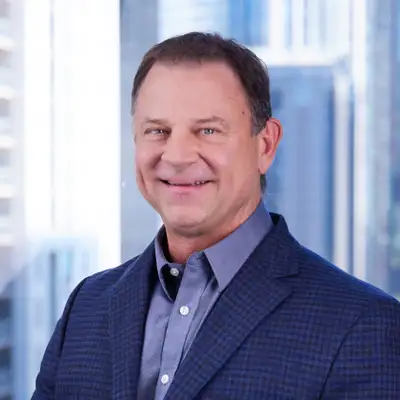
[00:00:52] Richard Ellis: My guest today is Jack Signey, co-founder of Front Race and a serial founder whose previous company, GovSpend, was [00:01:00] acquired in 2020 after two decades serving the public sector. Jack's new white paper, "The 15 AI Truths Every Sales Leaders Will Face in 2026," argues that most companies are experimenting with AI and very few are executing with precision.
[00:01:16] Richard Ellis: We're gonna find out why. Well, Jack, welcome to the show.
[00:01:19] Jack Siney: Hi, Richard. Thanks for having me. Appreciate it.
[00:01:21] Richard Ellis: I, uh, I'm excited to dive in today to talk about AI. You bring a unique perspective on that in that you recently wrote a white paper about 15 truths-
[00:01:30] Jack Siney: Yeah ... that
[00:01:31] Richard Ellis: all sales leaders are avoiding. Is, is it-- Did I get the title right?
[00:01:35] Jack Siney: Yeah. Some things we've seen here the last 12 months or so that are a little counterintuitive that, uh, will c- will come to bear for folks that are willing to kind of confront some of the things that are happening. So, uh, share those from just our real-world experiences.
[00:01:48] Richard Ellis: I love it. Well, AI is everywhere, right?
[00:01:51] Richard Ellis: It, it's a product.
[00:01:51] Jack Siney: Everywhere. Everywhere. And all
[00:01:54] Richard Ellis: the leaders I talk to are- Mm-hmm ... always just kinda looking for, you know, i-is there something I'm missing? [00:02:00] What-
[00:02:00] Jack Siney: Yeah ...
[00:02:00] Richard Ellis: um, you know, what are you finding, right? And so I thought this would be, you know, certainly a relevant, uh- Sure ... discussion for us to have today.
[00:02:07] Richard Ellis: Obviously, we can't get through all of your 15 truths, but what I thought, if you don't mind, is if I could just kinda pick some out that stood out to me- Sure, sure ... and we kinda
[00:02:14] Jack Siney: talk
[00:02:15] Richard Ellis: about those.
[00:02:16] Jack Siney: Definitely. That'd be great.
[00:02:17] Richard Ellis: Well, let's just kinda start at the highest level in terms of-- I, I like one of the opening statements you made, that investment is outpacing insight.
[00:02:25] Jack Siney: Yeah, I know.
[00:02:25] Richard Ellis: And so that was kind of provocative to me, and so tell me about what kinda led to- Sure ... to that observation. Yeah,
[00:02:31] Jack Siney: yeah. Uh, I, I'd love to claim, uh, love to claim that, but really it's just a summary of the data for, uh, particularly last year. You know, last calendar year there was a, a notable and amazing set of investment.
[00:02:41] Jack Siney: This year will probably outpace that, but all the studies that were done for last year's investments, I think the number was around, for US companies, about six hundred and fifty million dollars put into AI initiatives, AI pilots, and the almost shocking outcome of each one of the studies from, from really notable organizations, McKinsey and, and, and kind of other think [00:03:00] tanks of, hey, the actual deployment and implementation of those was pretty small at the end of the day.
[00:03:04] Jack Siney: They'd go through these pilots, they'd go through these major initiatives, and very few companies, I think the number is under ten percent of those initiatives, actually got rolled out across the company, and so that's super eye-opening. That's a lot of money. I think the contrast to that is if you're on social media, if you're on LinkedIn or X or any of the platforms, you'd swear every company is fully AI-enabled, firing their entire staff, making it all AI.
[00:03:28] Jack Siney: And so the real world at a ground level is, is pretty significantly different than, than what's, uh, promulgated across the social media platforms right now, so...
[00:03:37] Richard Ellis: Yeah, and that number really stood out to me as well because if you go to, you know, a-any investor and you say, "Hey, I got this big idea and, you know, uh, we have a likelihood of success of ten percent."
[00:03:46] Richard Ellis: Yeah. Nobody's gonna invest in that. But here- Yeah ... we are pouring money into AI investment knowing that, you know, that is the trend, or maybe many people don't know that that is the trend. Yeah. But there is a lot of failure, there's a lot of adoption [00:04:00] out there, and so I'm excited to kinda learn some insights from- Sure
[00:04:03] Richard Ellis: you in terms how can we get things right, right? How can we look at things from a d- a different perspective? And starting at the top, one of the things, I think it was, you know, early in your, your white paper, uh, you were talking about AI as optimizing the wrong metrics.
[00:04:19] Jack Siney: Yeah.
[00:04:19] Richard Ellis: So tell me what you mean by that.
[00:04:20] Richard Ellis: Sure. Dig into that a little more.
[00:04:22] Jack Siney: I love-- Real quickly, I love when you started the show. It's so funny, AI literally is everywhere. L- Whatever, furniture companies, every company in the world has to put AI on their website, so it's so funny how- Yes ... it's so... It just reminds me when the internet showed up and everyone had to be dot com this, and so it is, it's just- Yes
[00:04:36] Jack Siney: a real thing. But, um, we sometimes forget our past, and I would just share the follow- following are all facts about how we got to where we are today, which is we started this tech stack on the commercial side about forty years ago. So in the mid-1980s, CRMs arrived on the scene, salesforce.com showed up around 2000, and we have this, we started with the CRM, and then pipeline management, [00:05:00] and then sales enablement stuff, and then rev ops, and now conversation intelligence, and most companies have anywhere from six to twelve major technology platforms that they're using on the commercial side.
[00:05:11] Jack Siney: Right. It's an enormous amount of data So you're like, "Of course, it's gonna make us better. It's gonna make us operationally more pr- efficient or proficient." And the reality is, if, if you put it in, you can go Google it or ChatGPT or Perplexity or whatever you love, Claude, we're no better today, four decades in, hundreds of millions, if not trillions of dollars invested in all of these sales platforms, this tech stack we now have at the commercial side, we're no better today on two variables.
[00:05:38] Jack Siney: Companies hitting forecasts, right? Public companies still miss at... If, if you look at the stats more, we're, we're worse at forecasting, shockingly, with all the tools we have today. A lot more data, but worse at hitting forecasts and, and hitting our goals, and that's just public companies. Forget private companies.
[00:05:55] Jack Siney: Some of it's, uh, we don't even get to see. And so if that seems too pithy for some [00:06:00] folks, but let's do this, let's personalize it. Your sales team, anyone has a sales team. If you have a sales team of 10 pe- folks or 20 folks, it's still the 80/20 rule. 20% of your people are creating 80% of the revenue almost across the board, and we're no better at sharing what are those 20% of the people doing?
[00:06:16] Jack Siney: What are, what are our top people doing? Yeah. How do we share that, replicate it, have our middle-tier people do it? We are no better at that statistically today than we were 40 years ago. And so both of those real-world things are very shocking. If you, if you, again, you think about all the technologies and all the systems and all the time we spend doing implementations and we have a lot more data, a lot more metrics, many more dashboards, but literally we're no better measuring the same set of stats per your question of like, how many calls and how many emails and what's our pipeline looks like?
[00:06:49] Jack Siney: Those are not the metrics, clearly, 40 years in, that drive and have a direct correlation to success. They're just not, and no one can say differently. And love all those systems. Love Salesforce, [00:07:00] HubSpot, Gong. They're all great, but they're not helping us- Sure ... delivering the results they said they would.
[00:07:05] Richard Ellis: So are there, you know, when we look at investing in AI tools, are there just a, a short handful of critical metrics that we need to make sure that we do keep our eye on to, you know, start to right that ship and see if we can- Um
[00:07:19] Richard Ellis: get that productivity or efficiency gain?
[00:07:21] Jack Siney: Sure. That's, that's a great question. I-- The amazing part to me about AI, so I'm not a technologist, so I'm, I believe in the tech world, AI is doing amazingly, just amazing things in efficiency and can it code and create things that took a set of programmers a long time to do.
[00:07:36] Jack Siney: Yes. So my perspective is all on the commercial business side, and I would just say- Mm ... as we sit here in start of two-two twenty twenty-six, we're a long way from AI revolutionizing things in a real-world context on the business side, for a variety of reasons. And so one, those, uh, whatever platform you love, n-judgment to none of them, I always say they're about 80% correct, right?
[00:07:58] Jack Siney: We, we... If you saw [00:08:00] Deloitte, Deloitte, huge consulting firm, sent out a report where they relied on AI. It made up references . It made up a bunch of things. They had to refund money to their clients. Super embarrassing. So there's still some issues with the core underlying technology. But then- More to your point of what is it?
[00:08:15] Jack Siney: What should we be measuring? The magic for me in the AI world, it's gonna take us a little while to get there, is we can start to measure things we couldn't historically. And so we believe that's what AI is gonna deliver. We believe 40, 40 decades we've been measuring the wrong... It's clear we've been measuring the wrong things, right?
[00:08:34] Jack Siney: So period. And then our basic core assumption at Front Race is the following. We all, we all know this. You have two reps, they have the same metrics, same basic, the same number of calls, same outreach, same pipeline, and one is outperforming the other one by 3X. We, we, we all have this on our sales team. If you have more than five people, you have this.
[00:08:54] Jack Siney: You know, some... It looks the same. Pipeline's the same, outreach is the same, every-everything looks the same. One [00:09:00] is outperforming. And then when the CEO or the board shows up and asks the head of sales, "Why is that happening?" The head of sales simply makes something up. "Well, Susan, who's better, is just better at closing.
[00:09:09] Jack Siney: She's a better communicator. She had a better pipeline. She's from..." We make something up that is very, very, very subjective. And so we believe that the difference between these two people are 20 little things. Mm-hmm. It's 20 small things that historically have been very, very hard to measure. It's not the big things.
[00:09:28] Jack Siney: Everyone knows the pricing. Everyone knows the FAQs. Everyone knows how to do the demo. That is not it. What it is at the end of the day, it's the one who's gets 3X does things in a certain order, responds in a certain way, spaces their interactions out, uh, in a certain way. It's almost counterintuitive things.
[00:09:47] Jack Siney: And then when you ask that person to train the rest of the team, it's like Michael Jordan trying to teach basketball. They just know they do it. They, they almost can't train the rest of the team because it's so instinctual about how they operate. And so [00:10:00] that is what we believe AI will deliver for companies at the end of the day, not trying to automate what you've done in the past.
[00:10:05] Jack Siney: It's insight into those 20 things, and what are those for your company, because they're really different for every company. They're not the same. And the- Right ... all these systems make it sound like they're the same, they're all gonna be different. They're all gonna have little nuances for every company based on your product, your vertical, your customer.
[00:10:21] Richard Ellis: I totally agree. Uh, a-and we, we see the Michael Jordans or the, the Susans, the rock stars, right? Yeah. We, we call those unconscious competence.
[00:10:29] Jack Siney: Amen.
[00:10:29] Richard Ellis: Yep. Right? They just, they just do what they do intuitively, but if you ask them, you know, "What leads to your success?" It's hard for them to articulate. Amen.
[00:10:37] Richard Ellis: They're just like, you know, "I just make it happen," right?
[00:10:39] Jack Siney: That is sales always say, "Can you do a training for everybody else?" You know, they, we ask them to stand in front of the group, do a training. That's right. It's, it ends horrible 'cause no one can rep-repeat it. It sounds so counterintuitive. And so we, again, we've been doing that for decades, expecting something different.
[00:10:52] Jack Siney: Definition of insanity, right? We keep doing the same thing, being like, "Why isn't this working?"
[00:10:57] Richard Ellis: Right. And so, you know, getting to some [00:11:00] of those, let's just call them non-documented best practices-
[00:11:04] Jack Siney: Yeah ...
[00:11:04] Richard Ellis: and feeding that into AI is, that's the hard part, right? Because- Amen ... that's the missing, you know, magic and secret sauce and- Yep
[00:11:12] Richard Ellis: a- and secrets to success, and that's not documented in your CRM system or your CSM system, right?
[00:11:18] Jack Siney: It's not. Could I, could I have one thing? Like, everybody's doing this. Every- anybody worth their salt. If you're, if you're, you're pay grade, you're in the sales leader, everyone does this, and we wonder why it fails.
[00:11:28] Jack Siney: We all document our process. Mm-hmm. Boxes, right? We got 22 boxes. Some of them have the, what, the diamond where you got a yes, no. Hey- Right ... we hire a new person, you go, "Here's our process. It's 27 steps. We outreach, and we send an email, and then we do a call, and then we have a demo, and FAQs," and we all have it documented.
[00:11:45] Jack Siney: Then do they do it? No, and then we do this, and da, da, da. The reality is that standard process, which we think is kind of the bell curve, this is what we normally do, every client's different, number one, and so that's a problem 'cause every client is different size and has a different budget and has a different problem, and [00:12:00] so that doesn't, it doesn't acclimate very well.
[00:12:02] Jack Siney: And then secondly, all the sales reps are different. Susie has a diff- different skill set than Bob, than Mike, and some people are better at prospecting, some are better at demoing, some are better at pricing negotiations. So we have a standard thing. We hire somebody and go, "This is how we do it." Meanwhile, every client's different, and that person's different, and we wonder why, why isn't this working so well?
[00:12:22] Jack Siney: And you're like, we're at an age, we sh- we-- AI will enable us to customize all of it, customize how the product is, how Susan works, how Bob works, how Mike works, how we do pricing. Yeah. That's the magic of AI. Instead of jamming the old school, what we say, everyone's the same It's gonna do that in education, by the way, as well.
[00:12:41] Jack Siney: But in the sales world, we now can do things that are custom and not have to worry about what the dashboard says or what the common metrics are, and that's gonna be the wow factor, we believe, over the next five or six years, is we're able to cu- deeply customize how we outreach per person, per prospect, and have much [00:13:00] better results at the end of the day.
[00:13:01] Richard Ellis: Well, and, and that's hard, right? It's not a matter of just, you know, picking your Perplexity or your Claude and say, "Hey, we're gonna," you know- Super hard ... "use Claude Cowork and throw it at this, this workflow." Uh, that takes real work to figure out the underlying process that's not documented and what are- And then-
[00:13:17] Richard Ellis: those components, then educate your agent of choice, right? Yep. A- and what's really surprising to me is, you know, it, it's like we've forgotten your core project management, you know, disciplines of measuring baseline, and then measuring improvement or lack thereof, and then making adjustments based on the success or the failures- Yeah
[00:13:38] Richard Ellis: right? All of that dis- it reminds me, you mentioned the dot com era. It's like when the dot com era came about, it's like suddenly profitability doesn't matter anymore a- and some of those valuation metrics, uh, we don't care. Just throw money at it if you're a dot com because, you know, we've gotta get in the game, right?
[00:13:53] Richard Ellis: Well, listen,
[00:13:53] Jack Siney: that, we're, we're doing that today. Exactly. Companies are 100%, who cares, every company. [00:14:00] Think the most non-tech thing in the world has AI on their website. Uh, we deal with hundreds of companies. Every co- we- you could sell dog products, you could sell, again, furniture, you could sell re- cooking recipes.
[00:14:12] Jack Siney: All of it has AI. You have to say AI, you're in AI, invest in AI. You're like, "Goodness gracious," it's- If you
[00:14:18] Richard Ellis: don't, you're, you're, you're behind, right?
[00:14:19] Jack Siney: Oh, it's so bad. Uh, you're not relevant anymore.
[00:14:21] Richard Ellis: Yeah.
[00:14:21] Jack Siney: It's so bad. So in the real- Yeah ... the real world, many folks have no idea what they should be doing, how it works, and that's the conundrum.
[00:14:28] Jack Siney: Uh, folks don't wanna do some of the kind of old school grunt work to get ready for AI, and so that's, we've been banging the drum, uh, sometimes alone, silently, in the market. We believe there are some core things companies need to do to get ready so you can a- take advantage. And again, there's no hurry. I know everyone's...
[00:14:44] Jack Siney: We're, we're still in the AOL dial-up stage of, if those are old enough to remember- Yeah ... the internet, we're still at AOL fax machine to every-
[00:14:52] Richard Ellis: 2,400 baud modem ...
[00:14:53] Jack Siney: totally. Everything we're doing today in the AI world is gonna look childish five years from now. L- literally. Yeah. We're, and we're, we're in such a [00:15:00] rush to get something, and you're like Gosh, can we do some foundational things that are gonna make you more successful in the long term?
[00:15:07] Jack Siney: Some companies don't love that honest feedback.
[00:15:09] Richard Ellis: Well, as companies and specifically leaders, business leaders, revenue leaders look to get this right, you know, they have to look at something, right? Yeah. And I find, and I think you, you talked about it in your, your article or your white paper a little bit in terms of, you know, we're, we're...
[00:15:23] Richard Ellis: we tend to be drowning in analytics and, and they... the last thing they want is more dashboards to look at. Yeah,
[00:15:28] Jack Siney: I
[00:15:28] Richard Ellis: know. Right? They want guidance, they want direction. So tell me about, a little bit about your perspective on what that looks like, you know- Sure, yeah ... as they shepherd and sponsor AI initiatives like this.
[00:15:37] Jack Siney: Yep. The key word like everyone hears signals. We want signals. Like that's so- Yeah. The VC, does your system give peop- signals? And because the root of that is the following. We, we all know this. We could all look, if you had 10 sales managers in a room, bring up a Salesforce dashboard that has standard metrics of whatever, calls and pipelines and outreach and ROI and marketing leads and all those things, SQLs, and we'd all know the [00:16:00] same thing.
[00:16:00] Jack Siney: 10, it's like doing a tax return. You'd get nine opinions about what the best next step is, right? You could have 10 people look at the same data and come up with eight different, "Oh, we should then go heavy on marketing. We should retrain the sales team. We should go high-end deals. We should go SMB. We should..."
[00:16:17] Jack Siney: You know. And so that's one of the conundrums, that you could have a variety of people look at the same data. And so the world now in analytics is what are the signals? What's the data say? And so it goes, reminds me of the, the best analogy is probably sports movie, that "Moneyball" movie about baseball- Mm
[00:16:32] Jack Siney: which some of the folks came in Oakland A's- Okay ... those don't know the story, and they, they were really using analytics 'cause baseball was highly, highly, uh, reliant upon a manager, a manager's gut feel and his feel of the game and what he thought was best. And the Oakland A's showed up and a couple stats people, and like, "No, forget all that.
[00:16:49] Jack Siney: Here's what the analytics say is the best move for your team." By the way, typically a lower budget, which is, that's what everyone's searching for. Like, what do the analytics say? How can we do it [00:17:00] in a more, a cheaper way and a m- a more cost-efficient way? And so that's what we're trying to deliver for businesses.
[00:17:05] Jack Siney: And so the foundation we have to get to, how, how do you get the signals? So let, let me just piece some of this together. We've been, we've been kind of running around a little bit, but there's, there's two main things for companies to do. One is you gotta get your data together, consolidated, and cleaned up.
[00:17:20] Jack Siney: Now that sounds super unsexy, so hey, we wanna get AI, but if you take AI, well, it's garbage in, garbage out. If you take AI and you put it on a crappy data set, AI's already gonna have some hallucinations to it, but if the data's not right, you're gonna come out with bad conclusions and you're gonna get fired.
[00:17:37] Jack Siney: You're like, "Oh, Claude told me to fire all our SDRs and go agents and," and then six months later you wonder why you're out of a job. So the first thing is, how do we get your data in one spot, all of it? 'Cause most companies, the answers are in their data. Larry Ellison said it a couple weeks ago. All the open AI sources, LLMs, they're all using, uh, open data.
[00:17:54] Jack Siney: W- whatever, if you love a Grok or you love a ChatGPT or Claude, doesn't matter, they're all s- [00:18:00] They're all pulling from the same open data. The magic is in your data, your company's data. You already know what works, what does-- You just haven't measured it right. And so how do we get the data together and normalize it so to make sure an apple in system one is an apple in system two, is an apple in system three, 'cause that's not true in most systems.
[00:18:16] Jack Siney: So that's the first part. And so get your data together, normalize it. And then secondly, we hitted, we hinted upon it earlier, is what's the actual process flow your team is using? Not the one that's in your manual, not the one that's in your sales manual or your client service manual. What are your people actually doing?
[00:18:34] Jack Siney: And we would highly suggest you're not gonna be able to do that based upon your feelings or by interviews. What's the data say they're doing? No system documents, "Oh, Bob, after the University of Michigan won the national championship in basketball, sent a text to one of his prospects that went to the University of Michigan and said, 'Congratulations, uh, Michigan won the national championship.'"
[00:18:53] Jack Siney: He's creating relationship. He's doing some things- Yeah ... to, to build. So none of that's really documented. So the ability to [00:19:00] connect your systems and start to see what are your people actually doing. And so those two- Right ... foundational steps drives people nuts. You want me to get my data together and standardize it, and you want me to look foundationally what my sales reps are actually doing or what my client s-service reps are doing?
[00:19:14] Jack Siney: Both of those in 10 years ago would've been like, those are multi-year efforts, by the way.
[00:19:19] Richard Ellis: Correct.
[00:19:19] Jack Siney: But again, with technology and with AI, they are not. They're no longer. They don't-- If you're listening to this, the eyes roll back in your head, don't do that. Like, they're both very doable. It's one of the...
[00:19:28] Jack Siney: That's what Front Race starts to do. It's gives you the foundational level of data and process. So now we can start to plug in some AI tools to automate, and you're based upon the right foundational elements. Super hard, easy to say, hard to have the patience and the desire to get everything cleaned up before you throw, uh, some, some tools at it to try to make it better.
[00:19:52] Richard Ellis: I don't know who said it first, but, um, you know, somebody said, you know, good, clean, reliable, real-time data is gonna be the [00:20:00] new moat, right? Amen.
[00:20:01] Jack Siney: Yep.
[00:20:01] Richard Ellis: Hundred percent. And, um, you know, you and other companies out there figuring that out, um, with the advances of technology today, to your point, you know, no longer is it locked up in your access database.
[00:20:12] Richard Ellis: It's gonna take, you know, months and months and months to try to create custom APIs to get, get at it, right? Yeah. You can solve this problem, uh, you know, imminently now a-and, and more easily and cost-effective.
[00:20:24] Jack Siney: So with that, when you have that, the magic is in, in the micro detail of all that, that's where the answers are.
[00:20:31] Jack Siney: Again, it's 20 little things. And so historically with the data, the datasets we had, the tools, we couldn't measure that. So I'll use one example. In Salesforce, if you've used Salesforce for years, I love Salesforce. If you... If somebody created an opportunity in Salesforce six months ago for X, Bob put in an opportunity X.
[00:20:48] Jack Siney: Then it's, over the course of six months, it's going up, it's going down, people involved, number of licenses up and down. Now we're six months out, it closes for whatever, seventy percent of that or a hundred and twenty percent of that If you [00:21:00] were trying to do a postmortem and s- you can't go back and see why that, how that deal changed and why it changed.
[00:21:06] Jack Siney: There's no analytic capability, and that's nothing against Salesforce. No tool's been able to do that. It's, it's over time, why did it change, what changed, and what are the variables? We haven't, we haven't had the micro analytics, and that's what AI starts to do. That's just one example of like, hey, when the deal changes, why did it change?
[00:21:25] Jack Siney: What changed? Who, who are the players involved when it changed? Did the sales rep change it? Did the client's people change? Did the budget change? And so knowing that, when it closes, now we can get much smarter for the next one. And so AI is able to connect all those little pieces. It's not someone's opinion.
[00:21:41] Jack Siney: Think about this, another real world example. Today, we've relied on people to create their own pipeline and manage it. We're counting on the sales rep, who's very biased, by the way, to manage their own pipeline, put in the probli- probability it's gonna close, the amount it's gonna close, and when it's gonna close.
[00:21:57] Jack Siney: Are you kidding me? Like, we've all had this experience. We had a great [00:22:00] demo. "Oh, they're definitely buying." Then they don't call them back for four months and they go, "They're still gonna buy." And you're like, "No, they're not buying. This is not a game." Right. "They're not buying." And so we've relied on sales reps or a human being to, again, put on when it's gonna close, how much it's gonna close, and, and what date.
[00:22:16] Jack Siney: It's... No, no. We have so much more analytical ability now to let the software, a la a baseball movie, you know, to say when, how much, and the likelihood it's gonna close. And so we now, when we get the micro data, we can share that and start to put real numbers to it, which will dramatically improve how companies operate and have a great idea of what's gonna close, when it's gonna close, and for how much.
[00:22:39] Richard Ellis: That's great. A great perspective. A- and I love the Moneyball example because AI, you know, really affords us the ability to look at things differently, right? Amen. Yep. Like i- in Moneyball, you know, the, the big shift was we're no longer buying players, we're buying runs.
[00:22:53] Jack Siney: Amen.
[00:22:53] Richard Ellis: Right? And, and to buy runs, and to get runs, you need to get on base, right?
[00:22:57] Richard Ellis: And so, you know, it's kind of looking [00:23:00] at things from a fresh lens, and I think that's what AI allows us to do with this new technology and the power that it has. One thing I wanted to ask you, though, you mentioned kind of the downsides of human judgment, but, you know, part of our perspective is, you know, you still do need human expertise- You do, yeah
[00:23:14] Richard Ellis: and wisdom paired with AI to make it work, right? Where does the human side of things come in that is required and that does- Sure, sure ... you know, create value? I,
[00:23:22] Jack Siney: I wanna get back to one thing you mentioned in the Moneyball movie, which was, hey, let's just say in baseball they used to look at average, right?
[00:23:27] Jack Siney: They'd say average and home runs and RBIs, and you'd be like... And so somebody would value one of those or the other ones. But they, they figured out, like you said, it's runs, and who ca- no one cares about the a- the average. It doesn't matter. It's runs. We're trying to score runs, right? And so the same thing in sales.
[00:23:42] Jack Siney: We're, we're focused on pipeline or calls or outreach or those. Who ca- What we really care about is closed deals, like- Do-- Who cares- Yeah ... how it gets closed? Do they close it? And so we are able to then figure out what does Bob do special that helps Bob close, and then what does Susan do to help her [00:24:00] close, and what does Mike do, and leverage that 'cause it's about closing deals, not having them do it the way the company says they should do it.
[00:24:06] Jack Siney: It's how do they get their deal closed. And so measuring- And result ... measuring the, what they do, the gap between when they do it, how do they deliver stuff. Again, all that help Mary be her best, Mike be his best, Bob his, be his best. That's what we're driving to. Amazing. So with that, that connects to your question, which is everybody's good, really good at parts of the system.
[00:24:28] Jack Siney: Very few people are great at all of it. "Hey, I'm great at outreaching, building my pipeline, doing the demo, doing pricing." It's hard. And so trying to find people, leverage what they're good at, maximizing that is amazing 'cause companies are gonna need that. And then I would just say at a hundred thousand foot level, the higher dollar value of what you're selling, the more secure your job is.
[00:24:47] Jack Siney: W- if you, if you've ever had a problem with Google, Facebook, if you had a problem with your page or an issue, you can't reach anybody. So imagine two years from now, "Hey, I bought this piece of software for a hundred and twenty grand from an agent. [00:25:00] Uh, they turned the agent off, so I have no one to call, and, uh, there's no phone number for the company."
[00:25:04] Jack Siney: Like, no one wants to do that. The higher, more money you spend, there's gonna be questions, there's gonna be support, there's, stuff's gonna come up. Nothing's perfect. And so if you're selling a ten dollar commodity, are you in AI peril?
[00:25:16] Richard Ellis: Maybe.
[00:25:17] Jack Siney: TBD. Right. None of us really know what twenty thirty looks like. I would never claim to say what...
[00:25:21] Jack Siney: If somebody gets on the phone and tells you they're an AI expert and knows, I'd hang up. No one really knows what twenty thirty's gonna look like. But I can, with great adamancy say, the more money a client's spending, the safer your job is because they wanna hear about it. They, they can do all... We, we hear all the stats.
[00:25:37] Jack Siney: They're gonna eighty percent research before they ever talk to you, and they know about your company, and great. But ultimately, somebody's gonna make a decision to spend seventy grand, eighty grand, a hundred and twenty grand, two hundred and fifty grand, a million bucks, over five years, five million bucks, you know?
[00:25:50] Jack Siney: Yeah. People want somebody to talk to who supports me when I have a question, what's happening. And so I coach our team and, and folks I'm a mentor to [00:26:00] and, and folks when I do podcasts and speaking, the, the more expensive your item is, the safer your job is because half of it can be automated, seventy percent of it can be automated, but when they gotta make, rubber hits the road, gotta make a decision, they want someone to talk to.
[00:26:12] Jack Siney: And more importantly, once they buy, who can they talk to about when there's a glitch? There's always a glitch. And so that would be my perspective on the human process. I, I think the sales folks are in, are in some of the safest ground particularly if it's any, of any complexity or any significant dollar amount.
[00:26:27] Richard Ellis: Really good. I was just looking at the time, and unfortunately we are, we are out of time for today. We're gonna have to have you back. I love, uh, geeking out on technology, AI-
[00:26:37] Announcer: Appreciate
[00:26:37] Jack Siney: it.
[00:26:37] Richard Ellis: Yeah ... the intersection of AI and people, all of that good stuff. So thanks for, uh, sharing your insights and experience today.
[00:26:44] Richard Ellis: We always like to end the show with some- Yeah ... extra goodness. And so, uh, outside of AI and kind of your tech world, what's brought you a little goodness lately?
[00:26:51] Jack Siney: Just moved to the Texas area. Spent my whole life on the coast. Moved to Texas, and the reason I moved to Texas, my wife said, "We're going to Texas."
[00:26:57] Jack Siney: I'm like, "Oh, my goodness." But our daughter just had [00:27:00] a, um, a baby and a grandchild and, and we had the opportunity to babysit him. My wife does, and so he's here three to five days a week. And so that is a life-changer. Uh, a wonder- it's way better to be a grandparent than a parent. You kind of get to see the best of, and then at the end of the day, return him.
[00:27:14] Jack Siney: And so been a great, uh, uh, wonderful beacon of light and happiness in our house, unquestionably. He's here today. Um, you might hear him screaming at some point, so
[00:27:23] Richard Ellis: Oh, that's so great.
[00:27:24] Jack Siney: No, no doubt. That's
[00:27:25] Richard Ellis: so great. That is some- Yeah ... goodness right there. So- Amen ... uh, thanks for sharing and, uh, thanks again for being here.
[00:27:29] Jack Siney: Thanks so much. Appreciate it. God
[00:27:33] Announcer: bless. Some Goodness is a creation of Revenue Innovations. Visit us at revenueinnovations.com and subscribe
[00:27:41] to our newsletter.