Subscribe
Share
Share
Embed
Join in on weekly podcasts that aim to illuminate how AI transforms cybersecurity—exploring emerging threats, tools, and trends—while equipping viewers with knowledge they can use practically (e.g., for secure coding or business risk mitigation).
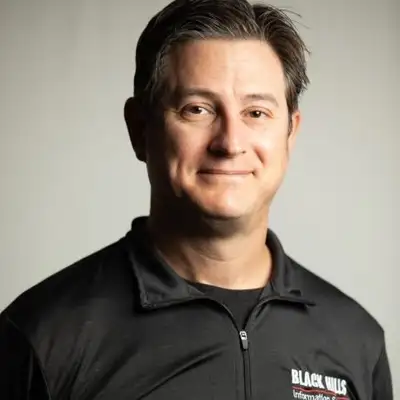
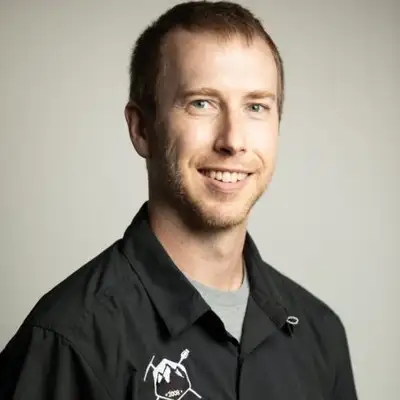
Welcome to AI Security Ops, the podcast where we cut through the hype and explore the real world intersection of artificial intelligence and cybersecurity. Each week, we examine how AI is reshaping both sides of the security landscape, the threats we're facing, and the defenses that we're building. I'm Derek Banks. And in this episode, we look back at what people are calling Black October, like it was so long ago. The wave of clear critical disclosures kinda came in a single week, and, you know, now we're gonna ask, an uncomfortable question.
Derek Banks:Is it gonna end? Is it gonna bleed over? Then we're gonna talk a little bit about, you know, what the the the future of AI might hold going into 2027 since it's getting close to that time of year where, you know, you start to make predictions for for next year. But first, this show is brought to you by Black Hills Information Security and Antisyphon Training, as my shirt says. BHS helps you organize...
Derek Banks:Org... Or helps organizations identify and close real world security gaps through penetration testing, adversary emulation, PRPL team engagements, SOC as a service, and manage detection and response. Antisyphon delivers hands on practitioner led training built around real attacks and real tools, so you can apply what you learn immediately. Learn more at blackhillsinfosec.com and antisyphontraining.com. So the first part.
Derek Banks:So I guess in last... What? Last October, Ethan, which was last week
Ethan Robish:Black October. Yes.
Derek Banks:There were two, like, really big vulnerabilities that kind of came in the in the third week, and then kinda bled over into the fourth week. And I think a lot of info sec people had, you know, bad times. And and that would be the PHP to Shell one. I think y'all talked about that last week. Yeah.
Derek Banks:Yeah. We went through quite a list of them, and I think we have some
Ethan Robish:more to add now. Yeah.
Derek Banks:And so what happened was the Linux one that happened over... Like, I came back from the weekend. I had one of those sort of weekends where I didn't like touch a computer. You know, went outside and touched grass, and I got back. I was like, I think I've got some stuff to go patch.
Derek Banks:Right? So... And so... Yeah. So I guess the question is is, I guess...
Derek Banks:Or I guess you said last week, I wasn't here, but is it going to continue or is it going to abate? And it looks like it's probably gonna continue.
Ethan Robish:Yeah. I mean, okay. So I kind of phrased it as I I thought it would continue, but I Oh,
Derek Banks:would it continue to a lesser degree?
Ethan Robish:Yeah. I made the prediction or that... I I guess, I posited that I thought these things were just kind of falling all in the same week and that was by coincidence. Like, I think we'll continue to get vulnerabilities, but maybe the pace will slow down or it'll ebb and flow. It's it's ebbing or...
Ethan Robish:No. It's it's flowing.
Derek Banks:It's flowing. Think this week said, here, hold my beer. Right?
Ethan Robish:Yeah.
Derek Banks:Yeah. So I guess Monday and Tuesday... No. Tuesday and Wednesday of this week, It says it added a WordPress CVE and an Apple flaw that apparently has been around for eighteen months to the Kev list. And and actually tied a p t 29 to a zero click I o...
Derek Banks:That zero click iOS thing. Today, Zixle, is that how you say it? Zixle? Sounds like a like a pharmaceutical company. Zixle.
Derek Banks:It does. Like for for nasal. Yeah. Like, there's apparently a zero day that has affected like a thousand devices. I guess they're a switch company or like some kind of ISP kind of thing.
Derek Banks:And then and then you used to share the link with me about like some open AI research. And what did
Ethan Robish:that say? Yeah. So the... So so OpenAI back in June did put out some research of basically taking existing vulnerabilities like patches that the Linux kernel has put out and finding which ones can be exploitable. And there were a handful.
Ethan Robish:Mean, maybe a couple dozen or something that they found at that time. So they they repeated this experiment with a newer model and maybe newer pipeline that are... You know, using all the stuff they'd learned. And they took, oh, what was it? 1,700 vulnerabilities that went into this pipeline.
Ethan Robish:And they they analyzed each one and, like, basically had the goal for AI to create a working exploit, a working local privilege escalation exploit. So these were vulnerabilities, but just because it's a vulnerability doesn't mean it's exploitable or is being exploited. And they they took seventeen seventeen hundred of those, created 948 working, like, actual exploits. And it says, obviously, this is, all monopoly money for OpenAI, but they claimed a total run cost of $1,200,000 in API credits. So that would be if you and I were paying the bill.
Ethan Robish:Right? But they they run their own... Yeah. They've got their own stuff. But that comes out to be $1,200 roughly per exploit.
Ethan Robish:So that's... I don't know.
Derek Banks:It just seems crazy. It seems fast and cheap. Right?
Ethan Robish:Market is. Yeah. Like the market for exploits, I mean, it's gotta be changing.
Derek Banks:Yeah. Would imagine. So used to be back in the day, you got yourself a working provesk and that was a couple thousand dollars. Right?
Ethan Robish:Like, you know, like $1,020,000 dollars. Oh, actually... Oh, sorry. The the article does say... So historically, Pwn2Own and TyphoonPwn, like, these are competitions where you come, like, with a...
Ethan Robish:With working exploits. And for Linux kernel local privilege exploits, which is what they found, it would typically be 20,000 to $70,000, that kind of range. So
Derek Banks:Well, if they sold them all, then they're making money.
Ethan Robish:Yeah. Which, to be clear, I think what they're doing and why they put this out is to show OpenAI is contributing to security posture. They're putting out this research and getting... I guess guess the patches or the vulnerabilities that already exist, patches, I think, exist, but they're helping prioritize. You know, if you if you haven't patched things yet because you're like, well, it's too risky.
Ethan Robish:And it's not... There's not... Like, it's too risky to my business, for my operations. But it... There's no risk because it's not exploited.
Derek Banks:I mean, Not not even if it's something that you have laying around that you forgot about that's connected to the Internet. Not not that that would ever happen. Right. Wait. I find that stuff all the time.
Derek Banks:Right? Like, oh, I actually was just on an engagement back in September where I found something very concerning, you know, one of those criticals where I pick up the phone and call the the company, and they basically said, oh, yeah, we've been meaning to turn that off. Like, you know that nation state threat actors have been, like, taking advantage of this exact same thing for the last two years. So I think what you have here now is what we would call an incident. Right?
Derek Banks:And so, yeah, I think that this is... I'm glad to see that OpenAI is doing this kind of thing, and I, you know, I... It just... I I think the the takeaway is is that AI is really accelerating vulnerability research, exploitation development, just the offensive security side of AI altogether. And, you know, I I think that from an attacker point of view, the next couple of years are gonna be kinda great until the defenders catch up.
Derek Banks:Right? Because I I I think I read this from someone on on Twitter or X. So if you're... If you end up watching and I'm... I I don't remember where I read it, I'm sorry.
Derek Banks:But, you know, attackers, you know, their biggest their biggest barrier is a technological barrier. Right? They don't have to deal with things that defenders do, and the defenders biggest barrier is typically gonna be political. Right? And so if you've been in a, you know, a larger organization and you work in information security, even if you're in leadership in information security, sometimes it's hard to get change to be affected.
Derek Banks:And, you know, I think that, you know, right now, the Internet's a dangerous place to have things connected to it, more so than the past.
Ethan Robish:Yeah. I mean, with the rate of vulnerabilities, and I think this... Yeah. So the rate of vulnerabilities, the mitigation in my mind seems like, don't... Like, reduce your attack surface.
Ethan Robish:Like, don't connect things to the Internet. But, I mean, that's... That has business implications. Right? And I don't know.
Ethan Robish:I I read a a hot take of I I think this is gonna start creating silos of, hey. Like, only... Like, restricting, basically, think VPNs or mesh networks or, like, restricting who can talk to you based on need. So I don't know. I mean, I think you have
Derek Banks:a point. Right? Because I I just... I think that allow listing connections to business critical resources is often overlooked, like security control. I mean, I'm a company, I'm running an API, and I'm exposing that API to the Internet.
Derek Banks:It's the application and the underlying infrastructure that's the surface area for that. So am I convinced that that code, like how how convinced am I or how confident am I that I can keep that secure to the Internet as a whole versus I have a 100 customers that use it, and is it worth the pain of setting up like infrastructure to support that. Right? And each business is gonna have to make those kinds of decisions moving forward. But I think, yeah, overall, like for me, like what do you do?
Derek Banks:Stop, drop, and roll? Panic? No. Inventory everything you have on the outside, software and hardware, all of that. Make sure that you put monitoring and logging in place.
Derek Banks:And then... Because models are gonna get better and get better and get better, and I don't think this is gonna go away, which kinda leads us to the next thing we wanna talk about, I think.
Ethan Robish:Monitoring is a big one because if if we're just gonna assume that, like, we're vulnerable and, like, we have to have things, like, for the business, like, exposed, I mean, you gotta know if it's being attacked, if
Derek Banks:it's definitely exploited. Like... We've been preaching this for years. Like, personally, you and I, Ethan, at Yeah. BHIS, like, over a deck combined, almost like thirty years, which is a lot
Ethan Robish:of years. I think we just get to emphasize
Derek Banks:it more now. Right. Well, I mean, I remember telling clients, you should treat your internal network as hostile and monitor everything. Monitor your critical resources. Like, everything's hostile.
Derek Banks:I mean, the Internet was hostile before, but... Yeah. It's it's gonna be a wild ride for a couple of years. Because I I I do think that, you know, AI is gonna keep getting better and better, but there may be like some some other roadblocks for AI getting better and better in 2027, which is, I guess, the other thing we wanna talk about today? Other roadblock?
Derek Banks:Yeah. The other roadblocks. The regulatory and the geopolitical roadblocks.
Ethan Robish:Yeah. So I mentioned, I think it was last week or last episode, that Yume K one, K 3.1 Pro or whatever, like they... When they came out with their model, they voluntarily withheld security training data. They basically kinda neutered their model in the security aspect, which in the past, like, when we were... When we were discussing this, like, we know that, like, Anthropic and open a...
Ethan Robish:API... Open AI have safeguards and they refuse cyber related things. But we were always like, well, but open models exist. The Chinese model, they're not restricting anything. Well, they they kind of are.
Ethan Robish:And then to follow-up with that, this isn't new in the last week, but October 16, I see... Or maybe October 23, the China's Ministry of Commerce has put out new export controls for AI. So we we think of, like, The US putting out export export controls and, like, hey. We we can't give China our GPU... Highest GPUs and like that kind of thing.
Ethan Robish:But... Or or like the cybersecurity models. And China's doing the same thing now. Like, they they have restrictions on size and amount of LOPs and just benchmarks. Like, if if the if the model scores above, like, top 10 or something on, like, certain benchmarks, it's...
Ethan Robish:It falls under these restrictions of, like, exporting.
Derek Banks:I wonder if this is in, like, retaliation for the US government, which I already thought had done this. But apparently, here in October, they banned the use of deep seek for government, and I'm assuming government contractors too. And I wonder if this is China's, like, answer to that. And so I wonder, like, Yale, what you're saying is, like, here in the information security world in 2027, are we gonna be able to use frontier models? Are we gonna be able to use Chinese models?
Derek Banks:Are we all gonna have to come together and, you know, crowdsource some GPUs and train our own models? Like, what are we gonna have to do to to keep doing what we're doing to pretend to be bad guys? Because I mean, that's the... Like, what we do. Right?
Derek Banks:We pretend to be bad guys and hack things, hack people, hack places, hack companies with all the available tools, including AI. Right? So what's it gonna look like in 2027? And then on top of that, you know, with the election results, you know, in in The US, you know, some of the incoming folks on the the Democrat side are are kinda openly... I'll I'll say, like, I agree with you what you said earlier, we'll just say in the green room, that it's probably more anti AI data center or anti data center sentiment.
Derek Banks:But there are some politicians that are definitely lobbying lobbying lobbying, that that are proposing and have already proposed restrictions on AI technology. So for example, in my state, Mark Warner already introduced legislation to... Basically, the thing in there that I thought was the most egregious was any release model that has to be reviewed by the government before it can be released. Because sure, I'm sure they have all the experts they need for that. And then I think was it Bernie Sanders?
Derek Banks:Sanders and another politician, they wanted to ban super intelligence, which I think is why Trump decided to rename it super intelligence, but but but whatever. Right? And there's a a politician in San Francisco that just is probably gonna get elected that was part of California's regulations. And so I guess maybe in 2027, we might be looking at some form of regulation. At at least at the state level too, right, where, you know, you have now, I think one out of every...
Derek Banks:Like the 10 largest states now have a Democrat governor. And so will there be like state regulations on like data center creation? How does that affect our growing need for compute with AI for more training and better AI. So really interesting times happening soon.
Ethan Robish:Yeah. I know you mentioned we were gonna make some predictions for 2027, but and and you you just kinda did. Like, honestly, we don't know. Like, I I think, in the latest webcast, email that went out for Black Hills, it was... Like, it...
Ethan Robish:What... All the crazy stuff that happened in 2026, and John made the comment, if if anyone's making predictions for 2027, they don't know what they're talking about. And, I mean, it doesn't doesn't stop us from trying,
Derek Banks:but like That's actually why I mentioned it, to see if anybody's actually paying attention to our podcast and to what. I actually wanna be a part of the the end of year review, because I've been collecting AI and cyber security news articles since like last April into a database that, no surprise, use AI to summarize every day for me. I basically have an AI powered glorified RSS feed. Right? And I I was thinking of doing like some statistics and threat actor tracking and and that kind of stuff through the data that I've gathered.
Derek Banks:So I I... It's an early prediction. But I, let's see. I think my biggest prediction is that there will be, kind of... I I won't say like a cold war, but there'll be increasing, like regulations and I guess difficulty as like a US citizen getting the Chinese models and and stuff.
Derek Banks:I think that that's... They're going to try and keep us from using, like, Chinese models at some point.
Ethan Robish:Yeah. I I would agree with that. I I wonder how far that's gonna go. I wonder if there will be classes, years of US citizens of what we can... I mean, that kind of already is.
Ethan Robish:Right? Accessing mythos. And what's what's the the one on the OpenAI side?
Derek Banks:Oh, hang on. Cyber blue. Yes, it has a color in it, I think.
Ethan Robish:Yeah, are the programs to get access. But it's access to cyber capabilities, like cybersecurity capabilities and models is gated by these companies. And yeah, it's not... I mean, we can access some of it as part of like Black Hills information security. But...
Ethan Robish:Yeah. I mean... Yeah. For me,
Derek Banks:the key thing is gonna be, will it be new stuff, like new models? Or will it be like, say all of GLM, right? Like so we... Like say I'm using GLM five three right now, but I can't get access to GLM five four, and I'm using GLM five three like on, I don't know, Digital Ocean or something like that. Will Digital Ocean as a company be forced to not host that model or just like new models?
Derek Banks:And I think for me, my guess is just new models. And and the reason I say that is because I think the outcry would be pretty great for people who've built, like, business processes that all of a sudden don't work anymore. Because I I think that, you know, so I think there are regulations. The other thing that I think I will predict, and my predictions will probably completely change by December, because it's the beginning of November in this episode that we're recording, is that data sovereignty will become a bigger issue to companies.
Ethan Robish:Yes. Yeah. Even bigger. And and that
Derek Banks:means that they're gonna turn to running their own stuff, which we're back to open weight models. So so how does that all play out? I don't know. But you're right. I'm making them tongue in cheek, because I I don't know what's gonna happen next week.
Derek Banks:Right? Like, I I... We could walk in tomorrow, and the Internet will be taken over by AI. And Dario Amade was right.
Ethan Robish:Right. It's kind of happening.
Derek Banks:Yeah. Yeah. It's kind of the dead Internet theory. It's slowly getting taken over by AI slop. Right?
Derek Banks:Yeah. Right. Well, cool. I think that pretty much wraps up this episode. And thanks for watching, and keep on prompting.